Critical
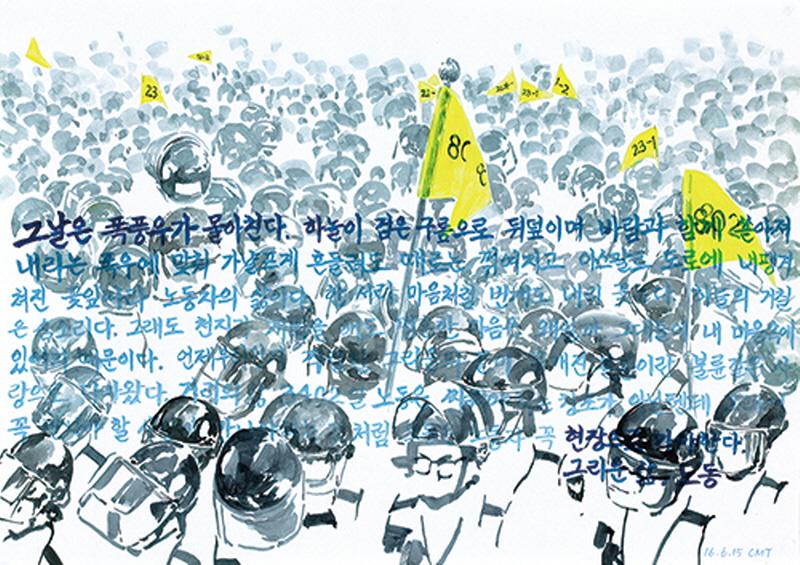
Hit has flexibly shifted between painting, drawing, video, performance, puppet
theater, publishing, and projects according to the subject at hand. In her
early site-based drawings, rather than capturing events quickly like
photography, the artist slowly followed the time of the site through paper,
watercolor, and
sketchbooks.
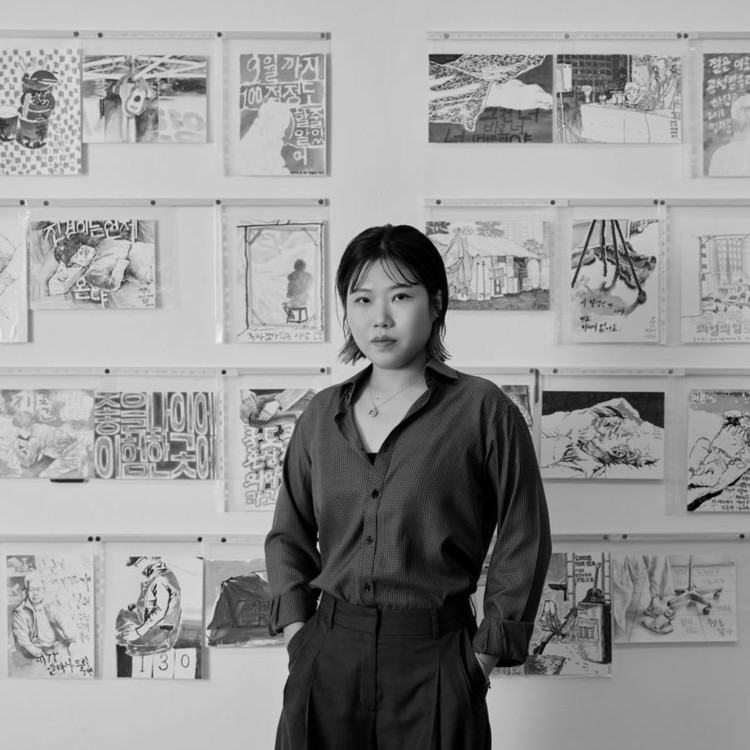
Yeouido-rawing recorded jokes,
complaints, small objects, and scenes from the protest site of laid-off
Colt-Coltek workers, leaving the struggle not as heroic scenes but as everyday
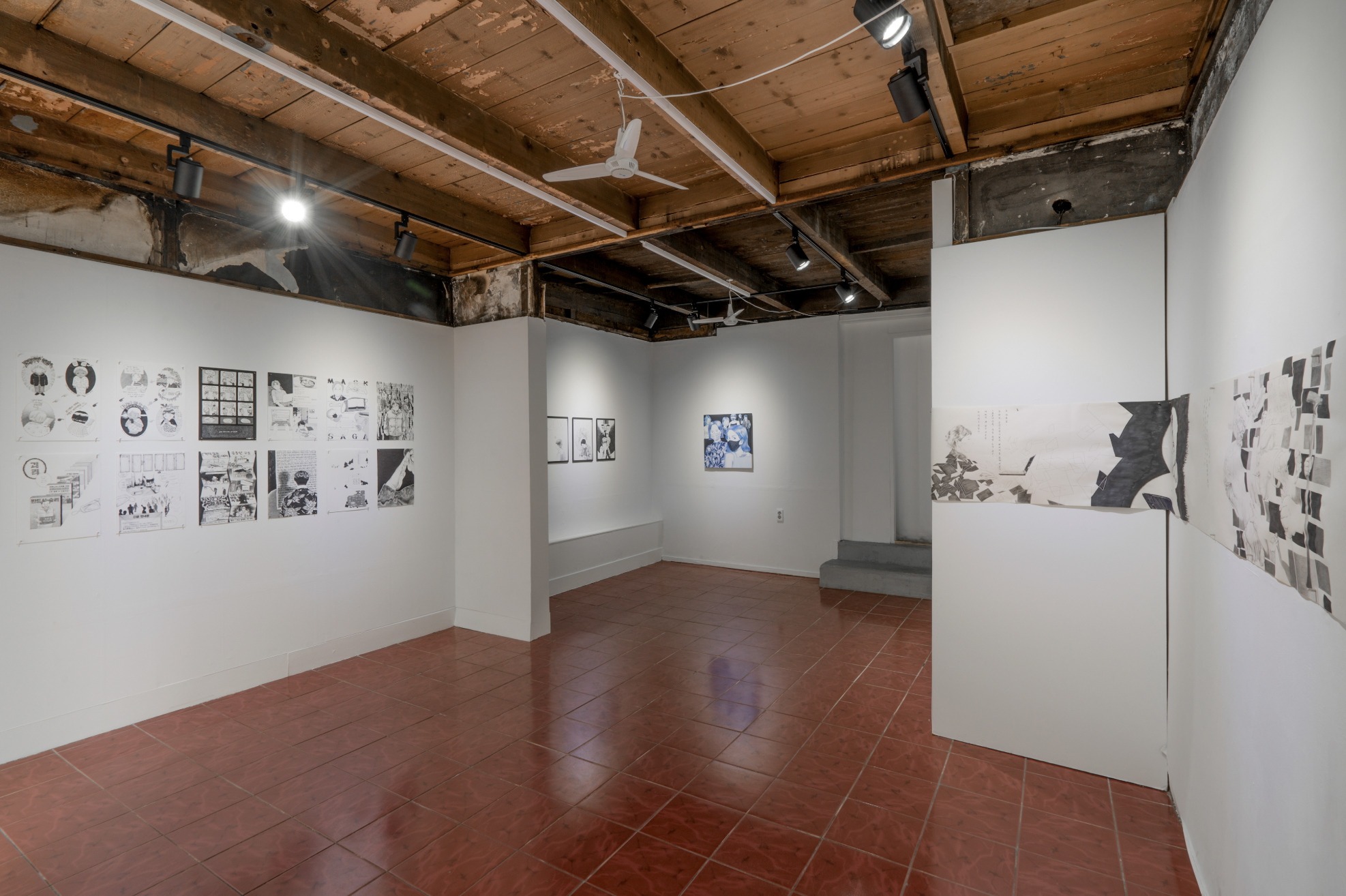
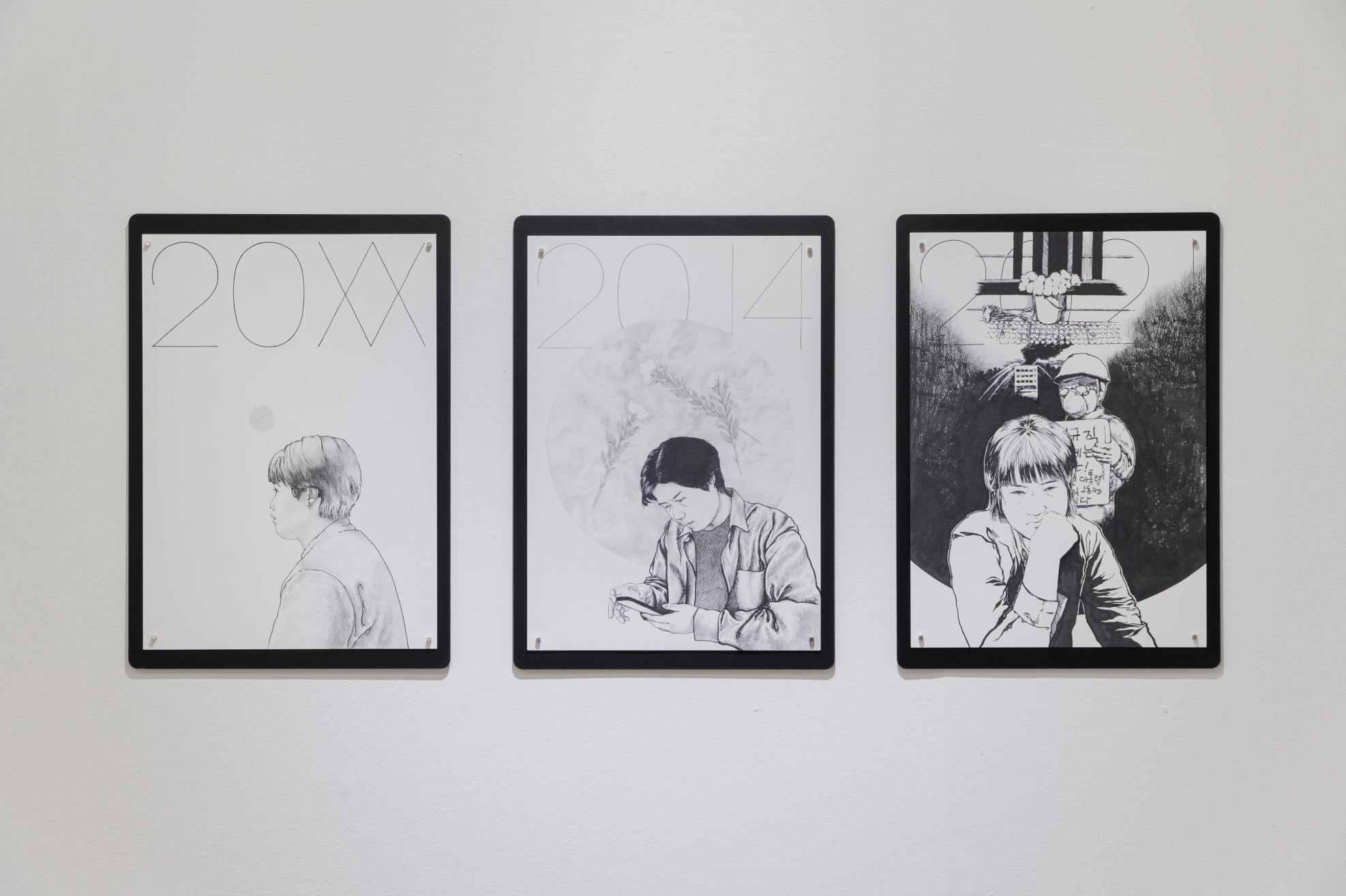
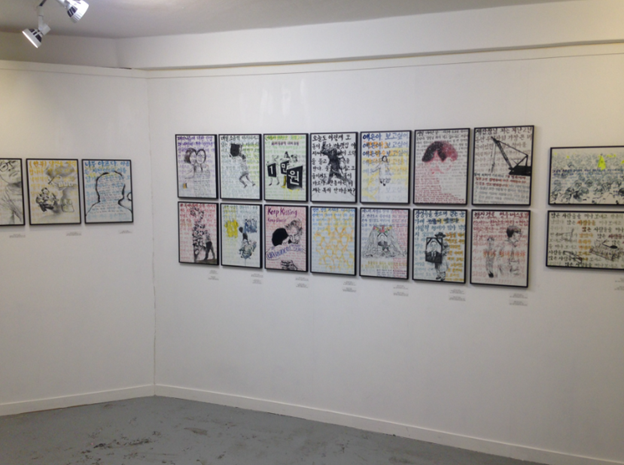
language and atmosphere. In 《News feed》, she reconstructed Facebook posts, photographs, articles, and
events into drawings, attempting to hold social events as collective memory
against the speed of the rapidly disappearing timeline.
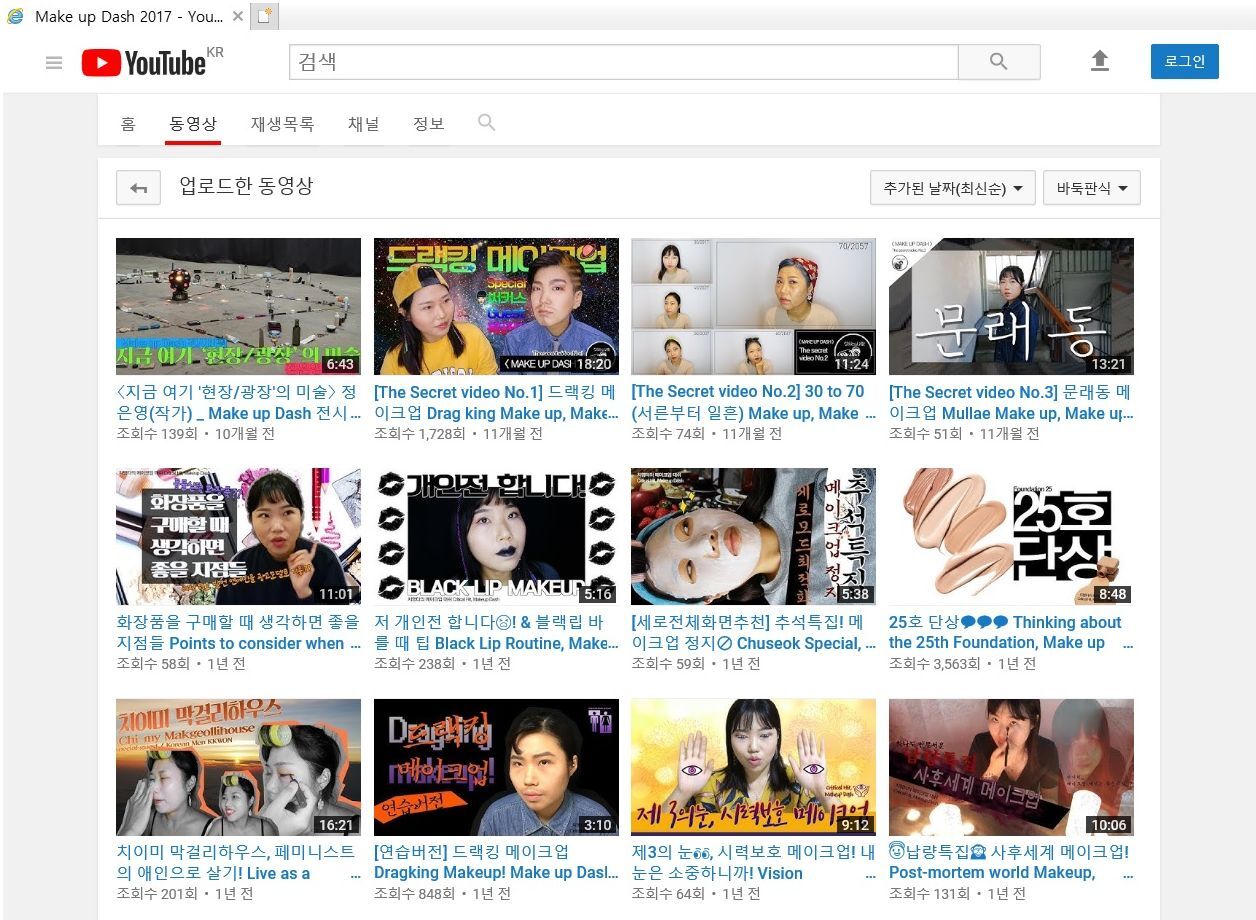
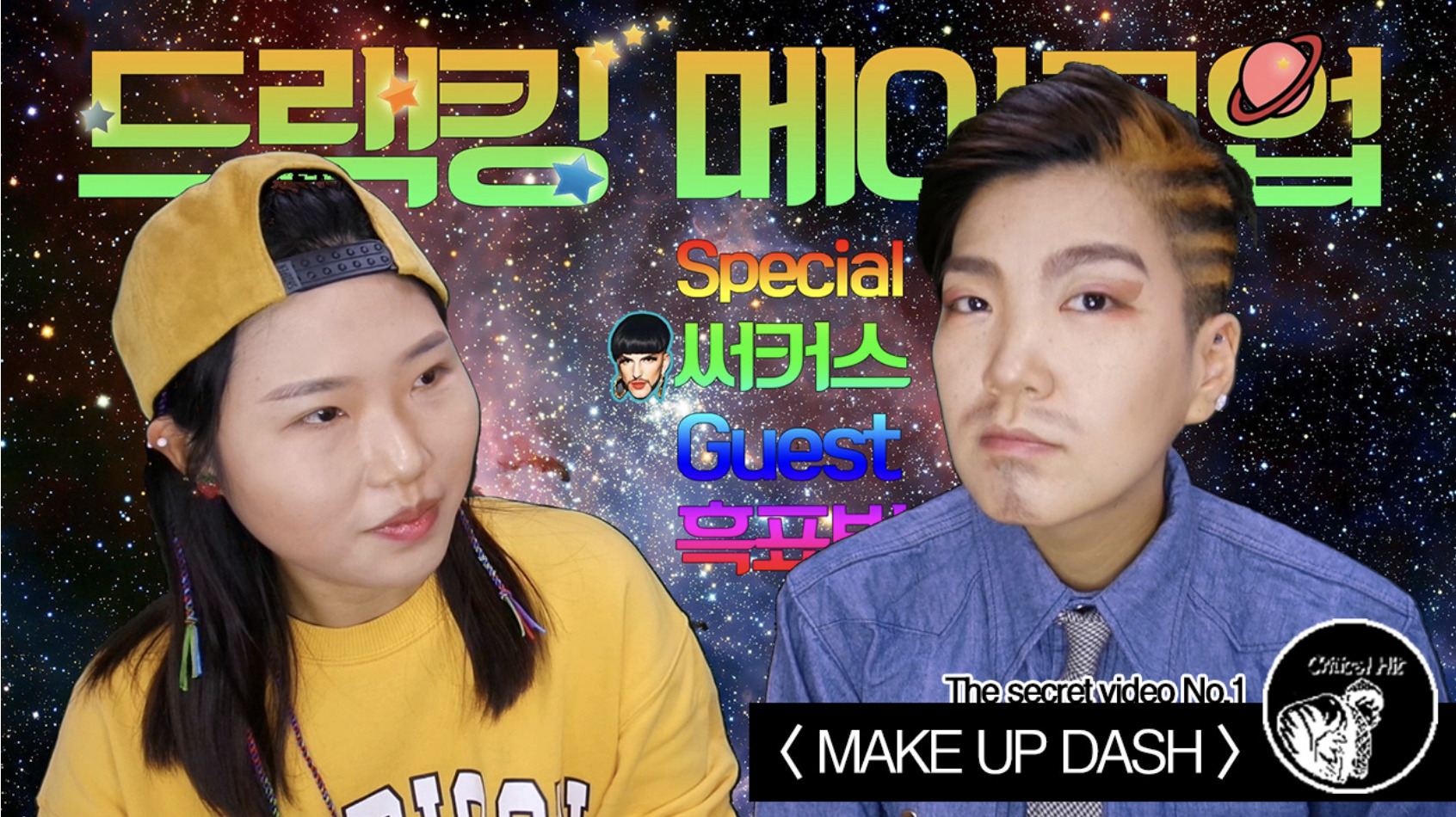
Make
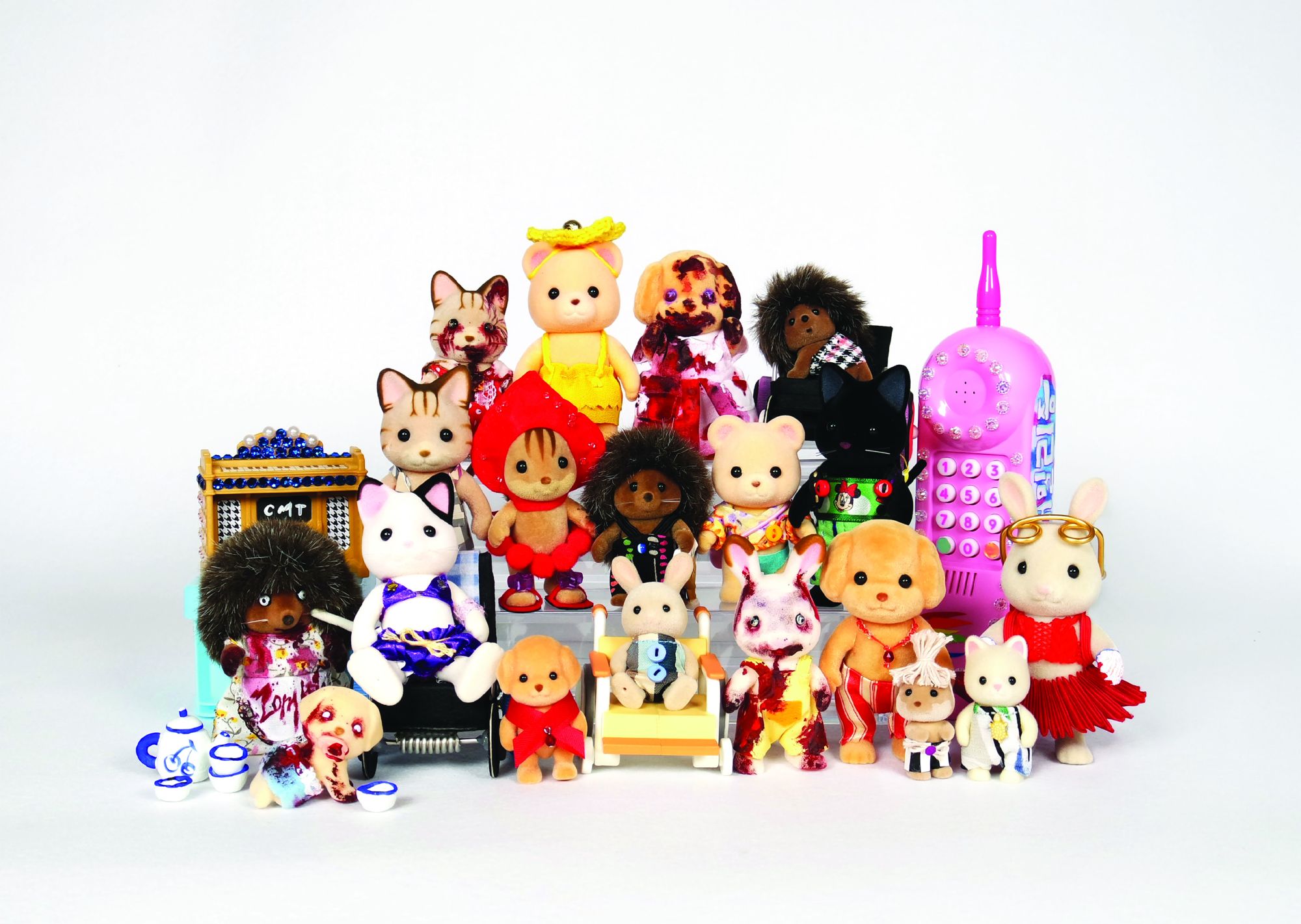
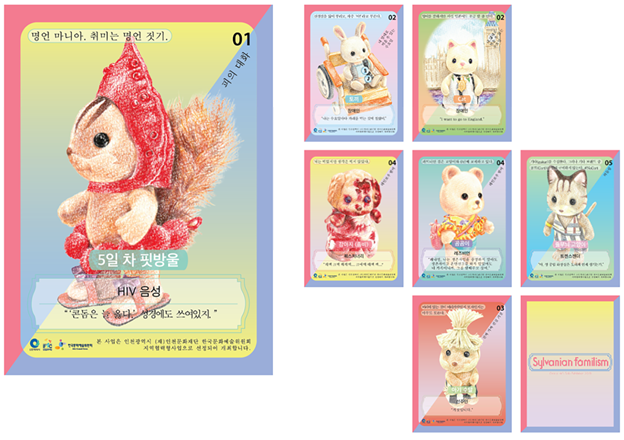
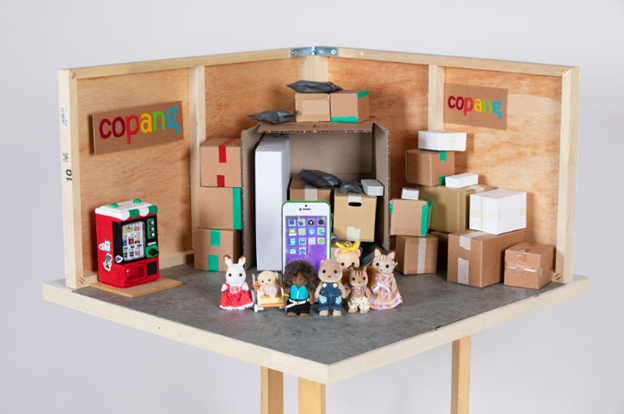
up Dash and Sylvanian
Familism proceed by appropriating and subverting forms of
popular culture. Make up Dash adopts the grammar
of beauty YouTube as it is, but transforms makeup, consumed as a “technique for
becoming pretty,” into a performative device that reveals gender norms and
hatred.
Sylvanian Familism uses expressionless
animal dolls to twist the ideology of the normal family and the consumerist
fairy-tale world, constructing a community in which minorities share their
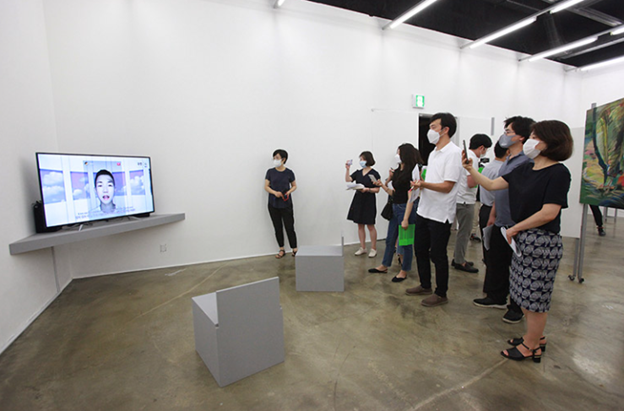
stories and seek survival. The fact that the hands moving the dolls are exposed
as they are is important here. Critical Hit does not hide the fact that images
are not naturally given, but are made through someone’s labor, and through the
movement of those hands, she reveals the process of constructing an alternative
world.
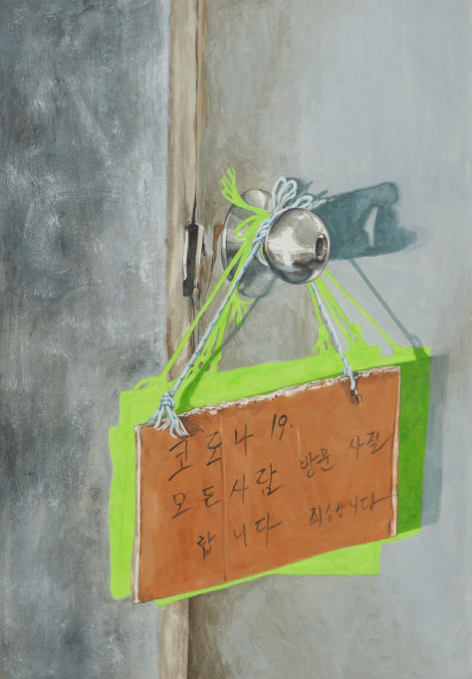
In works
dealing with disaster, Critical Hit newly organizes forms of record, mourning,
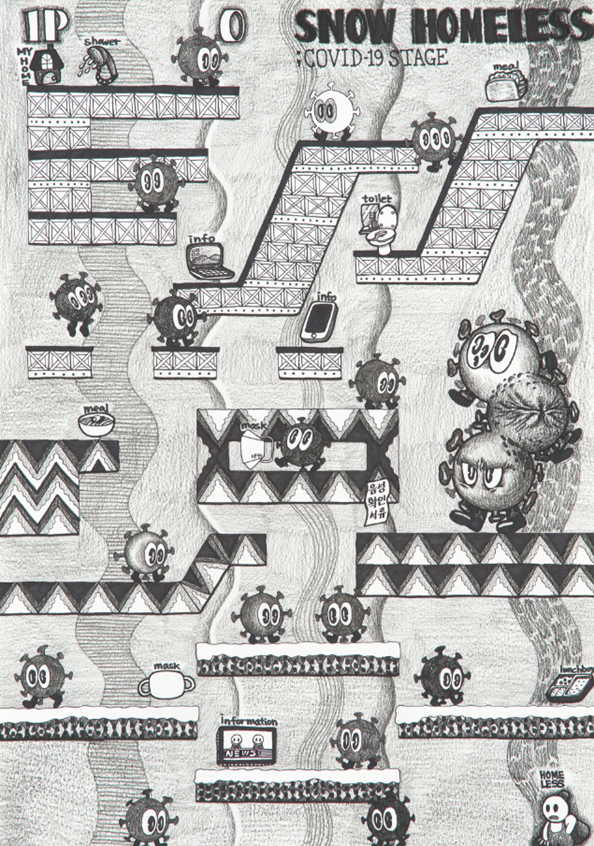
and reflection through drawing and painting. 《Disaster Drawing》 borrows the format of an
illustrated encyclopedia, but does not focus on explaining the cause of the
virus or the quarantine system. Instead, it records the realities of disabled
people confined in facilities, people who must submit documents in order to
receive free meals, and vulnerable beings whose livelihoods and safety are
threatened during the pandemic.
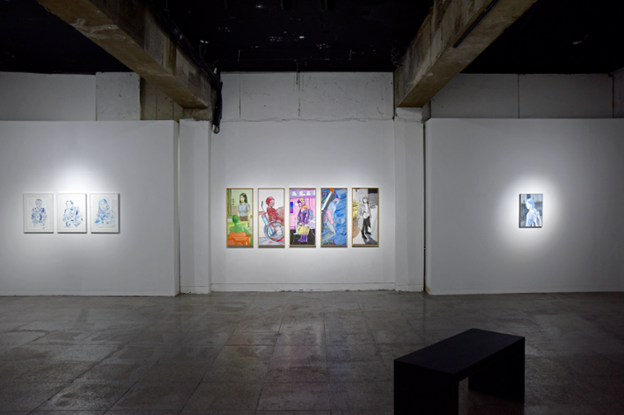
The ‘Under the Paper’ series in 《Under the Paper》 is a painting project made
by diluting highly saturated paint with water on single sheets of paper,
allegorically composing scenes of loss and institutional exclusion through
concrete icons such as traffic cones, umbrellas, cream buns and milk, hospital
beds, red pens, and masked figures.
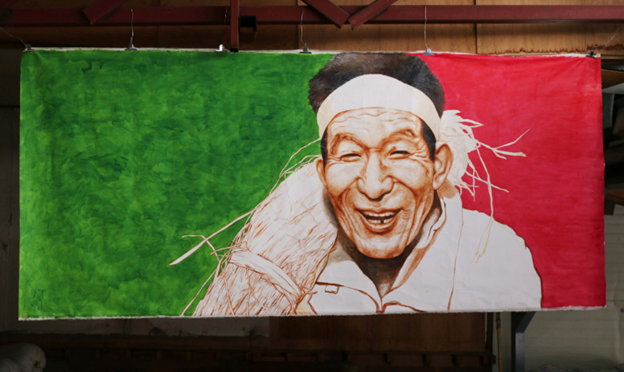
Works such as 1,560,000
won(2022), 10 Hours(2022), Six
Times(2022), Seven Days(2022),
and Under the Paper(2022) borrow the format of portraiture,
but do not remain at the level of representing a single person’s face; instead,
they evoke the social conditions surrounding that person.
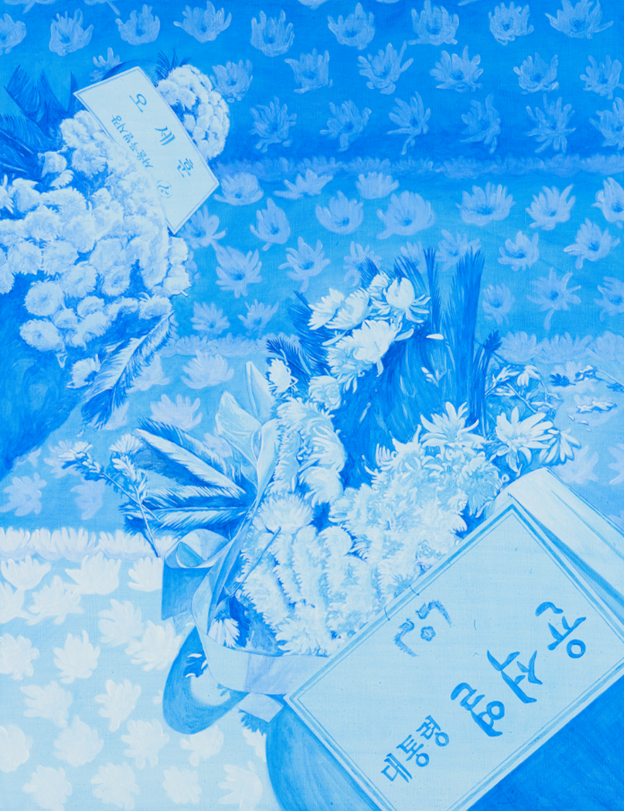
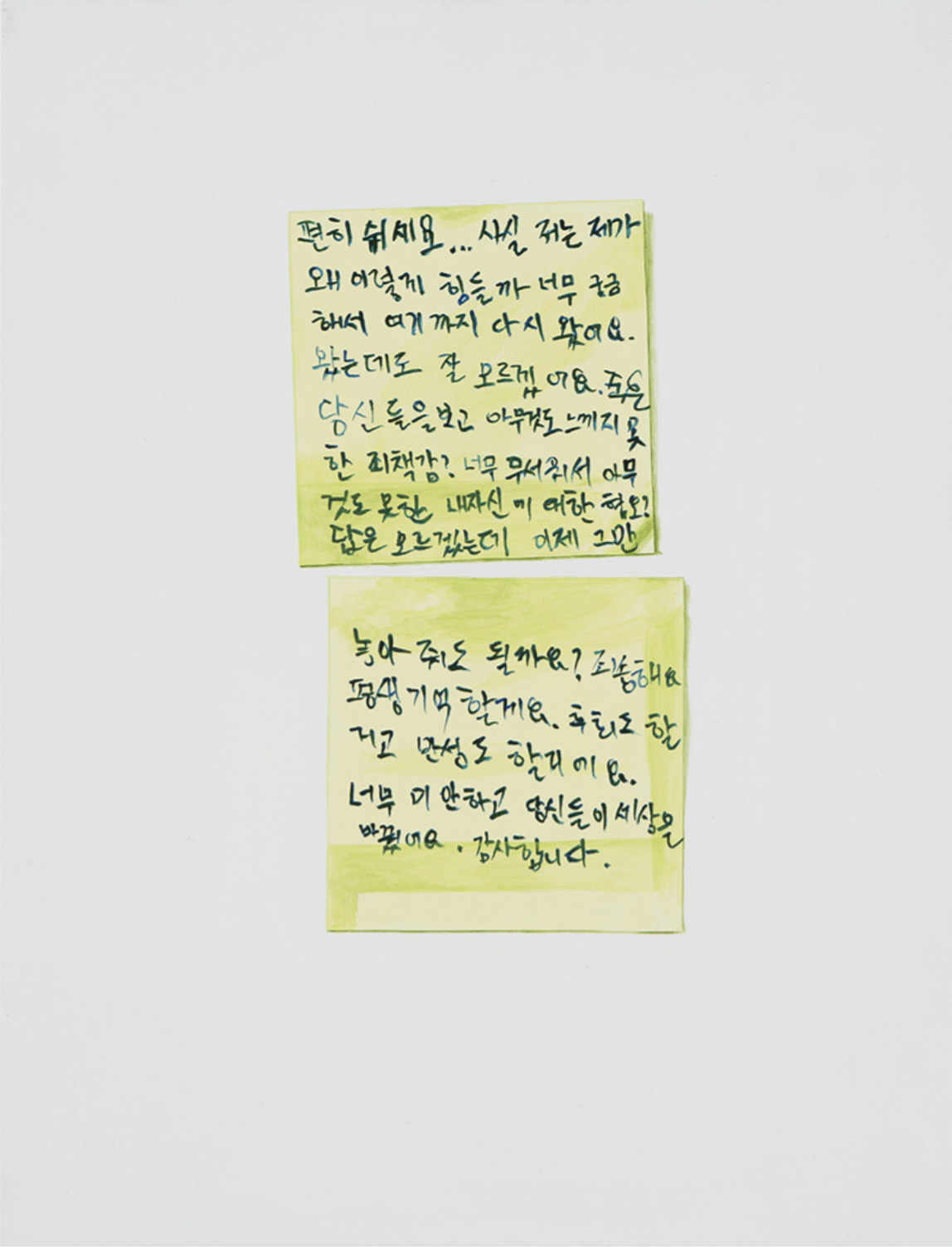
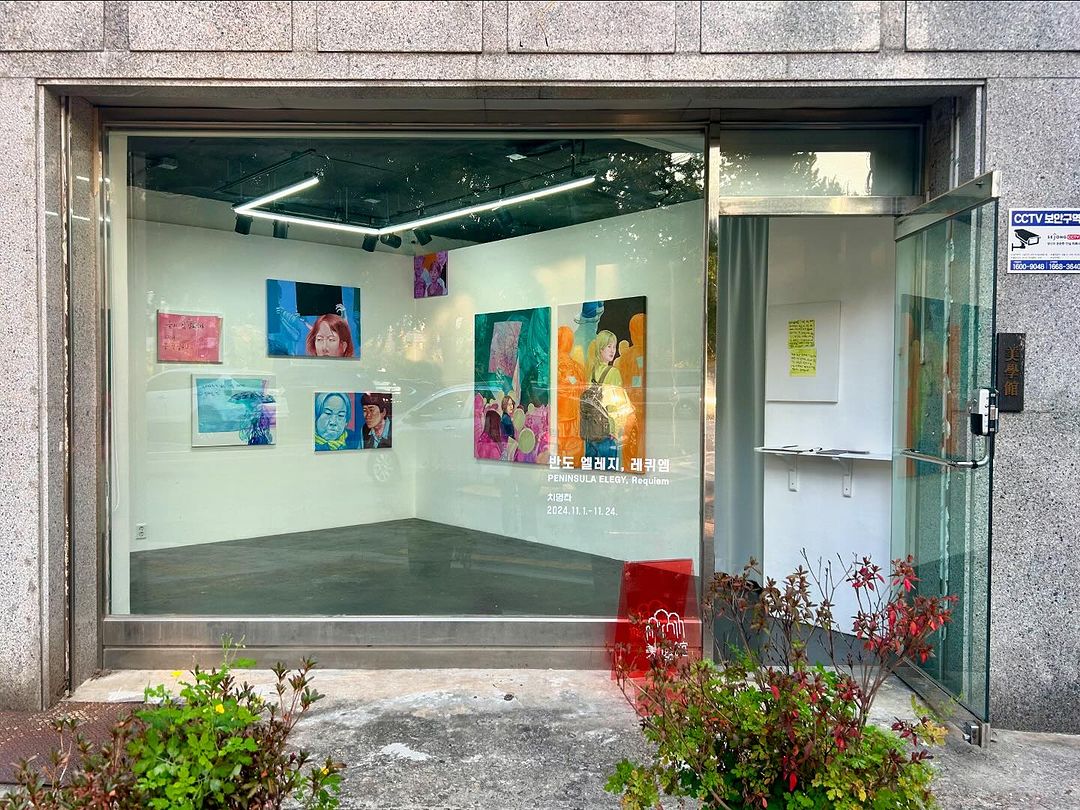
In the
‘Peninsula Elegy’ series, painting functions as a form of communal mourning and
memory. Critical Hit redraws the Post-it messages left by citizens after the
Itaewon disaster, including the handwriting, spelling, pressure of the pen, and
crumpled state, transferring the material traces of sorrow left after disaster
onto the surface.
Rather than making viewers consume emotion through images,
these works create a distance that cannot be easily contemplated. In an era
when news and internet images circulate disasters as spectacles, the artist
holds onto parts of drifting images and memories and makes us look at them for
longer. This method can be seen as a flow in which the “attitude of holding
onto disappearing voices,” which began with the SNS drawings of 2016, expanded
into paintings of disaster and mourning in the 2020s.