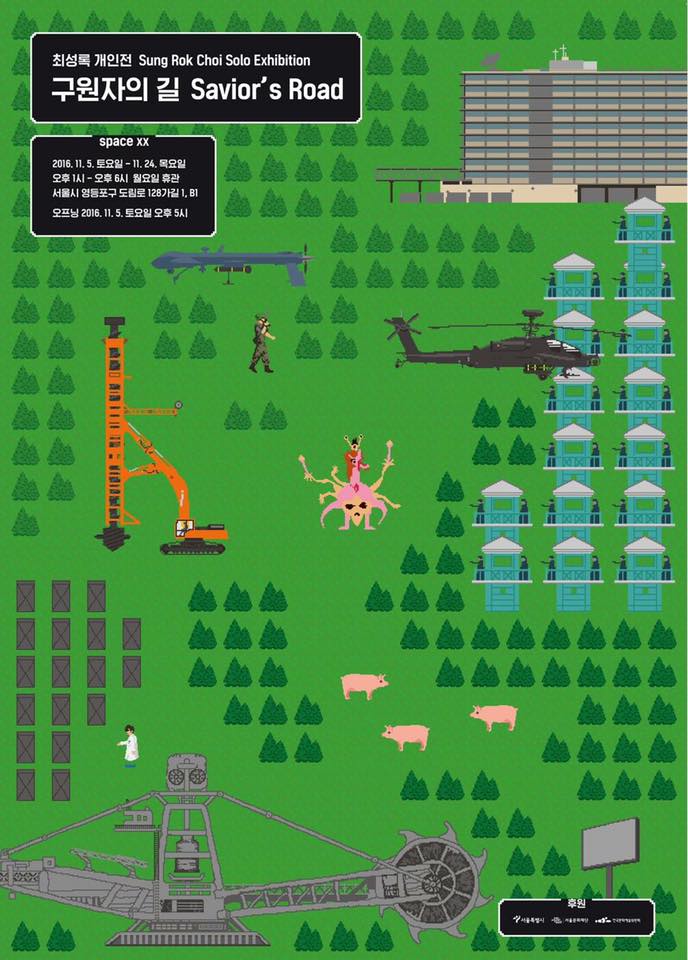


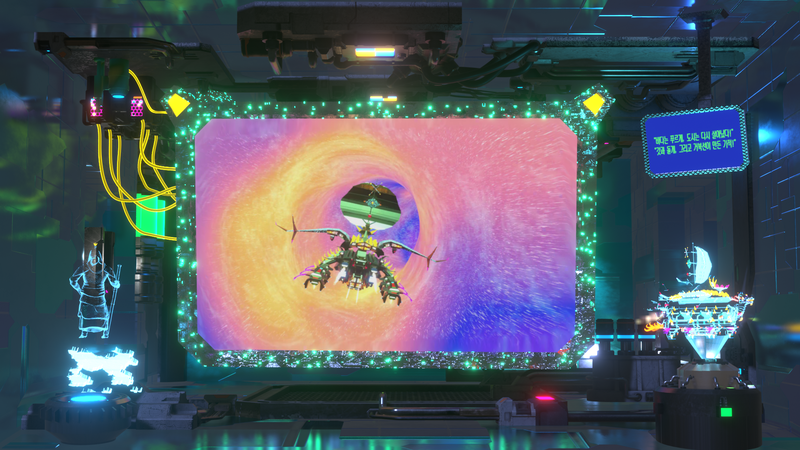
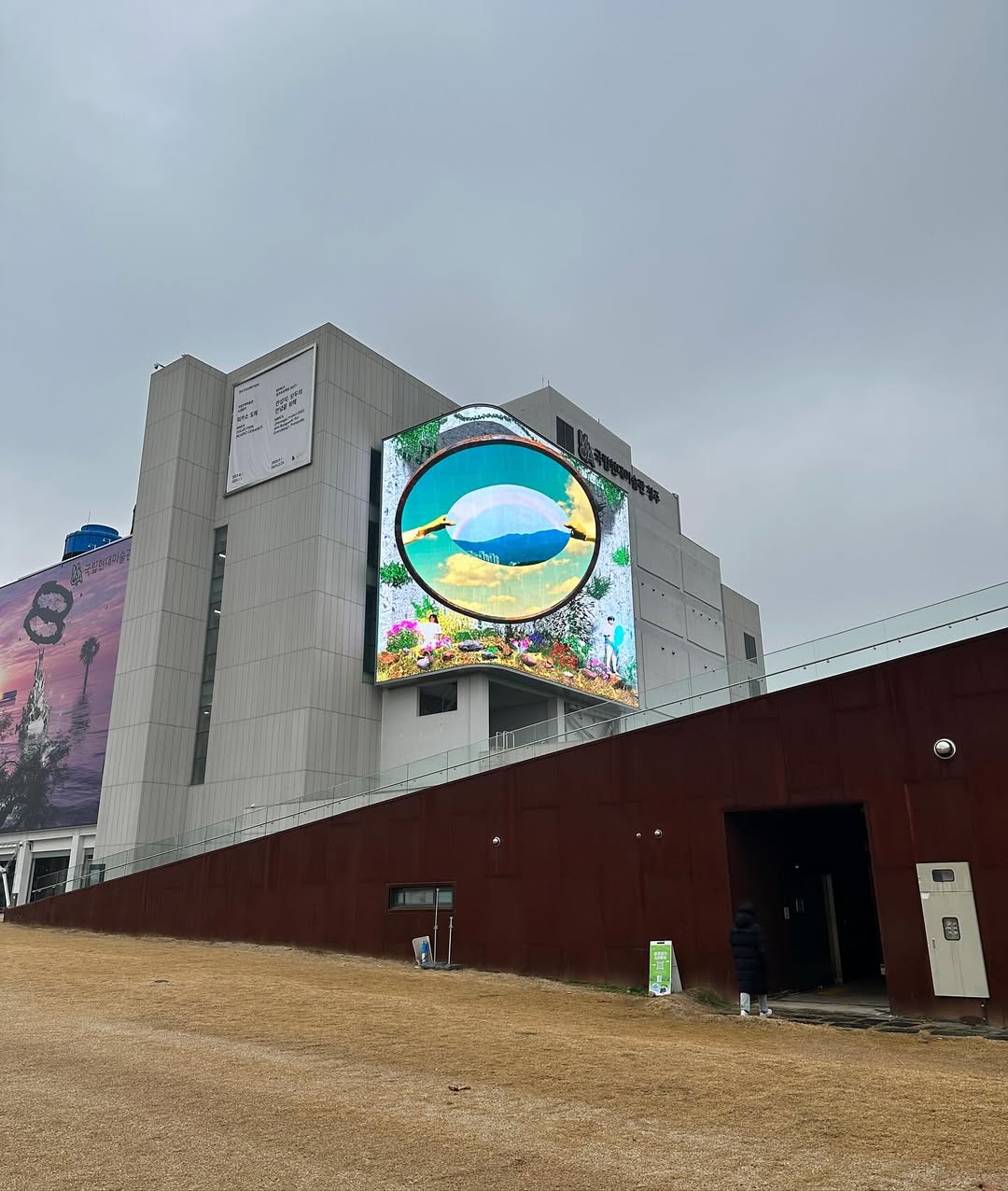
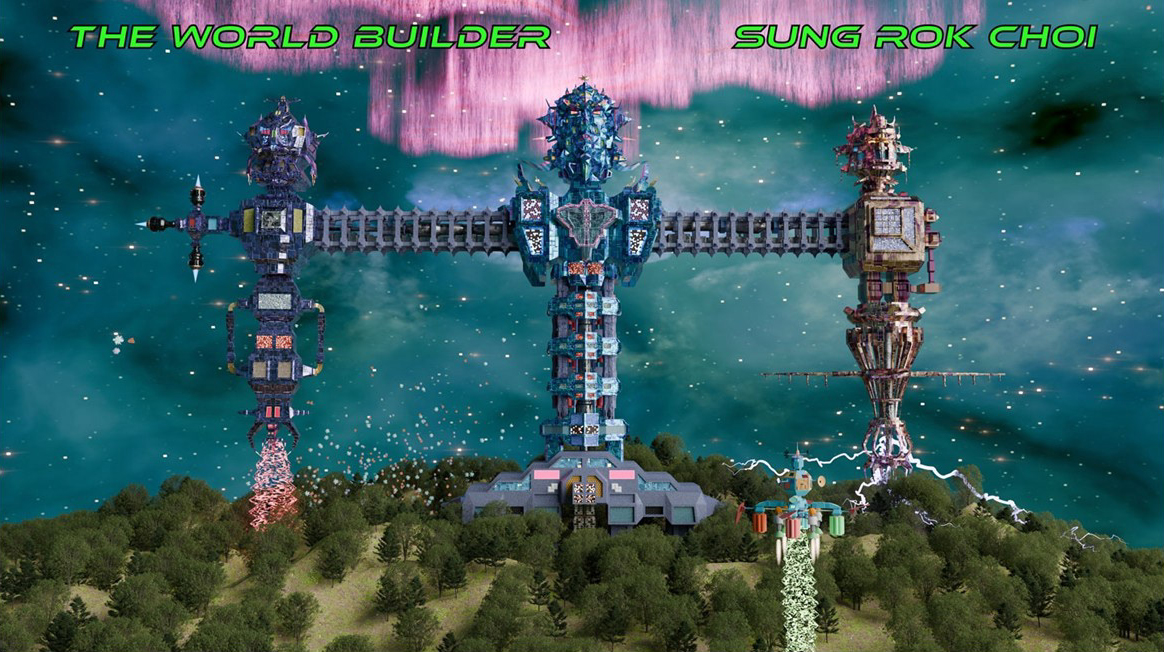
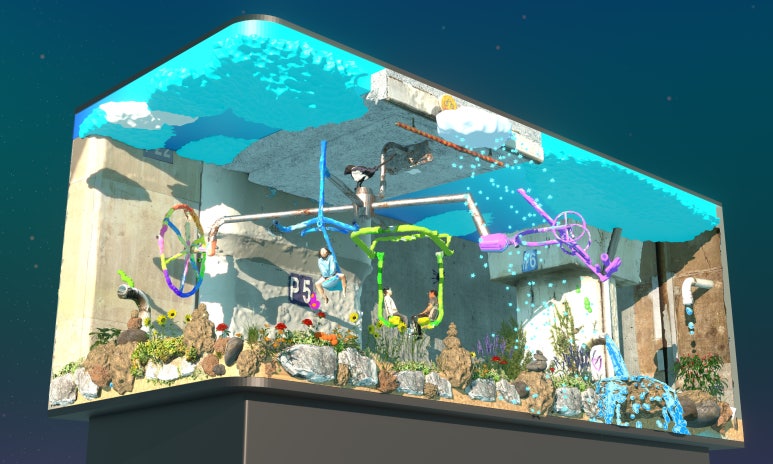
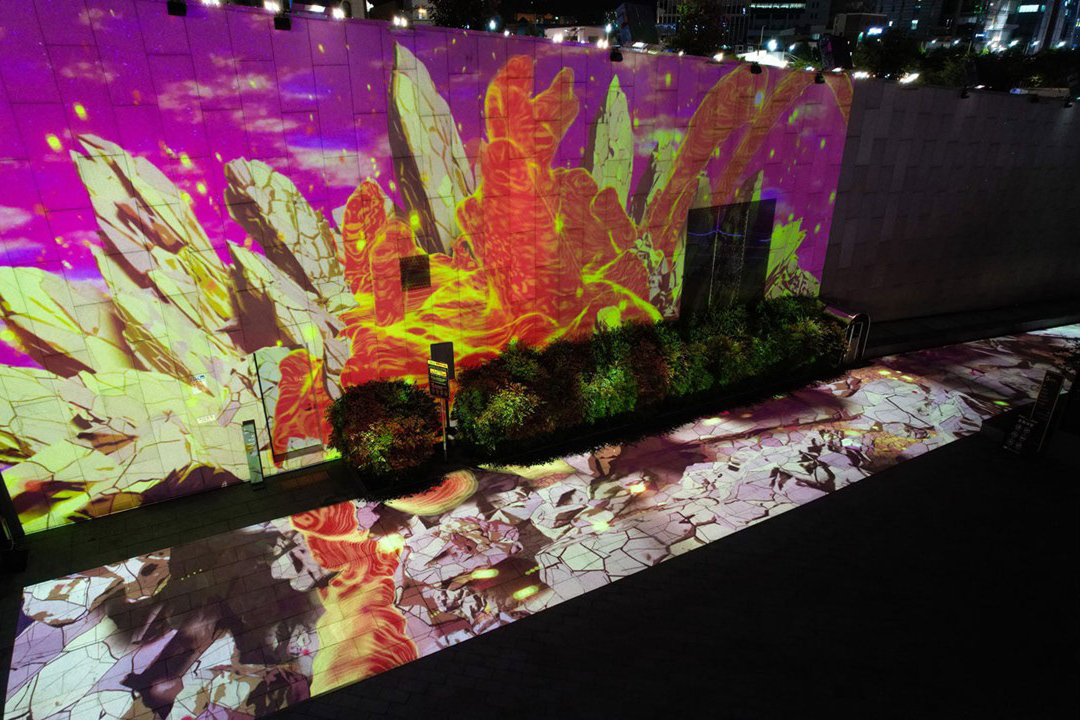
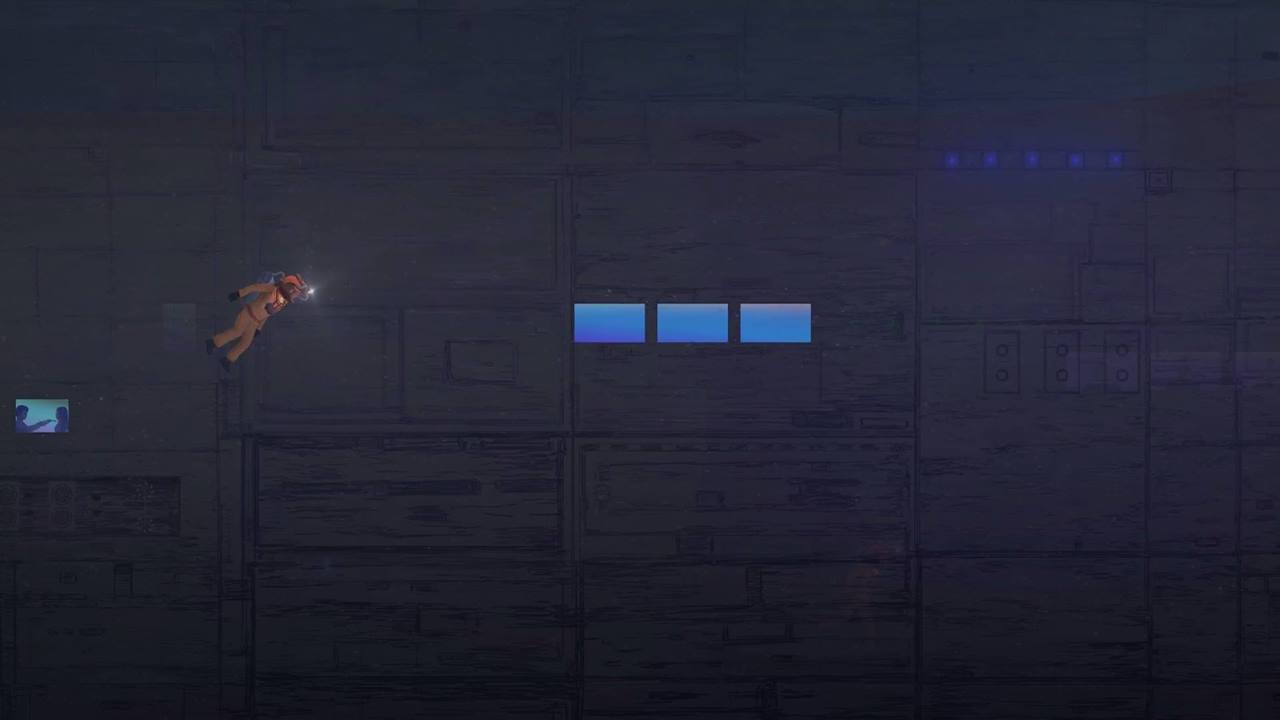
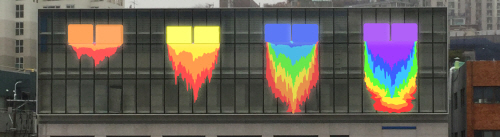


Poster image of 《Savior's Road》 © space xx

In Panoramic View: Who Is the Savior of the World?

A World Revealed Through the Dimension of Fragmentary Perception

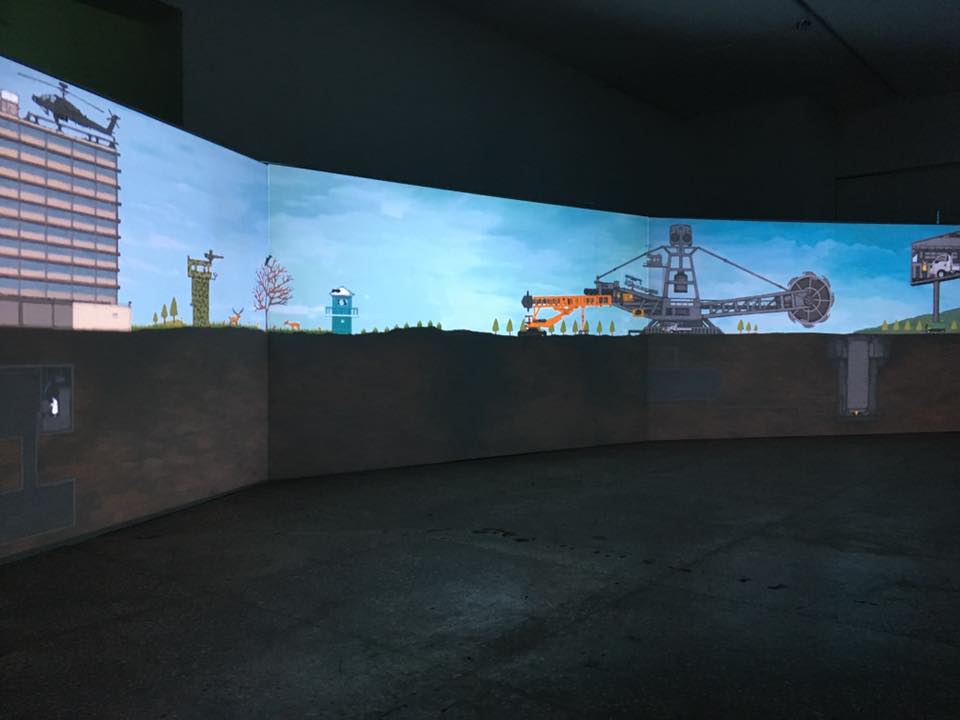
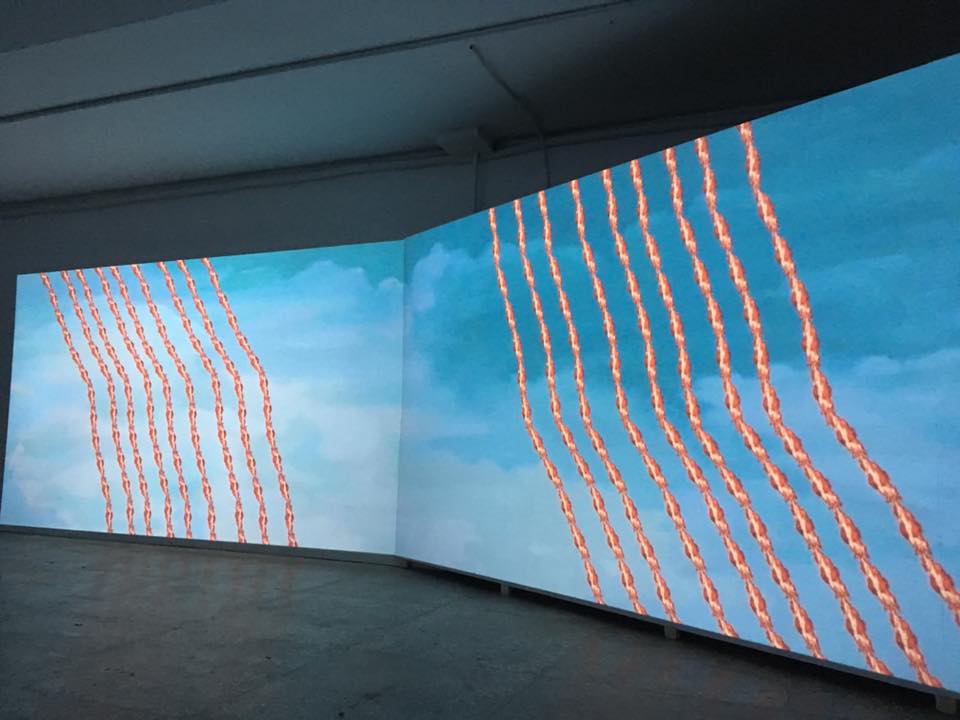
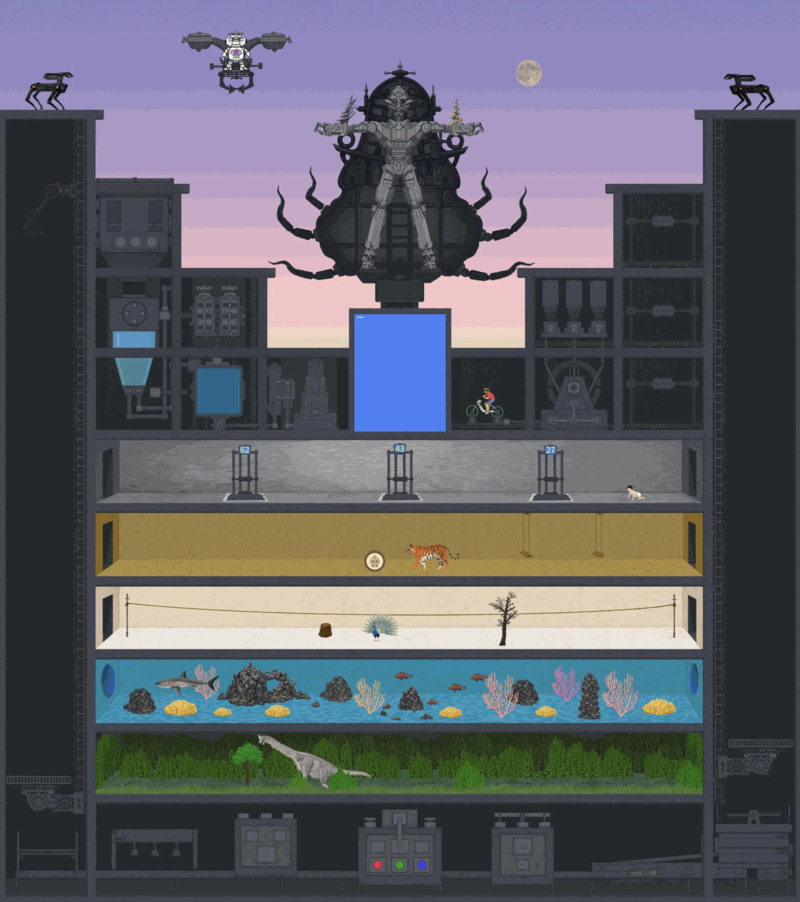
On the left side of a horizontally extended screen, a crow flies across the frame before settling onto a tree. The scene is broadcast in real time through a gigantic electronic display positioned on the right side of the screen. At the center, a coal excavator moves forward, digging deep into the earth as though attempting to probe an underground world.

At the very moment when something seems about to occur, gunshots and screams erupt simultaneously. The consecutive incidents unfolding onscreen are so absurd and unreal that they seem to offer no opening for reason to deny or resist them. Individual events within the image are connected through relations of adjacency and resemblance, functioning almost as if governed by an invisible force acting between them.

Sung Rok Choi’s Operation Mole is an eight-channel animation work drawing upon motifs such as the North Korean infiltration tunnels discovered in South Korea during the 1970s, anti-communist education in 1970s Korea, mole tanks appearing in Japanese science-fiction comics, and political realities including outbreaks of foot-and-mouth disease.

Interweaving these references with contemporary events in complex and multilayered ways, the work panoramically unfolds several major social issues beginning from the artist’s own personal agenda and mnemonic fragments.

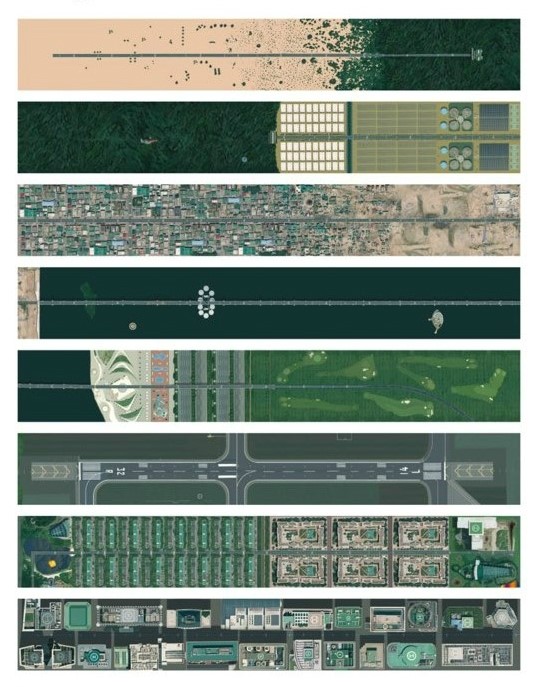
Scenes and memories of barbarism and absurdity occurring within contemporary society are spatially divided according to distinct perspectives, yet simultaneously synthesized, arranged, and intermingled within a single panoramic field. In this solo exhibition, the original 2012 work is reintroduced through the expansion of new narratives and scenes connected through montage-like associations.

Operation Mole–End Game (2016) constructs an even more intensified panoramic world shaped by the artist’s imagination. Within the wide-screen environment, individual entities transcend time and space through independent channels: they connect, emerge, collapse, and disappear, only to encounter one another again elsewhere to compose a vast and overarching image.

This multiplicity of channels is intricately woven together and reconstructed through temporal structures and the logic of gameplay.

In video art, narrative structure is recognized through the movement from one scene to another across the passage of time. In particular, the free use of montage can unsettle the foundations of perception itself, evoking intense emotion or generating new modes of cognition for the viewer.

In Operation Mole–End Game, the strategy of positioning itself at the boundary between the virtual and the real, the realistic and the unreal, seeks to activate imagination on behalf of the viewer.

In doing so, the work continually reproduces the screen itself while constructing a new narrative structure born from imagination’s transcendence of lived experience. Such perceptual operations provide distinct experiential awakenings in our encounters with objects and the world.

At times, they penetrate the homogeneity of space and open onto entirely new spatial dimensions—imaginary worlds in which reality is simultaneously integrated and displaced.


Installation view of 《Savior's Road》 © space xx

Side-Scrolling vs. Panoramic View

The totalizing gaze of the panorama has historically relied upon a structure of illusion that emerges only when countless fragmentary images are cognitively recomposed into an imaginary totality. It evokes a world of infinity unfolding without obstruction: an expanded field of vision, an omniscient gaze, and ultimately a metaphor for utopia.

The sensory overload produced by such expanded vision can only be overcome through self-discipline and willpower. Yet the panoramic view proposed by Sung Rok Choi, while presenting an all-encompassing perspective, accelerates a different kind of exhaustion—not through illusion, as in the traditional panorama, but through the fragmentation of narrative itself.

Traditionally, the panorama guides the eye smoothly from left to right across a unified vista. Choi’s panorama, however, disperses attention through events unfolding on the left side of the screen, redirects it toward the right, and then returns it again to the center. Through this process, the viewer’s gaze repeatedly scatters and reconverges in response to simultaneous events occurring across the image.

The tension established between the monstrous figure positioned at the center and the entities dispersed to either side does not culminate in an integrated visual totality, but instead produces continual collisions of fragmented and dispersed perceptual processes.

Choi’s mode of staging intentionally fractures the viewer’s visual system while simultaneously dismantling the coherence of narrative structure itself. Although the spaces, places, and events within the screen ultimately appear as parts of a singular whole, the spectator confronting the wide-format image cannot fully achieve a unified visual perspective and is instead compelled to perceive the scene as a series of divisions and fragments.

The work can therefore only be grasped as a process rather than a fixed totality. As a result, the viewer encounters a physical difficulty in observing and interpreting the narrative of the images onscreen. Multiple channels that exceed the limits of the human visual field introduce discontinuous interventions of image and sound across numerous sequences, transforming the spectator’s perceptual experience into one of dispersed yet active visual editing.

Each fragmented image acquires its own distinct story and interpretation, and these meanings proliferate according to the movement of the viewer’s gaze.

The vast circularity of the panorama, through which the world appears apprehensible at a single glance, can ultimately only be represented as a totality through a mode of perception that organically weaves together heterogeneous elements while preserving their difference.

Within these panoramic landscapes, the insertion of artificial events generates spaces of fantasy in which different times, spaces, and simultaneous incidents coexist within a single scene. Logical leaps produced through the combination of discontinuous images and the collision of heterogeneous elements destabilize familiar imagery through unexpected relations, giving rise to entirely new narrative structures.


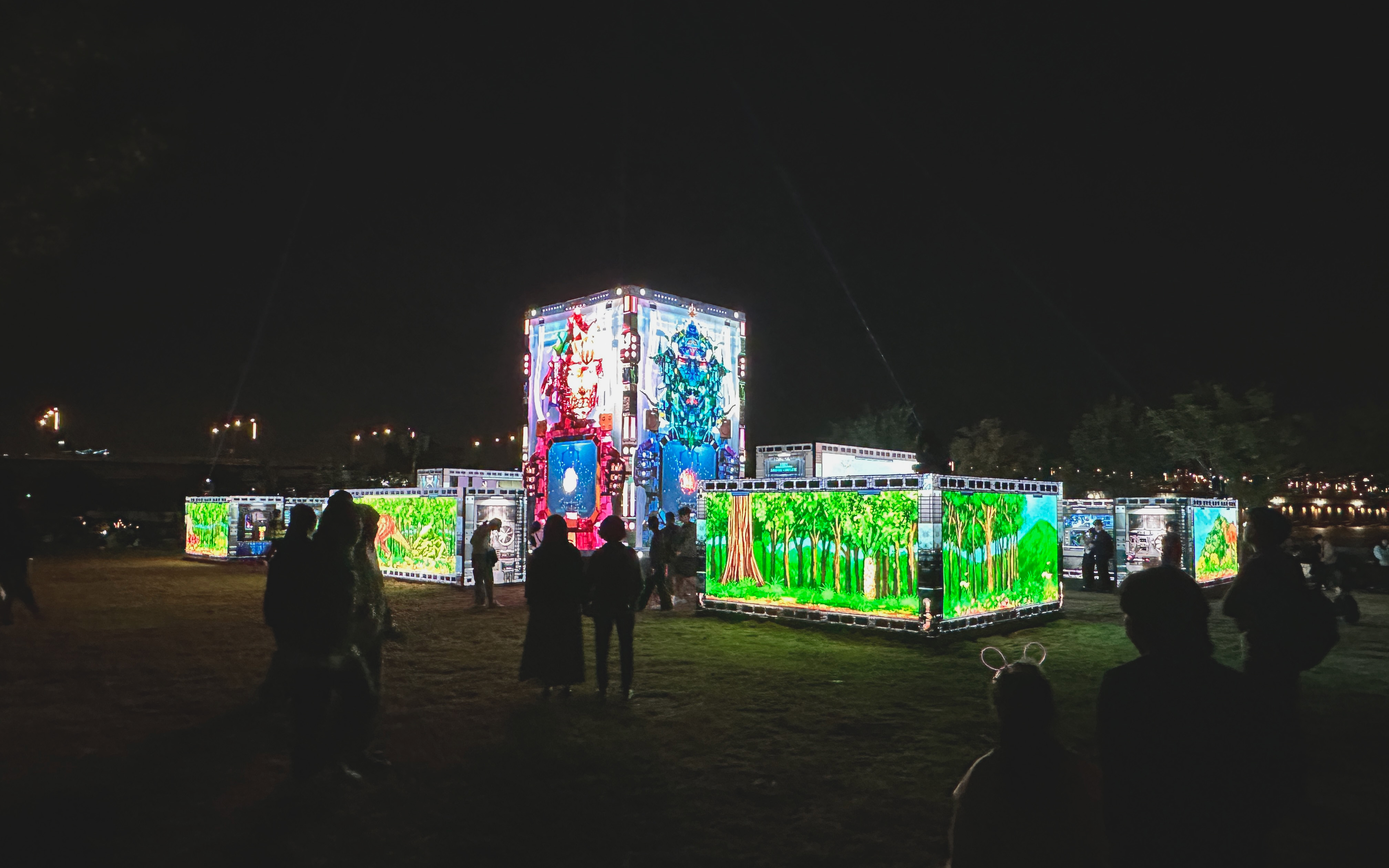
Installation view of 《Savior's Road》 © space xx

The Identity of the Monster, Cycles of Destruction and Life, and Salvation

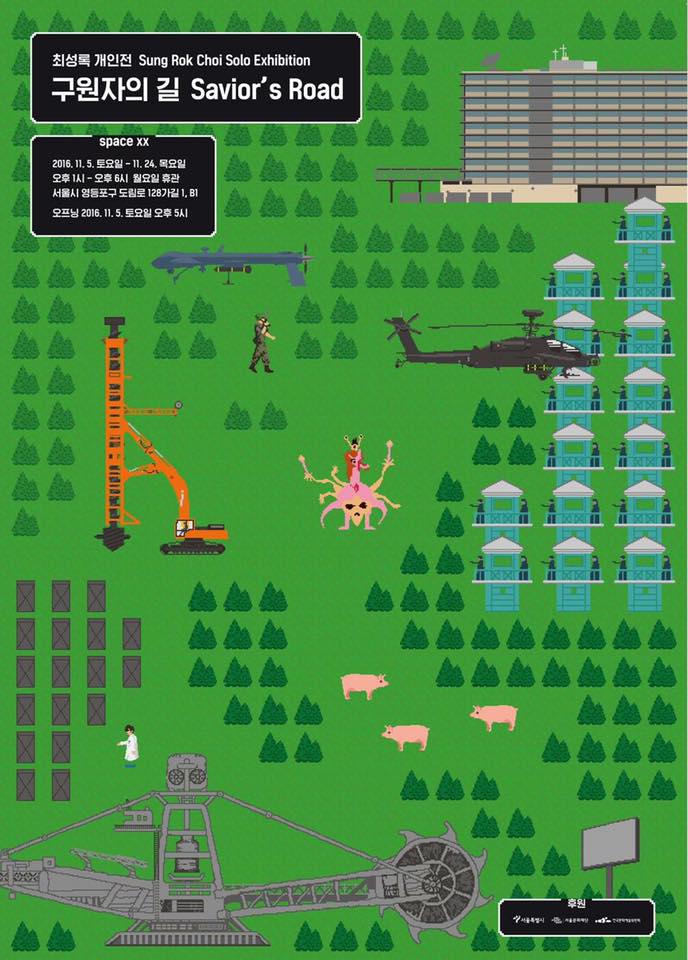
Sung Rok Choi’s work is populated by numerous entities: soldiers, laborers, scientists, crows, pigs, deer, and grotesque genetically engineered creatures, alongside technological apparatuses represented by buses, trucks, aircraft, fighter jets, and missiles. On one side, technological experiments unfold, revealing the processes through which monstrous hybrid organisms are born through mutation and transformation.

On the other, the act of excavating underground space through coal-mining machinery proceeds with an almost rhythmic movement resembling that of an amusement ride, while in reality grotesque biological experiments continue in which human and animal blood are converted into technological sources of energy. The pit at the center ultimately becomes a mass grave of corpses.

Yet these horrific images of reality are represented on such an unreal plane that they evoke the atmosphere of speculative science-fiction animation.

In truth, all living beings resemble biological clocks. Whether on the level of the individual, the species, or even the cosmic, biological rhythms inevitably exist and ultimately disappear. The labor-like rhythms enacted by the various entities within Choi’s work reveal relationships between images saturated with the desires of a networked society.

Each entity exists within patterns of adjacency and resemblance, generating cyclical structures akin to life cycles. Just as the blood of living organisms is converted into technological energy, these seemingly orderly life-cycle patterns are ultimately replaced through destruction by other systems of order, endlessly repeated and reproduced until they collapse under the logic that sustains them.

Through ceaseless modification and experimentation, the monstrousness embedded within human desire remains preserved as an irreducible Other—unable even to vanish completely. In the end, the world is never redeemed. The monster survives, while only traces remain of what once existed. Who, then, might become the savior of a world left as an unexplored territory? In the end, everything returns to futility.

References