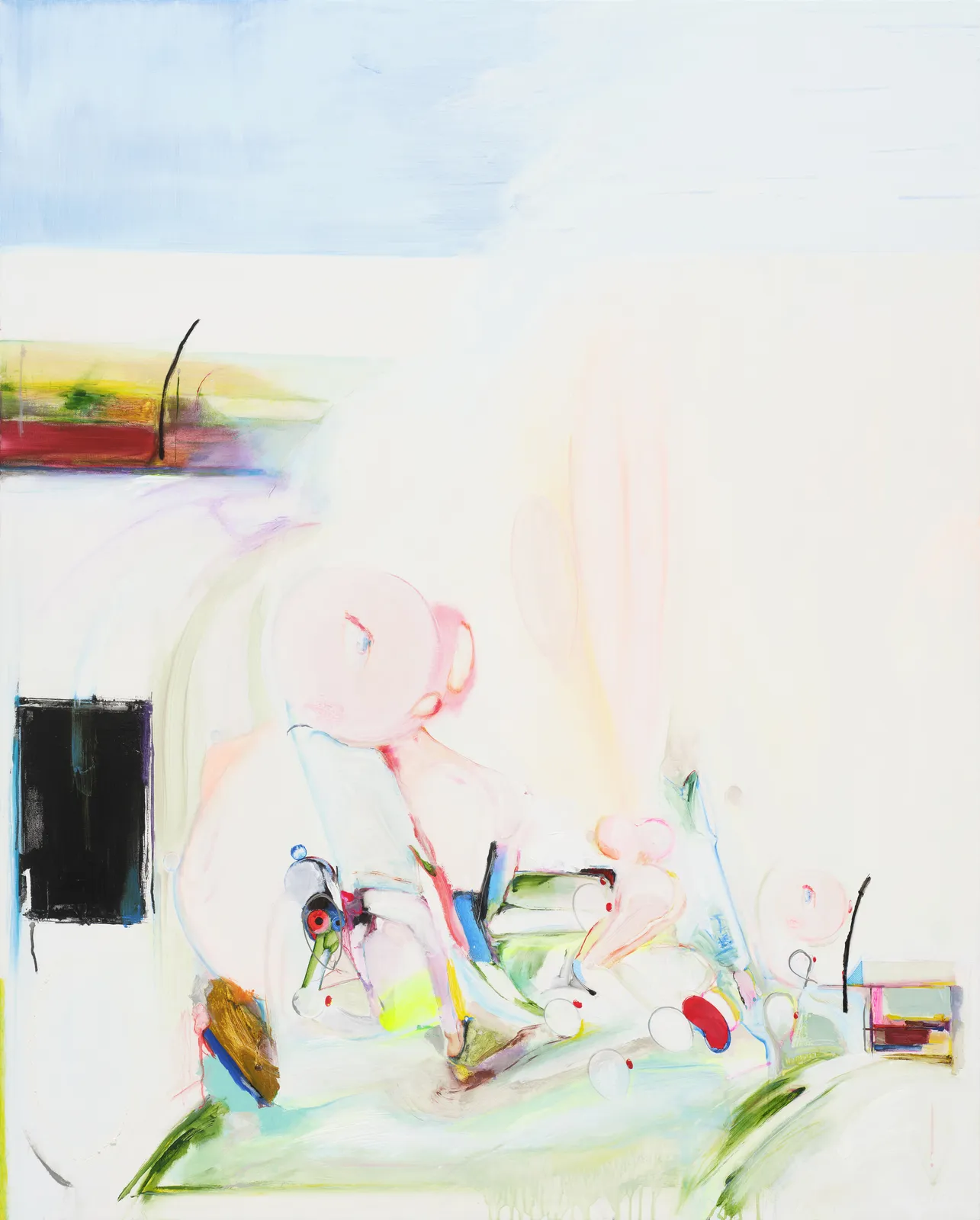
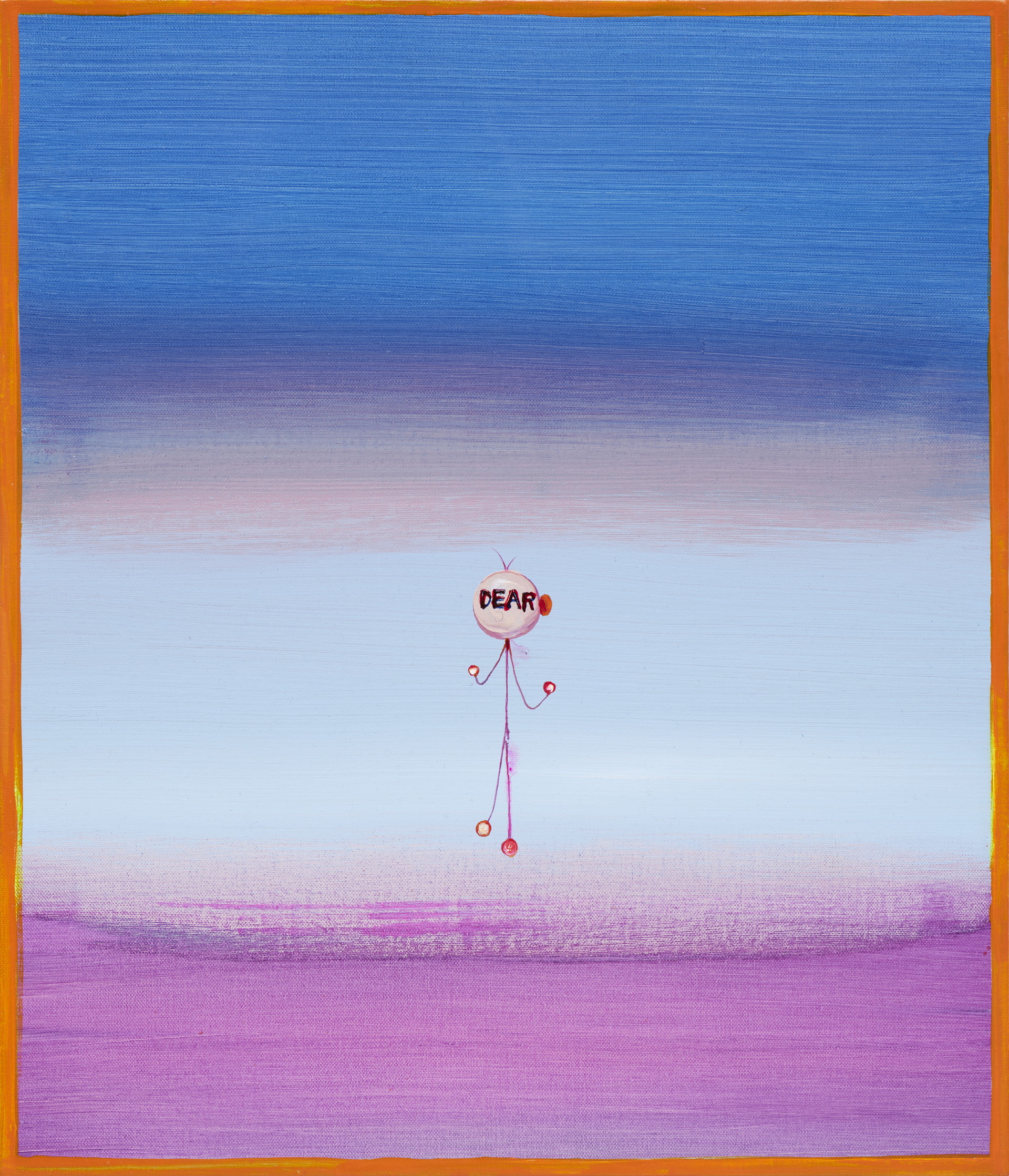
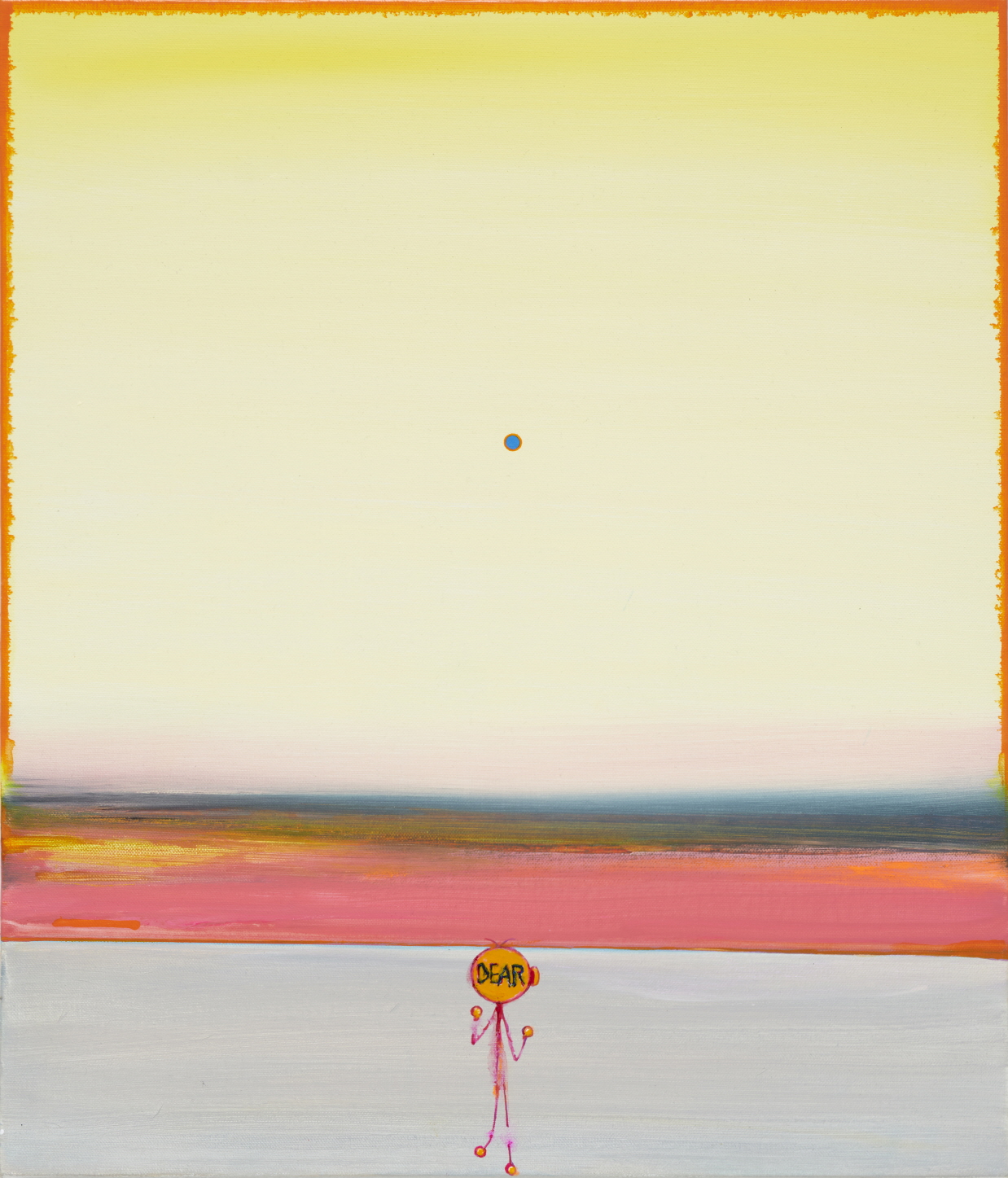
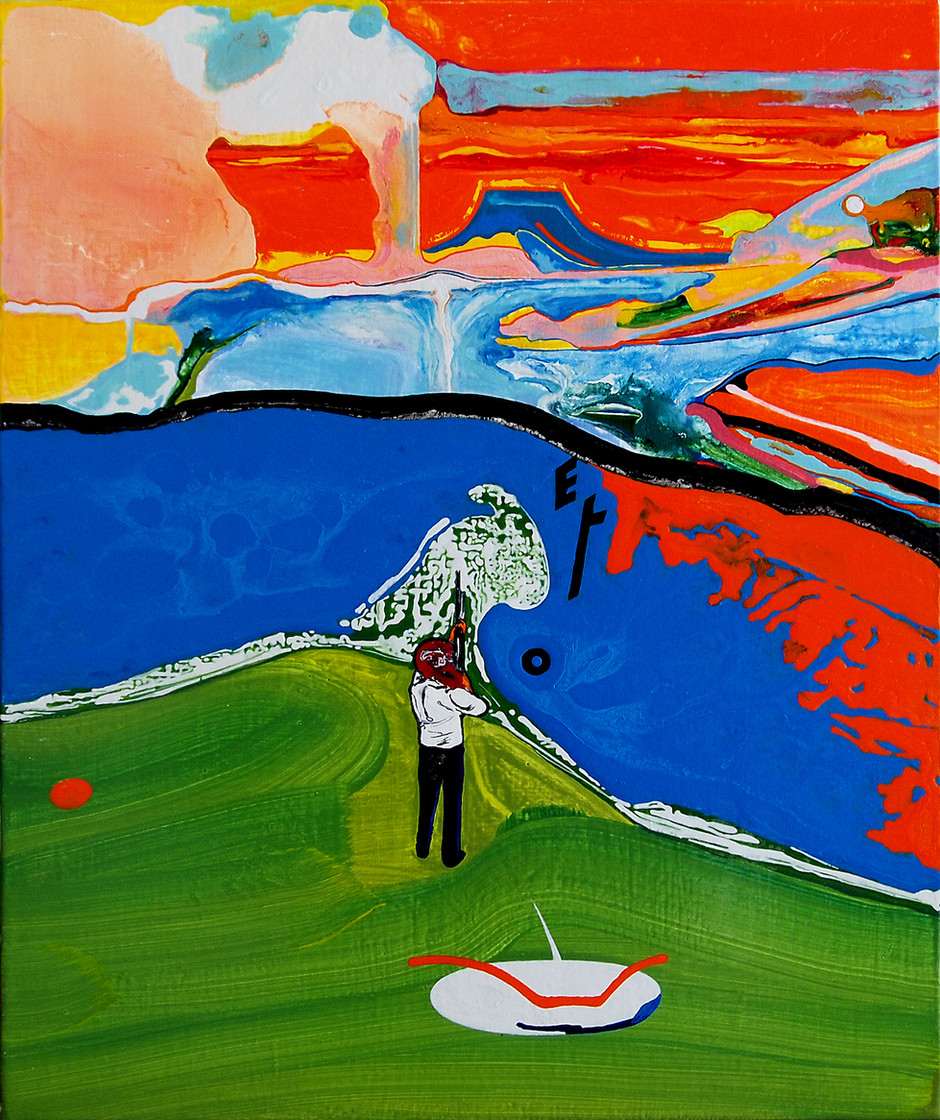
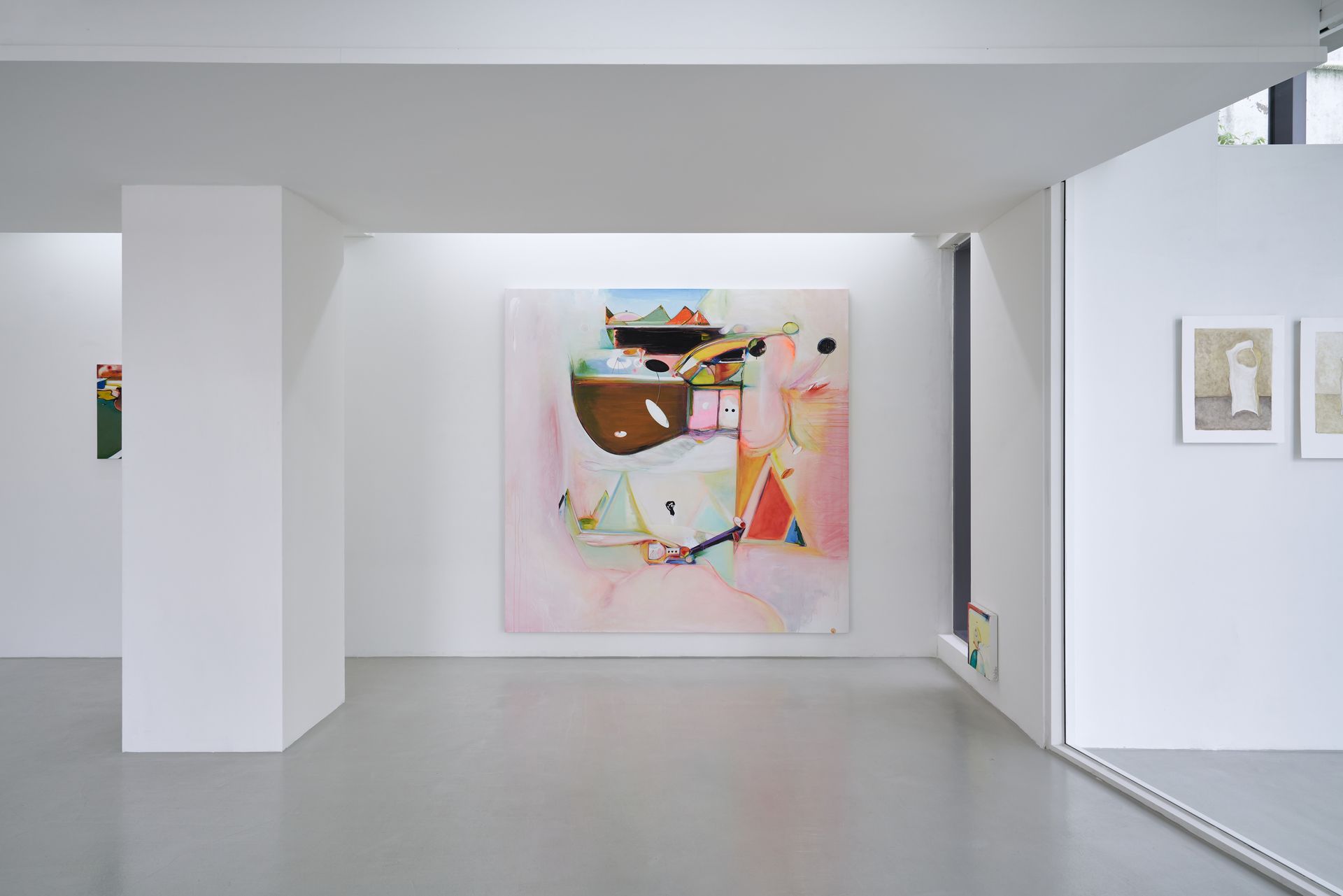
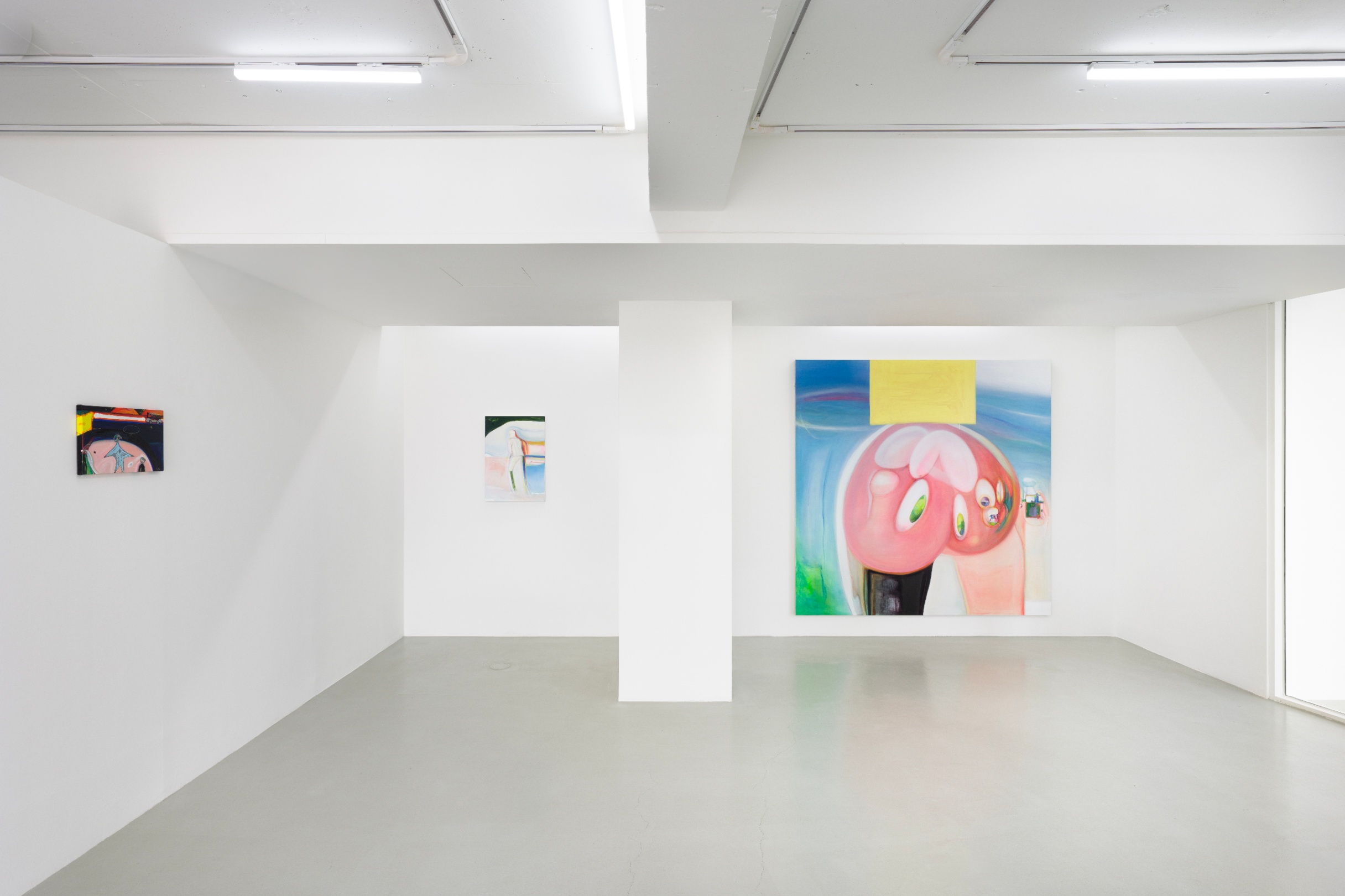
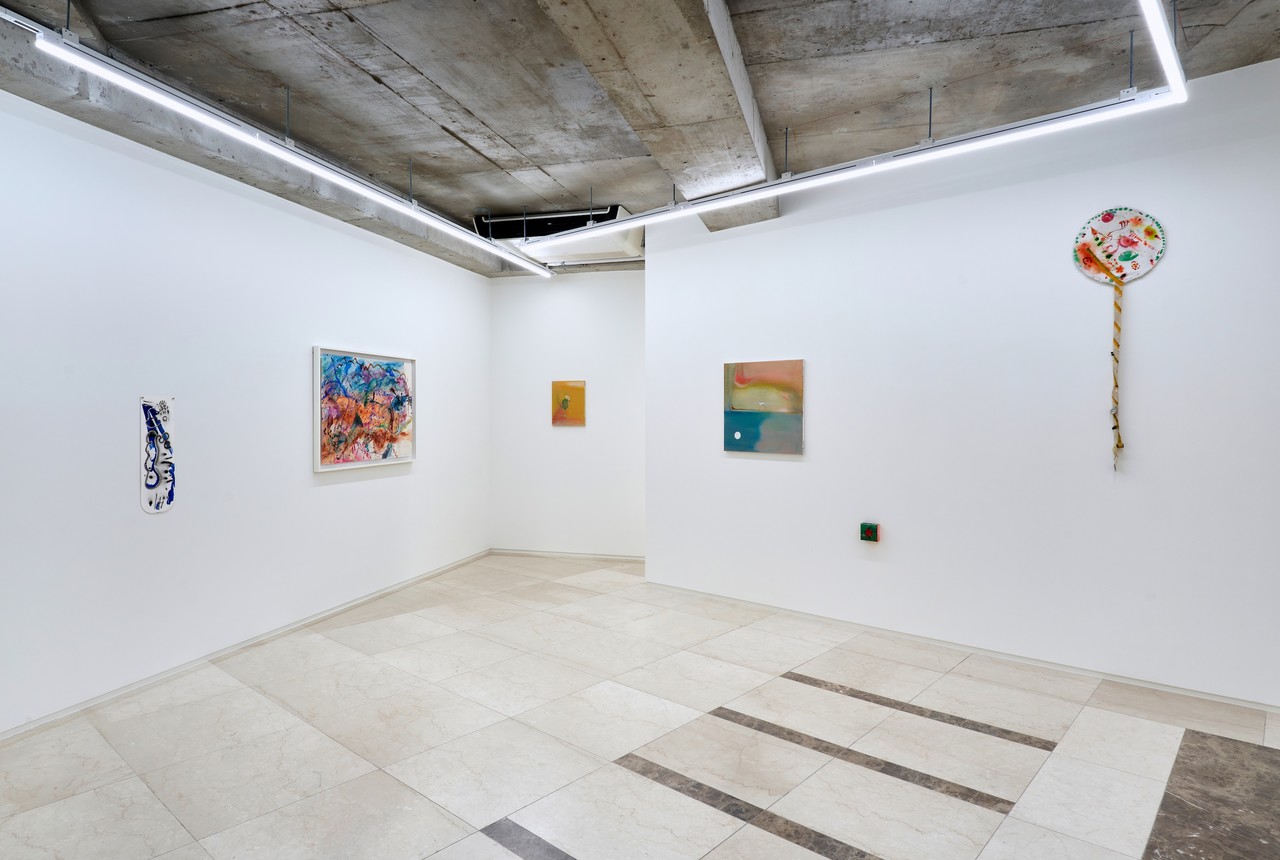
Changchang Yoo develops his works through an intuitive and improvisational process in which images emerge from accidental marks and associations. Rather than beginning with a fixed narrative or composition, he discovers forms within flowing paint, stains, and overlapping colors, then continuously expands the image through chains of visual association. This method, which resembles the spontaneous unfolding of comics, allows the work to remain open-ended throughout its making. Figures appear, dissolve, and transform into other figures, while spaces shift between interior and exterior, landscape and psychological projection. His paintings are therefore not constructed through linear logic, but through the accumulation of sensory relationships and emotional rhythms.
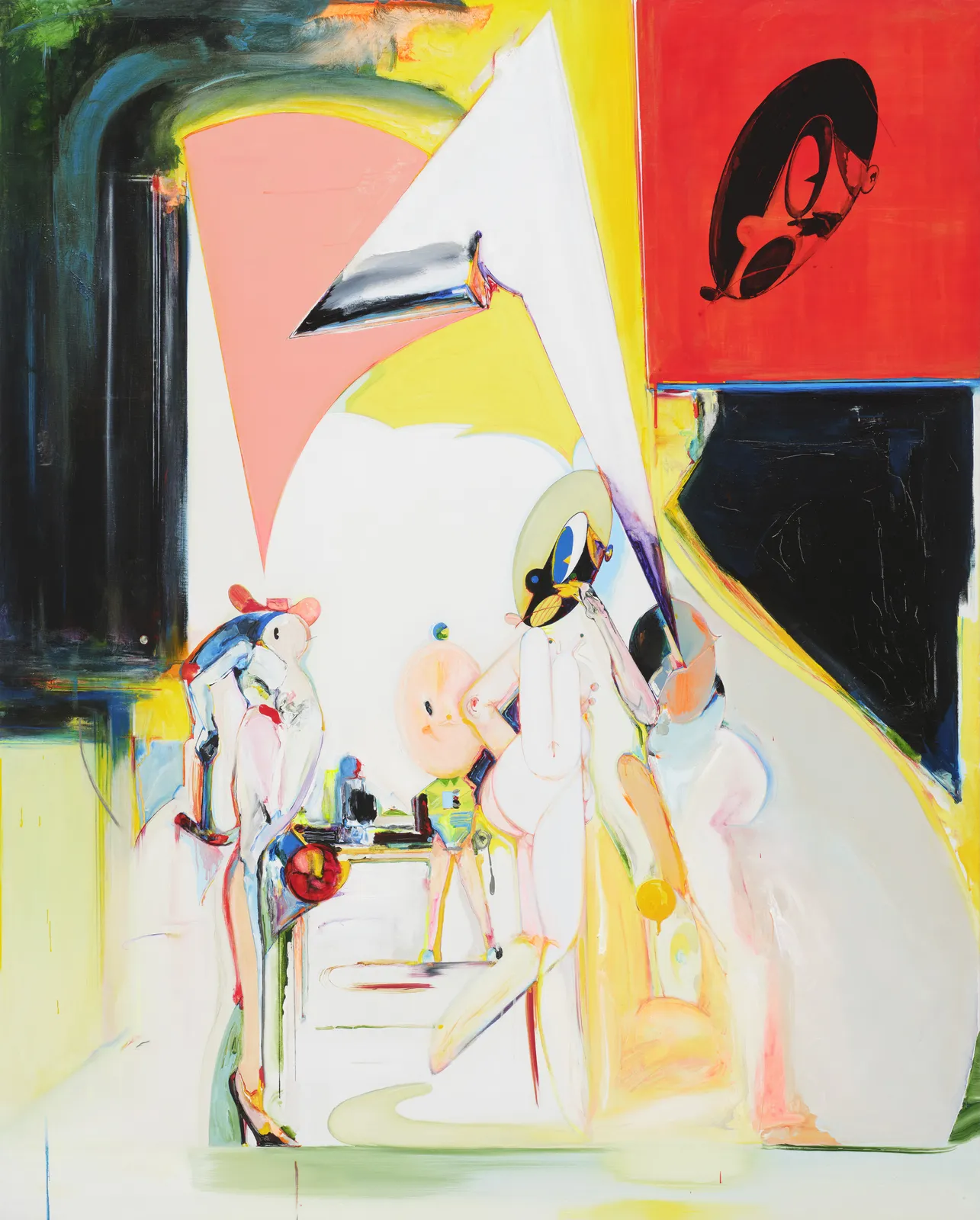
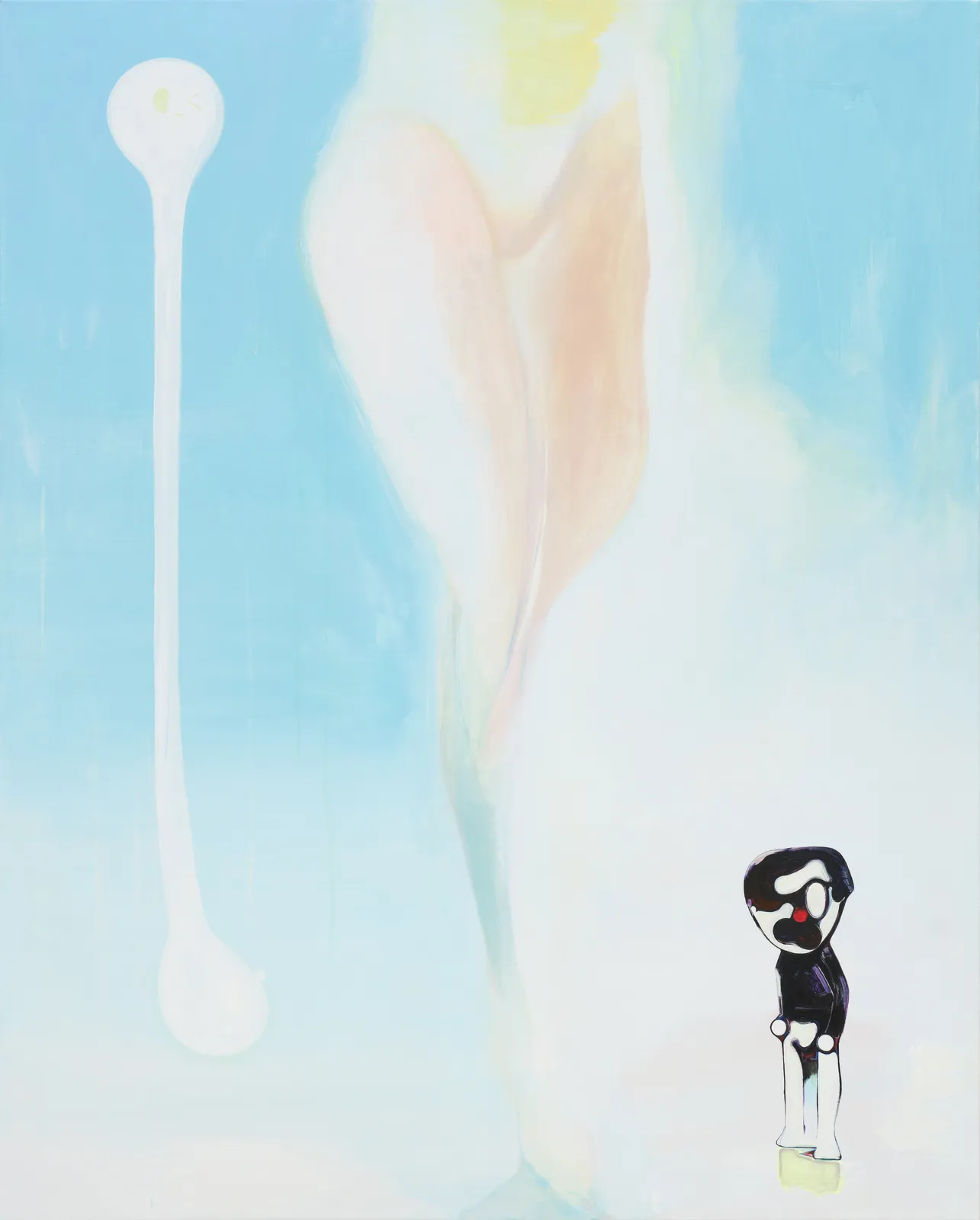
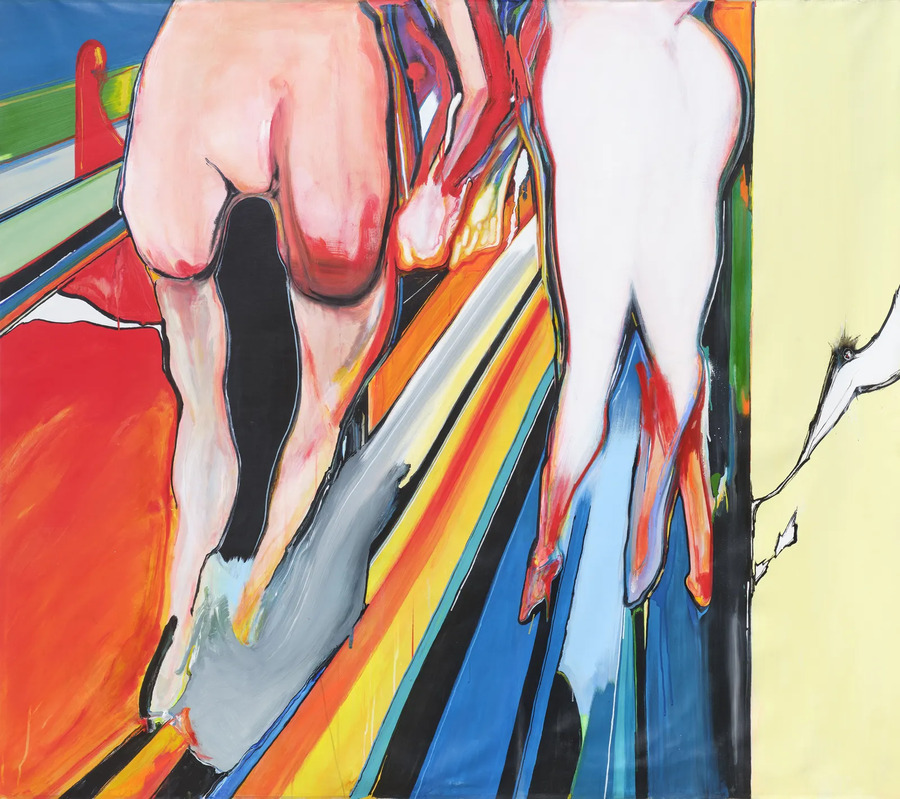
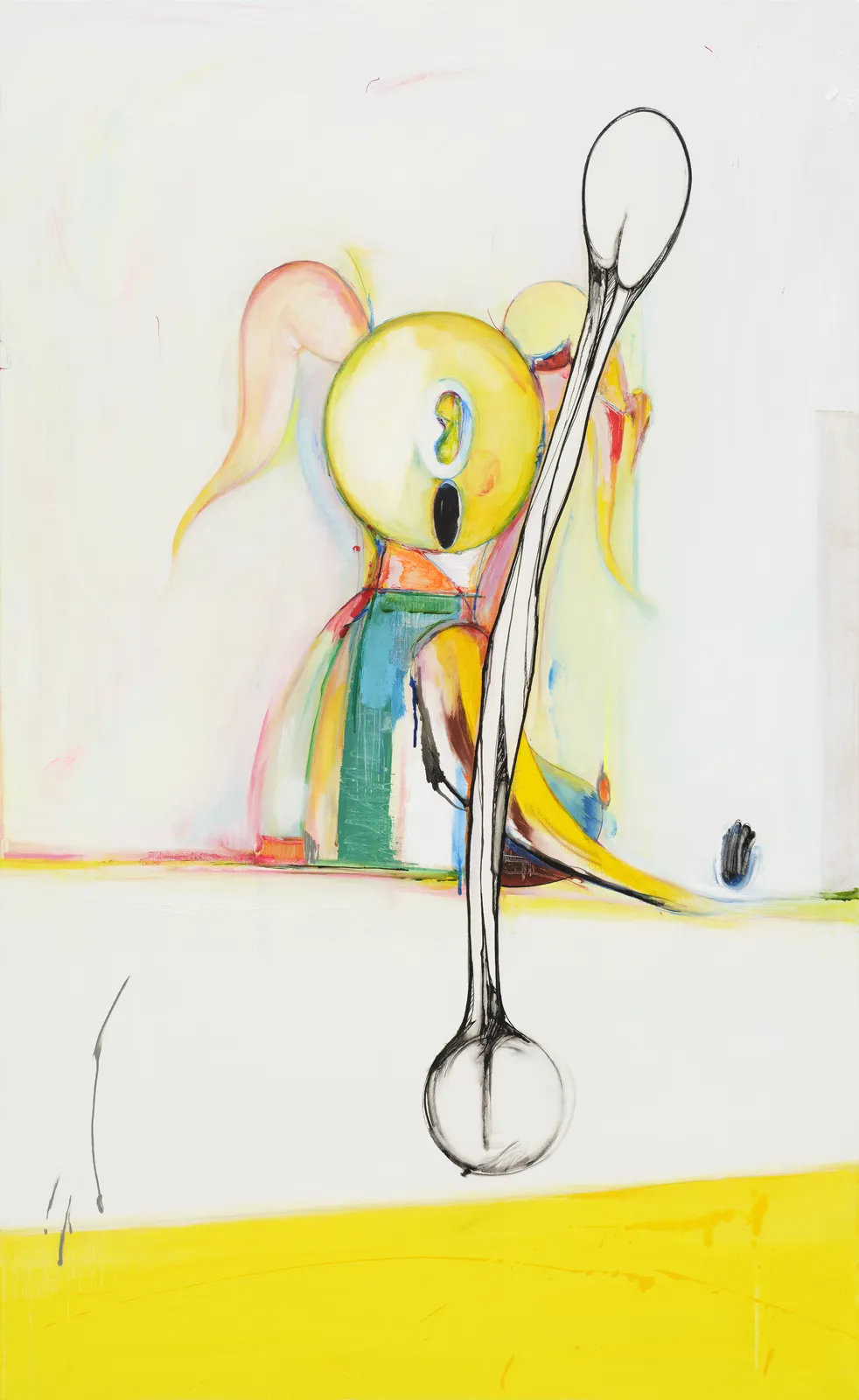
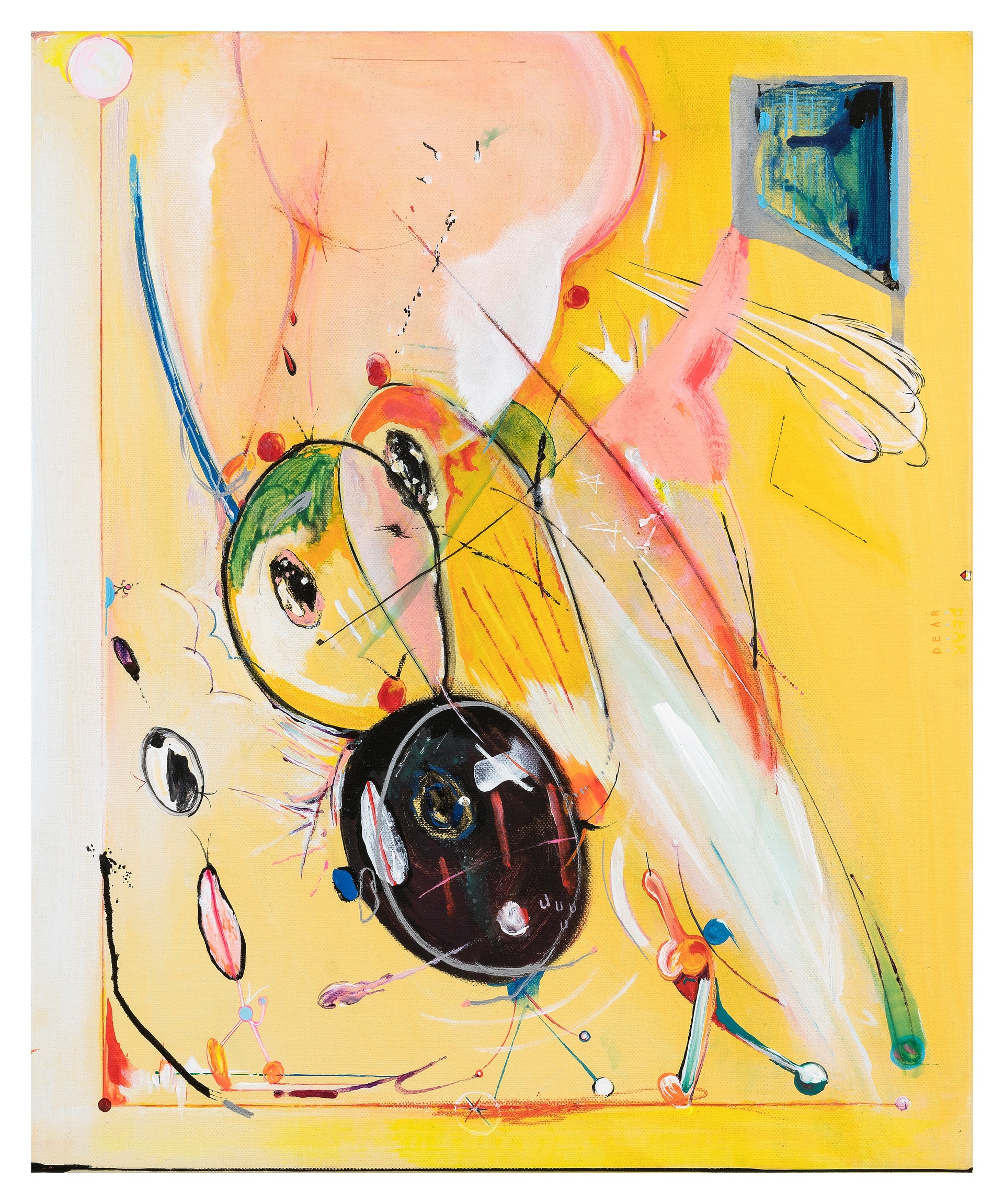
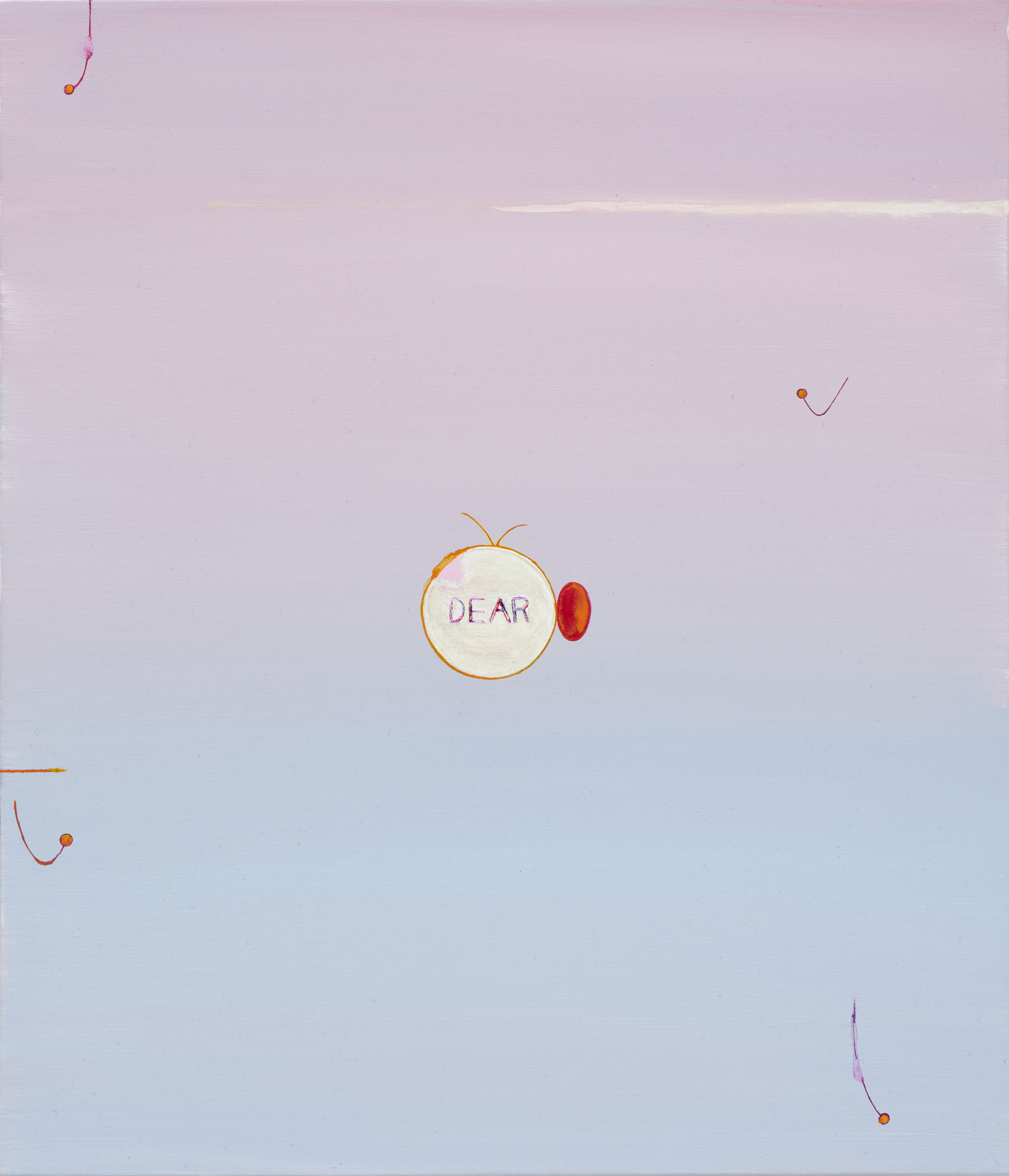
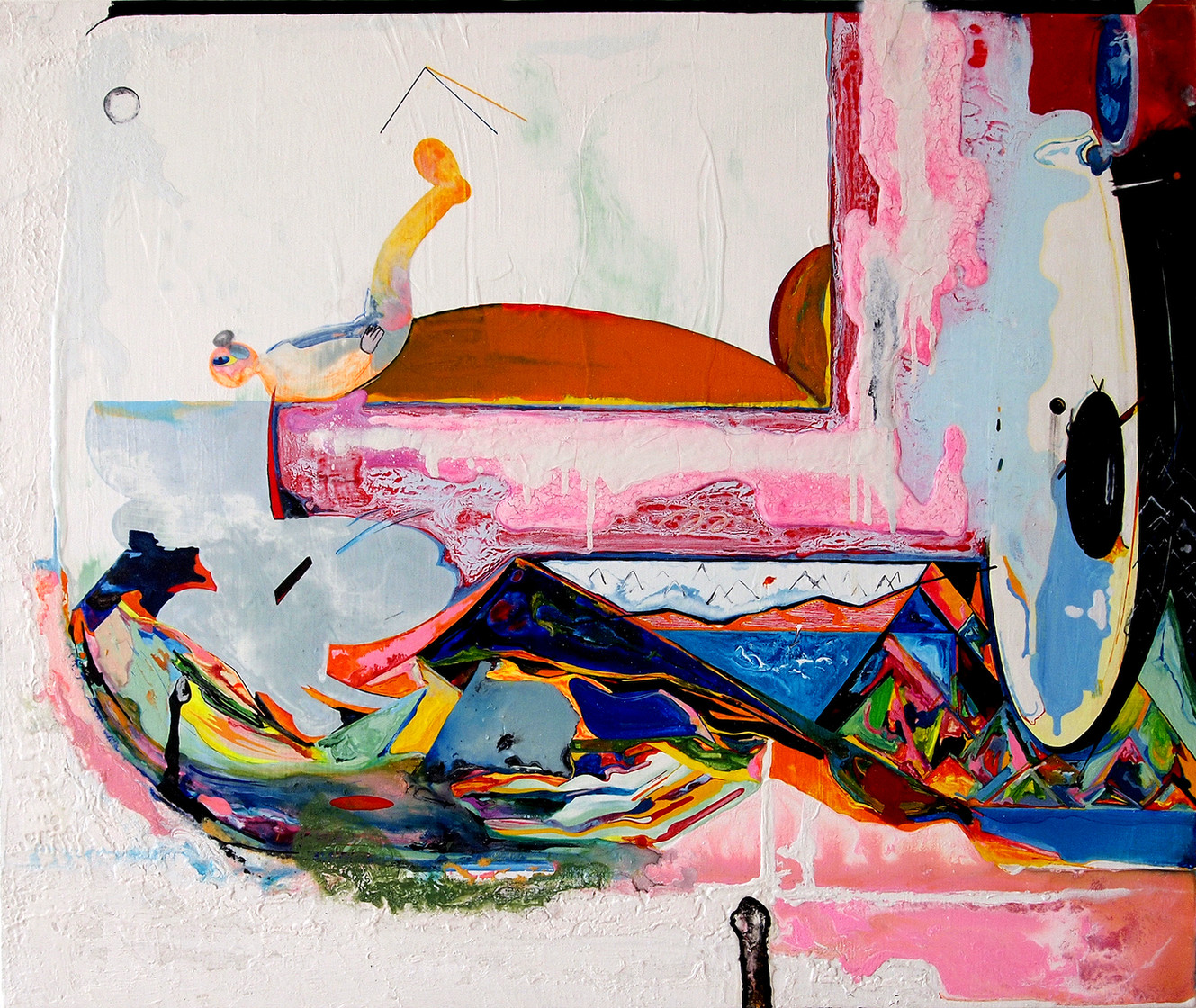
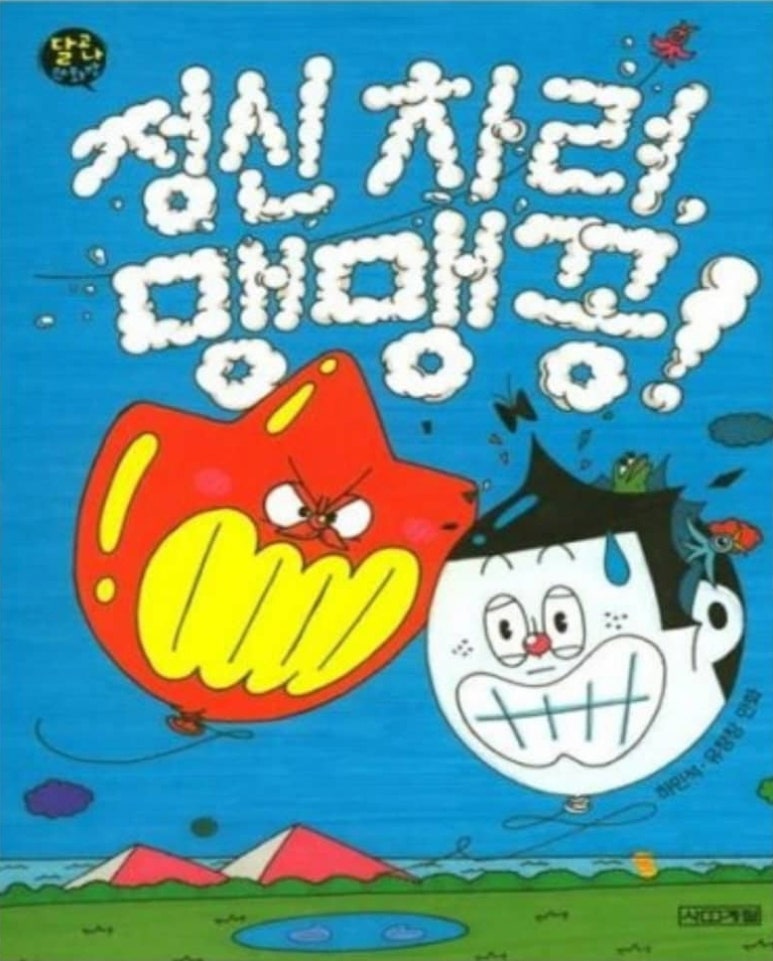
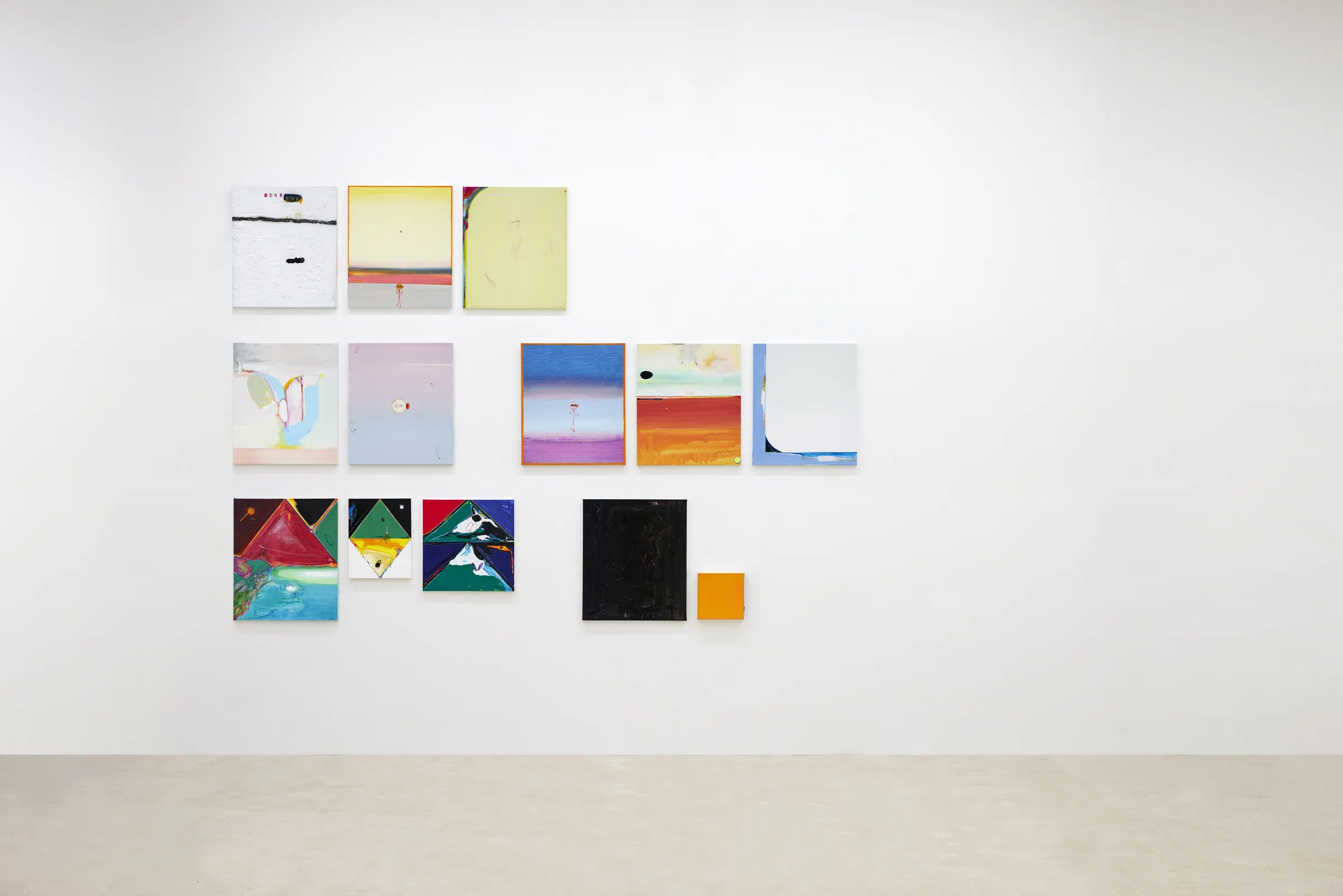
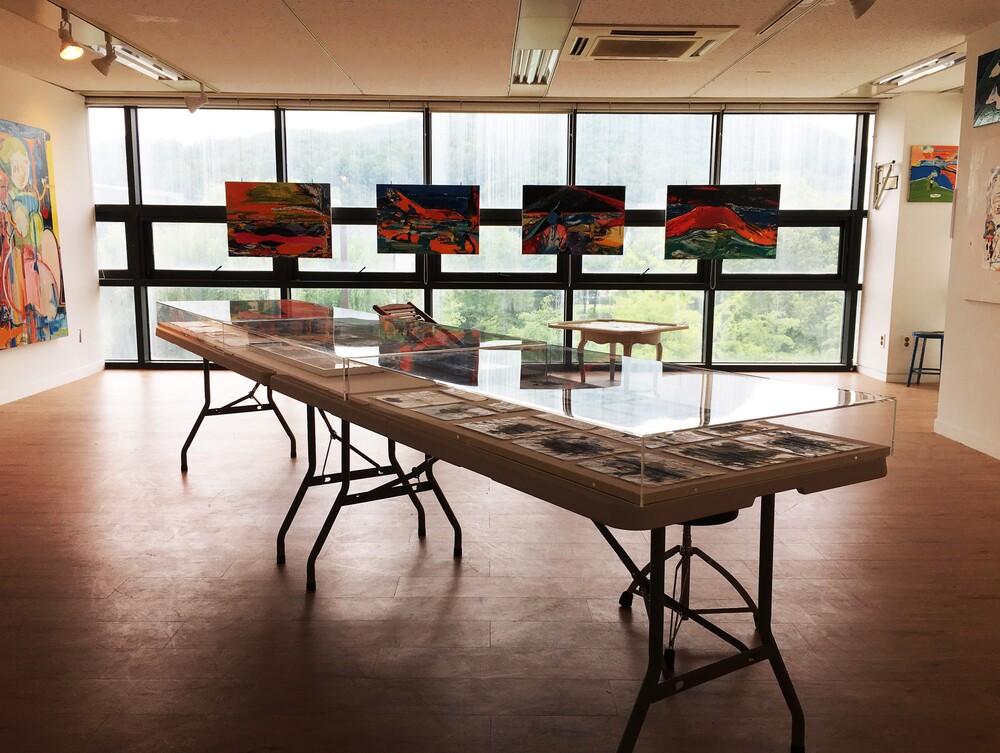
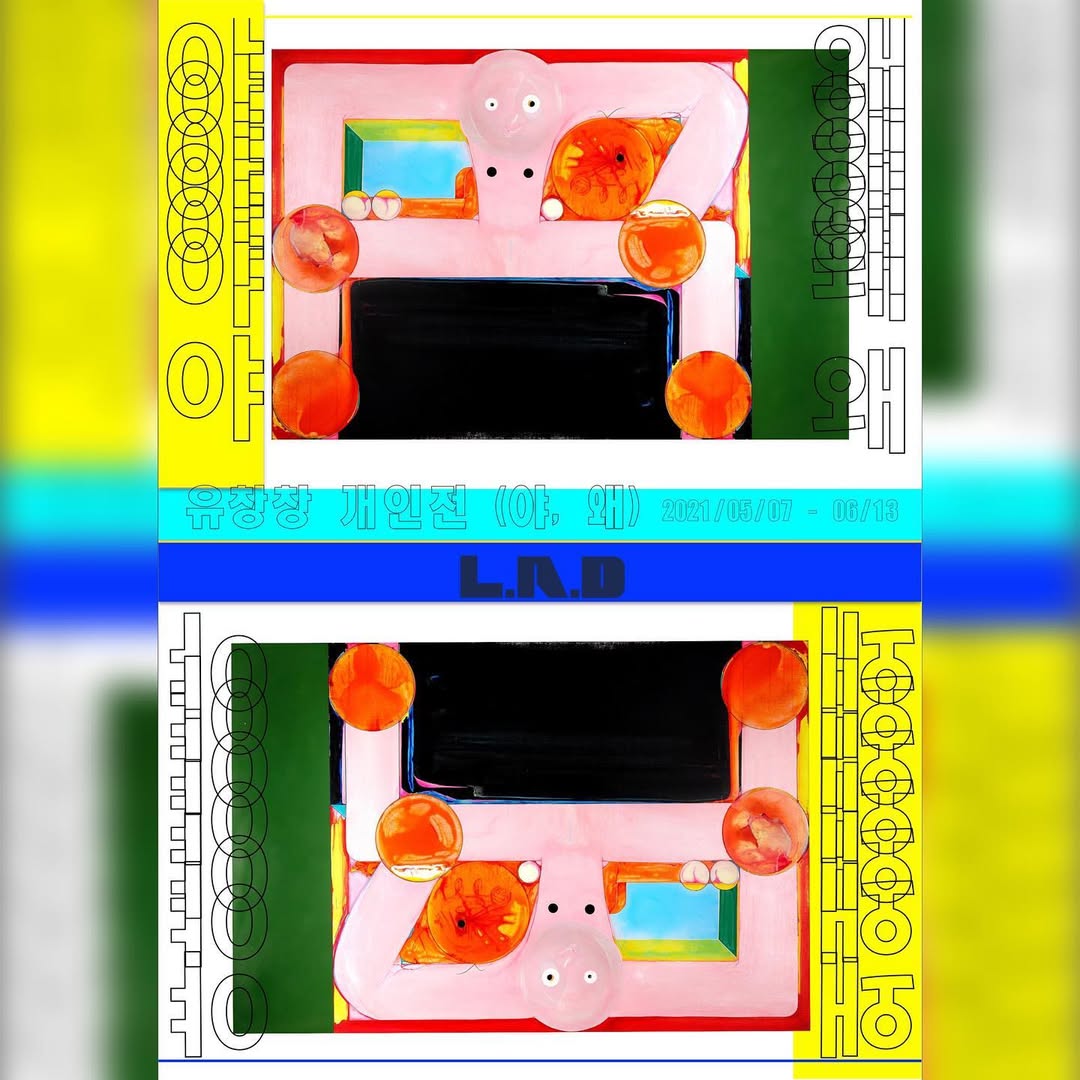
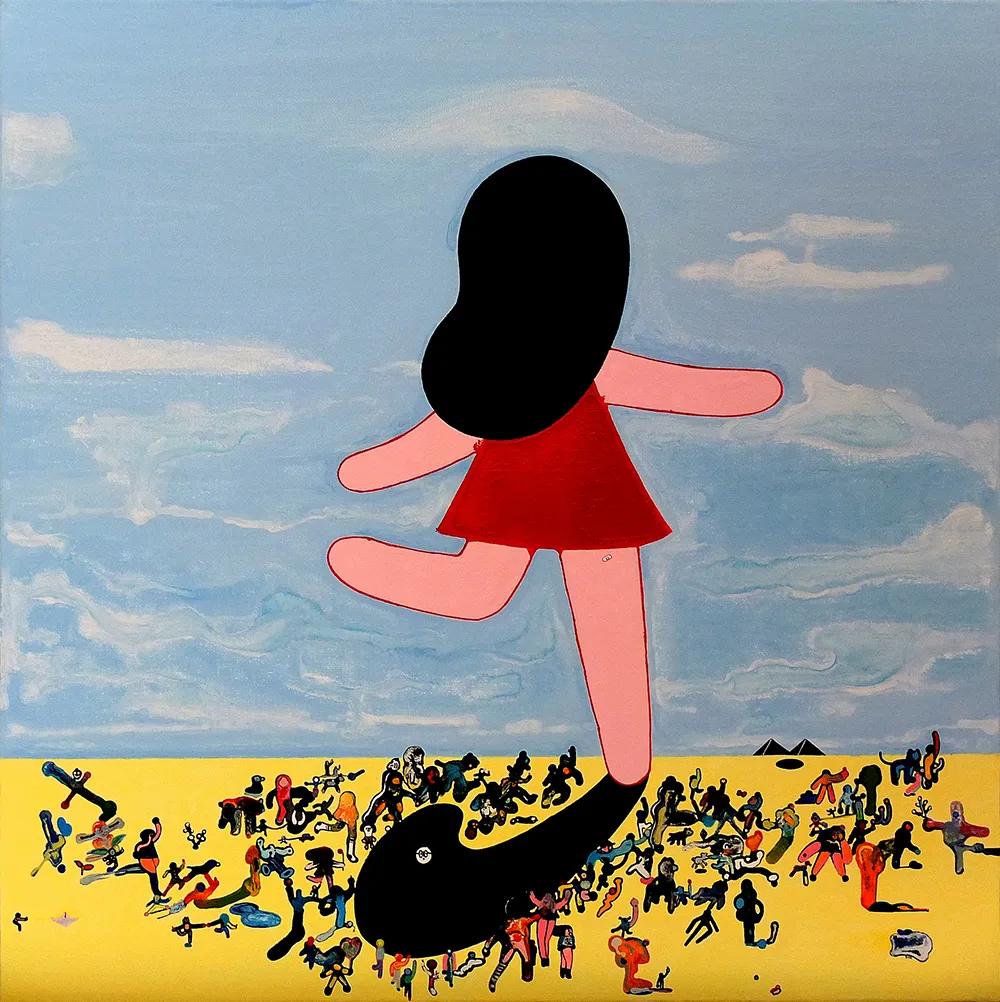
One of the defining characteristics of Yoo’s work is the coexistence of comic-like imagery and painterly abstraction. His surfaces are filled with vivid primary colors, thick contours, exaggerated facial expressions, and fragmented figures that recall animation, underground comics, and illustration. At the same time, these elements never fully settle into narrative illustration. Faces often lack clear identities, bodies merge with surrounding environments, and multiple perspectives coexist within a single composition. The artist repeatedly overlays forms and visual information in ways that are simultaneously playful and disorienting, producing images that appear familiar yet remain difficult to interpret conclusively.
Yoo’s compositions frequently maintain a deliberately unstable structure. Characters, animals, objects, and backgrounds collide within crowded pictorial spaces, creating scenes that feel noisy, chaotic, and psychologically compressed. Yet beneath this apparent disorder lies a carefully controlled visual rhythm. Repeated shapes, colors, circular forms, silhouettes, and directional movements create subtle systems of balance across the canvas. Humor and absurdity emerge through these accumulations, but so do tension and melancholy. The viewer is drawn into a state where emotional tones continuously fluctuate between comedy and unease, intimacy and alienation.
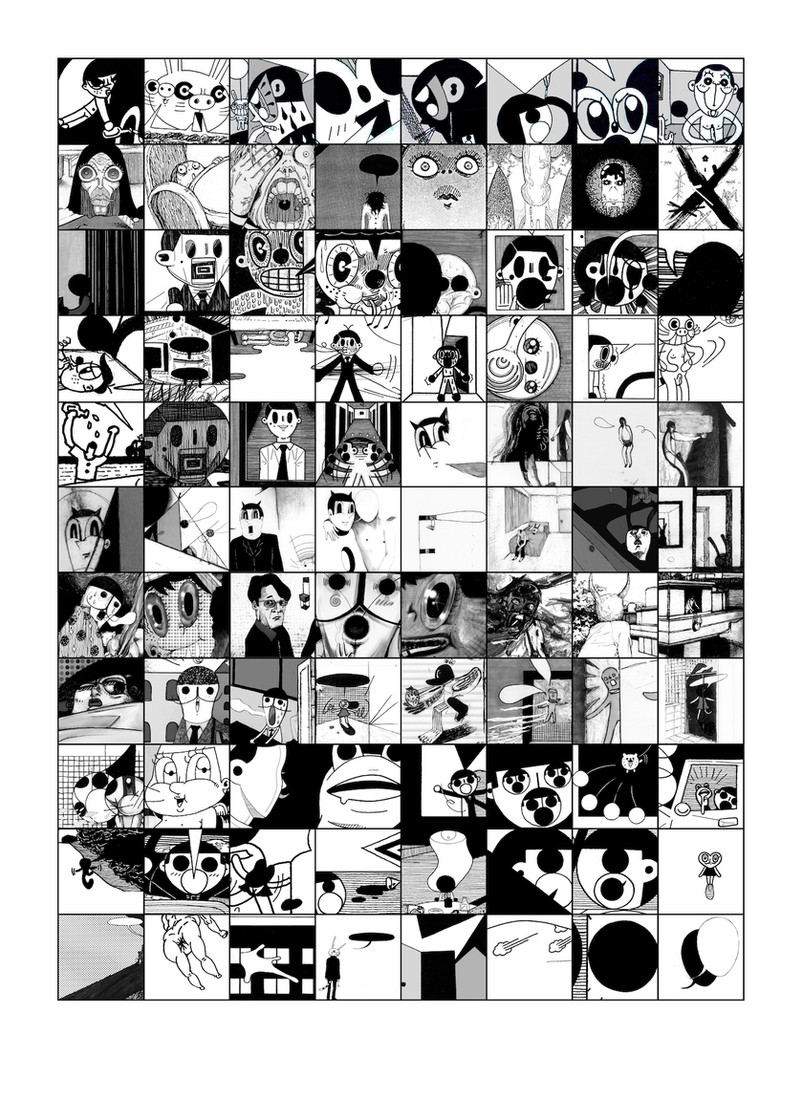
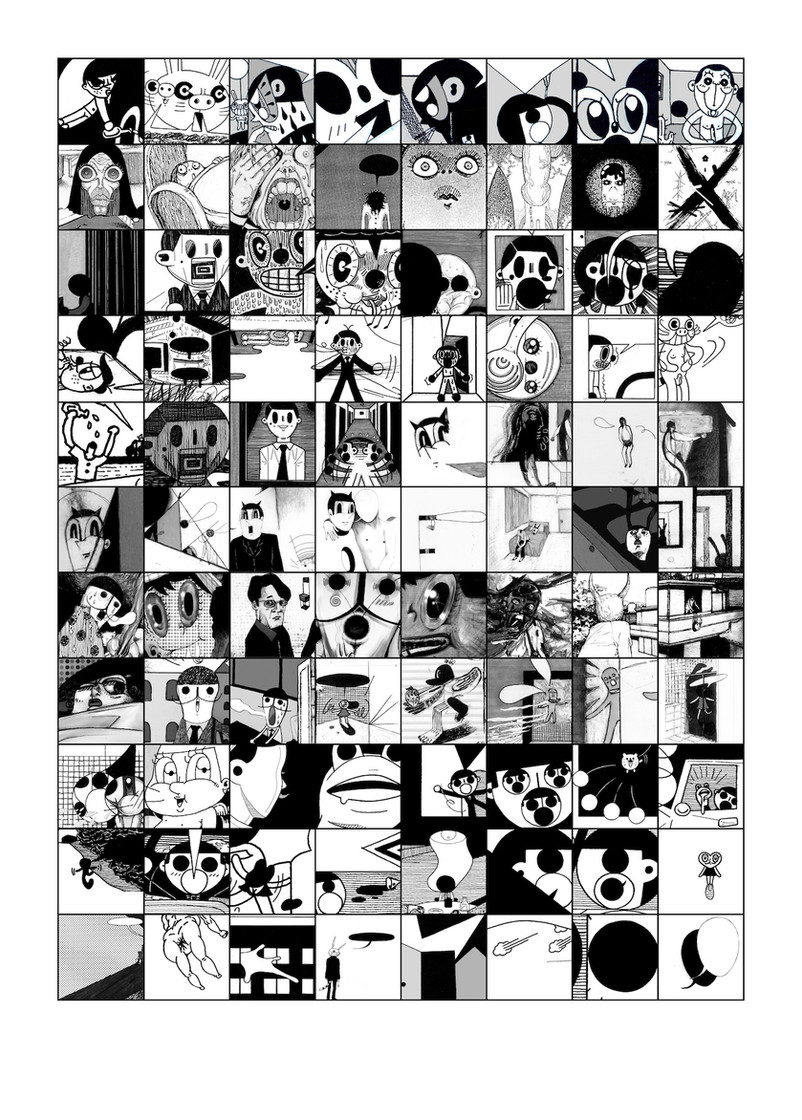
His visual language also reflects the influence of comics not merely as subject matter, but as a structural way of seeing. In Yoo’s earlier comics, individual panels often functioned less as steps within a coherent story than as dense visual units requiring prolonged attention. This sensibility continues within his paintings, where each fragment of the surface operates almost like an autonomous panel containing its own emotional and visual logic. Rather than directing viewers toward a singular meaning, Yoo encourages a drifting mode of perception in which interpretation remains partial, unstable, and open. Through this process, painting becomes not a fixed image but a site where sensation, narrative fragments, memory, and psychological atmosphere continuously intersect.