The past forty-five years mark a period during which South Korea, passing through a long and dark tunnel, entered the central stage of world history for the first time and acquired contemporaneity. During this time, the country experienced absolute poverty, ideological conflict and political repression under the Cold War, the negative symptoms of rapid industrialization, the antagonistic values of the Cold War, the bubble economy, and subsequent long-term economic stagnation. In such processes, essential values are often inverted, principles neglected, and many significant matters inevitably fragmented, forgotten, or distorted. Art can hardly be an exception.
This exhibition seeks to examine how art responded to these processes, or how it problematized its own era. While the 1960s and 1970s were a time of ‘artistic avant-garde,’ marked by abstraction, conceptual art, and happenings, the 1980s constituted an era of fierce political resistance—a ‘political avant-garde.’ In the history of Korean contemporary art, artistic and political avant-gardes have never been truly combined, nor have they met within a single exhibition. These two trajectories remained distant from one another and were often even antagonistic, pointing out each other’s shortcomings. Against this background, art of the 1990s emerged, and following the Gwangju Biennale in 1995, Korean contemporary art entered a period of profound transformation as it encountered the waves of globalization.
Even though artists may share the same historical moment, each produces work composed of distinct and divergent lines of sensibility. Artists of the 1960s–70s and those of the 1980s tended to cohere around particular ideological movements, but by the late 1990s they had largely dispersed. History, by affixing labels to each era, seeks to banish magic and bind individuals into groups, yet each remains a singular being. Each is like a ray of sunlight. Sunlight is not homogeneous, nor does it derive from a single sun. To understand sunlight merely as particle motion reflects a Futurist desire. Meaning in language arises through difference. Even a regularly scheduled train traveling back and forth along the single line between Seoul and Busan every hour carries different drivers, station staff, and passengers each time.
In this sense, the exhibition attempts to dismantle the continuity of Korean art history from the perspective of becoming rather than history. It is concerned with how to establish an active relationship with the present, and with what perspective an exhibitionary landscape can be formed. This is akin to creating a film or a novel through individual acts of memory. Some parts function actively, others remain unproductive; some are idle, others exaggerated, and some may even appear absurd. The exhibition constructs a movable boundary between selectively interpreted, narratively applied elements and an opaque assemblage of heterogeneous components. To impose a critical gesture that presents archival memory—’the memory of Korean art’—as something that could belong to anyone, on the assumption that it might be misunderstood, would be to fix meaning in advance.
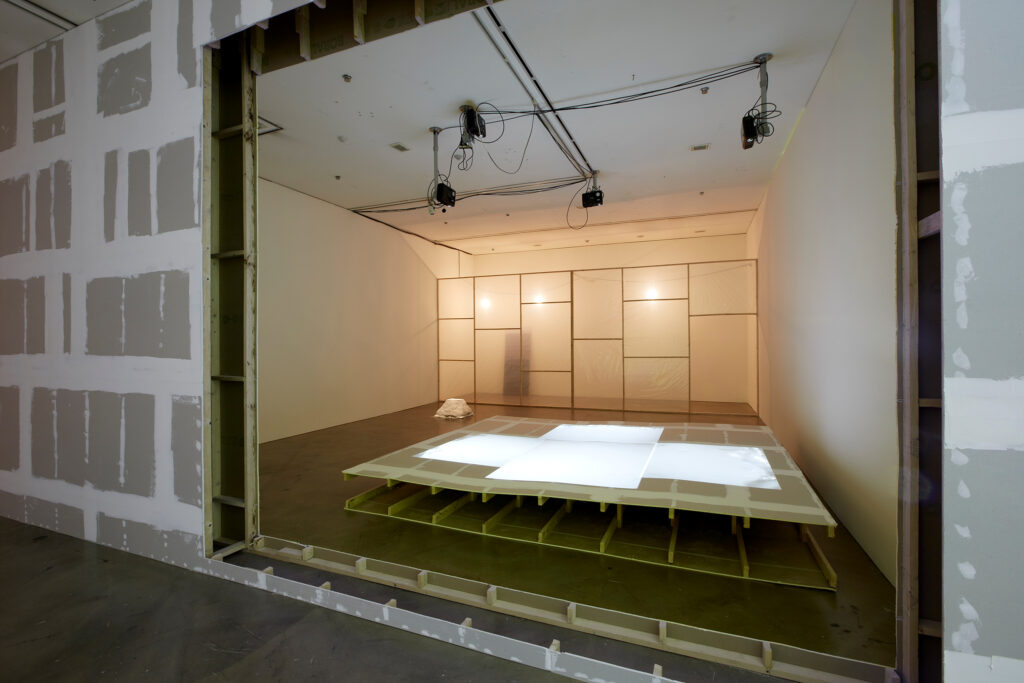
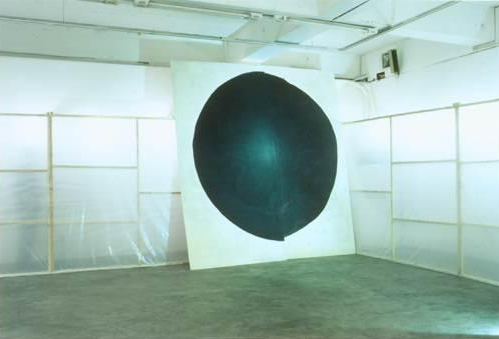
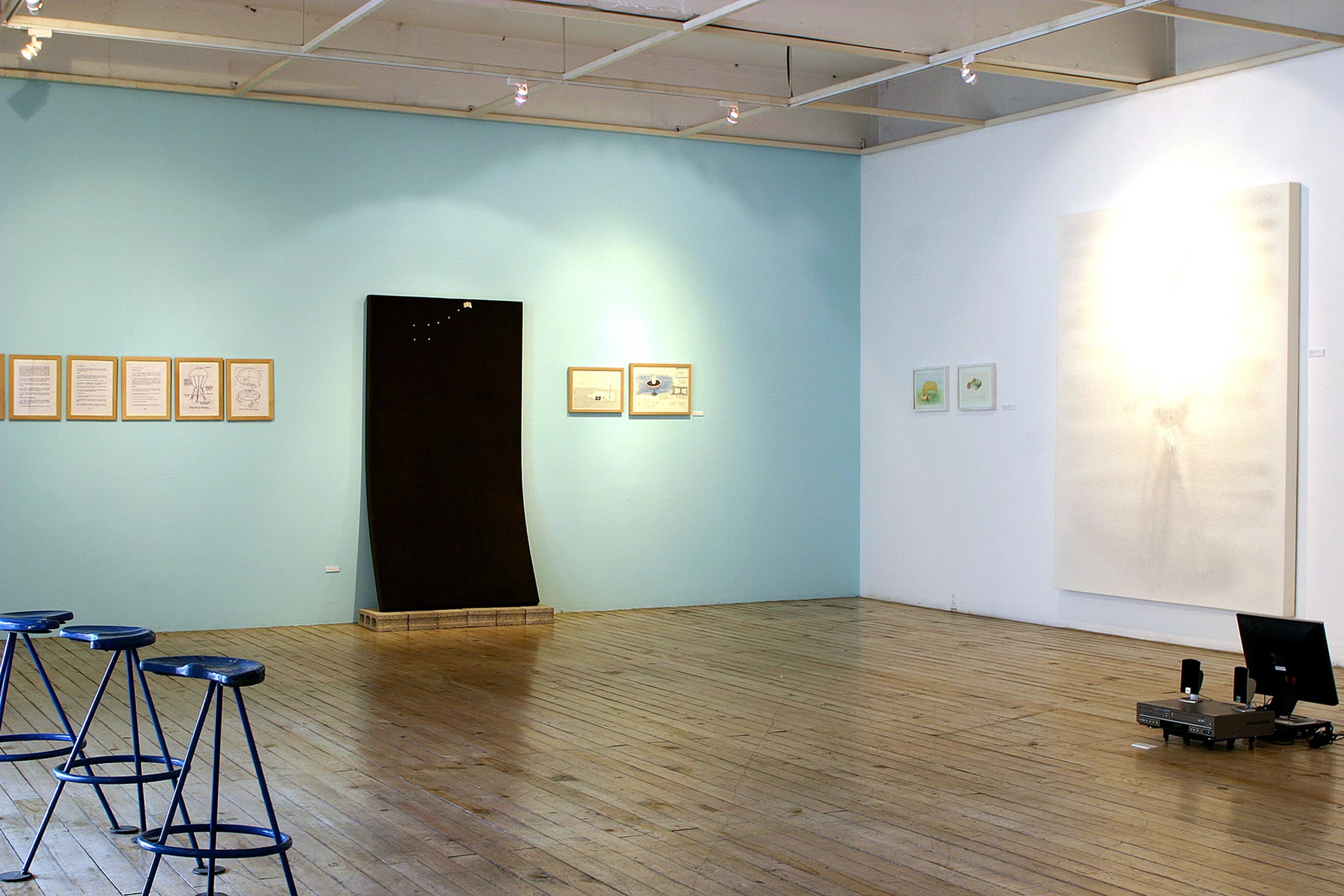
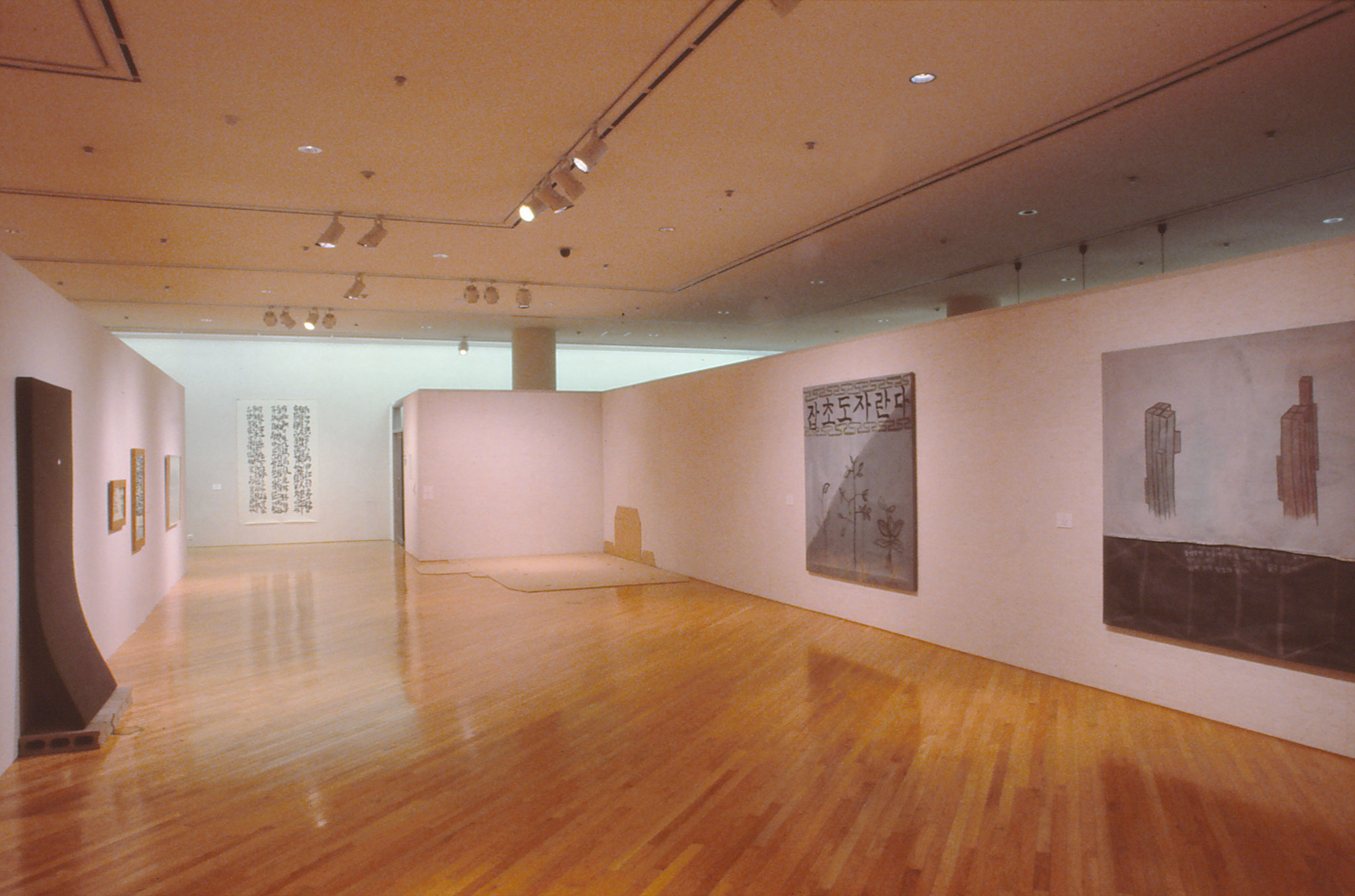
At the very least, I reserve the right to refuse such an approach. Although the exhibition space is small, it expands as one descends underground, becoming cavern-like and capable of generating a resonant atmosphere. Within this exhibition, I sought to create a space rich with memory—an open zone of memory—where the dead and the living, the known and the unknown, encounter one another in the present tense. The interior vibrates and intersects between the continuity and discontinuity of history. The aim is not to abolish history, but to actively interrupt its continuity. After the exhibition opened, the first floor came to resemble the head of Medusa, with serpents writhing in different directions, or branches and leaves swaying in the wind.
The intermediate underground level forms a thick trunk, not as a single axis of 1980s Minjung art, but as multiple intersecting branches. The lowest underground level functions as roots embedded in the earth, intended to convey a sense of vigorous force. The exterior of the museum is conceived as an open world of ‘non-history.’ At the threshold between this open world and the interruption of historical continuity stands Ahn Kyuchul’s house made of recycled doors. In the courtyard, concepts that recontextualize already existing sculptures are placed; on the rooftop, Oasis Group’s nomadic house and café appear, while Lee Joong Keun’s flags signal a new departure. A great ship advancing toward what is yet to unfold unfurls its flags in the formation of a hakikjin (crane-wing formation).
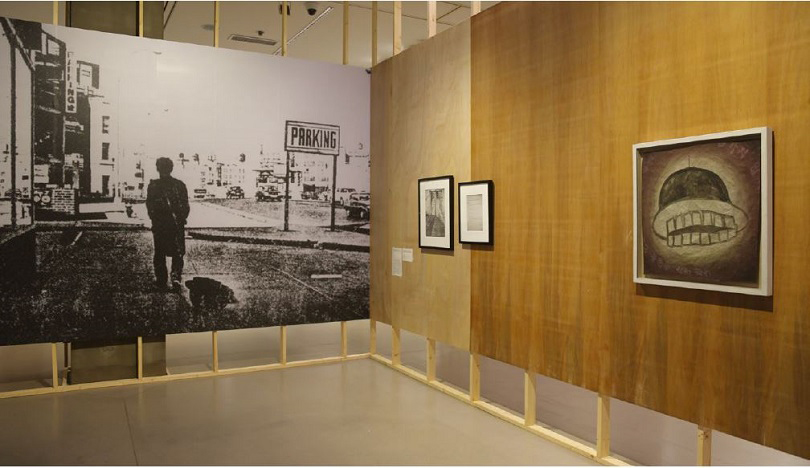
This exhibition does not present works and documents in a linear, evolutionary order. Rather, it applies to Korean art history the significance of the simultaneous coexistence of heterogeneous elements—what intellectuals only began to recognize in the late 1990s as the ‘explosive force of time.’ It is therefore neither a retrospective nor a reevaluation. It does not seek to prove or criticize the past, but to commemorate art that has shone over the past forty-five years since the 1960s.
Among the artists who created this art are many who never achieved recognition and many who were treated as marginal figures. Accordingly, this exhibition invites a large number of artists positioned outside the mainstream of the Korean art world, deliberately excluding the conventional stylistic trajectory from Art Informel to Monochrome that has long been accepted as the dominant discourse of Korean contemporary art.
What mattered most in this exhibition was not historical significance, but vitality. It was essential that viewers could sensorially perceive the presence of fresh energy. This is particularly important, as exhibitions should not be constructed by simply aggregating opinions, nor through dialogue between amateur viewers and professional artists. Such approaches risk expelling art itself and replacing it with event-driven advertising designed merely to attract visitors. In such cases, no genuine vitality exists—only artificial manipulation.
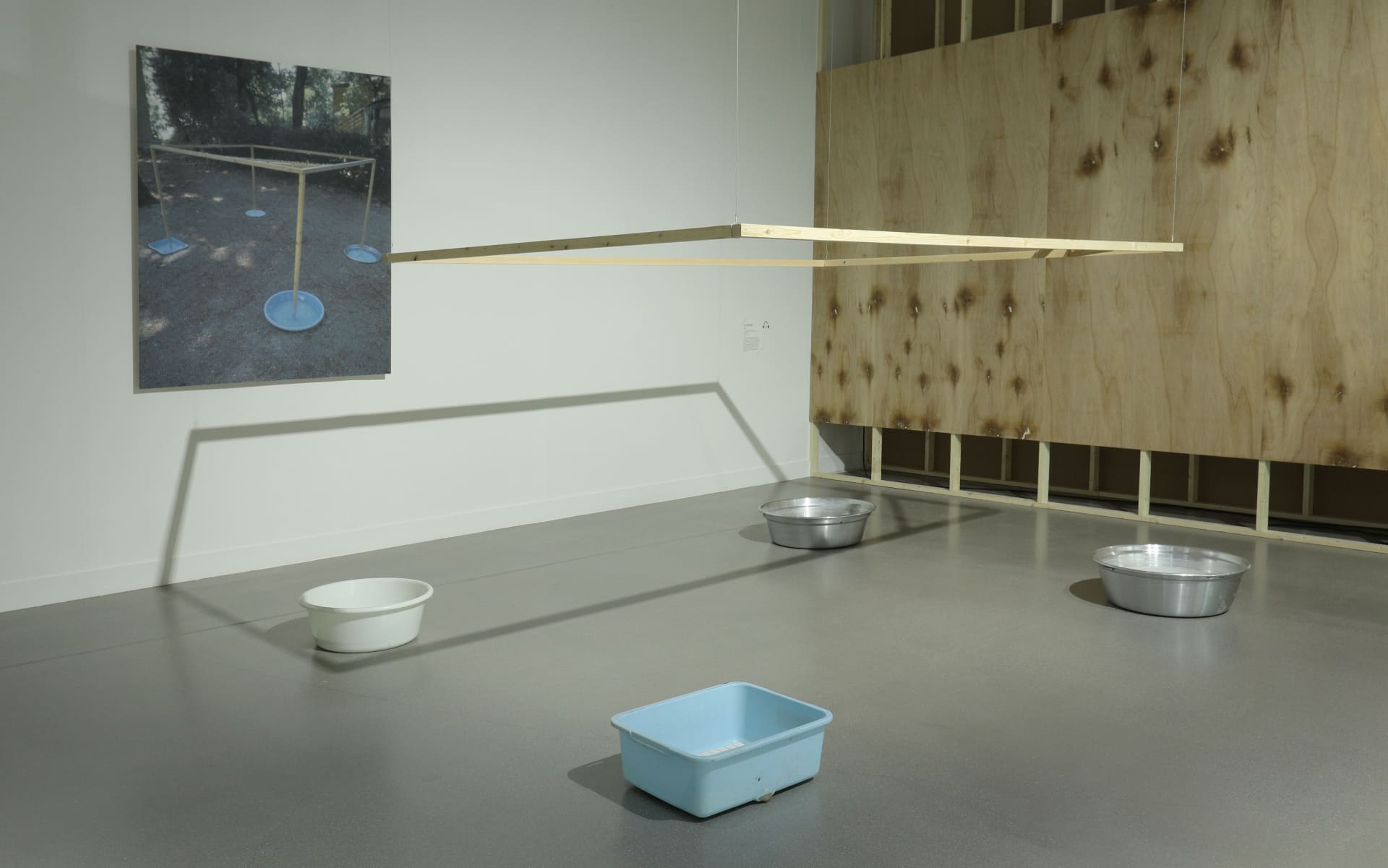
《You Are My Sunshine》 seeks to animate past works in the here and now by generating vitality, providing context, establishing dialogic relationships among works, and incorporating oral-history video recordings and documentary materials from artists, critics, and witnesses to facilitate understanding and infuse the exhibition space with energy. On the opening day, LEE Kunyong and SUNG Neungkyung—key figures and leaders of the S.T. Group, which spearheaded conceptual art in Korea—also engaged directly with audiences through live performances.