Hapjeong
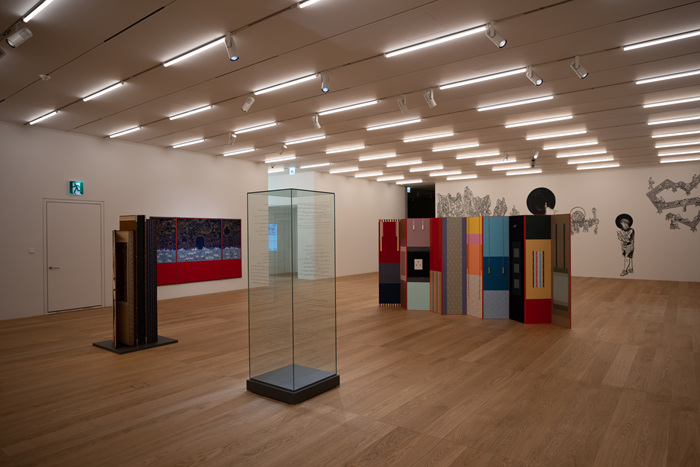
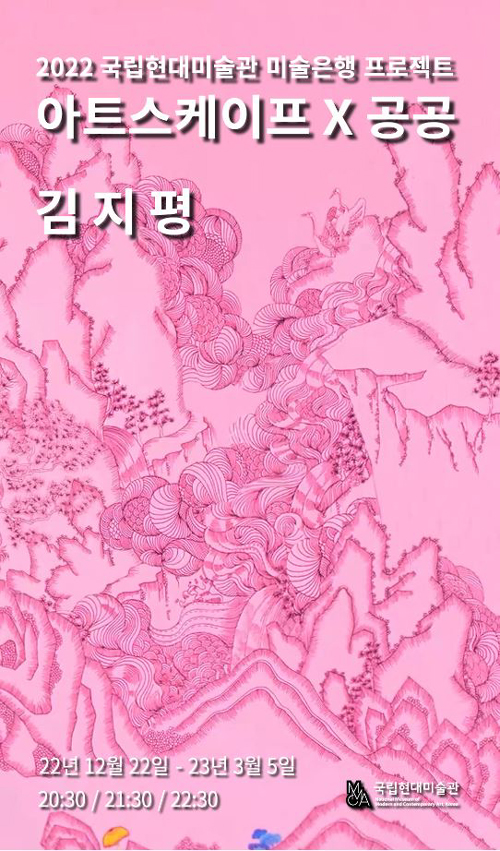
District presents Kim Jipyeong’s solo exhibition 《Jaenyo Duk Go 才女德高》 from August 4 to 27, 2017. Kim
Jipyeong has consistently articulated a contemporary worldview through the
techniques and formal language of East Asian or Korean painting. In this
exhibition, the artist emphasizes the language of femininity that has traditionally
been taboo in classical painting, while also examining concrete painterly
methods for liberating this prohibited language.
The exhibition title
“Jaenyodukgo” is derived from the title of a work by Chinese female painter
Liang Yanping from the 1980s, meaning “a talented woman has higher virtue.”
This four-character idiom, which asserts the artist’s own conviction,
challenges the Confucian notion that virtue in women is predicated on a lack of
talent, while simultaneously posing the question of what “female talent” truly
is.
In the exhibition, the artist actively expresses the concept of impure
energies associated with desire—such as 淫 (yin, eroticism)
and 色 (se, sensuality), or desires related to sexuality
that are generally considered taboo to reveal—and by disrupting established
orders and representations, paradoxically restores a feminine subjectivity.
Underpinning this presentation is a complex interweaving of temporal and
spatial contexts: the position of a woman who is both socially situated and
artistically talented, the nonlinear historical “time” where tradition and
modernity intersect, and the regional “space” of artistic identity that may
seem repetitive yet remains ever new.
Alongside
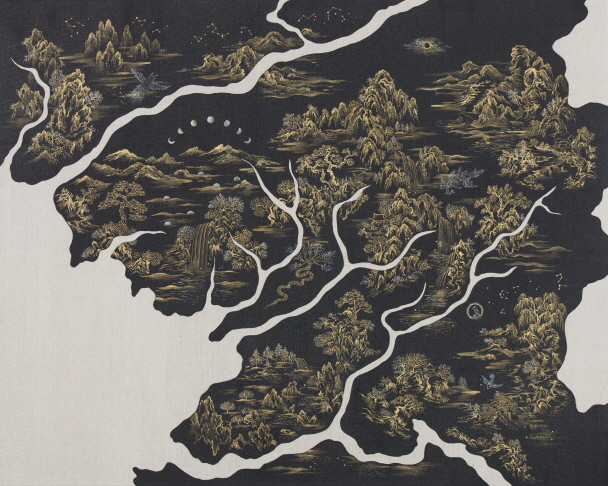
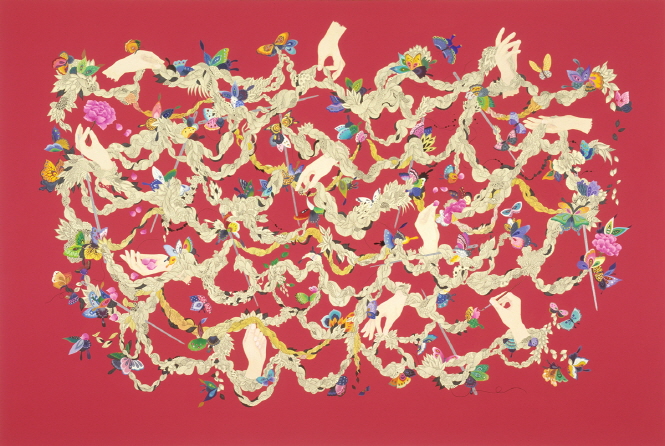
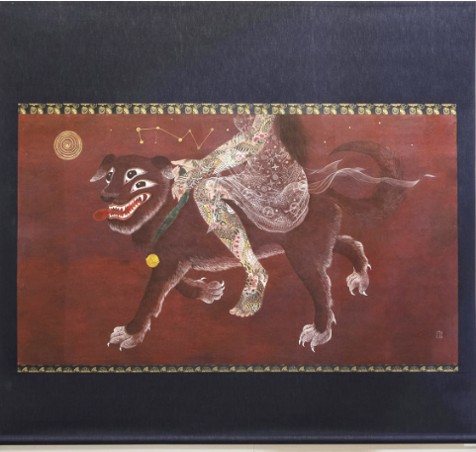
works previously shown in other exhibitions, such as Eum
(2014) and Cho Hon (2017), recent works presented for the
first time in this exhibition—including blood and wine
(2017), Passing by (2017), To Her (2017),
and Rurururururu(tears tears tears) (2017)—commonly depict
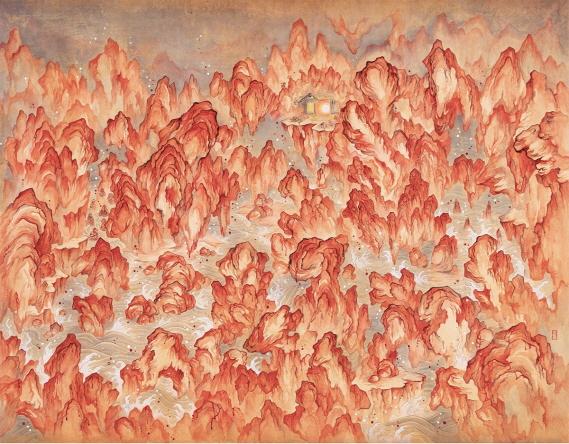
elements symbolizing “womanhood,” such as yeonji-gonji (traditional bridal
makeup), tiger-patterned fabrics used to ward off evil in wedding rituals, and
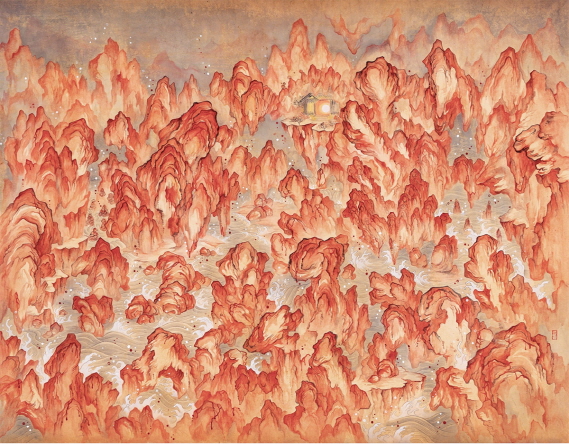
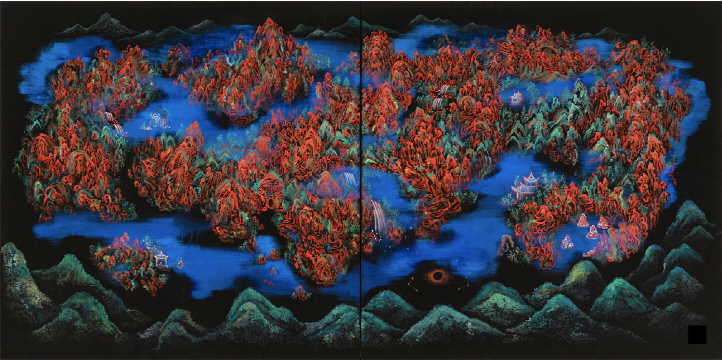
jokduri (bridal headdresses), alongside folk painting, portraits of beauties,
and true-view landscapes as part of traditional iconography, as well as flowing
liquids reminiscent of bodily discharges such as blood and tears.
Drawing on
mythological texts found in East Asian painting traditions or female characters
from films as motifs, these works construct specific narratives; yet rather
than narratives for their own sake, they function as frameworks for artistic
imagination built upon the symbols and concepts implied by narrative.
As suggested
by the witty and unpredictable titles, viewers may not immediately grasp the
story, but are instead led by the artist into the deep valley of
“Jaenyeodeokgo,” as if searching for hidden clues within each work. While these
works may initially appear to present a world of myth and ornament in a
traditional style, a closer examination reveals a highly complex experiential
world that resonates with reality—encompassing traditional techniques, the
intertextuality of art and literature, the worldview conveyed through
fantastical narratives, the politics of de-tabooing, and the subjectivation of
media.
Within this infinitely expanding artistic space, Kim Jipyeong, a
contemporary “talented woman,” freely traverses between tradition and
contemporaneity, dream and nature, painting and the broader landscape of art.
In
particular, the encounter between tradition and modernity orchestrated within
these spaces resists simple conclusions, such as placing a traditional
pictorial mask over a modern spirit. Instead, this encounter combines legible
and illegible iconographies to question “tradition,” while the figure of the
“erotic woman” emerges as a subject that erases existing iconography through
layered implications.
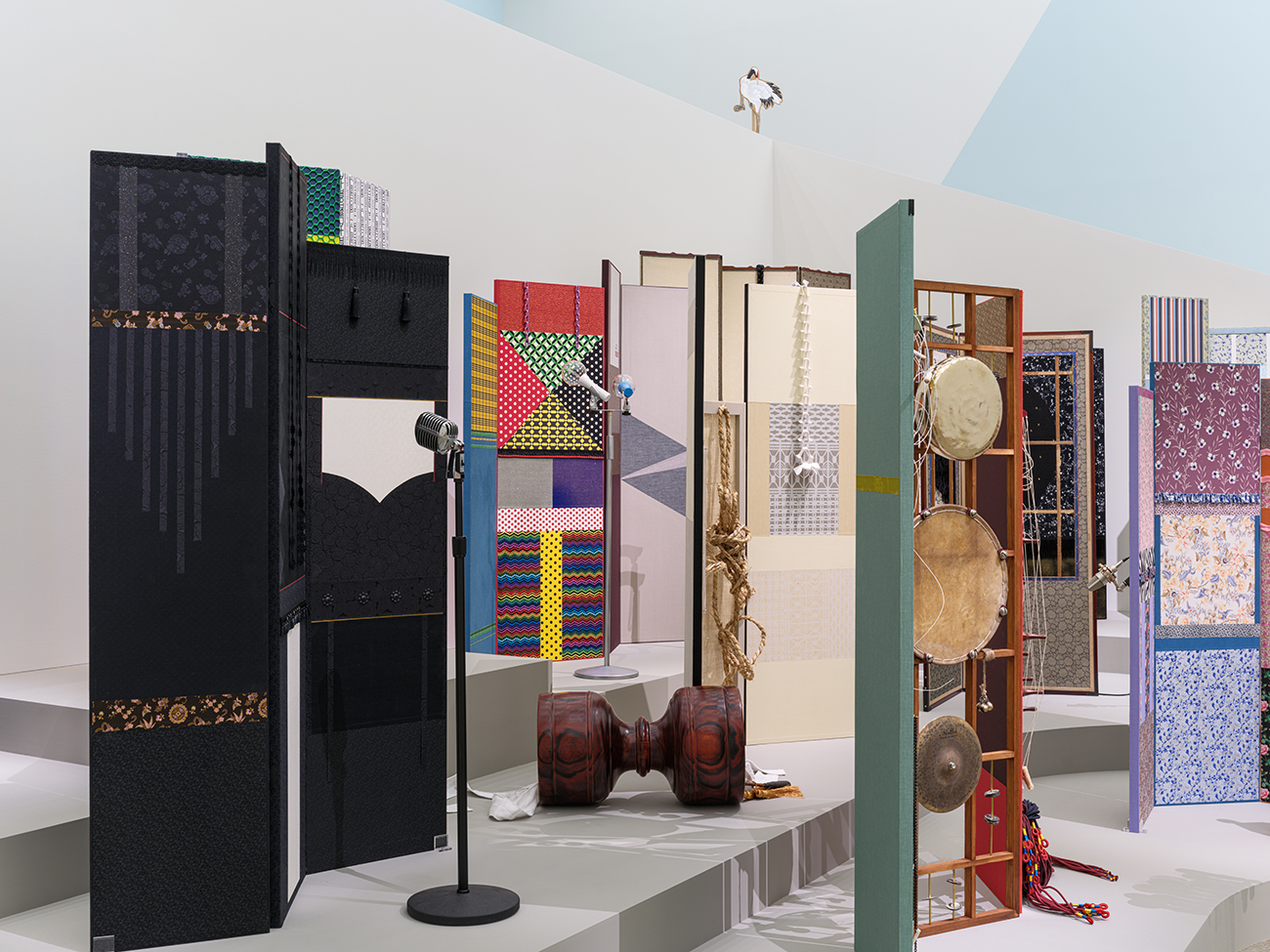
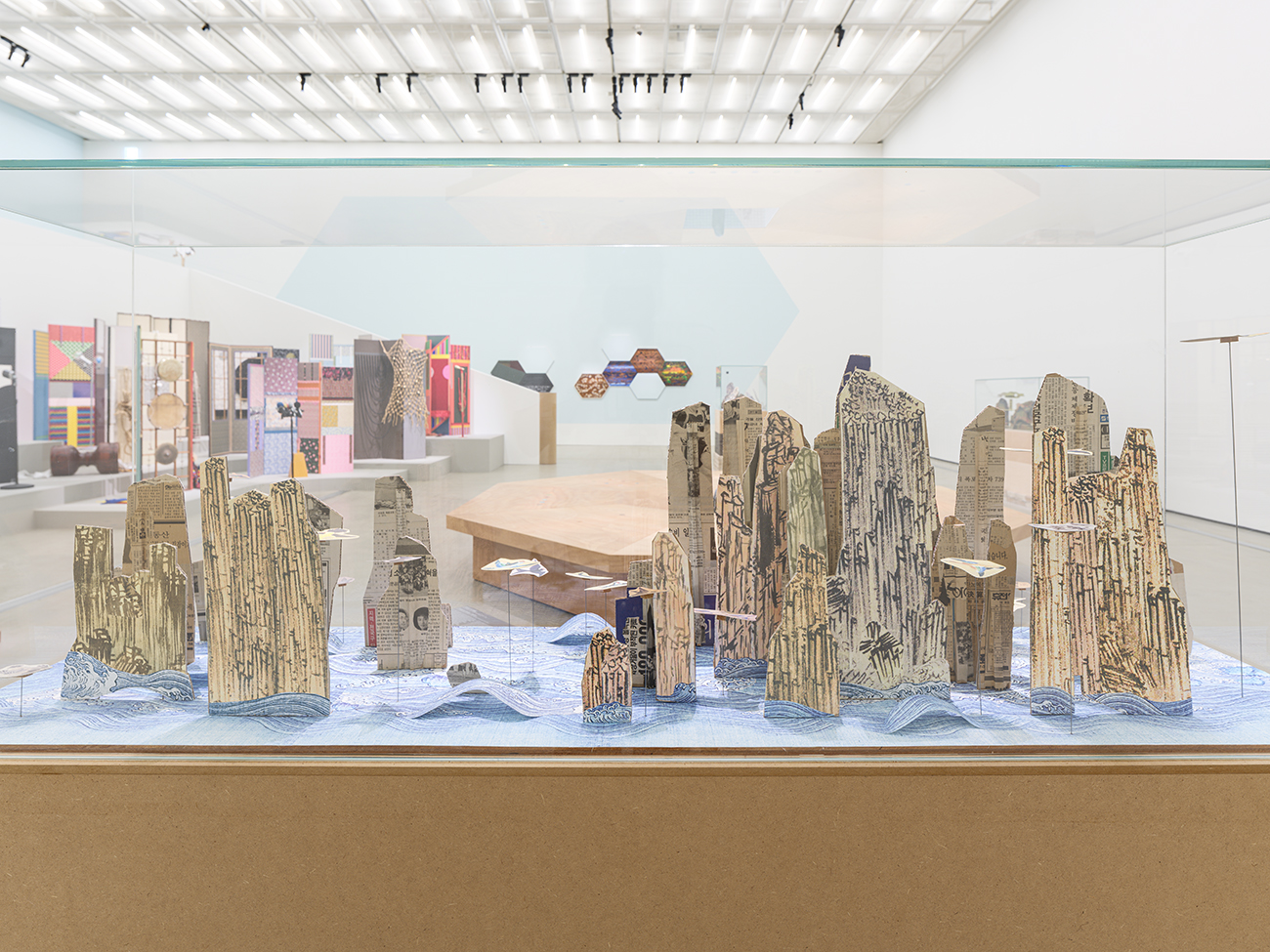
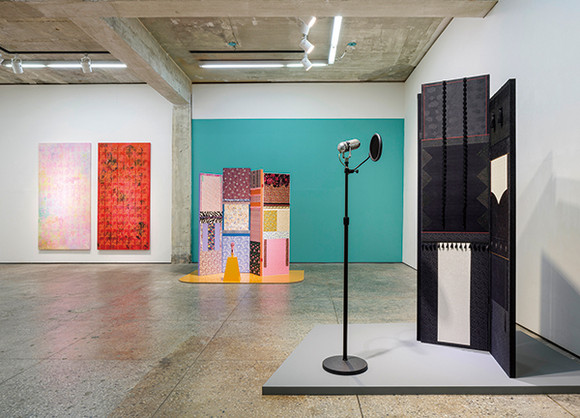
Moreover, the dynamic flow between familiar media in
contemporary art—such as video and sound—and unfamiliar ones like landscape
painting and folding screens generates a continuous sense of confusion. This
confusion may stem from the difficulty of clearly identifying or defining the
nature of the traditional language the artist fluently employs. In fact, there
is scarcely any basis to determine whether her language is fluent at all.
Furthermore, the female figure she portrays as the subject of desire appears
vividly and uncontrollably alive—at times solemn, resolute, sorrowful, and
still, yet suddenly transforming into something bold, daring, and
extraordinary.
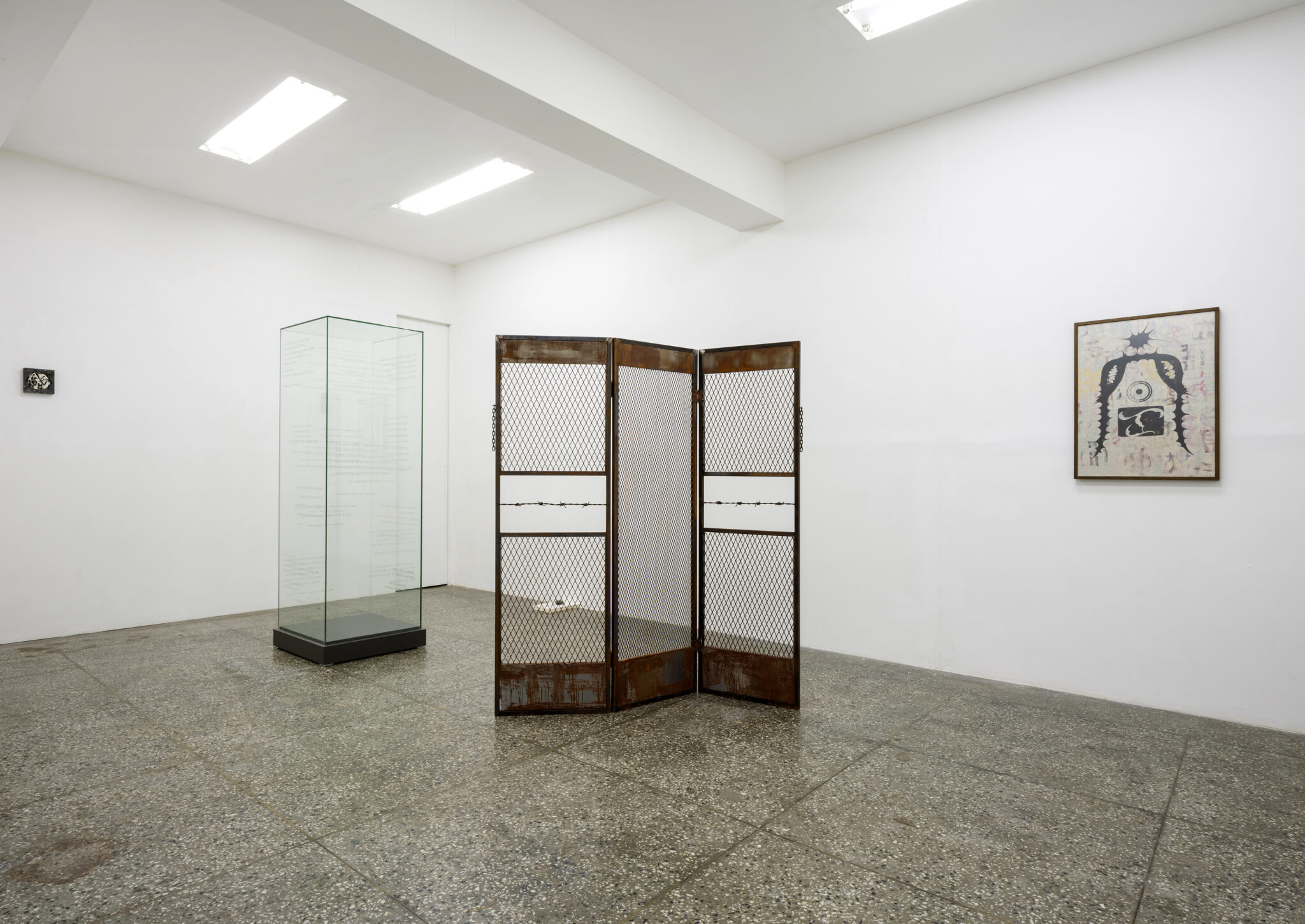
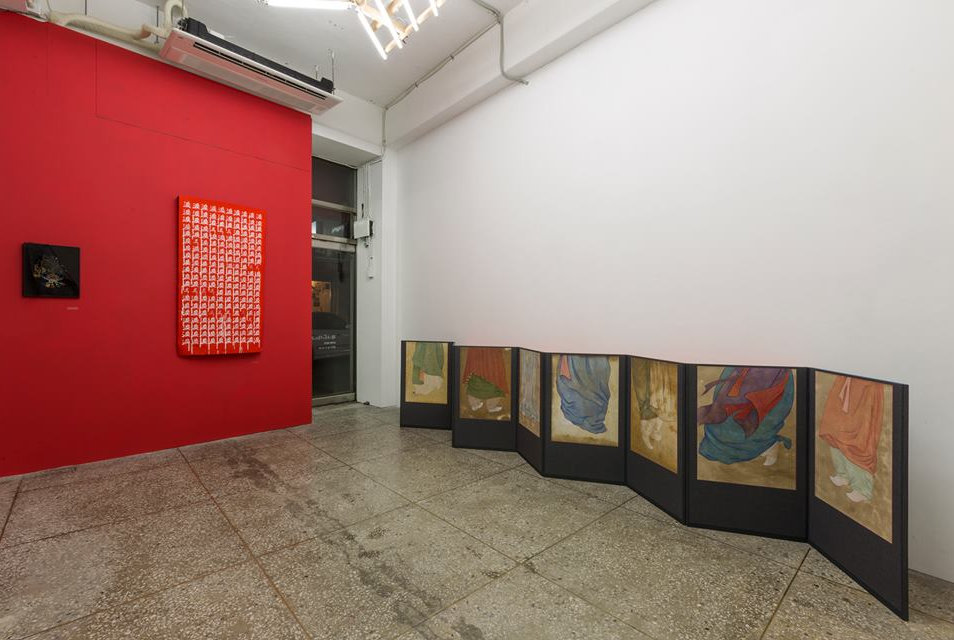
This power of confusion, or the artist’s distinctive mode of
“doing tradition in the contemporary,” is perhaps most concretely felt in works
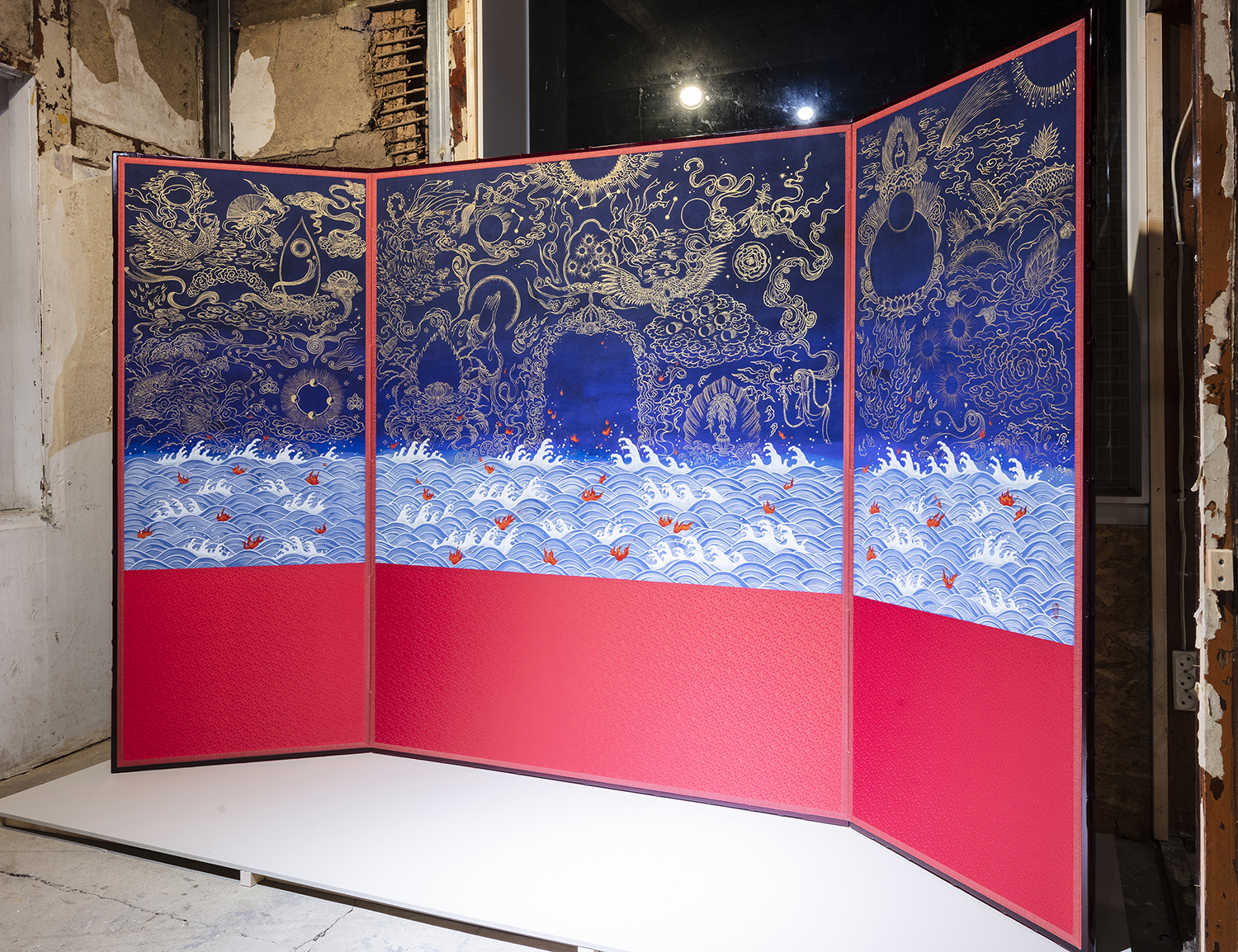
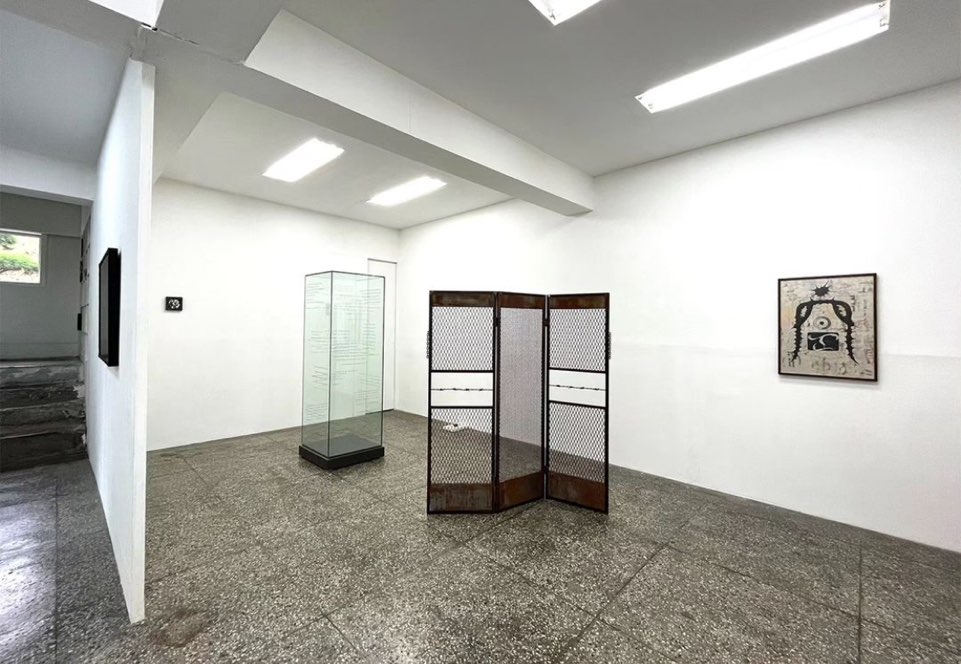
such as Three Perspectives (2017), Gi Un Saeng
Dong (2017), and Enshrined (2017), which actively
engage with contemporary media. Pre-modern Sino-Korean conceptual terms that
resist full translation into other languages, unfamiliar compositional
structures that depart from Western perspective, wandering gazes caused by the
absence of a vanishing point, and the striking presence of empty folding
screens—more radical than contemporary installation art—all come together to
pose fundamental questions about the identity and value of art being produced “here”
and “now.”
Returning
to the theme of “woman” that opens this exhibition, this “woman” does not
signify a gendered opposite to man within a binary social structure, but rather
a worldview liberated from conventional and standardized roles or attitudes
assigned to women. At the same time, this “woman” becomes another term for
tradition—a concept that, though marginalized through modernization, still
remains connected to the present—and opens a pathway toward a concealed world
that has long been suppressed yet has always existed.
Within an extension of
East Asian values, the artist foregrounds the figure of the woman, not as one
who must confront or overcome a male-centered world, but as a liberated desire
capable of coexistence and mutual elevation.
This sensibility of desire extends
beyond the mere depiction of subject matter, generating a living experience
that continually analyzes what is depicted and responds to images that appear
differently each time they are viewed. Such experiences transcend conventional
“feminist” frameworks that risk being reduced to instruments of overturning
power structures or hierarchical thinking, as well as fixed social conditions
and linear temporal frameworks, and are instead reconfigured into more
fundamental and creative energies.
Ultimately, what we have not sufficiently
recognized may not only be “woman,” but “female talent.” Among the many forms
of talent, the one we must consider may be the call for “good art,” and the
liberation of the essential sensibility—or the desire for it—that makes such
art possible. This desire may begin with an accurate recognition of “the lack
that makes desire possible.”