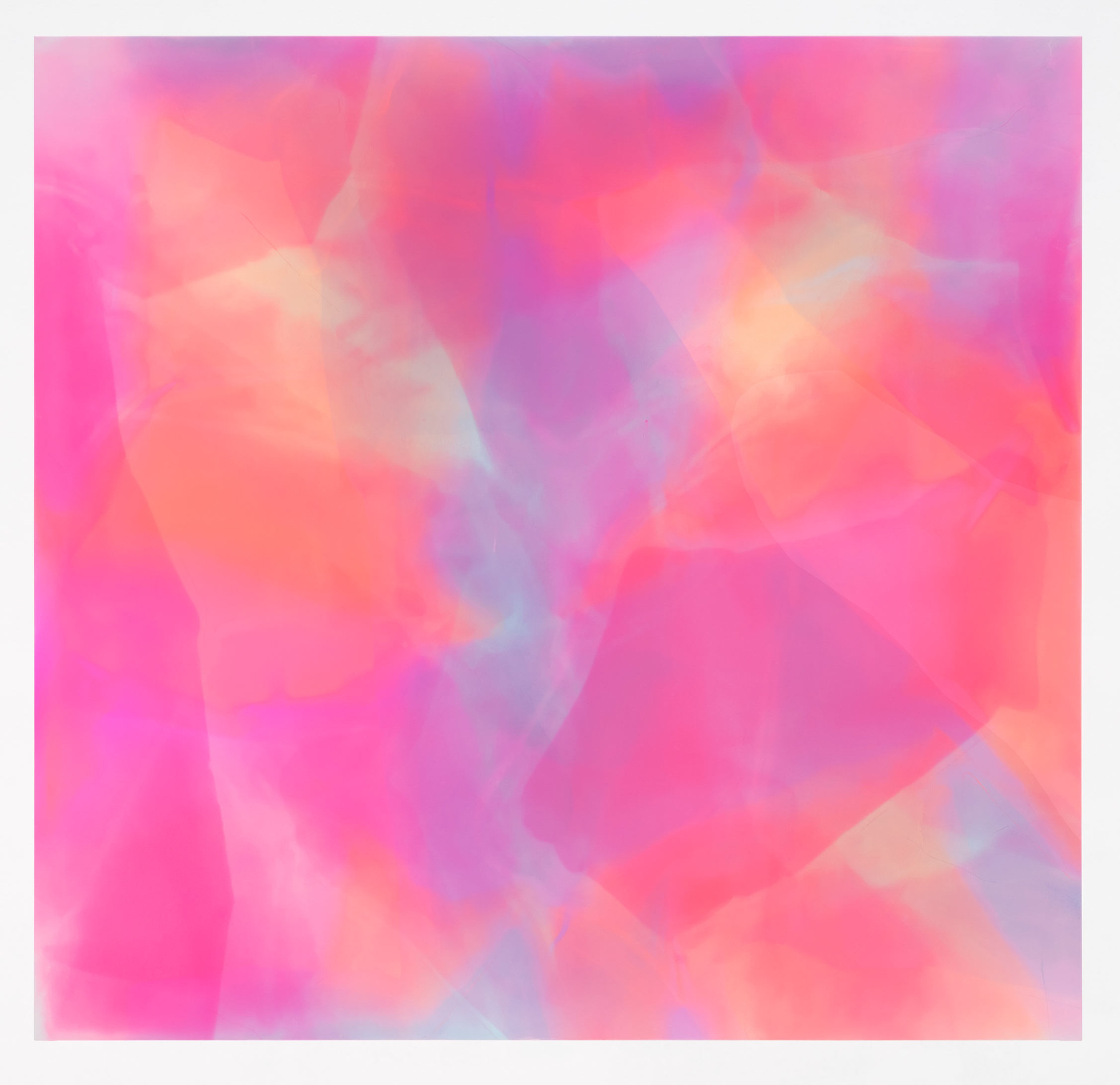
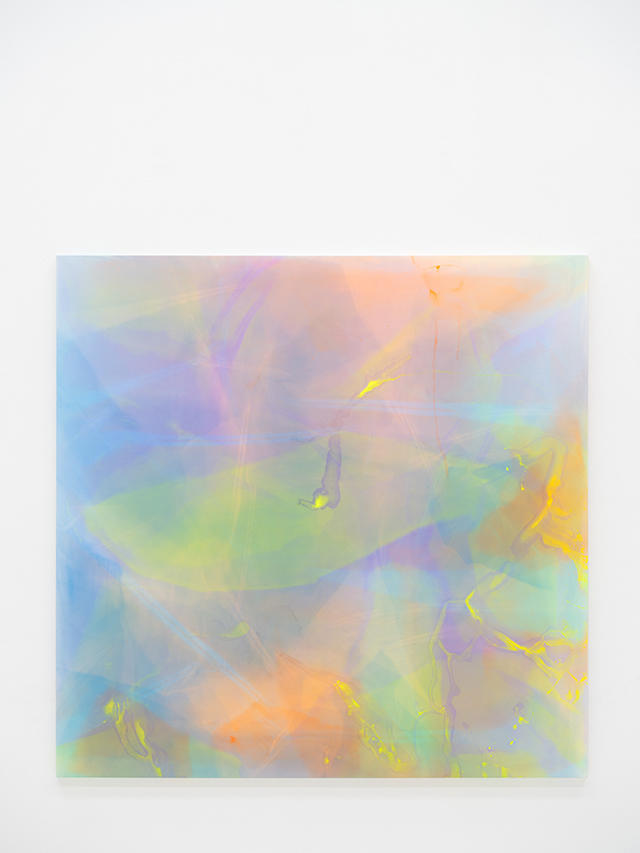
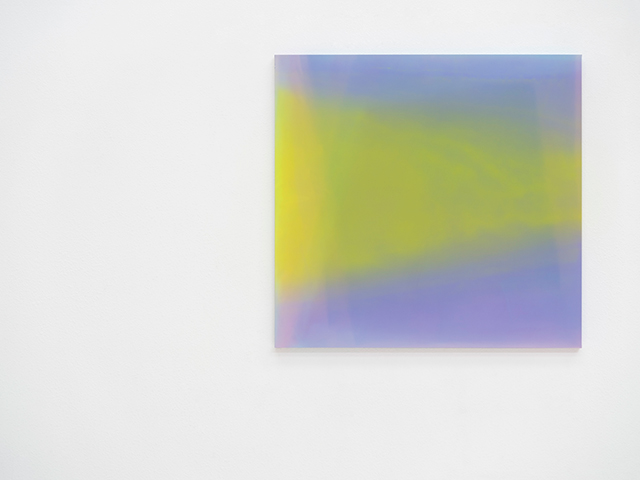
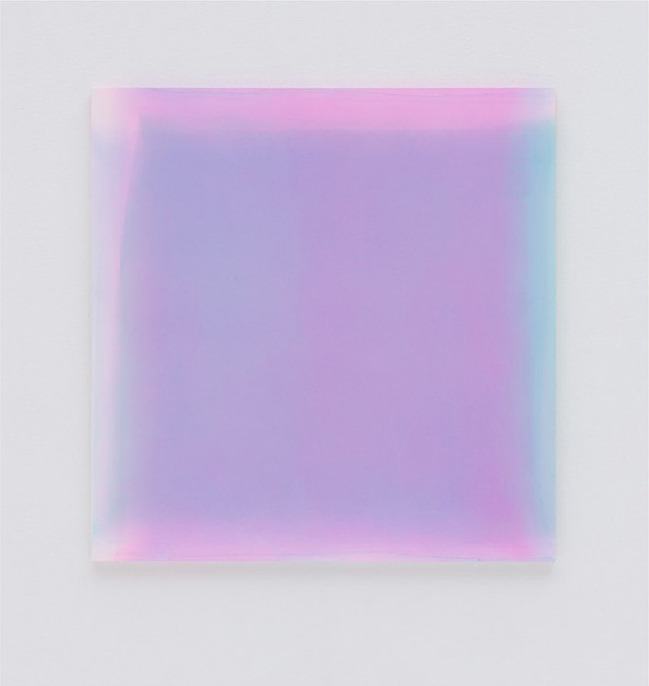
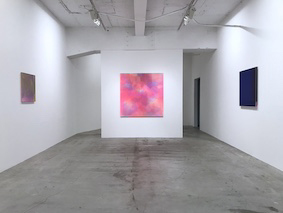
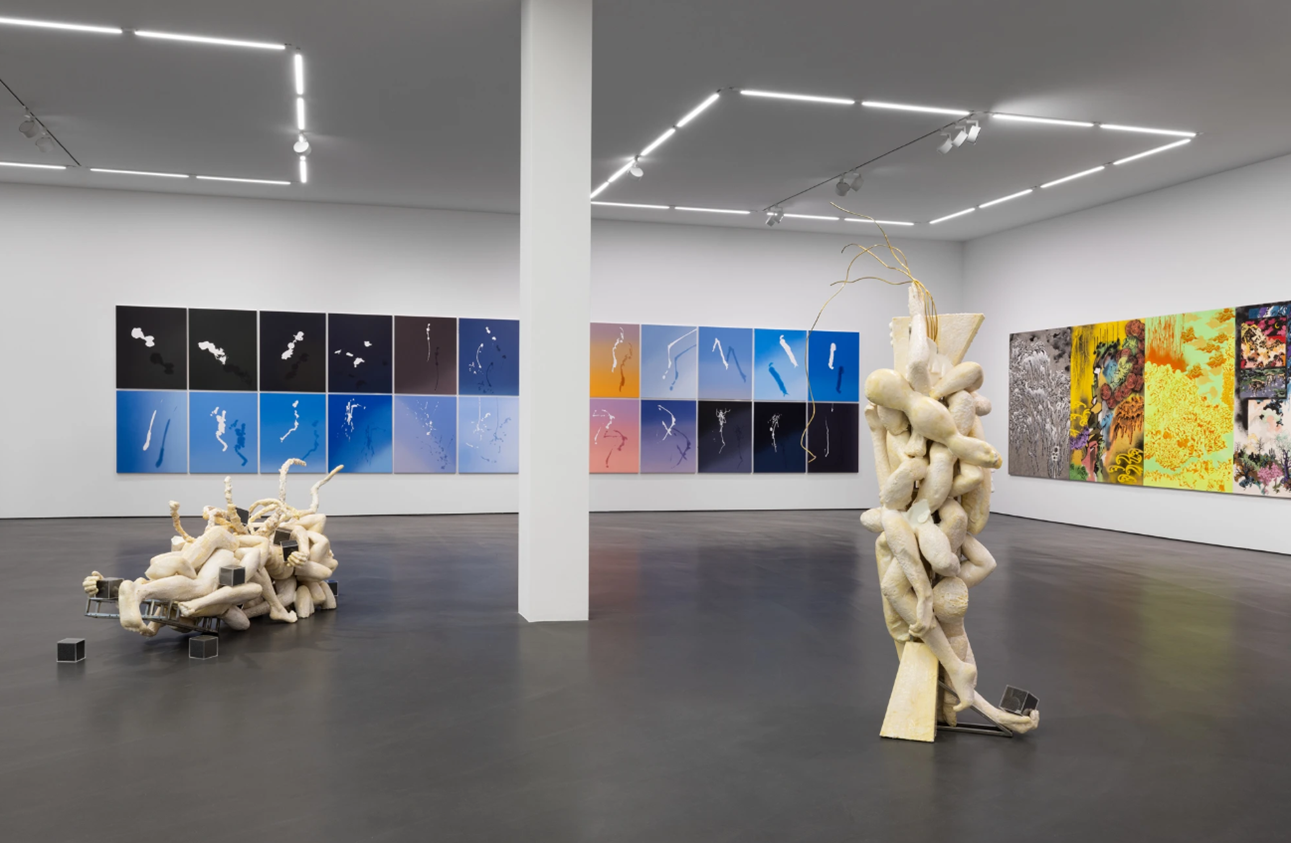
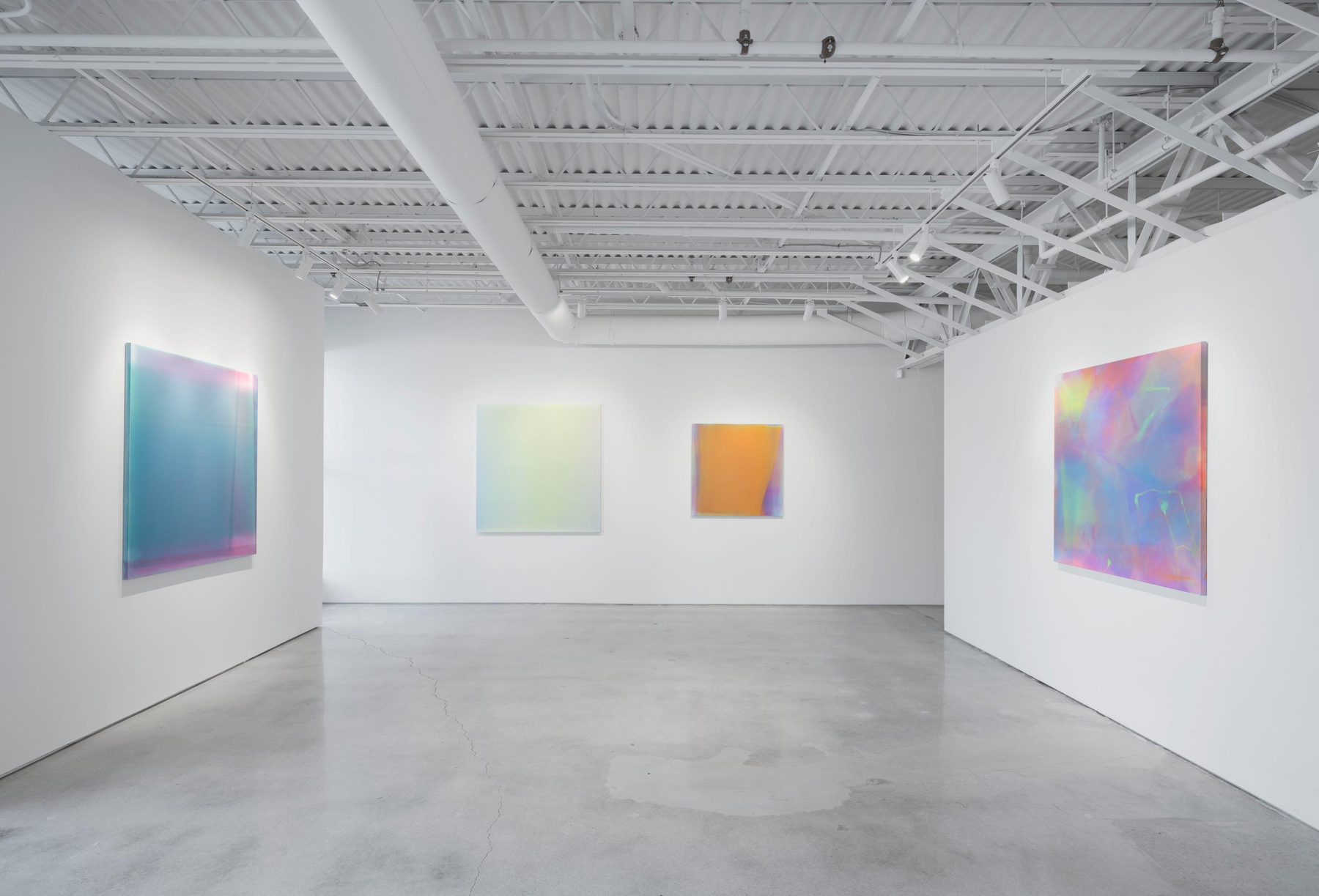
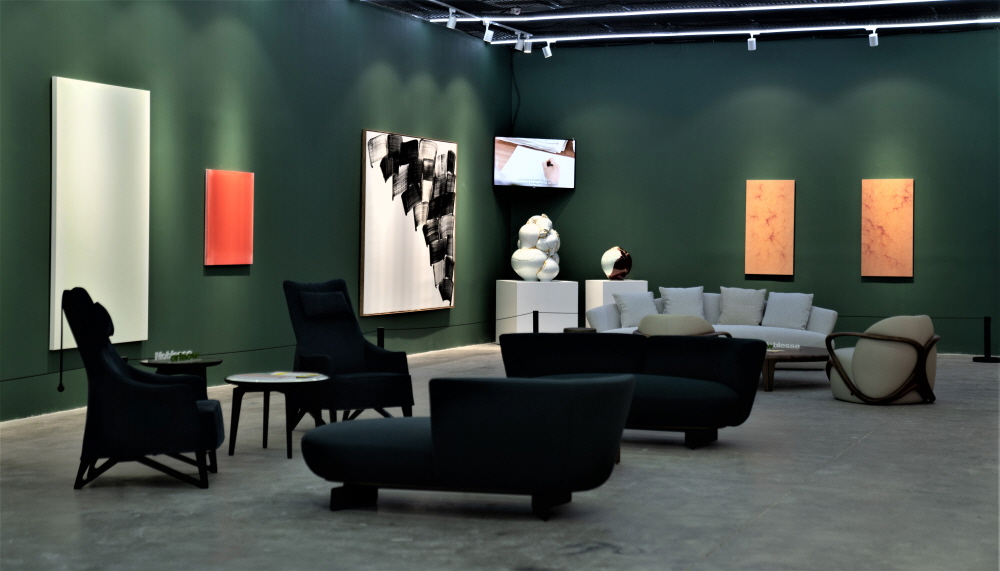
From January 5th to February 24th, 2018, Leeahn Gallery Seoul will open an exhibition titled 《The Post Dansaekhwa of Korea》. In collaboration with 11 pre-eminent Post Dansaekhwa artists, the exhibition will present a kaleidoscope of the Post Dansaekhwa artworks forming the genealogy of Korean Dansaekhwa following the earlier generation. The show will travel to Leeahn Gallery Daegu and be presented from March 8th to April 14th.
Causing a global sensation for three years since 2014, Dansaekhwa : Korean Monochrome painting has recently begun to lose its momentum, which is especially the case for the earlier generation of Dansaekhwa artists in their 70s and 80s. The signs of a slowdown are in marked contrast to the media frenzy about the first-generation Dansaekhwa artists invited to overseas renowned art galleries and museums or auctions and relevant trends or news just a year ago.
The undeniable descending pace of earlier Dansaekhwa artworks has been attributed to a few causes. Amongst all, the most convincing argument is that Dansaekhwa artworks created in the 1970s and 1980s and preferred by local and oversea collectors, institutions and investors have now been exhausted to quite an extent. Leading Korean art galleries’ highly publicized ad campaigns touting the early Dansaekhwa artworks created by the first-generation artists in the 1970s and 1980s drew attention from local and global art worlds and media and buoyed their prices.
Meanwhile, art critics and academia started to articulate the void of the rationale for the commercial boom of the Korean monochrome paintings, but have failed to create an atmosphere conducive to tangible discourses. To meet the widely perceived need to trigger a strong interest in the Post Dansaekhwa artworks succeeding the success of the first generation so as to forge a sound foundation for Korean monochrome art, government support is indispensable in addition to the efforts exerted in the private sector.
In the meantime, arguments that Post Dansaekhwa artists are competitive enough to reverse the slump of the earlier generation have come to the fore at the center of art world. The Post Dansaekhwa artists refer to the generation of those who are now in their 50s and 60s and went through the modernist art in Korea during the 1970s to 1980s. Being equivalent to the students of the first-generation Dansaekhwa artists, the second-generation artists have experienced firsthand the process of Korean modernization (since 1960).
The artists have been accustomed to rationalist ways of thinking instead of Confucian ethics in life and find it more natural and convenient to speak in Korean and English than Japanese. Also, many of the Post Dansaekhwa artists have studied in the West including the U.S. and Europe. Thus, they show a salient tendency to regard art as a means of representing their consciousness, not as a course or means of self-contemplation or introspection as the first-generation did.
Particularly, the second-generation artists are noteworthy in that they have broadened the horizon of Dansaekhwa via experiments with unique materials and media since their undergraduate courses in the 1970s and 1980s when the country embarked on industrialization at full throttle.
By the same token, Leeahn Gallery’s 《The Post Dansaekhwa of Korea》 exhibition should be noted as an opportunity to encounter the essence of the Post Dansaekhwa artworks. On the grounds that Leeahn presents an unparalleled world of Post Dansaekhwa since the National Museum of Modern and Contemporary Art’s 《Dansaekhwa: Korean Monochrome Painting》 exhibition in 2012, this exhibition will bode well for the future trend of the Post Dansaekhwa. 11 invited artists and their works are outlined below.
Kim Keuntai’s work is linked to ceaseless inquiries about formlessness akin to a wall-contemplation practice, which is an attempt to reveal a spiritual world by formulating formless picture planes. To that end, Kim accepts the flatness of paintings, and adds a series of acts to comply with the ontological proposition that “paintings constitute planes”. What he paints is not a facial expression of a world or an appearance of an object. Instead, he is faithful to approaching the inner world to explore the world of his soul as if Zennists practice zen (禪).
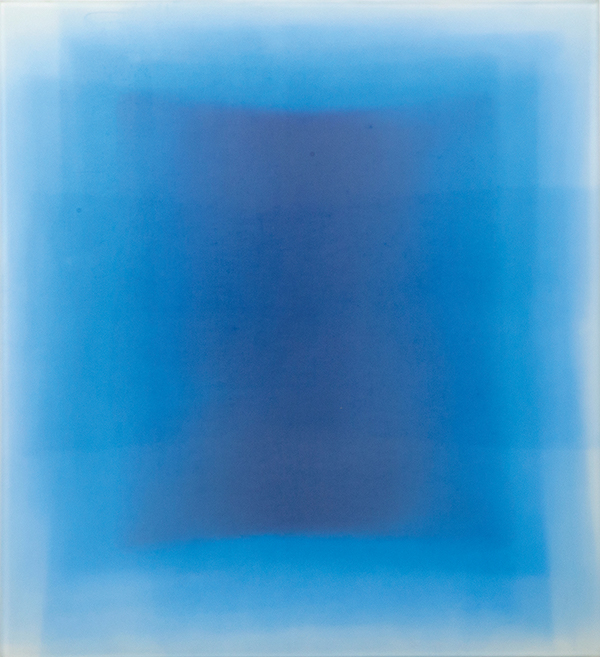
Kim Yisu’s work is reminiscent of a horizon. The overlapping thin monochromatic bands pacify the minds of viewers. Kim creates a countless number of overlapping horizontal faces of gradation, recalling an oceanic horizon. The distant horizon, in effect, is not a horizon itself but an idea created by his soul.
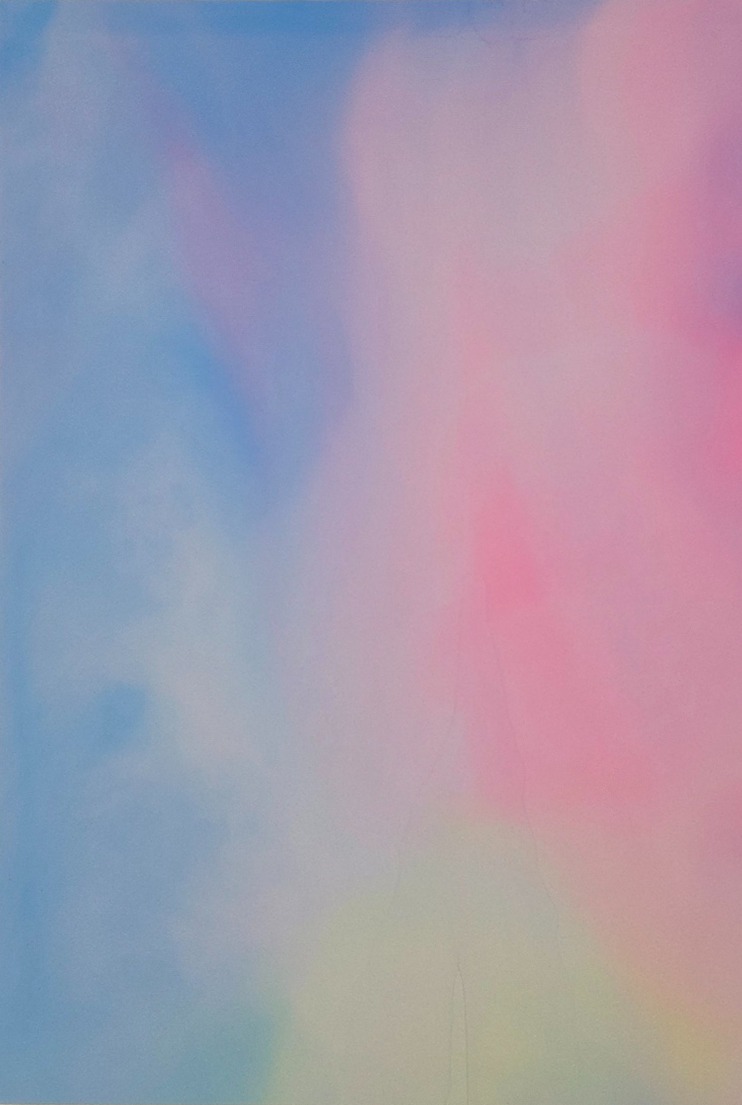
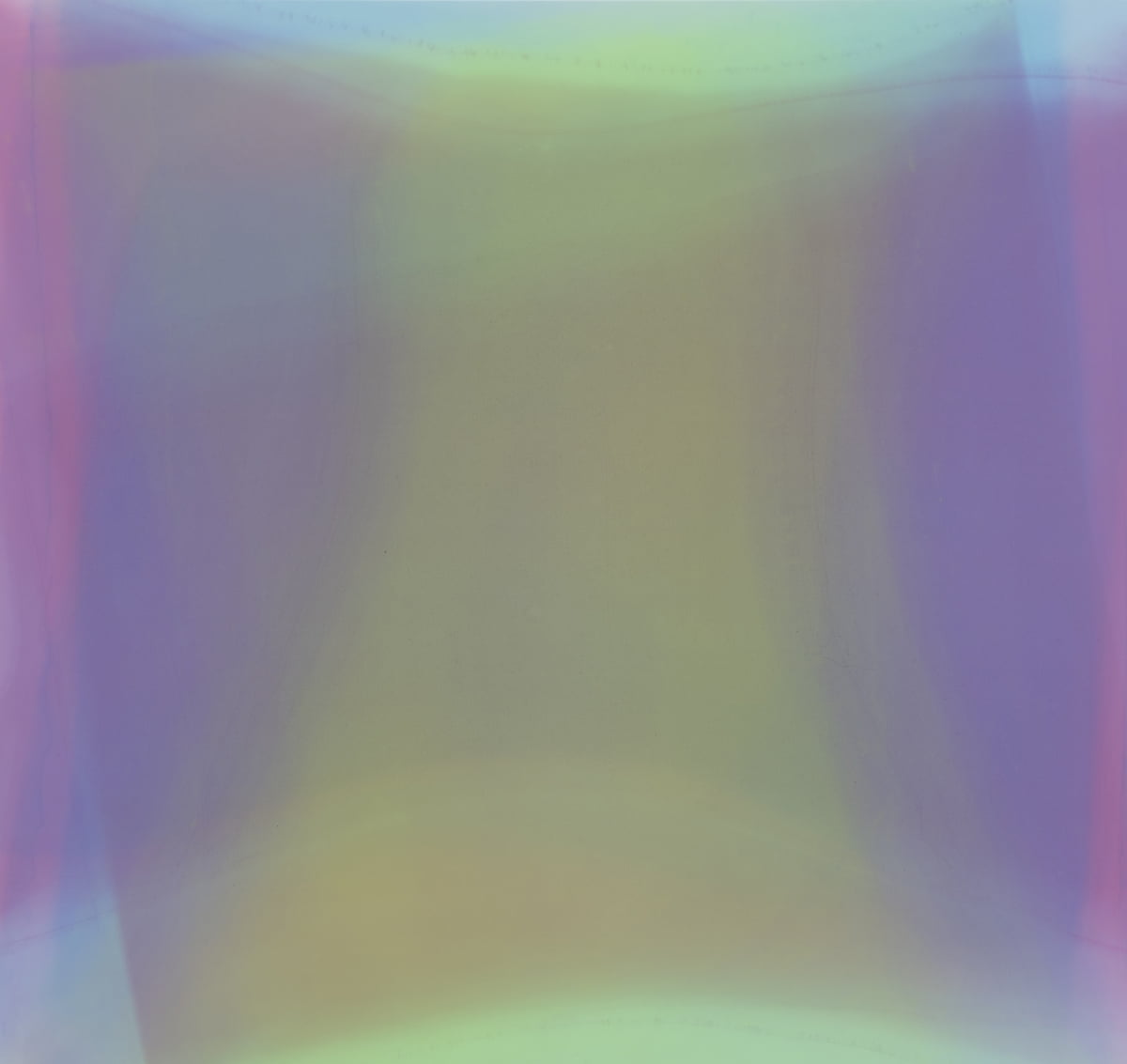
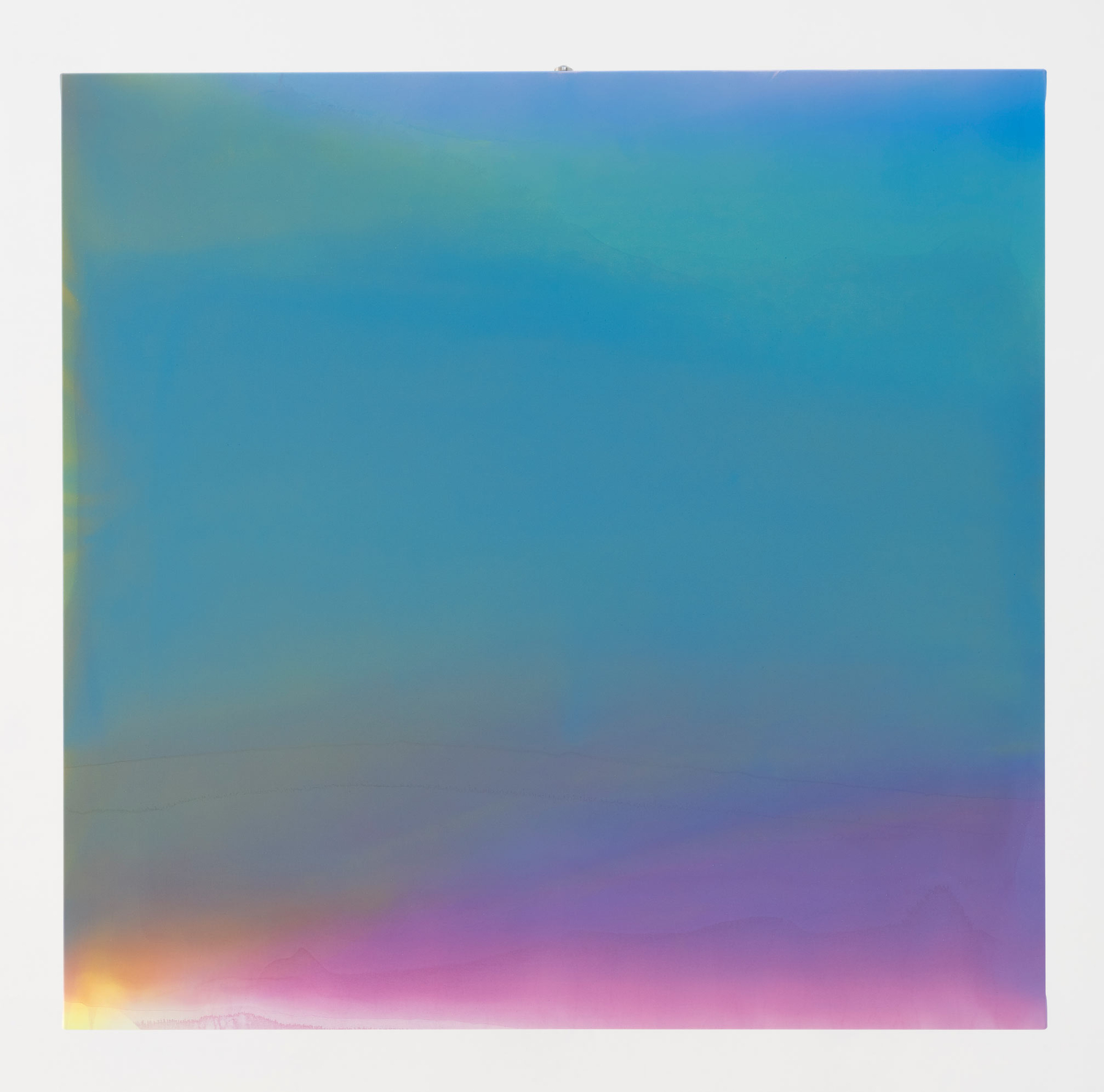
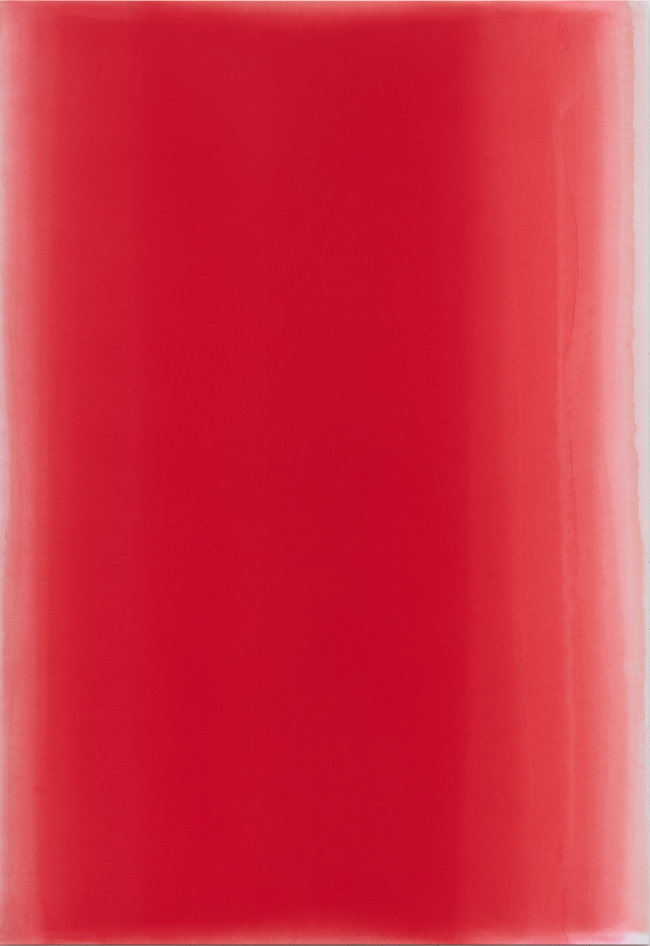
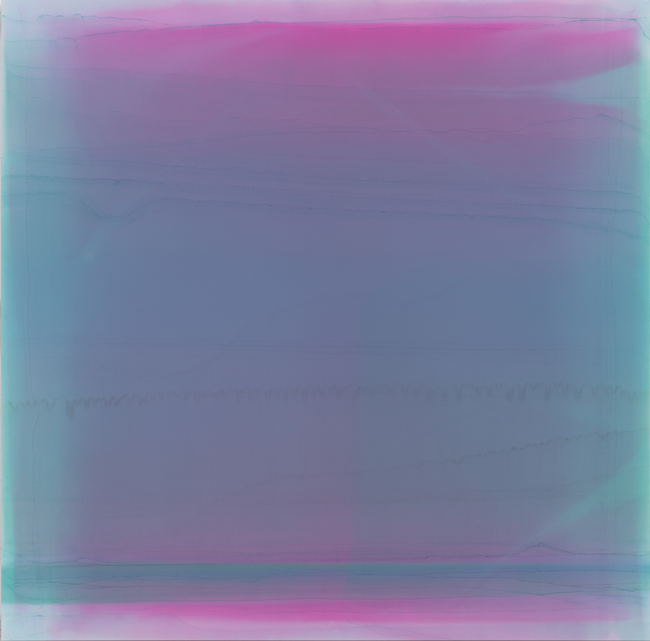
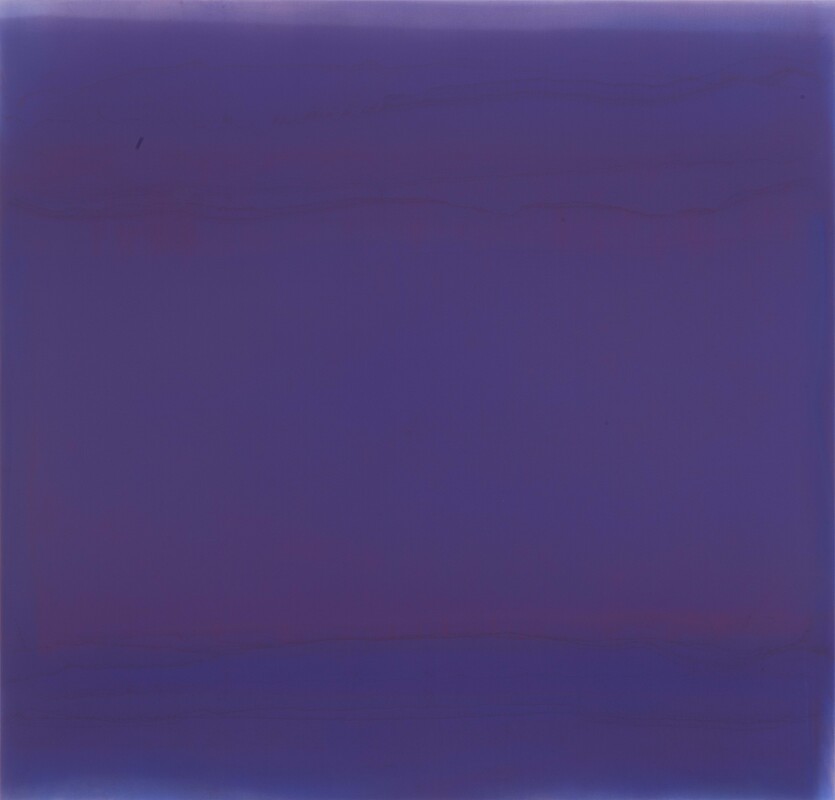
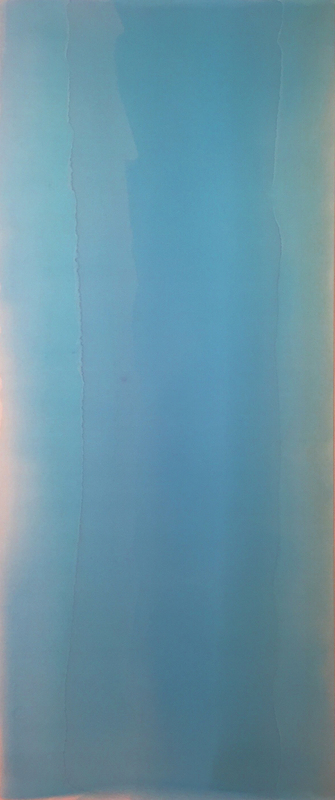
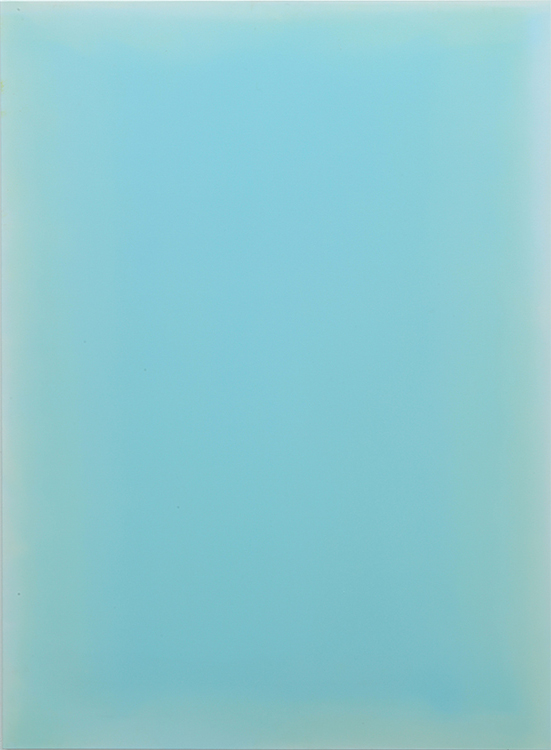
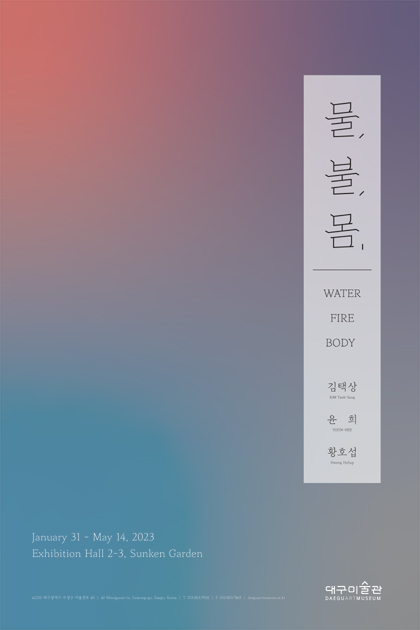
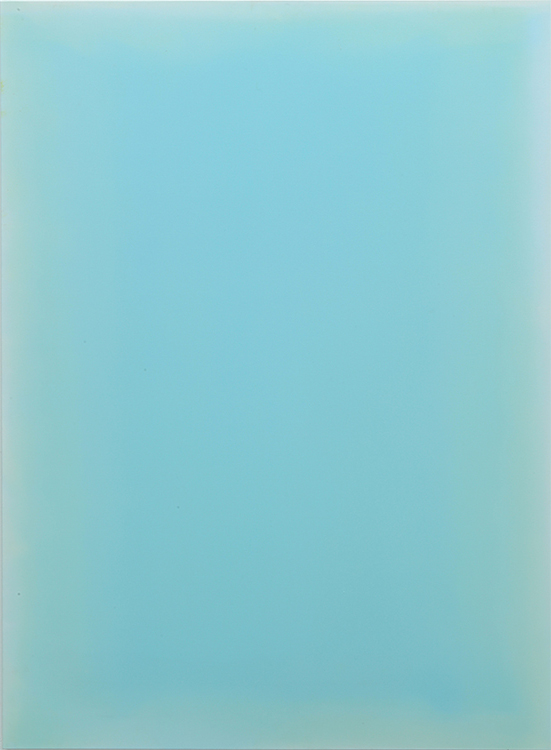
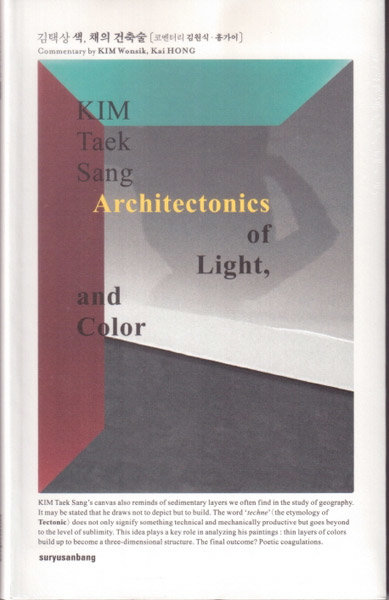
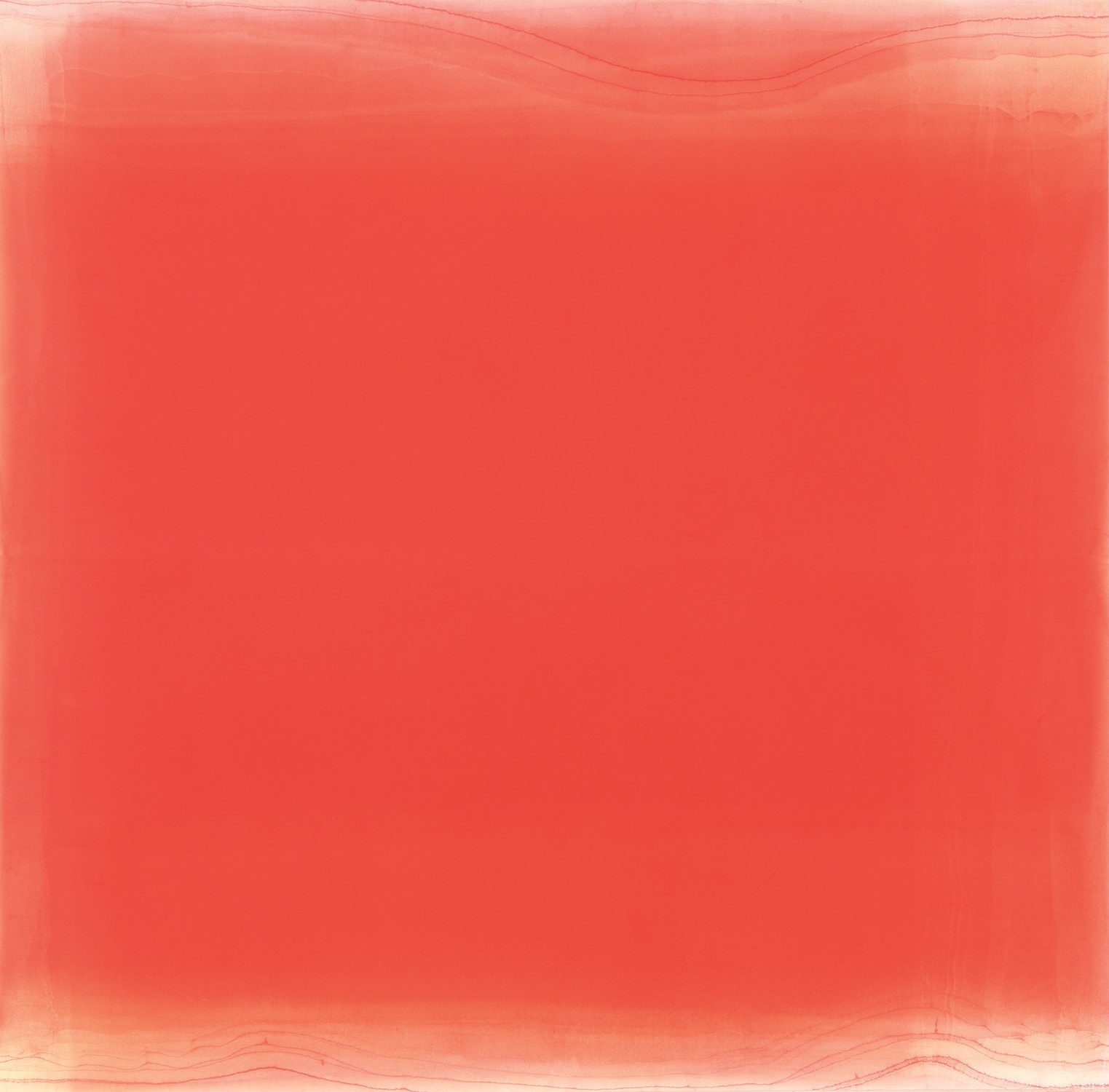
Kim Taeksang’s monochromatic picture plane comprises a trace of a color of subtle nuances. Kim spreads out canvas or paper and pours lots of water mixed with a dash of acrylic color. The small color pigment in the water gradually sinks onto the canvas by gravity and he lets them dry slowly in natural wind. By repeating the process several times, Kim makes the calm and peaceful color as his own art language. Reminiscent of ripe persimmons left dangling on an autumn tree or a calm blue sea, Kim’s work leads viewers to a world of deep contemplation as intended by the artist to become intimate with nature. His painting, which resembles nature, shows his intention to approach nature in the painting.
Kim Tschoonsu has his hands covered with paints crisscross the canvas, while his body gets into the rhythm of his soul. The intense work process adds to the dynamism of his body, which in turn compels him into a feeling of rapture. Kim’s work of art is characterized by corporeality, ultimately asking questions over ‘what humans are in essence’, through primordial body gestures reflecting on pre-language challenges.
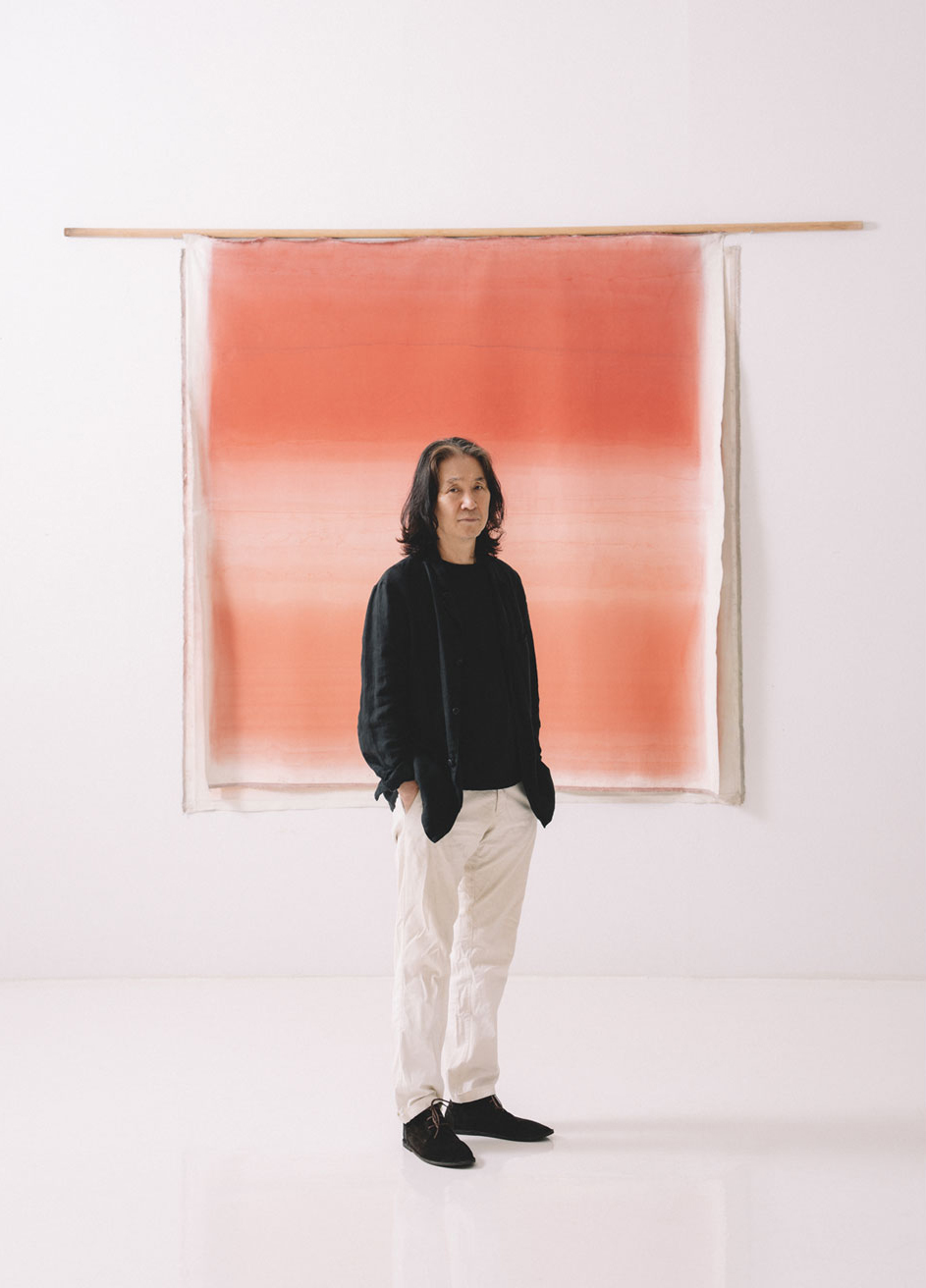
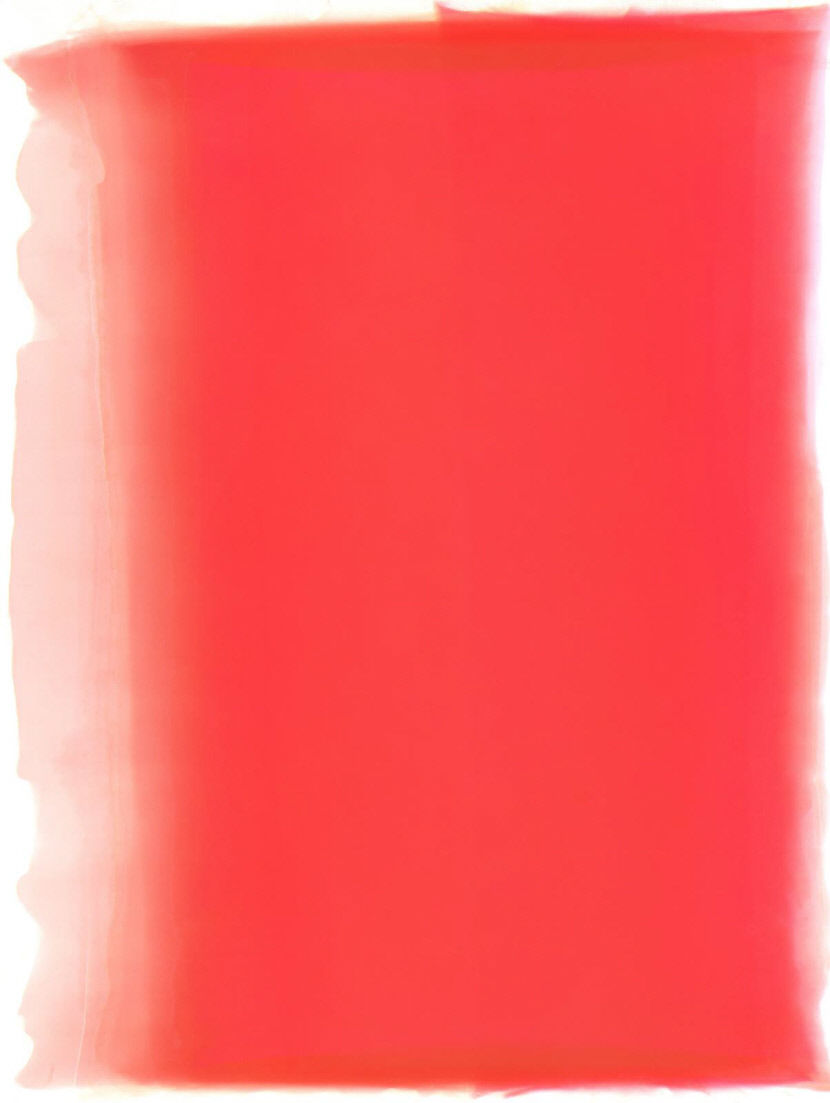
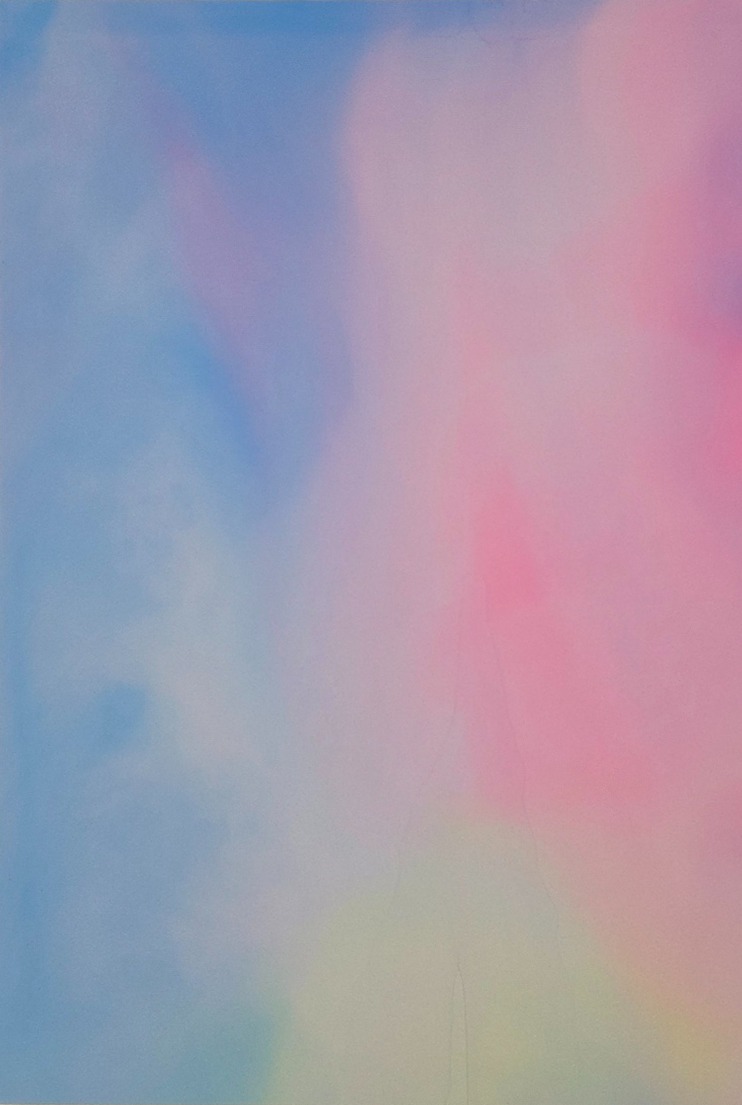
Nam Tchunmo’s Objecthood originates from his act of ‘making’. The Objecthood lies in an act of not drawing but making. Escaping from the fate of copying, into which the act of drawing cannot but be forced, the act of making serves as a factor behind the existence of an object in the world. Dyeing instead of applying colors to fabrics, or unfolding dyed fabrics in wooden frames to repeatedly paint polyester pieces seems to be a deliberate attempt to stay focused on the essence of the Objecthood, or to preclude his consciousness from being projected into the object.
The encounter of neutrality between colors and objects is a prerequisite for the transparency of the world around the object. Leaving the body open to the total absence of manipulation of consciousness enables the world of life.
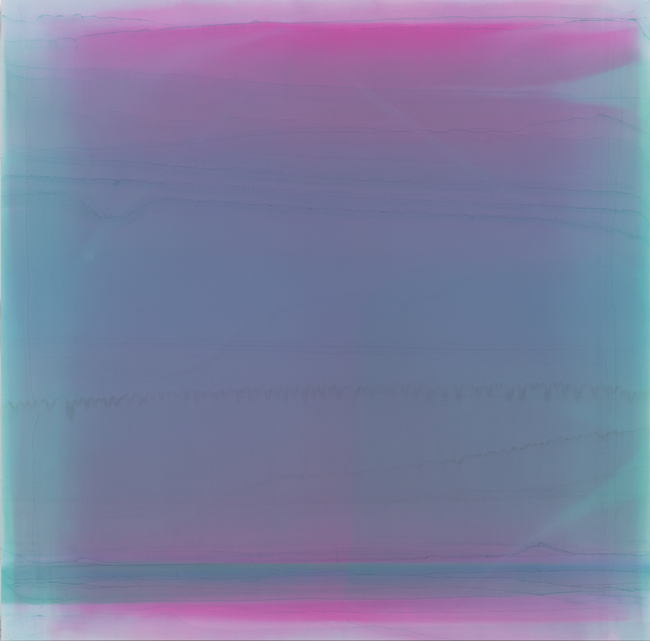
Bup Kwan’s work is associated with an attitude towards giving much leeway to the soul in favor of the relativistic relationship beyond the logic of causal dictatorship. A plethora of deviant crease lines are present in his work. An infinite number of horizontal and vertical lines overlap and coexist on his picture plane without revealing themselves. Lines once drawn are concealed beneath a layer of new lines, which are in turn obscured over time by incessant newer lines. The coexistence of lines builds a world of harmony, which never stops the iteration. Bup’s work, therefore, is not completed but in pursuit of completion.
Lee Bae has long been using paraffin and charcoal for creative artworks. Charcoal coming from wood is a natural material and an essential element in nature. Lee inlays paraffin with charcoal powder mixed with solvents or shows a huge voluminous installation with charcoal objects put in a large bag. Lee’s monochromatic work with a countless number of tiny charcoal pieces attached to canvas is an object painting.
Lee Jinwoo’s Dansaekhwa conveys the general characteristics of Korean Dansaekhwa owing to his attitude towards his work. He engages in an intense labor of stubbornly beating the charcoal pieces placed on the surface of traditional Korean paper Hanji with a metal brush, to create a form comparable to a graveyard. The surface of blackish, greyish or blueish Hanji is covered with achromatic colors rendered by the material effects of an uneven accumulation of small and large charcoal pieces. On second sight, one notices the blackish, greyish or blueish thick layers summon up life and death, the solemnity of which characterizes Lee’s Dansaekhwa.
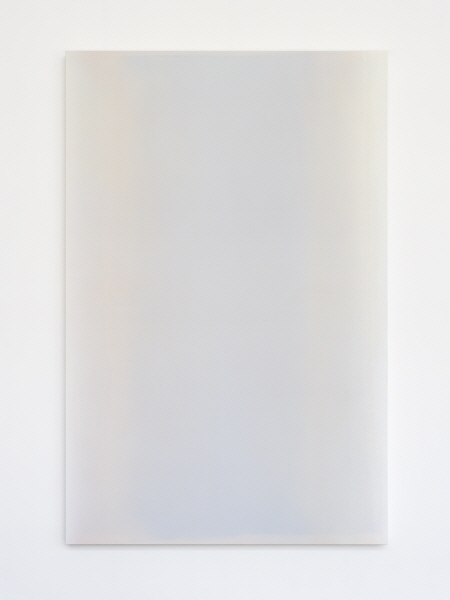
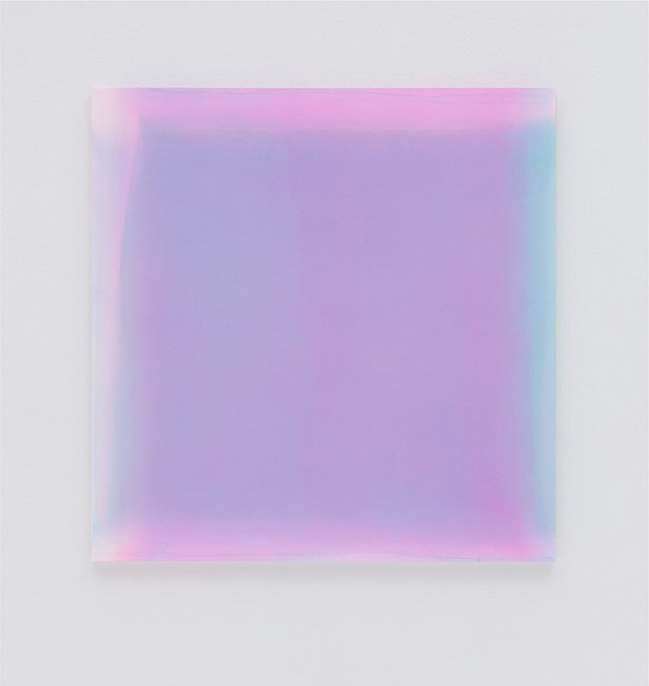
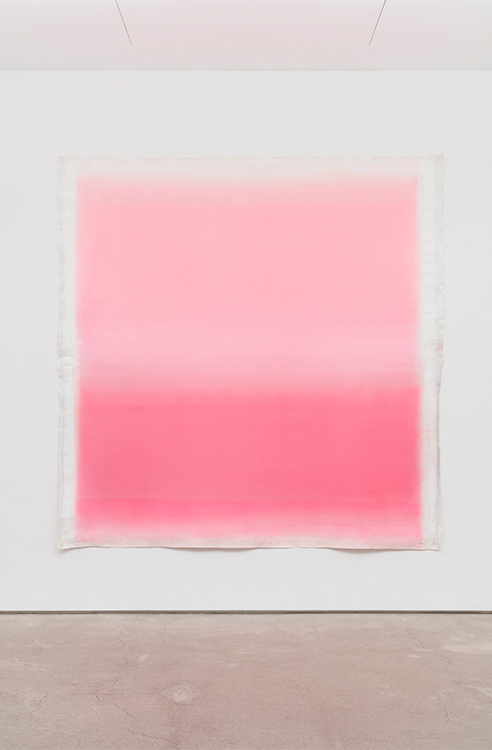
Jang Seungtaik’s ‘Untitled-Colors’ series are finished with achromatic colors such as grey, brown and black following his unique work process. His surface has matte light pastel tones, to make the audience see a single object, or a ‘Body’ existent before their eyes. Despite differences in aspects, Jang shares the ‘corporeality’ with Kim Tschoonsu in that he is psychologically enraptured by the hard physical labor in an extreme setting of infinite iterative spraying.
Chon Younghee has lately turned to blueish natural dyes ditching her persistent love for grey. Chon’s latest works constitute an experimental painting composed of simplified and understated lines and planes. Chon’s experiment is relevant to the division of space and the depths and feelings of colors permeating into the canvas surface. Chon’s meticulous attention to the texture of materials on one hand and the permeation of colors on the other hand heralds another change.
Cheon Kwangup initiated his Dansaekhwa paintings by the medium of dots similar to Braille. Over time, his dots have developed into linear elements, with a myriad of dots transformed into lines overlapping to form a plane. The tiny points placed on canvas undergo an iterative process of sanding, painting and re-sanding. The recurrent fine points form a world of order, characterizing Cheon’s world of art.