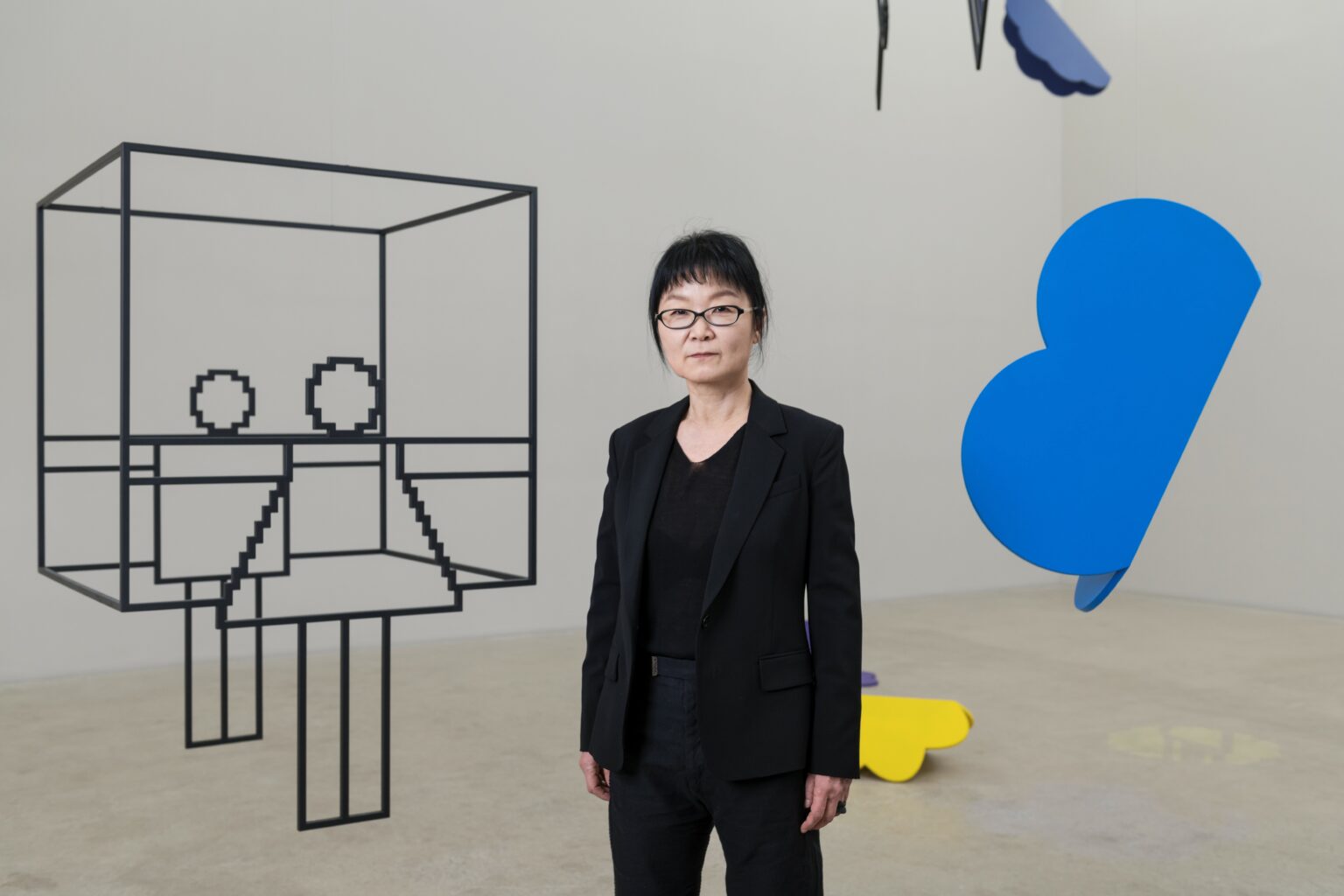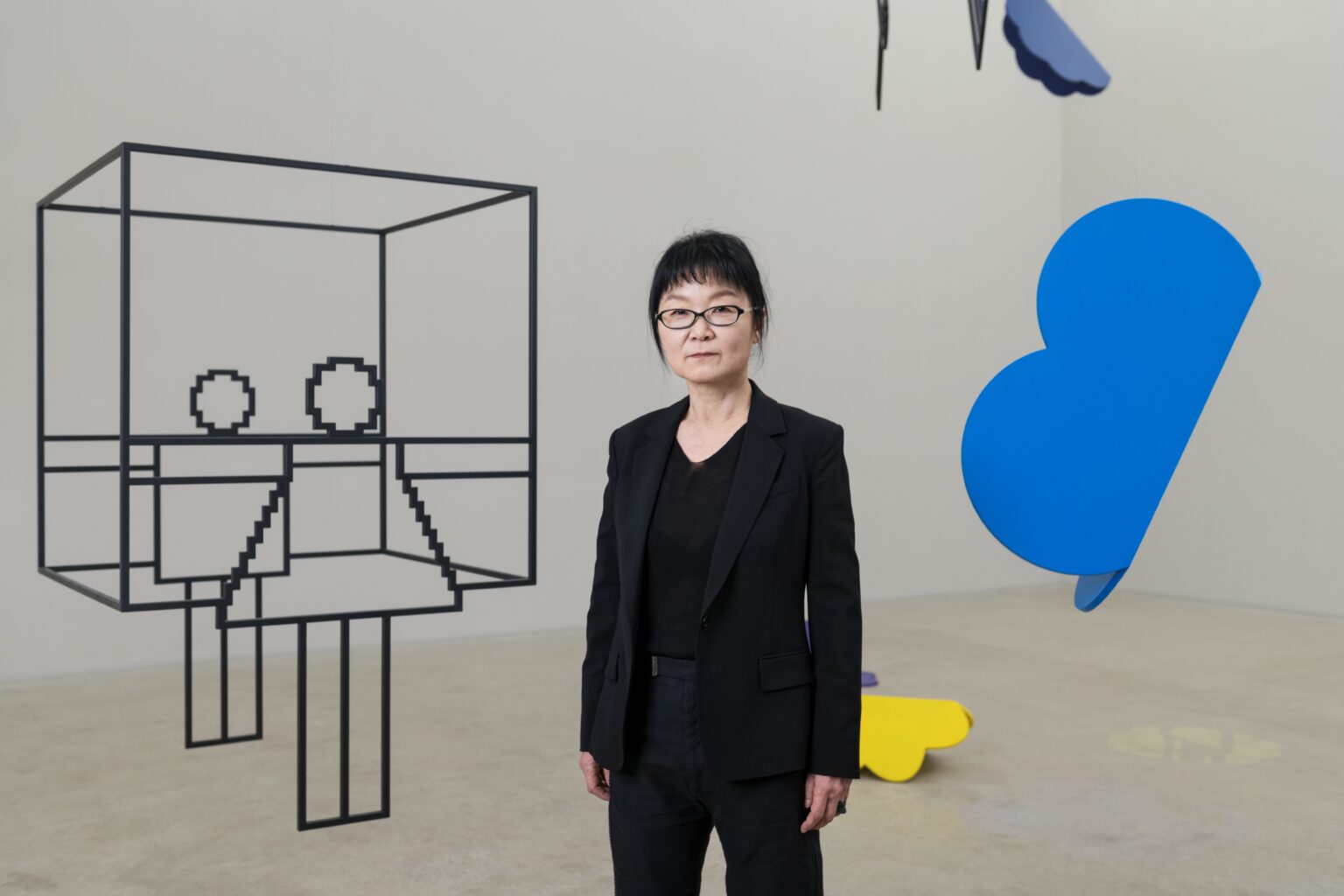
Since 1997, Hong Seung-Hye (b. 1959) has consistently presented abstract works that generate geometric forms from the pixel — the basic unit of the digital screen. This body of work, which the artist calls “Organic Geometry,” has been varied across painting, sculpture, furniture, architecture, and animation, forming the foundation of her artistic identity.

Although relatively rare within Korean contemporary art, her long commitment to geometric abstraction appears at first to inherit the tradition of modern abstraction through its simple and artificial appearance, yet it freely traverses the boundary between art and everyday life while embracing diverse sensibilities modernism once excluded.


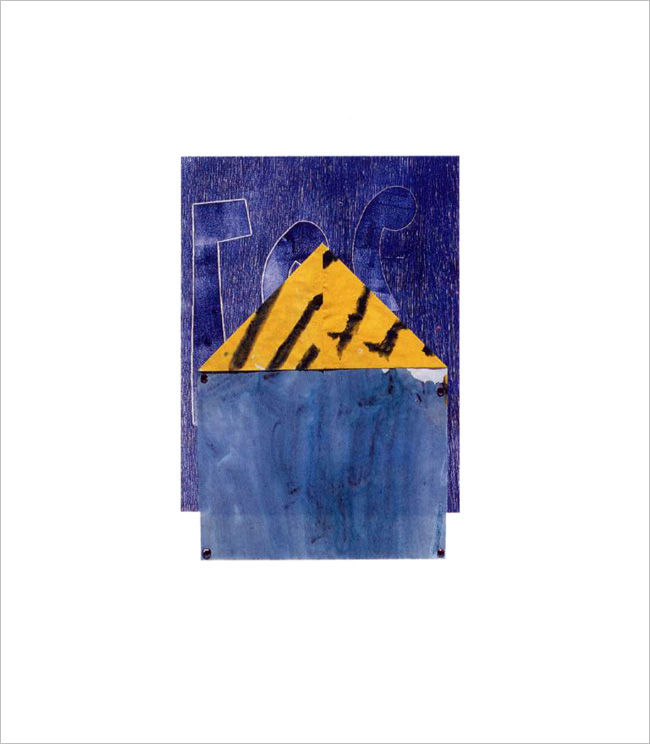
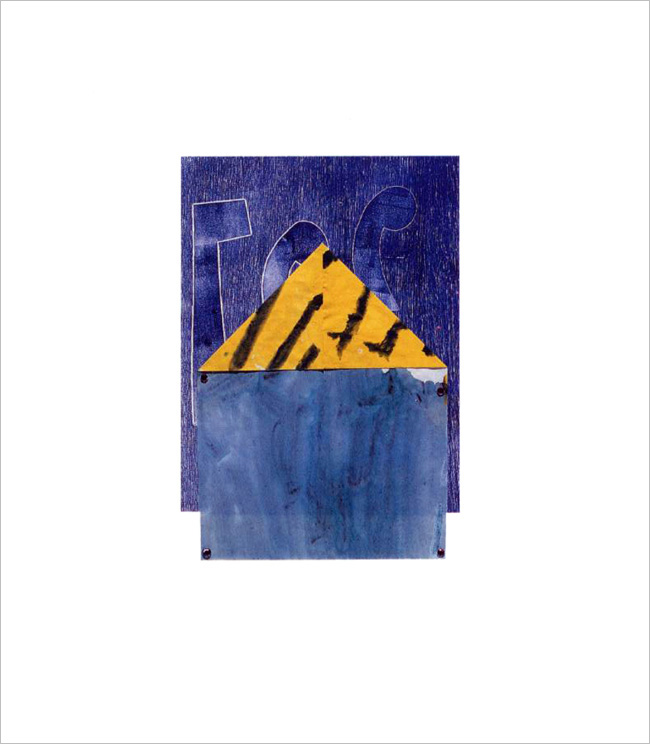
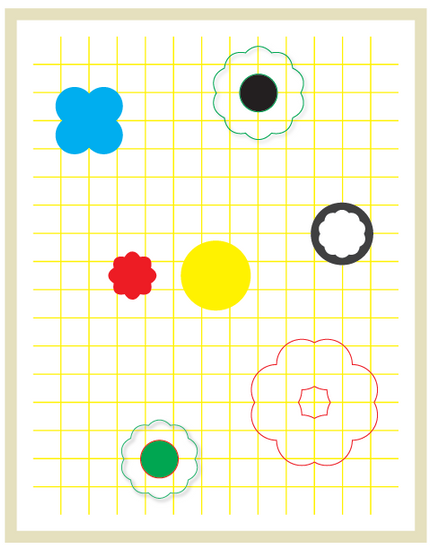
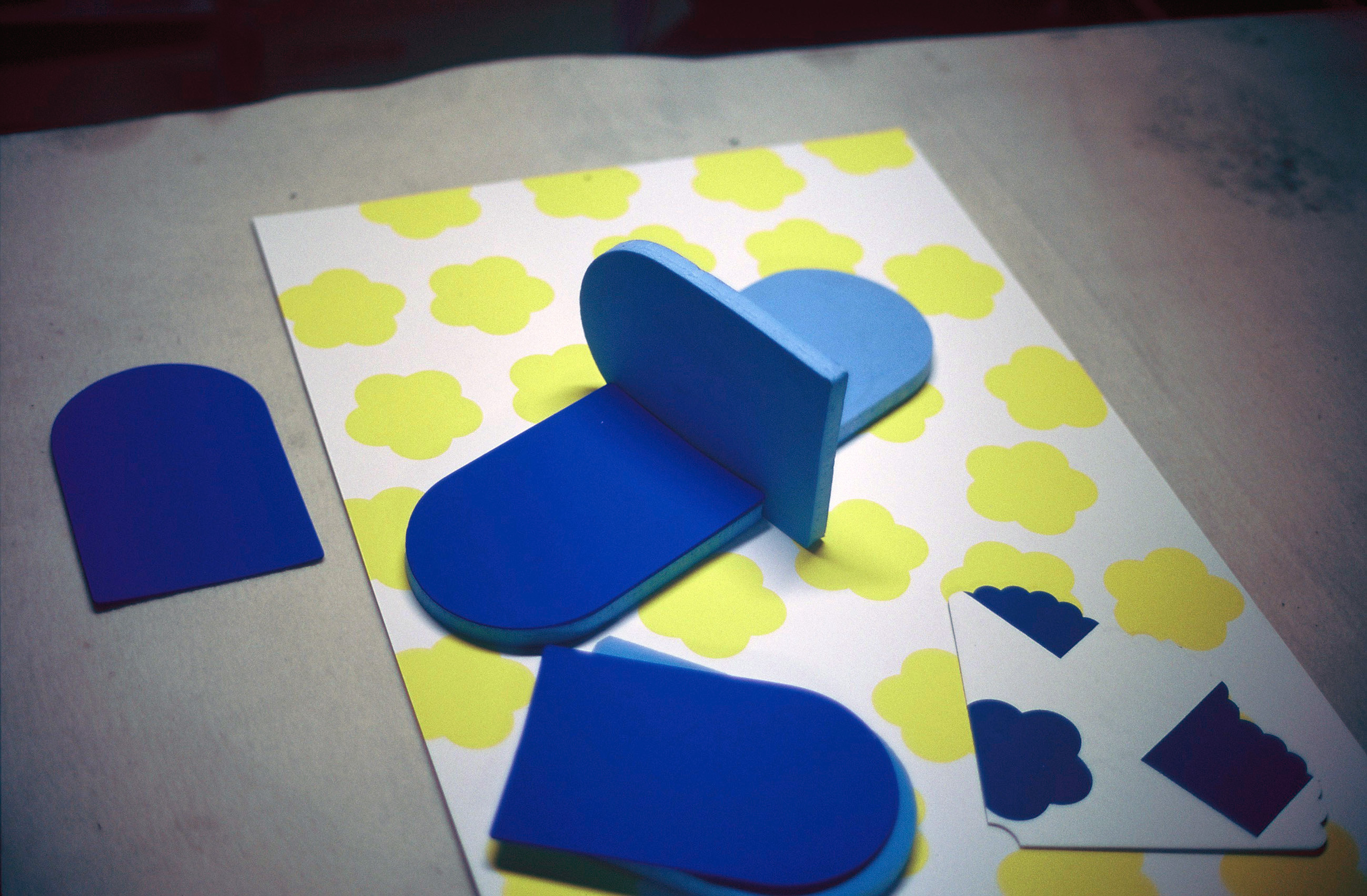
Hong Seung-Hye, Paper Landscape, 1992, Acrylic on paper, 29 x 25 cm © Hong Seung-Hye

Hong graduated from the Department of Painting at Seoul National University in 1982 and studied at the École Nationale Supérieure des Beaux-Arts in Paris. From early on she was more interested in the compositional elements of the picture plane and their placement in space than in representation, and during her time abroad she explored Informel. In the early 1990s she began producing collage works attaching various materials of paper onto canvas.

While depicting natural subjects such as trees, flowers, and fish in modest, simple forms, the overall structure of the image relied on geometric composition. These small pictures — awkwardly colored cut and folded papers — recall the pure pleasure once felt in making and drawing during childhood. This tendency, which nullifies the division between abstraction and figuration and between fine art and craft, shows that the artist was early on free from rigid formalist logic.

In the mid-1990s she introduced mechanical processes by cutting hardboard with molds and arranging the pieces on canvas. The uniformly cut geometric shapes repeated across the surface intensified abstraction, while bright patterns emphasized decorative qualities. This shift toward geometric form and mechanical process foreshadows the later pixel works.


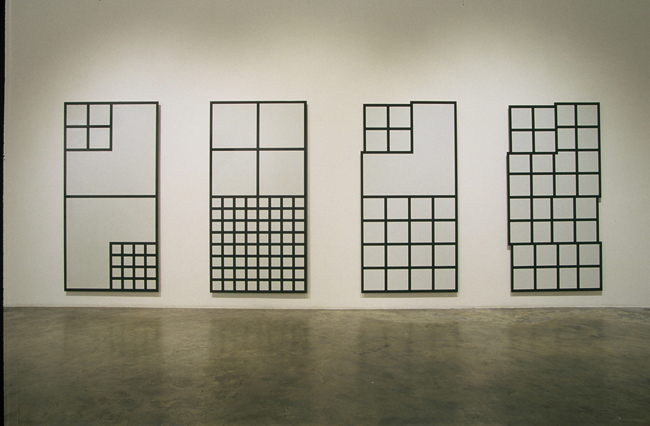
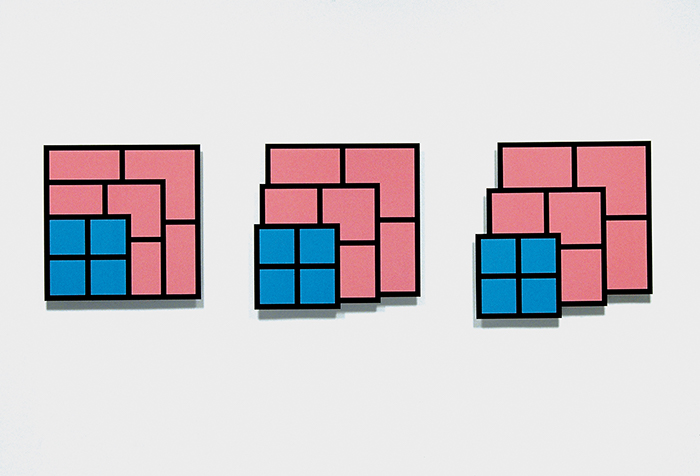
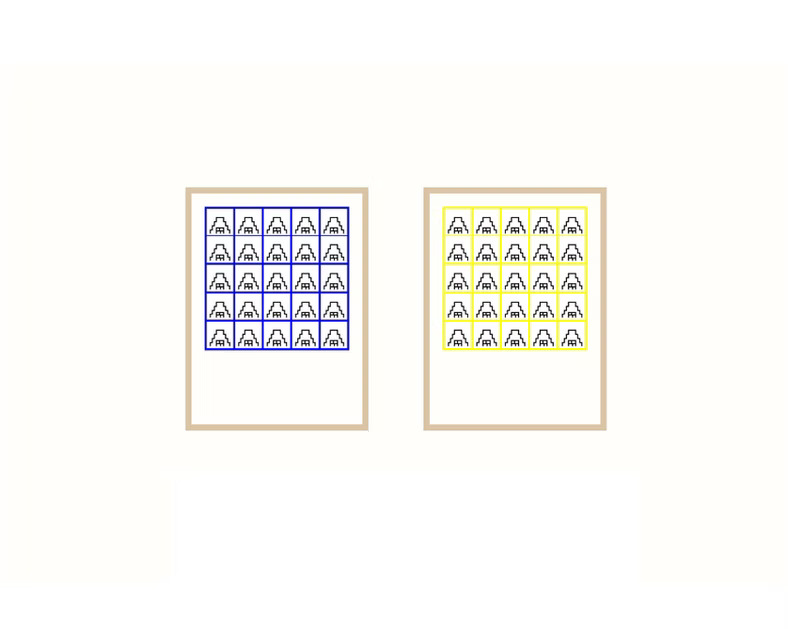
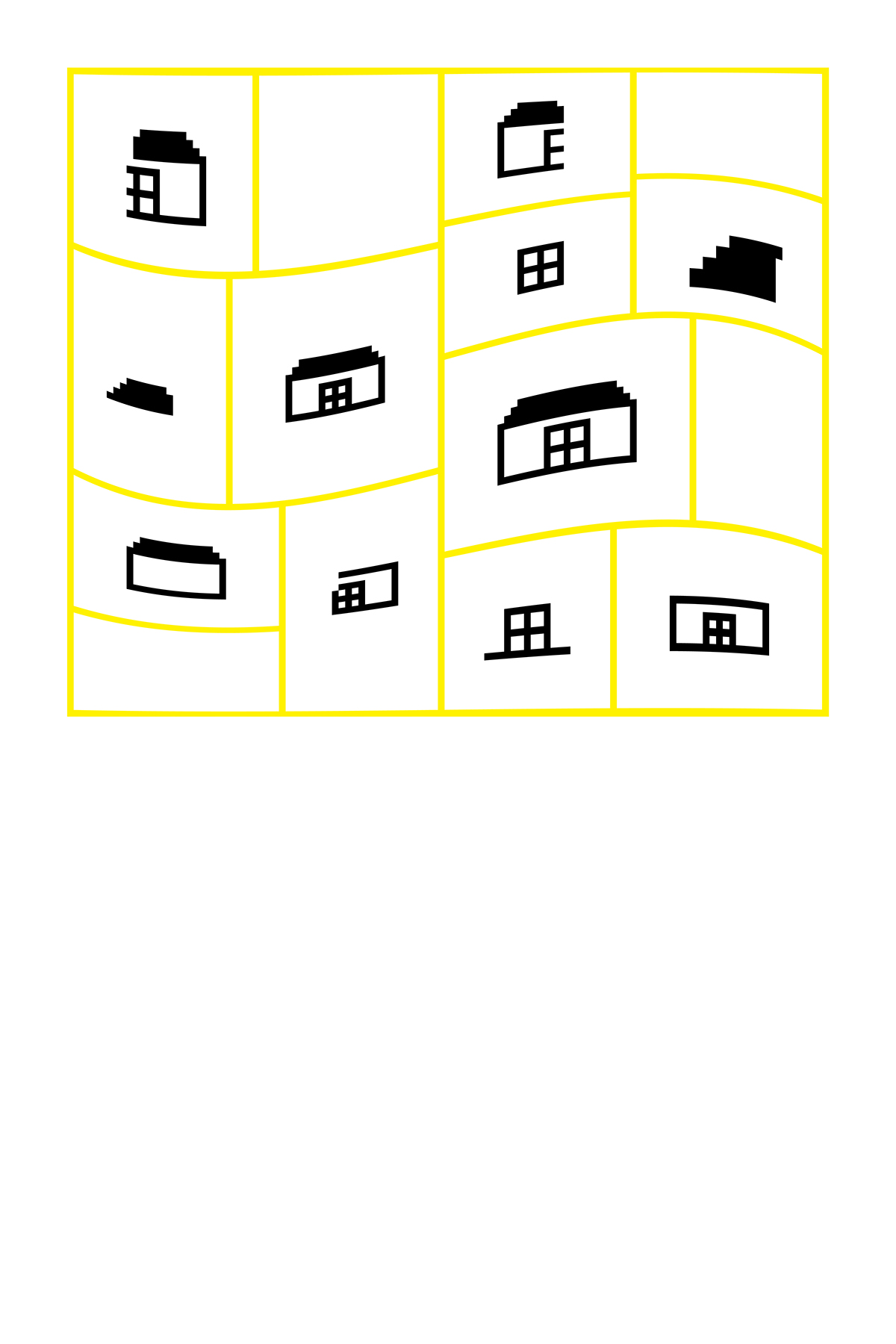
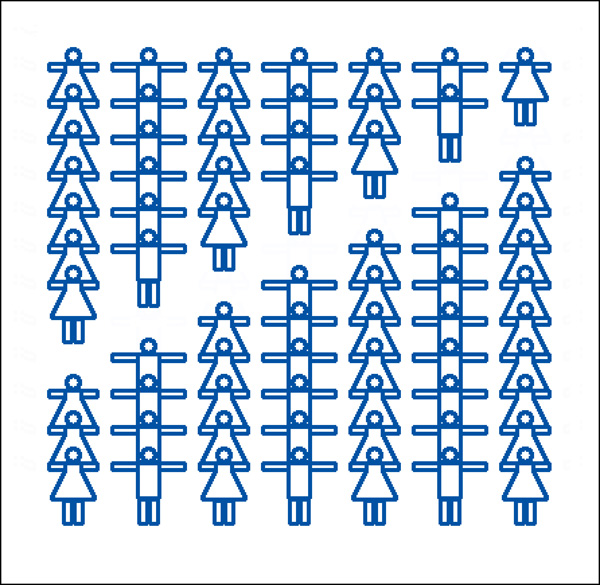
Hong Seung-Hye, Organic Geometry, 2000, Polyacryl urethane on aluminum plate, 162.4 x 82.3 cm (each) © Hong Seung-Hye

In 1997 Hong presented pixel abstractions created using computer programs under the title “Organic Geometry.” Lowering Photoshop resolution to enlarge pixels, she generated geometric forms and silk-screened them onto hardboard. The rectilinear forms created by stacking or aligning square pixels recall, at first glance, the works of Piet Mondrian and Kazimir Malevich. Mondrian sought visual harmony and universal truth through vertical and horizontal lines and restrained colors, while Malevich presented the square as a sign representing absence and pure spirit.

Modernists pursued pure form by removing traces of life and narrative in order to reduce the unstable complexity of reality to clear fundamental elements. Yet Hong’s pixel images function simultaneously as pure geometric structures and familiar objects such as windows, stairs, and houses, and she actively allows these representational images to emerge. Her grid works resemble urban landscapes filled with square buildings and convey the warmth of everyday life permeating them.

Unlike the modernist square symbolizing immutable truth and universal law, Hong’s pixels already exist within computer programs and are infinitely reproducible readymades. The copying and coloring of the forms she constructs from pixels occur quickly and easily on the computer screen. Transferring and coloring these images onto hardboard or aluminum plate is largely performed by machines, differing from her early works where the artist’s manual touch was prominent. Through the reproducibility and anonymity inherent in readymade materials and mechanical processes, she challenges the modernist myth of uniqueness and originality.

Despite their dry, artificial grid-based appearance, Hong’s pixel works contain the softness and warmth of living organisms. She enjoys stacking pixels like bricks to form architectural structures or repeating identical shapes into patterns, creating subtle movement by adding or subtracting a few pixels or slightly adjusting their size. Such attempts to introduce unexpected ruptures into uniform repetition reveal the paradoxical meaning of the term “organic geometry.”

While “geometry” symbolizes immutable mathematical order, “organic” refers to interconnected structures like those of living organisms, suggesting softness and fluidity. By combining these contradictory terms, Hong rejects modernism’s binary attitude and demonstrates her intention to produce works that embrace contradiction.

Although her works — composed of repeated units and devoid of excess — appear superficially similar to minimal art, they differ in that their forms grow and proliferate like cells rather than repeating mechanically. The basic units that compose her work show minute individual differences yet converge into unified patterns or larger images, recalling the structure of living organisms whose organs are closely linked or a microcosm of society formed by individuals.


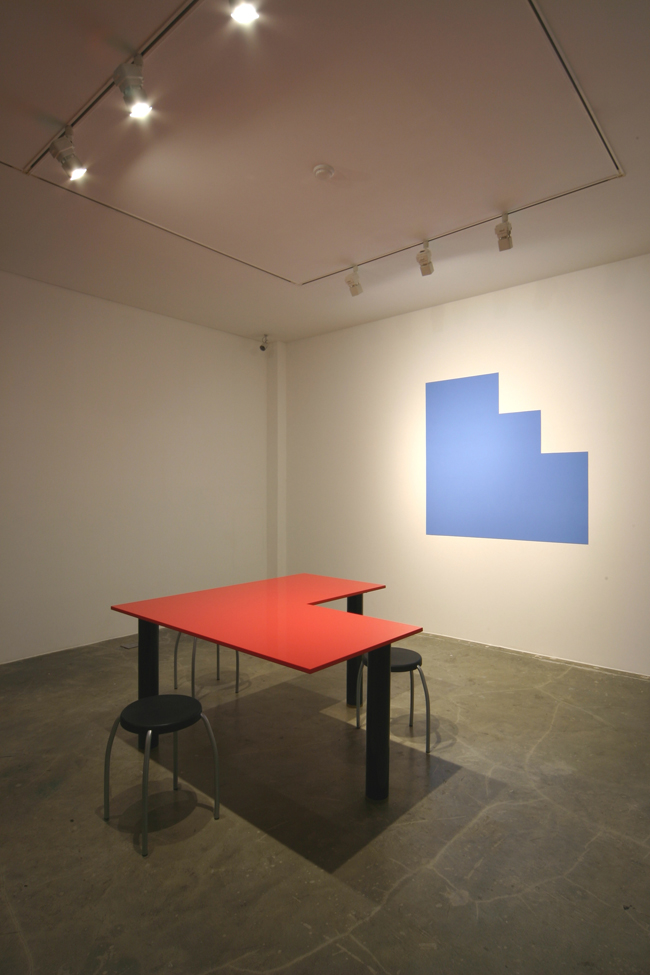
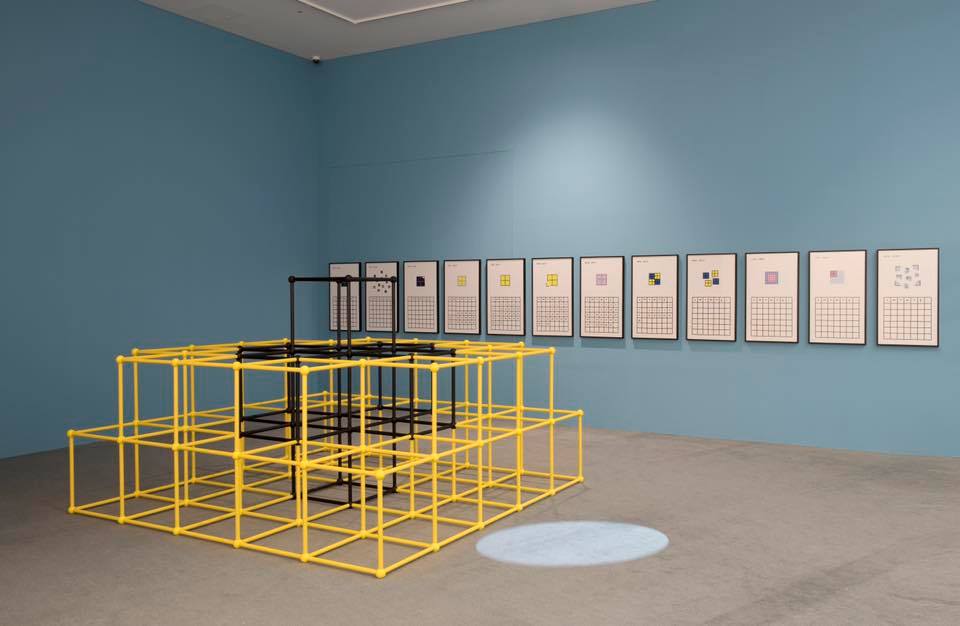
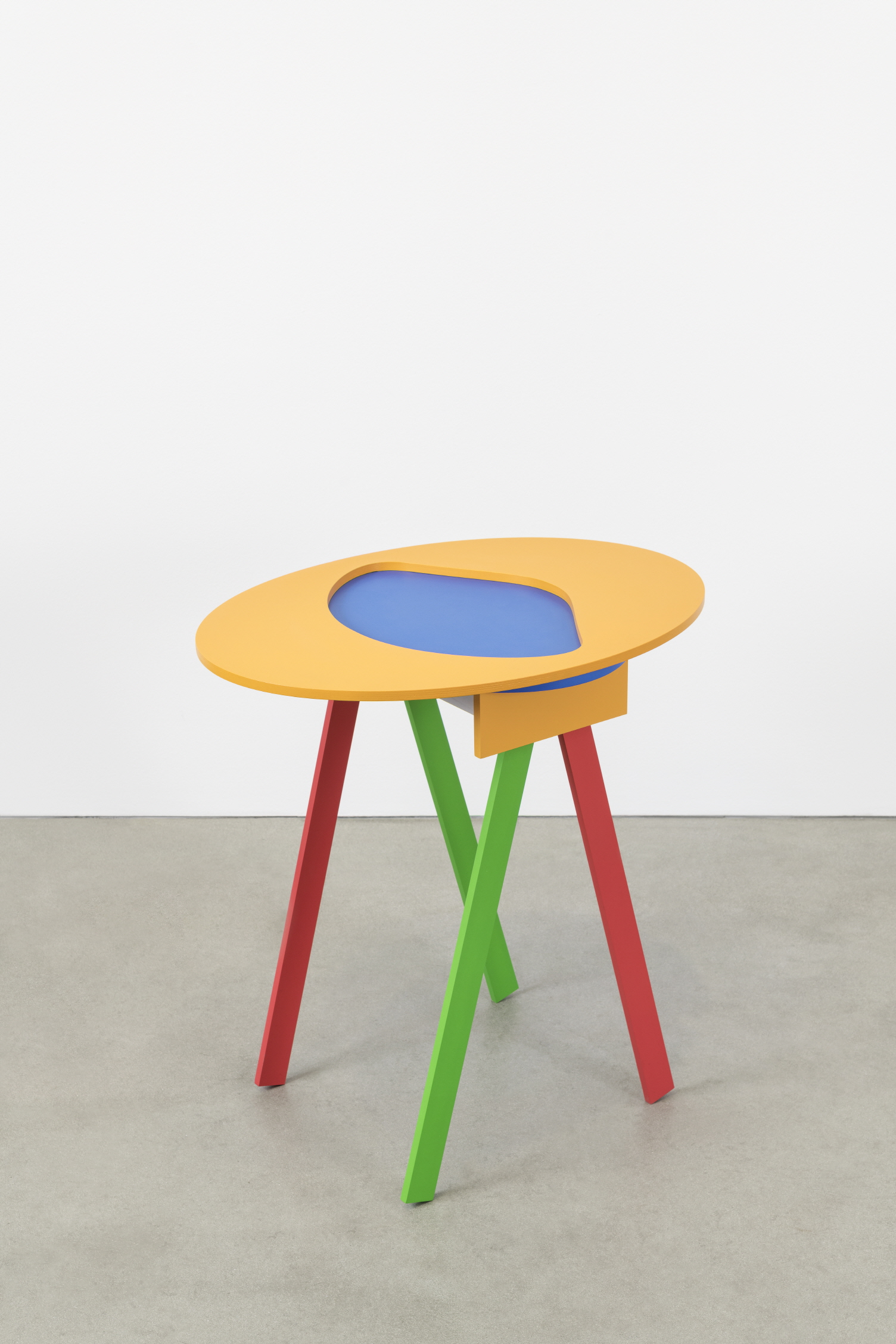
Hong Seung-Hye, Complementary Installation, 2004, Table and mural © Hong Seung-Hye

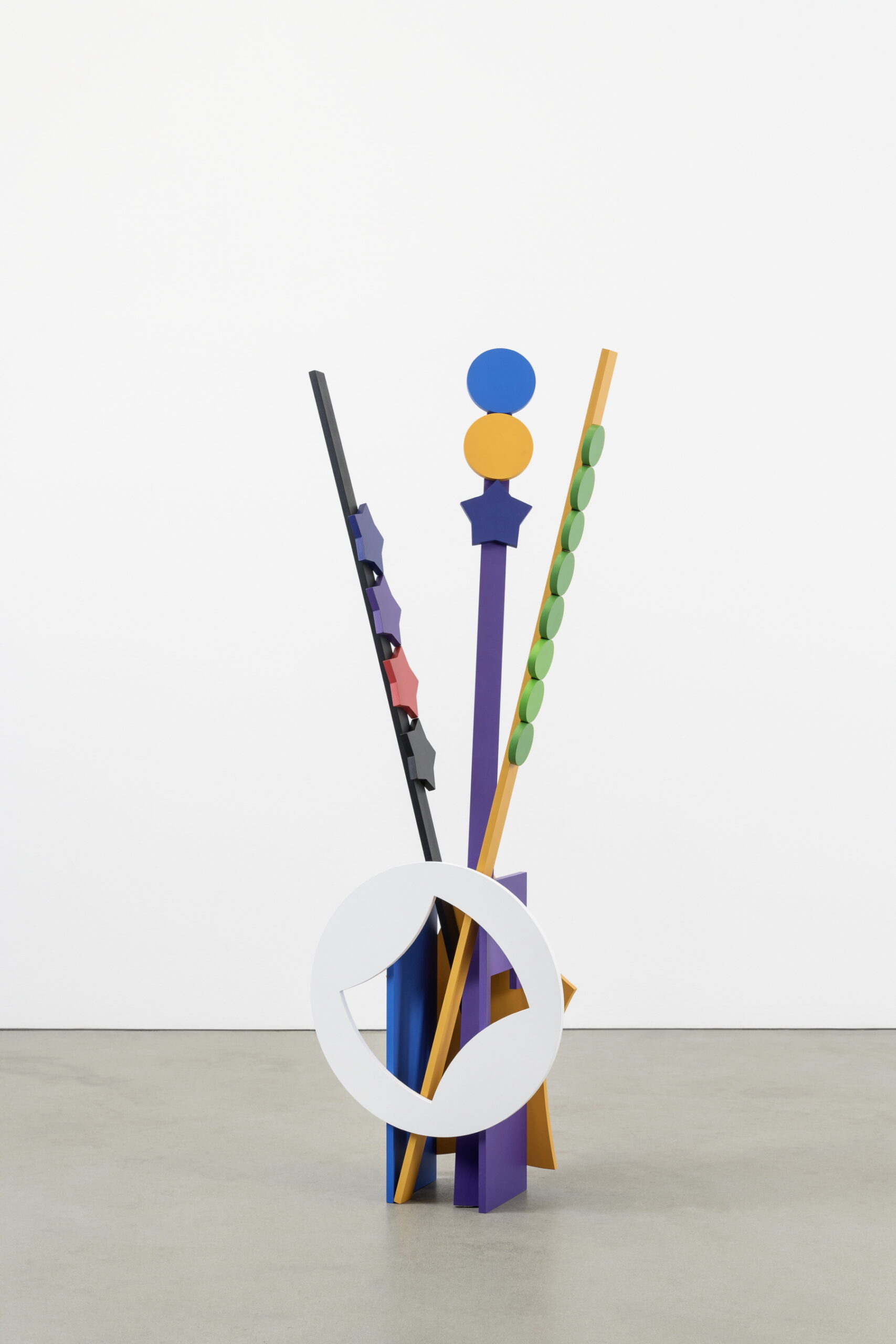
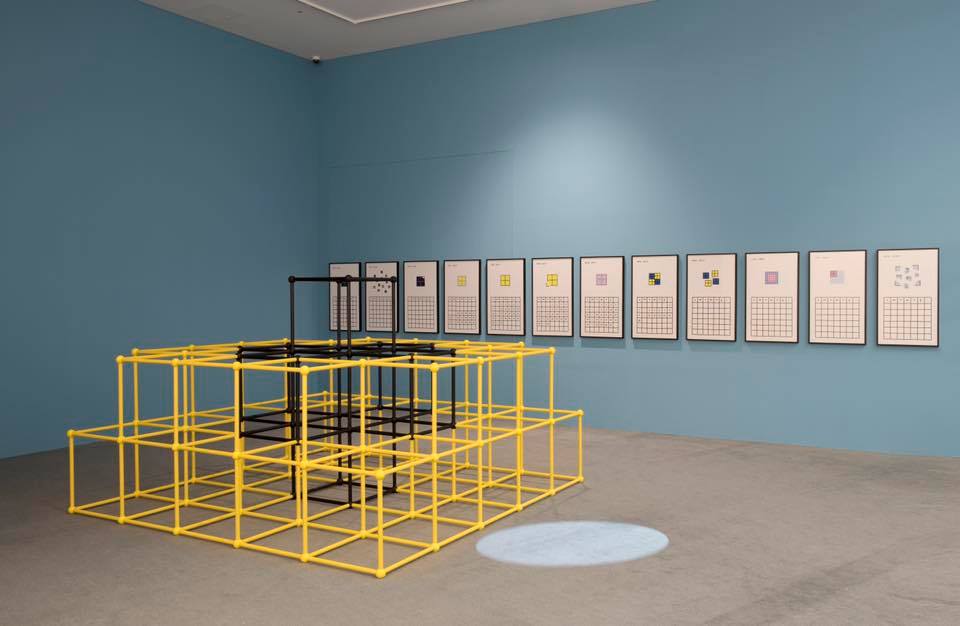
From early painting onward Hong paid particular attention to relationships among compositional elements and structural aspects of the image. Her work has expanded from plane to volume and surrounding space, reaching architectural scale. Even in early paper collages she perceived the canvas as an object. Later pixel paintings printed on hardboard extended into the frame to form geometric objects overall, and she transferred images onto thin aluminum plates installed as reliefs.

Treating the gallery wall as a computer screen, she arranged works like pixels to form a larger whole. In the 2004 work Complementary Installation, furniture identical to forms detached from square paintings was produced, allowing painting and furniture to form complementary relationships that crossed plane and space, art and everyday life. Sculptures realizing screen-based images in three dimensions and installed perpendicular to the wall further deepened her investigation into the relationship between plane and space.

As seen in early twentieth-century Western geometric abstraction’s intersection with architecture, the accumulation of units into geometric form inevitably converges toward architecture. Hong likewise presented works that penetrated real space by turning parts of exhibition venues into artworks, painting walls, columns, and floors and naming them “readymade sculptures.”

This implies selecting parts of existing architecture rather than creating new structures and reveals her artistic view oriented toward concrete life through abstraction. Increasingly interested in transforming entire spaces, she expanded the scale of her work, and a decisive turning point came in 2008 when she turned the award ceremony venue of the Lee Jung-Seob Art Prize into a work by designing and arranging letters, patterns, chairs, lighting, and floor markings.


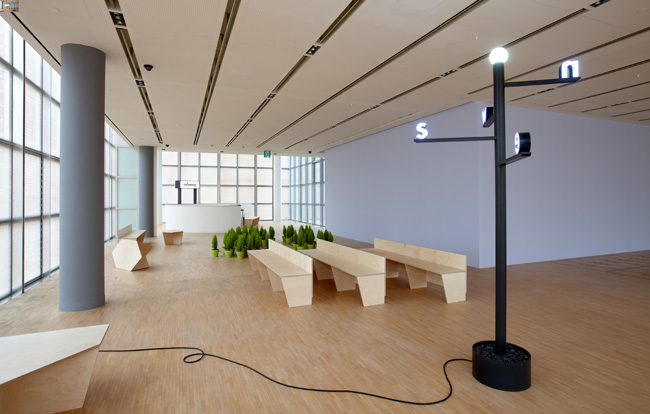
Installation view of 《Square Square》 © Atelier Hermès

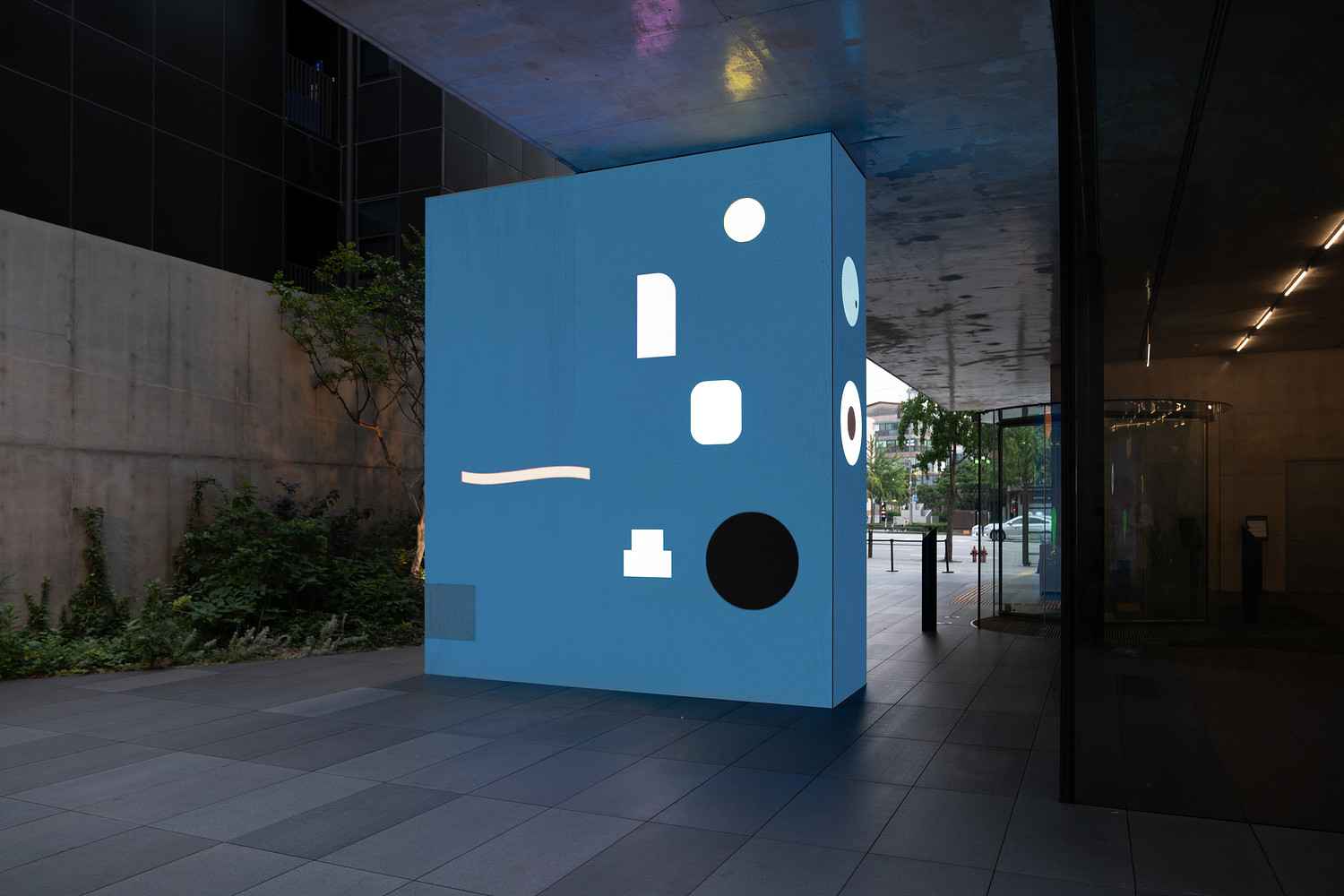
The 2012 exhibition 《Square Square》 at Atelier Hermès marked a more active intervention into exhibition space and communication with viewers. To create a virtual plaza she installed benches, tables, murals, signs, and a wine bar. The building’s square-based architecture and glass curtain wall corresponded to her pixel forms. Transforming an open glass-walled venue with terrace into a plaza, she encouraged organic relationships between space, artwork, and viewer. Large murals installed in public buildings and pixel tiles decorating swimming pools further demonstrate how her geometric abstraction harmonizes with everyday environments, expressing her intention to integrate art and life beyond formalist exclusivity.

From early works to the present, playfulness consistently runs through her practice. Early paper collages derived from childhood play and the liberation she felt moving beyond the canvas frame reveal a light gesture teasing strict formalist modernism. Likewise, as seen in her accidental discovery of pixel imagery while experimenting with computer programs, purposeless play and pure enjoyment underlie her work, increasingly revealing free ideas that break rigid structures over time.

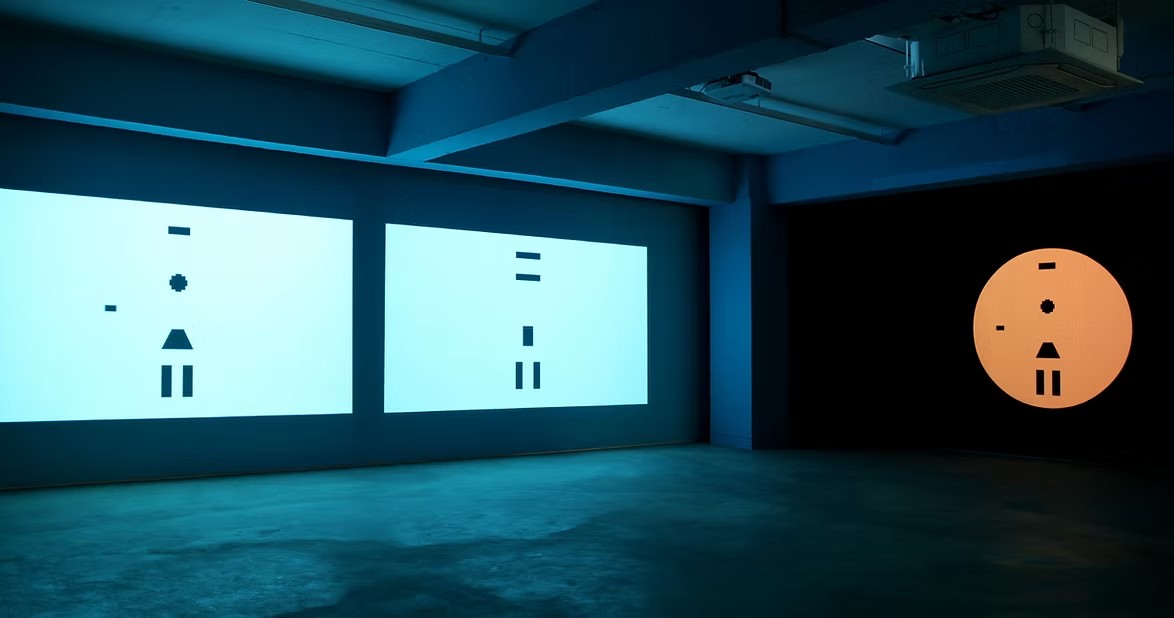
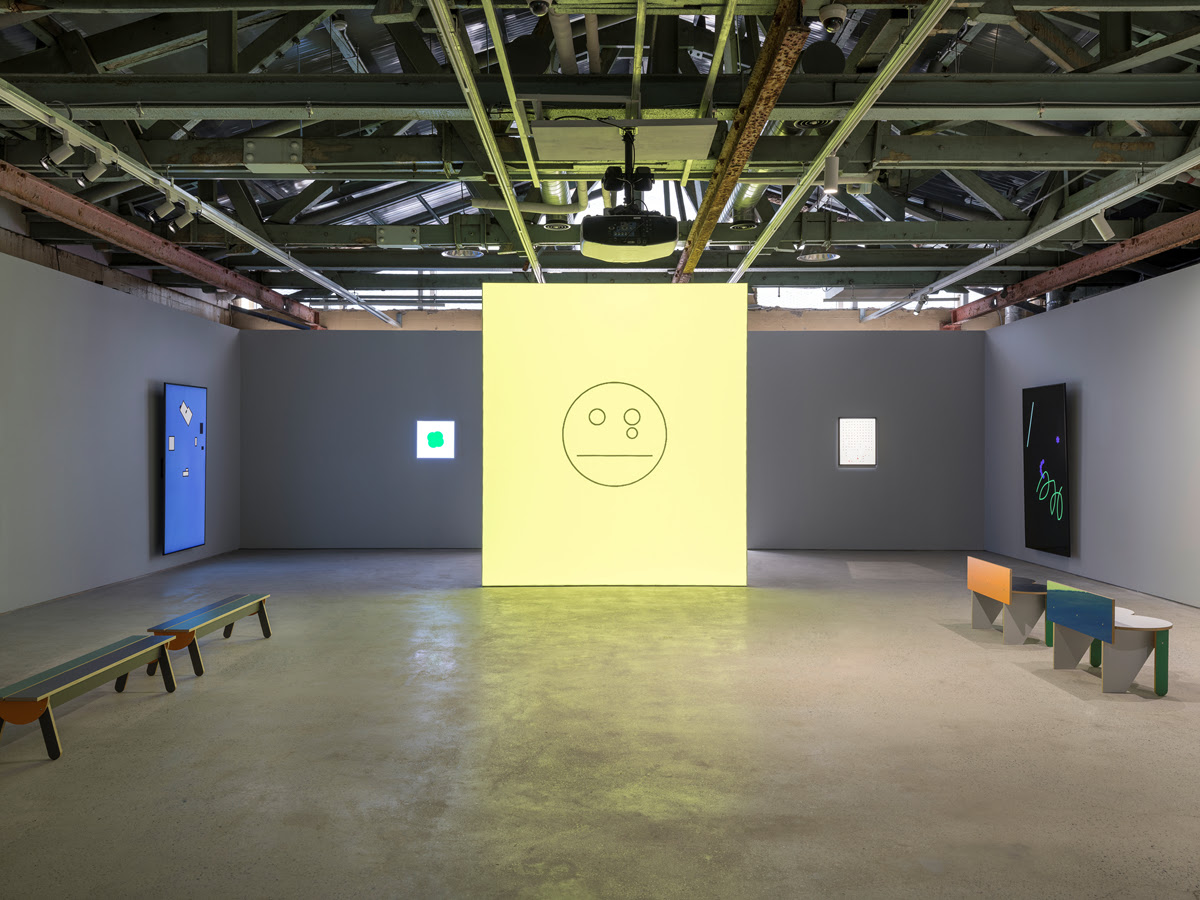
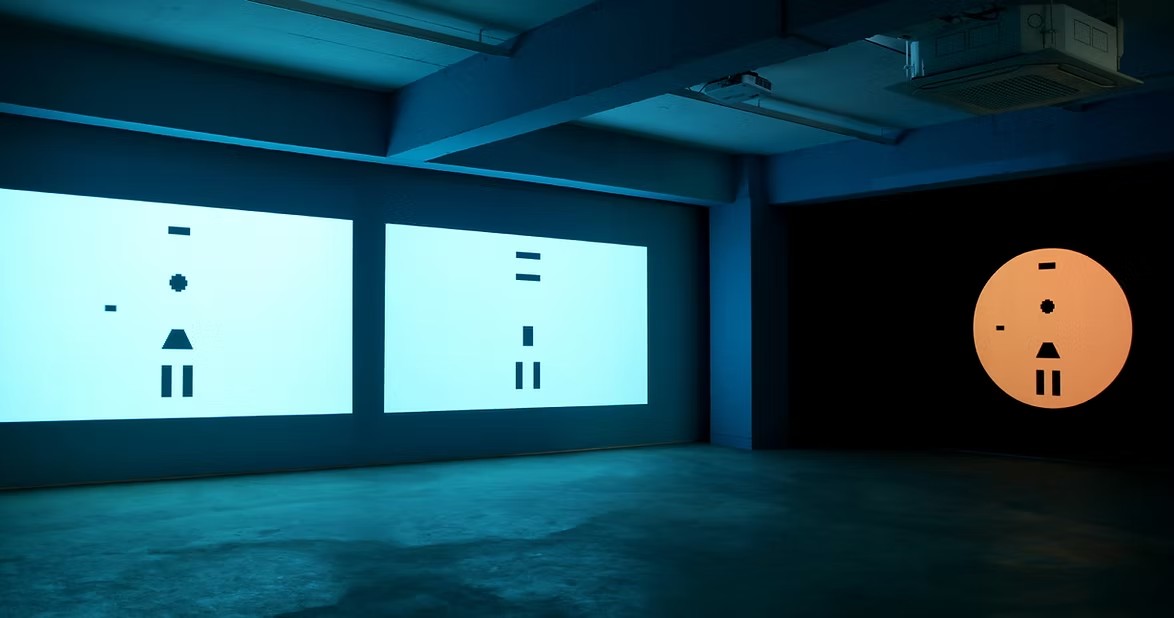
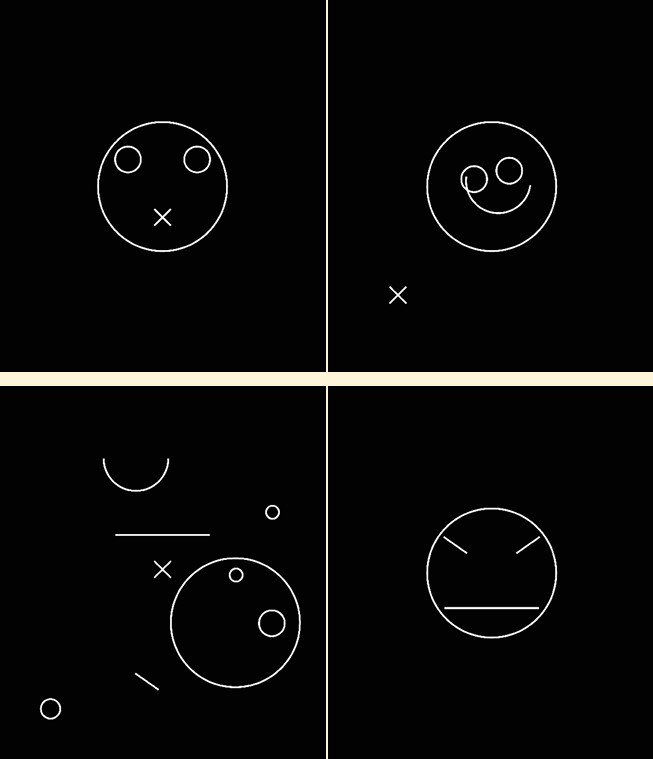
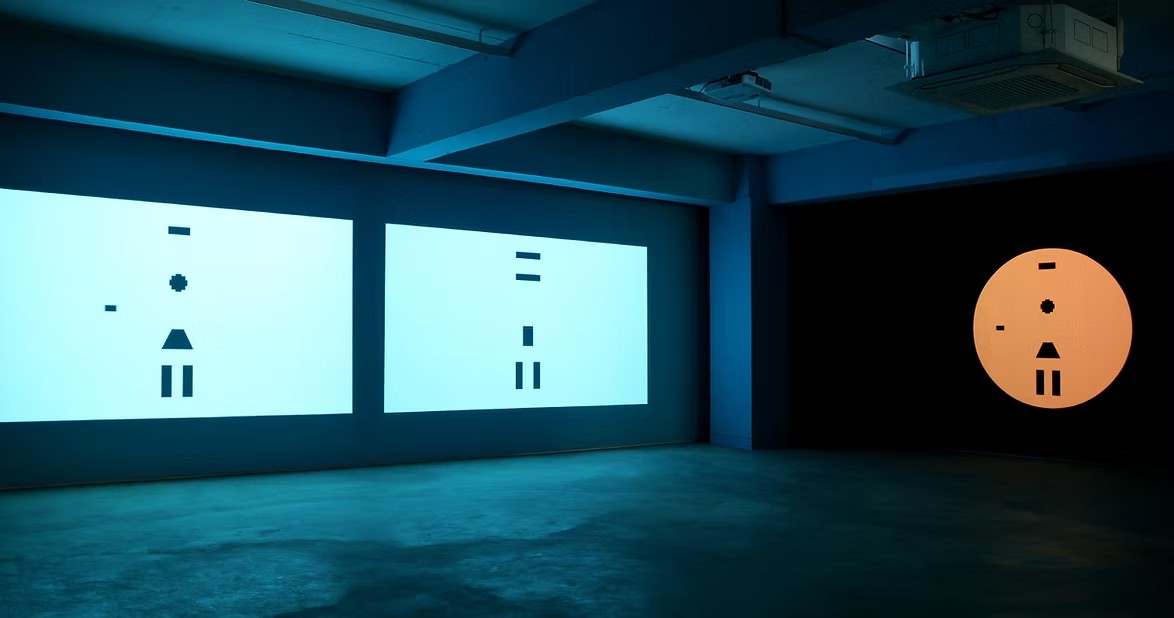
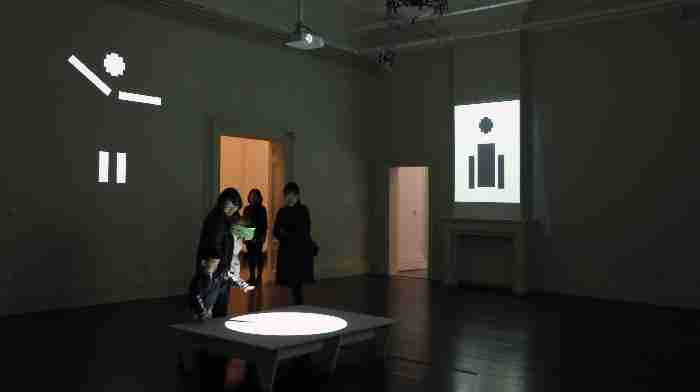
Her animation series ‘Sentimental’, begun in the early 2000s, shows pixel forms moving to music like dancing, realizing visually perceived rhythm as actual motion. In The Sentimental Smile (2016), pictograms of a man and woman convey emotional exchange despite limited movement. By adding temporality to simple forms, such animation strongly expresses organic vitality. Initially using existing music, she now composes sound herself using computer programs, and in these immaterial, cross-genre works the freedom and playfulness of her practice stand out.

That Hong’s work adopts the pure form of the grid yet constantly moves beyond it stems from her openness and inclusive artistic philosophy. Whereas modernism removed heterogeneous elements to preserve art’s transcendence, akin to a logic of purity, Hong actively embraces diverse elements of life. In 2005 she installed Tree Speak in Marronnier Park bearing Robert Filliou’s phrase, “Art is what makes life more interesting than art.”

This text sculpture communicating in everyday space embodies her belief in bridging art and life. Hoping that “great art” descends from the heavens into daily life, she reduces complex narratives into simple geometry while returning attention to lived space, continually moving between inside and outside the grid and warming rigid geometry with living vitality.

References