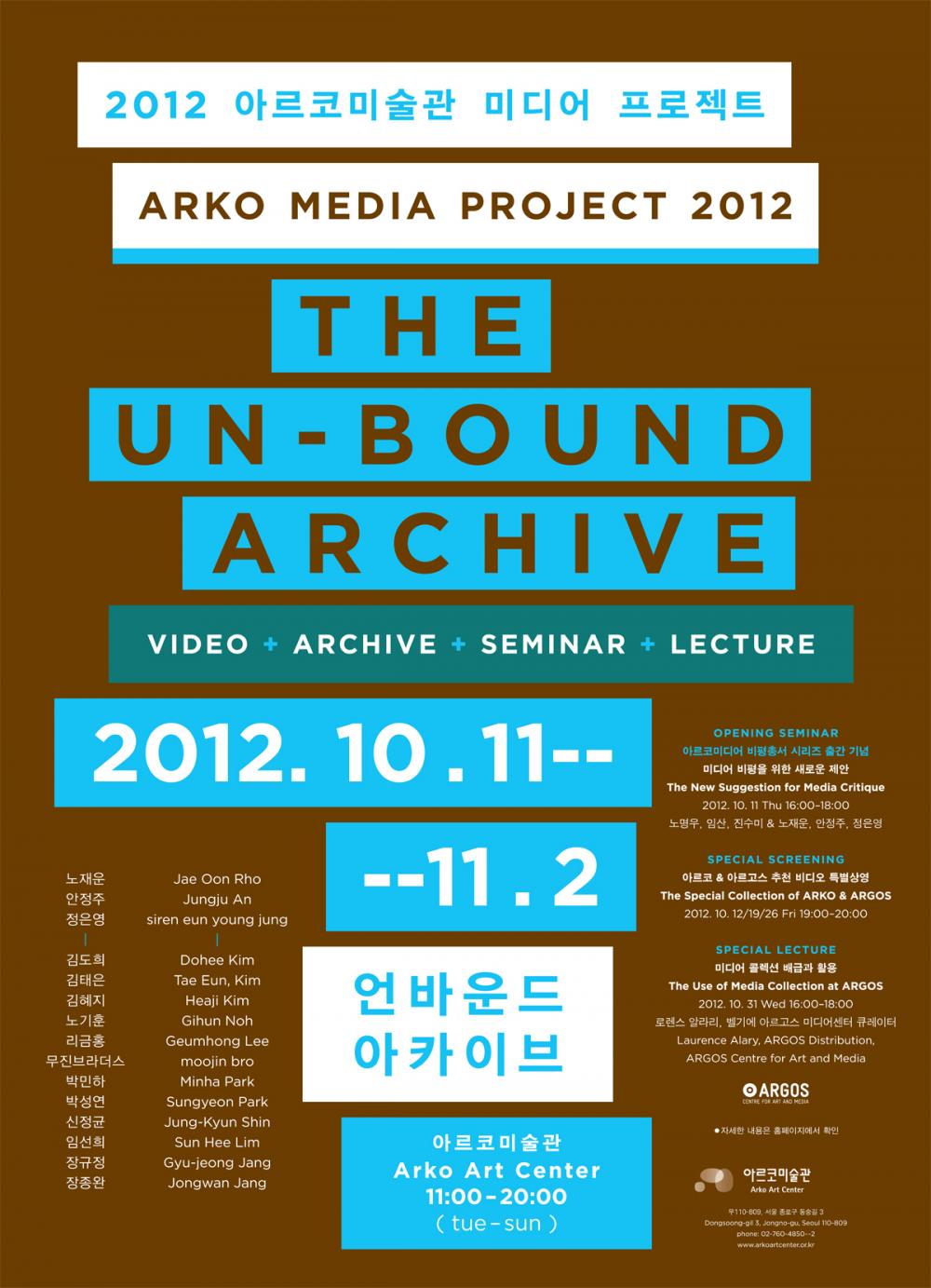
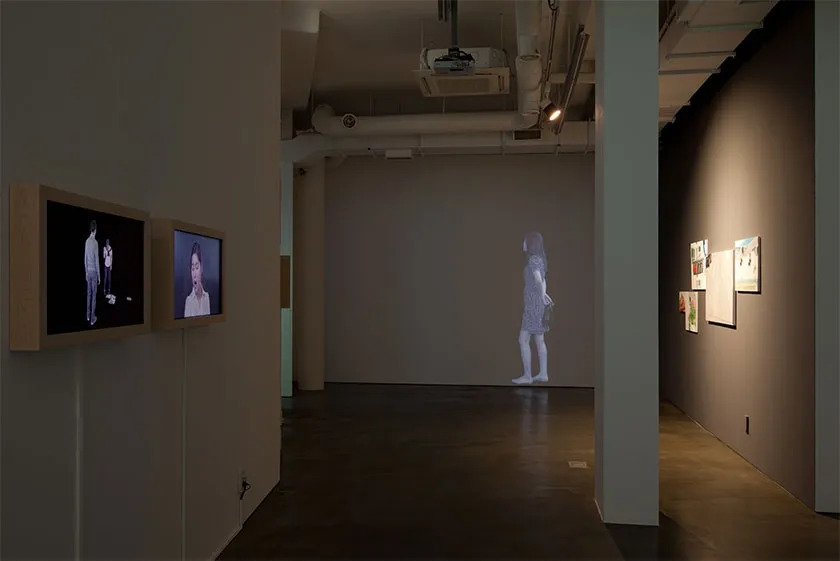
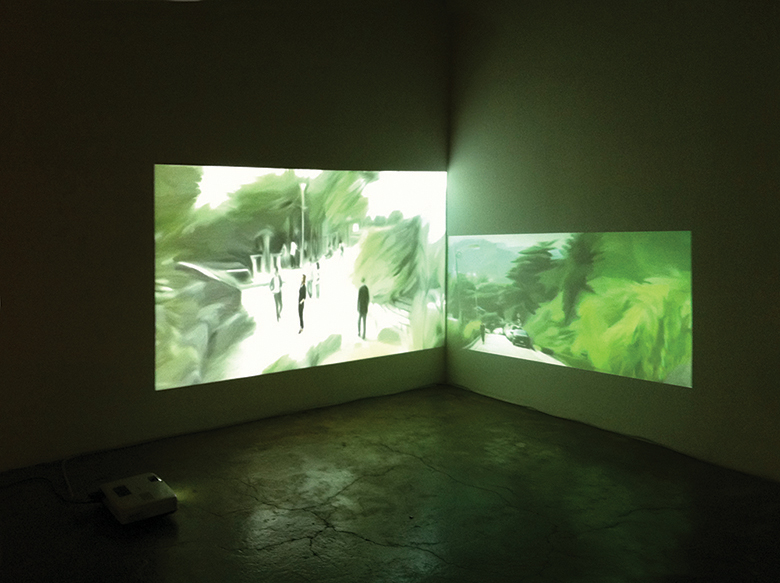
A total
of fifteen artists—including Kim Do Hee, Kim Tae Eun, Kim Hea-ji, Gihun Noh,
Lee Geumhong, Moojin Brothers, Park Minha, Park Sungyeon, Shin Jungkyun, Im
Sunny, Jang Gyujeong, Jang Jongwan, as well as Noh Jaewoon, Ahn Jeongju, and
Jeong Eunyoung, who participated in the production of the Arko Media
Criticism Series—present single-channel video works alongside
archival materials generated during their creative processes or related to
their artistic concerns.
The participating artists represent a wide spectrum,
ranging from established figures in Korean video art to emerging artists making
their debut as media artists through this exhibition. Through approximately
twenty works that demonstrate the diversity and hybridity of moving image
practices—including animation, documentary, drama, and graphic imagery—Arko Art
Center seeks to illuminate the landscape of Korean video art from a critical
perspective and to provide a platform for multifaceted interpretations of video
art as a reflection of the zeitgeist.
The
subtitle of the project, “unbound archive,” refers to a state of being free
from binding, as in books or papers that are not bound. Accordingly, the
“unbound archive” forms a contingent field in which fragmented and unstable
individual events—scattered across cultural, social, and political
contexts—collide and interact, generating hidden histories, memories, ideas,
and points of contention through their engagement with art.
The archival
materials presented in this exhibition—such as sketches, project plans, notes,
interviews, and site photographs—do not function as autonomous artworks, but
rather serve as critical clues for reinterpreting the works. Viewers are
invited to act as active interpreters within an expanded archive, collecting,
preserving, sharing, and assigning meaning to fragments of narratives that
might otherwise be overlooked or lost, thereby participating in the creation of
new discourse.
This
project seeks to move beyond the conventional exhibition format of passive
screening and one-directional perception, instead actively exploring processes
of communication with audiences. In addition, various programs are organized,
including the publication of the Artist e-Portfolio—which
compiles participating artists’ archives in the form of an e-book—an opening
seminar commemorating the Arko Media Criticism Series, a
lecture by Laurence Alary, curator at ARGOS Centre for Art and Media, one of
Europe’s leading media centers, and special screenings recommended by Arko and
ARGOS. Through these programs, the exhibition aims to present the diverse
developments and experimental practices surrounding contemporary media art.