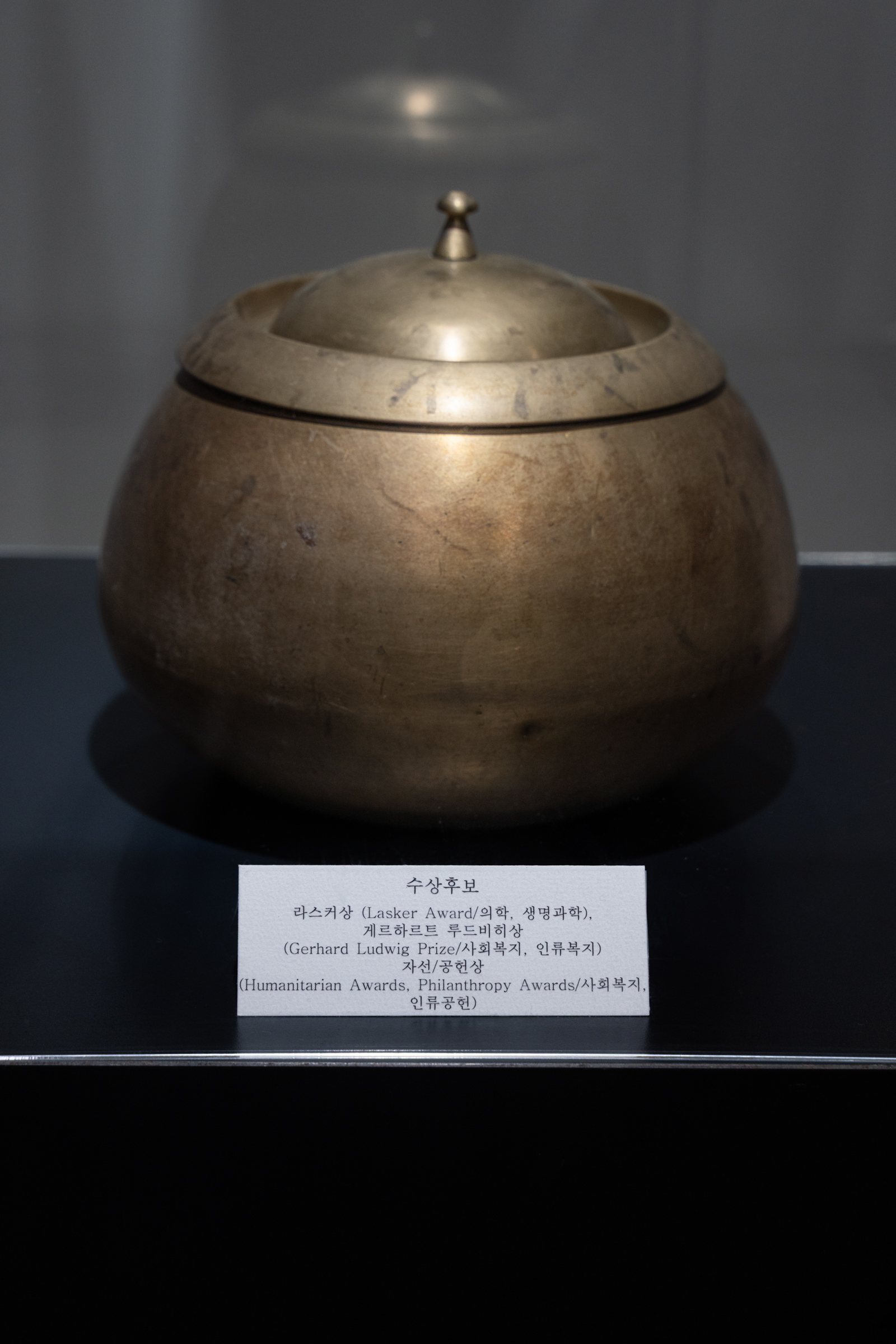
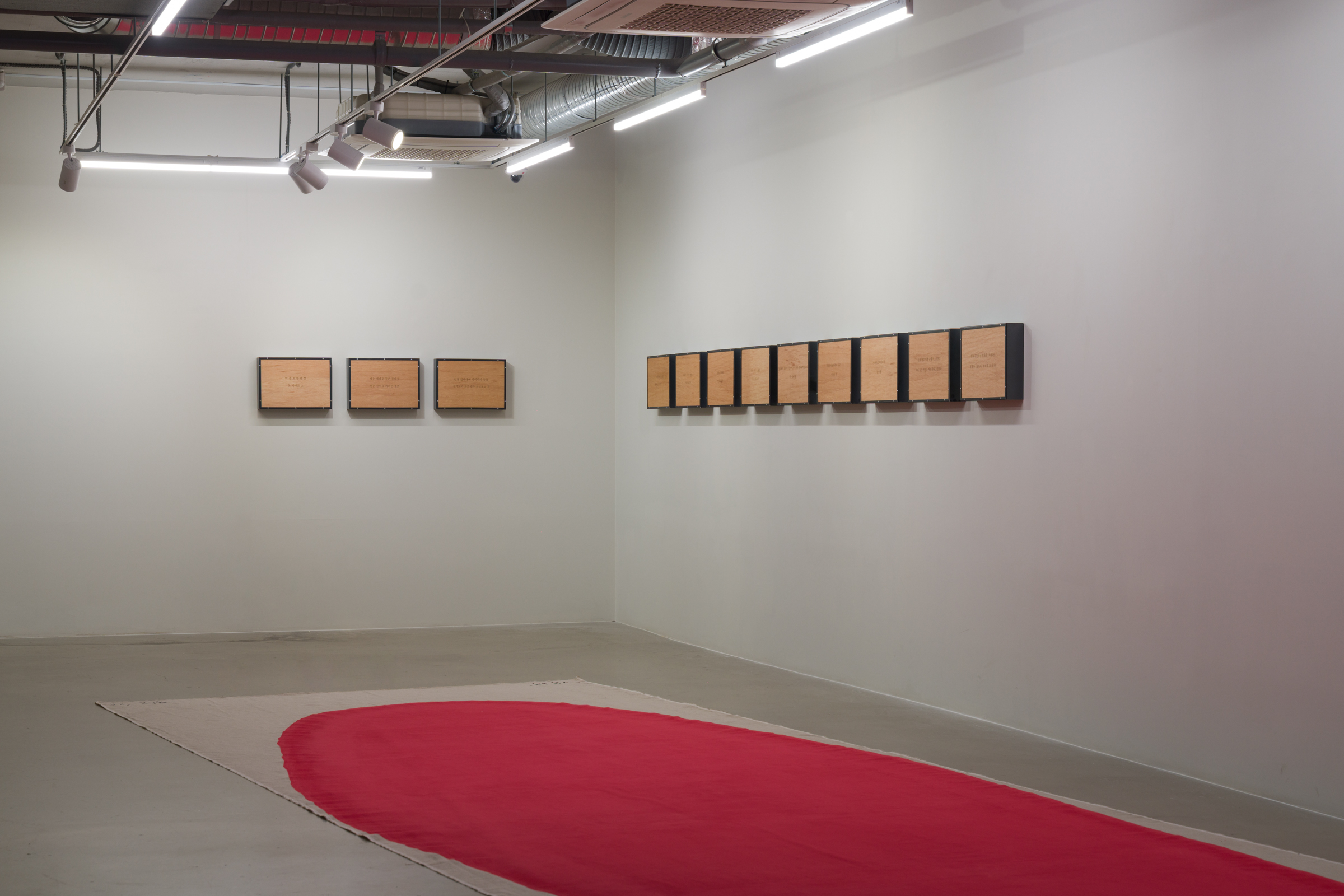
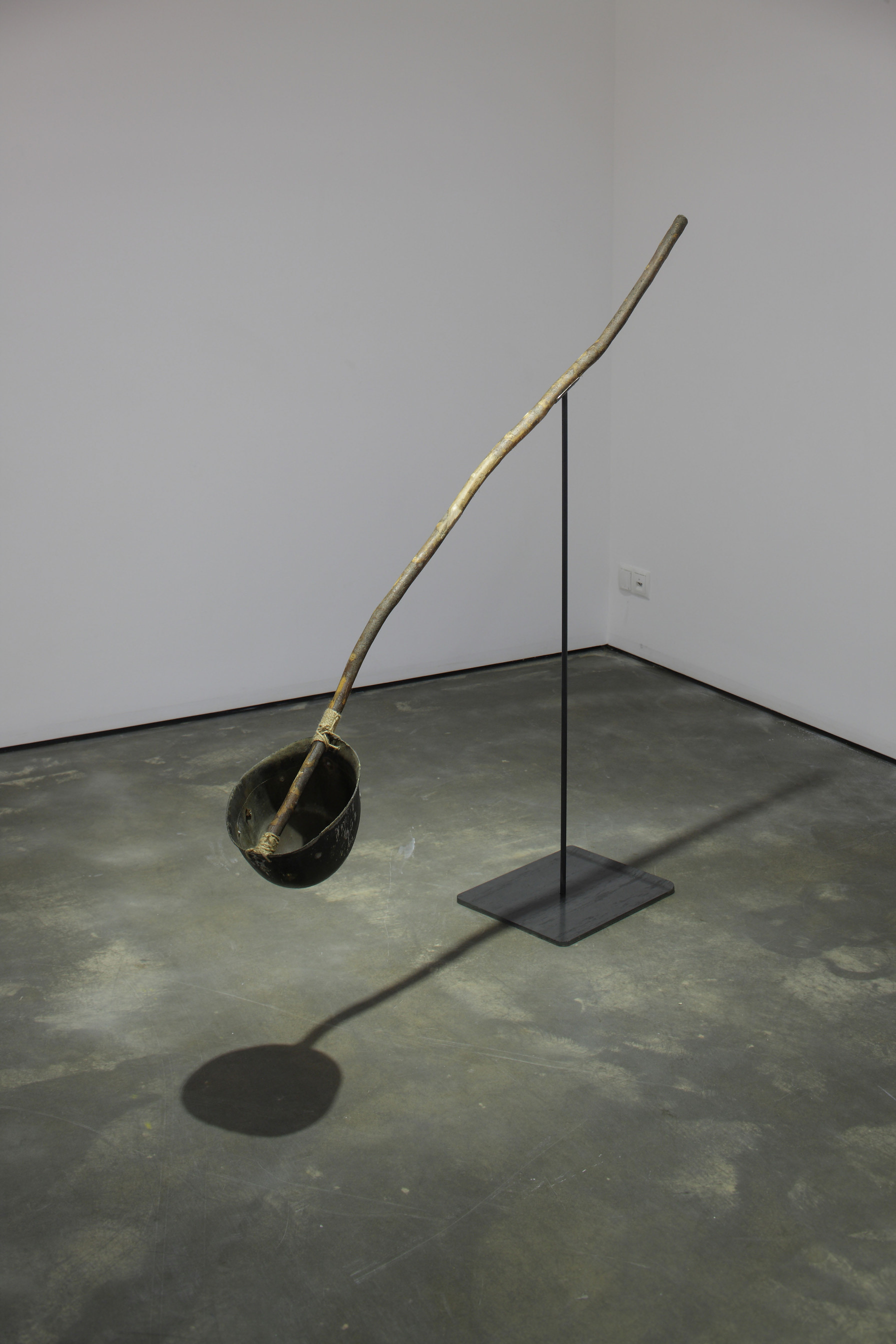
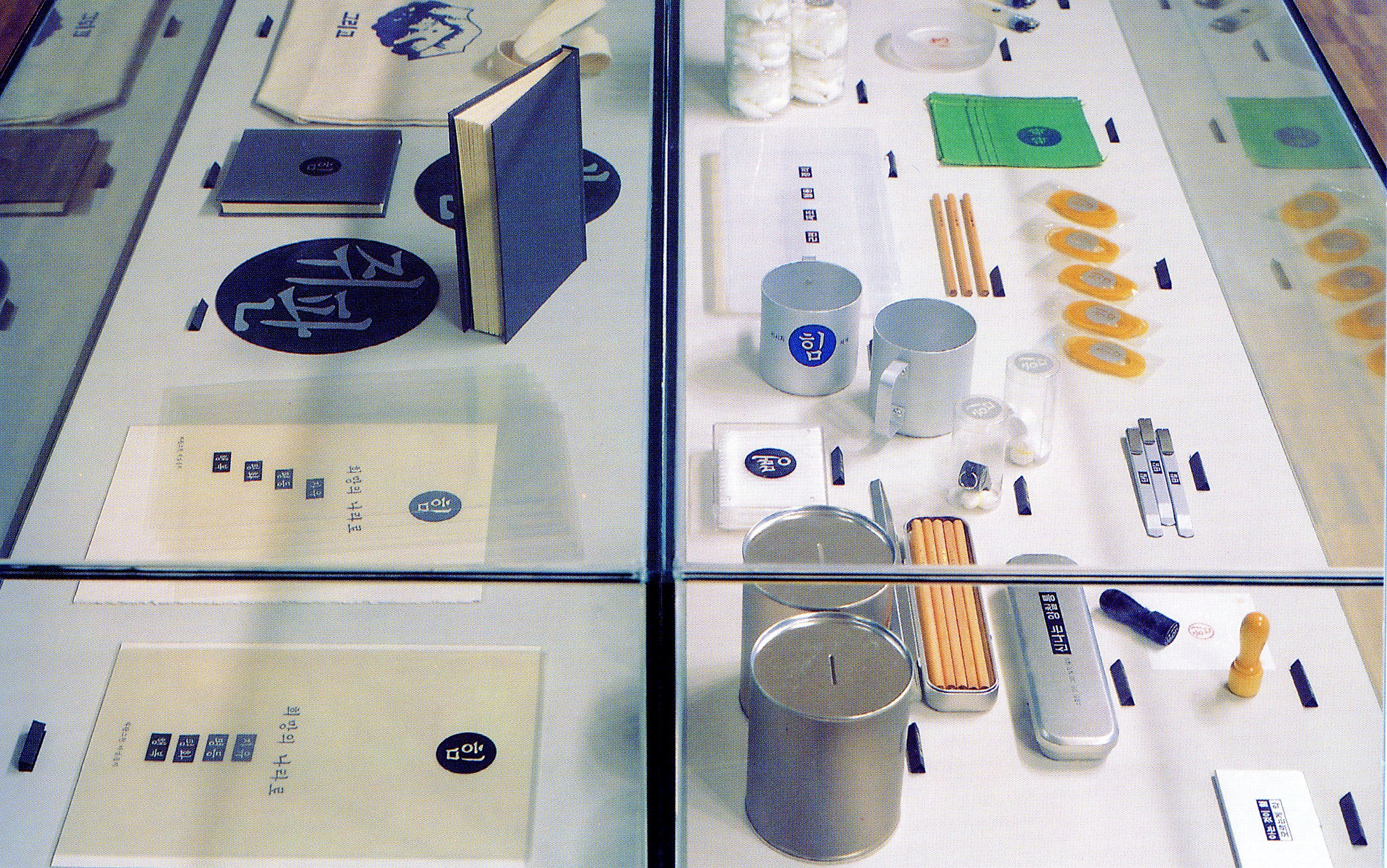
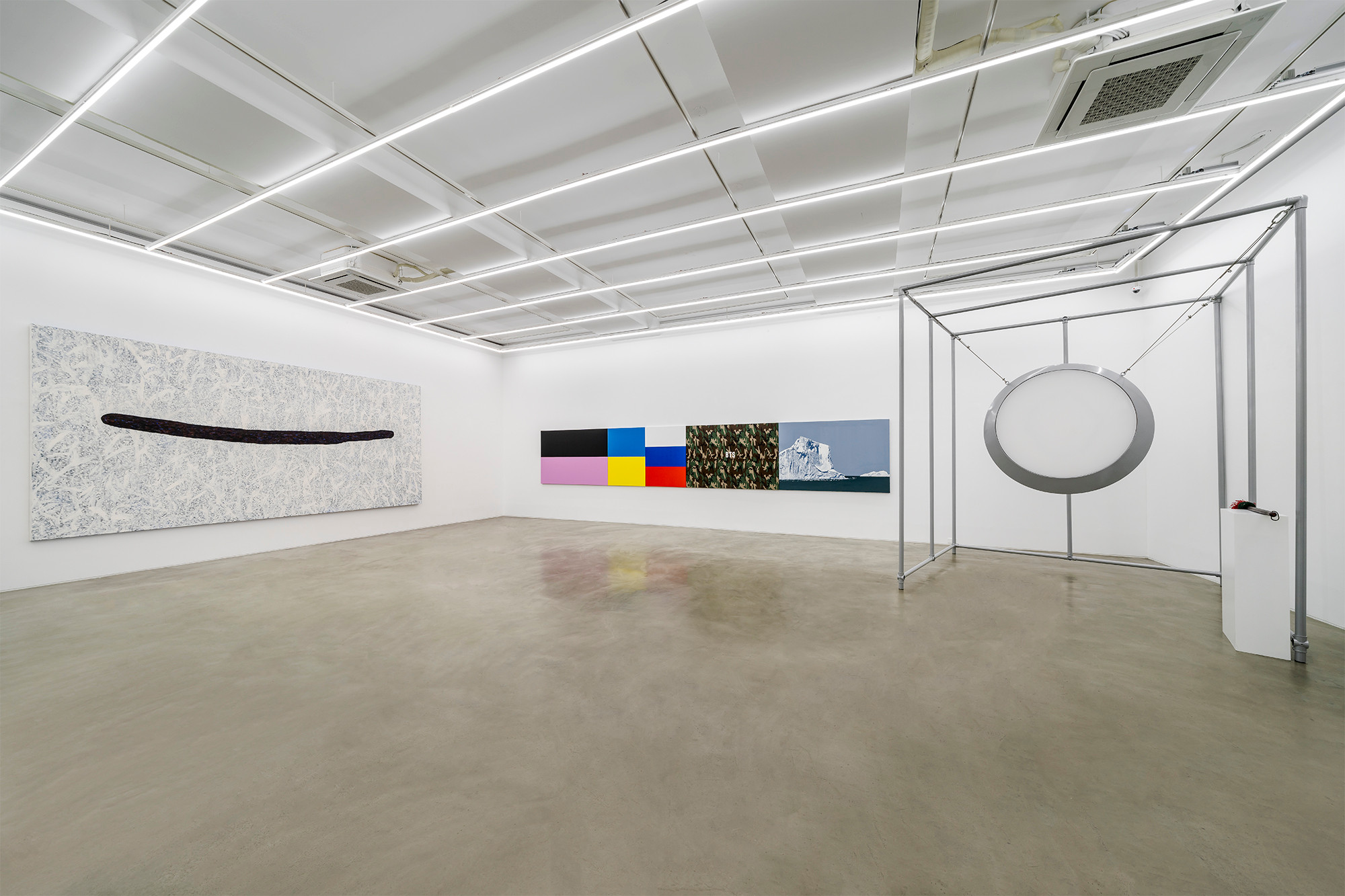
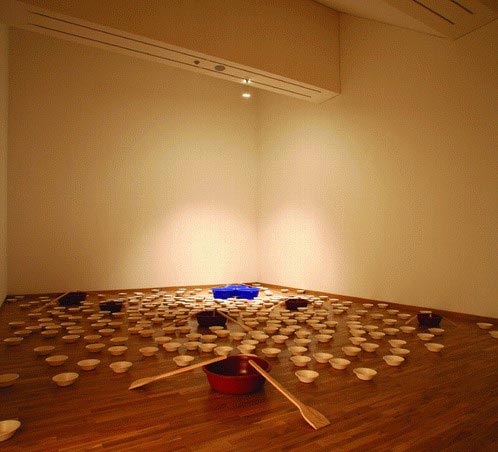
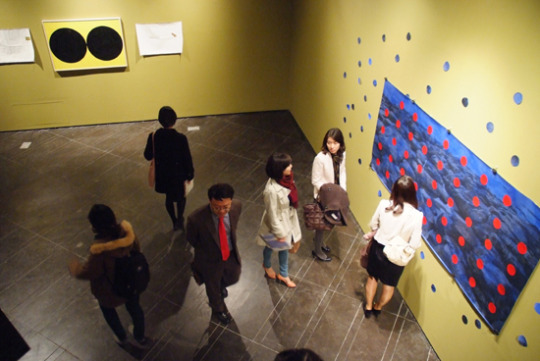
The most witty expression of the finer tremors of these scattered forces appears in the items specially produced for sale in this exhibition. As a satire on the reality that conventional artworks are so expensive that viewers do not purchase them, Yoon produced very inexpensive artworks. These objects, sold to visitors, stand on the delicate coordinate between consumer goods and artworks, drawing out associations with the various forces usually hidden behind reality. A 1,200-won piggy bank bears the word “slush fund.” A 600-won pencil-sharpening knife is printed with the words “single stroke.” A 500-won scrubbing towel carries the word “hard.” A 2,800-won ashtray is marked “No.3.” An umbrella is printed with the somewhat sentimental phrase “Nevertheless, the sun rises again.”
Within the web of power no object or event remains merely an object or event. Each becomes a symbol and a sign, approaching us as the reality we pursue or avoid, interwoven with our lives. We have no choice but to inhabit the radius of their reverberations and resonances amid the collisions of these forces. We secretly set aside “slush funds,” we “spend generously,” we strive to defeat competitors in a “single stroke.” Yet our place in life is always “No.3,” and on the way home from drinking we inevitably repeat to ourselves, “Nevertheless, the sun rises again.”
Thus the web of power is itself a force, and at the same time a web that drives individuals living within it to pursue power. It is a force that makes survival possible by orienting us toward power. The more densely woven the web of power in a society, the stronger the tendency of individuals to seek power becomes. Yet the individual remains an object of power. One cannot become its subject. Even the so-called powerful individual is ultimately only an object of power. He merely exercises power within its structure and grammar; he does not create power in any fundamental sense.
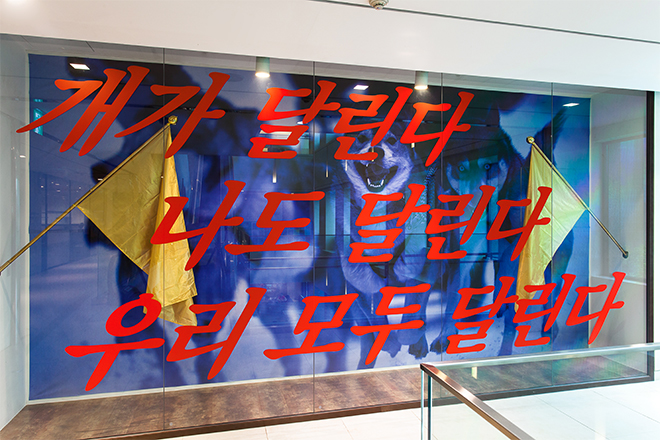
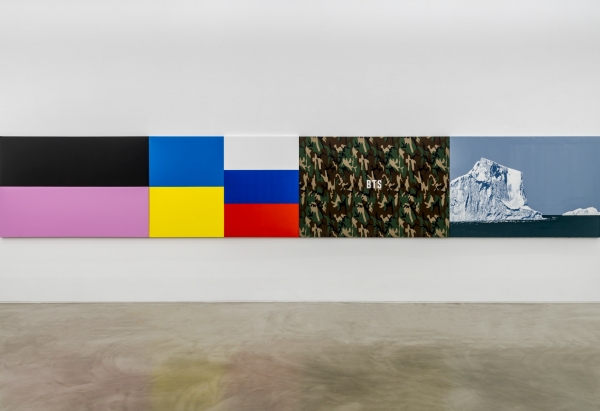
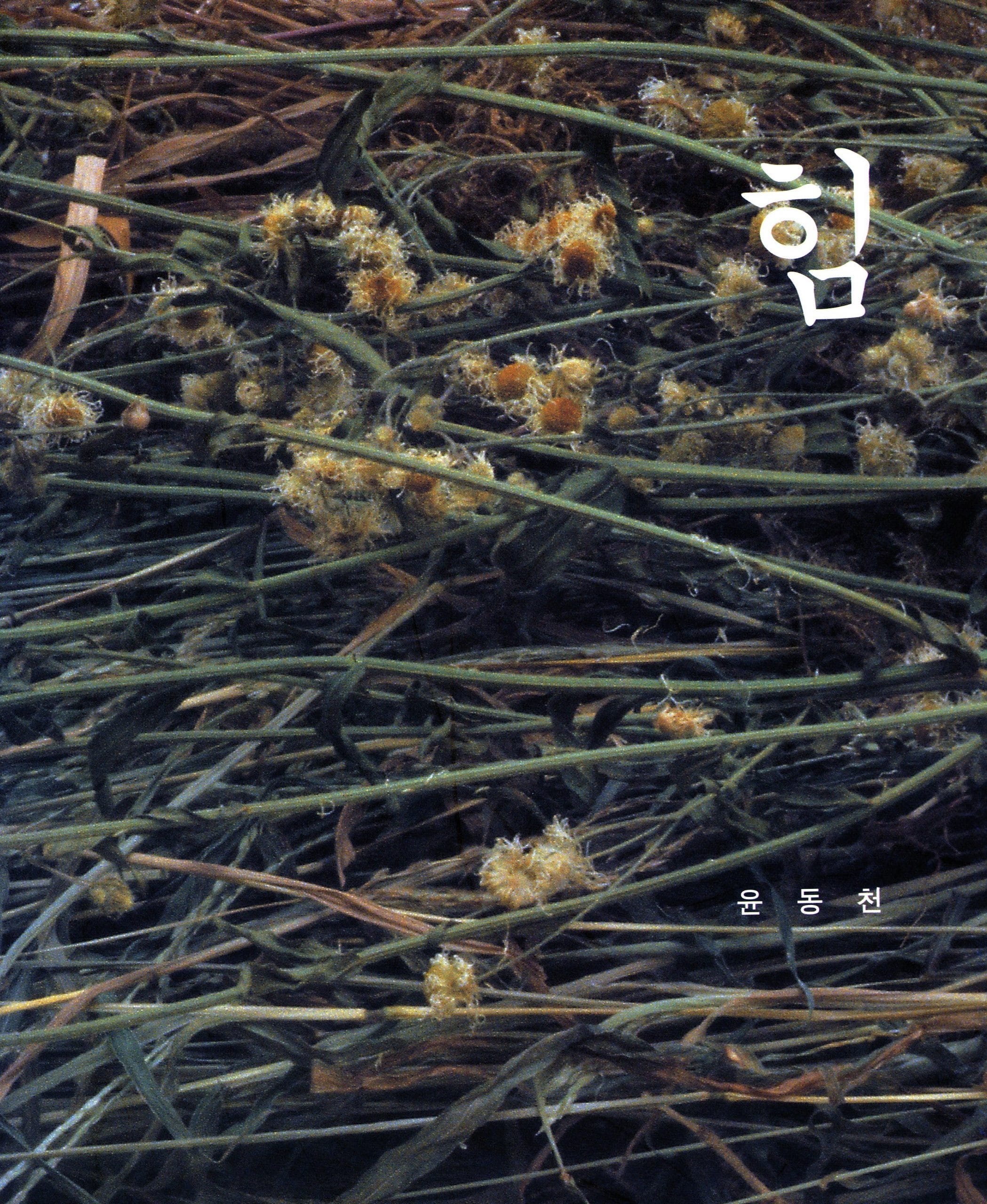
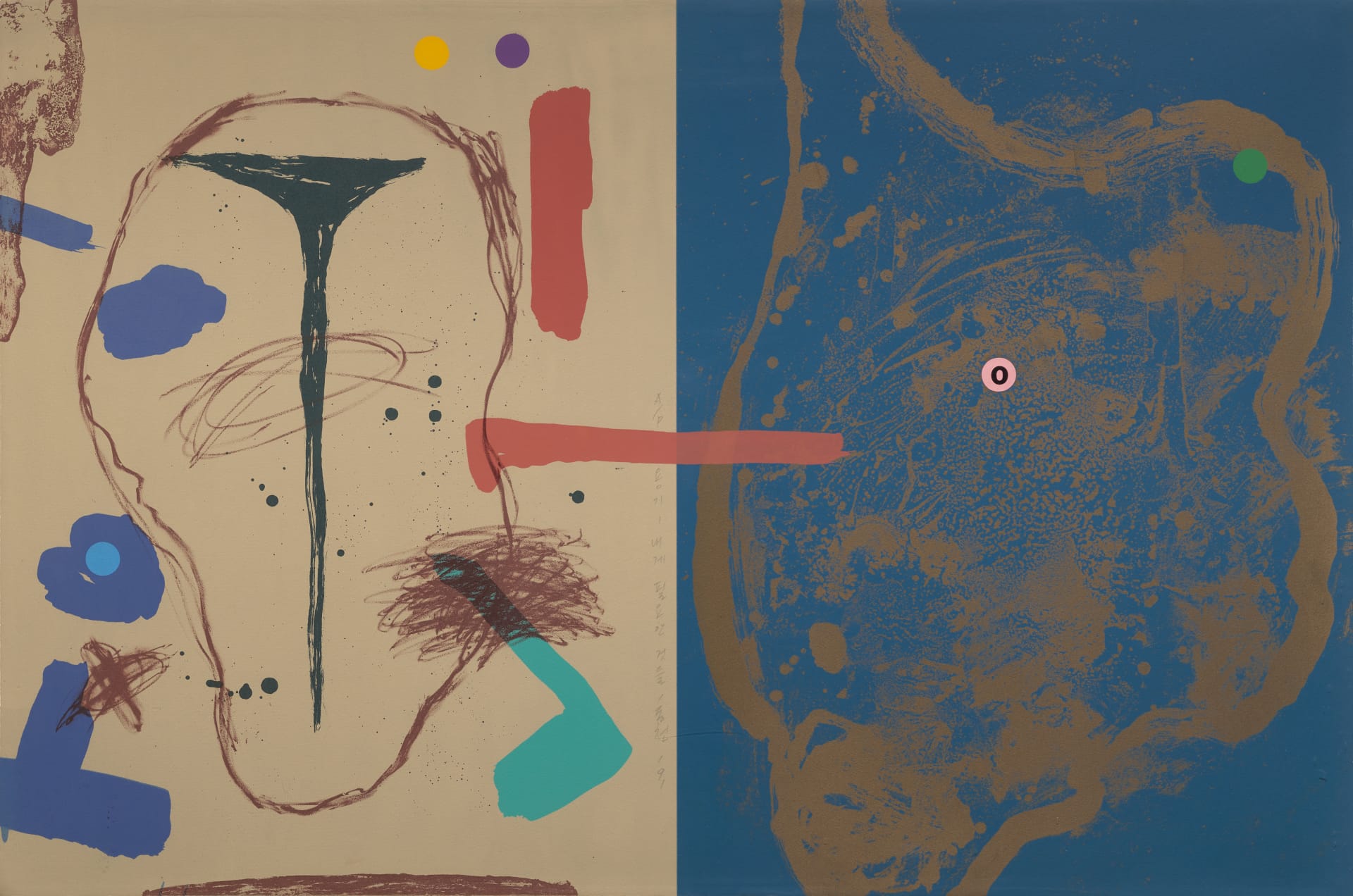
Power is a system. Power is a web. It is a powerful field of domination formed through the interweaving of social interests, intentions, and positions with systems of education, ideology, and knowledge. Within such a field individuals pursue power, yet ultimately fail to stand as its subject and fall back into objecthood — herein lies the tragic reality. In a society where terms related to power are increasingly invoked and circulated, individuals are losing power all the more. Under the IMF regime our society longs for even stronger power. As society shakes, consciousness of power inflates accordingly. Yoon Dongchun’s work casts a careful gaze precisely at this point.
Before humans dominated nature, they were free beings and subjects of power. Once they began to dominate nature, however, they produced a dichotomy of domination and subjugation, and eventually the tragedy in which humans themselves became objects of domination. If this development is understood as the deepening of the web of power itself, then healing contemporary society inevitably requires the arduous task of retracing even the history of humanity’s domination of nature. Yet reality desires only stronger force, stronger power, stronger domination — a kind of symptomatic cure. In proportion, the human condition grows ever more impoverished. Is there no way to resolve such contradictions?
Yoon Dongchun does not immediately present an answer to these contradictions, yet he expresses a certain hope. It is a belief in “the power of art.” Because art fundamentally rejects the relation of domination and subjugation, its power can function as a reflection upon power in general that oppresses humanity. Historically it has often functioned in this way.
Extending this consciousness, Yoon installed in a dark room illuminated by a single light a bronze work in the form of a book bearing the following inscription. It is a work that reads like the conclusion of this exhibition. “I believe in the ‘power’ of painting. Though it operates indirectly and obliquely, it is one of the most powerful ‘forces’ capable of fundamentally transforming the ‘roots of thought.’” It is an exhibition that compels us to think deeply about the “truth of power.”