
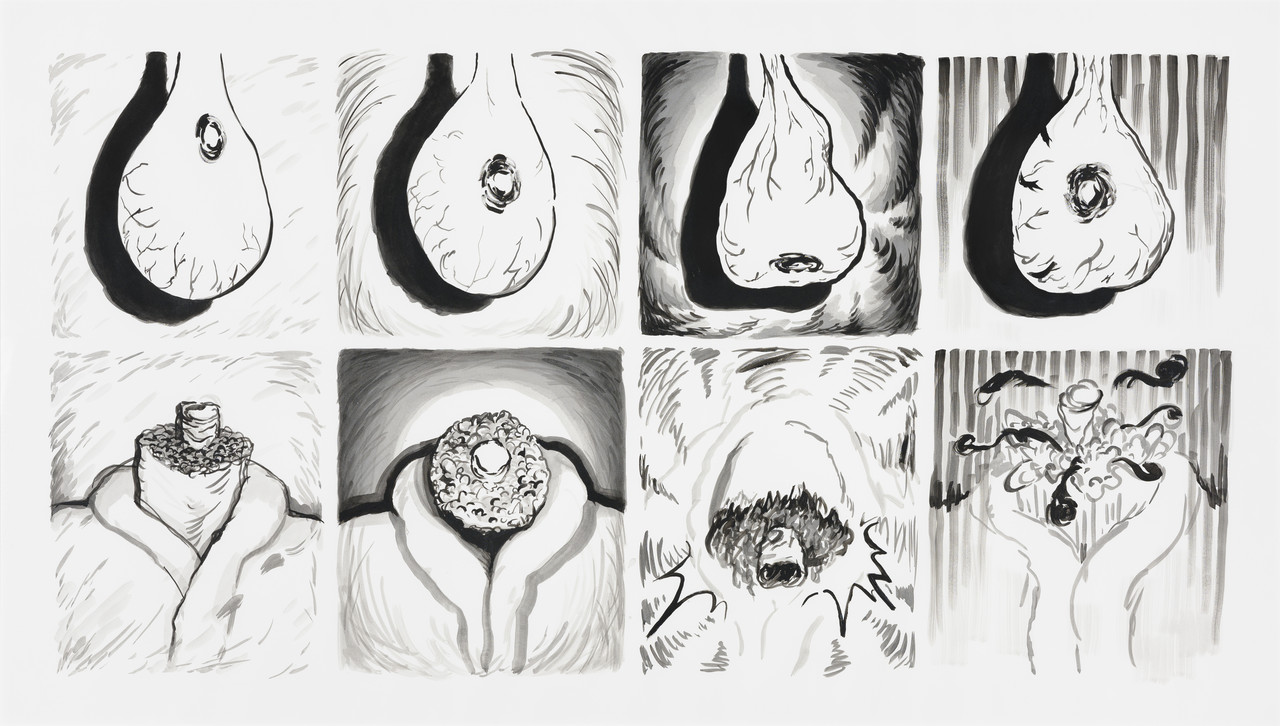
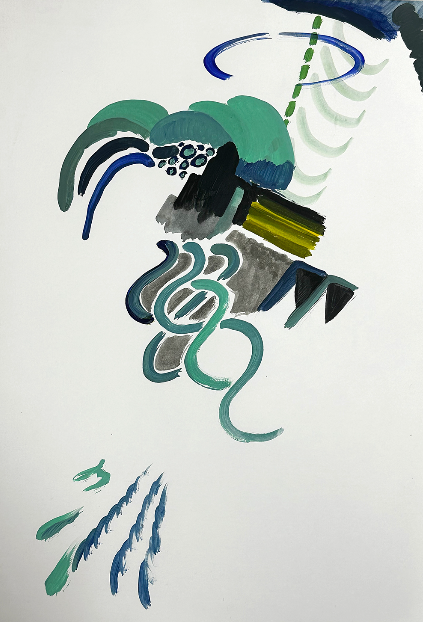
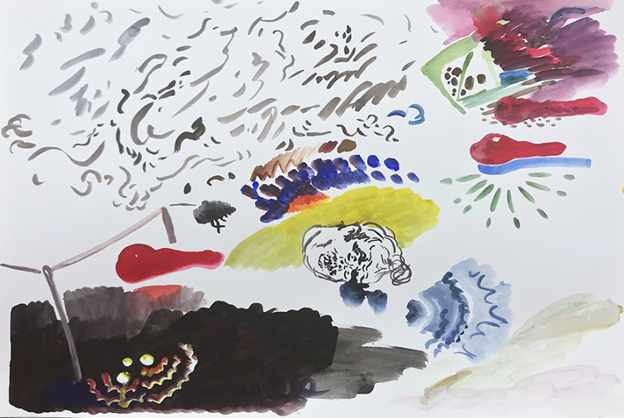
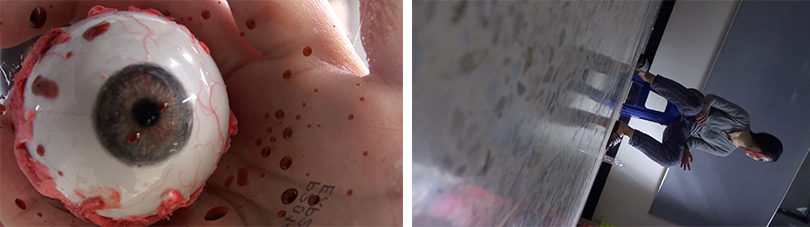
Deeply influenced by the forms, narratives, and traditions of gore films and comics, Hansol Ryu (b. 1989) has developed a performative practice that spans video, drawing, and installation. The artist is particularly interested in tactile imaginaries associated with bodily transformation, and based on this, creates works that visualize the contradictory sensations of fear and humor as encountered in everyday life.


Hansol Ryu, Pong Pong, 2014, Video, color, sound, 6min 7sec. ©Hansol Ryu

Hansol Ryu has largely drawn on the visual language of B-grade gore films and comics. In such media, when everyday objects are endowed with crude and exaggerated special effects to “damage” the body, she observes that a sense of the grotesque coexists with humor, and focuses on the gap that emerges from this contrast.
 
In her early works, Ryu was particularly interested in elements that provoke such conflicting emotions or sensations. By recombining and reassembling them into video works, she translated the absurdities embedded in our society and gender norms into a form of grotesque humor.


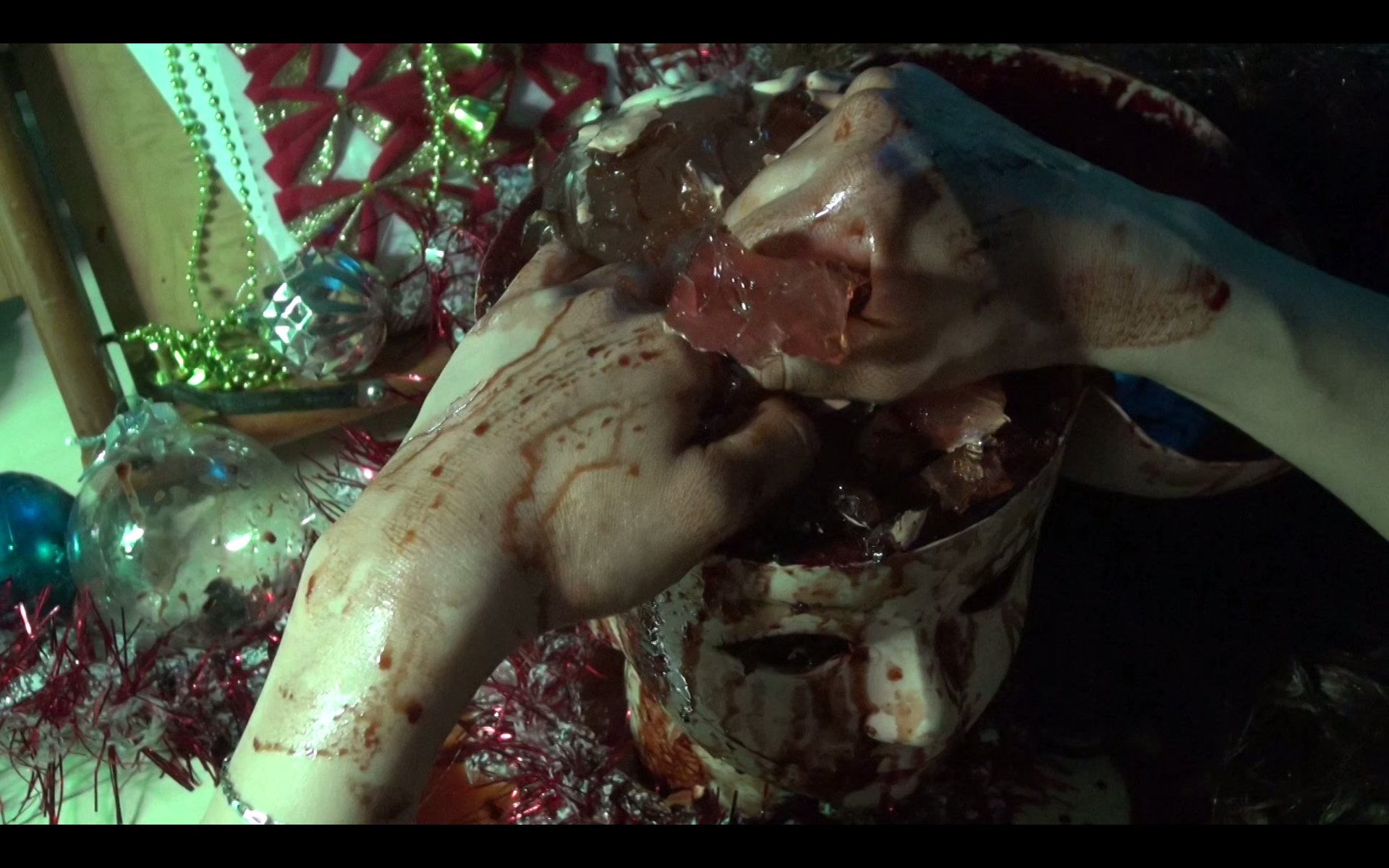
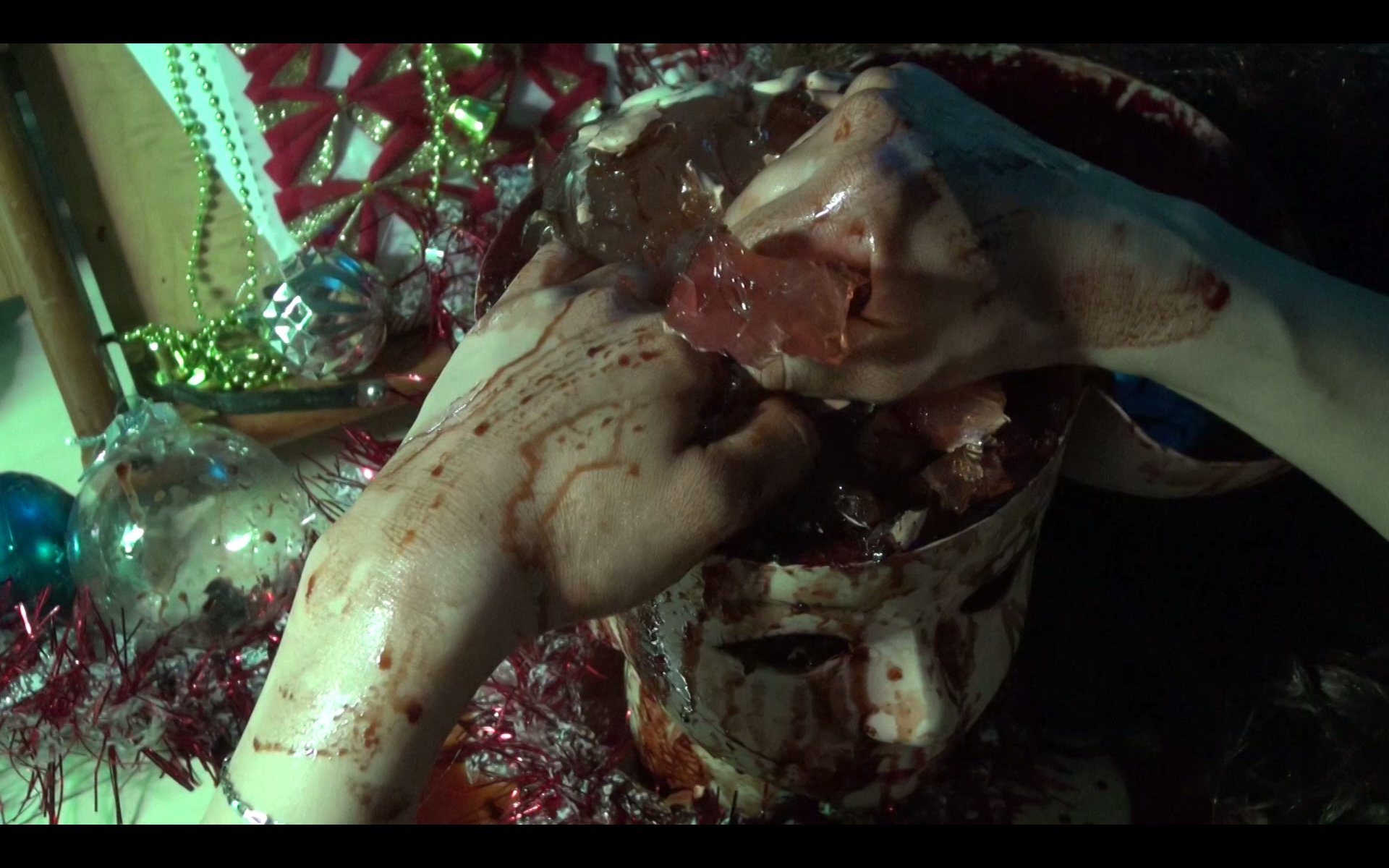
Hansol Ryu, Chrichri Meerychri Stmas, 2018, Video, color, sound, 26min 52sec. ©Hansol Ryu

In her work, tactile images of the body serve as a central motif. This stems from an experience in which she encountered a fake documentary and realized that images of the human body—whether from B-grade gore films or accident scenes—can be perceived as frightening, humorous, or even morally troubling depending on their degree of factuality.
 
Through this realization, Ryu began to consider how, within the gap between reality and fiction, fear can turn into laughter and laughter into fear depending on one’s sense of distance. She has since actively employed this dynamic in her practice.


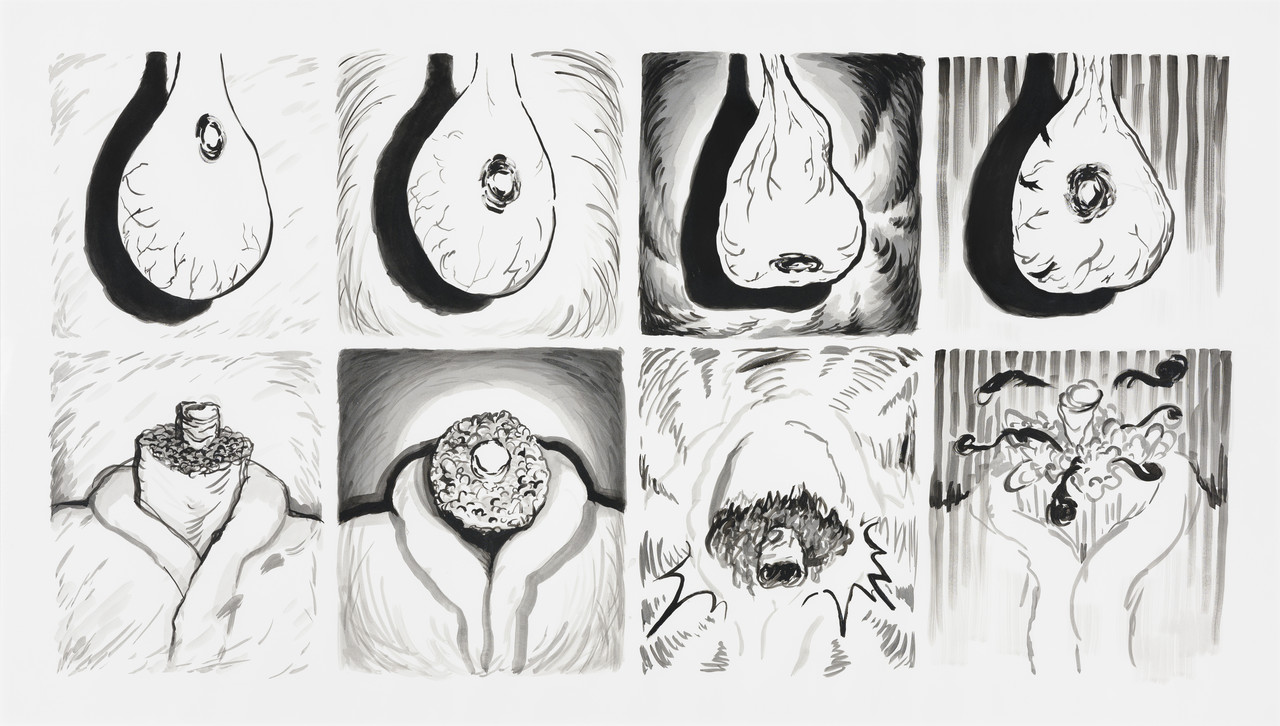
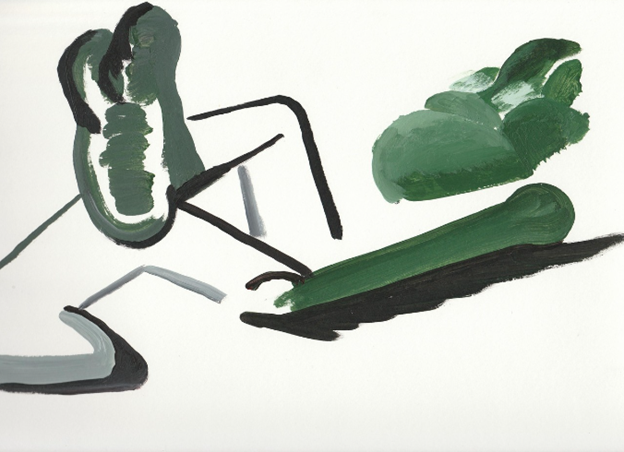
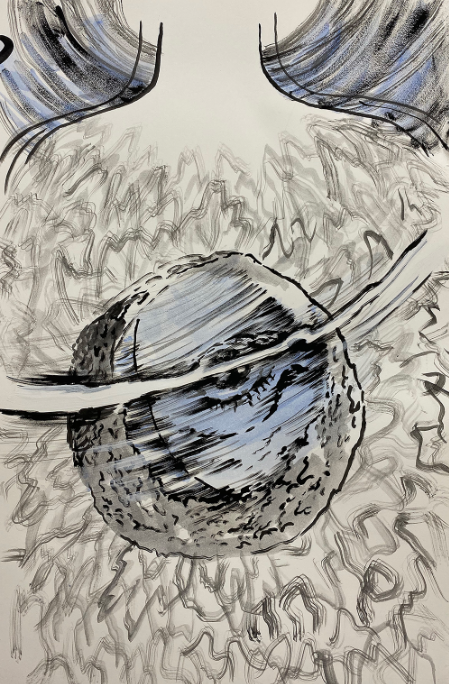
Hansol Ryu, Gooooooo, 2018, Acrylic on paper, 69x113cm ©Hansol Ryu

In developing this approach, the artist prioritizes methods that stimulate the sense of touch above all others. In a time saturated with hyper-real visual imagery and an overreliance on sight, she considers touch to be the most lacking sense. At the same time, she believes that tactile sensation is what most powerfully makes an image feel alive.


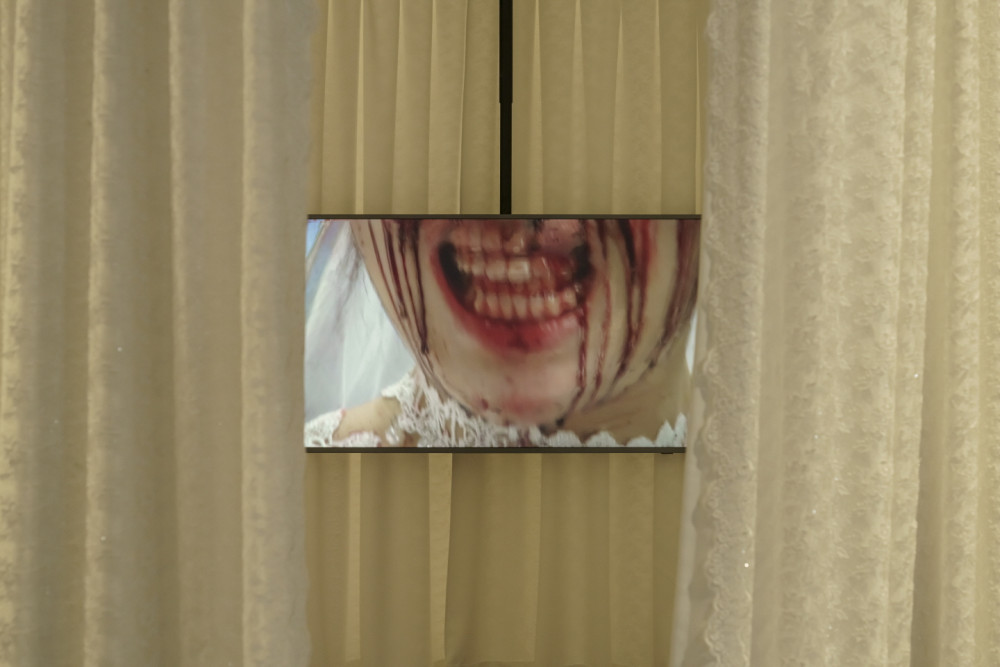
Hansol Ryu, Virgin Road, 2021, Video, color, sound, 10min 21sec. Installation view of the 11th Seoul Mediacity Biennale 《One Escape at a Time》 (Seoul Museum of Art, 2021). Photo: glimworkers ©Seoul Mediacity Biennale

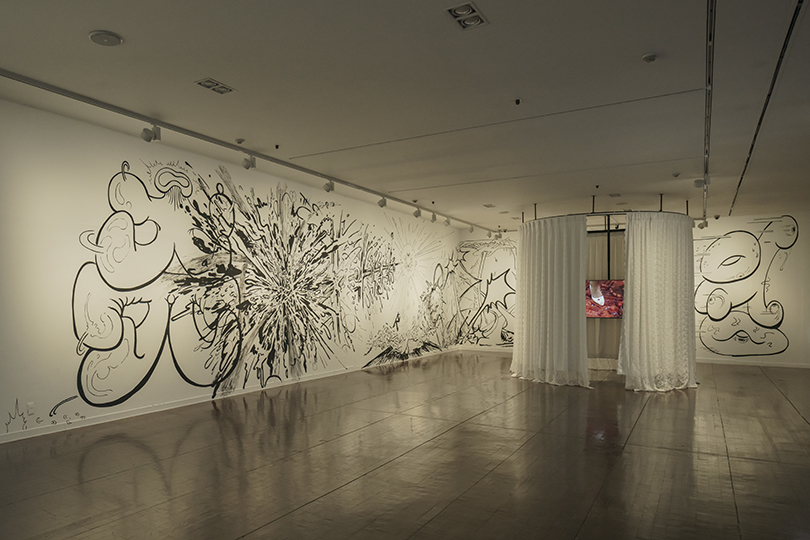
For instance, the video work Virgin Road (2021) and the drawing installation Chew-wing (2021), both presented at the 11th Seoul Mediacity Biennale, deliver grotesque scenes through a multisensory experience that combines tactile visual imagery with sound.
 
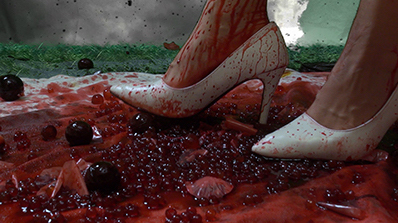
Virgin Road, in particular, is an allegory of a human-creature hybrid conducting a wedding with itself. Bending gender norms that have embraced the clichéd use of wedding scenes for conflict resolution and happy endings in movies and TV shows, the video reinvents the trope in the guise of B-movie gore.


Hansol Ryu, Installation view of the 11th Seoul Mediacity Biennale 《One Escape at a Time》 (Seoul Museum of Art, 2021). Photo: glimworkers ©Seoul Mediacity Biennale

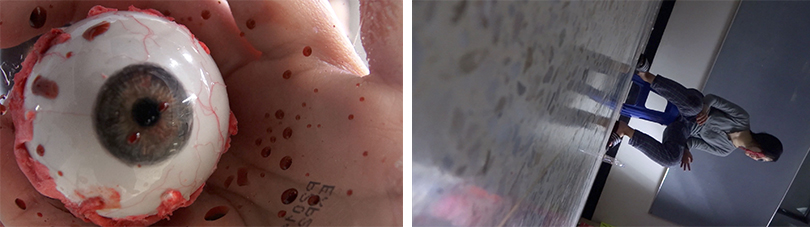
Ryu uses cheap, commonplace materials to realize grotesque images of bodily mutilation, which are then composited with low-budget visual effects, sentimental scores, and shoddy chroma key backdrops to modulate between horror and humor.
 
The wall drawing Chew-wing is influenced by the visual language used in cartoons to evoke sounds and motions, drawing attention not only to the visual elements of the video but also to its auditory and tactile elements.


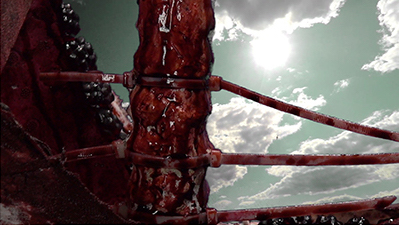
Hansol Ryu, Virgin Road, 2021, Video, color, sound, 10min 21sec. ©Hansol Ryu

In this way, Hansol Ryu amplifies sensory experience through visual imagery that exaggerates and reconstructs material forms. The acts of bodily mutilation that appear in her work do not signify violence in a sadistic sense; rather, they function as metaphors for liberation from the norms and structures of power that define and constrain what is considered a “proper” body in society.
 
Like ASMR videos, her works bring together sight, touch, and sound, drawing viewers more deeply into a process of “bodily liberation” and evoking a visceral sense of release.


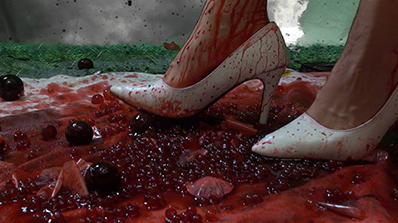
Hansol Ryu, Virgin Road, 2021, Video, color, sound, 10min 21sec. ©Hansol Ryu

Meanwhile, the use of crude props and exaggerated special effects distances the viewer from the seemingly brutal narrative, redirecting attention to the materiality of the objects themselves. For example, when a body is split in half and the spine is exposed, instead of presenting a realistic replica of a vertebra, Ryu shows loosely tied disposable cable ties—an unexpected substitution that provokes humor.
 
Through such strategies, Ryu reveals both the act of representation and the system behind it. In doing so, she seeks to foreground a sense of reality grounded in the tangible presence of props that can be seen and imagined as touchable, rather than being absorbed solely into narrative illusion. These humorous devices, detached from the subject they depict, invite viewers to contemplate objects in their material state and to question what constitutes “realness” today.


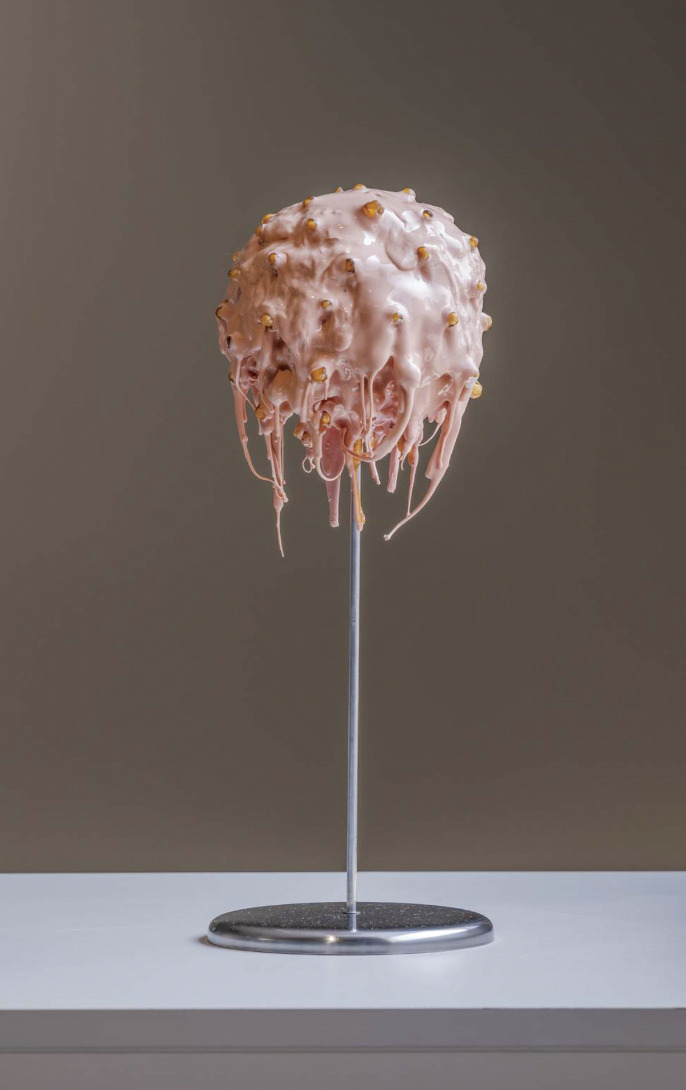
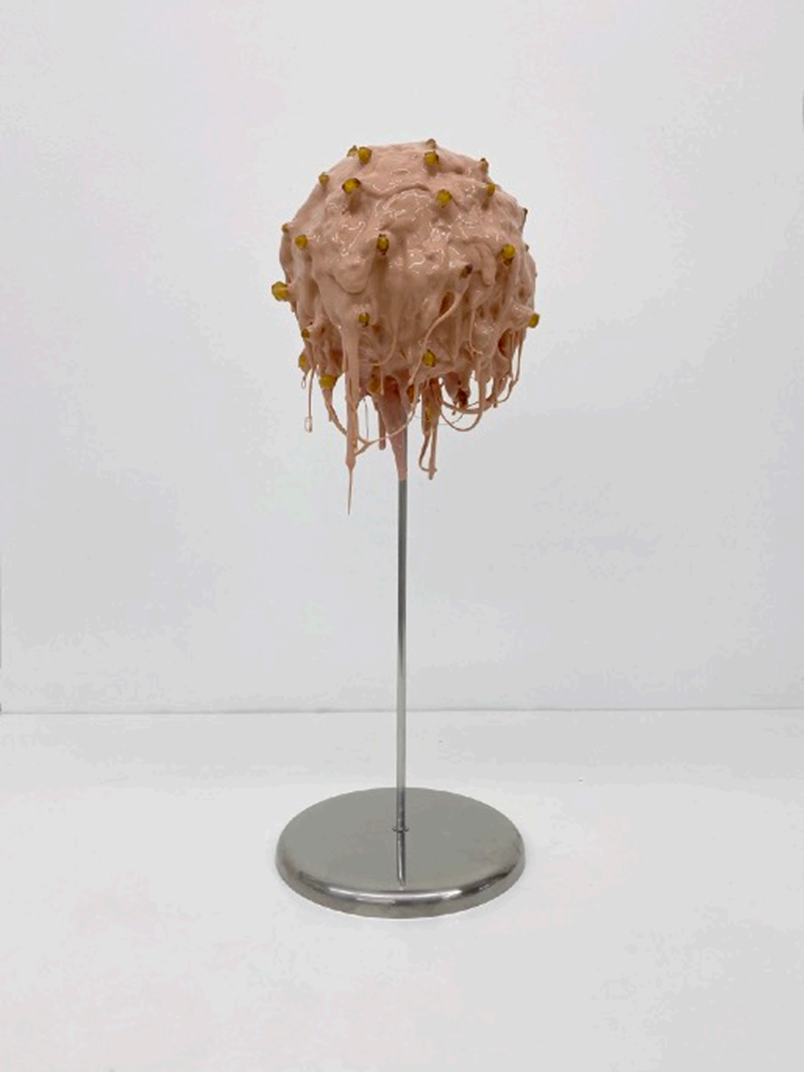
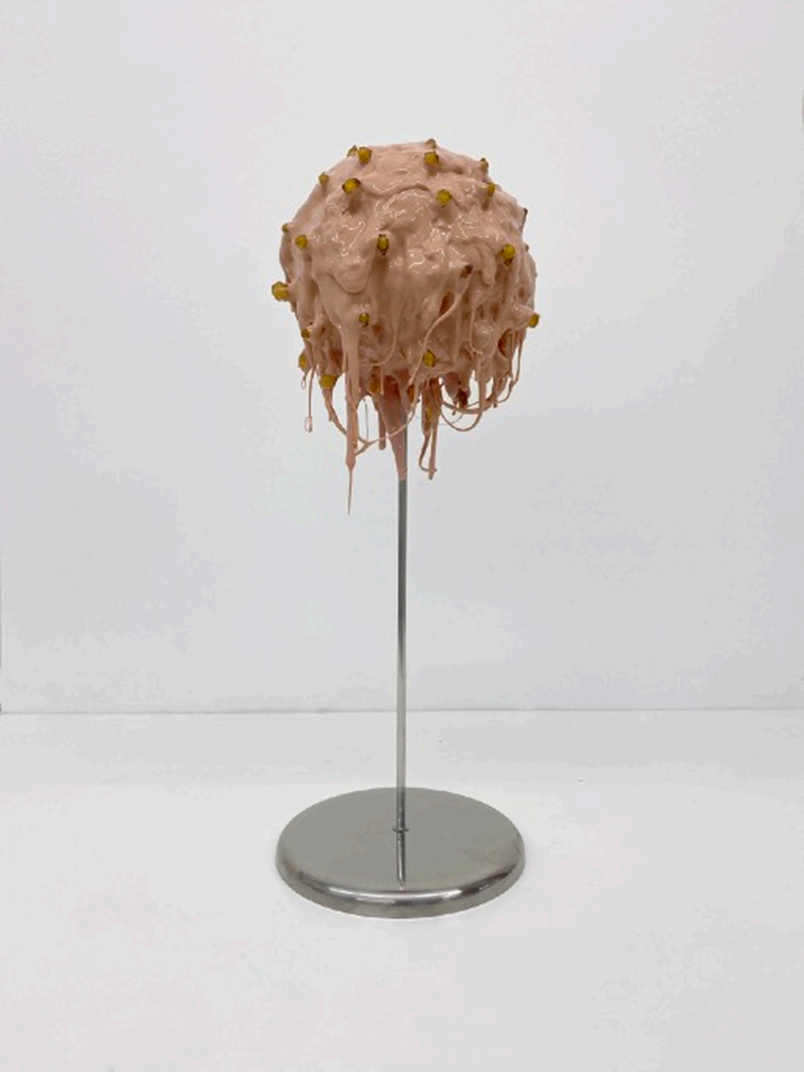
Hansol Ryu, Pimple, 2022, Latex, silicone, cotton swab, stainless, 38.4x15x15cm. Installation view of 《Sticky》 (MUMOKJEOK, 2022) ©MUMOKJEOK

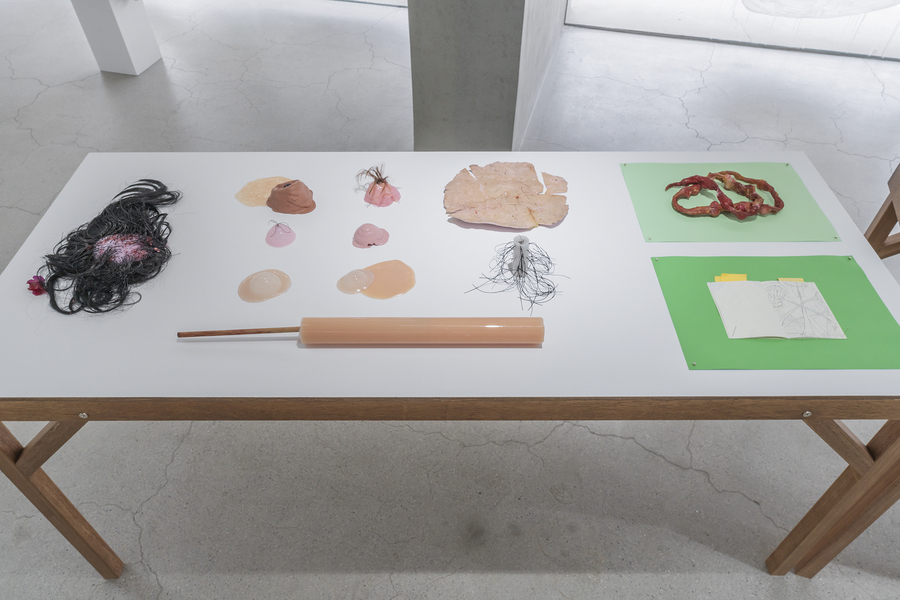
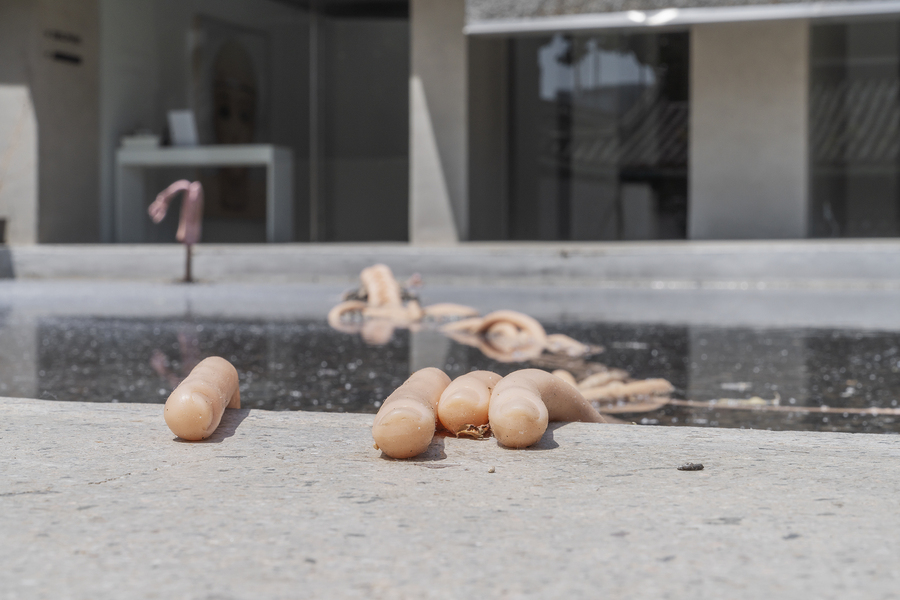
In the two-person exhibition 《Sticky》, held at MUMOKJEOCK in 2022, Hansol Ryu translated this coexistence of fear and catharsis into the form of tactile sculpture. In the exhibition, her works did not take the shape of organic bodies, but rather appeared as models that enlarged or transformed parts of the body—placed on the floor, hung on the wall, or set upon pedestals.


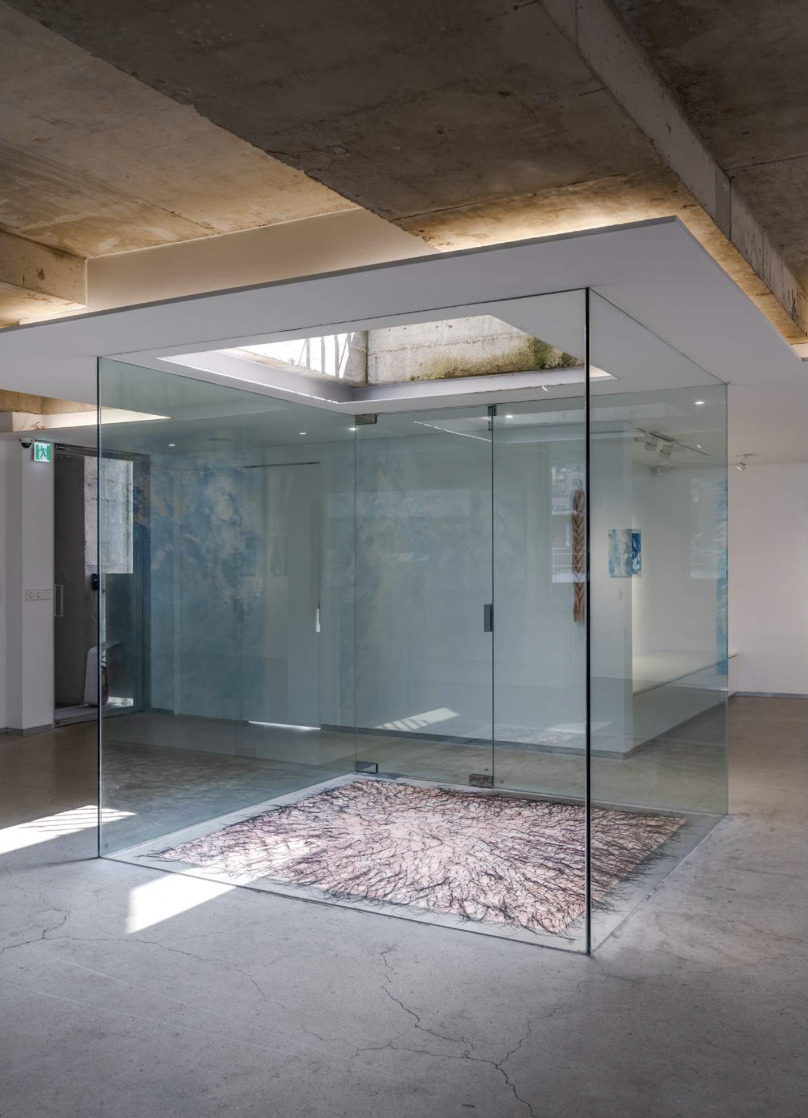
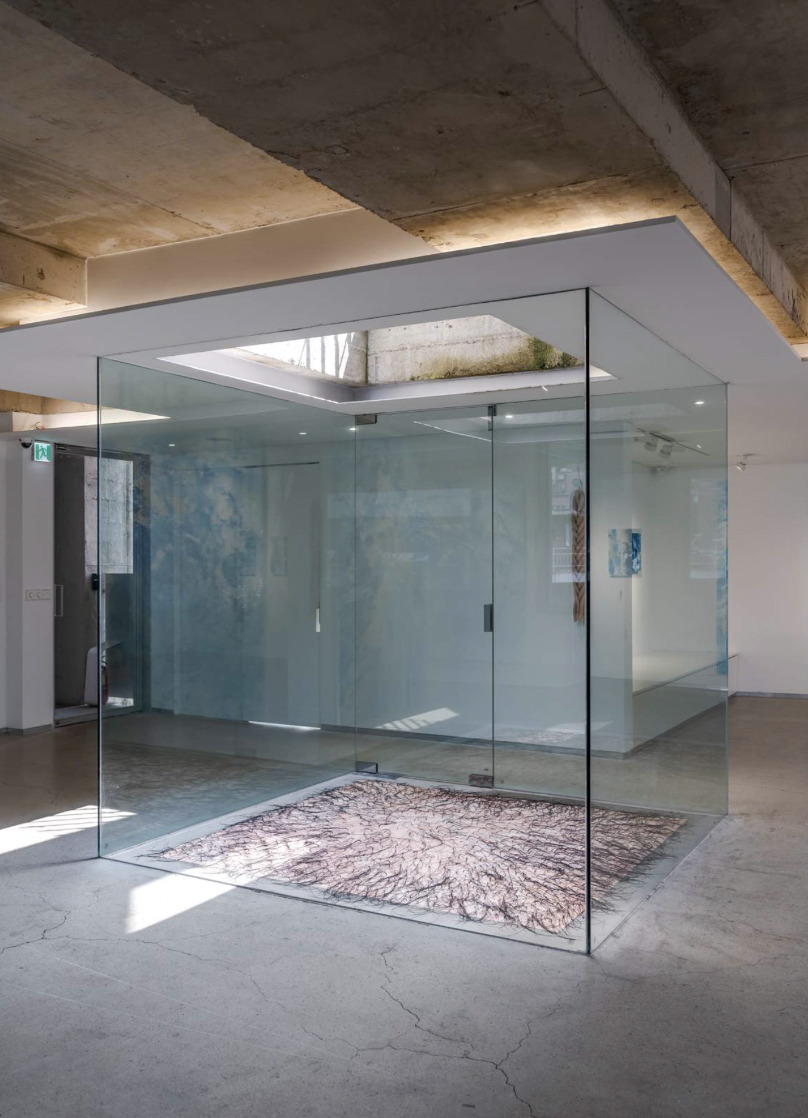
Hansol Ryu, Scalp Carpet, 2022, Sponge, silicone, urethane string, 180x170x6cm. Installation view of 《Sticky》 (MUMOKJEOK, 2022) ©MUMOKJEOK

The sight of body parts such as the scalp, fingers, tongue, and hair detached from the body and occupying space appears unfamiliar and uncanny. A flesh-toned silicone carpet in the form of a scalp stretching over 180 cm at its longest side, a firmly extracted tongue, and elongated oil clay fingers provoke a visceral reaction—eliciting nausea and goosebumps—through their use of materials that subtly mimic the elasticity of the body or resemble those used in tactile play, rather than traditional sculptural media.
 
Ryu’s sculptures encapsulate the sensory intensity found in her video works. Stripped of narrative settings or contextual progression, sculpture can be seen as a condensation in which multiple moments are overlaid into a single instant. The pleasure compressed within them is difficult to articulate—something closer to a fusion of discomfort and thrill.


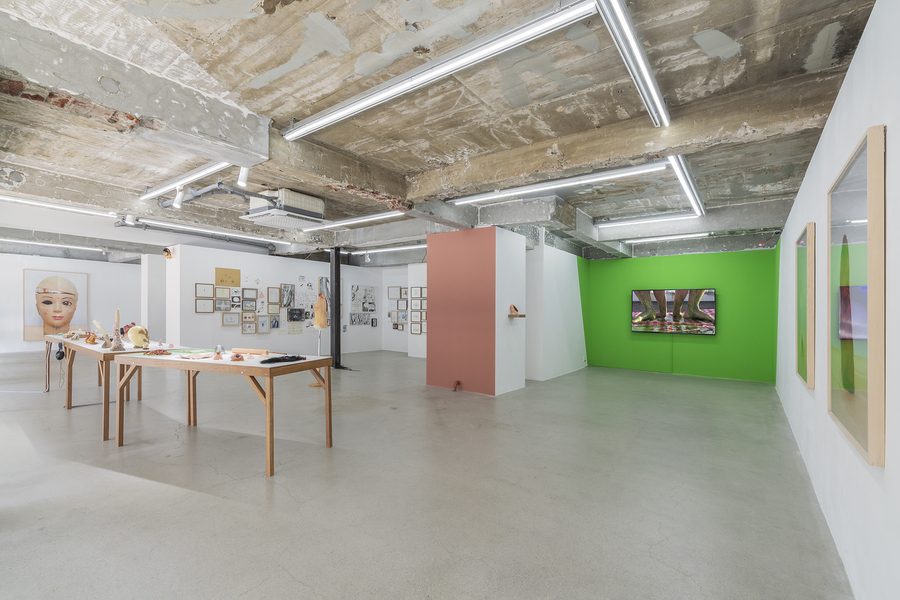
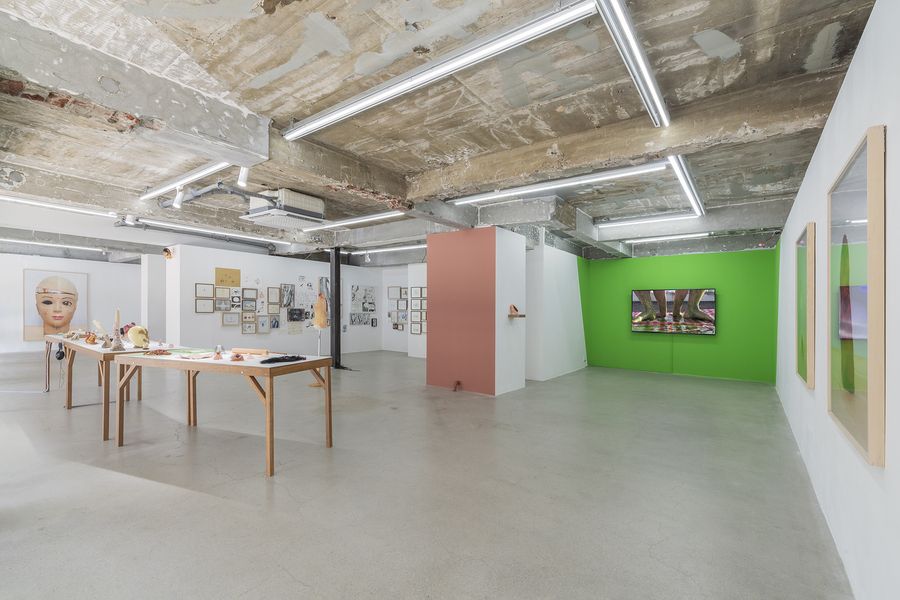
Installation view of 《Every Body, Come On! Yo!》 (Museumhead, 2023) ©Museumhead

Ryu’s 2023 solo exhibition 《Every Body, Come On! Yo!》 at Museumhead brought together her ongoing “body disassembly show,” a body of work that has developed since around 2011 across video, performance, painting, photography, and sculpture.
 
The exhibition space was filled with dripping tongues slick with saliva, perforated torsos marked by vivid bloodstains, and shattered heads. Torn flesh appeared crushed and oozing liquid, while bodies stretched endlessly like strands of noodles, extending beyond their limits and encroaching upon the surrounding space.


Installation view of 《Every Body, Come On! Yo!》 (Museumhead, 2023) ©Museumhead

In this exhibition, the body is no longer a unified whole, but a collection of discrete entities that can scatter and break apart. Fragments detached from the given body move on their own terms, while bodies that simply overflow with tactile presence become physical masses that slip beyond established networks of meaning.
 
Devoid of meaning—or actively resisting it—the body appears as something that evokes an ambiguous sense of liberation, coupled with a strange and grotesque humor.


Installation view of 《Every Body, Come On! Yo!》 (Museumhead, 2023) ©Museumhead

In this way, Hansol Ryu’s practice has unfolded the body itself—liberated from social norms and systems of meaning—across a range of media. Disassembled and inverted bodies are presented to the viewer as clusters of images, prompting an encounter with their uncanny and ambiguous sensations.
 
By appropriating the visual language of B-movie gore, Ryu deliberately blurs the boundary between reality and fiction, leading viewers from brutality to amusement, and ultimately toward an indescribable sense of liberation.

“I am interested in tactile imaginaries associated with bodily transformation, and based on this, I have been creating works that visualize the contradictory sensations of fear and humor captured in everyday life. (…) I am particularly drawn to the gap that arises between contradictory elements. This gap often emerges when a sense of the grotesque coexists with humor.” (Hansol Ryu, interview with The Artro)


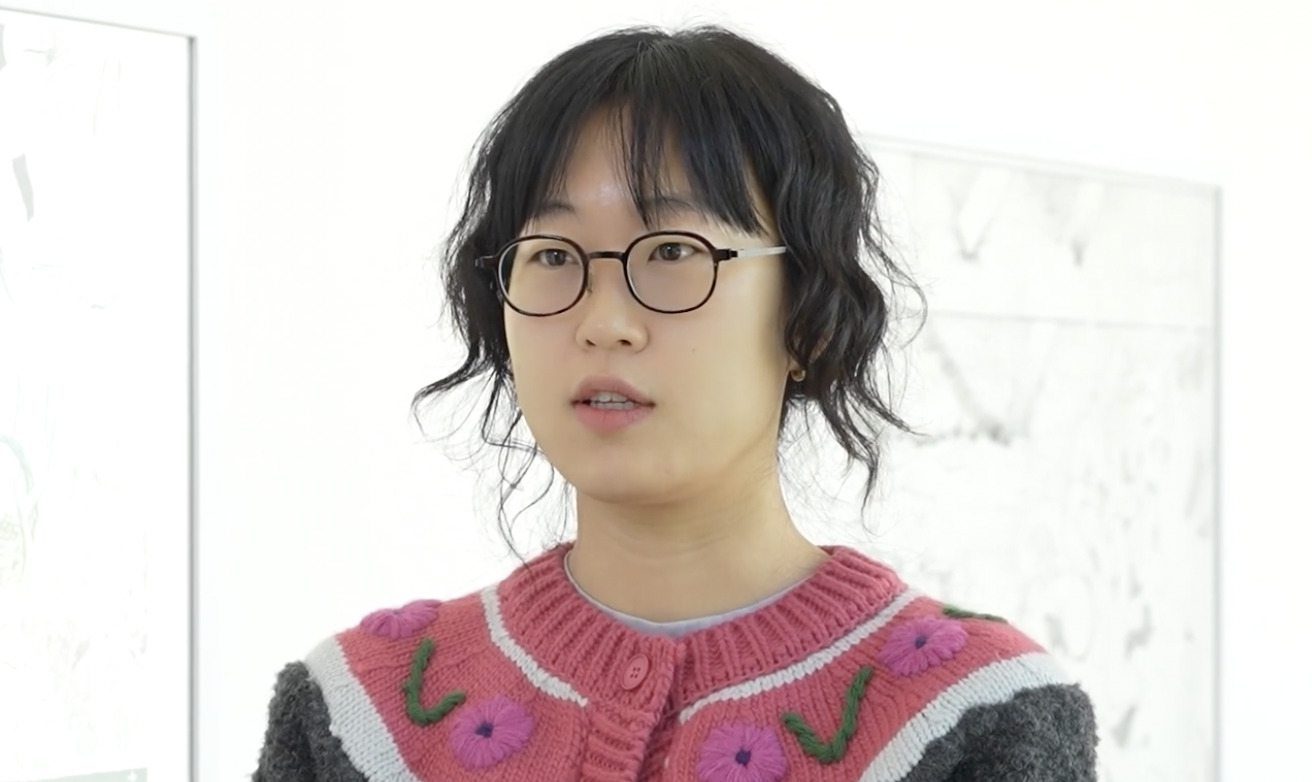
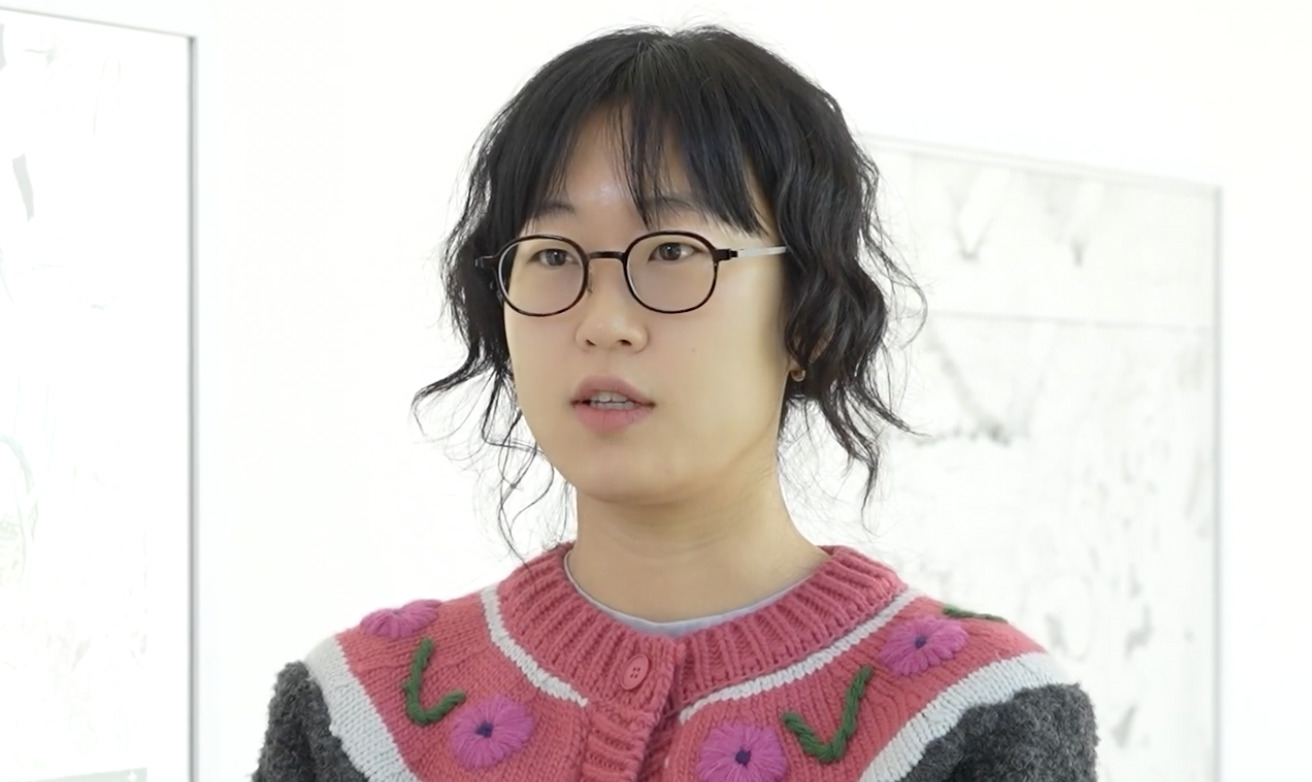
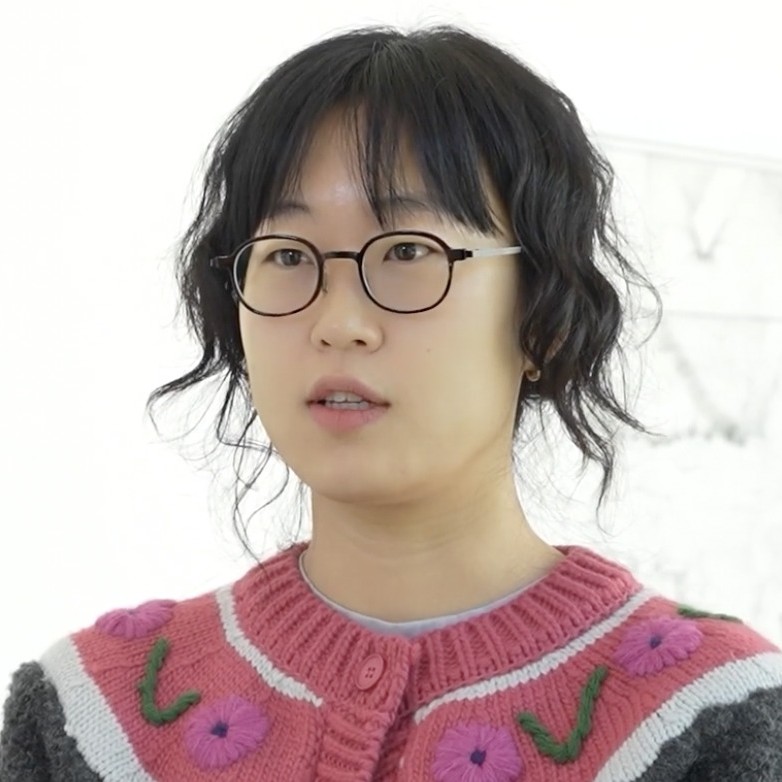
Artist Hansol Ryu ©Haeden Museum

Hansol Ryu received her BFA in Western Painting from Sungkyunkwan University and completed her MFA at the same institution. Her solo exhibitions include 《Every Body, Come On! Yo!》 (Museumhead, Seoul, 2023), 《THE PICTURE SHOW》 (Mihakgwan, Seoul, 2021–2022), and 《Chrichri Meerychri Stmas》 (Sungkyun Gallery, Seoul, 2019).
 
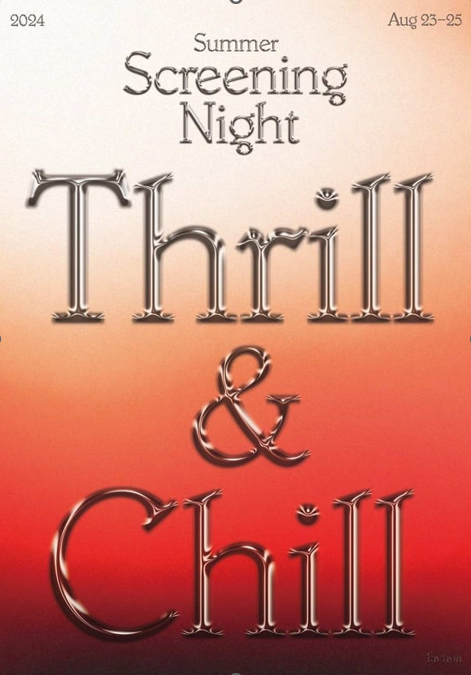
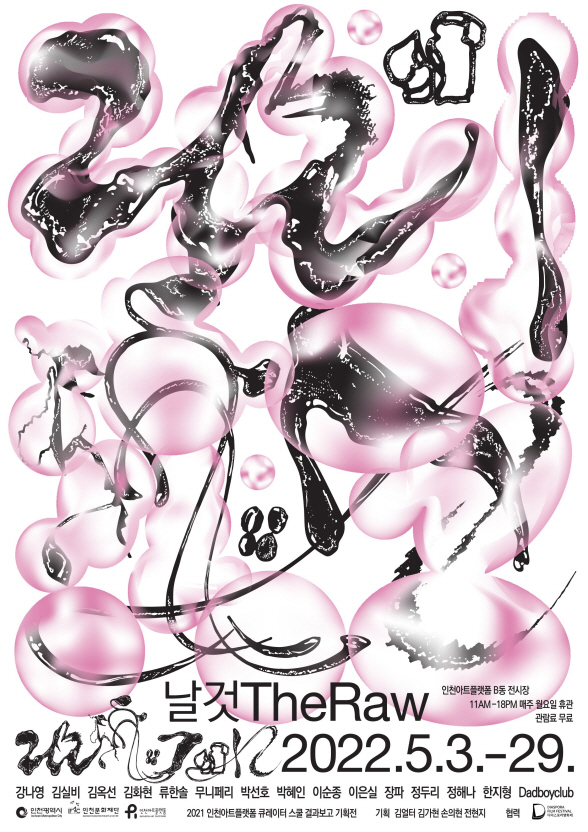
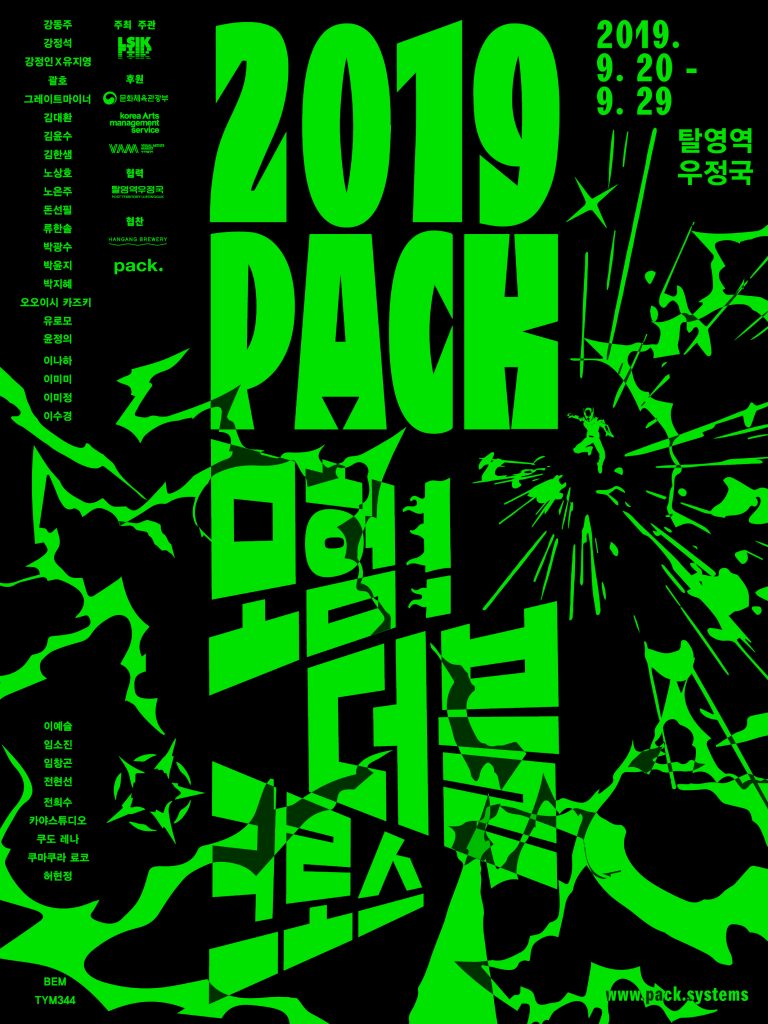
She has also participated in numerous group exhibitions, including Art Spectrum 2024 《Dream Screen》 (Leeum Museum of Art, Seoul, 2024), 《Summer Screening Night》 (Faction, Seoul, 2024), 《Sticky》 (MUMOKJEOCK, Seoul, 2022), 《The Raw》 (Incheon Art Platform, Incheon, 2022), the 11th Seoul Mediacity Biennale 《One Escape at a Time》 (Seoul Museum of Art, Seoul, 2021), 《Pack: Adventure! Double Cross》 (Post Territory Ujeongguk, Seoul, 2019), and the 4th Factory Art Festival (Culture Station Seoul 284, Seoul, 2014).
References