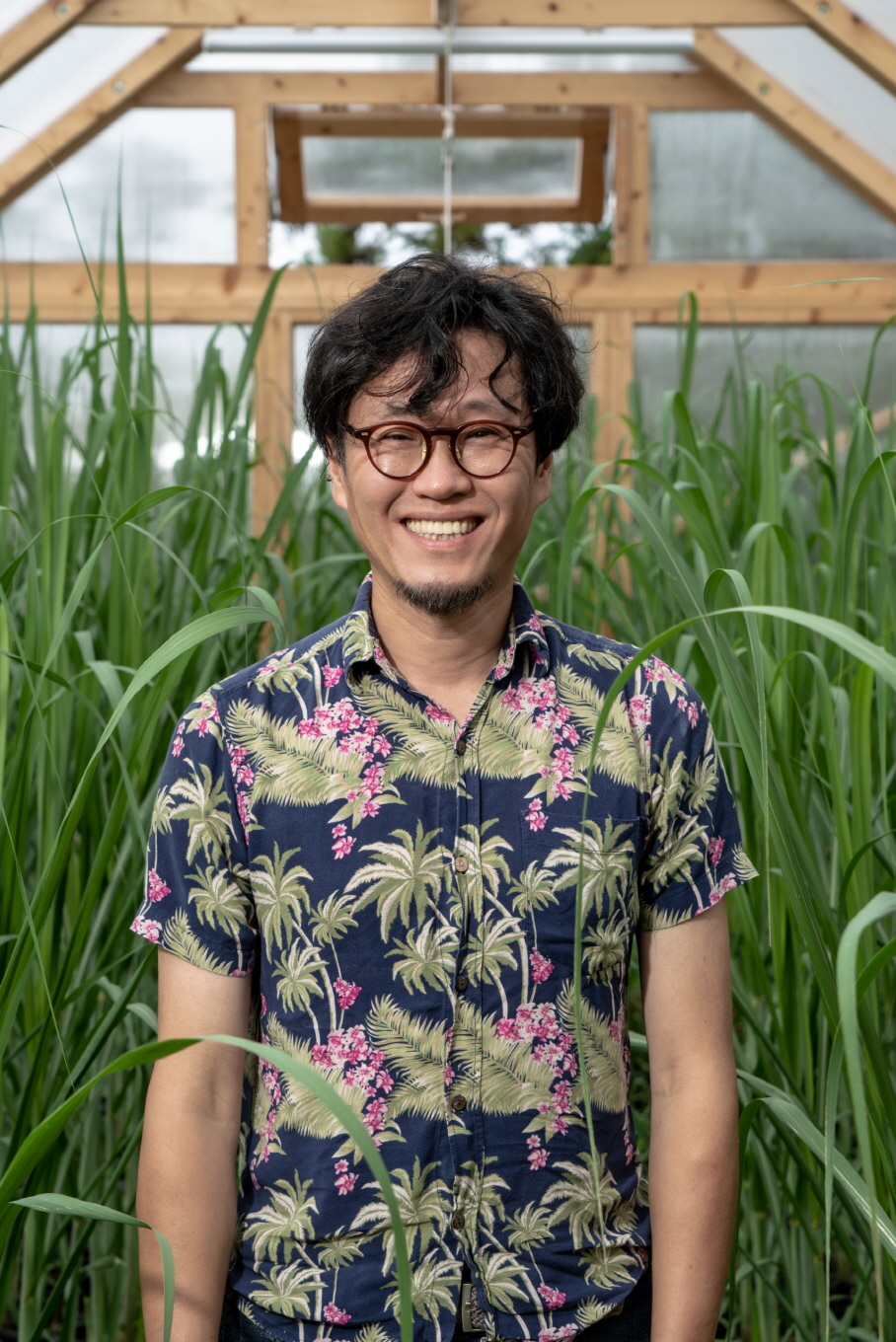
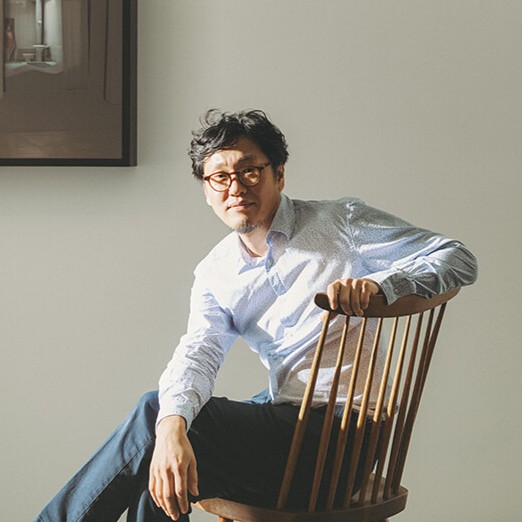
Yeondoo
Jung, born in Jinju, graduated from the Department of Sculpture at the Seoul
National University College of Fine Arts and completed his studies at Central
Saint Martins, London. He received his MFA from Goldsmiths, University of
London. He
currently resides in Seoul and serves as an associate professor in the
Department of Fine Arts at the College of Art, Sungkyunkwan University.

It is likely that responses to 《MMCA Hyundai Motor Series 2023: Jung Yeondoo – One Hundred Years of
Travels》 (hereafter 《One
Hundred Years of Travels》) will vary. Since the works
that introduced Yeondoo Jung in the 2000s took the form of staged photography
or photo/video installations that constructed certain scenes while revealing
the sets or devices behind them, many may find this new body of work—inflected
with historical and documentary narratives—unfamiliar or new. On the other
hand, some may sense a certain continuity in the aspect of staging or in the
adaptation of ordinary people’s stories. To gauge how this exhibition connects
within the overall trajectory of Jung’s practice, and to assess the dynamics of
continuity and disjunction, is in fact to determine the significance of this
exhibition.
The central leitmotif running through all the works in 《One Hundred Years of Travels》(2023) is the migration of Koreans to Mexico in the early twentieth
century. The artist encountered descendants of Korean immigrants in Mexico
celebrating Liberation Day and was deeply intrigued by how elements that seemed
entirely unrelated were connected across time and space. Recalling that the
century plant (baeknyeoncho), so common in Jeju that it is sold as a local
specialty, originated in Mexico and crossed the Pacific to settle in Jeju, the
artist conceived the theme of a hundred-year journey of people and plants
linking Korea and Mexico.
This is not the first exhibition in which an interest in
historical realities such as migration, immigration, colonialism, and labor is
evident. During a residency in France in 2015, the artist created Between
Here and There(2015), focusing on immigrants of diverse ethnic
backgrounds living in the region. Through this process, he became attentive to
issues of otherness, migration, and immigration. Such interests began to
coalesce around East Asian regionality with Girl in High Heels(2018),
first presented at the Hong Kong Heritage Arts Centre.
The story of an elderly
woman surnamed Moon who stowed away to Hong Kong at age 23 in 1958 intersects
with the lives of ordinary young women who were 23 in 2017, reconstructing Hong
Kong’s modern and contemporary history—entwined with labor and industry—through
individual life narratives. Subsequently, in Classics and New
Works(2018), commissioned by the Museum of Contemporary Art Tokyo,
the testimony of an elderly man describing bombing damage during World War II
is connected with contemporary elementary school classes and a rakugo
performance recounting Tokyo’s past and traditional folktales, bringing
together different times and histories of the same place.
The point at which figures and stories from different times and
spaces connect is likewise present in One Hundred Years of
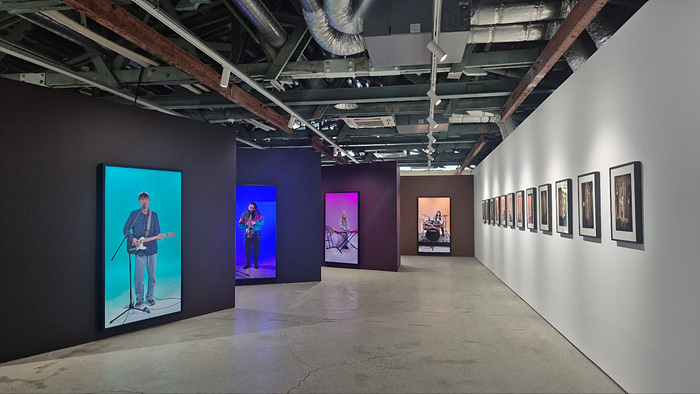
Travels. The structure of the exhibition—composed of five
works—extends the artist’s recent strategy of interweaving similar or divergent
narratives across time and space into a spatial dimension. Beyond the narrative
of the Korean diaspora in Mexico, it connects stories of foreigners of various
nationalities living in Korea in 2023 and the imperialist agreements
surrounding the machete, a principal tool of plantation labor. Whereas the
crossing of stories was once confined within a single work, here the respective
narratives are loosely linked before and after one another within the
exhibition space, materializing outside the individual works.
Formally as well, One Hundred Years of Travels reveals
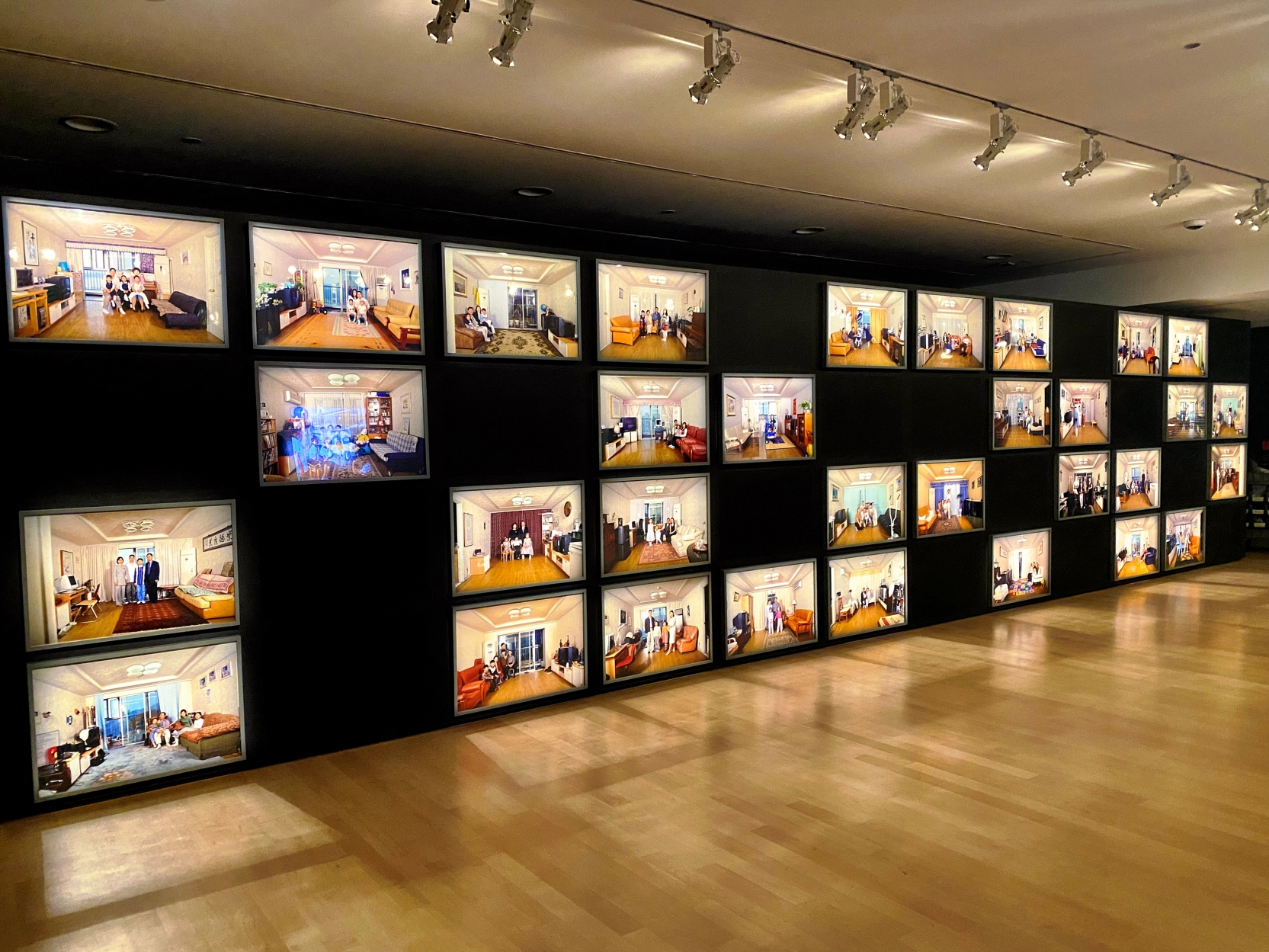
echoes of earlier works. Generational Portraits(2023),
which places parents and children of Korean descent facing one another,
recalls Six Points(2010) in its position between
photography and video, and Girl in High Heels in
its two-channel structure that juxtaposes two different generations. However,
unlike Generational Portraits, where the two
generations are contrasted visually, in Girl in High Heels each
channel is divided by narrative rather than image, and its fan-shaped
installation structure emphasizes loose connection over contrast.
The eponymous
work One Hundred Years of Travels, which recounts the
history of Korean immigration through pansori, gidayū-bunraku, and mariachi performances, may evoke Noise Quartet(2019) in that it narrates modern
and contemporary Asian history through voices from different countries. Yet
whereas in Noise
Quartet one
sound corresponds to one story, in One Hundred Years of Travels the songs
attach different voices to a single narrative—the life of a Korean immigrant.
The forms of the past leave traces in the new work, yet shift trajectory and
are varied into another song.
The theme of historical reality may, on the surface, appear
distant from earlier works that utilized the media possibilities of photography
and film to blur the boundary between fiction and reality. However, the two are
fundamentally connected in terms of communication and empathy. In early works
such as Bewitched(2001) and mid-career works such
as Handmade Memories(2008), the most important element
was listening attentively to the stories of ordinary people and making them
visible or creating a space for communication.
Although this realization of
dreams or memories might be described as the materialization of the virtual,
the dreams Jung addresses are closer to a better reality than to fantasy. In
that dreams aspire toward a more ideal reality and memories are adaptations of
the real, Jung’s virtual has always been firmly rooted in the true stories of
real people. What interests him are the ways of life of the people he meets
through the occasion of dreams, and the relationships and communication formed
in that process. In this sense, his work might also be described as relational
art. History is based on reality, yet fiction intervenes in the process of
weaving its warp and weft. Fiction and reality are not separate but
interconnected.
The key mechanism that allows viewers to traverse the boundary
between reality and imagination is staging. The story of Korean immigrants who
left Korea and arrived in Mexico is staged in the narrative composition that
unfolds like a round, but what stands out in 《One Hundred Years of Travels》 is the spatial
staging that draws the audience into an imagined story. Staging is a core
concept applied to all of Jung’s works; they may be summarized as constructed
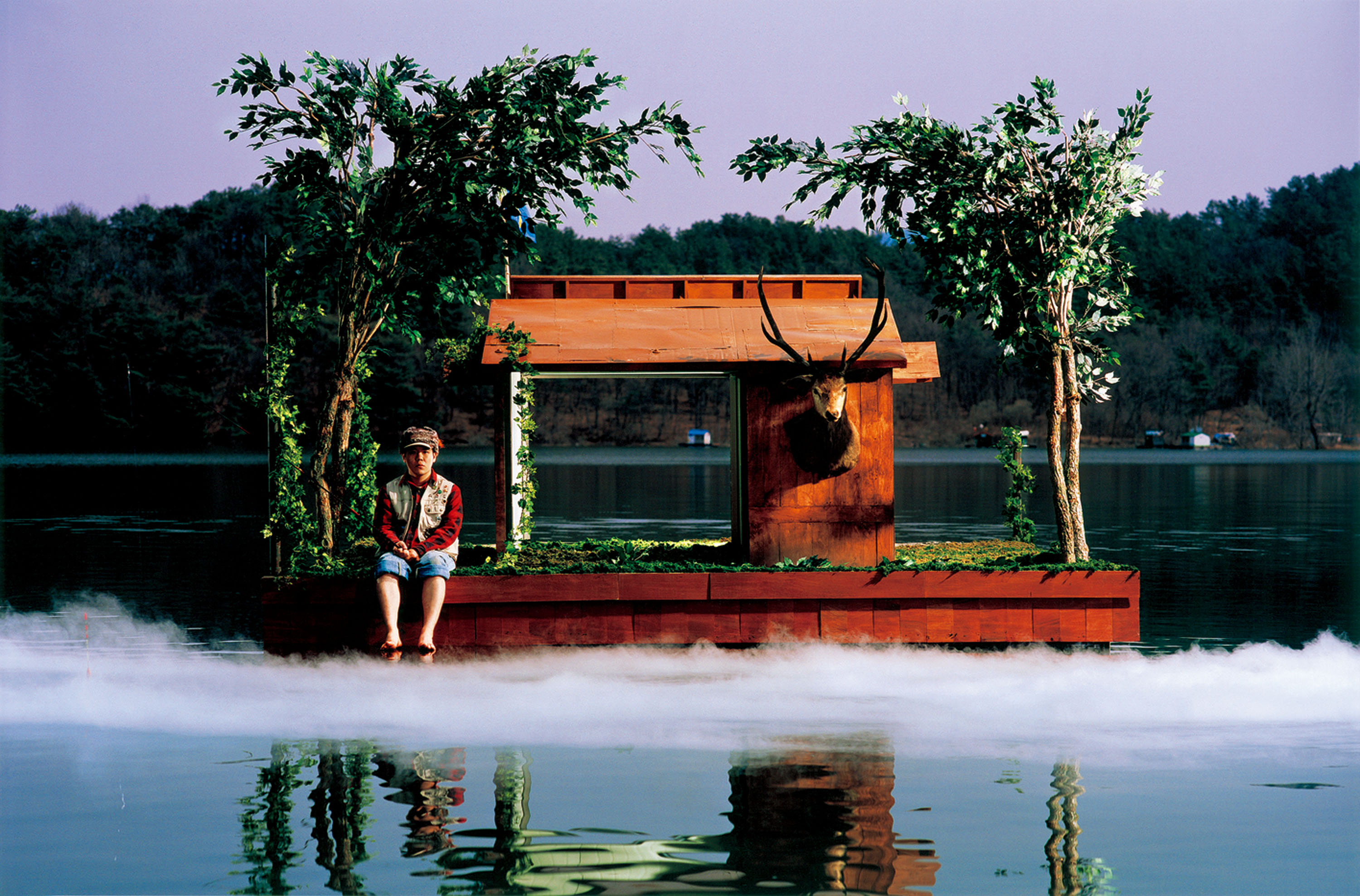
tableaux. Stage direction had already been employed in earlier works such
as Documentary Nostalgia(2007) and Cine
Magician(2009).
These works simultaneously present the staged set and
the filmed video, exposing the sleight of hand of representational devices that
create illusion and intermingling the illusory space of video with the physical
space of reality. However, this exhibition marks the first time that stage
direction, in terms of spatial installation, has appeared prominently on both
macro and micro levels in the overall exhibition composition and in the
installation of individual works. In particular, the concept importantly
applied here is that of the layer. The notion of layers that confer and
construct depth in space was experimentally explored in pioneering fashion in
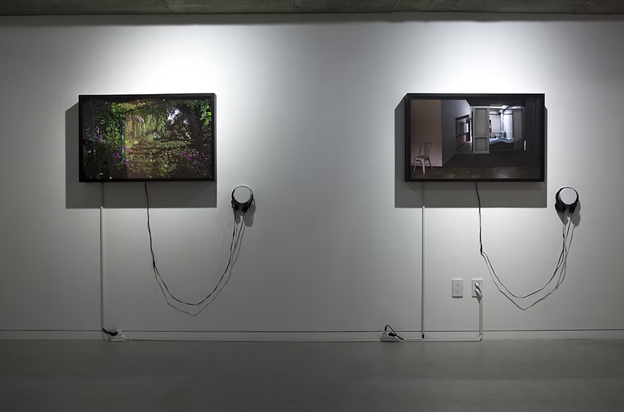
multi-layered photographic installations such as Bird-B Camera(2013)
and Between Here and There, yet in this exhibition the
concept of layers extends beyond individual works to encompass the entire
space.
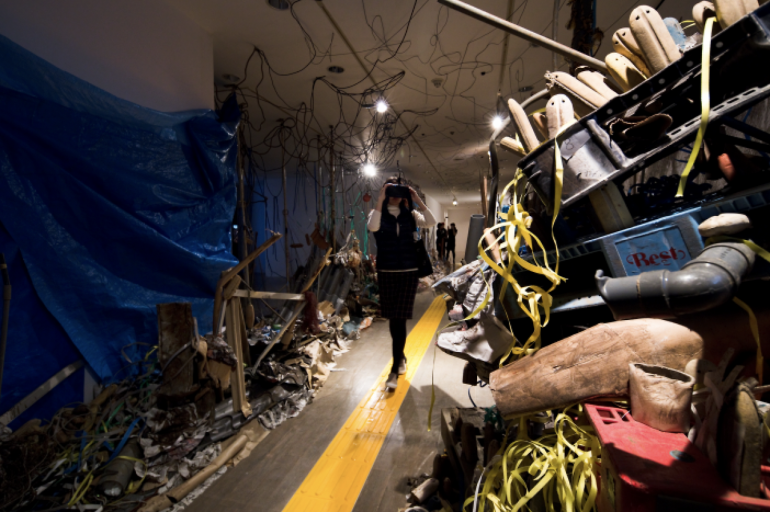
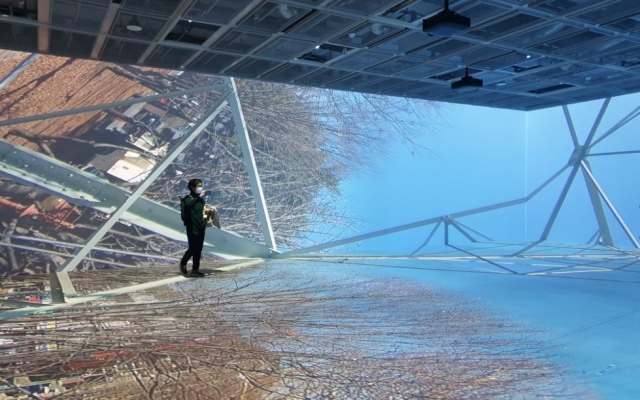
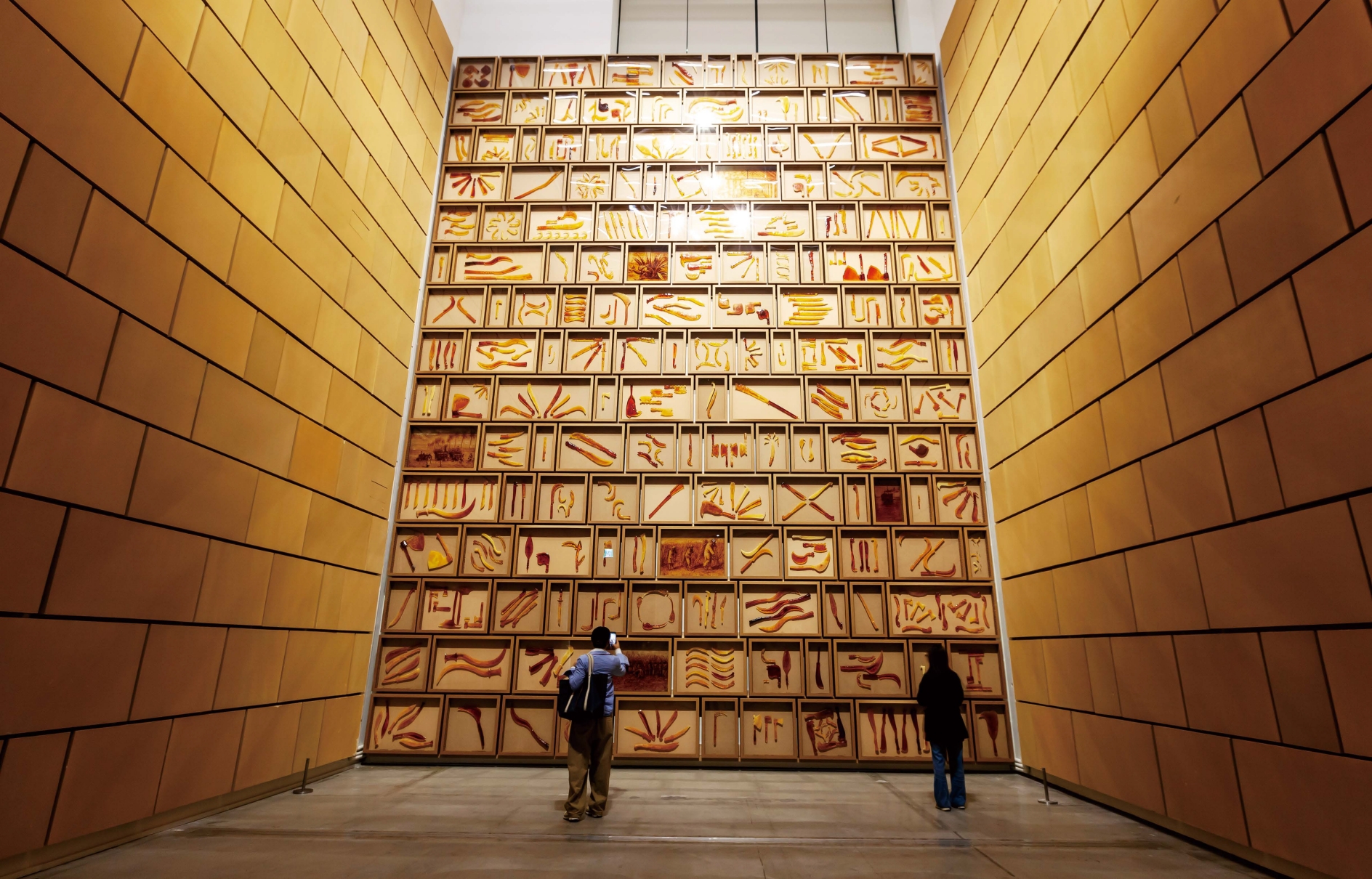
The circulation path of the five-part exhibition recalls the structure
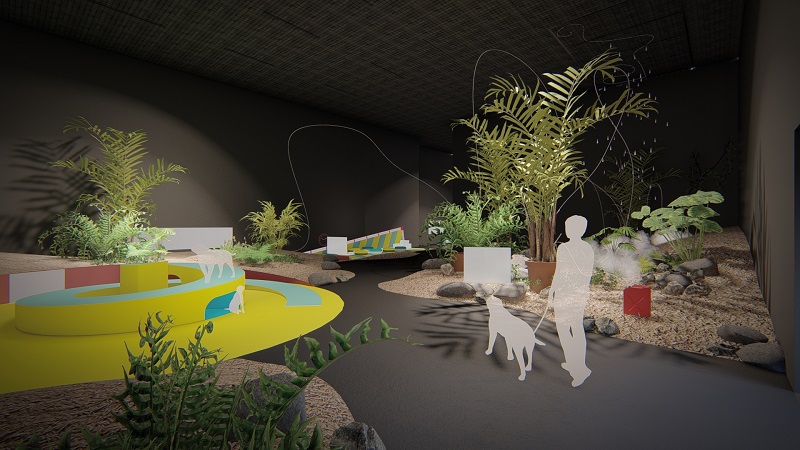
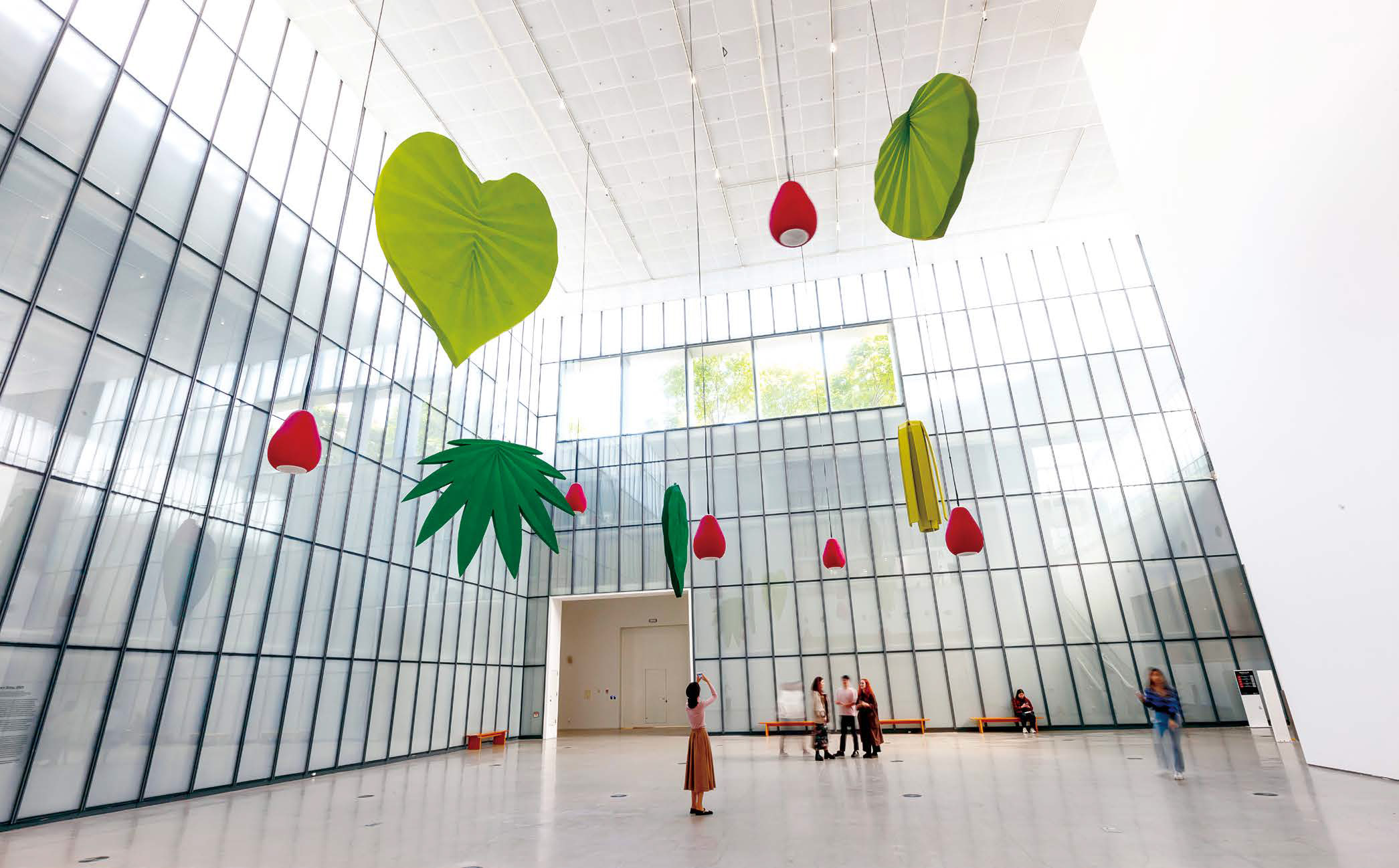
of an opera, symphony, or ballet. If Imaginary Song(2023),
realized in the Seoul Box as the overture, functions as a prelude, then the
first three parts in Gallery 5 correspond to Acts I, II, and III, and the final
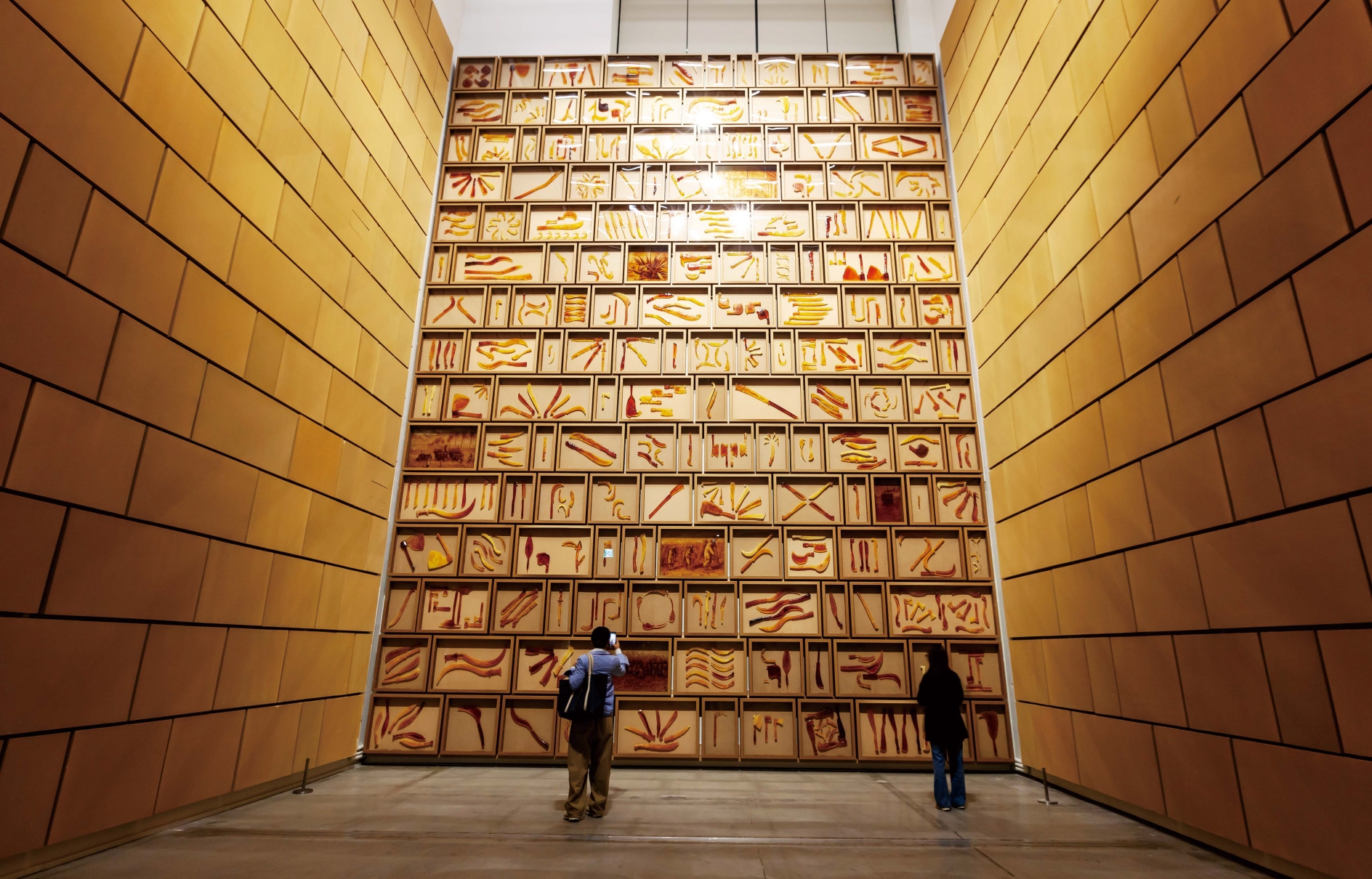
part, Wall of Blades(2023), forms the postlude.
Considering that the direct treatment of Korean migration to Mexico appears in
the central sections (Parts 2–4), while Imaginary Song and Wall
of Blades at the beginning and end expand and universalize the
central theme through other narratives of migrant labor, the analogy of prelude
and postlude—independent yet organically connected to the main
composition—aptly corresponds to this exhibition layout. The concept of layers
that construct scenes applies not only to the exhibition structure but also
intimately to individual works.
Generational Portraits separates
the layers of parent and child generations to create distance, conveying the
historical and cultural gap between them. Due to the installation structure,
viewers physically positioned between the parent and child generations
alternately gaze at the faces of two figures who appear strangely similar yet
different. The dissonance between resemblance caused by heredity and difference
resulting from hybridity of lineage and culture is suggested by the distance
between the two screens. Meanwhile, in Imaginary Song and One
Hundred Years of Travels, the concept of layering is articulated not
only through image but also through sound. In Imaginary Song,
super-directional speakers separate high and low frequencies to construct
layers of sound.
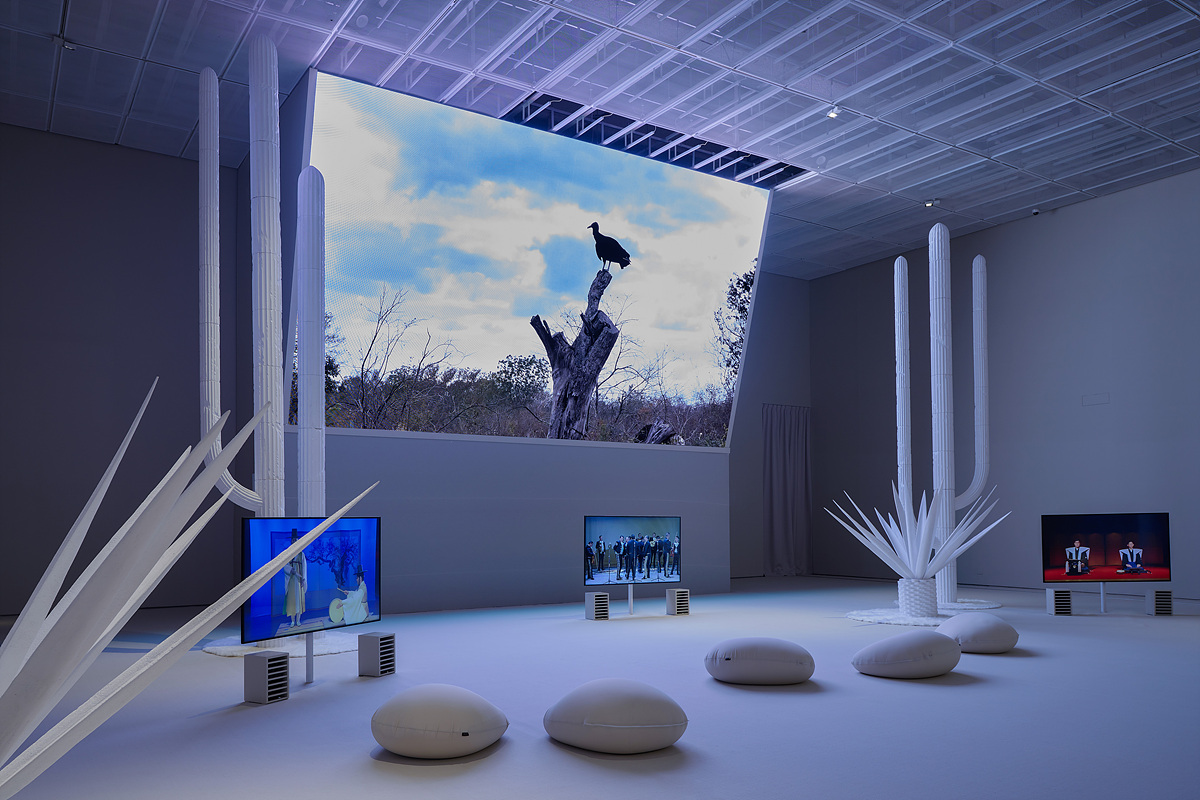
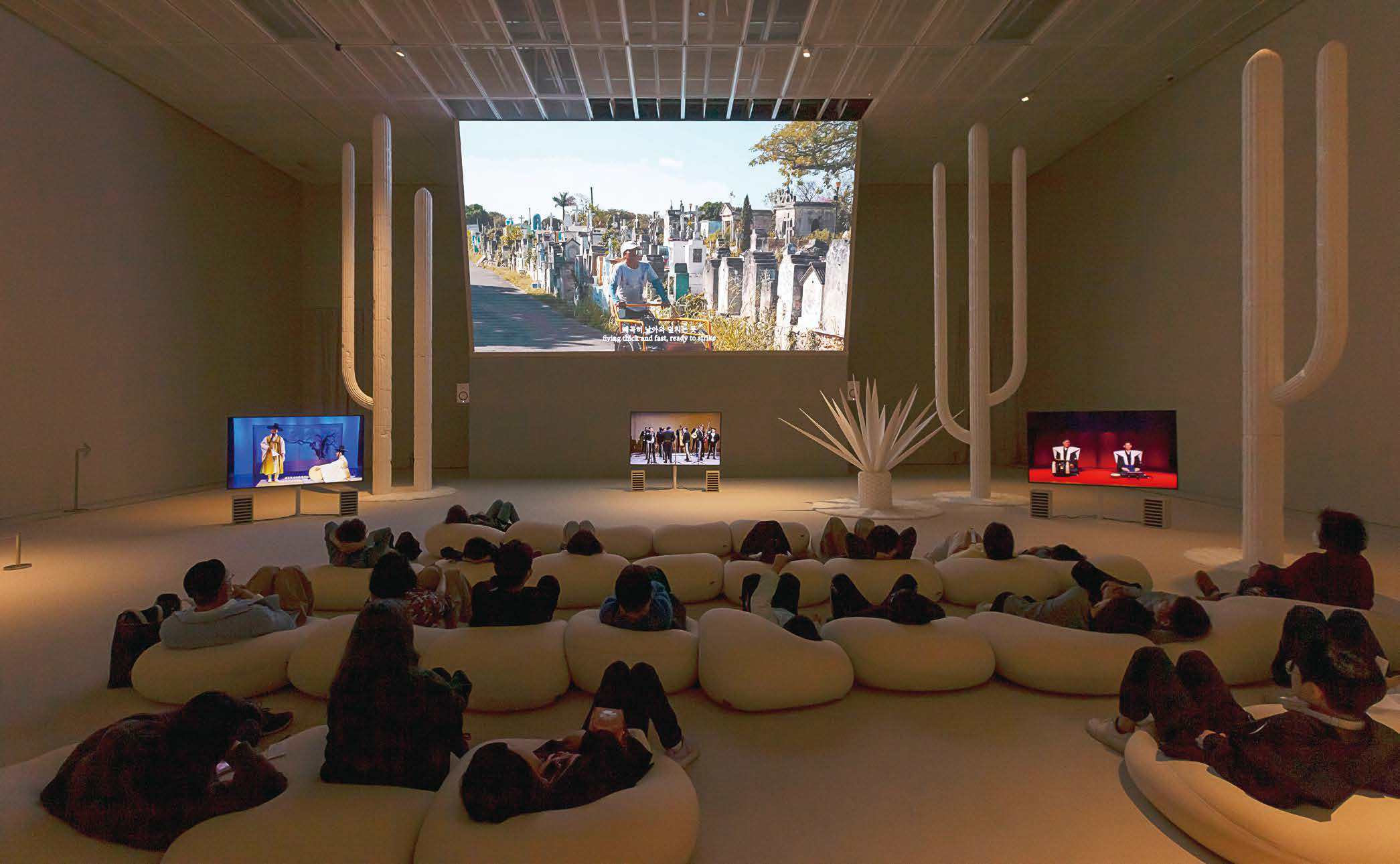
In One Hundred Years of Travels, by
adopting the structure of an opera house in which orchestra pit and stage are
divided, three monitors are installed before the audience seating with a
central screen placed behind them, reproducing the spatial position of the
sound source. One Hundred Years of Travels distinguishes
the three-channel video—the source of sound—from the audience area and central
screen, and in terms of image also forms layers of light. Color filters
inserted into the central video cast various hues upon white cactus sculptures
and white beanbags, staging a theatrical space.
Historical documentary and
dream (fiction) meet through staging that continually reconstructs the story
via adapted sets, even as they are based on real events. While inheriting
previous concerns in terms of communication and staging, One
Hundred Years of Travels undertakes new challenges in mode of
realization and composition, ultimately achieving a significant leap. One looks
forward to seeing how experimentation with media and reflection on historical
narratives will merge to construct more complex and multilayered tableaux, and
how far the boundaries of empathy envisioned by the artist might expand.