Since the beginning of 1990s up
to the present, Yongbaek Lee has been working with a variety of technological
media, from single-channel video to interactive art, sound and kinetic art as
well as Robotics. A variety of Lee’s works suffices to be him acknowledged as a
renowned artist representing this realm in Korea. However, his art is highly
acclaimed not only because it experiments in technology, but because he is able
to express the electronic mass media culture’s unique social issues and
imagination found through the form of technology. Drawing a few excerpts
from his work from the early 1990s up to the present I will introduce Lee’s
interests and visual language through these issues: “the relationship between
the real and the virtual in the age of simulation”, “de-centered subject” and
“the heterological and subversive strength accompanied by digital
media.”
First of all,
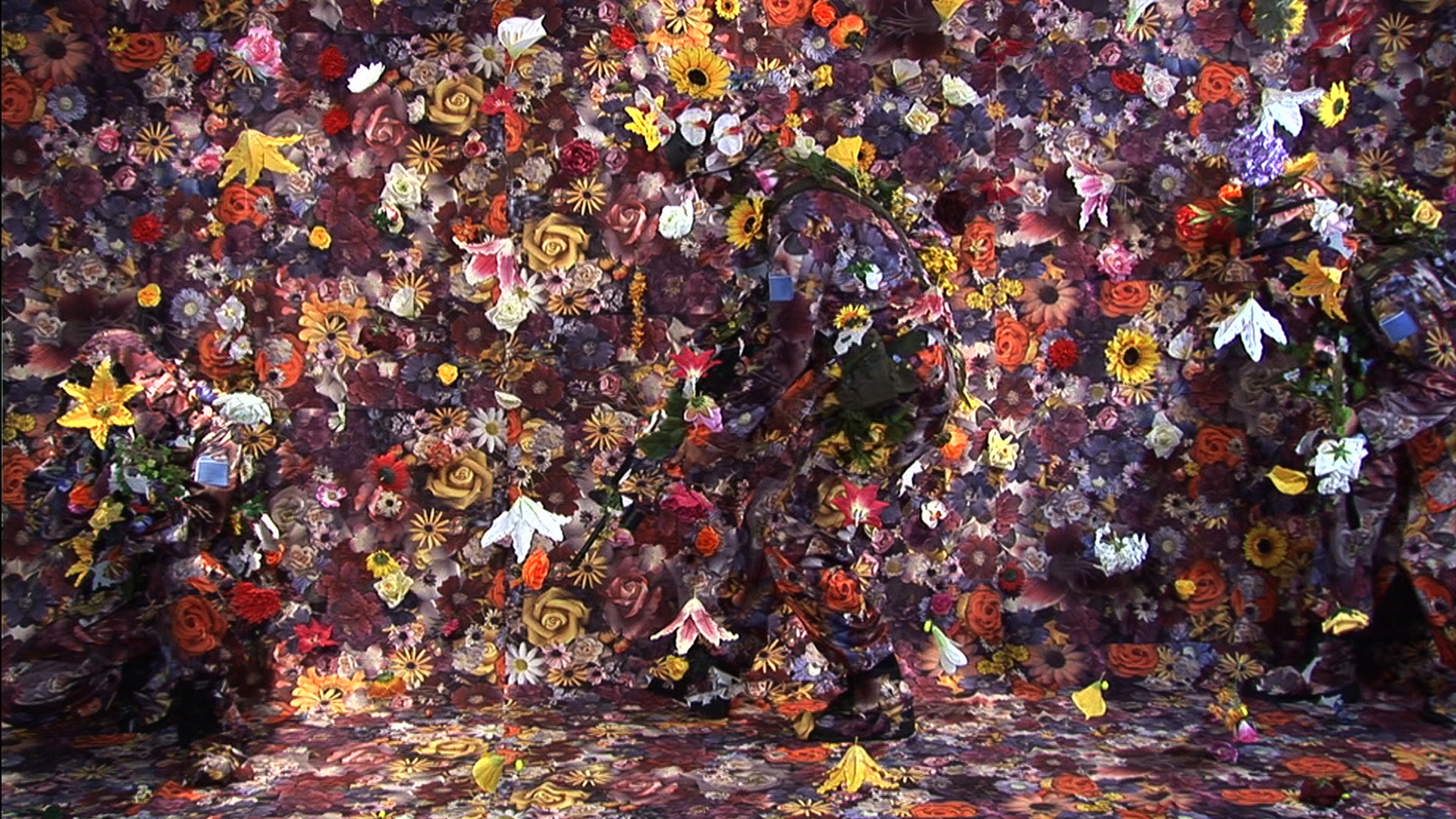
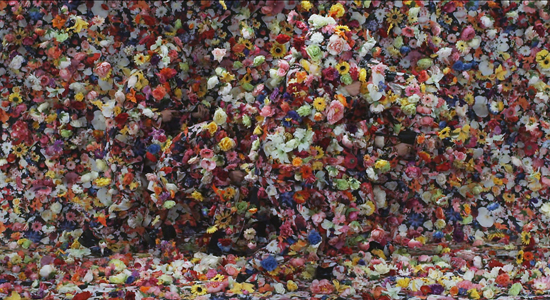
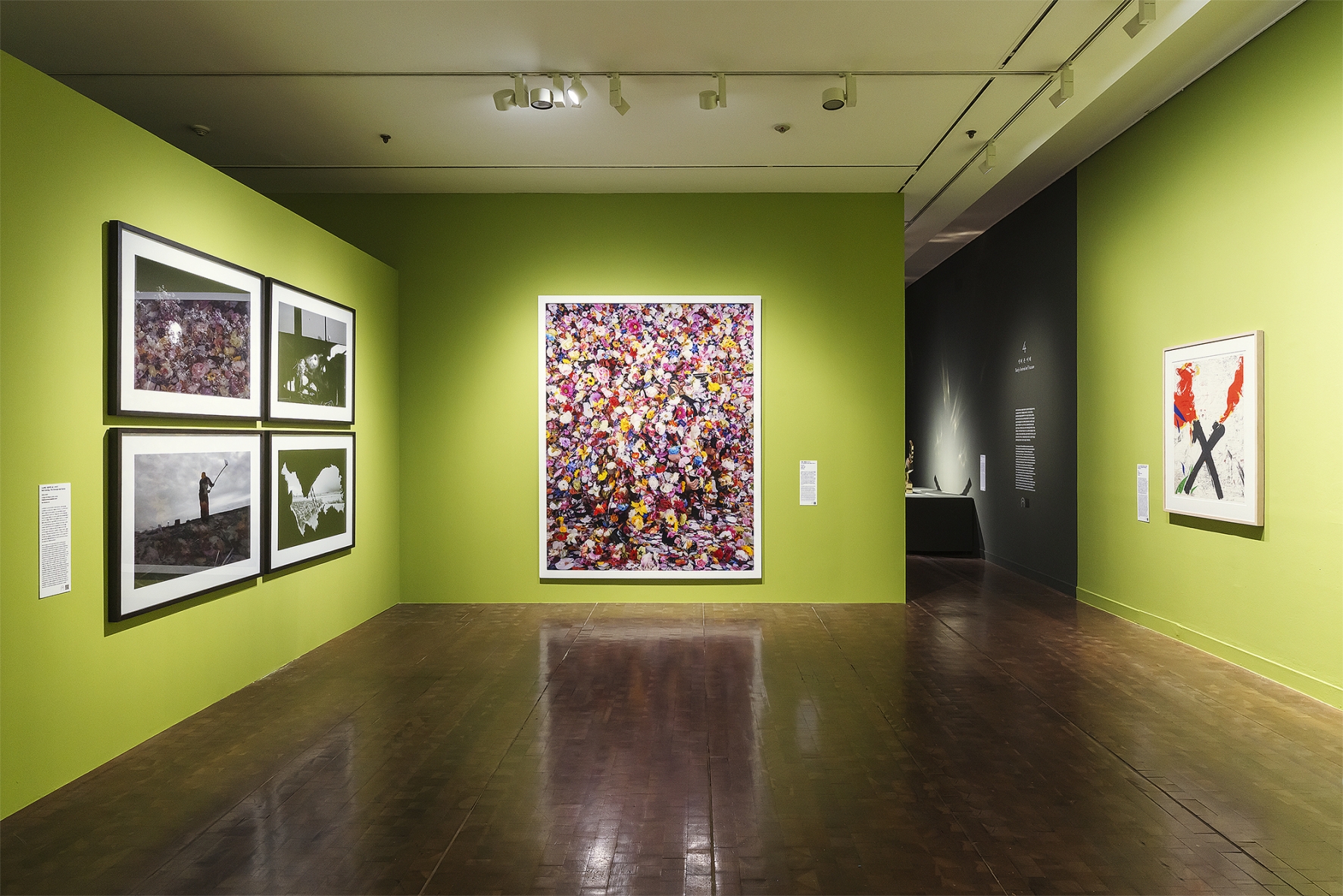
his ‘Angel-Soldier’ series show that the artificial flowers that fill
the artificial spaces that appear in such media as video, photography and
installation, stir up the digital simulation composed purely through simulacra.
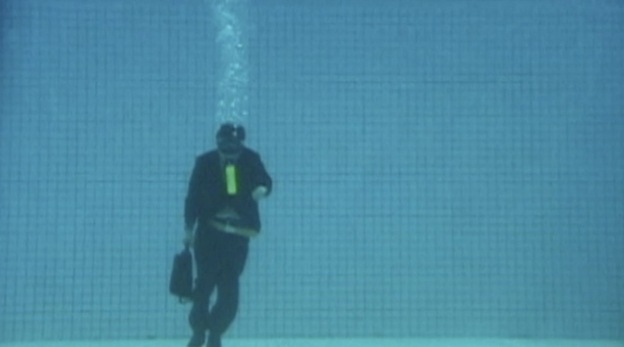
For instance, one is surprised to find a soldier perfectly camouflaged in
flowers slowly marching with a gun in such an artificial space of Lee’s video
work. In this setting, the simulation is portrayed as an extreme war-zone
upon which the subject depends its existence.
The artificial flowers here are
the simulacra that exercise a power of seduction, and the solider exists solely
as a part of the simulation setting, not as a separately independent
individual. In the same sense, this work in part brings up human ontological
issues, such as the exchange between the exterior (electronic environment) and
interior (subject), the reconstruction of the "liquid ego" (Arthur
Kroker) in the cyberspace, and the dissolution of the subject. The work
also displays the fidgety overview of today’s digital war and cyber commerce
that create war between the boundaries of the world of computer simulation and
physical reality based on the human body.
Another work in
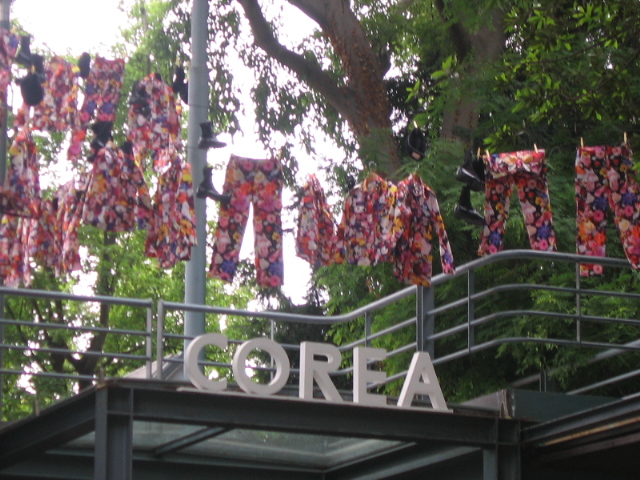
the ‘Angel-Soldier’ series is an objet installation that utilizes the
soldier outfit, and this is a witty work that utters about the concept of the
artist and creation in the digital media era. This installation utilizes the
flowered solider outfit and other real objects that appeared in the video
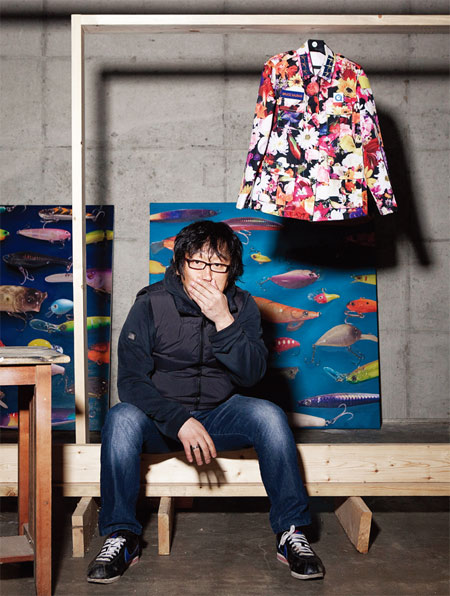
installation. On each of the soldier outfits, logs such as Windows,
Quicktime, Word and Explorer appear as medals, and important famous artists’
names such Beuys, Picasso, Duchamp, Nam-Jun Paik and Da Vinci are written on
the name tags.
This work suggests a new transfiguration of the simulation era
into an artistic creation, through the intersecting of 4 elements: artificial
flower pattern, soldier apparel, important symbols of the digital culture, and
symbols of the artistic creation. The work is a suggestion that Art today
variably and strategically transforms into a product through the process of
reproducing, editing, and transforming in the imaginative space. The very
life of Art becomes ambiguous, as Art is no longer the ‘original creation’, but
a “Post-creation” that relies its expression and existence on the appropriation
and re-arrangement through the simulation process.
The other work New
Folder-Drag humorously portrays the collapse of the two binary
oppositions that are universal issues of today: the virtual and the real.
This work is a video projection of a few children pulling a 3 meter
magnification of the ghostly computer desktop icon ‘folder’ that displays the
words “folder of the reality matters”. The folder icon, which originally has no
material weight and is only a graphic image, paradoxically appears subversively
as something that is associated with material weight and physical labor.
Although we live in what is called a Cyber age, this cyber space is not a
closed space but a space that is intimately associated with the real material
world. Through a few clicks of the mouse, we naturally perform everyday
activities, from shopping in cyberspace, to something extreme as having a cyber
war. We construct the world in cyberspace as if it is a game, and through this
process, we become alienated from our very own world. New
Folder-Drop cleverly portrays the mutual transformation that arises
between the virtual space and the real space.
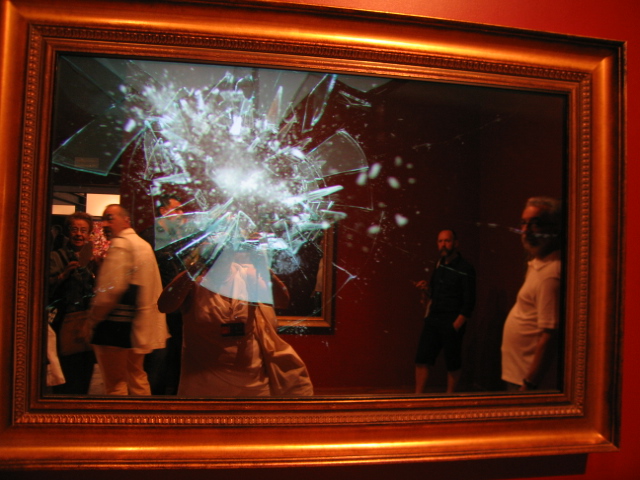
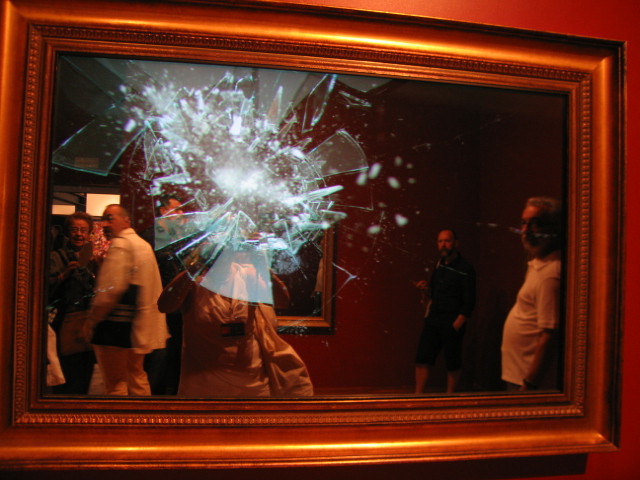
In a large context, works
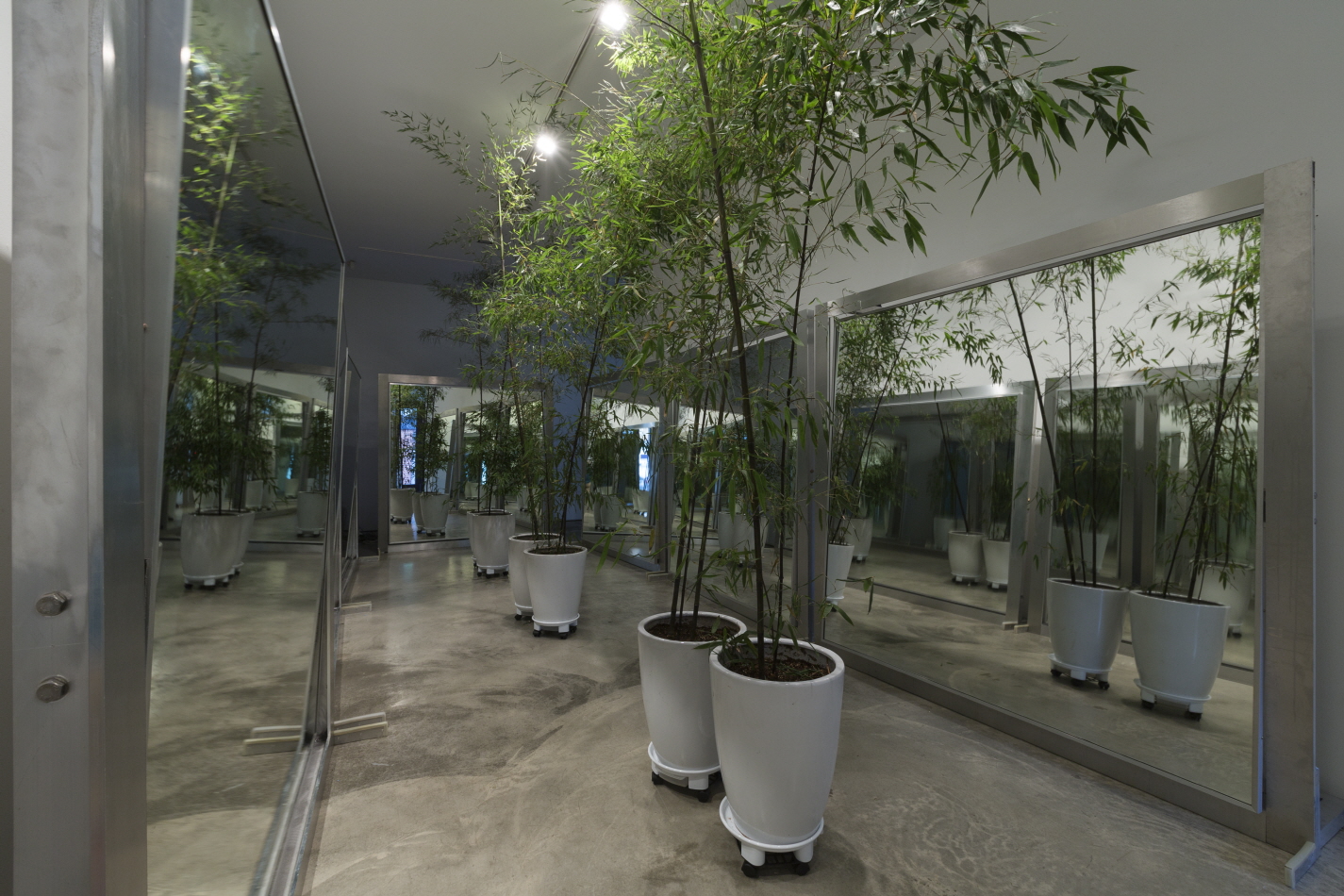
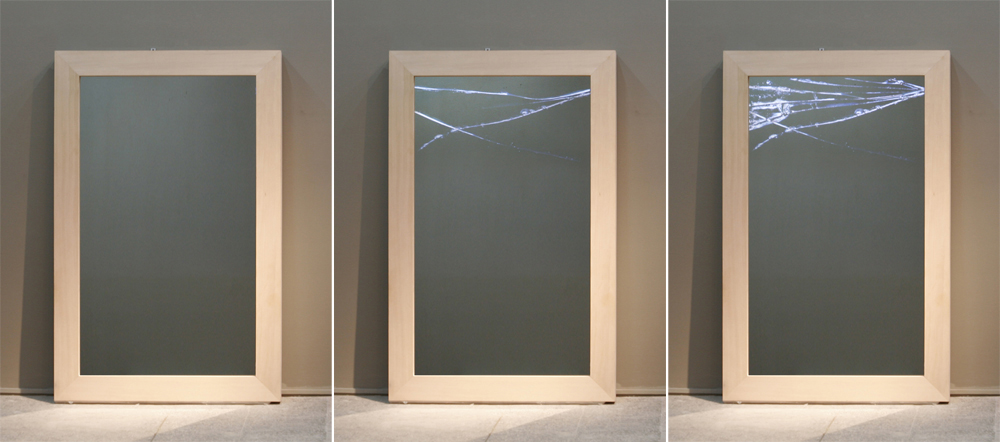
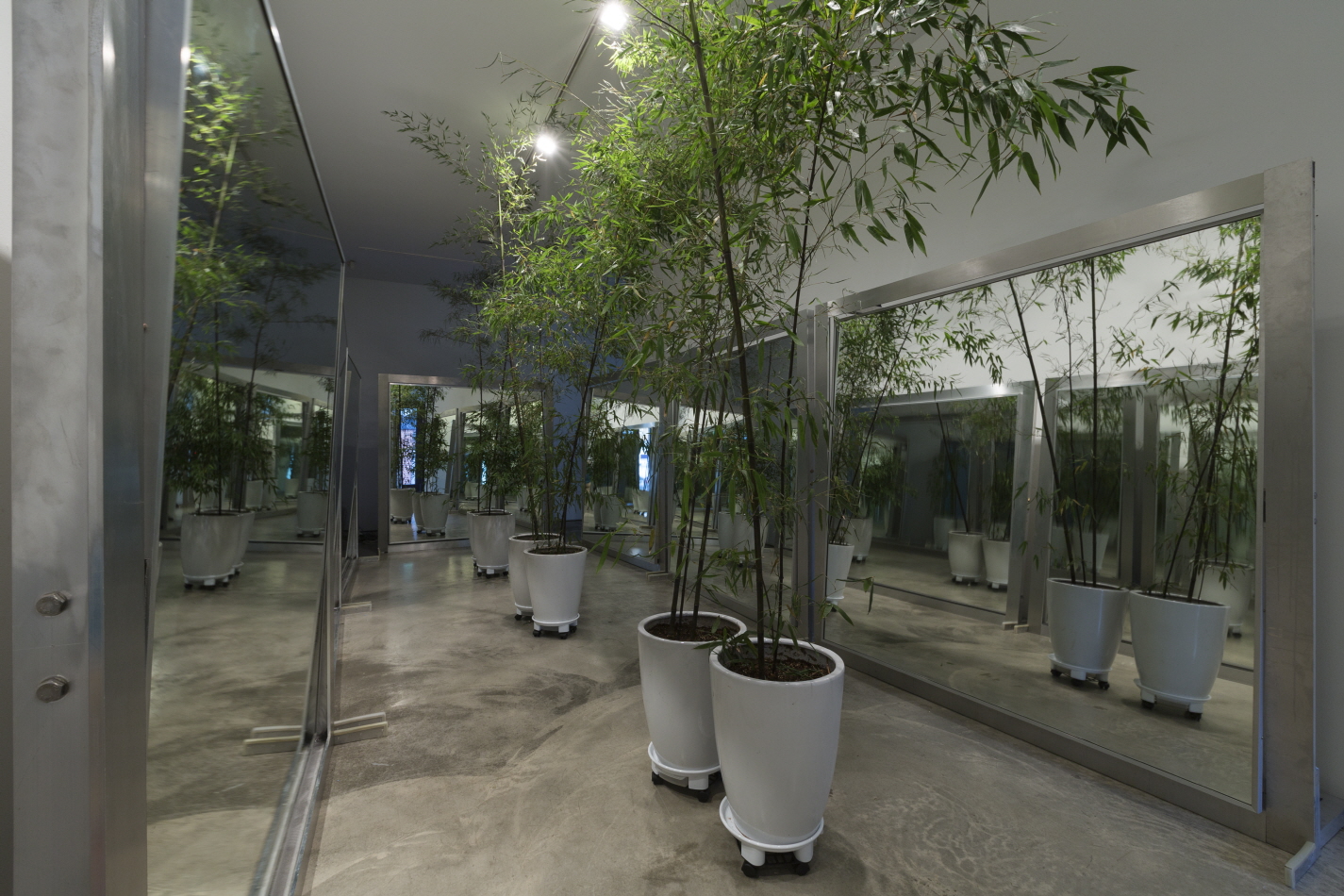
like Mirror(2007) and Sad Mirror(2007)
can be understood in the context of the collapse of the conflict between the
real and virtual. The work is an LCD projector behind a mirror which
projects the video of a mirror breaking and water (like teardrops) forming and
flowing on the surface of the mirror. Although a very simple set up, the
impression of the work is powerful as the viewer cannot see the projector and
the breaking of the mirror surface or the tear drop forming appears real to the
viewer. It’s a different sensation seeing the same image through a monitor or
projection.
This work completely unifies the material sense of the mirror and
the virtual sense of the projection. Furthermore, this project creates the
feeling of being suspended between consciousness and a dream. Such an inquiry
into the boundary between the real and the virtual is apparent since Lee’s
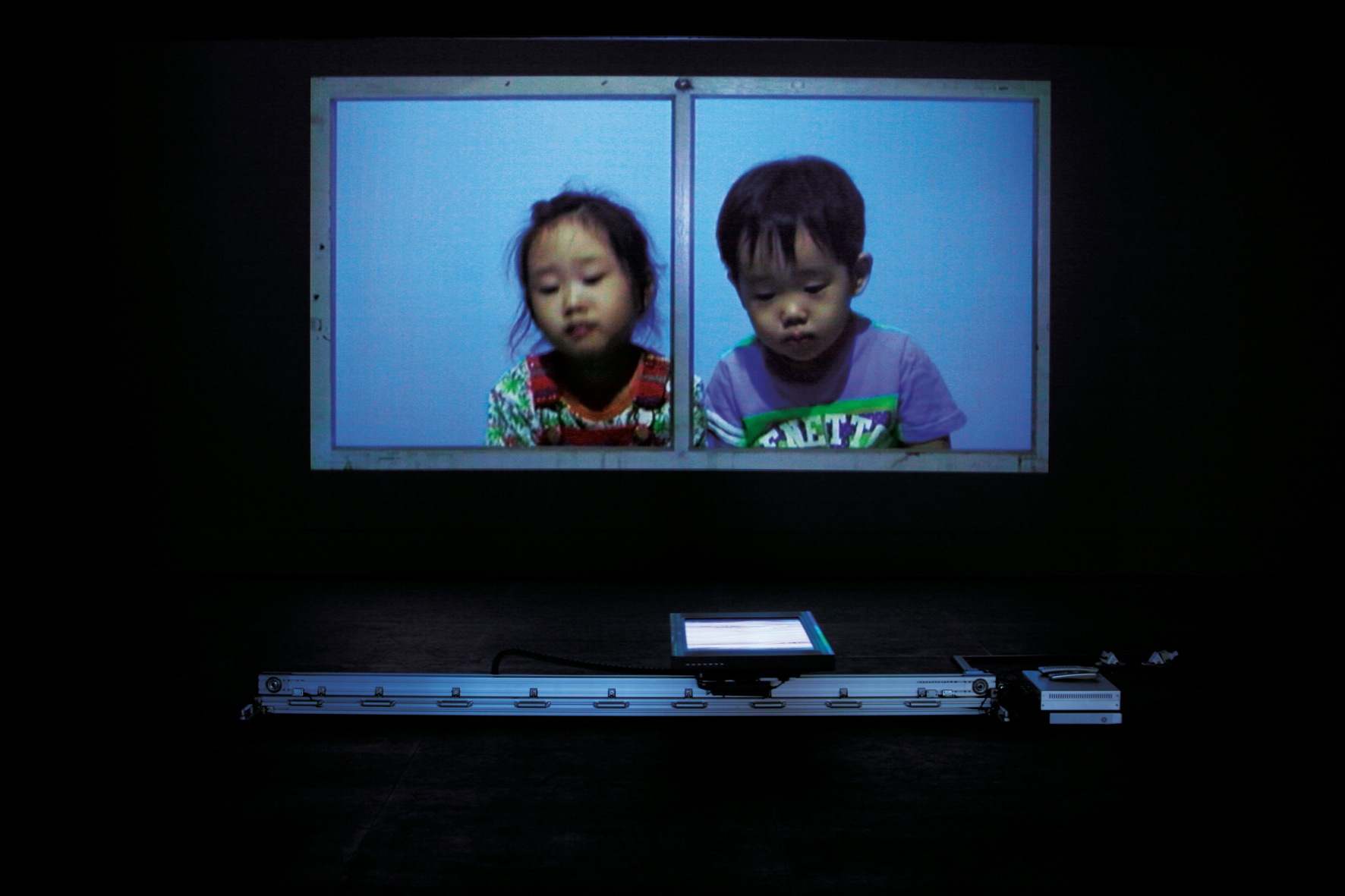
earlier works. For example, in Window in Window, a
projection of children playing is projected onto a screen that resembles a real
window. The scene appears to be real, until technical defects such as
blips of letters or blank screens appear, waking up the viewer. An LCD
monitor with the image of a corpse exercises, and the children shout “It’s
dead, it’s dead!” while looking at the monitor.
The important thing to remember
here is that the viewer who is watching the virtual image and the image that is
watching the viewer has been exchanged. The projection of the children is
not seen from one-direction like it is on a movie-screen where it is observed
from the audience; the projection itself that is composed as a window frame and
the children in this virtual space look back at the viewer. Therefore, the
process of being observed through observing the children directs a situation
that can be called a “visual chiasmatic reiteration.”
Lee’s work not only deals with
the ideas of the virtual and the real, they also speak about the transgression
of the symbolic order, hybridity, and the issues of the de-centered self. Abnormal
is a project that utilizes the technique of morphing to show the digital art’s
most important aspects: liquidity, plasticity, and transformative potentials.
The project continues in mysterious and grotesque transformations and whirring
sound. This transformation is full of blasphemous attempt of escaping the
symbolic definition of the icons, as well as displaying such blasphemous
metamorphosis as death drive, pleasure of self-inflicted pain and ecstatic
state.
The transgressive movements against the symbolic and cultural
borders is actually the most important cultural characteristic and state of the
internet cyberspace that is dominated by morphing and hybrid technology. This
is the downfall refression of everything and anything borrowed, then
hybridized, to become a third kind of a mutation. In cyberspace, innocence and
regional boundaries do not exist. This project displays the digital
culture’s typical characteristics, as all visual symbols undergo a process of
transformation and begins to disassemble from its pre-established symbolic
order.
In other words, this characteristic can be expressed as being similar to
the mixed coexistence of the heterogenous dimensions, and it has a close
relationship with the concept of the “paganism” suggested by Jean-Francois
Lyotard as the important characteristic of the postmodern culture of the 1980s.
Concerning Surrealist art, Georges Bataille mentioned "a state that an
formal identity is distrupted by the attack of the other", "the
impossibility to define as a unique form", "a moment that the world being
collapsed by diversity". Such ideas have been linked with heterology and
formlessness, and these ideas can also be found in Lee’s projects.
To leap
further, one can say that in this sense, Lee’s projects as well as a plethora
of others in the field of Digital Arts have many things in common with
Surrealist photography by artists like Raoul Ubak, Jacques-Andre Boiffard and
Man Ray. More recently, Alain Renaud have defined the transformation and
collapse of signs, and the liquid aesthetics in digital images, as "the
des-anchored signs". This signifies the trendy simulation era’s images
being disassembled from their semantic and symbolic functions.
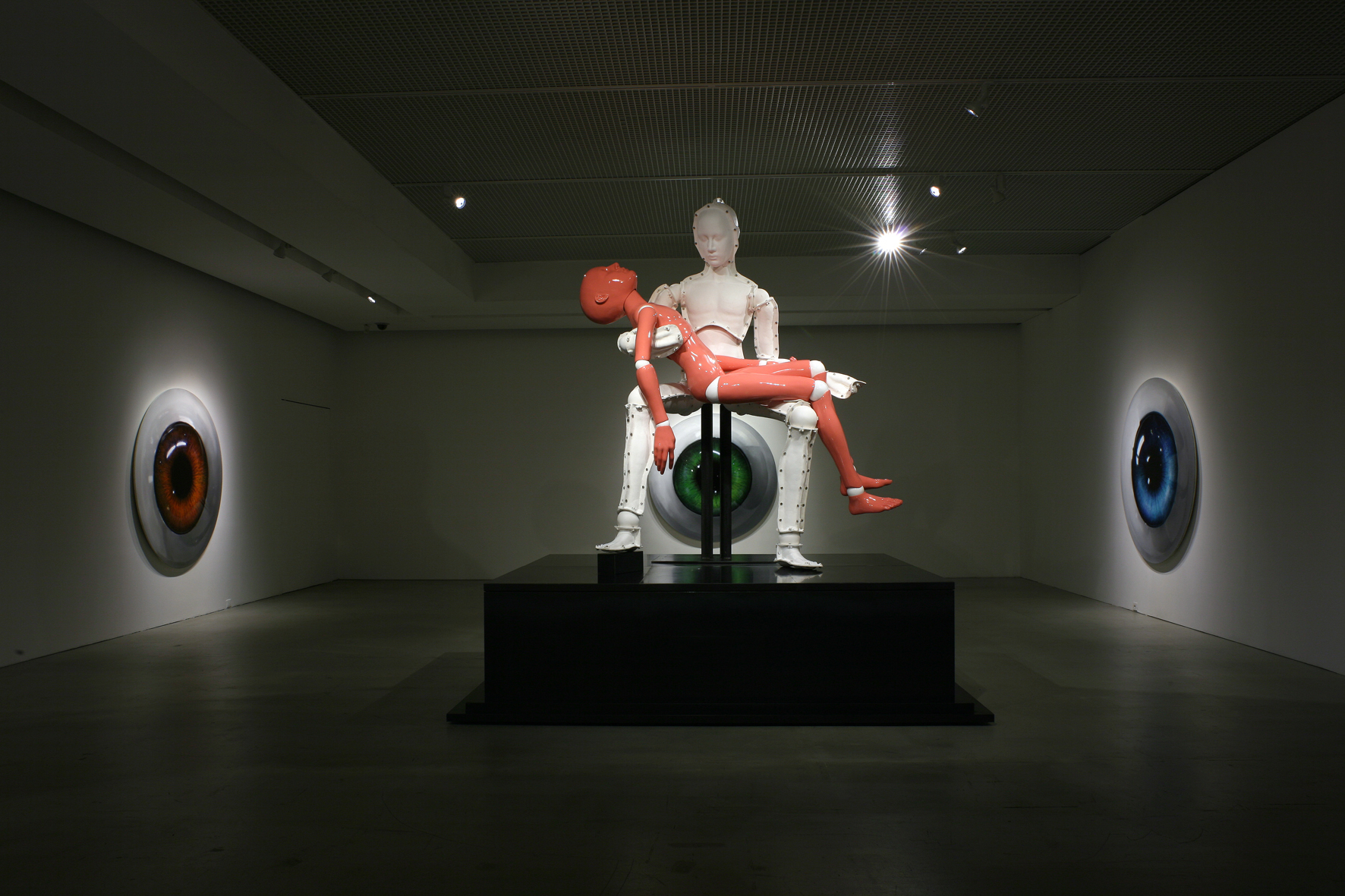
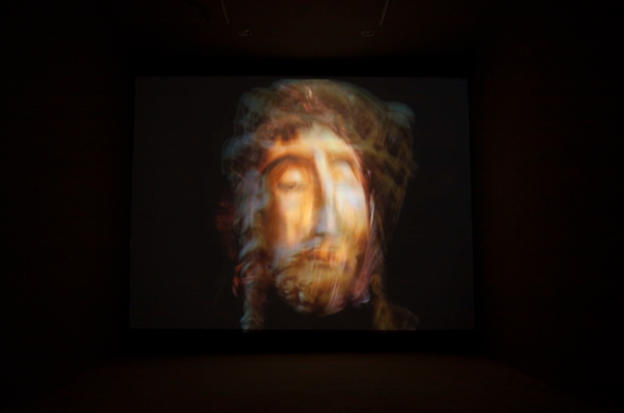
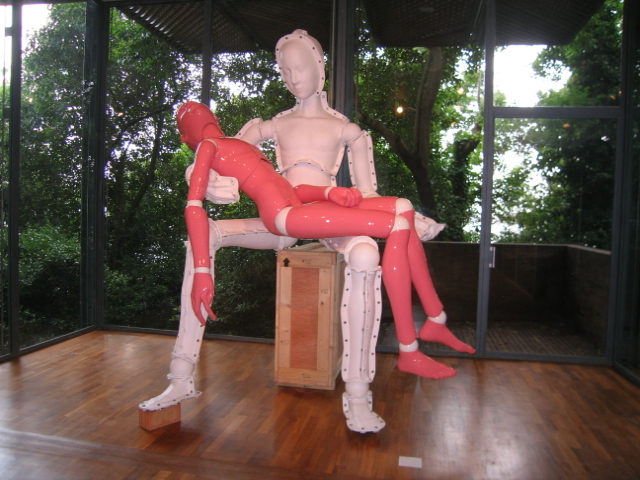
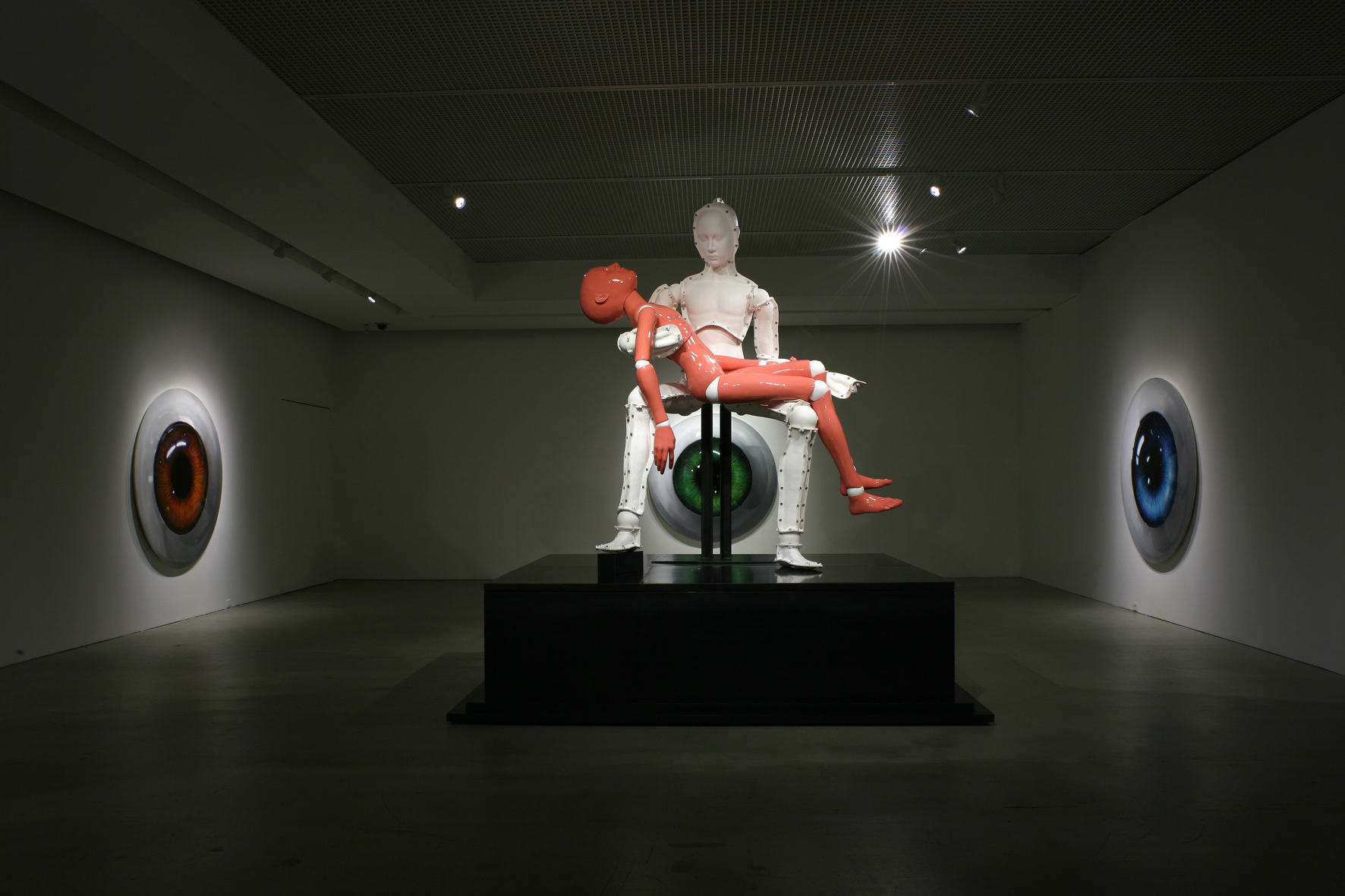
Such matters of concern are also
shown in this recent work Pieta. Traditional images of Maria
and Jesus are substituted with images of cyborgs in Pieta.
This project seems to observe Donna Haraway’s observation that Humans and gods,
the symbols of humanism, have disappeared and blasphemous hybrid cyborgs and
other biotechnological monsters are taking over. As seen in Pieta,
the technical composition of the oscillating monitor hidden in the glass box,
has also been diversely applied in other past works.
For example, the work Twins
in Monitor shows the abnormal, the mutant, and the split subject
through a 3-dimensional image as if through a magical illusion. This image is
like a conjoined twin that’s been taken from the placenta. This is
actually the image that is played from the monitors that perform oscillating
motions on the small rail. Hidden in the semi-transparent glass, it’s as
if we’re watching an illusion-like 3-dimensional projection. To the viewer, the
surreal image of the floating twins that don’t disappear in the darkness appear
as a regressive fantasy, and operates as a disturbing fact, as the monstrous
being disturbingly mirrors us as our own identity.
It should be reminded the fact that many artists have already been exploring
the de-centered self, the disassembled physical body, and the multiple
transfigurations of the body, since the onset of the Media Arts. For example,
artists in the past, such as Peter Campus or Dan Graham have used the medium of
the video and the crafty angling or the use of time-exposure in camera as a
kind of ‘mirror reproduction’ that reveals the breaking of the reproduced image
of the self and its failure to identify with the subject.
Through Yongbaek
Lee’s noted works, we can see that his works emphasize the
"com-mutaion" not the communication, and describe the images of human
who is expanded, altered and splitted through media. There we can read the new
horizon on which lies the high technology art today. This gives us the insight
that the virtual can work as the impure and heterological power intervening the
epistemological order of the real world, and that it will lead us to the new
cultural horizon of posthuman and postmachine.