

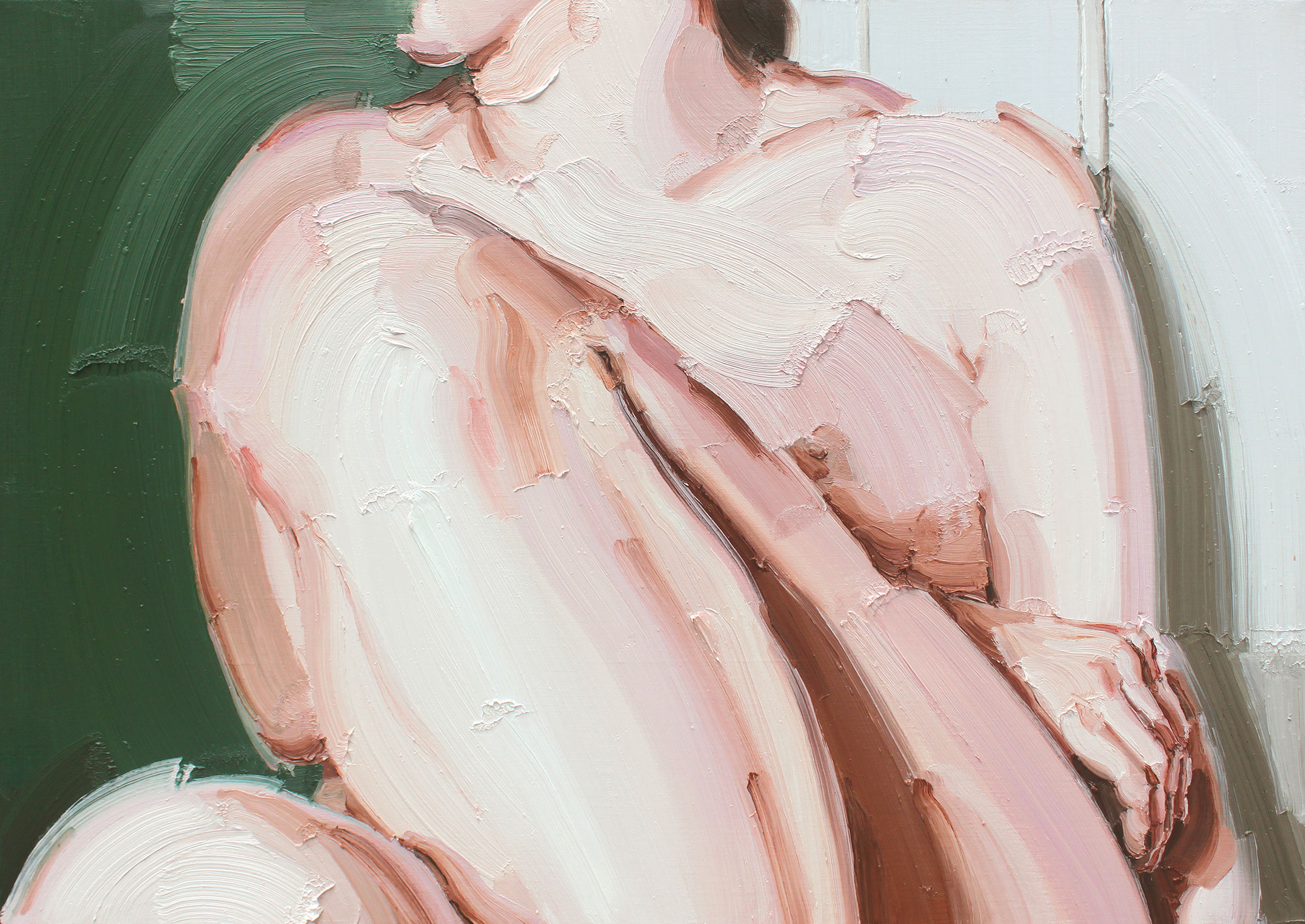
Chansong Kim (b. 1988) focuses on fleeting moments when the solidity of existence blurs and becomes fluid. In particular, she has long contemplated the “body,” paying close attention to instances when her once-familiar body suddenly feels unfamiliar and is perceived as a material presence.
 
Her practice begins with the discovery of passing emotions or moments once considered insignificant, reflecting on the boundaries between the subject and what lies beyond it as they are revealed in unfamiliar instances that break from the ordinary.


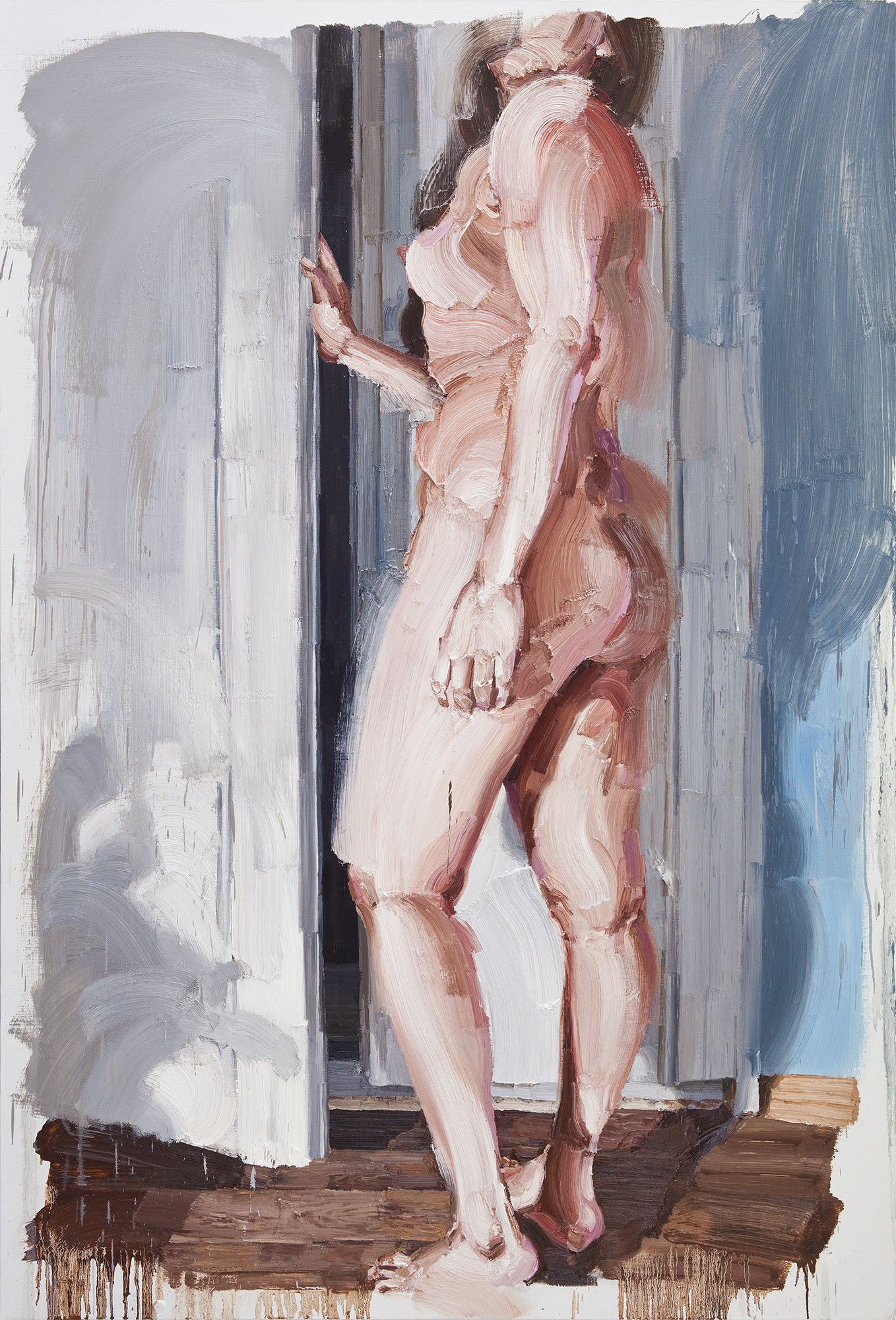
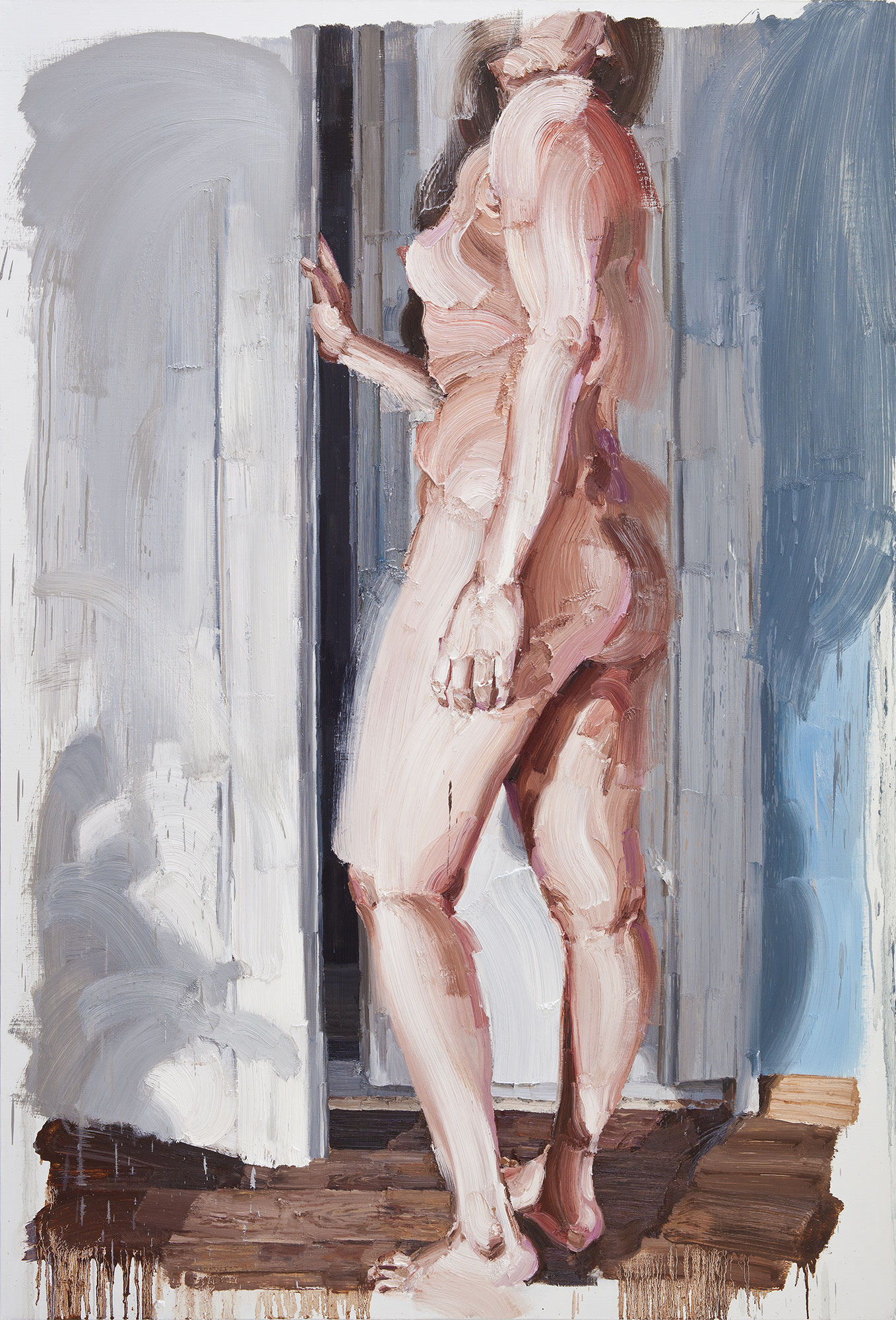
Chansong Kim, Canvas in Gray, 2014, Oil on canvas, 162.2x112.1cm ©Chansong Kim

Her practice began with the strange sensation she experienced upon encountering a fragmented image of her own body, captured accidentally during a photographic process. One day, after setting a timer and taking a photograph alone, she found that only her body—without her face—remained in the frame.
 
Confronting this faceless body, she experienced a fleeting moment in which she felt estranged from herself, whom she had believed to be her closest and most familiar presence. In her artist’s note, she recalls that at the time her body felt “like a stranger, sometimes merely a mass.”


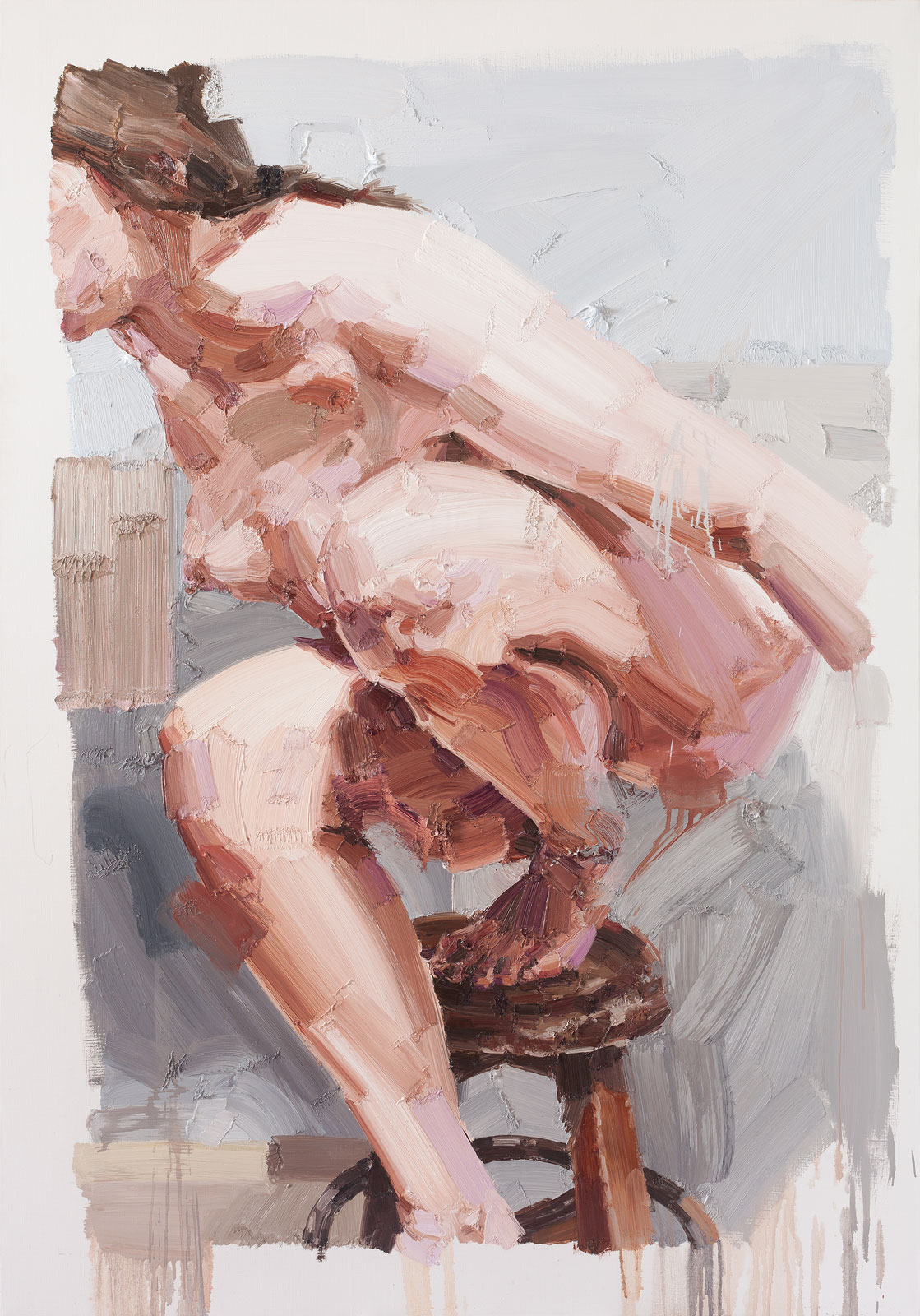
Chansong Kim, Frontier, 2015, Oil on canvas, 193.9x130.3cm ©Chansong Kim

At a certain moment, her once most familiar body seemed to be placed outside some kind of boundary. The unfamiliar body in the photograph thus came to her as an “object that unsettles the subject.” It existed as something heterogeneous and unstable—a mass lingering somewhere along an ambiguous boundary, without pointing to anyone in particular.
 
Based on this experience, Chansong Kim began the ‘Uncanny Gap’ series, in which she translates photographs of her own body into painting, exploring the distance and relationship between the observed body and the viewing subject. In the early stages of the process, she takes hundreds of photographs. Through this repetitive procedure, the subject gradually shifts from being perceived as a “body” to being consumed more as an “object.”

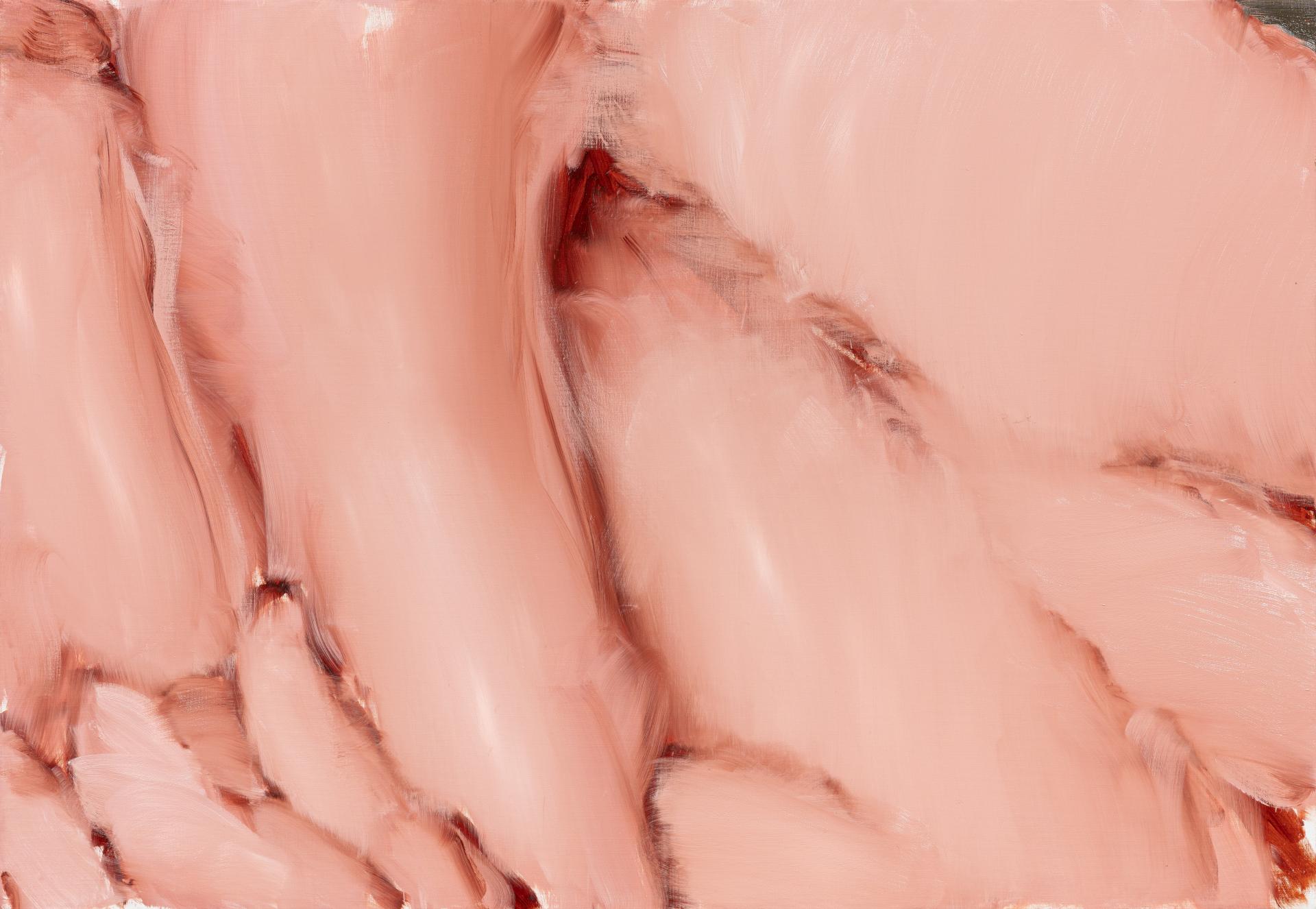
Chansong Kim, Island of Loss, 2016, Oil on canvas, 65.1x90.9cm ©Chansong Kim

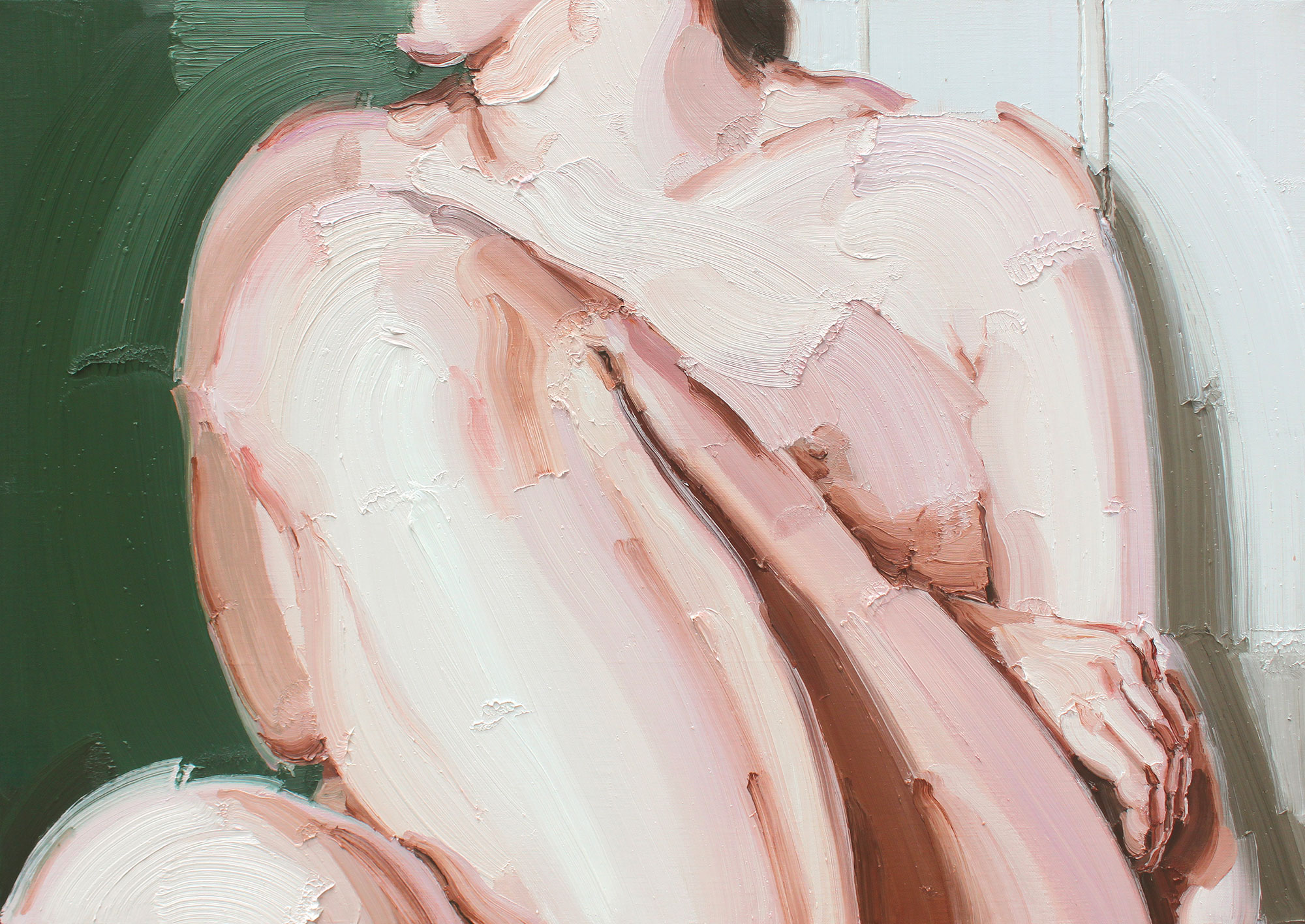
In the process of being translated into painting, the body is fragmented, severed, and distorted, gradually reaching a state in which it is no longer identifiable as anyone’s body. Once transferred onto the canvas, the subject remains suspended at some ambiguous boundary, frozen in a moment alongside the viewing subject. Through this process, the uneasy “other” embedded within begins to surface, blurring the limits between self and object.
 
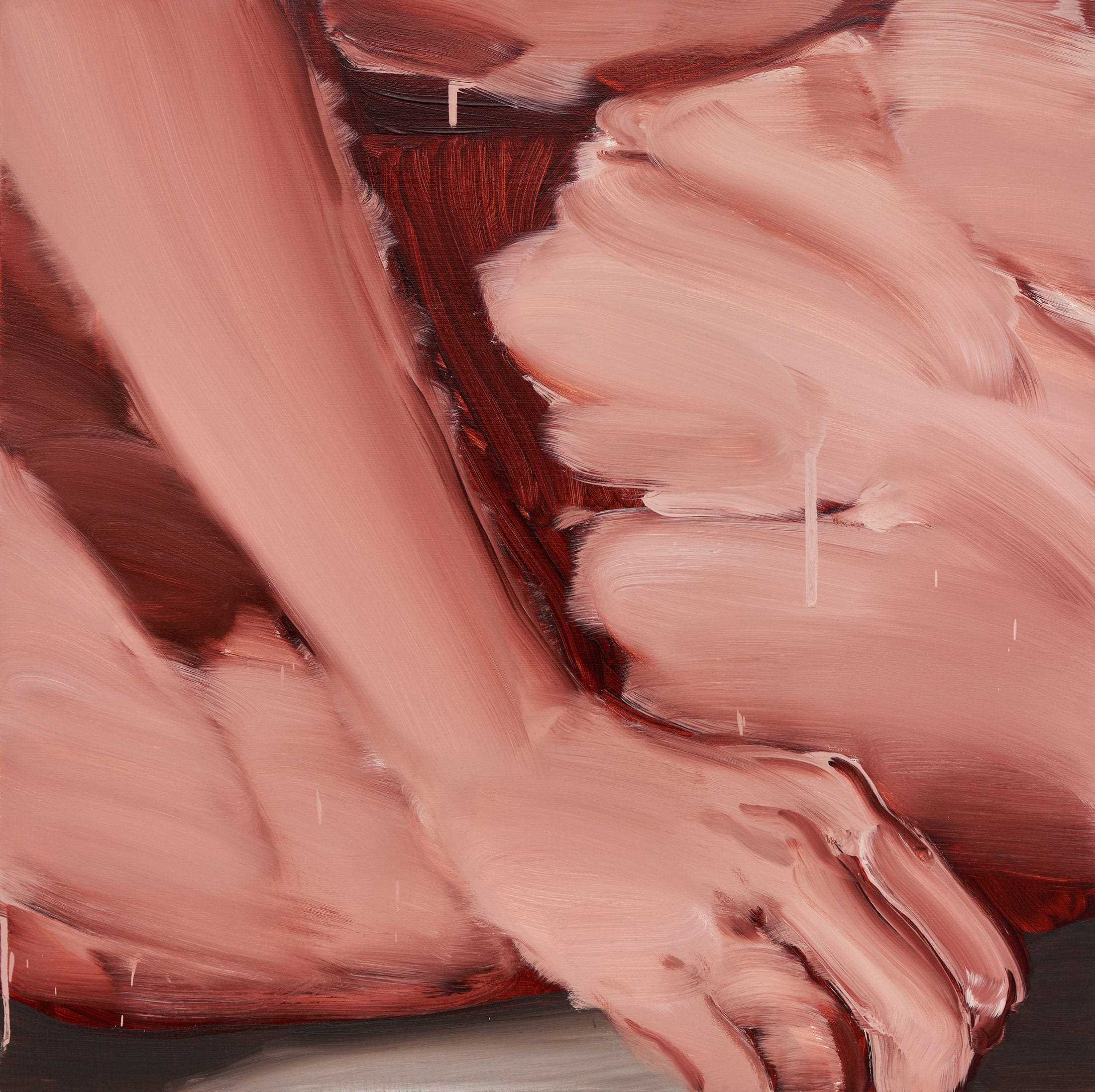
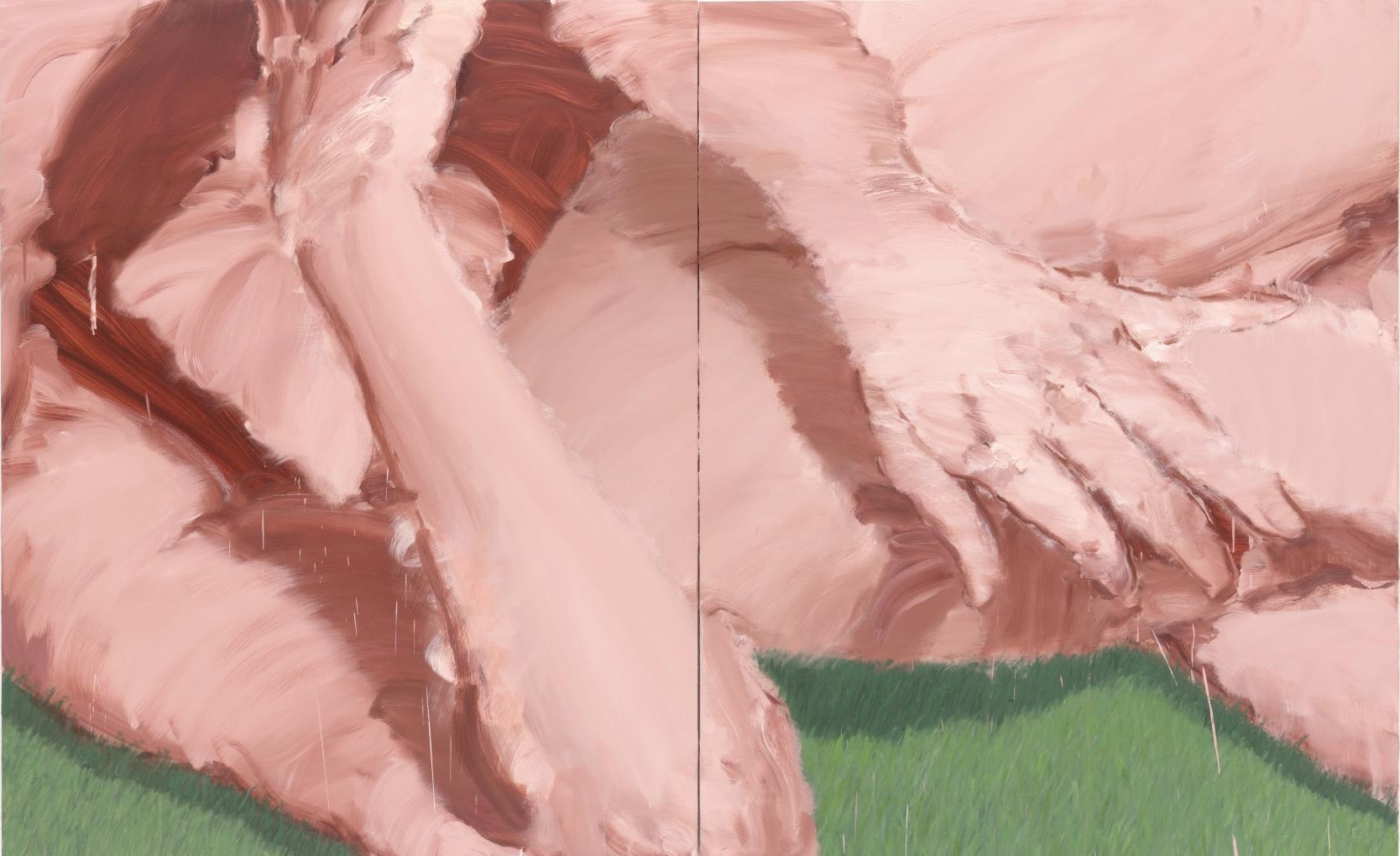
Beginning with Island of Loss (2016), the ‘Uncanny Gap’ series increasingly emphasized and enlarged specific parts of the body—such as hands, feet, and the upper torso. This approach was intended to heighten the anonymity of the body. By fragmenting and magnifying the whole body across separate canvases, the fixed perceptions of the viewing subject are unsettled, and the boundary between subject and object becomes further obscured.

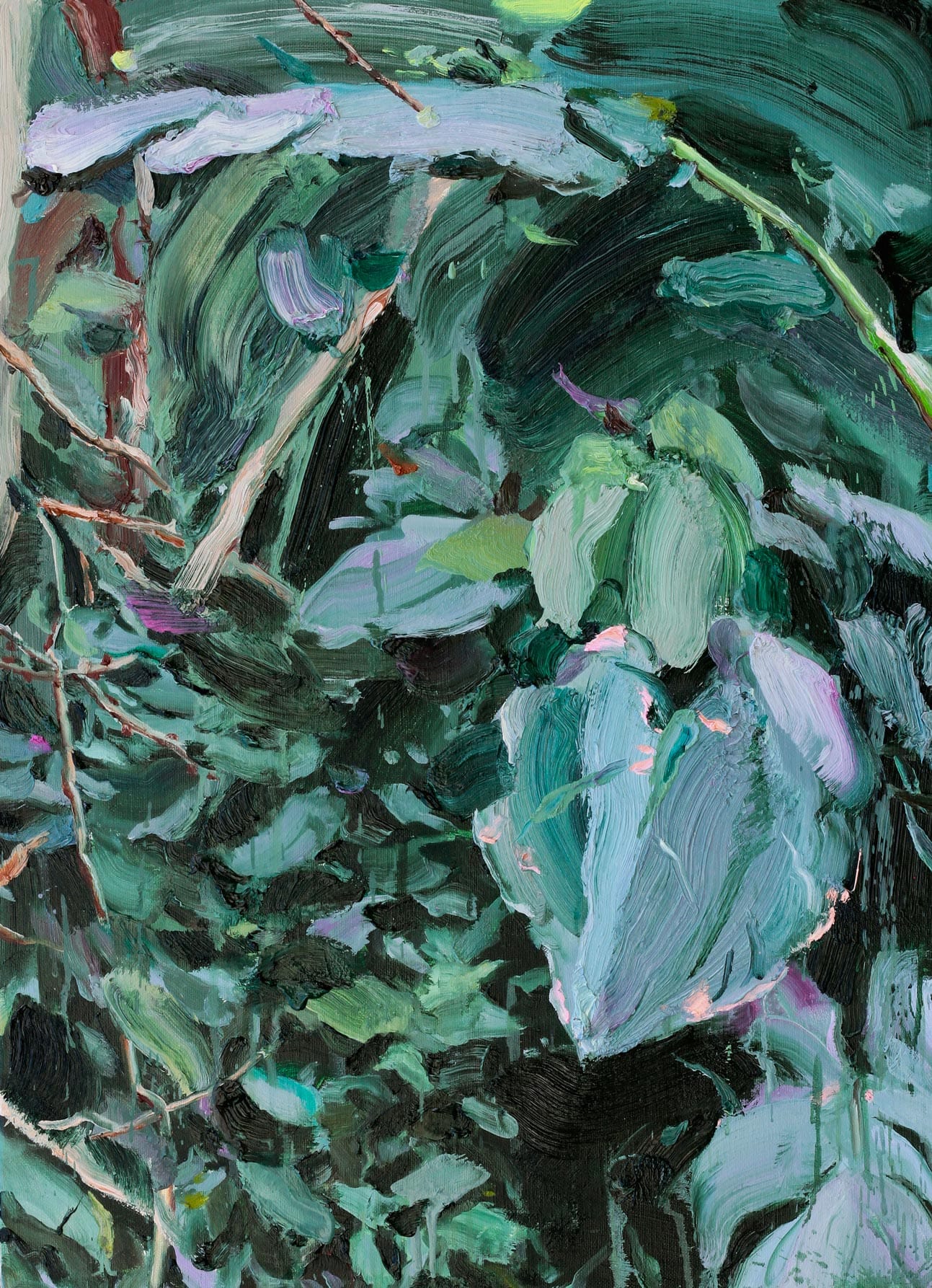
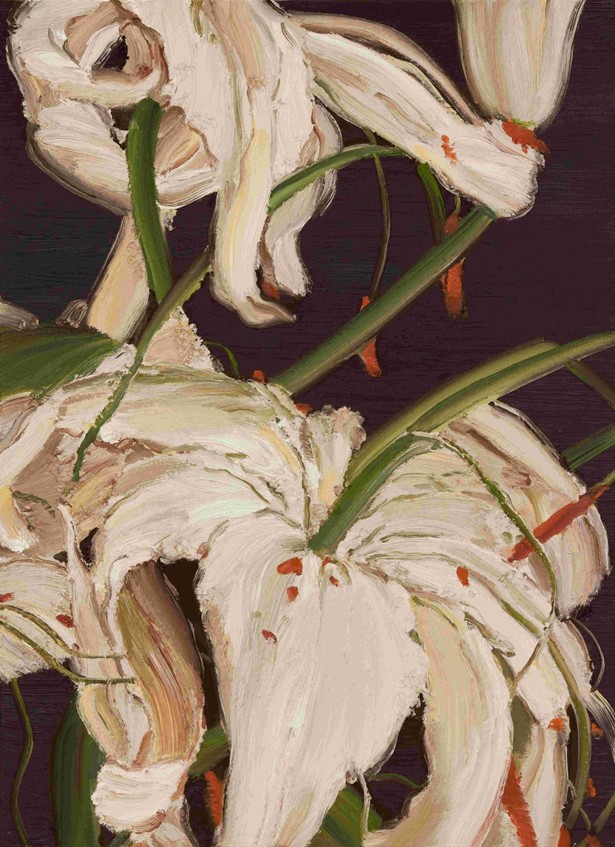
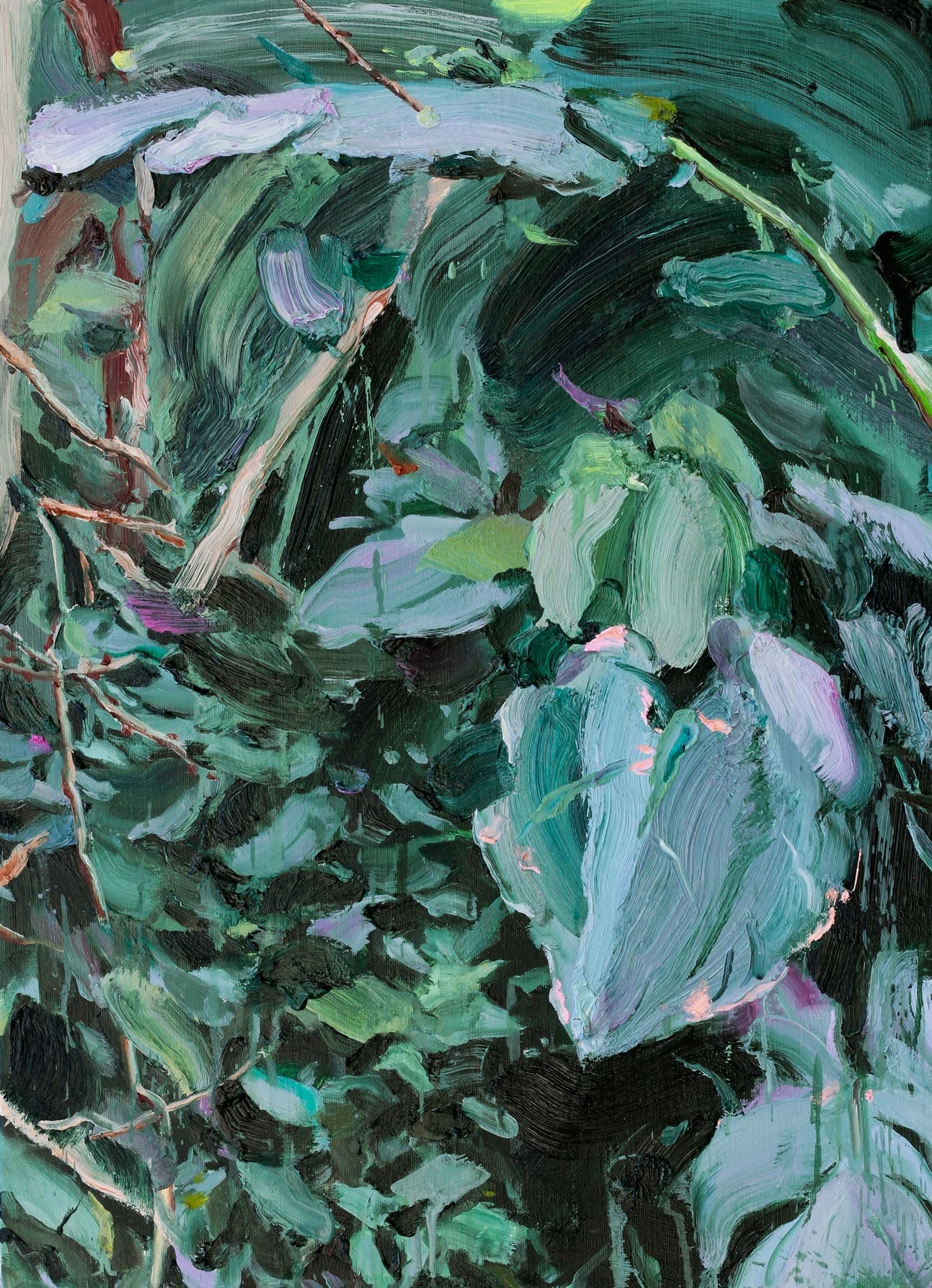
Chansong Kim, Garden of Mistrust, 2018, Oil on canvas, 72.7x53cm ©Chansong Kim

Meanwhile, Chansong Kim’s other series, ‘Garden of Mistrust,’ captures plants that have settled in foreign lands as invasive species, as well as blurred and dissolving landscapes glimpsed through water or mist during walks. In 2015, while staying in Paris, she began taking an interest in the city’s beautiful botanical gardens and parks.
 
There, she came to realize that many of the plants were in fact non-native species from different continents. She became intrigued by the way something newly arrived could obscure what had previously existed and, in turn, generate new boundaries.


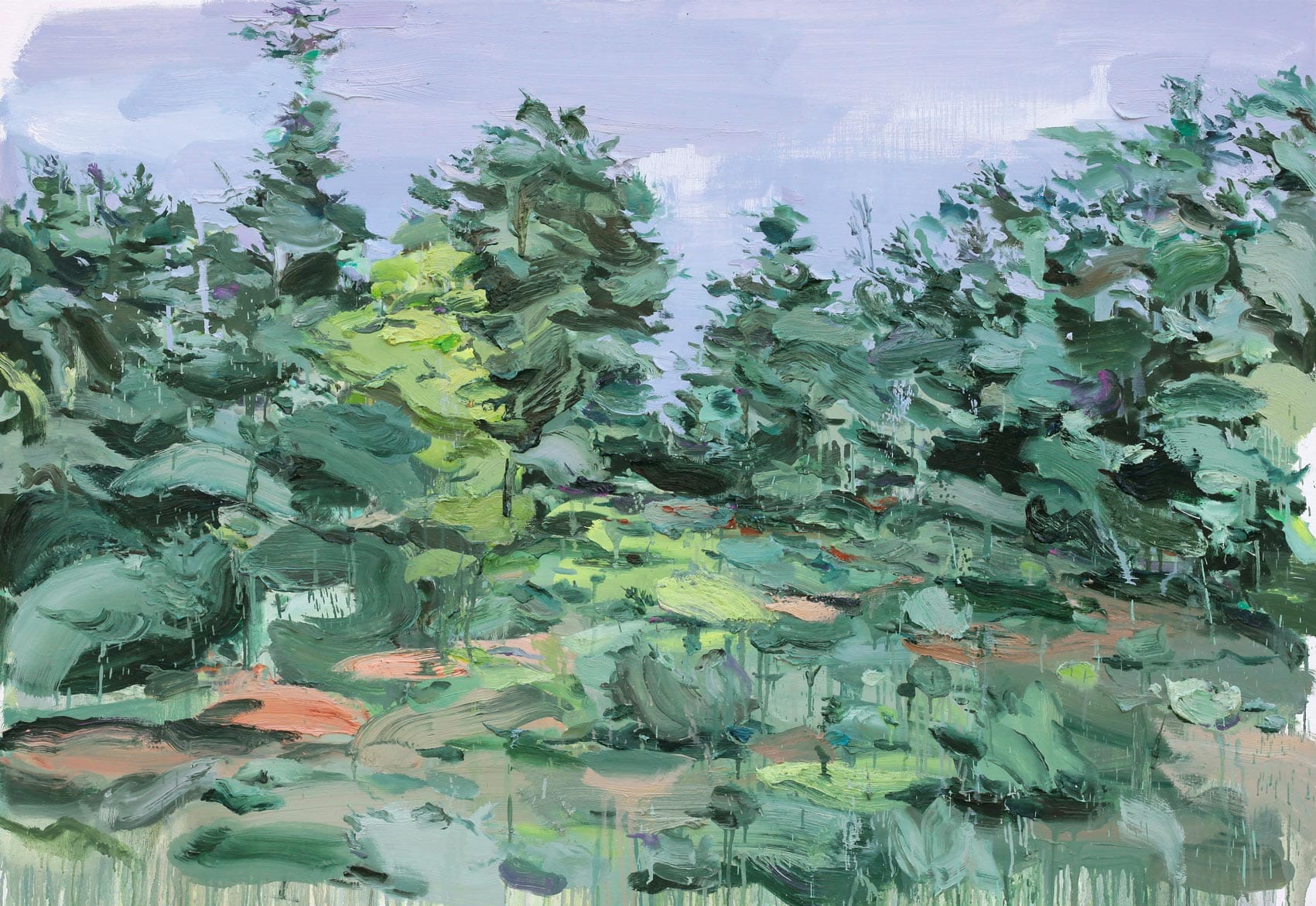
Chansong Kim, Garden of Mistrust, 2018, Oil on canvas, 112x162cm ©Chansong Kim

Chansong Kim then began to imagine a distant past moment when foreign plants first started to collide with the boundaries of those originally growing there. Plants from different continents would have gathered, growing and blooming right beside native species. Over time, the newcomers would gradually have adapted, taking on forms suited to their new environment.
 
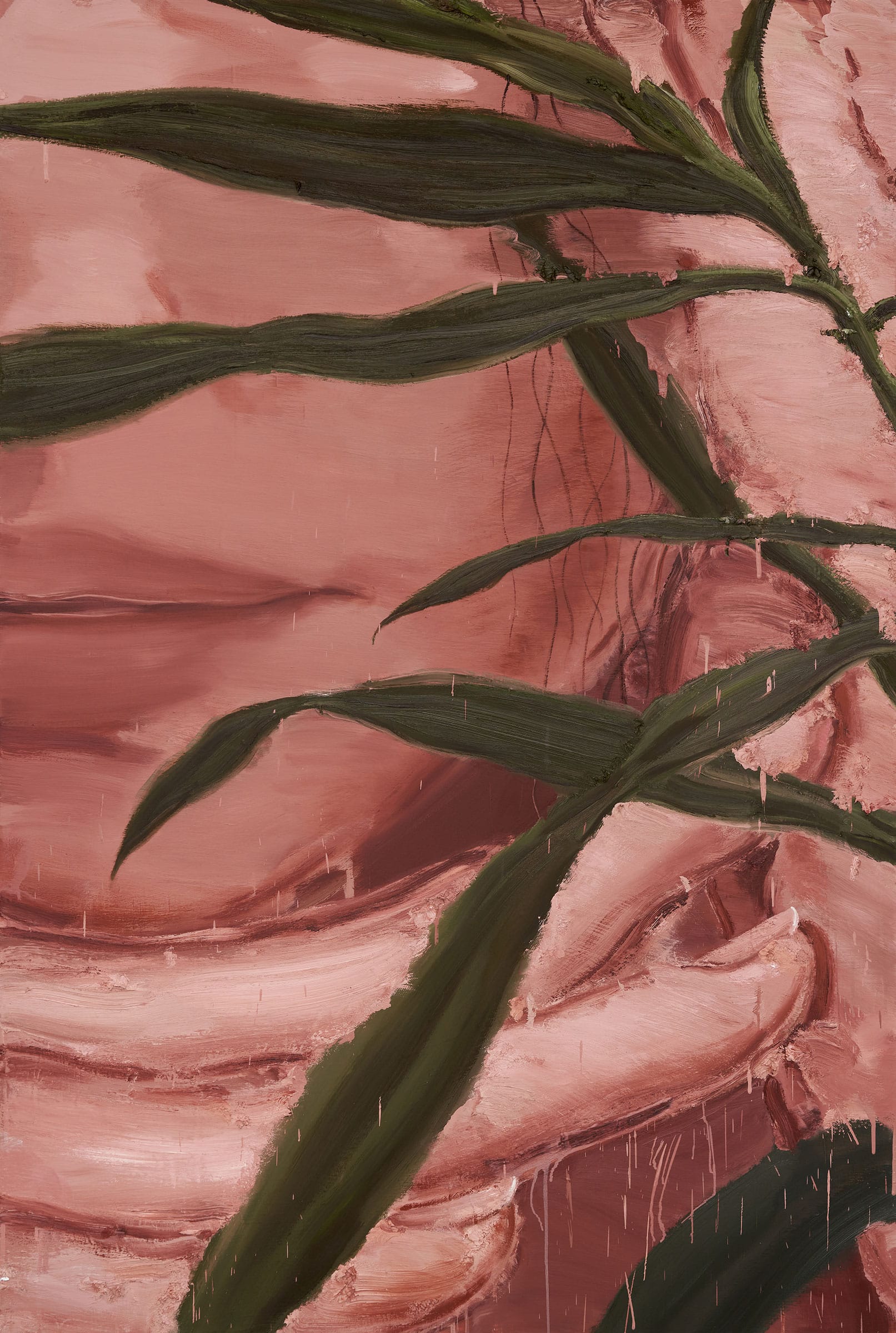
Based on this imagination, her canvases depict scenes in which the foreign enters an existing society, creating disruption and giving rise to altered landscapes—branches breaking, foliage thickening, forms newly entangled, and colors shifting. The flowing paint and dynamic brushstrokes in her works resonate with the tension of moments when the new and the existing press against one another, intermingle, and collide along their shared boundaries.


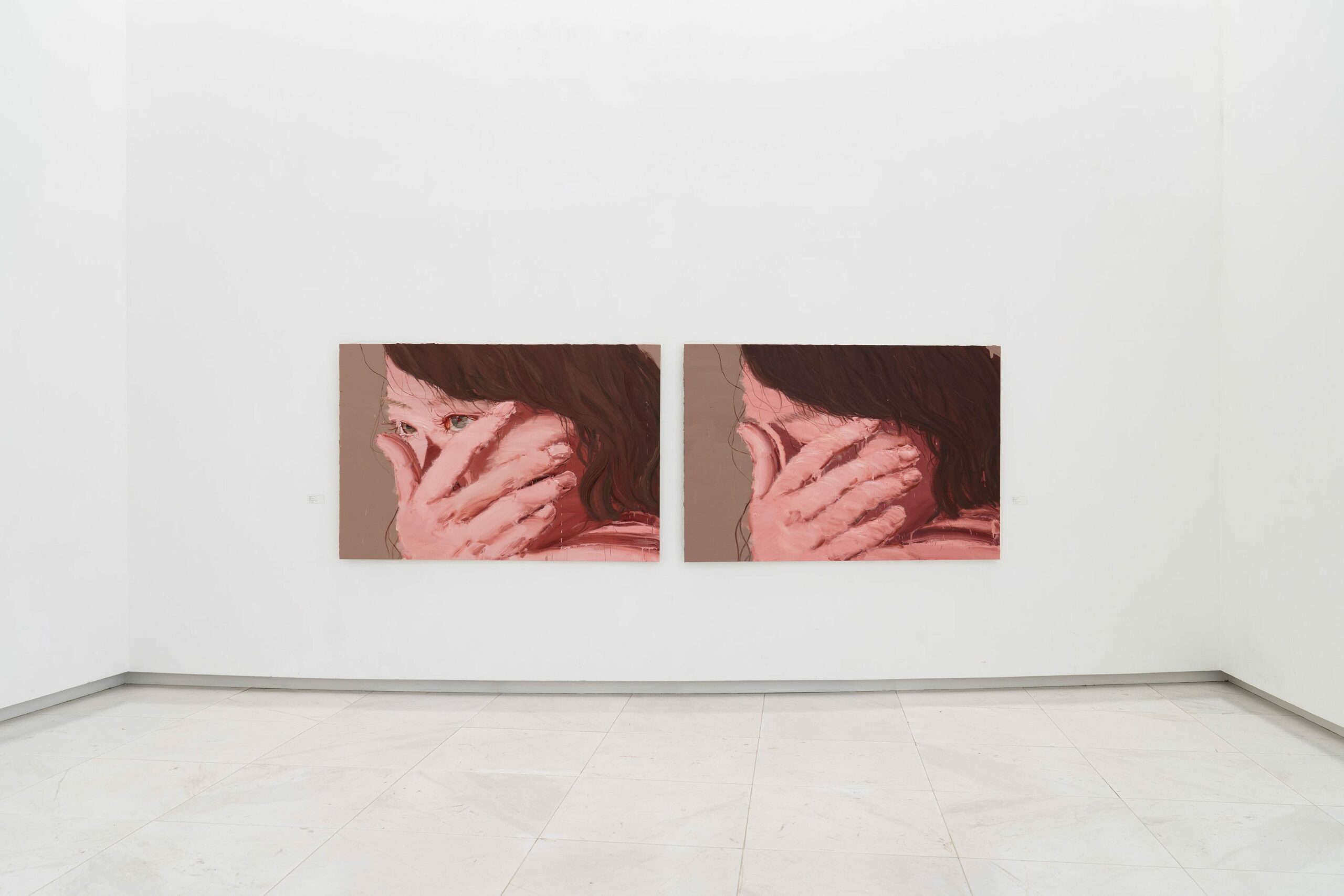
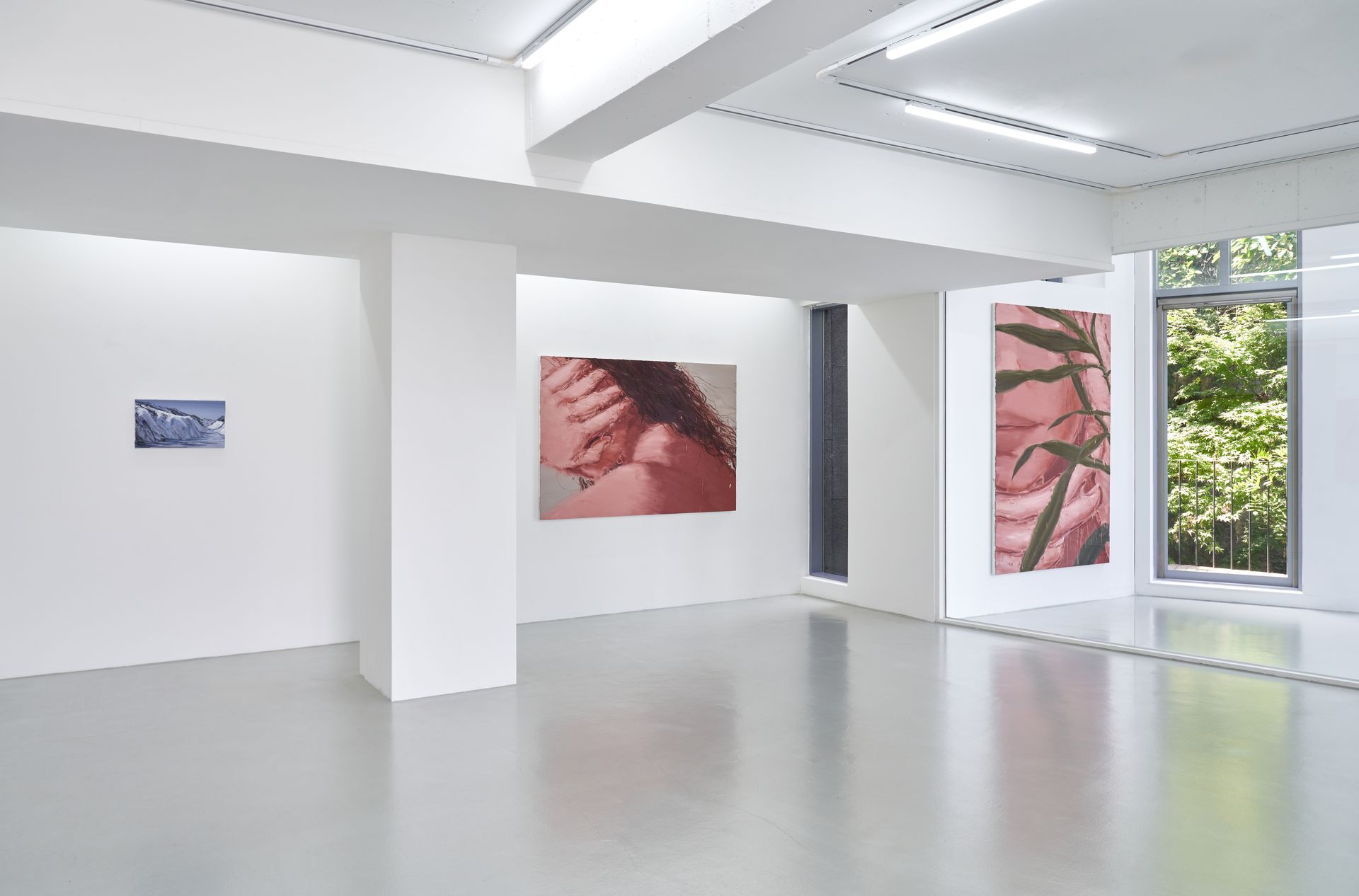
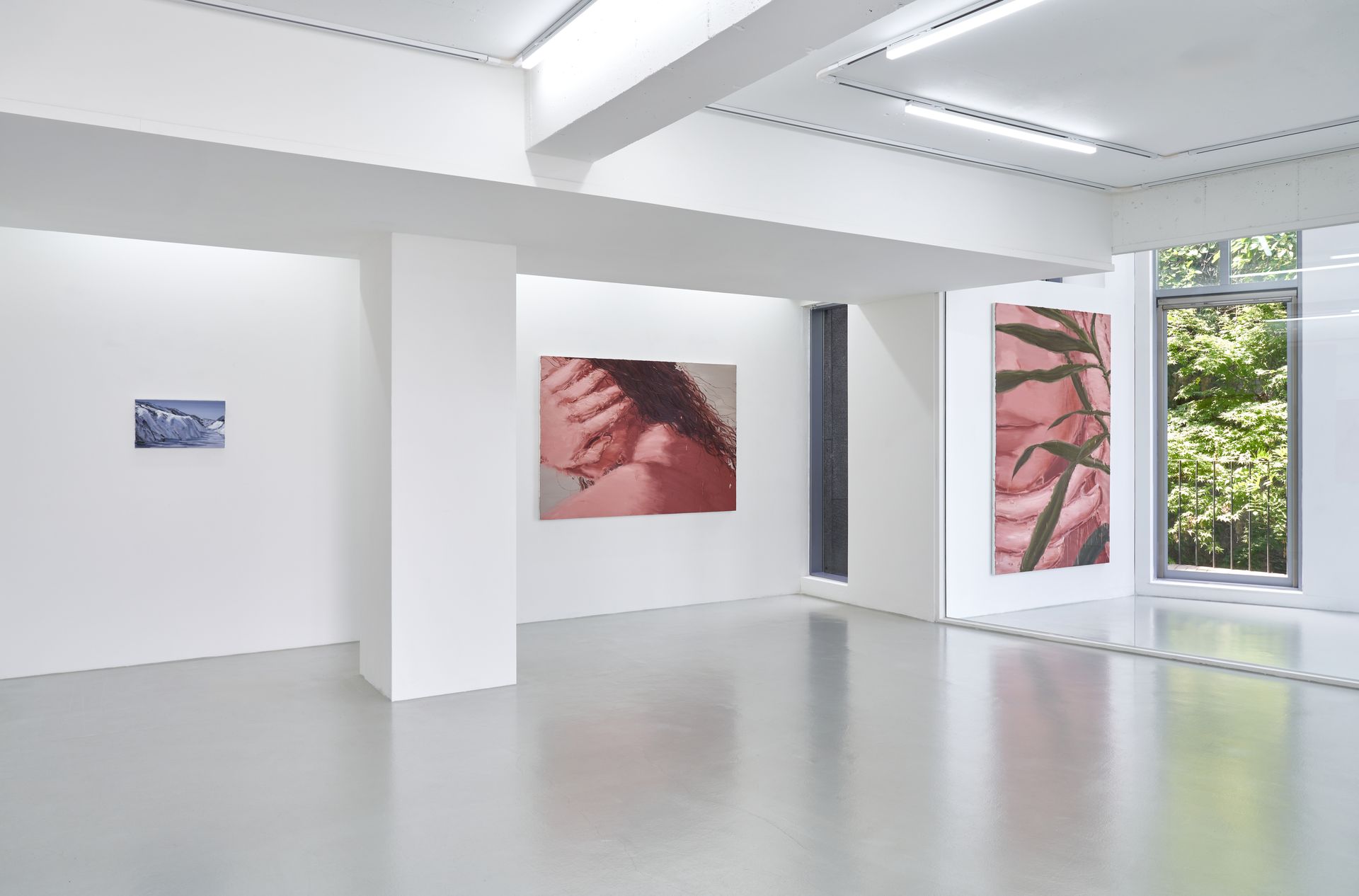
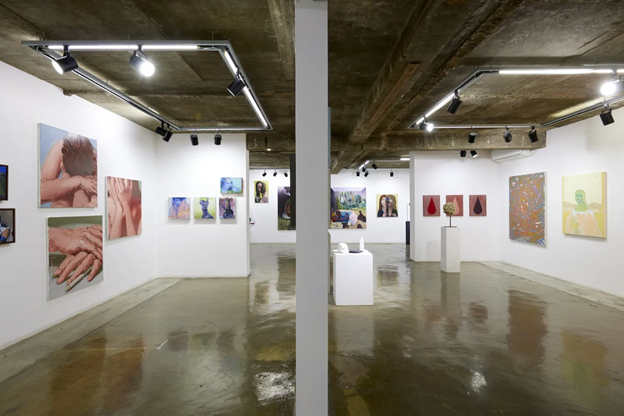
Installation view of 《Border of Skin》 (Mimesis Art Museum, 2023) ©Chansong Kim

In this way, Chansong Kim’s attention to the boundaries entwined with the body of the “self,” as well as to the boundaries between the new and the existing, manifests through the materiality of painting that seeps from the exterior inward. Her 2023 solo exhibition 《Border of Skin》 at the Mimesis Art Museum focused on the border of the body and on the canvas surface as a kind of skin.
 
By rendering landscapes upon the skin in painterly form, Kim has spoken of drifting surfaces. Gazes that hover over the skin linger upon the surface at times, and at others pass through it. External stimuli that penetrate affect the skin—the boundary itself, or the canvas surface—while the artist’s gaze, circulating along that surface, emerges as the material substance of painting.
 
The sliding and blending forms of paint evoke moments of separation and stimuli that bind together, speaking to boundaries that grow increasingly thin.


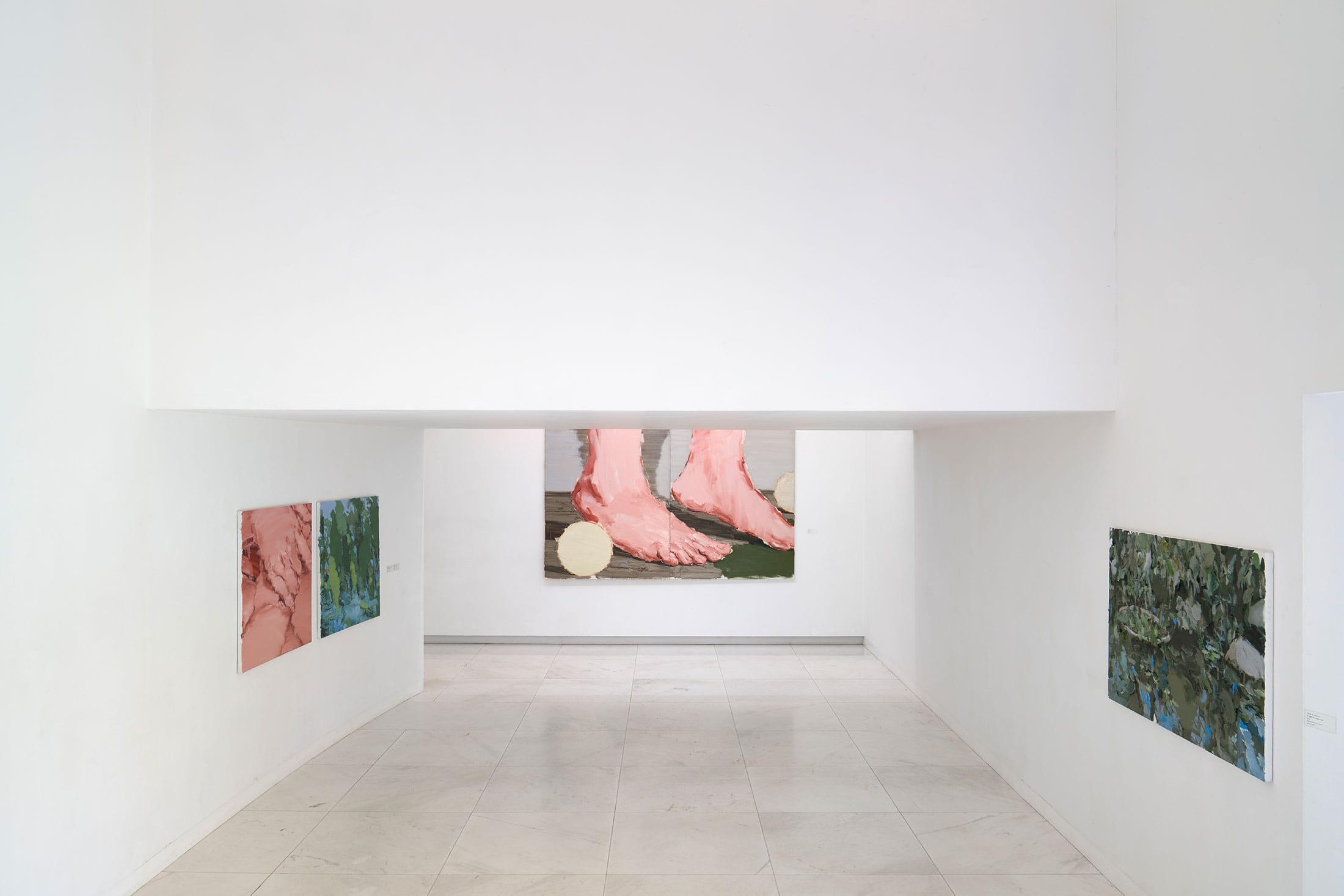
Installation view of 《Border of Skin》 (Mimesis Art Museum, 2023) ©Chansong Kim

In the exhibition preface, curator Jung Heera describes the series of works that resemble bodily landscapes as “capturing the processes through which change settles through certain interventions, prompting us to reflect on our bodies as the very channels of those processes.”
 
In this exhibition, fragments of the body were presented alongside the ‘Garden of Mistrust’ series. These bodily landscapes, which connect A and B through unfamiliar interventions—generating confusion in between and revealing the reconfiguration of relationships—resonate with ‘Garden of Mistrust.’ Together, they evoke the ways in which stimuli and responses are exchanged within relationships, and how sensations and emotions that arise when encountering the unfamiliar ultimately pass through our bodies.


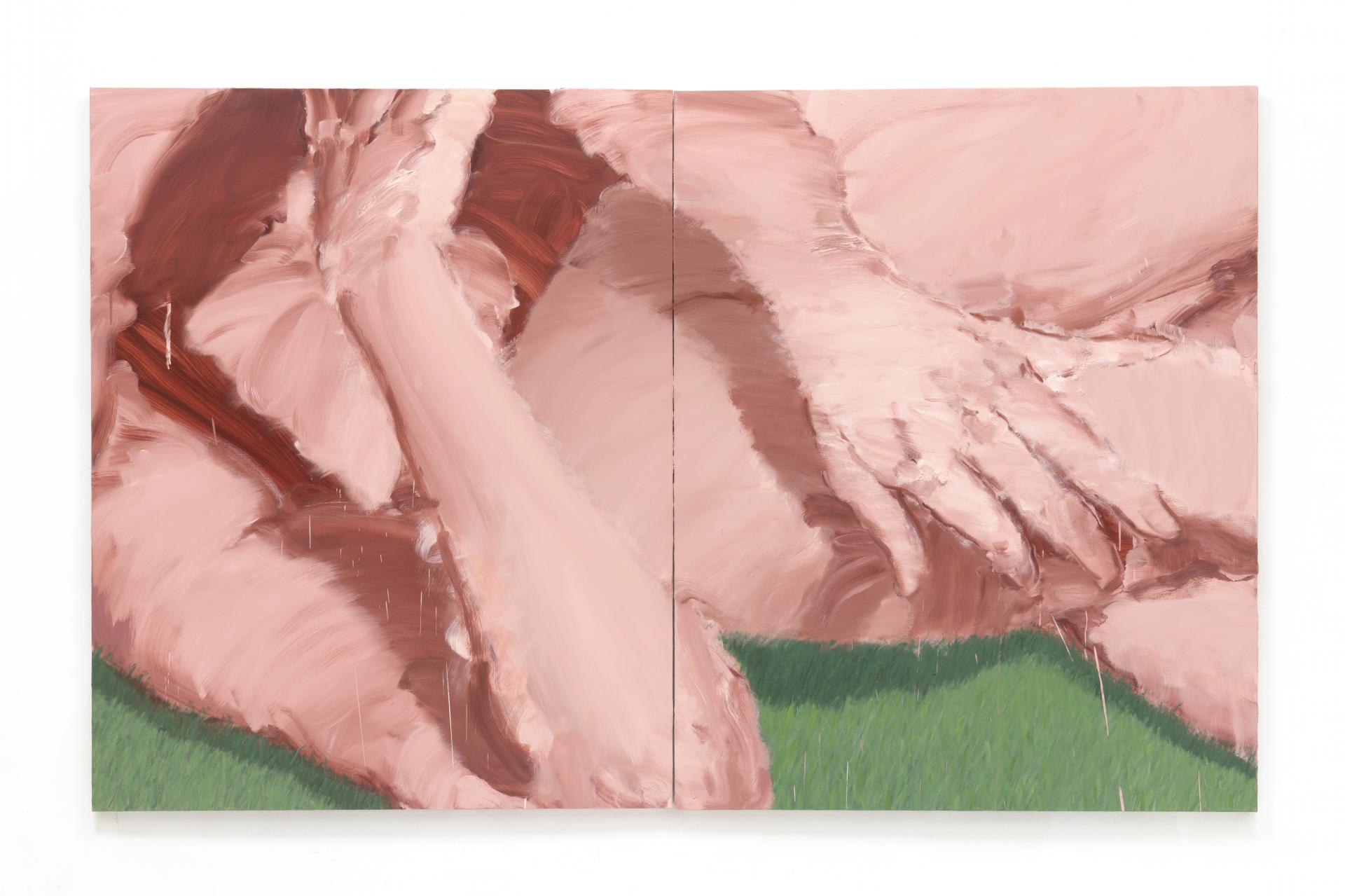
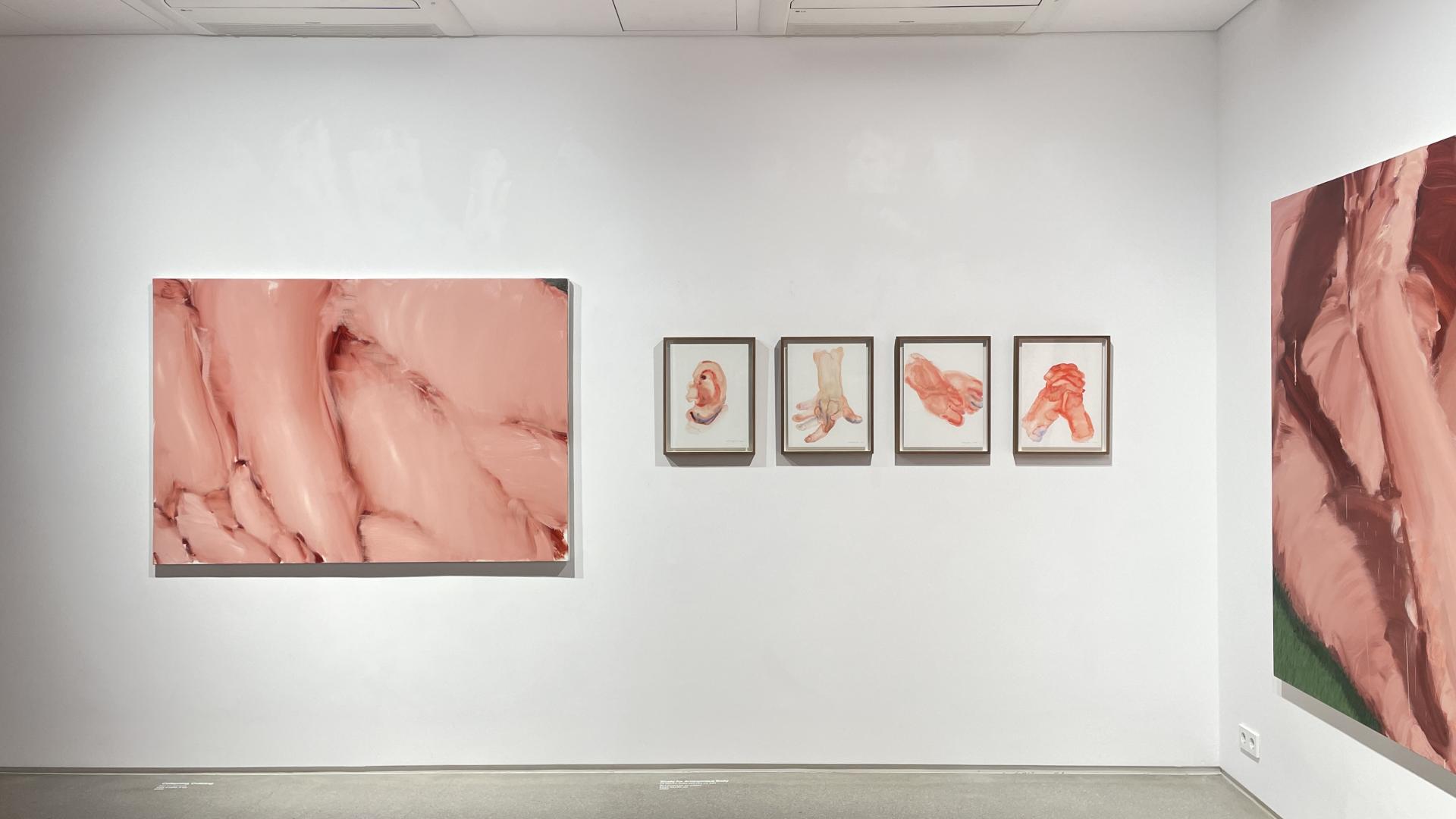
Chansong Kim, Collapsing, Colliding, 2021, Oil on canvas, 112.1x162.2cm ©PARKSEOBO FOUNDATION

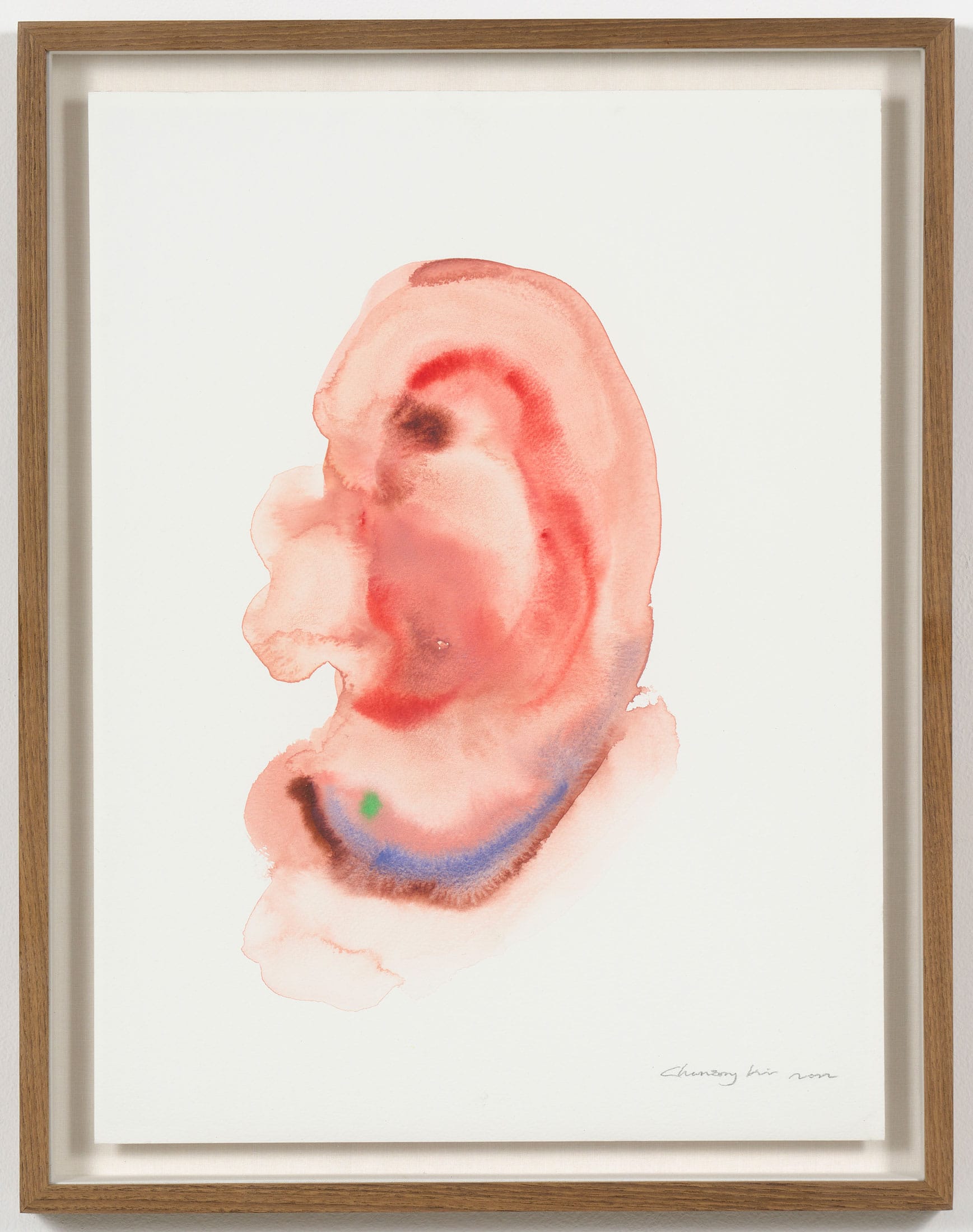
In her recent works, Chansong Kim moves beyond the anonymous body to focus on the surface of the “skin,” sensorially exploring the relationship between interior and exterior. Her interest in skin began with a chance encounter: noticing beads of sweat forming on her arm.
 
In that moment, she realized that even before she became consciously aware of it, her skin had already been breathing and interacting with the outside world. This recognition brought about an intense, existential awareness.


Chansong Kim, Skin and Green Shadow, 2023, Oil on canvas, 162x260cm ©PARKSEOBO FOUNDATION

For Chansong Kim, skin is both a boundary and a point of contact—a fluid surface that records traces of time and encounters. In her artist’s note, she writes, “To me, skin increasingly feels not only like the physical outer layer of our body, but like a membrane that contains the world we are facing.”
 
As she suggests, the surface of the skin is a site that receives and inscribes the events and times we experience as we move through the world. Yet at certain moments, it also establishes a firm new boundary. The time we have lived through may appear on the skin, but it also continues to breathe somewhere beneath it, layered within overlapping membranes.


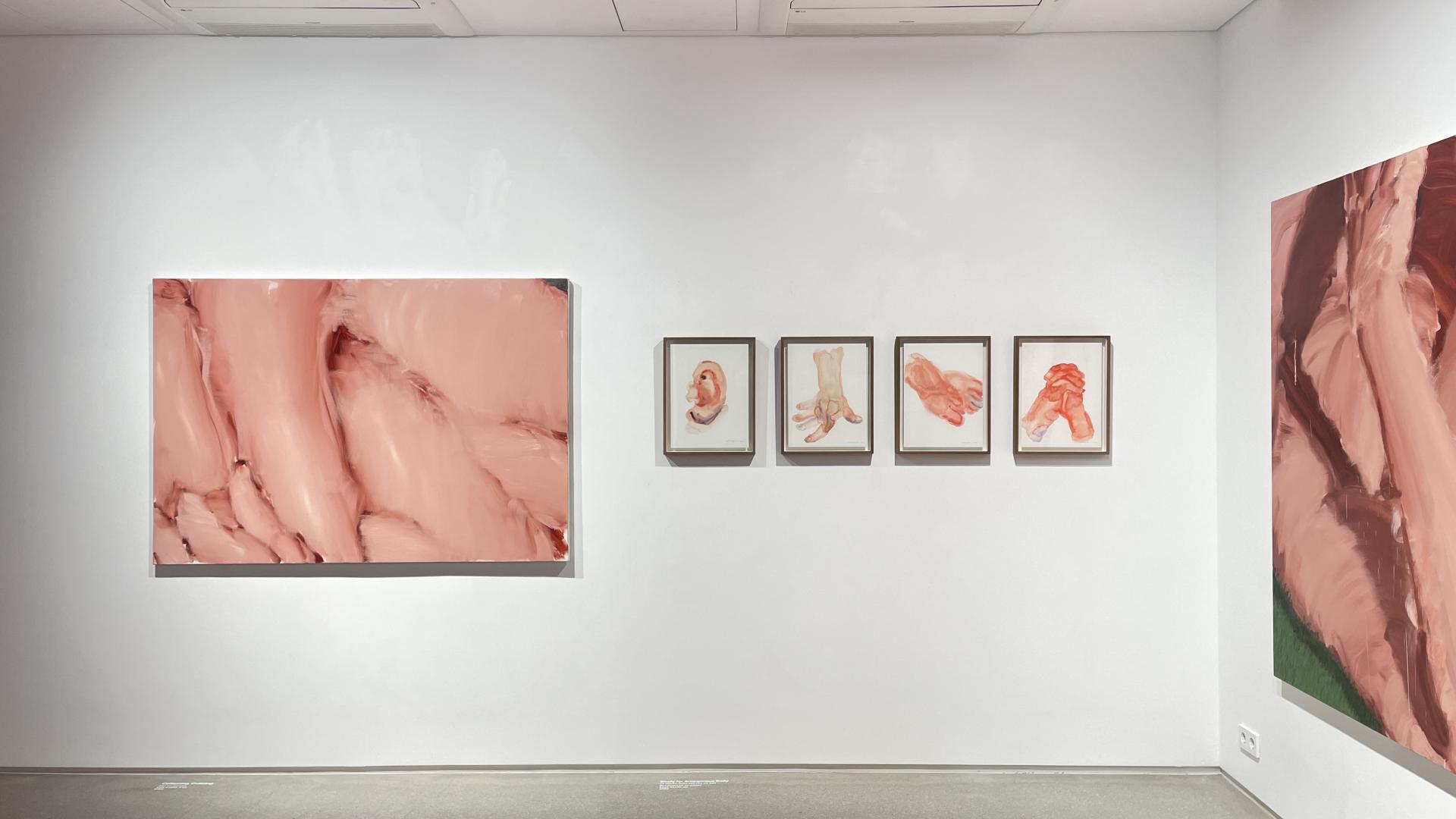
Installation view of 《Collapsing, Colliding》 (PARKSEOBO FOUNDATION, 2025) ©PARKSEOBO FOUNDATION

Through painting, Chansong Kim seeks to bring these hidden layers to the surface of the skin, engaging deeply with questions of surface and texture. Her 2025 solo exhibition 《Collapsing, Colliding》 at the PARKSEOBO FOUNDATION focused on the materiality of the body she has long explored.
 
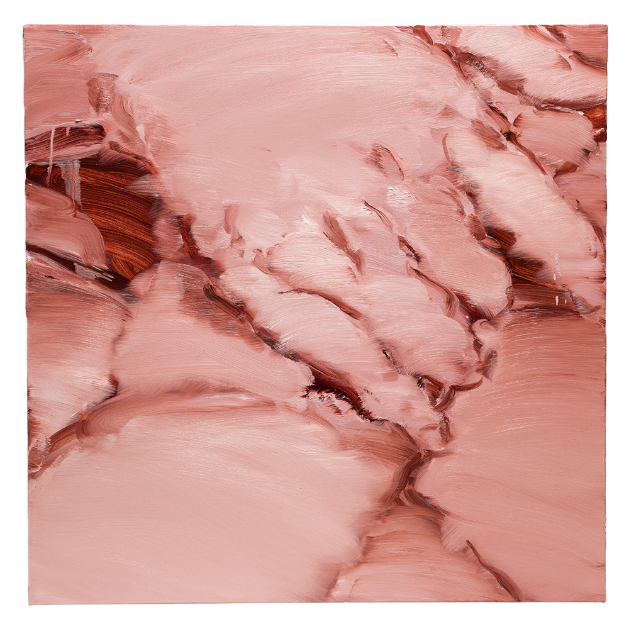
Delicately modulated oil paint accumulates in layers across her canvases, becoming the very substance that composes the exposed skin. The brush’s movements—leaving rough traces over thick paint or lightly scattering pigment as if in passing—record sensations that brush against the skin, such as the touch of wind or the trail of raindrops falling upon it.
 
In her work, skin is not merely the outline of a form, but a mediator of sensation and a boundary that connects interior and exterior. At the collapsing and colliding edges of the body, what viewers ultimately encounter is the vivid afterimage of existence.


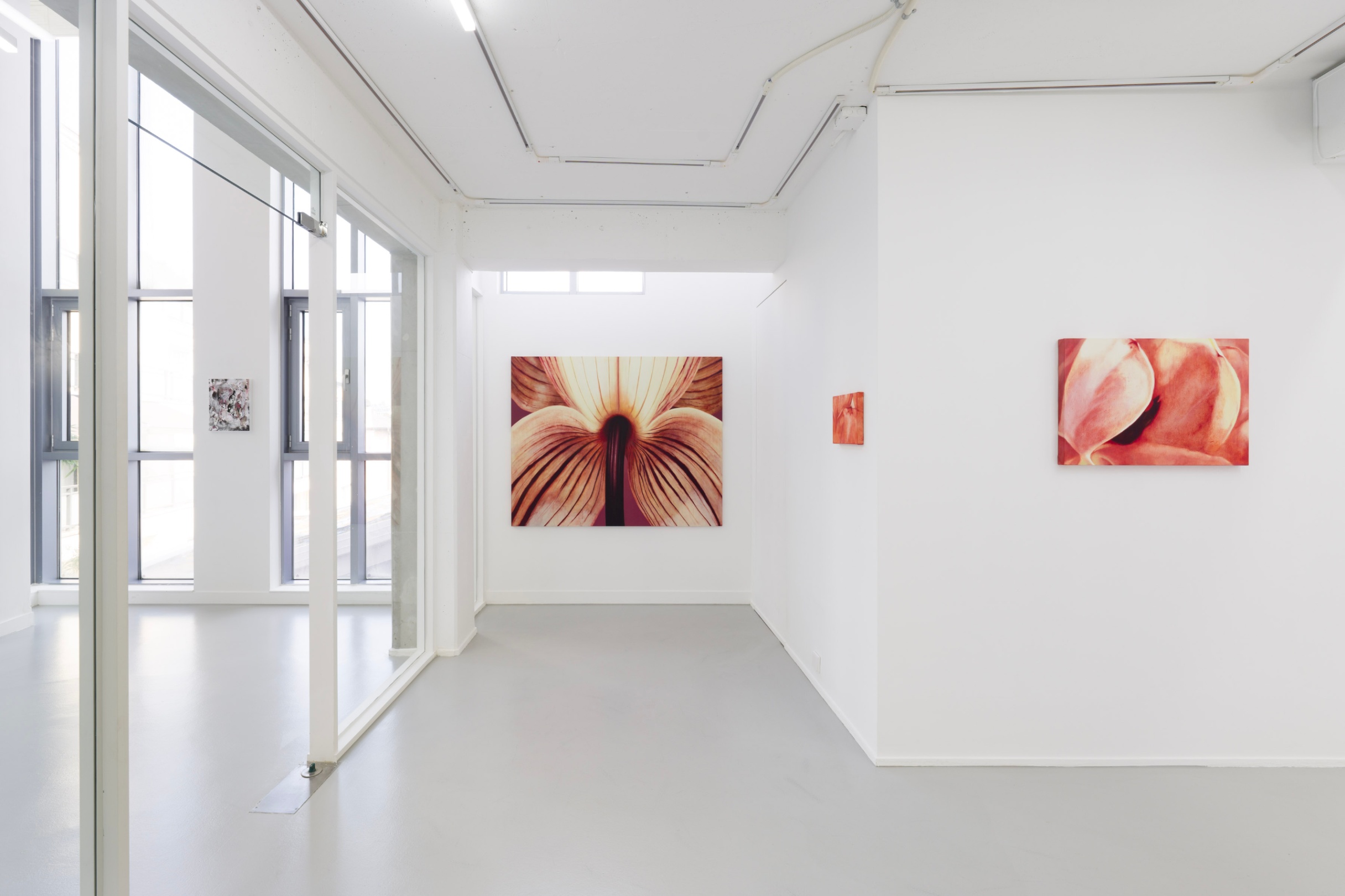
Installation view of 《Vein and Fever》 (Pipe Gallery, 2025) ©Pipe Gallery

In her 2025 solo exhibition 《Vein and Fever》 at Pipe Gallery, Chansong Kim presented a new body of work under the same title, expressing subtle, vibrating layers of sensation that reside deep beneath the boundary of the skin.
 
"Vein" symbolizes the inner rhythms flowing through the body—subtle pulses that precede conscious perception—while "Fever" marks the moment these flows rise to the surface in sudden intensification. Moving between these two poles, Chansong Kim visualizes waves of sensation that often go unnoticed.


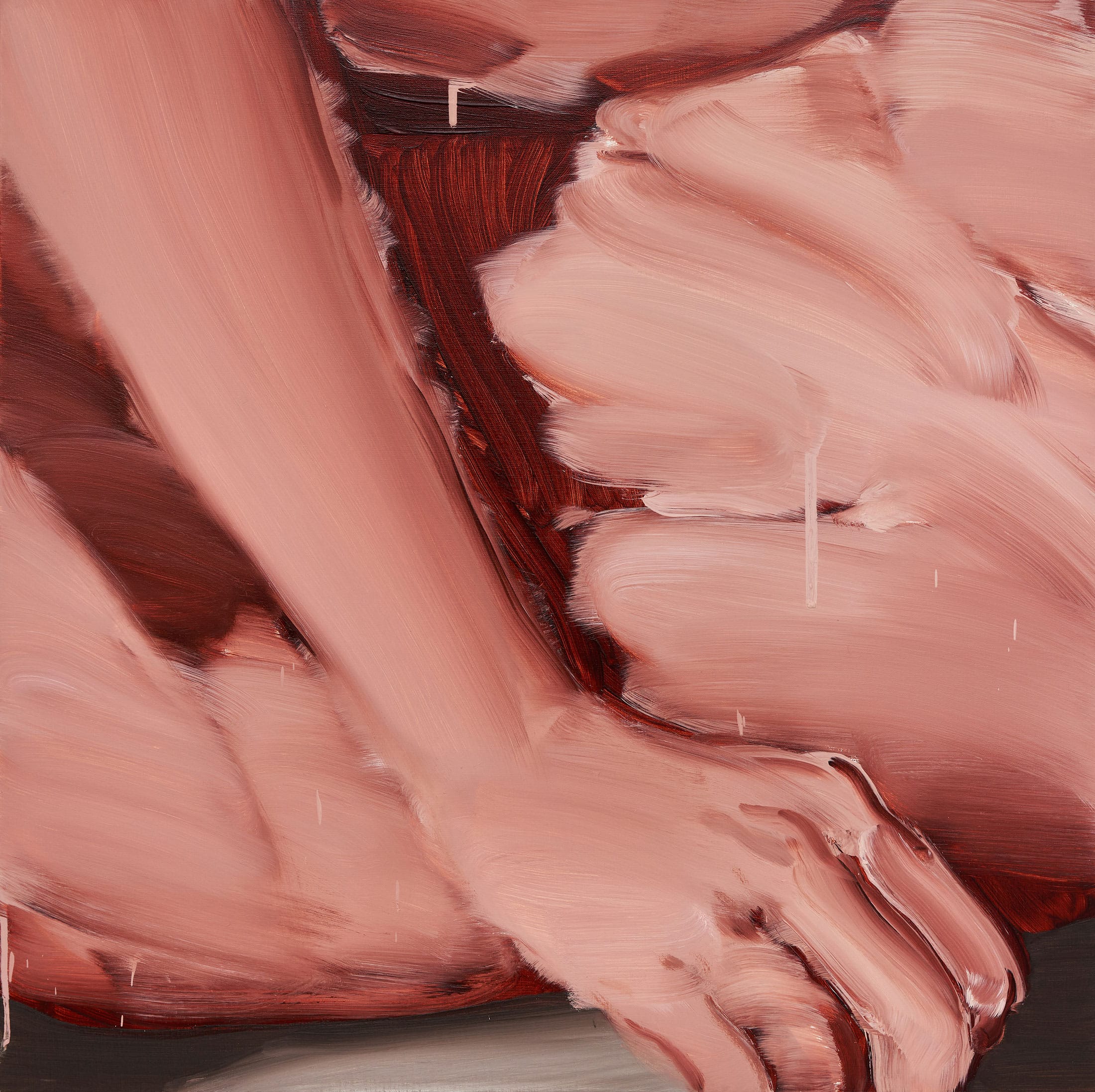
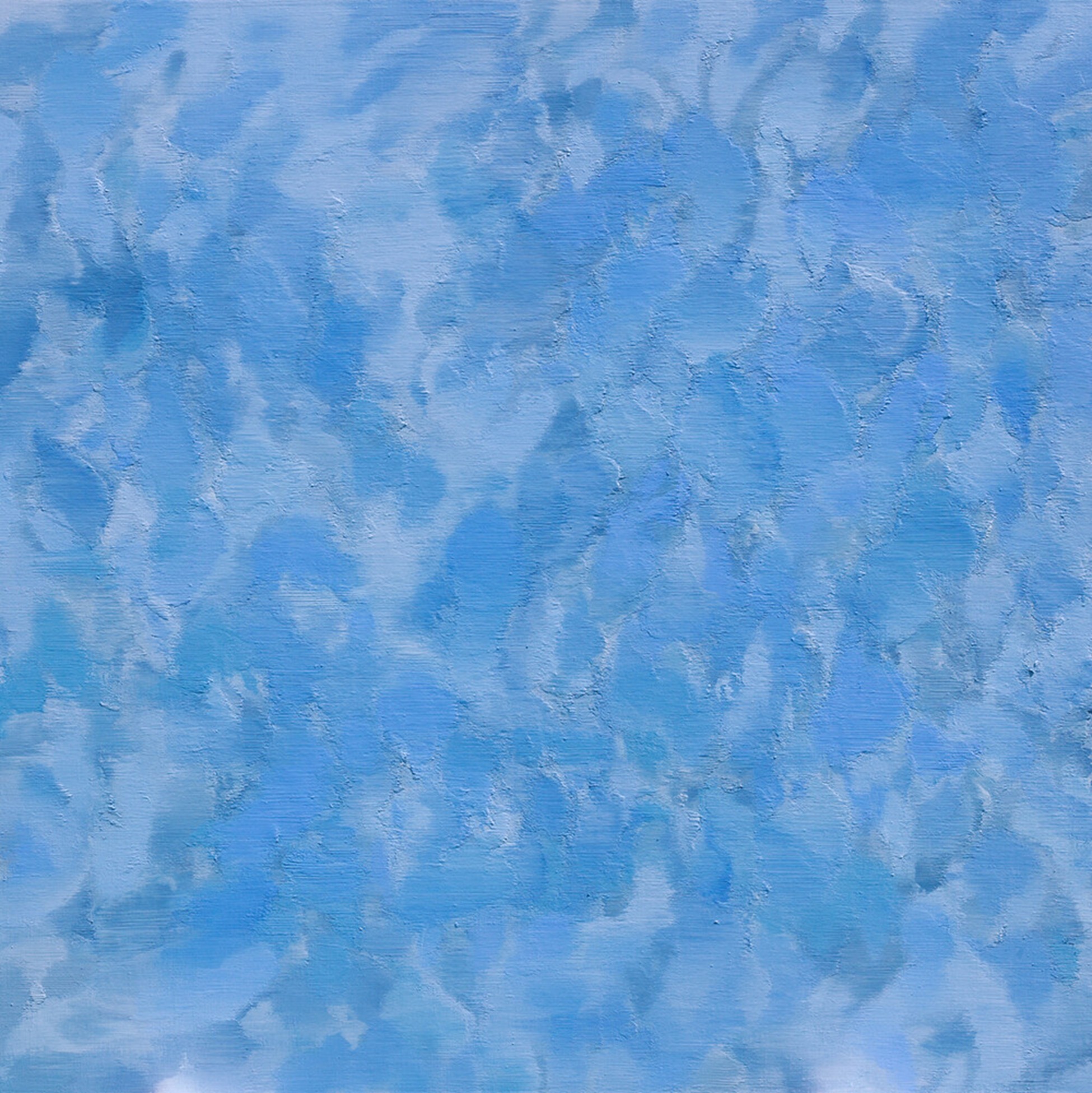
Chansong Kim, Beneath the Surface, 2025, Oil on canvas, 91x91cm ©Chansong Kim

Though her paintings still originate from the body, they are no longer depictions of the concrete or representational body. Her painterly language transforms the moment air brushes against skin into visual sensation, metaphorically expressing the world's constant movement into and through our inner realm.
 
The skin receives and rejects simultaneously, always trembling in between. In 《Vein and Fever》, this trembling surface is rendered through brushstrokes, textures, and shifts in pace and direction, forming a symbolic chain of sensation rising, vanishing, and congealing.


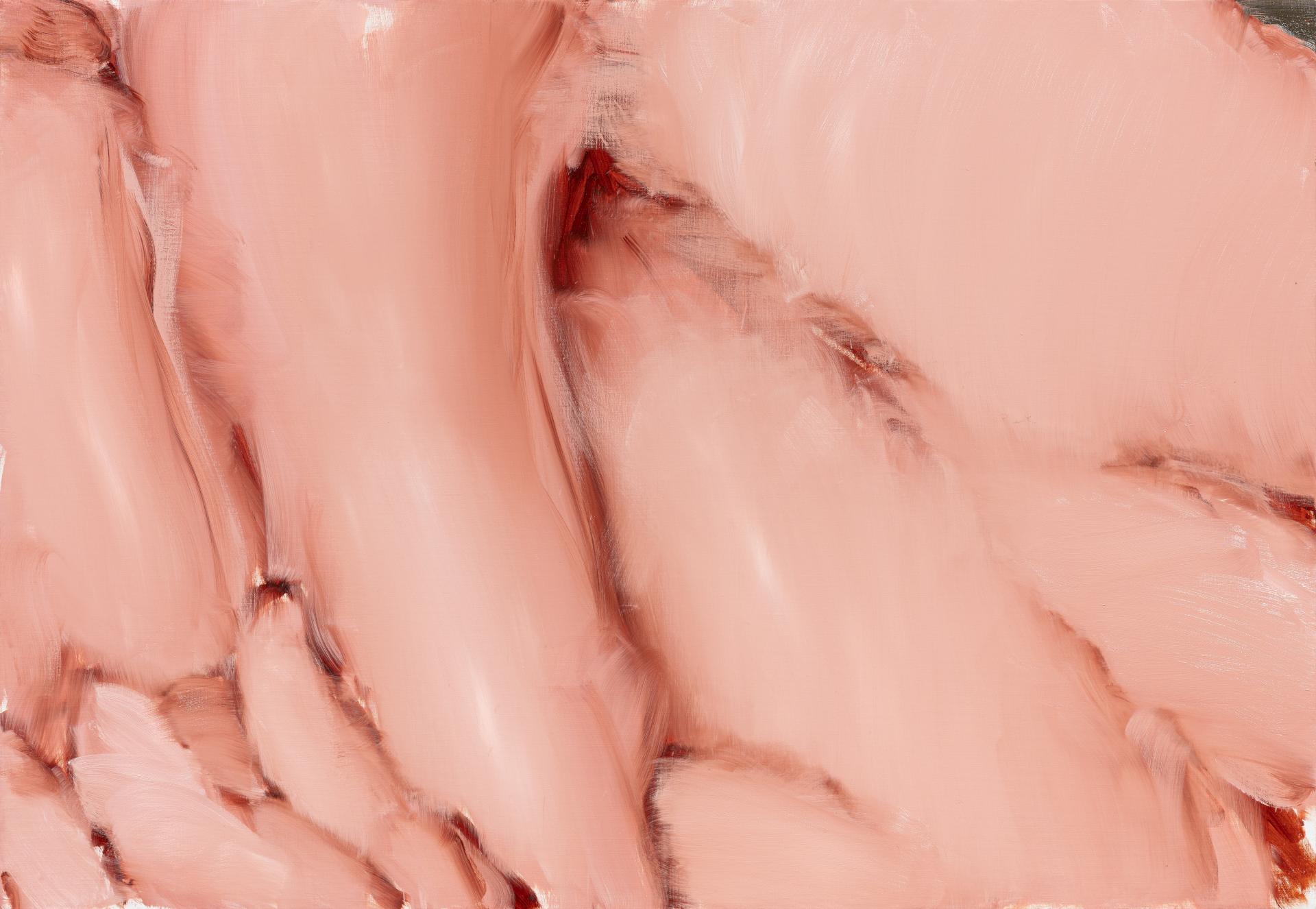
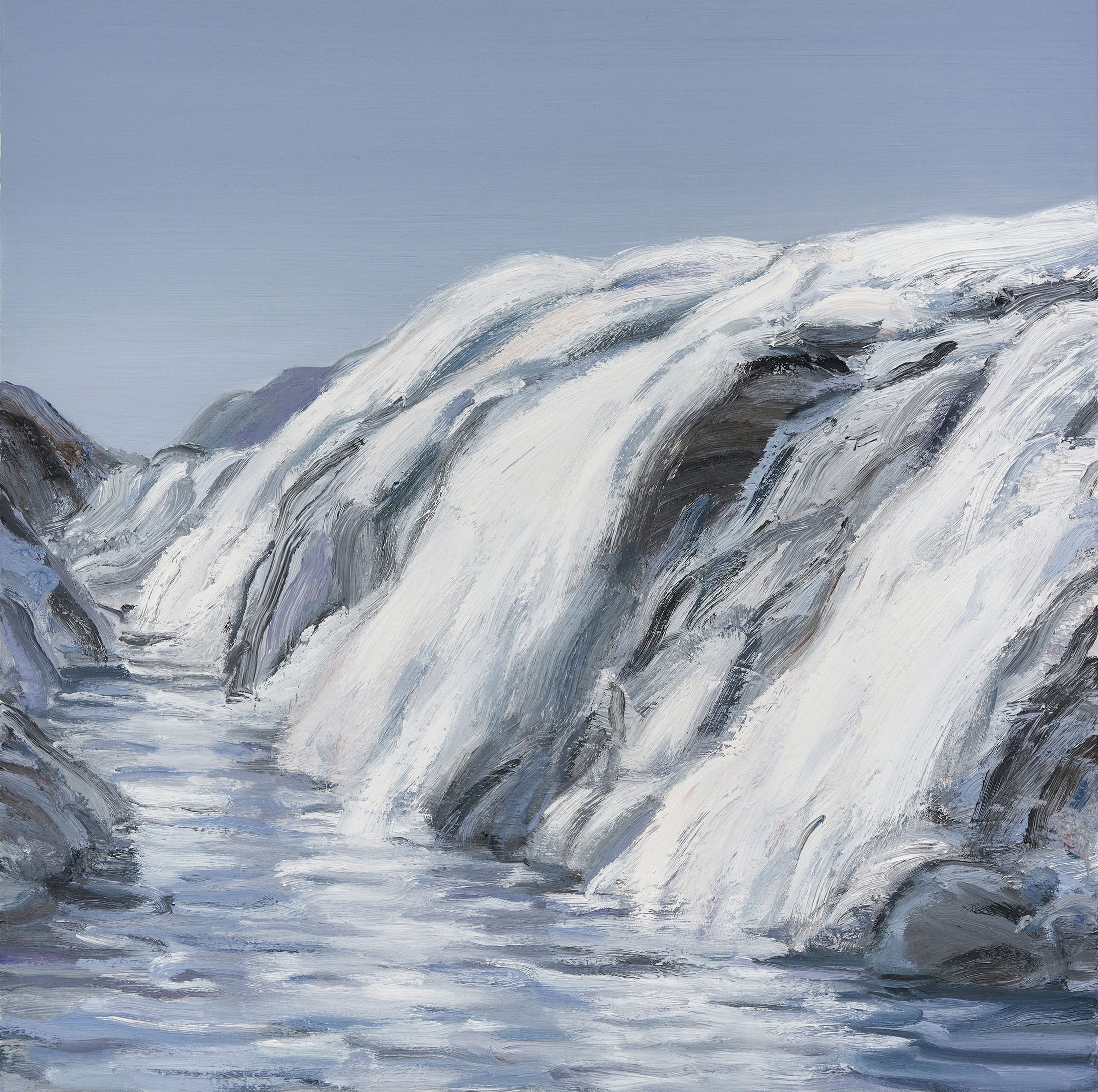
Chansong Kim, The Skin of Water, 2025, Oil on canvas, 72.2x72.2cm ©Chansong Kim

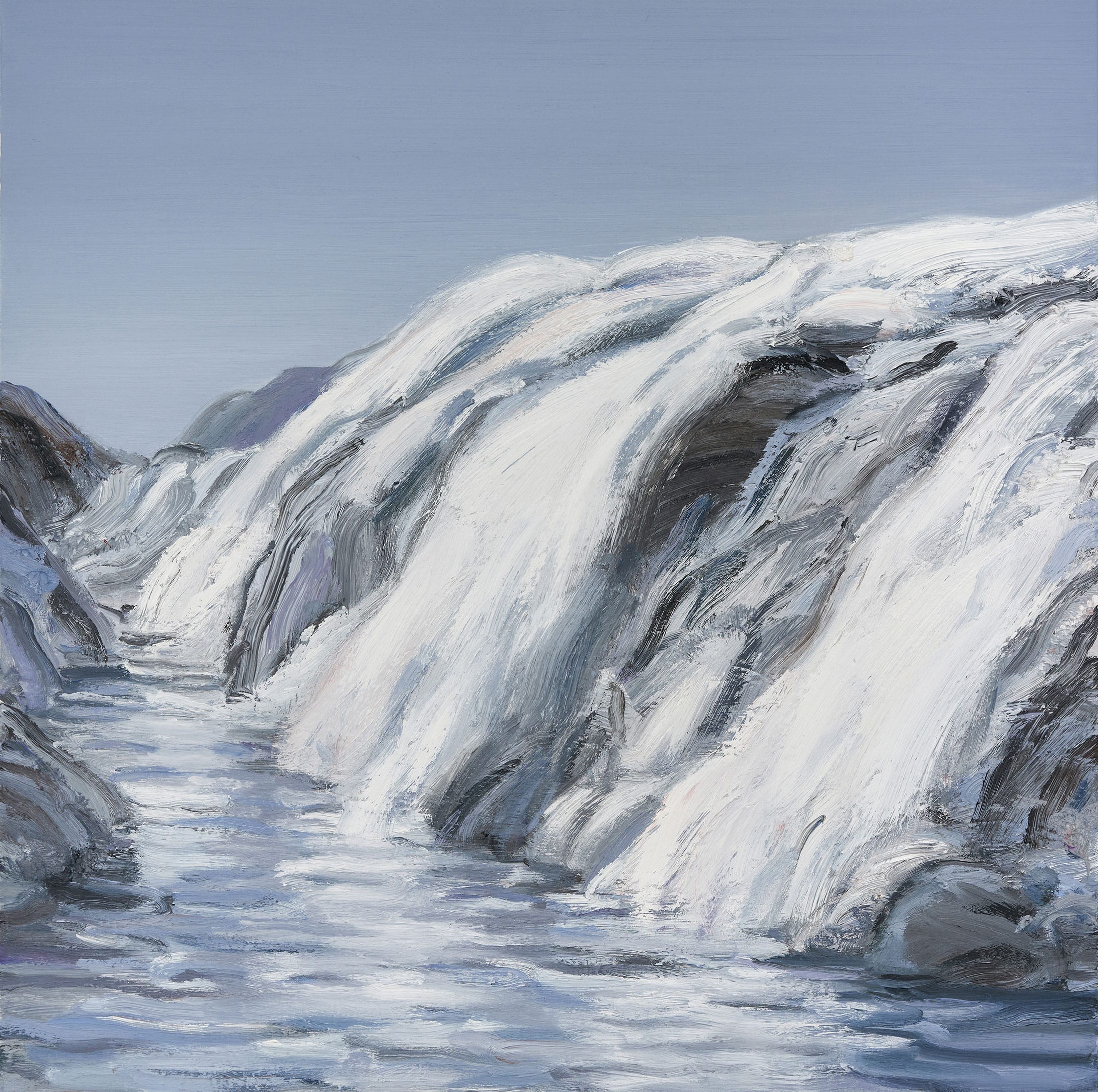
The artist imagines the water that makes up most of our body evaporating into clouds, falling as rain, and freezing into ice again. This becomes a cycle: sensation begins within, extends outward, and returns in solidified form. Ice, then, is not just a material but a mass of sensation that has surfaced, taken shape, and returned—familiar yet strange.
 
For instance, The Skin of Water (2025) expands her meditation on skin through the medium of “water,” elevating it to a broader dimension of sensory circulation and fluidity. Interspersed among paintings of flesh, images of snowy landscapes evoke the cyclical transformations of water as it shifts between ice, vapor, and liquid. Kim adopts this mutable substance as another metaphor for skin—an intermediary through which she forms relationships with the world.


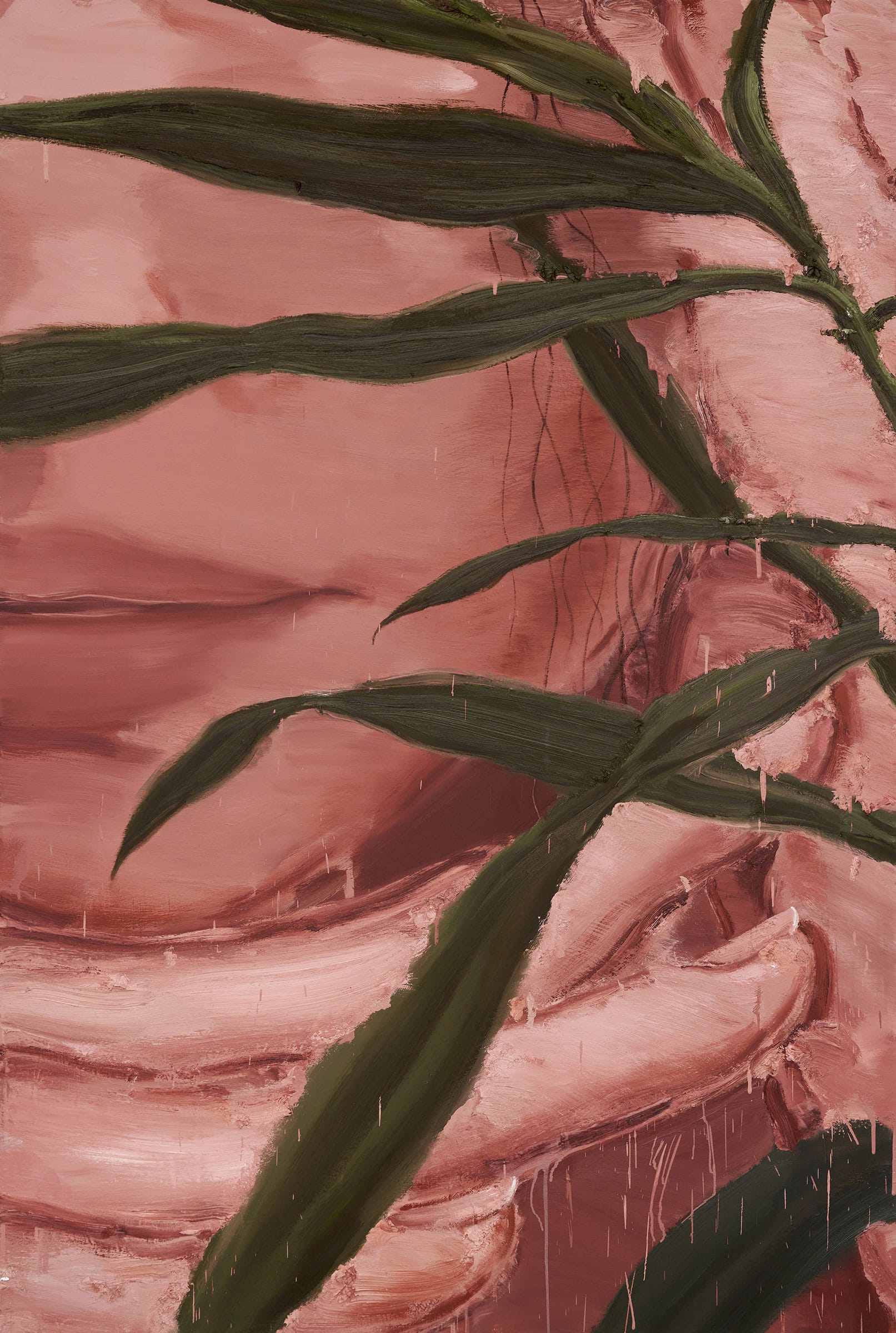
Chansong Kim, Tails, 2025, Oil on canvas, 193.9x130.3cm ©Chansong Kim

In this way, Chansong Kim has long contemplated what constitutes the self, what surrounds it, and the boundaries in between, translating these inquiries into the language of painting. The unfamiliar yet intimate images of bodies and nature in her work invite viewers to become newly aware of their own senses, and to recognize the traces of emotion, memory, and energy that vibrate both within and beyond the boundary of the body.

 ”The lumps of the body that have not been properly sensed and are left behind are enlarged on the canvas, creating a new landscape of boundaries with the penetrating air.”    (Chansong Kim, Artist’s Note) 


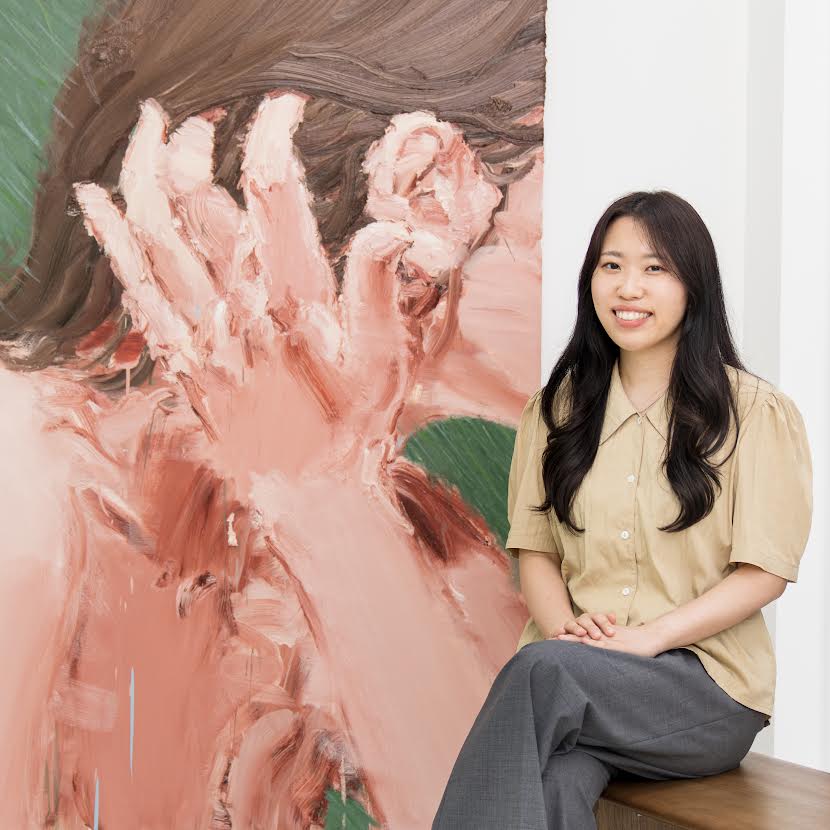
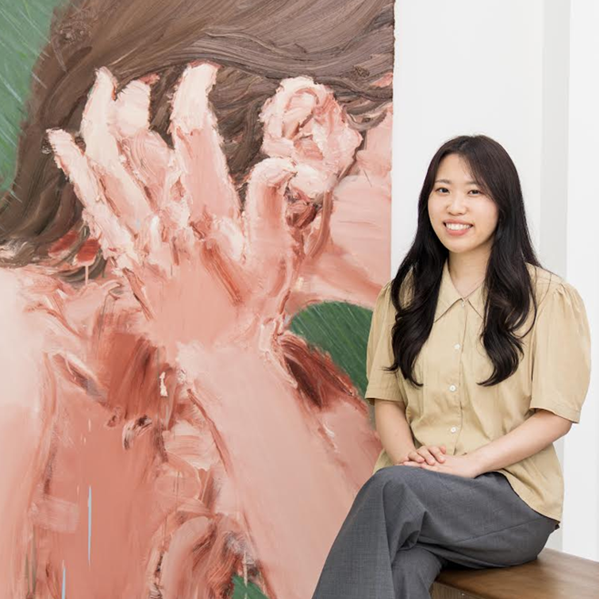
Artist Chansong Kim ©Artue

Chansong Kim majored in Painting at Kookmin University. Her solo exhibitions include 《Vein and Fever》 (Pipe Gallery, Seoul, 2025), 《Collapsing, Colliding》 (PARKSEOBO FOUNDATION, Seoul, 2025), 《Border of Skin》 (Mimesis Art Museum, Paju, 2023), and 《The Blue Hour》 (Pipe Gallery, Seoul, 2022).
 
She has also participated in numerous group exhibitions, including 《Small Paintings – My Bijou》 (Kimreeaa Gallery, Seoul, 2025), 《My World in Your World》 (New Spring Project, Seoul, 2024), 《Discovery : 12 Contemporary Artists from Korea》 (Rockefeller Center, New York, USA, 2023), 《The Body of Non-body》 (Brownie Project, Shanghai, China, 2022), 《Hardener》 (Eulji Art Center, Seoul, 2022), and 《Boundary》 (Artside Gallery, Seoul, 2021).
 
Kim has been an artist-in-residence at Artist Residency TEMI (Daejeon, 2021) and the Leeungno Residency in Paris (Vaux-sur-Seine, France, 2018). Her works are included in the collections of Mimesis Art Museum, PARKSEOBO FOUNDATION, and the Cheongju Museum of Art.
References