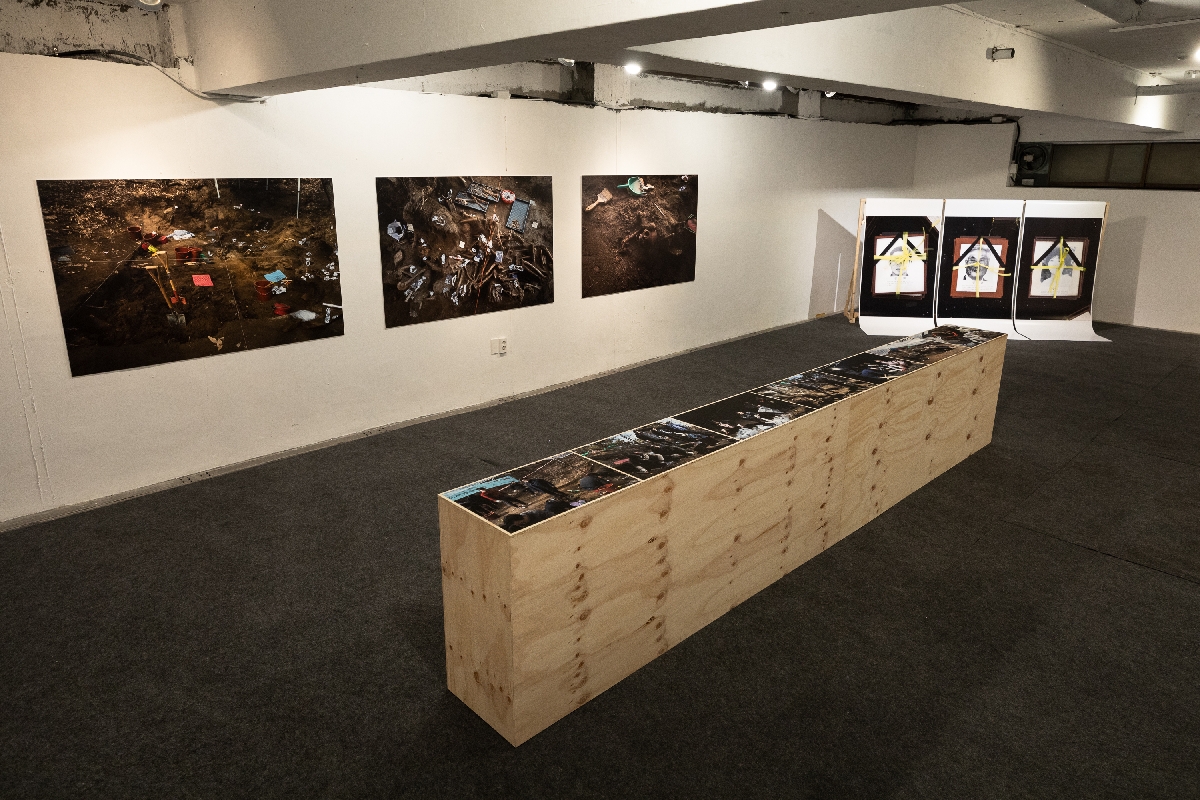
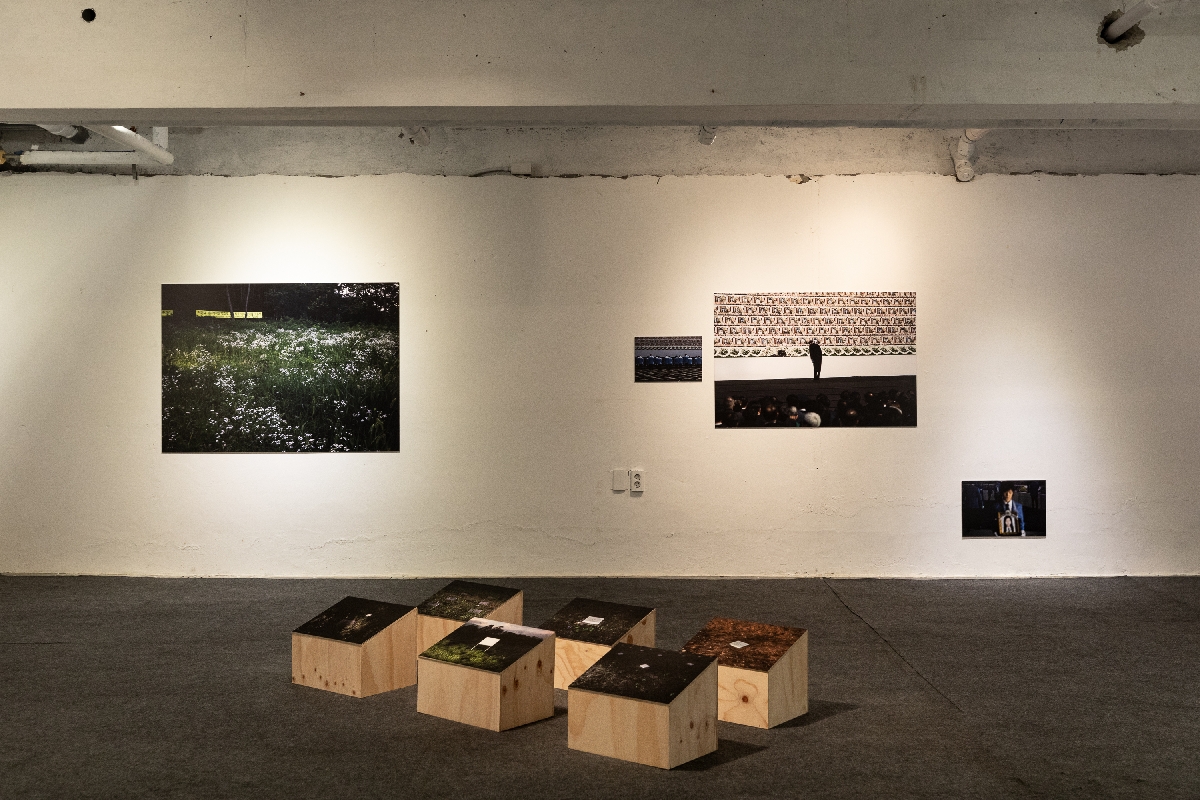
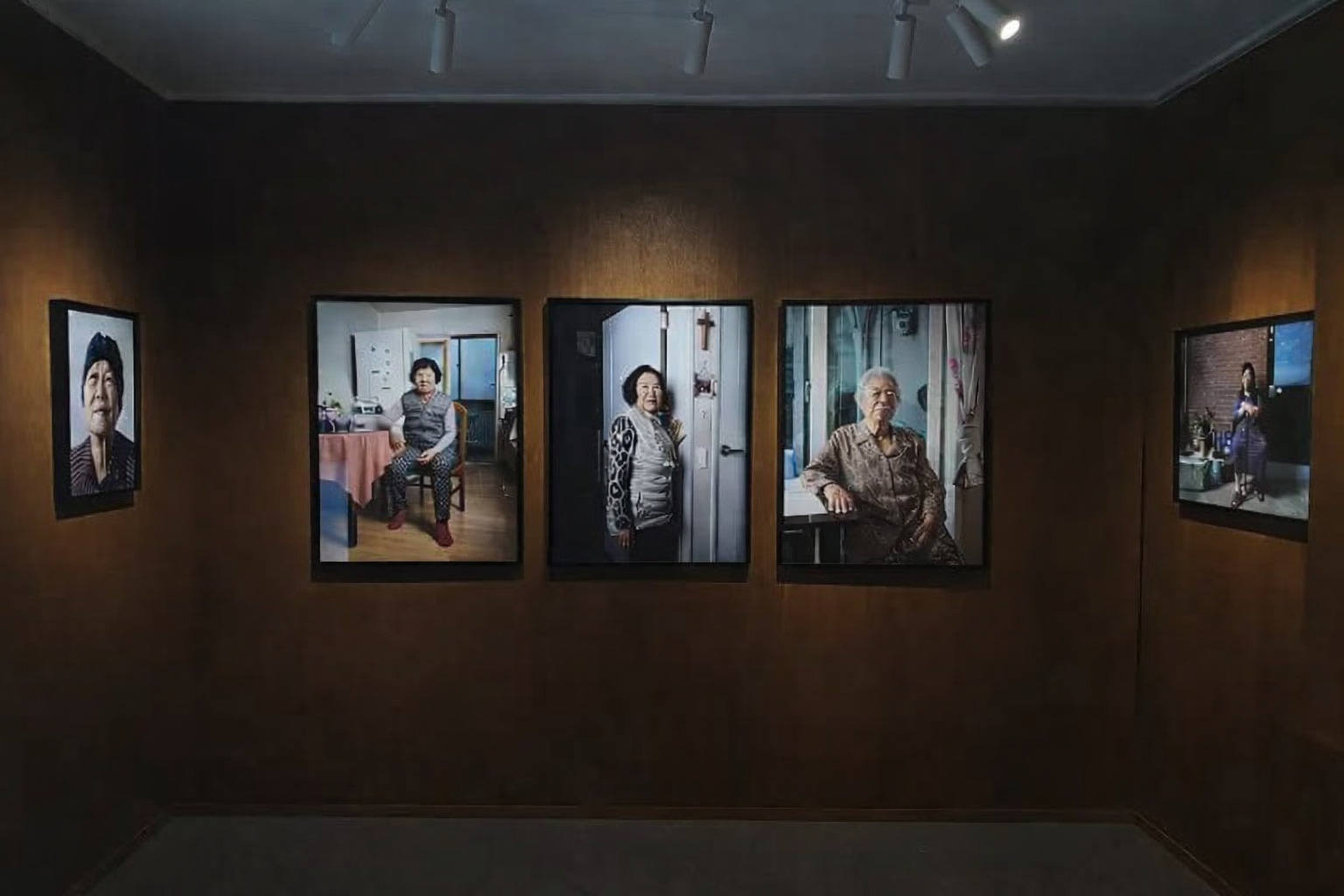
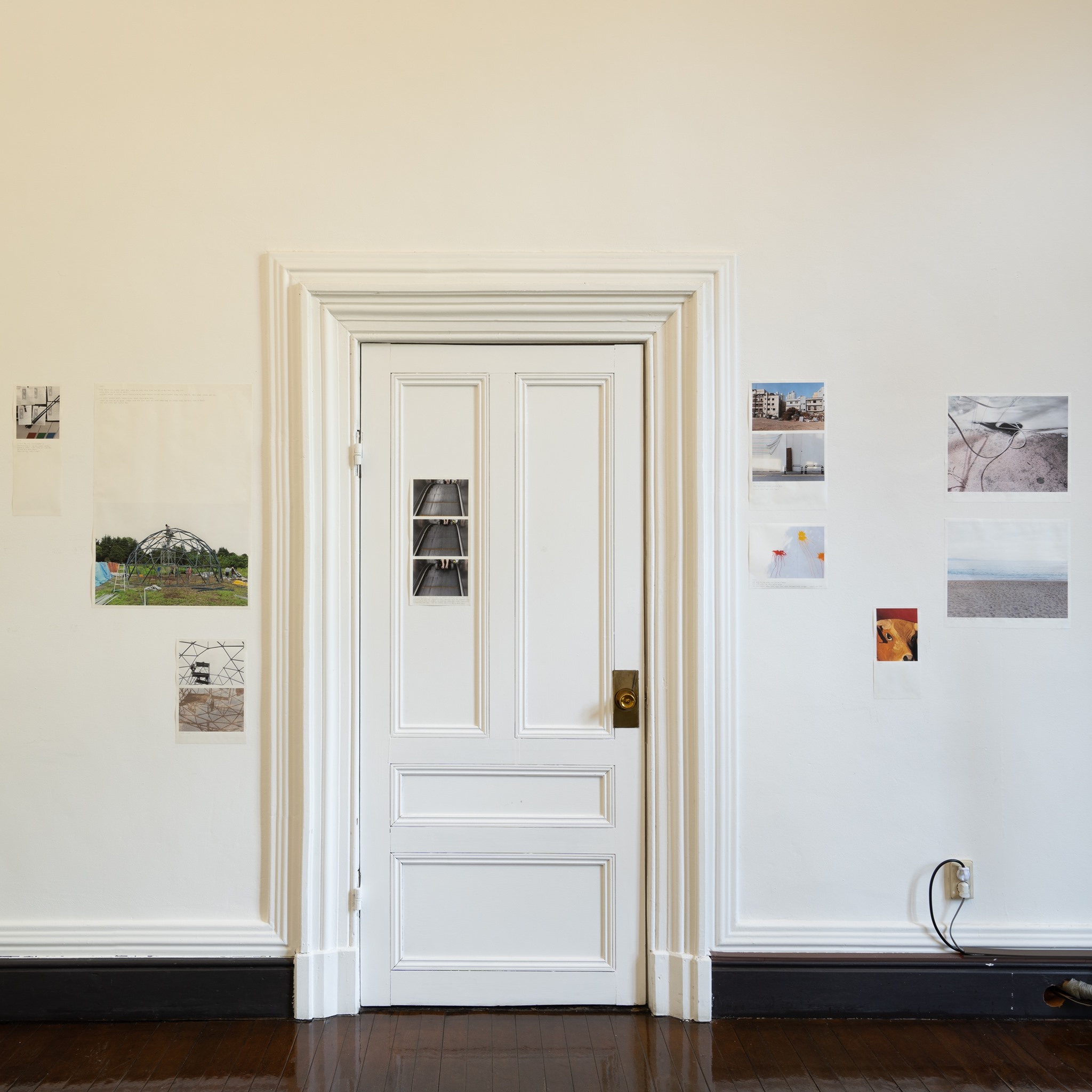
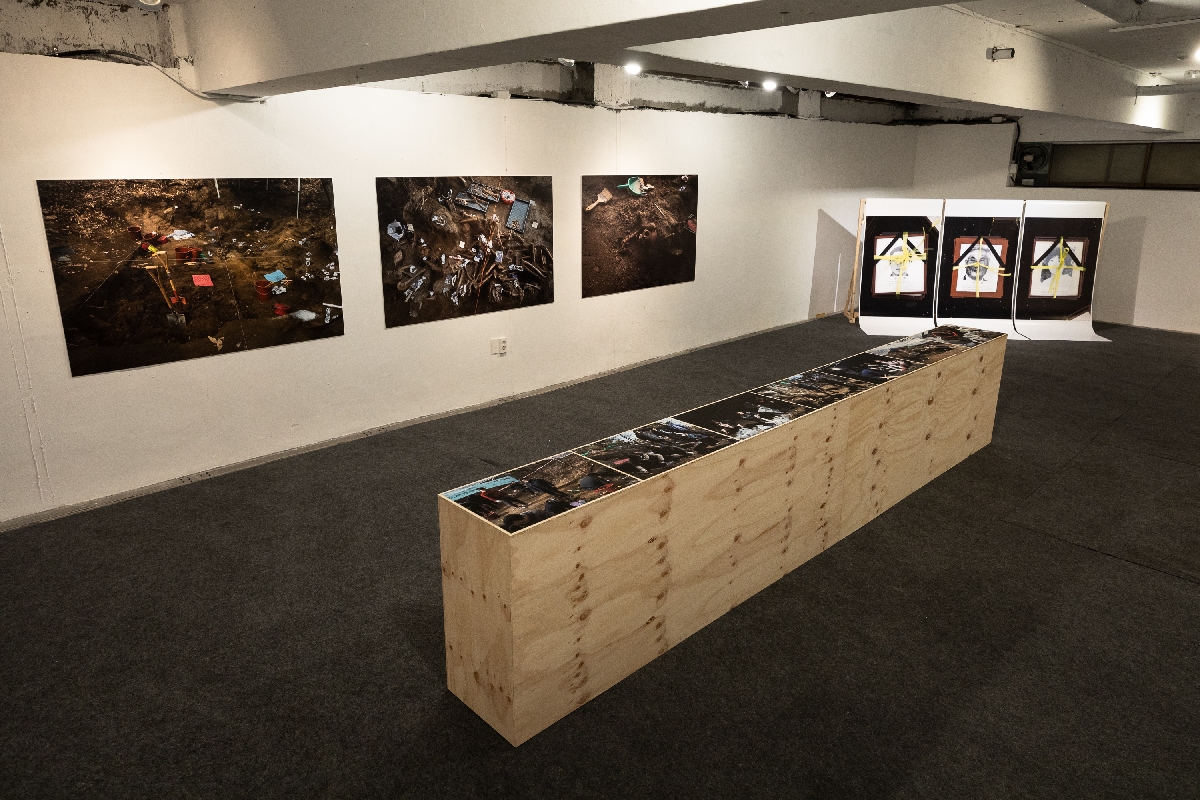
Installation view of 《Lamentation》 (Space Heem, 2018) ©Space Heem

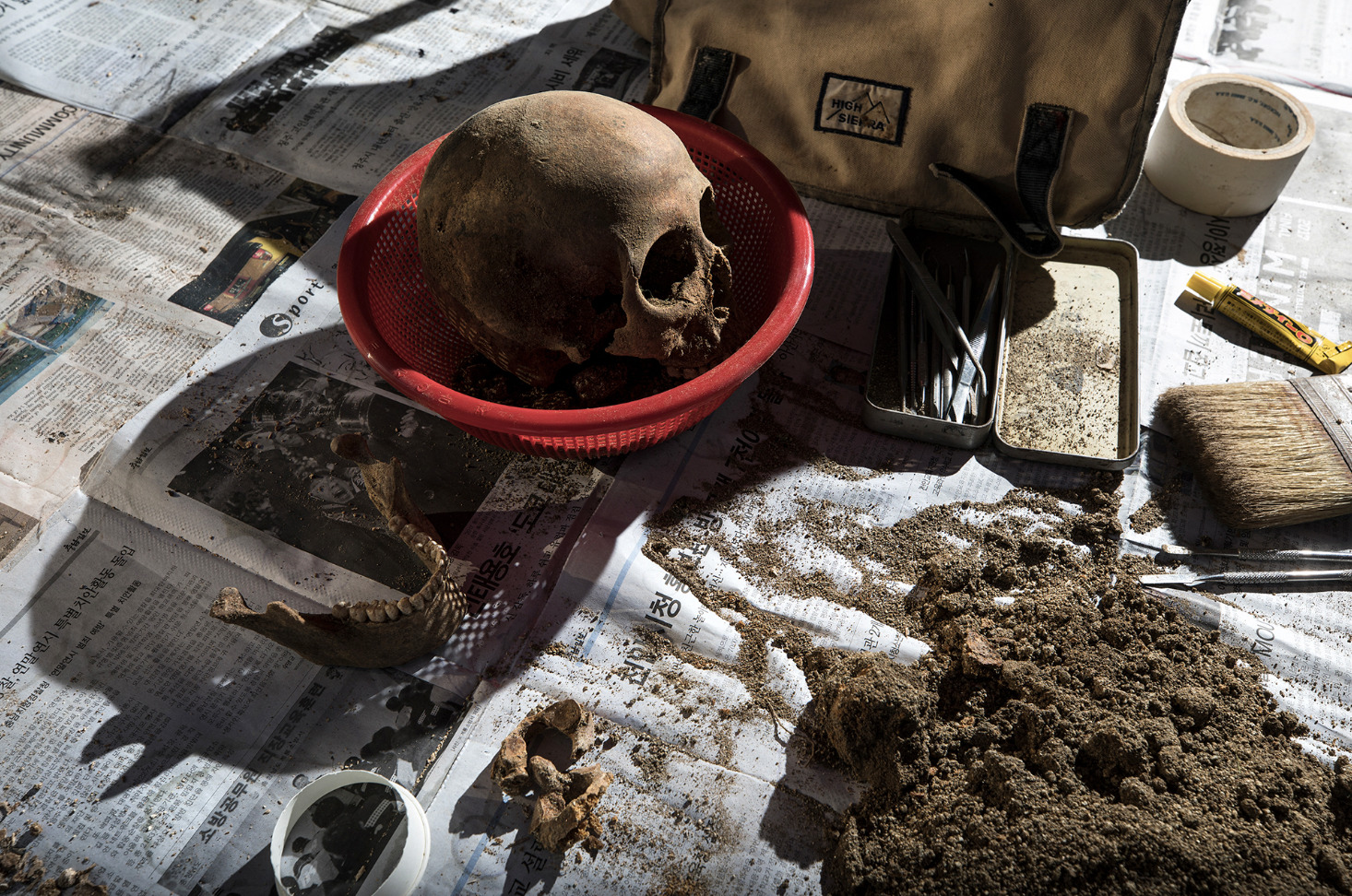
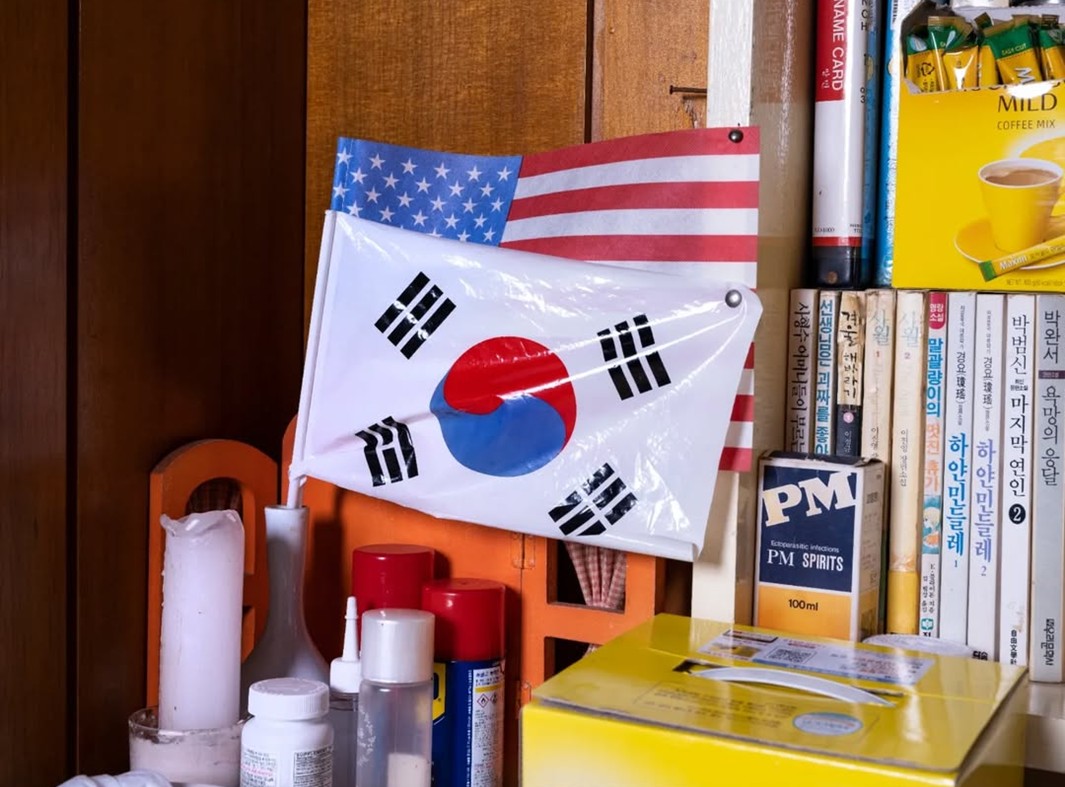
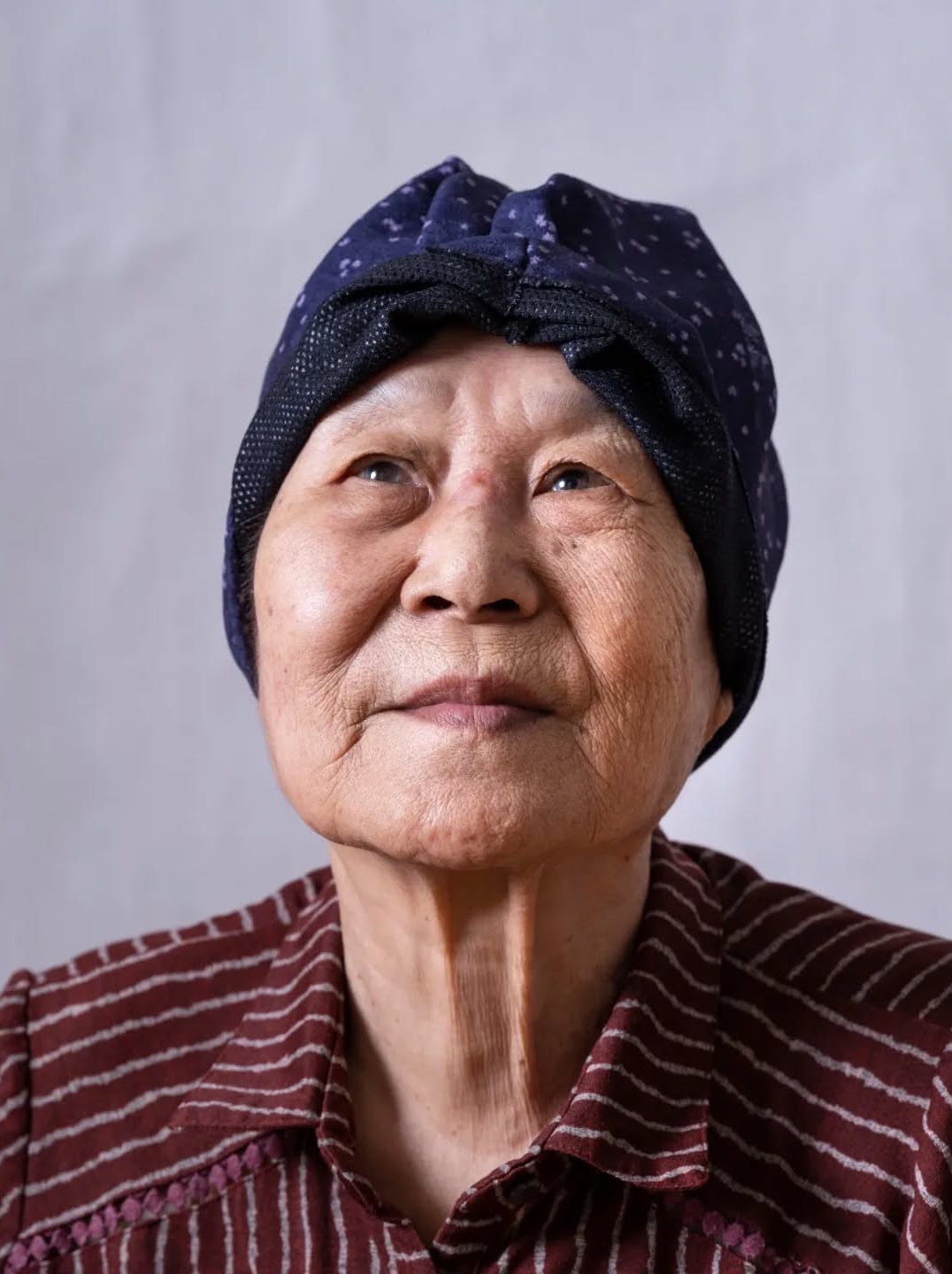
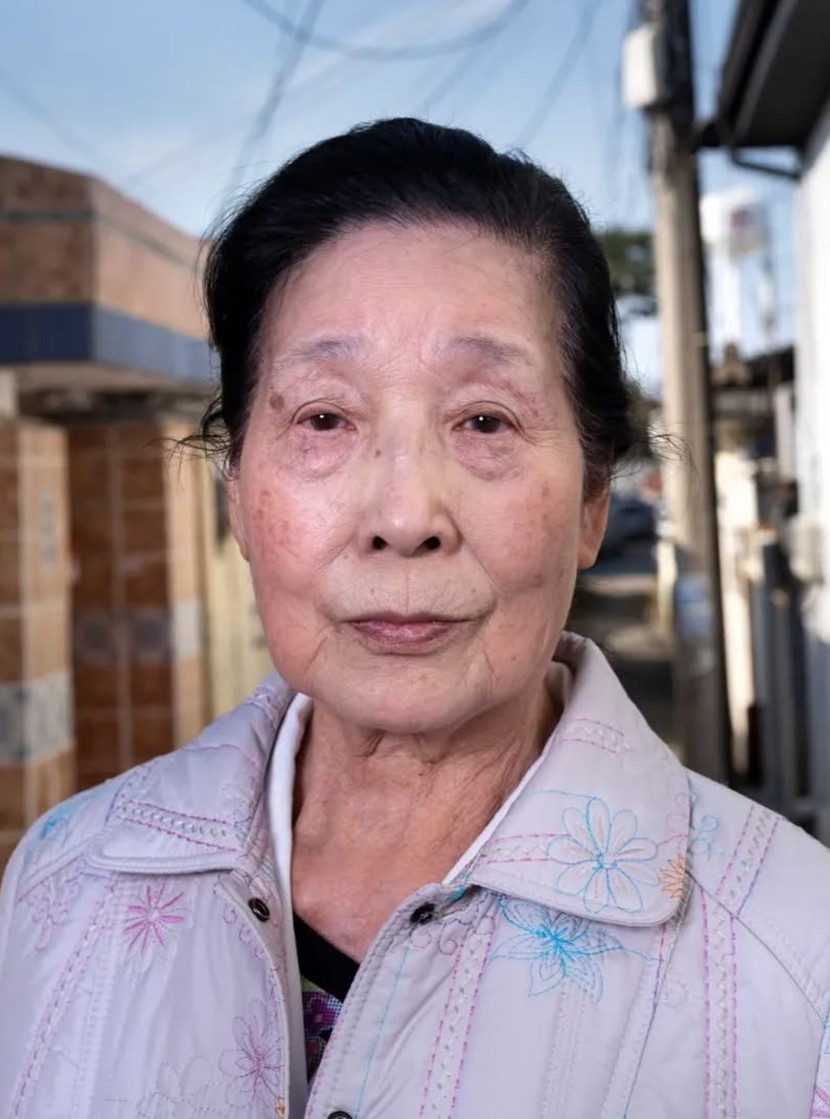
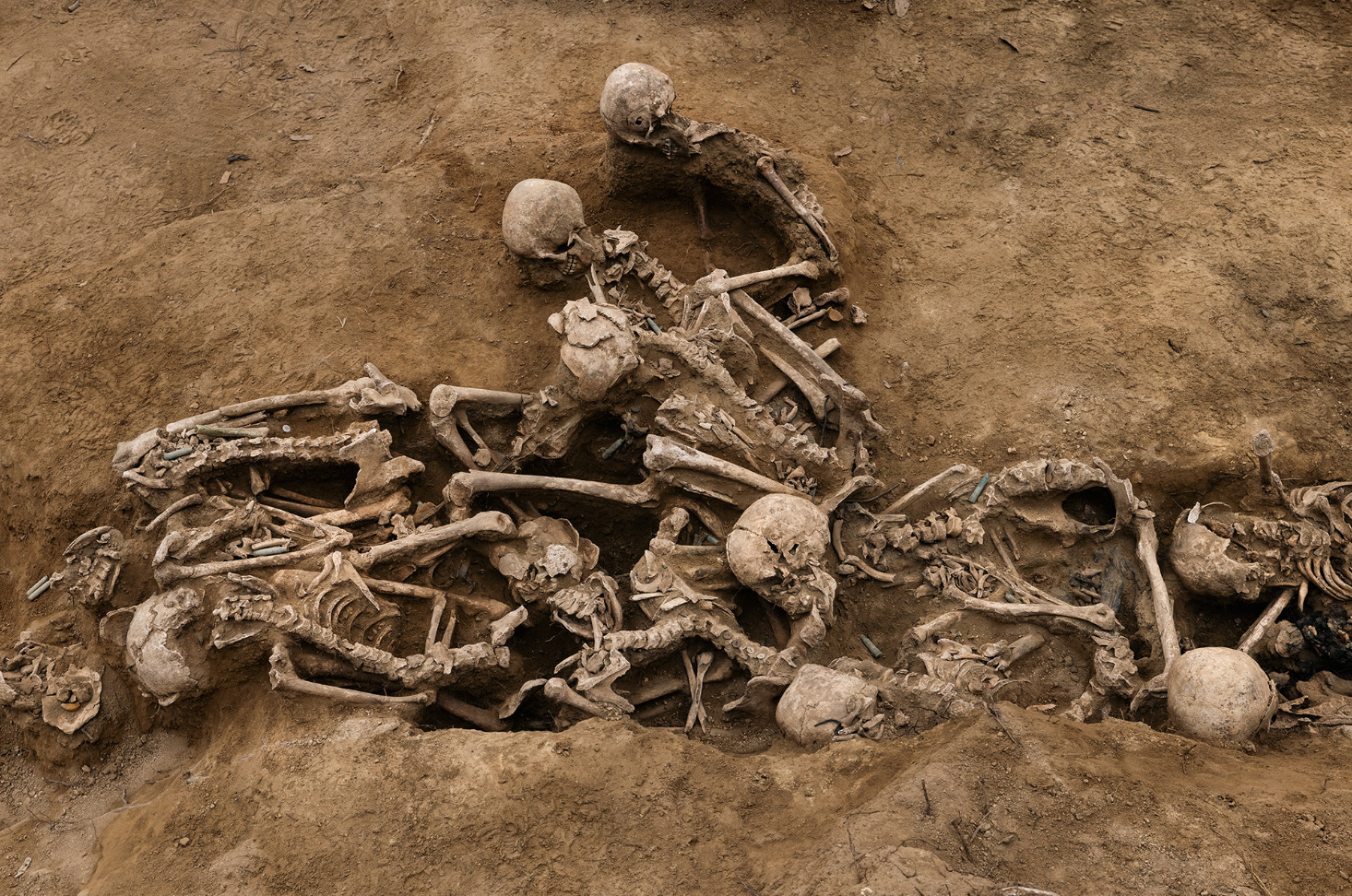
Space Heem presents Joo Yongseong’s solo exhibition 《Lamentation》 from September 15 (Sat) to October 7 (Sun). Joo Yongseong has consistently shown interest in socially and politically charged deaths, documenting the places and people connected to them. This exhibition presents photographs that reveal the strange and unreal scenes that emerge when deaths caused by state power are later transformed—over time and for political reasons—into officially sanctioned acts of mourning, commemoration, and remembrance.
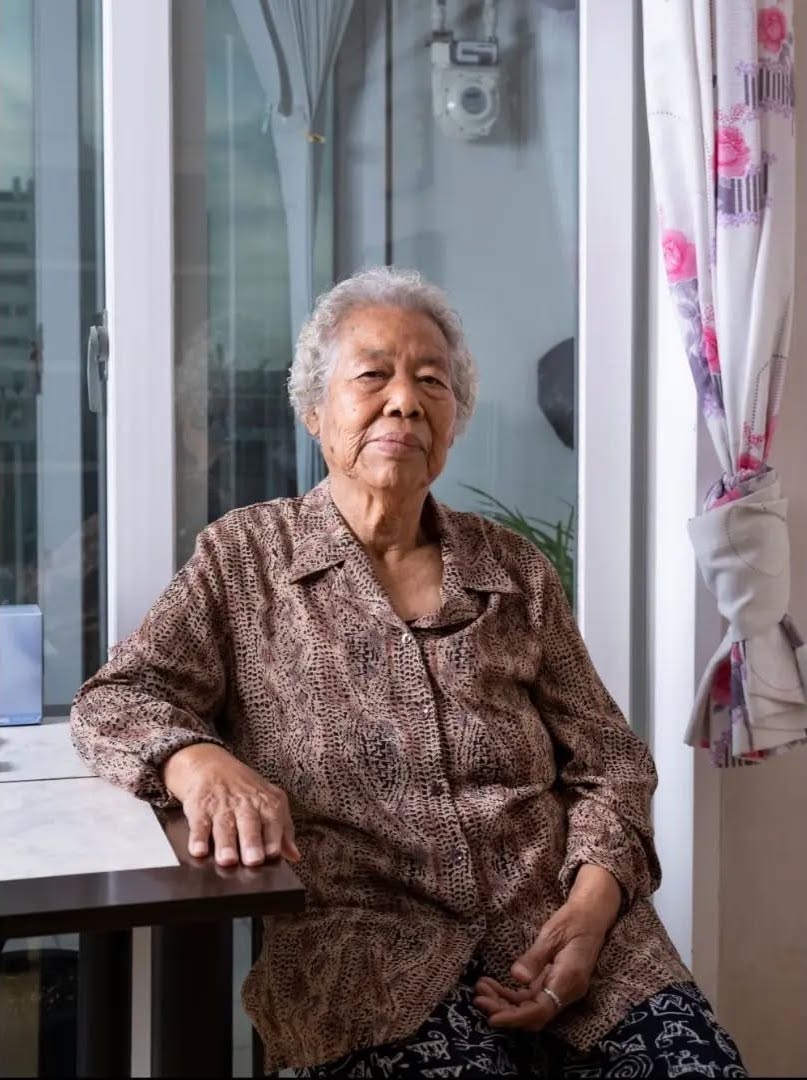
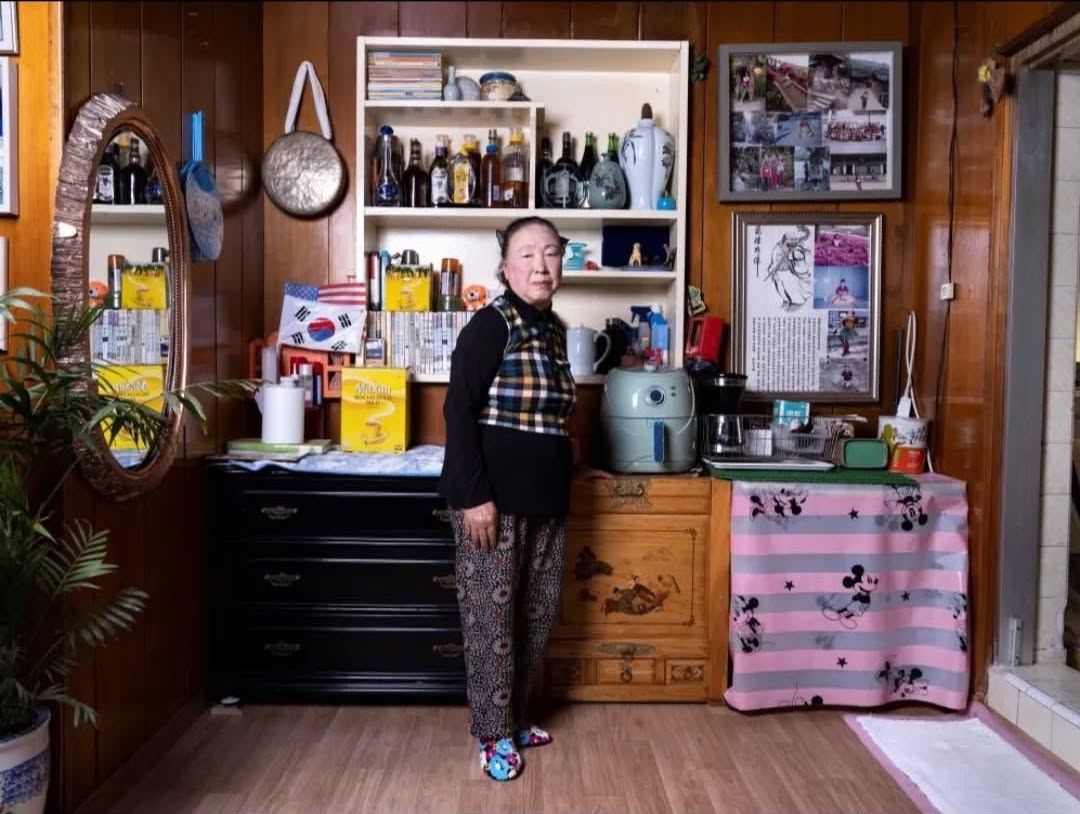
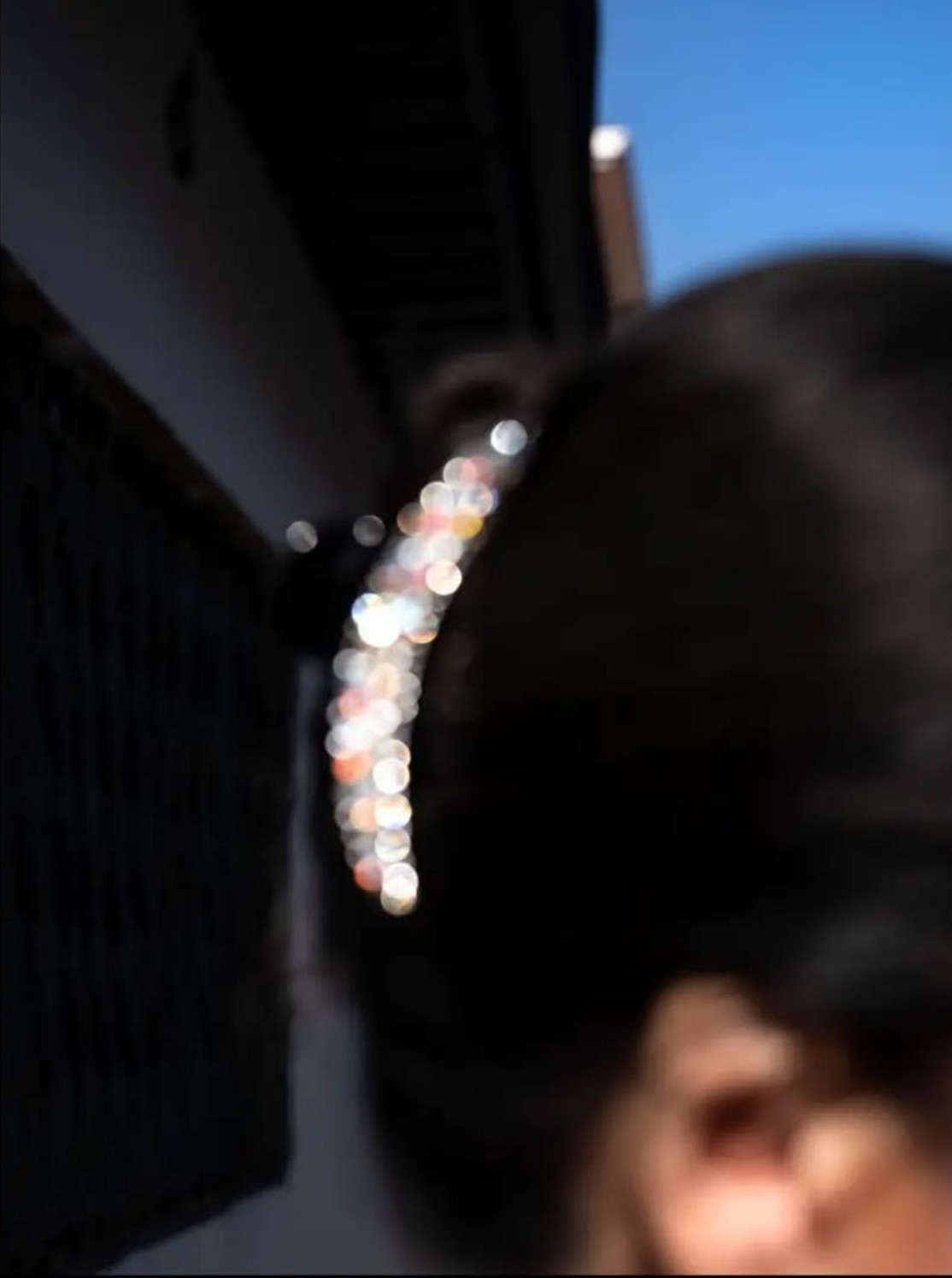
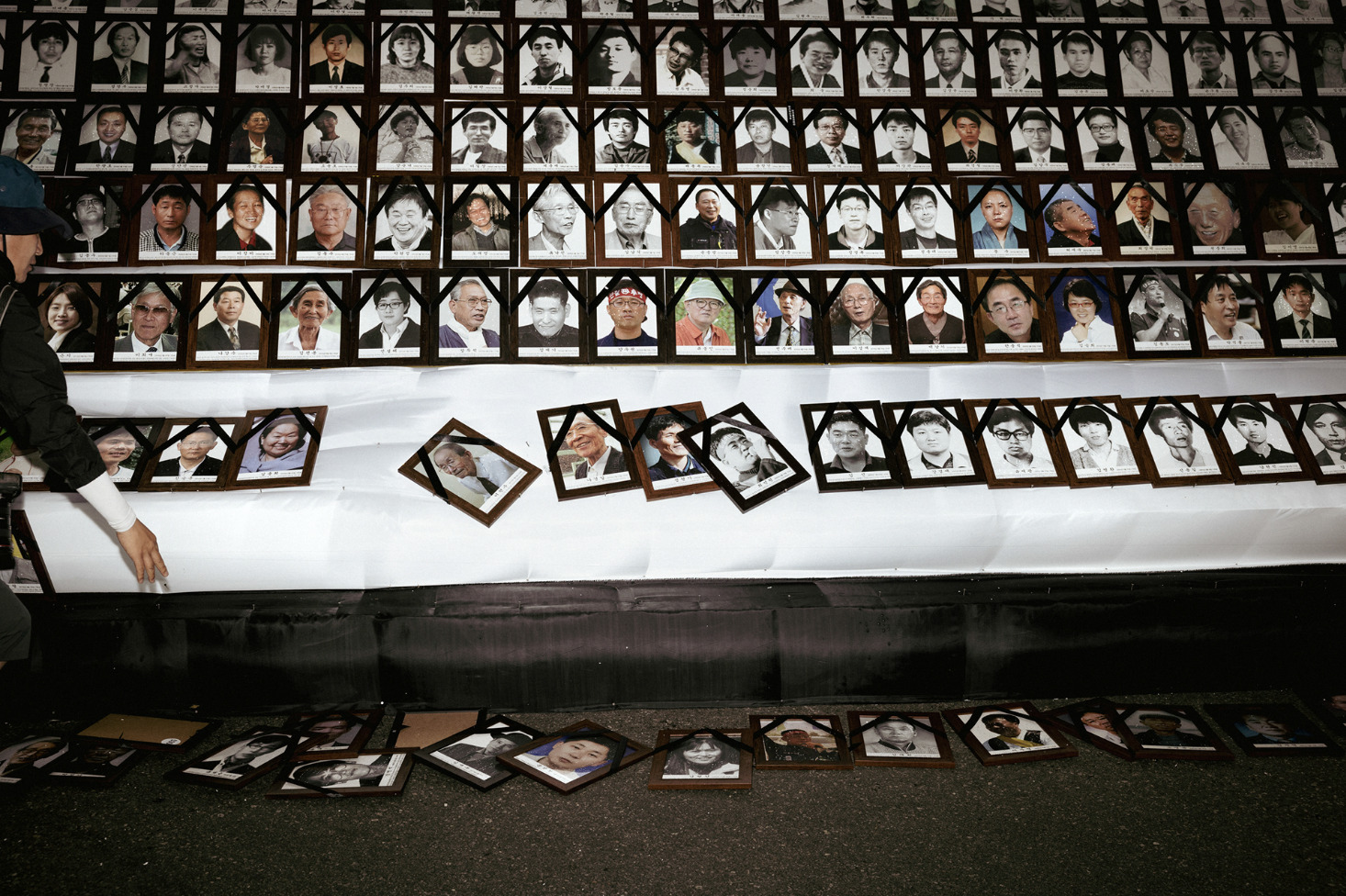
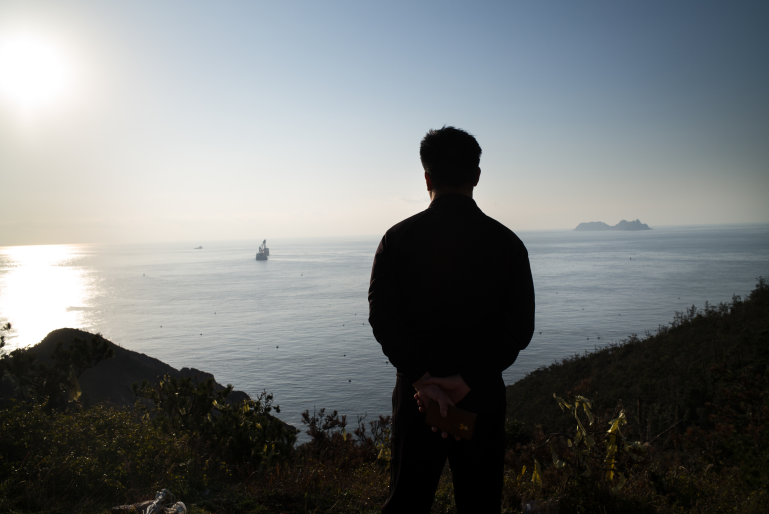
Joo Yongseong, ‘Lamentation’ series, 2018 ©Joo Yongseong

The Labour of Fiction

1. Events exist in reality. Some events float like buoys, misaligned and adrift. They scatter like discontinuous fragments, and their devastation is regrettably never fully recorded. It is no exaggeration to say that the history remembered by the masses is invented by “power,” while the unremembered records that exist beneath it are produced and repeatedly forgotten in marginalized realms. The vast dictionary titled “history” is composed through such logic. All too often, time passes without properly identifying the events that must be confronted. Measures taken for those stigmatized by state power (the victims), regardless of political intent, often lead—after a change in administration—to the ironic sequence of “reinvestigation” followed by “commemoration (mourning).” For the victims, this means “death”; for those left behind, “wounds.”

Discussions of disasters on this land tend to be framed solely through short-sighted left–right interest structures. Attention is not paid to the essence of the disaster, but rather to interests grounded in realpolitik. Once these hollow debates conclude, disasters fragment and fade into oblivion among the masses. This recurring pattern composes our history and signals the writing of a massive “dictionary of evil.” Contexts produced in marginalized realms sometimes persist regardless, creating fractures in contemporary society—particularly when “forgetting” is resisted and contexts are continually recalled.

Many actions have existed, and certain events are remembered not by state power but by those who construct broader contexts within marginalized spaces. While the “records” on the front side are written hierarchically by power, those on the back side assert greater autonomy and speak without misreading “politics.” Jacques Rancière defines politics not as “the technique of governing a community,” but as “the realization of equality as such.” Attempts to form solidarity with those labeled as the weak and to translate “voices” into visual language in order to realize equality itself are akin to withdrawing the pen that writes the dictionary of evil.

Installation view of 《Lamentation》 (Space Heem, 2018) ©Space Heem

2. Some contemporary artists drifting through society step out of narrow passages onto broader roads, diagnosing systemic contradictions from multiple directions and raising sharp critical voices. They endure harsh conditions in social fields, pressing shutters and firing flashes to capture fleeting moments, or using their bodies to caricature clear problems through action. Yet they do not stop there. Over time, state power has perpetuated cycles of wrongdoing, ordering “reinvestigations” under new justifications with each regime change, resulting repeatedly in procedural “mourning.”

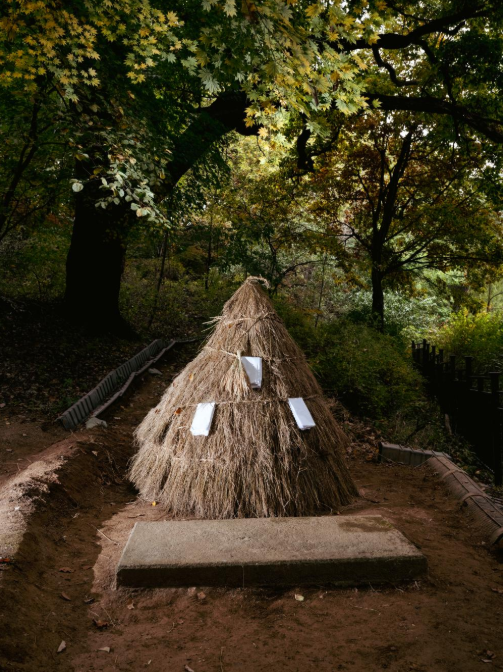
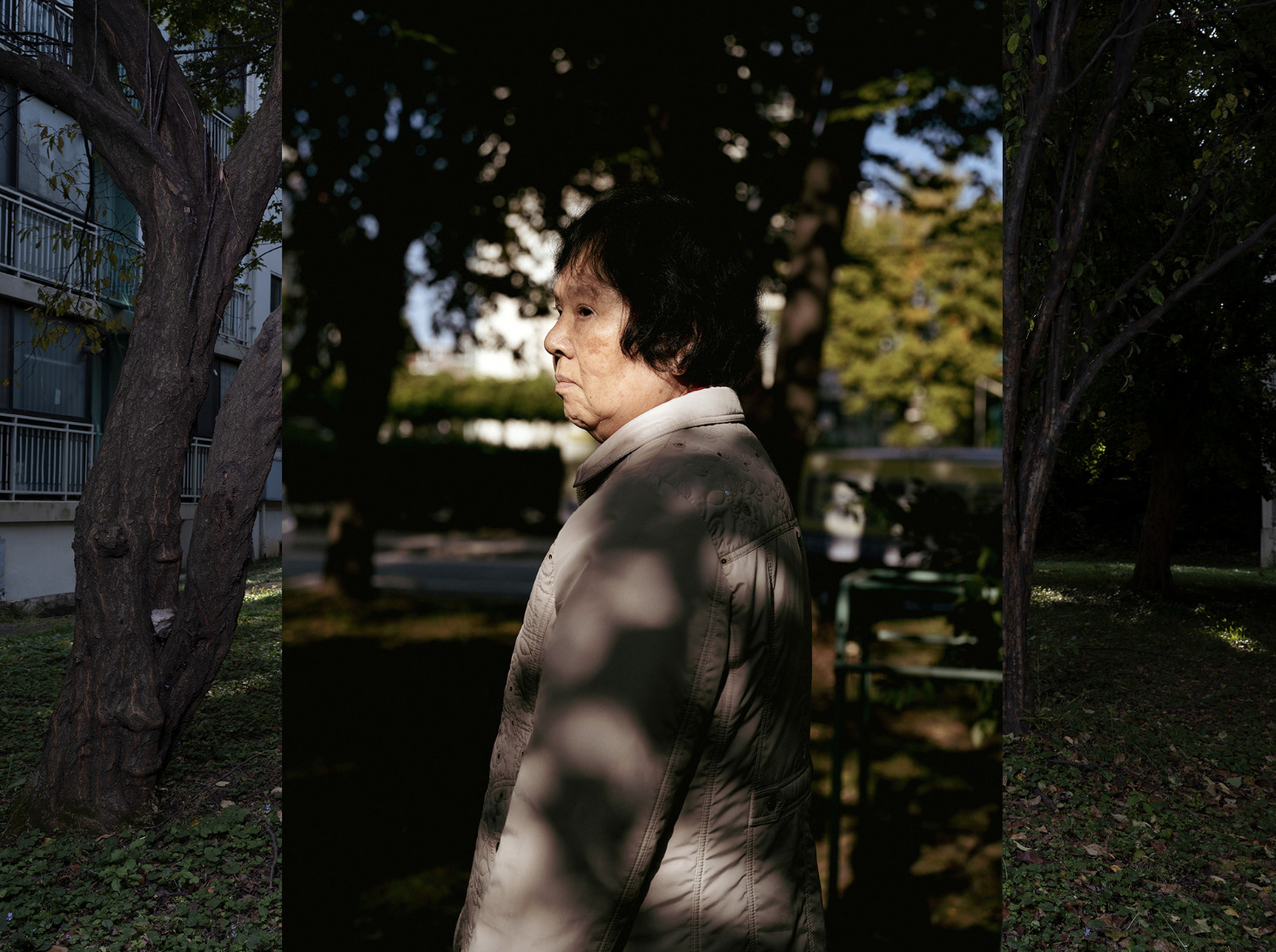
Within these contradictions of state power, Joo Yongseong discovers the existence of an “official” form of mourning and, through his solo exhibition 《Lamentation》, depicts the unreal and distorted reverse side of mourning in reality. The overall landscape of 《Lamentation》 reveals events as homogenized fragments. Pieces of memory are scattered yet maintain uniform form, as photographs and structures are arranged as if to display the standardized enumeration characteristic of state power. Photography is visualized as a three-dimensional form of memory, combining images with wooden structures to create a dispositif that allows viewers to retrace the scenes depicted in the photographs.

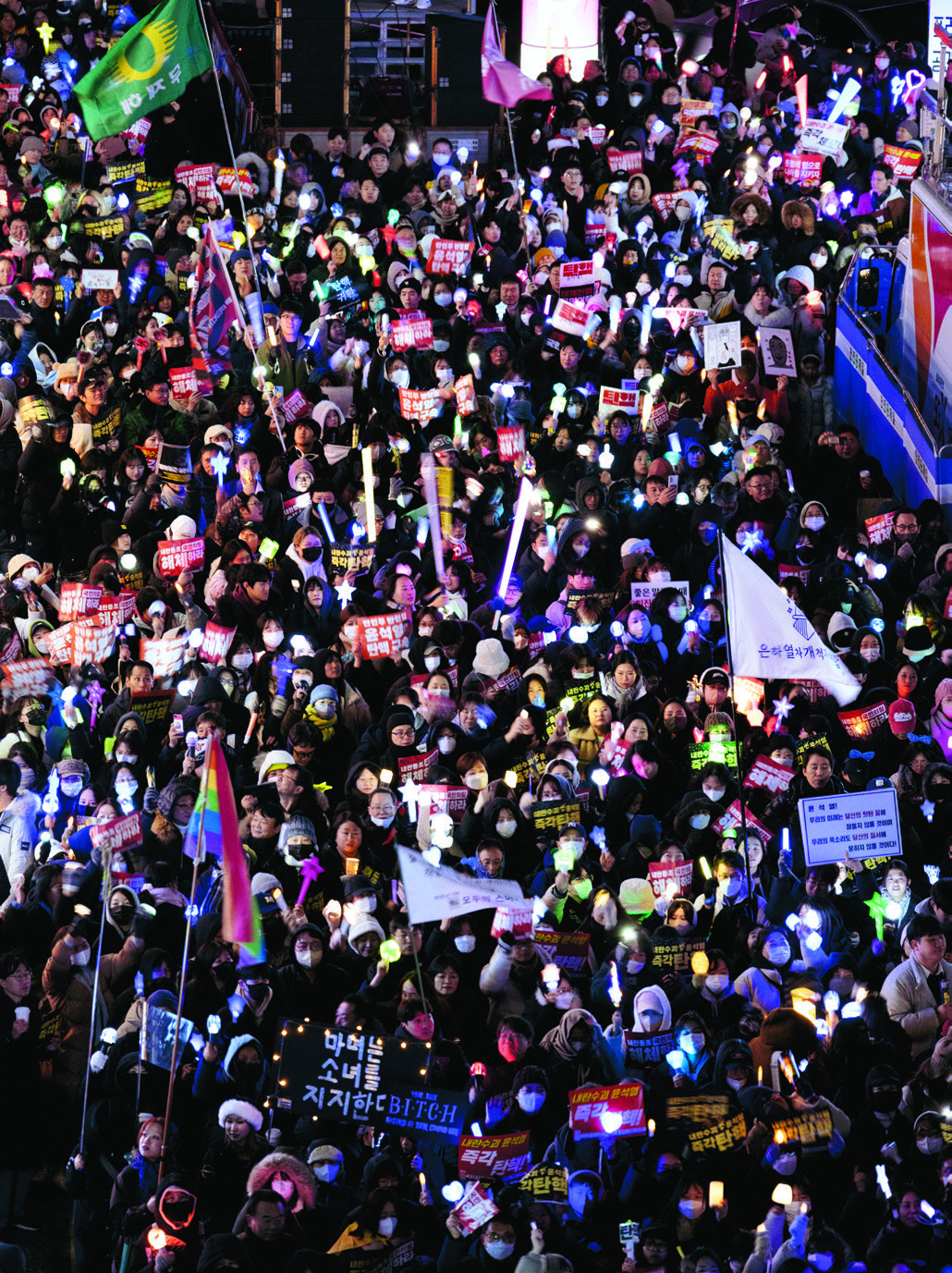
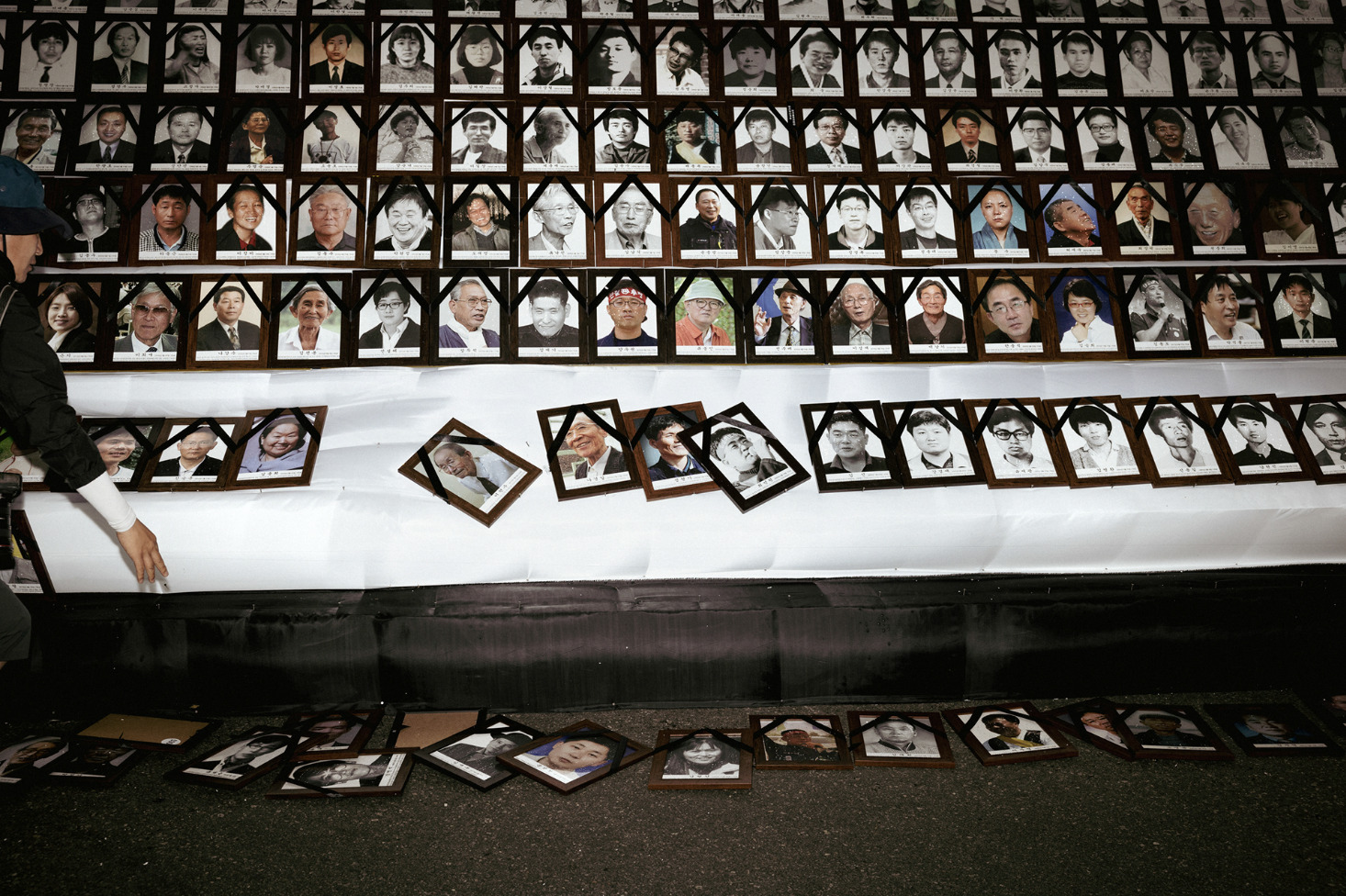
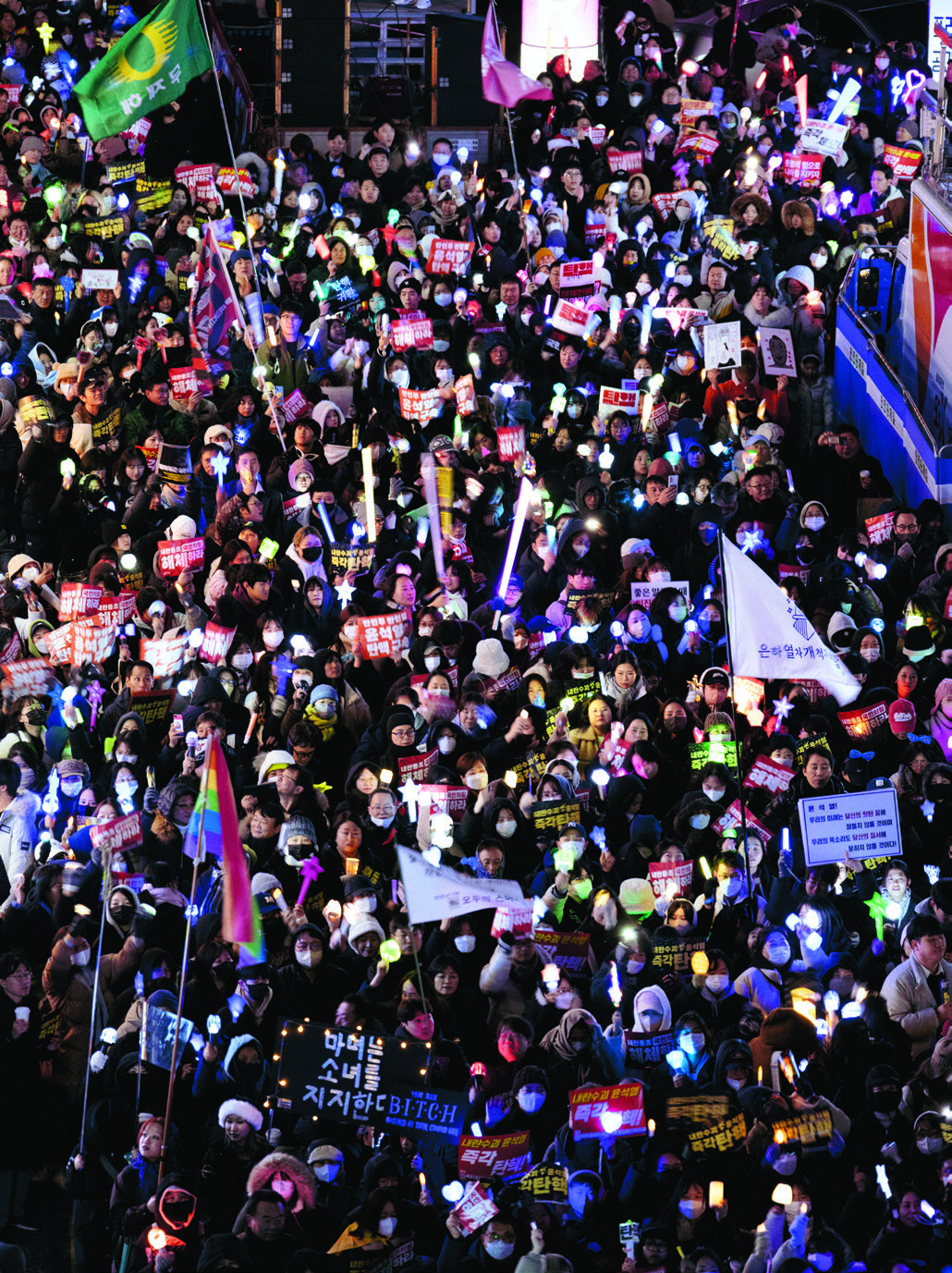
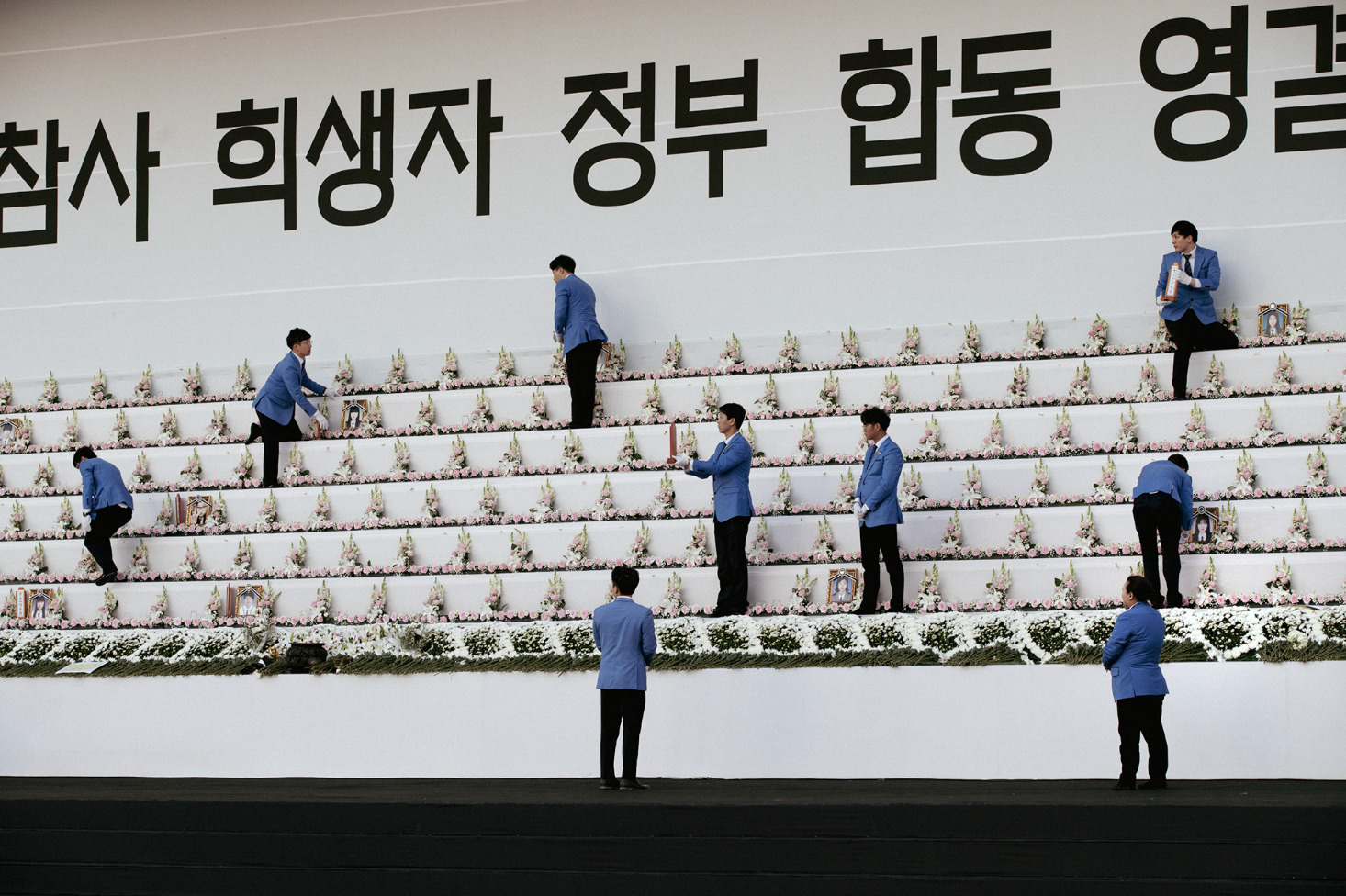
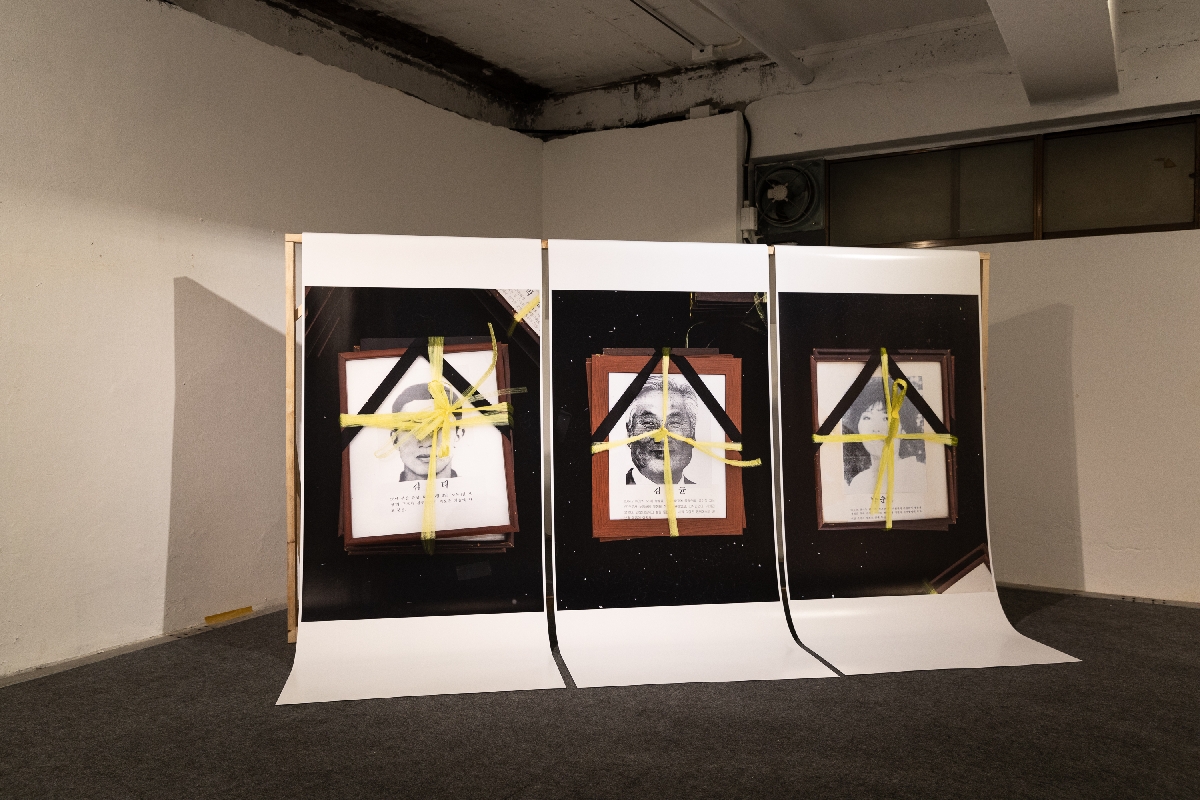
One could pass by. One could ignore contradictory realities and photograph only the “front” of situations. Even in sites of mourning, one could pass by with only “mourning” itself, with only its fragmentary reverse side. Yet works such as Government Joint Funeral and Memorial Ceremony for the Sewol Ferry Victims, Ansan, South Korea (2018), depicting the removal of portraits from the altar after a memorial service, and Memorial Service for Democratic Martyrs and Victims, Seoul, South Korea (2018), presenting portraits sealed together with yellow cords, vividly and uncomfortably expose the “moment” of the “official.”

Securing the problematic narrative of mourning invoked by state power and revealing its paradoxical political entanglement allows us to witness the artist’s sharp gaze, which refuses to overlook what is usually passed by. Joo Yongseong’s work stands out for its attempt to analyze mourning at a higher, meta level, reorganizing situations into representational elements and incorporating fragmented photographs (memories) into an exhibition to create new relationships between the act of mourning and its meaning. Through this, 《Lamentation》 poses two crucial questions: What discourse can our society articulate regarding the reverse side of mourning? Can the invention of contentious situations (spaces) hold efficacy within the contradictions of mourning invoked by state power?

주용성, ‘애도공식’ 시리즈, 2018 ©주용성

3. Joo Yongseong’s photographs and the narrative structure of 《Lamentation》 contextualize political content as “practice,” drawing out invisible points within existing orders to visualize new categories. Addressing political content does not in itself guarantee the “politicality” of artistic practice, but his work delves into the process by which state power bestows “sacrifice (death)” and then subjects it to procedural mourning. By reflecting on and depicting this context, Joo Yongseong plans an attempt to acquire politicality through fractures in the “policing order.”

He also suspends familiar sensory experiences associated with conventional mourning—solemnity, reverence—through the notion of the “official.” It is here that contentious situations (spaces) emerge. By fracturing vague notions of mourning and disrupting commonly accepted forms, 《Lamentation》 induces a sense of confusion in viewers, thereby generating volume for contentious discourse.

Rancière states, “Art cannot merely occupy the space left by the decline of political conflict. It must reorganize that space, even at the risk of testing the limits of its own politics.” Joo Yongseong’s work does not stop at occupying exhibition space; it fully exposes sensitive and uncomfortable situations, taking risks to reorganize exhibitions by displaying the reverse side.

Installation view of 《Lamentation》 (Space Heem, 2018) ©Space Heem

4. Having directly experienced sites of events, Joo Yongseong uses 《Lamentation》 to pose a series of questions regarding the procedural contradictions of institutions. Based on these questions, he proposes new possibilities for the direction of records, illuminates the reverse side of mourning experienced in everyday life, and suggests contentious situations (spaces) in which these issues can be discussed. This is not the domain of clumsy documentary “photographers” who merely expose subjects’ discomfort through fleeting moments to capture attention. Rather, his work articulates questions not only about “photography” but also about the attitude of the “photographer,” embedding the uncomfortable structures of social narratives grounded in convictions formed in the field.

Nevertheless, it cannot be overlooked that an intense desire to address unfinished mourning sometimes leads to tendencies toward indiscriminate use of flash while grappling with unresolved ethical issues. While Joo Yongseong’s photographs carry heavy significance in dealing with narratives of the reverse side of records, their formal plasticity, when exhibited on its own, makes it difficult to fully escape the context of an artistic practice rooted in vulnerability. Another limitation revealed in 《Lamentation》 is that it risks offering only a fragmentary space in which works are viewed primarily through the thematic specificity of critiquing mourning and its formalized procedures. This may result less in the public articulation of dissensus described by Rancière than in the operation of melodramatic devices within a framework of consensus.

However, the practice of questioning procedural mourning that approaches events through abstract universality after their occurrence, and of articulating possibilities for concrete universality, cannot be dismissed. It is far removed from forcibly extracting everyday discourse through awkward forms or microscopic narratives floating in contemporary art. The images may appear rough or unfashionable, but in 《Lamentation》, Joo Yongseong’s homogenized fragments (events) attempt to invent contentious situations (spaces) and speak to contemporary reality through the possibility of serious discourse.

 
Kim Hanryang

References