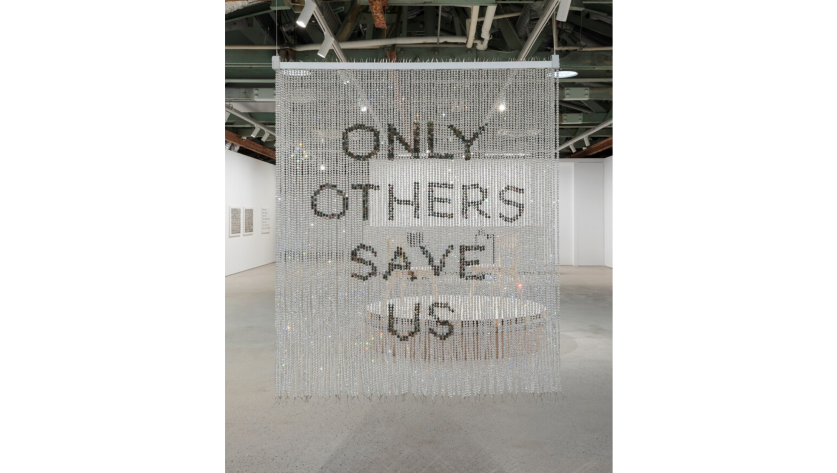
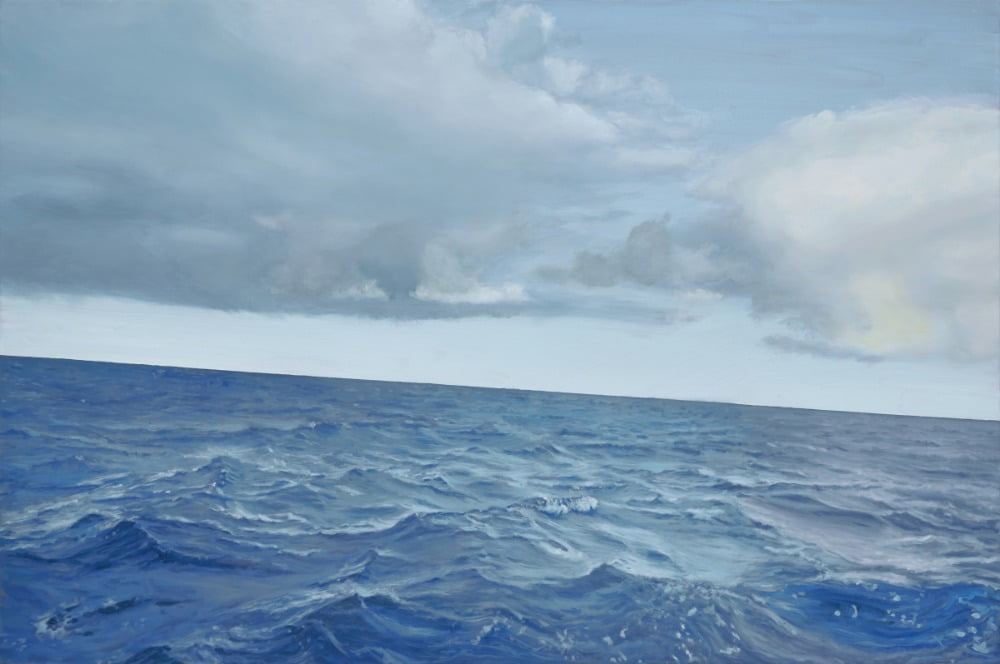
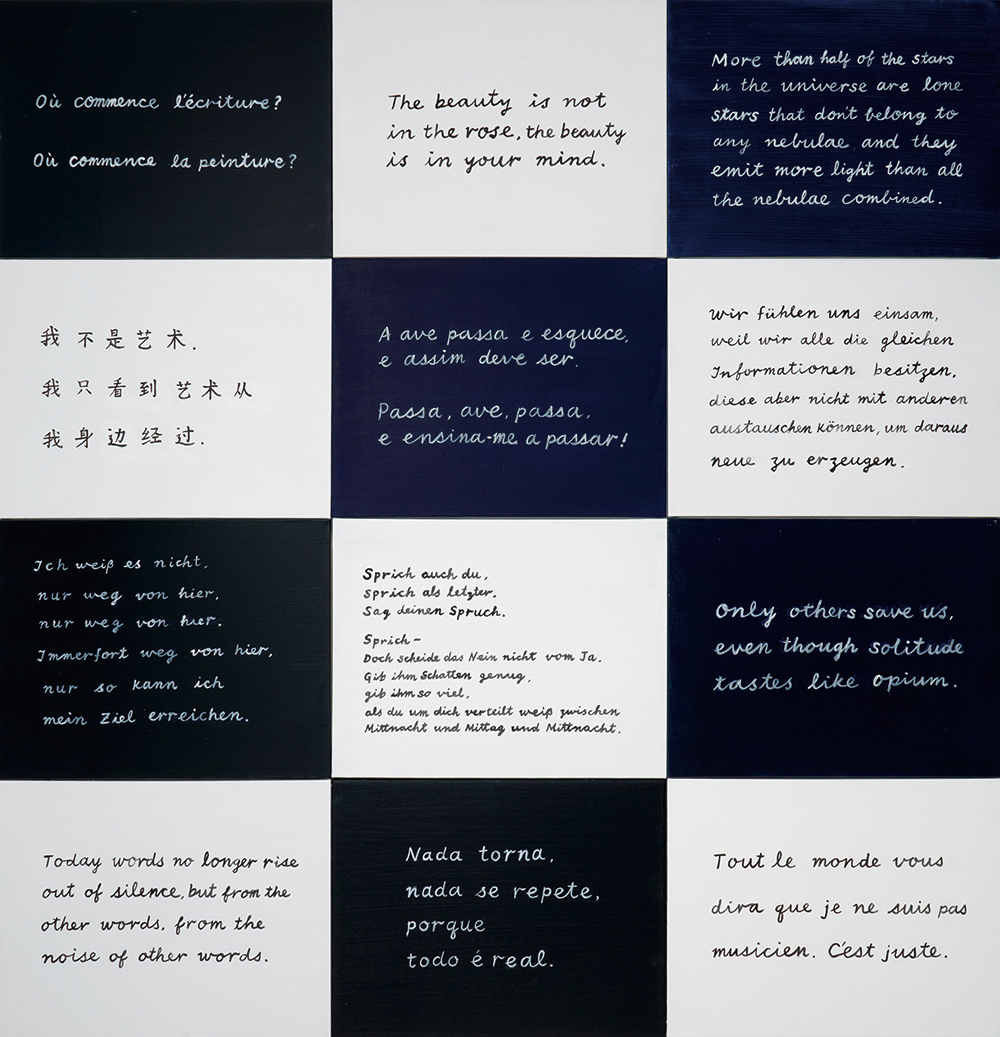
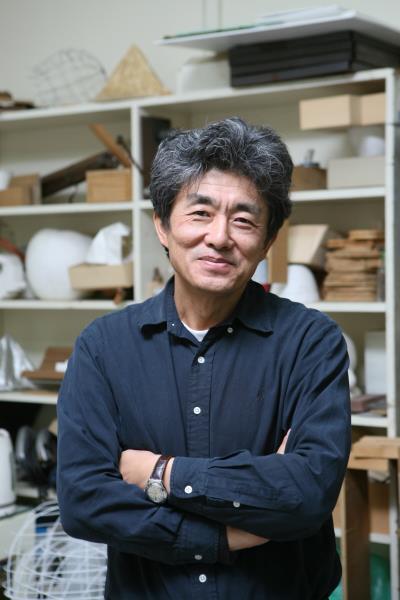
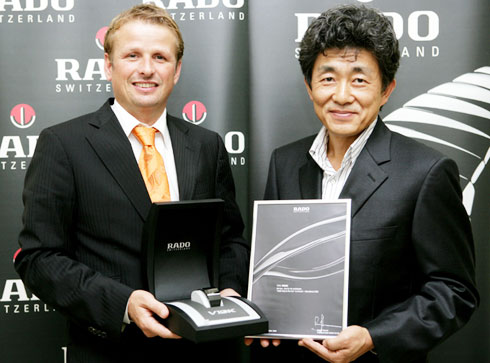
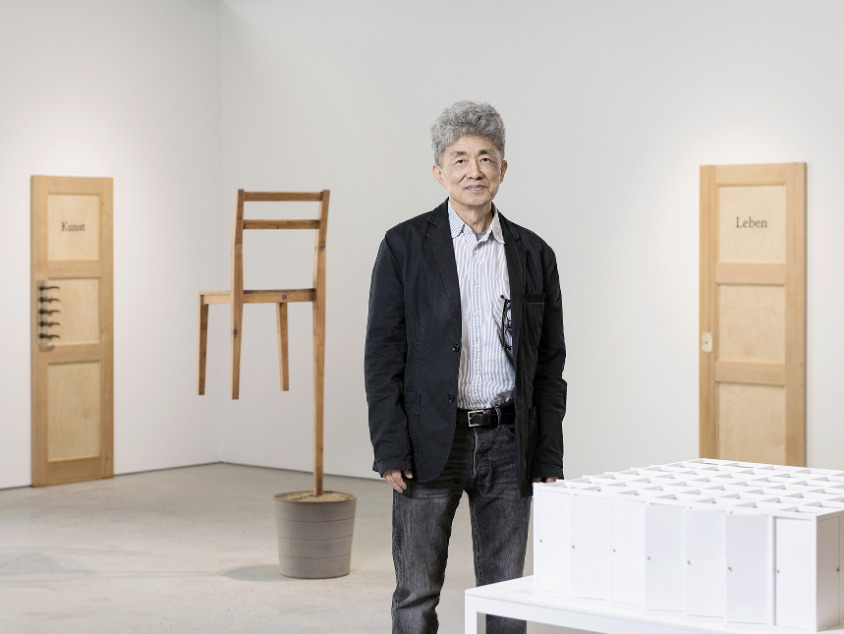
Ahn Kyuchul was born in Seoul and studied sculpture at Seoul National University. In 1987, he left for France, later relocating to Germany to study at the State Academy of Fine Arts Stuttgart. Since then, he has developed a conceptual practice centered on everyday objects and language. From 1997 to 2021, he served as Professor and Dean at the Korea National University of Arts. He currently works as a full-time artist.
We have to cease to think,
if we refuse to do it in the prison house of language;
for we cannot reach further than the doubt
which asks whether the limit we see is really a limit.
— Friedrich Nietzsche
0. The Artwork as Sign
Put bluntly, art is a reconstruction of reality. By emphasizing certain
aspects of reality while concealing others, art reveals what is otherwise
invisible. Through the persistent tension between what is ‘seen’ and what is
‘unseen’, art invites us to reflect on everyday life. This is possible because
art enables dialogue between the artist and the reader (viewer).
Traditionally, art presupposed the artist as a singular origin. The
artist, believed to generate a single, authoritative meaning, regarded the
artwork as an extension of the self—an embodiment of the artist’s voice alone.
Within the communicative structure of artist–artwork–viewer, the viewer was
reduced to a passive listener, while the artist occupied the position of
authority. In the linear structure of artist → artwork → viewer, the artist’s
creative idea was transmitted to the viewer through the medium of the artwork.
The viewer’s role was limited to perception. To encounter an artwork was, for
the viewer, simply to perceive it; doubts such as “Is this really an artwork?”
were unnecessary.
However, with the advent of the twentieth century, artists began
inviting viewers into the communicative structure of artist–artwork–viewer. The
recognition of Marcel Duchamp’s ready-mades as artworks does not occur through
mere perception of the object. What one person recognizes as an artwork may
appear to another as nothing more than an ordinary object. The structure artist
→ artwork ← viewer demonstrates that the artwork proposed by the artist is not
a unidirectional transmission but a product of communication. In other words,
the artist’s declarative statement “This is an artwork” is a deferred
proposition that must be validated by the viewer. Until the active viewer
semiotizes the artwork, this declaration remains incomplete.
As such, the post–twentieth-century viewer is no longer a passive
subject awaiting transmission from the artist, but an active participant. The
viewer seeks to communicate with the artist by semiotizing the artwork. Insofar
as artist and viewer communicate through the artwork, the artwork itself
functions as a sign.
I. Ghosts Drifting between Representation and
Presence
Generally, signs are used to transmit information—to tell or teach
others what one knows. For dialogue to occur, the sender and receiver must
share an understanding of the sign as a medium. Without such shared
recognition, dialogue collapses. Thus, a one-to-one correspondence between what
the sign represents and what actually exists—representation without
distortion—is considered a prerequisite for dialogue. But is distortion-free
representation possible?
Representation presents an absent object through a substitute—another
object or sign. Representation presupposes absence. If the object were not
absent, there would be no need to present it through another form. Hence
representation is inherently unstable. It renders the absent object ‘present to
a certain degree,’ but never fully. This paradox is intrinsic to both sign and
representation. Even when an absent object is given form through a sign, it
remains absent. If the sign were to fully saturate the absence, it would cease
to be representation and become the object itself. Representation finds its
resting place precisely at the point where it endlessly refers back to the
object yet can never reach it.
Thus representation is not full presence but
‘partial presence.’ According to Lacan’s mirror stage, a subject who mistakes
this ‘partial presence’ for complete representation is caught in an illusion
produced by misrecognition (méconnaissance), which inevitably intervenes in ego
formation. Between the represented image and the object lies an unbridgeable
gap or fissure. Because representation offers only partial presence, countless
subjects—like ghosts—hover within this gap, striving toward complete
representation. Though invisible, these ghosts exist, and it is through their
languages that we live in society, sustain life, and conduct dialogue—while
forgetting that ‘presence is always only partial’.
II. Semiotic Representation and the Fictional World
Ahn Kyuchul appears to focus on trivial aspects of everyday life,
seemingly representing ordinary objects. Yet according to Ahn, our gaze upon
the everyday is already constrained by a rectangular frame—a “rectangular eye.”
As Adso states in The Name of the Rose, “I have never
doubted the truth of signs; signs are all humans have to find their way in this
world.” We live without questioning the truth of signs, even if what we
perceive as ordinary objects is already filtered through this “rectangular eye.”
Jean Baudrillard argues that “we inhabit a world in which the essential
function of signs is simultaneously to make reality disappear and to conceal
that disappearance. Behind every image, something has vanished.” Signs are not
truth; they are merely signs. They are not pathways to truth but perhaps
instruments that distort or even destroy it. What, then, is visible, and what
has been filtered out?
Society emphasizes a rectangular frame for its members while eliminating
the world that lies outside it. We come to see the world through such distorted
vision. Signs are formed through agreements among members of society. By their
very nature, signs bind the anonymous sender, ‘I,’ and the anonymous receiver,
‘you,’ into the collective framework of ‘we.’
For a subject to exist, it must present
itself through a sign. Yet a sign is not the subject’s true substance but
merely an artificial construct defined by society. Even so, no matter how
artificial a sign may be, the subject cannot exist without identifying itself
with that sign. In other words, the subject mistakes a sign that is not itself
for the self. This suggests that a subject within society must accept the
socially conventional definitions embedded in signs—even if they are
artificial—in order to be granted an identity.
Consequently, ‘he,’ who fails to be
bound within the framework of ‘we,’ becomes a third person who cannot be
incorporated into the ‘we’ established by the social conventions agreed upon by
‘I–you.’ The everyday signs we use so casually already contain mechanisms that
divide and classify the world within themselves. Should we then refuse the use
of signs altogether? If so, we cannot move beyond the point of asking whether
the limits visible to us are truly limits (Nietzsche).
What becomes crucial here is ‘signification.’ This reveals that signs do
not operate solely within binary oppositions. A sign is a space in which the
unconscious and the conscious act together, and within that space are countless
tensions of force lines. Ahn Kyuchul directs his attention precisely to this
point. In this sense, what he seeks to represent through ‘art’ may be the
halting language of innumerable subjects existing in plurality.
Thus, even when Ahn Kyuchul’s works
appear to reproduce everyday objects, they do not merely replicate things as
seen through a “rectangular vision.” His representation stages the constant
tension between the visible world inside the frame and the invisible world
outside it, and stands as the product of his effort to communicate with the
viewer through this tension—however halting that communication may be.Why,
then, does this language stutter?
Because the relationship between sign
and object cannot be reduced to a single unity, ghosts sometimes repel one
another and sometimes acknowledge one another as they utter their own
languages. When language is released into society through the tension among
these ghosts, it emerges as a hesitant, stammering language of plurality.
Unable to meet or fully approach one another, Ahn Kyuchul’s language of form
floats and falters between subjects.
Ghosts that exist yet are forgotten in
everyday life—and the halting languages they generate intersect within a field.
Ahn Kyuchul attends to these stammering languages of those who have become
ghosts through processes of signification. Within changing space and time, he
seeks to represent the tensions among ghosts that momentarily converge yet are
fated never to meet because of irreducible gaps.
At this point, Lacan speaks of
the birth of the Other through the subject’s misrecognition—that is, of the
subject’s alienation. Ahn Kyuchul, however, pluralizes the subject and searches
for dialogue among these pluralities. Though their language stutters, these
pluralized subjects continuously attempt communication. Even if the language
that gives form to Ahn Kyuchul’s works is a halting one, his effort to approach
truth through that language never disappears.
III. Cognitive Mapping through Dialogue
Dialogue fundamentally takes place between ‘I’ and ‘you.’ If ‘I’ fails
to recognize ‘you,’ dialogue is severed. Even within the same sign system, when
the other is not recognized, communication remains at the level of command or
transmission rather than dialogue. ‘I’ and ‘you’ recognize one another,
alternately becoming sender and receiver. They are not assigned fixed positions
in which ‘I’ is always the sender and ‘you’ the receiver, but are instead
placed within provisional and mutable layers. The very possibility of dialogue
implies that both ‘I’ and ‘you’ accept the conventional norms of the society to
which they belong.
In doing so, they exist within a shared framework of ‘we.’
Yet through ‘you,’ ‘I’ comes to reflect upon itself, and through ‘I,’ ‘you’
does the same—together reconsidering ‘we.’ This self-reflection mediated by the
other marks the first step toward recognizing that the social conventions
governing a given society are not absolute, but artificial. Although one seeks
to escape, there persists a force that continually confines ‘I’ and ‘you’
within the framework of ‘we’ through artificial regulations. The only way to
move beyond this force lies in an ongoing dialogue through which ‘I’ and ‘you’
advance toward truthfulness. In this respect, dialogue is essential.
Yet in contemporary society, escaping the ‘framework of we’ has become
increasingly difficult. The proliferation of signs within an ever more complex
social structure thoroughly conceals their artificiality. Contemporary society
closes off its own fiction—its constructed nature—by presenting it as reality
through signs. Under such conditions, can art remain free? Might art itself be
disseminating the fictions hidden within reality? Precisely for this reason,
however, the significance of artistic representation as dialogue becomes all
the more critical.
To confront this dilemma, Ahn Kyuchul adopts a distinct strategy:
incessantly doubting art itself. This doubt serves to expose art as fiction.
Although art seeks to represent reality, Ahn Kyuchul reveals through his works
that it ultimately remains fictional—and moreover, that it is a fiction
imagined by the artist himself. What comes to mind here is Fredric Jameson’s
concept of ‘cognitive mapping.’ ‘Cognitive mapping’ refers to the capacity to
infer and navigate the context of a larger, abstract space, extending beyond
the emotional maps formed through immediate cognitive situations—in other
words, an effort to represent that which cannot be directly represented.
This
belongs not so much to mimesis of reality as to an aesthetic practice grounded
in interpretation. It is precisely through art as dialogue that Ahn Kyuchul
renews the classical artistic endeavor of ‘representation.’ He rejects the act
of simply materializing his own thoughts as artworks. Instead, he gives form to
ghosts that betray themselves repeatedly within spaces of signification as they
search for their own identities. This approach further situates both the artist
and the viewer within diverse contexts, inviting them to recognize their
respective limits and, only then, to imagine the possibility of genuine
dialogue through art. Might this be possible because, as dialogue between
artist and viewer unfolds through art, an act of ‘cognitive mapping’ comes into
being?
IV. The Conditions of Dialogue: The Disappearance of
Representation



Ahn Kyuchul opens his essay collection The Man’s Bag
by quoting Vilém Flusser to begin his discussion of objects: “If we wish to
understand how we think, we must look at our hands.” What, then, does it mean
to think through the hand? When Duchamp transformed readymades into artworks by
altering the context in which they existed, he did so through the head—that is,
through conceptual thought. Ahn Kyuchul’s works, at first glance, resemble
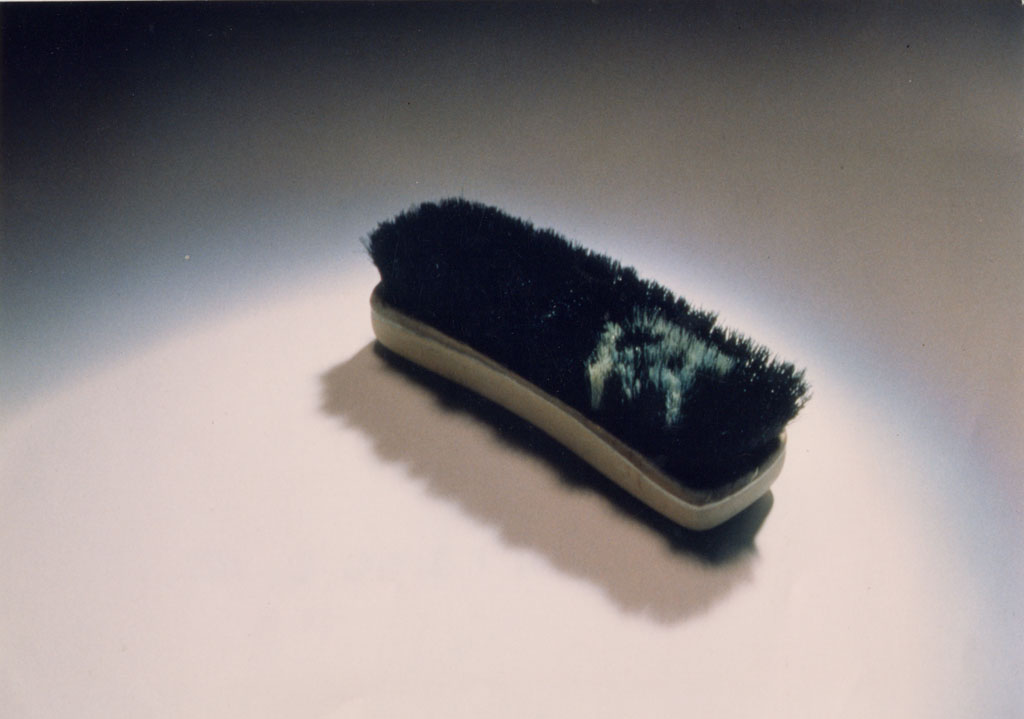
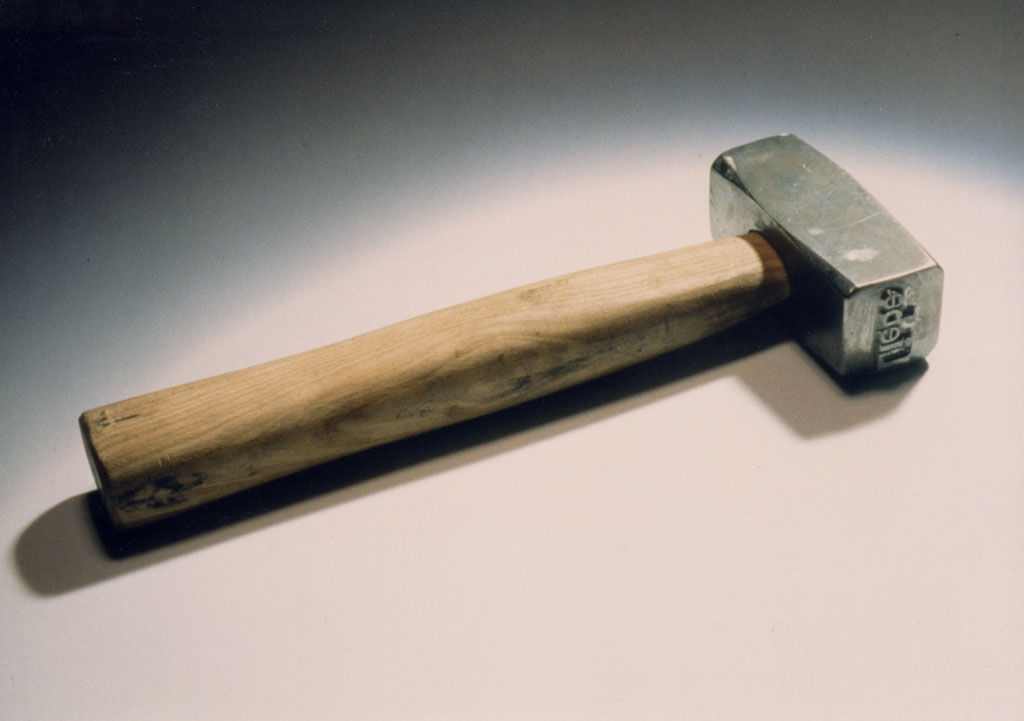
readymades. A Guilty Brush (1992) and Love of
Hammer (1991) take the forms of a brush and a hammer, objects
commonly used in everyday life.
Yet An approaches objects not through the head
but through the hand that produces handicrafts. Consequently, his works are not
displaced objects—that is, products of representation—but exist as objects in
and of themselves. The object of conceptual thought is absent. What is absent
does not exist as presence but appears only through representation. Thinking
through the hand, however, does not produce an absent object; instead, it
directly brings forth the object itself. In doing so, it surpasses the
incompleteness of representation and fulfills the most essential condition of
dialogue: a one-to-one relationship.
An object that goes beyond representation, an object that enables
dialogue as itself—this resides in the archetype of the thing. In the debate
surrounding Van Gogh’s Old Shoes, Martin Heidegger argued
that the instrumentality of objects obstructs beings from existing as beings.
Heidegger states, “A product made for usefulness is always produced as a tool
for a specific purpose. Thus, the related concepts of form and matter—that is,
material and form—as determinations of beings, find their proper domain within
the essence of equipment.” For Heidegger, what remains after production and
utility are removed is thingness itself.
Ahn Kyuchul applies compression and restraint to the ‘object itself’
acquired through thinking by hand. This process focuses our gaze on the object
as such. In the conversation titled A Dialogue between Jung Seo-young,
Yoo Jin-sang, Yoo Han-jim, Kim Ki-chul, Geum Nuri, Ahn Sang-soo, and Ahn
Kyuchul, he explains: “In my works, I remove as much design as
possible… While using materials, it is impossible not to use form, so I use
form, but in a way where design almost disappears—objects with virtually no
elements that could be called design. I look for such objects, and if none
exist, I make them myself.”
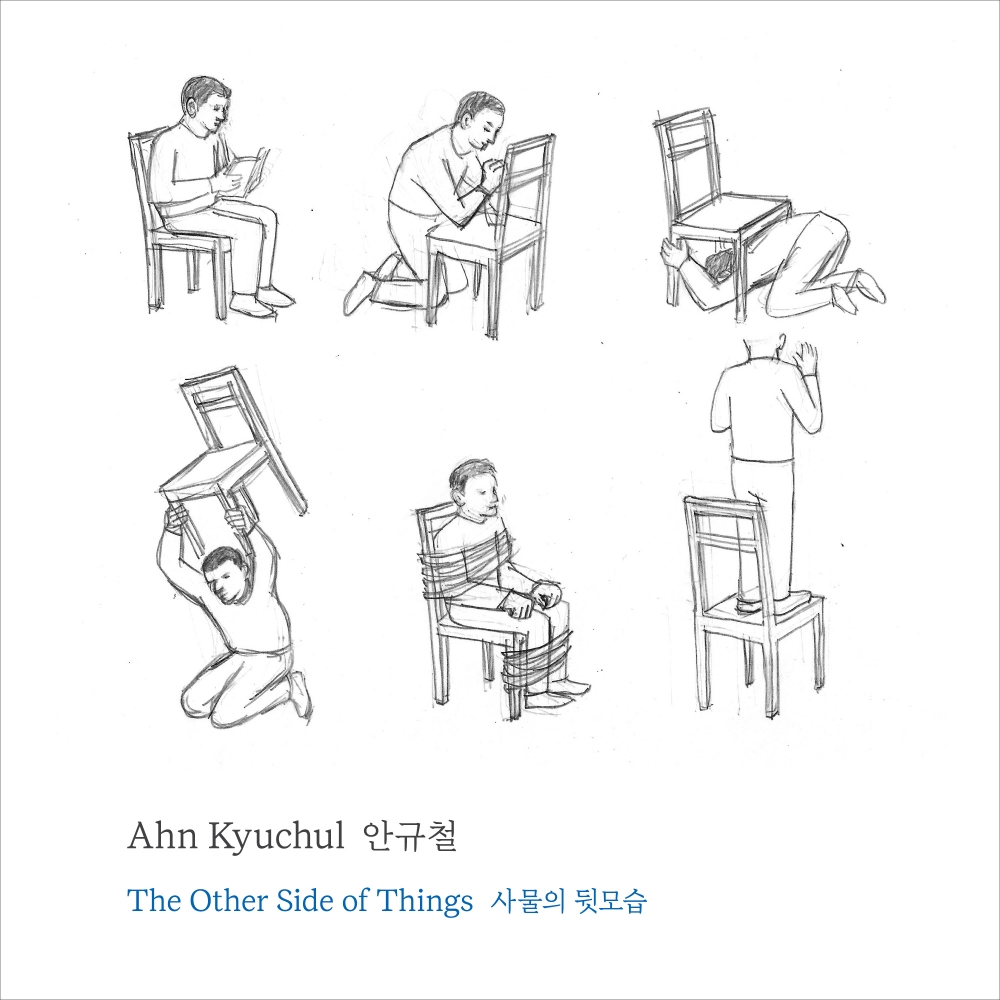
When we look at an object, we see only one side. If we turn around to
see the other side, we are again confronted with yet another single side. We
are always seeing only one side of things. The reverse side of an object is
never visible. According to Ahn Kyuchul, all the unseen backs of objects are
stored somewhere beyond the world, in a “vast lost-and-found repository.” But
even the single side that we believe we are seeing properly—are we truly seeing
it? Are we not viewing that surface through “rectangular eyes”? Do we not
perceive books as things to be read, shoes as things to be worn, clothes as
things to be put on—accepting objects only as what they are meant to be?
Ahn Kyuchul presents objects that allow us to concentrate solely on the
thing itself, where representation can no longer exist. No matter how complete
such an object may be, it is still only one side. Yet he presents this as a
work to the viewer: the one side that I see, the one side that another person
sees, yet another side seen by someone else, and the one side seen by the
artist Ahn Kyuchul himself. Perhaps only when these are shared and communicated
through dialogue can we begin to glimpse the reverse sides of objects that
remain in that “vast lost-and-found repository.”
Ⅴ. Dialoguing: Betrayal Imposed upon Representation


Ahn Kyuchul’s works seem to contain no narrative at all, while at the
same time appearing to contain an excess of narratives. This is because the
objects he presents appear to speak of only one side, yet in fact already
include the stories of their reverse sides. The objects presented by Ahn
Kyuchul continuously betray the moment, and betray themselves. What he truly
seeks to show is not a fixed subject situated within a fixed space and time.
Nor is it a changing subject within a changing space. Rather, it is the
pluralized relationships of pluralized subjects that exist simultaneously as
moments of change and as discontinuous states of suspension. This is the moment
of dialogue: a dialogue among people who, although they see only one side,
nevertheless believe in the existence of the object’s reverse side.
Through semiotic interaction, Ahn Kyuchul presents paradoxical
arrangements that allow the front and back of an object to be perceived
simultaneously. His signs do not remain at the polar extremes of the Saussurean
binary opposition between signifier and signified; instead, they dwell in the
space between them. The signifier “glasses” carries the signified of an object
made by inserting lenses into a rounded frame with temples so that it may be
worn in front of the eyes in order to improve poor eyesight.
The signifier
“door” carries the signified of an object installed in houses, rooms,
fortresses, or vehicles to allow people to enter or exit, or to allow air to
circulate or sunlight to enter, constructed so that it may be opened and closed
by pivoting on a hinge or sliding sideways. In Saussurean binary opposition,
there is no gap; only a declarative determination exists, asserting that what
one sees is fact. However, Ahn Kyuchul’s glasses and doors are not defined by
such binary structures of signifier and signified. Rather, by negating them, he
explores multiple layers of semantic networks that slip between the signifier
and the signified.
Symbolism appears above all as the murder of the object. The murder of
the object by symbolism inevitably creates an unbridgeable gap between the
object and the symbol, or between the level of being and the level of meaning.
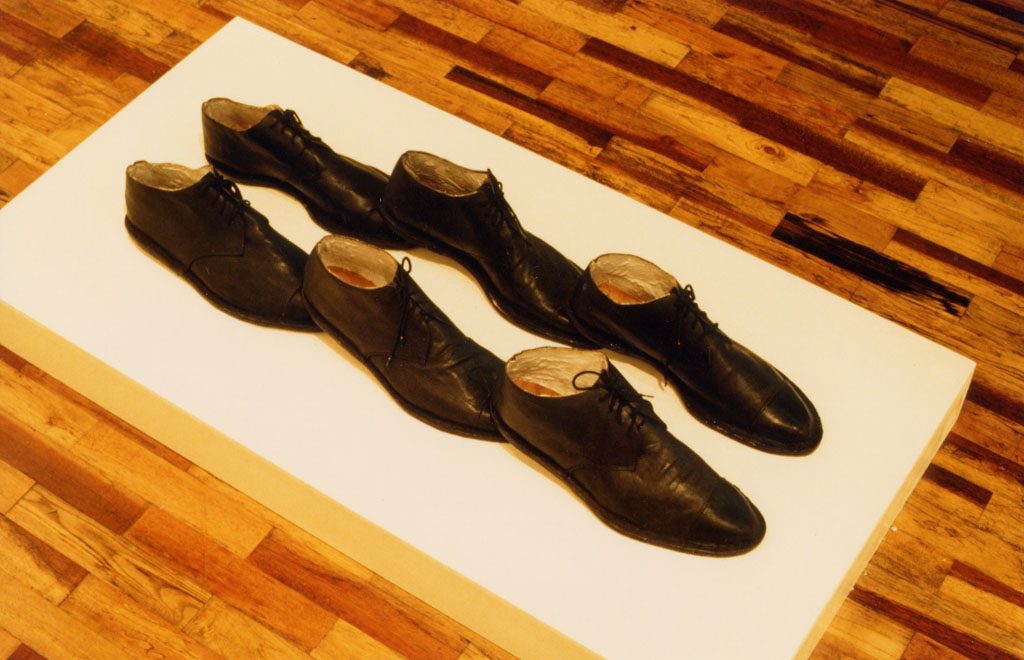
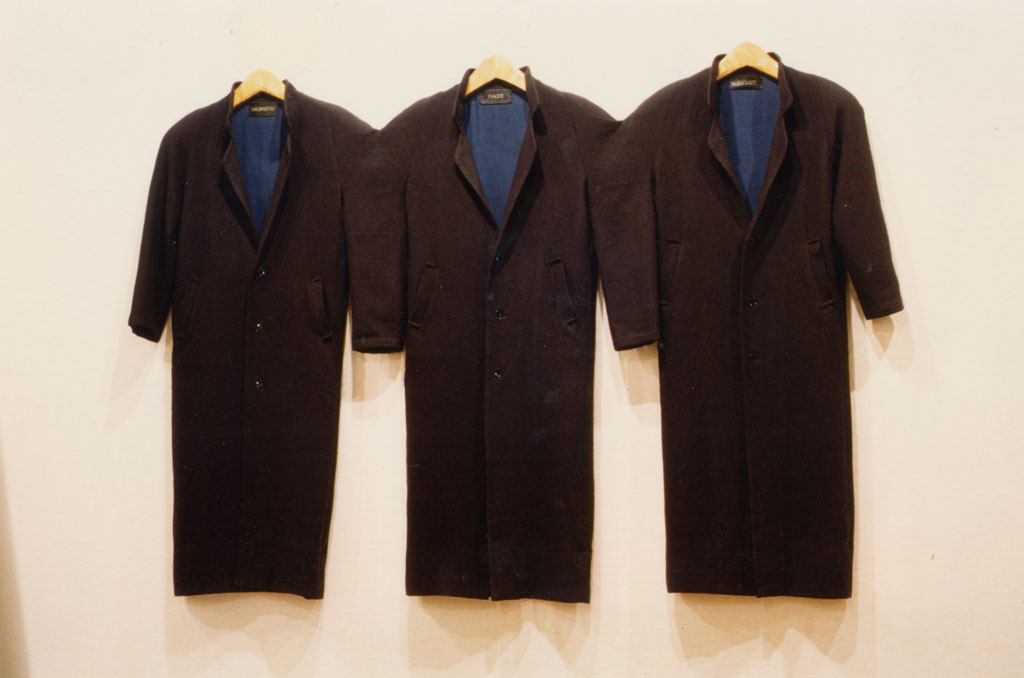
Ahn Kyuchul’s works 2/3 Society (1991),
Glasses (1992), Solidarity, Power, Freedom (1992), and
The Eternal Bride (1994) are rearrangements of signifieds
imprisoned within the ‘prison-house of language (Fredric Jameson)’. That is,
within a single signifier, one exposes a signified that diverges from others.
2/3 Society takes the form of shoes. However, the
three pairs of shoes presented by Ahn Kyuchul exist by having the back heel
press down on the front heel, and again the back heel pressing down on the
front. When people accidentally step on another person’s shoes, they feel
embarrassed. Yet Ahn Kyuchul’s shoes press down with utter naturalness.
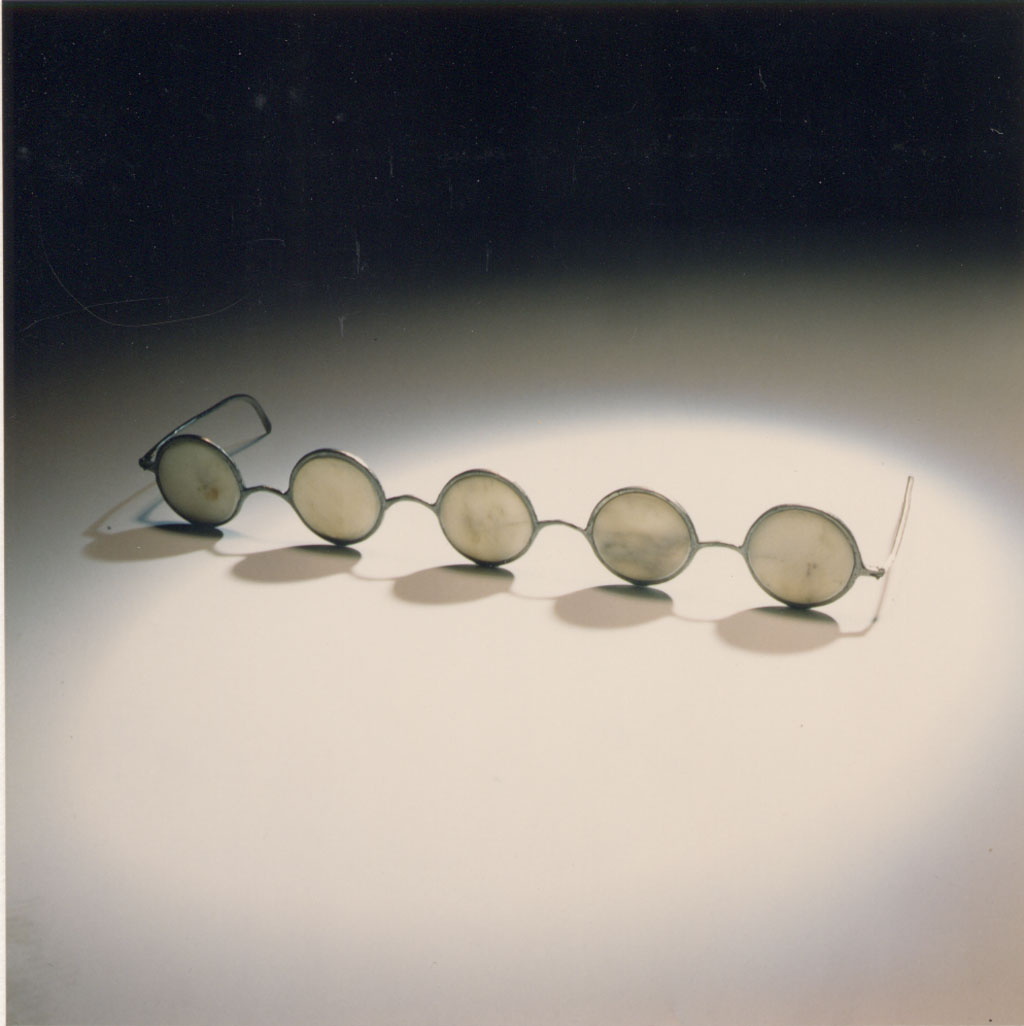
Glasses does not have two lenses but five. Is there anyone
in the world with five eyes? Moreover, the lenses are made of marble.
One
cannot see through them. Solidarity makes Freedom consists
of three coats connected together, making them impossible to wear. The
Eternal Bride presents a closed space rather than a space opened
through a door. Although these works appear to reject the systems agreed upon
by language users, Ahn Kyuchul has brought only the forms (signifiers) of
everyday linguistic systems. This means that he has not created shoes, glasses,
coats, or doors that function within everyday semiotic systems. Rather, what he
has created are “2/3 Society,” “Glasses (plural),” “Solidarity, Power, Freedom (or Solidarity
makes Freedom),” and “The Eternal Bride,” even though they retain the forms of
objects agreed upon by language users.
In this sense, the signs produced by Ahn Kyuchul are pseudo-entities (似而非) that exist between signifier and
signified. They are similar yet not identical; because they contain fundamental
differences, they cannot be called the same, yet may be called similar. Shoes
that are shoes yet cannot be walked in; glasses that are glasses yet cannot be
seen through; clothes that are clothes yet cannot be worn; doors that are doors
yet cannot be opened or closed. In the general semiotic system, shoes must be
worn and walked in, glasses must enable vision, and clothes must be worn. However,
the relationship between signifier and signified presented by Ahn Kyuchul is
one in which a new signified escapes from the ‘prison-house of language
(Fredric Jameson)’ by abandoning ‘arbitrariness (Saussure)’. Ahn Kyuchul merely
presents one example of such an escape. He reveals these betraying
relationships between signifier and signified through his works.
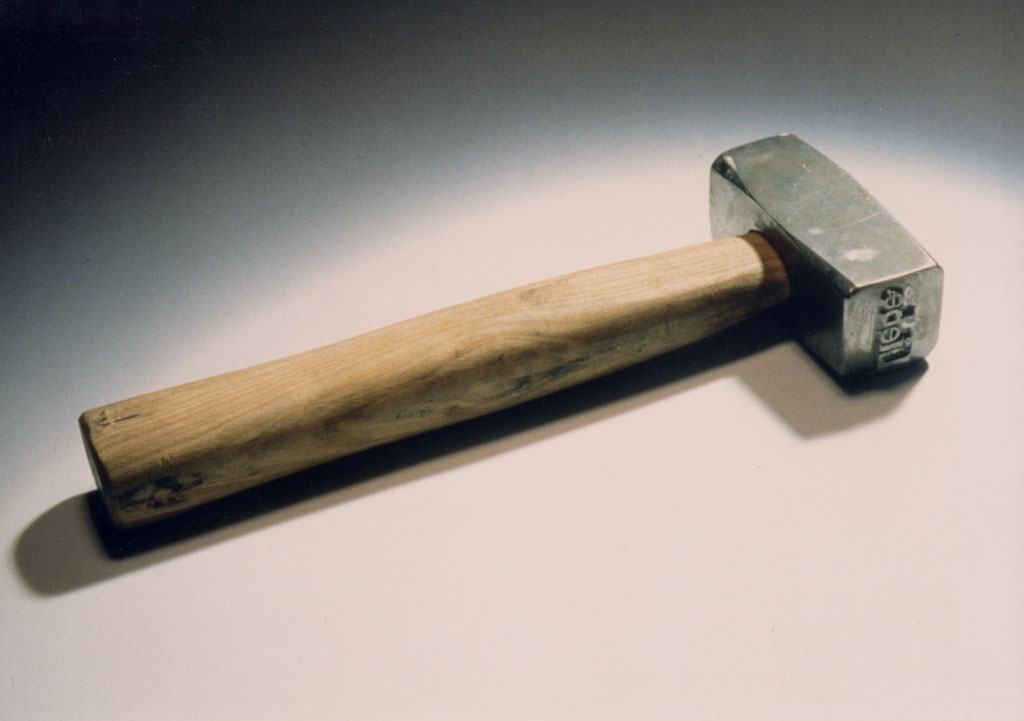
In another context, betrayal continues. Love of Hammer
(1991), A Guilty Brush (1996), and The Ladle of
Memory (1995) address betrayal by placing text upon objects. A hammer
is shown while speaking of love; a brush is shown while speaking of guilt; a
ladle is shown while speaking of memory. For a hammer, whose purpose is to
strike something, the act of striking another may be love. Yet no one believes
that the act of hitting itself constitutes love. The hammer in Love of
Hammer is engraved with a German word meaning ‘love,’ so that each
time it strikes, the word ‘love’ is imprinted.
A brush cleans an object by
brushing away dust, yet this brush bears ‘guilt.’ Ahn Kyuchul’s A
Guilty Brush betrays the signified of the brush as an instrument of
cleaning; rather than cleansing, it imparts guilt. The Ladle of Memory
betrays the ladle’s function of scooping soup through a hole inscribed with the
word ‘memory.’ The ladle cannot hold soup; it can only retain the trace that
soup once existed, much like memory exists in the present only as a trace.
Through these works—presenting simultaneously ‘the visible form’ and ‘the
speaking text’ that appear unrelated—Ahn Kyuchul expresses his own intention to
reveal to the viewer one aspect of the countless unseen reverse sides of
objects.
Ⅵ. Seeing Reality through Dialogue: Revealing the Duality of
Representation
Are the signs presented by Ahn Kyuchul complete in themselves? Although
he appears to reveal the reverse side of objects, might he not be constructing
yet another semiotic system? Is he not presenting fiction while claiming it to
be reality? As stated bluntly at the beginning of this text, art is a
reconstruction of reality. It does not simply show reality; rather, it
reconstructs it. Instead of concealing reality within fiction, it reveals
fiction itself. This fiction emphasizes certain aspects of reality while
further obscuring others, thereby allowing the unseen aspects of reality to
emerge. Ahn Kyuchul renders into artworks the very question: ‘Why does language
continuously slip away from us the more we speak? And why do we end up saying
things we never intended to say?’—the condition of slippage itself, the
slipping of signs.

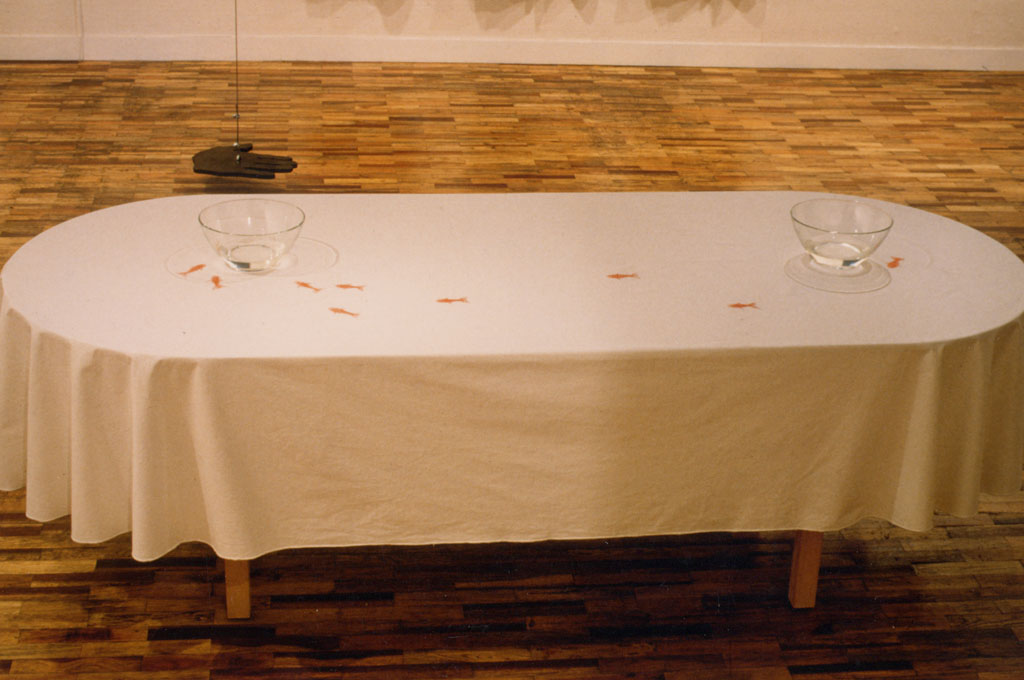
In Water in
the Distance (1991), two transparent bowls half-filled with
water are placed on a table. Covering the table is a tablecloth embroidered
with fish. The fish appear to be moving toward the water, yet they cannot reach
the transparent bowls that contain it, because the fish are stitched into the
tablecloth. They are confined. The fish seem to move swiftly from the water in
one transparent bowl toward the water in the opposite bowl, but this movement
is a fiction. In reality, it is not the fish that can move, but the transparent
bowls half-filled with water.
The assumption that the fish are heading toward
the water stems from a prejudice attached to the signifier of the fish—namely,
the belief that “fish must be in water.” If, in Water in the Distance,
the movable water is placed elsewhere, the fish may appear to be escaping from
the water, or the relationship between the fish and the water may seem entirely
irrelevant. It is not that the fish seek out the water; rather, the water is
placed where it is, and that placement produces such an interpretation. By
presenting imaginary fish alongside water that physically exists in Water in the Distance,
Ahn Kyuchul suggests that what we consider to be truth is valid only within a
particular context.

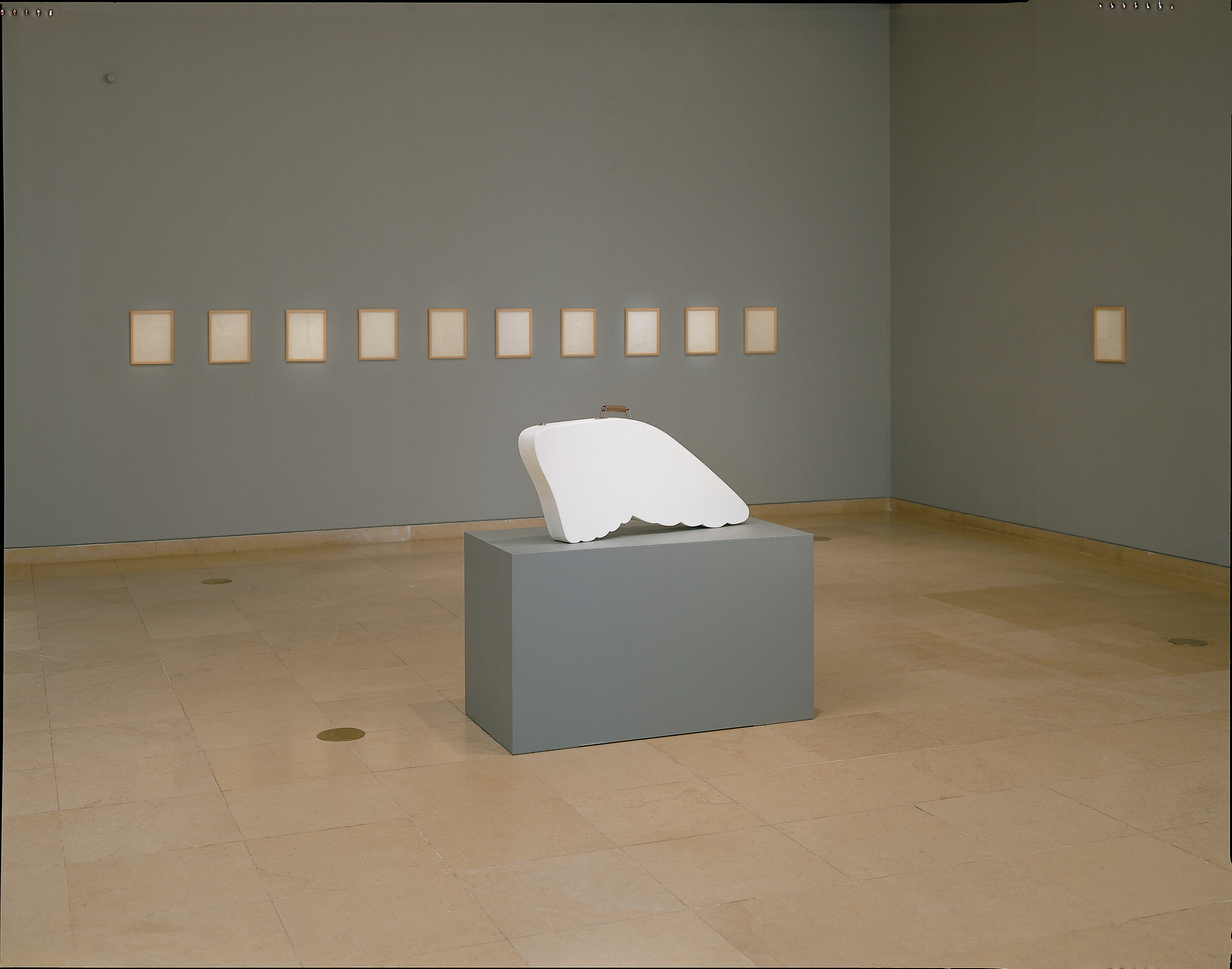
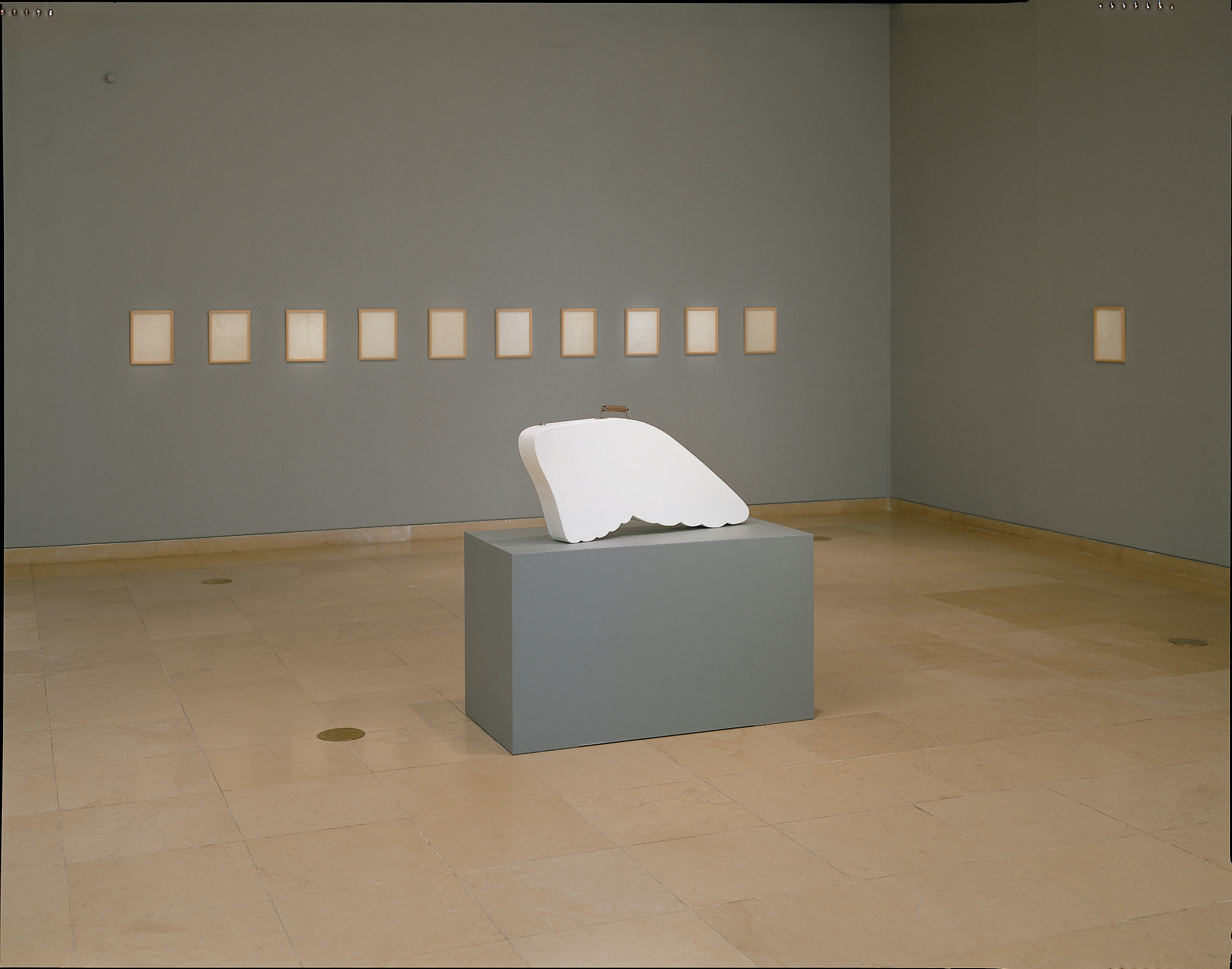
The Man’s Suitcase (1993) consists of eleven drawings
and one sculpture. Through the eleven drawings and accompanying texts, Ahn
Kyuchul speaks of the space between fiction and reality. He presents a
fairy-tale-like narrative—through drawings and words—about a wing-shaped bag
left in his care by a stranger who appeared one day. As material evidence of
this story, he also presents the wing-shaped bag itself. Although fiction and
reality exist at irreconcilable extremes, in The Man’s Bag
the boundary between them is erased. As viewers look at the bag that physically
exists, even the imaginative story created by the artist comes to feel real.
Through this work, Ahn Kyuchul seeks to reveal the reverse side of the saying
“seeing is believing.” In truth, people “see what they want to believe.”
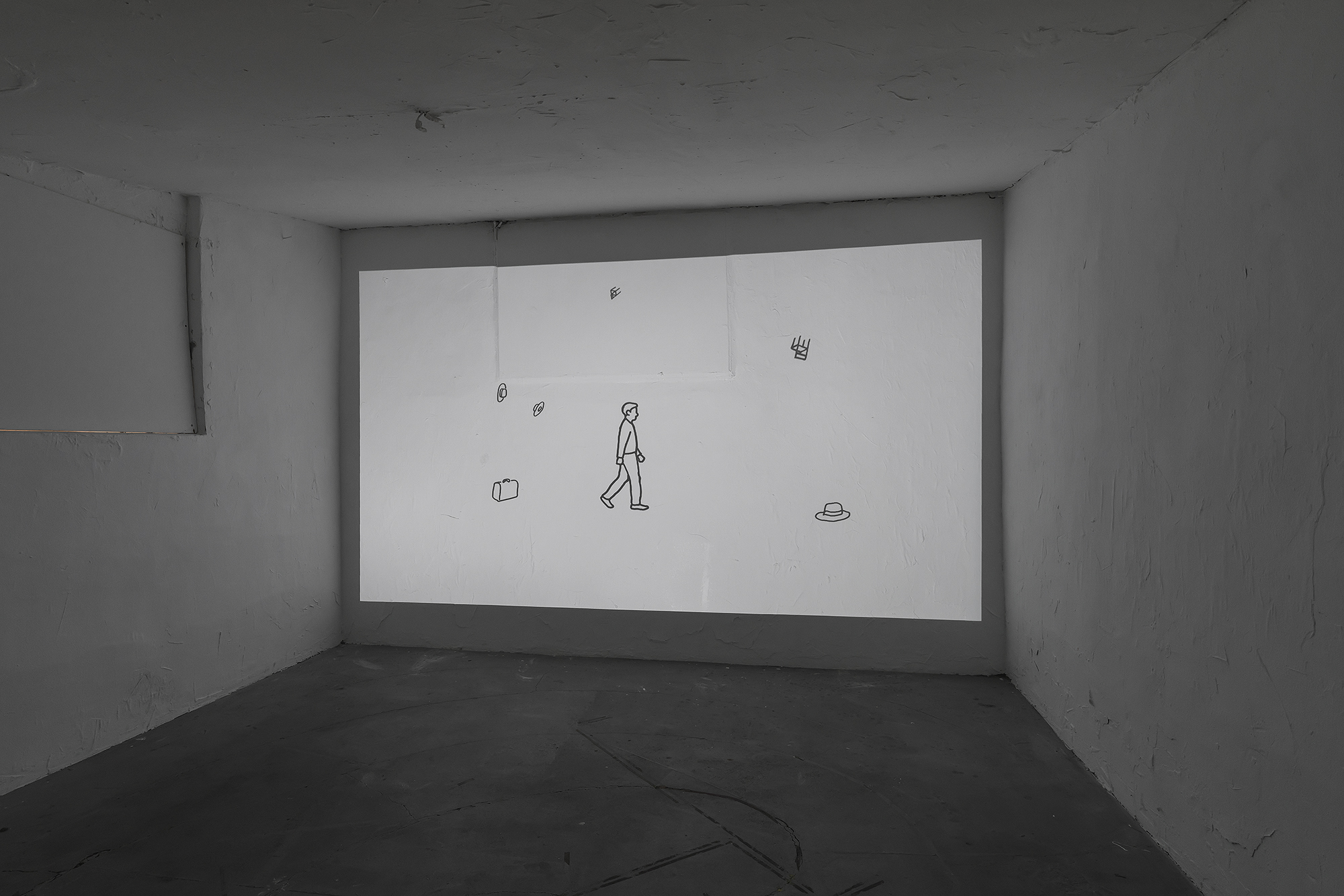
Hat (1994/2004) presents the relationship between two
people by dividing it into five scenes that are repeatedly shown. A person
wearing a hat meets a person without a hat, and they shake hands. Then the
person without a hat devours the person wearing the hat. Only the hat remains,
left behind as a trace of the person who once wore it. This unbelievable
situation—where a seemingly friendly relationship turns into one of eating and
being eaten—is presented through cartoon-like imagery and repetition. Through
constant repetition, the narrative structure produced by the images is omitted,
leaving only evidence suggesting that the story might be real.
This generates
an effect similar to Andy Warhol’s repetitive works. Warhol used silkscreen to
present images repeatedly. Although the images he presented depicted horrific
scenes from incidents and accidents, the repetitive production through
silkscreen erased the content of the events, leaving only their surface. In
other words, Warhol removed the signified from the sign and presented only the
signifier. For Ahn Kyuchul as well, repetition functions to conceal cruel,
fictional-like stories. However, he leaves open the possibility that what he
presents might in fact be true. This is because the hat remains as a real object.
The cruel story of a person being devoured becomes something that could be true
through the existence of that hat. This reconstructs the tension between
fiction and reality seen in The Man’s Suitcase.
Water in the
Distance, The Man’s Suitcase, and Hat
demonstrate how fiction in the form of images can distort reality. When we try
to convey meaning through language, we have never once done so perfectly.
Language can never be free from the socially constructed frameworks we inhabit.
Moreover, countless ideologies are embedded within it. Ahn Kyuchul merely
presents this condition itself; he does not take sides. His works are fiction.
Yet he does not attempt to conceal this fact—he openly declares their fictional
nature.
Within the fictional space Ahn Kyuchul presents, viewers begin to
wonder, “Could this possibly be true?” Ahn Kyuchul responds, “I told you—it’s a
lie.” Another viewer raises a different doubt: “No, this isn’t a lie!” Ahn
Kyuchul replies, “But there’s evidence…… how could it be a lie? It’s true!” By
inviting doubting viewers into his works, Ahn Kyuchul gradually completes his
own incomplete works. Through dialogue between artist and audience—that is,
through ‘cognitive mapping’—he helps viewers confront the unseen and concealed
aspects of objects. In this sense, Ahn Kyuchul’s works are in the process of
being completed. They are not finished.
Signs cannot reveal everything. They conceal certain aspects while
exaggerating others. Showing and concealing—signs exist within this subtle
tension. Ahn Kyuchul suggests that our relationships in reality function in
precisely the same way: we exaggerate what we want to show and freely conceal
what we want to hide. Yet people live believing only what is visible, unaware
of this delicate tension.
Ⅶ. The Value of Artistic Representation as Dialogue
Signs possess a representational function that makes absent objects
present. However, an unremovable gap exists between representation and
presence. If representation were to coincide perfectly with presence, it would
no longer be representation but presence itself. Therefore, representation does
not aim at presence, but at ‘a certain degree of presence.’ We live our lives
forgetting the ‘degree’ in that ‘certain degree of presence.’ Contemporary
society lies by presenting ‘a certain degree of presence’ as if it were full
presence.
In such a complex modern society, can signs exist that are free from
ideological assault? If so, what form must they take? Is genuine communication
truly possible for us, who converse through language (signs) already
contaminated by ideology? Are the images that flood this era truth, or are they
fiction? Since artworks themselves are signs, it is inevitable that artistic
representation cannot be free from this suspicion that surrounds signs.
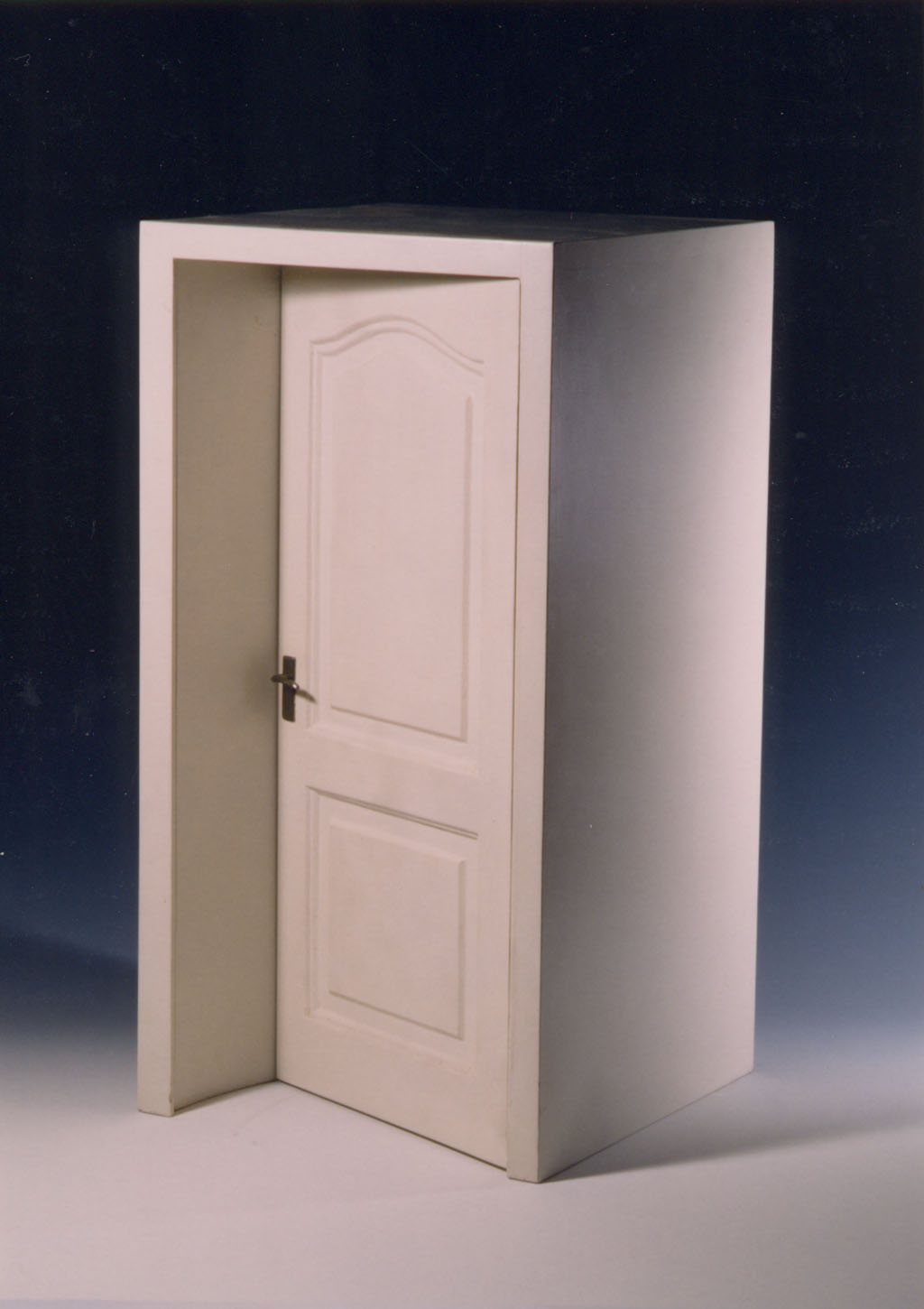
This experiment finds its realization in Ahn Kyuchul’s work. He is
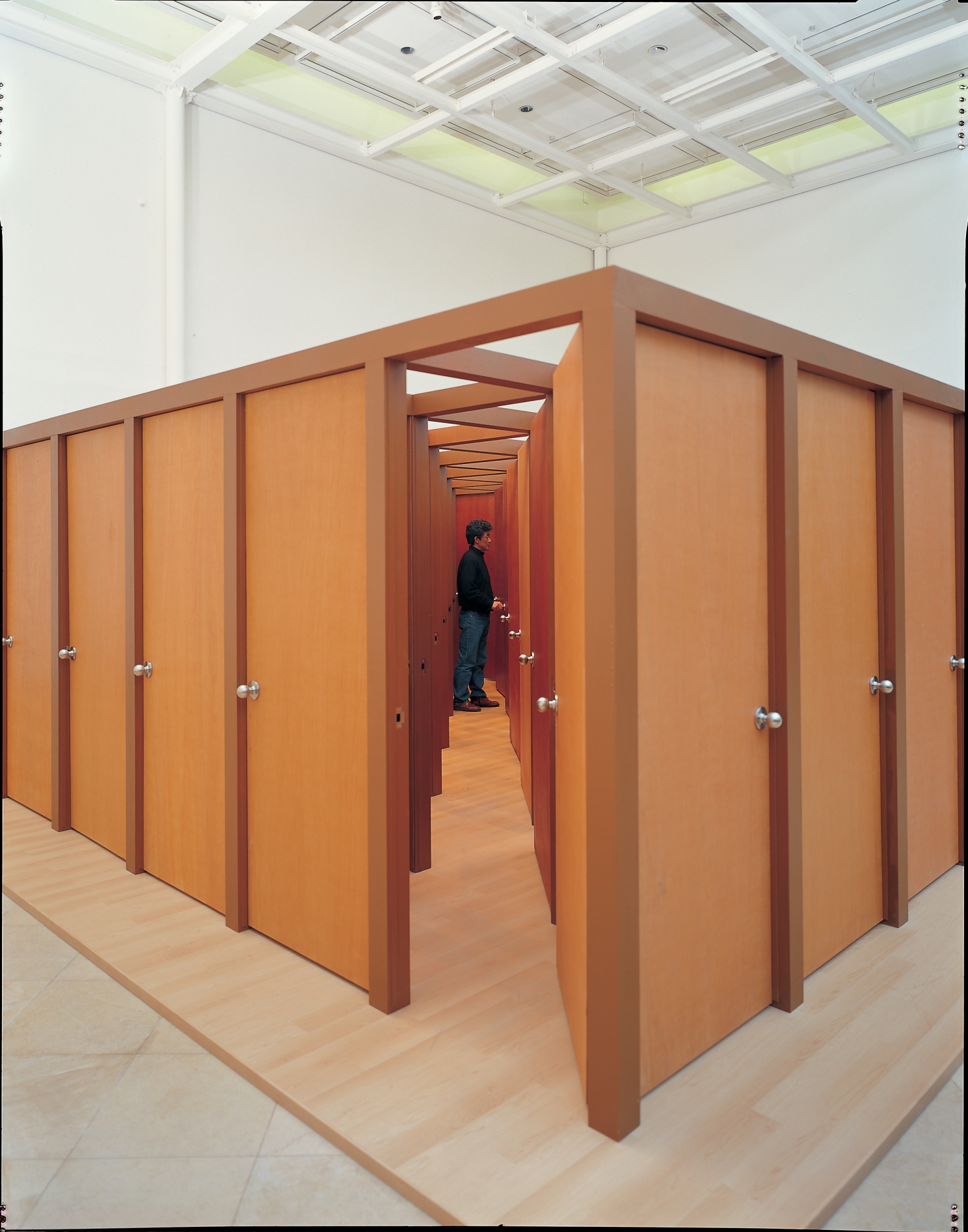
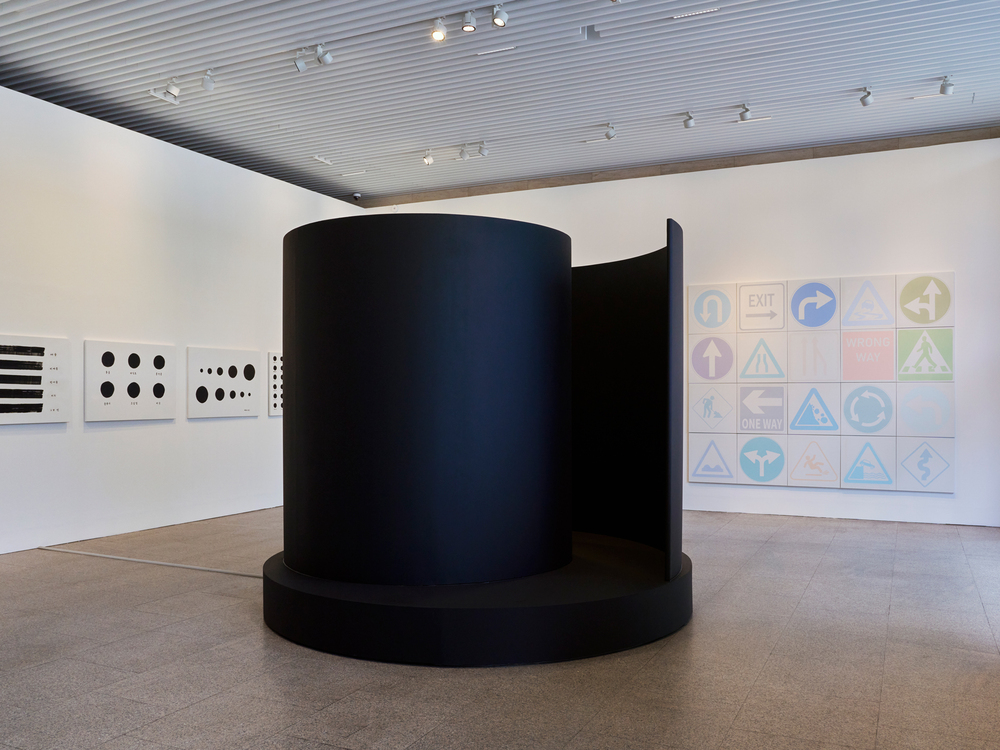
deeply interested in ‘semiosis’—the process of sign action. In this sense, Room
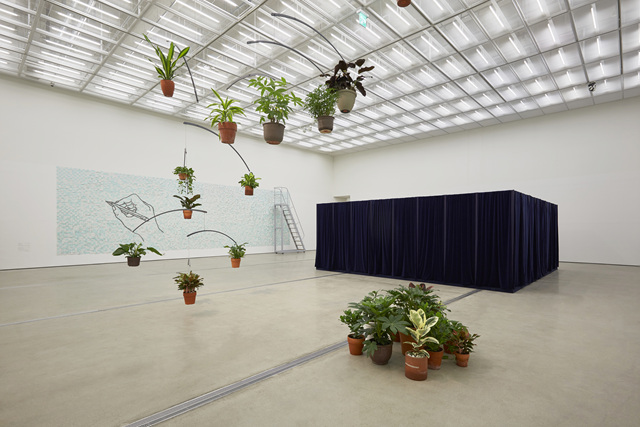
with 112 Doors (2003–2004) is particularly noteworthy. Room
with 112 Doors gives form to a field in which semiosis takes place.
The forty-nine rooms created by the 112 doors constitute spaces where Ahn
Kyuchul can encounter and communicate with viewers, and where viewers can in
turn encounter and communicate with one another.
In this field, they appear
suddenly, like ghosts lingering in the gap between representation and presence,
repeatedly delaying our arrival at any final destination. People who, on the
street, would pass by unnoticed—indeed, even when walking right beside us—suddenly
emerge before us in Room with 112 Doors, forcing mutual
recognition. The moment one recognizes ‘you’ becomes the very starting point of
dialogue. By reflecting on the ‘semiosis’ that concerns him, Ahn Kyuchul
presents the results of his experiments one by one.
Through the thinking of the hand, he directly
fabricates objects; he reveals the reverse sides of things; and he exposes the
tense relationship between truth and fiction. Such practices demonstrate his
artistic orientation: within the communicative structure of artist → artwork ←
viewer, both artist and viewer must engage in an ongoing ‘dialogue’ through the
work. Ahn Kyuchul states, “I believe there is a reason for art to survive. Its
role is not to create something entirely new that has never been seen before,
but to question the meaning of what has already been shown and is being
shown—those things that flow past us and are consumed—and to make us question
them” (emphasis added).
Seeking artistic representation through dialogue, Ahn

Kyuchul presents its outcome through the ‘mapping of cognition’ generated by
dialogue between artist and viewer. To engage in dialogue means that ‘I,’
through ‘you,’ and ‘you,’ through ‘me,’ can reflectively contemplate ourselves;
this, in turn, enables reflection on the collective world of ‘us.’ Moreover, it
allows us to recognize the existence of ‘him,’ who stands outside the framework
of ‘us.’ This does not confine us to a world enclosed by the framework of
‘I–you’ and ‘us,’ but opens our vision to a world beyond the frame, where ‘he’
exists—ultimately making possible a comprehensive outlook on the world.
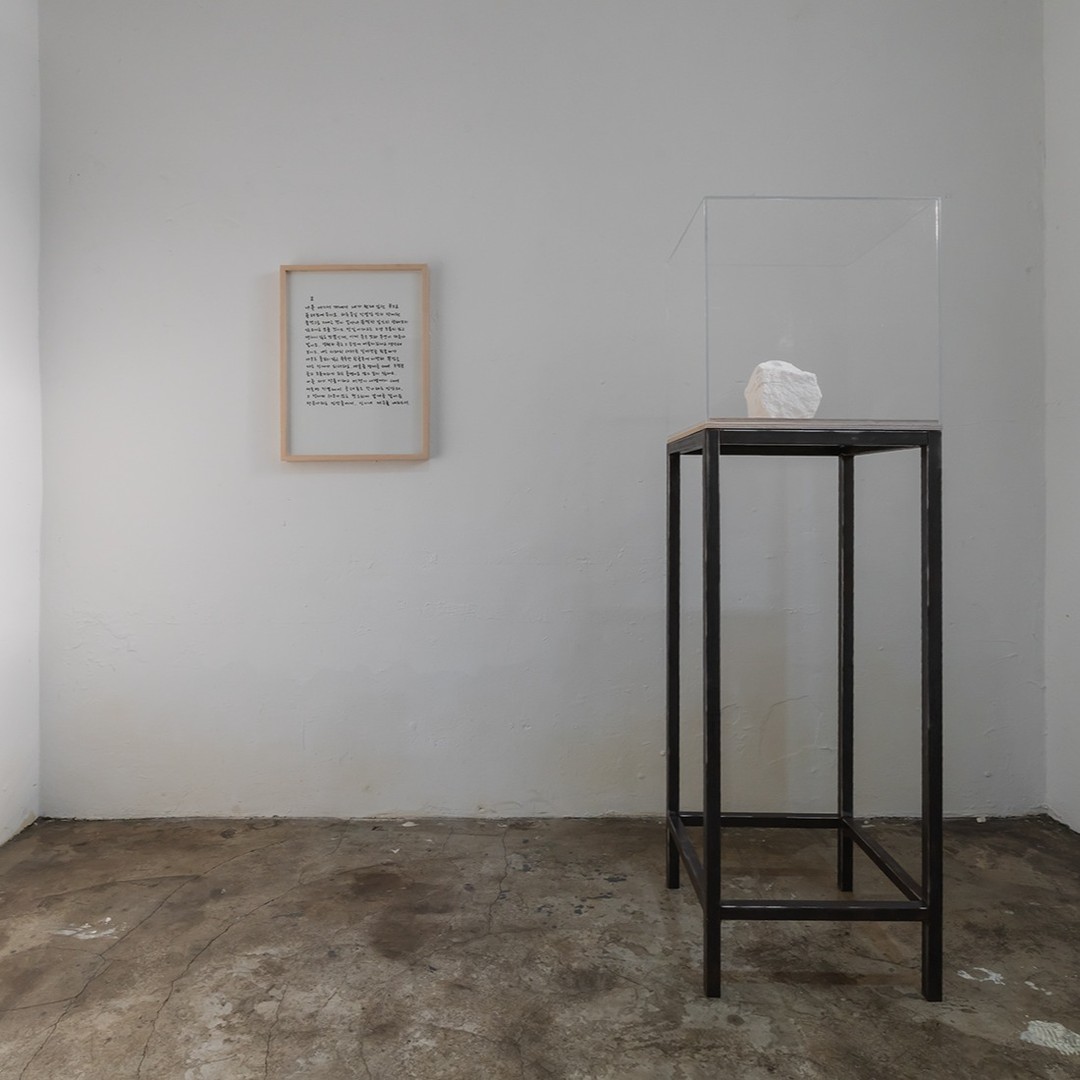
The aesthetic resonance of Ahn Kyuchul’s work is not an understanding
gained by choosing only one side within a dichotomous world, but one achieved
by representing, through ‘art’, a reality in which contradictions coexist. Even
though the contemporary world we inhabit is more powerfully exposed to ideology
than any previous era, Ahn Kyuchul seeks to reveal our lives and our everyday
realities as ones that still retain the possibility of overcoming it. “If we
refuse to think within the prison of language, then we must stop thinking
altogether, because we cannot go beyond asking whether the limits visible to
our eyes are truly limits (Nietzsche).” In the past, in the present, and in the
future, Ahn Kyuchul continues to wait for the stories of viewers he will
encounter by chance within the labyrinthine Room with 112 Doors.