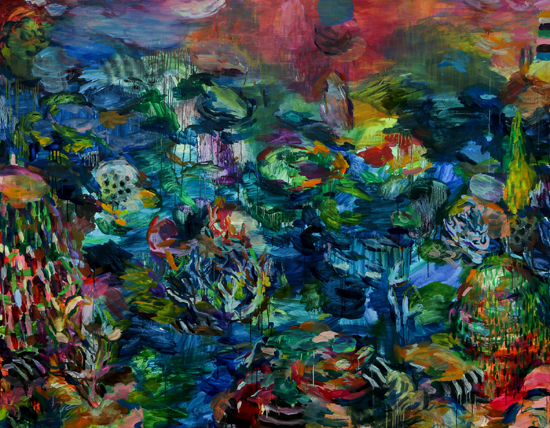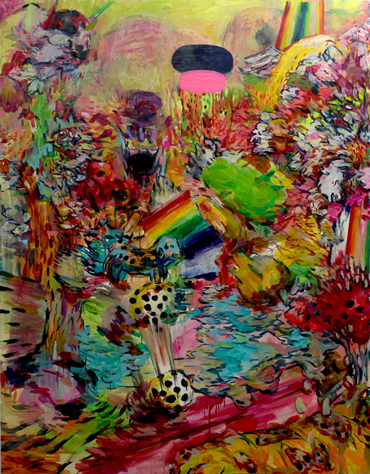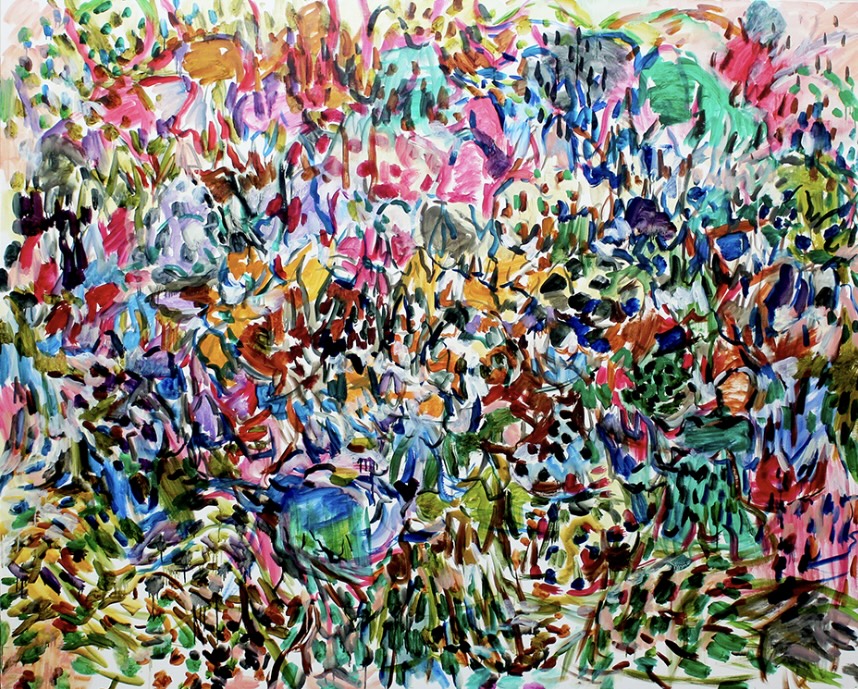
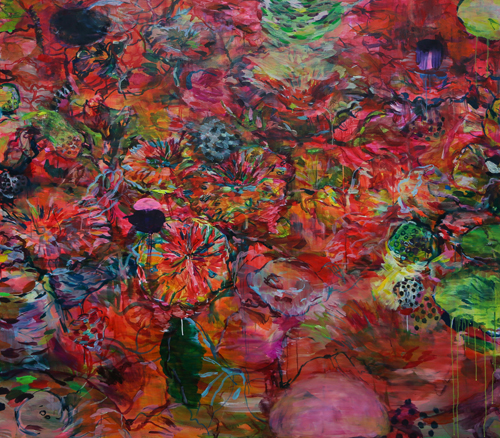
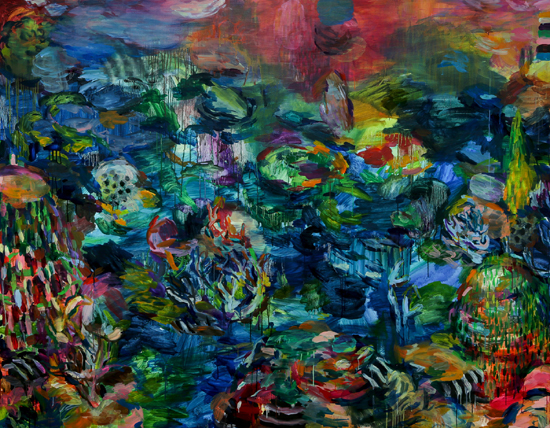
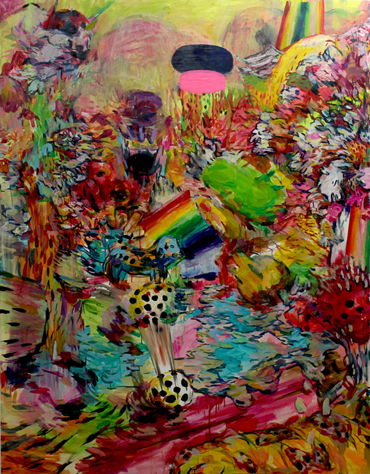
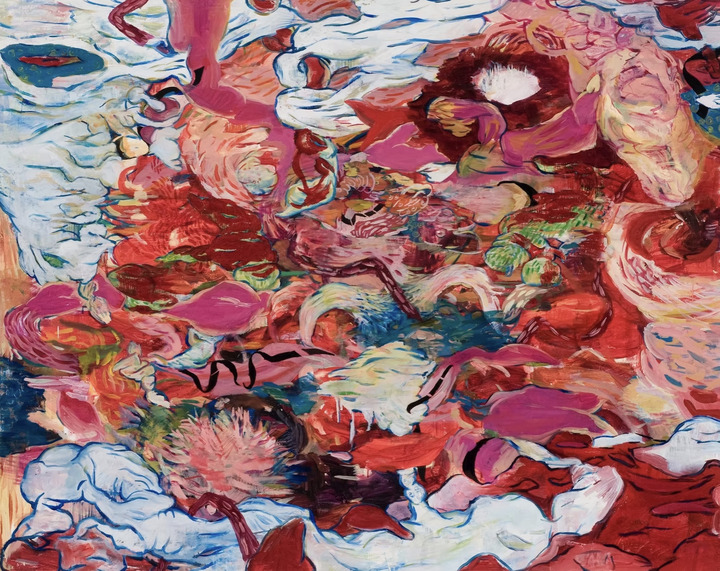
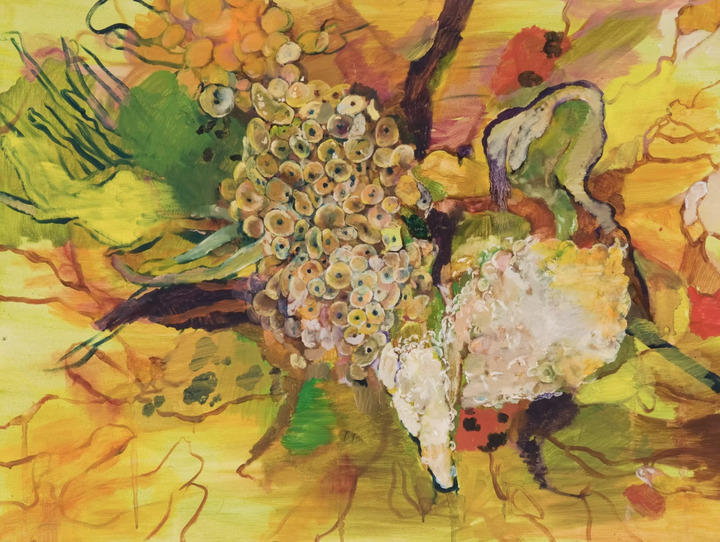
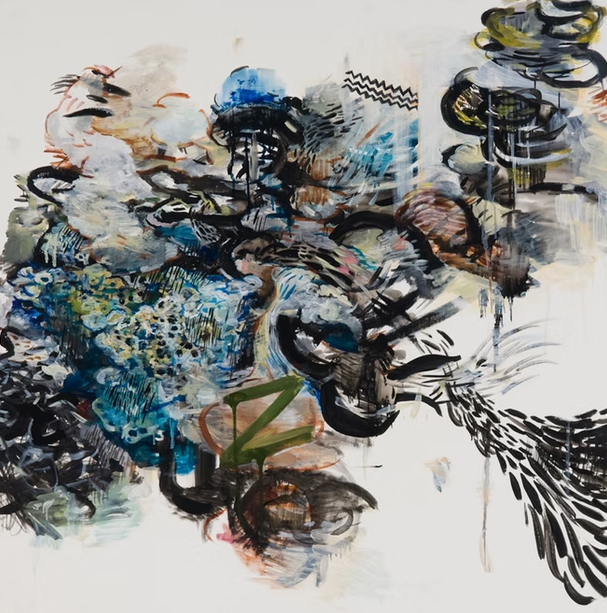
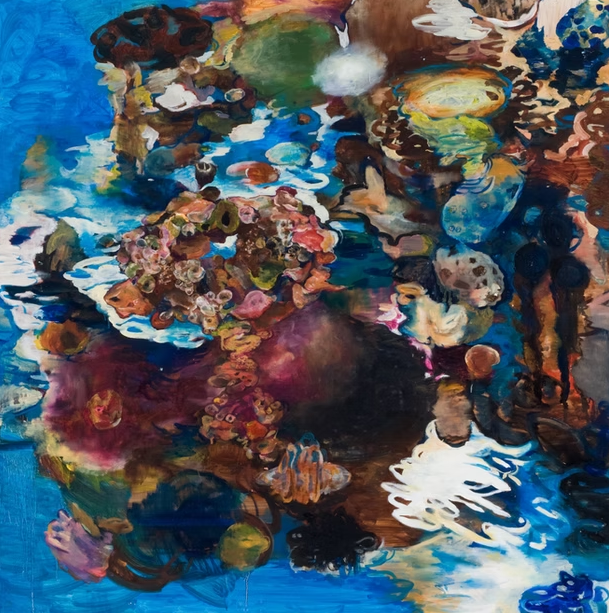
Woohyun Shim (b. 1987) draws inspiration from the everyday places that surround her, particularly dense forests. From childhood to the present, the artist translates into the pictorial space the visual, auditory, and tactile sensations she has experienced while walking through the woods, along with the fragments of imagination and memory that arose in those moments—rendered on canvas without filtration.


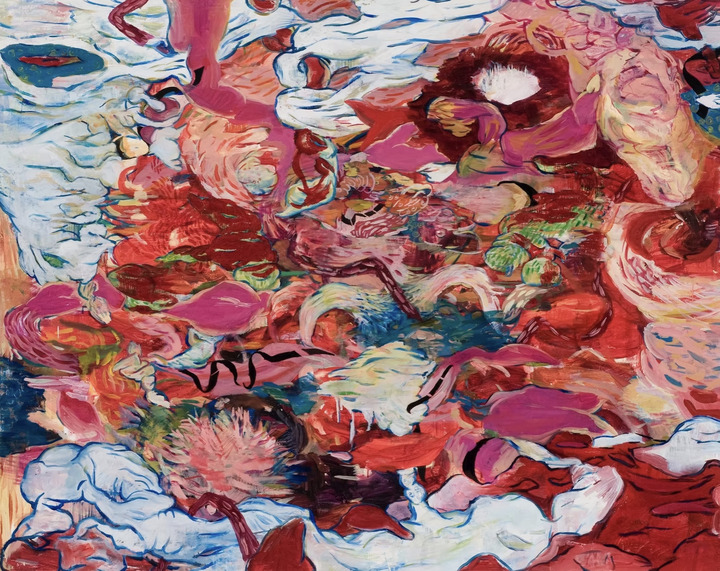
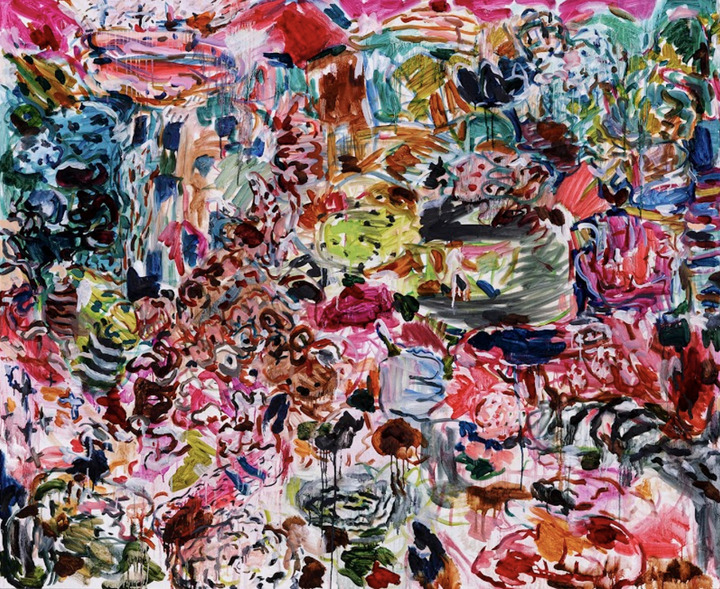
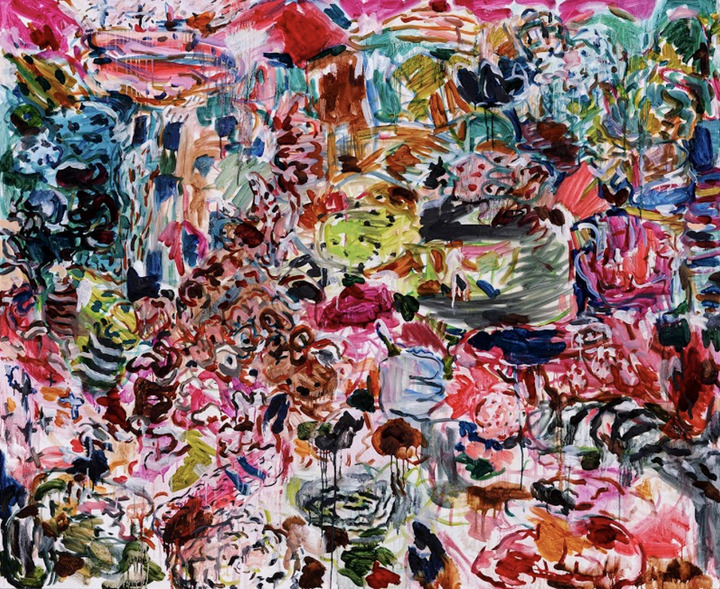
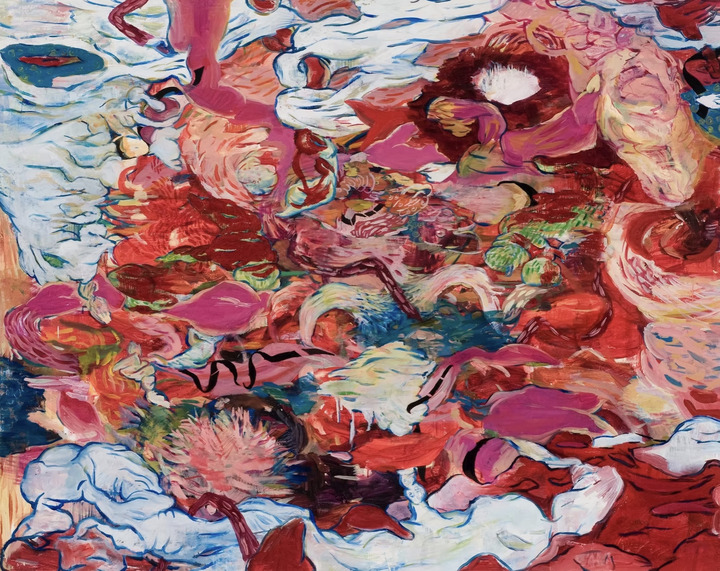
Woohyun Shim, lava, ketchup, 2009, Oil on canvas, 122x152.5cm ©Woohyun Shim

Woohyun Shim’s paintings form labyrinthine landscapes in which familiar flowers, weeds, trees, forests, and mountain ridges are intricately intertwined. In a dreamlike state of hesitation, layers of natural vegetation overlap and interweave, becoming organically connected in multiple strata.
 
This body of work originates from the artist’s childhood experiences of visiting her grandfather’s ancestral grave site in Paju on weekends. At the time, the young Shim would wander along a narrow path behind the grave site and into the dense forest beyond, delighting in roaming freely—guided only by where her feet might take her—until the adults came looking for her.


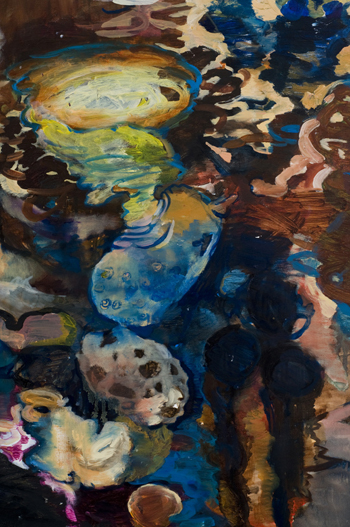
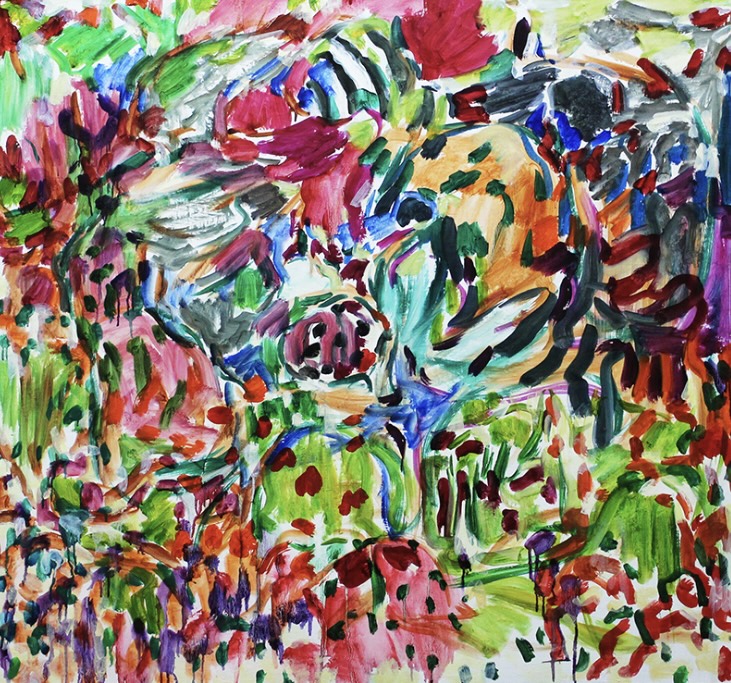
Woohyun Shim, New Worship (detail), 2010, Oil on canvas, 122x122cm ©Woohyun Shim

Walking through forests untouched by human hands, the artist experienced moments of oneness—an almost complete merging with the surrounding woodland. In such moments, time seemed to dissolve, and she encountered a genuine sense of freedom, no longer conscious of the spaces that confined her.
 
Shim reflects that these deeply personal experiences, formed in childhood against the backdrop of the forest, profoundly shaped her perceptual framework. Over time, they became established as the central thematic foundation of her painting practice.


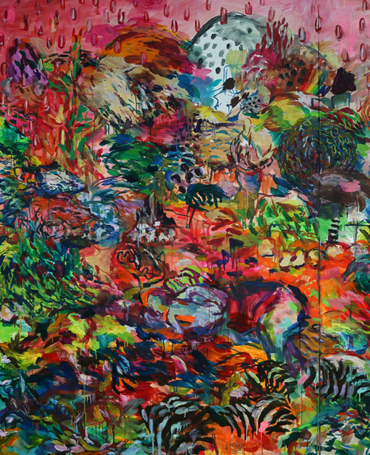
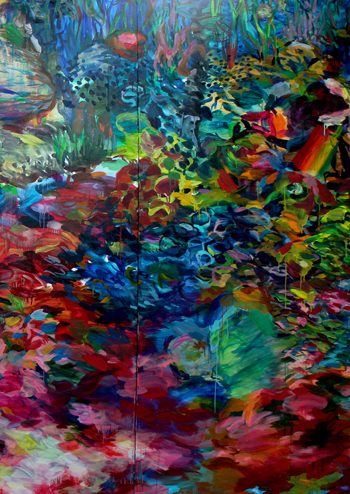
Woohyun Shim, Puff the Magic Bomb (detail), 2014, Oil on linen, 190x260cm ©Woohyun Shim

Vivid primary colors and countless, short, interrupted brushstrokes layered upon one another vividly reveal the wild, untamed nature of the forest the artist seeks to convey. In contrast, the figures—rendered with firm, defining lines—stand out against a softly blurred background, heightening the sense of depth within the forest.
 
The free movement of the brush and the traces of flowing paint, combined with the repeated layering of images through cycles of painting and erasure, create a dreamlike, almost hallucinatory atmosphere.

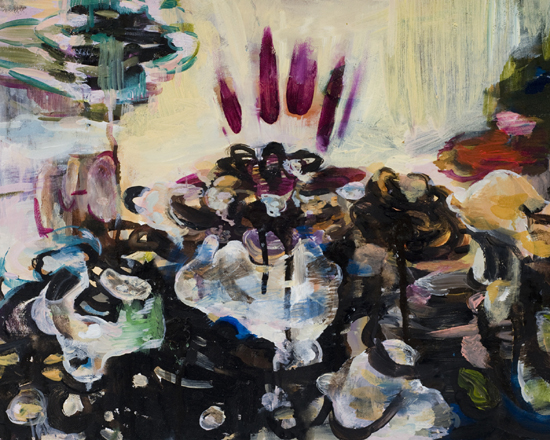
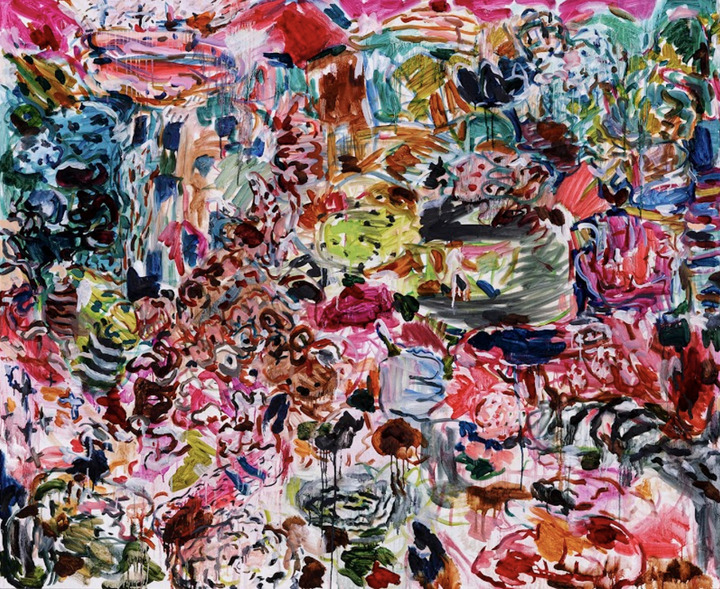
Woohyun Shim, Bubbles, Eggs, Lines, 2009, Oil on canvas, 76.2x101.6cm ©Woohyun Shim

Meanwhile, the immersive experiences the artist encounters in nature often unfold in her practice as states of de-bordering and de-spatiotemporality. Within her pictorial worlds, countless unnamed life forms—those of the past, present, and an imagined future—emerge entangled within a single space.
 
These beings intermingle without regard for species: bodies merge, human and animal organs become one, and the surface is densely populated with amphibian eggs and animal eyes. Such chaotic landscapes are situated across multiple, overlapping perspectives, within which each element seeks out its own order.


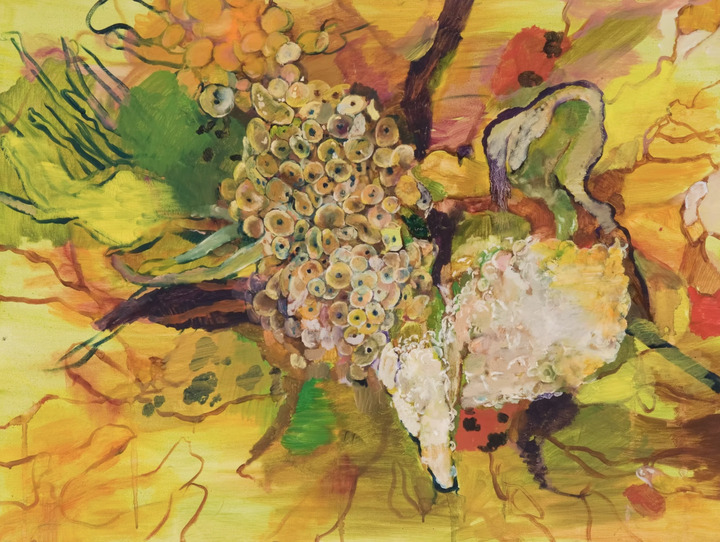
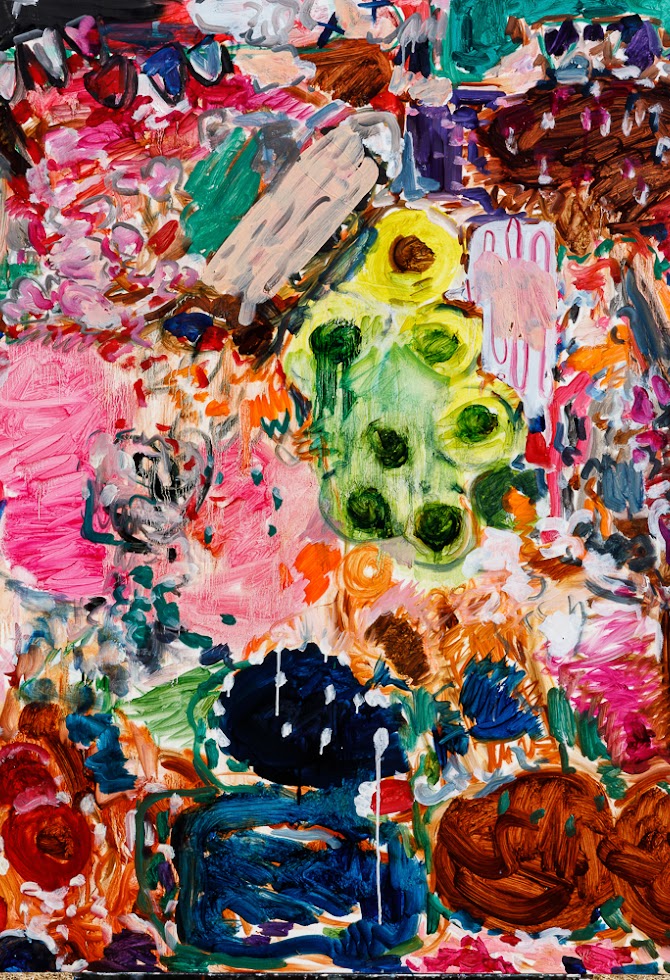
Woohyun Shim, Flip (detail), 2010, Oil on canvas, 122x122cm ©Woohyun Shim

The layering and confusion of ambiguous, unclassifiable images reflect the movements of the artist’s inner world. Experiences encountered within the natural setting of the forest activate events, memories, images, and symbols that had been submerged in the deeper strata of the artist’s psyche. These emerge on the canvas as stains, associations, and partial revelations, ultimately joining the dynamic flow that permeates the entire pictorial surface.


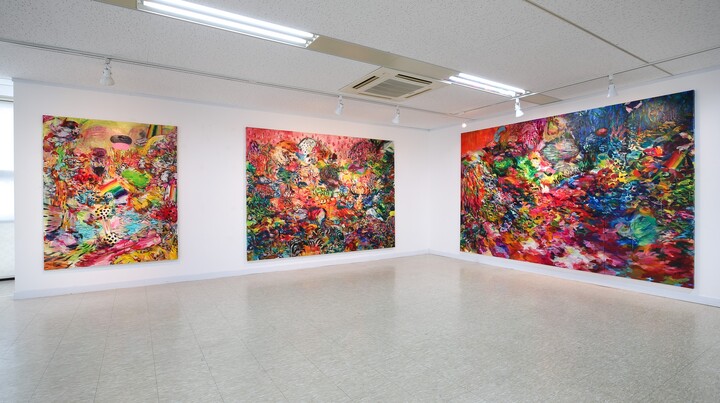
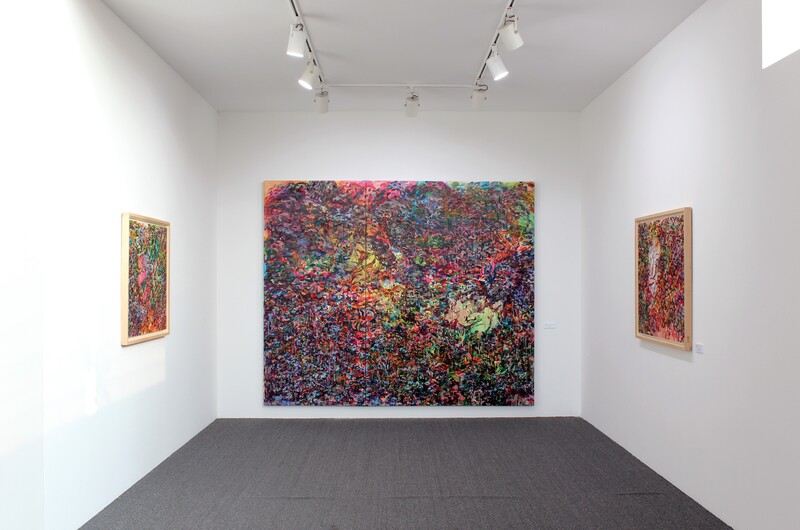
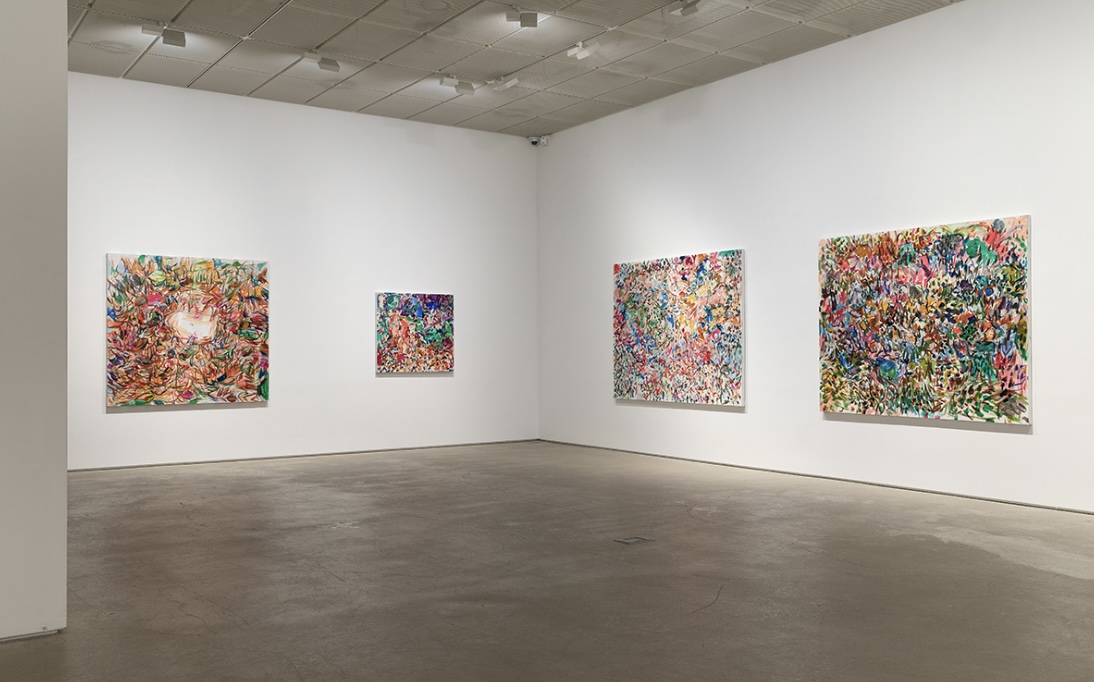
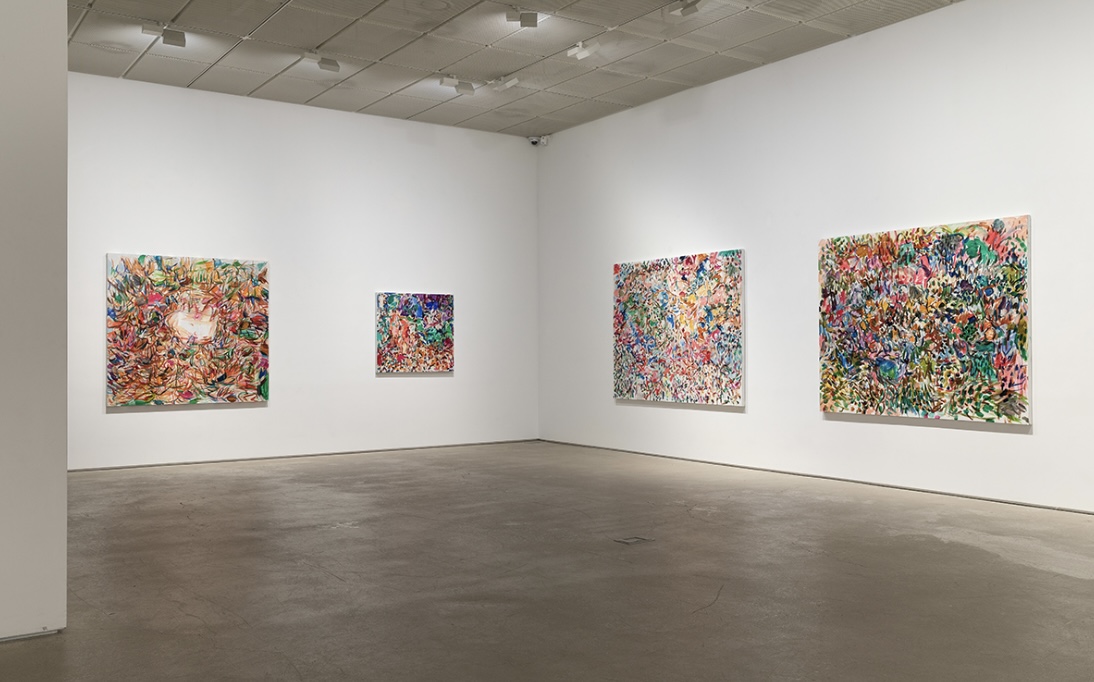
Installation view of 《Eros-scape》 (Art Space Hue, 2014) ©Art Space Hue

Meanwhile, in her solo exhibition 《Eros-scape》 (2014) at Art Space Hue, Woohyun Shim introduced the mythological concept of “eros,” unfolding nature—long suppressed by systems of reason—into dreamlike and dynamic landscapes.
 
In her artist’s note, Shim articulated her understanding of eros and the conceptual underpinnings of the romantic as follows:
 
“My work centers on eros—the origin of the birth of all things. Within primordial nature, raw eros-driven energy lies latent. This organic eros begins from dialectical thought, transforming from biological impulses into cultural impulses, and further into other phases.”


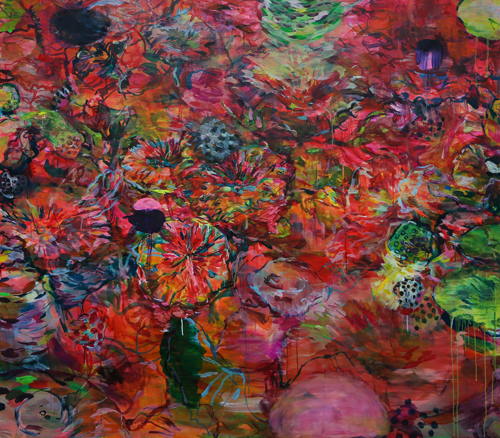
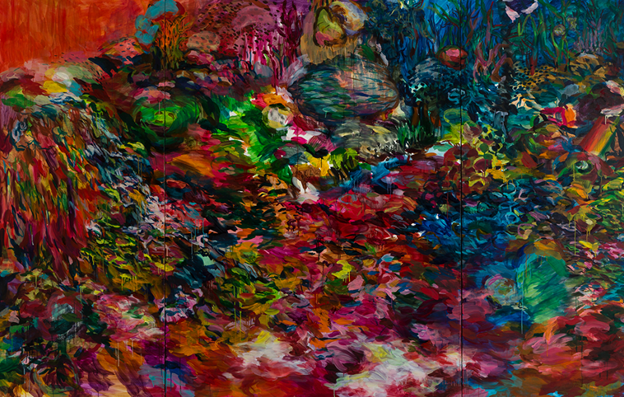
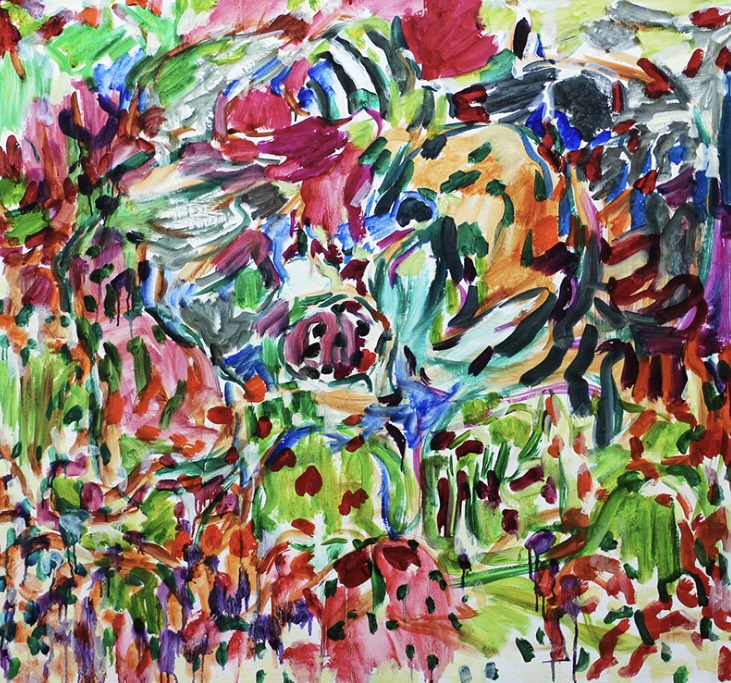
Woohyun Shim, Naughty Forest of Diana (detail), 2014, Oil on linen, 205x320cm ©Woohyun Shim

From this perspective, the artist turns her attention to the dialectical function of Eros as a force that drives production and creation. As a result, the individual image elements arranged across the canvas collide and rupture through chance encounters, radiating the potent energy of Eros.
 
Within the picture plane, myths transformed through their entanglement with fantastical elements, catastrophic events and recorded disasters such as volcanic eruptions, beasts, foreign and othered subjects, and exotic symbols derived from memories that connect these elements are repeatedly overlaid and erased by layers of differently colored paint. Through this process, acts of “relation-making” mediated by Eros are continuously constructed and dismantled.


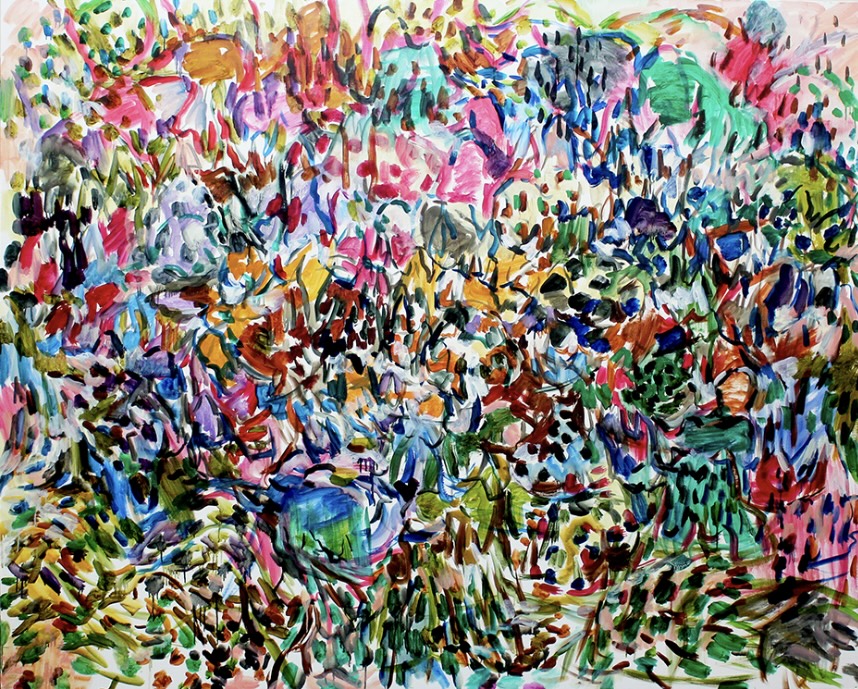
Woohyun Shim, Lotus Landscape 1, 2013, Oil on linen, 140x165cm ©Woohyun Shim

At times, fragments of certain images re-emerge by tearing through the swirling surface. In doing so, all hierarchical orders within the picture plane collapse.
 
The wild beasts that partially reveal themselves throughout the canvas metaphorize animal instincts—such as sexuality—suppressed and obscured by reason. They introduce tension into the composition, disrupting the harmony of its elements and becoming a powerful means of critiquing and overturning rationality grounded in the primacy of reason.


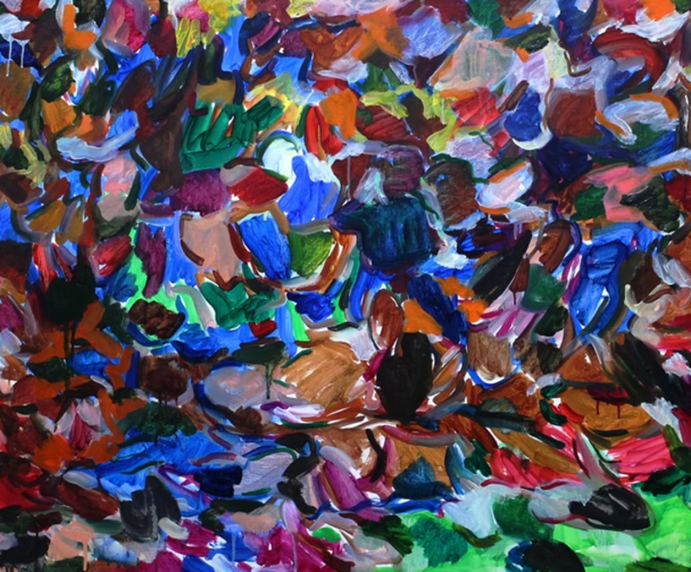
Woohyun Shim, Lotus Landscape 2, 2013, Oil on linen, 150x190cm ©Woohyun Shim

In this way, the elements within her paintings repeatedly generate and dismantle relationships, collapsing hierarchies among them, while dynamic brushwork and an intense play of primary colors render the entire canvas as a unified, organic, and abstract configuration of images.


Woohyun Shim, Succumbed to Reason, 2013, Oil on linen, 171x132cm ©Woohyun Shim

Meanwhile, an examination of the compositional structures in Woohyun Shim’s works reveals a layering of multiple viewpoints—such as bird’s-eye perspectives that look down from above, or close-up, intimate gazes that peer into the scene. As image elements are rapidly compressed into a single frame, narratives that would otherwise unfold in a linear sequence are condensed and abbreviated.
 
Through this compression, nature and reality are reconfigured on the canvas: entities that exist or once existed form relationships or maintain distance from one another regardless of fixed relative scale or spatial separation, giving rise to a distinctly surreal sensibility.


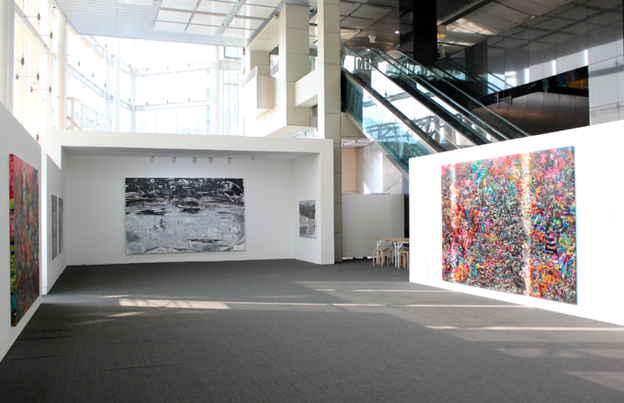
Installation view of 《LAND.IN.SIGHT》 (Space K, 2016) ©Space K

Through a practice that translates the series of processes and effects generated as experiences and situations in the forest enter her “inside” onto the canvas, Woohyun Shim gradually shifts the point of departure of her work toward her inner self. In other words, the place from which her work begins moves away from a passage that receives landscapes through visual perception toward a deeper, more internal realm.
 
According to the artist, this paradoxically becomes the “domain of the pure “outside” (le dehors), while its image is reflected as an inner landscape.” In this sense, the works can be understood as images produced through a series of processes in which her inner world is, in turn, projected outward.


Woohyun Shim, Blind Love, 2018, Oil on linen, 153x190cm ©Leeahn Gallery

At first glance, Woohyun Shim’s pictorial space may appear to realistically depict various nameless types of undergrowth, clusters of fully blossomed flowers, branches, soft soil, rough stone surfaces, or insects and amphibians one might encounter in a forest. At the same time, it reveals an ambiguity that feels like a hallucinatory abstraction of forest images drawn from her own experience. As the artist herself defines it, this pictorial space is a representation of the realm of the “outside” (le dehors).
 
This “outside” refers to a visualization of a deep psychic dimension that erupts from realms beyond conscious awareness—those of life and death, chance, chaos, the unconscious and subconscious, and intuition.


Woohyun Shim, Fiction #5, 2018, Oil on linen, 98x105cm ©Leeahn Gallery

In this sense, the pictorial space created by the artist does not correspond to any single, specific forest, but rather takes on the character of a neutral and potential space—a non-place (non-lieu). According to Marc Augé, a non-place does not signify the negation of place; rather, it refers to a space formed through the overlapping and crossing of multiple spaces, one that allows for mutual substitution and compatibility.
 
Such non-placeness is accompanied by atemporality. Within the artist’s sensibility and speculative flow, fragments of temporally distinct memories from different forests—unconsciously layered—emerge as an expression of non-linear time.
 
The flow of time experienced in real forests, encountered by the artist in the past and more recently, becomes simultaneously entangled within her pictorial space. It reveals a state of emptiness and infinitude that is neither past nor present, yet can be both at once—something that cannot be measured by the metrics of chronological, real-world time. Moreover, the moment we immerse ourselves in this pictorial space, the temporality of the real world likewise disappears or is suspended.


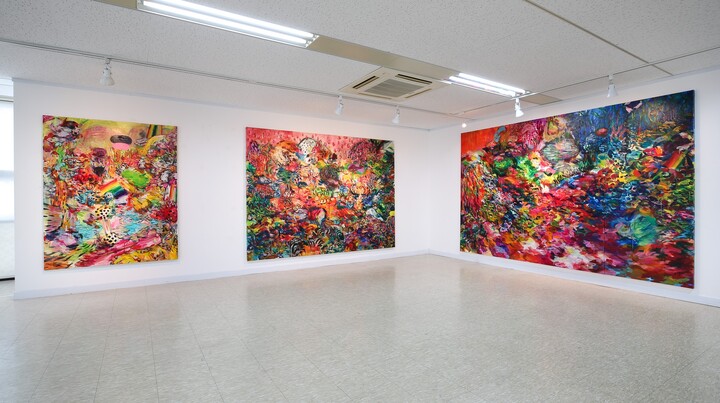
Installation view of 《Enchanting Forest》 (Leeahn Gallery, 2018) ©Leeahn Gallery

In her 2018 solo exhibition 《Enchanting Forest》 at Leeahn Gallery, Woohyun Shim sought to place greater emphasis on her playful and buoyant private emotions. Whereas her earlier works were densely filled with thick layers of paint and deep, saturated tones, the works presented in this exhibition reveal a much lighter and more cheerful palette, evoking watercolor-like transparency and allowing for spatial pauses and openness.
 
According to the exhibition foreword, the atemporal pictorial space of the non-place created by the artist can, in some respects, be described as a kind of “transparent membrane with reflexivity.” In other words, the artist’s sensory and psychological experiences—enchanted by the forest—are projected onto the pictorial space, which in turn reflects them back, functioning as a ritualistic medium that captivates the viewer.


Woohyun Shim, Can’t Stop the Music, 2021, Oil on linen, 132x162cm ©Woohyun Shim

In this way, Woohyun Shim’s canvas functions both as a physical site where countless brushstrokes and traces of paint are recorded, and as a space onto which images located “outside” the artist’s consciousness are unconsciously projected.
 
The vitality of the various elements she encounters in the forest passes through her psychological and emotional filters and is incarnated as another form of life within the pictorial field; the white ground of the canvas thus becomes a forest in itself, where inner movements surge and tremble.
 
Her paintings, in which seemingly opposing elements—inside and outside, nature and the human—are thoroughly entangled and woven into rhythm, emanate a vivid sense of life in and of themselves, leading the viewer into a deeper, more abyssal realm beyond the time and space of the real world.

 “I traverse pictorial space as if walking through a forest.”   (Woohyun Shim, Artist’s Note)


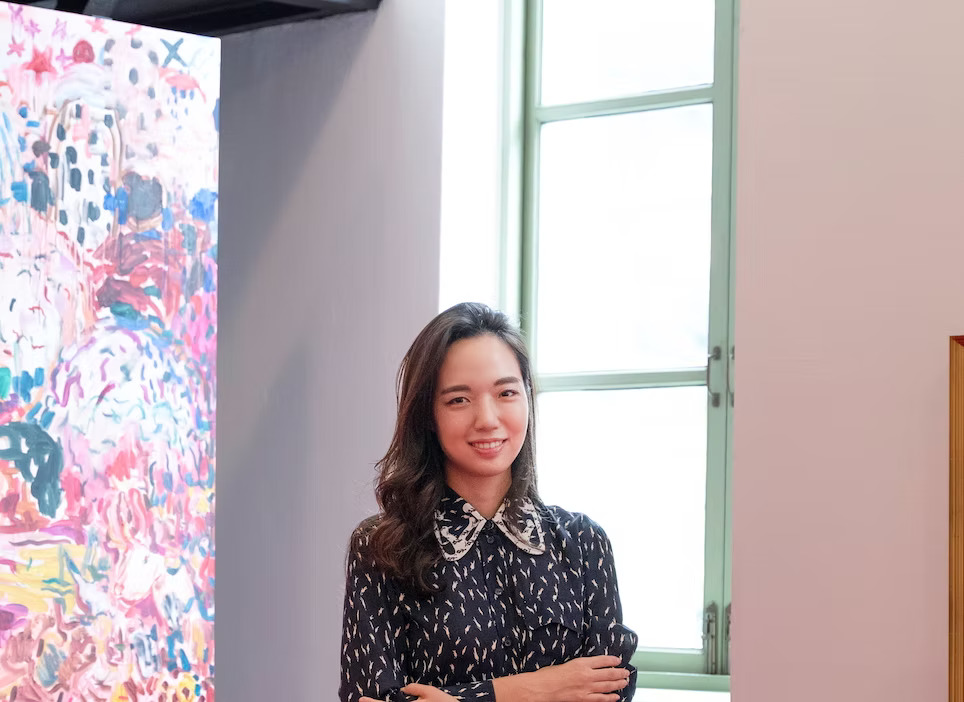
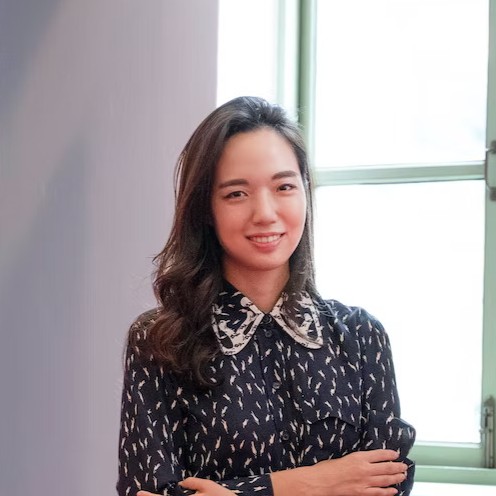
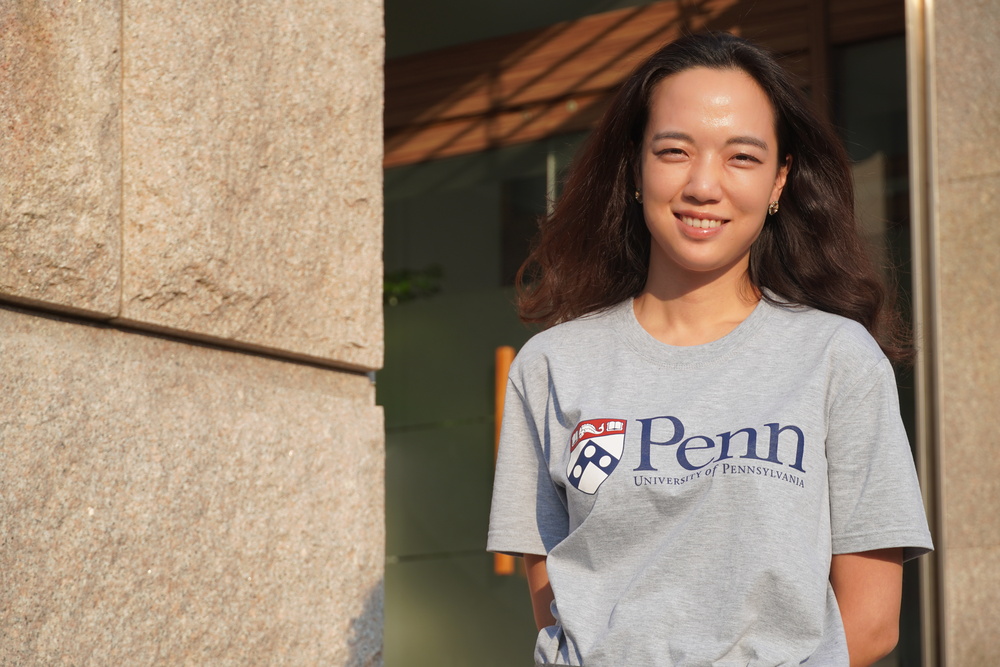
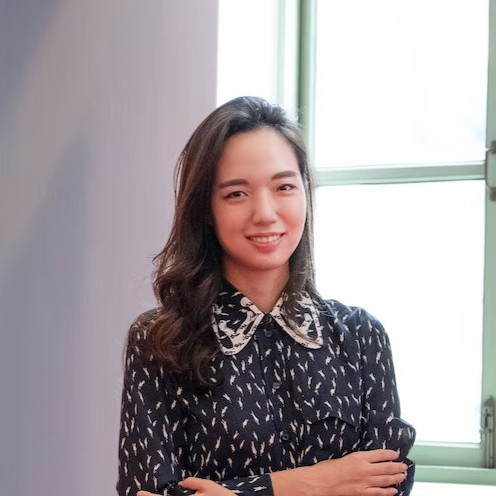
Artist Woohyun Shim ©Chongkundang Yesuljisang

Woohyun Shim studied Painting and Drawing at the School of the Art Institute of Chicago, completed a graduate program in Fine Arts at the University of Pennsylvania, and earned a PhD from the Department of Western Painting at Ewha Womans University. Her solo exhibitions include 《How the Heart is Made》 (Humor Garm Got, Seoul, 2023), 《The Rhythm of the Abyss》 (Mimesis Art Museum, Paju, 2022), and 《Enchanting Forest》 (Leeahn Gallery, Seoul, 2018).
 
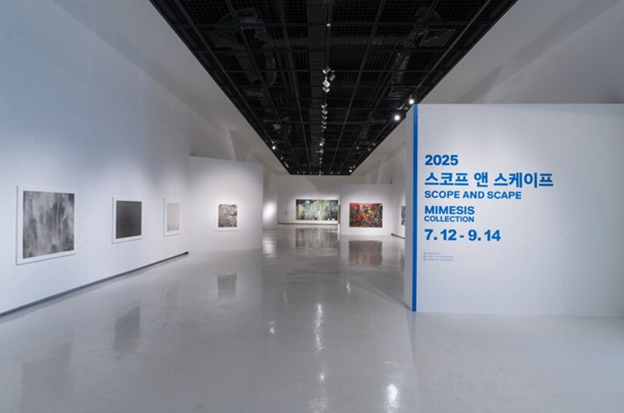
She has also participated in numerous group exhibitions, including 《Your Marvelous World, and Art》 (SH Gallery, Seoul, 2024–2025), 《Scope and Scape》 (Mimesis Art Museum, Paju, 2023), 《My Sleep》 (Culture Station Seoul 284, Seoul, 2022), 《Time of Painting》 (Sejong Museum of Art, Seoul, 2019), 《LAND.IN.SIGHT》 (Space K, Gwacheon, 2016), and 《Painting, In-between The Real and The Surreal》 (Insa Art Center, Seoul, 2015).
 
In 2013, Shim was selected as one of the three emerging artists for the Chongkundang Yesuljisang.

References