Exhibitions
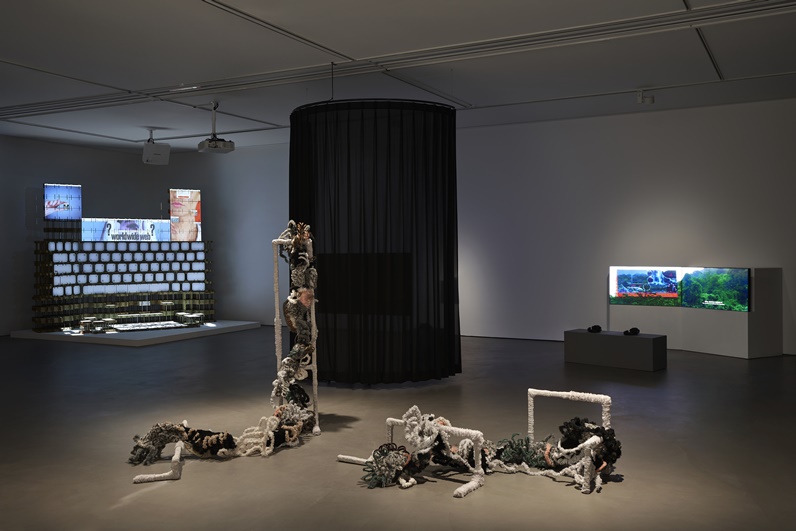
《All the Past Comes to the Present》, 2023.11.17 – 2023.12.24, HITE Collection
November 17, 2023
HITE Collection
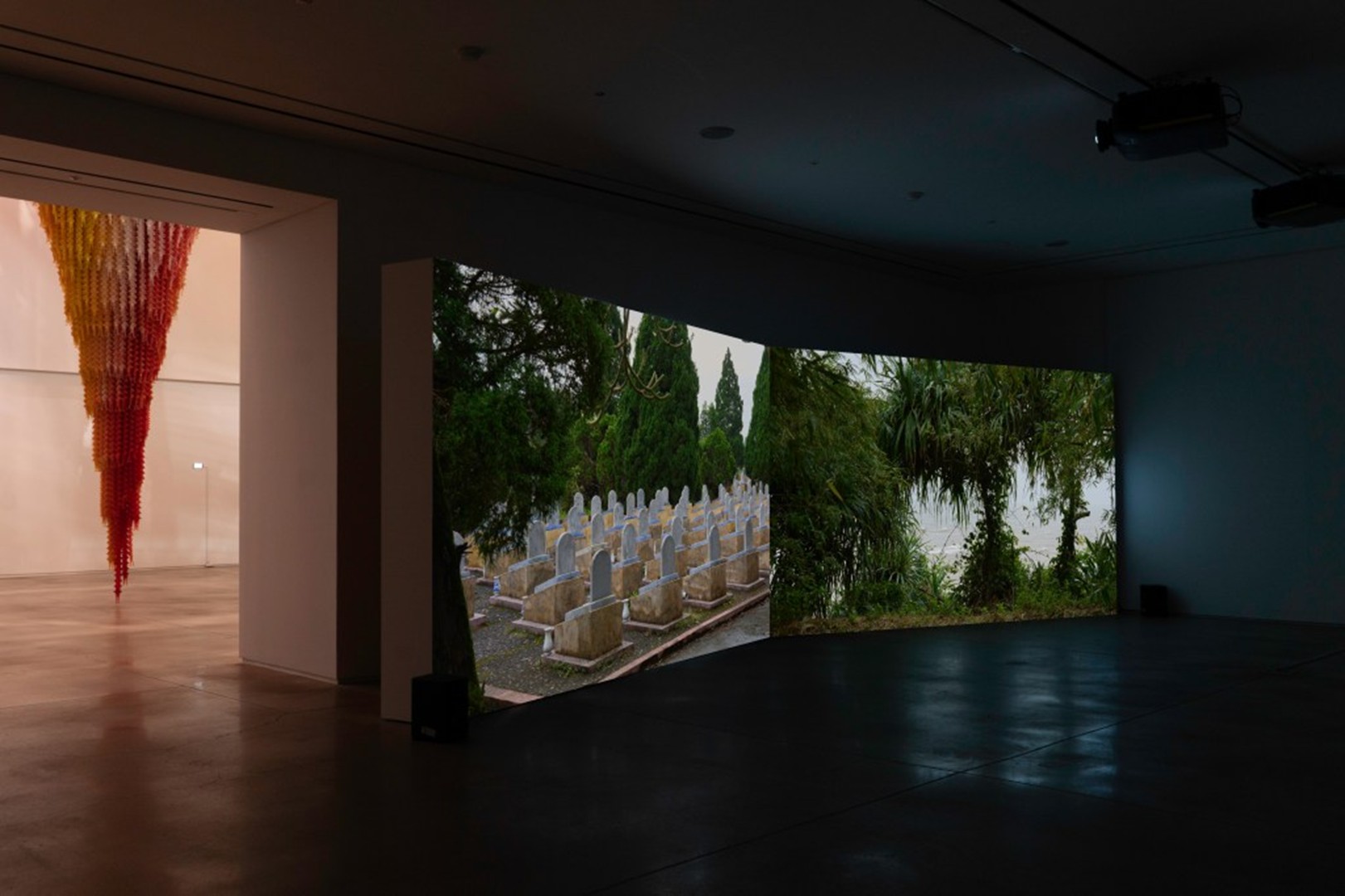
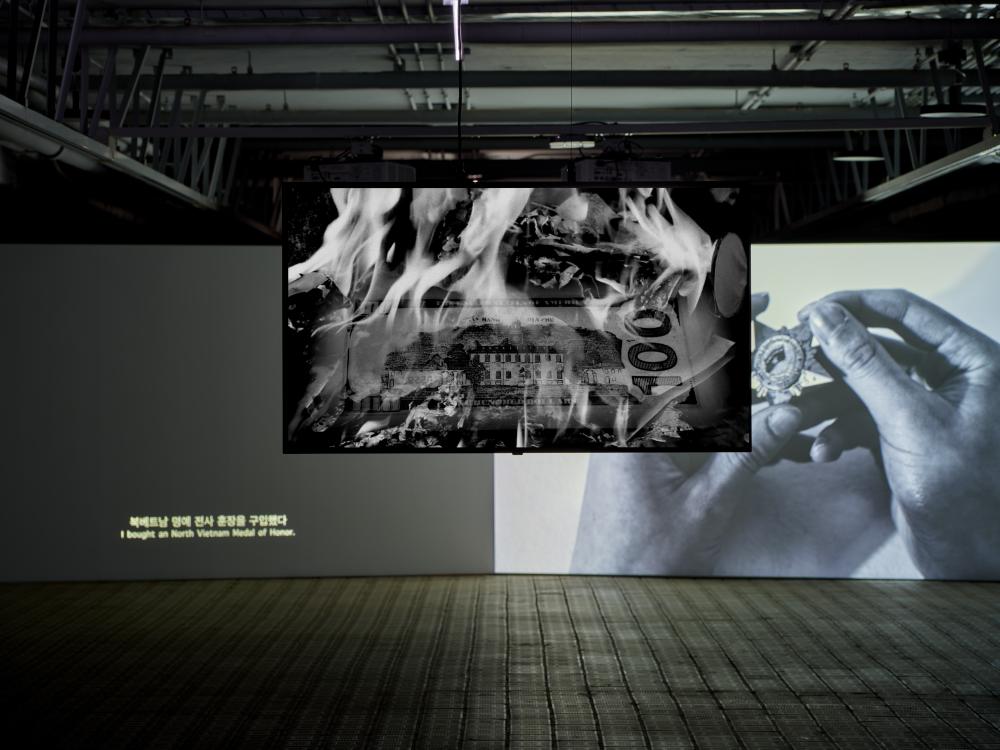
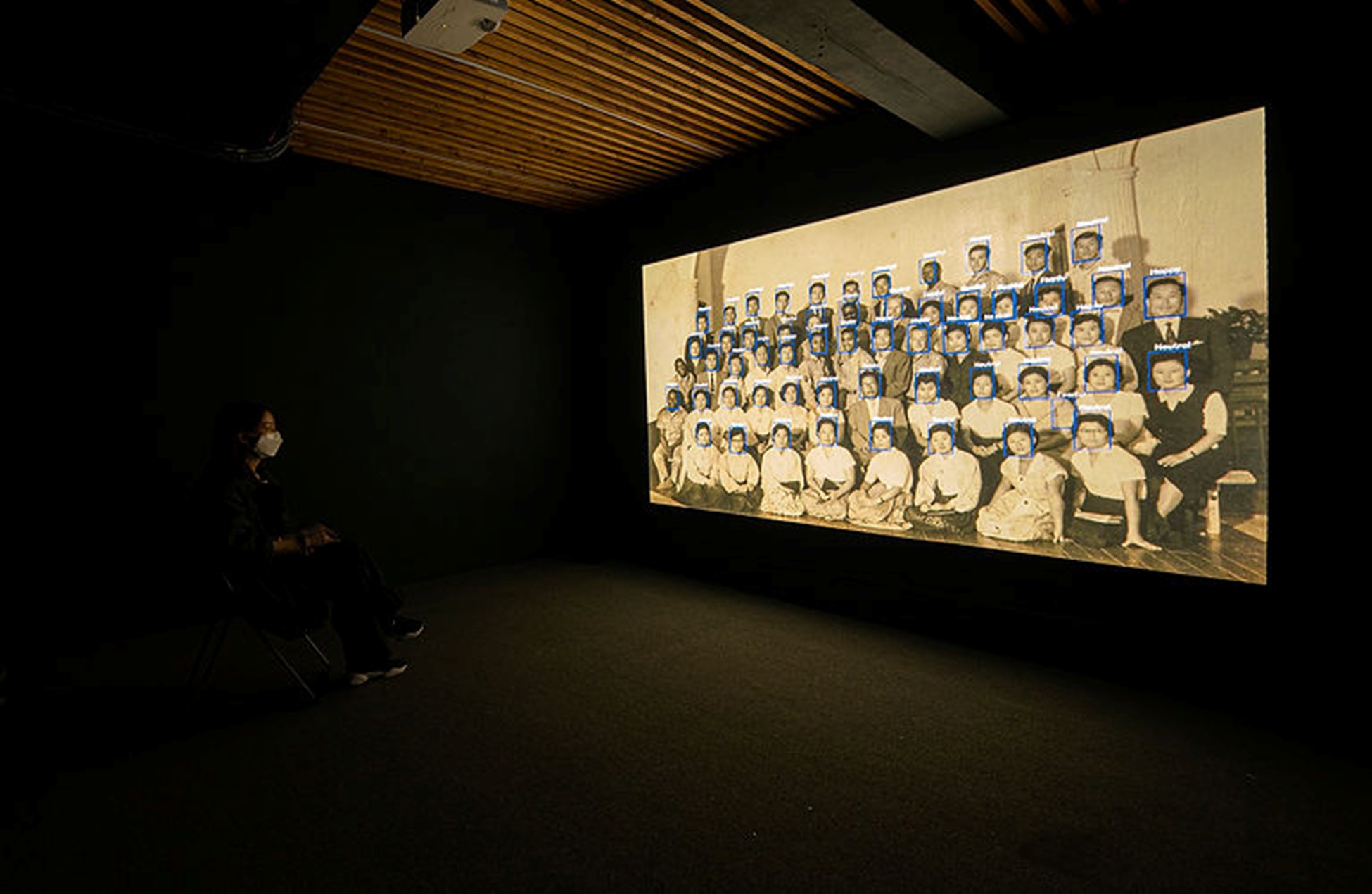
Installation view of 《All
the Past Comes to the Present》 © HITE
Collection
As part of
its annual Young Artists Exhibition series, held since 2014, HITE Collection
presents 《All the Past Comes to the
Present》. This year’s exhibition focuses on the ways in
which a younger generation—moving at the speed of light—engages sensorially
with video, introducing the works of four artists, Kwak Sojin, Kwon Heesoo, Min
Hyein, and Yeoreum Jeong, all of whom take experimental approaches to video and
moving images.
Some of
these artists are interested in the operational principles and mechanisms of
cameras and other recording devices, exploring the relationship between how
optical machines capture images and how human visual perception functions.
Others reference the genre conventions of cinema as well as the experiments of
avant-garde filmmakers. Like certain performance video artists of the 1970s,
they sometimes treat video and moving images as sculptures that move constantly
through space, or as subjects of physical experimentation, presenting optical
experiments that verge on magic.
At times, they draw on the provocative
audiovisual experiences readily encountered in everyday life today—such as
black-box footage, CCTV recordings, YouTube videos, and memes—as source
material. They also address memories and histories tied to specific places,
borrowing recollections embedded in photographs and archival materials and
weaving them into dense narratives. Although the interests of these four
artists may appear to overlap at first glance, a closer look at the exhibited
works reveals clearly distinct concerns and methodologies for each.
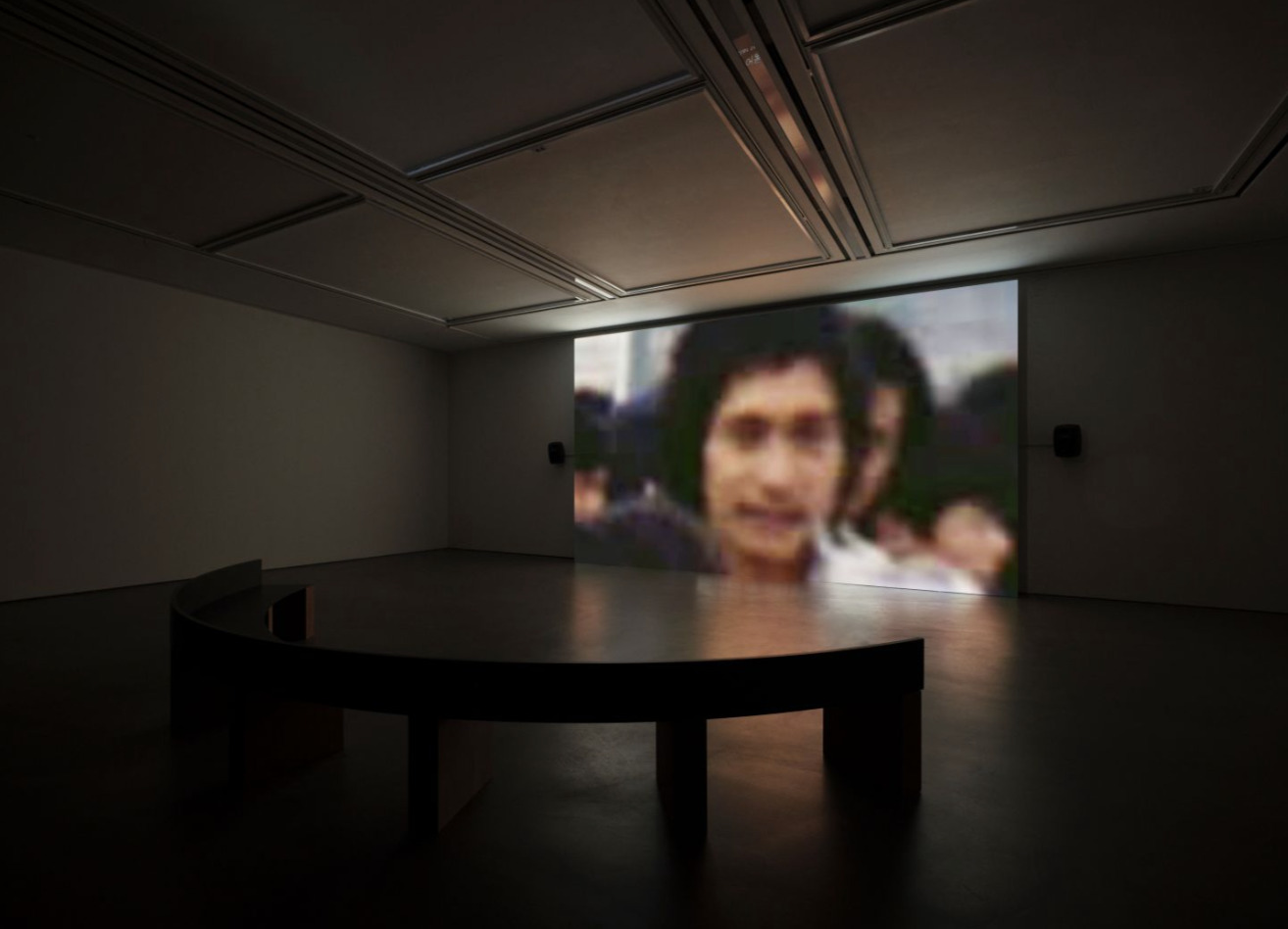
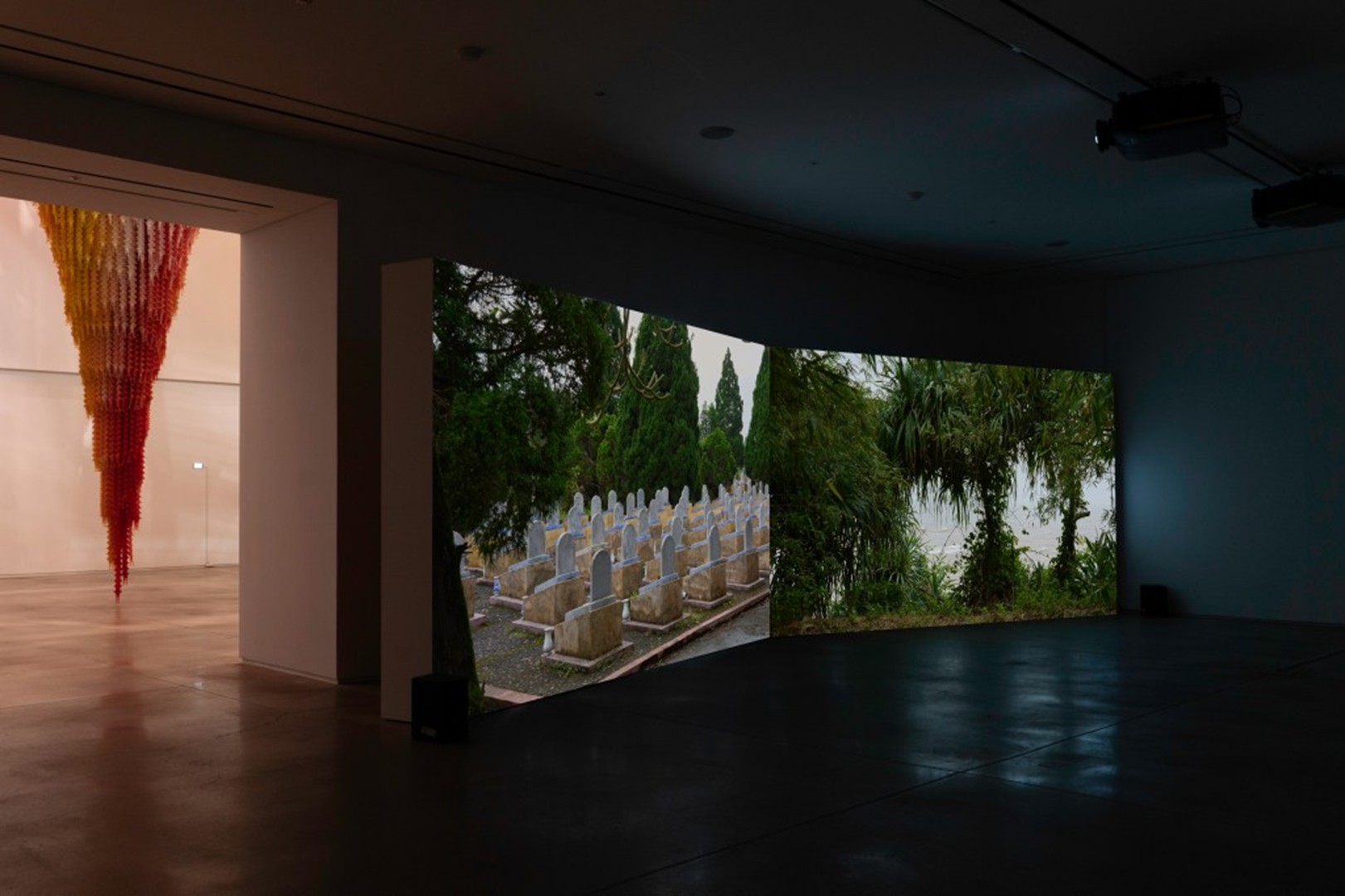
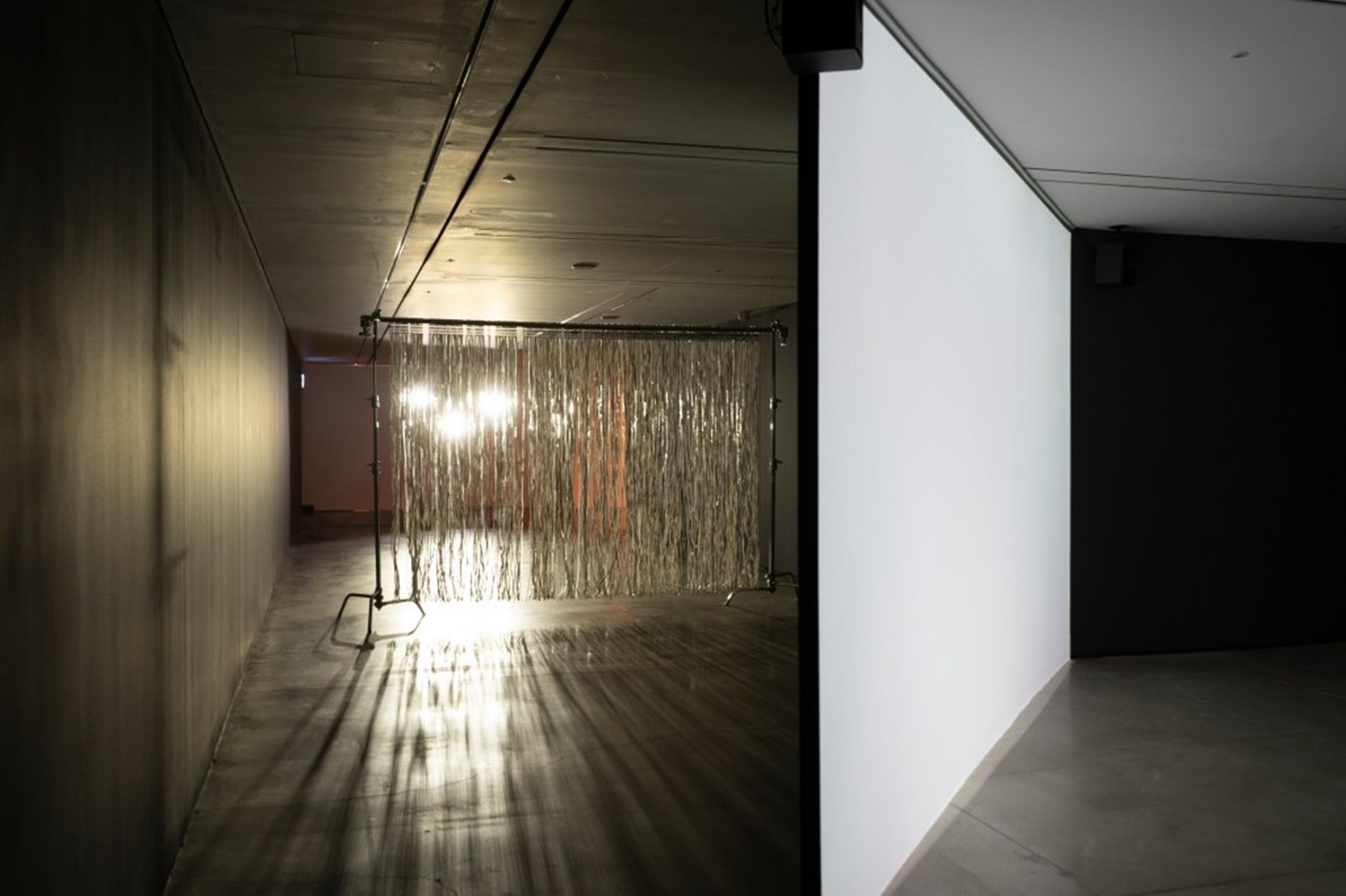 Installation view of 《All
the Past Comes to the Present》 © HITE
Collection
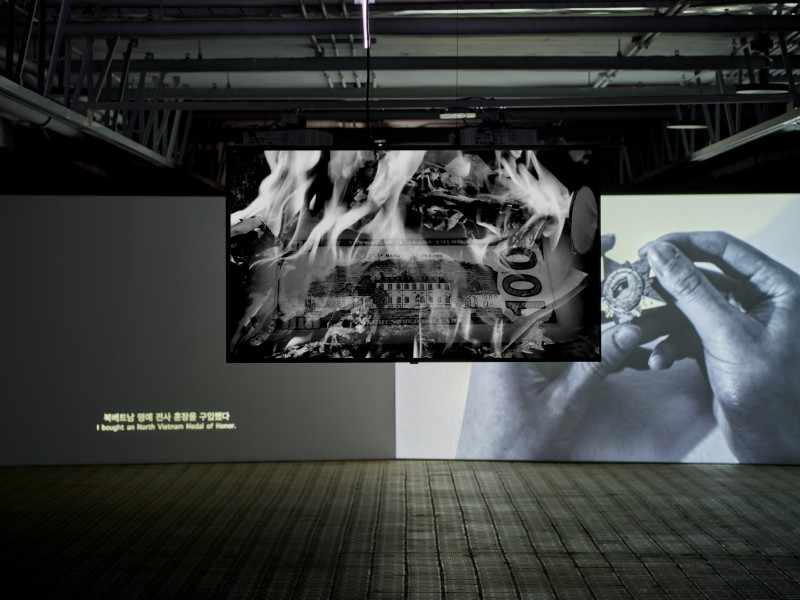
Installation view of 《All
the Past Comes to the Present》 © HITE
Collection
While
preparing the exhibition with the four artists, the author found their
reactions to the HITE Collection exhibition space particularly intriguing. Each
time the artists visited, they expressed admiration for the scenes constantly
generated by the interplay of Seo Do-ho’s Cause and Effect,
the building’s glass walls, and the light reflected off the interior glass
railings at the center of the space. The silhouettes of visitors entering and
exiting the building, as well as cars racing along Yeongdong-daero, often
appeared as incidental performers within these scenes.
Though these sights were
familiar to the author, observing the artists’ responses prompted a renewed
realization: every moment, this exhibition space has already existed as video
or moving images created by the convergence of light, space, and environment.
In other words, light itself can be understood as video.
This line
of thought brought to mind Patricio Guzmán’s film Nostalgia for
the Light(2010), in which astronomers working at an observatory in
Chile’s Atacama Desert and women searching for fragments of bones in the desert
emerge as central figures. The astronomers, who spend their lives observing
starlight, explain that the light we see originates in the distant past.
Meanwhile, women who have spent decades digging through the vast desert with
small shovels in search of the remains of family members lost to Chile’s
military dictatorship resent the seemingly endless landscape.
The stars sought
by astronomers and the bones sought by victims’ families share a common mineral
component: calcium. Calcium is deeply connected to the origins of the universe,
as most calcium in the cosmos was formed through the immense energy released by
supernova explosions. Not only calcium but many of the elements that constitute
our bodies are closely related to the life cycles of stars. This is why Carl
Sagan famously stated that we are made of star-stuff.
The author considers
starlight to be the oldest video or moving image. While connecting celestial
bodies with images is not new—Nam June Paik once remarked that “the moon is the
oldest television”—starlight remains particularly fascinating as an infinite
moving image that has been traveling from the distant past to the eternal
present. Approaching video and moving images through contemplation of light may
seem romantic, but it is also an extremely practical matter.
In this exhibition
space, Trinitron TVs, 4K LED TVs, interval searchlights, and beam projectors
rated at 350, 6000, and 7000 ANSI lumens coexist. Decades of human achievement
in optical technology are gathered here. Even these devices alone demonstrate
that video and moving images are inseparable from optics, and that optics can be understood as the modern and contemporary history of video
itself.
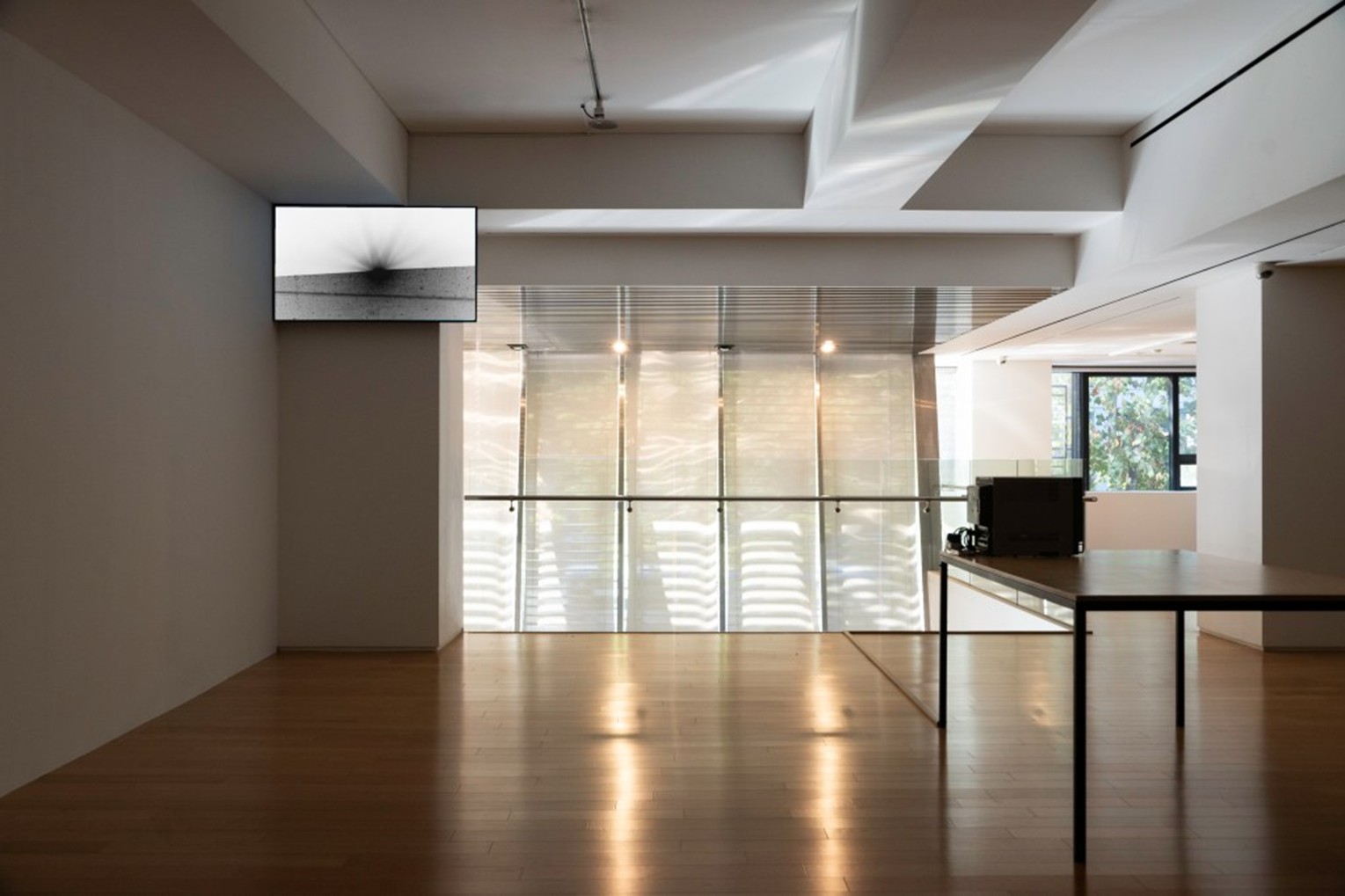
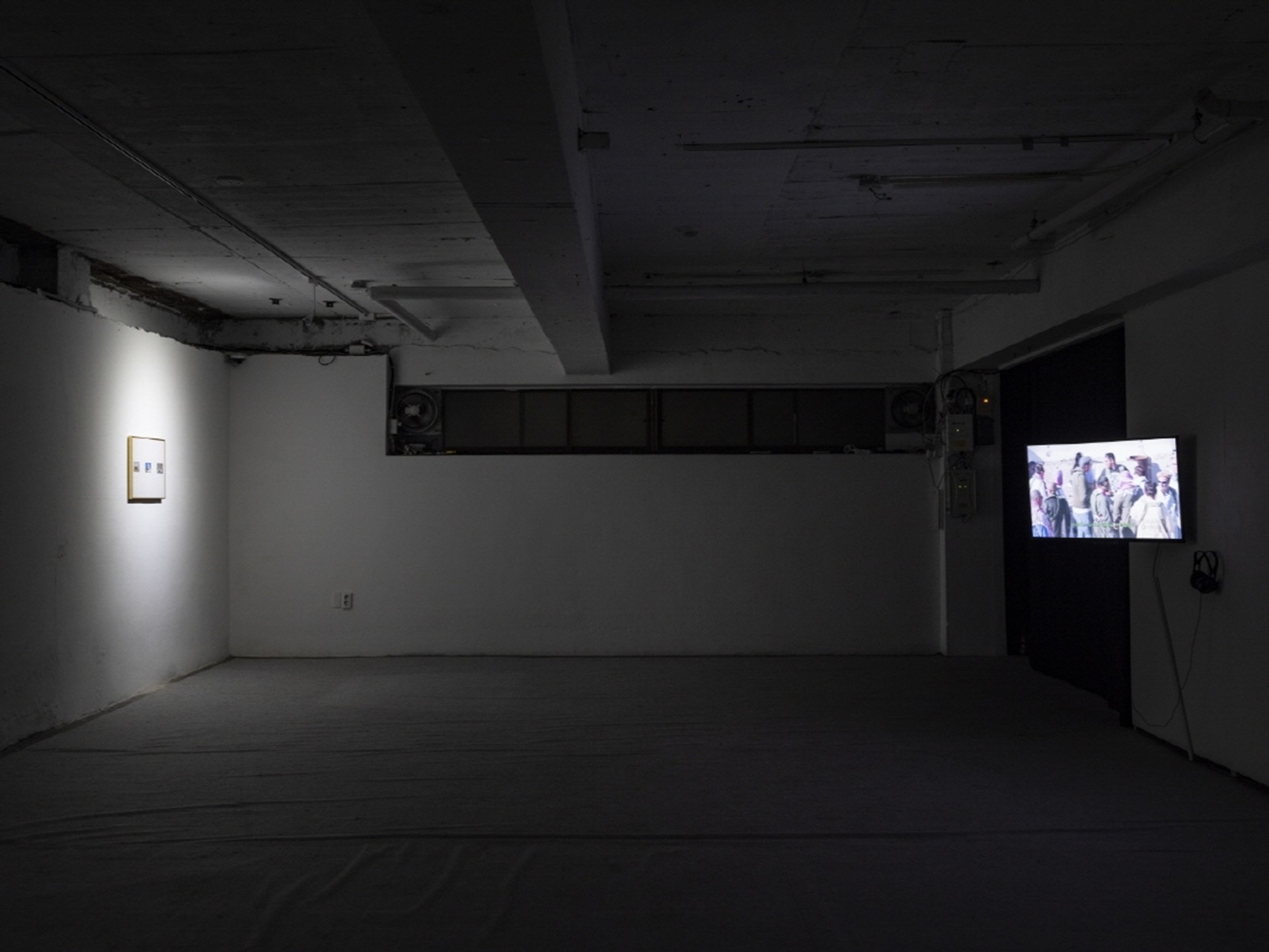
Installation view of 《All
the Past Comes to the Present》 © HITE
Collection
Meanwhile,
within exhibition contexts, video and moving images are generally treated as
immaterial entities that cannot be insured, as long as they exist as
reproducible data files. Art history, too, has often approached video and
moving images as immaterial. Do video and moving images truly have neither mass
nor volume? (Though unprovable, the author personally believes that data, too,
possesses physical mass.)
From the standpoint of realizing an exhibition,
however, video and moving images are intensely material and difficult objects:
they occupy exhibition space and generate countless points of friction and
variables through the devices and programs required for their presentation.
Above all, just as we are made of stellar material, video and moving images
likewise originate in starlight and thus constitute matter of the universe.