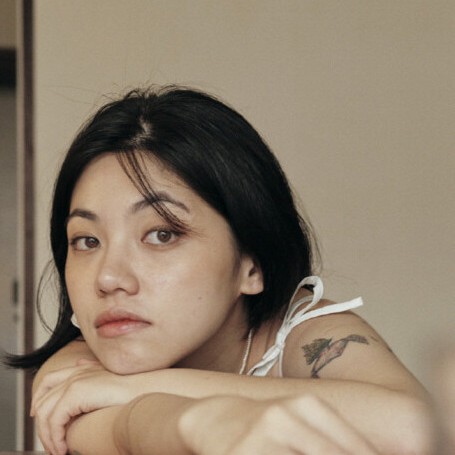
Yezoi Hwang (b. 1993) works across various formats, including photography, essays, and interviews, collecting personal narratives. Passing through individual emotions, relationships, and the body, her practice invites us to re-sense and reinterpret the society we encounter.


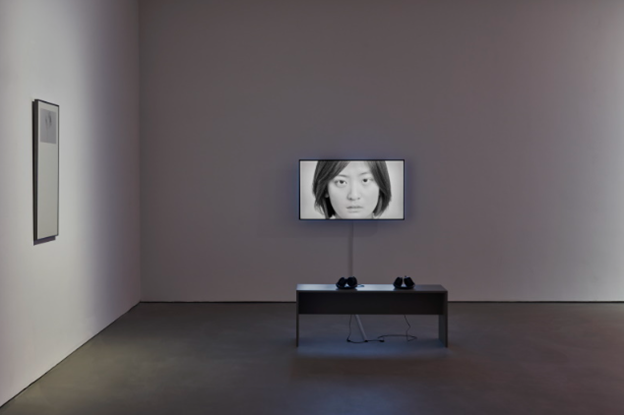
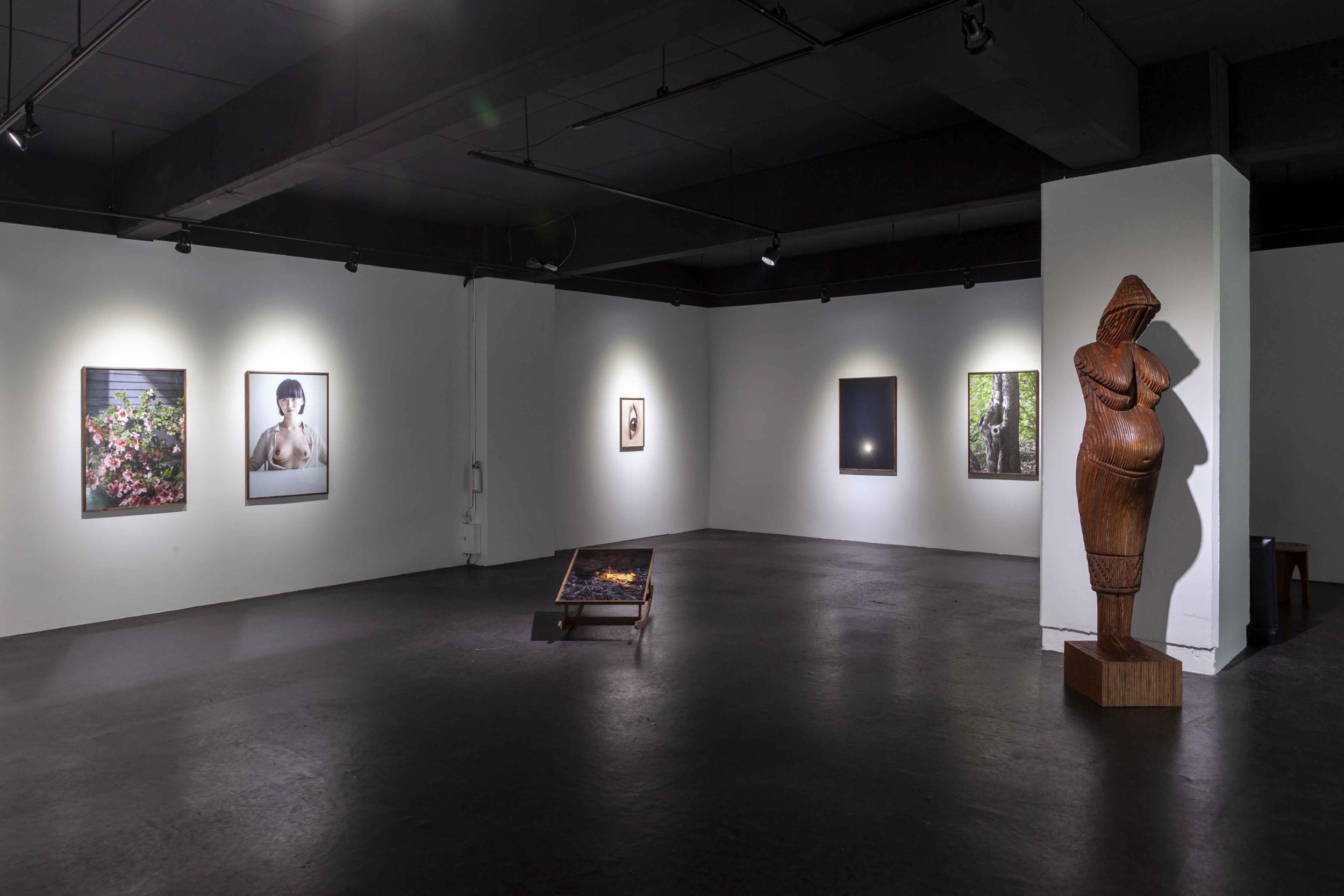
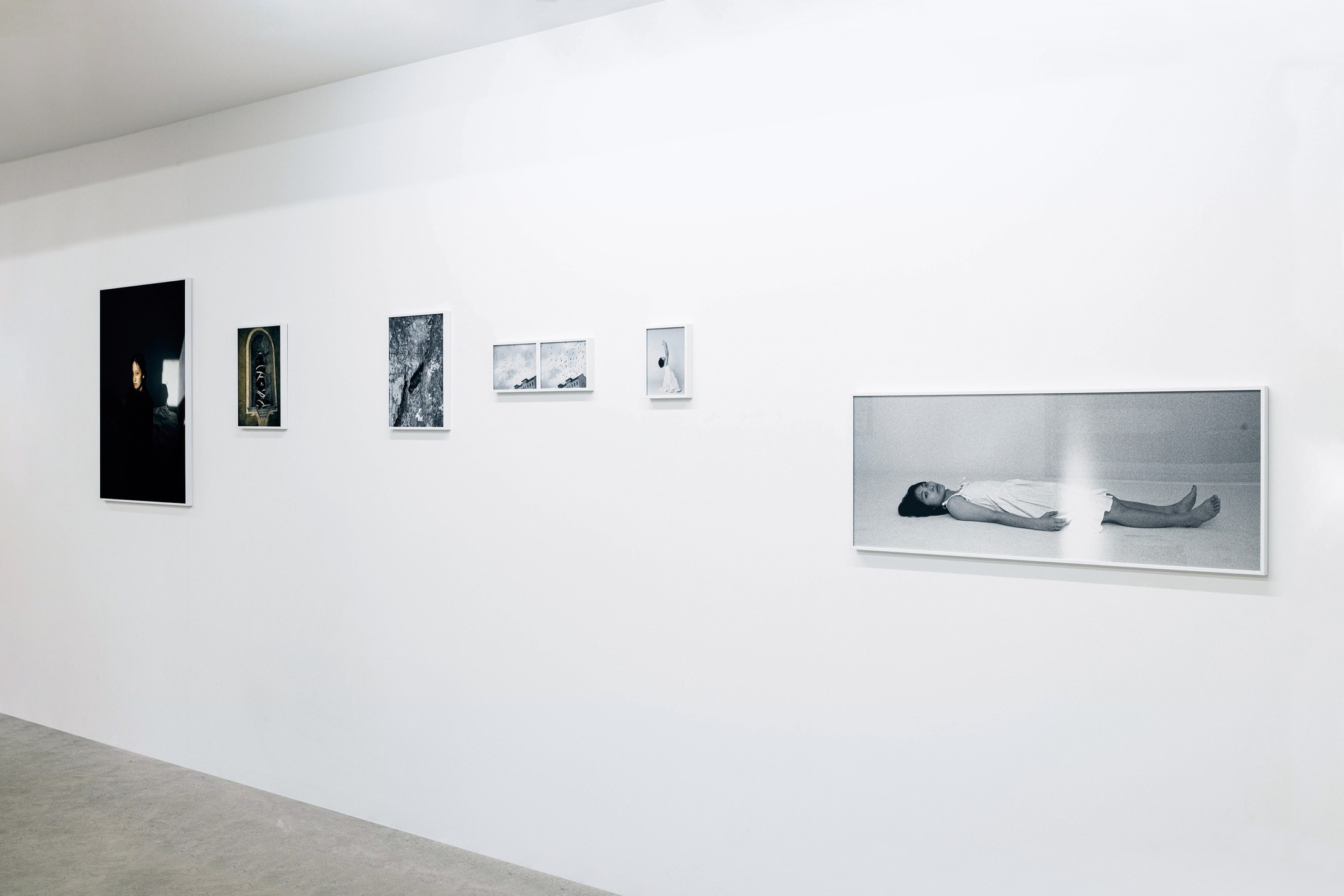
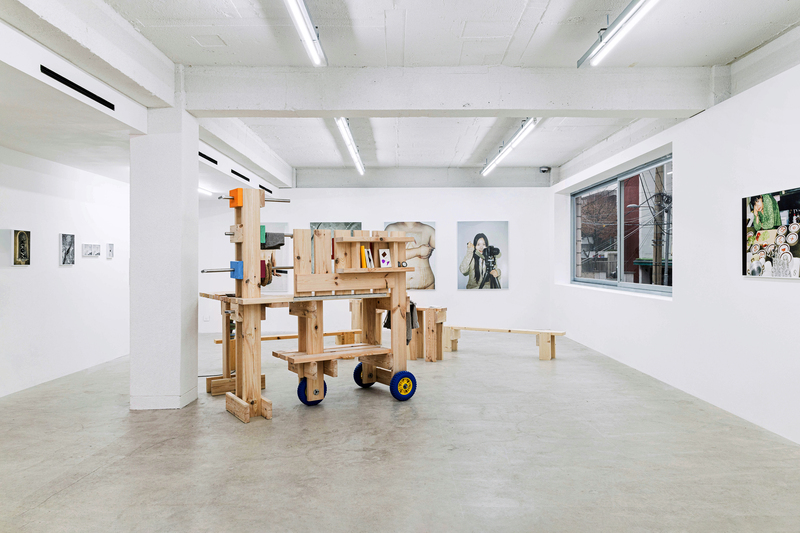
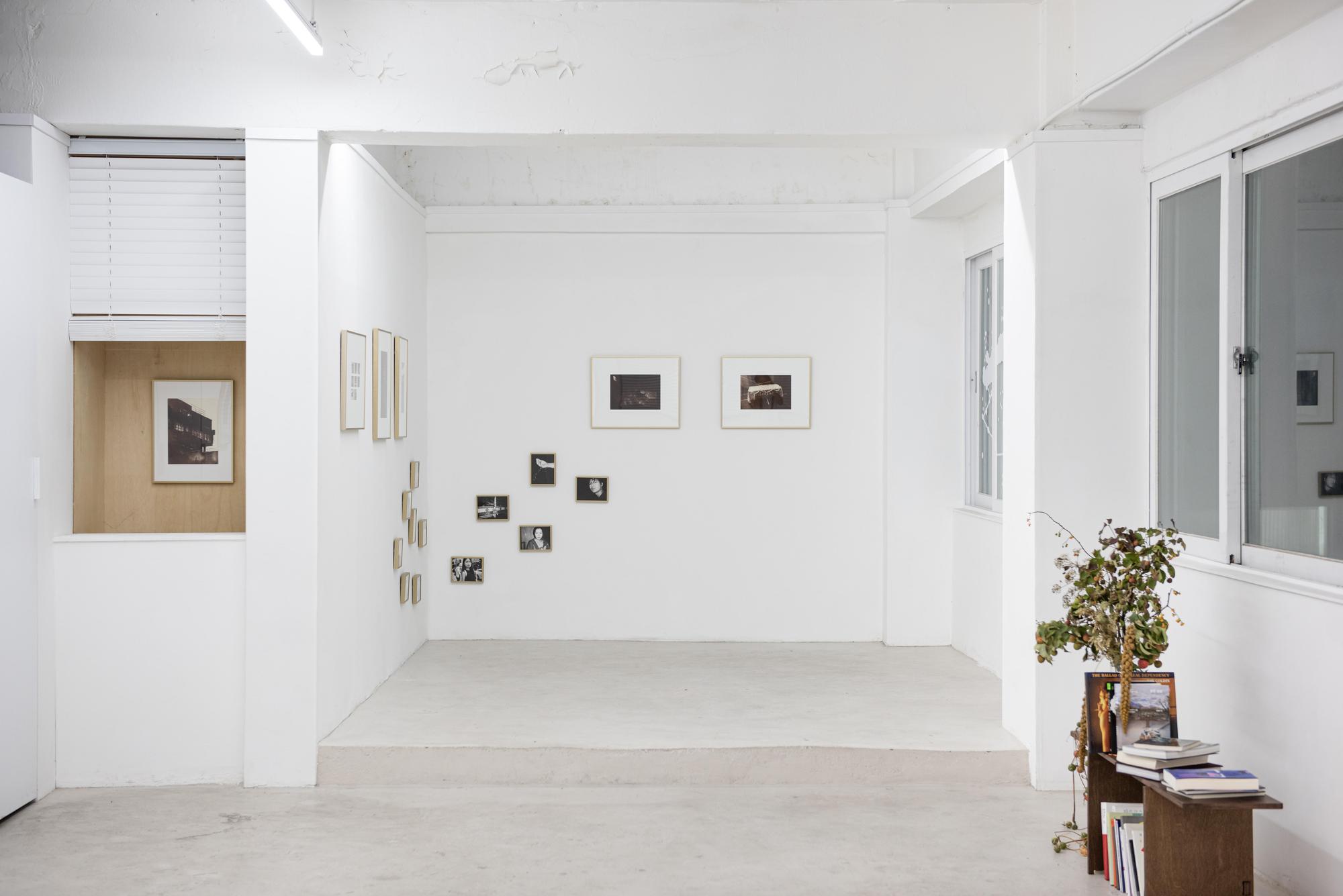
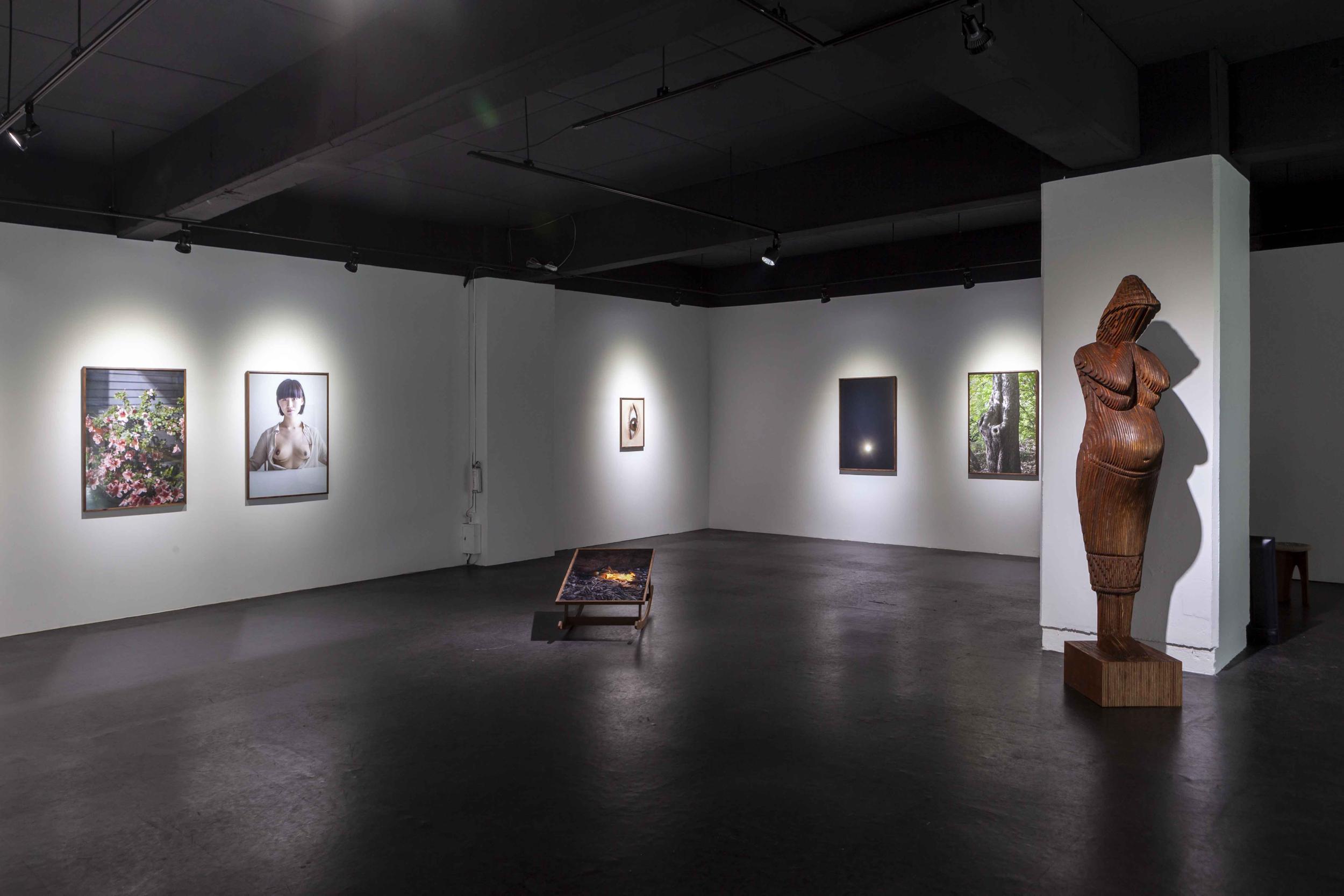
Installation view of 《Mago》 (d/p, 2019) ©Yezoi Hwang

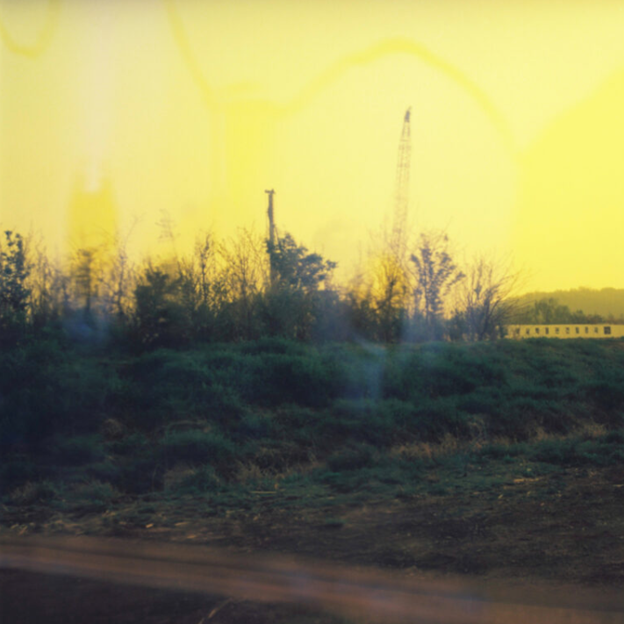
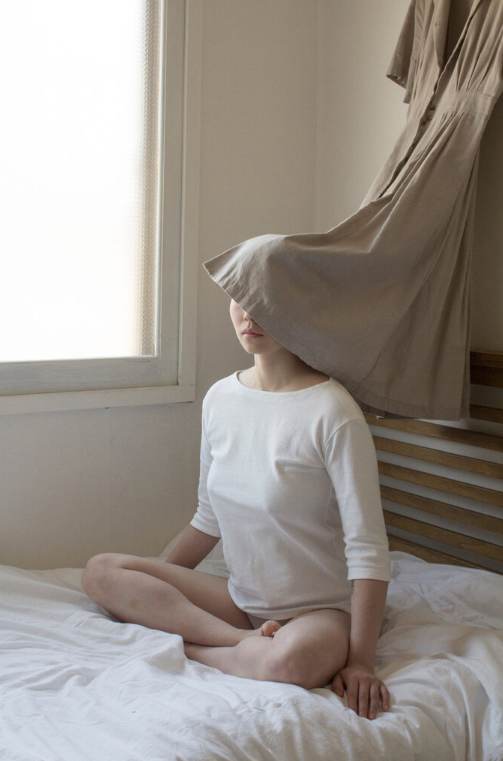
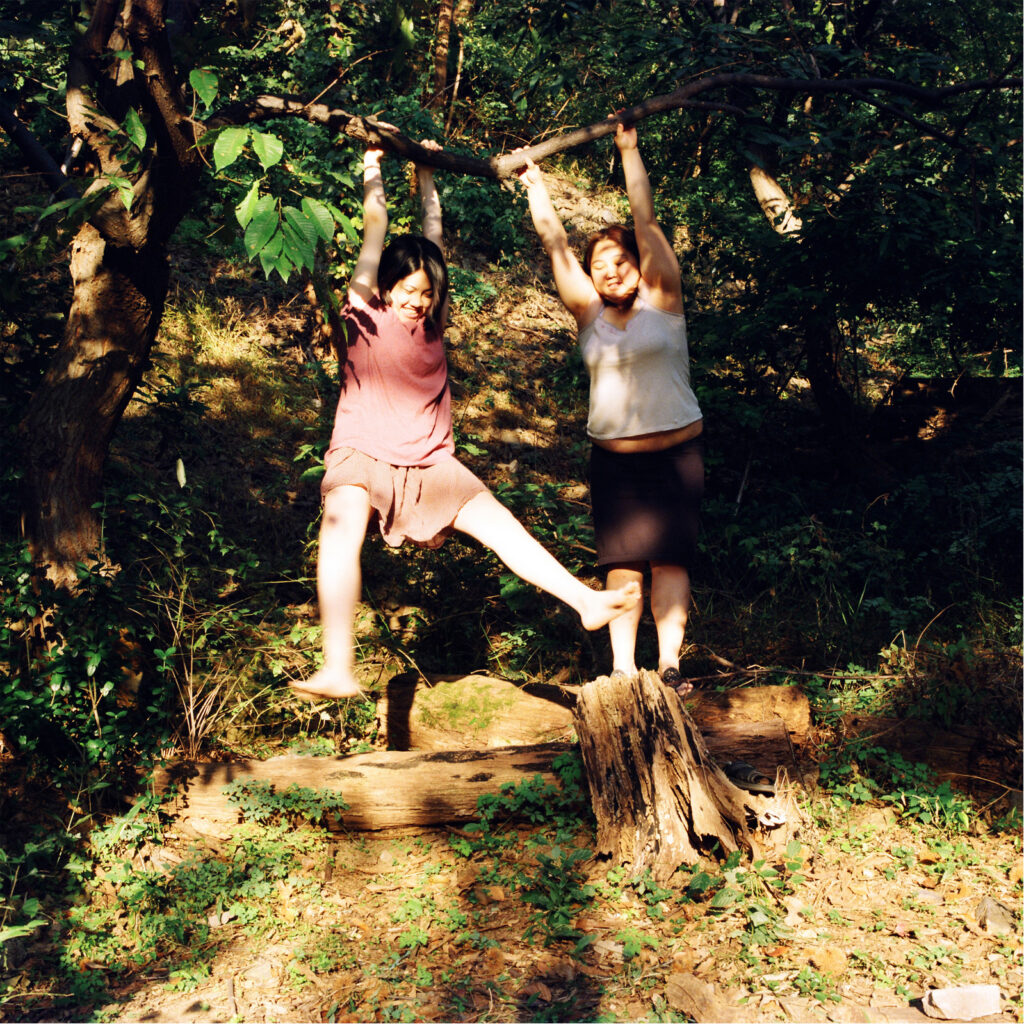
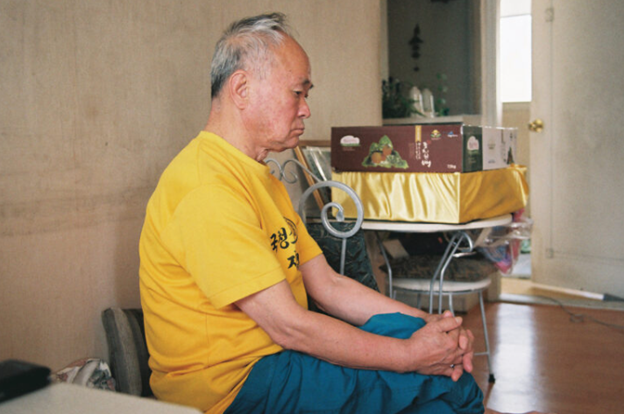
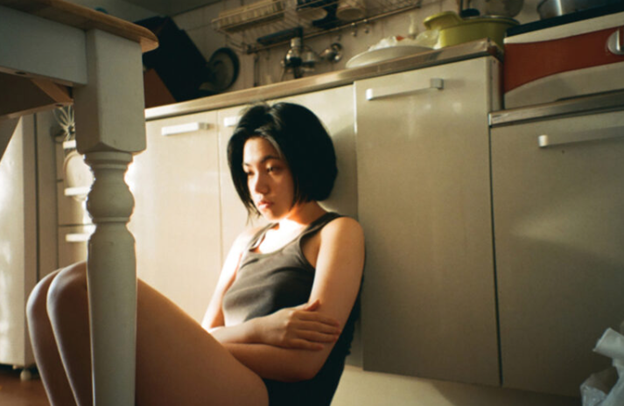
Hwang Yezoi’s first solo exhibition, 《Mago》 (d/p, 2019), presented a matrix of images that was at once intimate and unfamiliar, composed through photographs of female portraits, landscapes, and objects. Having previously developed her early practice around an internal narrative centered on the relationship between her mother and sister, the artist began, in 《Mago》, to extend this narrative outward toward the external world.


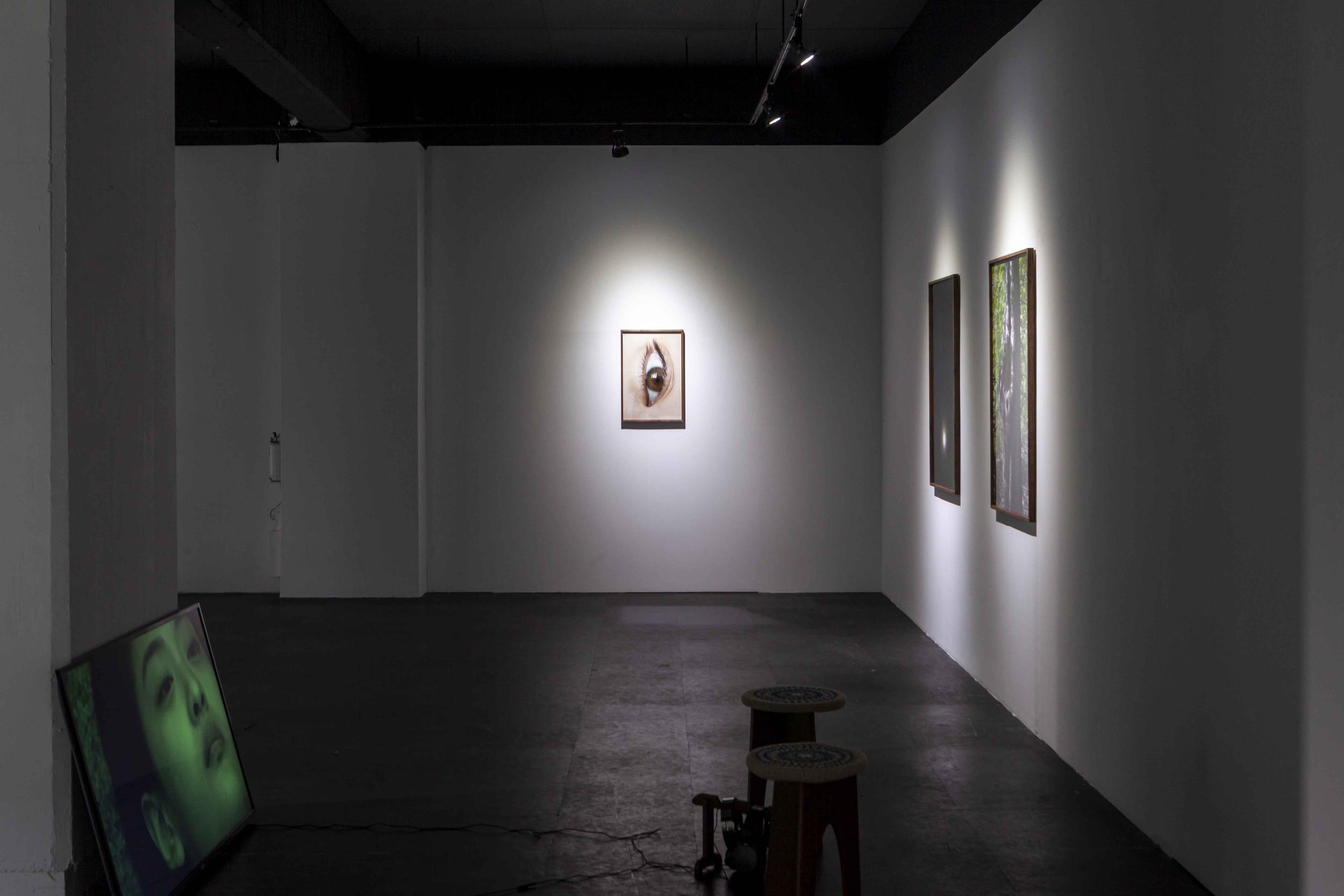
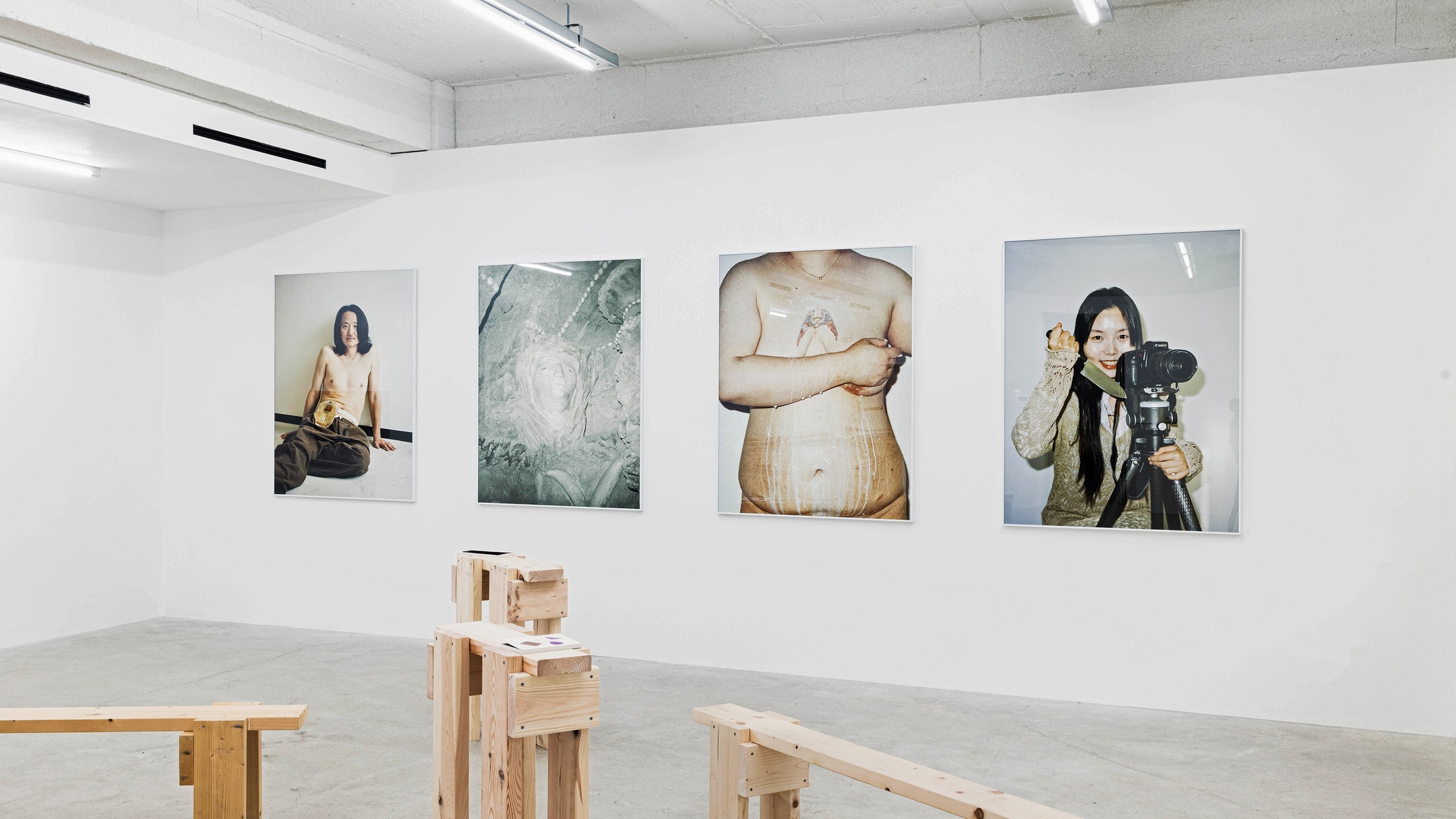
Installation view of 《Mago》 (d/p, 2019) ©Yezoi Hwang

The exhibition title “Mago” derives from “Mago Halmi (an old woman named Mago),” a mythical creator figure said to have brought forth the lineage of humankind without men. As the title suggests, the themes running consistently through the exhibition were “women” and “love.”
 
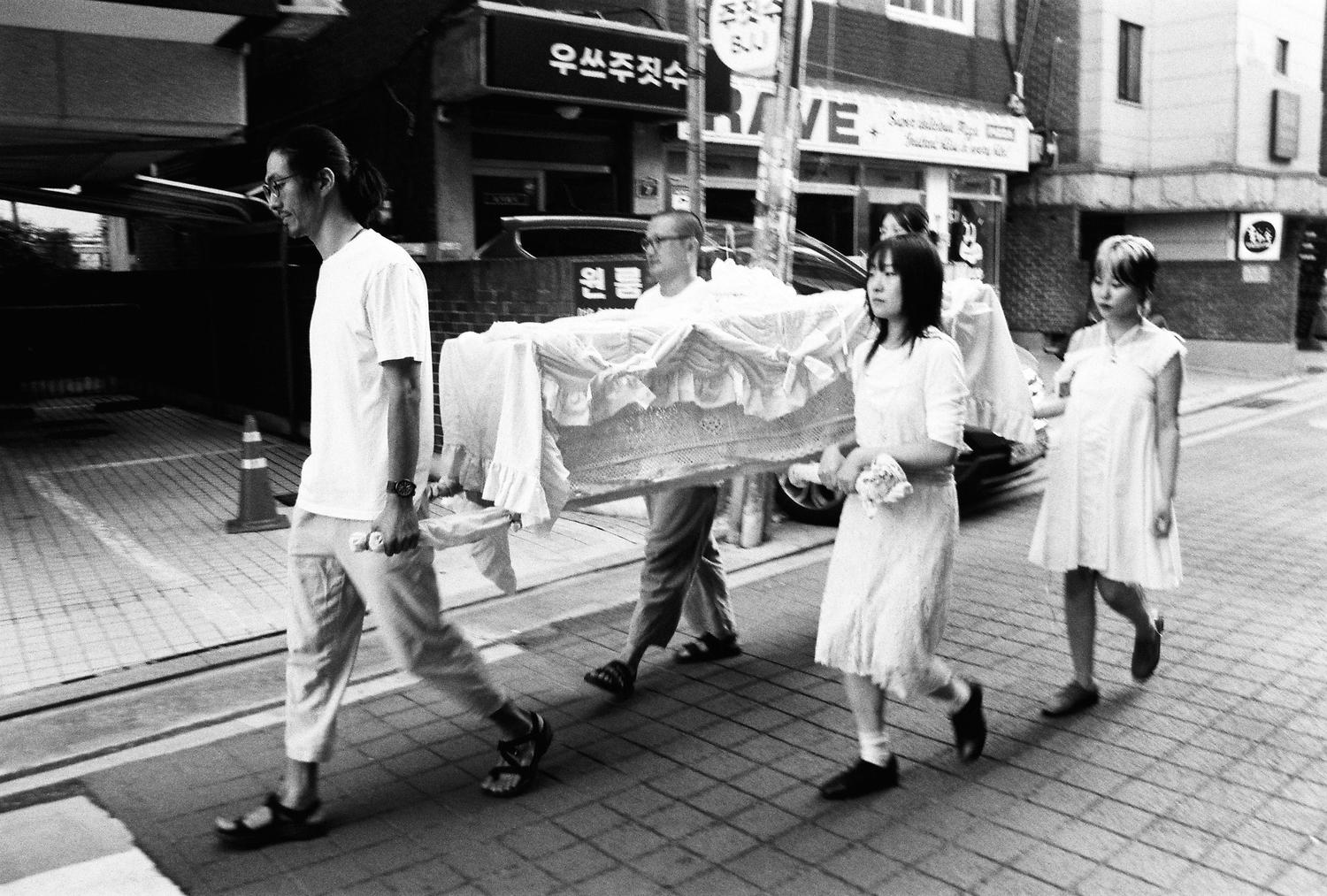
Comprising fourteen photographs, a video documenting the working process, and a sculptural work created by enlarging the mother’s totem, the exhibition was entirely devoted to the presence of “women.” The artist captured these subjects through the medium of snapshot photography, which allows fleeting moments to be recorded with particular immediacy and ease.

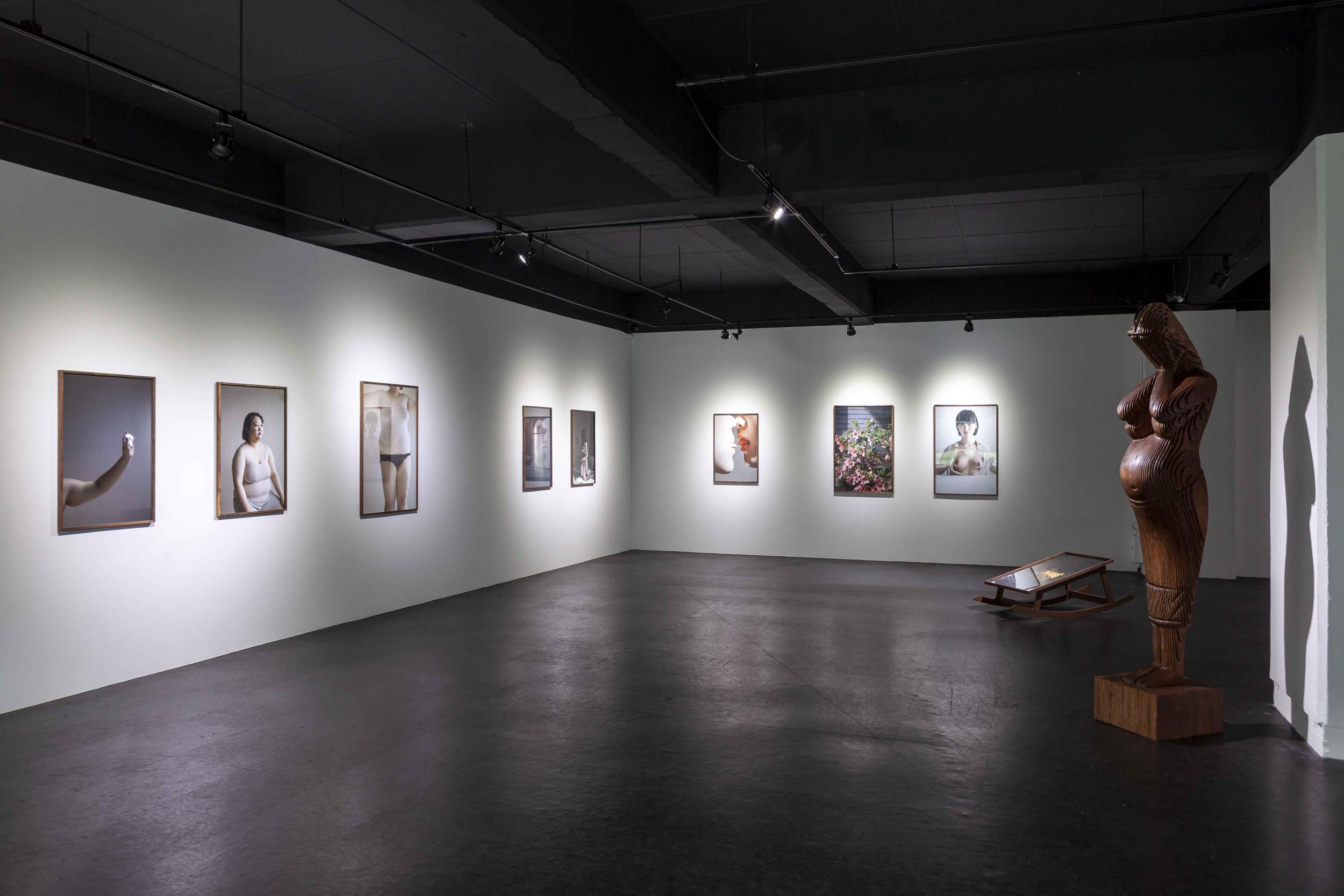
Installation view of 《Mago》 (d/p, 2019) ©Yezoi Hwang

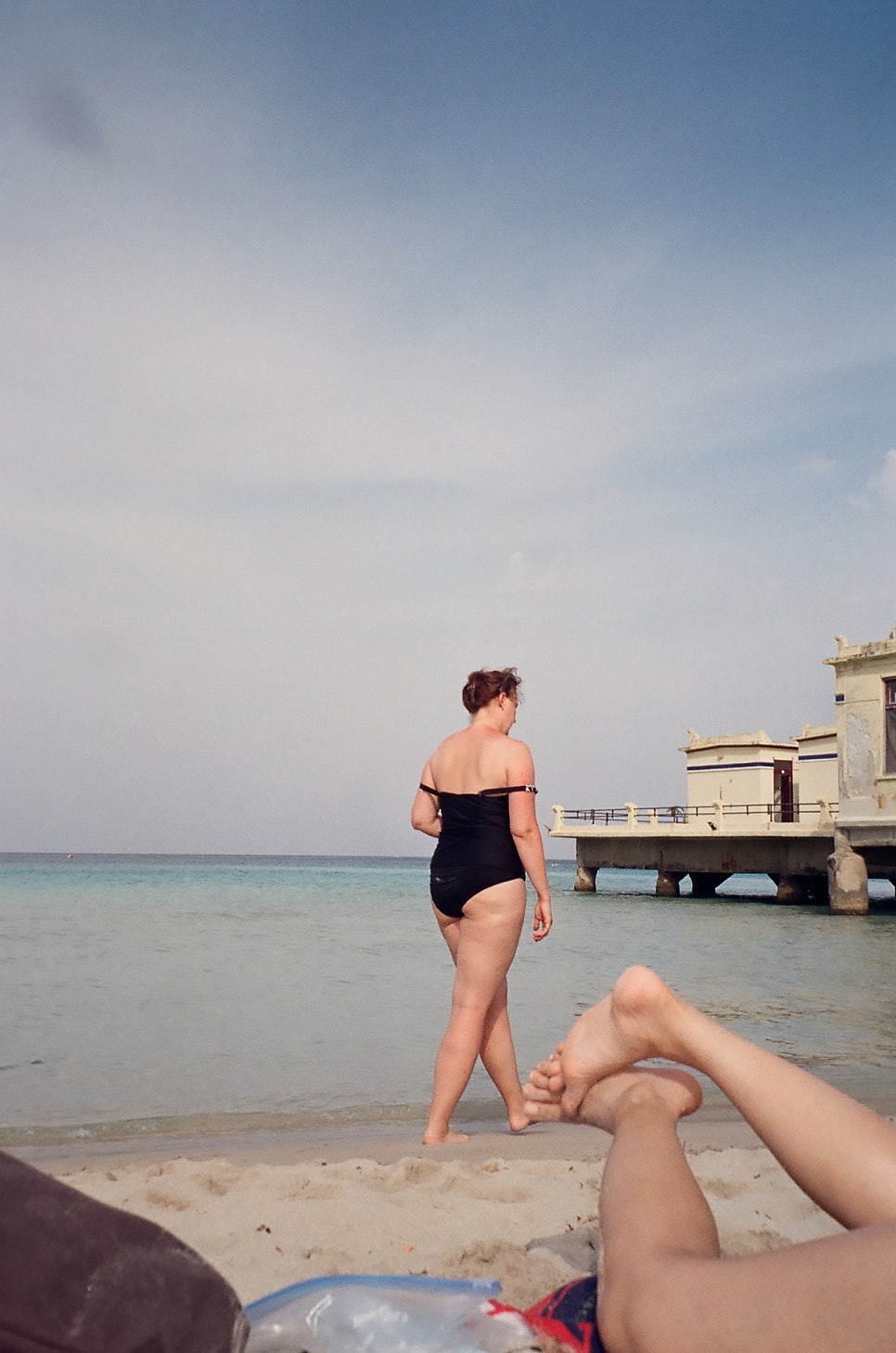
Hwang brings snapshot photography—an undervalued genre within conventional photography—into the exhibition space, forming a continuous flow through the momentarily captured bodies of women. Rather than seeking a singular meaning within each individual frame, the artist invites viewers to read the works through their continuity, much like understanding the structure of a sentence as it unfolds.

 
At the same time, this exhibition carries a personal confession of the artist’s bisexual identity. An excerpt from Hwang’s note—“Born from a woman’s body, borrowed a woman’s body and the woman was loved. Of a woman, as a woman, and so is woman. That name feels quite extensive to me.”—runs through the exhibition’s overall trajectory, threading together its themes with an intimate narrative of the self.


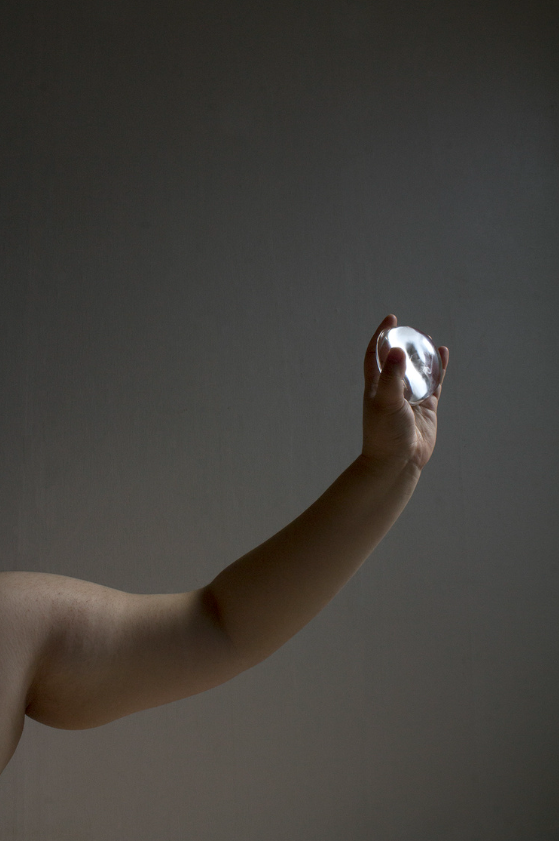
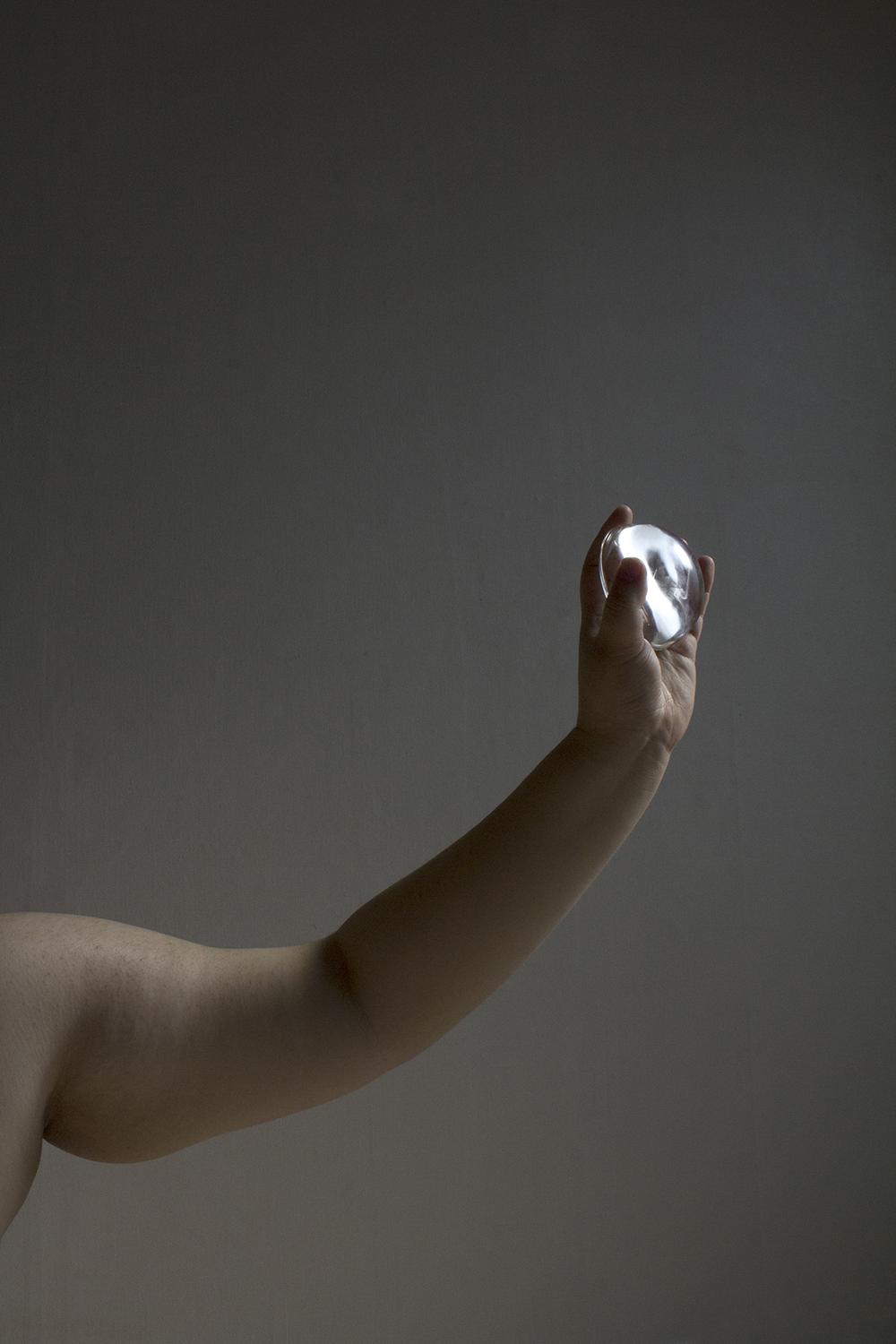
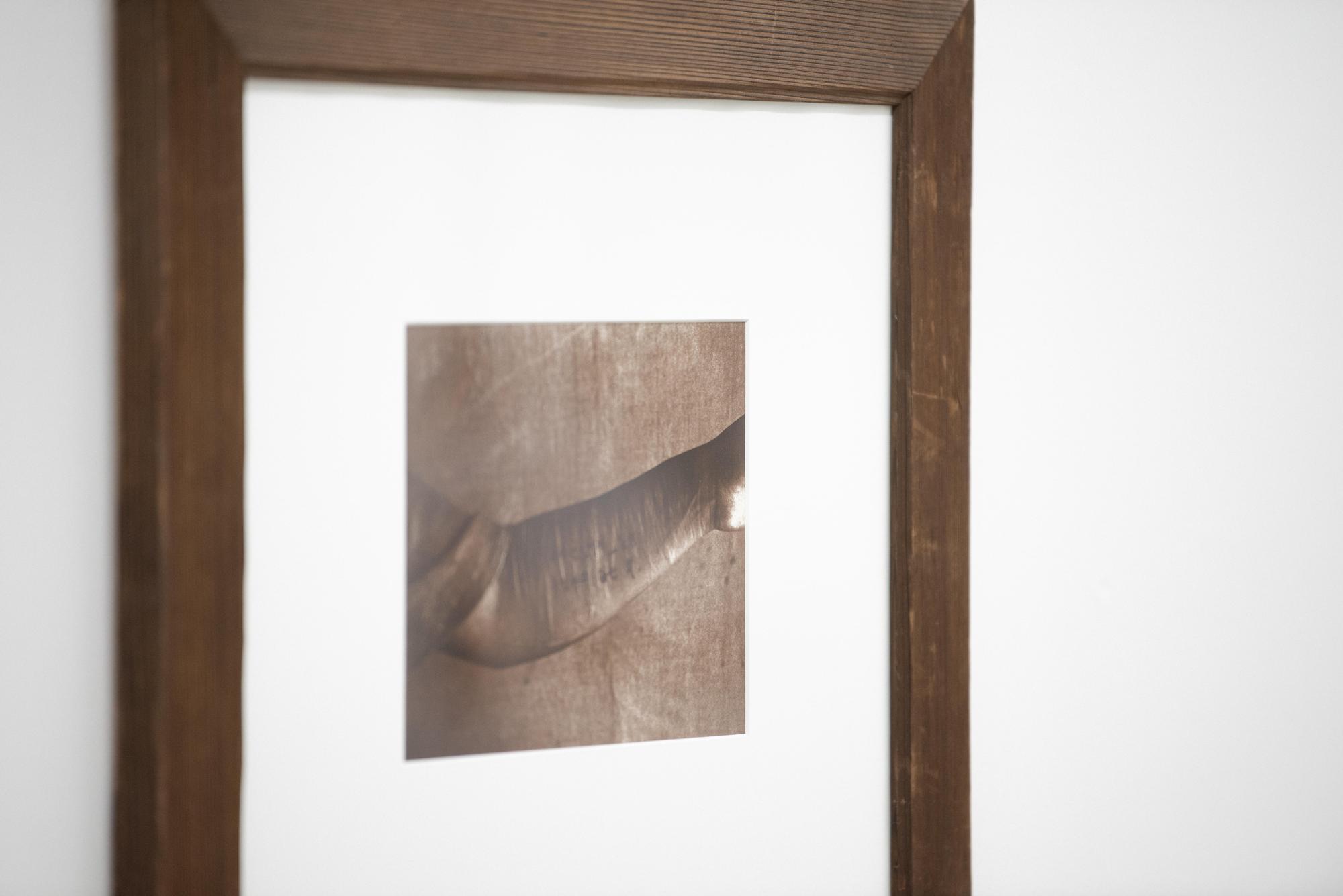
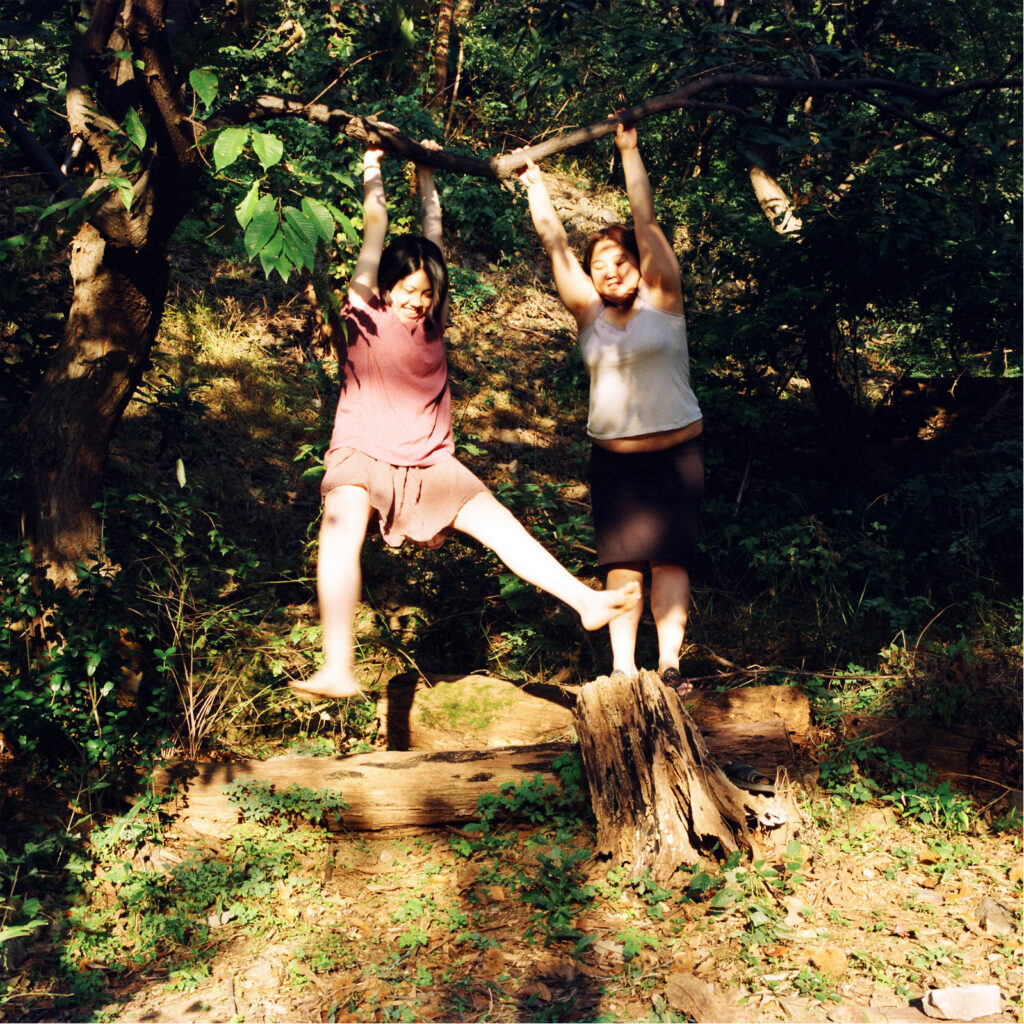
Yezoi Hwang, Mago series, 2019 ©Yezoi Hwang

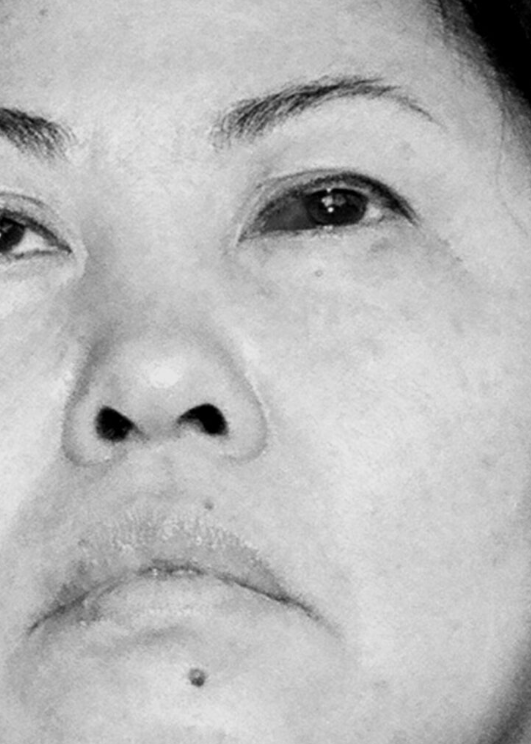
Moreover, the female bodies depicted in the exhibition do not present only what is conventionally considered ideal or beautiful. Through this, the artist emphasizes that women are not subjects that must appear beautiful or tragic, but seeks instead to show women as they are—strong in their own right. As a result, Hwang’s photographs candidly and unapologetically reveal what is often deemed imperfect, such as scarred or weathered skin.
 
This perspective in Yezoi Hwang’s work is directed not toward negotiating the boundary between “beauty” and “ugliness,” but toward a reverent and dignified engagement with the intrinsic nature of women themselves.


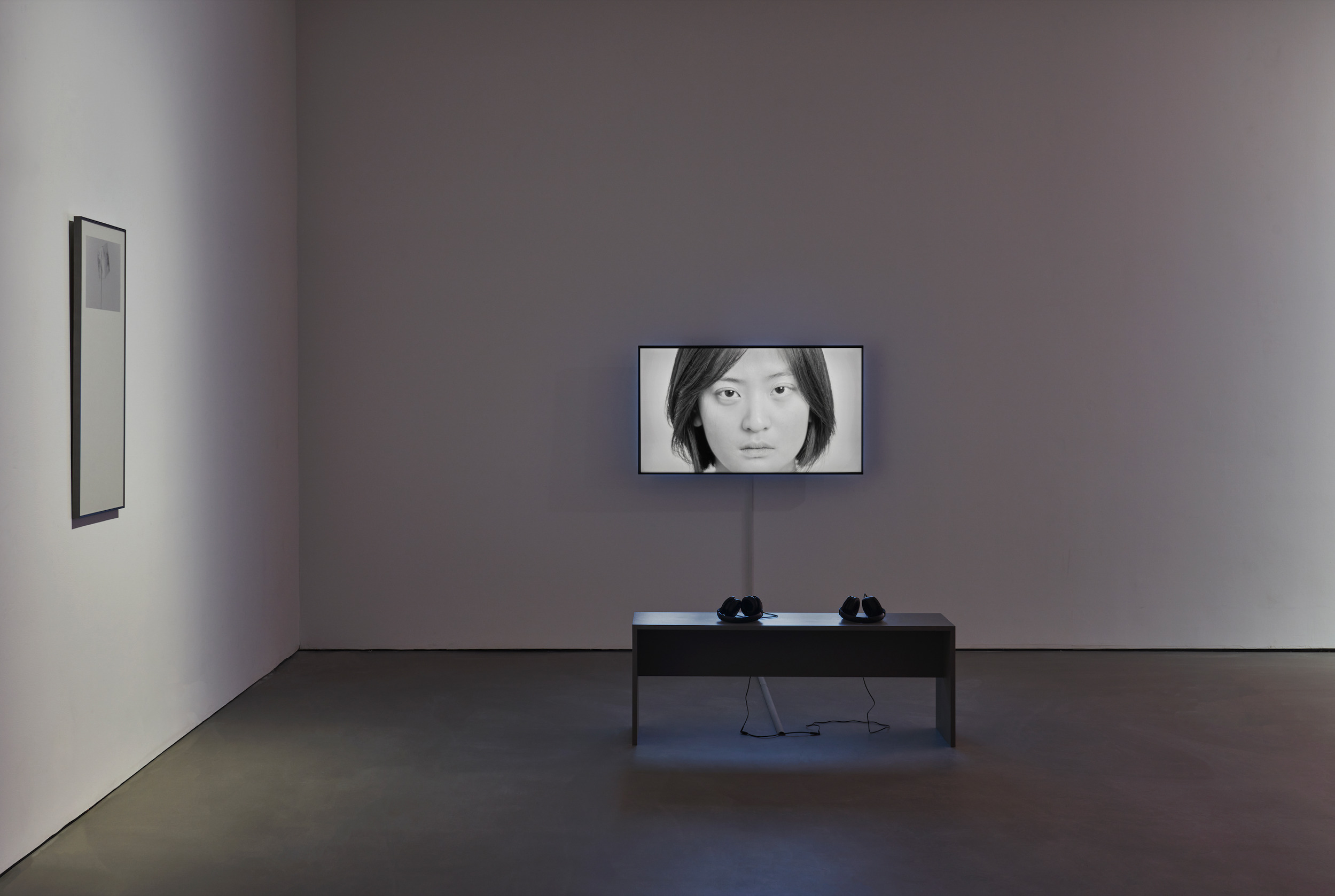
Yezoi Hwang, Ria, 2022, Single-channel video, 20min. Installation view of 《Skyline Forms On Earthline》 (DOOSAN Gallery, 2022) ©Yezoi Hwang

One day, as Yezoi Hwang continued to capture her subjects through the lens of a camera, she came to a renewed awareness that the act of photographing is, by nature, also a process of excluding what lies outside the frame. With this realization, the artist began to turn her attention toward the “unphotographed” realities and existences that remain beyond the frame—and beyond socially sanctioned norms.
 
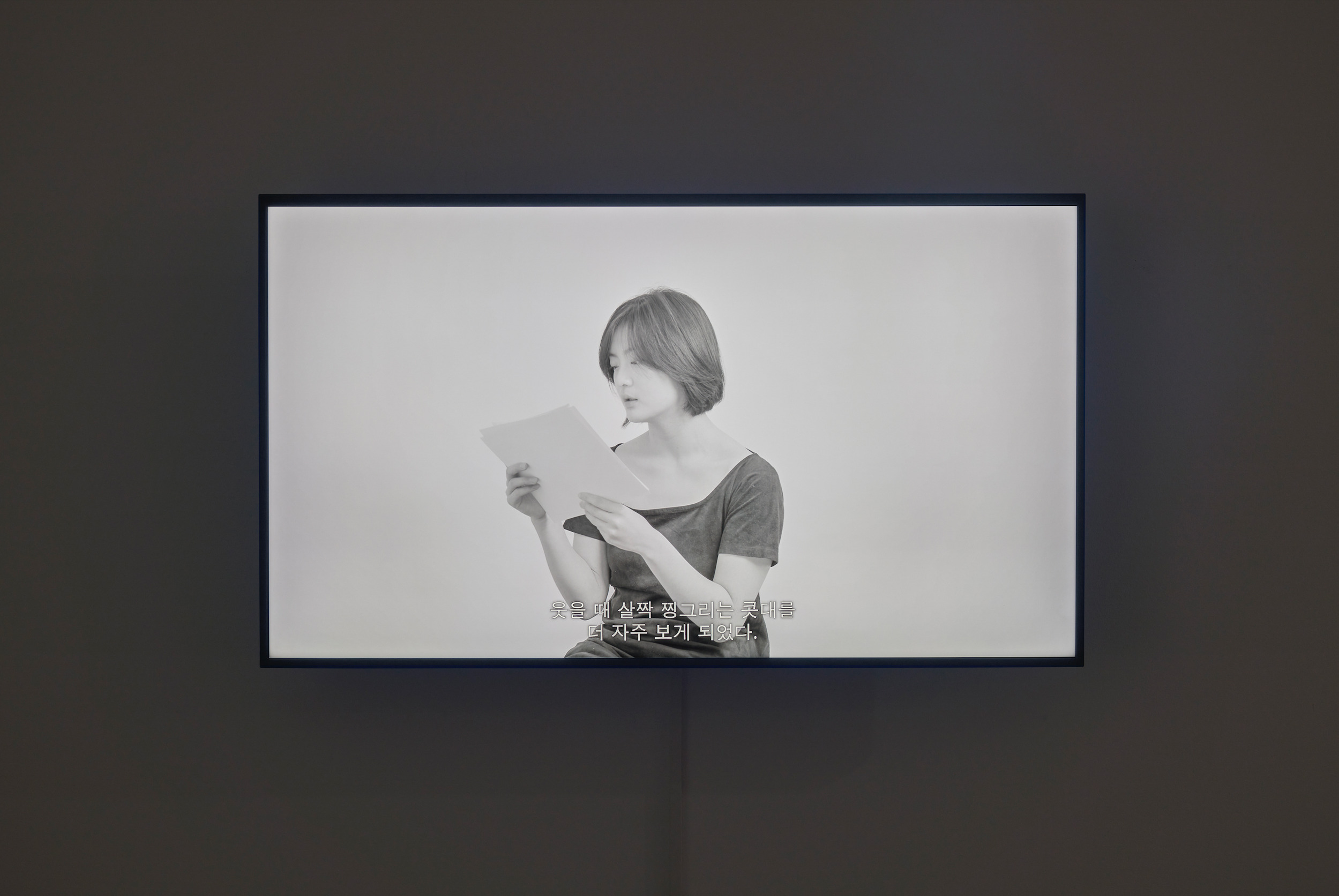
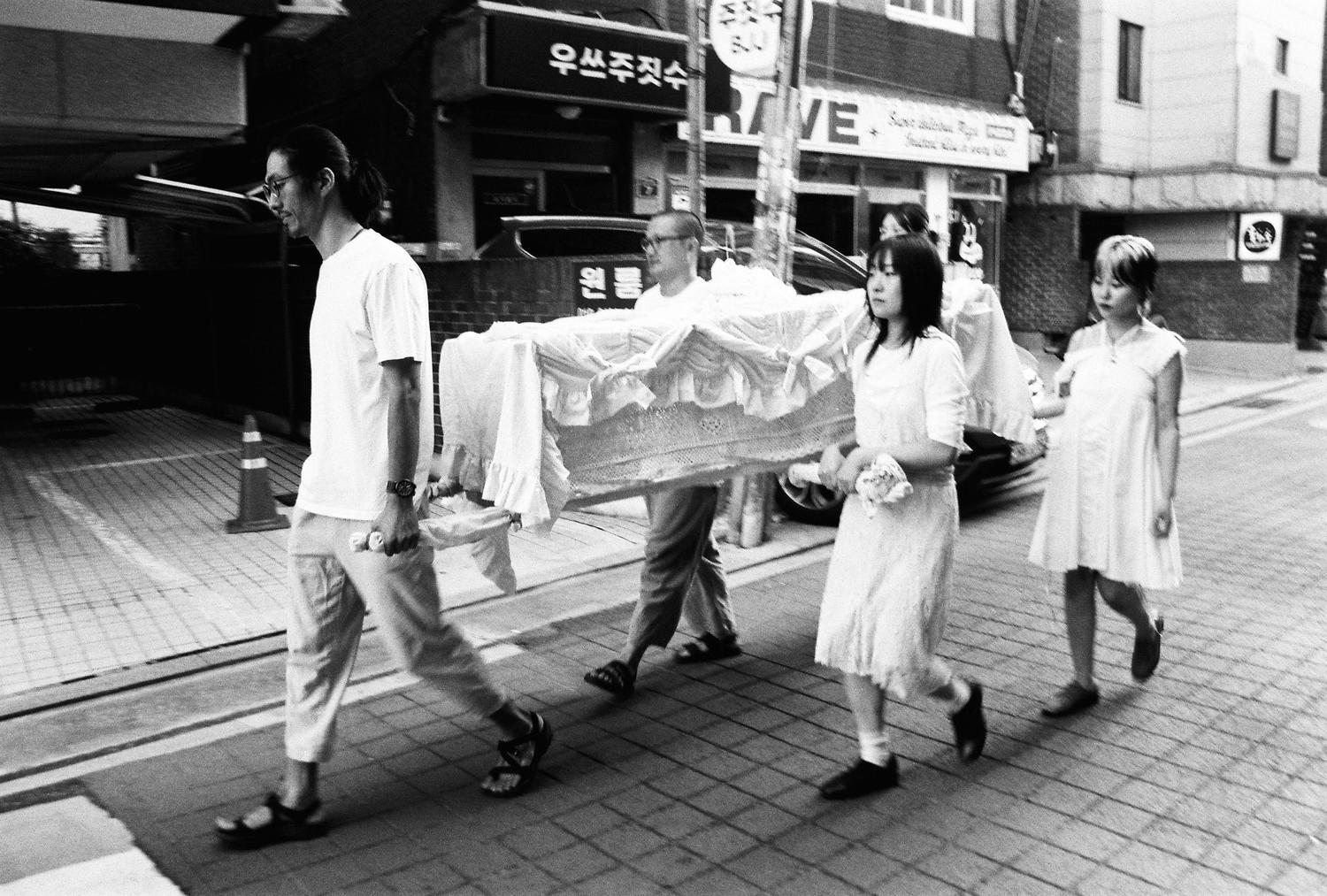
For instance, the video work Ria (2022) stems from a confessional conversation with an acquaintance who has lost a family member, hazily traces the force related to death and the fringes of death through a fictional character named ‘Ria’.


Yezoi Hwang, Ria, 2022, Single-channel video, 20min. Installation view of 《Skyline Forms On Earthline》 (DOOSAN Gallery, 2022) ©Yezoi Hwang

The 'symptoms' such as the disconnected narration, sudden itchiness, and flaky skin are converted into a book, which is disintegrated, and all of a sudden the parting is taken in stride. It reflects the realities of how the extent of mourning for someone’s death can differ and sometimes even be excluded through social conventions and standards and is an attempt to re-recognize the process and meaning of mourning and parting that is different for everyone.


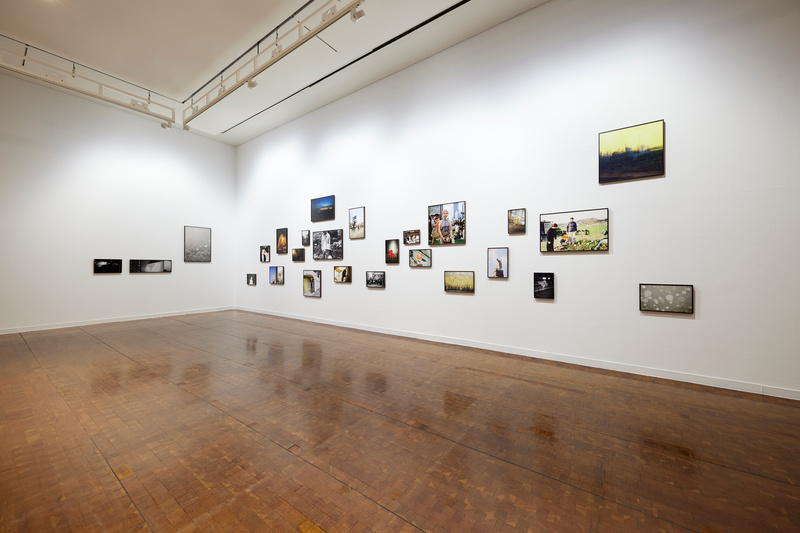
Yezoi Hwang, There Before series, 2022, Installation view of 《Scoring the Words》 (Seoul Museum of Art, 2022) ©Yezoi Hwang

Meanwhile, in the group exhibition 《Scoring the Words》 (Seoul Museum of Art, 2022), Yezoi Hwang presented an installation that reconfigured snap photographs taken over the past several years alongside newly shot images, arranging them according to emotional trajectories such as mourning, desolation, love, and tenderness.
 
The photographs—linked and intersecting at varying sizes and heights—form a vast collective that unfolds across multiple networks. Woven from stories imbued with sensations of love, trust, and hospitality, this constellation becomes a comforting space, a kind of nest, where these narratives come together.


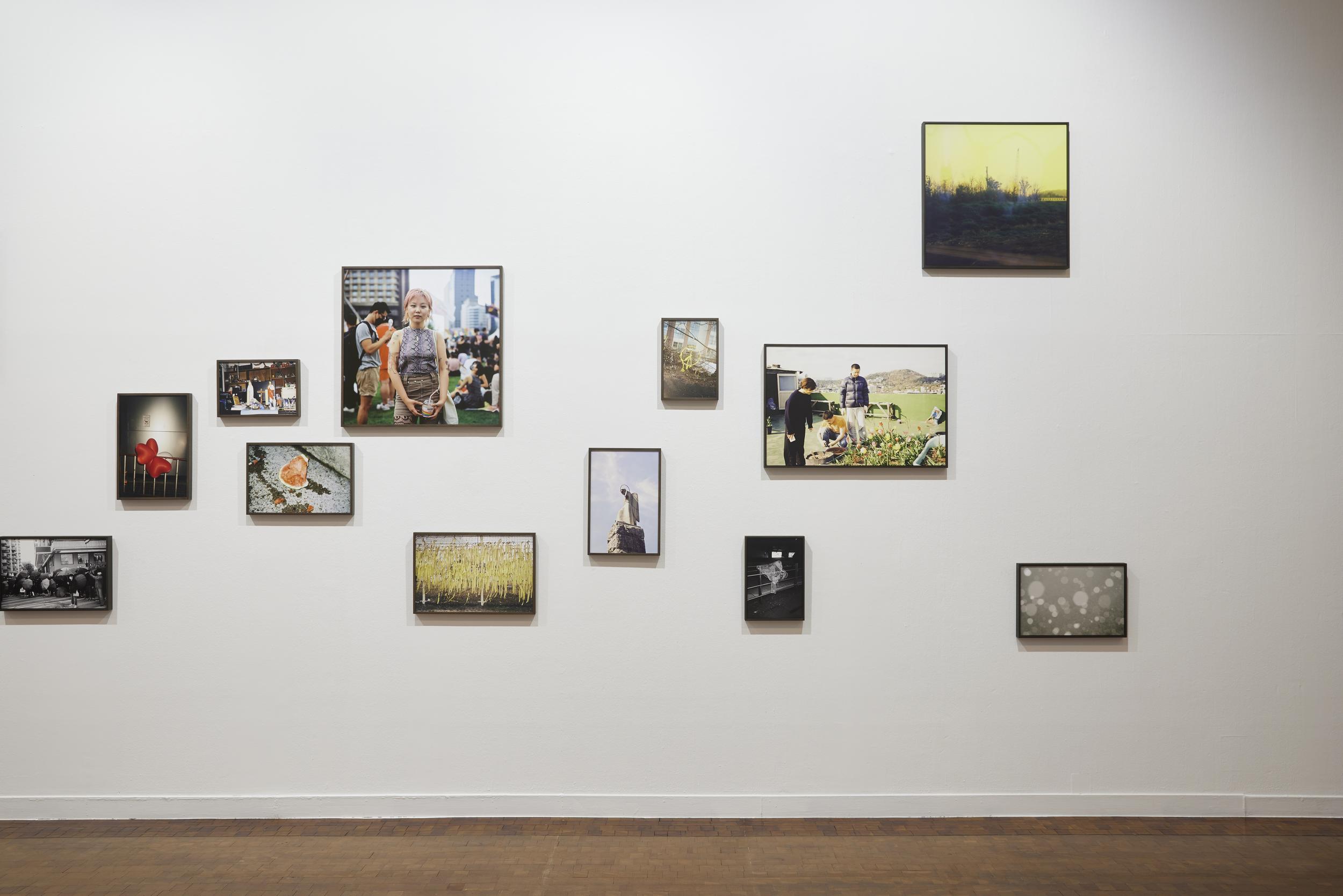
Yezoi Hwang, There Before series, 2022, Installation view of 《Scoring the Words》 (Seoul Museum of Art, 2022) ©Yezoi Hwang

The photographic series ‘There Before’ (2022) consists of scenes to which the artist has long paid attention and devoted emotional care. Comprising images of self-portraits, family members, friends participating in queer parades, the Sewol Ferry disaster, and the Hong Kong democracy movement, the series brings together photographs that look at individuals and those that look at society, while remaining aware of a sense of connection maintained at an appropriate distance.
 
In weaving these works into a single spatial constellation, Hwang allows each piece to be interconnected while still preserving its own place and narrative. The resulting space becomes a gentle and considerate one—where individuality is acknowledged, sustained, and embraced.


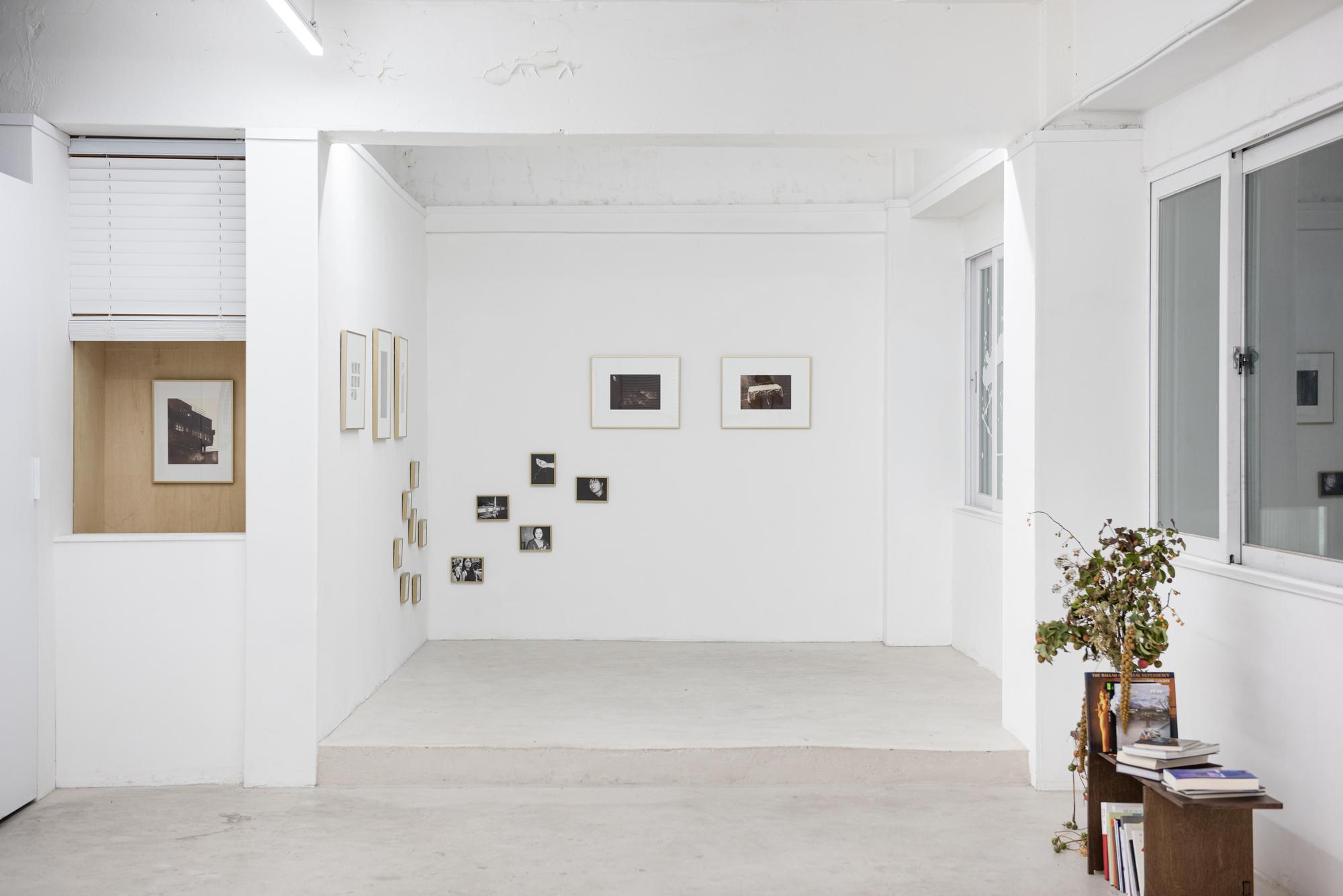
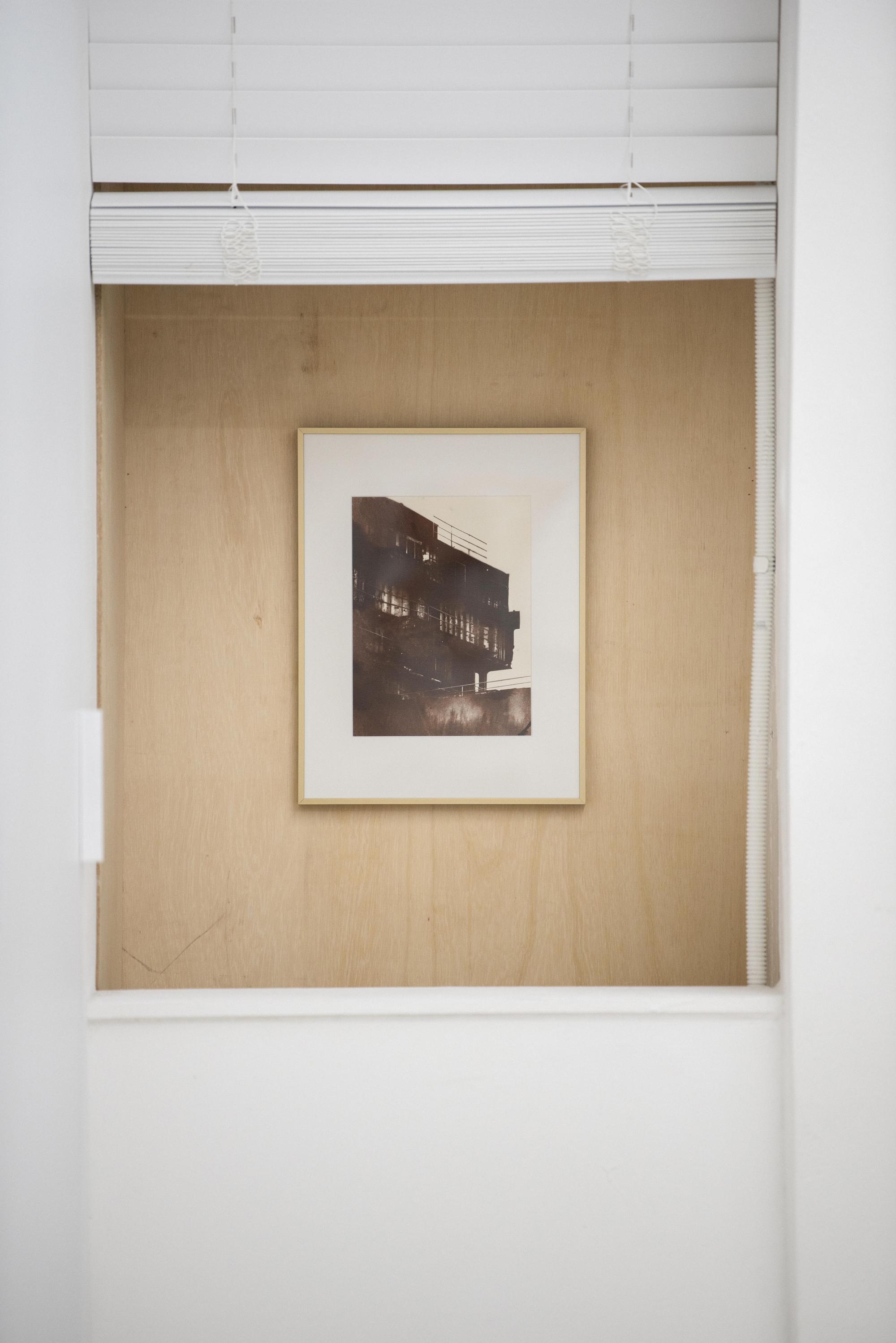
Installation view of 《Fragile Constellation》 (AnnPaak Space, 2023) ©AnnPaak Space

In the solo exhibition 《Fragile Constellation》 (AnnPaak Space, 2023), held the following year, the artist revisited the grief and poverty deeply embedded in the spatiotemporal fabric of our society, turning her gaze toward those who still remain in place.
 
Her camera lens captures J, who says that after forming new kinship ties, she feels she has “lived well”; S, simmering within a halted time after narrowly escaping a particular incident; L, who continues to share breakfast with others despite living under the constant threat of eviction by hired enforcers; and Y, who, even after being severed from a certain world, says she still wants to write. Alongside these figures are the remaining landscapes and the scenery of moments temporarily lulled into calm.


Installation view of 《Fragile Constellation》 (AnnPaak Space, 2023) ©AnnPaak Space

Hwang Yezoi sought to chart another terrain of resistance amid the recurring and exhausting sense of powerlessness she experienced through events such as the Sewol Ferry disaster, Hong Kong, the Suwon red-light district, the Itaewon crowd crush, and the redevelopment of Bogwang-dong. As a technique of resistance, the artist recalls the photographs of Hippolyte Bayard.
 
Hippolyte Bayard researched and perfected a paper photographic process using egg white, known as the ‘albumen glass-on-type.’ However, at the recommendation of the French government, he postponed its public announcement. In the meantime, the government proclaimed the daguerreotype—the silver-plate photographic process developed by Louis Daguerre—and Daguerre came to occupy the full honor and authority of being recognized as the inventor of photography.


Installation view of 《Fragile Constellation》 (AnnPaak Space, 2023) ©AnnPaak Space

In protest, Hippolyte Bayard left behind a self-portrait in which he feigned death within the photograph itself. From this image, Hwang Yezoi found a clue for traversing such a futile and disheartening time. She subsequently recreated the albumen glass-on-paper process in the darkroom. By overlaying Bayard’s technique onto the mirage-like landscapes and objects she had chosen, Hwang enables us to sense that those who resist and struggle through their very existence were, indeed, there.


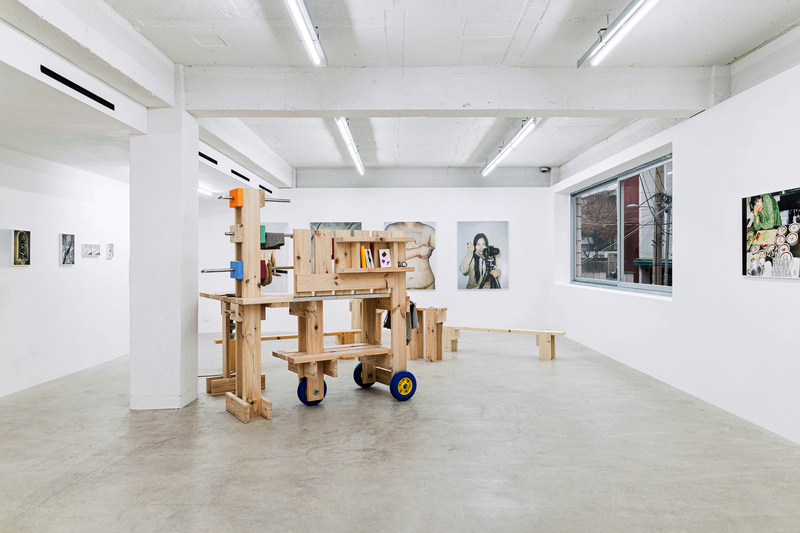
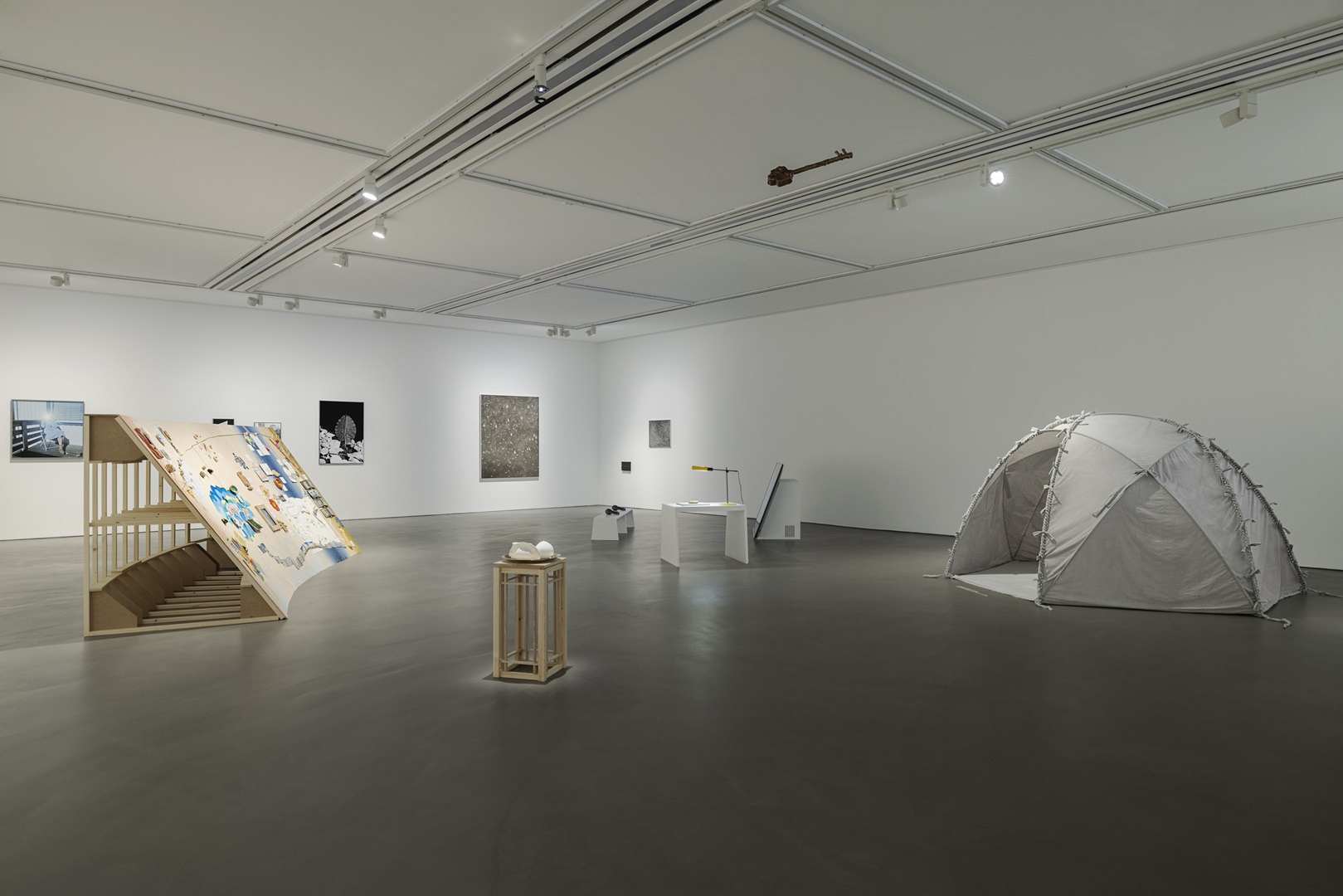
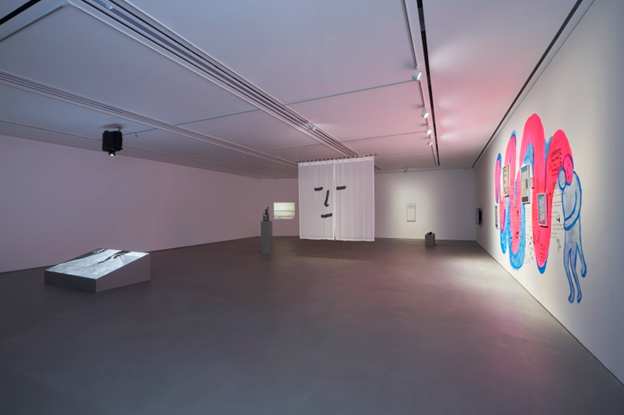
Installation view of 《Something Like a Soup》 (Caption Seoul, 2025) ©Caption Seoul

Meanwhile, Hwang Yezoi’s solo exhibition 《Something Like a Soup》 (Caption Seoul, 2025) begins with the Romanian-born writer Aglaja Veteranyi’s novel Why Is the Child Cooking in the Polenta? Starting from the lingering resonance of foods like polenta, liquid diets, and soup, the exhibition follows the emotions and records the artist has gathered, tracing the remnants of a woman writer’s life and work.


Installation view of 《Something Like a Soup》 (Caption Seoul, 2025) ©Caption Seoul

In preparation for the exhibition, Hwang traveled to Zurich, visiting Veteranyi’s former graveyard and accessing her photographs and unpublished manuscripts at the Swiss Literary Archives. Images captured along this journey—and the thoughts gathered before and after these encounters—form the basis of the work.


Installation view of 《Something Like a Soup》 (Caption Seoul, 2025) ©Caption Seoul

The exhibition assembles fragments of daily life and travel, distilled scenes, and traces of food and writing. In doing so, it reclaims long-devalued feminine acts—cooking, caregiving, recording, confession—and repositions them as tools for resistance.
 
Through the interplay of photography, text, food, and archive, 《Something Like a Soup》 presents an ongoing exercise in mourning, and a practice of subtly yet purposefully bending the direction of a history that has often dismissed such gestures as minor or insignificant.


Yezoi Hwang, Fragile Constellation series, 2023 ©Yezoi Hwang

In this way, moving fluidly between photography and writing, Yezoi Hwang captures beings who slip outside society’s prescribed angles yet continue to carry on their own stories. Through her practice, she weaves people together through a sense of love and trust tempered by warmth and distance, and an ethics of hospitality, creating a small, intimate space in which solidarity can emerge without preconditions.

 “Through photography and my work, I wanted to refrain from making assertions or seeking verification, and instead to secure and suspend a space in which the self, the subject, and the viewer can move about.”    (Yezoi Hwang, interview with BE(ATTITUDE))


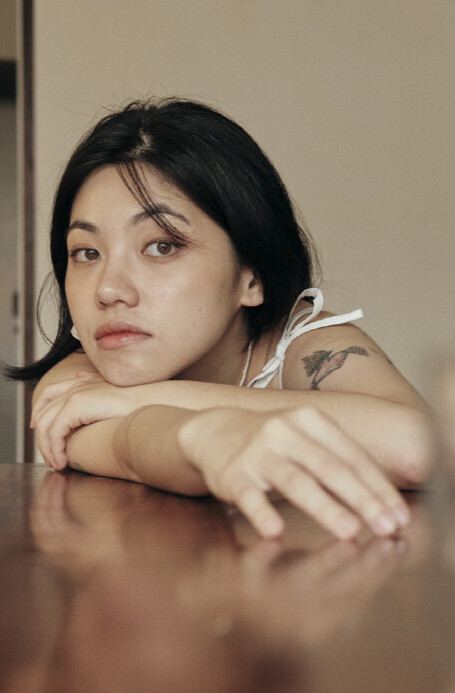
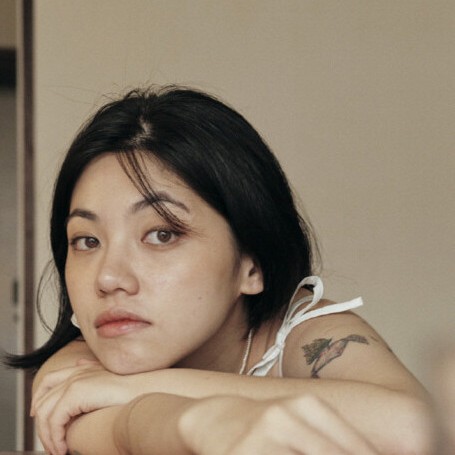
Artist Yezoi Hwang ©Wisdom House

Yezoi Hwang graduated from Kaywon University of Art and Design, majoring in Photographic Art. Her solo exhibitions include 《Something Like a Soup》 (Caption Seoul, Seoul, 2025), 《Fragile Constellation》 (AnnPaak Space, Seoul, 2023), and 《Mago》 (d/p, Seoul, 2019).
 
She has also participated in numerous group exhibitions, including 《The Green Lay》 (DOOSAN Gallery, Seoul, 2025), 《B/W Signals》 (Museumhead, Seoul, 2024), 《We, the Sea》 (Gyeonggi Museum of Modern Art, Ansan, 2024), 《Scoring the Words》 (Seoul Museum of Art, Seoul, 2022), 《Skyline Forms On Earthline》 (DOOSAN Gallery, Seoul, 2022), and the Seoul Photo Festival 《Unphotographic Moment》 (Buk-Seoul Museum of Art, Seoul, 2020).
 
Hwang has published the photobooks Mixer Bowl and Season, as well as the photo essays Imagining the Caring World (Badabooks) and A Thrilling Hug (Achimdal).

References