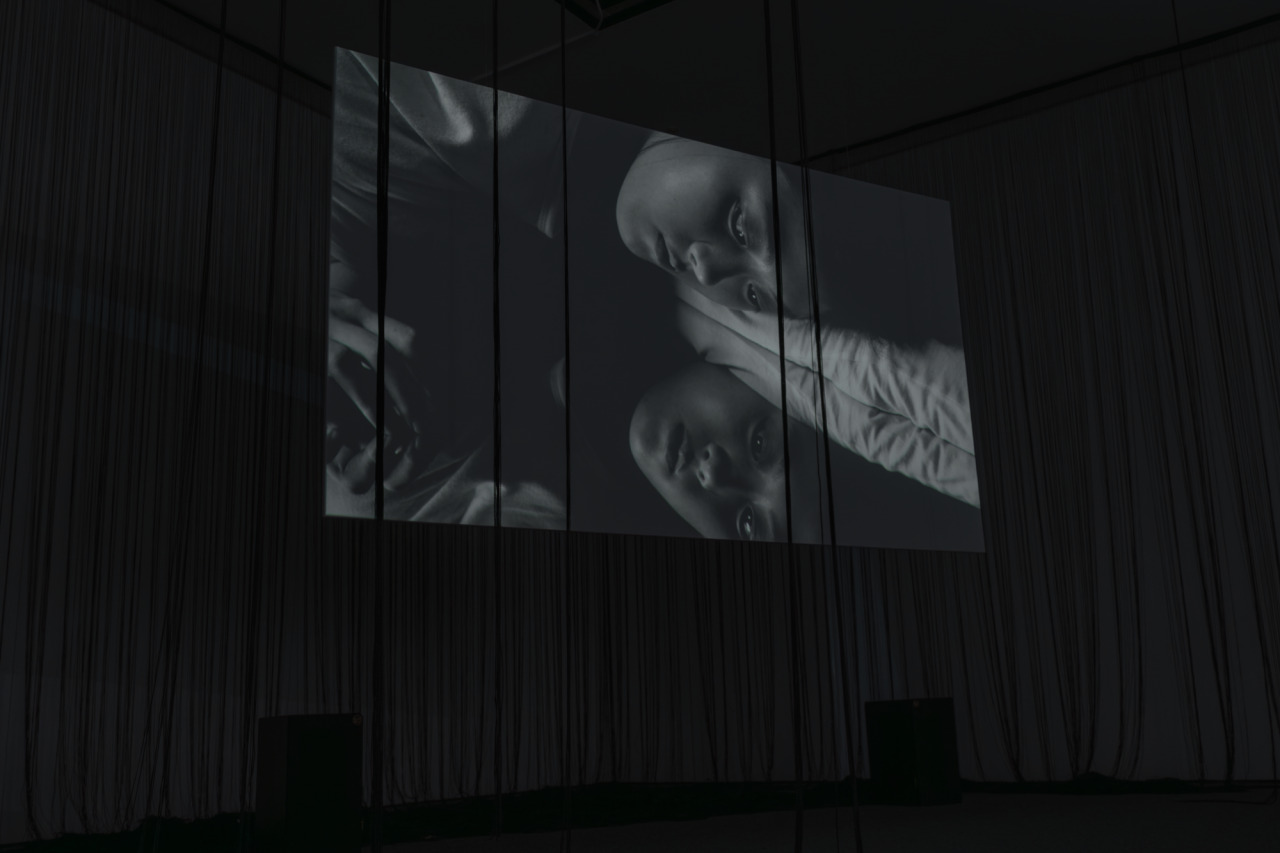
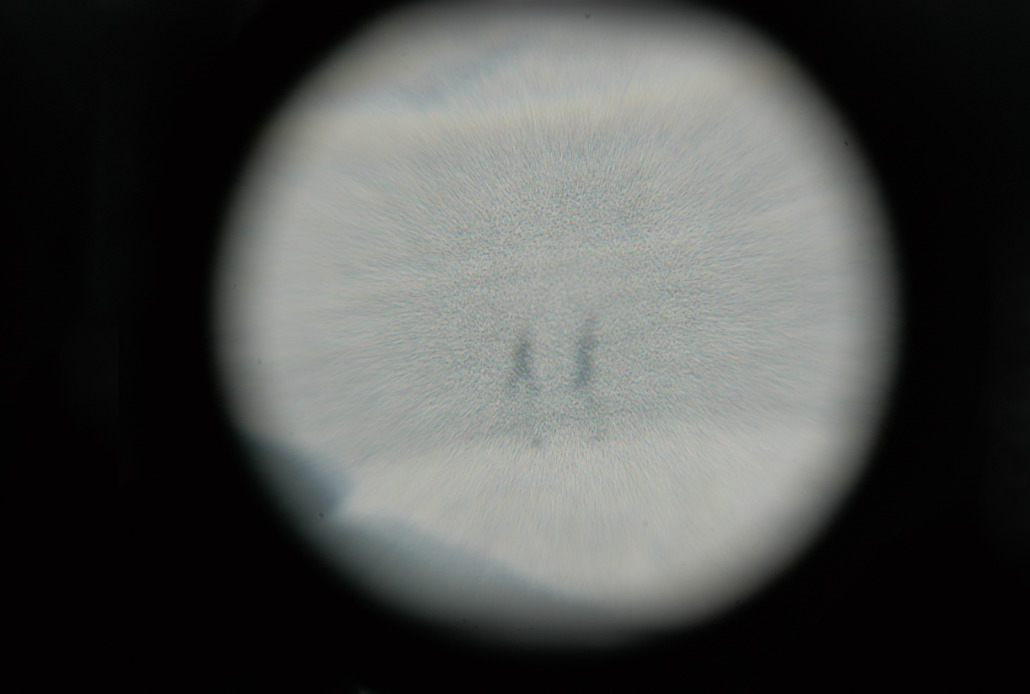
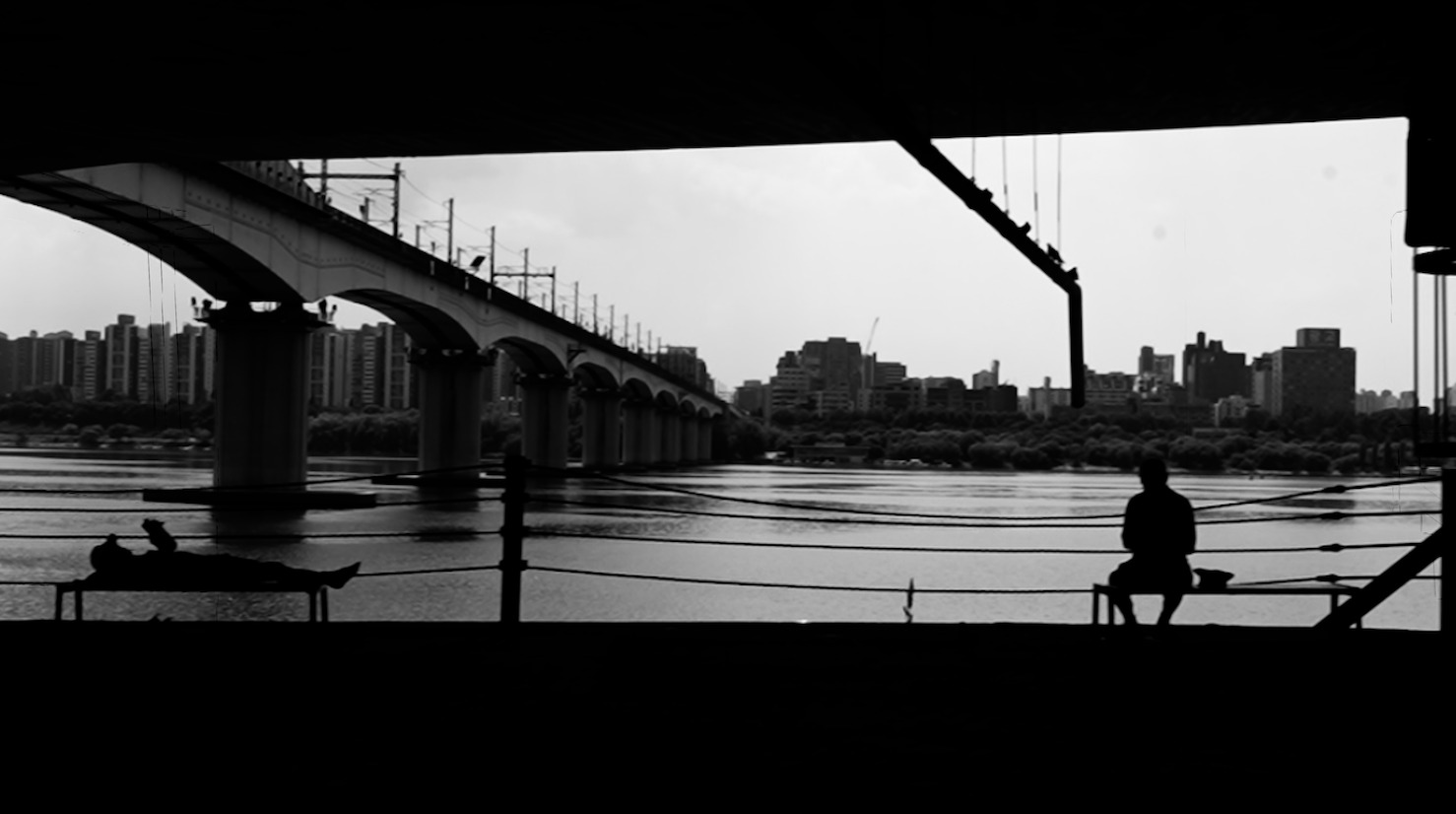
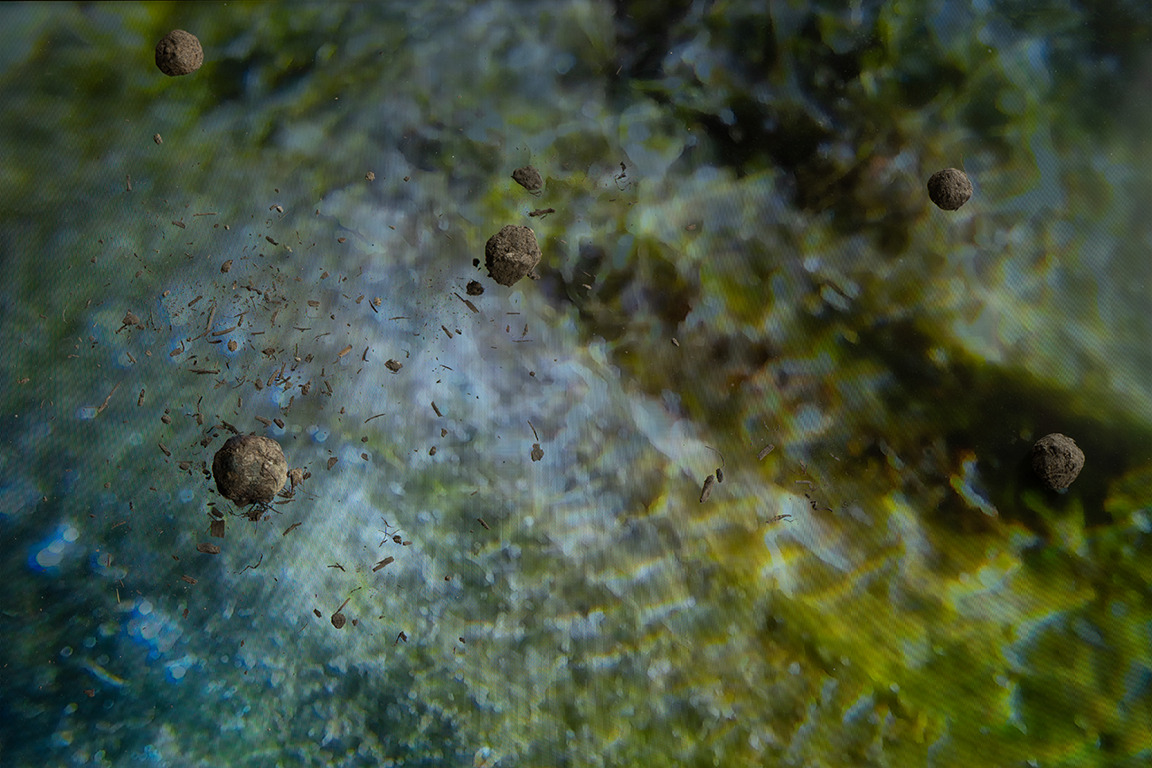
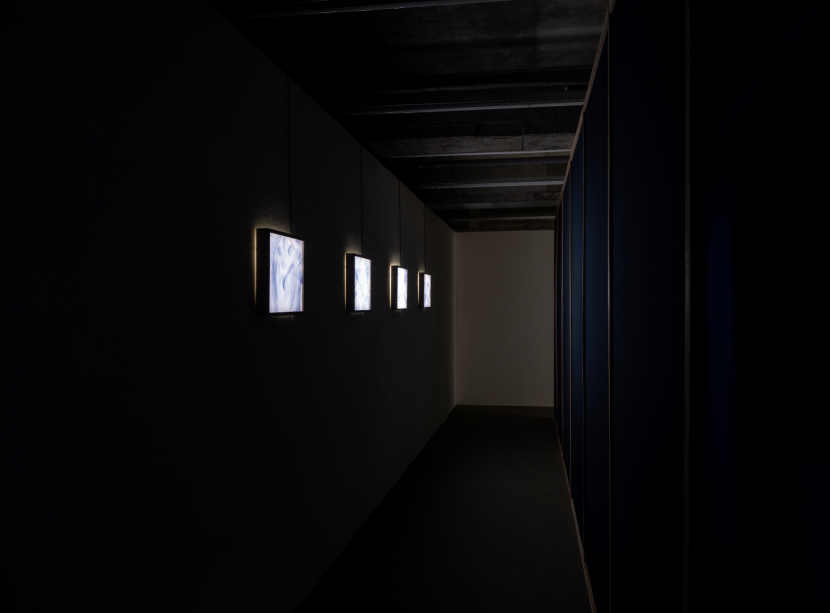
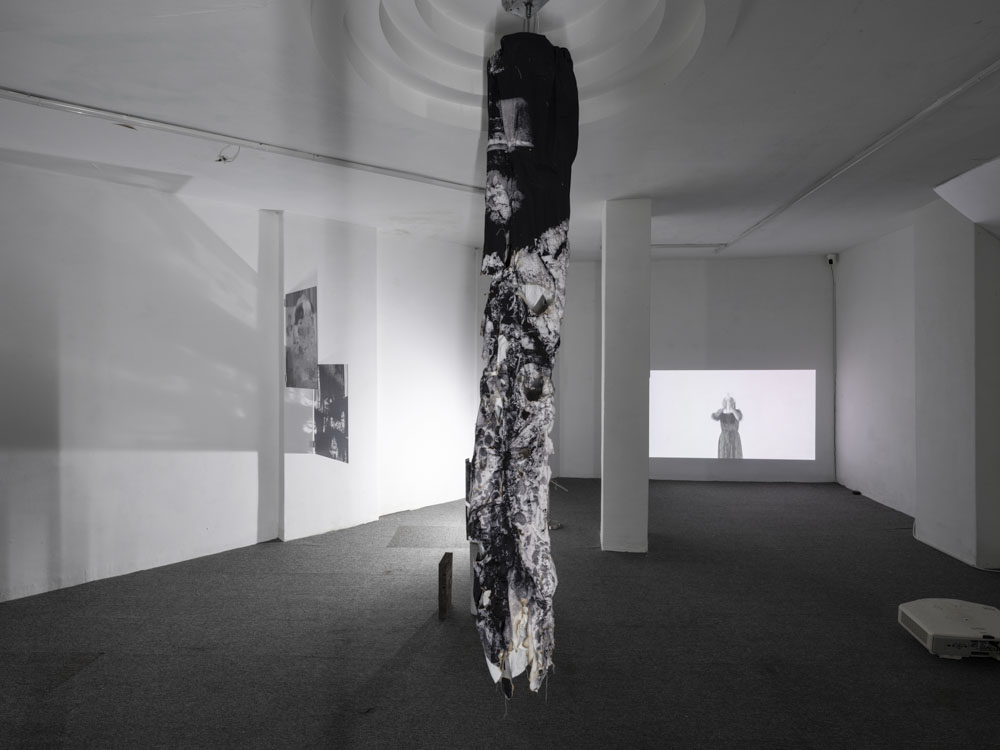
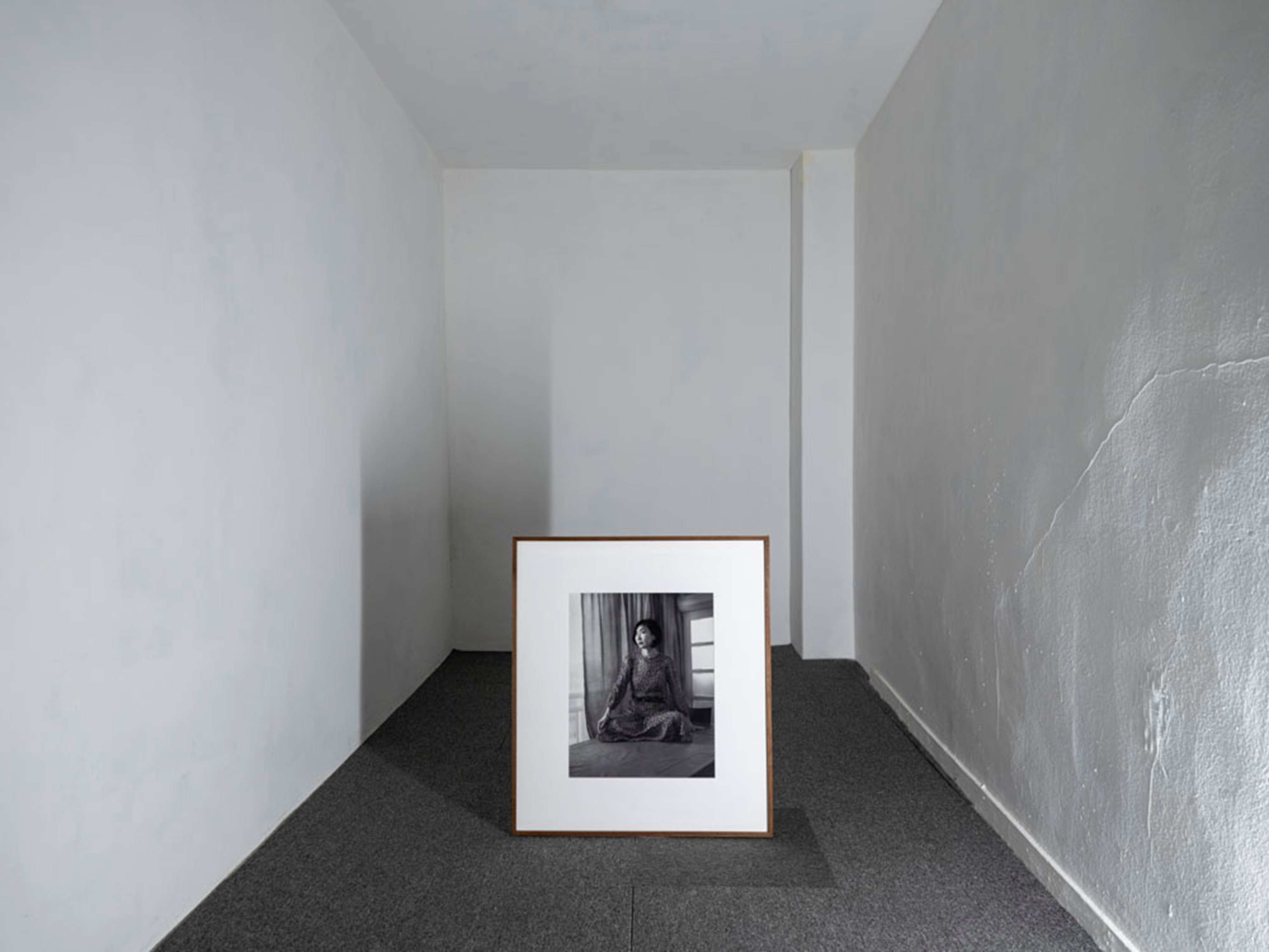
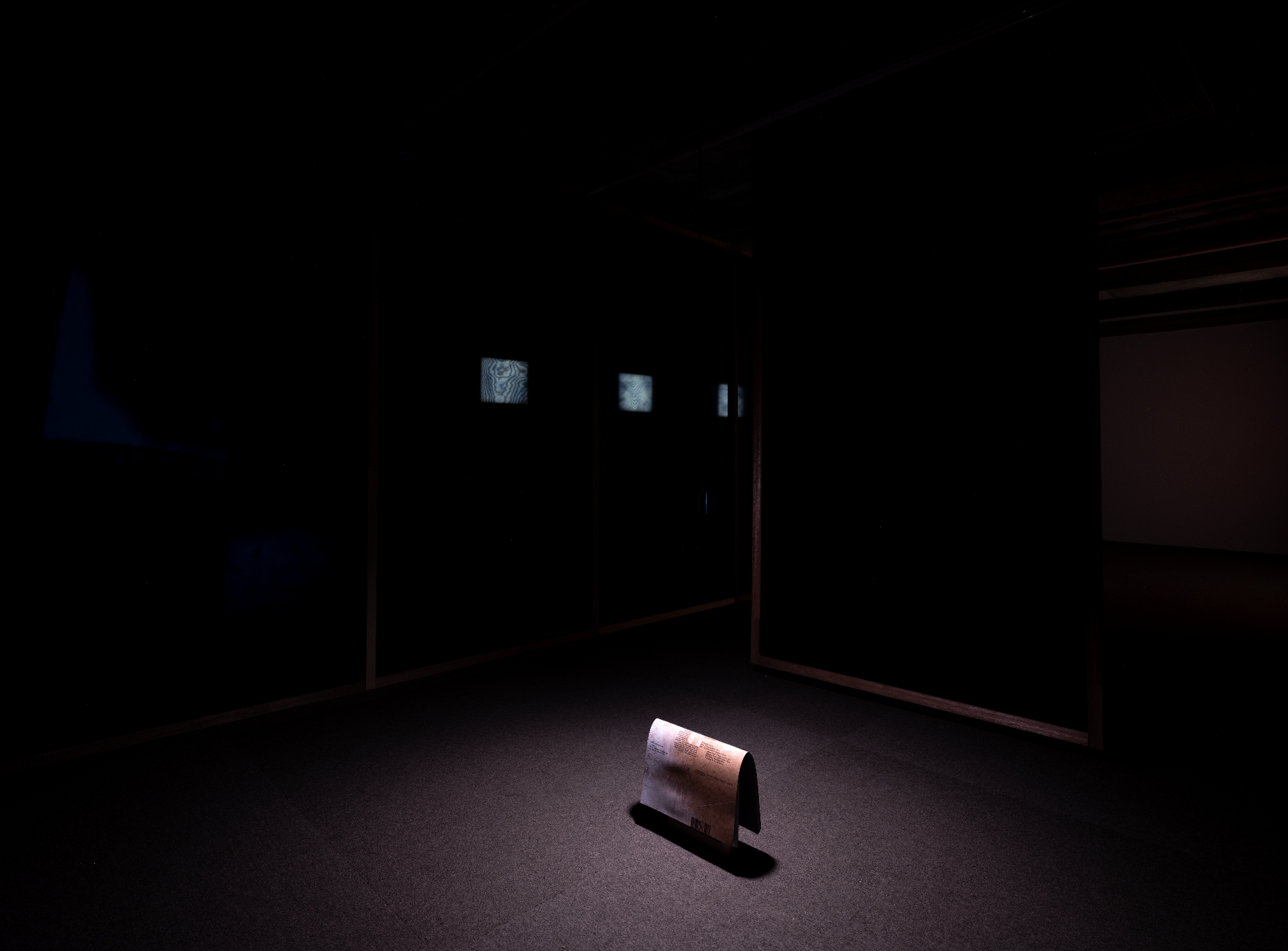
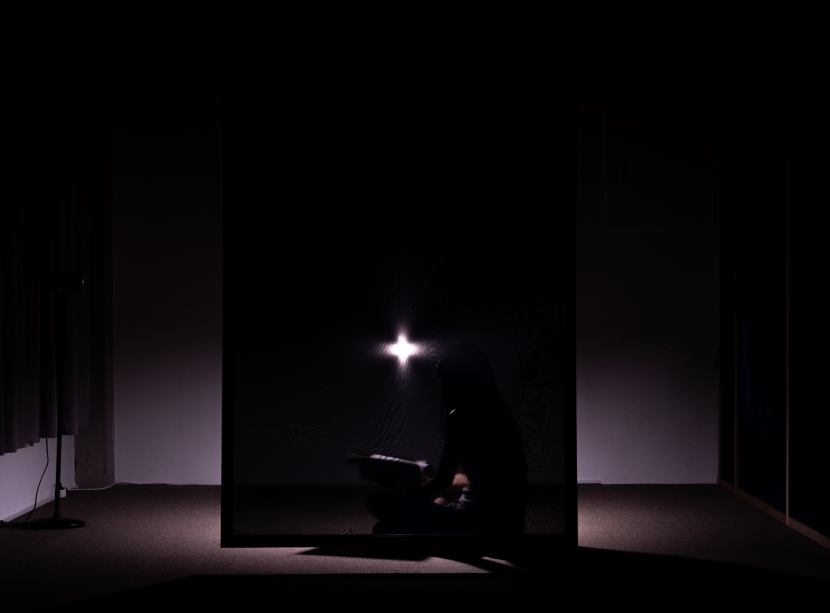
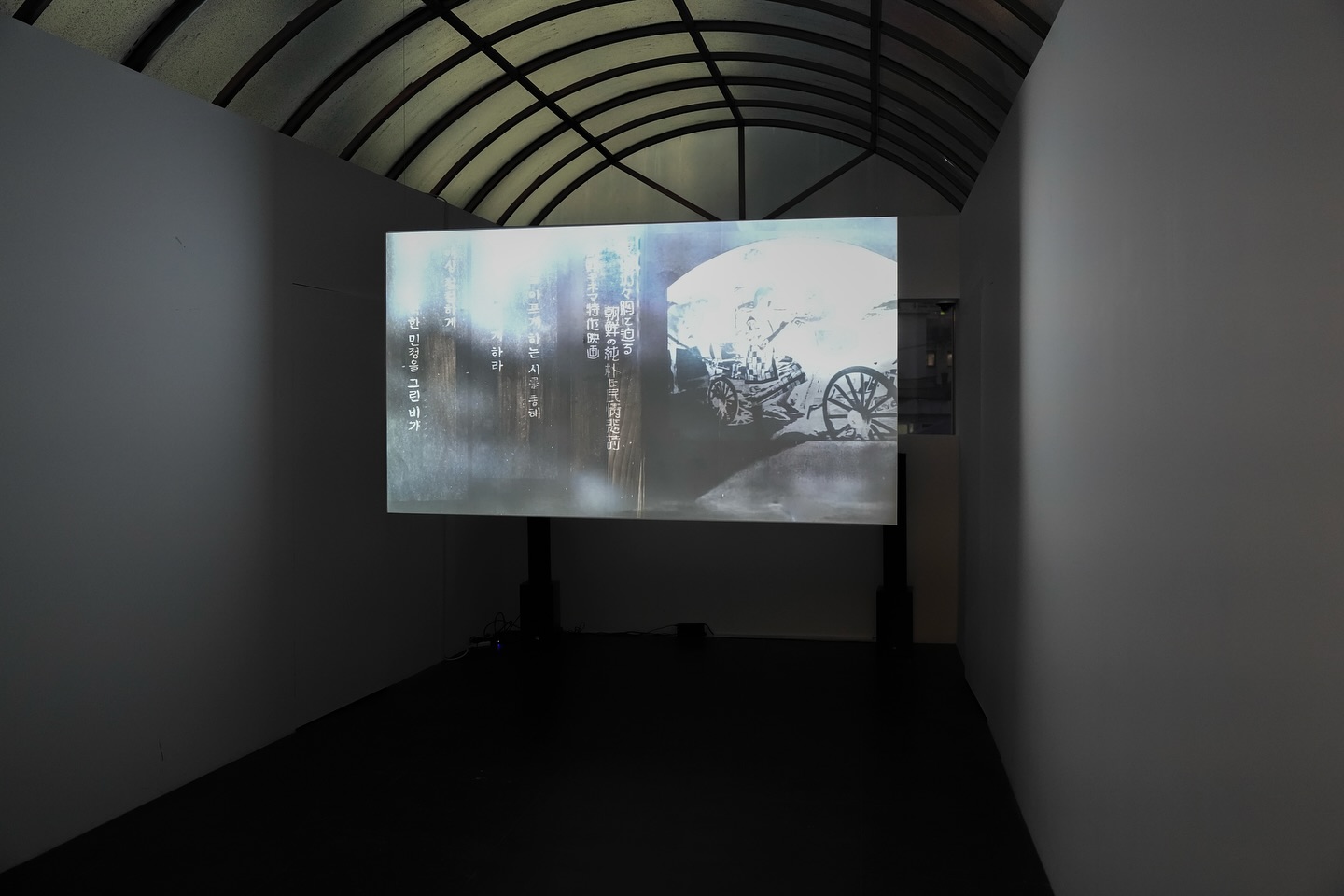
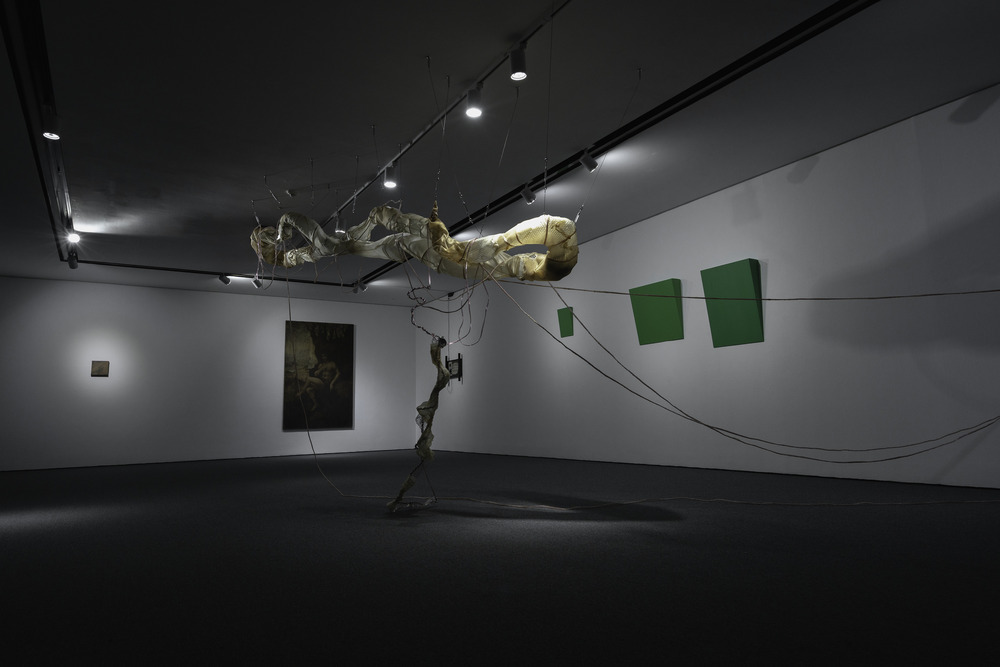
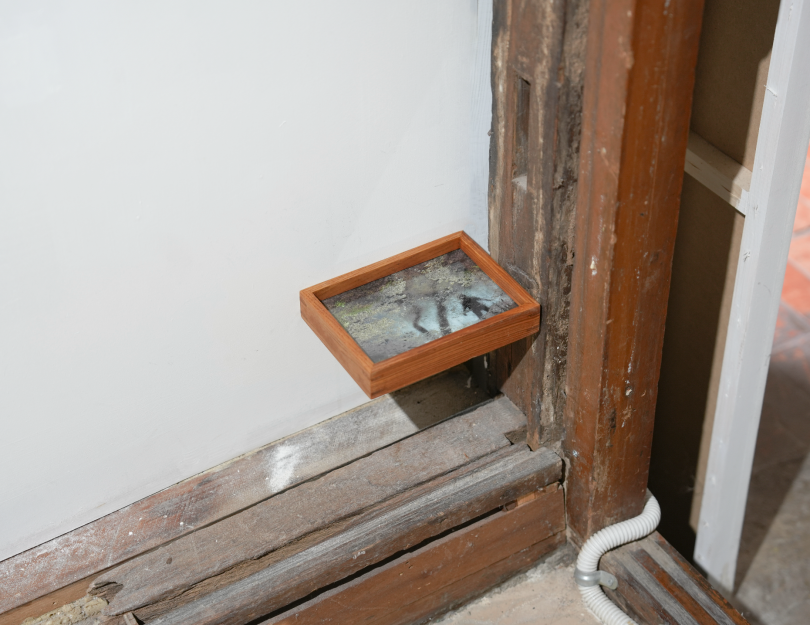
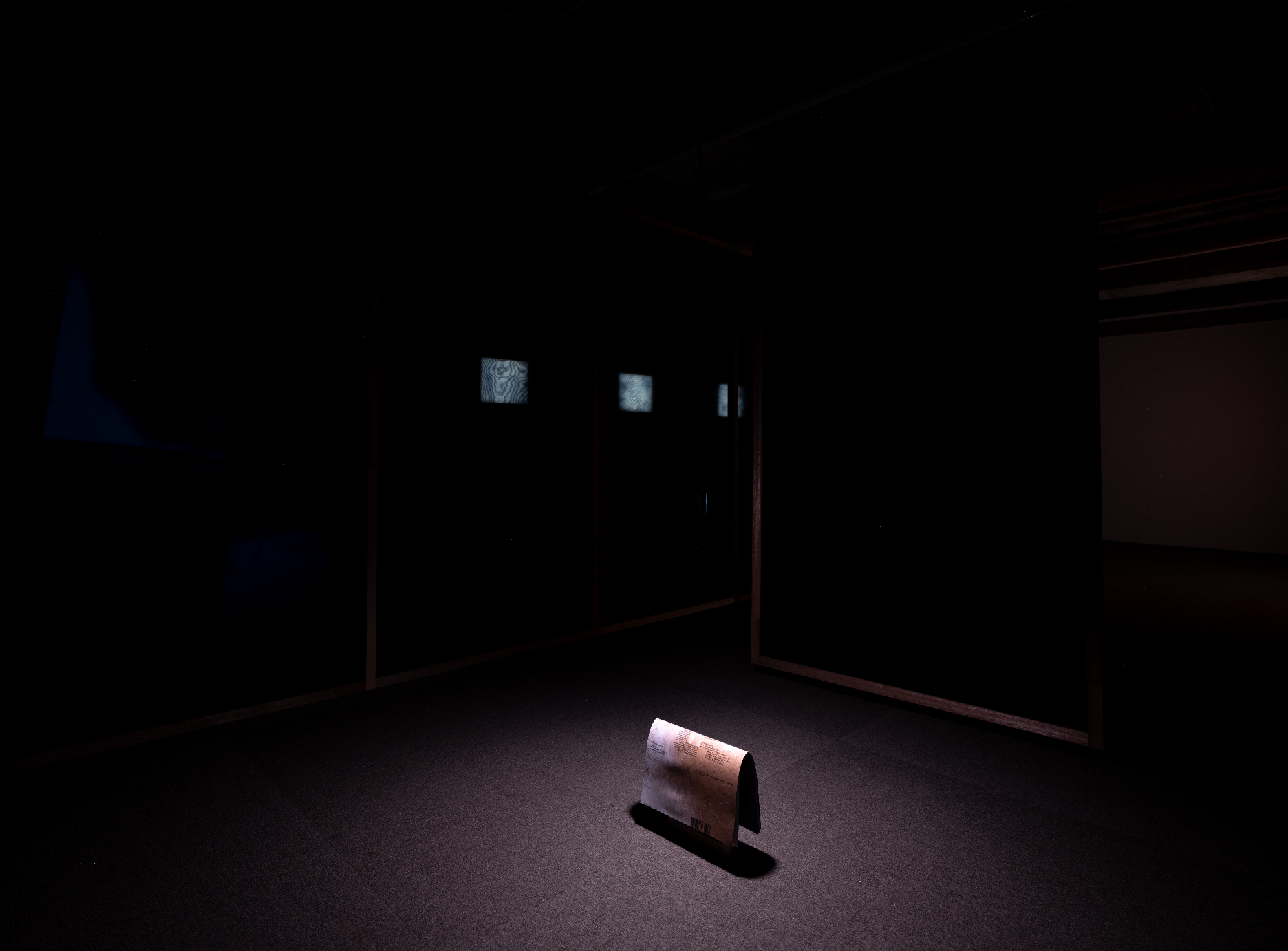
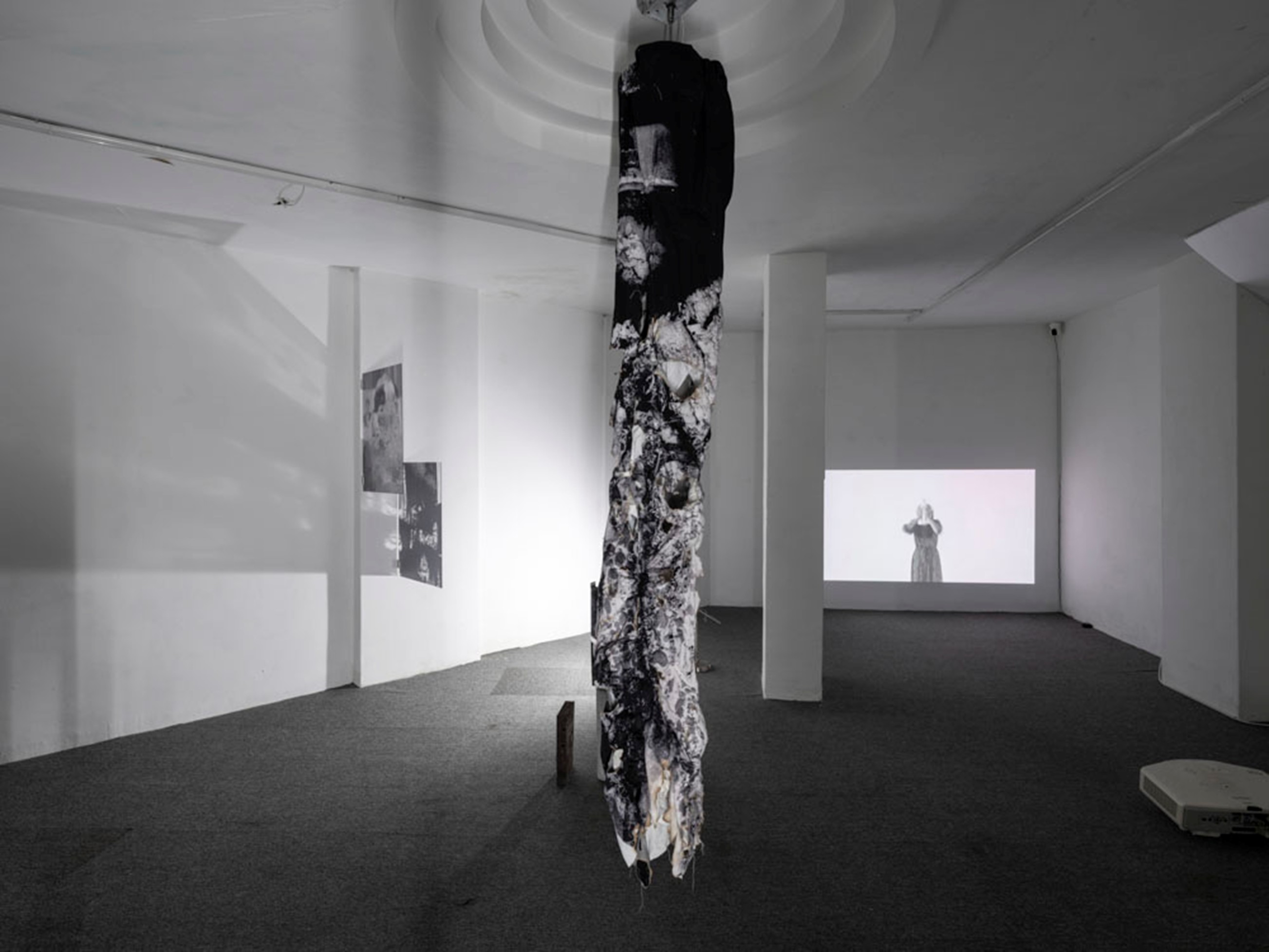
Installation view of 《Blurry Dreams》 ©Alterside

Here is a polyphonic journey. It begins in a time where more is submerged than visible—circling the margins, moving toward a destined forgetting.

If one traces the diverging paths in reverse, an island appears at the point where they intersect, in the middle of the river. It is Bamseom—an island said to have disappeared after an explosion in 1968. Over a long span of time, it was remade through accidental sedimentation, yet access remains forbidden, leaving it preserved like a specimen: a sealed time-space.

Voices older than the city each carry different memories. The strange past—of having lived together on the island, and of having left it at the same moment—has been broken into fragments. Shaped by each person’s experience and reality, these blurry shards are scattered along different parts of the riverbank.

The story continues as Sangha Khym visits elderly people who remember the island. Following clues left behind as uncertain memories, she imagines an unseen time—one she never experienced—overlaid upon the present time-space. This unfolds through Missing Link, in which she returns to places that remain in the present, guided by notes and photographs her grandfather left behind in order to remember the moment someone disappeared.

Arriving at the present through intersecting memories and gazes, the island still recedes and vanishes—neither clearly seen nor heard. gather follows the gaze of a buoy that has gained movement through memory as its medium. Within a landscape of time-space that seems to disappear while remaining still, the past can only be inferred as a future conversation of reminiscence—like the dialogue that might unfold one day when someone happens to open an old photo album.

Ultimately, this is an inquiry into sealed time and memory, by way of the island. Perhaps an ending never existed in the first place. Perhaps this journey—whose destination is unknown—springs from our fate to keep moving.


Installation view of 《Blurry Dreams》 ©Alterside

Notes on Time

linking Missing Link and gather
 
My destination was always the past. I suddenly remembered the moment I looked at Bamseom from the Seogang Bridge. No one can enter; one can only look from a distance that cannot be narrowed or widened. In that sense, the island as it exists now is, in itself, the past. Over the 56 years in which the island has accumulated, the explosion has become a concluded event; the scattered rocks may have become the steps and embankments of Yeouido, or drifted elsewhere and sunk deep into the riverbed.

I have no memory of the island from before 1968. So every memory begins in the conditional.

Submerged stones, a submerged island, submerged time. All traces of the vanished island had dispersed beyond the island itself. I searched newspapers and the internet for clues to the past, and by chance found—within a few short lines on a local newspaper’s website—elderly people who had once lived on the island.

Following their memories, I wandered between disappeared places. It was less an exact location than something like a rough map. Sometimes, tracing those memories brought me near the house where I used to live; other times, it led to a walkway halfway up a mountain. Of course, I could not find any direct connection to the past there. (I don’t know whether it had disappeared, or changed into a different form that made it unrecognizable.) I felt it was important to stay in those places for a long time, and I kept returning to meet the grandmothers and grandfathers.


Installation view of 《Blurry Dreams》 ©Alterside

In the meantime, time was passing through several new summers. If this were a story, it should have been moving toward a conclusion—yet in the summer of August 2023, I was still in the same place.

The rain that year was violent. Houses, roads, even the island—everything was submerged up to the top. The news reported floods day after day, and the world itself felt as though it were underwater.

The submerged landscape would disappear toward the end of summer, only to return again in the next monsoon season, repeating the same cycle. Within this strange annual recurrence, I began to imagine scenes in which vanished things were heading somewhere—accumulating, day by day, until they suddenly became immense.

That night, I took a boat toward the island. The water overflowed and the island’s boundary dissolved; all that could be seen at a glance were black waves and black thickets, and a faint light floating behind them. Each time the boat slid over the water, occasional lights flickered beneath the surface, trembling in silence. In the darkness, I could not know what it had once looked like. Only the sound of waves colliding and the faint noise carried by the wind made the memory of what was lost feel even sharper.

I remember the day everything stopped because of unexpected rain. The annual hometown visit—taking a boat to the island once a year—was held instead in a parking lot by the Han River where Bamseom could be seen, because the river had swollen from the rain the night before.

Elderly people who once lived on Bamseom; passersby who stopped during exercise; journalists and politicians; shamans and civil servants. Many different people gathered and stood still together. The riverside held onto the dampness of the past, and the shaman whispered to people about memories that had grown distant. They were memories of those who lived far away—memories that had existed across multiple generations.

Amid the many voices and noises echoing over the river, that voice grew gradually fainter. I felt it turning into a sound close to silence. People tried to recall the past while watching the flowing river, but the tangled state of everything was closer to emptiness. When the event ended, everyone dispersed back to their own places, and the riverside dissolved again into the flow of everyday life.

One day, a grandmother said her legs hurt so much she could no longer sleep. And a grandfather, just waking up, said the island was no longer visible from the window. As time passed, it felt as though they were gradually becoming memory itself. I wanted to fully remember the present that was passing by—on the bedsheet where they lay.

References