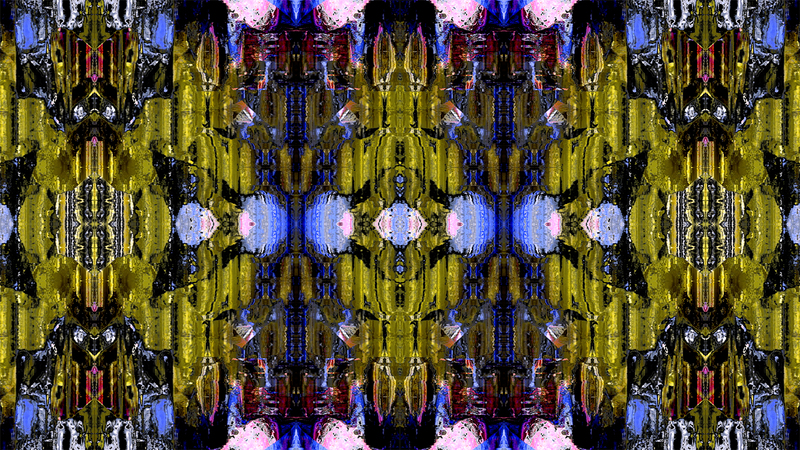


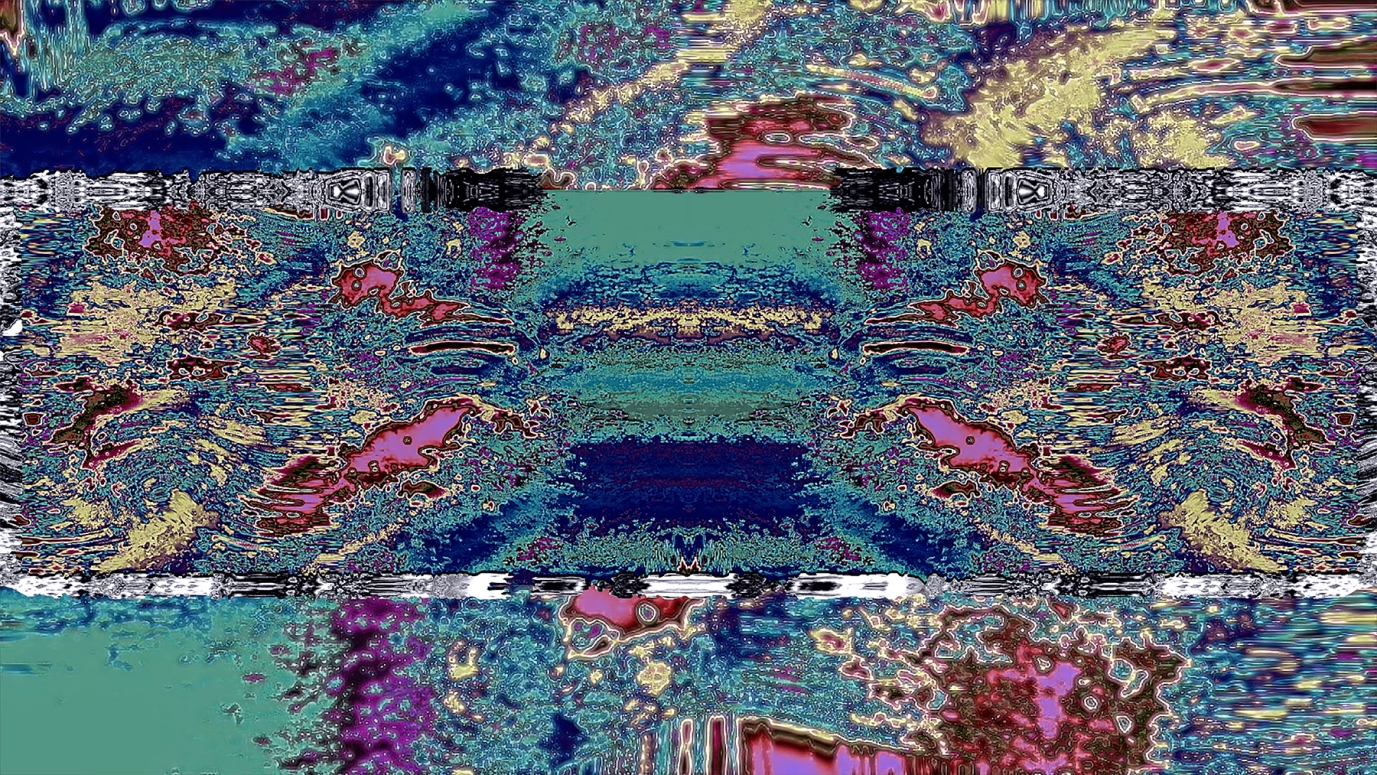
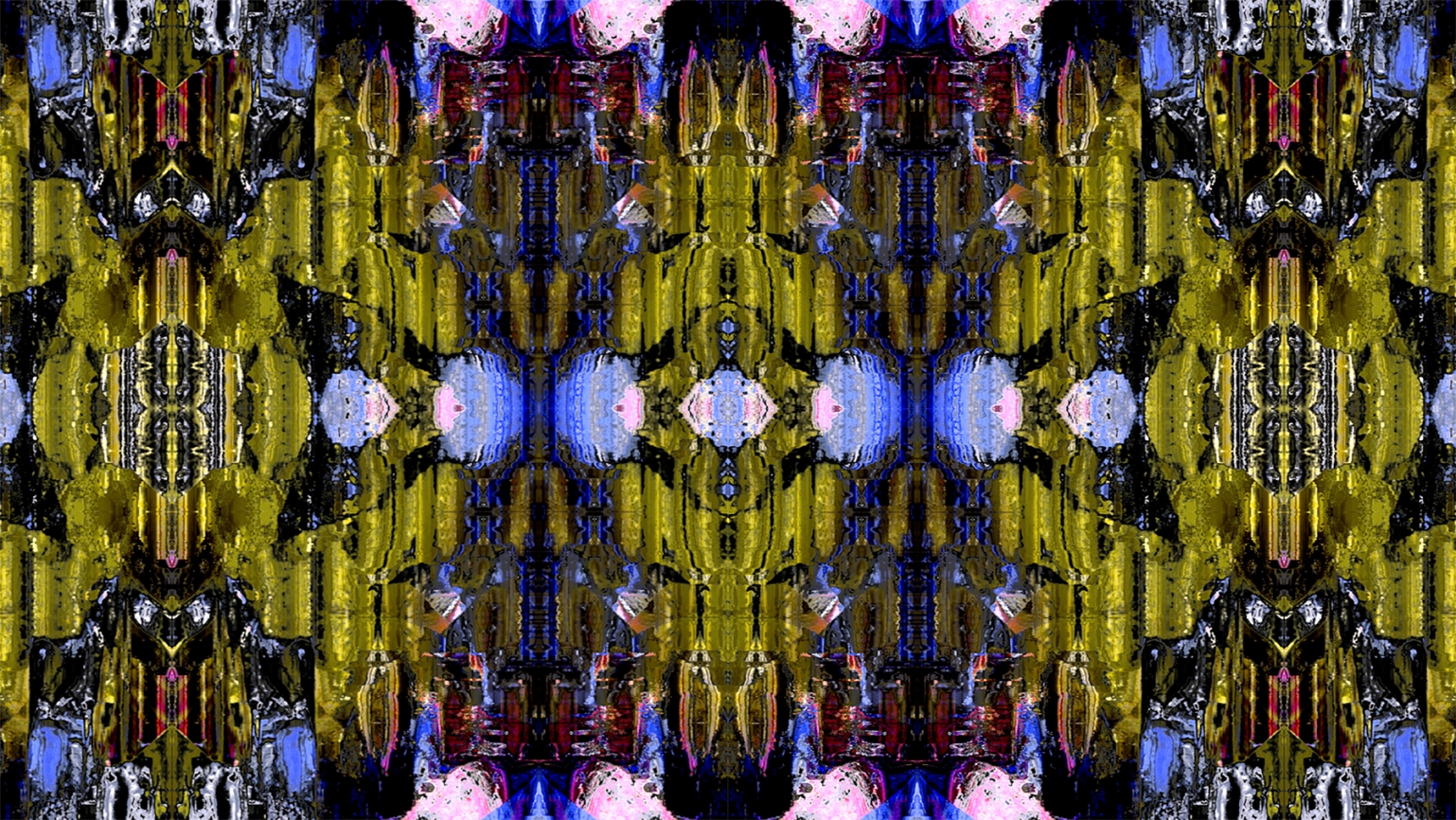
Daseul Song (b. 1990) explores the sensations and narratives generated at the boundary between the screen and physical reality through what she terms “digital abstract moving images.” She approaches image data not merely as visual information, but as an object that records the corporeality of contemporary image producers and consumers alike, and creates video works that invite viewers to imagine and sense this materiality.


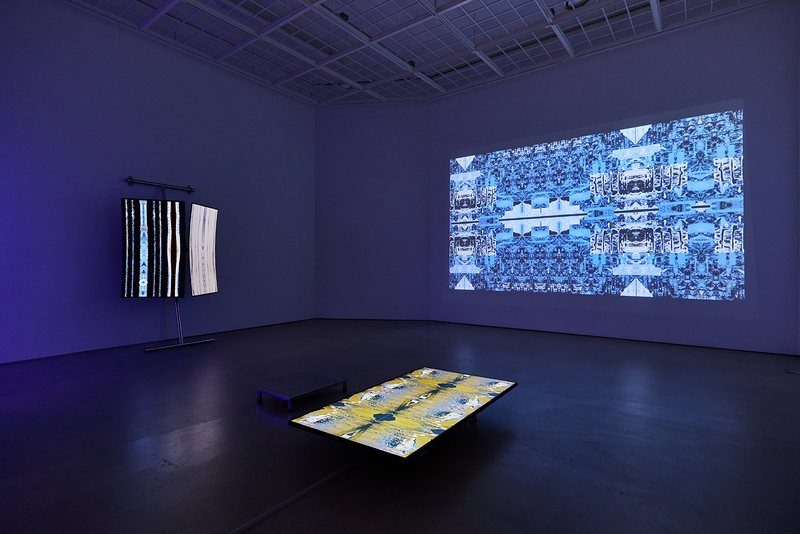
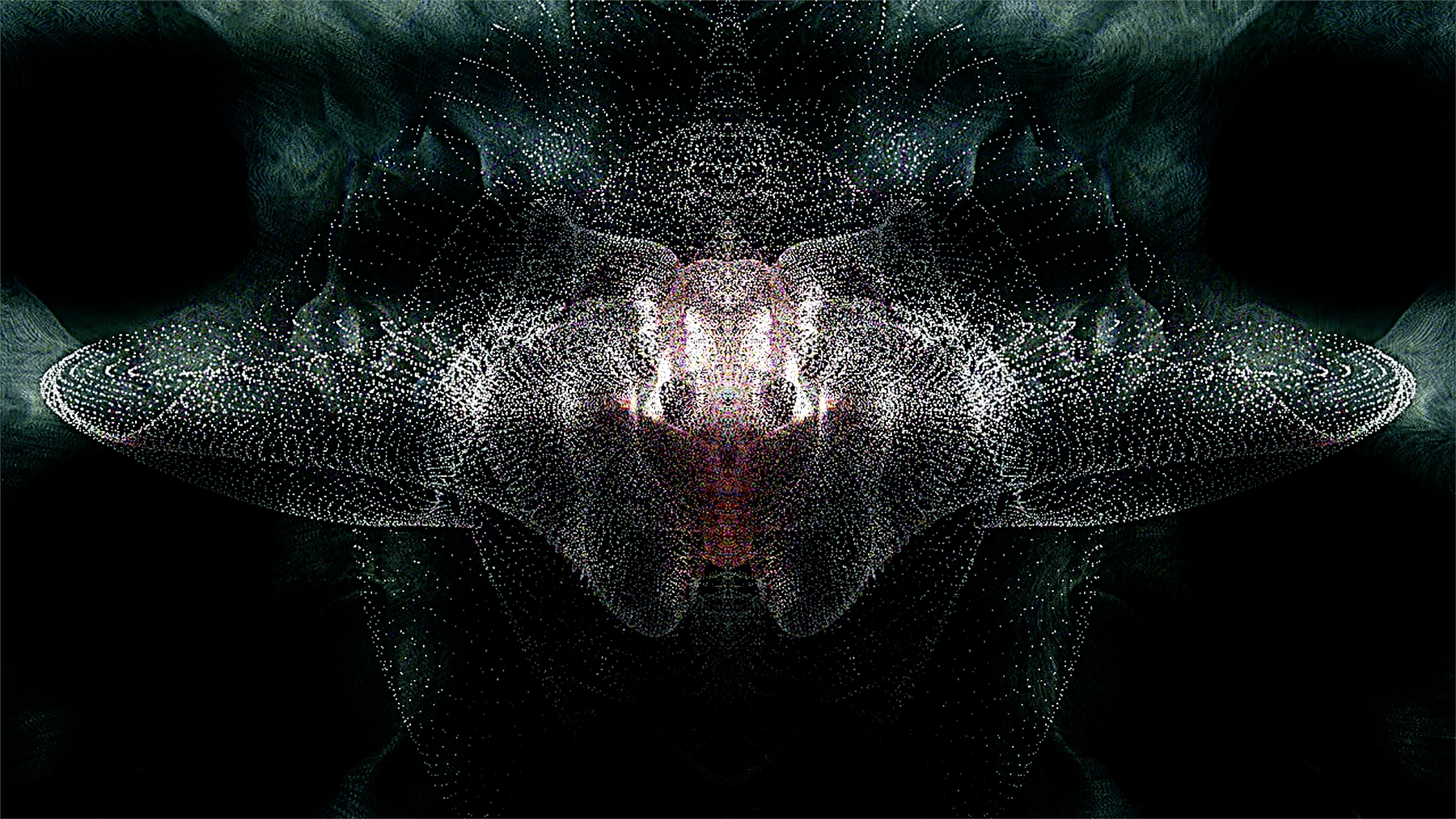
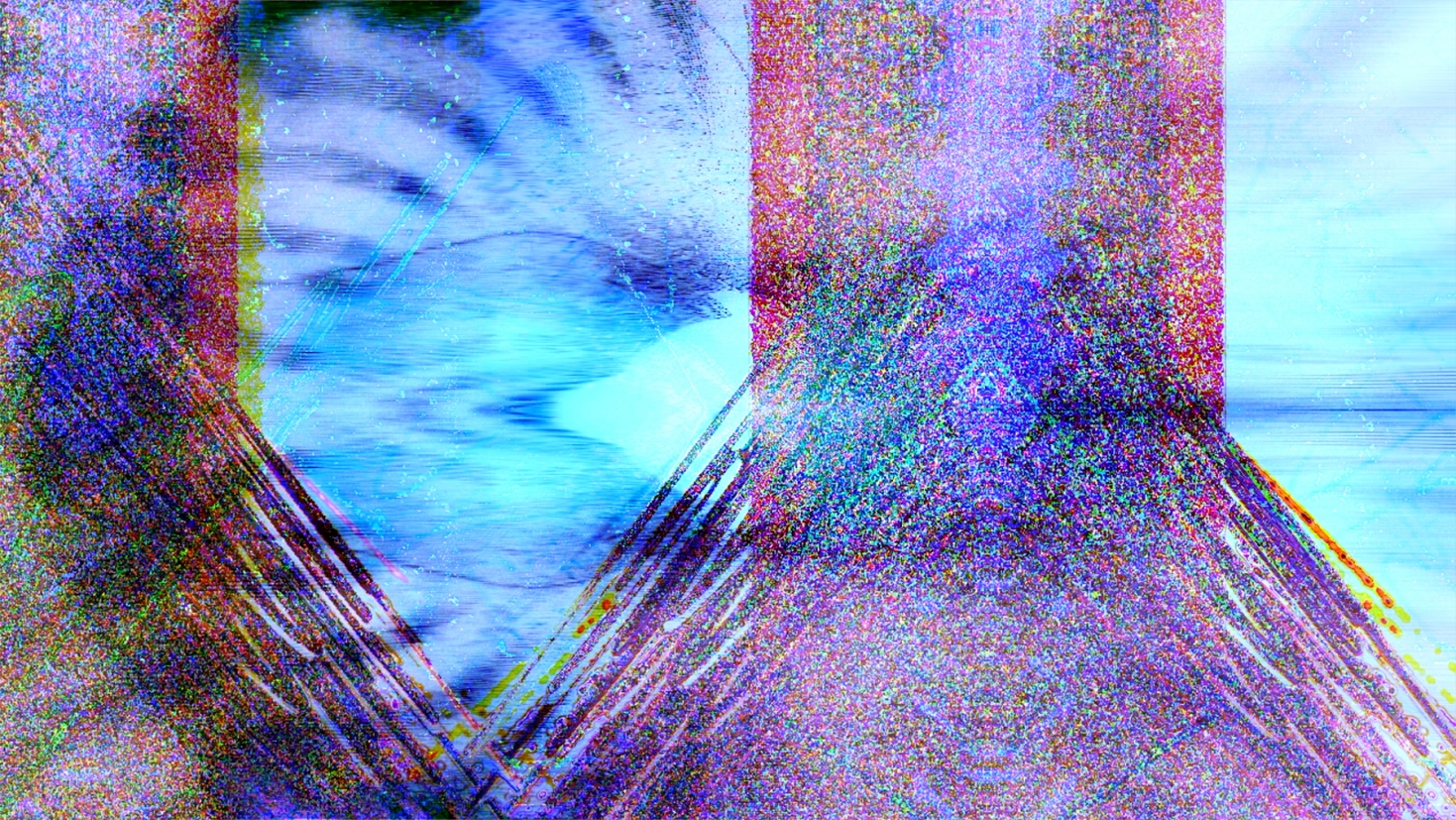
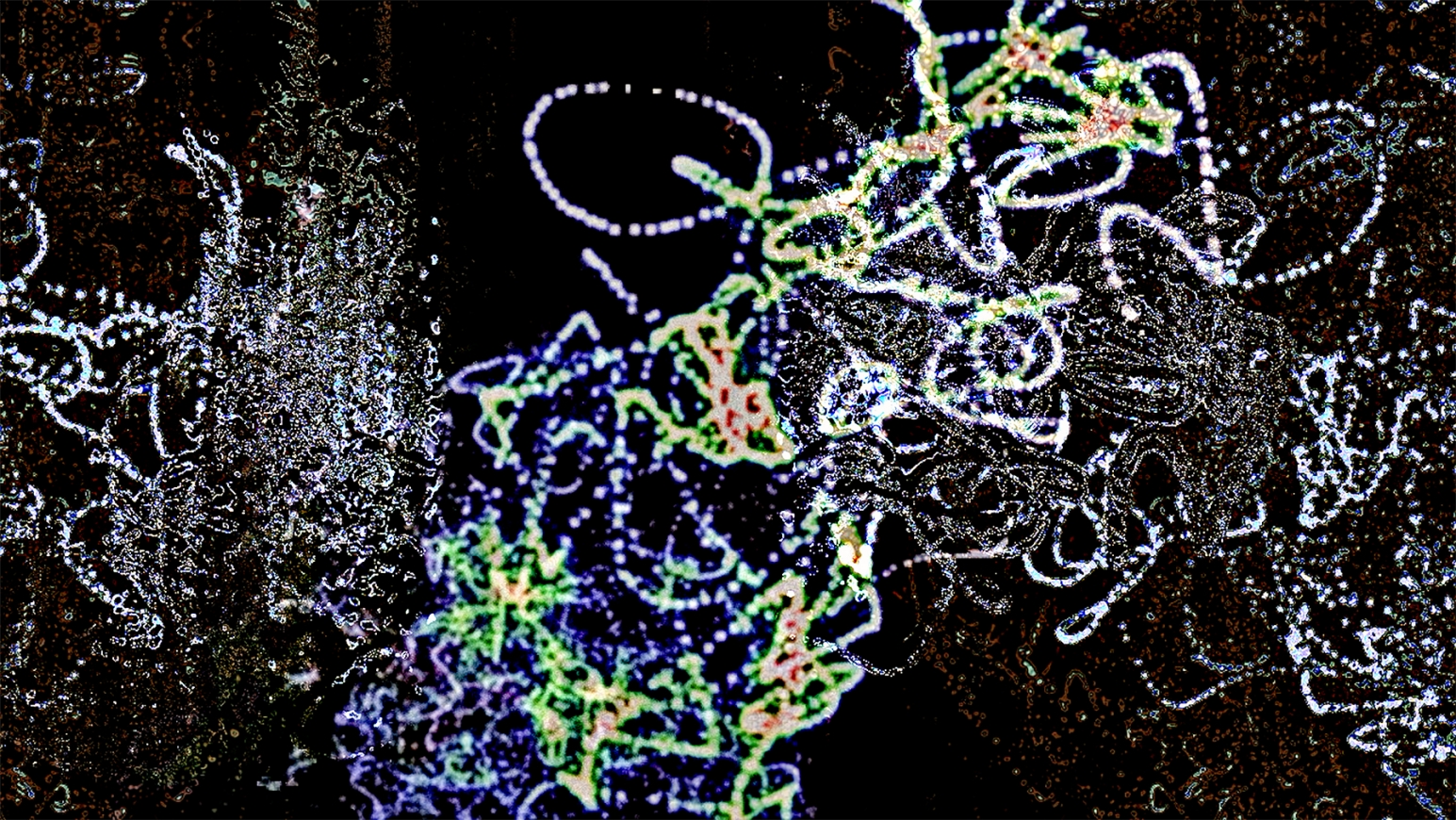
Daseul Song, night_drawing_pano_ver2_02, 2022, Single-channel video, 9min. ©Daseul Song

Daseul Song’s work unfolds from a sustained interest in today’s media environment. In particular, she focuses on the properties of images in which visual elements within various devices and screens are refracted and permeated by the external reality beyond them.
 
To visualize this, Song generates IDs that drive abstract moving images and, through them, develops a methodology for producing and materializing image data. In this process, a reified digital skin fluidly traverses between media networks and reality, transforming bodily perception.


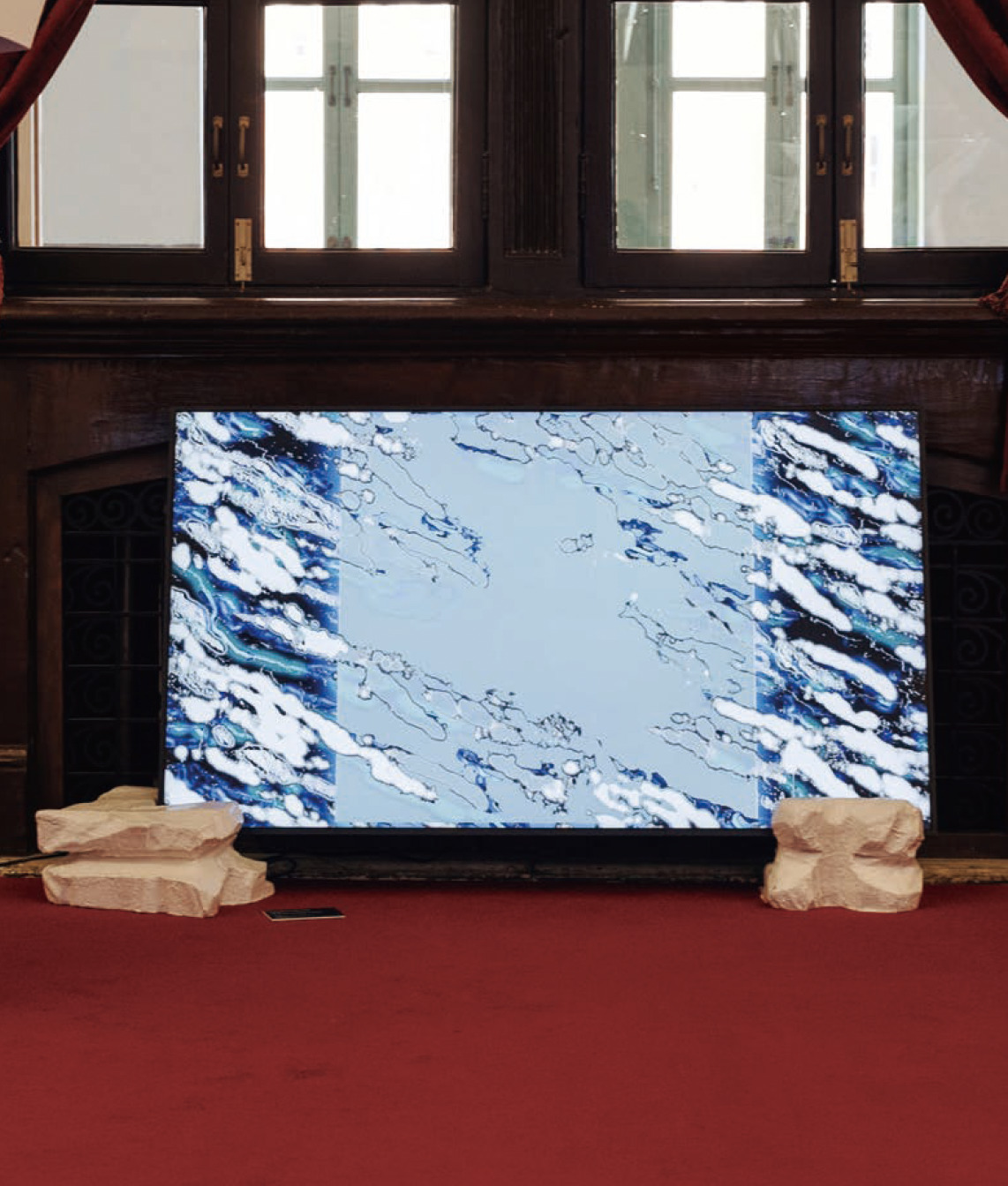
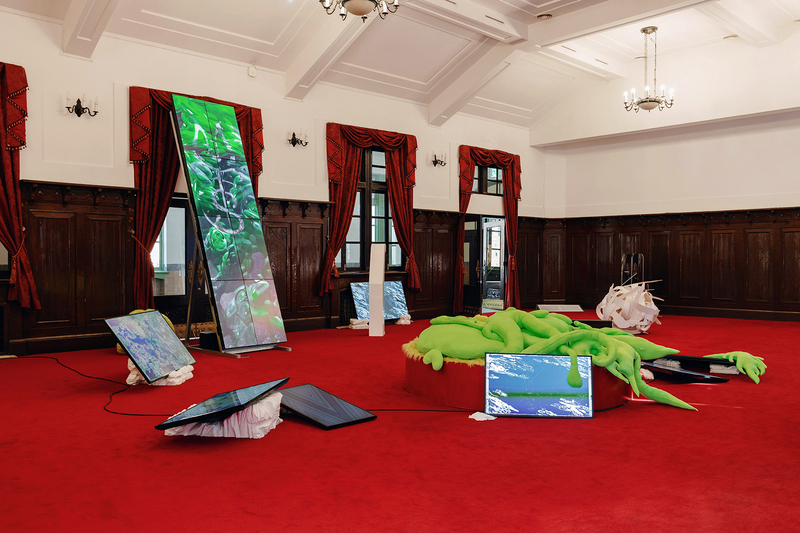
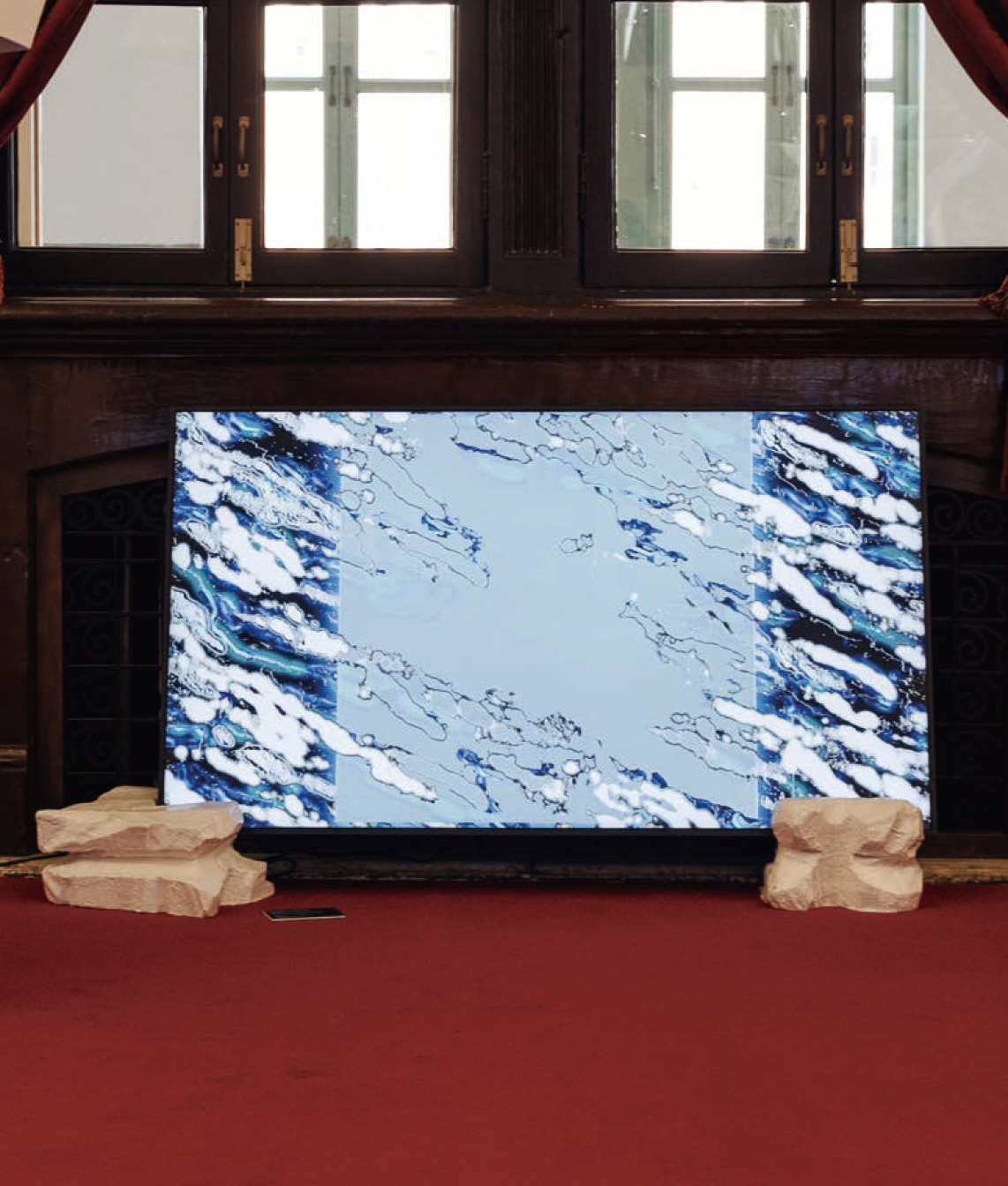
Installation view of Typojanchi 2021 《A Turtle and a Crane》 (Culture Station Seoul 284, 2021) ©Daseul Song

In this way, Song’s work visualizes layers of hybrid sensation in which the material and the virtual mutually infiltrate one another, expanding and reconfiguring the relationships between reality, image data, and the body mediated by them.
 
For example, Riverside_Panorama & Zoom (2020-2021), a media work presented in 《A Turtle and a Crane》 at Typojanchi 2021, conceives moving images as a material through which the materiality of time can be imagined. It captures and arranges fleeting moments along a sensory continuum generated by a temporality of the “persisting present.”
 
In this work, Song understands the sense of ennui produced by a fate that compels individuals to live along an already unfolded trajectory—regardless of personal will—as repetition and duration in the present. To embody states of being in motion yet suspended, or conversely, being still while continuously moving, she created a video composed of innumerable differences and repetitions.

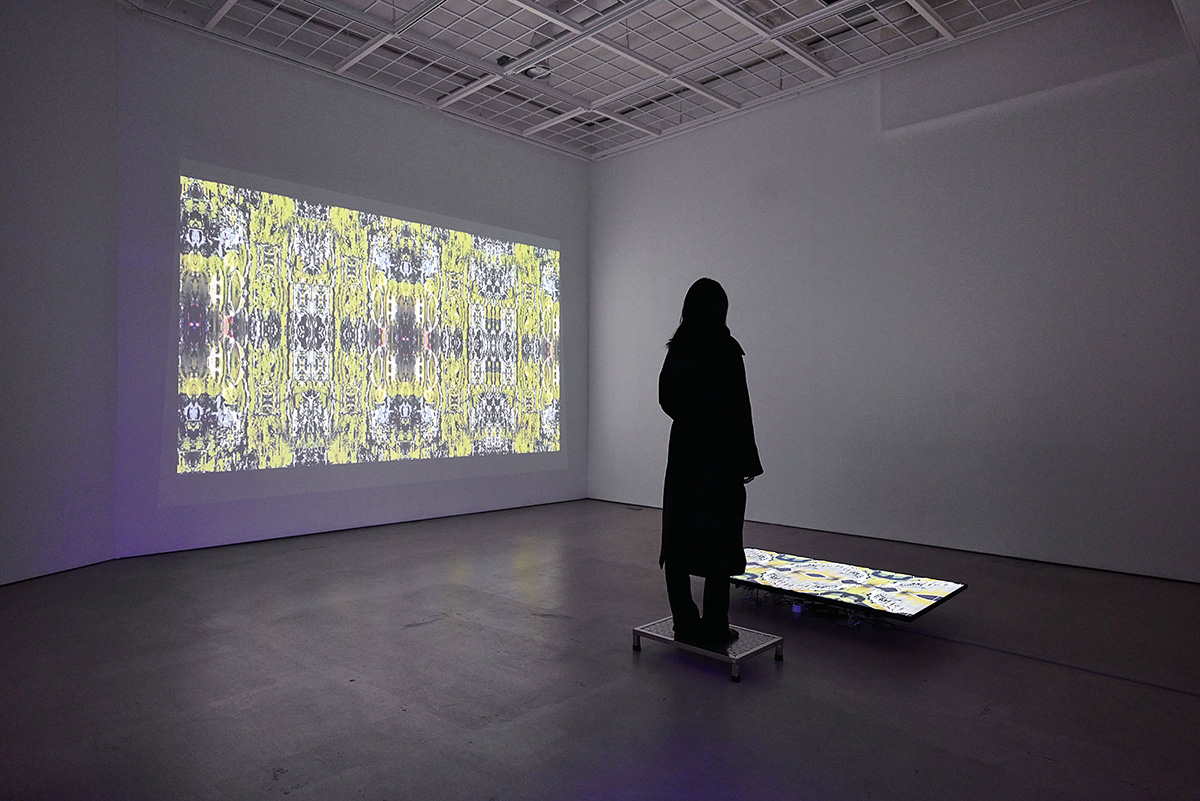
Daseul Song, Riverside_Panorama & Zoom, 2020-2021, 5 channel video, sound, color, 34min 18sec. ©Typojanchi

The movements of the images—escaping along different directional axes—and their repetitiveness function as devices that cause viewers to slip away from their sense of reality and sink beneath the surface of the image.
 
Riverside_Panorama & Zoom consists of stalactite- or stalagmite-like objects, six monitors tilted at various angles on the floor, and three moving images in distorted, patterned forms. By producing objects that mimic minerals condensed over long periods of time, Song anchors video objects vibrating along the x- and z-axes within physical space.


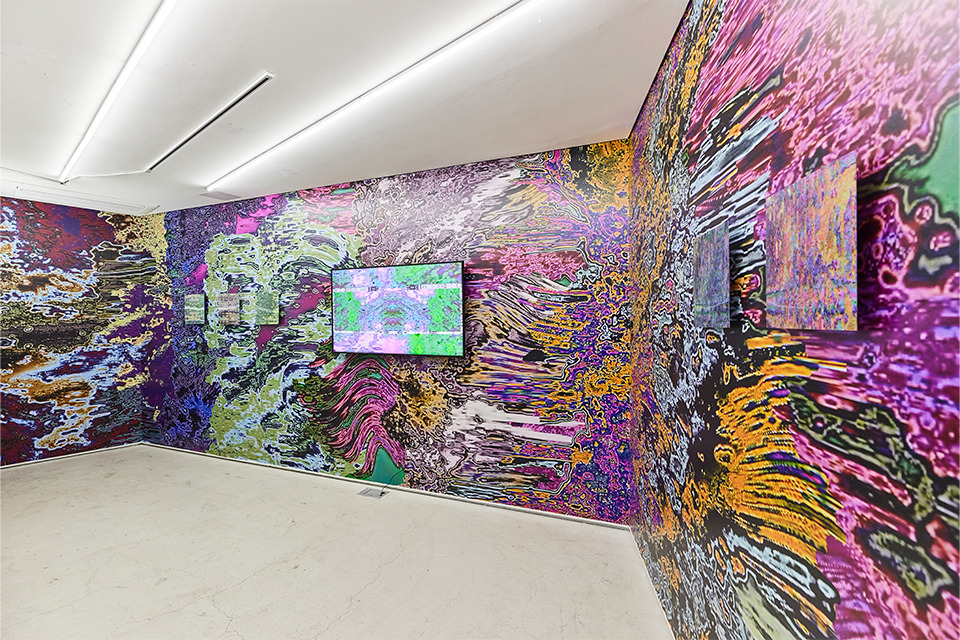
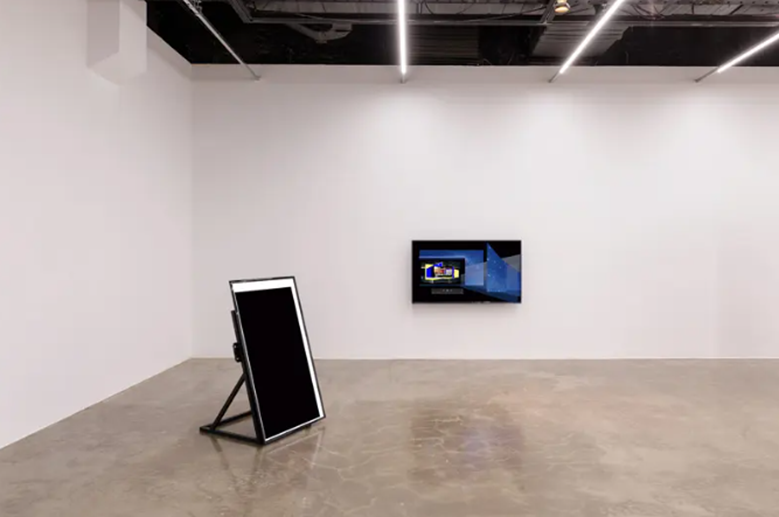
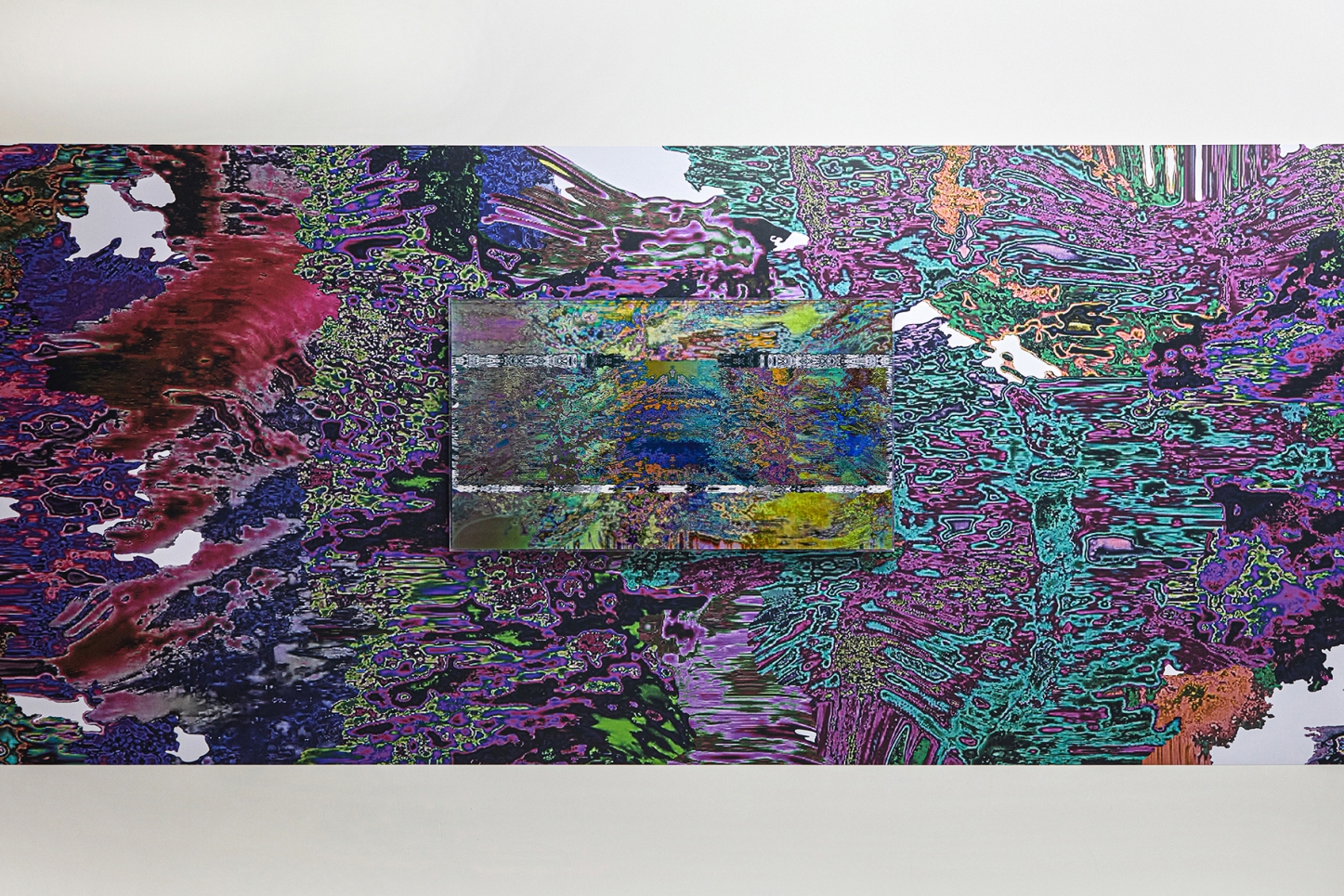
Installation view of 《Web of P》 (The Reference, 2022) ©Daseul Song

Meanwhile, in her solo exhibition 《Web of P》 (2022) at The Reference, Daseul Song took as the point of departure the figure of Penelope from ancient Greek mythology. The concept she draws upon—“the web of Penelope”—refers to a task that never comes to an end despite constant labor, resonating with the condition of endlessly performing something in contemporary life.
 
Her work begins with the following questions: What might the act of immersing oneself in the repetitive weaving of the web’s intricate patterns, and subsequently dismantling it, have meant to Penelope herself? If the promise of a future with Odysseus is removed, what value do the acts of creation and destruction undertaken in seclusion within her room, and the various patterns and their collective composition, hold?


Installation view of 《Web of P》 (The Reference, 2022) ©Daseul Song

To address these questions, the artist assimilates herself into the role of Penelope, compulsively abstracting the unit of the image. The web, recording the shivering sensations arising amid overlapping temporalities and spatialities, is transformed into Song’s digital abstract moving images—woven from fragments of images imbued with the flow of time—and is newly presented within the exhibition space.
 
In this process, the mythological narrative disintegrates, leaving only fragmented images present to the viewer, evoking a virtual tactility and auditory sense. The daytime weaving is positioned as reality, while the nighttime disassembly of the web is situated in the space of media. his juxtaposition invites reflection on the uncertain bodily sensations mediated between these two realms, as well as on the structures through which contemporary images are produced, consumed, circulated, and the intrinsic qualities of the images themselves.


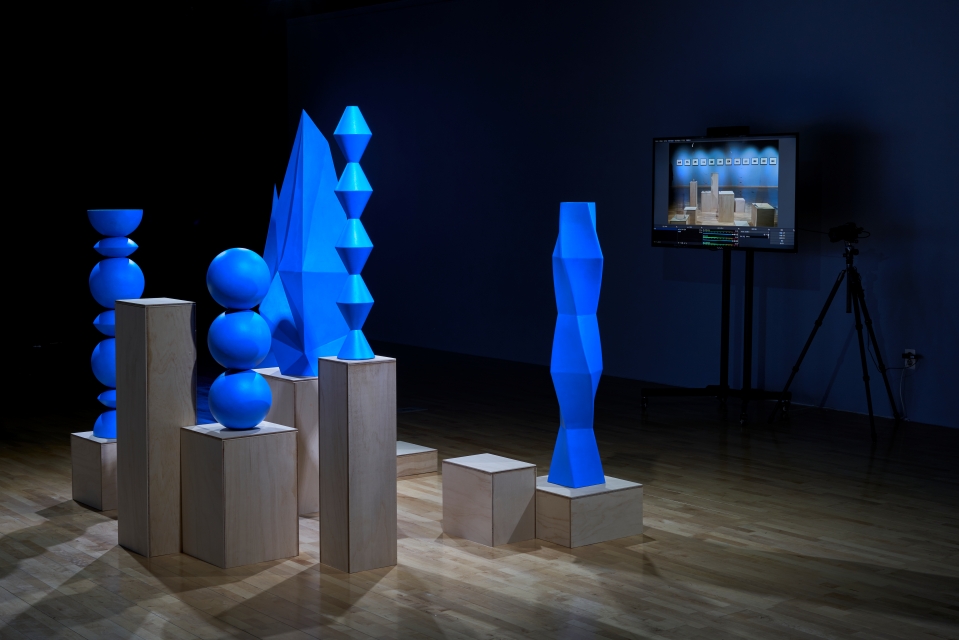
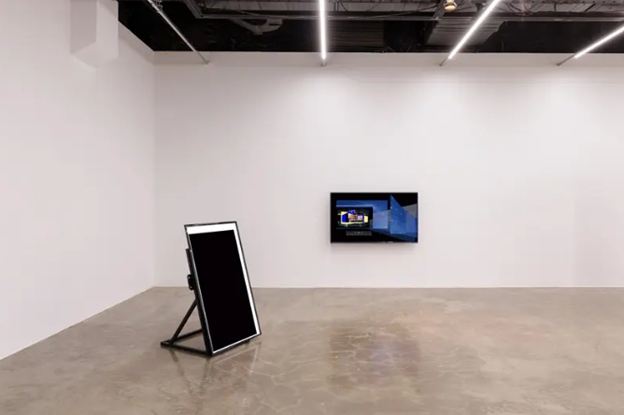
Installation view of 《THE CHAMBER》 (Caption Seoul, 2024) ©Daseul Song

The time of repeated creation and destruction enacted by Penelope, who weaves and unravels the web in seclusion, closely resembles the artist’s own practice. Lacking any fixed form or clear narrative, Song’s images—resembling noise—seem less concerned with completion than with states of disintegration and fragmentation.
 
Regarding her work, in which absence outweighs presence, art critic Hwang Jaemin has described it as “a glitch that seeks to produce negentropy by deviating from the logic of entropy that constantly strives to rise.” For this reason, Song’s works, devoid of a linear timeline, allow viewers to gaze endlessly, possessing the power to make the flow of time felt as pure sensation.


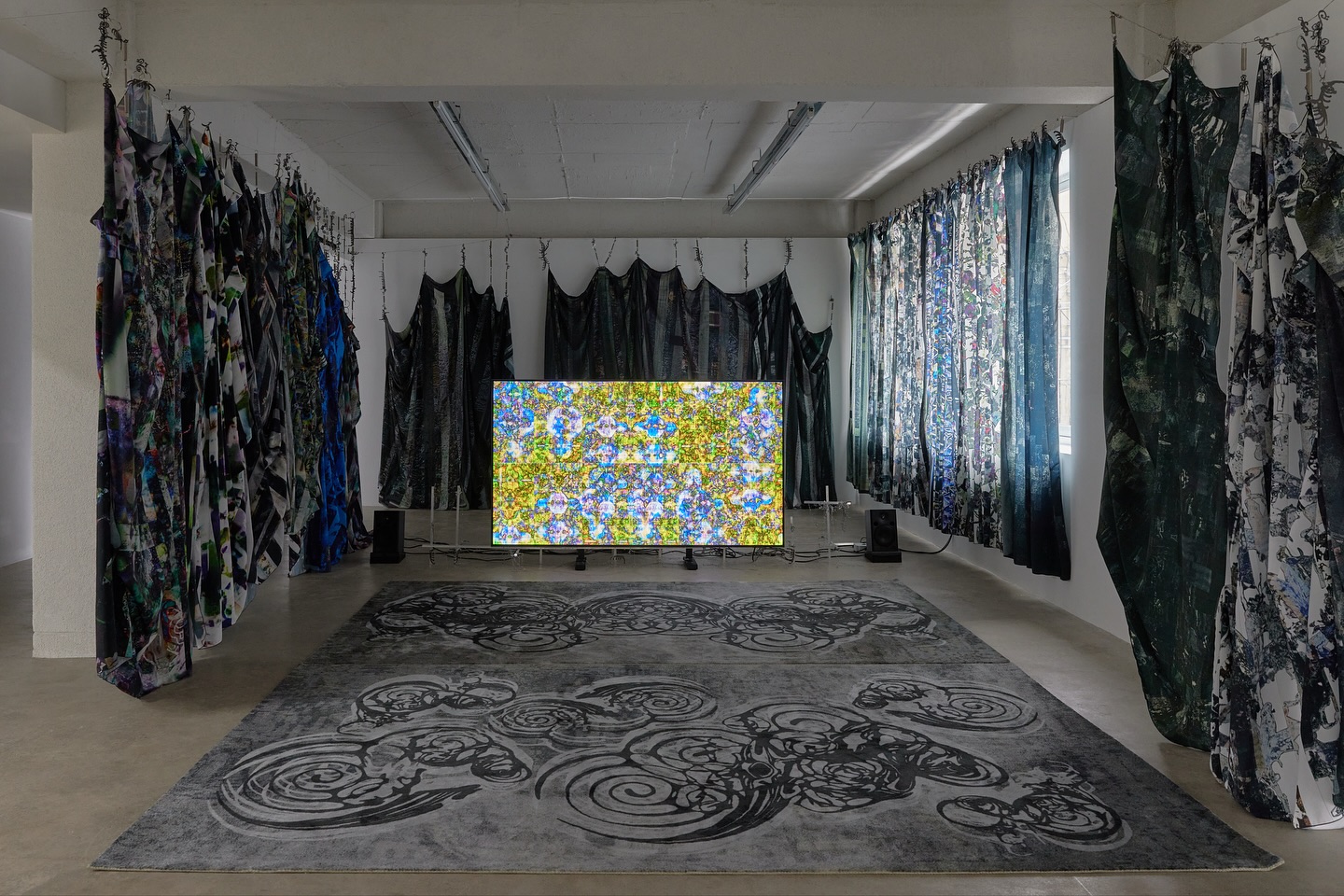
Installation view of 《Lunar Burn: Echo upon Echoes》 (Caption Seoul, 2025) ©Caption Seoul

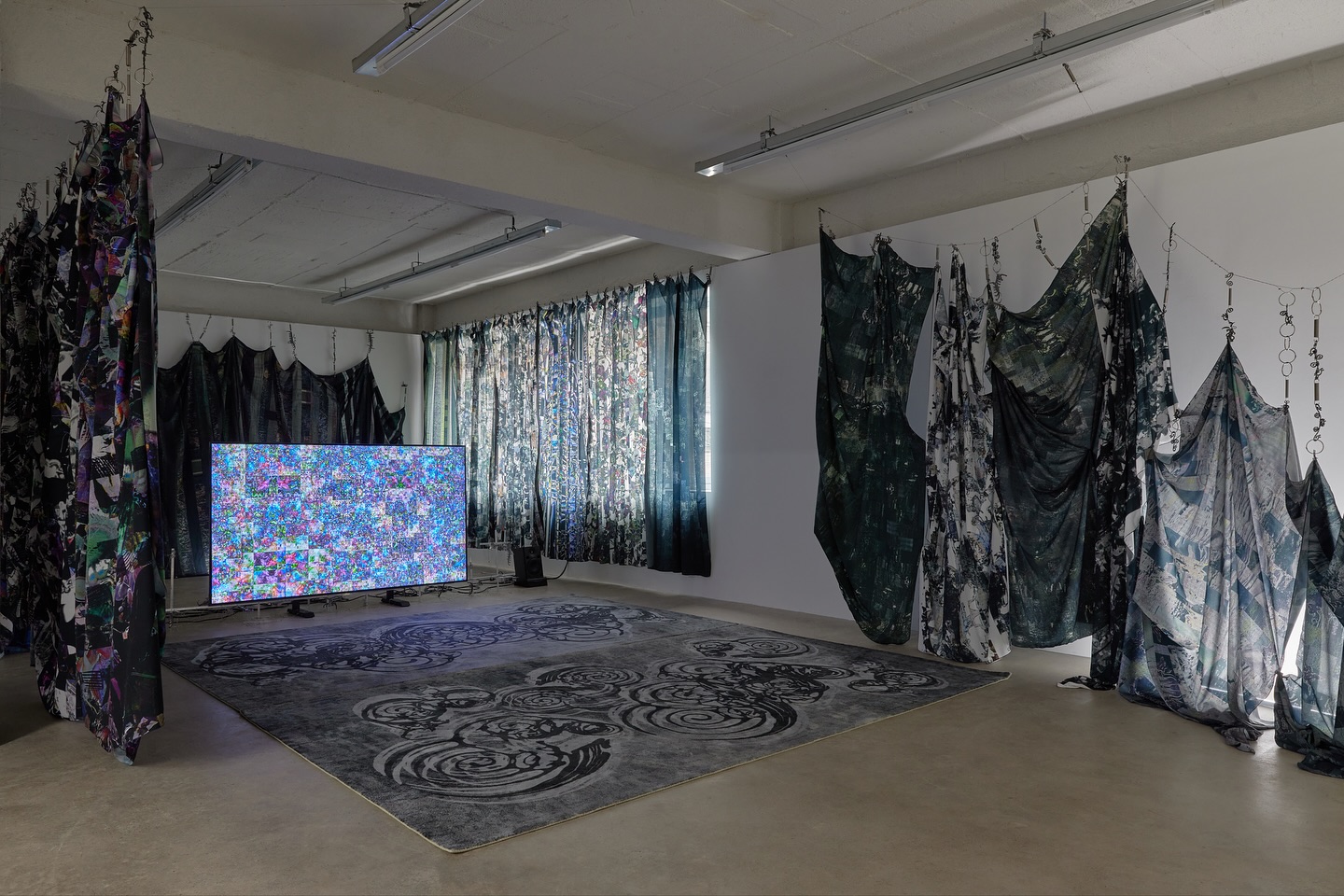
Furthermore, in her recent works, Daseul Song addresses the boundary where order and rupture intersect, through processes in which diverse identities and bodies are continuously dismantled and reassembled. For instance, in her solo exhibition 《Lunar Burn: Echo upon Echoes》 (2025) at Caption Seoul, the artist reconstructed scenes from the myths of Artemis and the nymphs of ancient Greece through glitches—errors within digital networks—thereby seeking to deconstruct established mythologies and to construct anonymous, polyphonic identities.
 
The exhibition begins at the boundary where order and rupture meet, in the moment when moonlight and shadow intersect. The moon functions both as a mirror reflecting the sun’s light and as a surface bearing scars and fissures; the stage on which the moon rises thus shifts from a masculine space governed by rational order to a realm where underlying ruptures, once dormant, are brought to light.


Installation view of 《Lunar Burn: Echo upon Echoes》 (Caption Seoul, 2025) ©Caption Seoul

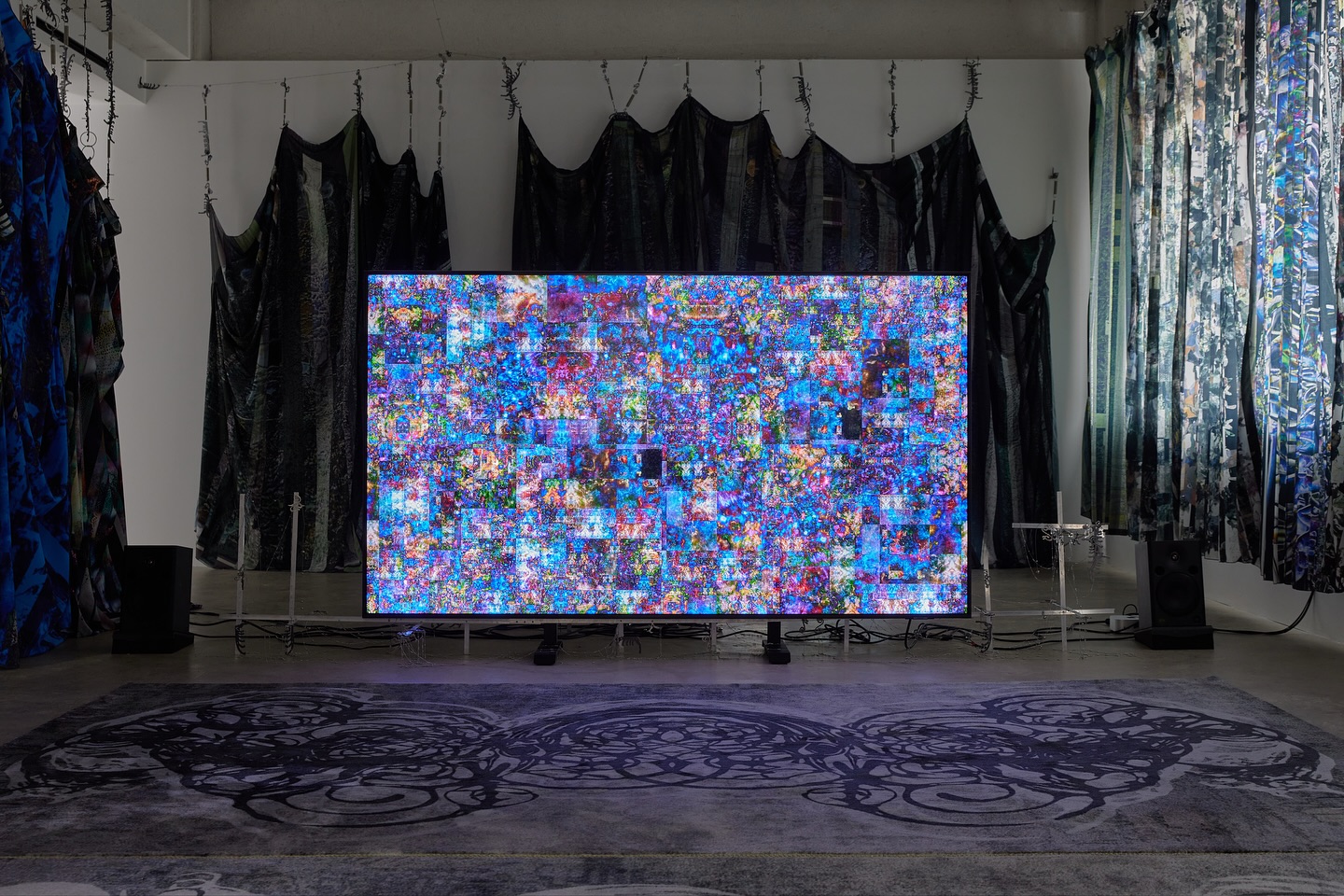
In the exhibition, moonlight functions as a mediator between reality and fantasy, revealing itself as the beauty of an incomplete departure. Here, the glitches that emerge in the artist’s work operate not as mere errors but as units of sensorial resistance and as fundamental elements of a digital tapestry, transforming into images–narratives marked by opacity and illegibility.
 
Additionally, the artist takes as a point of departure the character Justine from Lars von Trier’s film Melancholia (2011). Having attempted to conform to the norms of normalcy demanded by society, Justine experiences a paradoxical sense of liberation in the face of the irrational event of the Earth’s annihilation.


Installation view of 《Lunar Burn: Echo upon Echoes》 (Caption Seoul, 2025) ©Caption Seoul

Song Daseul sought to transform Justine—revealed naked beneath the moonlight—into an autonomous being named “Artemis,” and further to fragment her into the anonymous, multiple body of the “nymph.” The “body” and “identity” that intersect as “Justine–Artemis–nymph” are placed within an ongoing process of dismantling, mutual reflection, and reassembly.
 
Furthermore, through the processes of “moon tanning” and “digital skin-sharing,” Song calls upon anonymous viewers as “nymphs.” The audience is transposed across the surface of burns—hwasaang (火傷–畫像), images formed through the moonlight’s uncanny heat—and beyond its layers, coming to sense new forms of corporeality and identity through their own bodies as a medium.


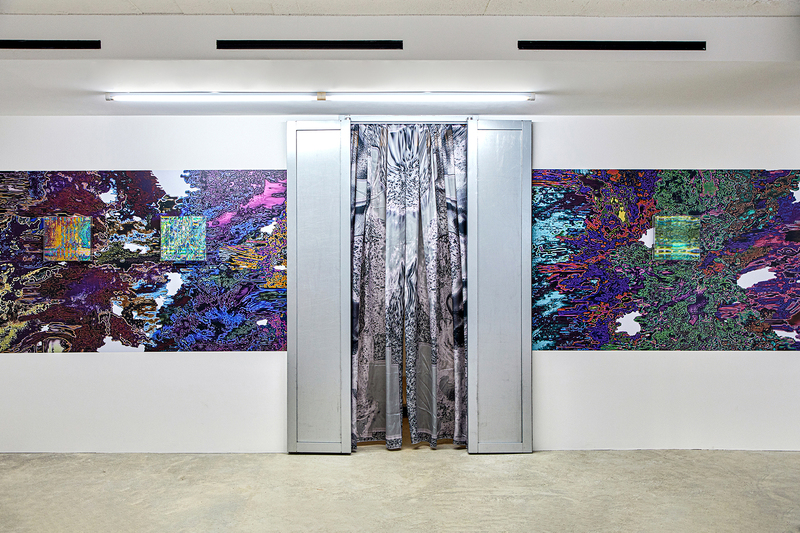
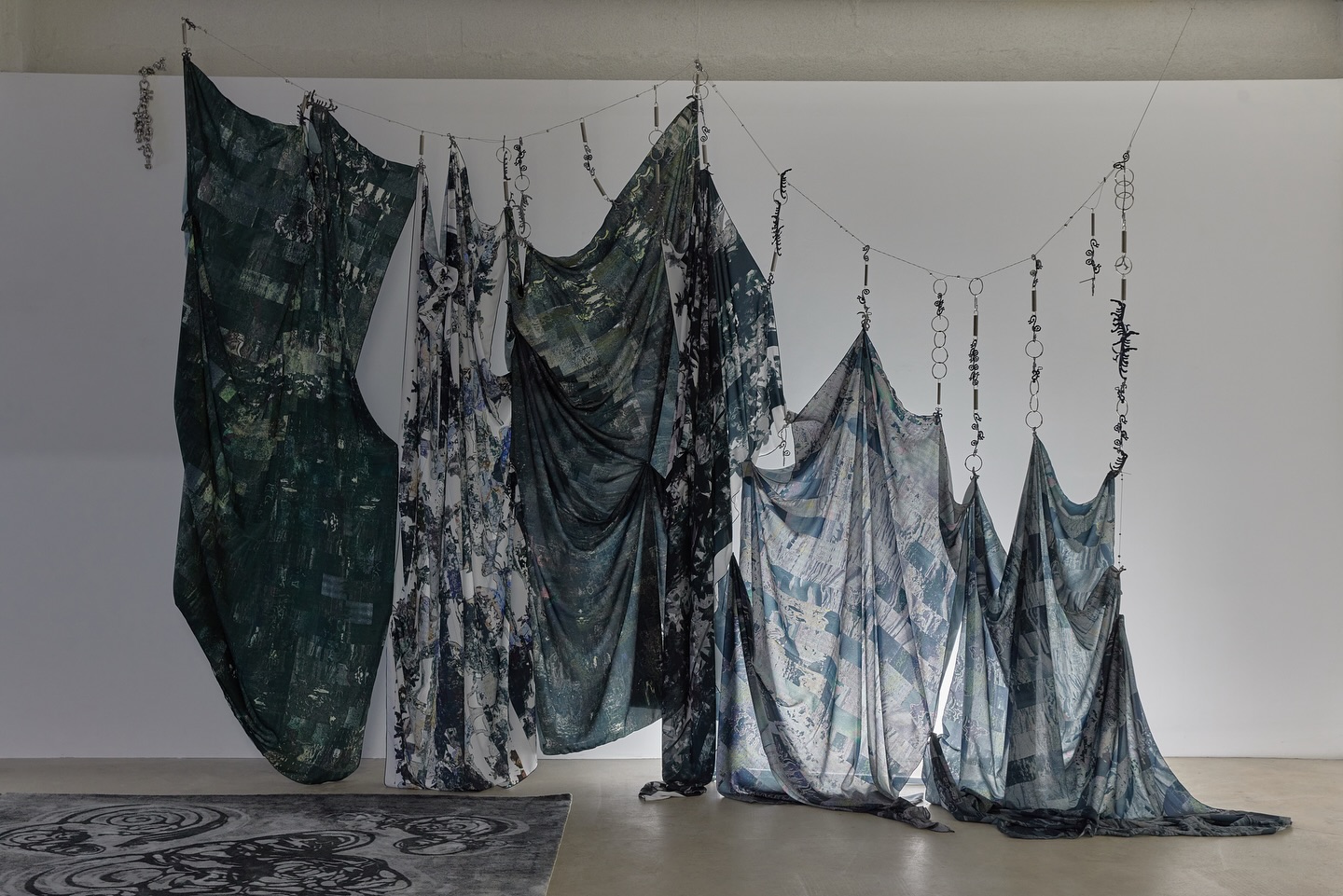
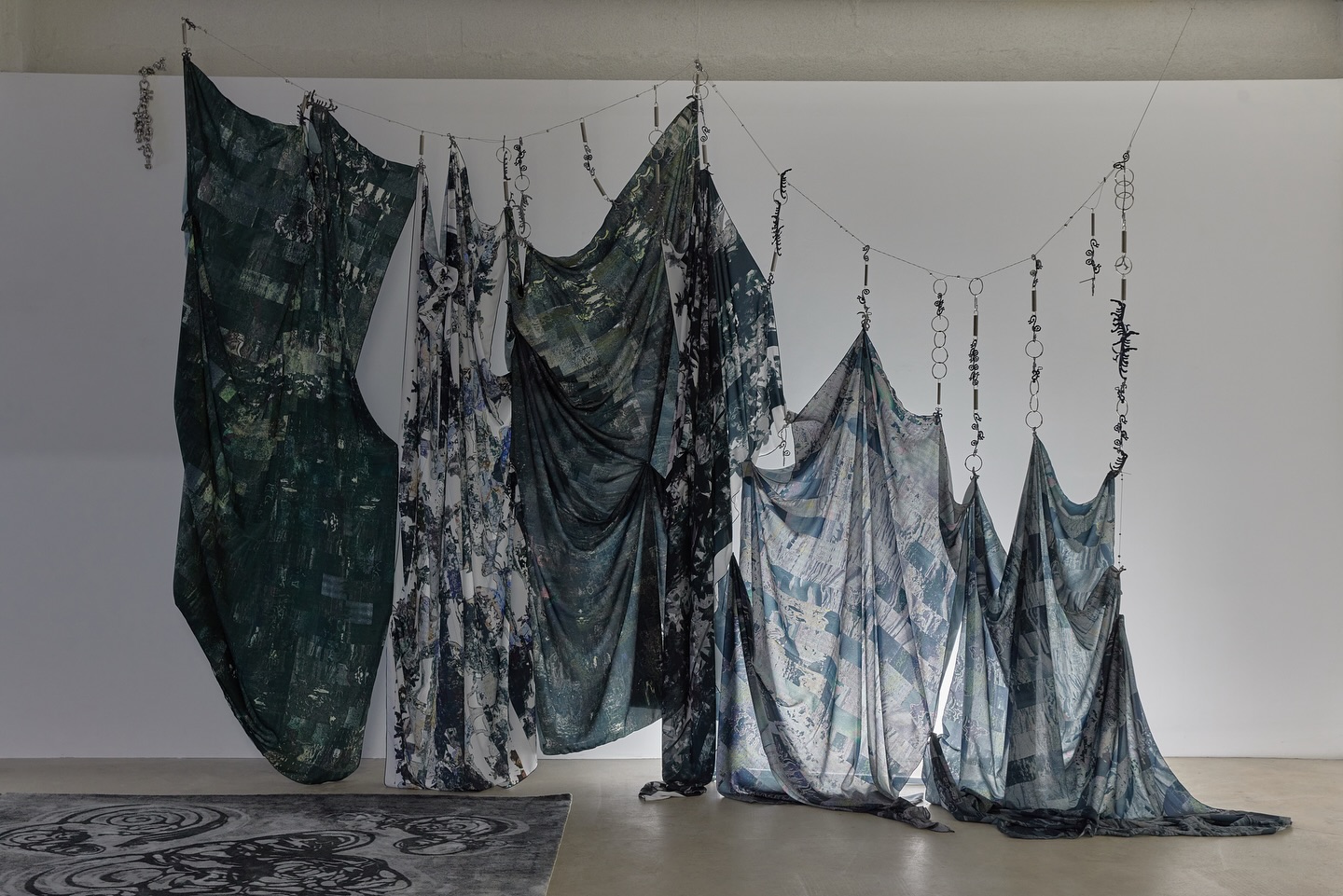
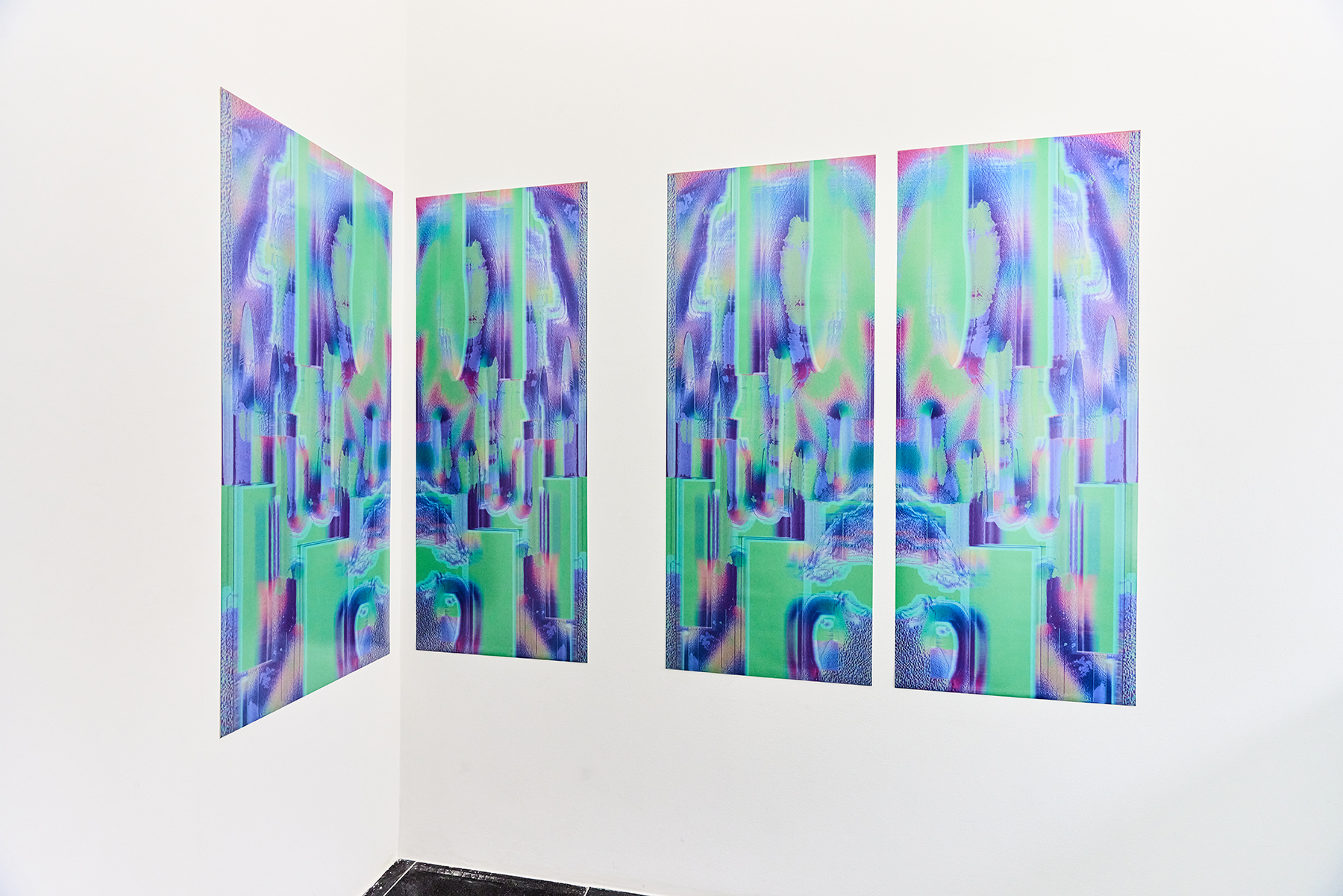
Daseul Song, Veil of Nyx: Bugs, Dresses, Forest, Indexes, Lilies, Nymphs, Windows, 2025, UV print on micro sheer chiffon, 140×230cm, 32 sheets, Dimensions variable ©Caption Seoul

The curtain-like installation Veil of Nyx (2025) functions as a drapery that both partitions space and carries the narrative forward, unfolding—through digital drawings—a story of female metamorphosis that extends from Penelope, a point of departure in the artist’s earlier works, through Justine, and onward to Artemis–nymph. These multiple fabric prints are not mere backdrops; rather, they operate as archival records that condense the exhibition’s journey across past, present, and future.


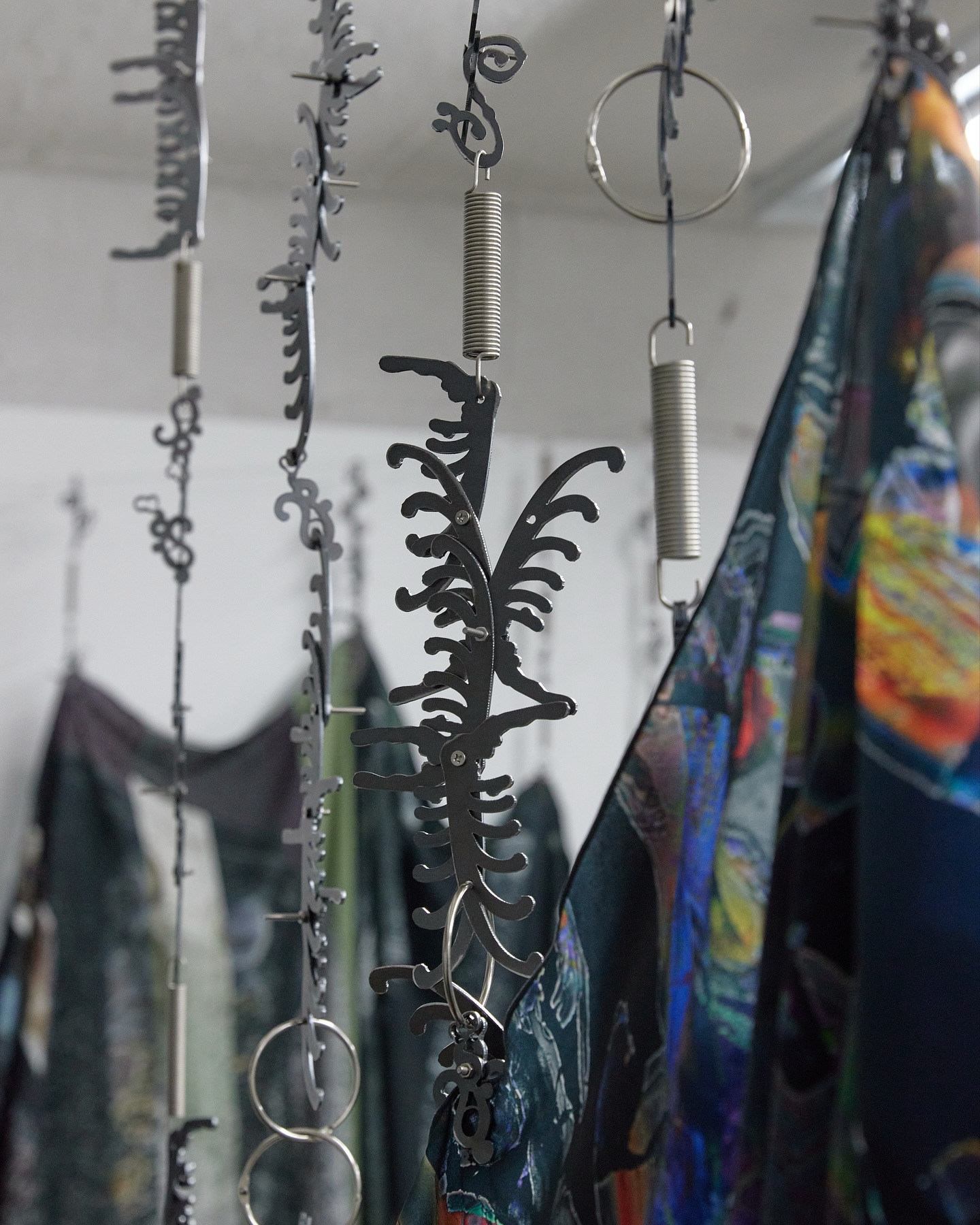
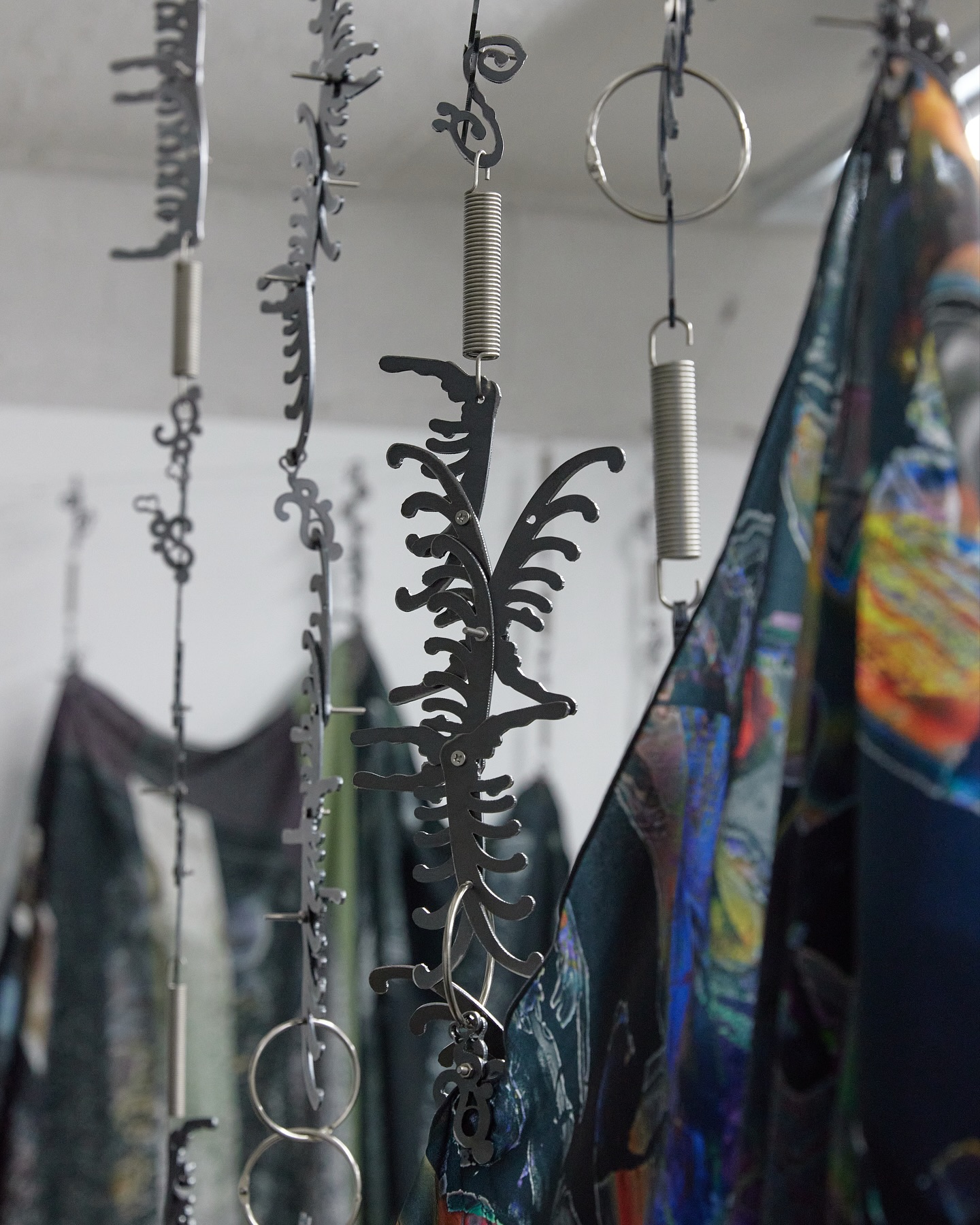
Daseul Song, Tendrils, 2025, Steel plate components in four types, resembling the gestures of tendrils and nymphs, Dimensions variable ©Caption Seoul

This work is further supported by Tendrils (2025), composed of four types in this exhibition. Serving as sensory tendrils that grow beneath the veil and as appendages that materialize the gestures of the nymph, these elements function as an invisible neural network connecting veil, body, and narrative, while simultaneously operating in the language of ornament.
 
In Song’s practice, ornament functions as a subversive device and act that dismantles the center of meaning and introduces fine fissures into the surface of order. Through repetition, excess, and apparent superfluity, ornament allows sensation to break away from its original position and to vibrate autonomously.


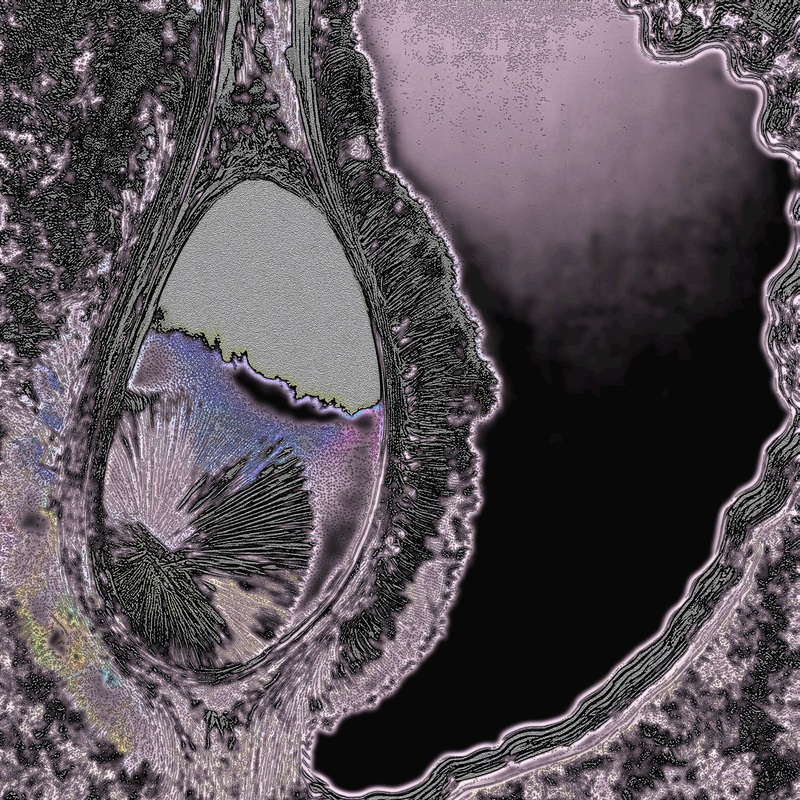
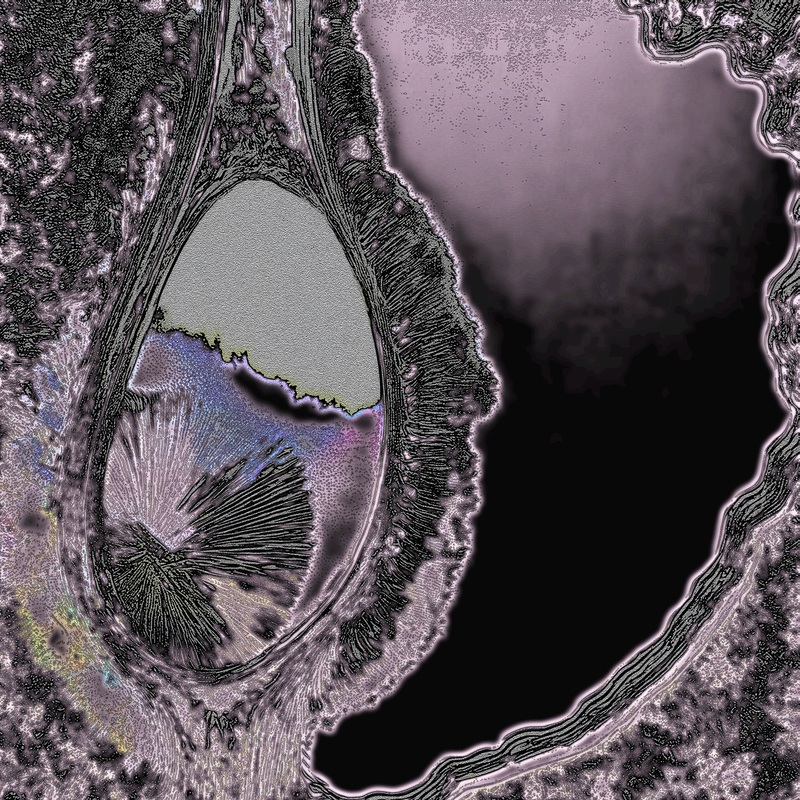
Daseul Song, Skin Samples: Chimaera, 2025, Digital image ©Daseul Song

In this way, Daseul Song explores the possibilities of new feminine languages and communities that depart from contemporary social networks and rational orders, through the interplay of bodily mutation, identity, and the image–data that mediates them. In the process of dismantling existing orders, she brings to the surface the errors, transformations, and fluidities that emerge at the intersection of the digital and the material, guiding viewers toward another layer of the world beyond fixed systems of meaning.

 ”For me, image data is not mere visual information but an object with record of the physicality of contemporary image producers and consumers. I weave their materiality, mood structures of them, and narratives derived from them.”  (Daseul Song, from the interview of ‘2025 ARKO DAY’) 


Artist Daseul Song ©Daseul Song

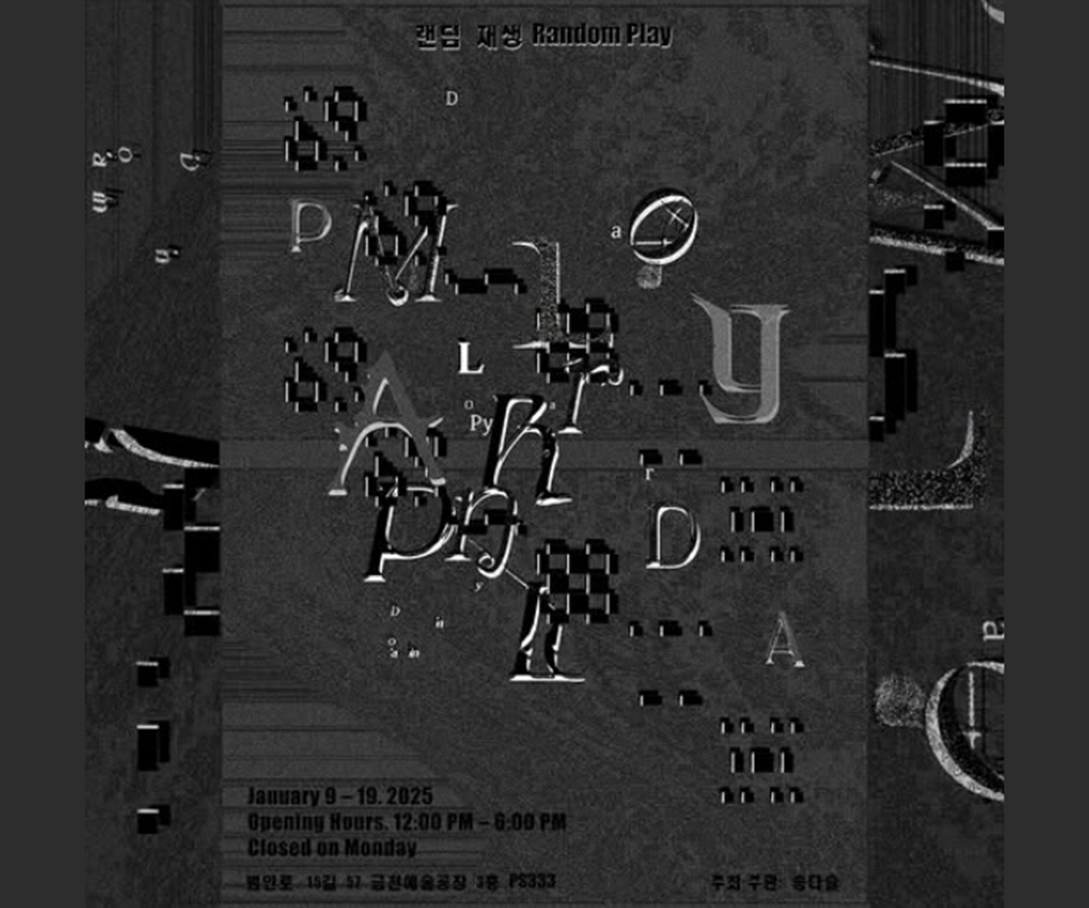
Daseul Song eceived her BFA in Painting from Ewha Womans University and completed the MFA program in Video Art at the Korea National University of Arts. Her solo exhibitions include 《Lunar Burn: Echo upon Echoes》 (Caption Seoul, Seoul, 2025), 《Random Play》 (Seoul Art Space Geumcheon PS333, Seoul, 2025), 《Web of P》 (The Reference, Seoul, 2022), and 《Random Play》 (Gallery 175, Seoul, 2022).
 
She has also participated in numerous group exhibitions, including 《THE CHAMBER》 (Caption Seoul, Seoul, 2024), 《PACK WEEK 2022》 (Platform-L Contemporary Art Center, Seoul, 2022), 《2022 Video Bites》 (Platform-L Contemporary Art Center, Seoul, 2022), 《Rolling Black Stone: Obsidian, roll over and over》 (Shinhan Gallery, Seoul, 2021), 《Typojanchi 2021: A Turtle and a Crane》 (Culture Station Seoul 284, Seoul, 2021), 《Double Negative: From White Cube to Netflix》 (ARKO Art Center, Seoul, 2018), and 《DATAPACK》 (Ilmin Museum of Art, Seoul, 2018).
 
Song was selected as a resident artist at Seoul Art Space Geumcheon of the Seoul Foundation for Arts and Culture in 2024, and garnered further attention by participating as an Artist Lounge artist at the 2025 ARKO DAY.

References