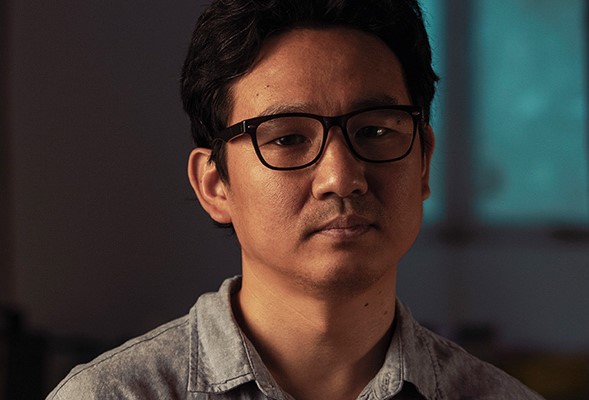
Jaeho
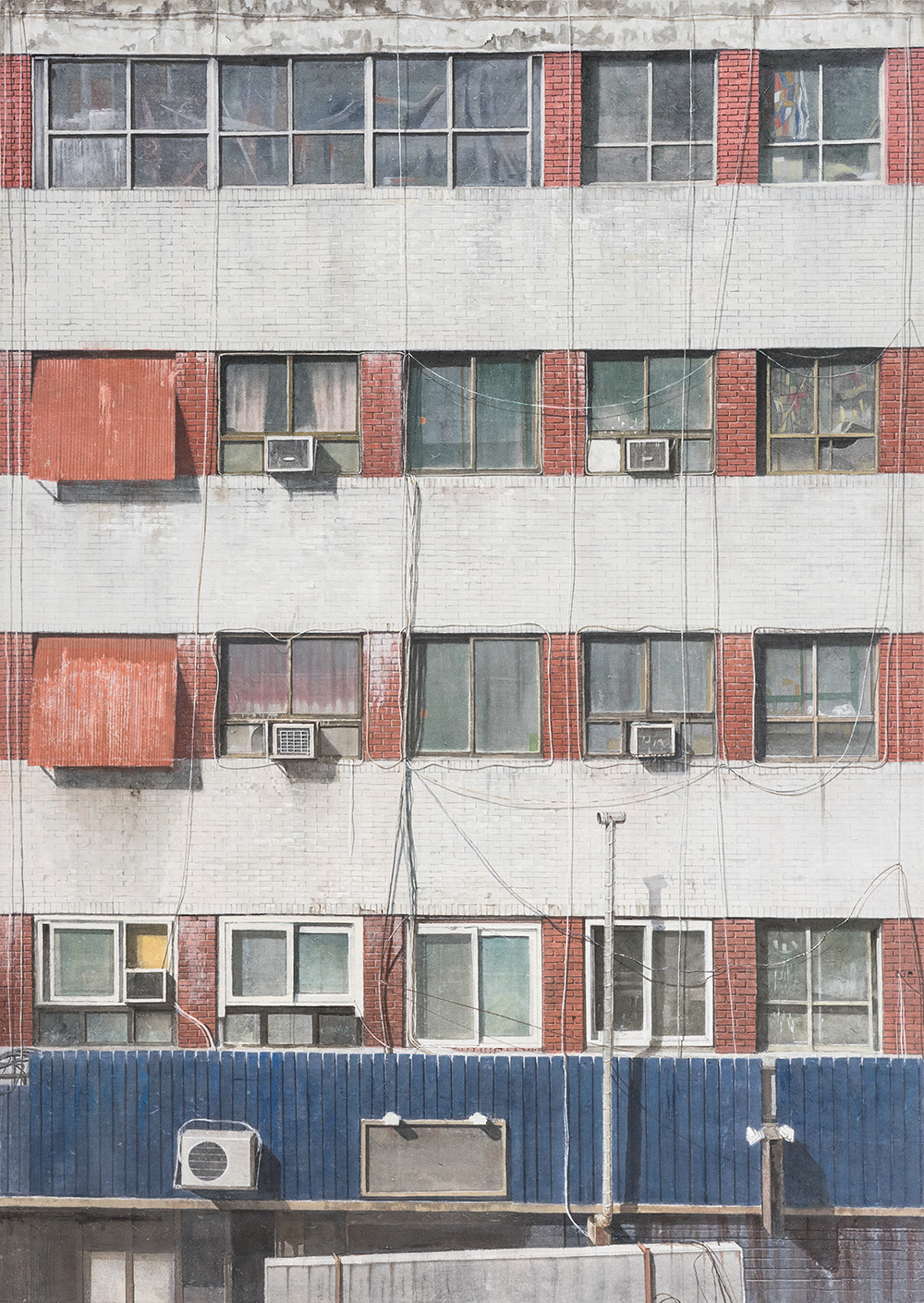
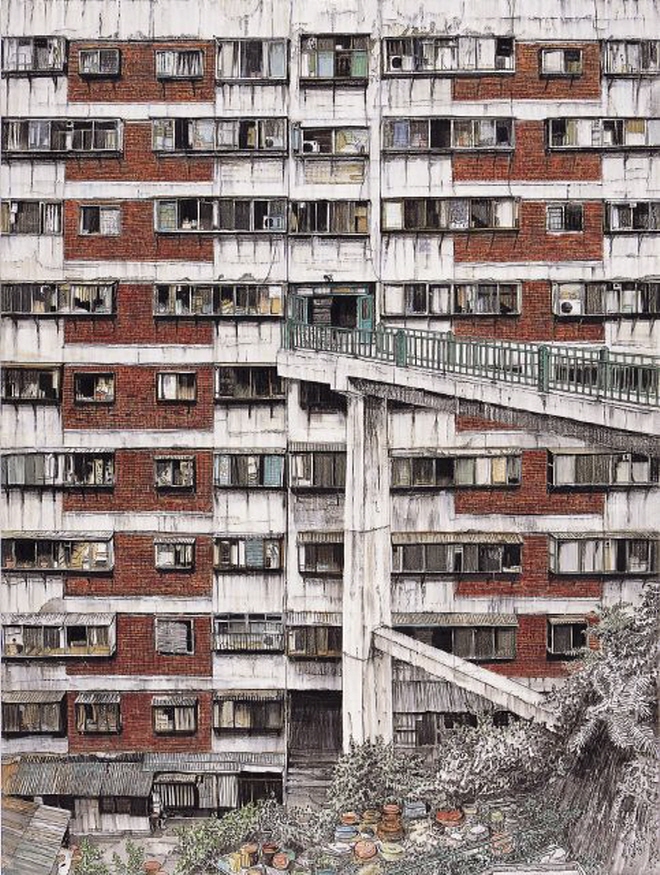
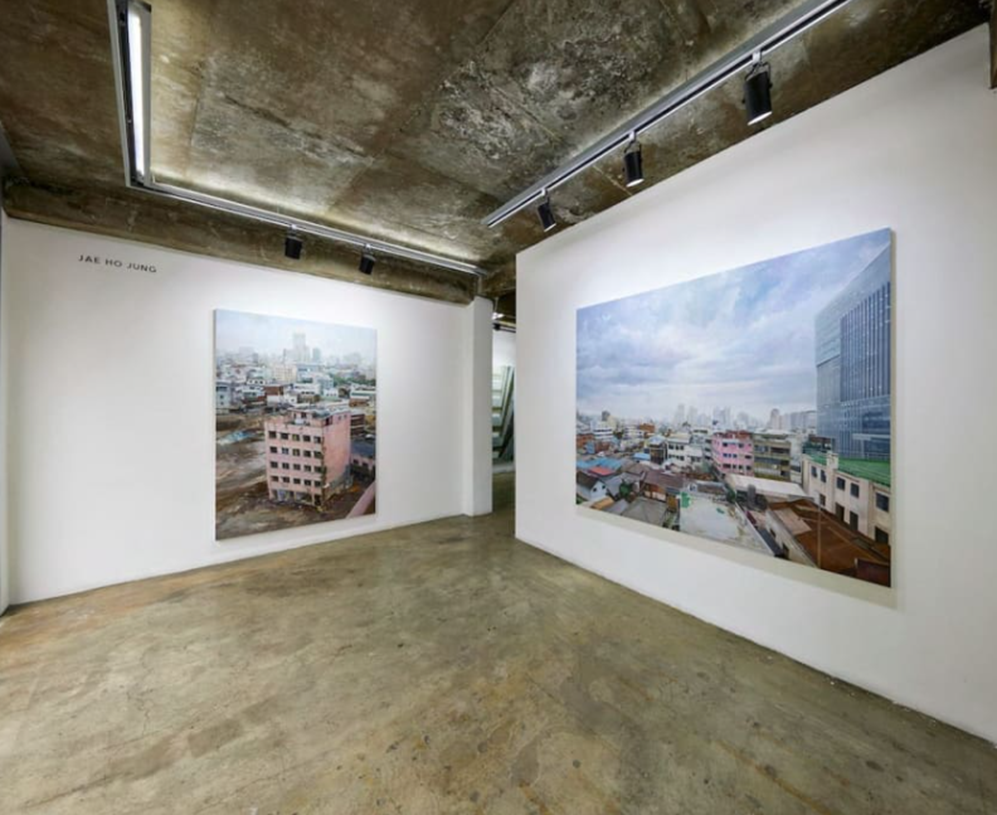
Jung’s Hoehyeon-dong Memorial depicts the Hoehyeon
Demonstration Apartment, and through its portrayal of the apartment building,
the work allows viewers to sense the presence of the people who actually live
in the apartment beyond the image itself.
Completed
in 2005, Hoehyeon-dong Memorial is one of the
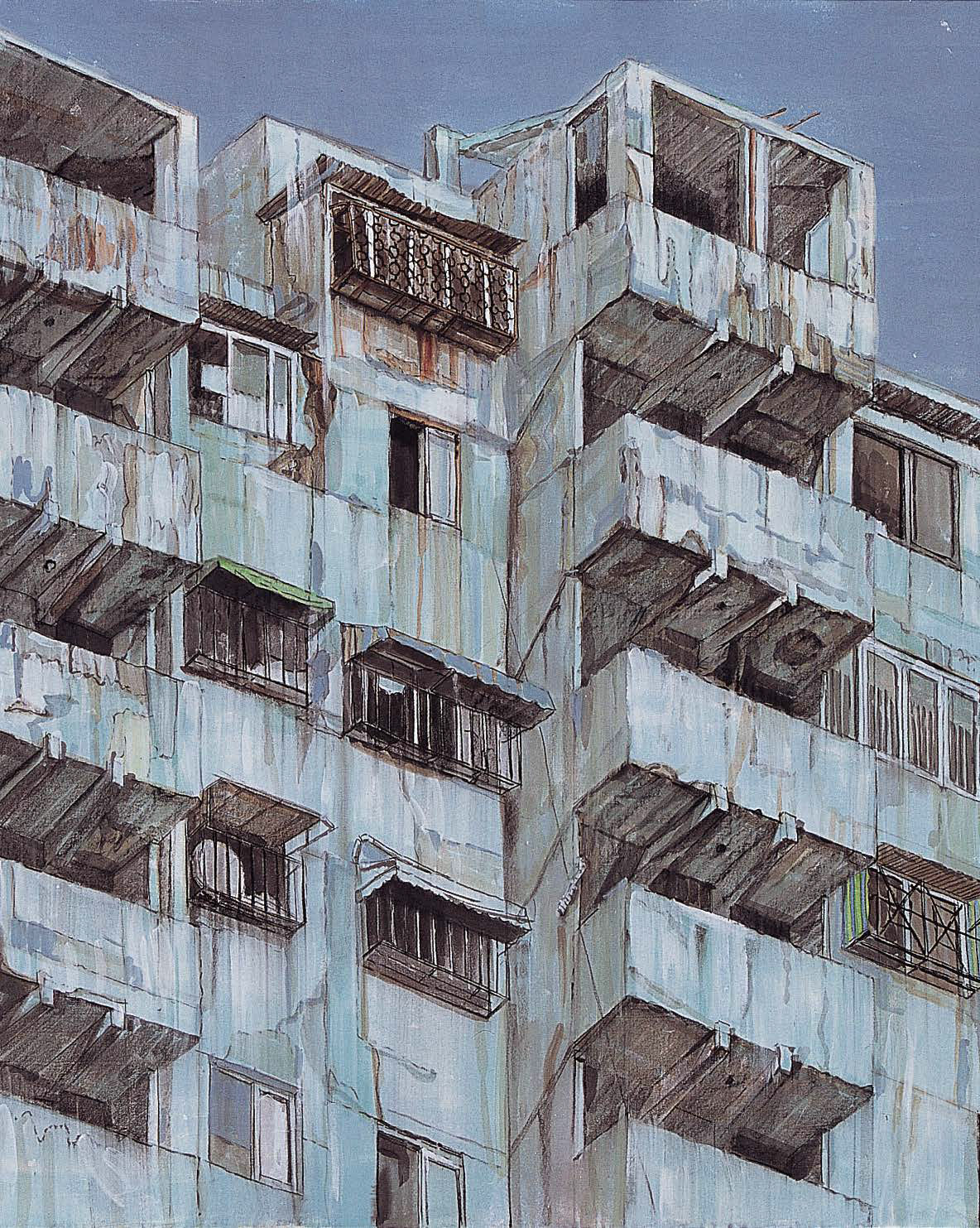
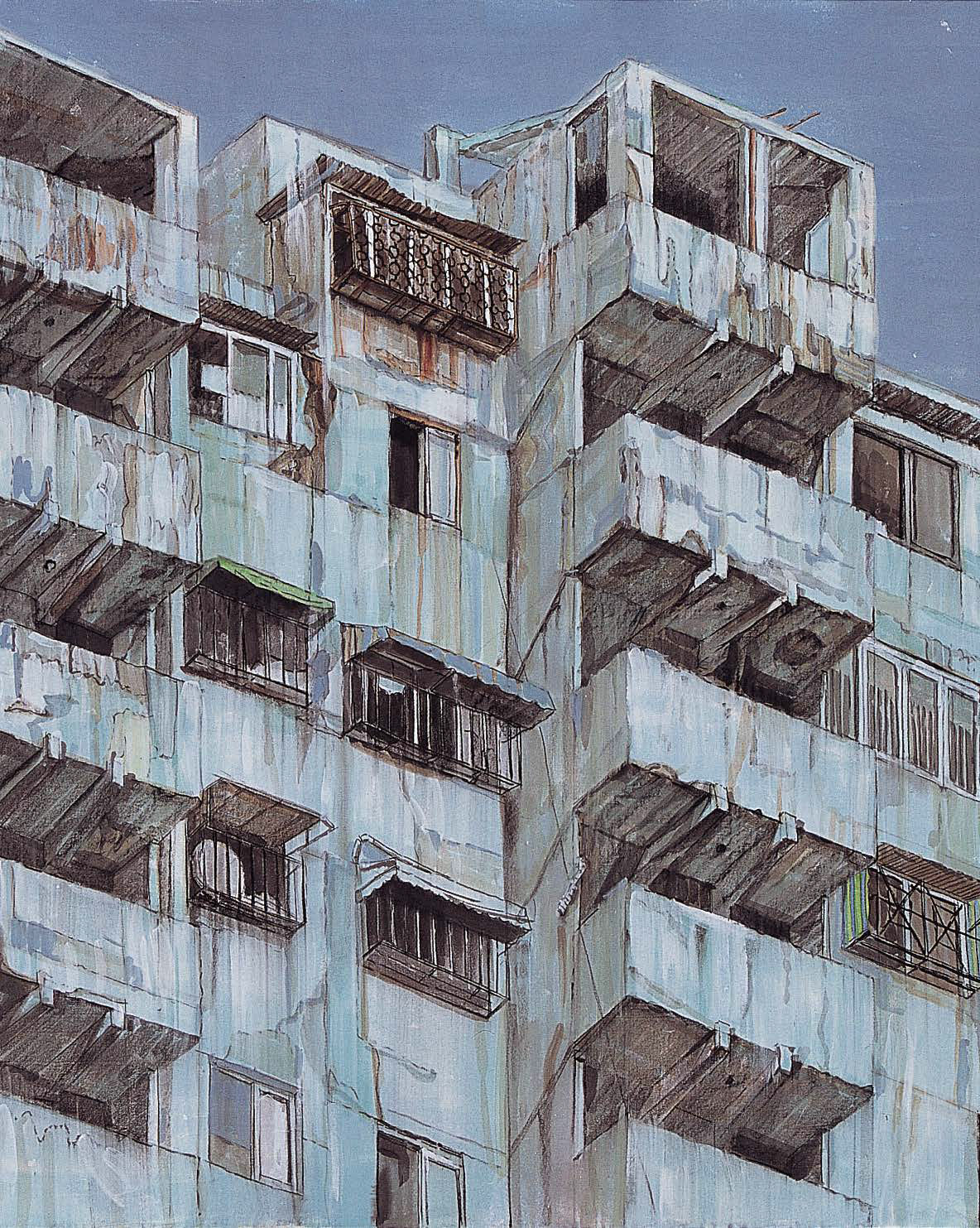
works in which Jaeho Jung depicted apartments from the early 1960s to 1970s.
Regarding the apartment represented in the work, there exist opposing views:
one argues for demolition, while the other insists on preservation, regarding
it as a building that symbolizes the economic development of the 1960s and
1970s and stands as a living witness to the history of Korean apartments.
Hoehyeon-dong
Memorial is a large-scale work painted on Korean paper,
measuring 259 cm in height and 194 cm in width.
Through Hoehyeon-dong
Memorial, painter Jaeho Jung focused on what lies behind the urban
landscapes that symbolized modernization during the period of rapid, state-led
economic growth.
After
working on the Cheongun Citizen Apartment where he once lived, Jung sought out
apartments built from the late 1960s to the early 1970s. He stated that in
doing so, he was able to move beyond the common perception that “old apartments
are unsafe housing for the urban poor,” and instead encountered the rich
meanings embedded in these aging structures.
He
also explained that many of these places were still functioning remarkably well
as collective housing, and that he witnessed forms of communal life—now often
considered extinct—still being preserved. Although narrow, he encountered
beautiful spaces that embodied architectural ideals of harmony and
consideration for both humans and nature.
Hoehyeon-dong
Memorial is a work painted on Korean paper using a very
traditional method. This method of production offers viewers a particular kind
of interest: it depicts apartments that once stood at the center of economic
growth, rendered through a traditional technique that would have been used at
the time of their completion. This approach is closely related to the manner in
which the subject is depicted in the work.
Jaeho
Jung’s meticulous brushwork becomes even more pronounced through the technique
of coloring on Korean paper. When viewing Hoehyeon-dong Memorial,
audiences sense the presence of people even though no human figures appear in
the image. The old apartment filling the large sheet of paper without leaving
blank space, along with its detailed depiction, evokes human presence. The
outdoor air-conditioning units, miscellaneous household items, and trees that
seem to flutter in the wind allow viewers to feel not only people, but also
sound and air beyond the surface of the work.
Hoehyeon-dong
Memorial is, above all, a painting of an “old apartment.” Unlike
contemporary apartment buildings, which are often sealed with glass façades and
curtains that conceal interior life from the outside, older apartments allow
one to see laundry hanging out to dry and air-conditioning units installed
outside. Their form makes it possible to glimpse interior life and imagine how
people live within.
As
viewers observe the laundry hanging from the balconies, the boxes and papers
placed around the space, they begin to imagine the residents of the apartment
and their daily lives. Moreover, the evident “oldness” of the apartment
depicted in Hoehyeon-dong Memorial leads viewers
to reflect on the long span of time during which people have lived there.
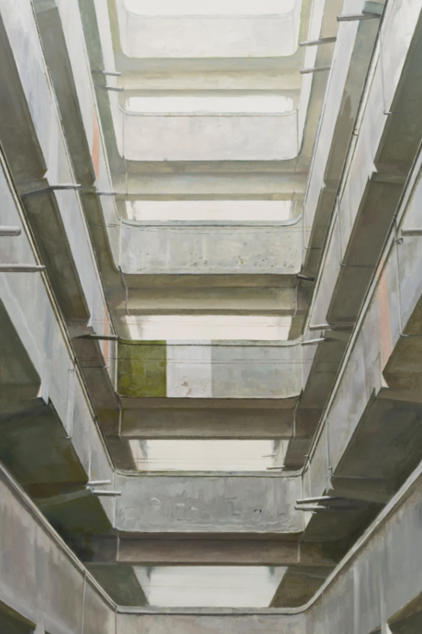
Through
rusted and worn connecting bridges, faded green railings atop those bridges,
cracked white walls of the apartment, and the aged miscellaneous items placed
in the flower beds in front of the building, viewers are led to imagine the
apartment’s long existence and the people who once lived—and continued to
live—within it.
Through Hoehyeon-dong
Memorial, Jaeho Jung poses a question to us, who tend to regard
apartments as merely spaces for dwelling: is that really all they are? He
explains that by visiting old apartments, he was able to encounter the rich
meanings that such places possess.
He
stated, “I witnessed that quite a number of these places were still serving as
excellent forms of collective housing, and in some cases, ways of communal
life—now thought to have disappeared—were still being preserved. Though narrow,
I encountered beautiful spaces that embodied architectural ideals of harmony
and consideration for humans and nature.”
Through Hoehyeon-dong
Memorial, Jaeho Jung ultimately sought to convey that an apartment is
not simply a place where we reside, but a space in which we live our lives.