

Cho Ho Young (b. 1988) draws on everyday objects and situations—things we constantly encounter but easily overlook or grow accustomed to—and transforms them into installation works. By separating these familiar elements from their usual contexts and placing them in unexpected situations, her works create environments in which viewers can perceive and experience these objects anew.


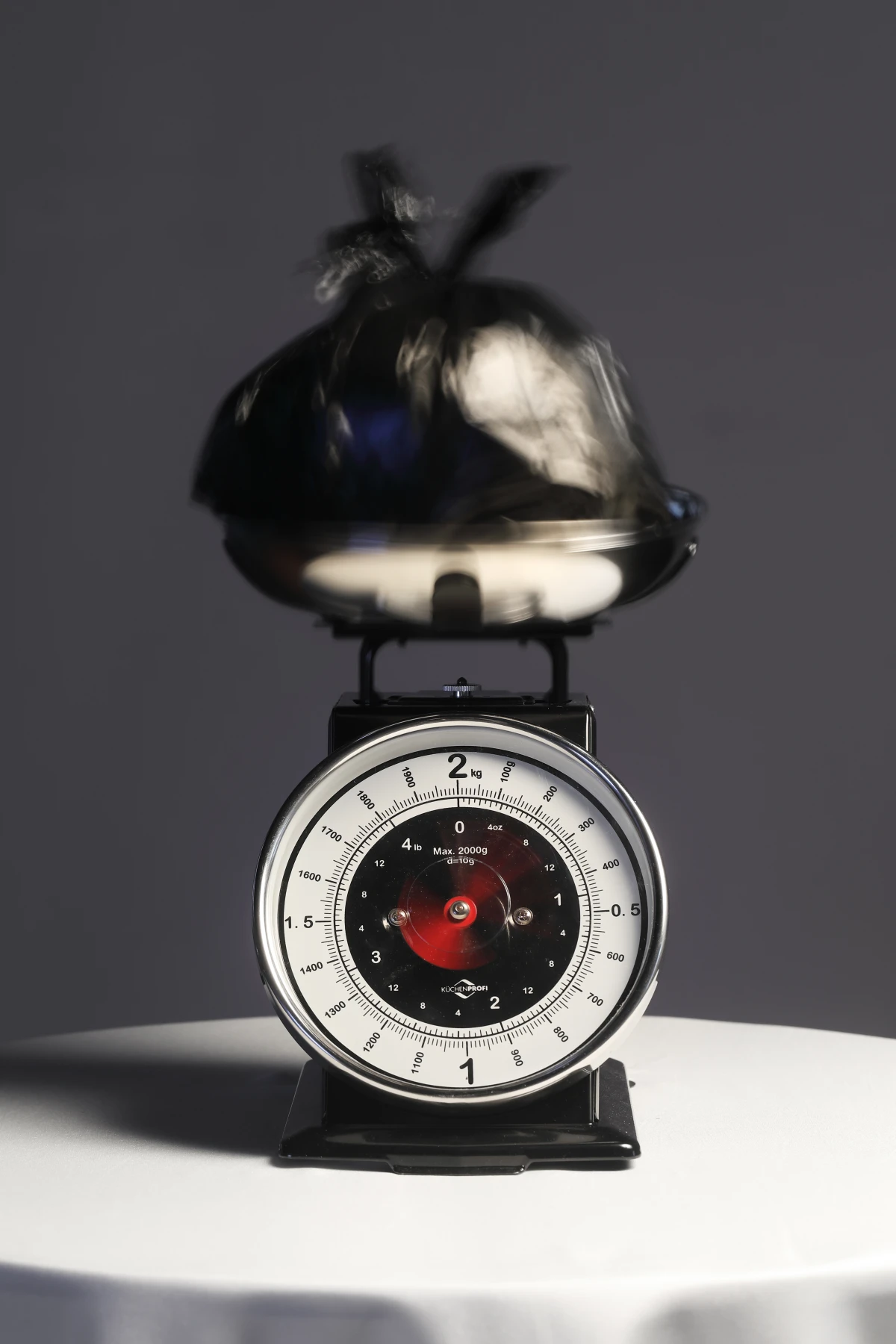
Cho Ho Young, The Weight from youscale, 2020, Bouncing black plastic bag, 15x25x35cm ©Chaper II

Cho Ho Young’s work begins with observing everyday objects and explores the relationships formed between those objects and the individual, as well as the gap between their physical reality and their conceptual or imagined images. To reveal the flow of change and difference that emerges within these relationships, she has developed installation works in which the viewer and the artwork respond to one another, generating new perceptions and experiences.
 
She describes her work as a “tool” or “catalyst.” For her, the true meaning of what she seeks to convey through art lies not in the object itself, but in the moments of experience that arise as viewers actively engage with the work.


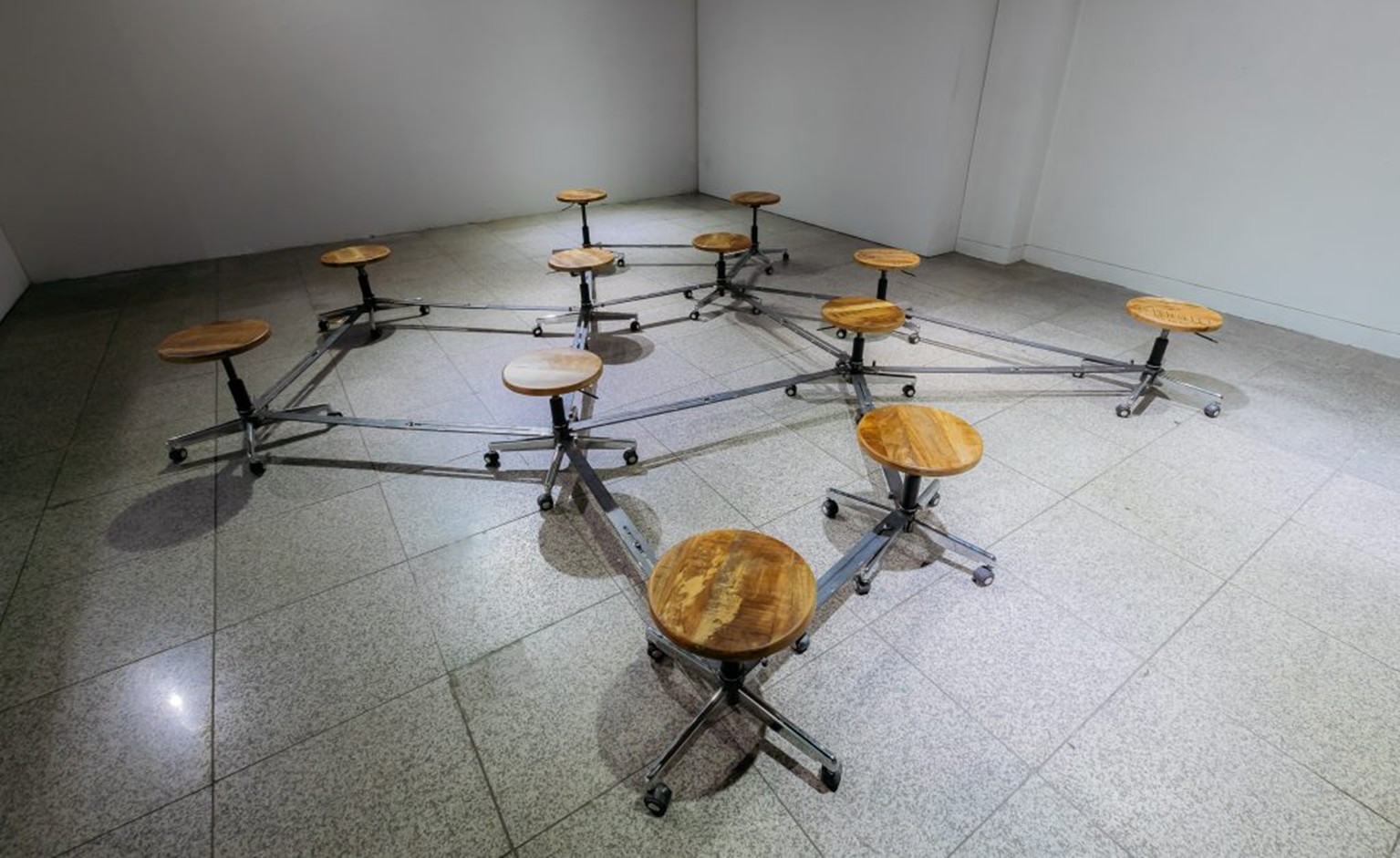
Cho Ho Young, From 60cm to 120cm, 2017-2019, Connected 12 chairs, metal, Dimensions variable ©Cho Ho Young

For example, one of her representative works, From 60cm to 120cm (2017–2019), addresses the notion of “distance” between people. The work began from observing how individuals instinctively try to maintain an appropriate amount of personal space when gathered in the same environment.
 
The numbers “60” and “120” in the title refer to the average distances that define personal space. According to psychological studies on this tendency, people do not feel uncomfortable when someone intimate comes within 60 cm, while they tend to maintain a distance of about 60–90 cm from acquaintances and approximately 100–120 cm from strangers, often without conscious awareness.

Cho Ho Young, From 60cm to 120cm, 2017-2019, Connected 12 chairs, metal, Dimensions variable ©Chapter II

Building on this idea, Cho Ho Young incorporated the sense of personal-space distance—between 60 and 120 cm—into the work. She created a chair that allows users to move freely within a specific range designated by the artist. Seated on chairs connected in a zigzag formation, participants could observe one another and either decrease or increase their distance within the boundary she defined.
 
From 60cm to 120cm becomes a catalyst that enables viewers to directly experience what we call the “comfort zone” of personal space, thereby prompting shifts in feelings and sensations that usually go unnoticed in everyday life.


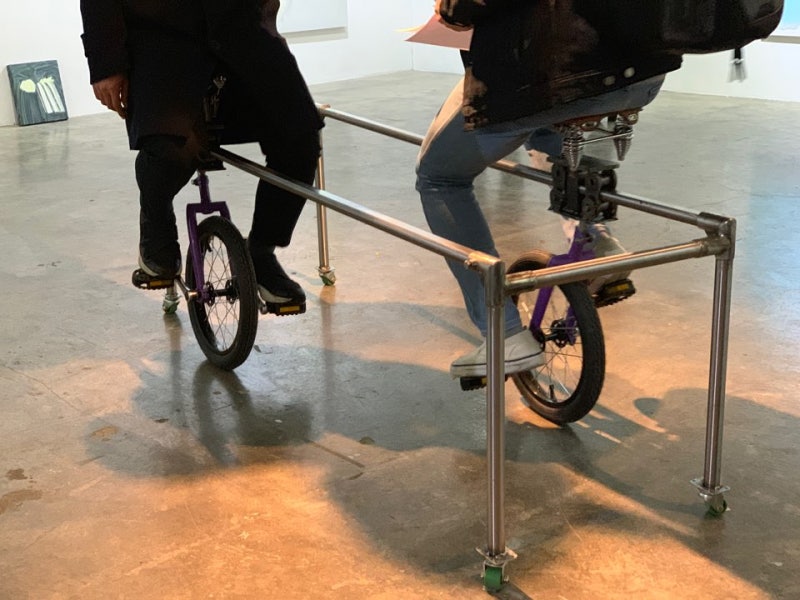
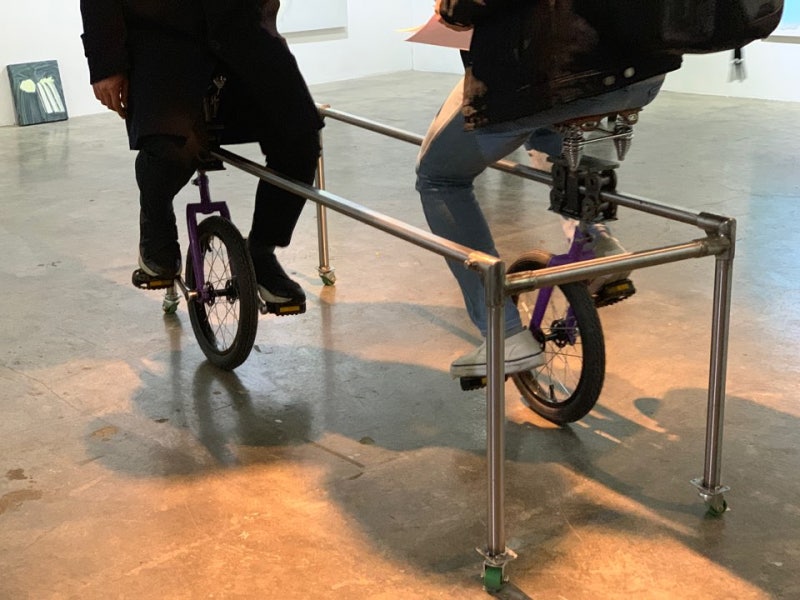
Cho Ho Young, Relative Velocity of one revolution, 2019, Two unicycles and rail frame, 50x70x160cm ©Cho Ho Young

If From 60cm to 120cm addresses psychological distance within relationships among many people, her 2019 work Relative Velocity of One Revolution narrows this exploration to the relationship between two individuals. In this piece, the wheels of unicycles allow participants to move forward or backward by pedaling, thereby visualizing the shifting psychological distance between two viewers.


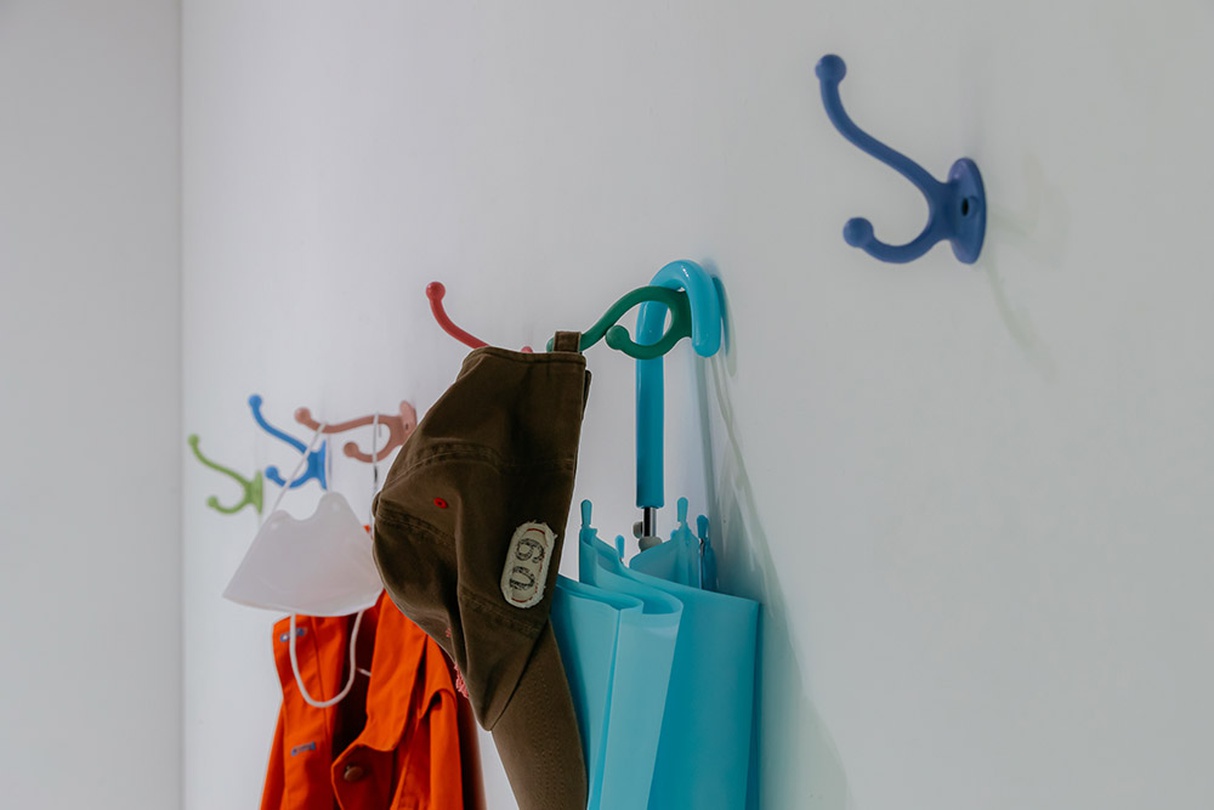
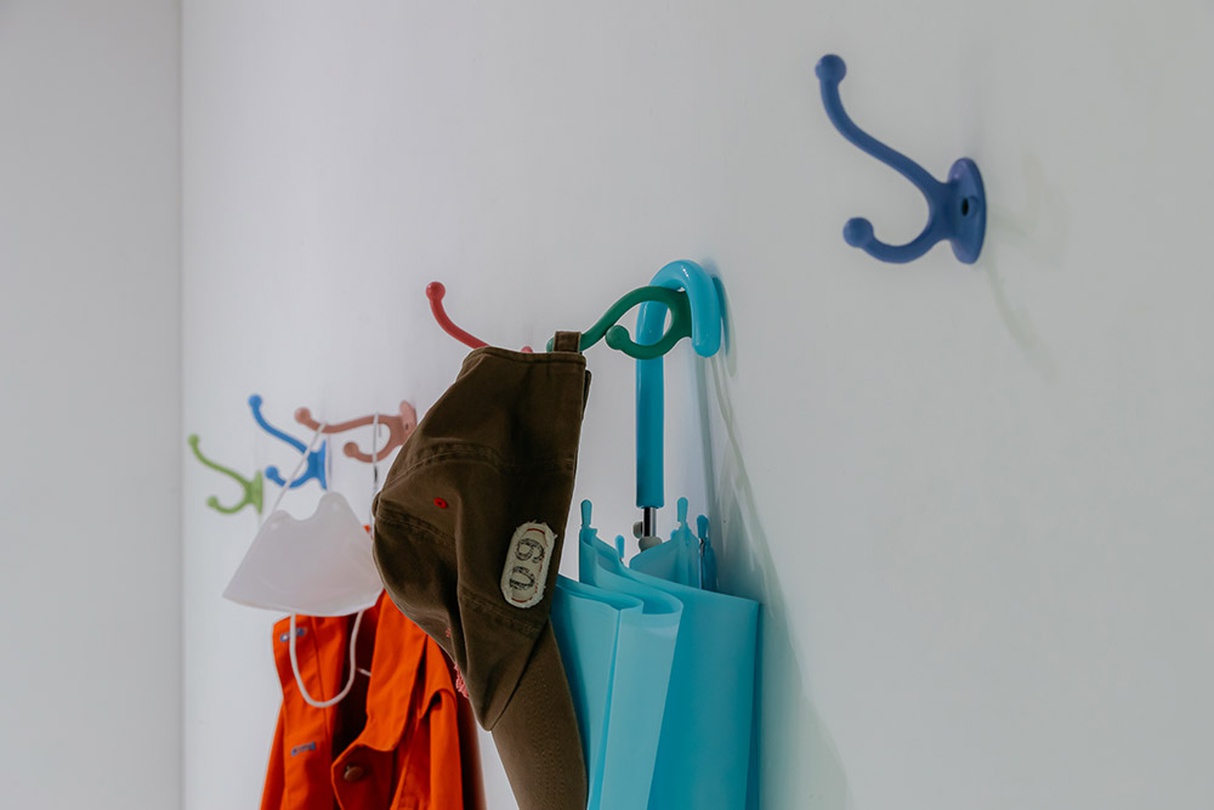
Cho Ho Young, Hang-On! 2, 2017-2019, Silicone, 4x9.5cm ©Cho Ho Young

Meanwhile, another representative series, ‘Hang-On!’ (2017–), reconfigures the familiar everyday object of a hanger into something unfamiliar, prompting a renewed awareness of perception and sensation toward ordinary things. Unlike conventional hangers, which are typically made of solid and rigid materials, this series intentionally weakens the object’s original function by using soft and flexible materials such as silicone.


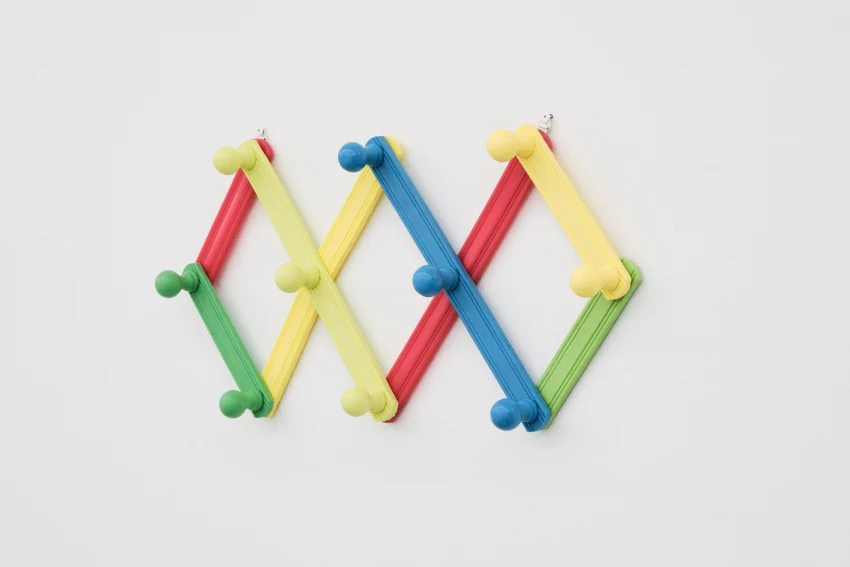
Cho Ho Young, Hang-On! 3, 2022, Silicone, 35x90cm ©Chapter II

This material transformation encourages users to handle the hanger with greater care and attentiveness, creating a subtle tension and interaction between the object and its user. In doing so, Cho Ho Young’s work moves fluidly across the boundaries between function and form, usability and display, everyday life and exhibition. It opens up new ways of exploring the sensory relationships between objects and humans.


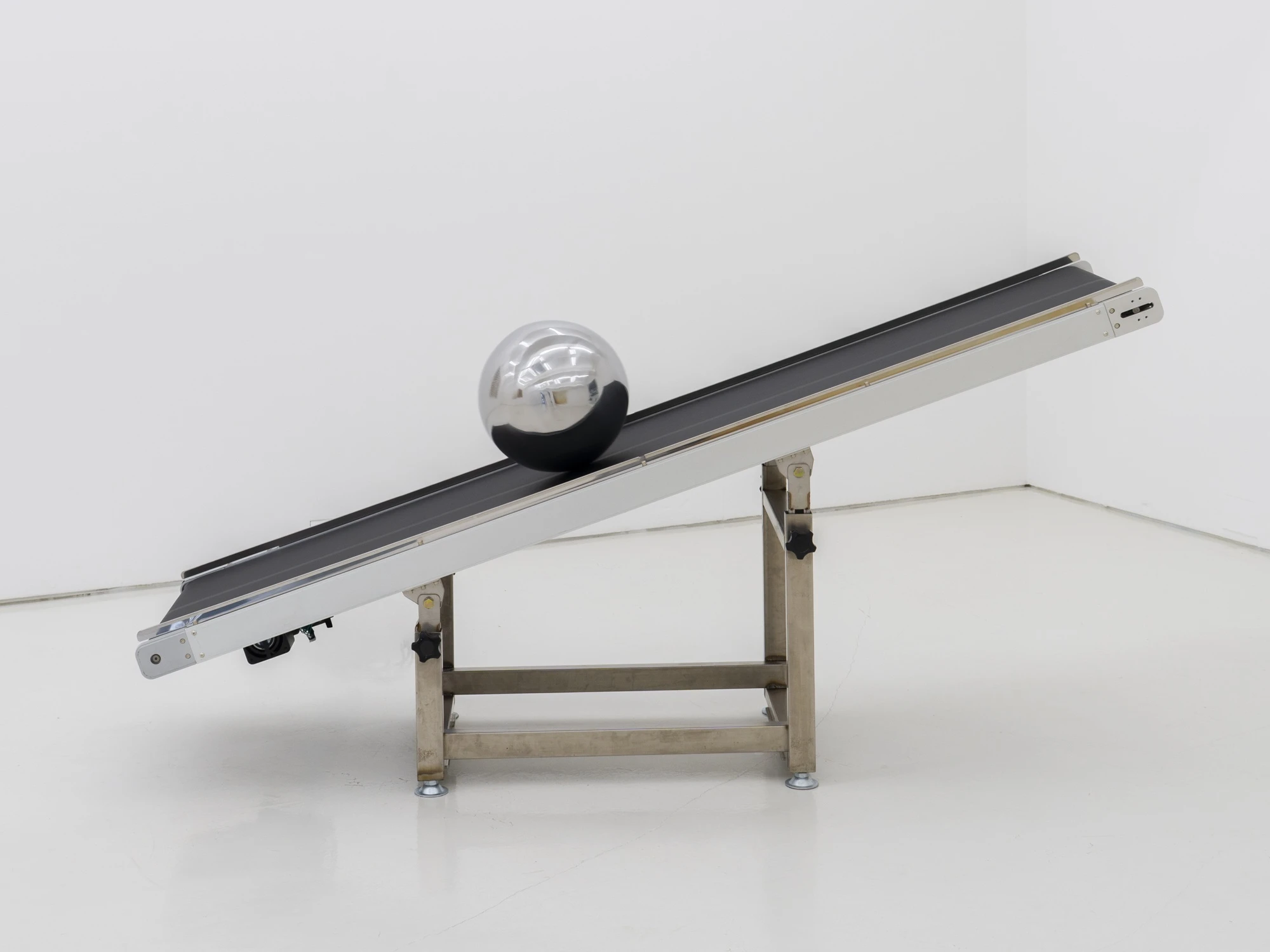
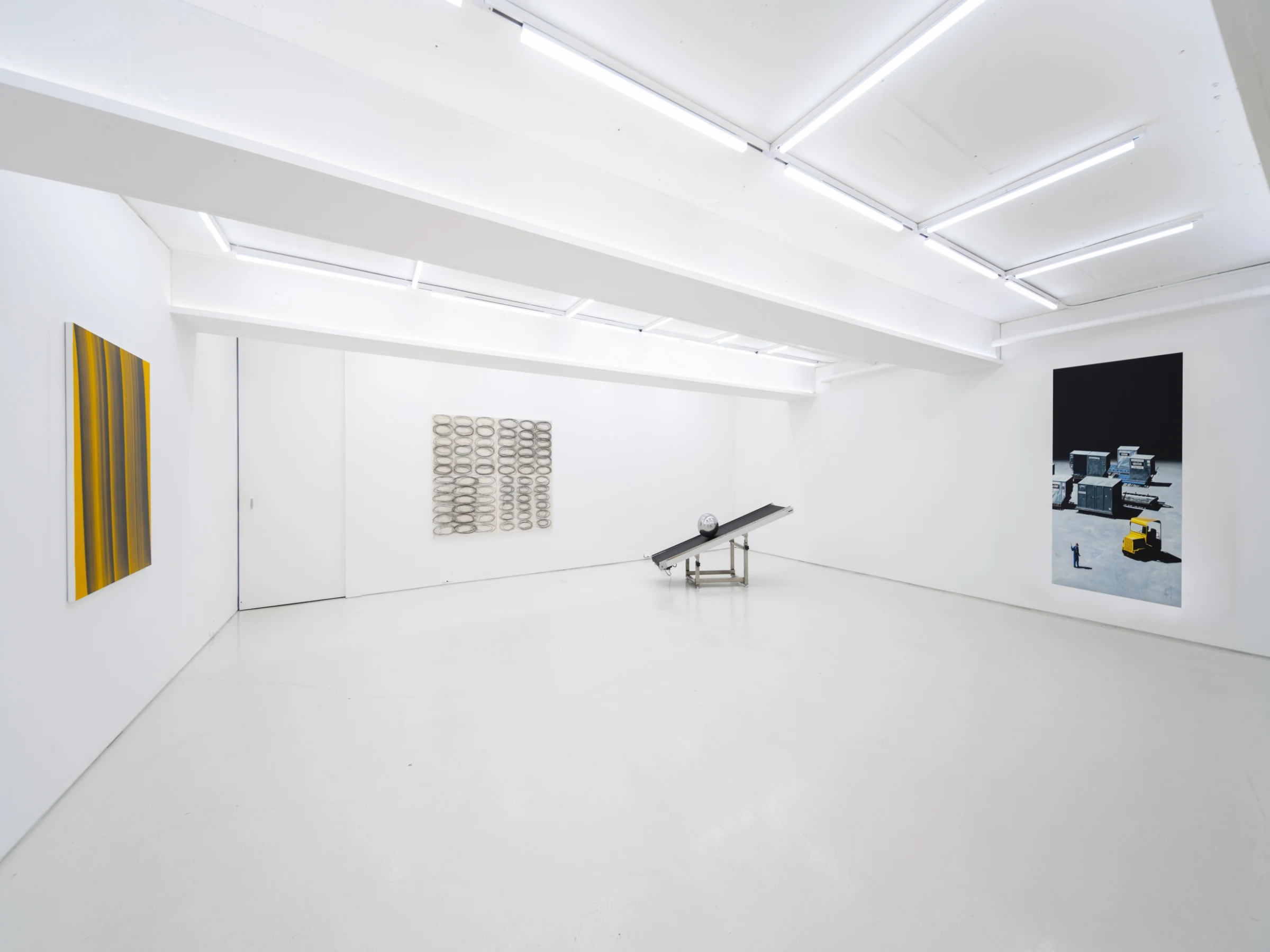
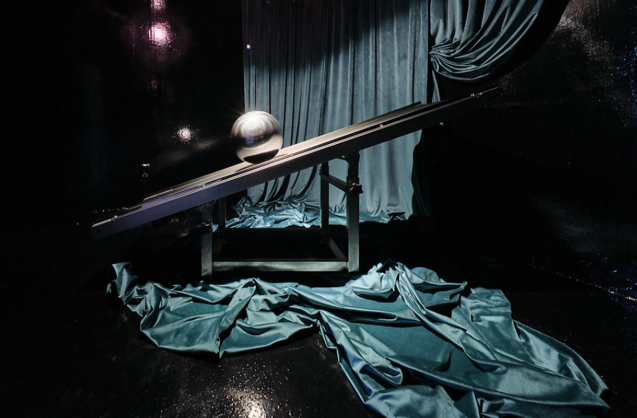
Cho Ho Young, Stand Still, 2020, the conveyor system, 35cm ball, 50x200x100cm ©Chapter II

Meanwhile, the 2020 work Stand Still visualizes the physical relationships between objects. Comprising a steel ball that continuously rolls on a diagonally positioned conveyor belt, the work reveals the precise point at which the gravitational force of the motor and that of the ball cancel each other out.
 
Although it appears as if the ball is simply circling in place, the piece dynamically exposes an ongoing state in which two opposing physical forces collide, continually resetting the ball’s position and movement.


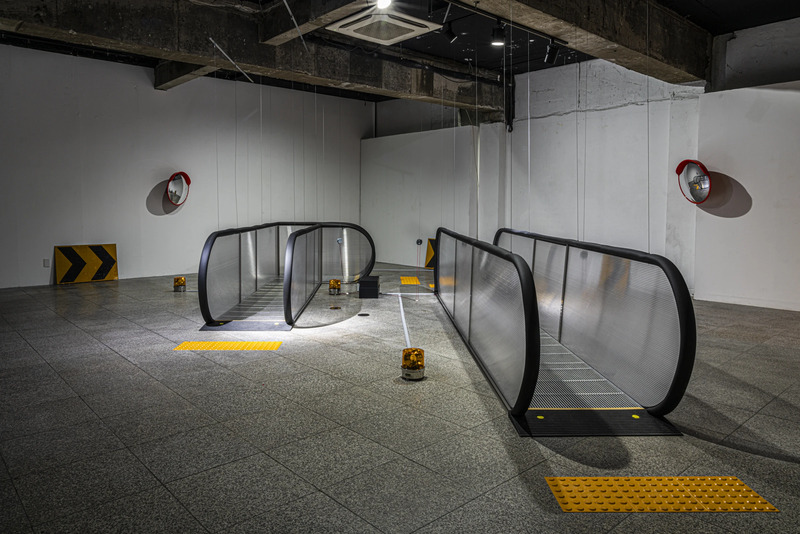
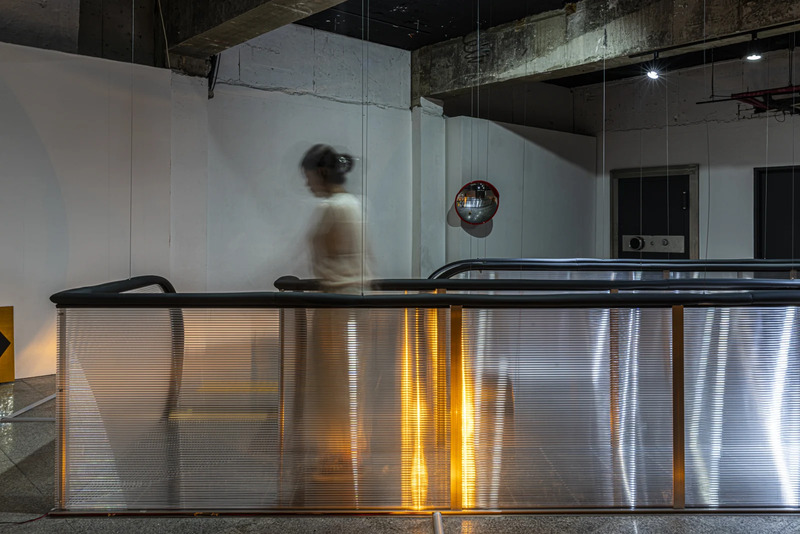
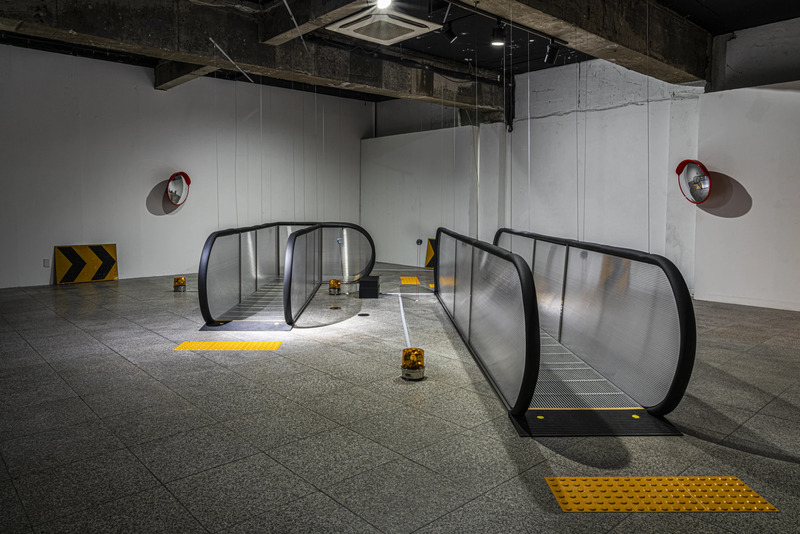
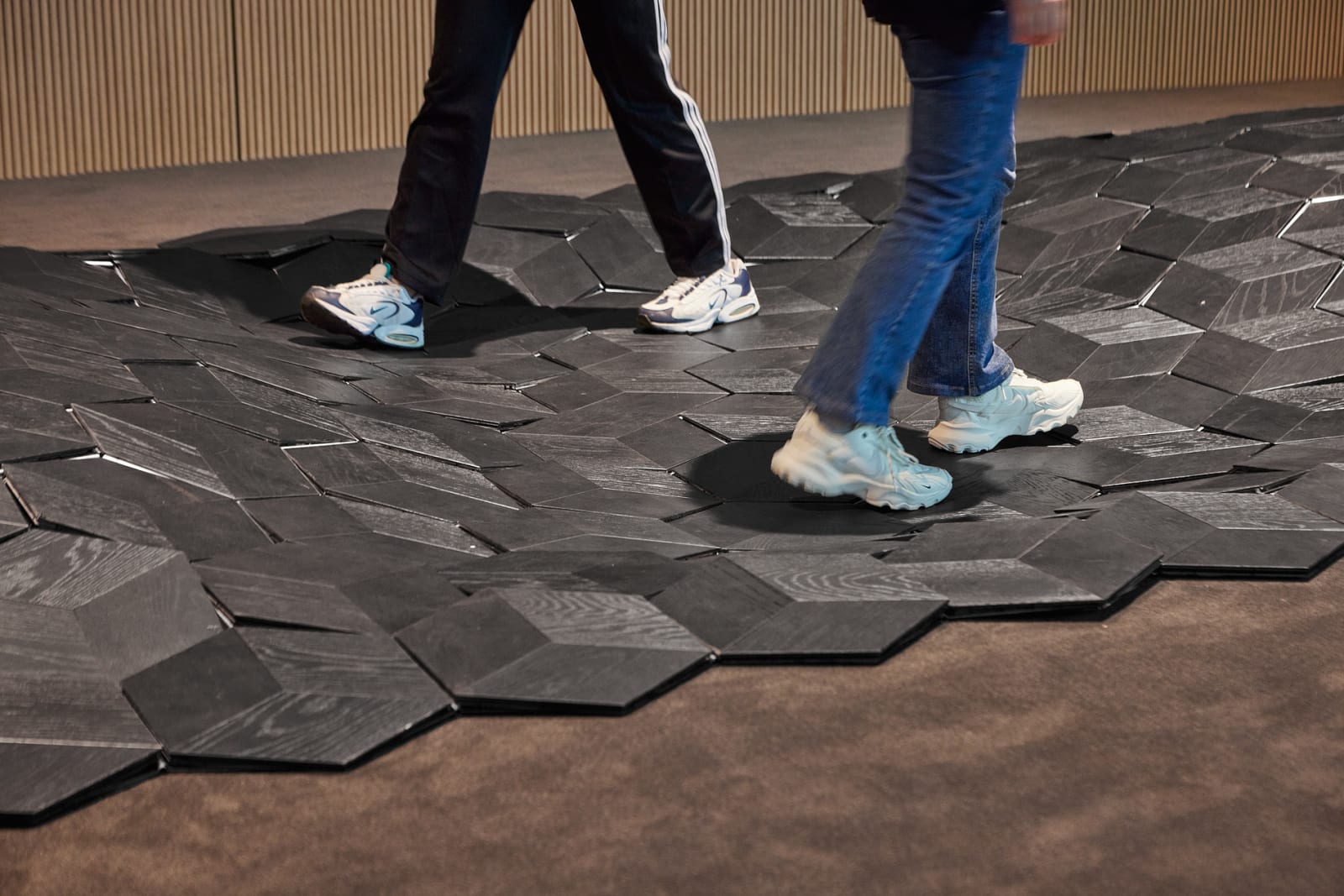
Cho Ho Young, Moving Walk, 2023, Mixed media, Dimensions variable ©Chapter II

Furthermore, in her 2023 solo exhibition 《Stereoscope》 at Post Territory Ujeongguk, Cho dismantled the objects of everyday experience and the structures of the actions associated with them, subtly twisting them to create a kind of stage apparatus.
 
Each device, designed to actively engage the viewer’s movement, functioned like a prism that enables a multifaceted understanding of the object’s essence, dispersing familiar perceptual modes into layered waves of new sensory possibilities.


Cho Ho Young, Moving Walk, 2023, Mixed media, Dimensions variable ©Chapter II

In other words, when the viewer senses this constructed environment with their whole body, the inertia of habitual actions and movements—those that have long settled beneath consciousness—is summoned, while the unexpectedness of the experience opens a moment of self-awareness.
 
For instance, Moving Walk (2023) is a structure approximately ten meters in length, created by reinterpreting the materials and form of an actual moving walkway. Designed for visitors to walk on, the work draws viewers into consciously reexamining the bodily sensations that have become conditioned by mechanical systems.


Cho Ho Young, A Patch of Ground: Fragmented Ground, 2023, 500 Rubber balls, acrylic panel, Dimensions variable ©Post Territory Ujeongguk

Meanwhile, A Patch of Ground: Fragmented Ground (2023), composed of translucent floor panels placed atop hundreds of rubber balls, responds directly to the viewer’s weight and movement. Unlike the familiar experience of walking on firm, solid ground, walking across this surface introduces a sense of wobbling, during which visitors observe the subtle vibrations of the small balls and fragments shifting beneath them.
 
This creates an ambiguous moment: is the sensation produced by my own movement, or is it caused by the accumulated energy of countless balls supporting my weight from below? As viewers watch the trembling surface, they begin to speculate on the physical relationships formed between the body and the objects it encounters.


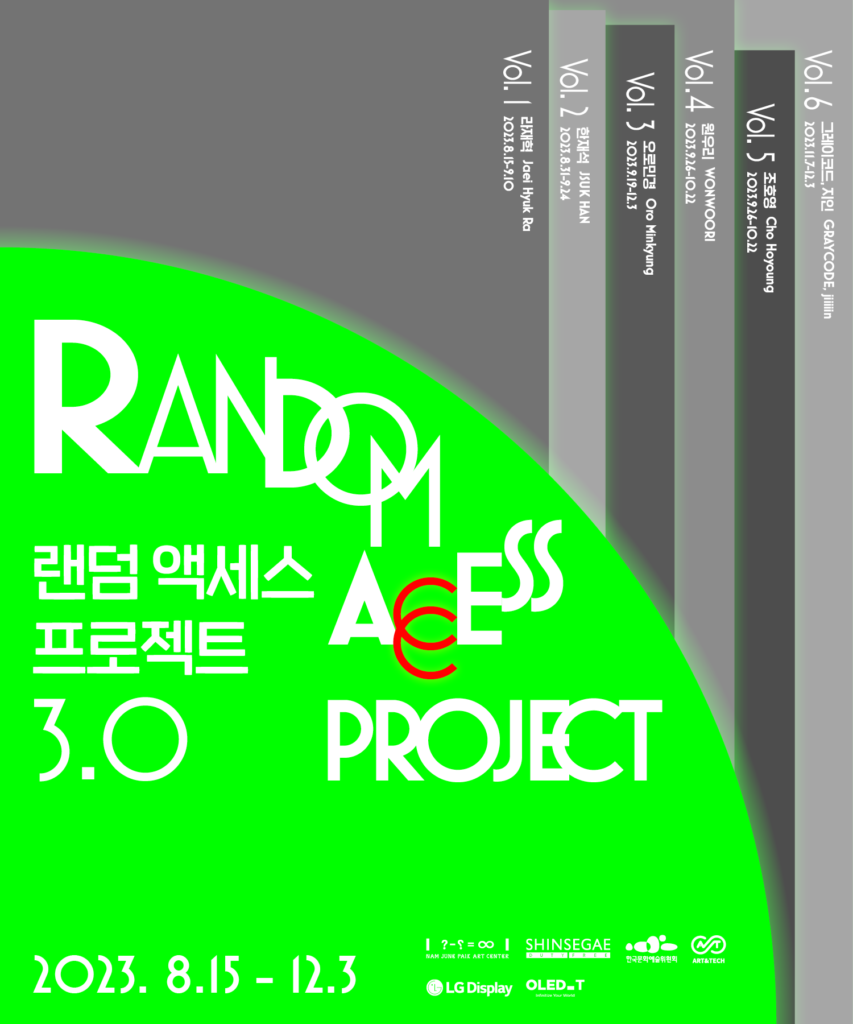
Cho Ho Young, Installation view of 《Random Access Project 3.0》 (Nam June Paik Art Center, 2023) ©Nam June Paik Art Center

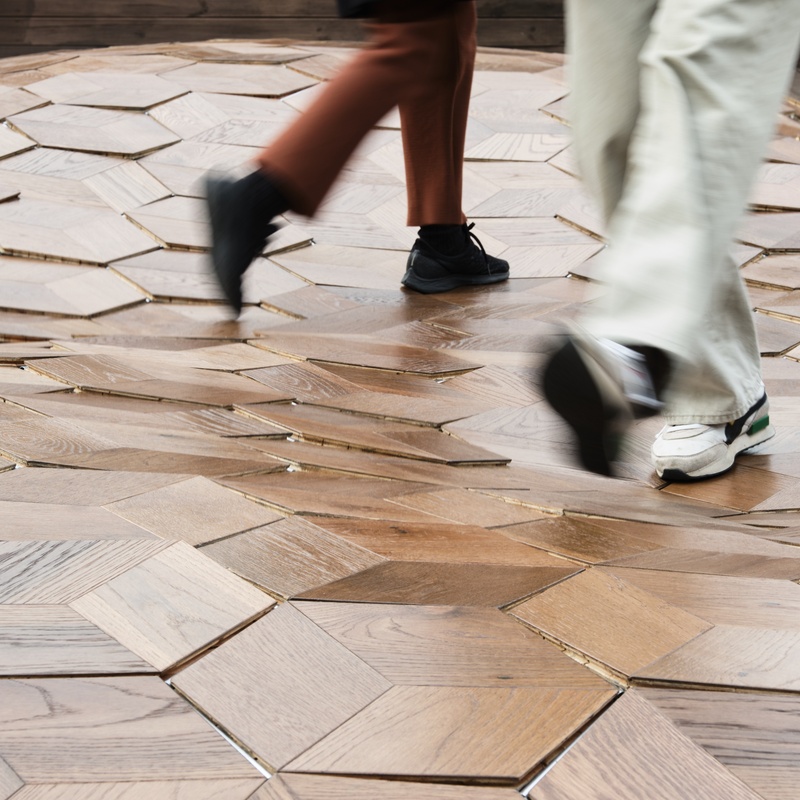
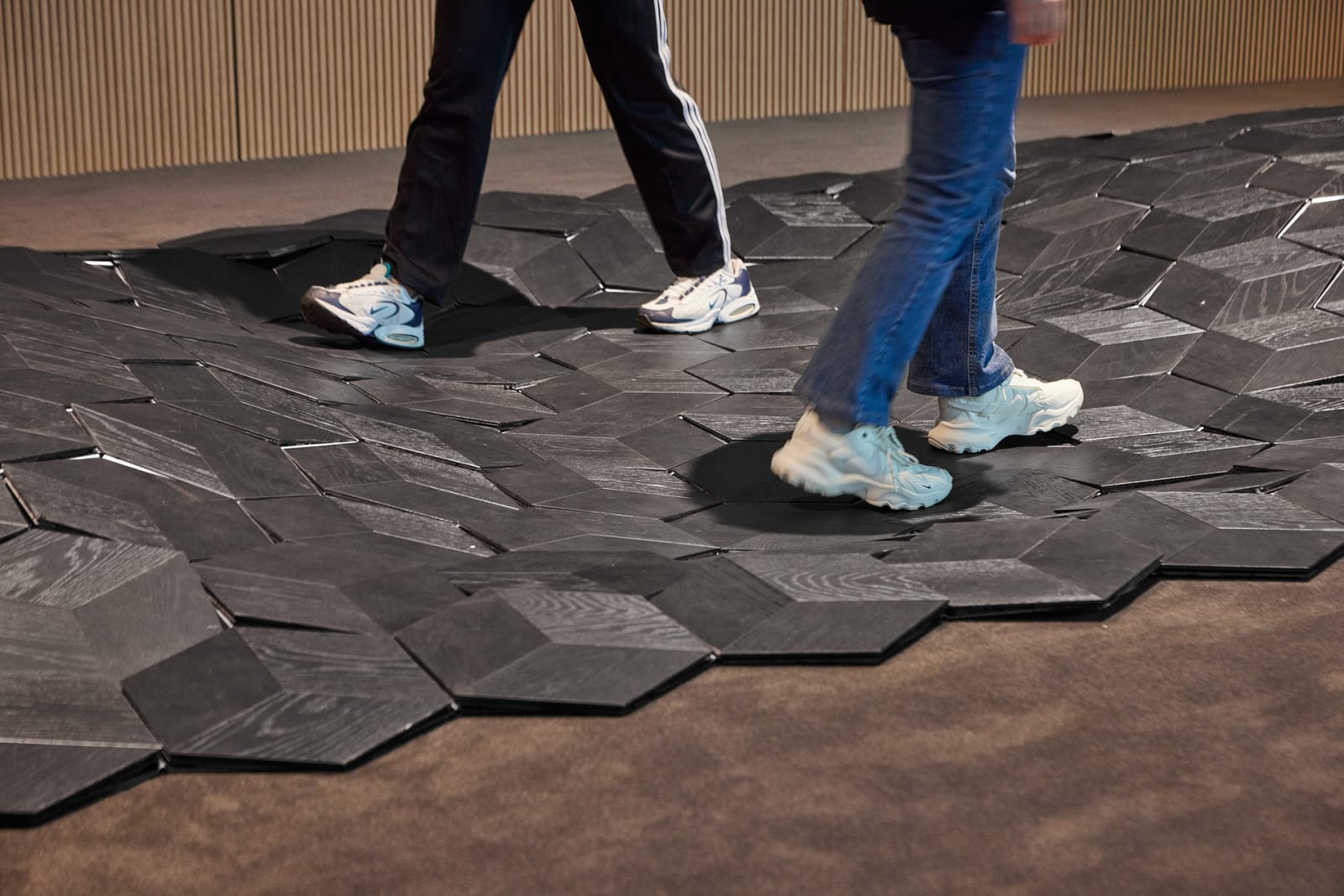
In the same year, Cho Ho Young presented an expanded sensory field of A Patch of Ground in the exhibition 《Random Access Project 3.0》 at the Nam June Paik Art Center. She filled the gallery floor with an installation structure that moved irregularly, allowing visitors standing atop it to sense subtle vertical and horizontal shifts.
 
As viewers attempted to maintain their balance, they were prompted to engage bodily senses that are seldom activated in everyday life. And only when the direction of their movement aligned with the shifting force of the floor did a stable area—one in which they could stand fully balanced—momentarily emerge.


Cho Ho Young, A Patch of Ground, 2022, Mixed media, Dimensions variable ©Chapter II

This work functions like a living organism that continually maintains homeostasis, as the balance of kinetic energies forms a self-sustaining equilibrium. The artist notes that such diverse relations that achieve a state of physical balance resemble the ways in which individuals, as social beings, form and sustain relationships.
 
Whether it is the homeostasis necessary for life or the dynamics of social bonds, we must continuously invest energy from multiple directions and maintain a certain tension in order to keep these systems in balance.


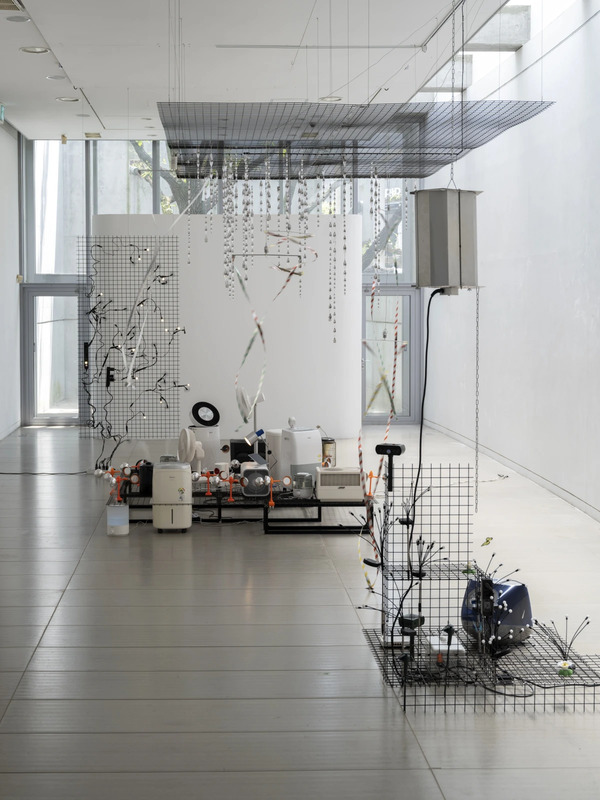
Cho Ho Young, In defense of plants : Amoenitas, 2024, Mixed media, Dimensions variable ©Chapter II

In this way, Cho Ho Young has explored the balance of psychological and physical distance by using the relational dynamics between objects or between people, as well as the sensory mechanisms of the body that perceives those relations. Through installations that transform everyday objects and disrupt familiar processes of learned experience and cognition, she invites viewers into environments where they can encounter the tense relational forces that lie beneath the surface of reality.
 
The familiar yet unfamiliar sensory experiences generated by Cho’s devices allow viewers to form new networks of relation with objects, while also guiding them toward moments of renewed awareness of their own bodies and movements.

 “My work begins with observing and discovering things that are easily overlooked, forgotten, or dismissed as trivial in contemporary life.”   (Cho Ho Young, Artist’s Note)


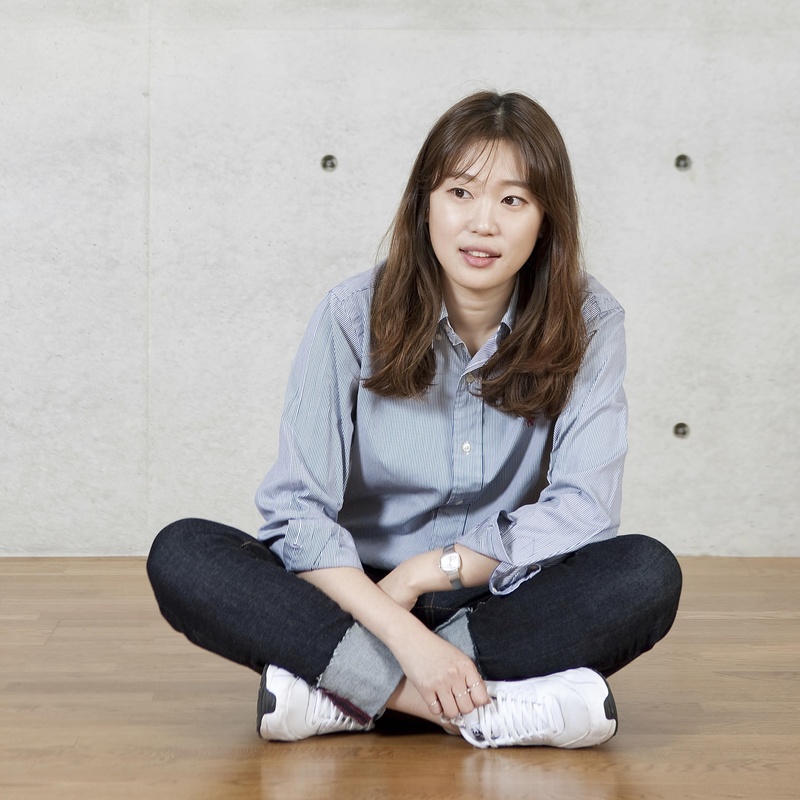
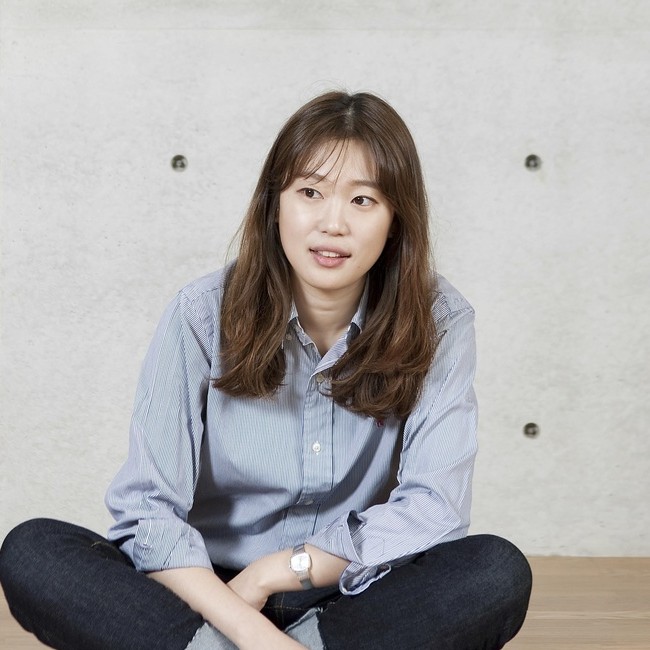
Artist Cho Ho Young ©Public Art

Cho Ho Young received her BFA from the Fine Arts at the Korea National University of Arts and earned her MFA from the same institution. Her solo exhibitions include 《Stereoscope》 (Post Territory Ujeongguk, Seoul, 2023), 《The Nth Layer of Bell》 (SPACE HWAM, Seoul, 2022), and 《[Alert] Chewing water slowly is recommended.》 (Post Territory Ujeongguk, Seoul, 2020).
 
She has also participated in numerous group exhibitions, including 《The Codex of Returns》 (Chapter II, Seoul, 2025), 《Random Access Project 3.0》 (Nam June Paik Art Center, Yongin, 2023), 《Strange Loop for Marcel》 (Seongbuk Young Art Space, Seoul, 2022), 《ZER01NE DAY 2021: Playground》 (Online, 2021), 《Rundgang》 (Universität Linz, Linz, Austria, 2017), among others.
 
In 2018, Cho was selected as a New Hero Artist by Public Art and as a ZER01NE Creator.

References