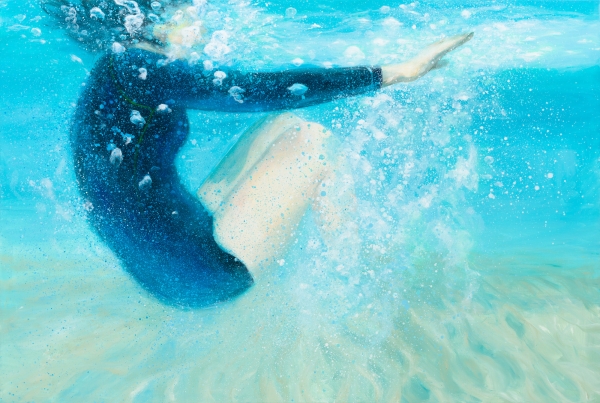


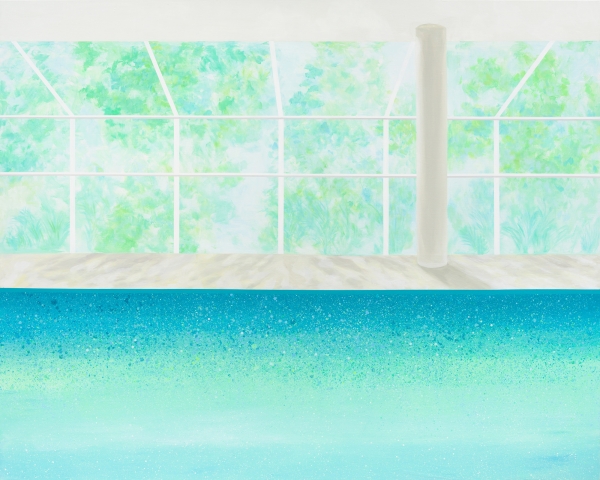
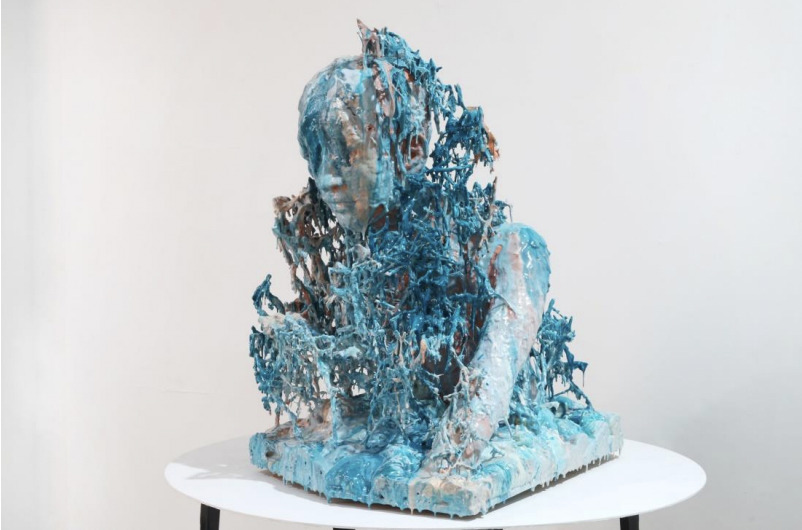
Hur Yeonhwa (b. 1988) translates the landscapes encountered in everyday life through a range of media, continually exploring ways to transcend the limitations of physical space. In particular, she has sustained a long-standing interest in water, creating works that engage with rainwater, the sea, rivers, and other water-related subjects.
 
Her approach—working with fluid and boundary-blurring elements—links materials of differing qualities into a single narrative, allowing her to build a distinctive artistic universe.


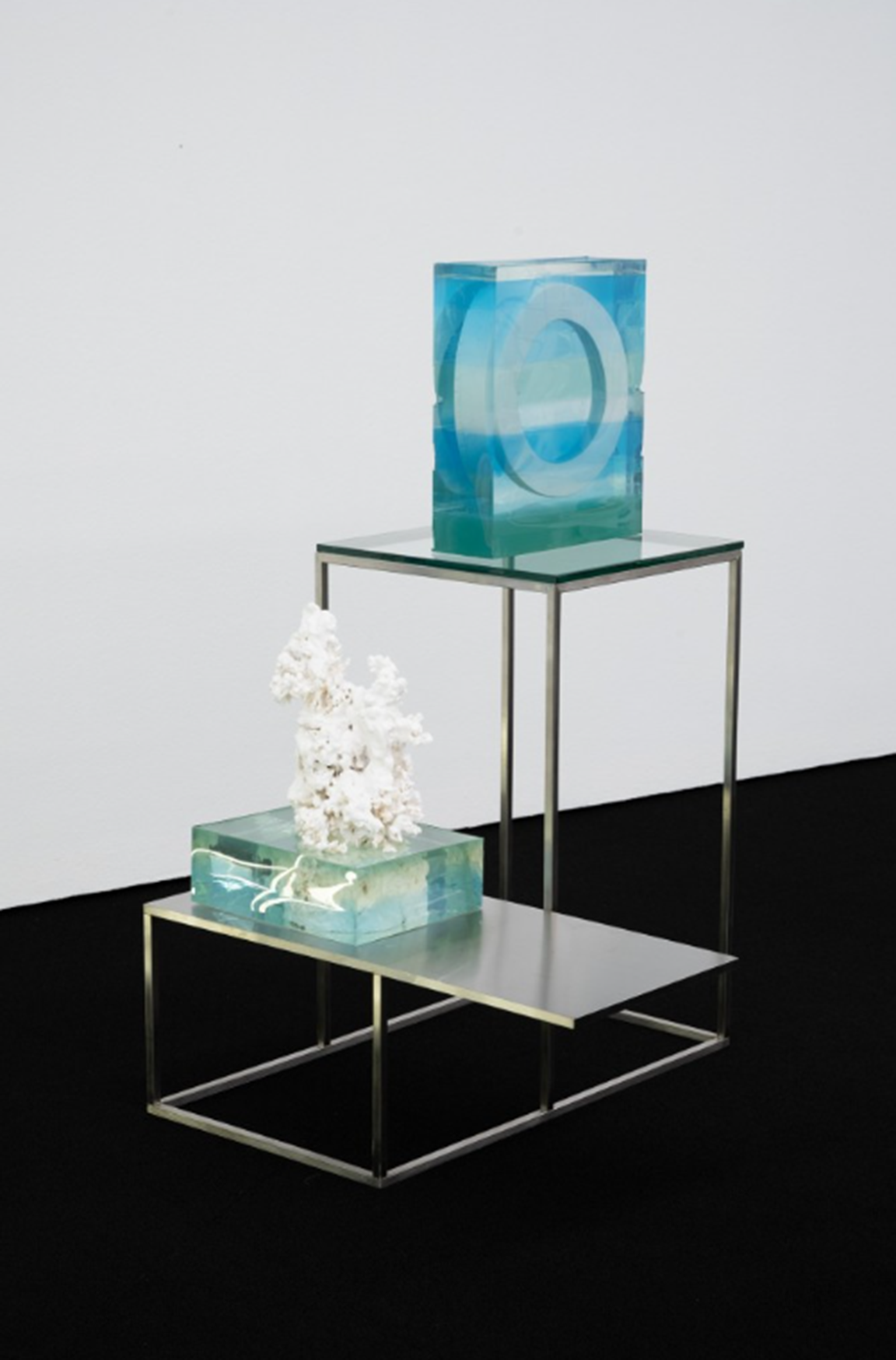
Hur Yeonhwa, Dalchon-river, 2017, Resin, steel, and mixed media, 65x42x63cm ©Hur Yeonhwa

Hur Yeonhwa’s artistic experiments, rooted in her fascination with water, expand the sensory experiences—touch, sight, sound—she has felt through swimming, rain, rivers, the sea, and coral, translating them into diverse forms ranging from the pictorial to the sculptural.
 
For instance, her 2017 series ‘Dalchon-river’ begins with the artist’s autobiographical memories of water. The title refers to a stream in Bonghwang-ri, Boeun County, Chungcheongbuk-do, where she would swim each summer when visiting her grandmother’s home.
 
Hur sought to record through her work the seemingly unchanging landscape and sensations of Dalchon-river, in contrast to the water that continuously flows. She constructed a mental timeline of the river—recalling, for example, the feeling of underwater grasses wrapping around her legs and waist while swimming on a summer day.


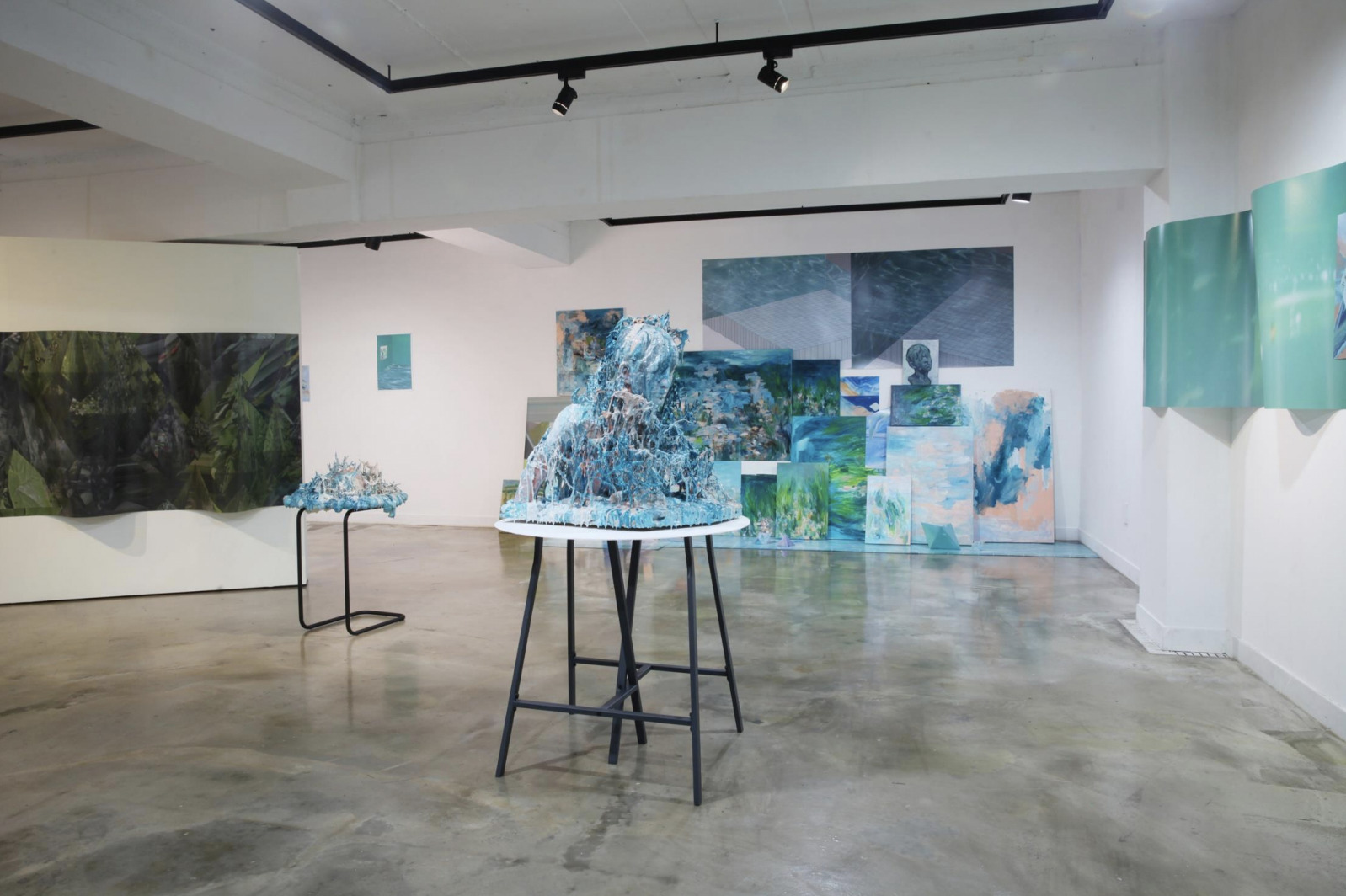
Installation view of 《Dalchon-river》 (Art Space O, 2017) ©Hur Yeonhwa

Rather than constructing a timeline that follows a linear flow of time, she chose to create a spatial structure in the form of specific polyhedrons corresponding to specific moments. The resulting solo exhibition 《Dalchon-river》 (Art Space O, 2017) was composed of unfolded diagrams of spaces that intersected and interfered with one another. The works were built through layers of folded and unfolded forms, as well as flat surfaces and protrusions.

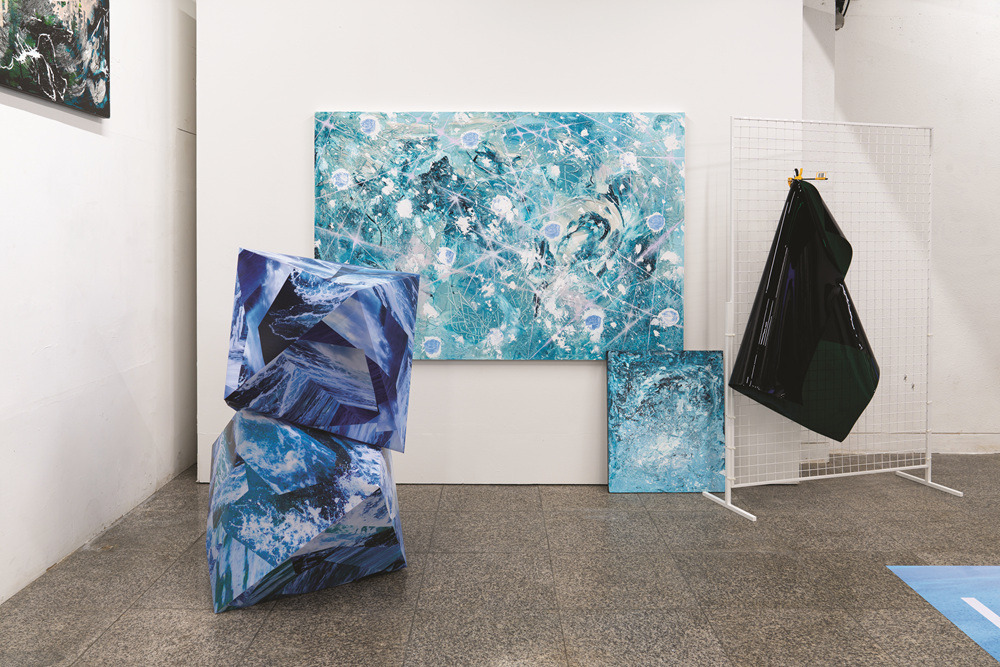
Hur Yeonhwa, Let your body relax, 2020, Mixed media, Dimensions variable, Installation view of 《Floating people》 (Post Territory Ujeongguk, 2021) ©Hur Yeonhwa

Hur Yeonhwa began to develop a mode of expression that modulates present sensations through the strategy of “folding” and “unfolding.” She further expanded this strategy as a way to overcome the limitations of confined spaces, revealing—through image mapping—the ways in which images are reused and consumed within the timeline of the present.
 
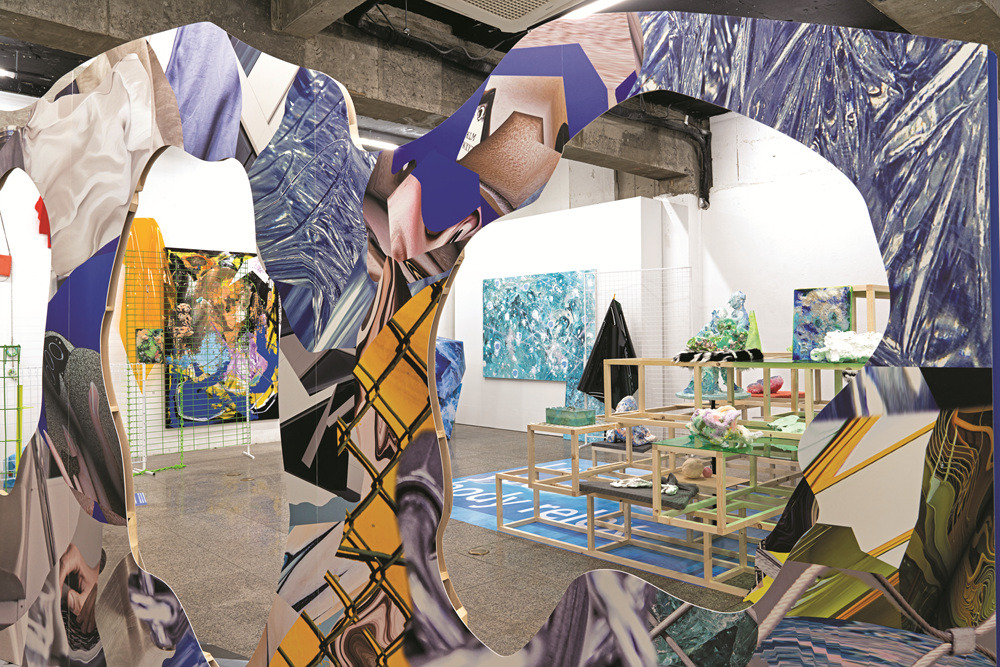
For example, in her 2021 solo exhibition 《Floating people》 at Post Territory Ujeongguk, Hur presented a situation in which individuals—each grounded in different interests and forms of solidarity—were placed within connective structures that allude to decentralized data-storage technologies.


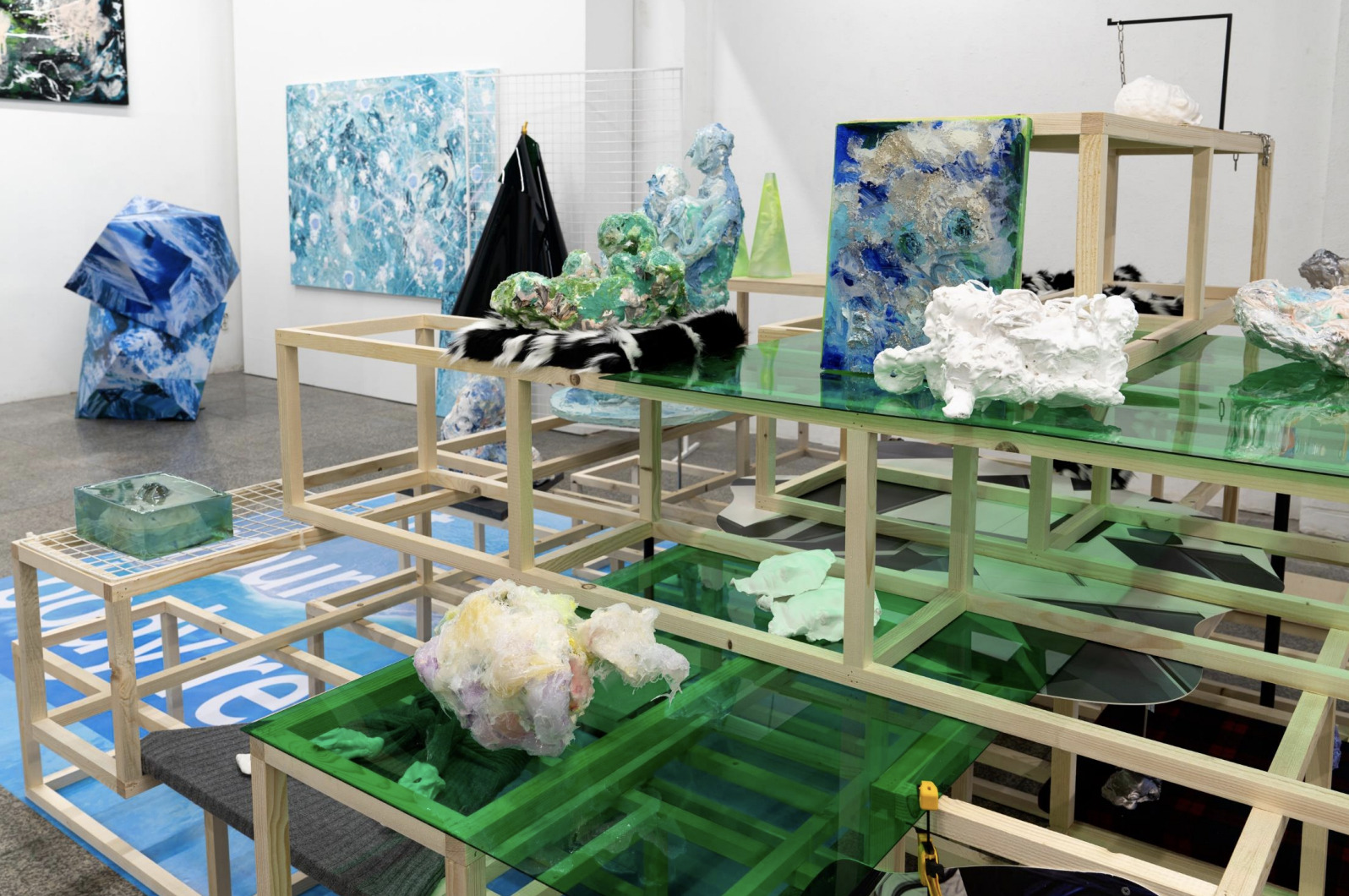
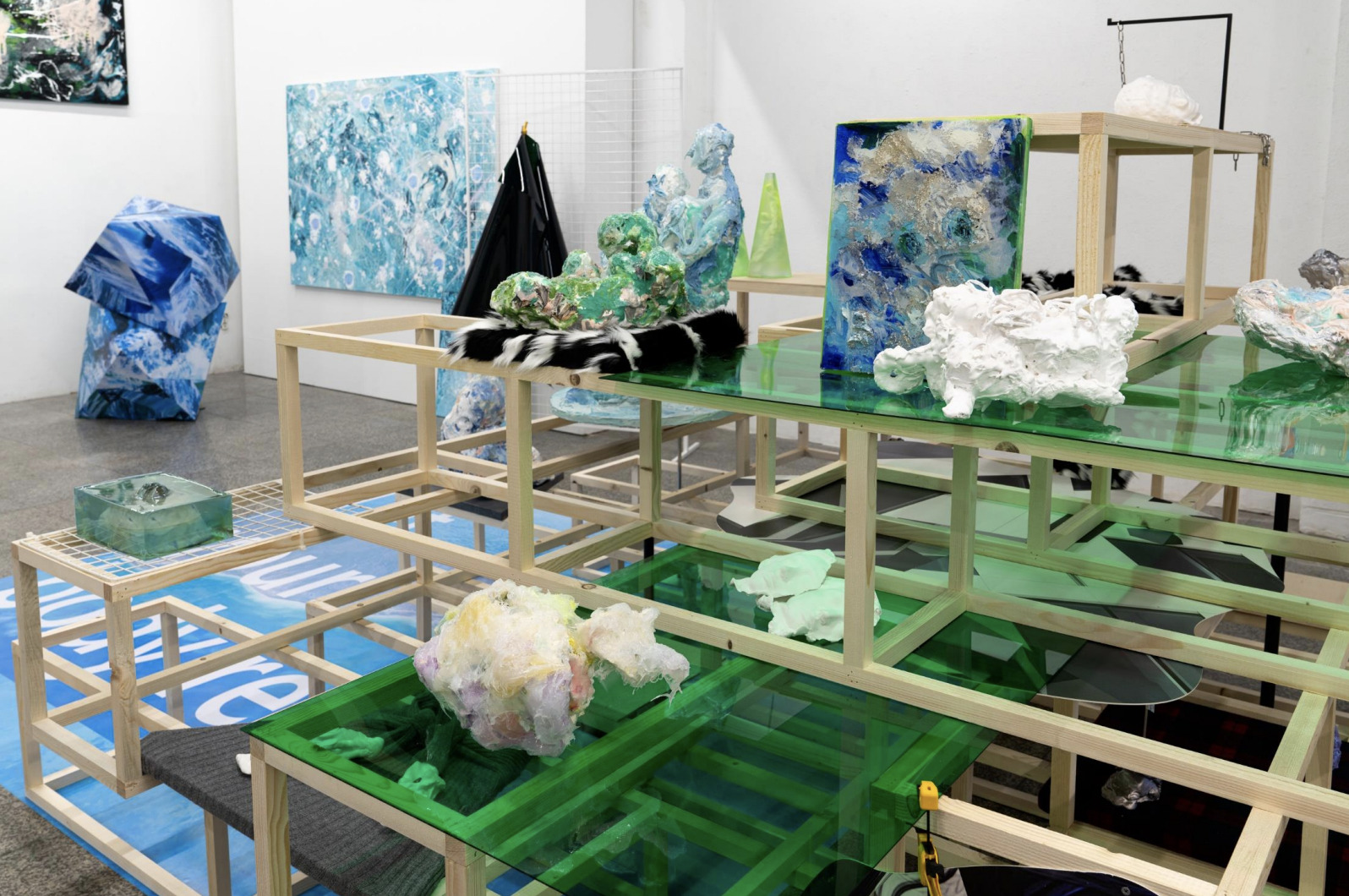
Installation view of 《Floating people》 (Post Territory Ujeongguk, 2021) ©Hur Yeonhwa

In 2021, when physical spaces were no longer functioning due to COVID-19, the only sustainable place for people was the online realm. Under the conditions of social distancing, humanity maintained its networks as a community by connecting online.
 
Hur Yeonhwa began to explore the modes of existence of a reorganized social system—one reconstructed through the relationship between the physical and non-physical worlds, the offline and the online—and the reconfigured sense of corporeality that emerged from it.
 
At this time, she became particularly interested in online communities formed within networked environments, especially the structures of group purchases or currency transactions among people who share similar tastes and purposes.


Hur Yeonhwa, Let your body relax, 2020, Mixed media, Dimensions variable, Installation view of 《Floating people》 (Post Territory Ujeongguk, 2021) ©Hur Yeonhwa

In a world where such systems circulate widely across social and economic spheres, the artist sought to confront the structural contradictions she herself inhabits, addressing them through visual sensibility and spatial arrangement.
 
Noting, for instance, the confusion and tension that arise from the fact that blockchain systems used in cybercrime and P2P systems used for file sharing operate in essentially the same way, she remarked that “within that paradoxical state—where values inevitably collide—I feel an even greater sense of floating than before.”


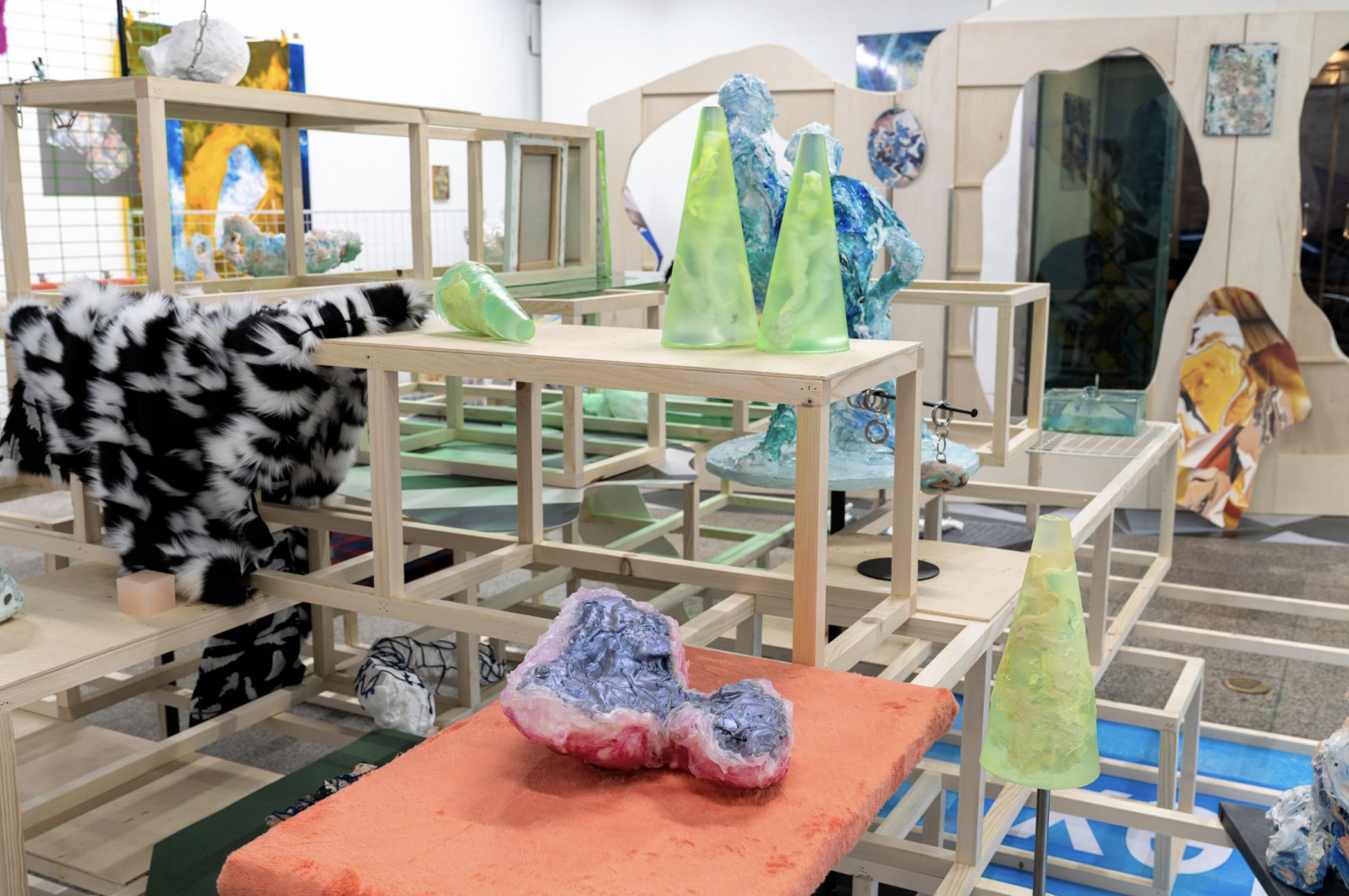
Installation view of 《Floating people》 (Post Territory Ujeongguk, 2021) ©Hur Yeonhwa

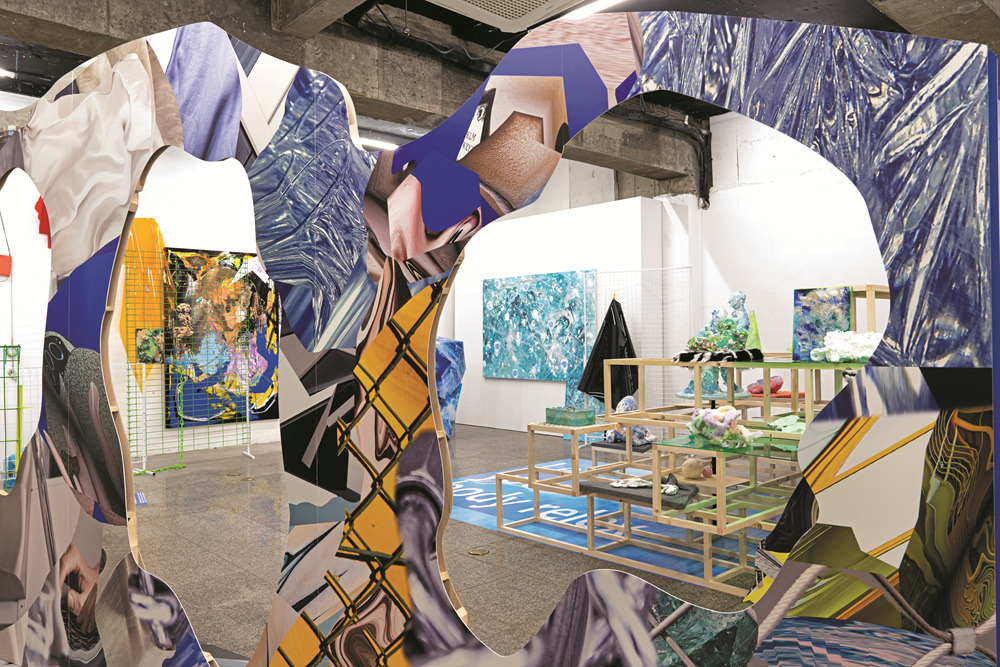
The paradoxical conditions embedded in the seemingly autonomous online environment were transferred into the structural framework of the exhibition space. The walls that shaped the main circulation route of the gallery were not solid supports but a combination of perforated walls and somewhat loose mesh-fence structures. These walls guided the viewer’s movement, yet they lacked a clear front or back, and the pathways remained open, creating a fluid structure reminiscent of an internet browser.
 
Upon entering the exhibition space, visitors encountered a wall with three holes, around which images—such as a subway, a glass cup, the sky, and a hand holding a mobile phone—were intermingled. Here, the holes were not simply left as voids or gaps; like the structure of blockchain, they existed in an inherently unstable state, becoming passages that connect fragments and lead to the next event.


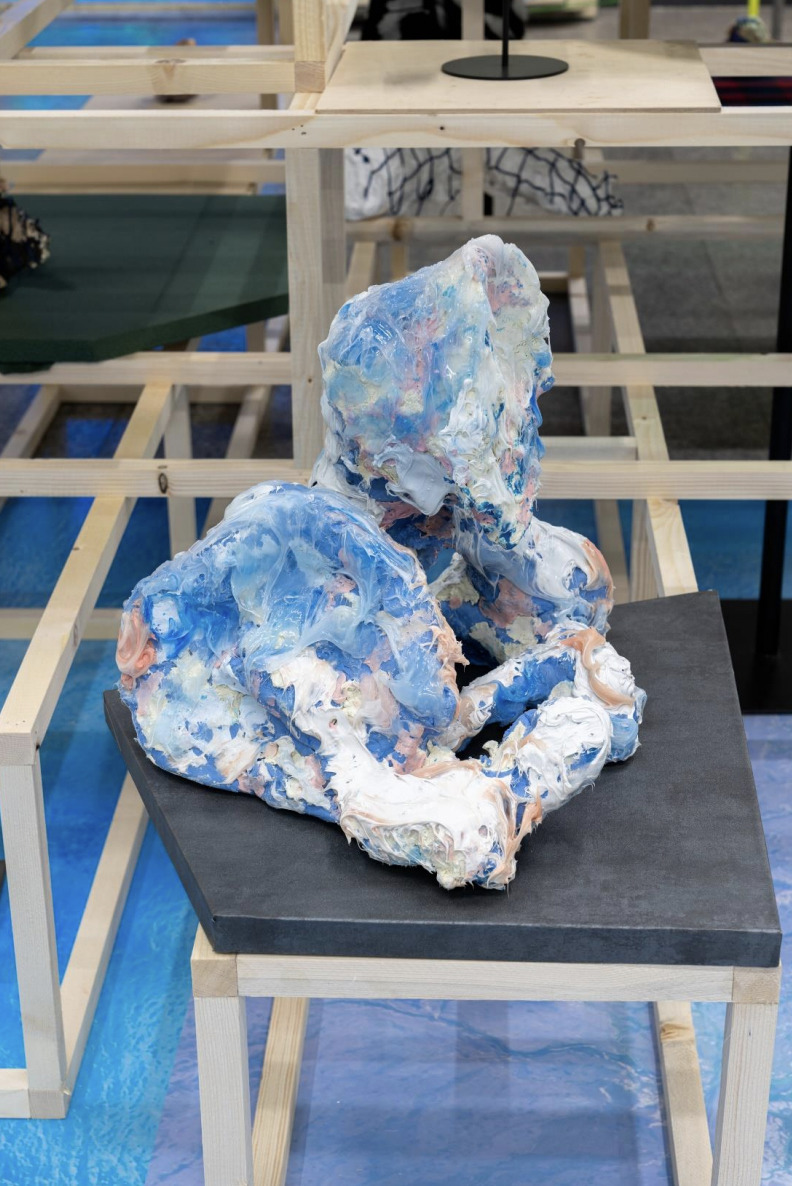
Hur Yeonhwa, Body, 2019, Plastic clay, cibatool, 40x48x40cm, Installation view of 《Floating people》 (Post Territory Ujeongguk, 2021) ©Hur Yeonhwa

Each work—despite appearing unrelated to the others—emerged without formal boundaries, taking the form of sculpture, painting, installation, and printed matter that contained fragments of the artist’s everyday images, thoughts, and events. For instance, the sculptures placed on wooden structures possessed an excessive corporeality, in contrast to the smooth surfaces of the mapped images. These partially rendered bodily forms were composed through combinations of various materials, their shapes distorted.
 
Her sculptural works, in which folding and unfolding and a range of textures intersect, reinterpret materiality and immateriality, the planar and the three-dimensional, the present and the past, the classical and the contemporary through their physical qualities. The folded geometric sculptures installed on one side of the gallery were produced by converting mapped data into printable formats, materializing sculpture as a way of unfolding the compressed intervals of time.
 
In this way, the artist sought to evoke a sense of floating in daily life by summoning partial bodies and objects into sculptural form within fluid exchanges.


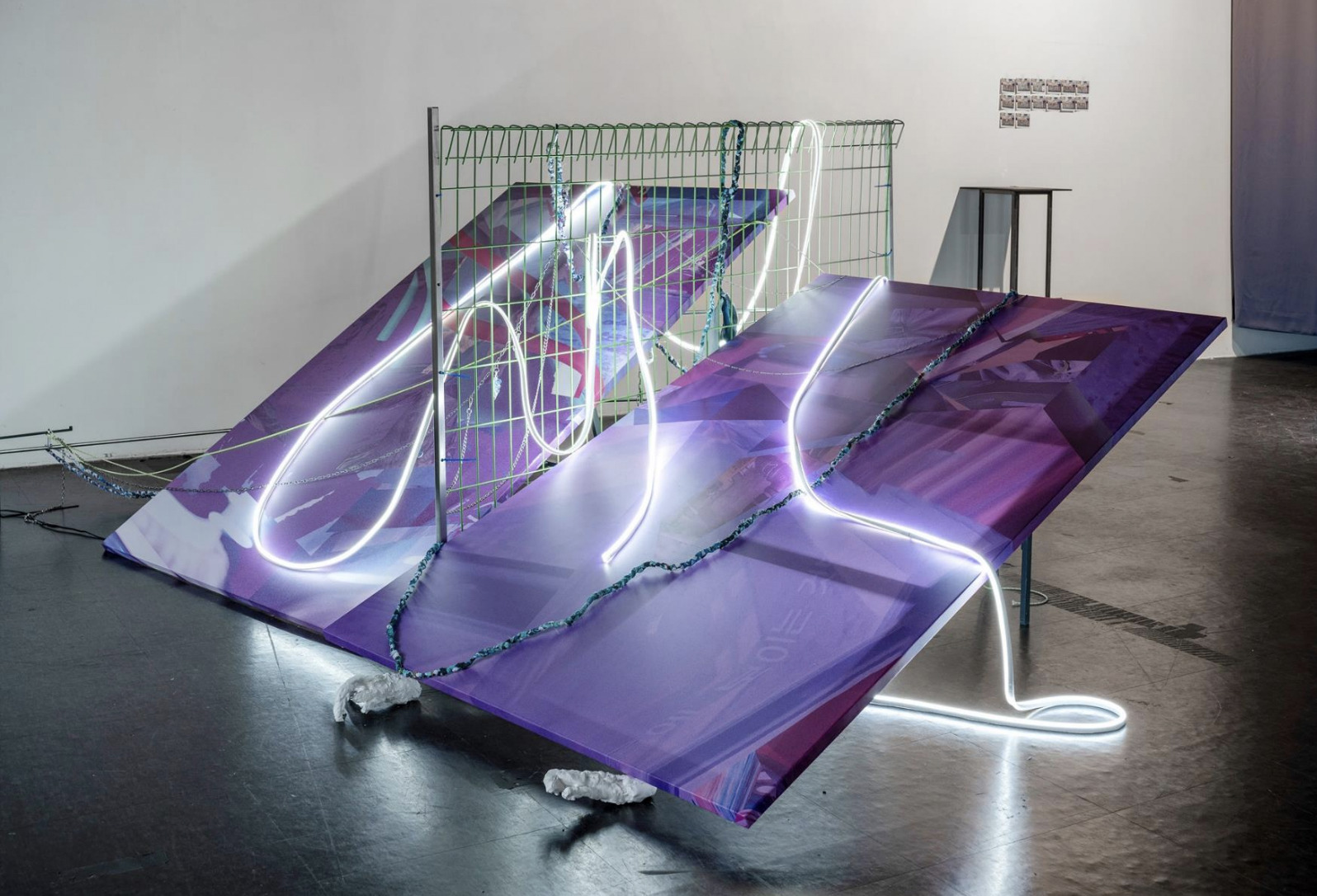
Hur Yeonhwa, Sailing, 2022, Mesh fence, digital print on fabric, lighting, rope, plaster, epoxy, glass, stainless steel, Dimensions variable ©Hur Yeonhwa

In this way, Hur Yeonhwa has maintained an interest in presenting large-scale or multilayered time–spaces in a compressed form, traversing between the planar and the three-dimensional, between data and materiality, as she searches for ways to contain an infinite spatial concept within a finite interface.
 
Focusing on the characteristics of data-spaces—domains that can be configured without boundaries or partitions—she has applied these qualities to works such as polyhedrons or folded planes that contain multiple, overlapping spatial images. This materialization of fluid sensation connects directly to her longstanding engagement, since the early stages of her practice, with water—an unbounded substance that flows without fixed borders.


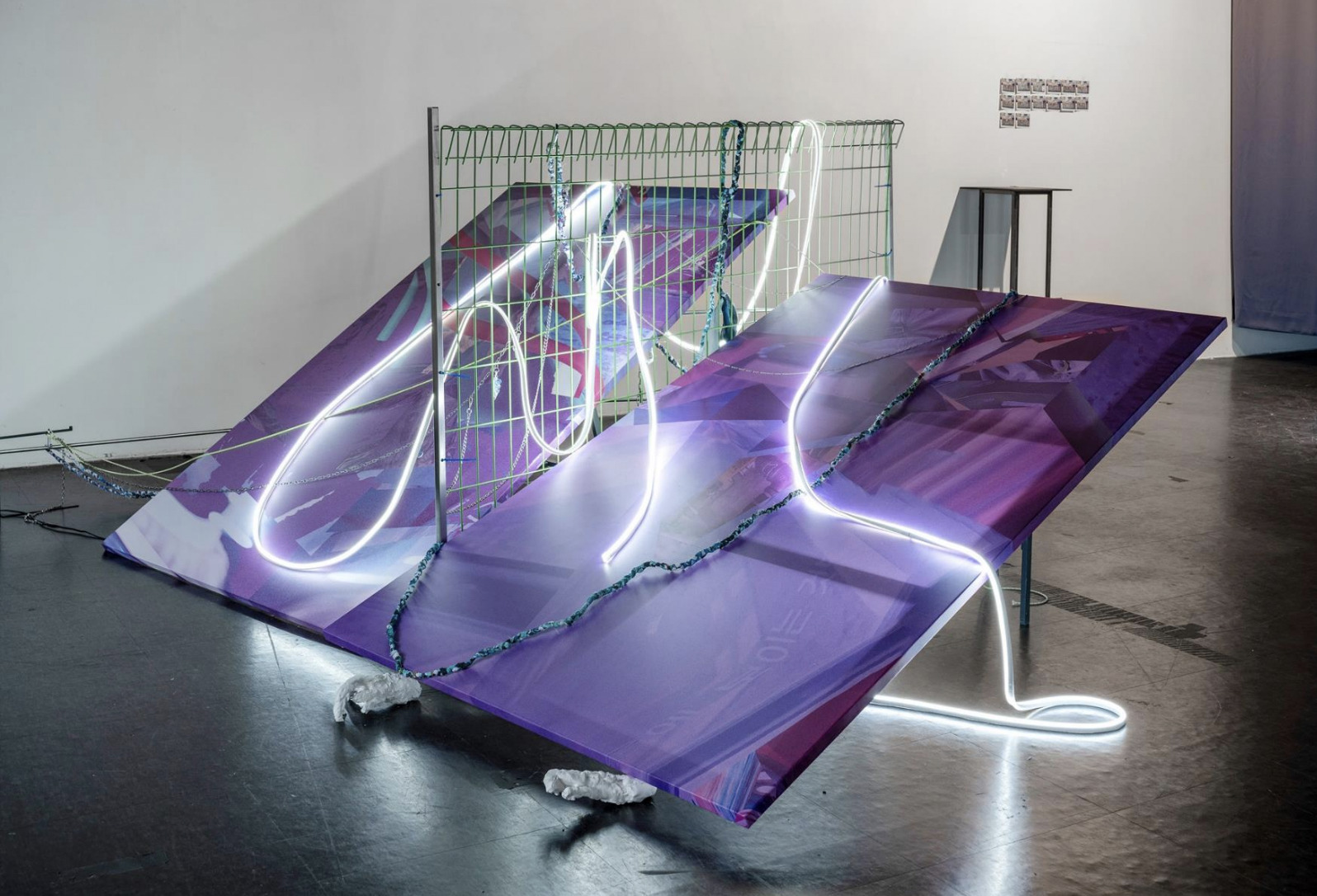
Hur Yeonhwa, A Day When I Was Struck by Lightning, 2022, PET paper, digital printing on fabric, lighting, rope, gypsum, epoxy, silicon, glass, stainless steel, Dimensions variable, Installation view of 《inter-face》 (Perigee Gallery, 2022) ©Hur Yeonhwa

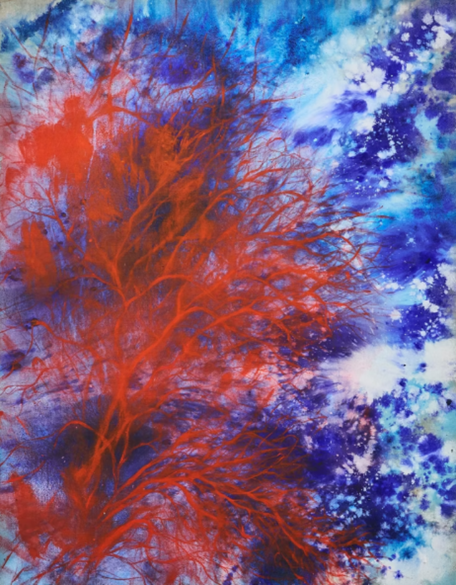
This series of works is closely tied to a sensory awareness of “connection.” The lightning that appears in her 2022 work A Day When I Was Struck by Lightning can also be understood as a metaphor for connection. The piece originates from a day when the artist suddenly recognized the resemblance between the branching forms of lightning, tree limbs, and capillaries—an experience that made her acutely aware of the interconnectedness of all things.


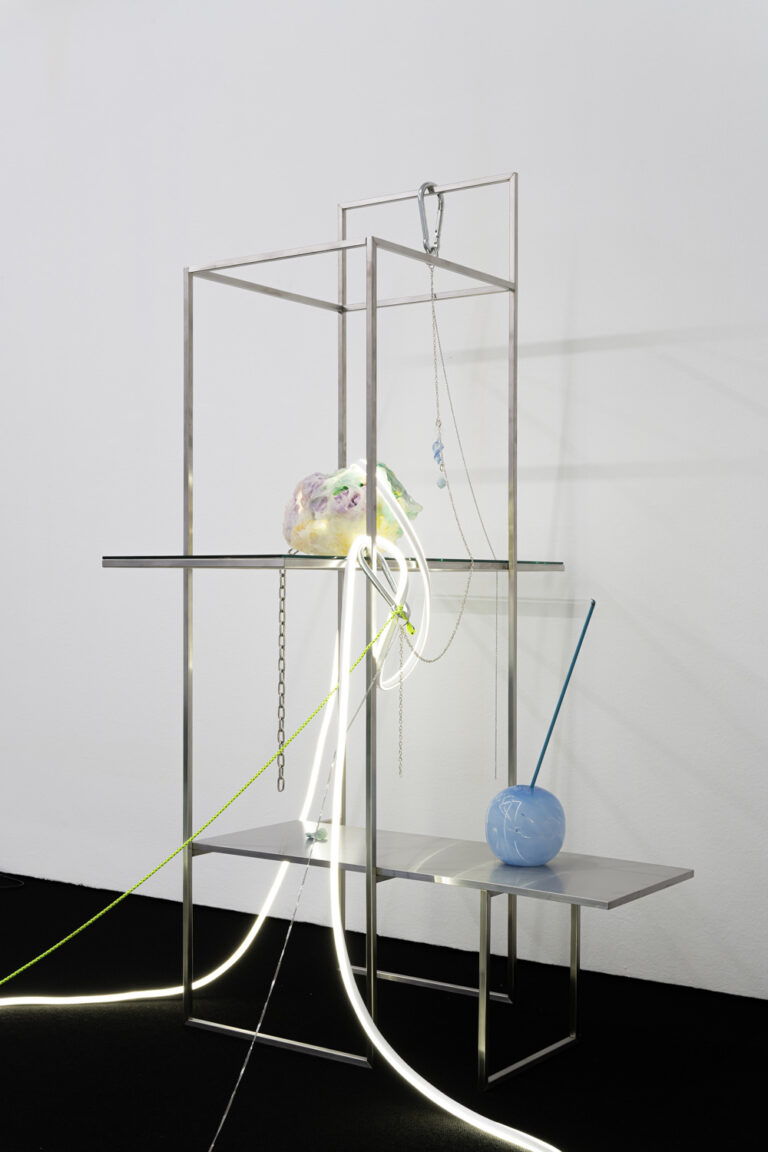
Hur Yeonhwa, Blur face, 2021, Silicone, resin, lighting, glass, stainless steel, carabiner, rope, 150×80×85cm, Installation view of 《inter-face》 (Perigee Gallery, 2022) ©Hur Yeonhwa

This led to an attempt to bring together transparent objects, paintings of coral, horn sculptures, and other works produced at different times into a single spatial composition. In these multimedia installations, the artist is not merely addressing the idea of boundlessness; rather, as suggested by the motif of lightning, she foregrounds the gaps and uncanny sensations that arise when elements from different times and spaces—previously thought to be incompatible—are brought into connection.


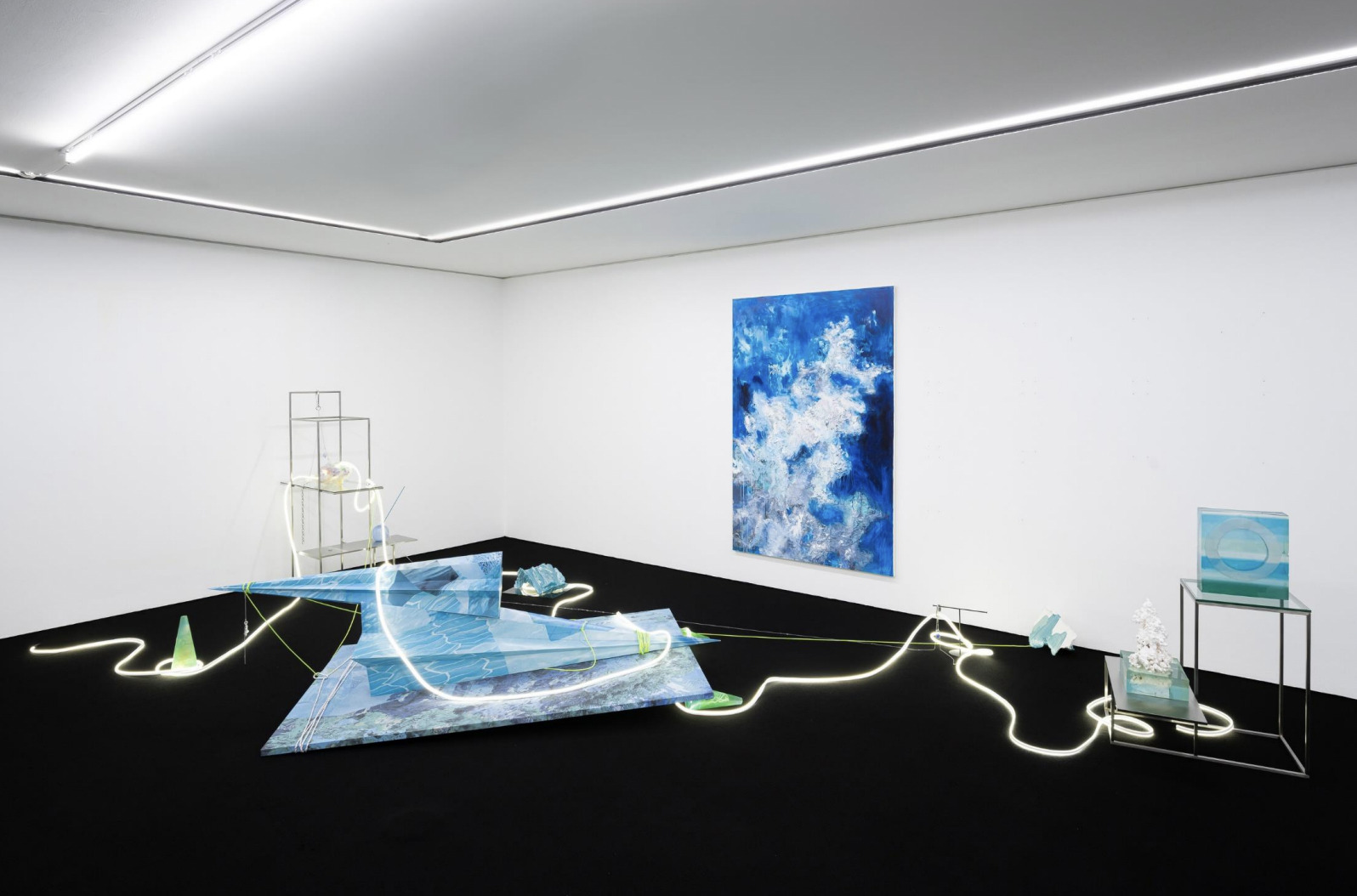
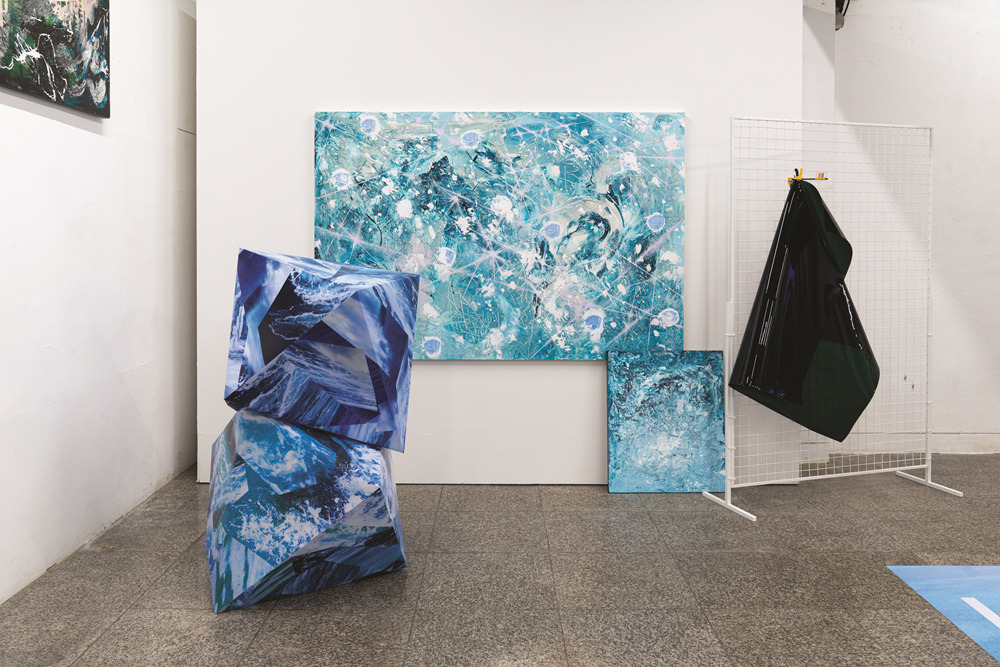
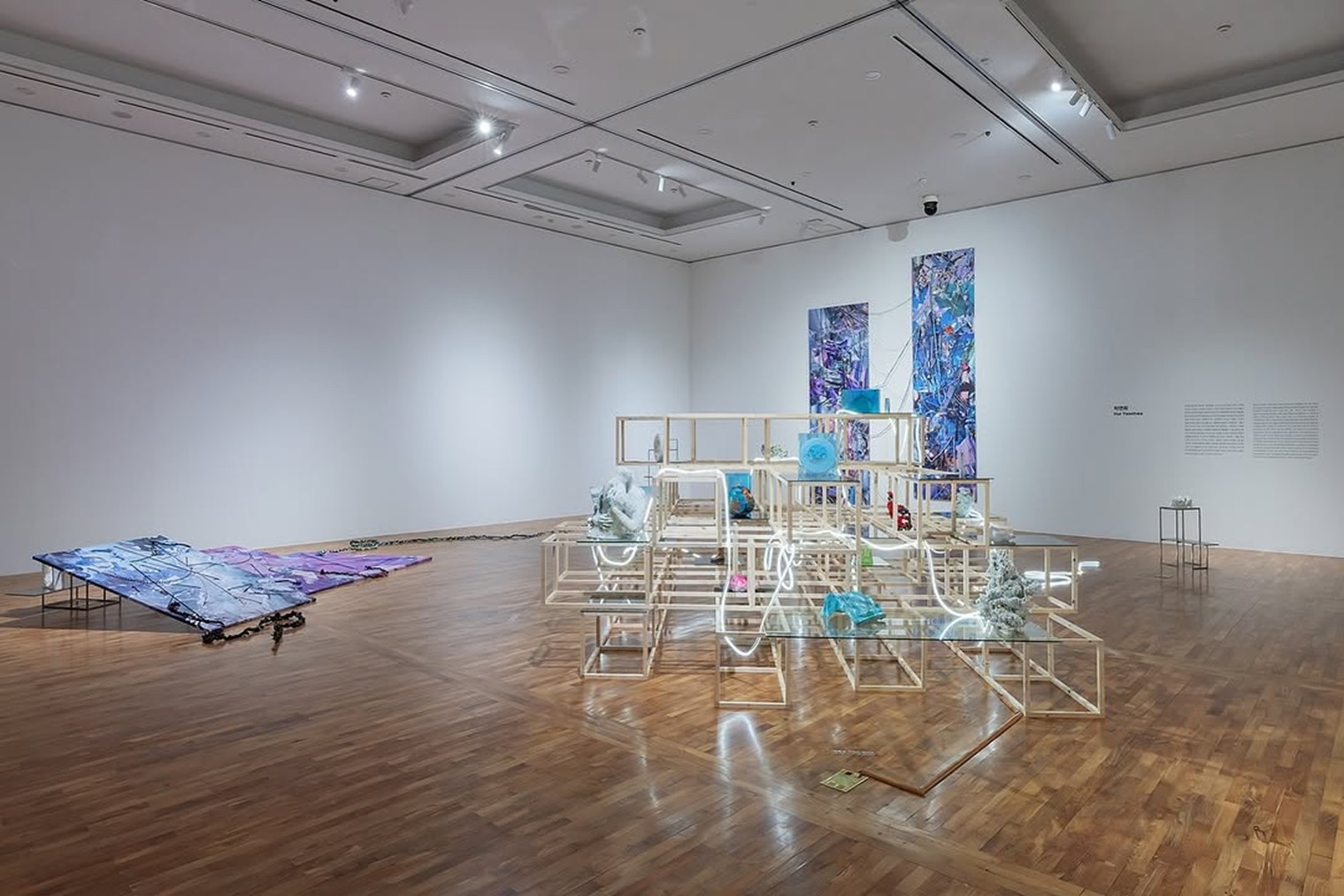
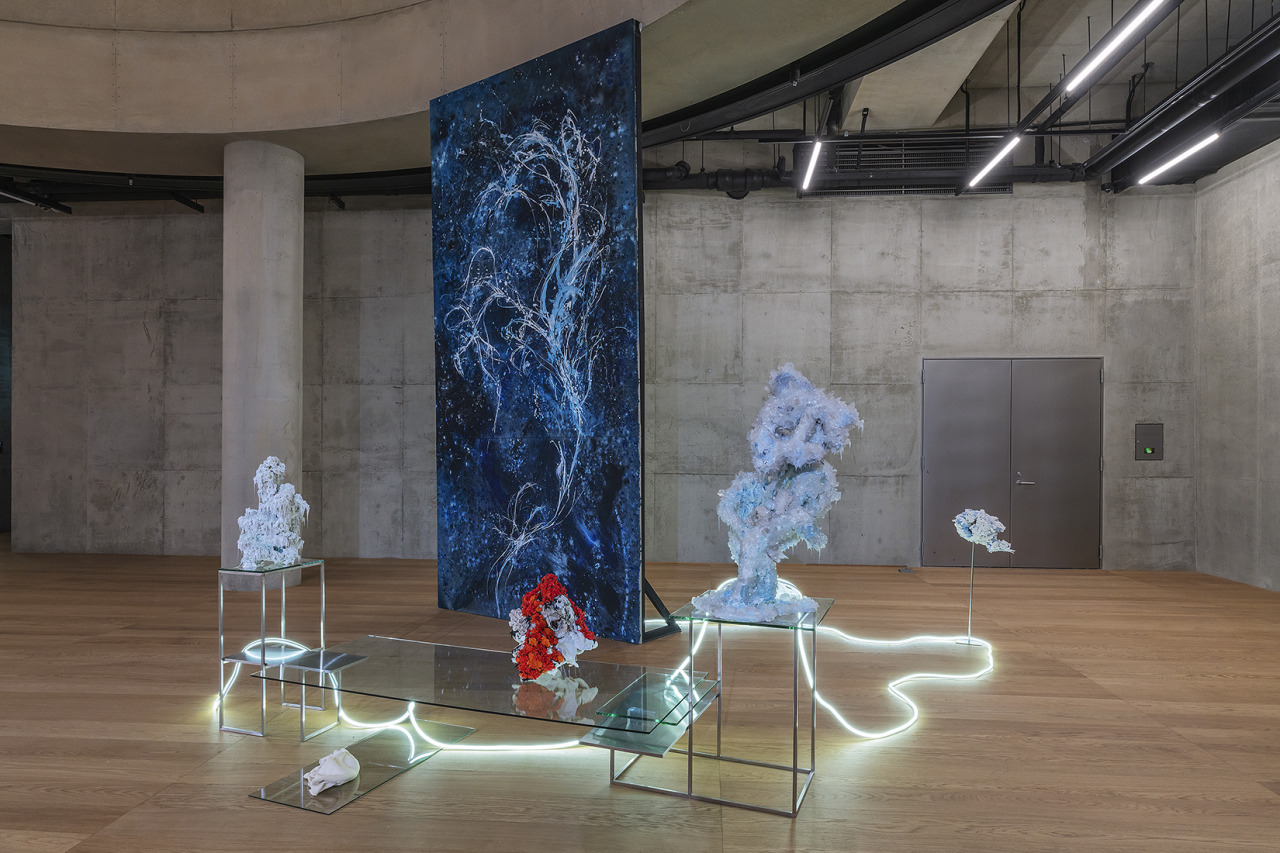
Hur Yeonhwa, Cycle, 2023, Acrylic on canvas, crystal, coral, terracotta, resin, plaster, silicone, plastic clay, sand, minerals, wire, glass, lighting, Dimensions variable, Installation view of 《The 23rd SONGEUN Art Award Exhibition》 (SONGEUN, 2023) ©Hur Yeonhwa

The attempt to draw past works into a new narrative and connect them is grounded in the artist’s ongoing concern with how each piece can find its own function and enter a state of circulation. For example, Cycle, presented in 《The 23rd SONGEUN Art Award Exhibition》 (2023), was created by reusing the sculptural framework from her 2021 solo exhibition 《Floating people》 as the structural base for a new work.
 
Imagining this framework being rebuilt through the addition of natural elements such as crystals, minerals, and coral, alongside industrial materials, the artist sought to create a situation in which the work could continue to shift, transform, and circulate. This notion was inspired by coral reefs functioning as skeletal structures—or even lungs—within marine ecosystems, growing outward, and by the sight of coral grafted onto artificial structures introduced for environmental restoration.


Hur Yeonhwa, Cycle, 2023, Acrylic on canvas, crystal, coral, terracotta, resin, plaster, silicone, plastic clay, sand, minerals, wire, glass, lighting, Dimensions variable, Installation view of 《The 23rd SONGEUN Art Award Exhibition》 (SONGEUN, 2023) ©Hur Yeonhwa

The resulting installation focuses on the movement of water and addresses the beings and entities that become deposited within a rapidly changing and fluid environment. By using lightning—one element within the larger cycle of water—as a visual device, and by revealing the ways coral structures itself within the marine ecosystem, the work expresses dynamic situations in which existing forms are altered, reconfigured, and regenerated. These regenerated forms then re-enter the whole as part of a continuous cycle, mediated and accumulated through the agents that introduce new variables into natural phenomena.
 
Through this, lightning and coral—both sharing a branching morphology that extends outward from a central core—offer points of connection and evoke the image of a single, living organism.


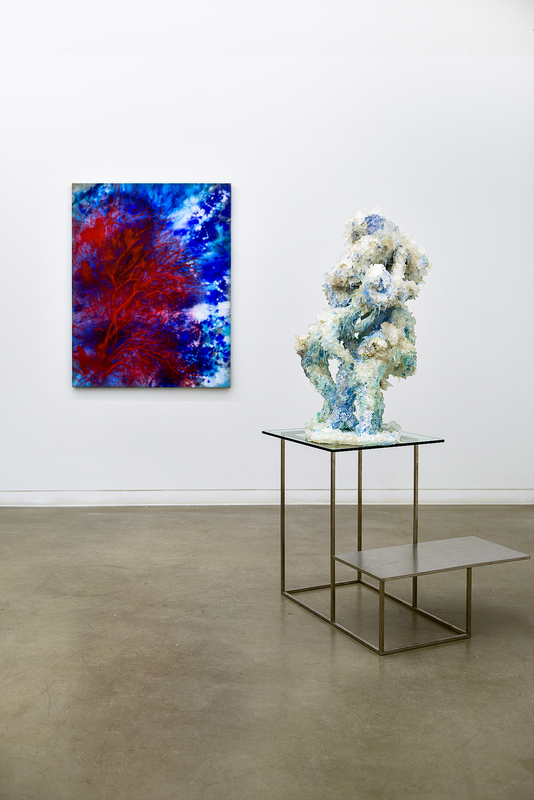
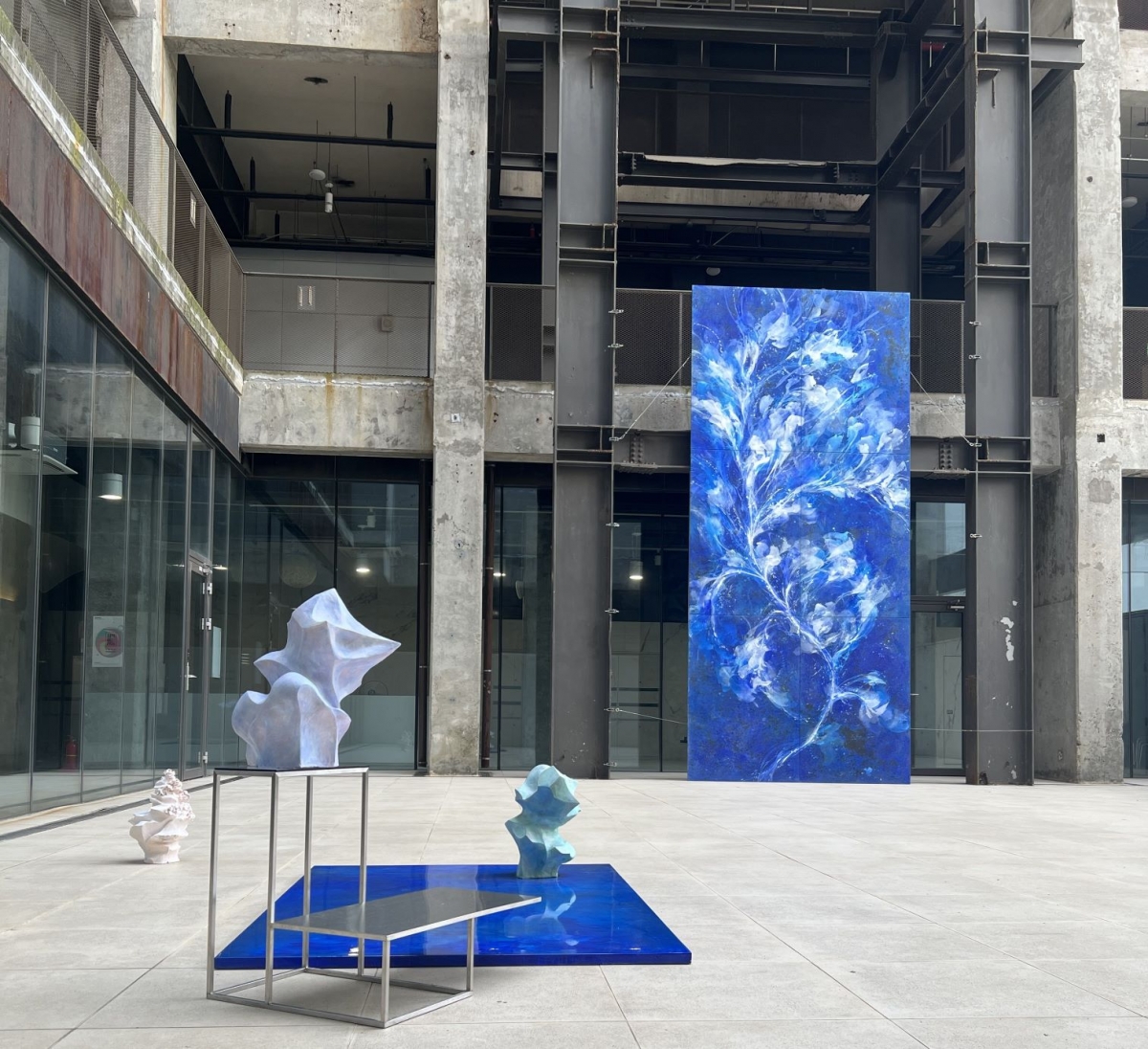
Installation view of 《Blue Lung》 (GalleryMEME, 2024) ©GalleryMEME

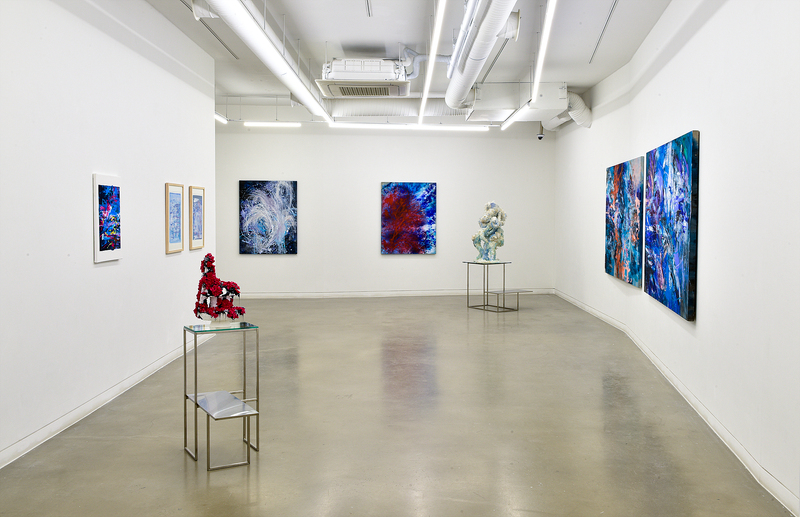
In her 2023 solo exhibition 《Blue Lung》 at GalleryMEME, the artist again explored variation and sedimentation through the landscape of coral. Much like a lung—an organ that sustains the dynamic transformation of living beings through cycles of inhaling oxygen and exhaling carbon dioxide—the exhibition 《Blue Lung》 was composed of works situated within processes of circulation and change.
 
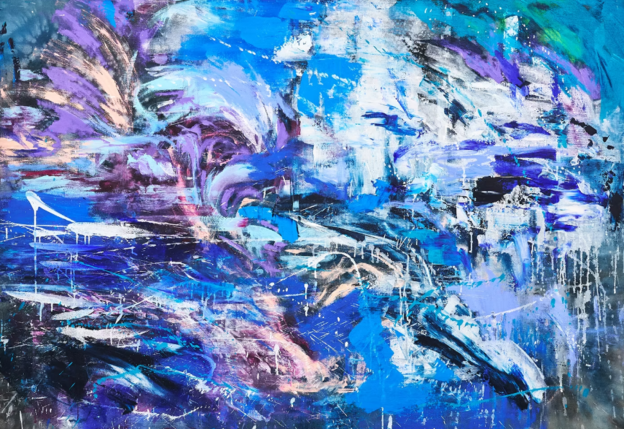
The works in the exhibition brought back earlier body sculptures and paintings with fluid backgrounds. Sculptural forms such as Viewport (2017), Floating people (2022), and other bodily fragments served as the foundation, upon which natural elements like crystals, minerals, and coral, as well as industrial materials, accumulated and restructured themselves. Meanwhile, the paintings—once consisting solely of watery textures—developed over time as multiple layers slowly built up.


Installation view of 《Blue Lung》 (GalleryMEME, 2024) ©GalleryMEME

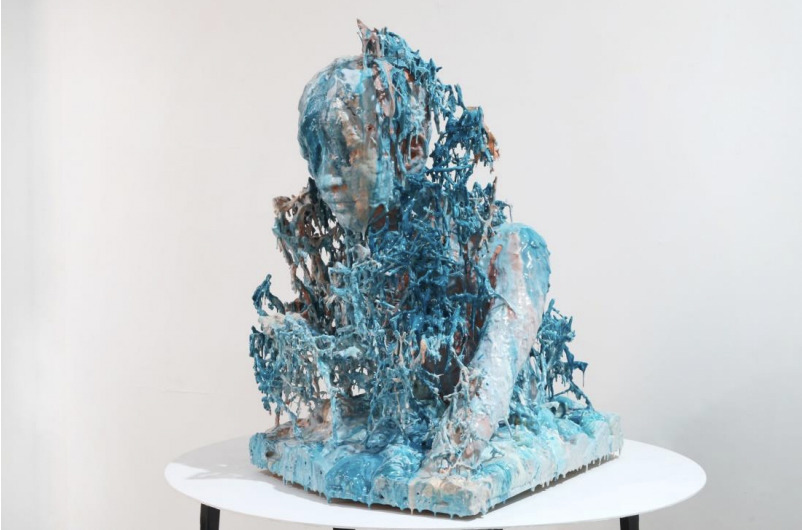
In this way, Hur Yeonhwa has visualized her interest in fluid materials and bodies—substances that behave like water—within environments where physical limitations are dissolved, rendering them in both two- and three-dimensional forms. In her practice, works that once occupied specific positions within a space are reassigned new roles and functions. Variables generated through irregular events become new forms of sediment, which in turn operate within the system and hold the potential for further transformation.
 
Free from the constraints of any one medium, her works embody multilayered sensory dimensions that invite viewers to reflect on the ever-shifting relationships embedded in everyday life, leading them to consider sustainability in artistic practice and materiality.

 “A state with the potential for change; a sense of space without boundaries or partitions; a position that cannot be definitively fixed; something fluid—always ready to collapse or merge.”    (Hur Yeonhwa, interview with BE(ATTITUDE))


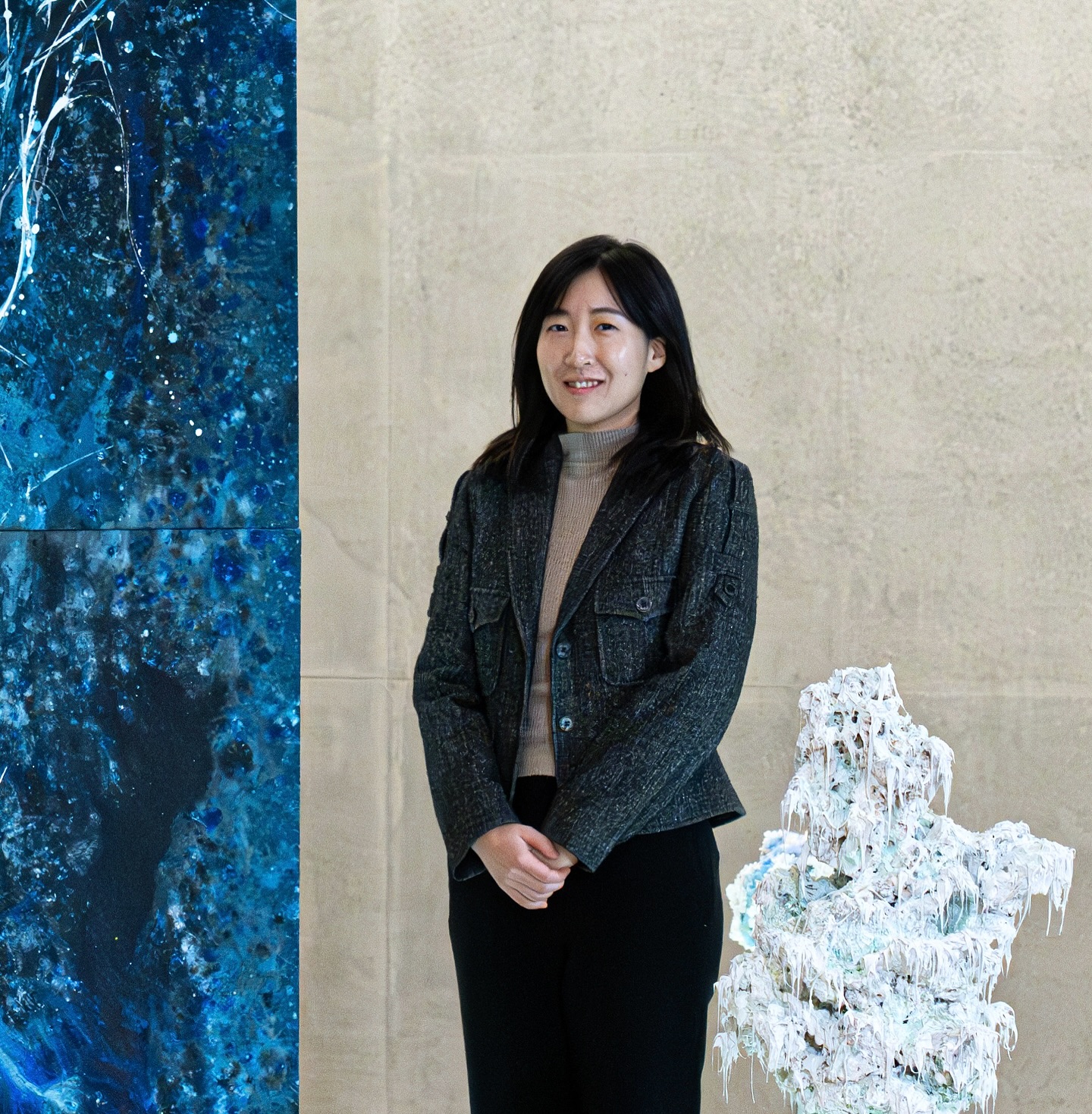
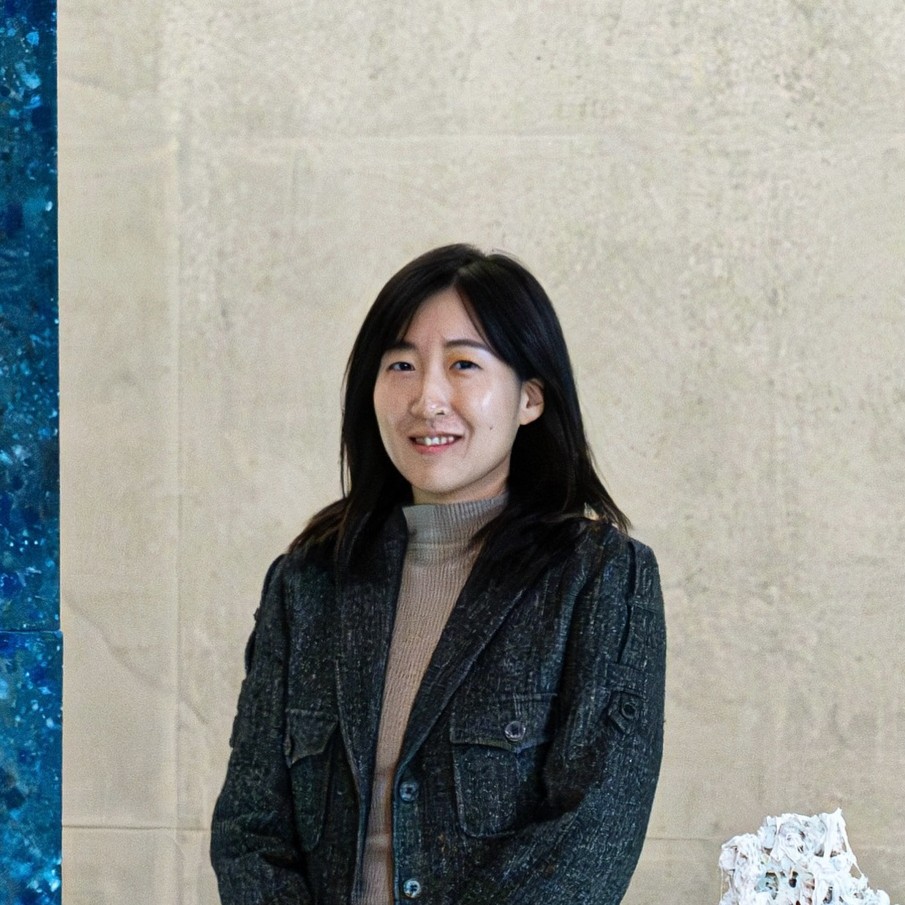
Artist Hur Yeonhwa ©Hur Yeonhwa. Photo: Youngho Jeong.

Hur Yeonhwa graduated from the Department of Sculpture at Hongik University. Her major solo exhibitions include 《The Skin of Waves》 (Bucheon Art Bunker B39, Bucheon, 2025), 《Blue Lung》 (GalleryMEME, Seoul, 2024), 《Swimming Time》 (Gallery Minjeong, Seoul, 2022), 《Floating people》 (Post Territory Ujeongguk, Seoul, 2021), and 《Summer Squeeze》 (Exhibition Space, Seoul, 2020).
 
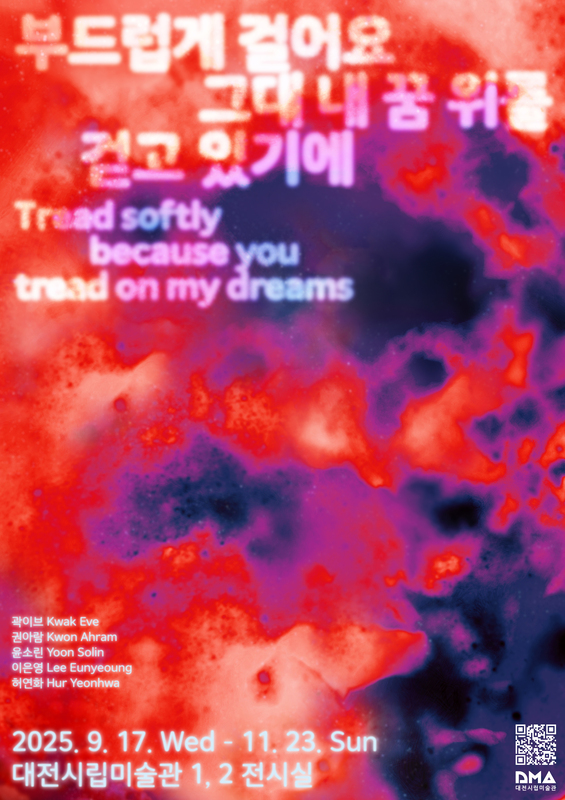
She has also participated in numerous group exhibitions, including 《Tread softly because you tread on my dreams》 (Daejeon Museum of Art, Daejeon, 2025), 《Ecocycle》 (KORNFELD Galerie Berlin, 68projects, Berlin, 2025), 《The 23rd SONGEUN Art Award Exhibition》 (SONGEUN, Seoul, 2023), 《The Other Face of Material》 (Seojeong Art, Seoul, 2023), 《inter-face》 (Perigee Gallery, Seoul, 2022), and 《No Space, Just a Place. Eterotopia》 (Daelim Museum, Seoul, 2020), among others.
 
Hur Yeonhwa’s works are held in the collections of the Yangpyeong Art Museum and the Museum Department of Seoul City Hall.
References