Greem
Kim’s practice consistently begins with a sensory inquiry that reconsiders the
relationship between the human and the non-human. Even in early works such
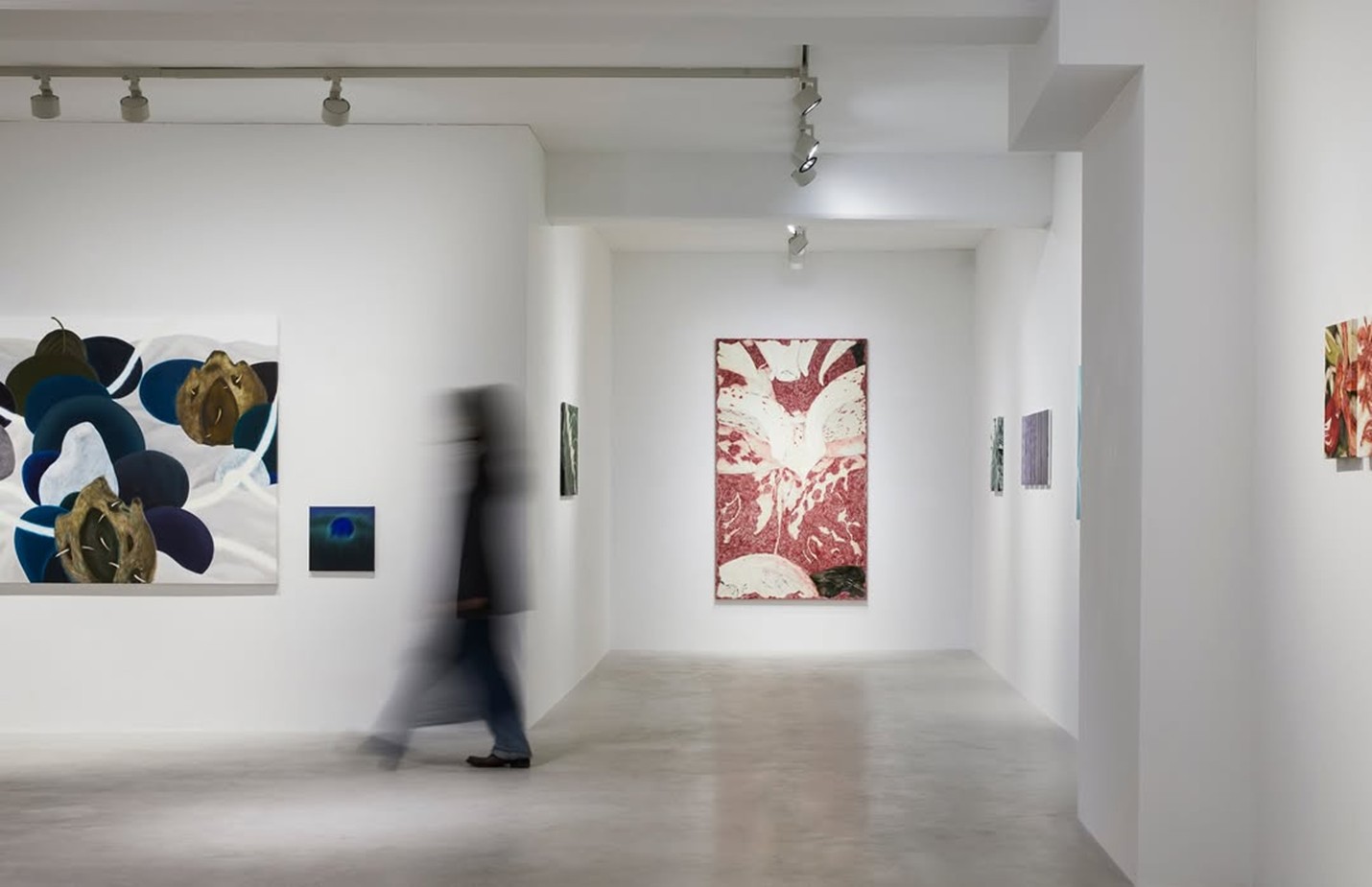
as Lake and Pebbles Sitting on a Rock(2018), where she
reconstructed scenes observed in specific natural locations, she already
approached nature not as a passive backdrop but as an entity equal to the human
subject.
In the
two-person exhibition 《Visible and
Invisible》(Gallery Playlist, 2023), her focus expanded
further as she intertwined the internal sensations of organic life with human
perception, transforming landscape into a field of sensory relations rather
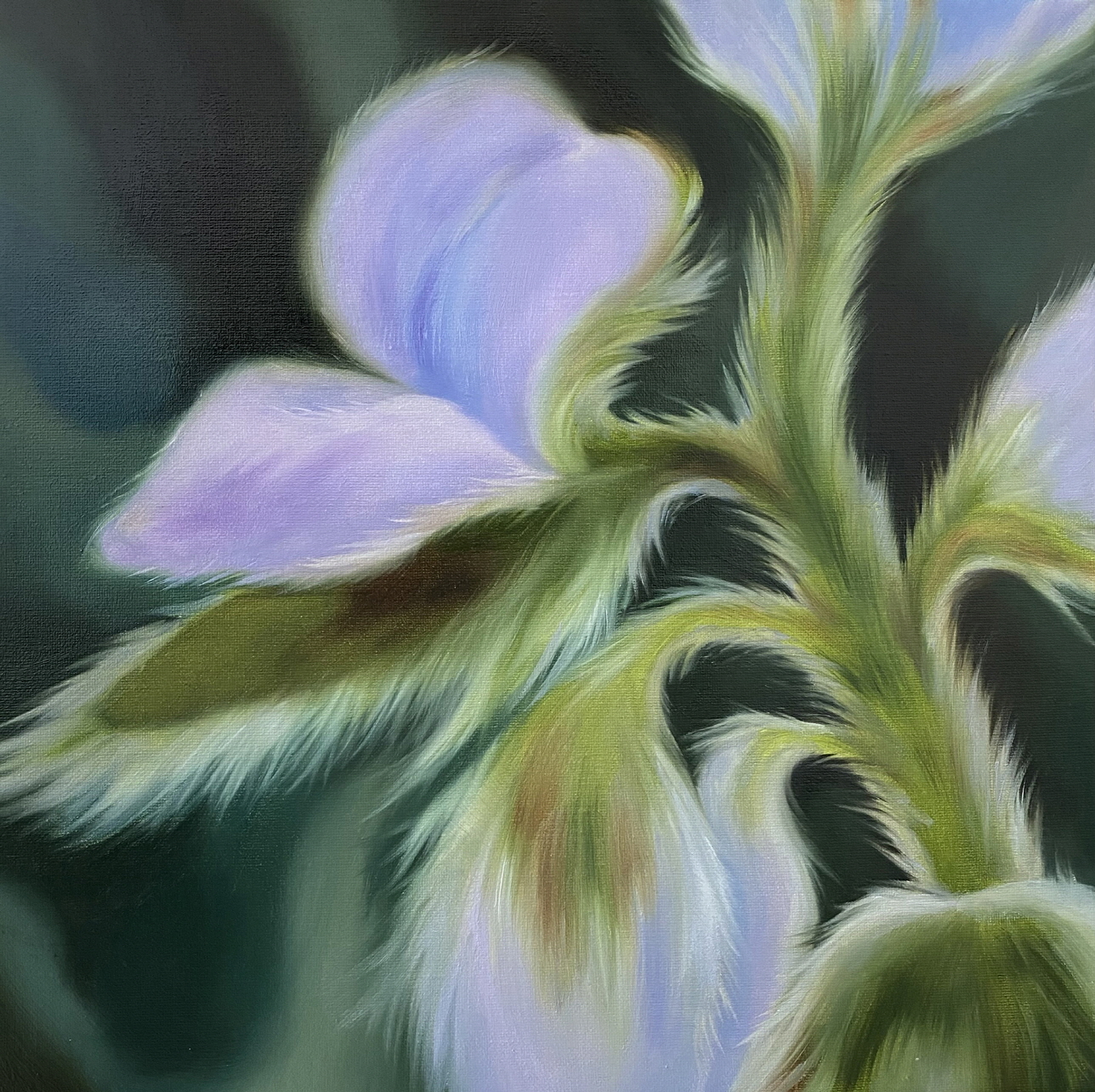
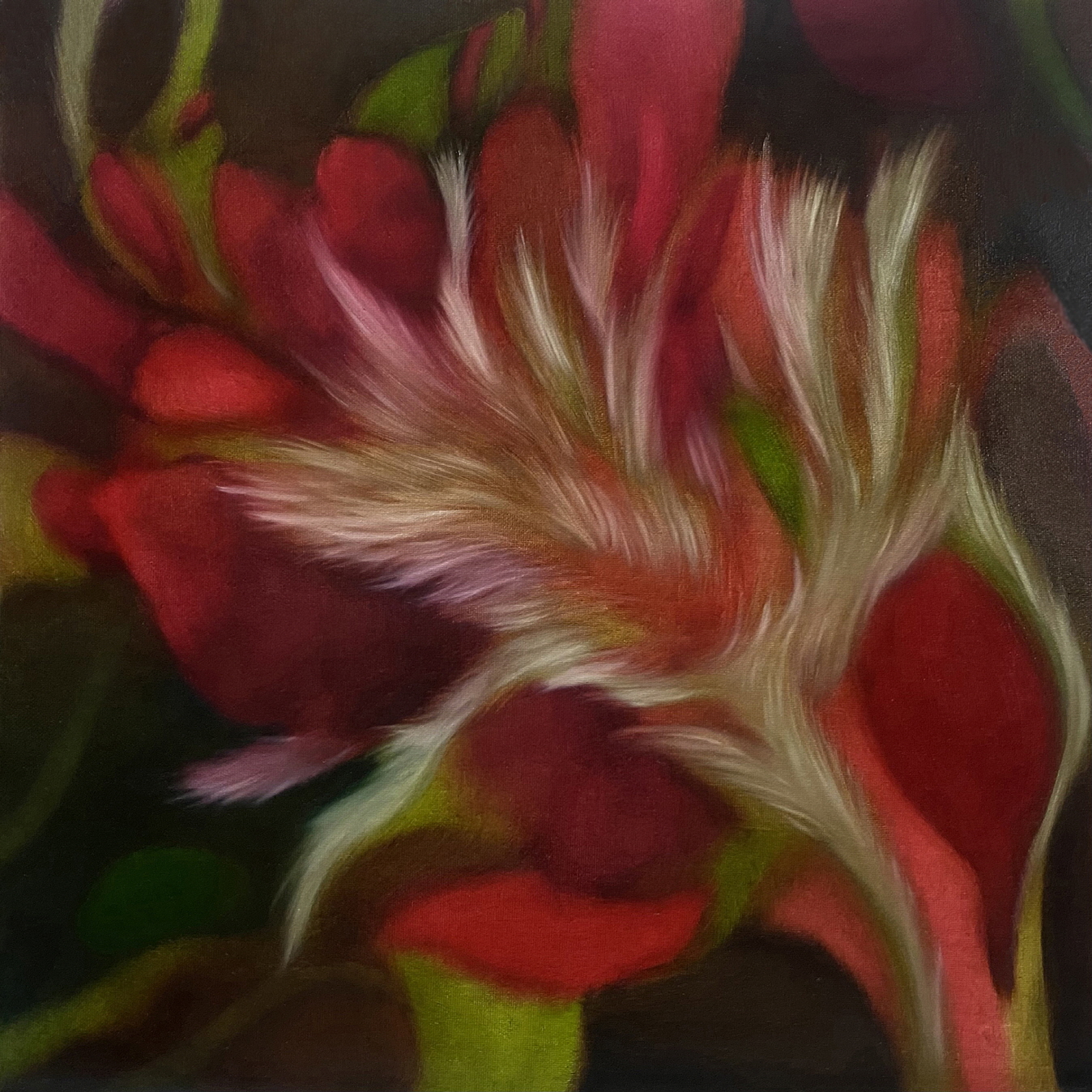
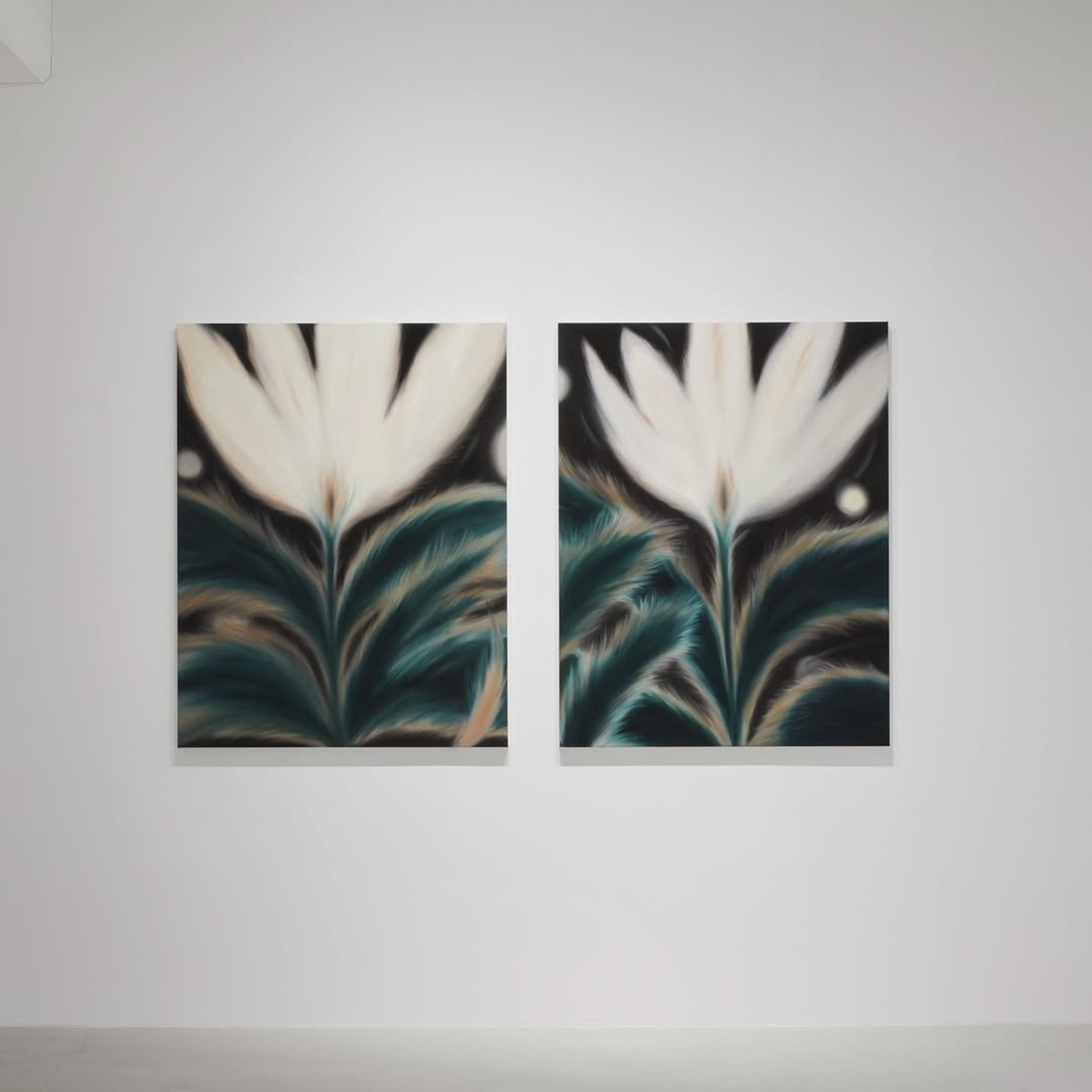
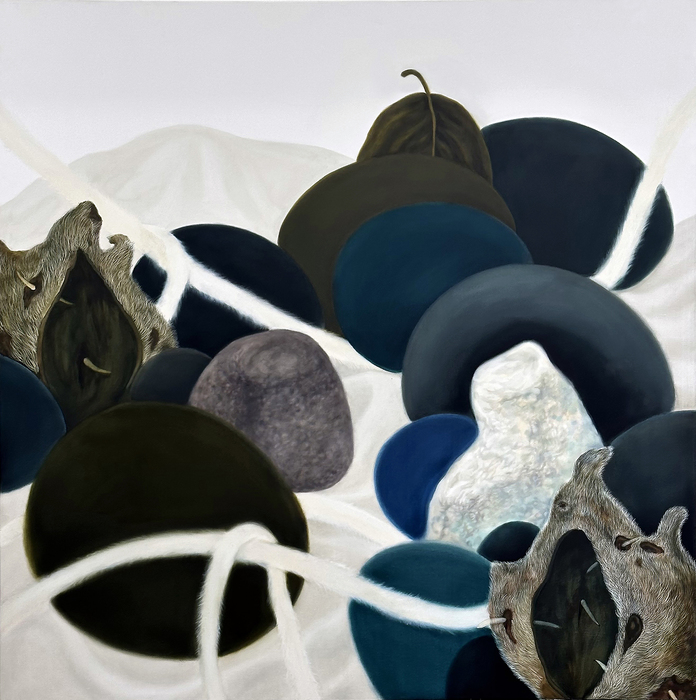
than a purely visual motif. Kim understands the survival strategies she
encounters in nature—especially protective structures such as “fur,”
“coatings,” or “outer shells”—as reflections of human conditions and ways of
living.
This line
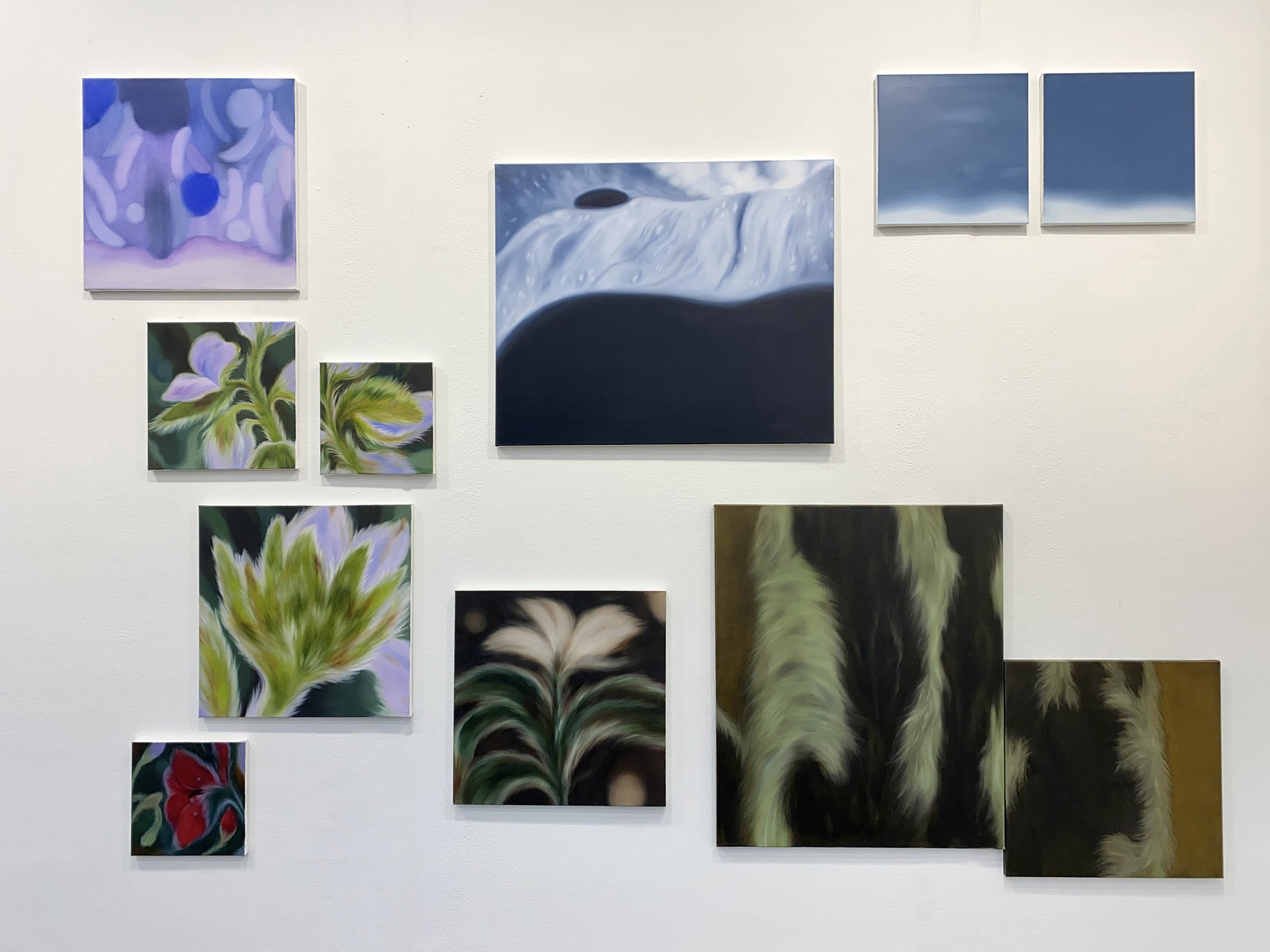
of inquiry became more formally articulated in her first solo exhibition, 《RHYTHMOSCAPE》(Artspace SEO:RO, 2022). Based
on her experiences traveling through high-altitude regions of South America,
she translated bodily sensations of tension and release—generated by drastic
changes in altitude and atmospheric density—into a pictorial language. In this
context, nature is not something to be merely observed but a world perceived
through the body. For Kim, landscape exists not outside the self but as an
ontological experience that permeates and imprints itself upon the senses. Following
this exhibition, her conceptual focus shifted from the abstract notion of
“coexistence” to a sharper understanding of nature and humanity as mirrors that
reveal each other’s modes of existence.
This line
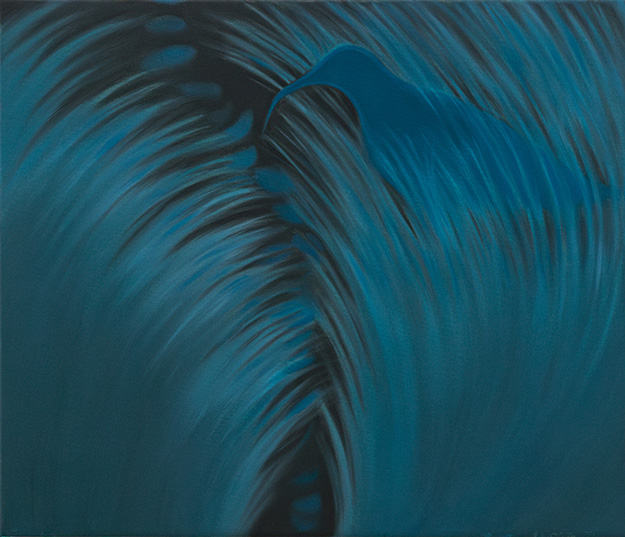
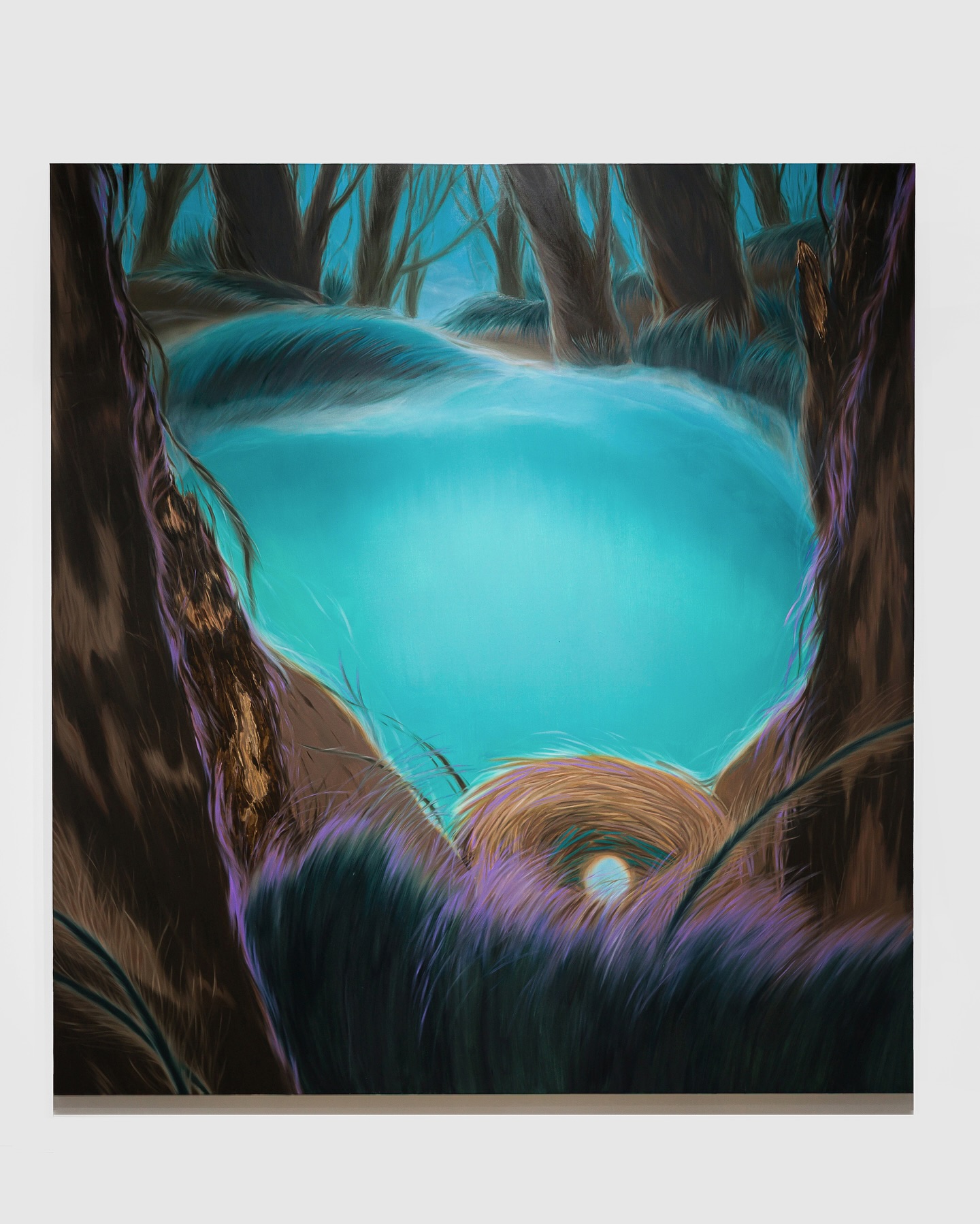
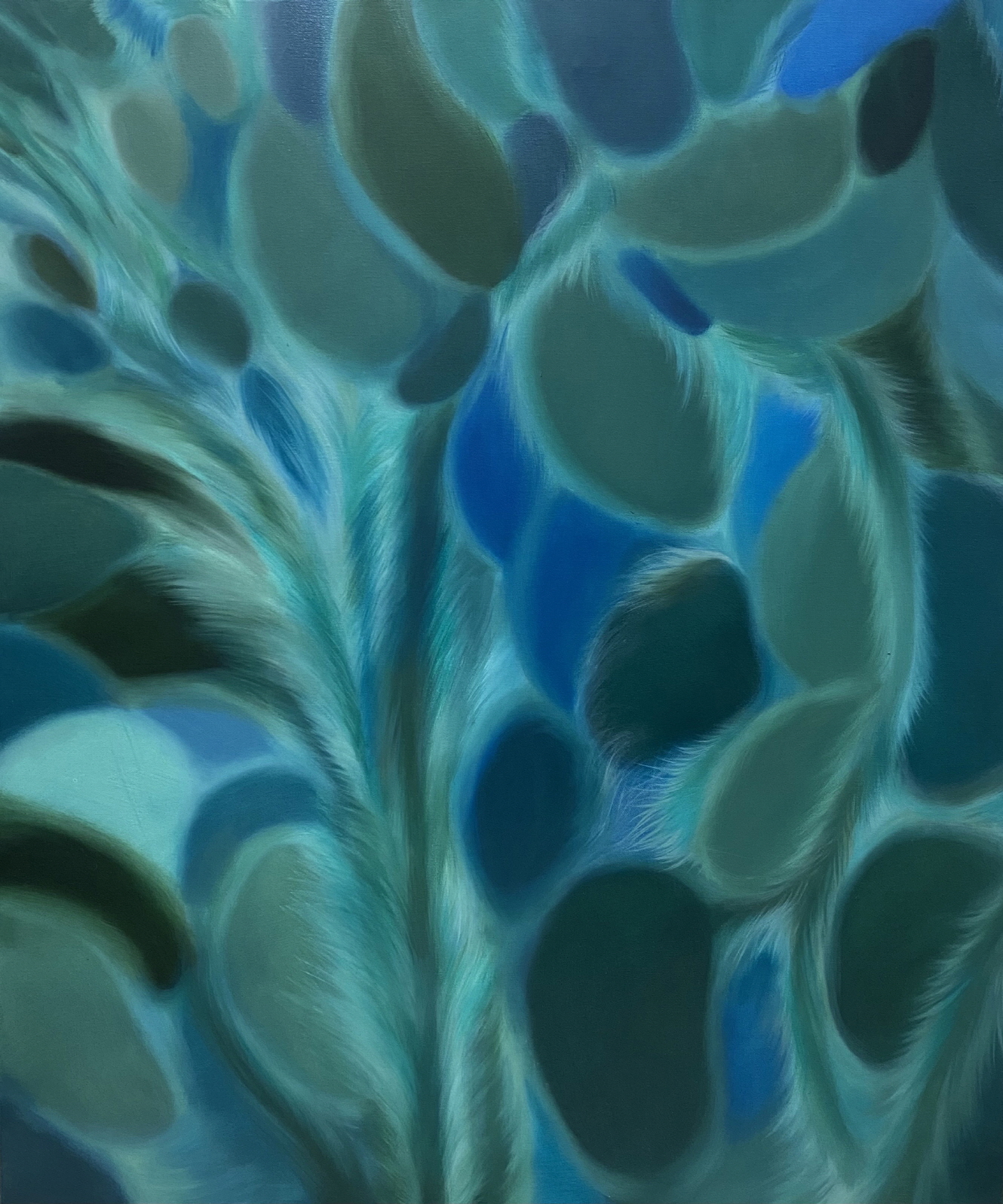
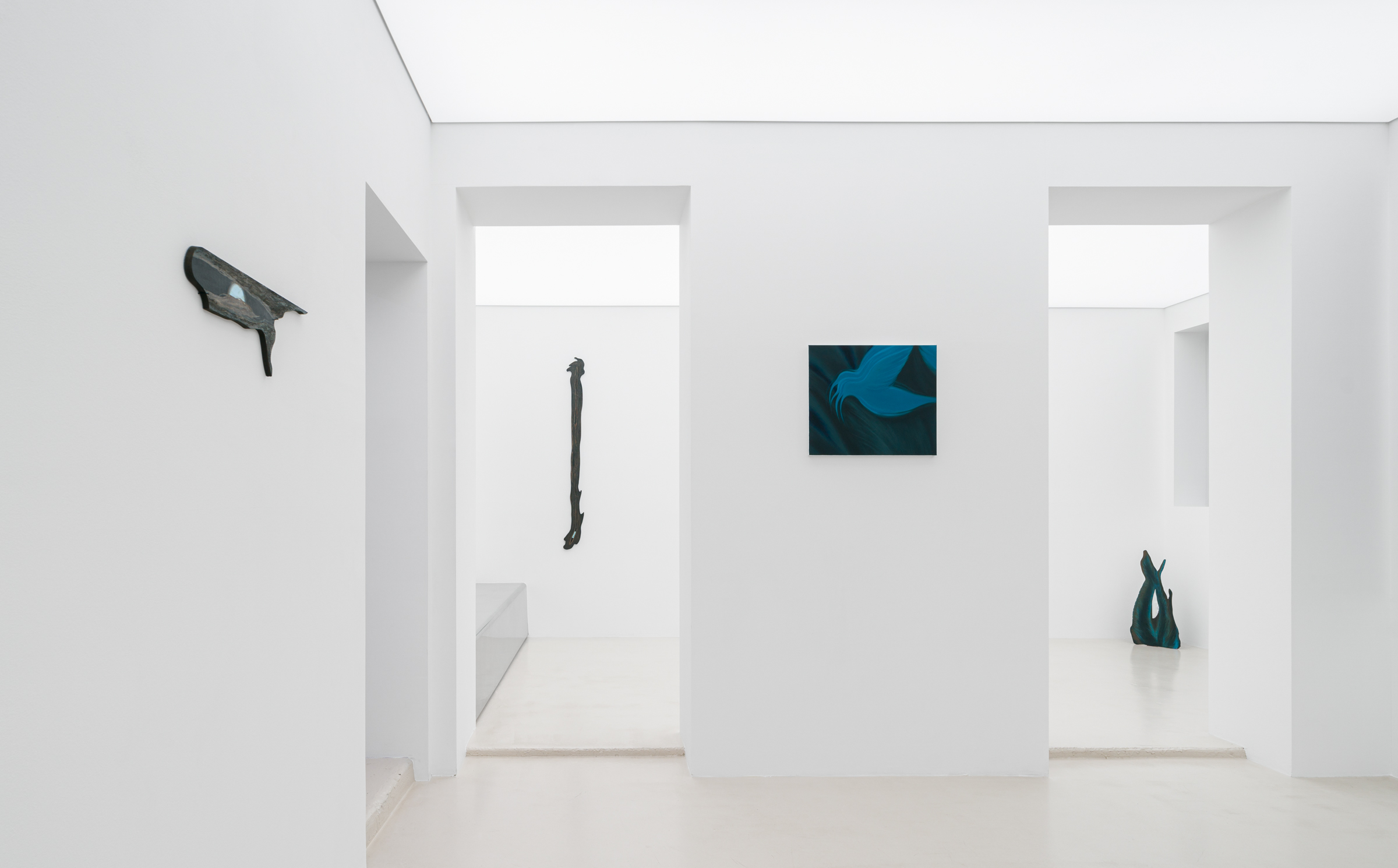
of thought becomes more concrete in her second solo exhibition, 《Nesting on a Blue Night》(Sueno339, 2025),
where the concept of the “nest” takes center stage. Observing a blue satin
bowerbird tirelessly gathering materials and constructing its nest in the dark
forest, Kim recognized that the fundamental acts that constitute life—labor,
survival, the building of shelter—operate equally for both humans and
non-humans. The persistent efforts of young generations striving to secure
independent living spaces overlapped with the ecological strategies of the
bowerbird, expanding her observations of nature into a philosophical reflection
on human conditions. Here, nature becomes not an external other but a lens
through which the structures of human life may be interpreted anew.
In her
most recent solo exhibition, 《BENEATH
BRANCHES》(WWNN, 2025), her thematic scope expands from
ecological relationships to the temporality of life, death, and regeneration.
Prompted by both the daily act of walking through the forest and the deeply
personal experience of her grandmother’s passing, Kim encountered in the dark
forests of Tongyeong a primordial sensation—a dense blackness in which all
forms of life seemed intertwined, containing within it the pulse of renewal.
For Kim, nature is no longer a subject to be observed but a temporal space in
which the origins of life and the feeling of death coexist. The seamless flow
among nature, body, memory, death, and regeneration profoundly broadens the
thematic horizon of her practice, moving toward a holistic ecological
perception that senses the world beyond the binary of human and non-human.