This technological parable
persists in our "eternal present": AI generates
"intelligence" through layered data and backpropagation-based
iterative training, its stacked architectures entrenched in path-dependent
technical paradigms. The black-box nature of deep learning (with its inherent
lack of explainability) renders retroactive tracing and correction mechanisms
nearly inoperative, ultimately breeding simulacra of technological autonomy.
Yet the power relations within technological systems—such as the data politics
of algorithmic bias—also overflow human intentionality through opacity,
particularly in the liminal zones of systemic turbulence: boundaries between
binary oppositions like human/machine, logic/emotion, input/output, and
intentionality/automation dissolve here. The glitch here is not an error
but a declaration: critical reflection emerges at these fissures when the
system transiently exposes its inherent biases, its opacity, or its
discrepancies from human cognition.
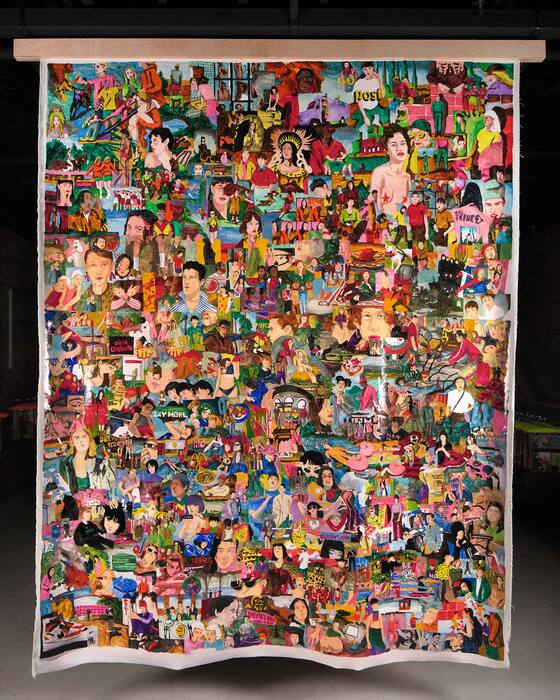
Noh Sangho's Permanent
Beta – How Can I Not Believe in God? (2020)
confronts this simulacrum paradox through digital characters trapped in
"permanent beta." The artist, as omniscient observer, manipulates
their world via mouse-click miracles that transcend physical laws, eliciting
declarations of faith while perpetuating cycles of suffering. Viewers oscillate
between protagonist, creator, and witness roles within the looping narrative,
becoming both miracle observers and accomplices to infinitely consumed data
flows.
The work transforms into a "system test" of power vacuums,
playfully deconstructing techno-faith through meme aesthetics. aaajiao
similarly interrogates algorithmically generated realities by embedding
unexplainable "traces" in works like bot,(2017-2018),
treating screens as "membranes between physical and digital" to
examine how data reshapes bodily memory through haptic feedback. In Agent (2023),
fungal-inspired virtual entities ("Internet void") explore
mycorrhizal symbiosis metaphors, linking AI-generated illusions to human
imagination.
TAN Mu investigates the invisible
structures that shape modern life, ranging from submarine communication systems
and data flows to cosmic observation and memory systems. She navigates the
liminal space between technological history and personal experience, viewing
technology as both an extension of the body and an externalisation of memory,
thereby interrogating the core existential essence of humanity through the
theme of connection and continuity.
WU Ziyang's video Agartha (2024)
constructs a speculative archaeology of our techno-ecological present, blending
media archaeology, documentary materials, field investigations, and sci-fi
imagination to explore selfhood formed through contingent technological
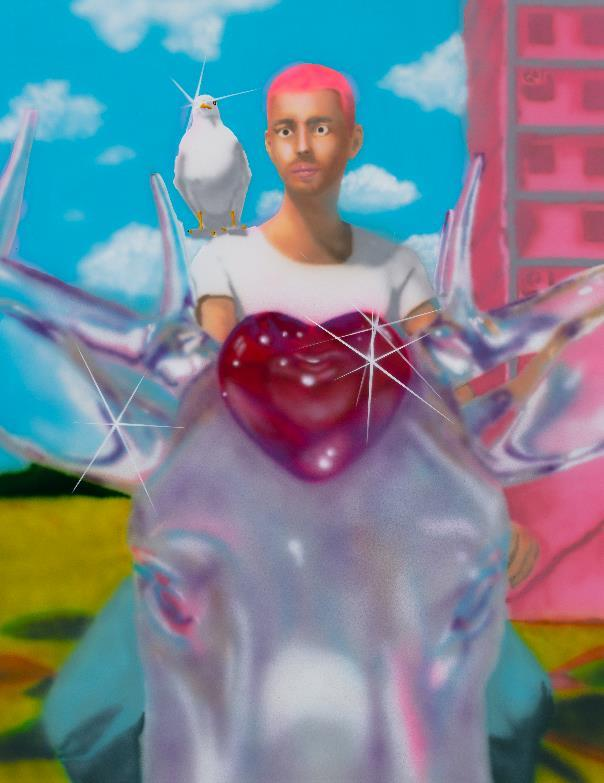
linkages and their latent material/spiritual perils. RAO Weiyi's paintings
anchor emotional stability in our age of information overload, depicting
solitary figures or intimate pairs in tranquil scenes—digital-era heterotopias
preserving unalienated affective spaces.
Rather than striving for mastery
over AI, these artists embrace non-mastery, allowing for slippages,
unpredictability, and co-authored emergence, seeking possibilities beyond
predetermined cycles. Their practices foreground not resolution, but ambiguity;
not fluency, but friction. 《Beyond the Circular Ruins》 thus proposes the
seam not as a site of closure or division, but as a space of radical
potential—a zone where perception is refracted, art critically entangles with
technology, and birthplaces of new possibilities.