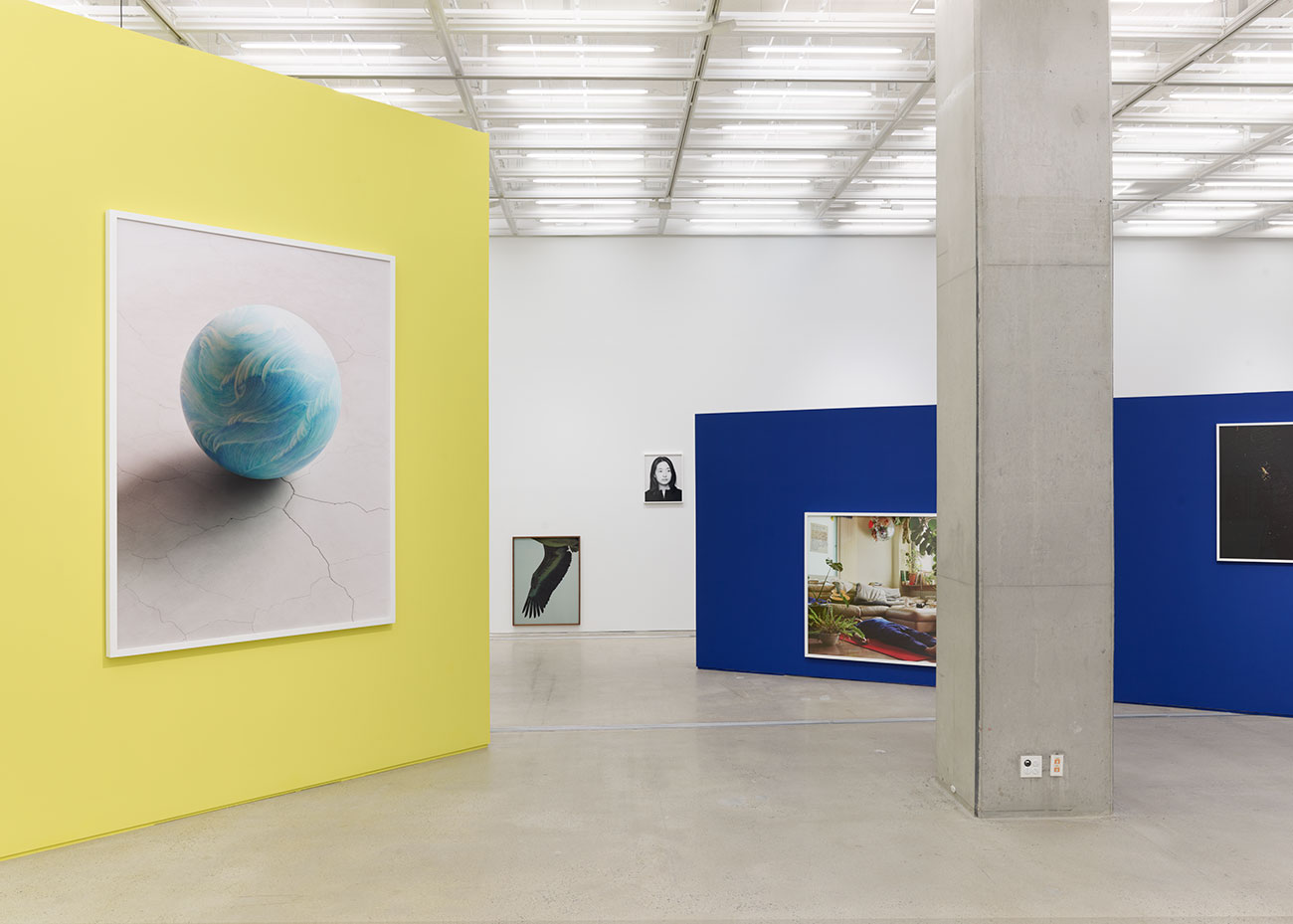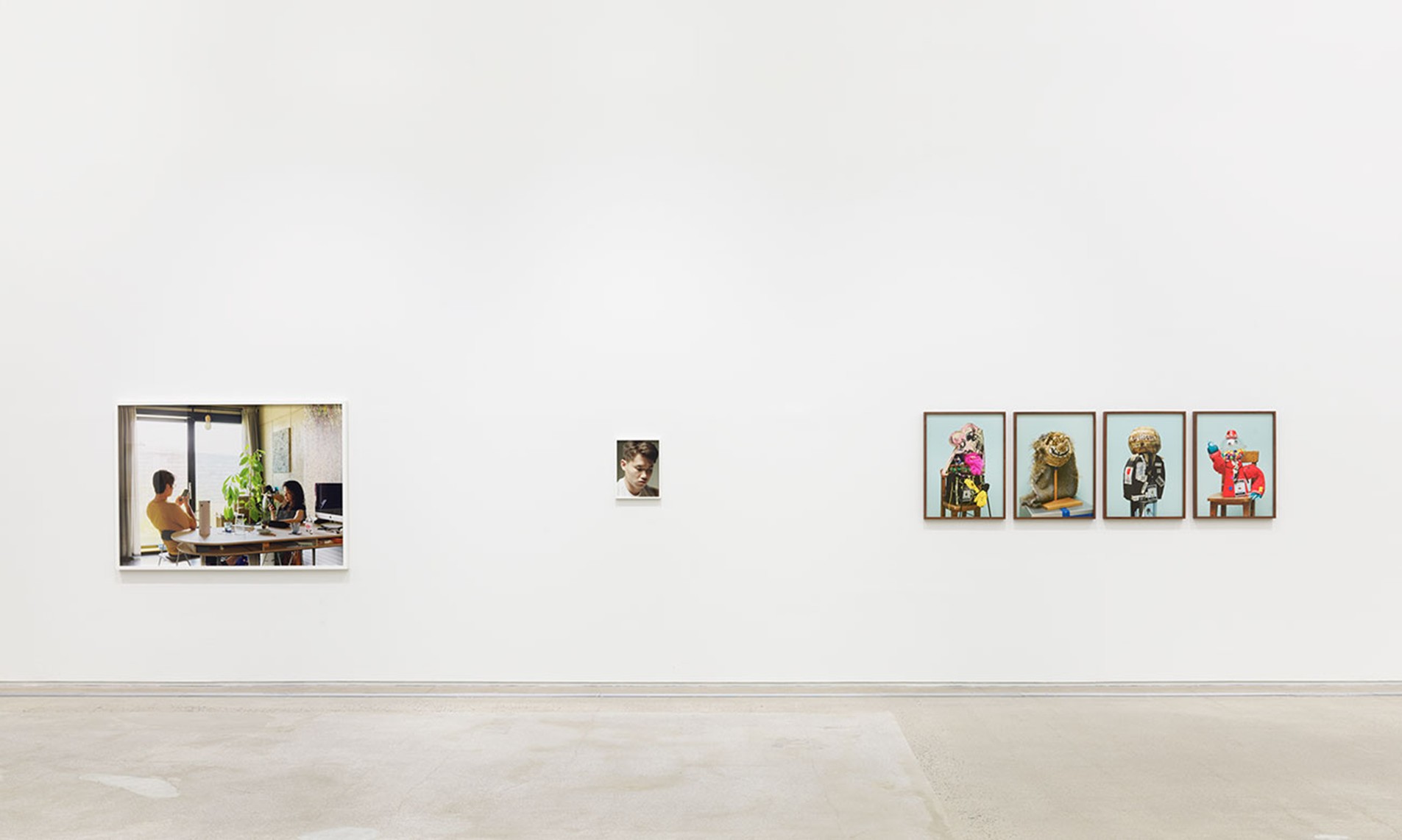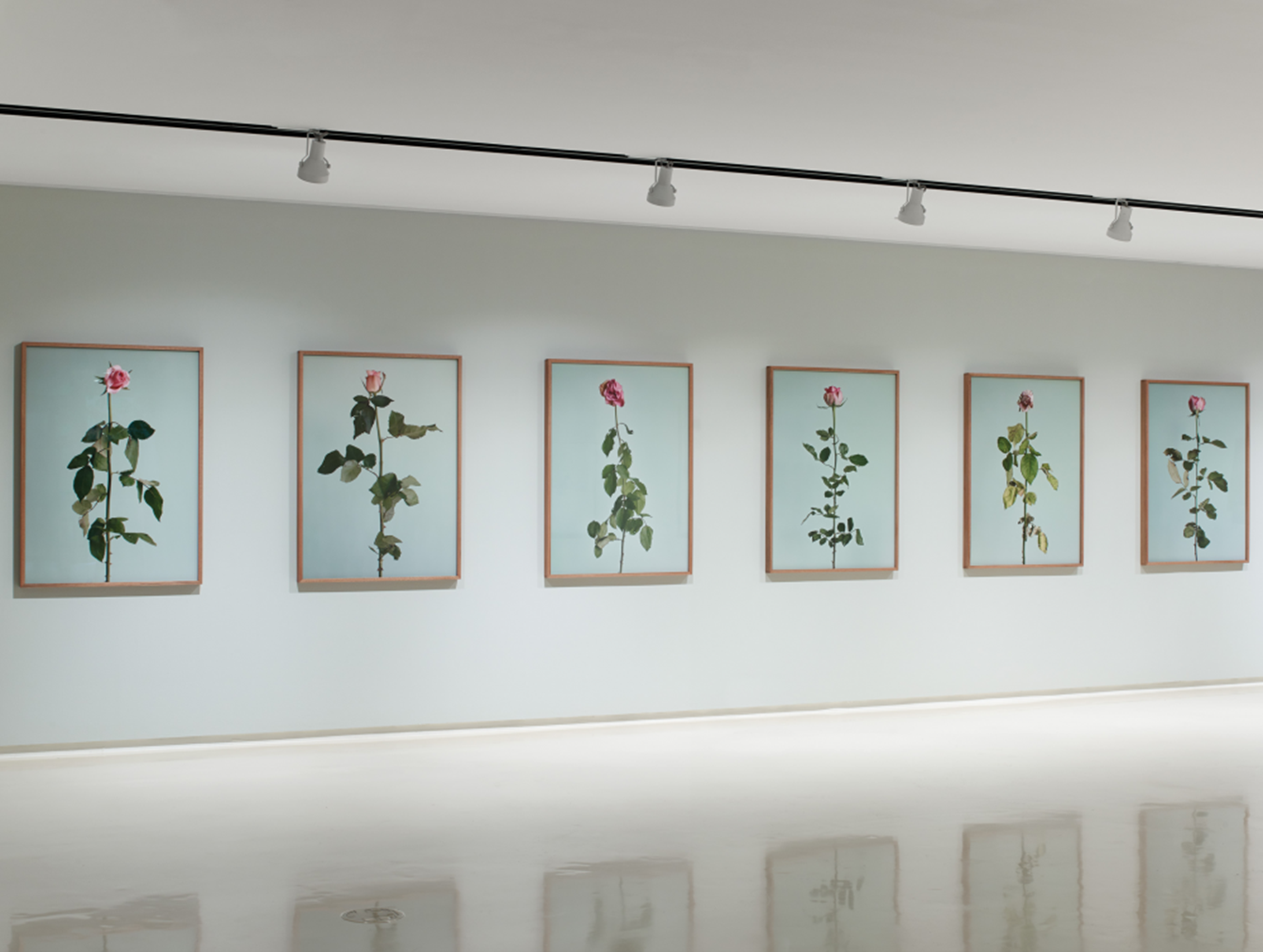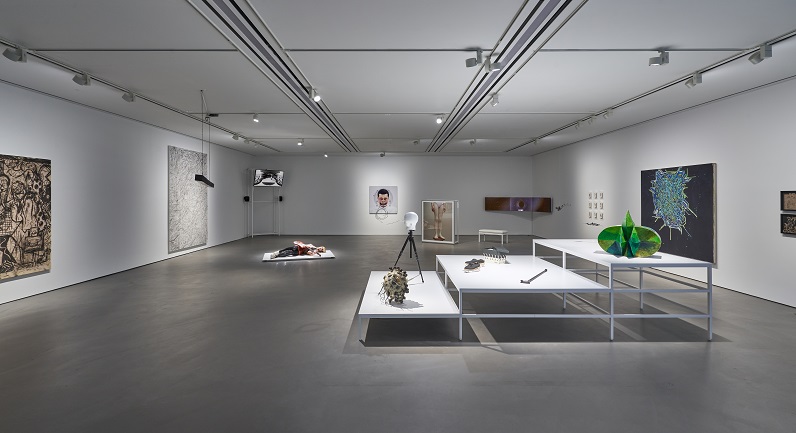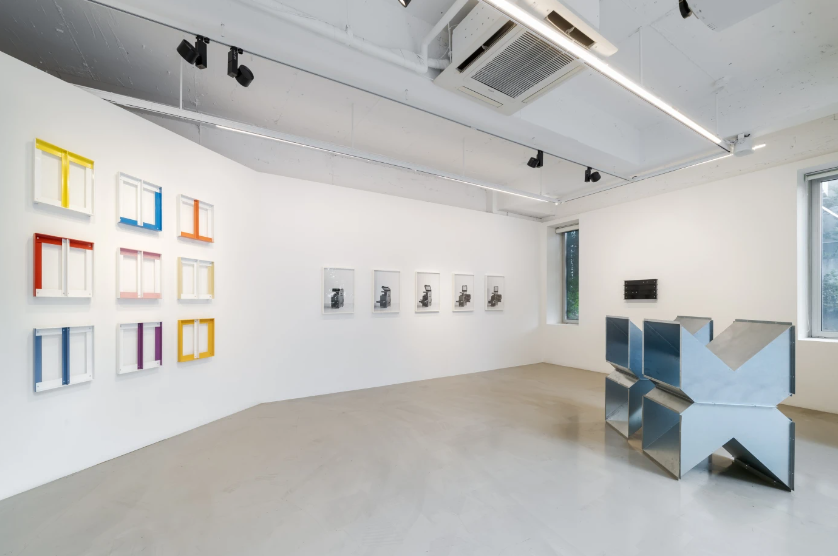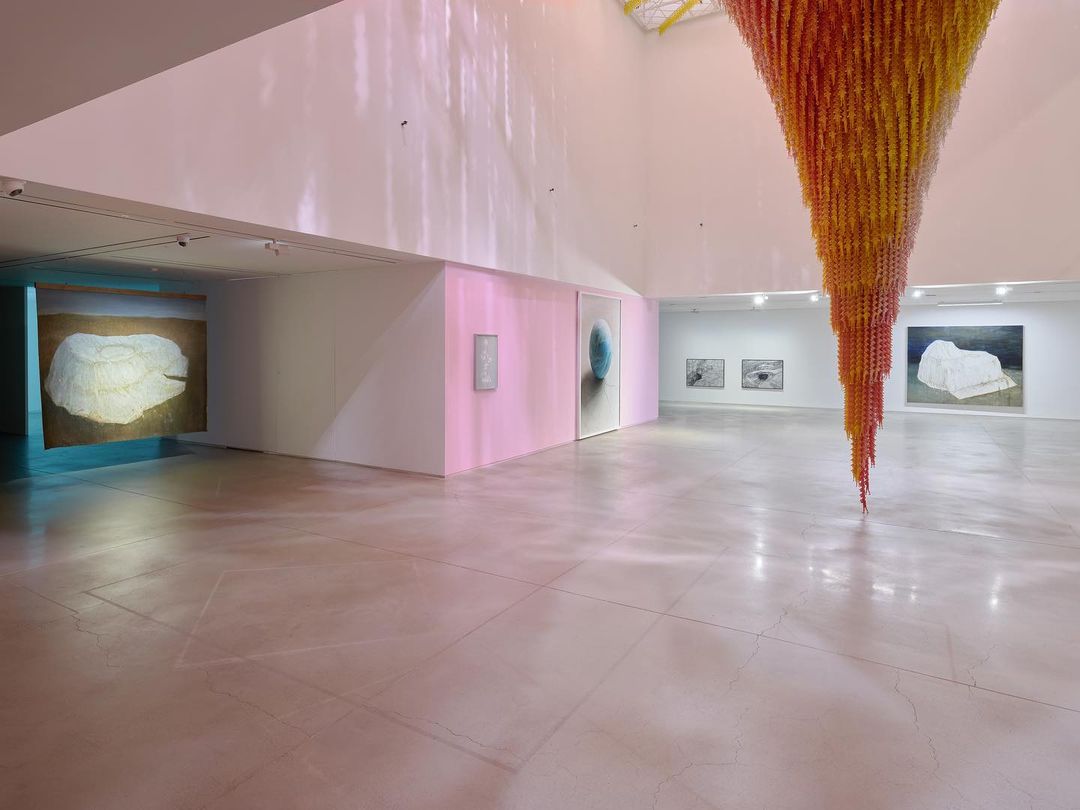


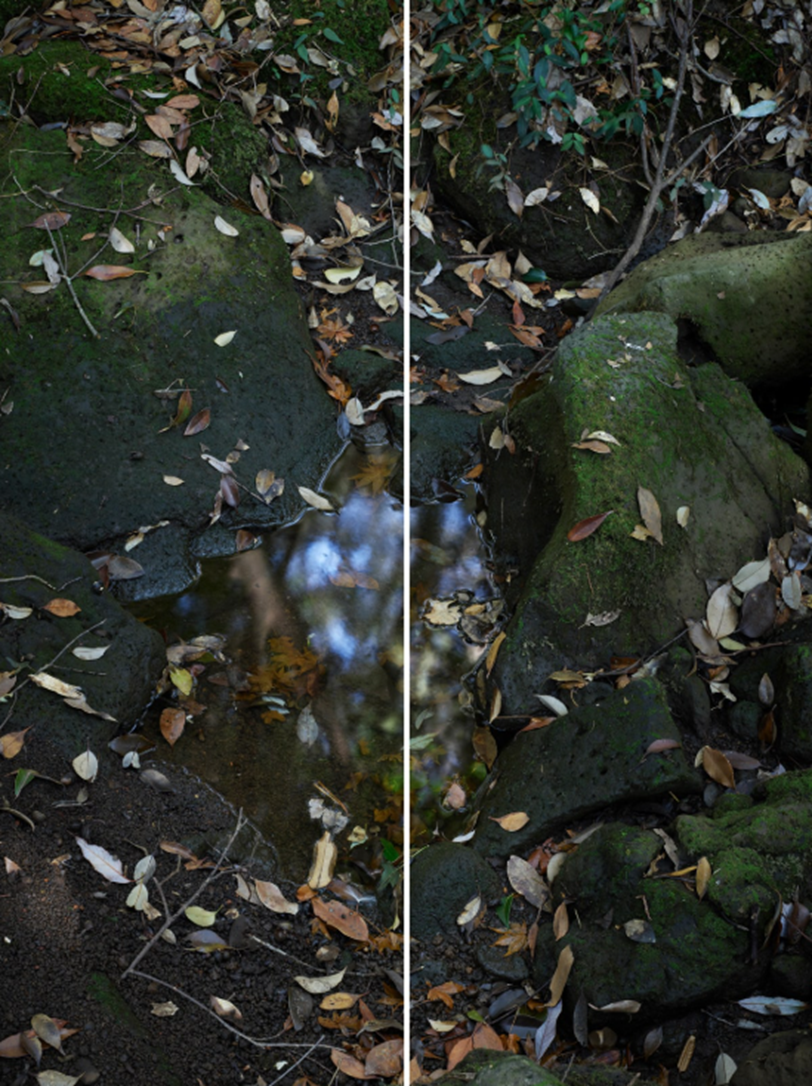
Installation view of 《Rose is a Rose is a Rose》 © Perigee Gallery

On the Oblivion of Imagery and Meaning
By Shin Seung-oh, Perigee Gallery Director

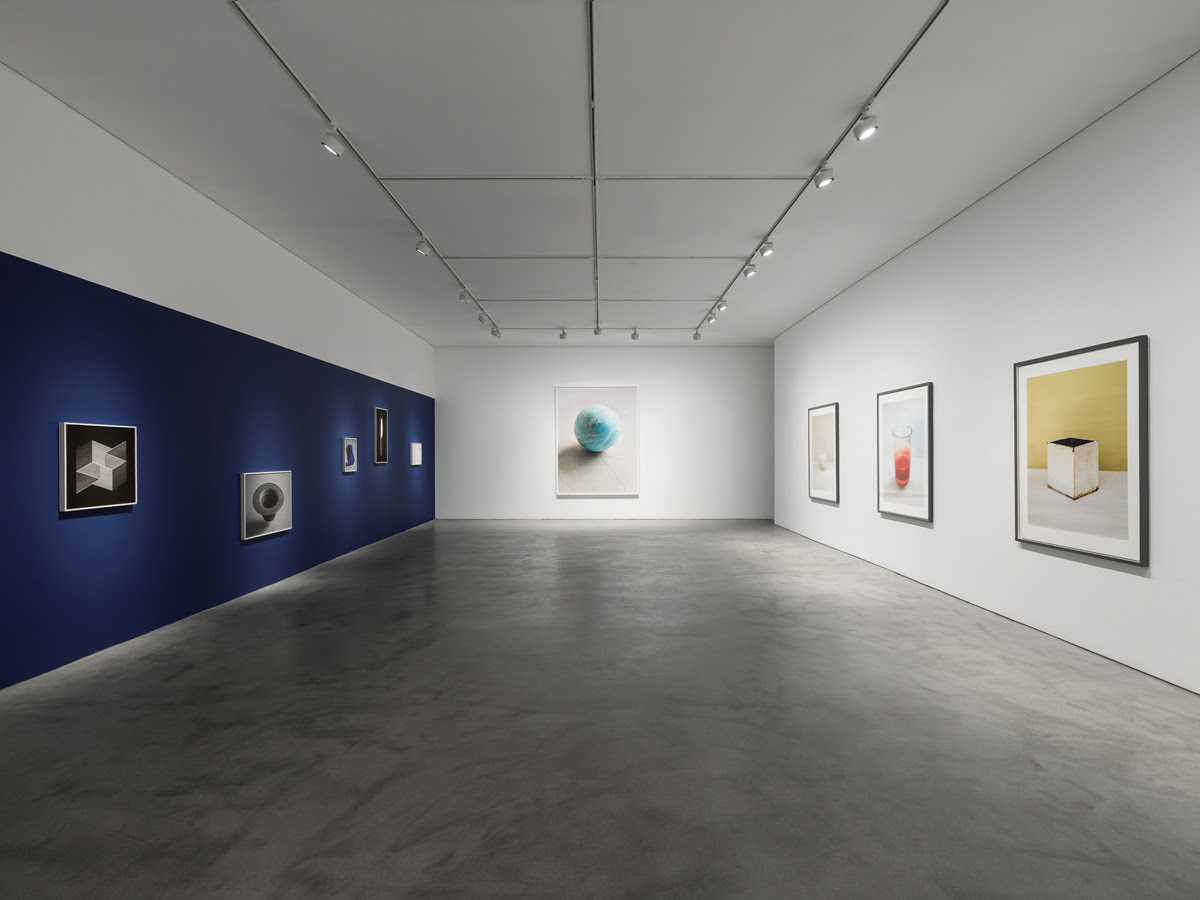
Chung Heeseung initially worked on portrait images in which she revealed persons’ inner world through their outer appearance. She then presented the Still life series that features objects found in her surroundings. Through this work Chung has consistently explored the preexisting and inward meaning of objects from her individual perspective. She recently presents works in which it is unclear where her eyes are turned, because the clear subject of photography is mutually influenced by its background despite compositions with concrete objects as in the Still life series.

This seems neither to disclose the meaning of the subject through an obvious representation nor to discover and capture “punctum." Roland Barthes mentions as a special meaning and atmosphere coming from a detail on the outward appearance of an object or person. In terms of form, her latest work shows no specific tendency or fit any specific category. If so, what direction is she pursuing? This will be the key to unlock the meaning of her work on display at the exhibition.

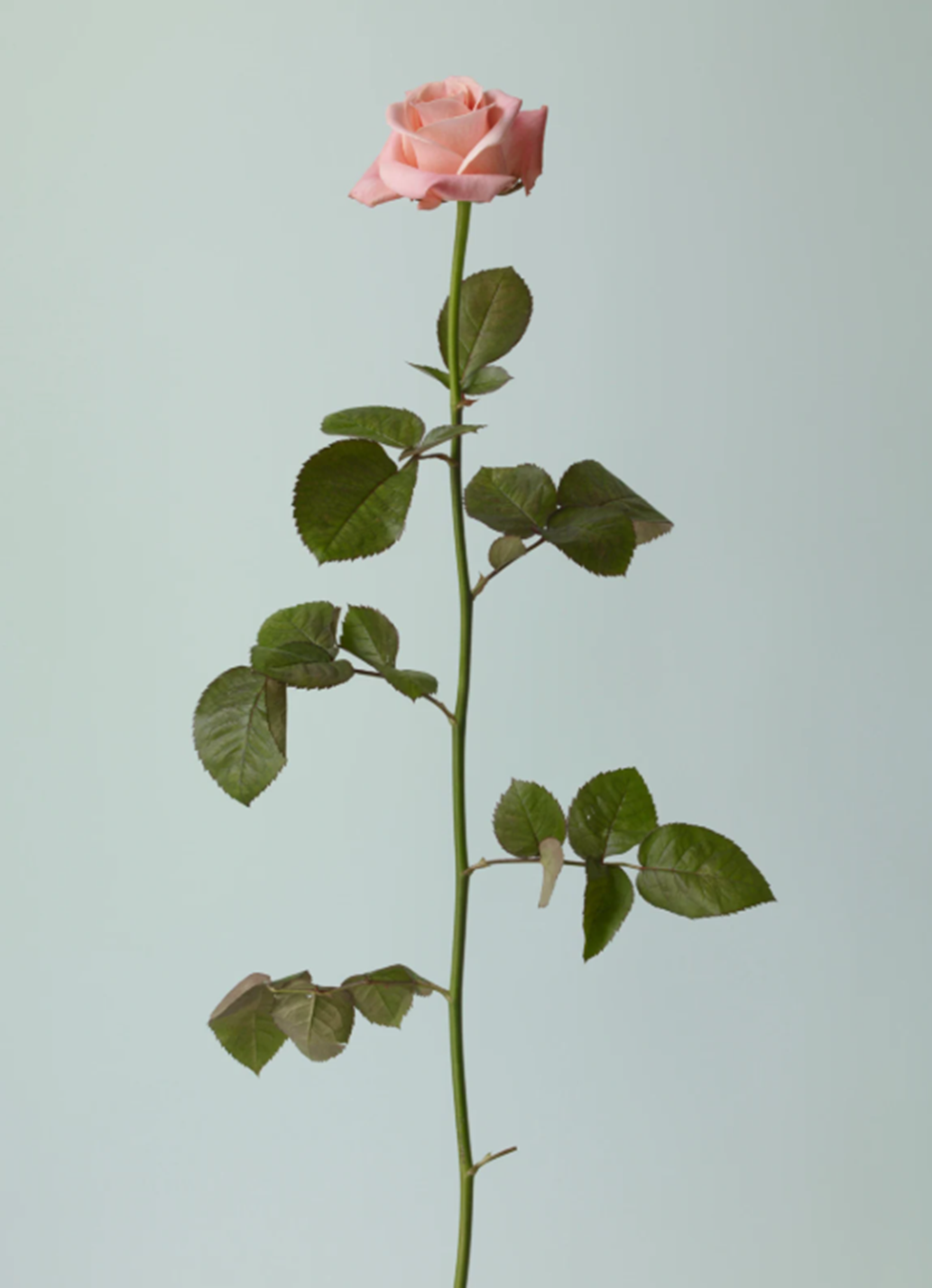
First of all, let’s pay attention to the title. The subject and object in the exhibition title 《ROSE IS A ROSE IS A ROSE》 is of course the rose we usually know. And, works featuring roses are titled Untitled or with some figures. The clue to be inferred from this is that her new series is concerned with our perception of images and linguistic interpretations. Chung captured the rose in a fixed frame and produced seven pieces in a series. This is not just for repetitive representations and presentations of a rose.

Everyone has a common idea of a rose, but many have different feelings and thoughts about roses. What we feel and think is elementally influenced by the fixed frame shaped by our education and common experience in society. We assume that there is the Idea of each object or the original Form, trying to look for its genuine nature. We also name something to define it. The language and text used for this assume the role of fixing it, showing its strength. It is not always reasonable to judge that an object has just one meaning and nature.

If so, does observation overcome such limitation? On the other hand, a visual observation is also able to capture something superficial. How does Chung get over this limitation? What’s referred to by a pronoun, not a proper noun, is some uncertain object. Chung seems to address a specific object as the subject of her photography but she seems to empty its meaning by adopting the meaning of a pronoun.

Chung Heeseung, Untitled #01 from the series Rose is a rose is a rose, 2016, Archival pigment print, 108 x 78 cm © Chung Heeseung

Let’s review some other works. Chung displays the front and back of a matchbox symmetrically or shows a clearly visible large cat with a small blurred image of the same cat. There is another work only with its title left beside this. This is to reveal a new meaning arising out of the different expressive method and scale of the same image and the relation between the subject and text. These works consequently raise the problem of what criterion should be used to judge some object when grasping it, such as the original and nature, the exterior and interior.

The essence refers to something that cannot be divided any more or something unique. But the essence the artist intends is not something unique and immutable but something that can be achieved in society and varies in accordance with situation and time. Language and text are not based on our accumulated knowledge but to contain something in our lives in receptacles. These are neither rational nor irrational. They are flexible. They are obviously derived from one thing, but it is not the same.

How should the use of such images be interpreted by us? Visual images as well as the photography Chung engages in are an environment of our time that is consumed infinitely in diverse ways. We rapidly input information while consuming such visual images everyday. We are accustomed to being informed by visual images. One who views an image may feel sympathy for the artist, model or object, which is one familiar way to interpret a photograph. Another factor is to grasp her strategies. Her various strategies such as manifestation of her inner world, revelation of her voyeuristic eyes and use of her own narcissist images have already been exposed to many.

The way of seeing such images was initially a new method but presently remains inflexible as perspectives and ways of interpretation are fixed as another rule and regulation. However, we conventionally read and consume the images quickly produced in this way and take only necessary information. This after all has reached the limits of superficial interpretation. Although giving names to some objects with proper nouns and creating new meanings is an act of new creation, things created by such an action of naming and defining have their correct meanings only in the first moment. As new meanings have constantly been added to preexisting meanings, the system of meaning takes place. We grasp the world in the system and order shaped in these ways. And we are eroded by them before we are aware of it.

Let’s review the book made up of Chung’s images. As the title, Three Props on the Impossibility of Meaning indicates, Chung has been interested in how we are able to make the meaning of an object disappear. In fact, we cannot have any sense or sensation without knowledge of our world. And this order of knowledge has its meaning when a subject is recognized as a social being as in language. What standard do we rely on to interpret an image? This is perhaps based on each individual’s experience, observation and knowledge formed by education and belief. Each individual has their own subjective basis for interpretation. But we tend to cling to just one specific interpretation.

We become familiar with this interpretation and this interpretation consolidates its position through repetition. How do we discover and perceive the object’s specific value in some narrative structure and value system based on subjectivity, meaning and knowledge arising in this way? If we have socially implicated subjectivity, we have to think, going beyond the bounds of an established definition and category when interpreting something through such perception. All we perceive with ease may be the results of being infused with some certainty in a precisely designed frame. We have the ability to imagine what is inexistent based on what we have observed and experienced visually. Yet, we just think within limitations that have been fixed by external influence, failing to develop this ability.

Chung considers that the ability to perceive some being one has developed, thanks to his or her experience and education, may paralyze another ability to accept some object with one’s pure sense. Chung’s work does not convey some message or meaning but investigates how to make such meaning blur or disappear, whatever it may be. This enables her to overcome limitation by offering diverse contact points through which viewers can read her images created from her observation and experience from various angles. Of course, some specific perspective may be fixed, but we continuously undergo change and are assured of something at the moment of change.

As such, conviction is continued and discontinued, and new flexible meanings are created. Chung after all defines something named with proper nouns, the frame as a tool to grasp some object and something with fixed meanings in an arbitrarily set boundary. Through her work encapsulating objects, she makes the definite indefinite. Accordingly, this interpretation will be left as one of numerous interpretations and thoughts.

References