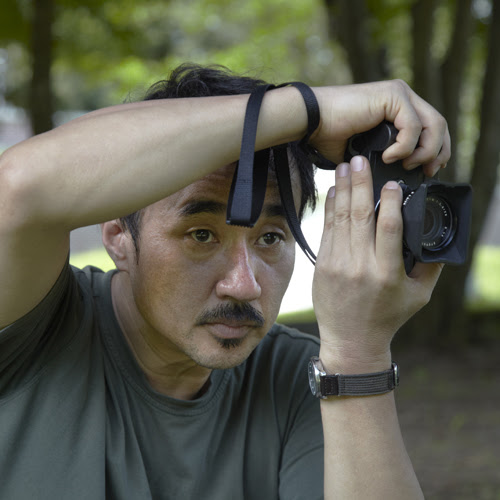
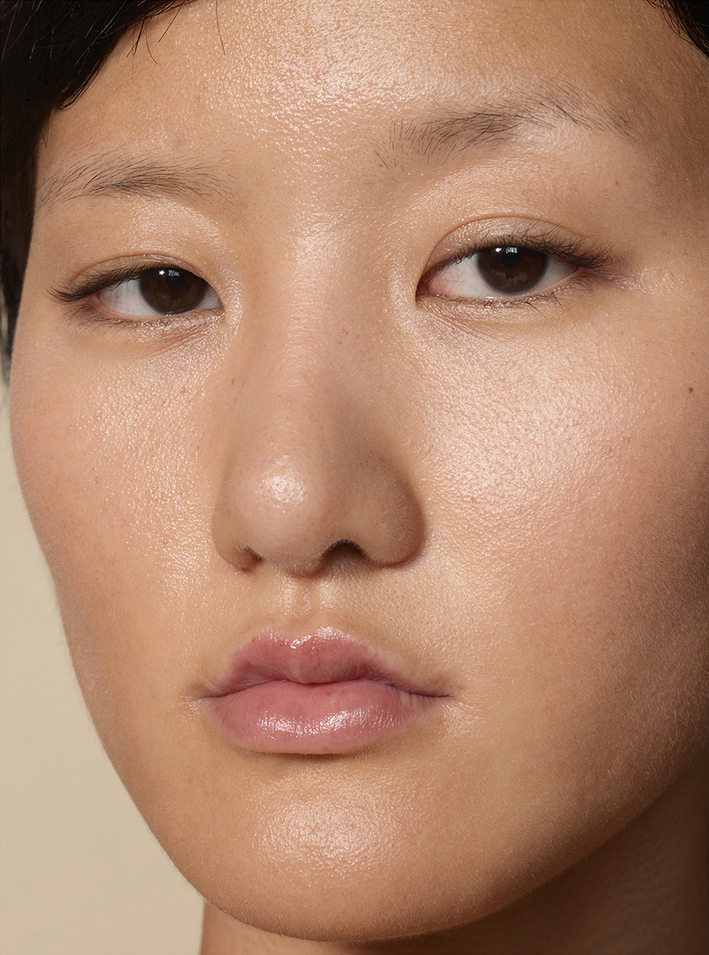
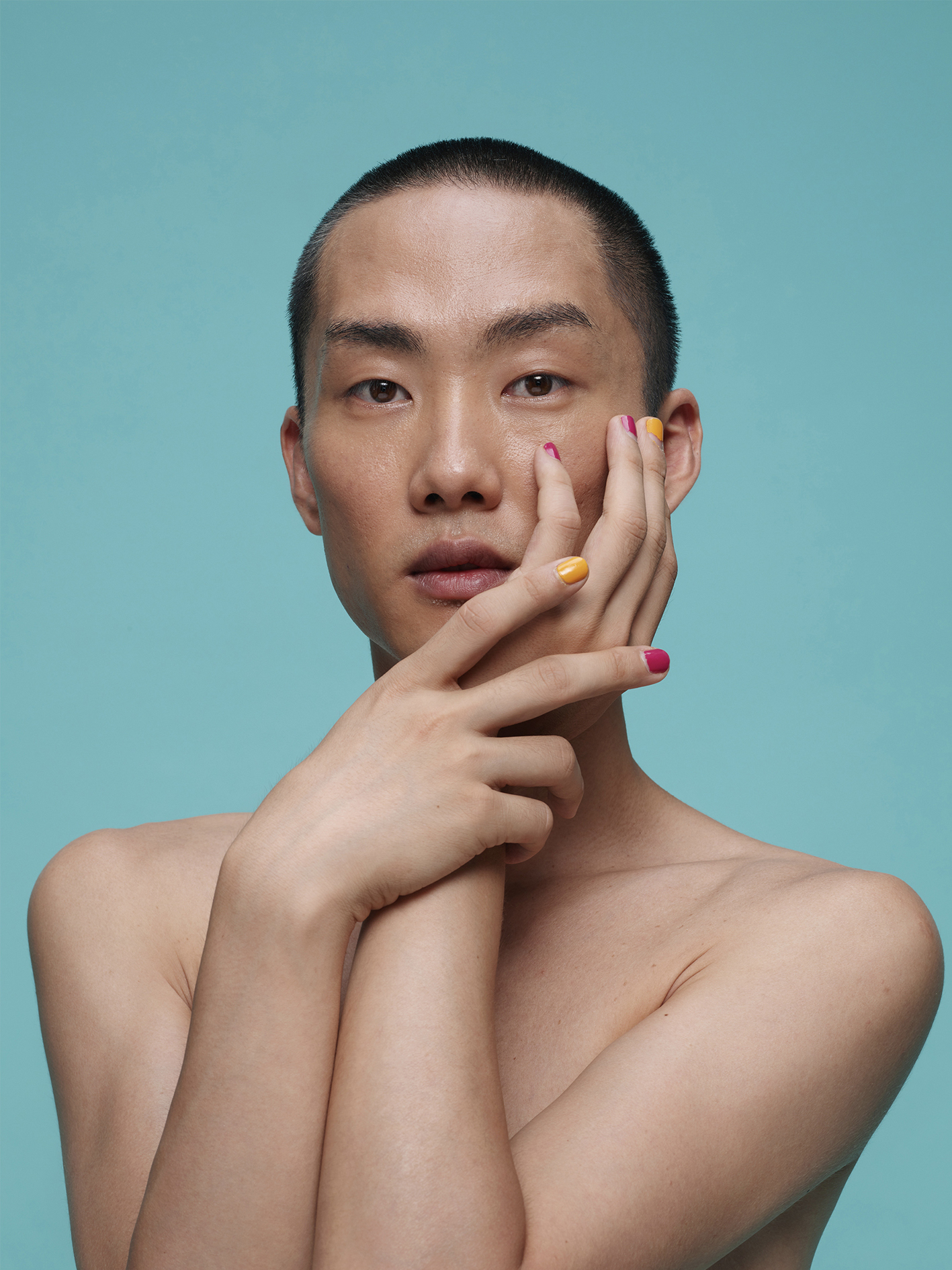
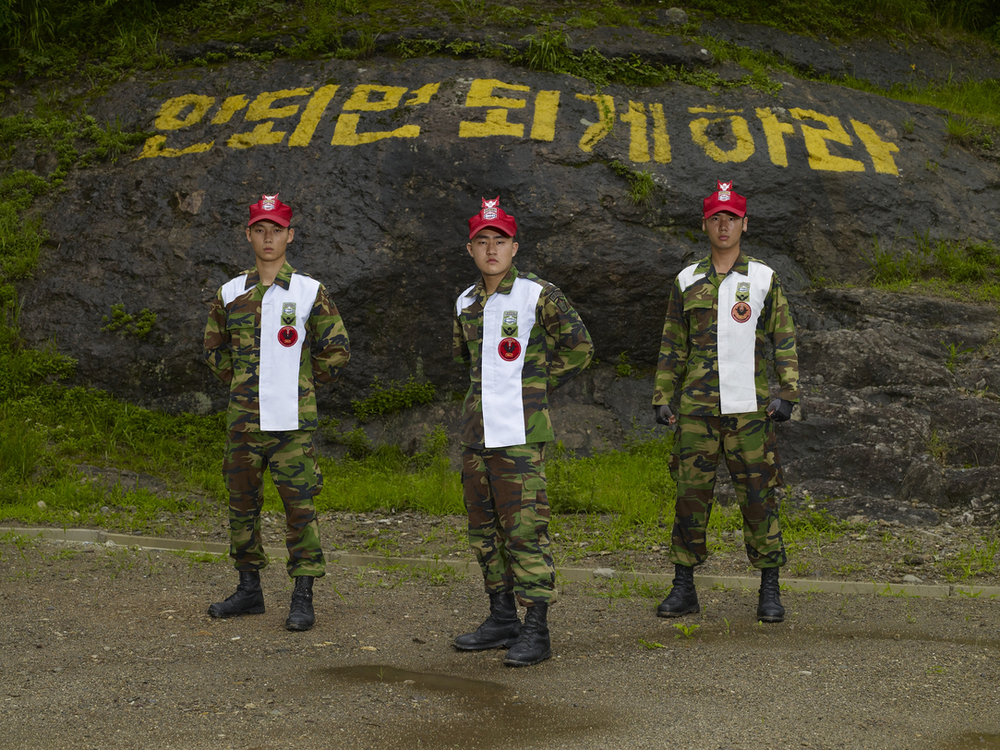
The faces of people from Heinkuhn Oh’s photos show a subliminal
feeling of anxiety in some ways. It gives the strange, grotesque, or fretful
feeling. I can’t distinguish whether it is their faces that show anxiousness or
it is my mind that is disturbed from watching their faces. Heinkuhn Oh mentions
that he is taking pictures of anxiety on peoples’ faces. “Innately, I was used
to looking at other people’s anxiety.” Eventually, he snatches the feeling of
anxiety from a person’s face. Anxiety is not a clear visual object so it can be
found in ill-auguring signs, facial expressions, and bodily gestures. Anxiety
is often understood as nervousness. An anxiety which can be caused from an
unclear feeling of apprehension and fear is differentiated from a fear that can
be tied down to an actual and tangible threat.
Anxiety is the result of unknown
internal turmoil of emotions. It is hard to deny since it is shown clearly in
psychological and mental ways, even though it is confusing because the causes
are unknown. Freud defines anxiety as a symptom to be caused by the repression
of painful and threatening experience, emotion, and impulse, which creates a
process of internal emotional collision. However, the reason why people become
anxious, out of many different reasons, is the external force that “stings me”.
After all, this is about the gaze. The external force means the world of the
other which involves their words, their gaze, and their actions. When I get
conscious of how other people look at me, I become anxious. Also, people feel
anxious when the painful life experience and all the worries from realistic
life have been intricately accumulated, restlessly bothering their minds and
frequently floating on the surface of their consciousness. That is only because
the past, and dead time, is living in place of the present.
Heinkuhn Oh believes that people’s face always contains a very
specific story. Its portrait becomes an object of reading like a map. Face
indeed functions as a text. Face is a book. It is a forest full of the person’s
history and scars. Therefore, face cannot lie. It is a history book that cannot
be written and has never been written in words. Thus, we read someone’s face.
The word “looking” is not sufficient to express it all. Face is a book that
needs to be read. Dense parts and traces that form a face make each sentence
written by innumerable words. However, this sentence cannot be easily
understood. It is neither written nor structured in a certain grammatical way.
Face is a sentence without any rules. To live is to write a book on one’s face.
People live by their face. Face is an entire reflection of one’s history, story
and memory. So the face we show in our death bed is the last mark of inscribing
our long life. It is the integration of everything that one has lived for. Heinkuhn
Oh reads someone’s face/book. And he falls into an unpredictable imagination.
Then quite clearly, he comes across the person’s history and story to be
suddenly and unavoidably engraved into their faces. He feels himself in touch
with that moment. Then he takes photos of the faces: face that hovers around
anxiety, face that spreads like a mist, face that bubbles up with unknown
sadness. In other words, the faces of anxiety get closer to him like a stranger
in darkness.
Over the period of ten years, he has taken pictures of men,
women, ’Ajumma’ (middle-aged women), ‘Ajussi’ (middle-aged
men), and girl students. Consistently, his work has been portraying the anxiety
in their faces. However, it is close to the anxiety that Oh imagined. As
mentioned previously, he reads anxiety from the faces of other people and
collects these anxious faces. Therefore, it is not clear whether people are
actually in the state of anxiety. However, it is true that people look somewhat
anxious and unfamiliar according to the photos. Did Oh read his anxiety in
other person’s portrait and face? The helpless feeling of anxiety is not just
confined to a specific individual. It is shared by everyone. Especially, people
who live in the same time and place of Korean society will have similarity in
their anxiety. He mentions, “Like a mild fever that is felt in drowsy spring
days, I want to portray the mundane anxiety that is bothersome for a whole
day.” Especially, he feels anxiety from the flashy faces of ’Ajumma’ with
thick makeup and wrinkled pants of girls with careful makeup. For a long time,
he has been taking pictures of his own anxiety with which he has cast his eyes
on the anxious women.
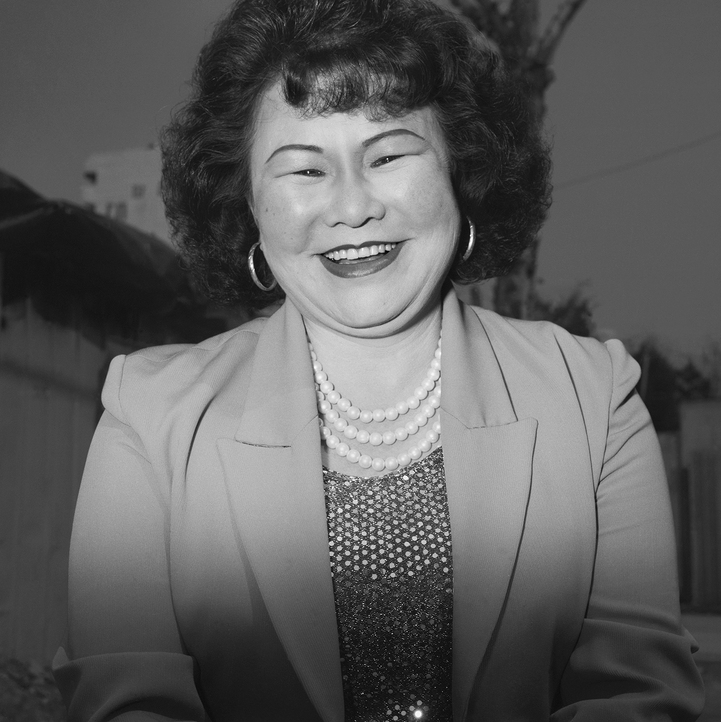
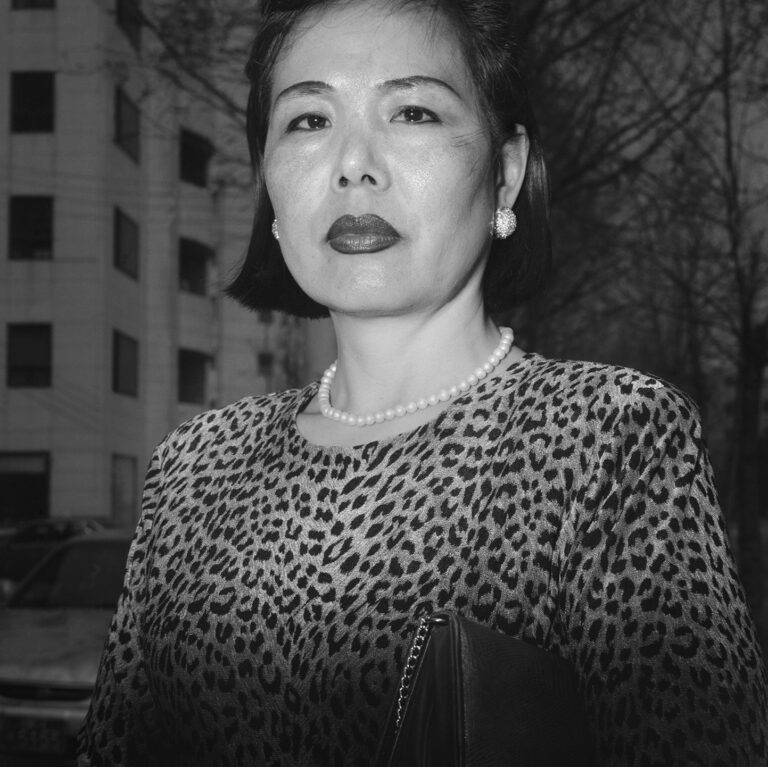
The 1997 ’Ajumma’ series is a documentary project to
take photos of ’Ajumma’ types, intervened by subjective perspective.
In our society, ’Ajumma’ is represented in a fixed frame. He found an
image of ’Ajumma’ that is typified as such and as a role model. Then,
he asked around for casts and he found some models from extra
association. ’Ajumma’s came all decked out in their best looks. They
were trying to manage their feminine side with careful makeup and fashionable
clothes. That is a point where there is a differentiation from the normal
ordinary clothes that they wear around the neighborhood. They are wearing the
signs that represent their femininity. He then looks into the appearance
of ’Ajumma’s who have decorated themselves with makeup and gorgeous
clothes. He makes an observation. A momentary inference is made and all kinds
of imagination are at work. He captures the traces where ’Ajumma’s have
tried to look like an idealized image to be expected as a mature middle-aged
woman of appropriate behavior code and fashion. They wear almost the same kind
of clothes, that is, the uniform-like clothes. Women (and men) think in the
same way that they need to cover up their unstable identity by wearing what is
considered to be the appropriate clothes in the society for their age.
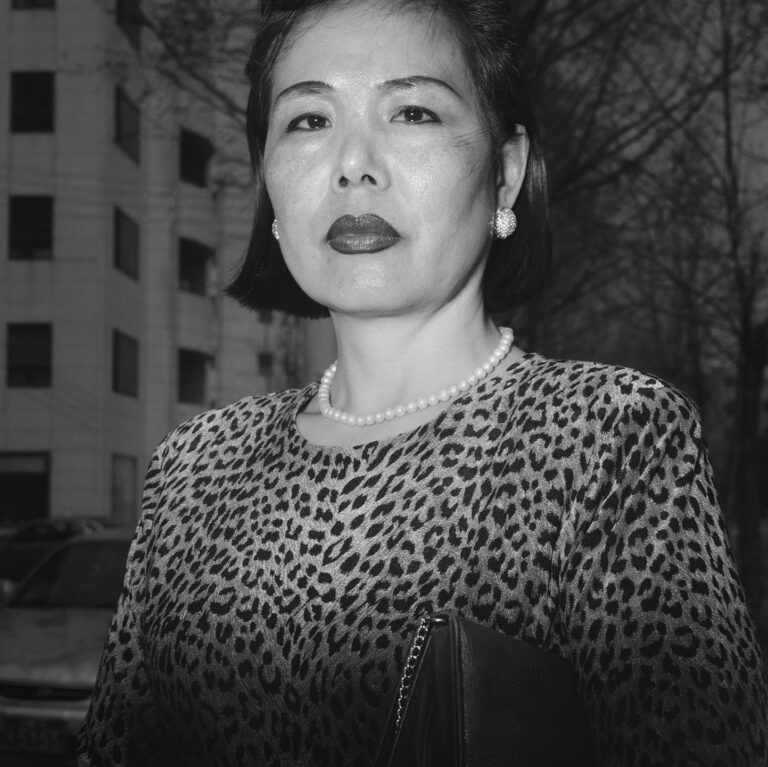
Why do
they think so? It feels very sad when we look at a gaudy blouse and a jacket of
quite old and faded seams, whose surface is all roughed up with the gaudy
blouse inside it along with heavy makeup. They look ridiculous and somewhat strange.
As the time passes, the puzzling texture that combines the clearly visible
sweat pores with greasy, sweat dripping faces emits more flashiness. A black
and white photo with dark background pushes the reality life back like a swamp
and sinks it. And this photo makes us gaze only on the internal side of the
oily face with fancy decoration and their saddening facial expression. The
individual characteristics of ’Ajumma’s disappear and the stereotyped
image of ’Ajumma’ is revealed in the photo like a piece of worn out
paper as a sign of sadness. They look very helpless and lonely. The ’Ajumma’s use
the “representing strategy” (politics of representation) to differentiate
themselves from others in order to show their identities. Heinkuhn Oh’s photos
show in detail how their identity strategy is revealed in their appearance.
Face, clothes, makeup, accessories and others shine light, revealing their own
discourse. All the details portrayed in his photos, i.e., clothes, accessories,
makeup, hairstyle, facial expression, and texture and flashiness are not
different from the result of the representing strategy that ’Ajumma’s use
for themselves. Therefore, his photos express their narrative through texture,
tone and color. Details speak out. The details suddenly narrate the saddened
face of ’Ajumma’s and their internal world. The photo which focuses
on the ’Ajumma’s identity and her femininity carefully expresses its
trembling of anxiety that the vanity and flimsiness of her shallow identity
evokes through the garments and accessories that she is wearing on.
Heinkuhn Oh, who was looking at the bodies of ’Ajumma’s, soon
moves his attention to girls. Girls in uniforms, girls in makeup, and the
teenage girls are the ones. The girls, identical to ’Ajumma’s, uniformly
wear a sign of uncertain identity, too. They also represent the symbol of
women’s identity that men’s gaze imposed in our society. Every human being goes
through the teenage years to become an individual in a society. It is a period
when they are immature but hold an immense potentiality. Korea, as a country, society,
and family, only presents one type of value to teenagers in a seemingly violent
way. The endless competition to increase productivity makes them believe in the
value that they only have to live for an individual competitiveness and
accomplishment. Any other aspect outside of it is not asked and any other
meaning and potentiality of life are ignored. They are never mentioned. Girls
who are cast as models by Oh are the ones that are being burnt through the
competitive system. At the same time, the sexual identity is forced onto them
from the society and men around. Oh casts the girls from private actor’s
institutes as models for his photos.
It is because they are the ones that can
act out the girlishness most naturally. Of course, other girls, apart from the
ones from the actor’s institute, who dream of becoming an entertainer or a
fashion model, can dress up and use make up to produce their feminine identity.
They can act. However, their acting is standardized and forced collectively. It
is internalized through the gaze of outer force and the true individuality
disappears. As far as this issue is concerned, the teenage girls nowadays are
like a huge group that is pressed out by a mold. They share the same hair
style, eye makeup, short skirt, the same shoes, socks, bags, dance, and songs.
Even curse words and personal interests are perfectly shared like machines.
They are cultured by mass media and celebrities. The girls that attend actor’s
institutes are frankly the ones that learn to act like girls. These high school
girls are willing to participate in a certain gazing frame which is imposed by
the mass consumer society in order to achieve the aspiration of success as a
celebrity. They learn from male directors and producers to act like girls. They
are playing over and over again the role of girls from man’s perspective. They
seek to change to become the ideal and attractive girl that men want them to
be. That is what they believe to be their identity reflected by their image.
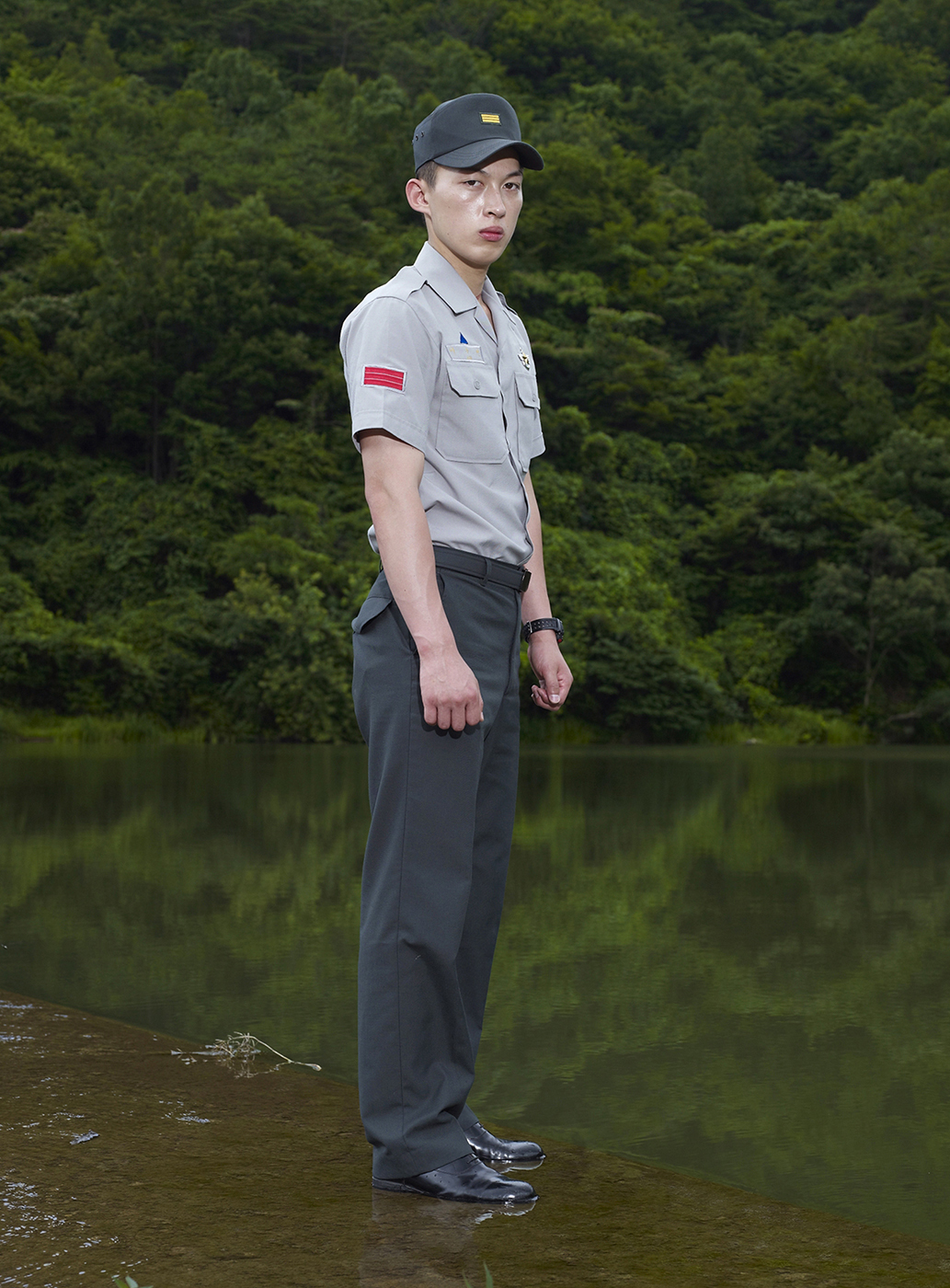
Oh took a full body shot of a high school girl dressed properly in
her school uniform. The viewers look at this uniform-dressed body in a
voyeuristic gaze. Uniform is a device that politically, socially, and
culturally represses and manipulates the girls, who are already adult
physically. Korean society has always set the young girls in uniform as the
object of sexual desire. High school girls’ uniform in that sense is a
controlling device as a taboo as well as a device to reveal their sexuality. In
addition, uniform is a double protection. Uniform protects these girls, who are
not fully grown up, from the threats of the society. At the same time, it also
wants to protect the society from “explosive and potentially deviant life
force” of the girls. The society manages the school girls by keeping them under
the policy of school and uniform. However, the surface of the uniform is like a
battlefield where taboo and violation occur at the same time. Girls re-stylize
the uniform to show off their body as a sign of sexuality. Sometimes, they act
as the innocent and pure girls.
The photos of the uniform girls are displayed hugely upright in
the space on top of the photographer’s studio building. The full shot of the
girls emerges as a monument. It functions like a huge icon. In fact, the
identities of the girls lie in the façade rather than in their internal nature.
It means that the girls we know only exist as a superficial image. Behind their
body and legs, the scene of reality is portrayed in remote distance. They look
separated and alienated from their own lives. The monumental feeling of their
body which is portrayed as a huge giant apart from their foundation looks very
estranged. Through the usage of their name tags on uniform, shoes, socks, their
age and the proper nouns, they exercise their rights. The physical maturity which
cannot be repressed by uniform is also exposed without their awareness. Facial
expression, scars, and subtle traces of re-stylization in their uniform show
their way of daily life.
They show a way of survival in resistance to the controlling
society. Their body is where uncertain anxiety and expectation, discontent and
desire are intertwined.
And thereby, some subtle cracks emerge from the girls’ pose. The
pose is an actively coded one. It is a sensitively exposed one to men’s gaze.
And it is an acquired one through mass media of our society. Where is the role
model for these girls? Of course the mass media powerfully propagate it.
Teenage girls that appear in TV series, commercials and entertainment programs
standardize the role. The teenage girls nowadays as well as all the men and
women are much used to the entertainment culture. They are tamed under the
formation and shape of that culture. They are all celebrities. Well, they act
like celebrities and simulate the fashion and body gestures. Therefore those
bodies look strangely unstable and sad. They look in vain. The poses from the
girls are the stereotyped ones to be adapted to what the men desire in our
society (i.e., those of women who have internalized the desire of men’s gaze).
The girls, in the end, act according to that expectation. Somehow the girls
look like they are left out from the reality and society. Their position, face
and expression show it. They are not fully adults but not girls any more. They
stand in-between, somewhere in an uncertain and ambiguous spot. This black and
white photo in a middle tone close to the grey is appropriate to show the
feeble, tender, delicate, and ambiguous girl’s image. And thus, grey color
functions as a metaphor for the girls’ unstable and ambiguous identity.
Quite evidently, we cannot know about a world without going
through the signs or symbols. Can one fight against the temptation of media’s
representative devices and many symbolic signs that are producing a false life?
The world full of images represents an era when the view is separate from the
gaze as in Lacan’s notion of subject. To what extent can one autonomously
realize their desire in the huge system of the symbolic created by politics,
capital and culture? Most people desire the signifiers that are produced by the
system of the symbolic, and they take it in happily as if it were their own
desire. The subject’s effect of identification with image shows how hard it is
to take flight from the desire given by the system of the symbolic. It makes us
question if the creation of desire can be done naturally without depending on
the process of symbolic system. The gaze-ruling world that makes us an object
of gaze without showing its presence is the one full of signifiers. However, it
is also the world of lack in its nature, hard to take an easy flight from its
boundary. Lacan’s perspective on gaze is not what I am trying to show to others
but what is given to me by the realm of the other. In other words, it is the
gaze to returns to the subject. The return of gaze which shows that I see what
I am seeing promulgates the principle of subject’s desire in a society full of
media and capitalism, as the substitutes of many signifiers. It is the desire
of the other but it is ultimately a desire to return to myself. Gaze makes the
gazing subject frightened and embarrassed by the fact that he is peeping. What
matters is the presence of the other which makes me frightened and embarrassed.
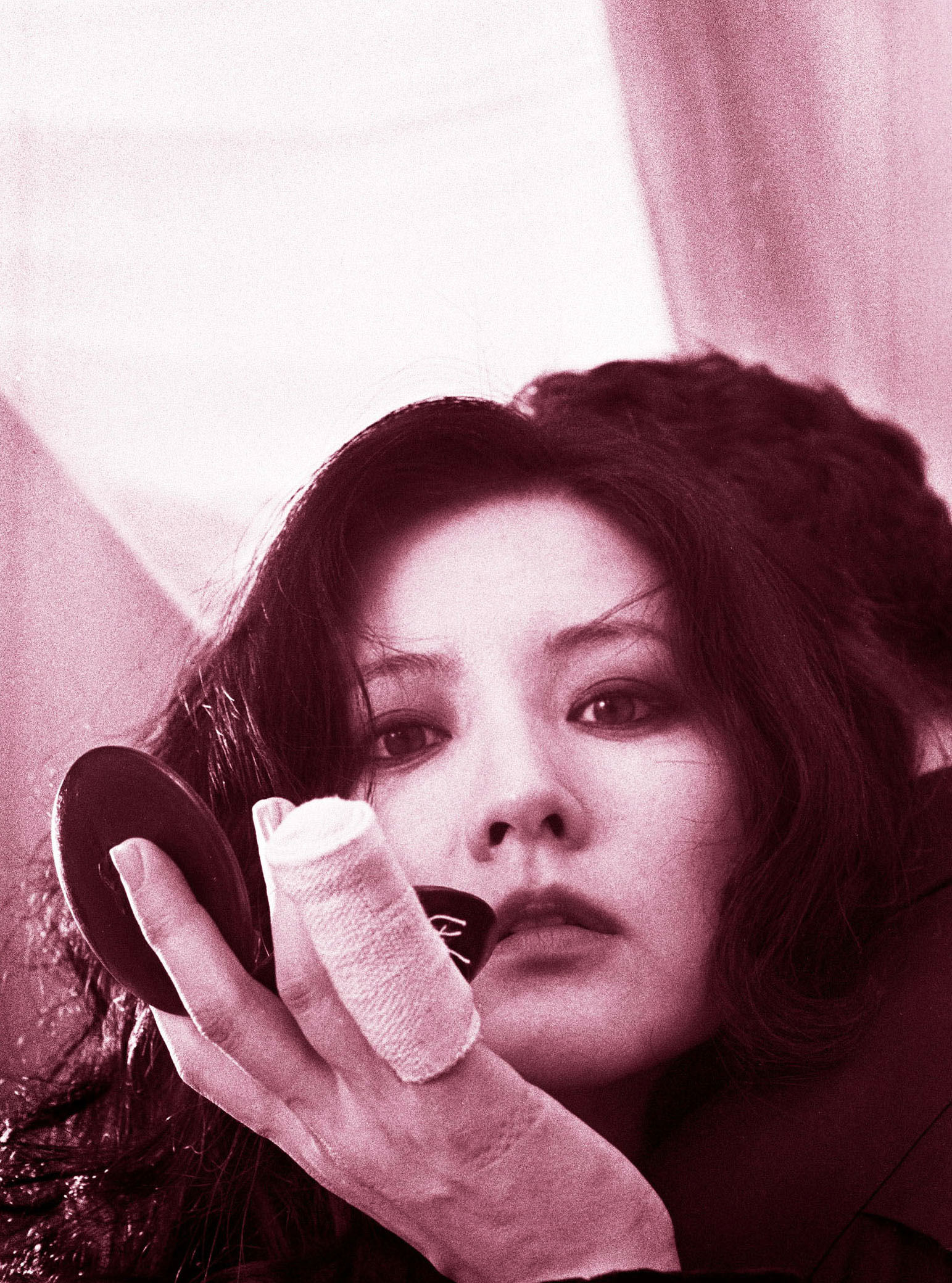
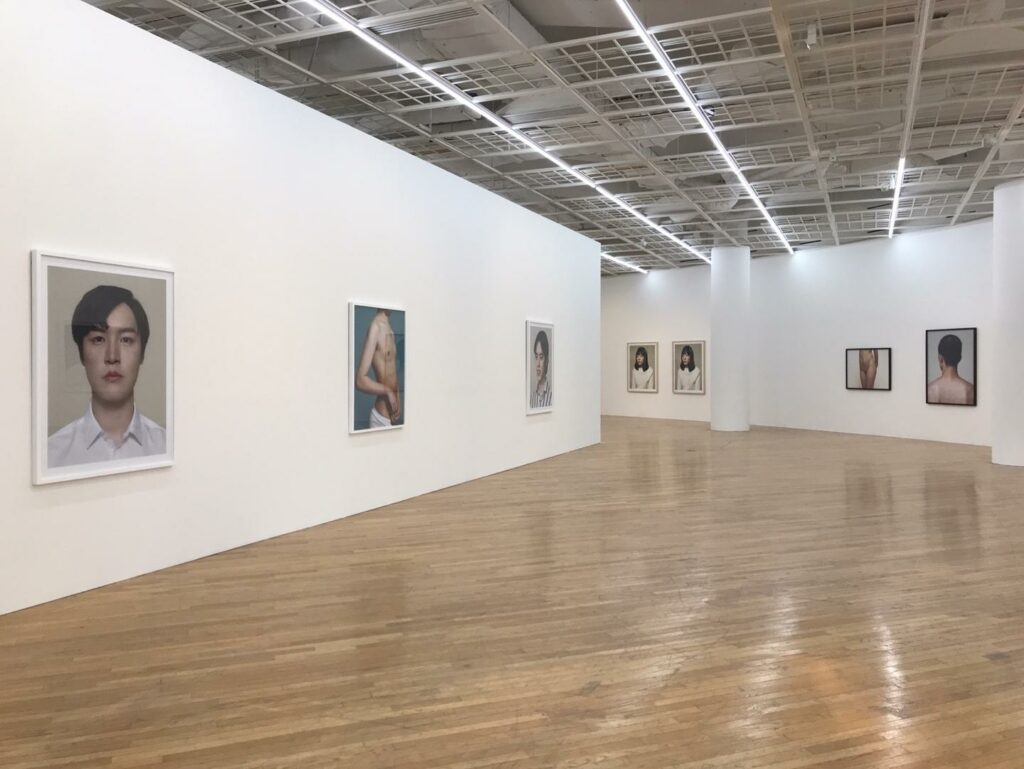
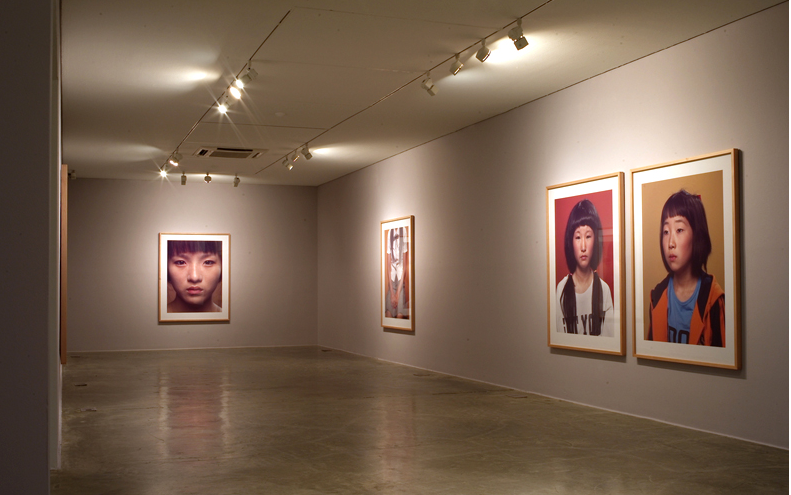
In 2006, he published ‘Cosmetic Girls’. The models ranged from
elementary school to high school girls and they were not the girls from actor’s
institutes but from ordinary girls casted from the street. Their common factor
is that they explicitly act out with the direct influence from entertainment
culture. They all had (identical) makeup done with utmost care, attached hair,
manicure, eye lashes, lower lips with Botox injections, and wore circle lens.
The makeup, clothes, socks, and shoes looked all similar. However, they were
all scattered in bizarre ways. The face in close up showed much soft hair, acne
scars around spores, and the painted nails were partially peeled off to look
ugly.
The face had thick makeup on as an adult woman but the chubby cheeks gave
them a young look and their socks had comic characters. Their legs were all
bruised and untidy. This dissonance is shameful. Oh’s perspective is very
cruel. He also focuses only on the part between body and leg where it is
sexually sensitive to arouse the gazer’s fantasy. Girls will recognize the
views of men on their particular body part and enjoy and feel anxious at the
same time. In the end, the girls know what the men would imagine by looking at
particular body part but act it out with nervous feelings. To make themselves
look like an adult, they correspond to the gaze of the contemporary men, by
taking sexy, sensual and cute makeup. But they still feel anxiety during their
act. That is because it is not their true self to be portrayed.
Disregarding men’s attention is hard as a women living in this
society. After modernity, we cannot deny that women’s body was objectified by
men’s gaze and accordingly to act as men’s gaze desires and requires has become
a matter of survival for the women. In the capitalist society, girls already
internalize such a gaze from a young age and work hard to cultivate their ways
of survival as women. In the capitalist society, girls already internalize such
a gaze from a young age and work hard to cultivate their ways of survival as
women.
Maybe that is the reason why they look as if they were performing
a costume play. They are imitating the teenage singers, characters from comics,
and celebrities shown on TV. Costume Play is a new culture of young generation
to reenact the virtual comic and game characters by wearing the costume and
props. This is a new method to find a subject to project their inner self into
the pop culture and it also functions as an active way of looking for one’s
self. At the same time, it pursues the identity enframed by the pop culture. It
is a fantasy and a virtual self-image.
Nowadays, this is the era where the girls are the owners. Everyone
goes crazy about girls and their bodies, and girlishness. Who? Men and the
atmosphere of the society that favors young girls are the ones. Everyone loves
baby face and work their hardest to look younger. The majority of culture and
fashion revolves around the image of being cute, sexy and looking young. Girls
wearing Ugg boots, rain boots, and wearing comic character costumes are the
general trend. This explains the effort to look younger and the desire to stay
as a girl forever. Why? It is because men desire that type of femininity.
Therefore, if the girls find their identity from such a character, then it is
also constructed by men’s gaze.
Most of the girls in this picture have similar makeup and fashion.
They have no facial expression and they look somewhat nervous and sad. They
were presented all in sad facial expressions. Emotional control was contrasted
by the strong background color. The girls had no facial expression but their
eyes says it all. I think the eyes are the real focus because they cannot hide
the expressions of the eyes even with circle lens and eye makeup. The eyes are
telling a story. Girls who have borrowed their identity from entertainment
culture reveal the shallow aspect of their life. Cold and cruel close up shots
of their faces show their sweat pores and unsettled makeup. It reveals the
truth under the fake and ugly makeup. The details are only grasped because they
are represented as a still image. This still image allows the viewer to observe
and gaze for a long time.
As the result, we look at even the tiny details and
this act causes some emotions to be released. The details of Oh’s photos
narrate in the end. His photo is not a work for a grandiose subject, but for an
explosion of power which only the paradoxically still and calm photo image can
create. It describes reality better and more in detail, and thus it is almost
surreal. To be honest, it is more negative. The detail always configures a
narrative! Finally, reading out the detail is what Heinkuhn Oh actually wants
to say. A good photographer, while reading the parts in detail, is the one who
can let the cue speak for everything else and the whole.