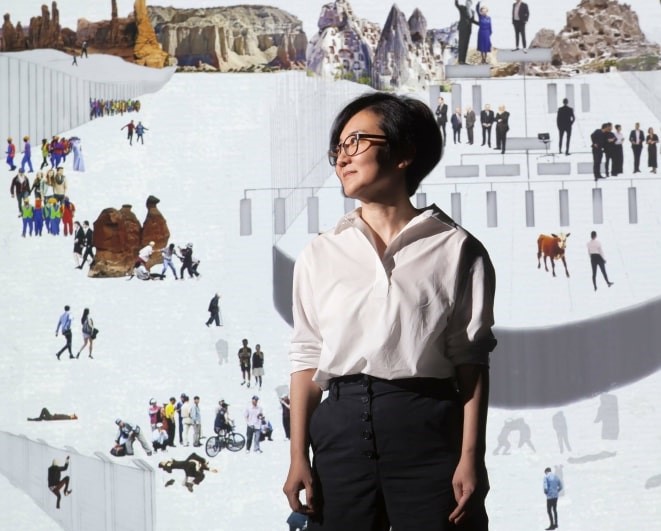
Yang Ah Ham received her BFA degrees in painting and also received masters in art theory at Seoul National University. She also studied media art at the graduate school of New York University.
Yang
Ah Ham creates video art pieces inspired by aspects of life that she has
observed and reconstructed into a new form. Ham has recently presented a
variety of panoramic artworks through two exhibitions: 《The Square: Art and Society in Korea
1900-2019 Part 3. 2019》 (September 7th, 2019 to February 9th, 2020) held at the National
Museum of Modern and Contemporary Art Seoul, and a private exhibition held at
Alternative Space LOOP, 《Yang
Ah Ham Undefined Panorama 2.0》 (September 27th to October 27th, 2019), featuring collages of the
anxious and dangerous situations encountered by humans in contemporary society.
The artist explores the concept of a ‘total narrative’ by connecting the
different points of view granted to different groups of people in society.
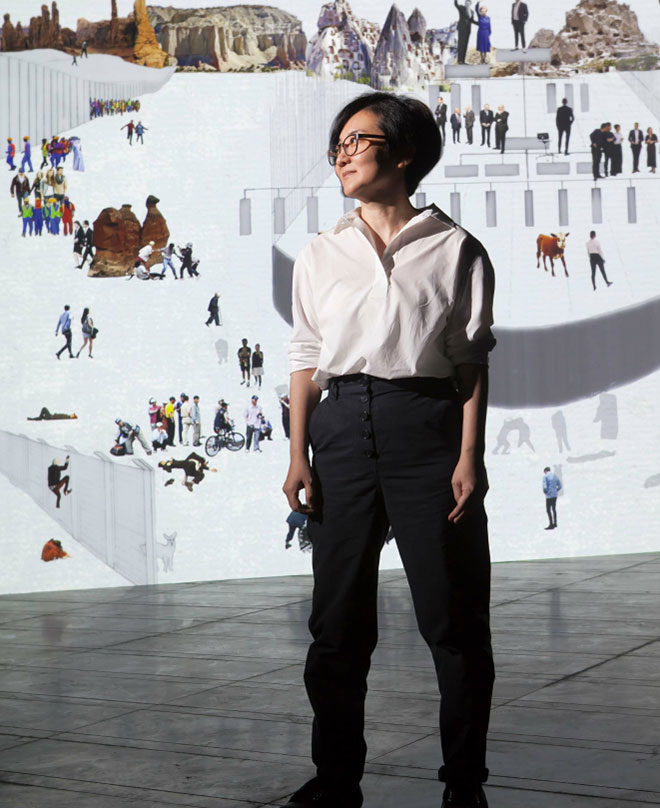
Yang
Ah Ham was born in 1968. The
artist received her BFA degree in painting and a master’s degree in art theory
at Seoul National University. She then studied media art at a graduate school
in New York. Based on her experiences of living in various countries, including
Korea, the Netherlands, and Turkey, she continues with her artwork,
contemplating the nature of individuality, groups of individuals existing
within social systems, and the development of nature by the modern
civilization. Ham participated in a number of exhibitions, including 《Trans-Justice》(Museum of Contemporary Art,
Taipei, 2018), 《Asian Art Biennial》(National Taiwan Museum of Fine Arts, 2017), 《Korea Artist Prize》(National Museum of
Modern and Contemporary Art, 2013), and 《Adjective Life
in the Nonsense Factory》(Art Sonje Center, 2010). Ham
received many awards, including the Daum Prize in 2004, Arko Artist of the year
in 2005, the Hermes Foundation Missulsang in 2008; and she also participated in the Rijksakademie
residency program in Amsterdam from 2006 to 2007.
Yang
Ah Ham has been developing her art career since the late 1990s. She is being
called “a media artist who pursuits distinctive narratives into her works by
metaphorically portraying the social aspects based in life” (introduction page
of 2013
Korea Artist Prize on
the website of National Museum of Modern and Contemporary Art). She is also
known as an artist who explores moving image art installations, in other words,
a ‘video artist’. The former description focuses on subject matter and theme,
and the latter describes the medium or form of the works. However, since
contemporary Korean artists who metaphorically describe various aspects of
society develop so many relationships across different media and forms of art,
this alone does not clearly identify the uniqueness of the artist. Therefore,
to uncover Ham’s artistic history and the dialectic between consistency and
variety that she has been pursuing, we must track the ways she has used video
to express her thematic motifs. This approach is not only required in
understanding Yang Ah Ham, but also in understanding other contemporary ‘video
artists’, as well as artists who do not want to be defined as video artists but
have created a number of moving image art pieces. Her various works, introduced
through 《Yang Ah Ham: Undefined Panorama 2.0》 held at Alternative Space LOOP and 《The
Square: Art and Society in Korea 1900-2019 Part 3. 2019》 held at the National Museum of Modern and Contemporary Art Seoul,
provide opportunities to contemplate the relationship between content and form
through the array of expressions presented by the artist.
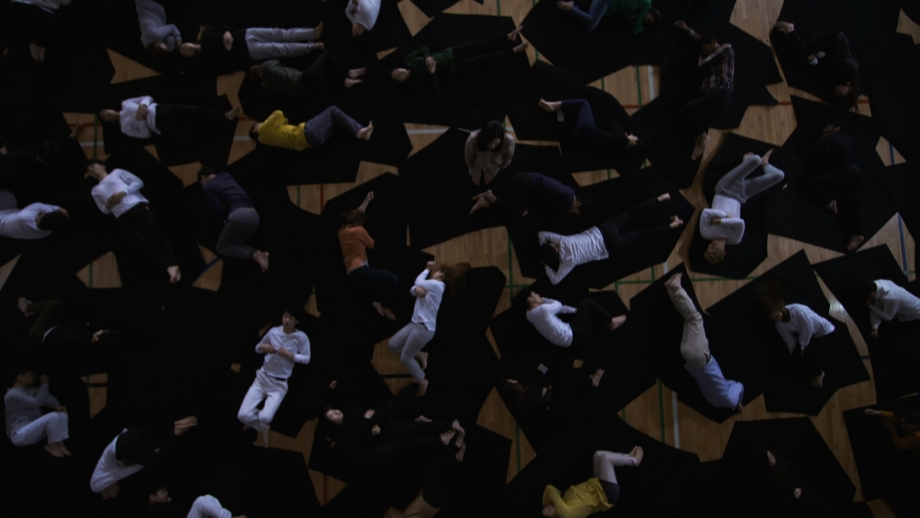
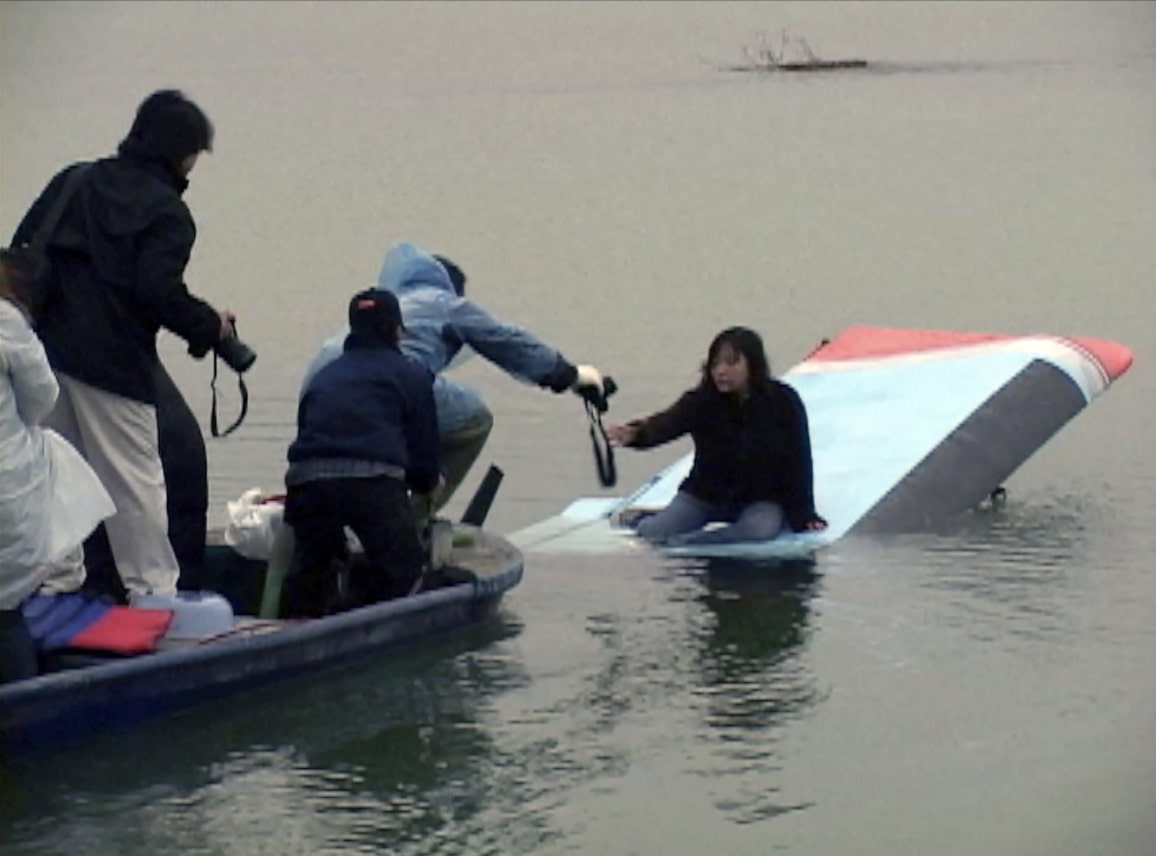
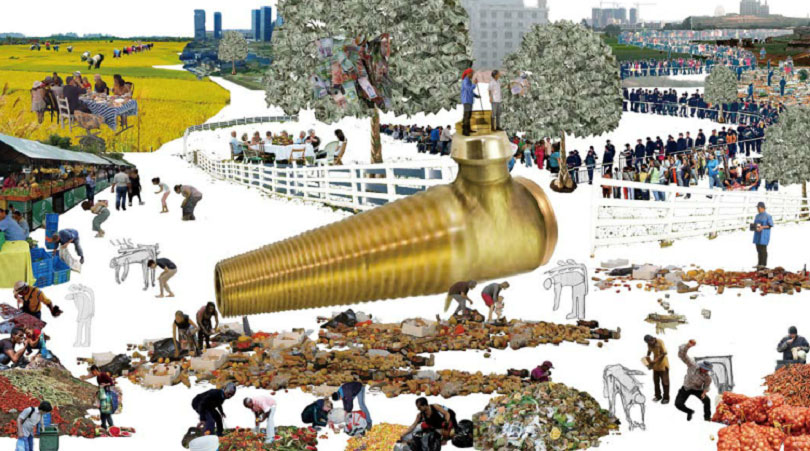 Yang Ah Ham, 〈Hunger〉, 2019. Single channel video, color,
sound, 7 minutes © Yang Ah Ham
Yang Ah Ham, 〈Hunger〉, 2019. Single channel video, color,
sound, 7 minutes © Yang Ah Ham
Ham’s
works, introduced through the private exhibition held at Alternative Space
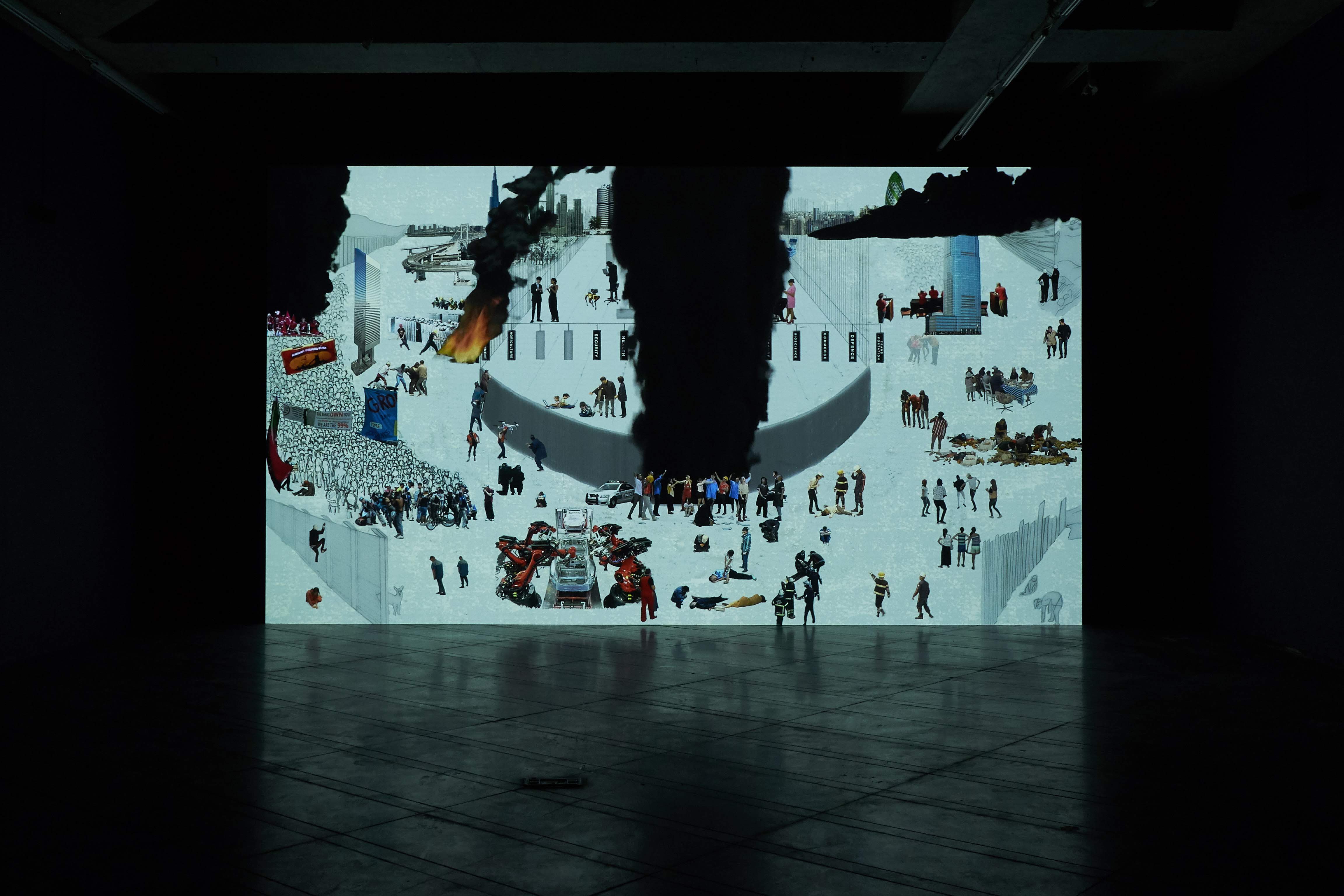
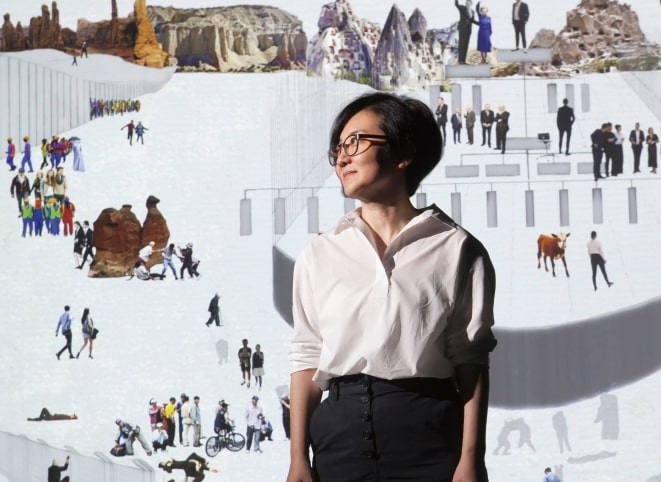
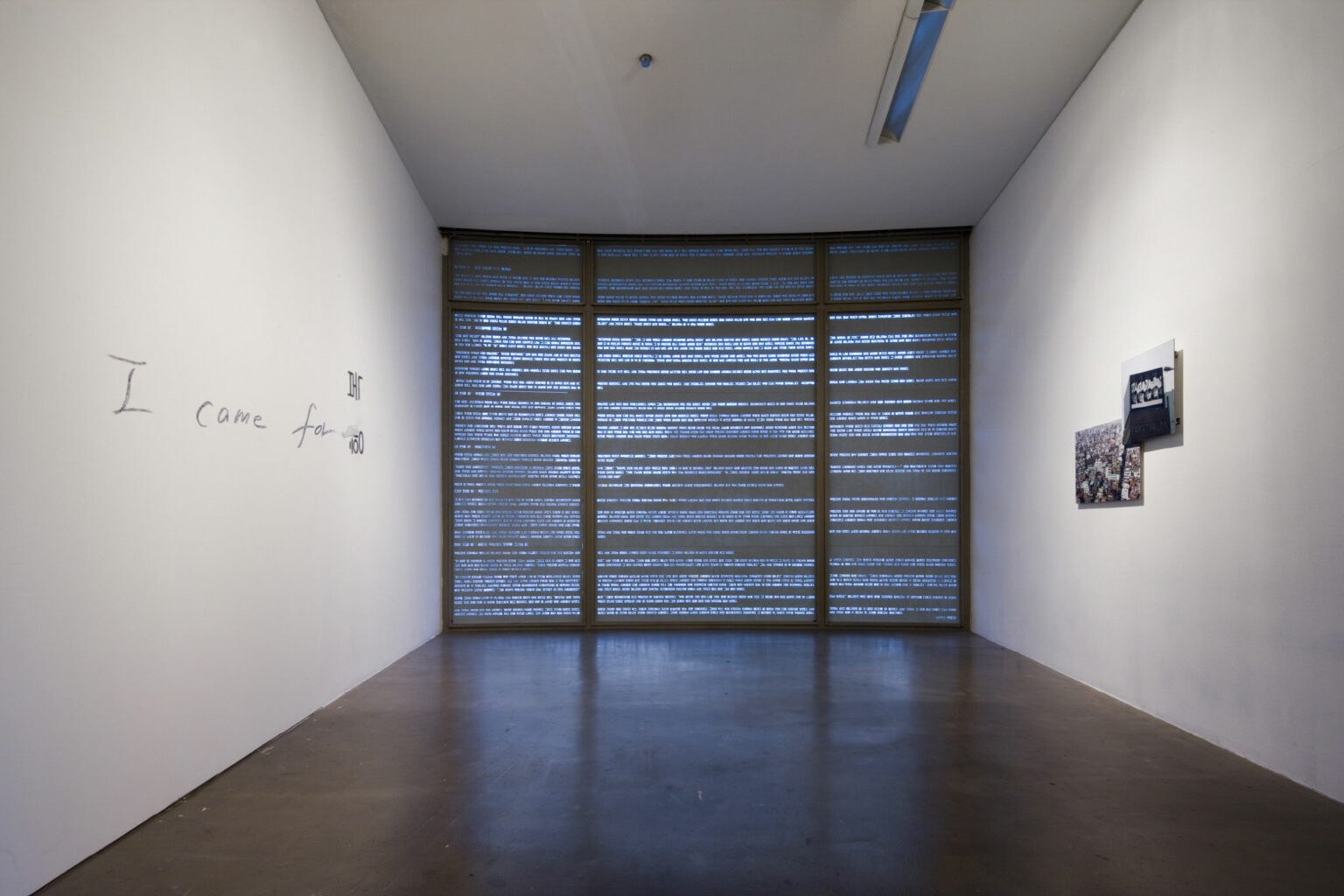
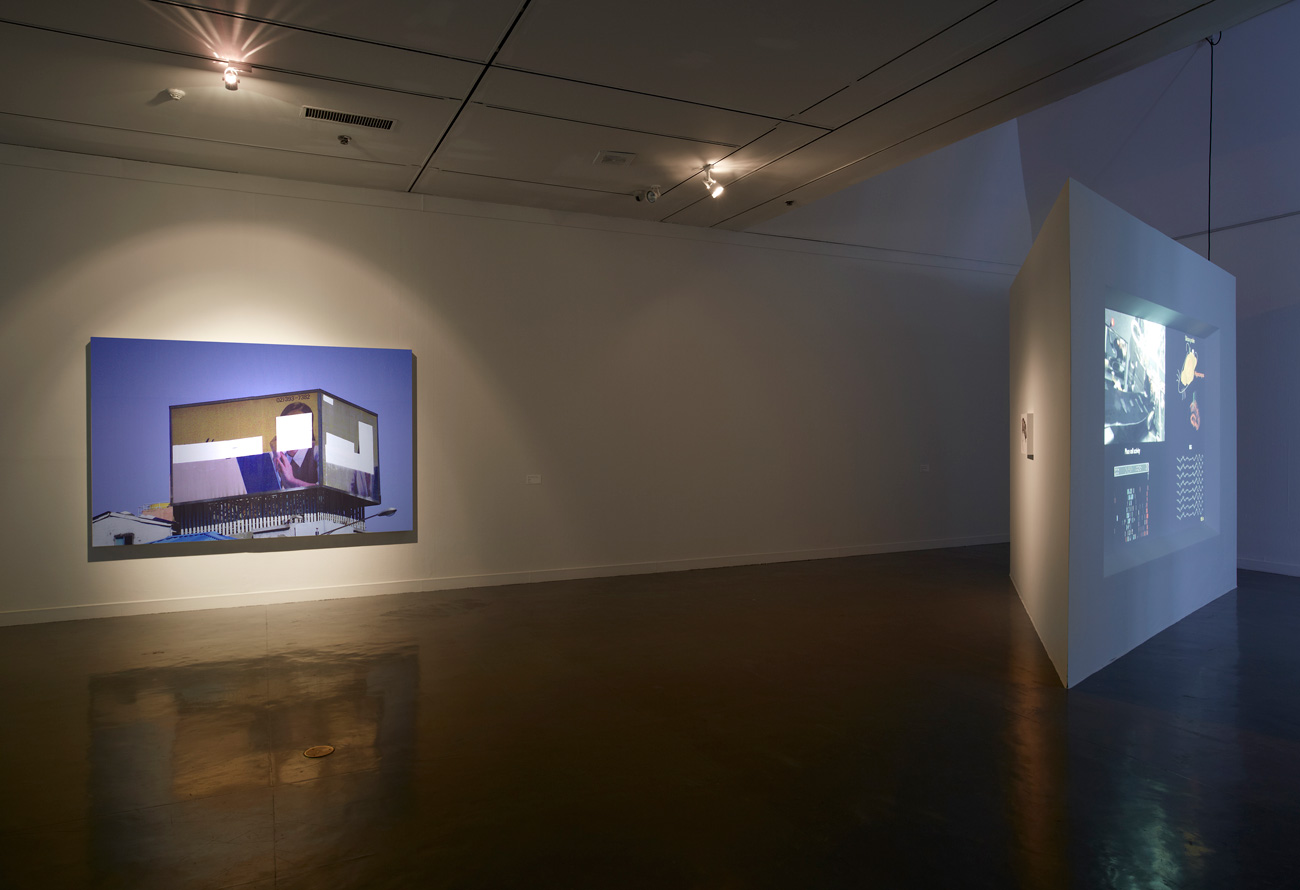
LOOP, are categorized into two. The first category consists of 〈Undefined Panorama 2.0〉(2019), a series of
video art pieces portraying images she has been sketching since 2018, including
a two-dimensional organization chart of the government, and people who live in
the chaos caused by the financial crises of the neoliberalism system. The scenes
were created through the acting of her acquaintances in front of a green
screen. (Version 1.0 of this series is being displayed through 《The Square: Art and Society in Korea 1900-2019 Part 3. 2019》.) In 〈Hunger〉(2019),
another piece of video art created through the same method, the class gap,
worsened by the lack of food and the inequality of consumption, is portrayed.
The second category of works consists of the two single channel video art
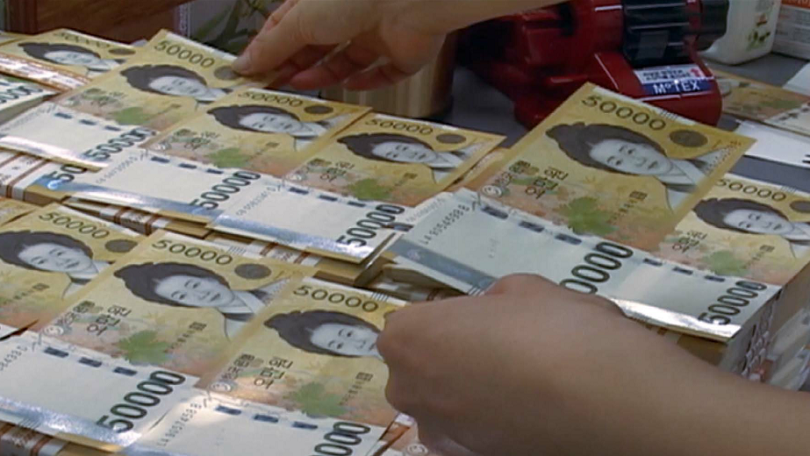
pieces belonging to 〈Nonsense Factory〉, an art project that the artist began in 2010. One is 〈Nonsense Factory - Coupon Room〉(2013-2017),
which uses an observational documentary method to portray the workers of Korea
Minting, Security Printing, and ID Card Operating Corporation, as well as the
process of making paper money; and the other is 〈Nonsense
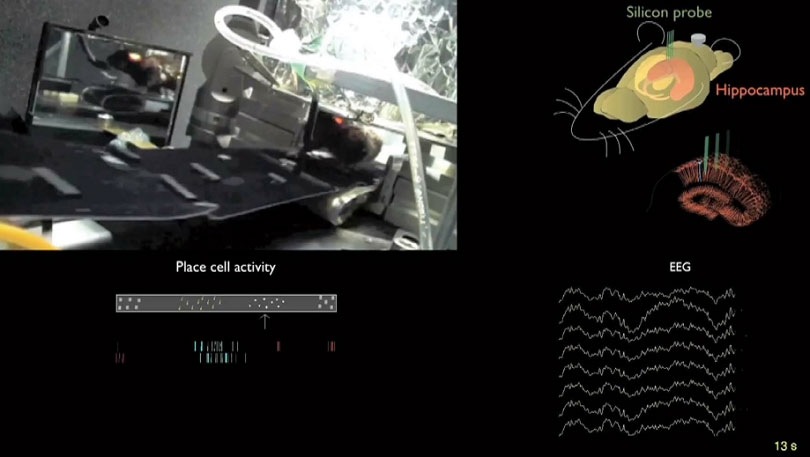
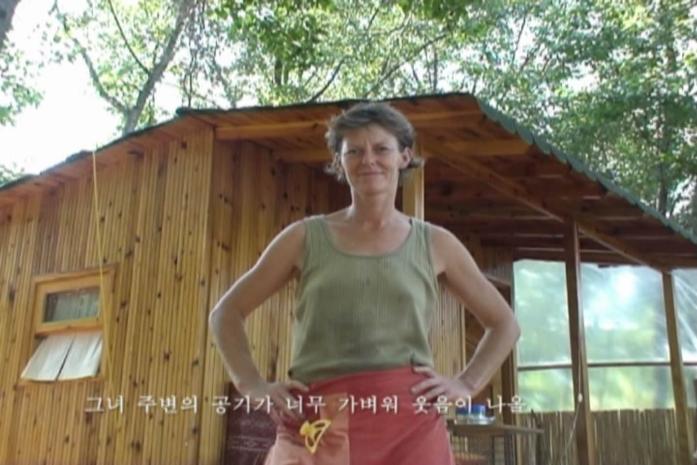
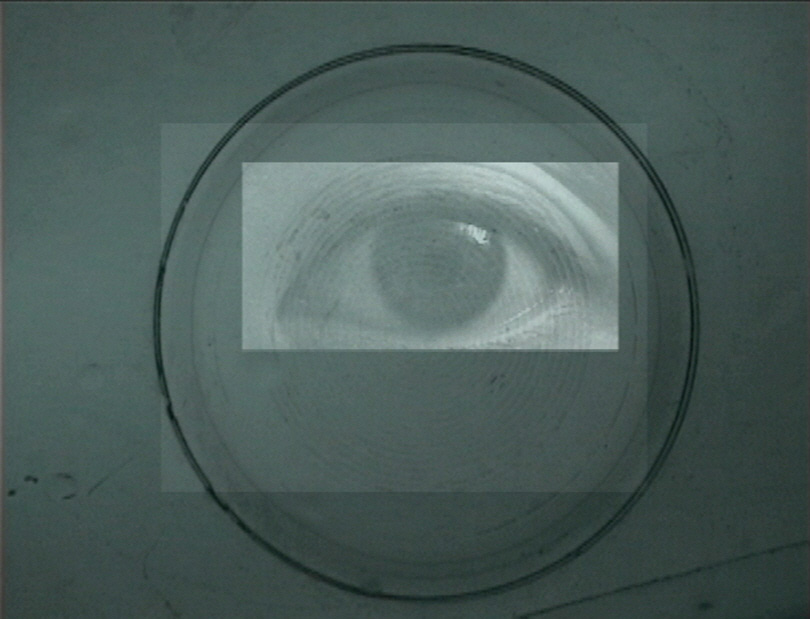
Factory - Blue Print Room for a Future Factory〉(2013-2017),
which intersects images of a rat repeating the same movements within a
mechanical structure, including a spinning wheel and the real-time graphic
images of the rat’s brain cell activities and brainwave patterns.
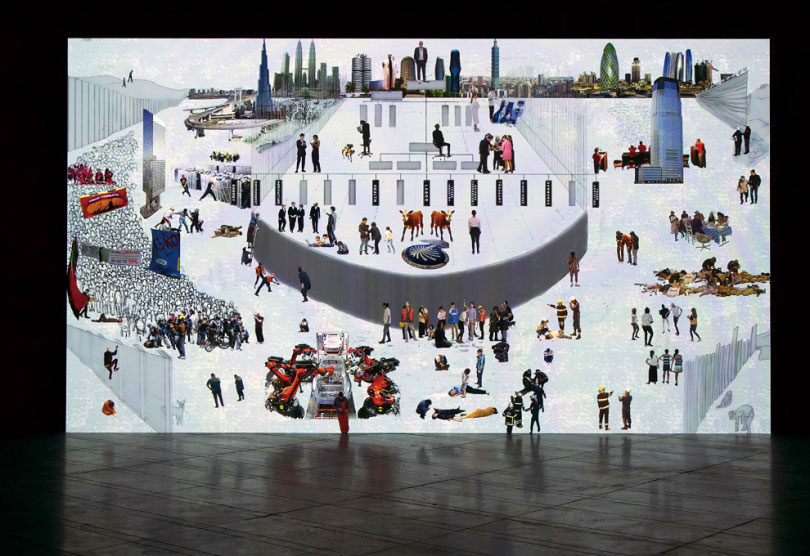 Yang Ah Ham, 〈Undefined Panorama 2.0〉, 2019. Single
channel video, color, sound, 7 minutes. (Installed at Alternative Space LOOP) ©
Yang Ah Ham
Yang Ah Ham, 〈Undefined Panorama 2.0〉, 2019. Single
channel video, color, sound, 7 minutes. (Installed at Alternative Space LOOP) ©
Yang Ah Ham
Comparing
the two categories may elucidate the artistic consistency underwriting Ham’s
thematic motifs. A comment from Sumi Kang, a reviewer who wrote many articles
regarding Yang Ah Ham’s works, helps with such an endeavor. Kang described 〈Nonsense Factory〉 as a project that “reveals
the underlying structure and hidden attributes of contemporary life, as well as
the systematic relationship between people and society”1). Ji Yoon
Yang, the planner of Ham’s private exhibition at Alternative Space LOOP, considered
the first category of Ham’s works as a digitally updated, chaotic, and
multi-layered version of the medieval religious paintings of Hieronymus Bosch,
and proposes that the artist “criticizes the current attitude of indifference,
which assumes neoliberalism as the general condition that has existed
throughout history”2). This view is also an effective approach in
defining Ham’s underlying thematic motif. However, the two reviewers merely
discussed thematic motif and did not mention any developments in Ham’s works in
terms of form and technique, as well as the consistency maintained (or
theoretically assumed) in spite of such developments. How do the two modes of
Ham’s work complement or contrast one another? To answer this question, I
consider 〈Nonsense Factory - Coupon Room and Nonsense
Factory - Blue Print Room for a Future Factory〉 as both
separate art pieces as well as a two-channel video art installation.
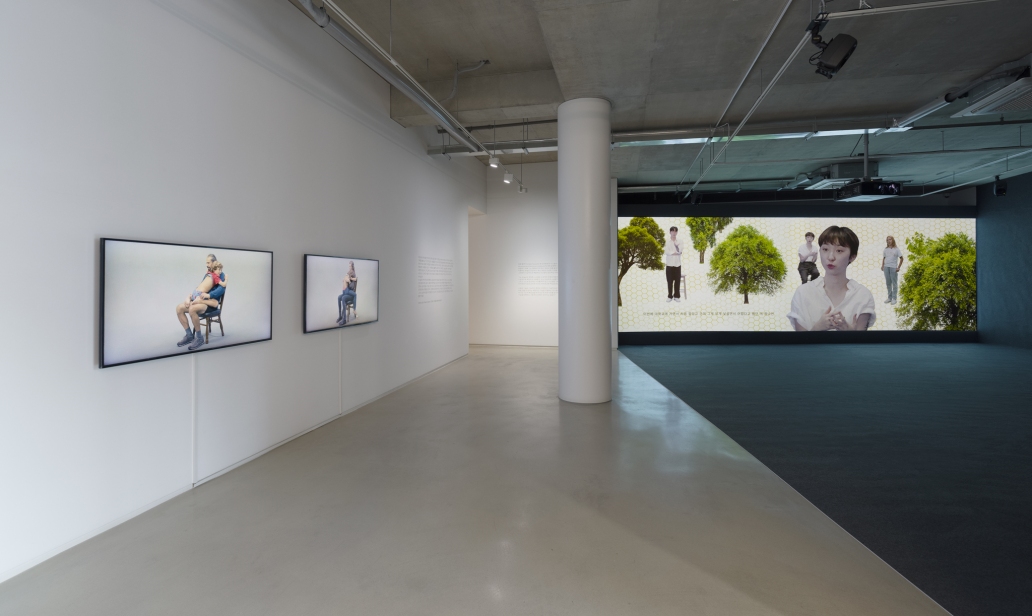
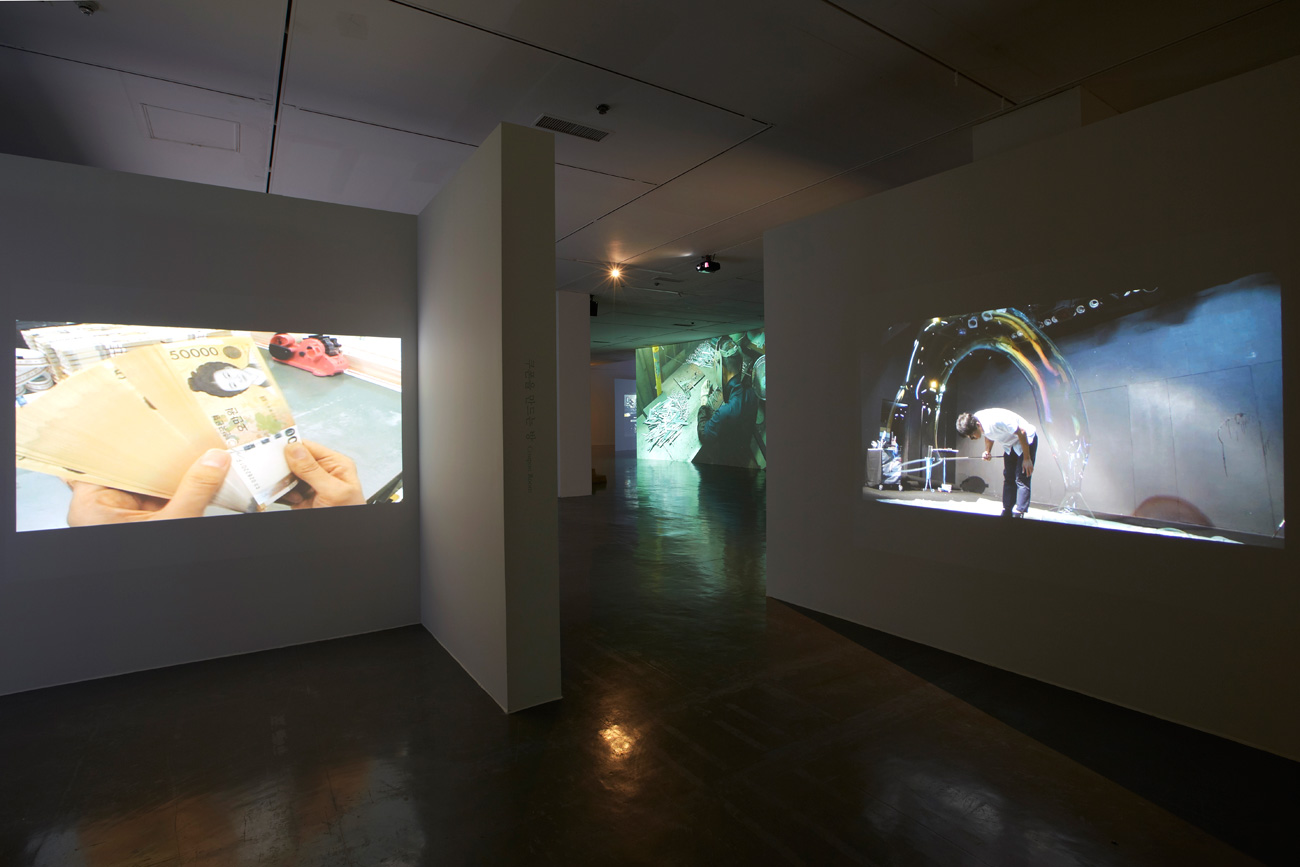
In the
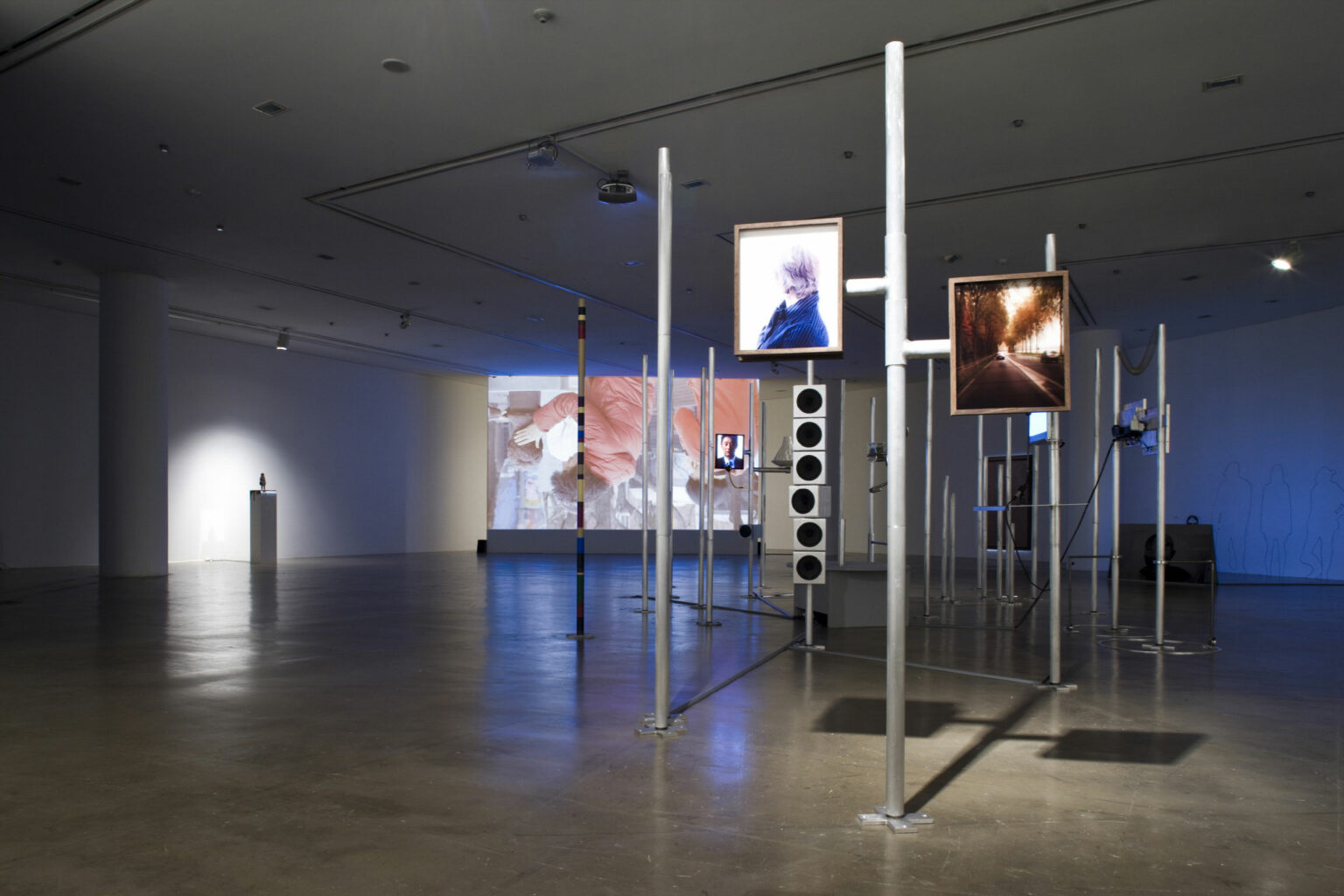
exhibition room, two 30-inch monitors displaying the artwork are placed next to
each other in parallel, and therefore viewers can naturally appreciate and
criticize the two artworks from the same point of view. (And I assume the
artist intentionally placed them in this way.) In 〈Coupon
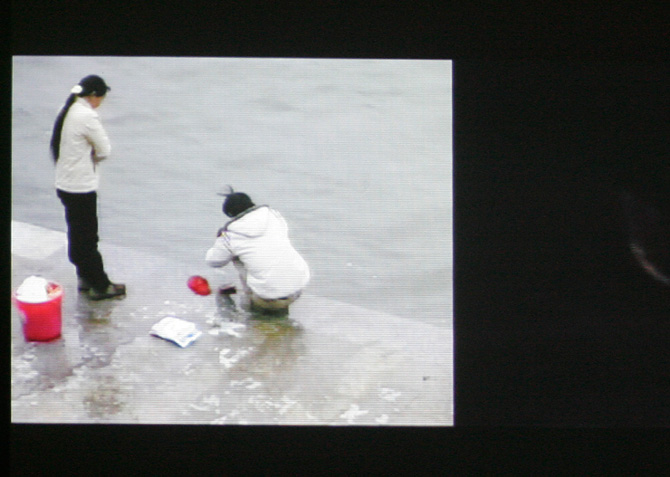
Room〉, Ham uses closeup shots of various entities: a
conveyer belt that facilitates the mass production of paper money, produced
bills, the hands, and eyes of a female worker who swiftly checks the bills, and
the stacks of bills that she processes. The repeated jump cut images of hands,
especially, imply that Ham focuses not only the money itself but also the body
of the worker who processes it. An interview with the worker supports this
approach. The worker considers the process, which takes place ten to twelve
times a day, a “daily routine”, and says the bills are “not money, just
products” in the factory. As such, Ham visualizes the process of conversion
from labor to exchangeable value. However, the overlapping image of the “Blue
Print Room” on the right, which is being simultaneously provided, begs the viewers
to contemplate the unseen dimension behind the worker’s hands and eyes. As the
images of hands and eyes interleave the graphic recordings of the brain cell
activities and brainwave changes of a rat moving inside a spinning wheel, new
meanings are derived: the unmaterial and non-semantic dimension of the
repetitive tasks of workers juxtapose the neurological dimension of bodies that
sense and act, which is a recent trend in media studies. The technique is based
on traditional cinematic methods to produce and deliver critical knowledge and
higher ideologies, as well as the cerebral effects of the montage, which have
been pursued by many other contemporary multi-channel video art installations
(but not always successfully delivered).
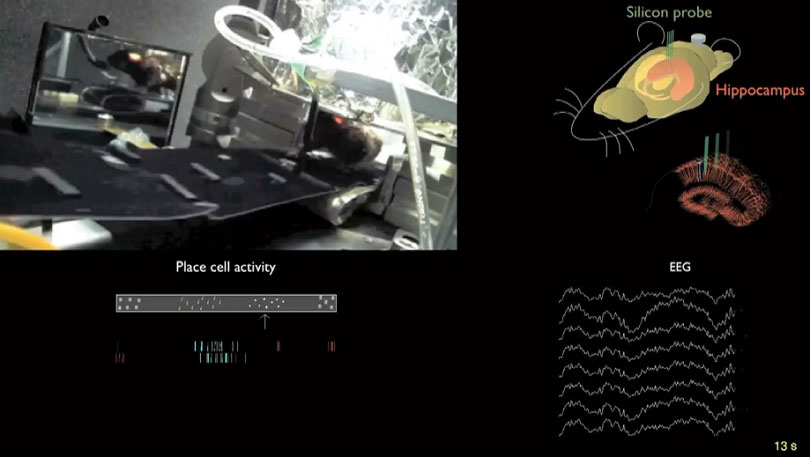 Yang Ah Ham, 〈Nonsense Factory - Blue Print Room for a Future Factory〉, 2013-2017. Color, sound, 3 minutes 30 seconds. © Yang Ah Ham
 Yang Ah Ham, 〈Nonsense Factory - Coupon Room〉, 2013-2017.
Color, sound, 5 minutes 11 seconds. © Yang Ah Ham
Yang Ah Ham, 〈Nonsense Factory - Coupon Room〉, 2013-2017.
Color, sound, 5 minutes 11 seconds. © Yang Ah Ham
Considering
these developments in form, the first category, consisting of Ham’s more recent
works, can be taken as a methodological change from montage to collage. This
development is identical in the second category, which is a type of two-channel
video art installation. 〈Undefined
Panorama 2.0〉 and 〈Hunger〉 are based on the logic of spatial simultaneity, interweaving the
images of bureaucracy, finance, political disturbance, labor, reckless
sprawling development, and disaster; and here, viewers experience and construct
their own narratives by observing the unstable world of today and the people
living inside of it. At the very least, the two art pieces provide unique
viewpoints on the signs of potential risks that are exploding simultaneously
and unevenly from the various dimensions of our society, thus building a total
image that encompasses the signs. The coexistence of these multiple layers in
society and the totalistic approach to encompassing them leads to a rebirth of
the medieval view of the world. Therefore, compared to the relatively modern 〈Nonsense Factory〉 series, the two art pieces
can be interpreted as a postmodern development in the work of Yang Ah Ham.
Of
course, the conversion to the collage method was not a complete success. Unlike
the title, 〈Undefined Panorama 2.0〉 and 〈Hunger〉 do not
offer a 360-degree view, which panoramic media should offer. Instead, they
appear as flat tableau consisting of seldom changing shapes and the slight
movements of objects. In addition, the two artworks display technical and
aesthetic limits when compared to works like 〈Civilization(Megaflex)〉 (2008) by Marco
Brambilla or 〈Microcosm〉(2007-2008) by Miao
Xiaochun, which fused disparate video
footage in exploring the chaos of this age from a religious and philosophical
perspective, through digital synthesis techniques like collage, or by
reconstructing video footage through 3d animation techniques and interpolating
the footage into sophisticated and dynamic digital paintings. If Yang Ah Ham
continues to use the collage technique based on digital modes of synthesis, she
needs to overcome these limits. (According to Ji Yoon Yang, the 〈Undefined Panorama〉 series will be continued
for the next few years while introducing updated versions).
1
Sumi Kang, 「Non/Meaning: Sociality in
the Art of Yang Ah Ham」, introduction page of 2013 《Korea Artist Prize》 on the website of
National Museum of Modern and Contemporary Art, http://koreaartistprize.org/
project/%ED%95%A8%EC%96%91% EC%95%84-2/.
2 Ji Yoon Yang, 「Yang Ah Ham:
Undefined Panorama 2.0」, Alternative Space LOOP
website, http://altspaceloop.
com/exhibitions/undefined-panorama.
※
This article was originally published on the November 2019 issue of Monthly Art
and is provided by the Korea Art Management Service under a content provision
agreement with the magazine.