Young
Uk Yi is an artist who explores the relationship between two and three
dimensions in his art. Through several series of works, he has developed his
artistic world by transforming his previous works. While his previous series
explored the transition from two-dimensional to three-dimensional and back
again, uncovering underlying aspects and possibilities through this process,
his solo exhibition “Deformation of
the Frame” seems to focus on painting instead, aiming
to expand the sensory experience of imagery through an experimental exploration
of the act of ‘repetition’
inherent in painting.
In
his previous works, the overlapping of images was the predominant form
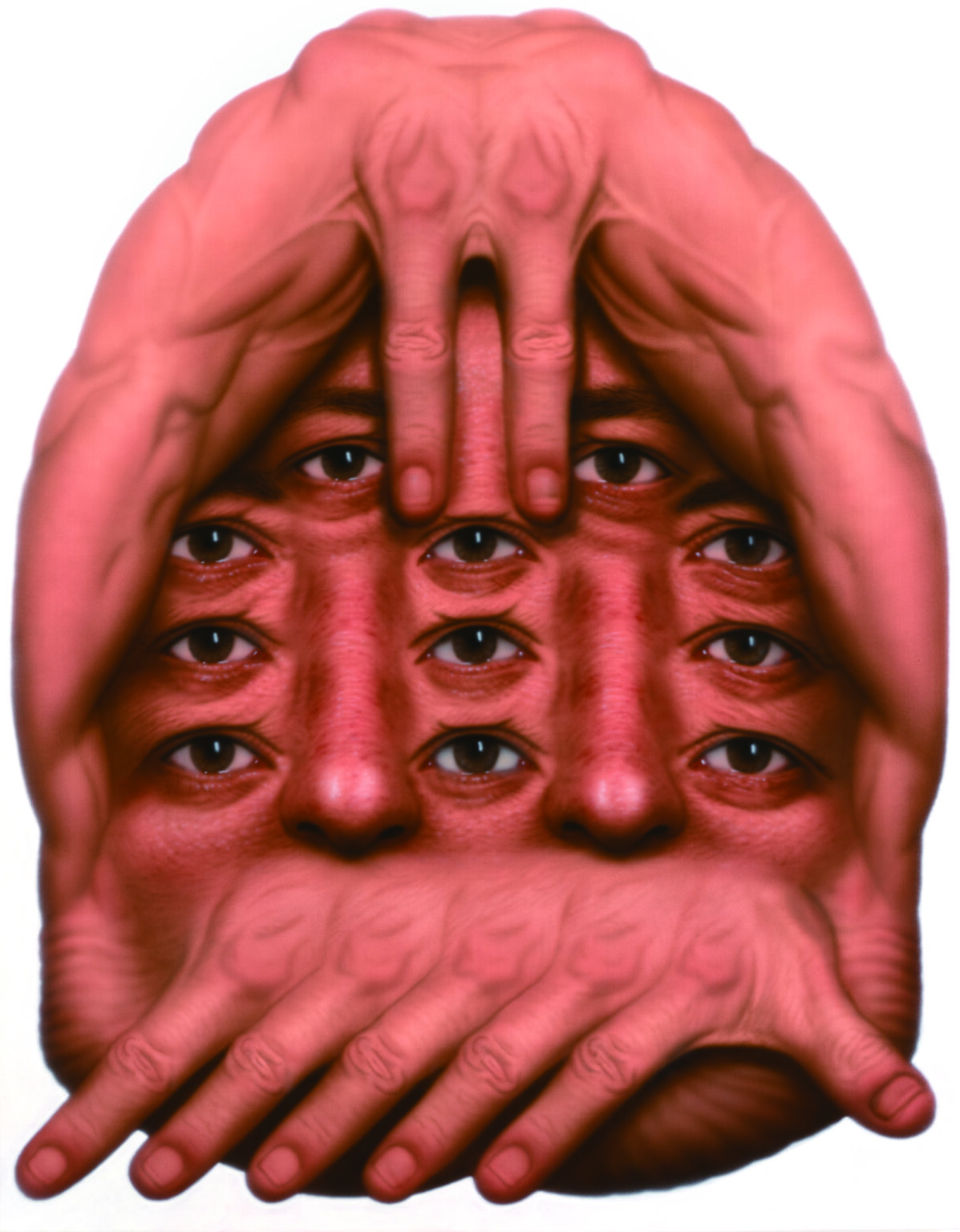
throughout the series. For example, in past works, figures disintegrate into
unrecognizable forms before being reassembled in a row, completing a bizarre
shape. The variation of shapes, where one representation fills the entire
canvas in two dimensions and becomes a single mass in three dimensions, is
realized through a series of acts involving the repetitive arrangement of
specific subjects or motifs. Through such imagery, he questions how the form of
“representation” in art
history has influenced the perception of subjects. And the artist seems to
propose the form of ‘repetition’ as a method to materialize these doubts.
Through
a methodology of dismantling and reassembling shapes, Young Uk Yi questions how
the form of ‘repetition’ operates in today’s society. In the
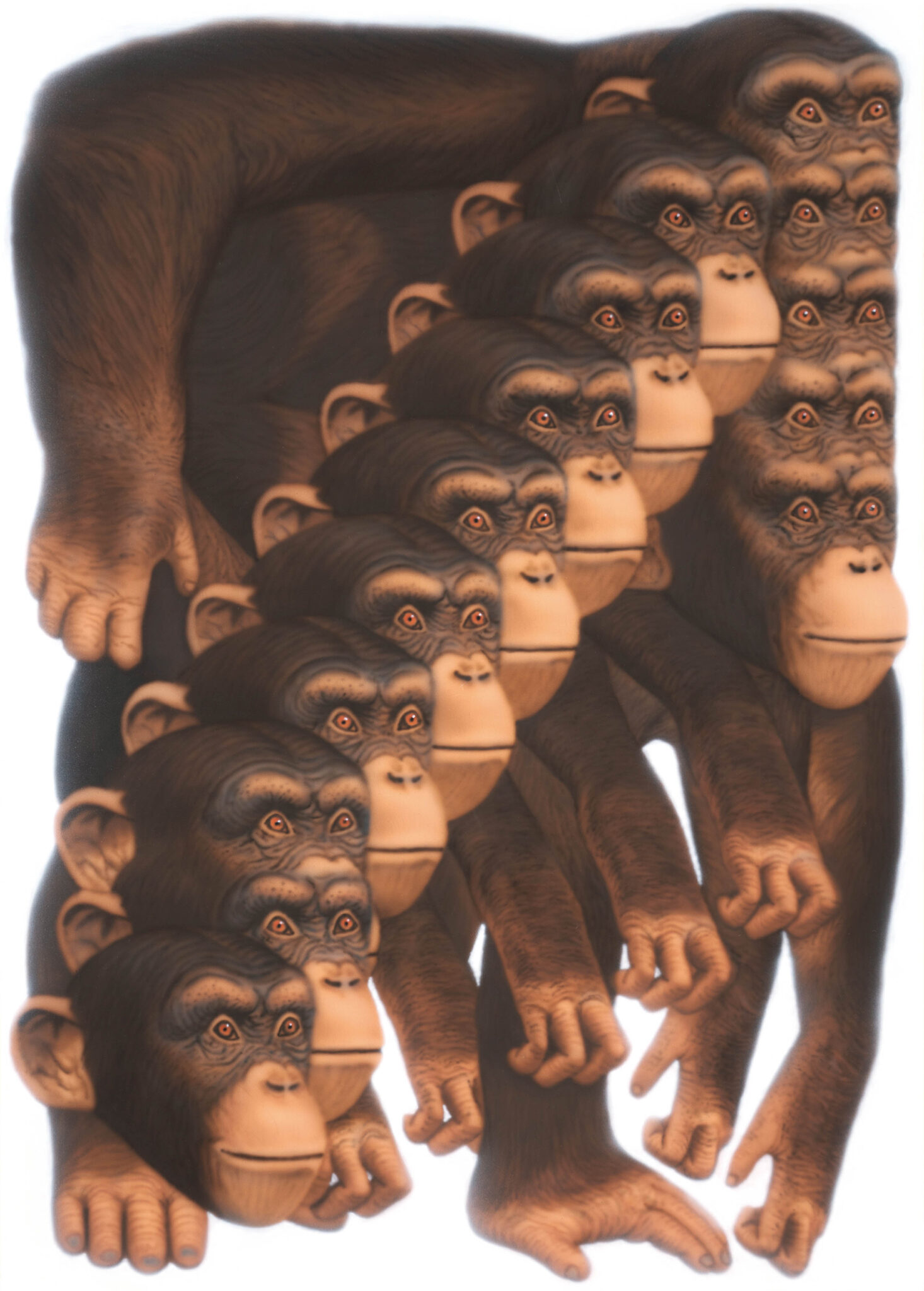
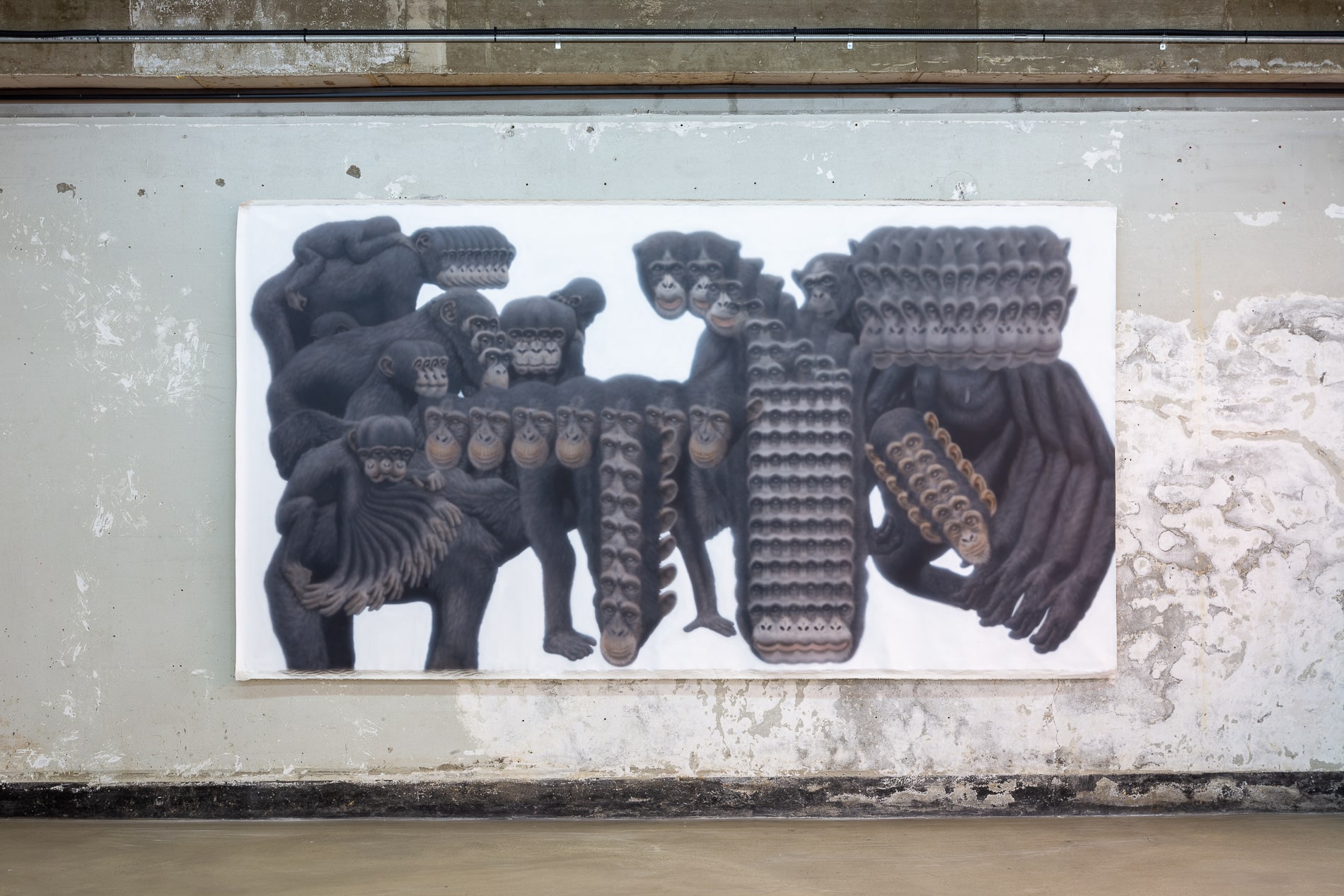
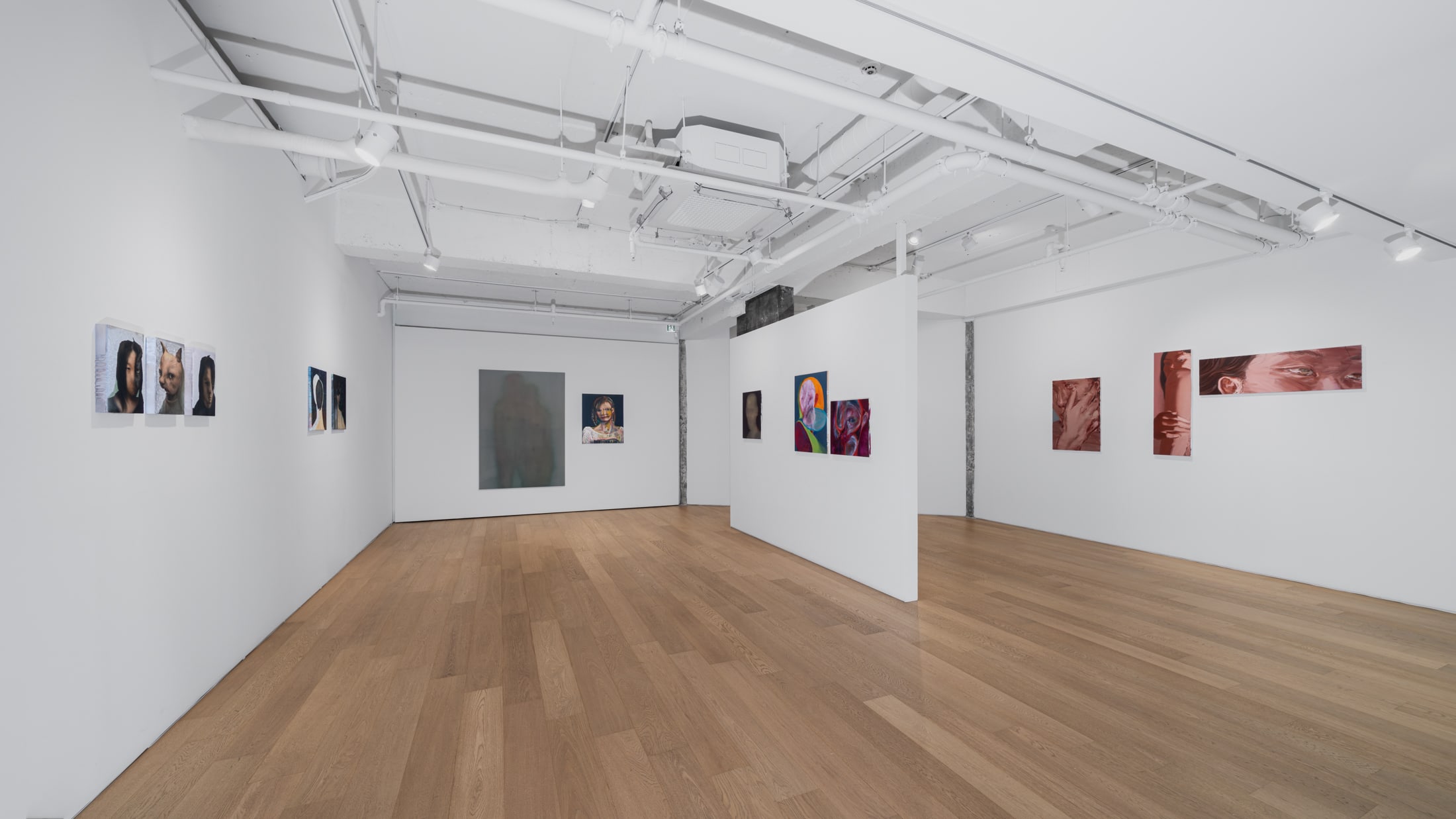
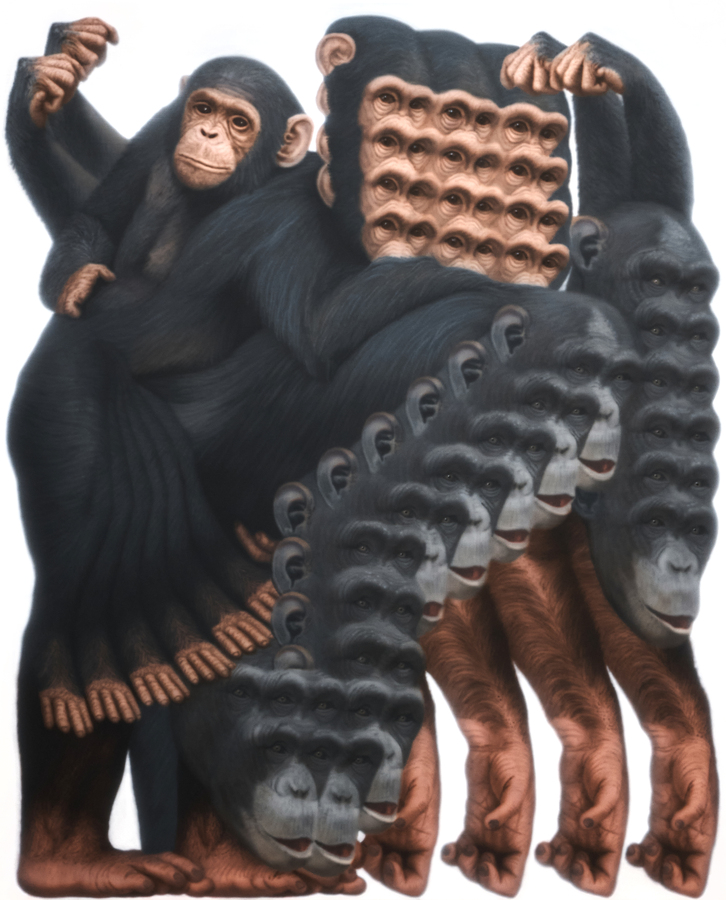
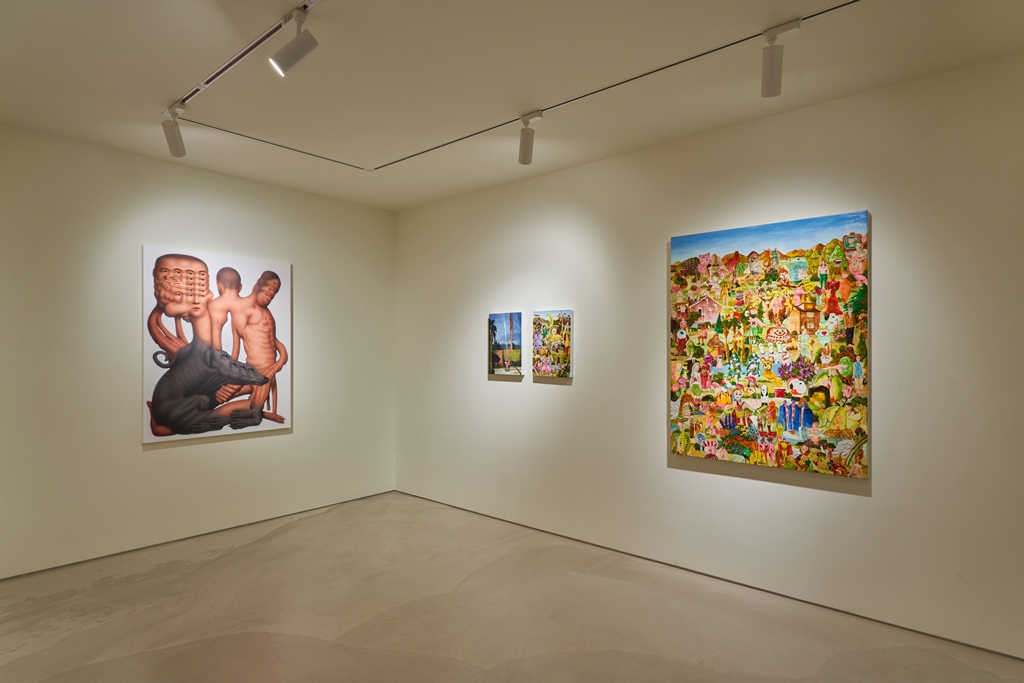
paintings presented in this solo exhibition, corporeal subjects, depicted
realistically yet fragmented in a grotesque manner, overlap and unfold. The
distinctive feature of the subjects here lies in their display through detailed
depictions, evoking sensory impulses in viewers through emphasized images
aligned in a row. Moreover, the strange composition of the images evokes
computer graphics or generated images, leading the audience into a visual
illusion.
The
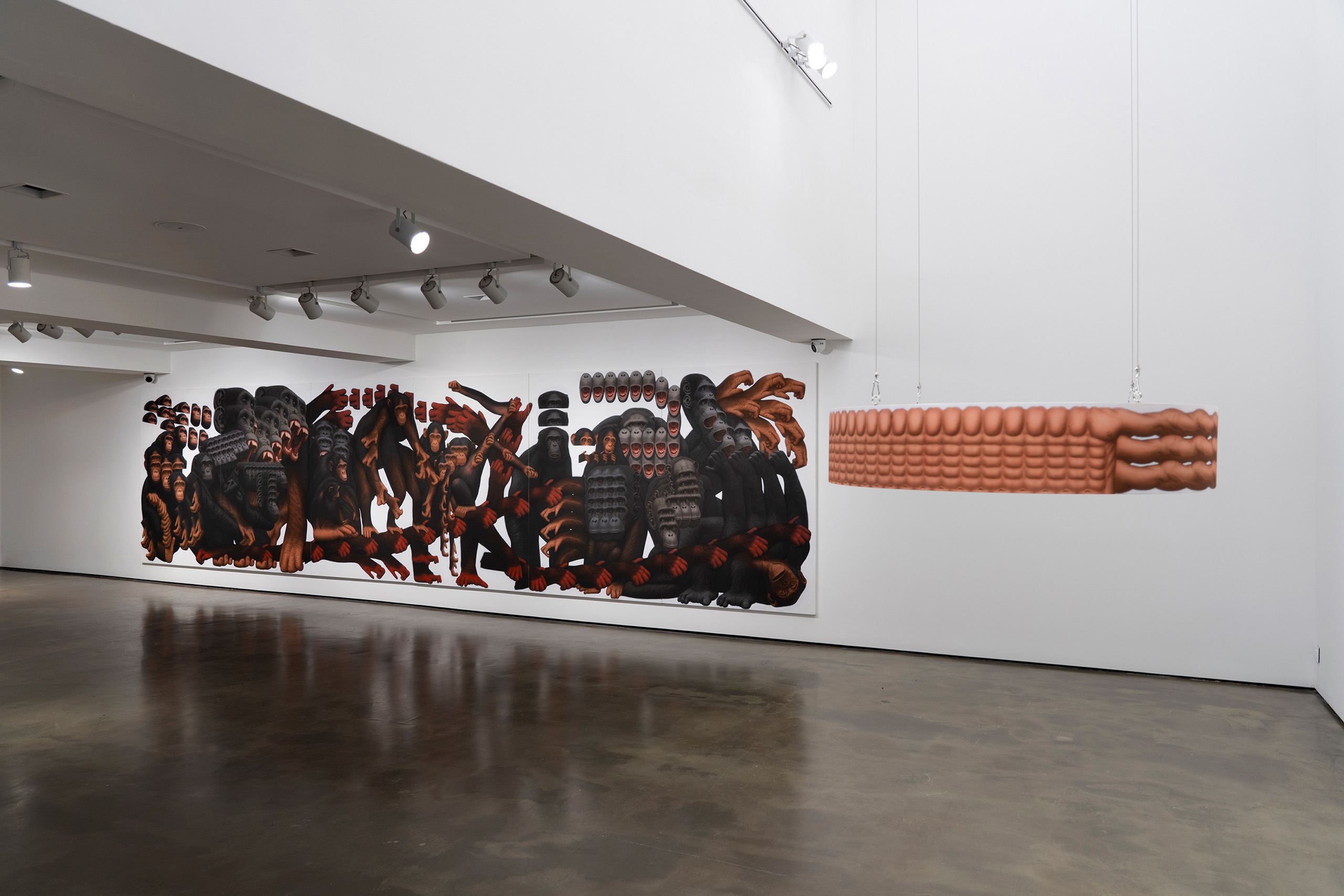
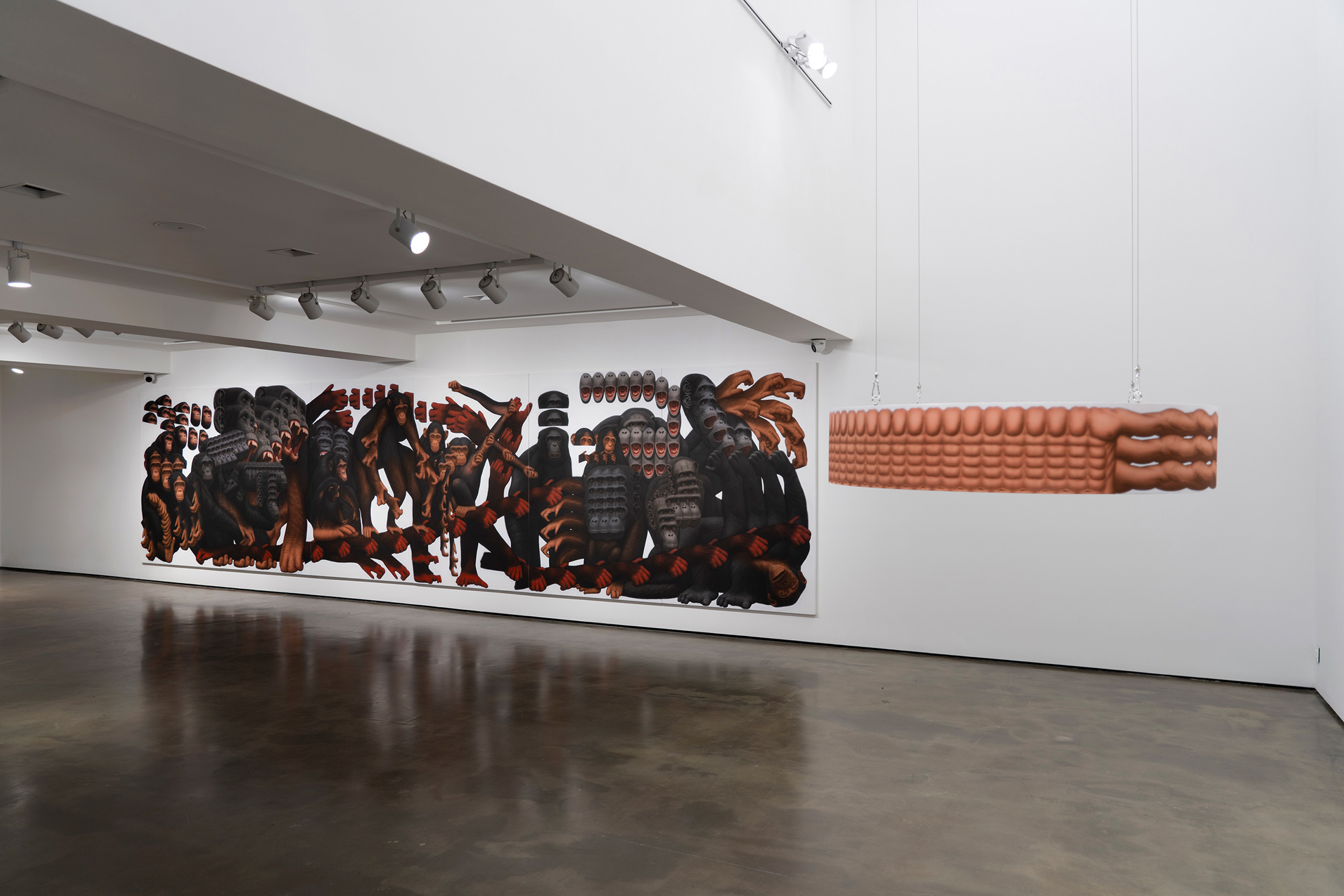
main subject matter in his work is ‘primates.’ The image of primates, appearing
as a metaphor for imagining the future, according to Charles Darwin’s theory of evolution, is a historical product that shares a common
ancestor with humans and has played a significant role in the scientific
development of humanity. For the artist, the image of primates represents not
only the original form of humans but also a subject that enables infinite
replication and reproduction. This serves as a symbolic image for representing
the human body, suggesting infinite replication while simultaneously appearing
as a subject for painting reproduction.
Within
his canvases, the bodily characteristics resembling humans are positioned in a
manner that reveals familiar aspects of the subject while inducing
unfamiliarity and fear through deliberate repetition. Overlapping eye shapes,
segmented body parts, fragmented hands and feet reconstruct a distorted form to
create a single image again. This may seem to have a certain pattern at first
glance, or it may induce misconceptions akin to representing certain symbols.
Ultimately, the abstraction resulting in an incomplete image deliberately
dismantles a series of visual cognitive processes aimed at reconstructing a
known form, eliciting uncomfortable emotions such as strangeness and discomfort
when confronted with an incomplete body, while implying the anxiety inherent in
the compulsive act.