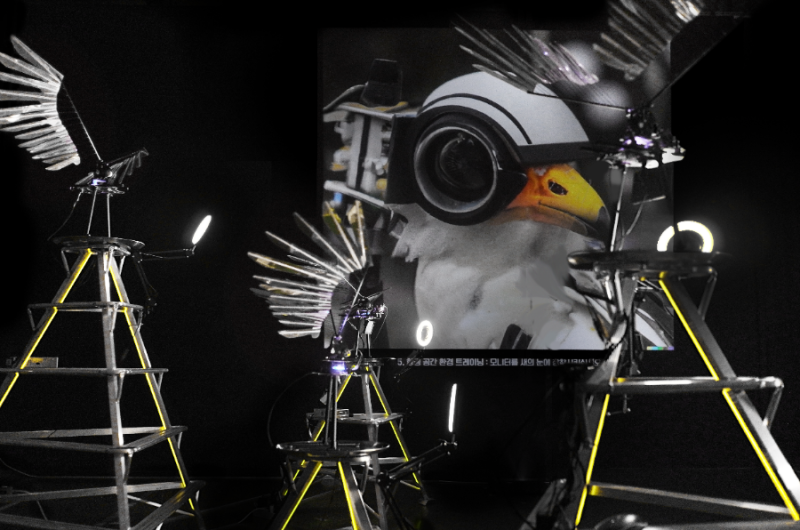
Blind Landing
Humans
today optimize their abilities through fast data processing systems, cloud
technologies, and media platforms, perceiving all these tools as being under
their control. At times, they even trust the use of technology more than their
own decisions. Blind Landing is an installation inspired by
the novel Night Flight, in which the protagonist Fabien is a pilot trained to
rely on instruments over his senses during flight. While the novel shows a
dehumanized protagonist who depends on machines during night flights, this
installation offers viewers an experience of machine-led dehumanization that
renders them passive through the quantification of perception. The artist
continually exposes how individuals lose themselves by relying on the
predictability and convenience of modern technologies.
Audiences
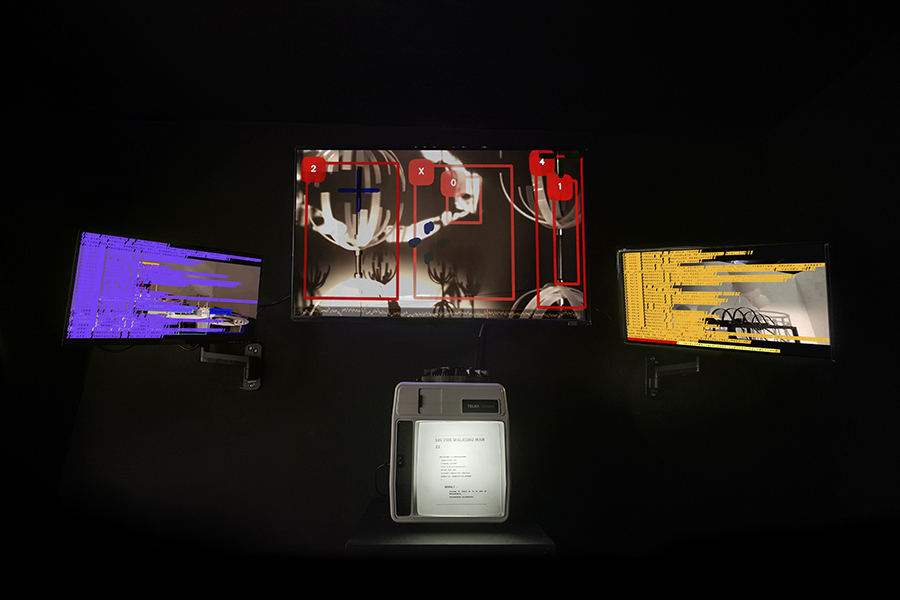
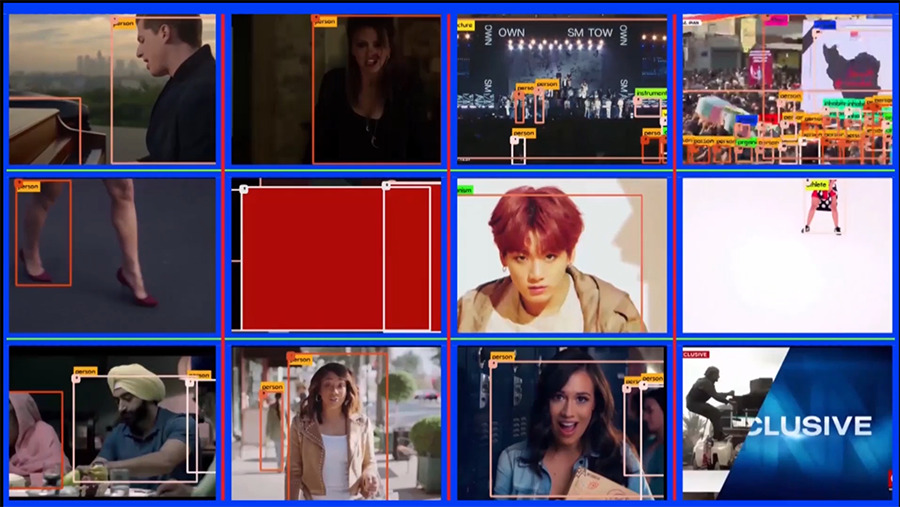
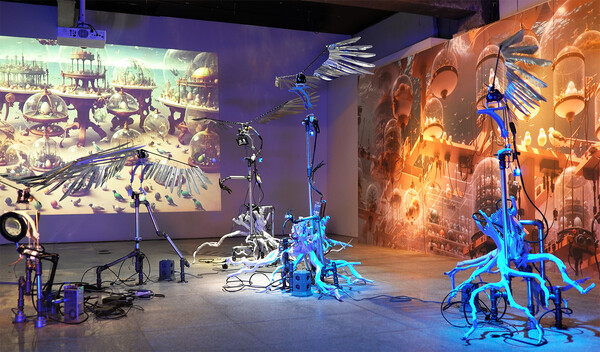
are shown artworks “viewed” by an artificial viewer, and the perceptual outcome
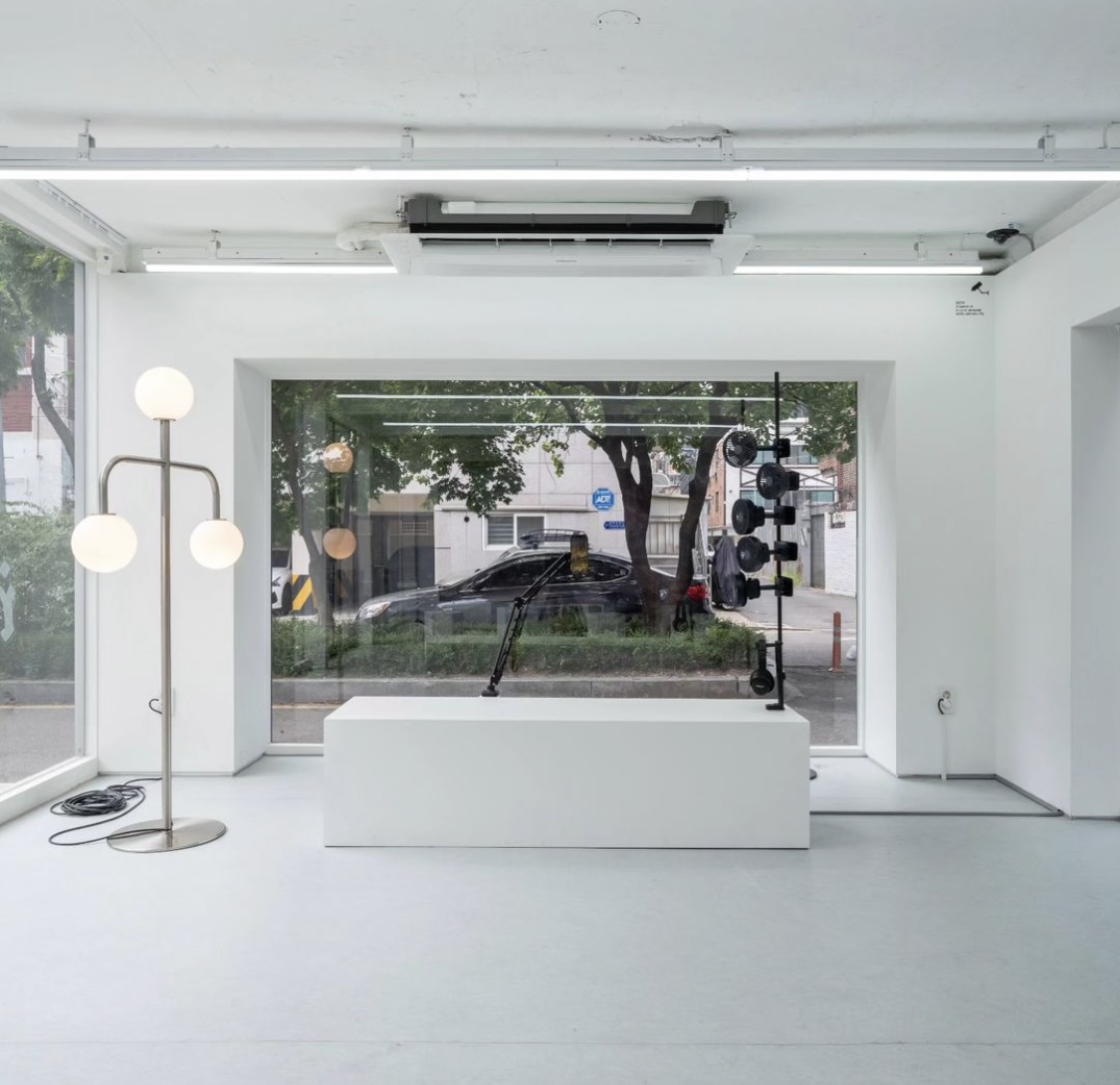
is presented through videos. On screen, works exhibited by other artists in the
same space are shown as videos—not as archival footage, but as scenes
interfered with by AI vision. Tags appearing and disappearing in the video
indicate object attributes classified by AI. Following this, on-screen texts
represent the cognitive process modeled after the ACT-R (Adaptive Control of
Thought-Rational) system, mimicking brain structure in viewing art.
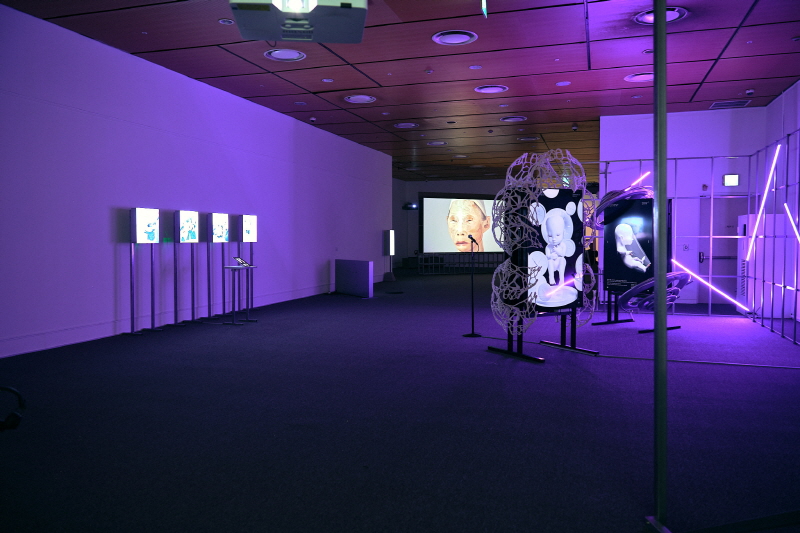
BirthMark
defines three basic cognitive stages of art appreciation: Initial Viewing
(Camouflage), Artist’s Intention (Solution), and Insight. Rachel, an AI voice
trained to mimic human pronunciation, recites the entire process: “Move your
gaze to the left,” “Recognized the image on screen,” “Stored it in memory,”
etc. Initial data and results are displayed on a small screen of an old slide
projector. Each time the projector blinks like an eye, a different artwork
enters the AI’s field of view. The meanings derived by the AI cognition model
developed in a specific era are also presented with the old slide projector.
Among 300 words, the AI extracts only 2 to 5 keywords. The more abstract the
artwork, the lower the AI's understanding of the BirthMark.
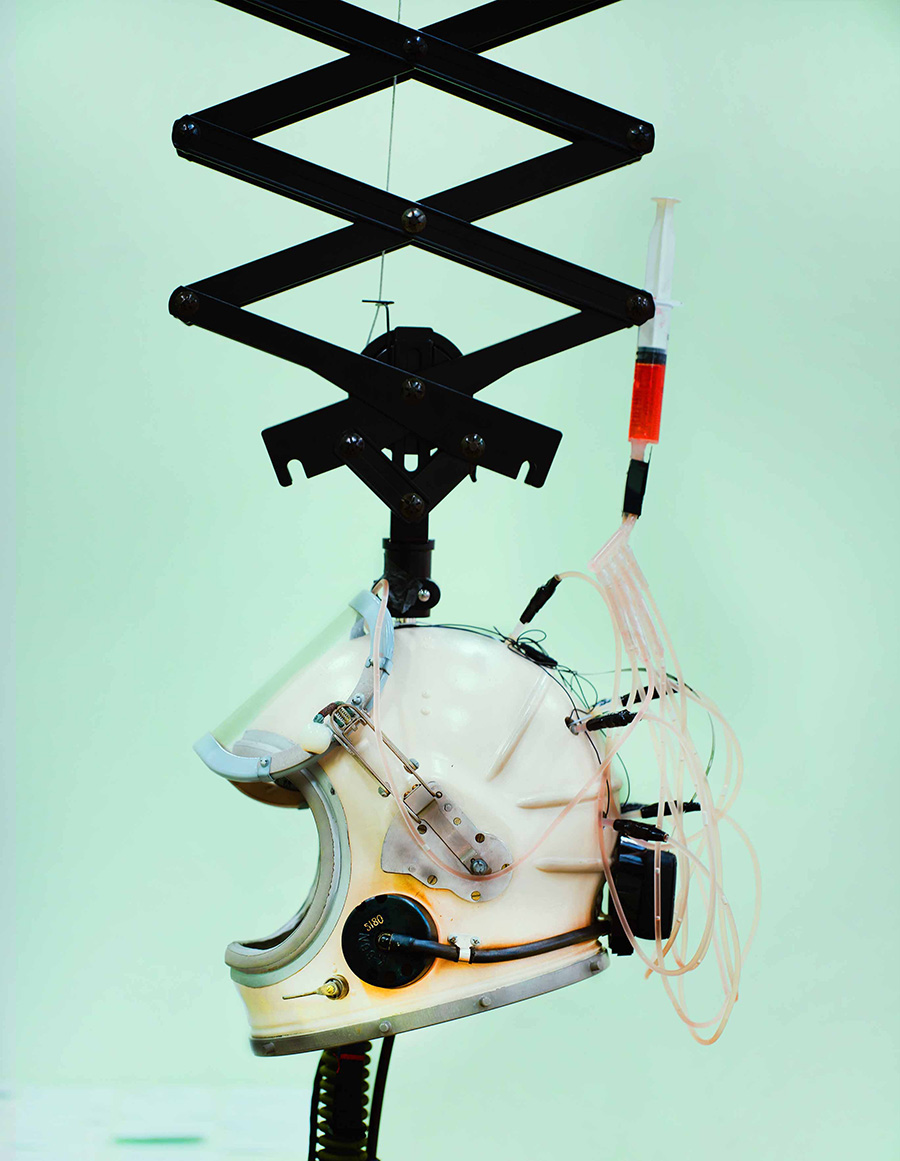
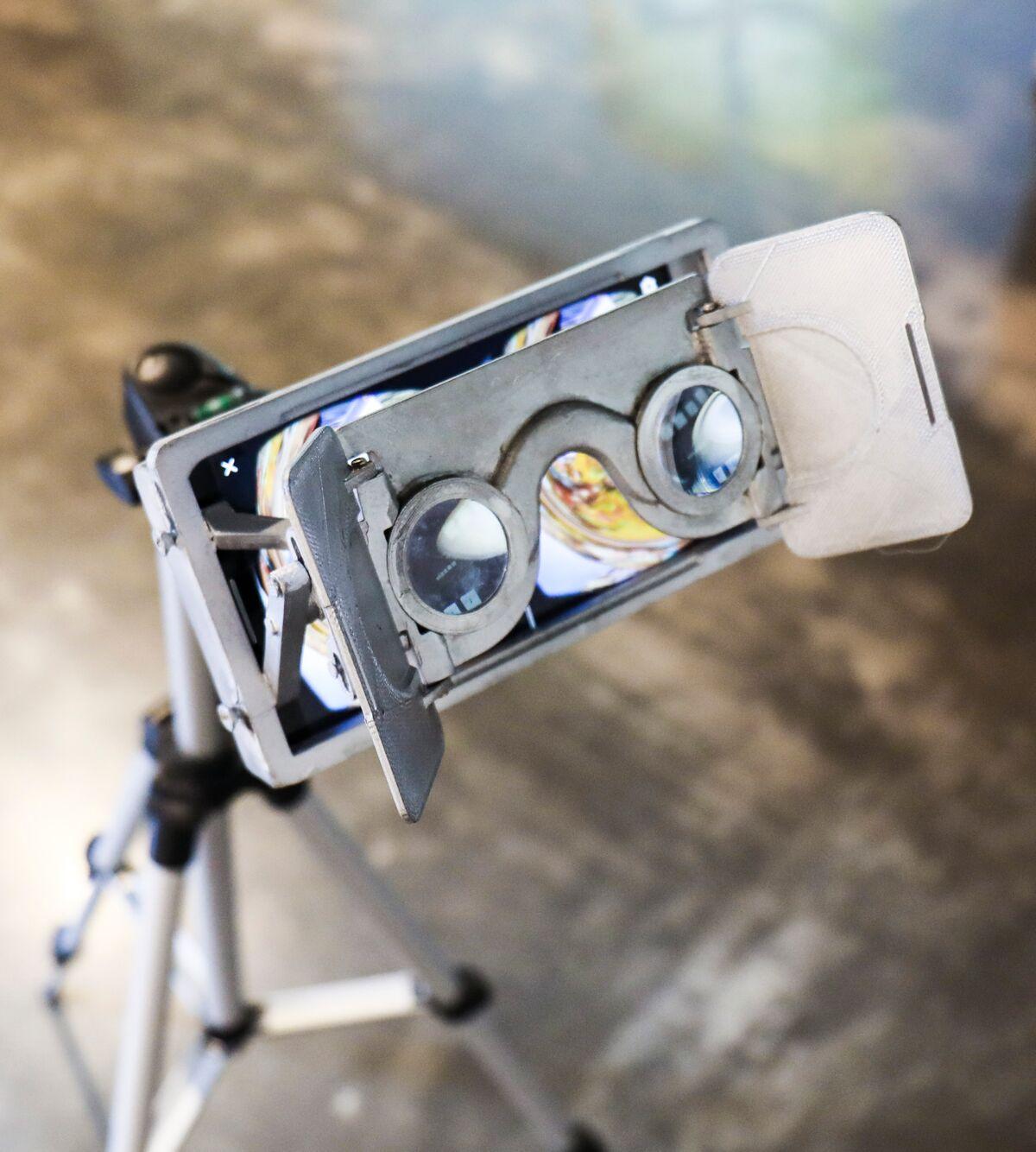
Virtual
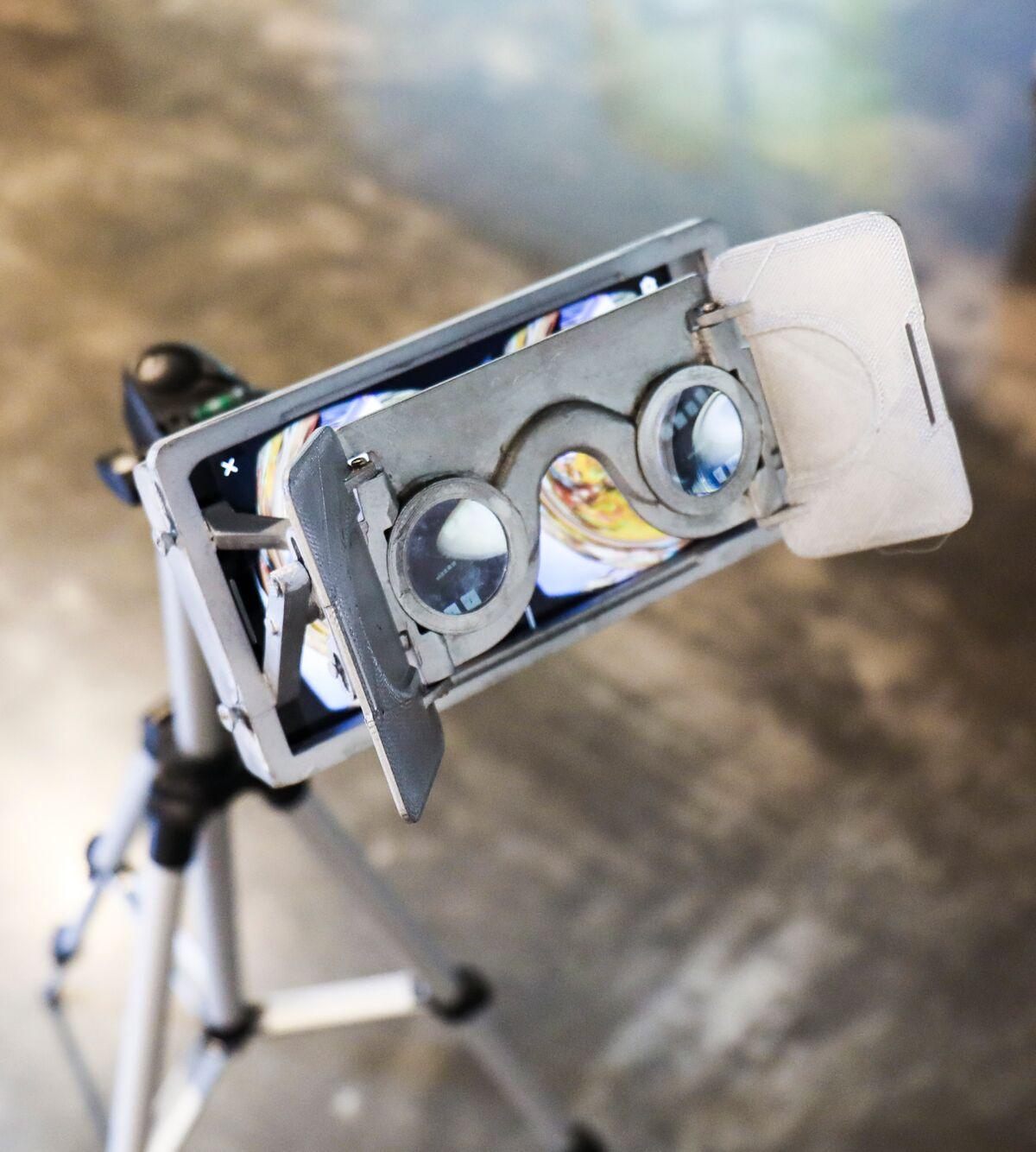
Environment Regulator is a work aimed at offering technical
convenience in viewing 360-degree perspectives by recalibrating such
environments to fit the perspective of individuals accustomed to linear
perspective. Though people use VR devices capable of viewing all directions,
they tend to focus only on what’s directly in front of them. Viewers of Virtual
Environment Regulator end up in uncomfortable physical positions,
struggling to view a fixed frame on a VR screen. Through this discomfort, they
become aware of bodily-mediated sensory perception and experience the
limitations of advanced technology.
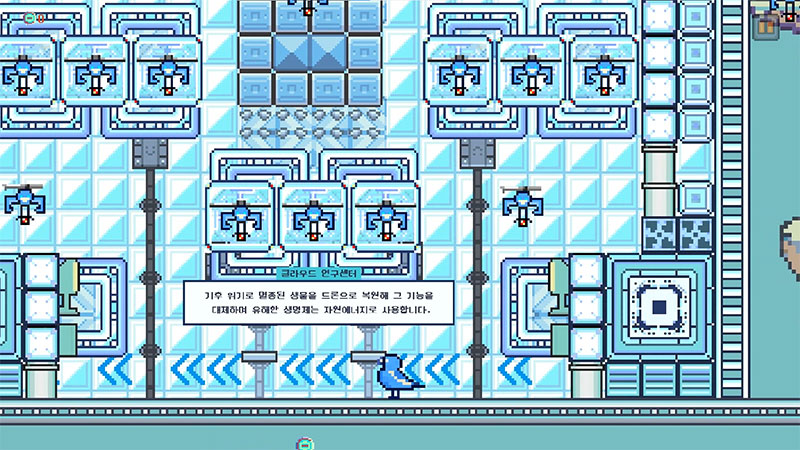
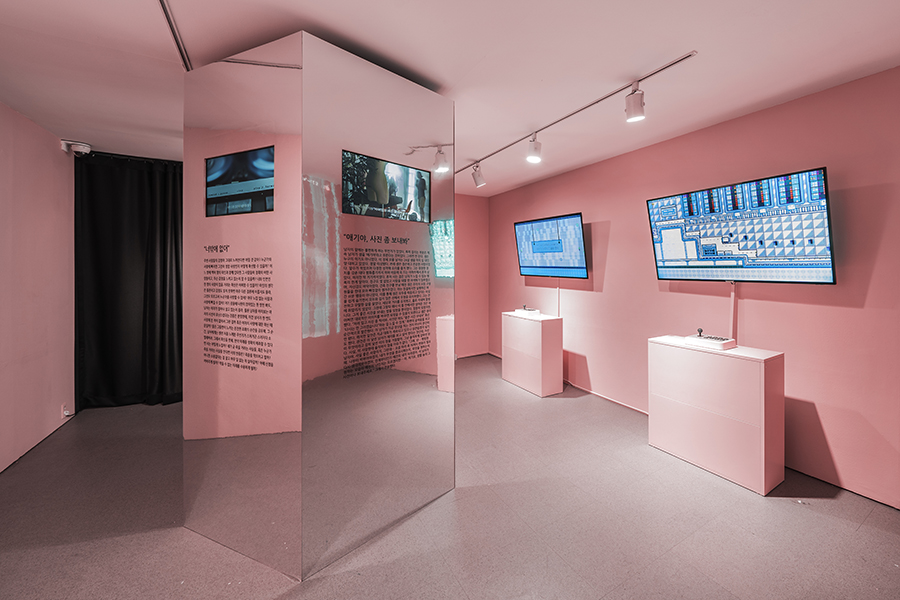
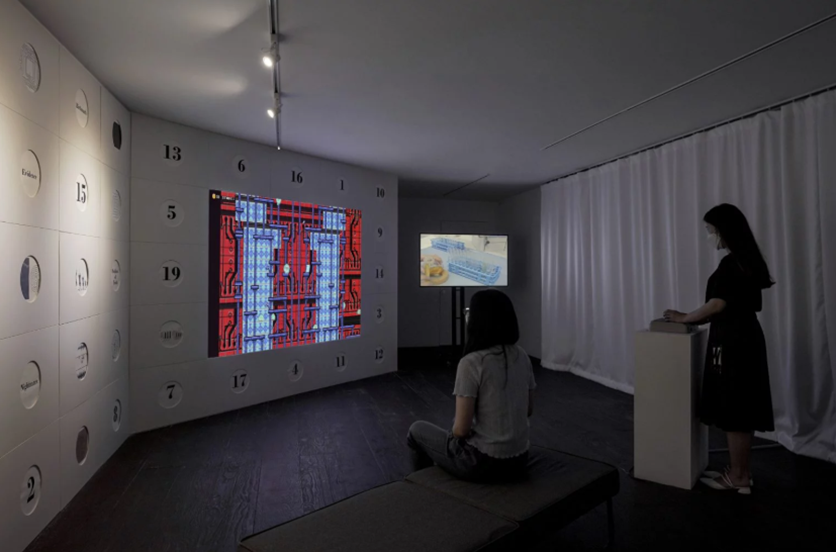
Scientist’s Dice Game
This game is based on stories from researchers in fields like robotics,
biotechnology, and neural engineering. It addresses the contradictions behind
cutting-edge science and technology. The game poses questions about the
legitimacy of continuing certain research activities by showing how even the
most advanced scientific methodologies can (1) be ineffective or (2) lead to
destructive outcomes. Using everyday experimental tools as symbolic elements,
these contradictions are turned into game mechanics. The game takes the form of
a bingo board that matches archival images with descriptions based on the real
experiences of six scientists. Participants mark circles for the facts they
know and can take the bingo sheet with them.