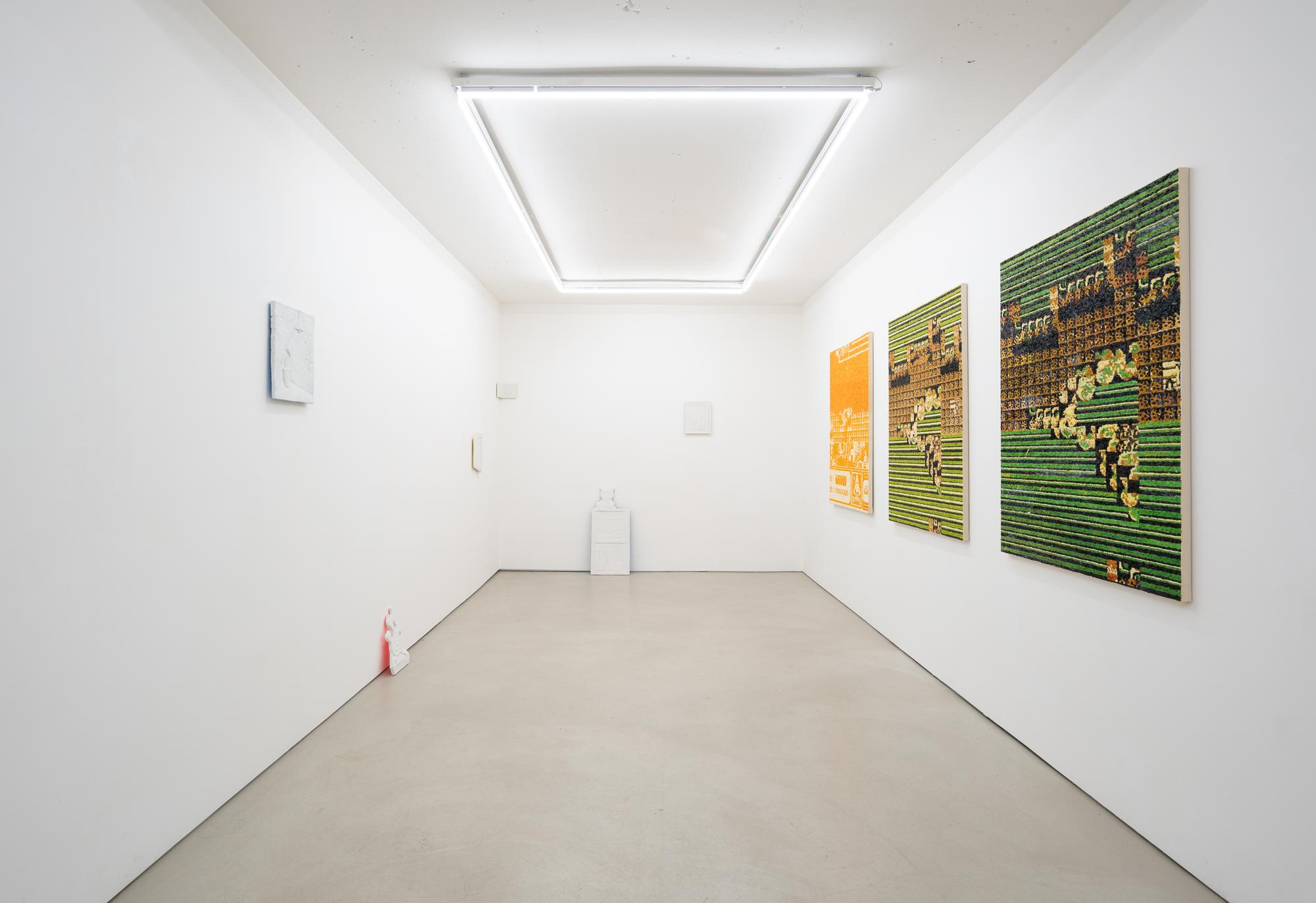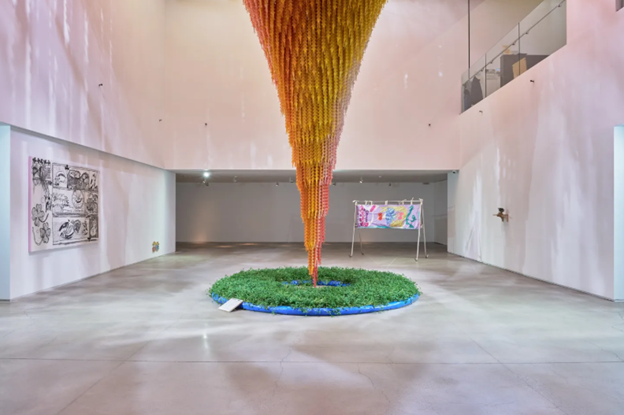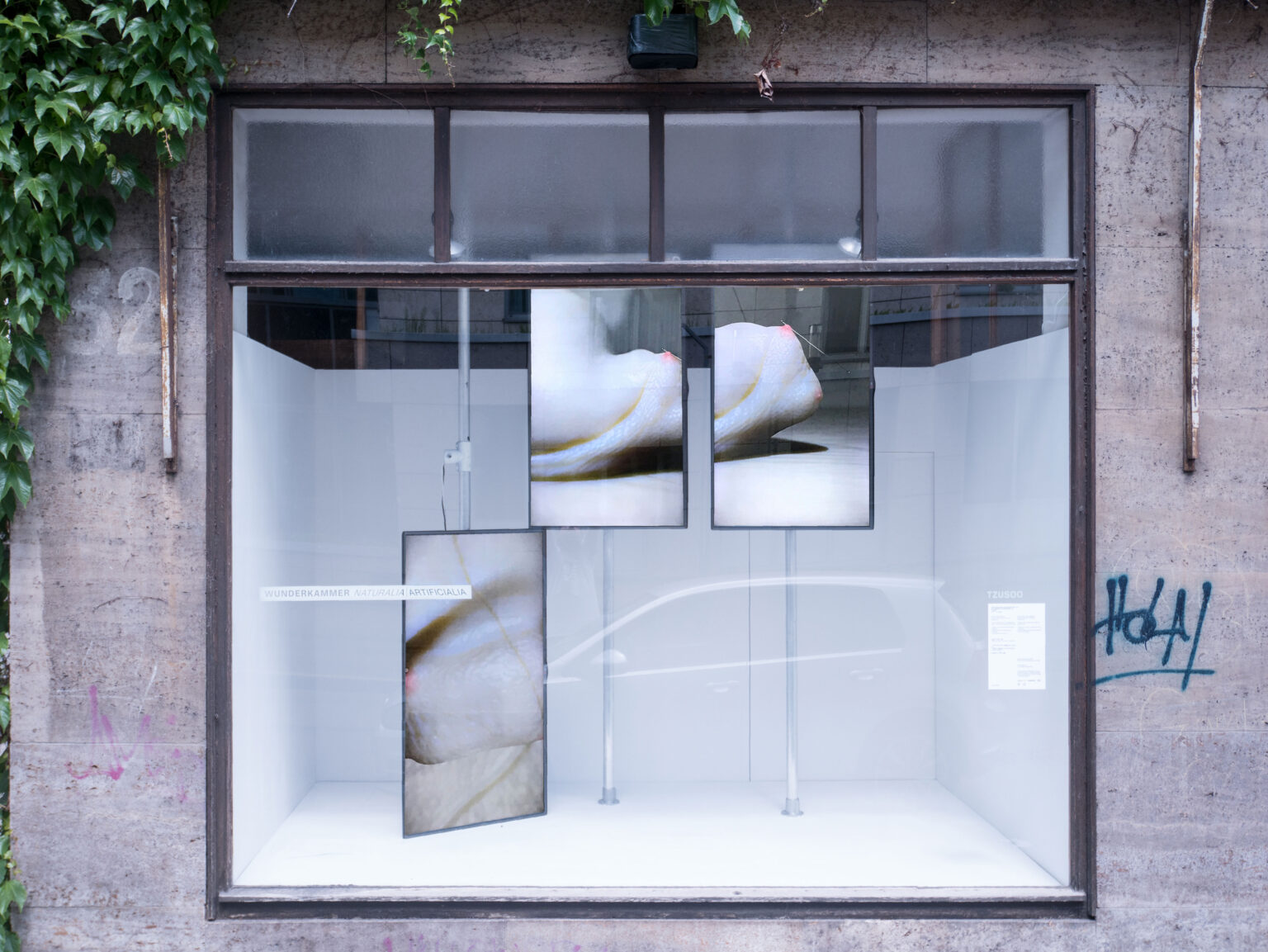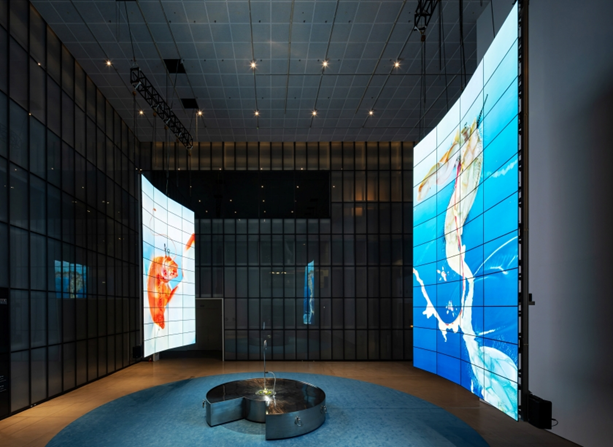



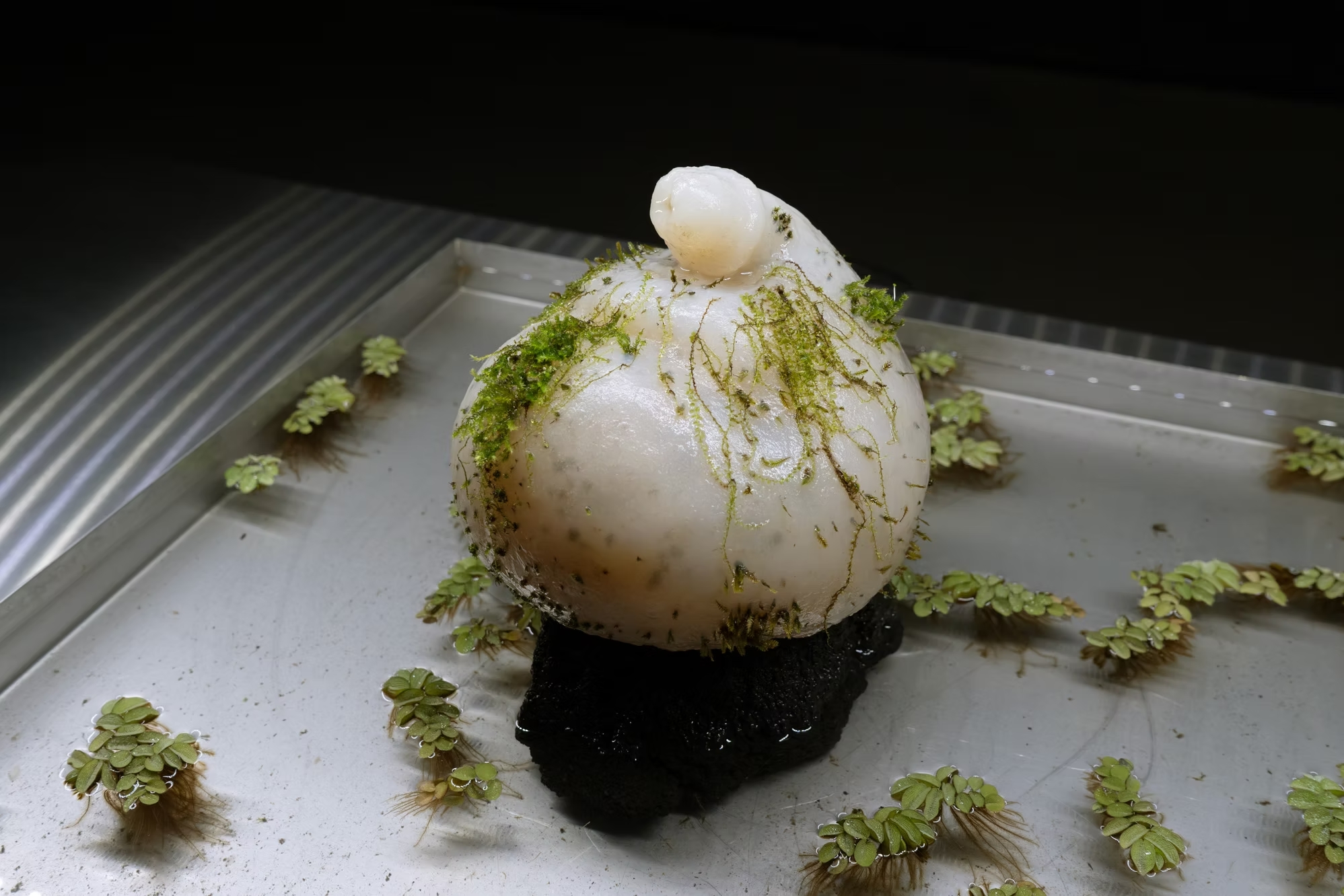
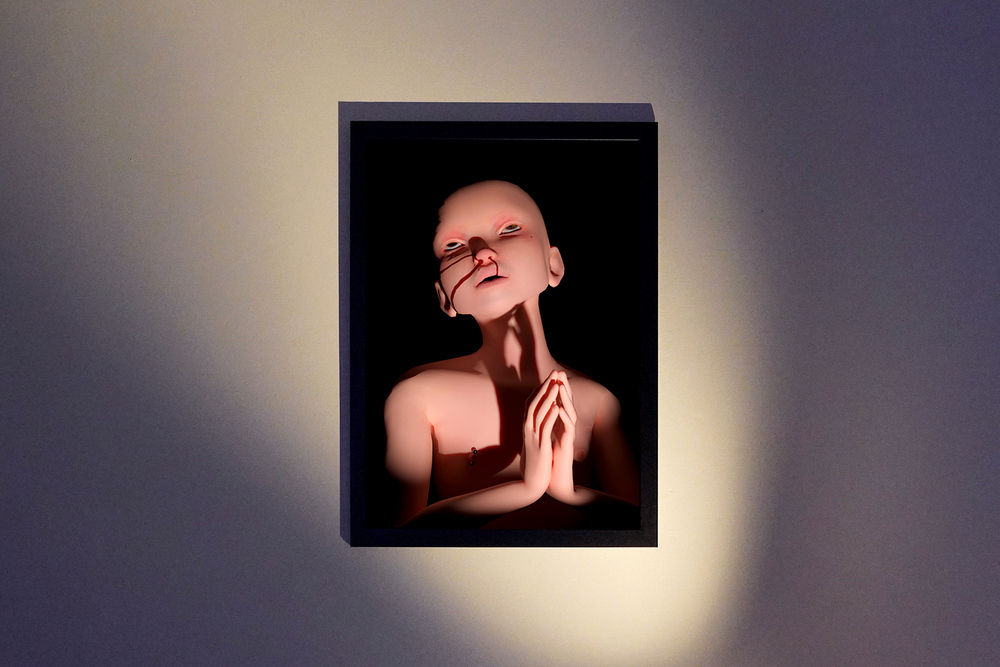
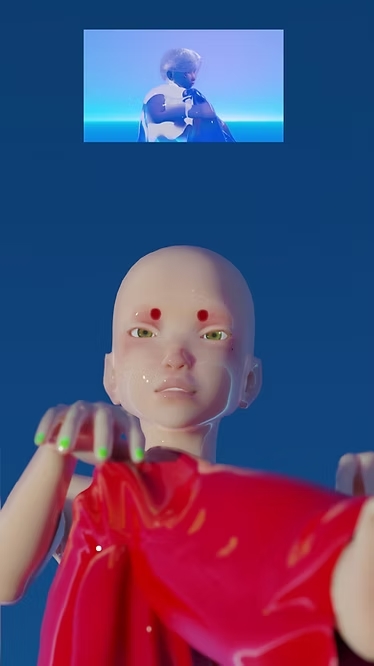
Exhibition view of 《Alma Redemptoris Mater: Our Material Our Redeemer》 © sangheeut

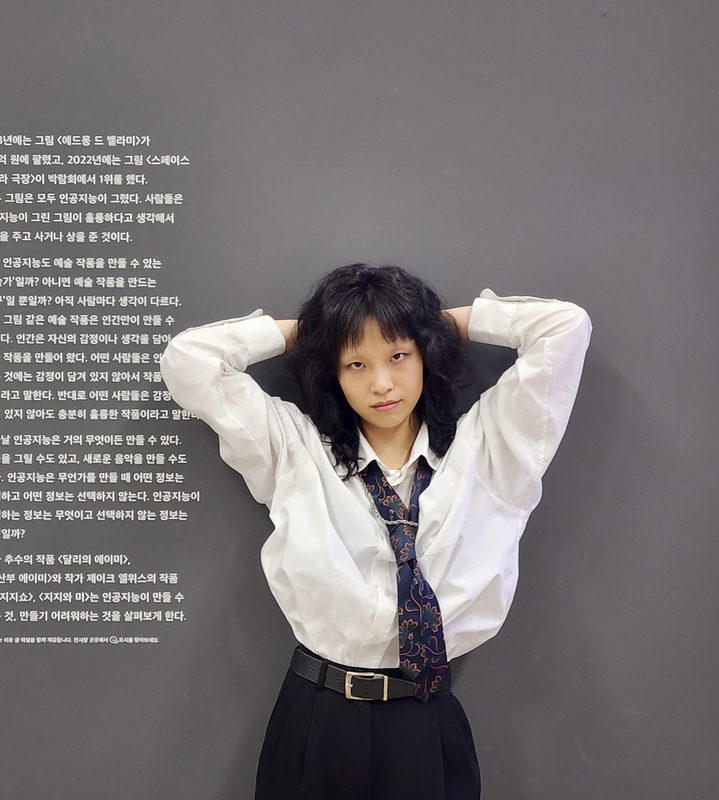
sangheeut is delighted to announce the opening of 《Alma Redemptoris Mater: Our Material Our Redeemer,》 TZUSOO’s solo exhibition, on display from 8 December, 2023, to 28 January, 2024. Exploring the intricate relationship between the body and material, TZUSOO presents an expansive body of work across various media. Her works often delves into radical concepts such as disembodiment, gender fluidity, and posthumanism, while also portraying an idealized and harmonious worldview through collaboration with AI. This exhibition unveils the ‘Agarmon’ series, a collection of new paintings and installations that accentuate materiality—an underlying concept in the artist's body of work.

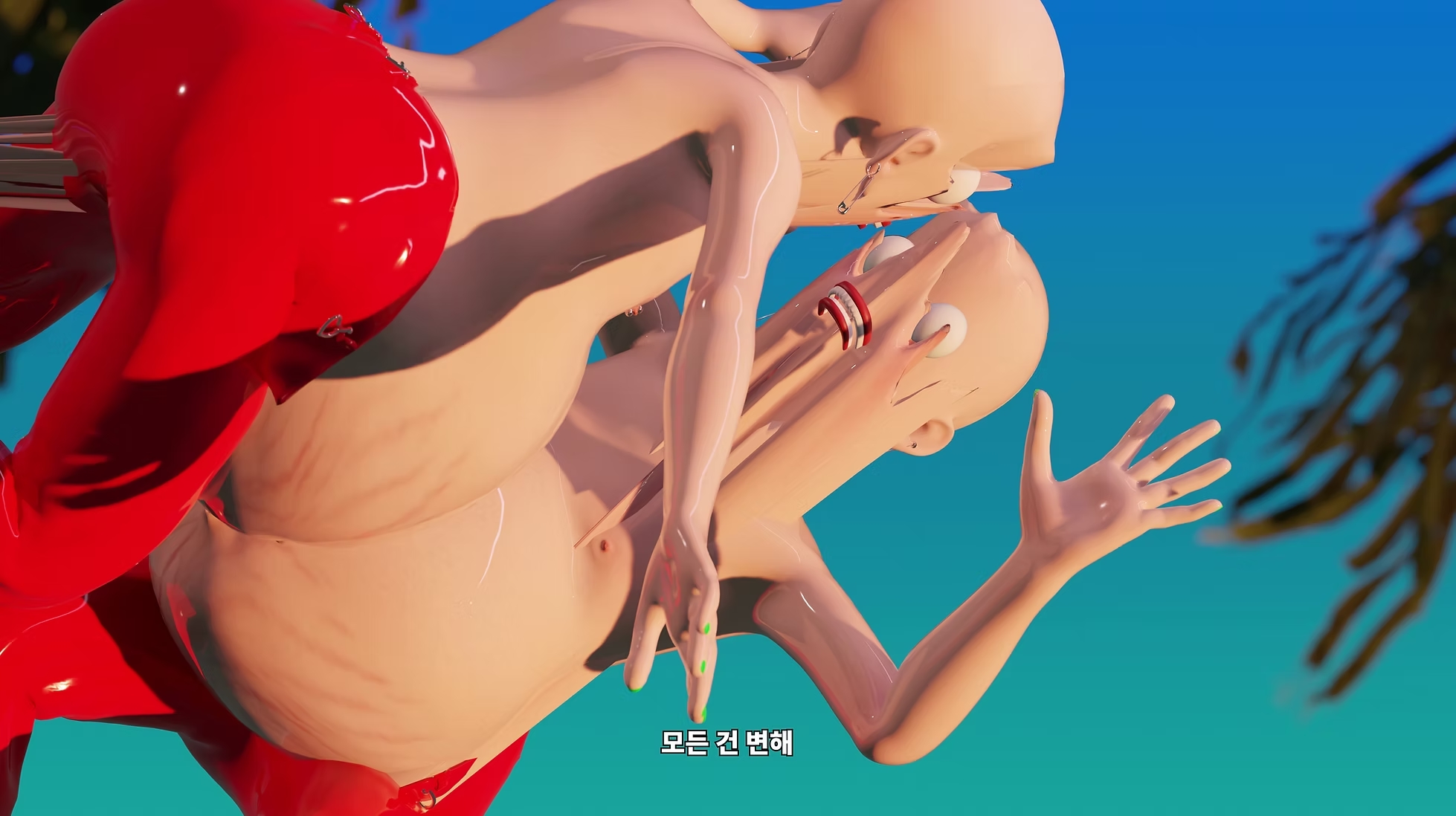
TZUSOO has used childbirth and pregnancy as the main subject of her work since Schrödinger’s Baby (2019), a video work depicting a baby existing in a virtual world. In her ‘Agarmon’ series, where the artist’s desires take center stage, she attempts to dissolve the distinctions between digital and real life by materializing beings born in the digital domain into our physical reality.

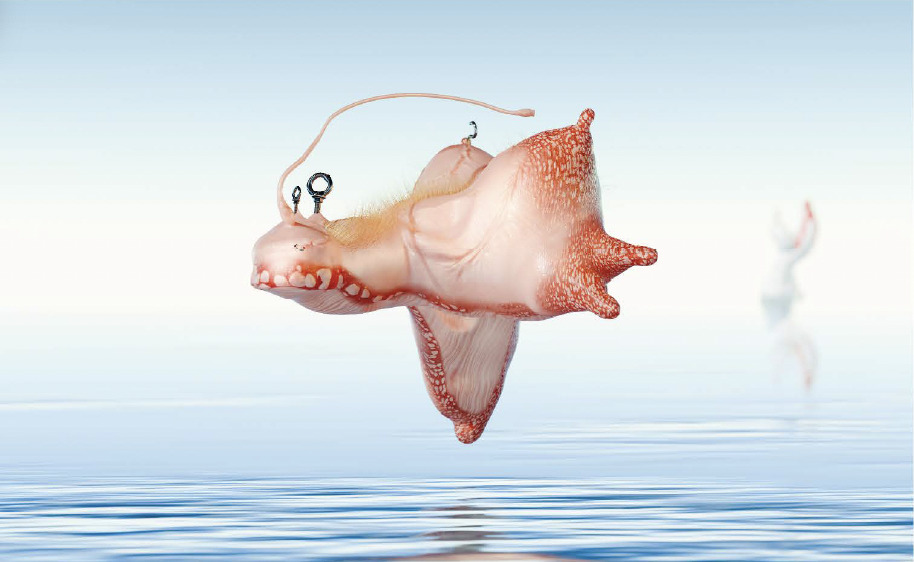
Humans experience orgasm through sexual intercourse. The entropy associated with this climatic moment has traditionally been linked to fertilization and the birth of life. However, the artist shifts the focus to contemporary entropy, which is disconnected from fertilization and pregnancy. TZUSOO emphasizes the possibility of redirecting vanishing entropy and rather using it as a conduit for creative expression. Shown for the first time in this exhibition, the series of Agarmon represents 'monsters' that are born at the moment of human orgasm.

The exhibition title, 《Alma Redemptoris Mater: Our Material Our Redeemer,》 derives from Alma Redemptoris Mater, one of the four Marian Hail Marys. In the history of Christianity, women in pregnancy and childbirth hold a distinct position, echoing the significance of Mary’s role. The historical context reveals debates surrounding the portrayal of women, from Eve being considered a mere helper or tool to Adam to Mary’s unique position as the one who received God’s message and conceived Jesus. There’s even speculation about the Apostle Paul introducing the Holy Spirit to the Trinity to obscure Mary’s role. Christian doctrine consistently grapples with the contrasting notions of virginity and motherhood, aiming to avoid associating Mary with explicit images of sex and childbirth.

Exhibition view of 《Alma Redemptoris Mater: Our Material Our Redeemer》 © sangheeut

In contrast, TZUSOO’s work deliberately intertwines these themes. Through the creation of ‘Agarmon’, a monster born at the moment of orgasm, the artist underscores the inherent, though often unspoken, connection between women's sexual desire and the sacred act of childbirth. While the artist is known for actively employing digitally-based media such as virtual worlds and characters, she further emphasizes the materiality of reality in this series, a theme echoed in the exhibition’s title. Drawing inspiration from the linguistic link between the English word for mother, 'mater,' and the Latin word 'materia,' meaning substance, the artist chooses to interpret it as 'substance' instead of the revered 'mother.' This linguistic choice once again establishes a connection between materiality and motherhood in TZUSOO’s work.

TZUSOO’s recent works can also be interpreted within the context of the history of technology and its perception of women’s birth and reproduction. Throughout history, technologies that contain something or possess an inherent emptiness as a function in themselves—containers such as jars and bowls, and women’s wombs—have often been overlooked in favor of technologies that exhibit force, impact, and dynamic effects, like spears and guns. The latter category has traditionally been associated with masculinity, contributing to the marginalization of women in the technological narrative. However, philosopher Heidegger challenges this perspective by asserting that holding is an active process. He argued that holding involves both taking and keeping, rejecting the notion of a passive, singular act. In the 1930s, historian of technology Lewis Mumford furthered this argument by suggesting that tools and technologies commonly used by women in domestic settings have been unjustly neglected in the history and philosophy of technology. Zoë Sofia, an Australian-based researcher in the philosophy of technology and science, extends Mumford's argument by positing the female womb itself as a form of technology.1 Sophia emphasizes that procreation and reproduction constitute crucial aspects of essential human technology, countering the historically masculinist perspective that has often regarded women's wombs as passive tools or conduits for men's reproductive contributions.

TZUSOO, known for incorporating advanced technologies such as AI into her body of work, aligns with this progressive perspective. The new works featured in this exhibition can thus be seen not only as her embrace of new technologies but also as a continuation of her ongoing exploration of established technological narratives. The artist’s longing for birthing transcends a conventional desire; it embodies a yearning for a more foundational form of technology. This theme resonates consistently throughout TZUSOO’s oeuvre, often characterized by the artist herself as a process of ‘birthing.’ A container that is full is useless. TZUSOO delves into the essence of container technology, recognizing its core function: the continual release of what is already held, facilitating the containment of something new. In embodying this essence, TZUSOO consistently engages in the act of producing and giving birth to a succession of artistic works.


1 Sofia, Zoë. “Container Technologies.” Hypatia 15, no. 2 (2000): 181–201.

References