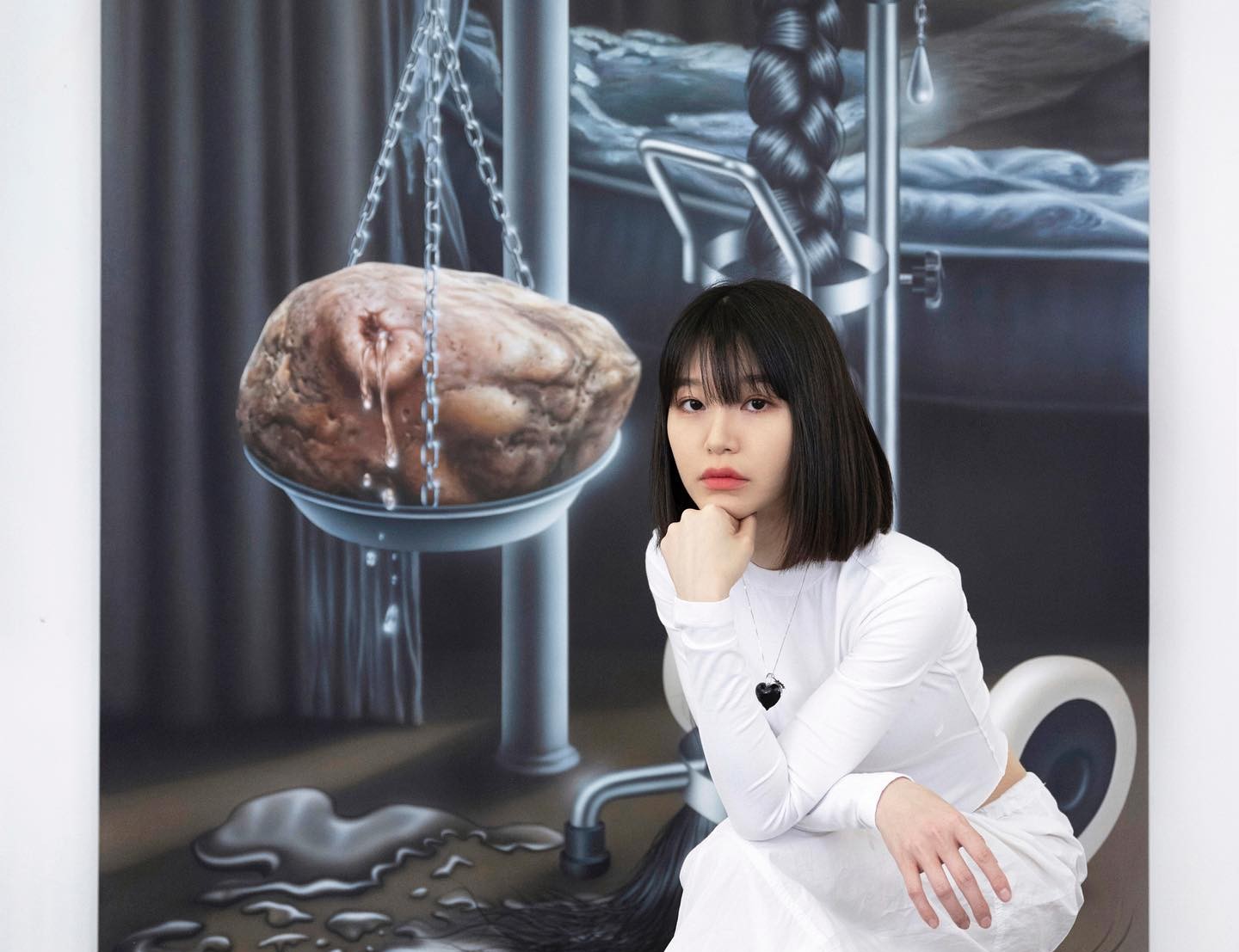
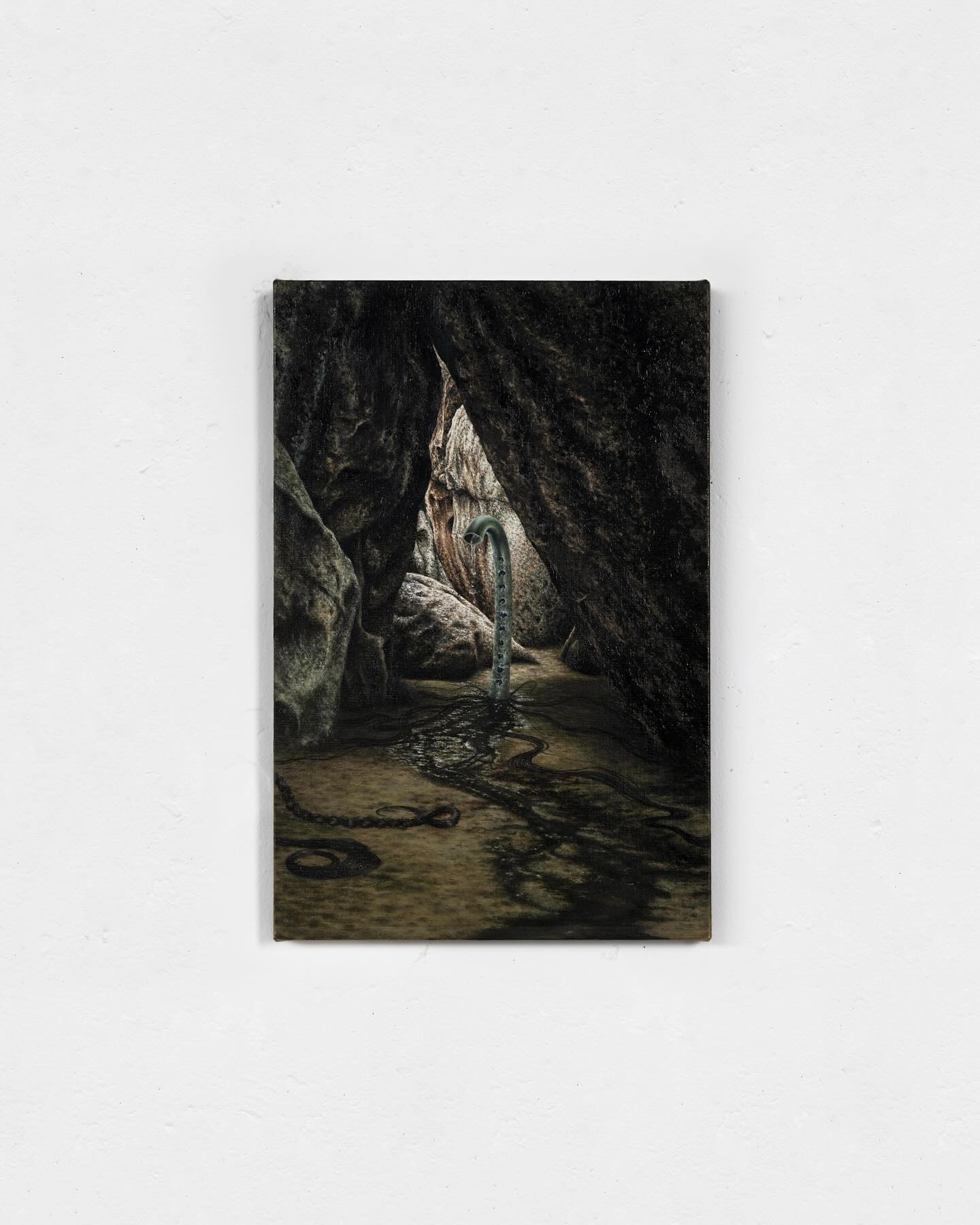
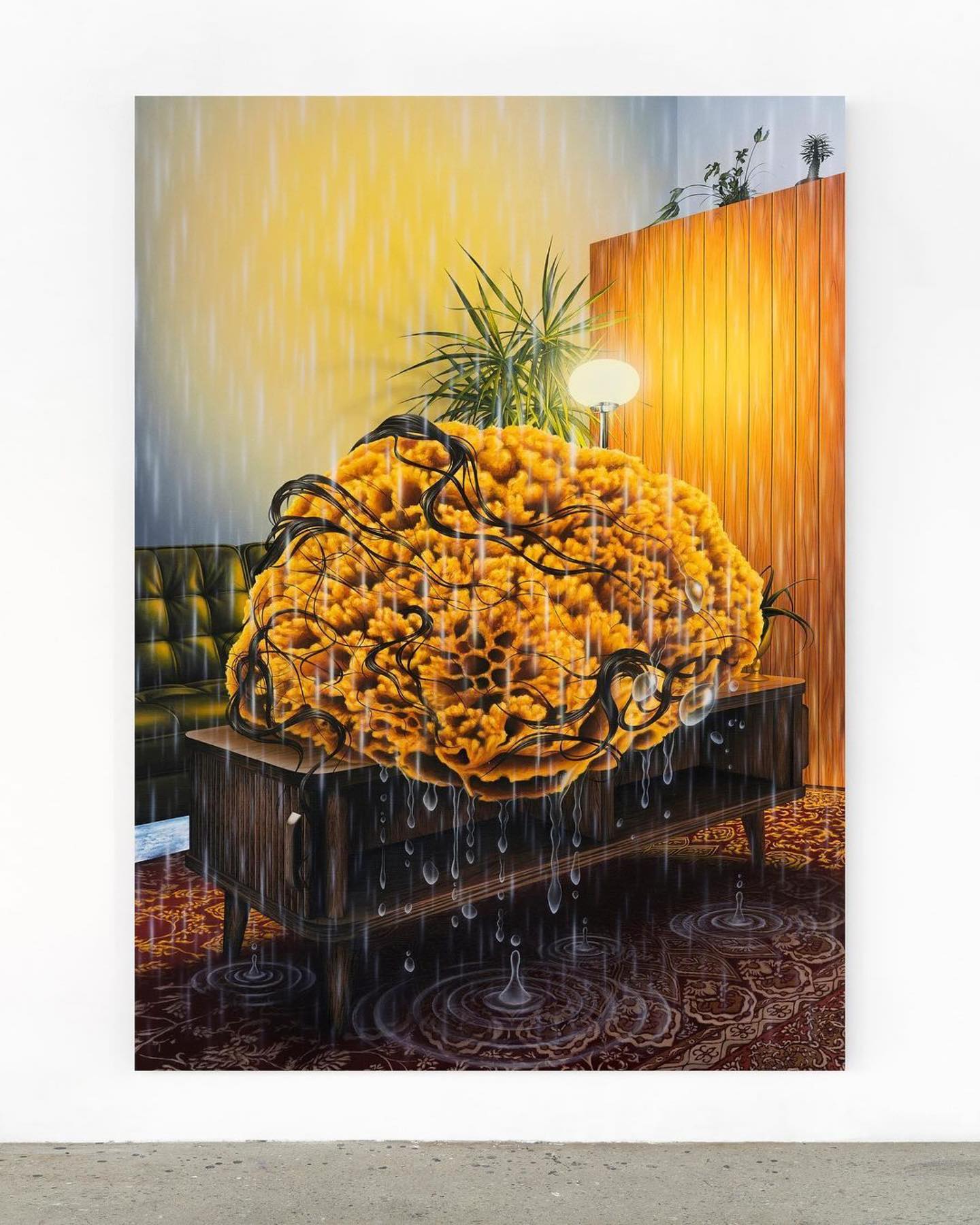
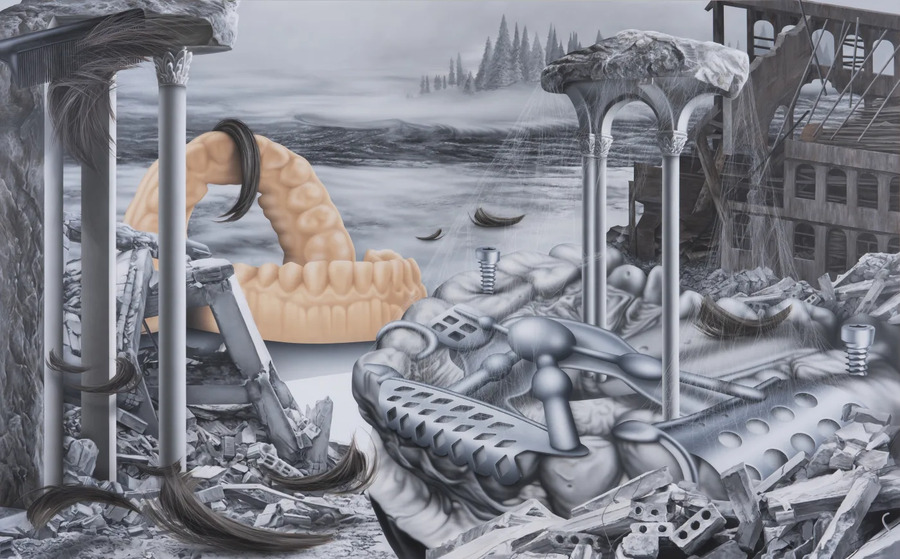
In 《Swamps and Ashes》, Sun
Woo presents a body of works that address bodily sensations that often
become lost in virtual environments. As much of our activities and “spatial”
engagements increasingly shift into the digital sphere, we are prone to
experience space through the screen of our devices as we sit safely inside our
rooms. Relying on images, videos, and other online resources, we are less
impelled to brush our skin against our surroundings.
In
her new paintings, Sun Woo reflects on the decrement of tactile, sensory
experiences in today’s society, as they become increasingly mediated by
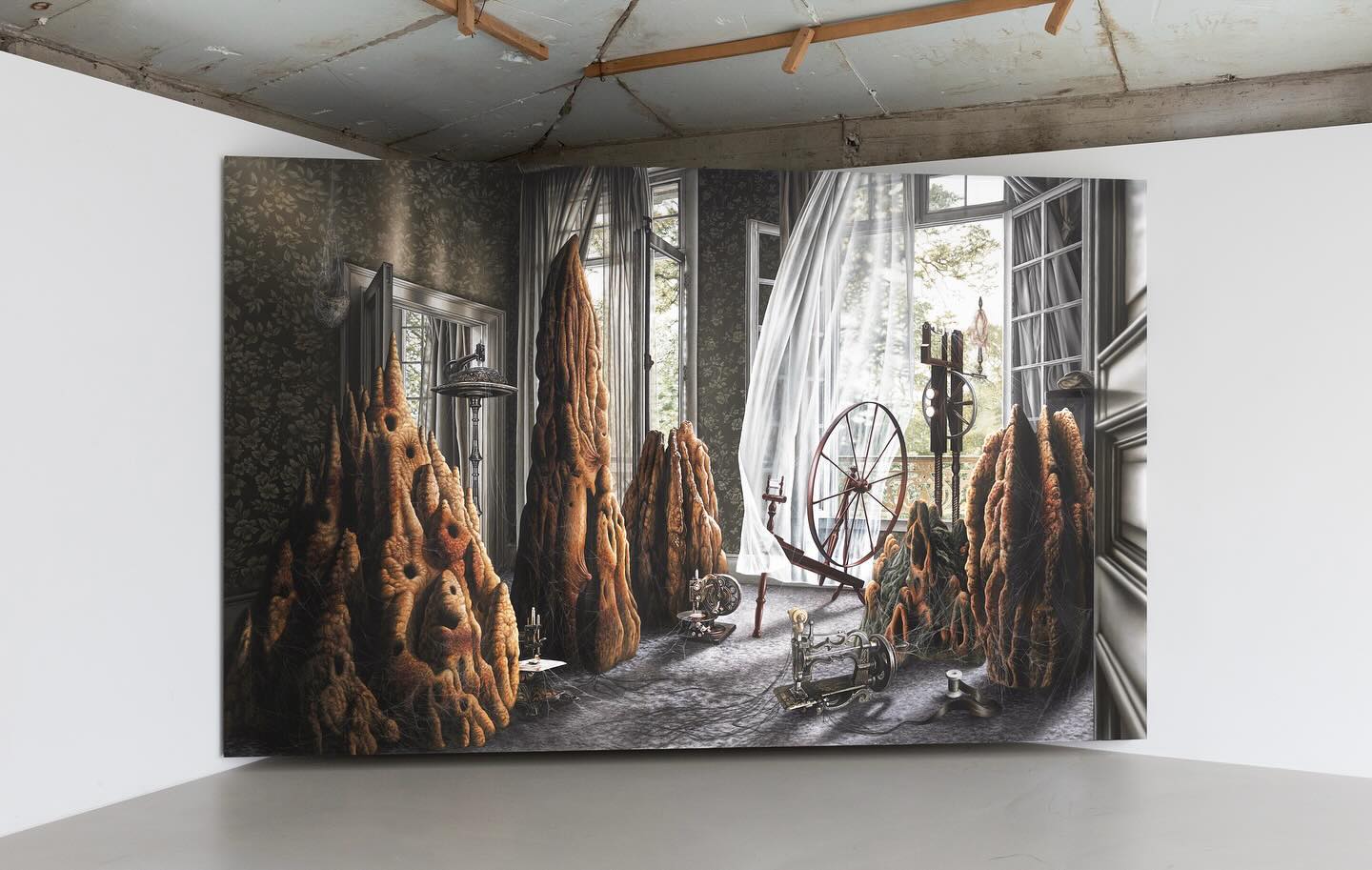
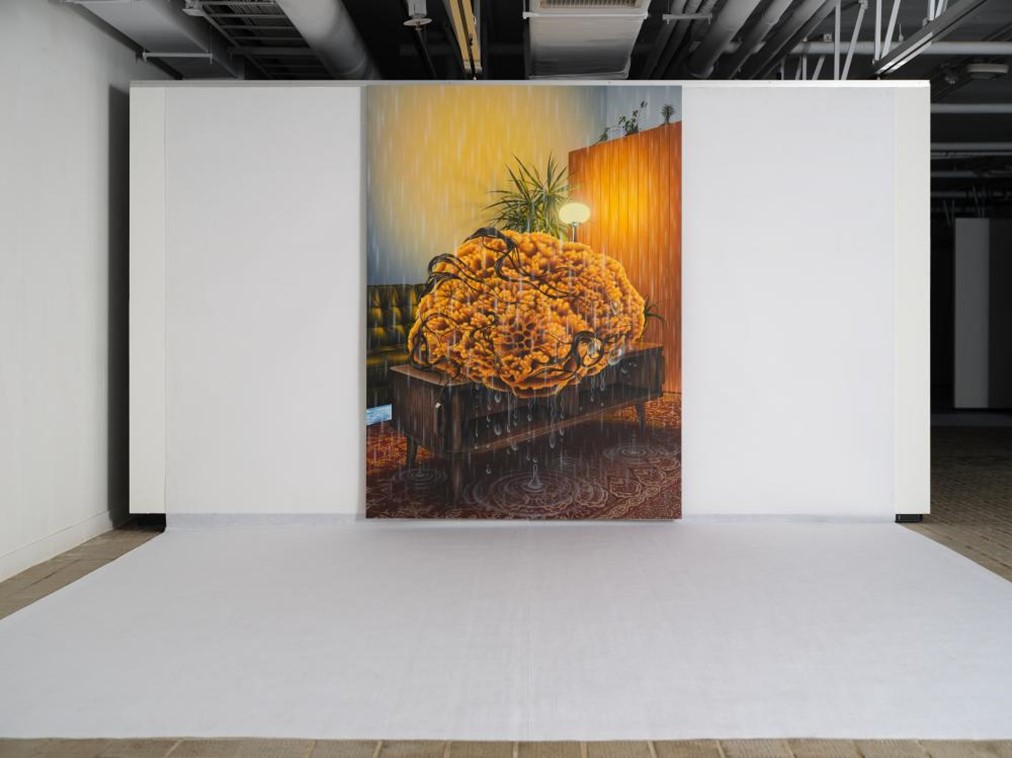
technology. From a damp carpet drenched in heavy rainfall to a scorched room
engulfed in flames, she incorporates elements that suggest specific physical
conditions such as wet texture and thick heat, utilizing them as visual cues to
trigger bodily senses that are stimulated only by physical contact. While the
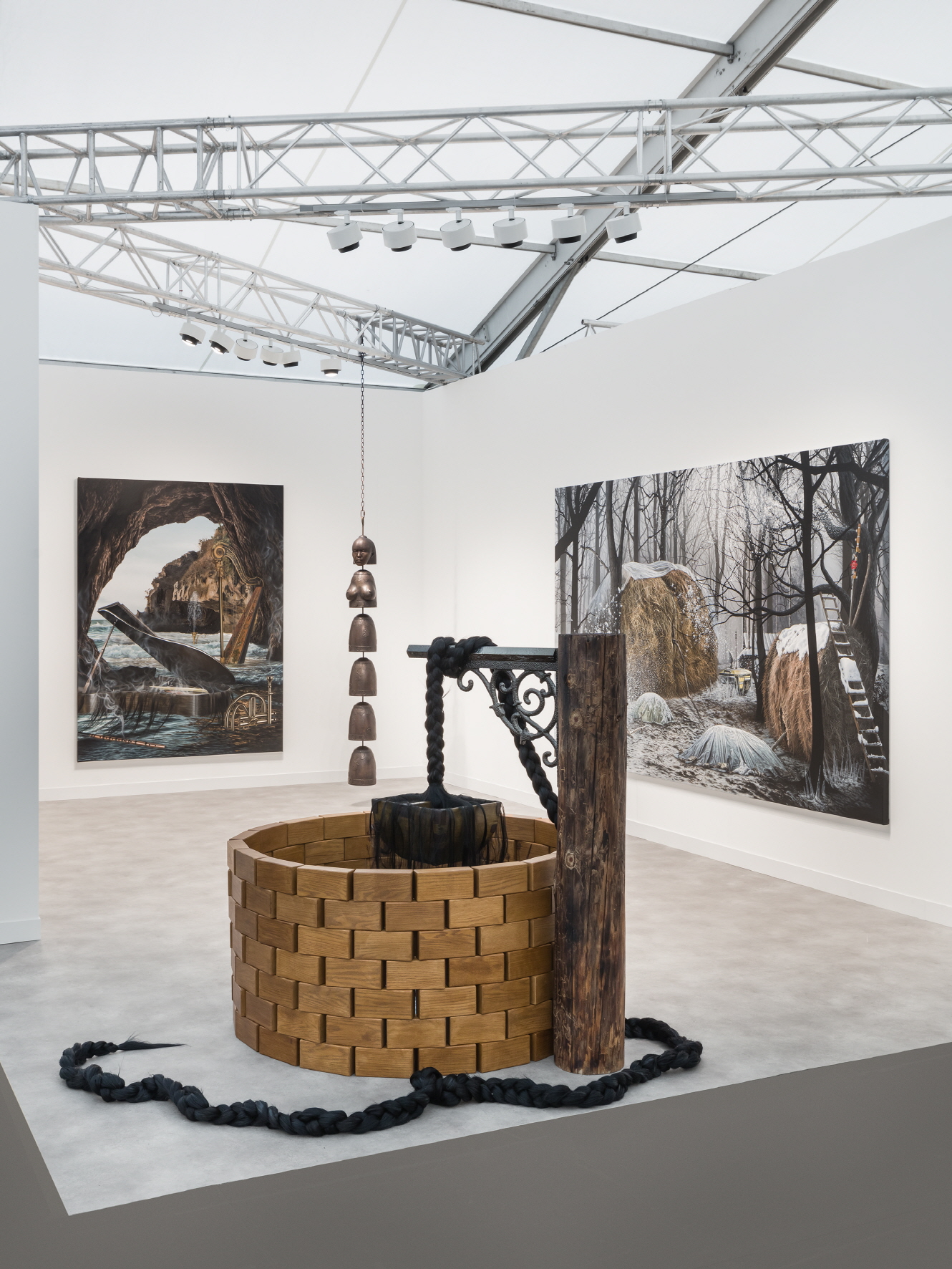
work Brittle Landscape invokes the crispiness of a
dry farmland where the hay strands seem liable to crumble upon touch, Dawn
in the Grove invites the viewers to imagine a hot metal surface
pressed against the body, flattening it out.
By
bringing outdoor elements like heavy rain and sprinklers into indoor settings
and vice versa, the works further provide environments that oscillate between
interiority and exteriority—reflecting how technology changes our sense of
space, breaking down and complicating the division. Like watching the rain fall
from the window of our room, this juxtaposition echoes the way in which we
experience the outside world through the lens of a monitor. In this process,
Sun Woo weaves personal narratives and memories into the compositions, as she
makes use of images of her own studio (in Long Shower and The
Cleanse) and the view from her childhood apartment (in Room
of Haze). Particularly in Room of Haze, she
relies on her body’s memory to recall the damp atmosphere of her childhood
living room, where her mother used to hang piles of laundry, collected from the
balcony during the rainy summer reasons of Seoul.
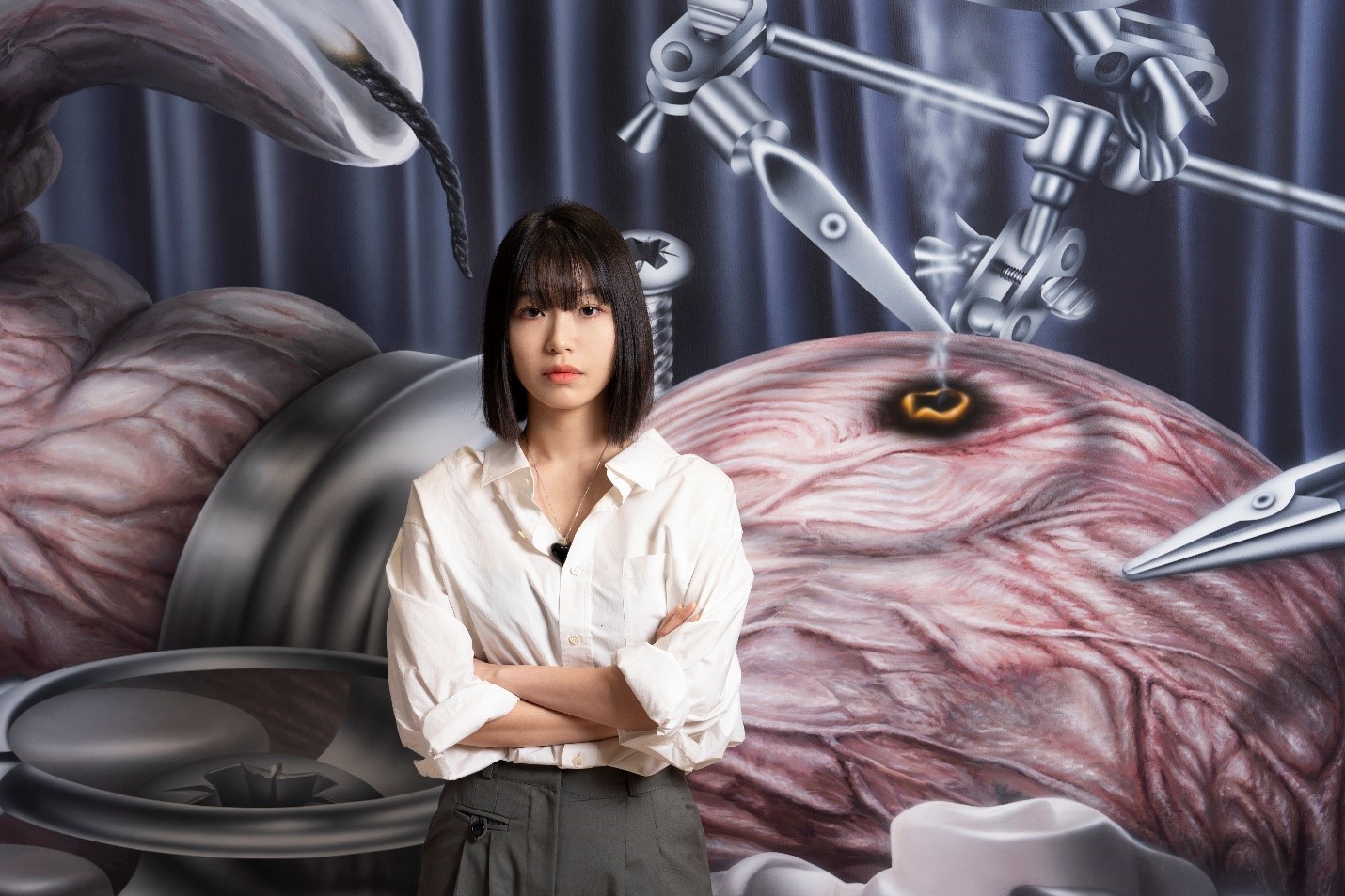
The
ways in which the bodies are depicted in her paintings—fractured, vulnerable,
and transformative—reflects Sun Woo’s prolonged interest in exploring the state
of the human body in contemporary society where technology alters its functions
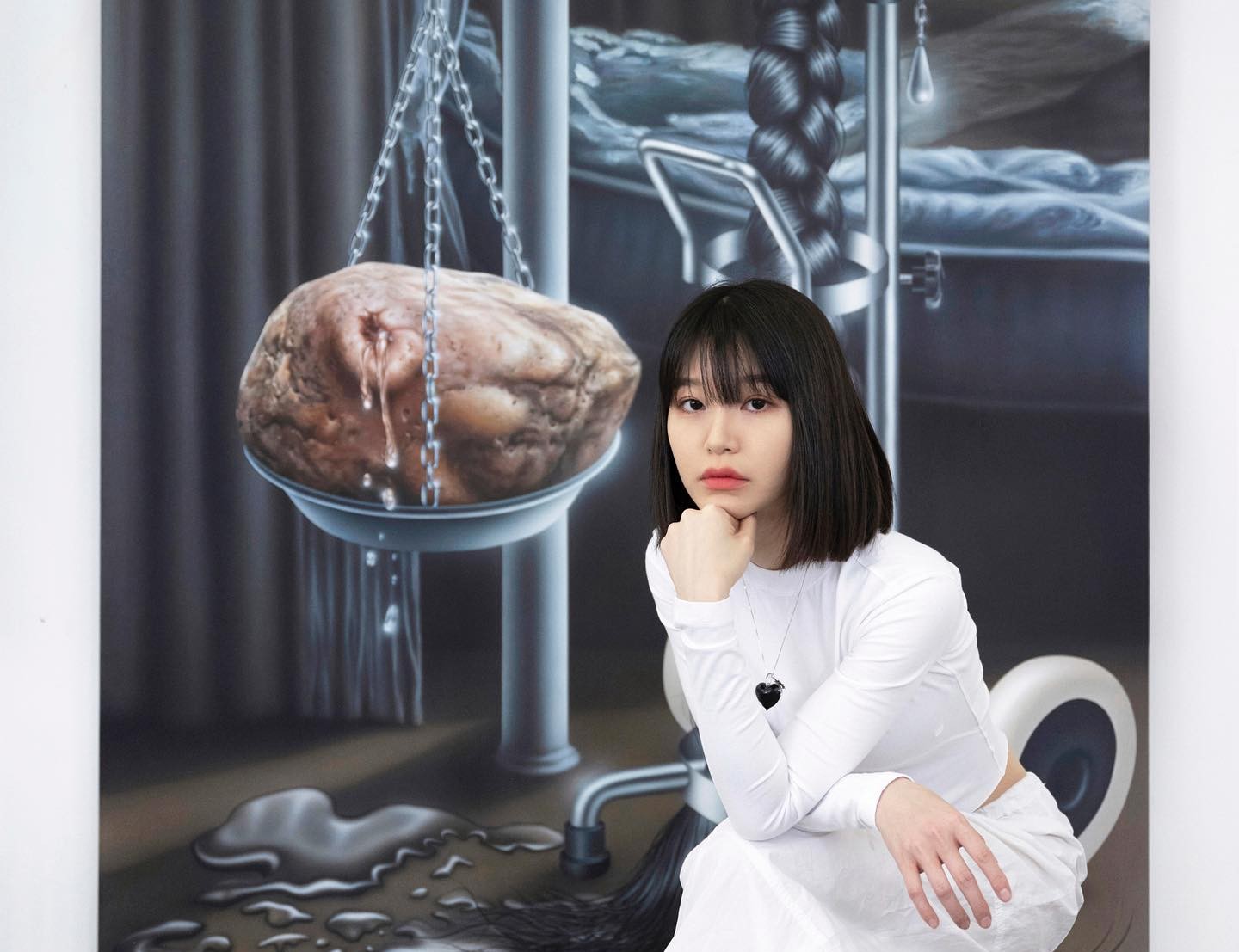
and forms. Corporal elements like a bloated sponge entangled with hair strands
and sheets of skin hung on a drying rack depict how today’s body feels as it
absorbs and reacts to its surroundings, whether burdened by an excessive intake
or contesting a lack. They also reveal her interest in thinking about the body
as a boundary, through which sensations become exteriorized. Through this
interplay of the body, space, and tactility, the show invites the viewers to
imagine moments of intimate, unmediated physical contact—what it might feel
like to sink into a viscous swamp as the mud presses on their flesh, or burn
down slowly to the ground, leaving a pile of ashes behind.