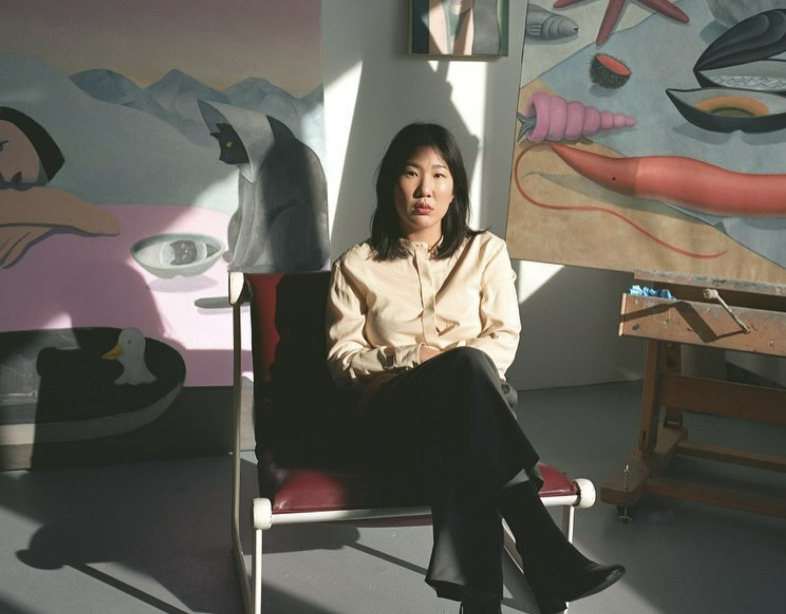
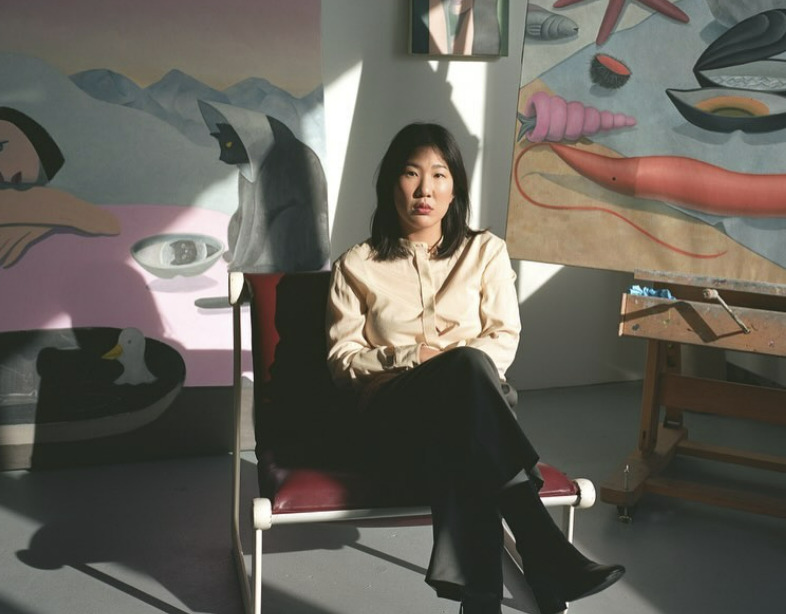
GaHee Park was born in Seoul and earned her BFA in Painting from Tyler School of Art (Philadelphia) in 2012. She later obtained her MFA in Painting from Hunter College (New York) in 2015. She currently lives and works in Montreal, Canada, and is represented by Perrotin Gallery.


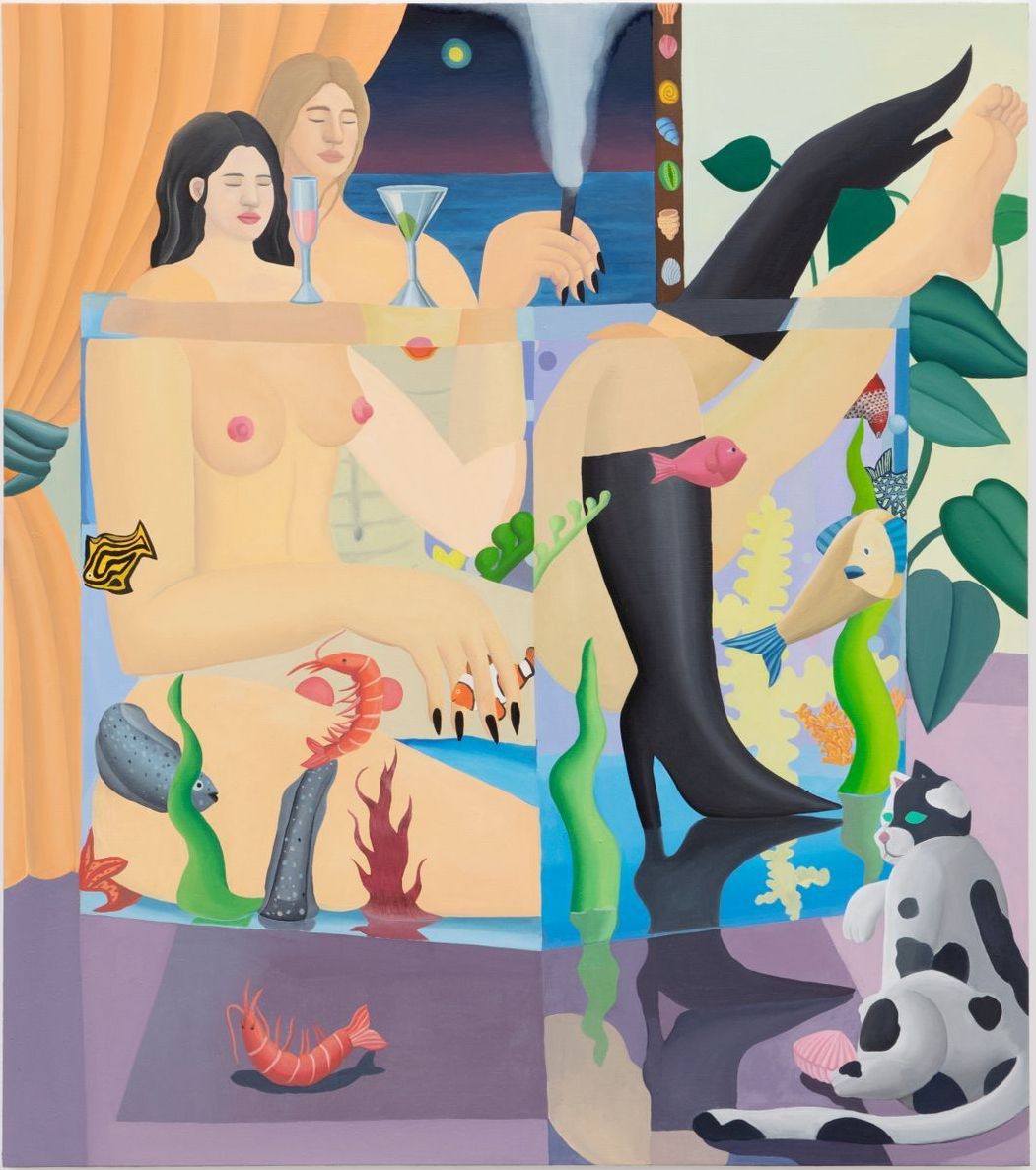
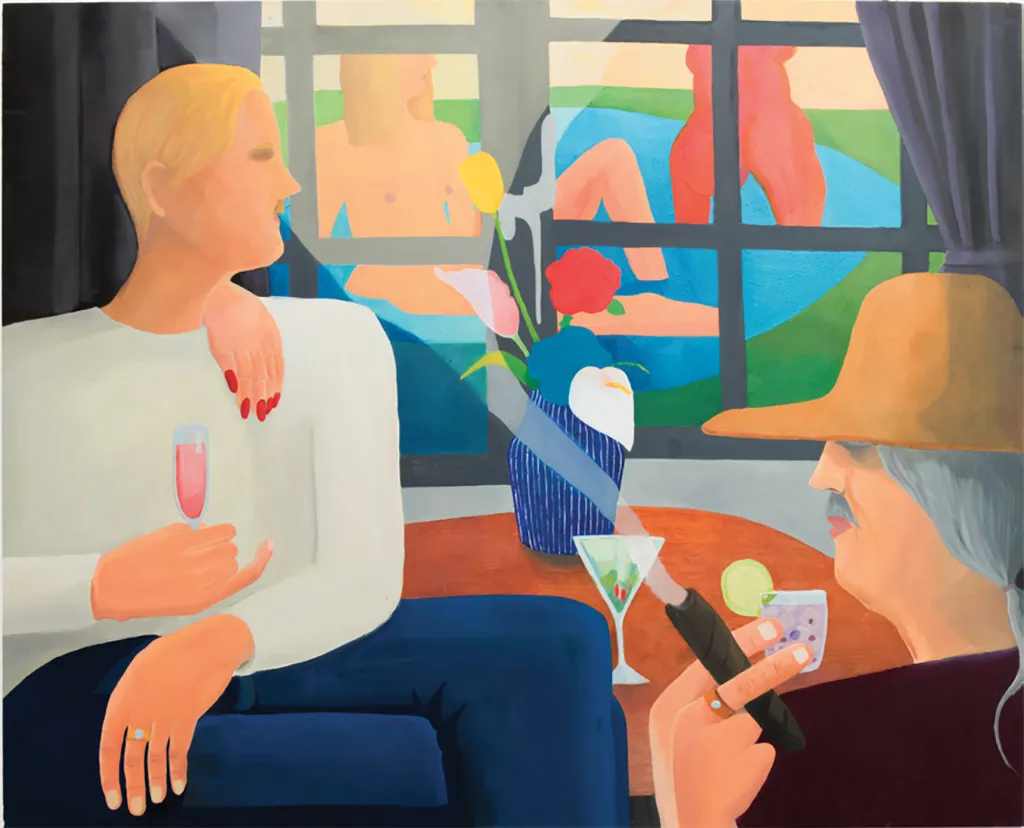
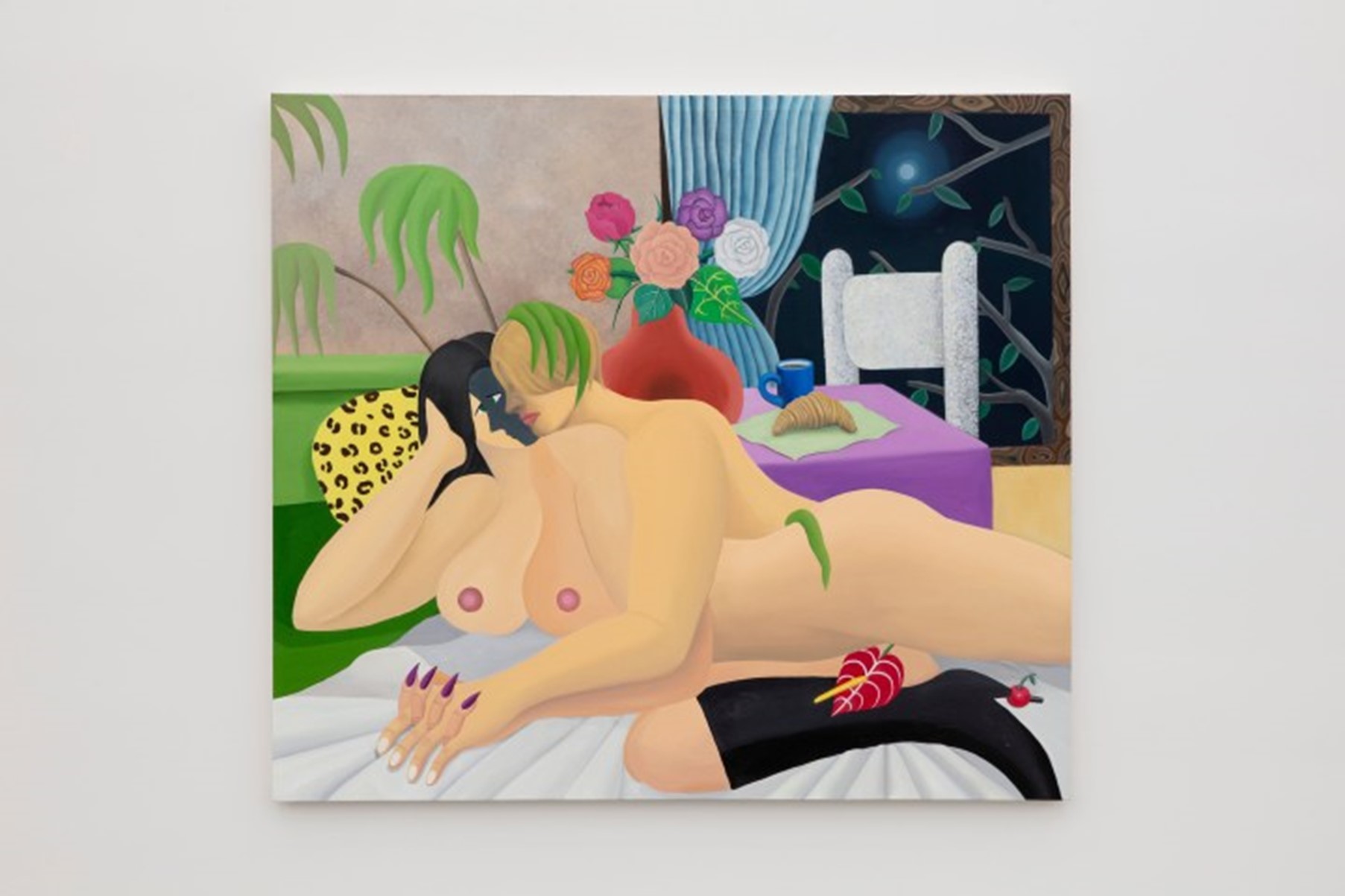 GaHee Park, “Shadow Kiss” (2020),
oil on canvas, 60 x 68 inches © Guillaume Ziccarelli. Courtesy of the artist
and Perrotin
GaHee Park, “Shadow Kiss” (2020),
oil on canvas, 60 x 68 inches © Guillaume Ziccarelli. Courtesy of the artist
and Perrotin
GaHee Park first gained attention
in 2016 for paintings that inextricably linked sexual desire and humiliation.
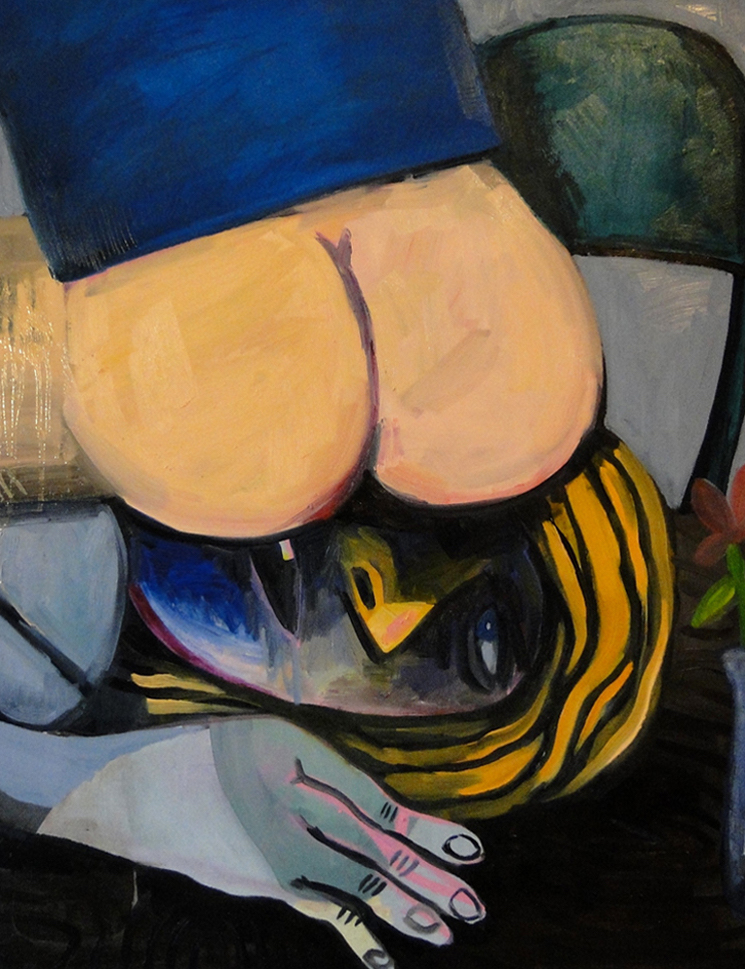
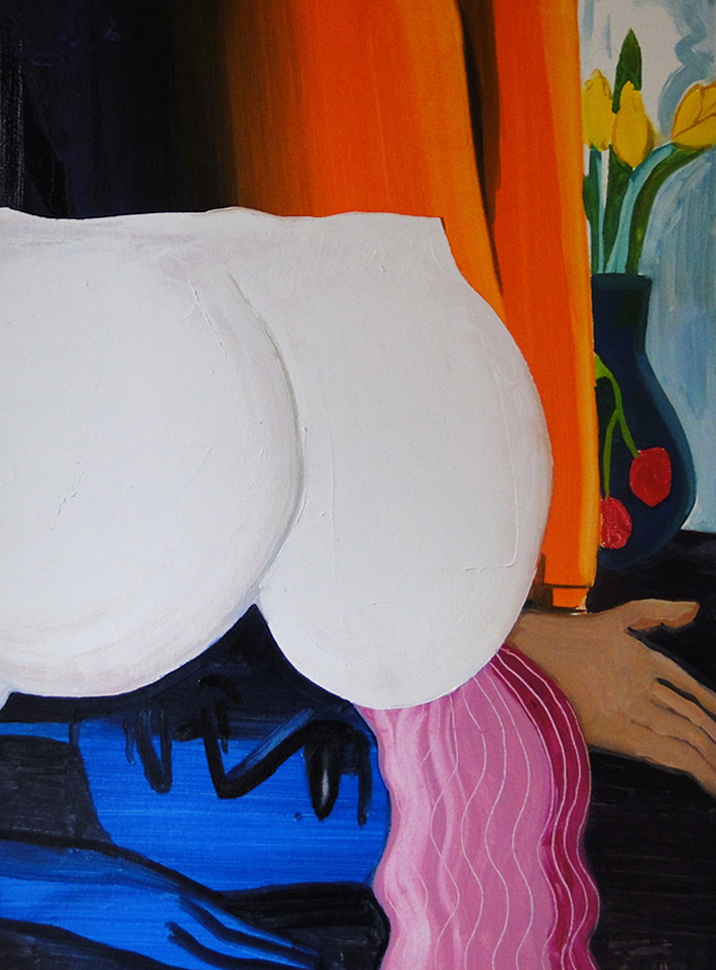
Works such as “Ass on Face” and “Butt on Two-Face” (both 2016) were crudely
painted close-ups of someone’s butt (of unknown gender) sitting on a woman’s
prone head or, in the latter, on two layered heads, the one on the bottom
salmon colored and blue eyed, the one on the top yellow, puffy-cheeked, and of
indeterminate gender. Whose yellow arms and hands — flat as airless balloons —
encloses them?
In an interview that appeared
in ‘Work in Progress’ (June 2017), Park talked about growing up in
Korea and moving to America to study art:
[…] I grew up in Korea, and
my parents are very strict Catholics. I really loved drawing the body, and as a
kid I was very curious about sex because growing up in Catholicism everything
about that was very distorted and not talked about. I drew images of the body
that were maybe a little bit perverse for my parents, and every time I drew
something they would burn it. I was about 10 or 11 at the time, but it just
made me more and more interested in drawing and art, and also depictions of the
body and sexuality. […]
[…] I really hated staying in
Korea as a woman. It is very Confucius and strict, and I felt very oppressed
mentally growing up. Physically too — nothing fit me properly. I wouldn’t fit
into women’s shoes, I had to wear men’s shoes. It was very humiliating, and I
hate to think about that because it was also such an unnecessary humiliation.
[…]
Having found a subject early in
her career, Park could have stayed within that territory. Thankfully, this is
not the case, as proven by her current exhibition of paintings and
drawings, 《Betrayal (Sweet
Blood)》, at Perrotin (September 12 – October 17, 2020).
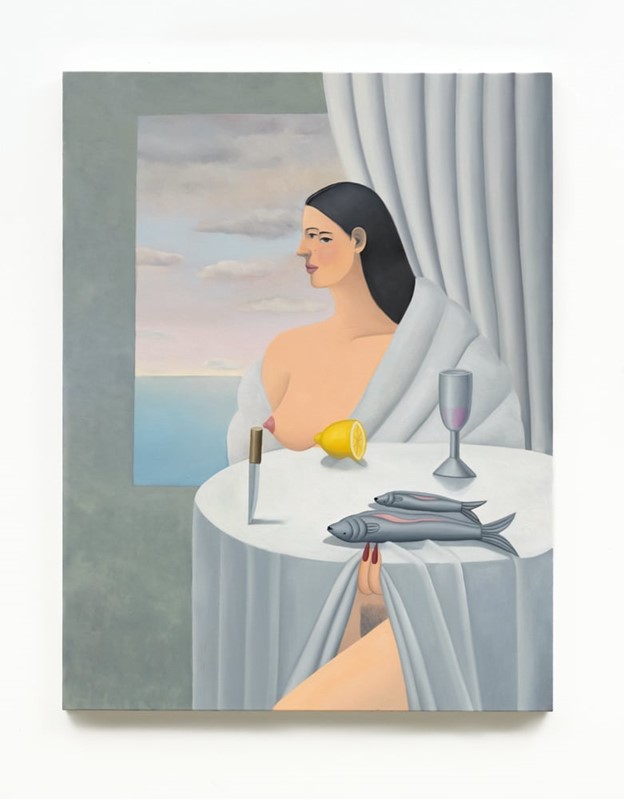
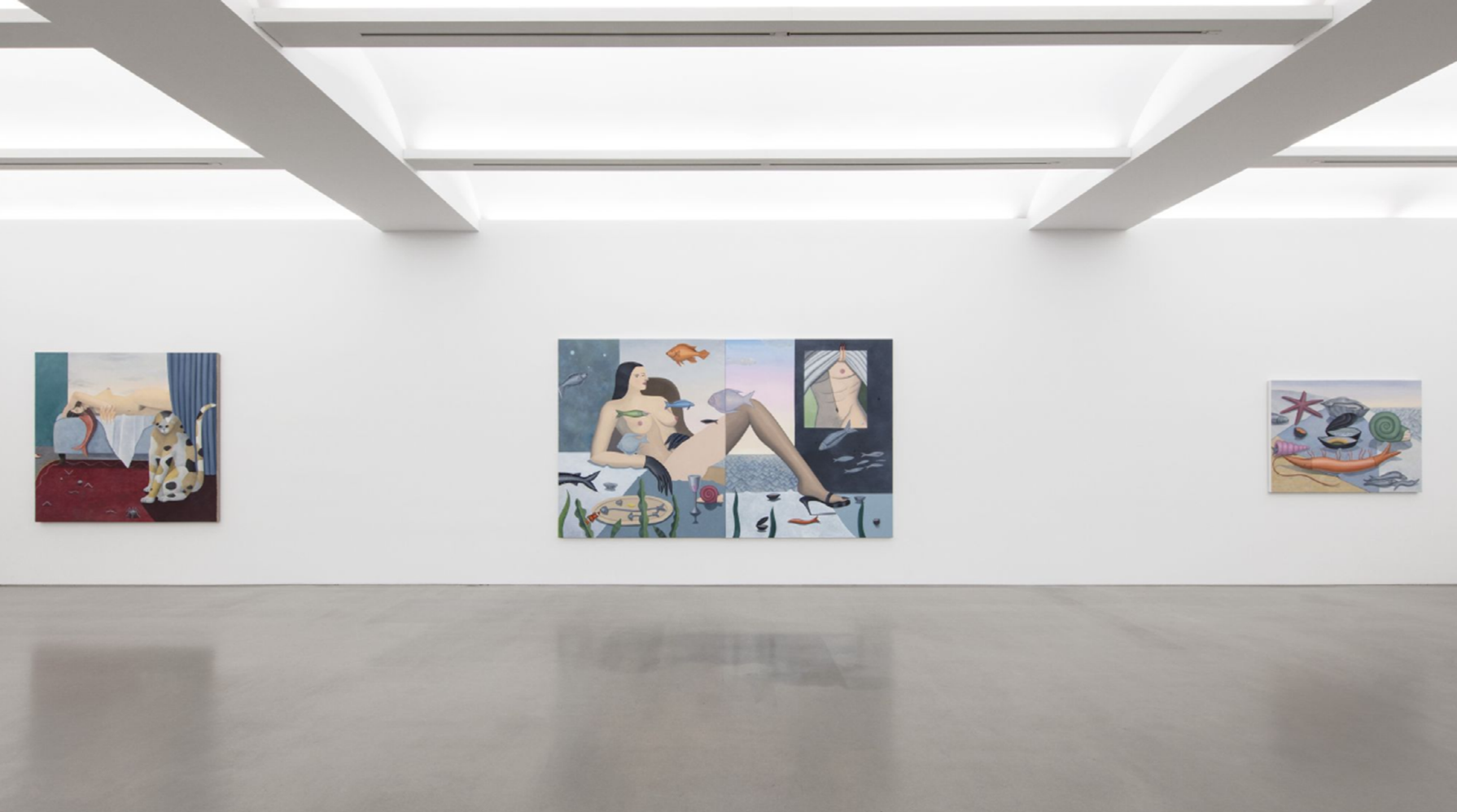
The change that has taken place since 2016 conveys an artist who has neither
settled into a signature style nor limited her curiosity by defining the
parameters of her subject matter. The paintings, including the space in which
the figures are seen, have become more complicated.
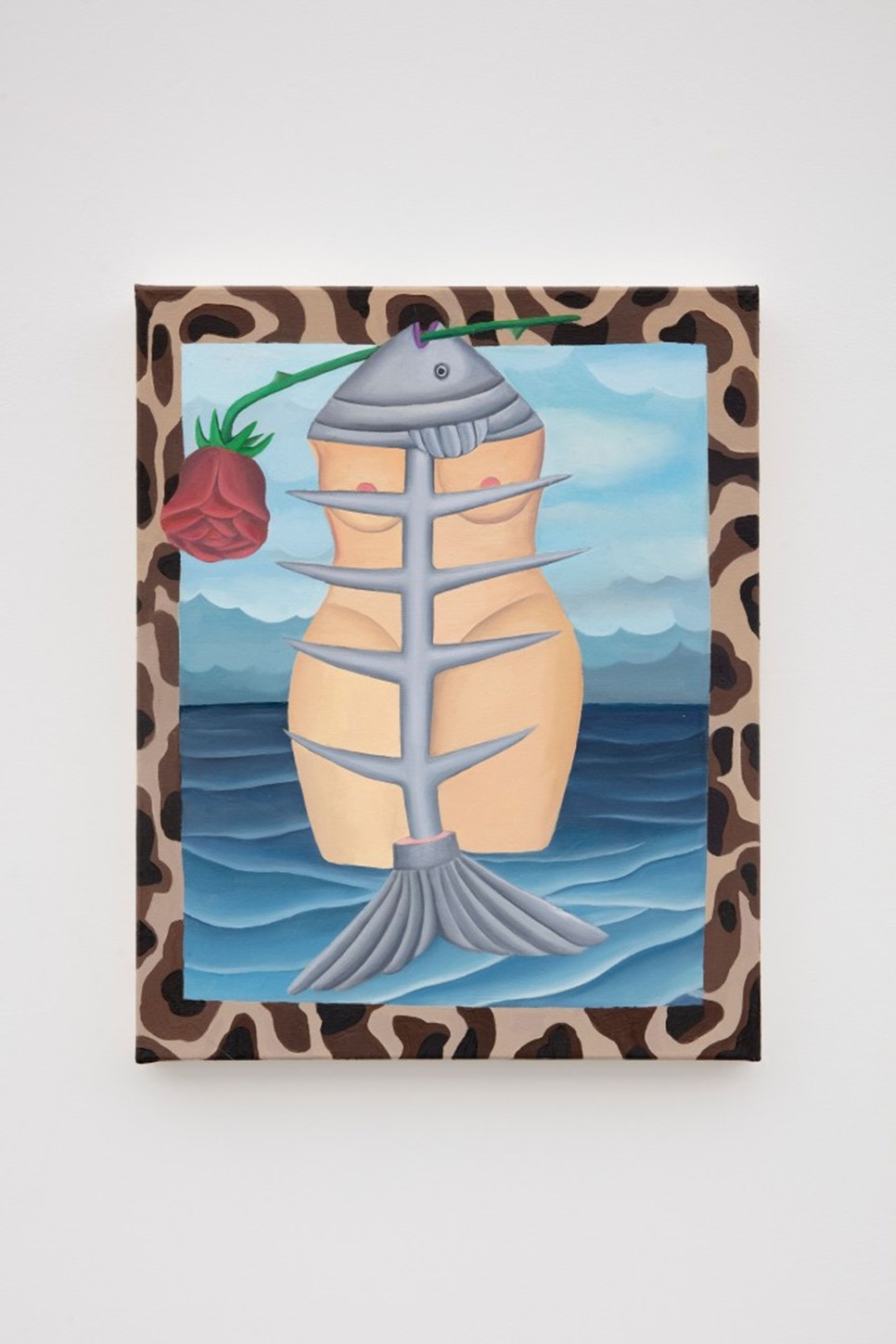 GaHee Park, “The Catch” (2020),
oil on canvas, 20 x 16 inches ©Photographer: Guillaume Ziccarelli. Courtesy of
the artist and Perrotin
GaHee Park, “The Catch” (2020),
oil on canvas, 20 x 16 inches ©Photographer: Guillaume Ziccarelli. Courtesy of
the artist and Perrotin
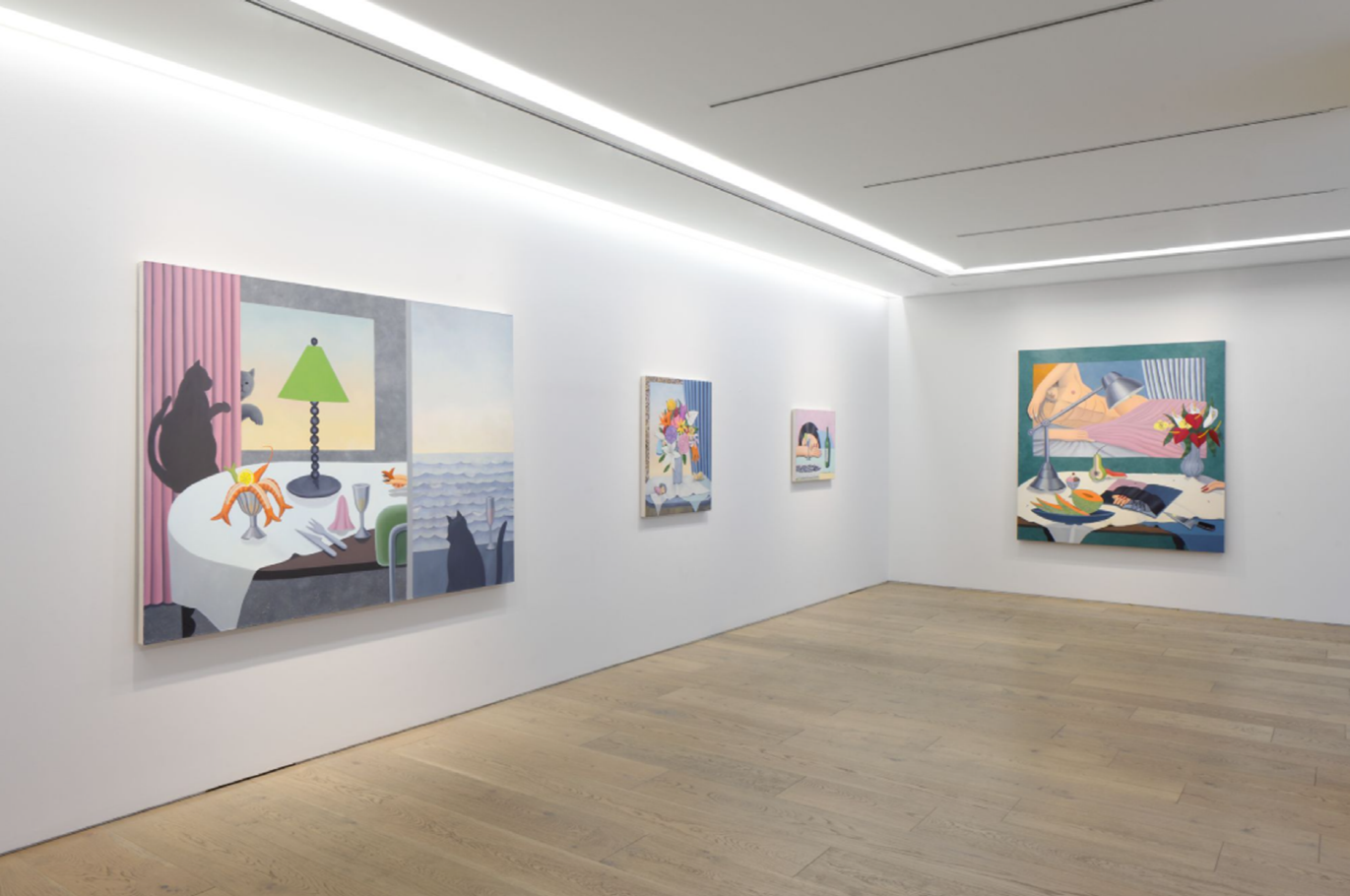
There are 11 paintings and
drawings in the exhibition, with the paintings on the first floor and the
drawings on the second. The first painting you see is the oil on canvas “The
Catch” (2020, 20 by 16 inches), which is on the wall opposite the receptionist’s
desk, before you go down a corridor to the first-floor gallery.
I want to say two things here.
First, “The Catch” is an outlier among the paintings included in the
exhibition. Park has depicted a limbless female torso overlaid by a fish
skeleton, whose head caps the top of the torso. Meanwhile, the fish’s head
grasps a long-stemmed rose in its mouth. The joined forms rest on the ocean,
against a sky of blue clouds. The view is “framed” by a camouflage-pattern band
in various hues of brown and black. This stylized painting captivated me, even
though I have no idea what it is about.
The second thing I want to
underscore is that all the paintings seem to have been preceded by fairly
resoved pencil drawings, some of which are in varying densities of black,
others in color. Drawing enables the artist to explore as well as visualize her
imagination, to invent her opaque narratives.
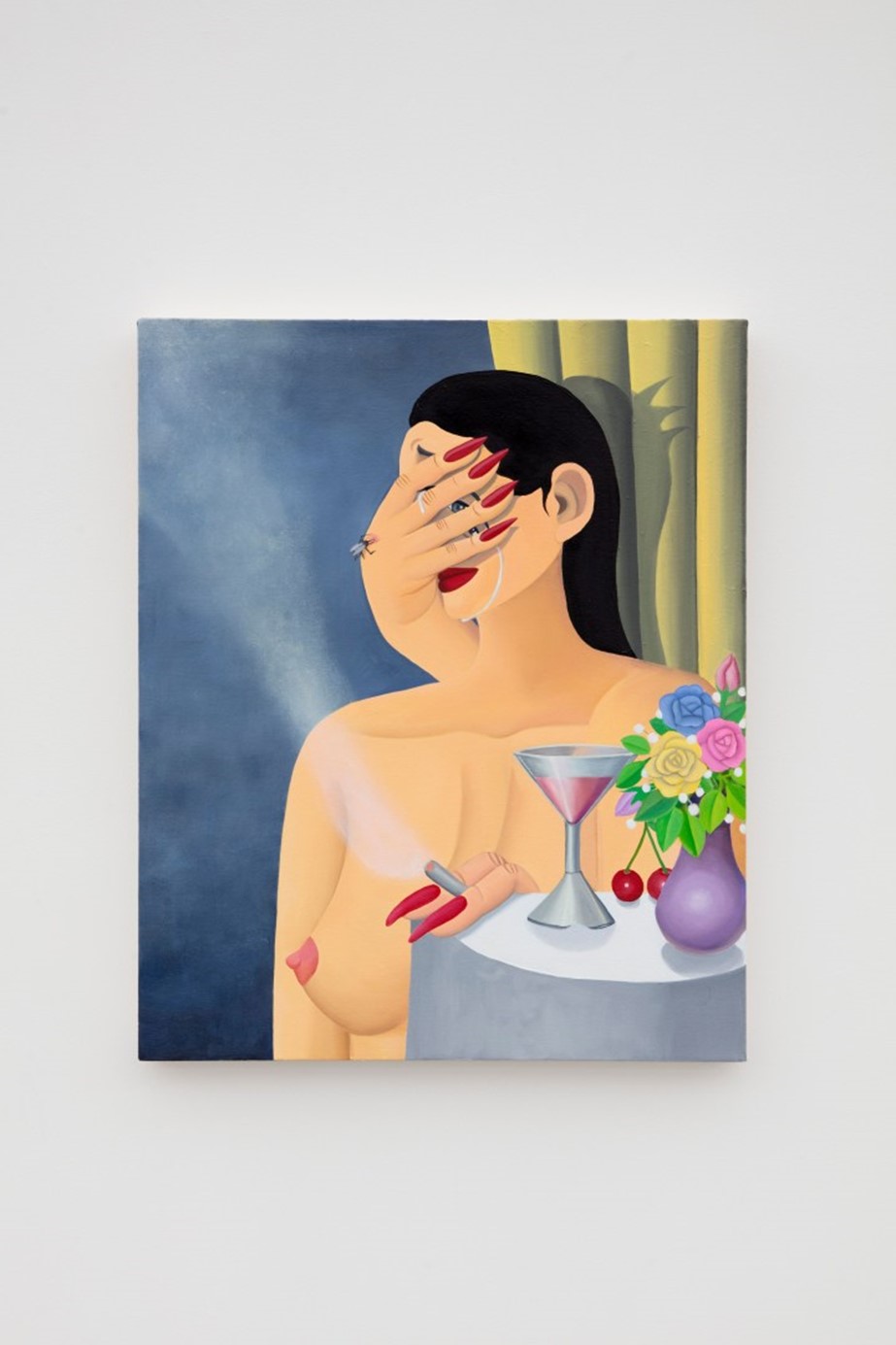 GaHee Park, “Betrayal (Sweet
Blood)” (2020), oil on canvas, 27 x 22 inches ©Photographer: Guillaume
Ziccarelli. Courtesy of the artist and Perrotin
GaHee Park, “Betrayal (Sweet
Blood)” (2020), oil on canvas, 27 x 22 inches ©Photographer: Guillaume
Ziccarelli. Courtesy of the artist and Perrotin
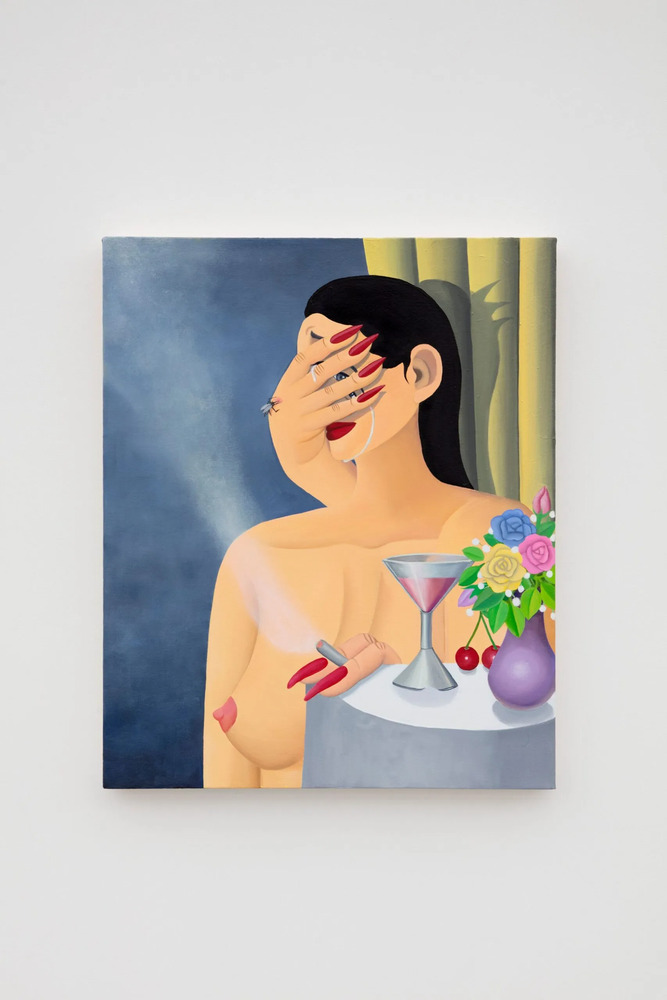
In “Betrayal (Sweet Blood)”
(2020), Park depicts a nude woman from the chest up, beside a small round
table, with a yellowish curtain behind her head. We see two large fingers, with
long, sharp, brightly painted red fingernails, resting on the table, a cigarette
between them. Proportionally, the fingers are far too large to be the woman’s,
but their placement suggests that they are. It is these kinds of incongruities
that held this viewer’s attention. Once I noticed the discrepancy, I kept
looking for others.
Why do the fingers seem more
animal-like than human? Another hand has come out from behind the curtain, and
is covering the woman’s face. Its long, red fingernails echo the woman’s
talon-like fingers. A whitish-gray line runs down the side of her face and goes
under the chin, while her eyes seem to have slipped down her face. Four
fingers, spread slightly apart, partially cover the face. The line and the
position of the eyes suggest that the woman might be wearing a mask of some
kind. Is this the fragment of a dream — one about being naked in public? For
while no other people are visible in the painting, the circumference of the
tabletop implies that this is a public place. Other details — for instance, an
insect on the hand over the woman’s face — further complicate the scene.
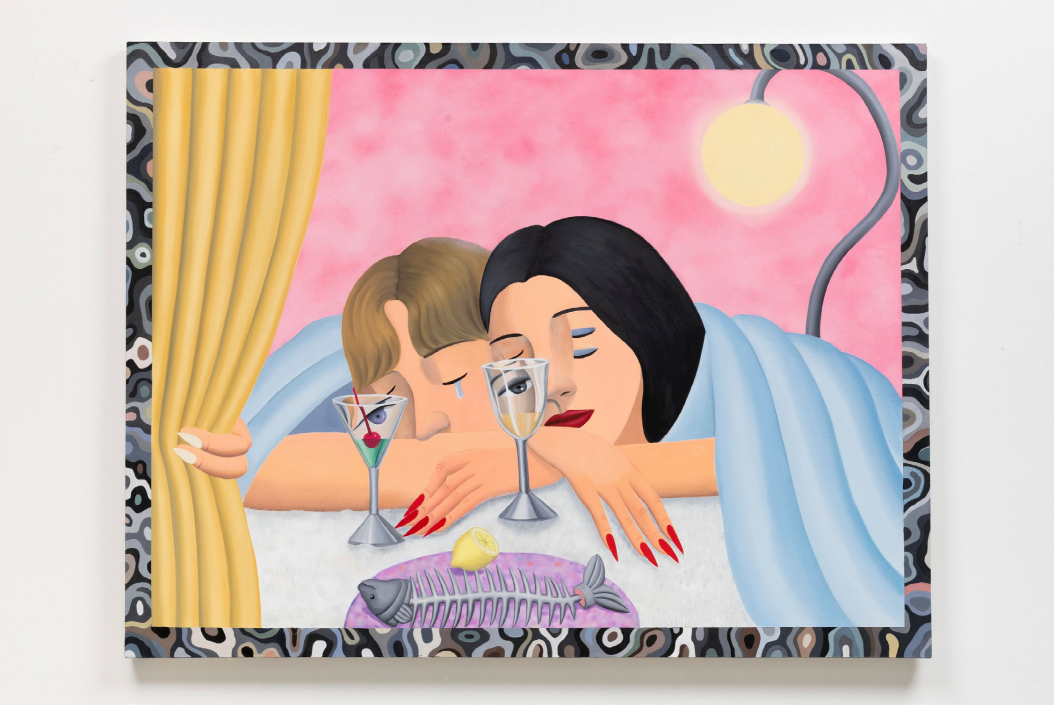
In “Shadow Kiss” (2020), an
androgynous figure with short hair lies behind a large-breasted, black-haired
woman who has propped her head up so she can look back at the figure behind
her. The woman is nude except for a thigh-length back boot, which sports a
maraschino cherry halfway up its spiky heel. An anthurium plant, with its
bright red leaf and long, yellow, phallic spadix, juts out between the woman’s
legs, near her crotch. Sandwiched between the two heads is the flat profile of
a charcoal gray face with one blue eye visible.
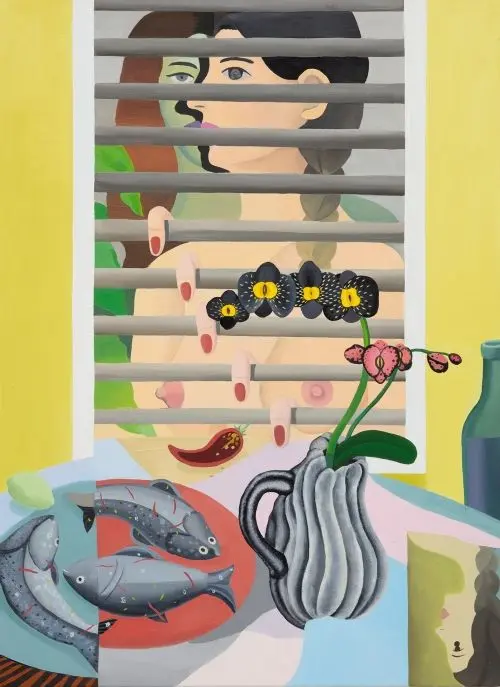
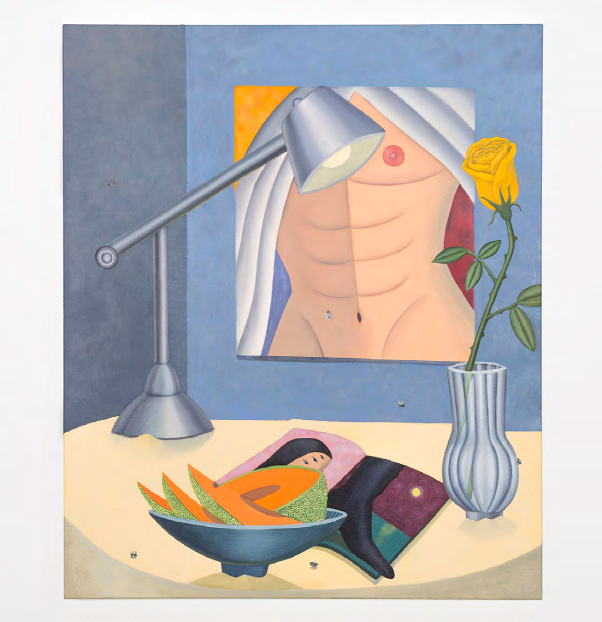
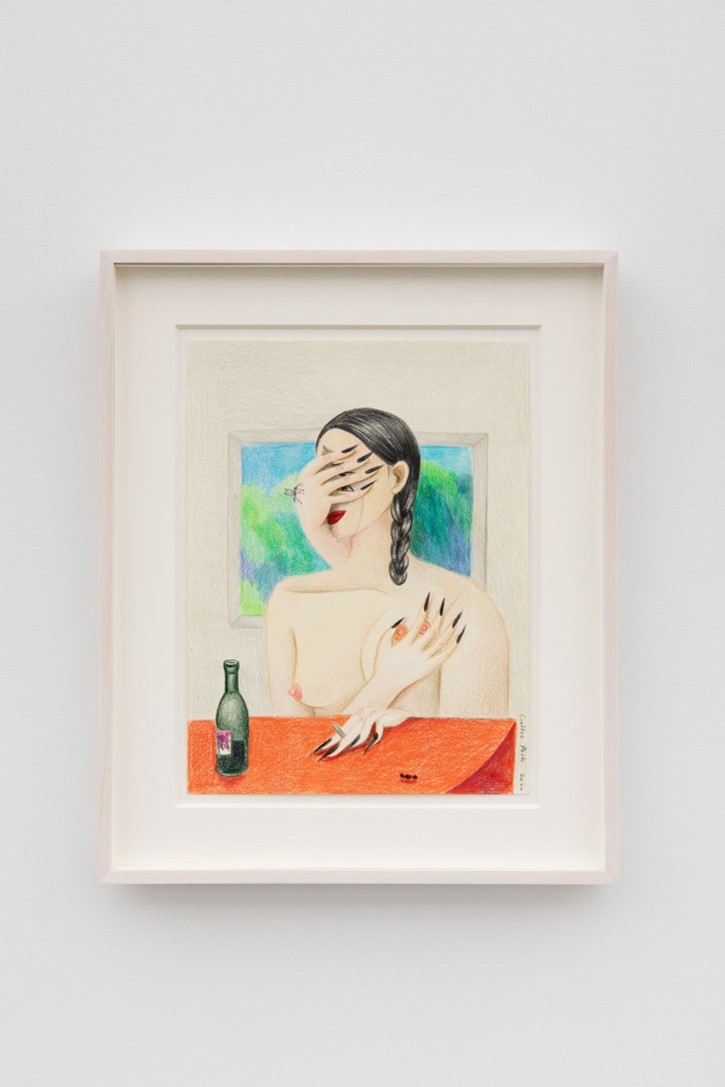 GaHee Park, “Sweet Blood” (2020),
color pencil on paper. Framed: 16 1⁄2 x 13 1⁄2 x 1 1⁄2 inches ©Photographer: Guillaume
Ziccarelli. Courtesy of the artist and Perrotin
GaHee Park, “Sweet Blood” (2020),
color pencil on paper. Framed: 16 1⁄2 x 13 1⁄2 x 1 1⁄2 inches ©Photographer: Guillaume
Ziccarelli. Courtesy of the artist and Perrotin
What “Betrayal (Sweet Blood)” and
“Shadow Kiss” share are the mismatches, and all that they evoke. Park compels
the viewer to scrutinize the painting and pore over every detail. In “Shadow
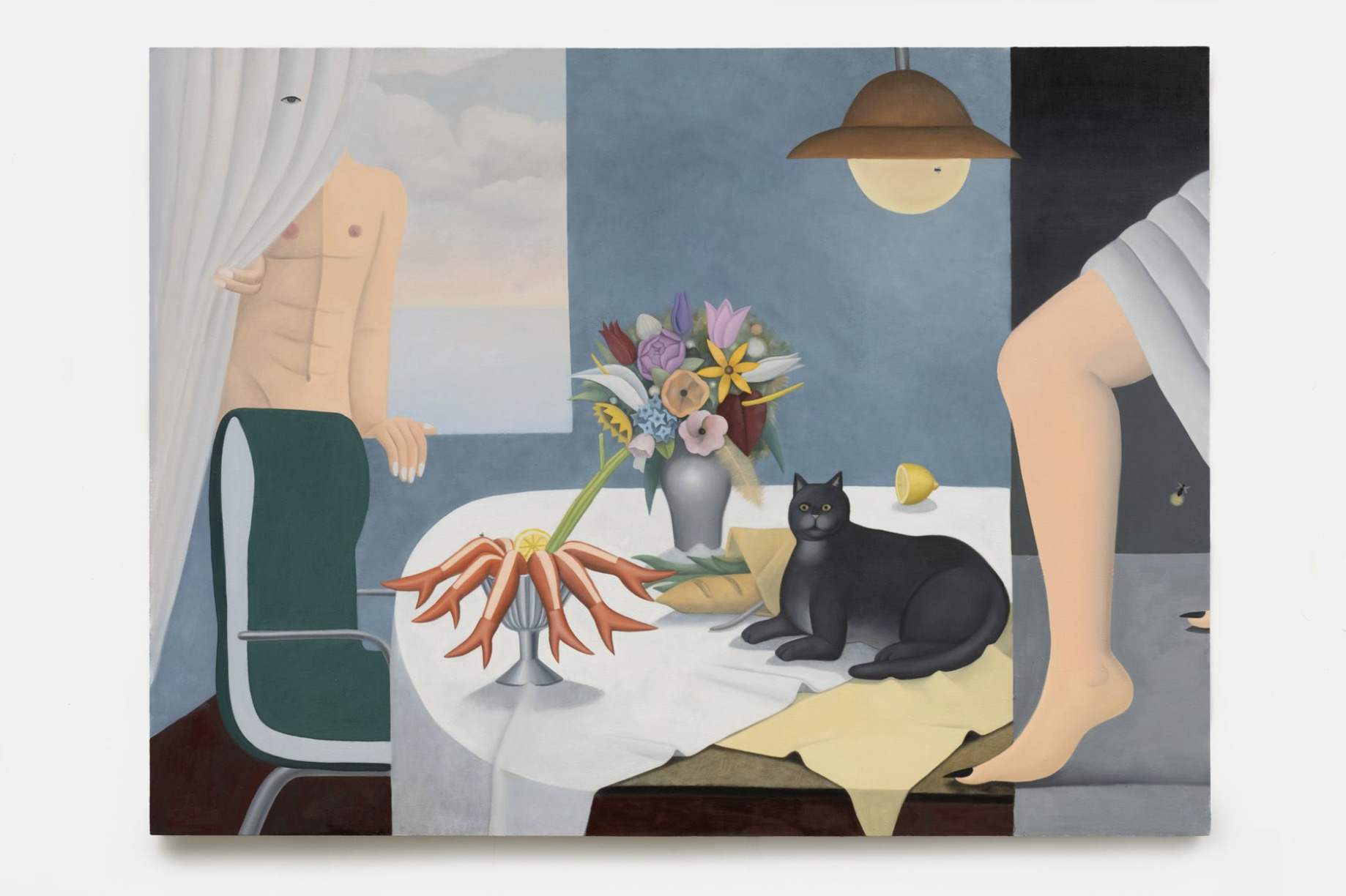
Kiss,” for example, we might wonder why only one cup of black coffee and a
single croissant are on the table behind the couple lying in the bed.
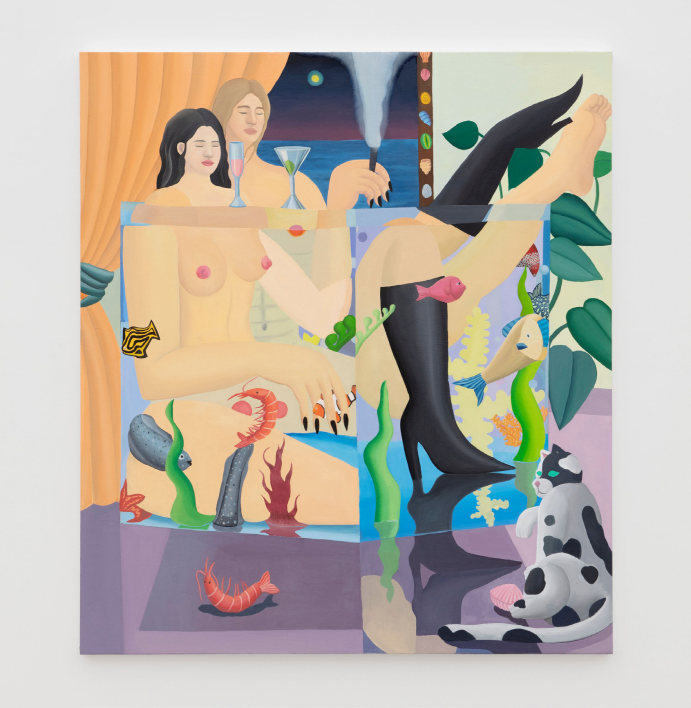
At her best, Park’s mismatches
feel deliberate, and do not easily give themselves to an overarching narrative.
She is less successful when they seem arbitrary, but I only felt this in one
painting.
There is a coolness to the way
Park paints the figures, as well as a sculptural attention paid to form and
surfaces. Some of the still-life set-ups included in the paintings reminded me
of Gerald Murphy. In the 14 paintings he produced during the 1920s, Murphy’s
stylized still lifes consisted of flat shapes, overlapping forms, and spatially
illogical juxtapositions — all elements of Park’s work. Her use of multiple
perspectives, mirrors, and tight cropping seems to be influenced by film. In
her subject matter and in the way she paints, she has defined a territory all
her own. It is clear that the boundaries of “The Catch”’s territory are not
fixed — though it is unclear where she might go next. It is also clear that the
humiliation she felt when she was young has become subsumed into something
larger and more nuanced and strange.
《GaHee Park: Betrayal (Sweet Blood)》 continues at Perrotin (130 Orchard Street, Manhattan) through
October 17.