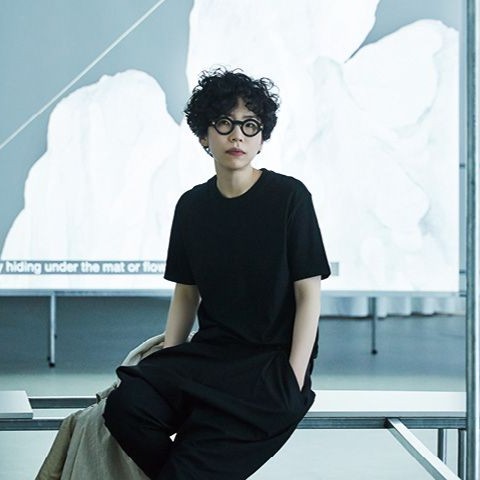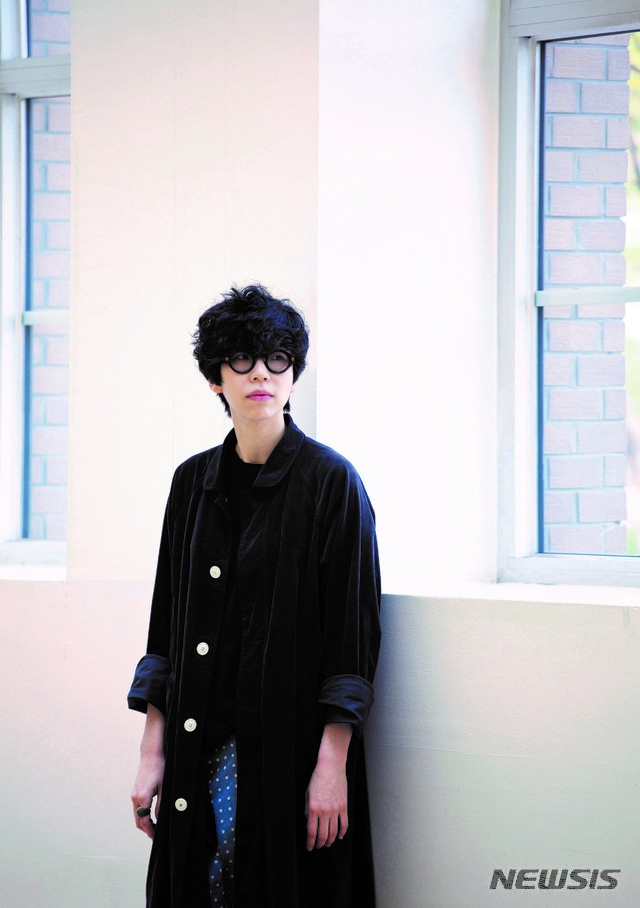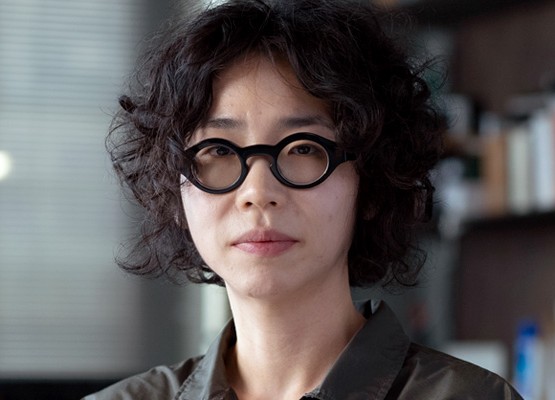


Sojung Jun is a media artist based in Seoul. She received a master's degree in media arts from Seoul National University’s Department of Sculpture and the Graduate School of Communication at Yonsei University.
Sojung
Jun is an artist working in diverse mediums including video, sound, sculpture,
and publication, to create non-linear space and time that evokes new
perceptions of history and the present. Exploring ways in which change of
physical boundaries penetrates everyday sensual experiences, she traces the
scenes, moments, and voices of the people excluded from our contemporary sense
of speed.
Presented
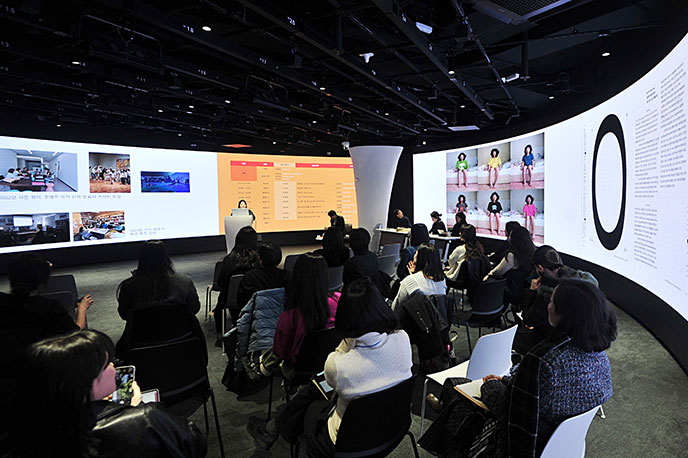
on the media wall in Leeum’s lobby, “Sojung Jun: Green Screen” is composed of
three of her works related to the experience and imaginary of
borders: Green Screen (2021), Eclipse (2020),
and Early Arrival of Future (2015). Considering the media wall’s
unusual location in a lobby connecting the museum’s various spaces and serving
as an arcade for temporary gatherings, Jun conceived of the program by
approaching the media wall as a medium as well as a device. A rather vulnerable
space for exhibition, the media wall offered her a device for managing time and
maximizing senses – something similar to such fictional spaces located in
reality as “portals, wormholes, chukjibeop (a hypothetical method of
folding space and shrinking distance), and time travel to the fourth
dimension,” as the artist puts it. This view corresponds to how she perceives
Korea’s Demilitarized Zone (DMZ) as a twilight zone full of potentials
in Green Screen (2021), from which this program’s title is derived.
Jun
carefully structured the three works to resonate with one another within the
media wall’s timeline. Eclipse, a work inspired by the life and music of
composer Isang Yun, interweaves the perspectives of the inside and the outside
surrounding the division and border of the Korean Peninsula. Early Arrival
of Future captures the moment at which a North Korean musician and a South
Korean musician collaborate on a piano duo performance through dialogue and
consent. The program begins and ends with Green Screen, which unfolds
green sceneries of the DMZ, thus providing a ground for the one-time monumental
collaboration. The superimposition of the three works—Early Arrival of
Future which summons a future into the present, Green
Screen which creates ruptures in reality and perception,
and Eclipse which translates our imagining the border as a sliding
image—is to temporarily construct non-linear space and time. Fictional
realities thus created will rattle our sense of borders and create fractures.
Works
Early
Arrival of Future, 2015 / Single-channel video, stereo sound,
HD, 10 min. 8 sec. ©
Leeum Museum of Art
The title Early Arrival of Future is borrowed from the term that North Korean defectors residing in South Korea use to refer to themselves as harbingers of a unified Korea. The “future” here means both a future that has not yet come and a future that is difficult to reach. Jun’s Early Arrival of Future shows two pianists—one from South Korea and the other from North Korea—performing together in harmony, facing each other with pianos in the middle. The joint performance of artists from two different systems is to pose questions about whether they can overcome ideological and political conflicts through their artistic imaginations. The unprecedented collaboration of North and South Korean pianists was contrived by Jun as a product of deep conversations and exchanges of ideas.
Eclipse
I, 2020 / Two-channel video, stereo sound, 4K, 10min. 27sec. © Leeum
Museum of Art
Eclipse
II, 2020 / Two-channel video, stereo sound, 4K, 13 min. 25 sec ©
Leeum Museum of Art
Eclipse
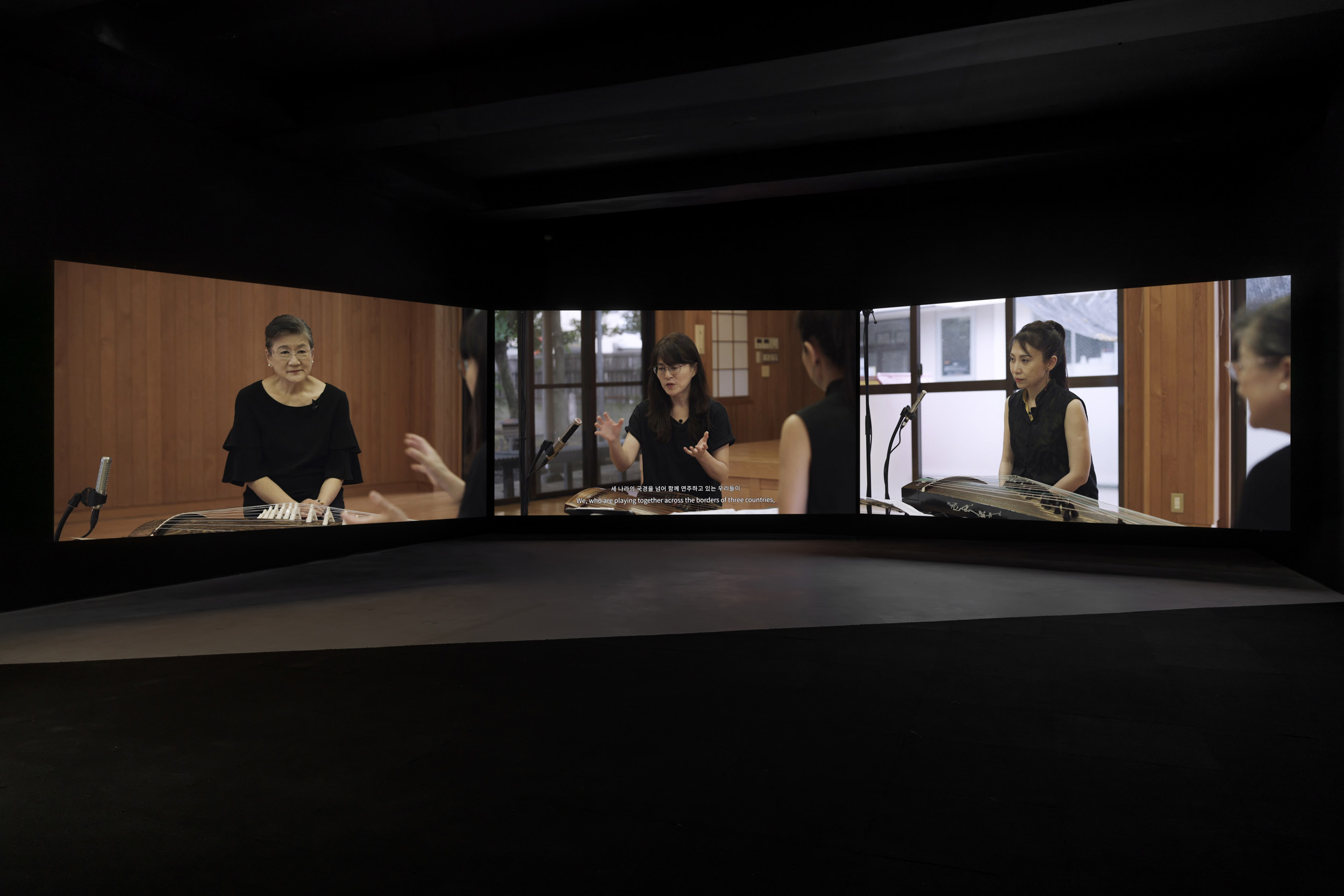
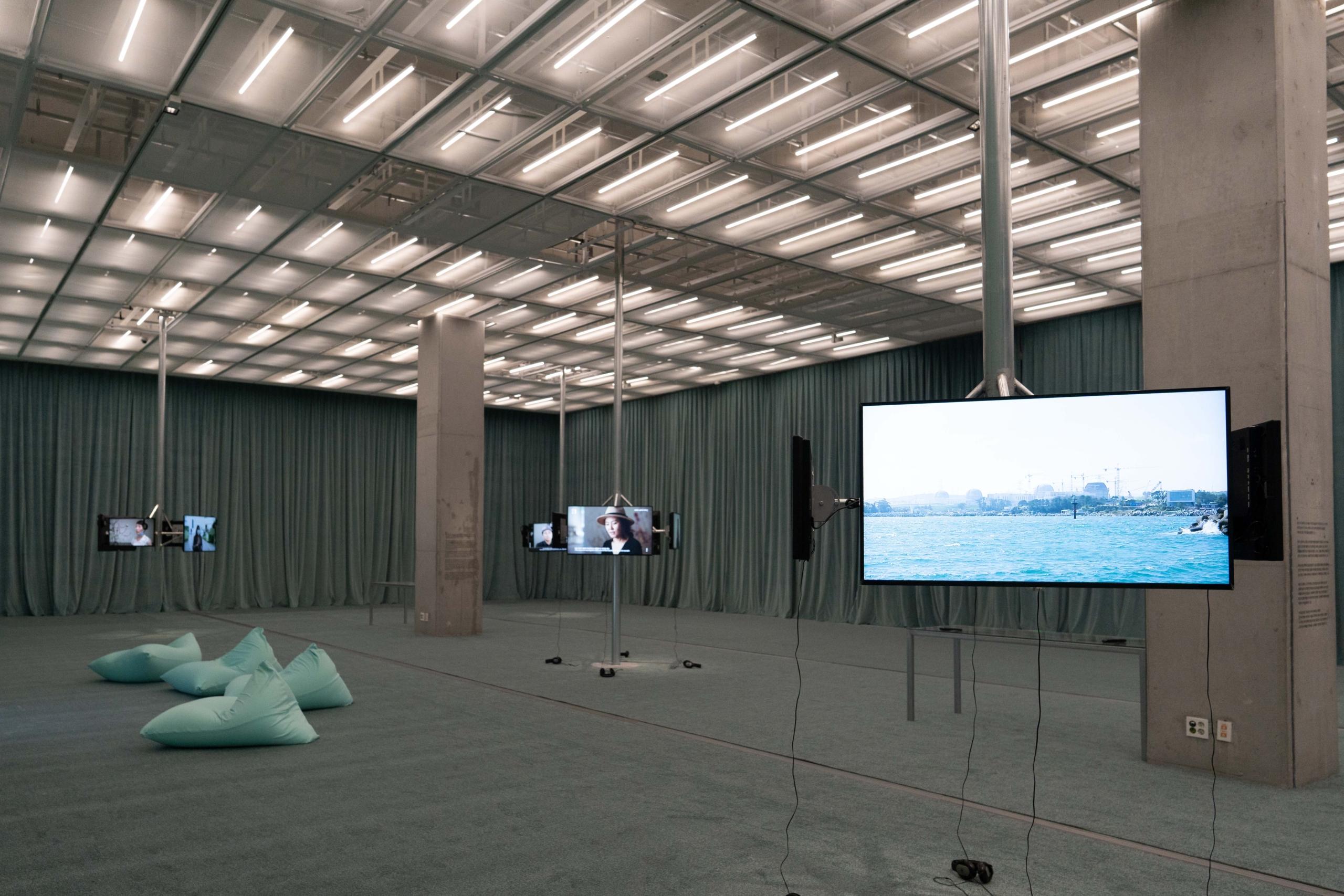
I and Eclipse II are both two-channel video works based on
performances of two songs composed for two specific instruments: harp and North
Korean gayageum.* They are meant to evoke the life and music of composer Isang
Yun, exploring the senses elicited by the ongoing experience of the separation
of Korea. In 1977, Yun composed Double Concerto, music that compares the Korean
folktale of Gyeonwoo and Jiknyeo (two lovers separated by Milky Way) to the
relationship of North and South Korea. Korea remains divided to this day, of
course, and in Eclipse Jun uses image and sound to explore the
seemingly deep psychological and physical distances between the peoples.
Playing with the dizzying intersections of horizontal and vertical lines of the
string instruments and the performers’ fingers, Jun’s videos create equally
dizzying montages of images that constantly slide and fragment. In the midst of
disorienting encounters of angles and viewpoints, they also capture fleeting,
ephemeral points of accord. Collaborators include Soona Park (North Korean
gayageum), Jungyeong Bang (harp), and composers Soojung Shin (Eclipse I) and
Jiyoung Kim (Eclipse II).
*Unlike
the traditional 12-stringed gayageum familiar in South Korea, the North Korean
gayageum is usually 21-stringed, a reformation made under the influence of
Russia in the 1960s and 1970s, when the originally 5-note scale North Korean
music expanded to a 7-note scale of Western classical music. The 21-stringed
North Korean gayageum shown in Jun’s Eclipse is an instrument of
compromise with which the performer can play the vibratos of the 12-string
gayageum.
〈그린
스크린 Green Screen〉, 2021 / 싱글
채널 비디오, 스테레오 사운드, 4K, 12분 30초 / Single-channel video, stereo
sound, 4K, 12min. 30sec. © 리움미술관
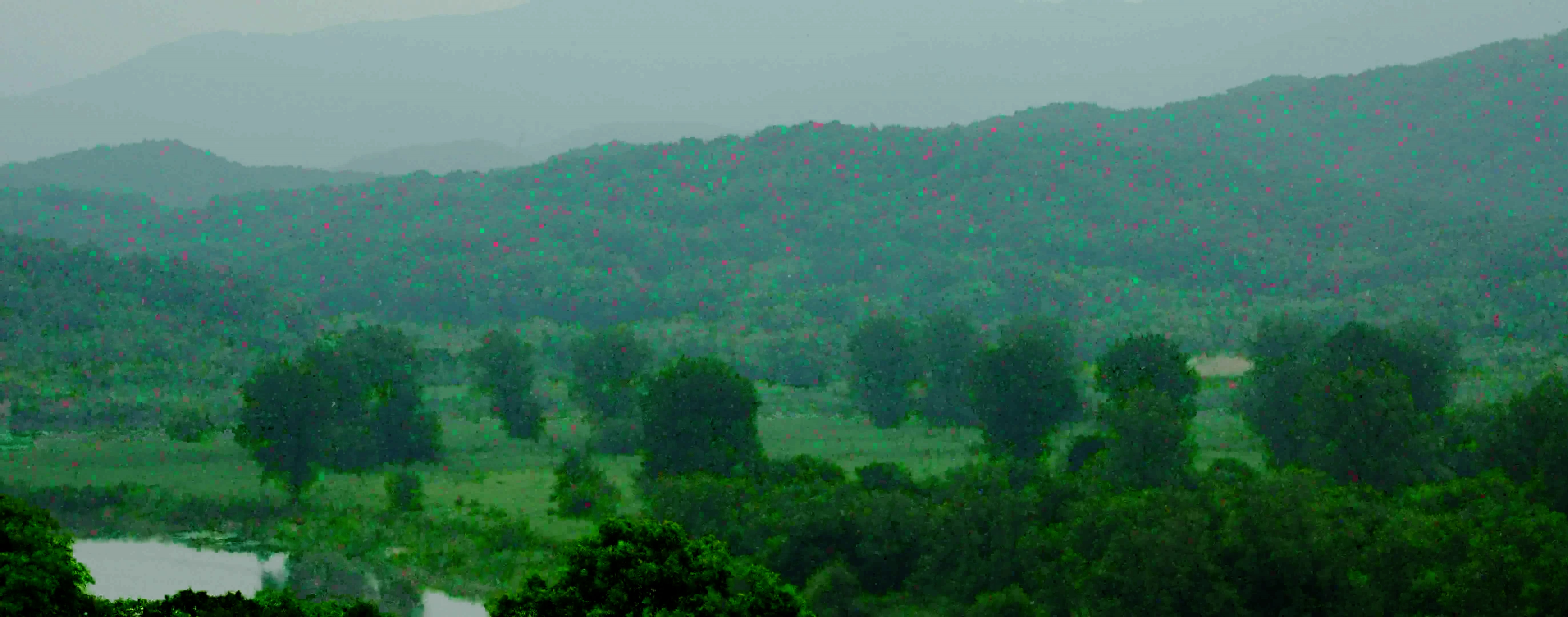
Green
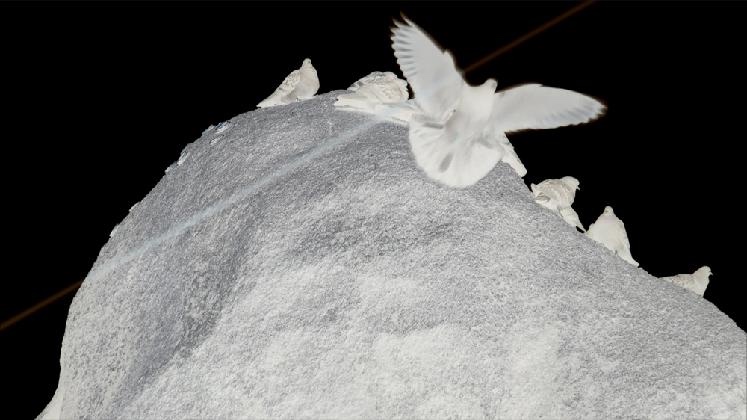
Screen unfolds screens (sceneries) that are burning in green. They are
furious flames of green, landscapes that actually exist, and deterioration of
thought that occurs when faced with the outside world. Depicting landscapes in
the Demilitarized Zone (DMZ), where civilian access has been controlled for 70
years since the Korean War, Green Screen attempts to materialize the
reality of North and South Korea’s division – this space full of tension and
absurdity. With little human intervention, the DMZ has paradoxically preserved
the overwhelming power of nature. In Jun’s video, the fuming landscapes embody
“now time” in which the present is interlaced with the past; the artist has
combined real and ideal sceneries to superimpose destruction and creation,
antagonism and coexistence. While a “green screen” usually refers to a large
green background used in video production for digital effects, Jun’s Green
Screen presents the DMZ as vivid sceneries rather than a historical
background. The glitches added to create the fuming effect in the DMZ’s green
landscapes are the artist’s attempt to replace the ambivalent senses involved
with the division of the Korean people, such as prolonged frustration and hope,
hostility and hospitality, confrontation and coexistence, and destruction and
generation. As she explains, glitches are errors that occur in the
transformation of data, in the process of displacement, transmission,
acceleration, and/or circulation.
Green
Screen seeks to transform the DMZ’s image from a Cold War frontier to a
symbol of ecology and a real-world utopia where new systems can be imagined.
The DMZ currently exists as a border that divides the Korean Peninsula, but Jun
imagines the possibility of infinite stories bouncing out of the fraught area.