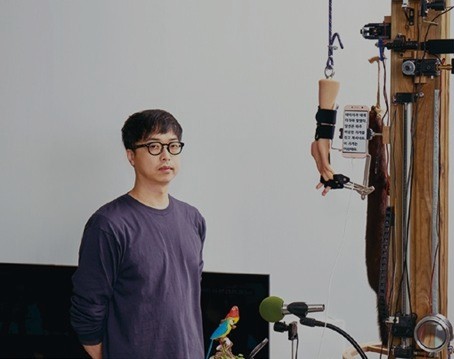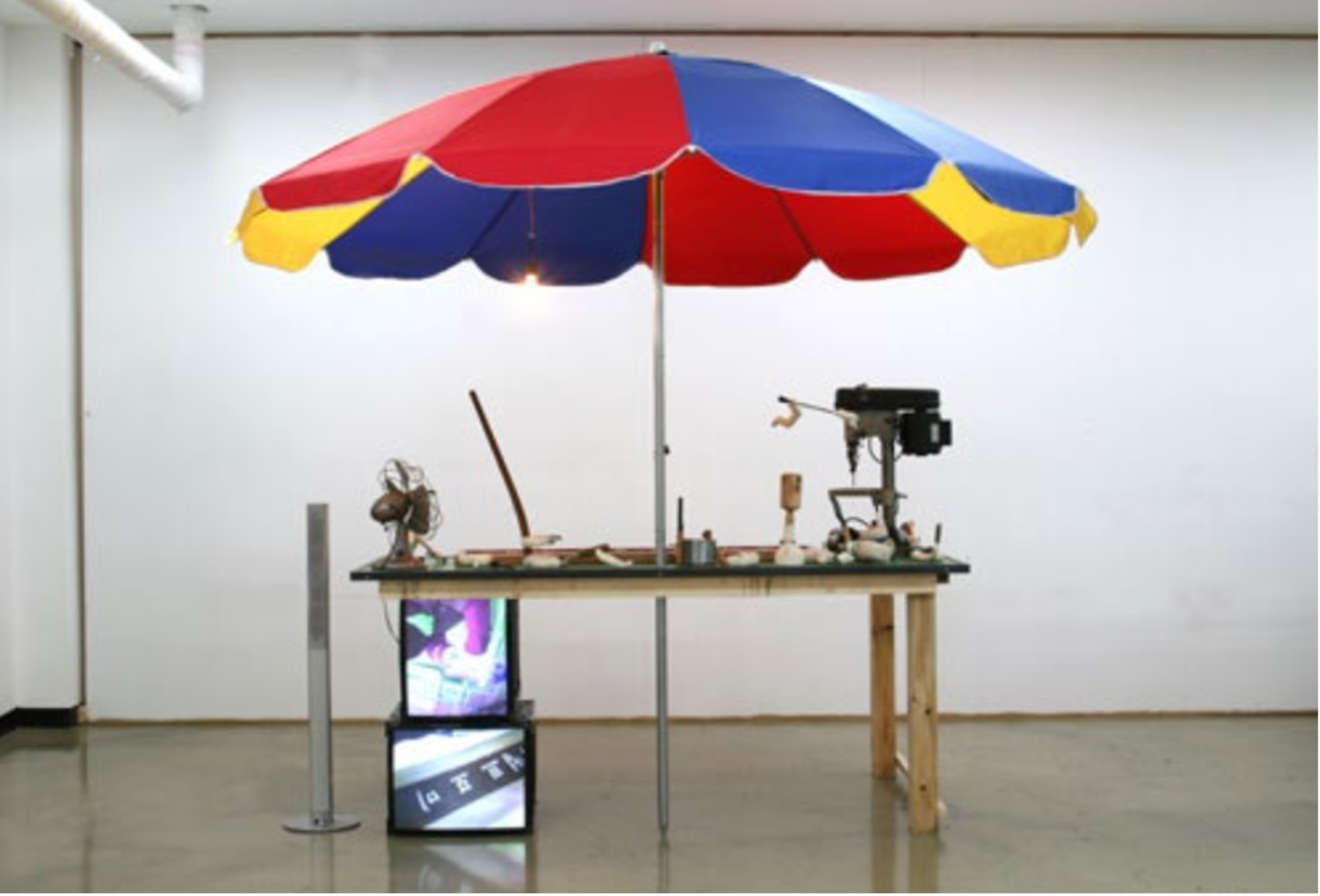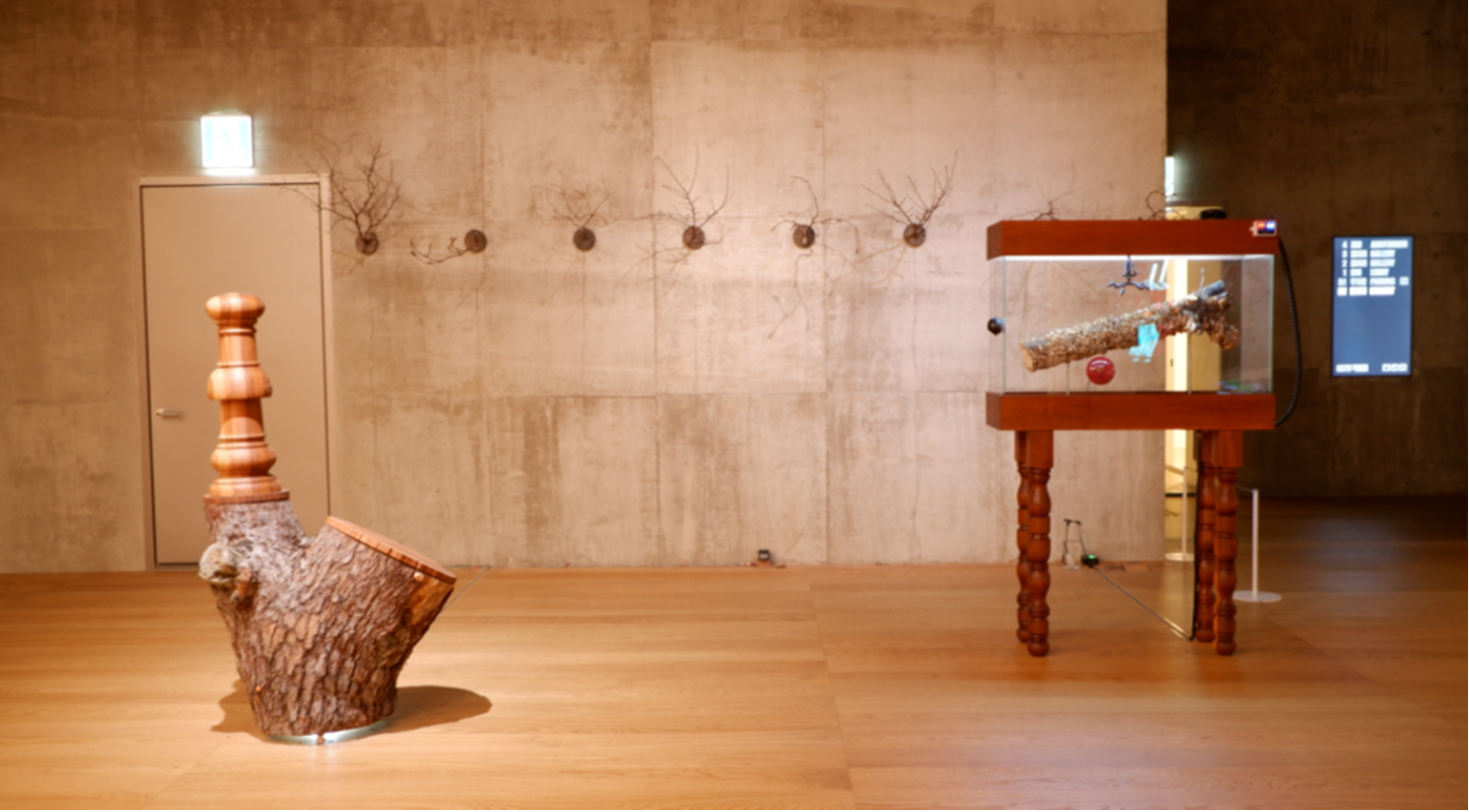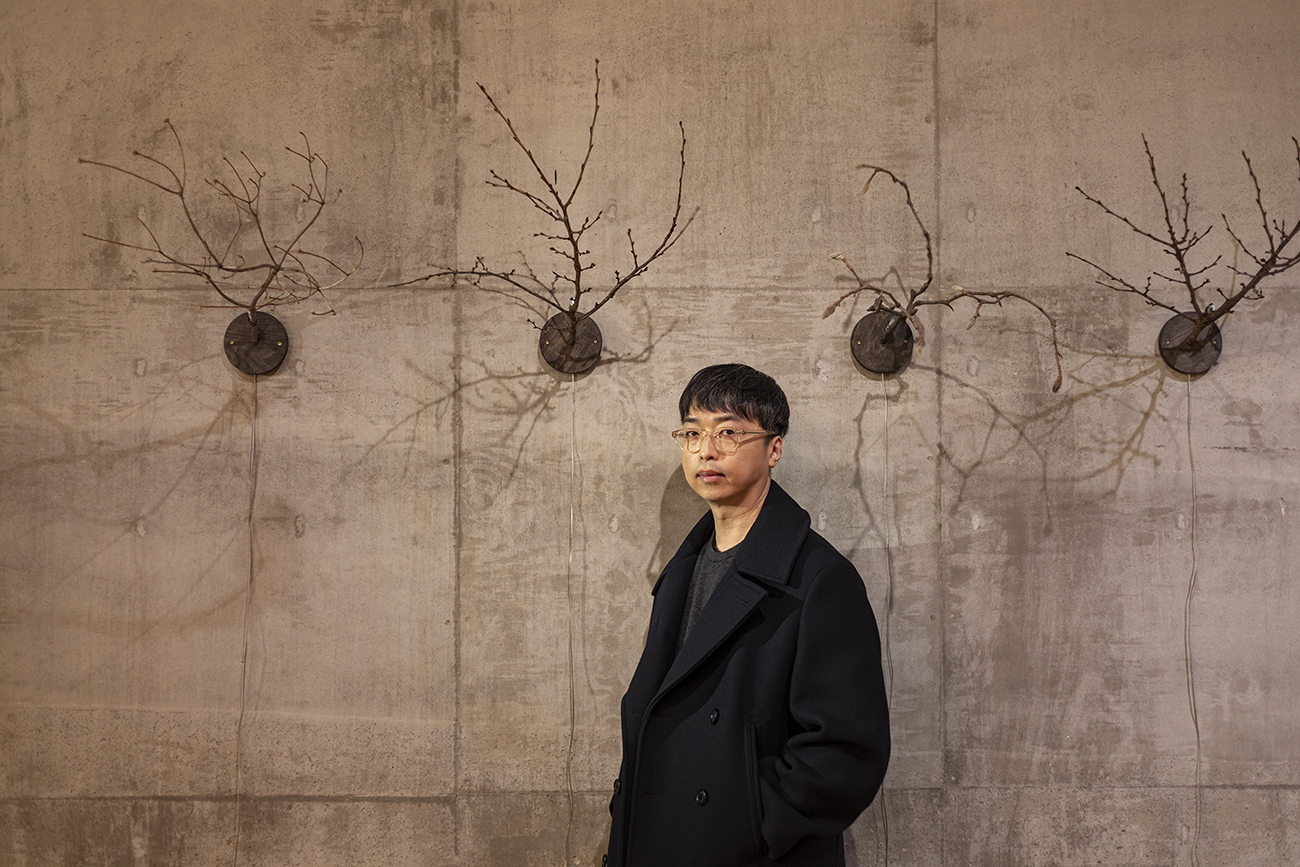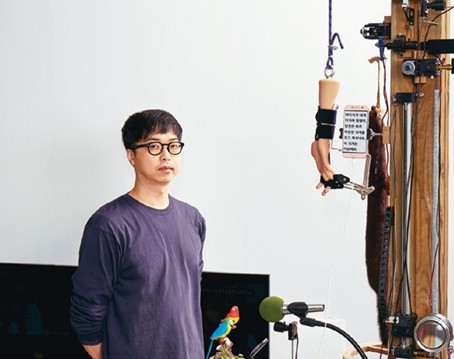

Yoo Hwasoo studied sculpture at Dongguk University and is actively engaged in both domestic and international art scenes, including Germany and China. He currently lives and works in Seoul, Korea.

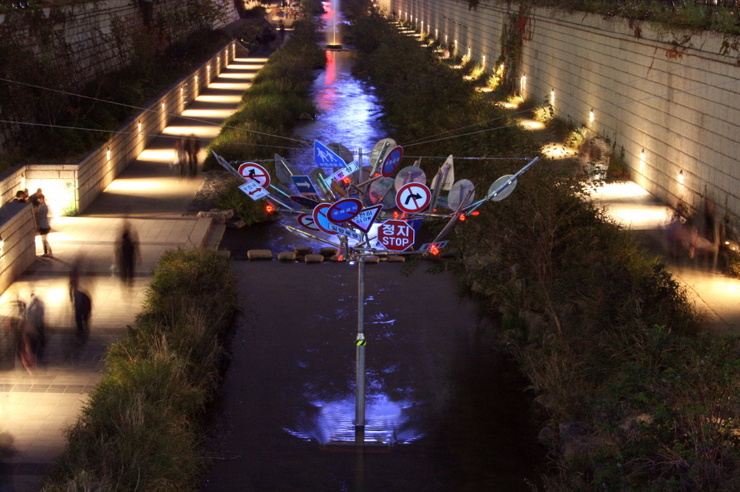
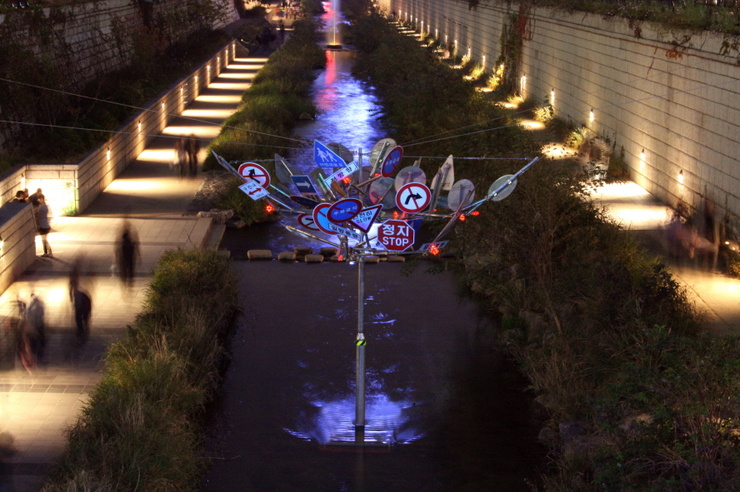
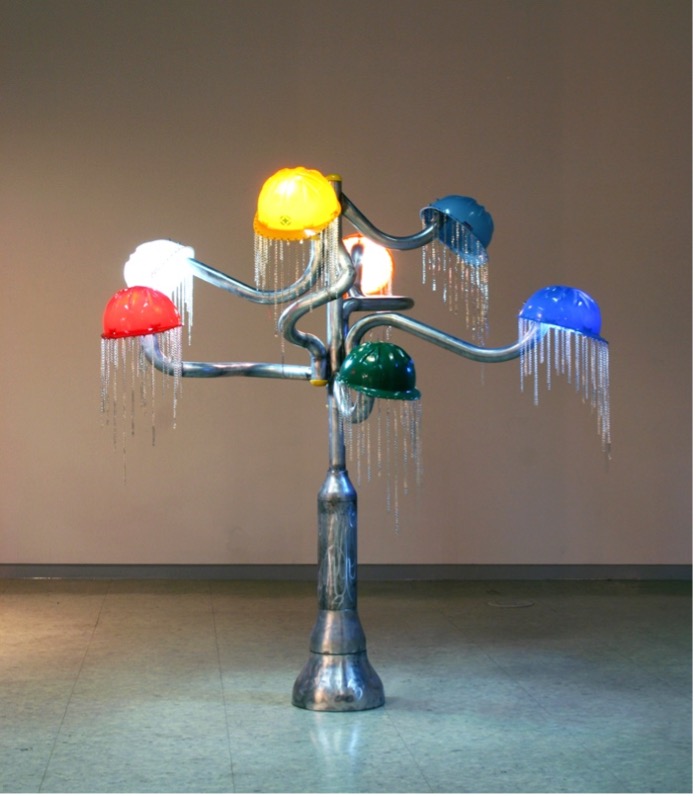
1. Dolce Vita, one of the series constructed
using construction materials and recycled traffic signs in 2010, takes the form
of an outdoor sculpture installed outside the exhibition space. The irony and
sharp critique of this public sculpture lie in its location—erected on the site
of the Cheonggyecheon restoration project, which opened in 2005 and is
considered the epicenter of Korea's second construction boom. Beneath the
ground, which had been swept by an influx of construction equipment and labor
for over three years, the public sculpture Tree has firmly rooted itself. It
appears as if this artificial tree is absorbing the residual energy left behind
by the construction project, growing from it. The paradox is that it is a
sculpture powered by the architectural remnants of a construction-driven state.
This paradox is a consistent theme in Yoo Hwasoo’s public sculptures. As long
as it does not cause significant disruption to the authorities, the artist
covertly reconstructs and represents the flaws of government-driven
construction policies under the guise of public art. Yoo’s skepticism, formed
while observing large-scale redevelopment projects, resonates with the rightful
frustrations of civil society. However, it also stems from his own experience
working on interior construction for a fashion mall in Dongdaemun, where his
job involved endlessly dismantling and reconstructing intact spaces—an
exhausting and seemingly meaningless cycle.
2. Yoo Hwasoo’s artistic oeuvre, largely assembled from discarded
construction materials, embodies a duality. On one hand, it presents sculptural
criticism of state-driven construction-centric policies. Yet, at the same time,
it paradoxically embellishes the external landscape of a construction-driven
nation as public art. Another layer of duality exists in the way his works,
such as dressing tables and chairs assembled from scaffolding pipes, serve as
both subtle, satirical commentaries on excessive construction practices and,
paradoxically, as functional household objects. It seems that the artist
deliberately integrates these two conflicting meanings within a single work—art
as an object of contemplation and art as an everyday utility. When viewed purely
as an aesthetic object, the massive, geometrically structured, gray-toned
scaffolding pipe chairs appear heavy and uncomfortable, evoking the disturbing
resemblance of an electric chair. However, when these works are repurposed as
functional seating, their earlier association with discomfort becomes an
unsettling undertone. This highlights the necessity of refining his work so
that, while assembled from construction debris to critique state-driven
construction policies, it can still effectively function as practical
furniture. Socially critical art and functional utility do not necessarily
conflict within a single piece; rather, they coexist as complementary elements.

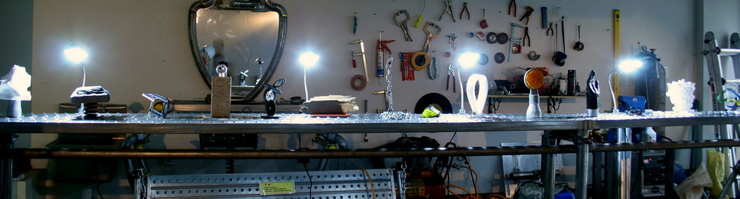
3. Constructive Drawing is the title of a
project Yoo Hwasoo initiated in the latter half of 2010. Although on a smaller
scale, it remains conceptually aligned with his previous works. The project
involves collecting discarded materials from construction sites, slightly
modifying them, and transforming them into new sculptural compositions. As the
title Constructive Drawing suggests, the project reflects Yoo’s longstanding
engagement with construction materials and his artistic focus on critiquing
construction-driven policies. It also embodies a subjective experience of
self-identification with the very materials he manipulates. In his artist’s
notes, he mentions how the process of creating Constructive Drawing allowed him
to physically experience the solidity and diligence embedded in these
materials.
Yoo Hwasoo has carved out a new domain in the field of recycled
art, refining a technique that blends exclusive appropriation with layered
meanings. Moving forward, he may benefit from incorporating in-depth research
on modern and contemporary history into his practice, given his strong focus on
urbanism and construction. Rather than limiting his critique to broad,
generalized criticisms of construction policies, incorporating specific, timely
socio-political analyses could add further depth to his work. Additionally,
since many of his pieces are ultimately realized as outdoor installations, he
might consider selecting installation sites in advance. In some cases, this
could allow his work to resonate more effectively with the specific historical
or geographical context of a location, while also potentially creating
opportunities for local sponsorship or collaboration.