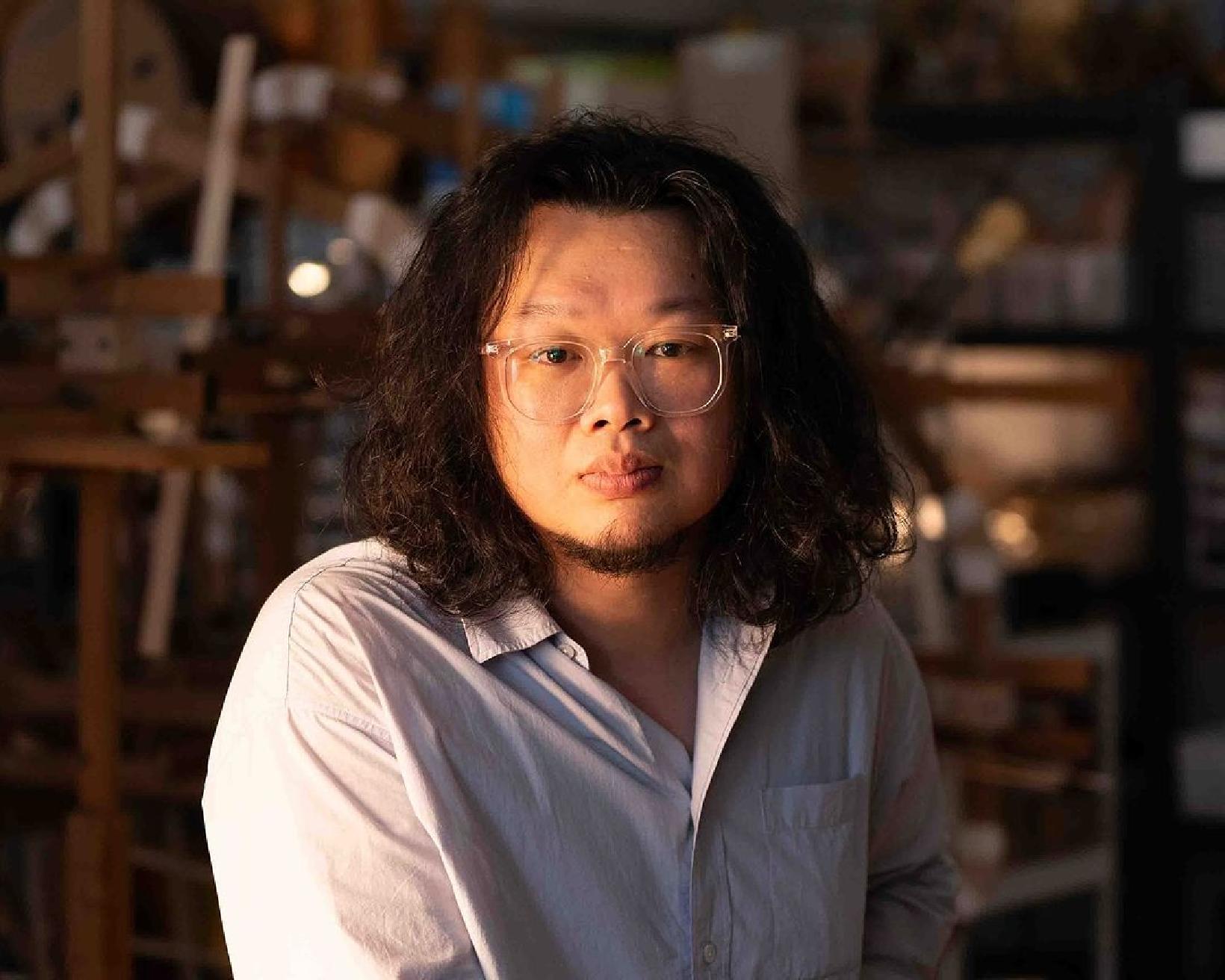
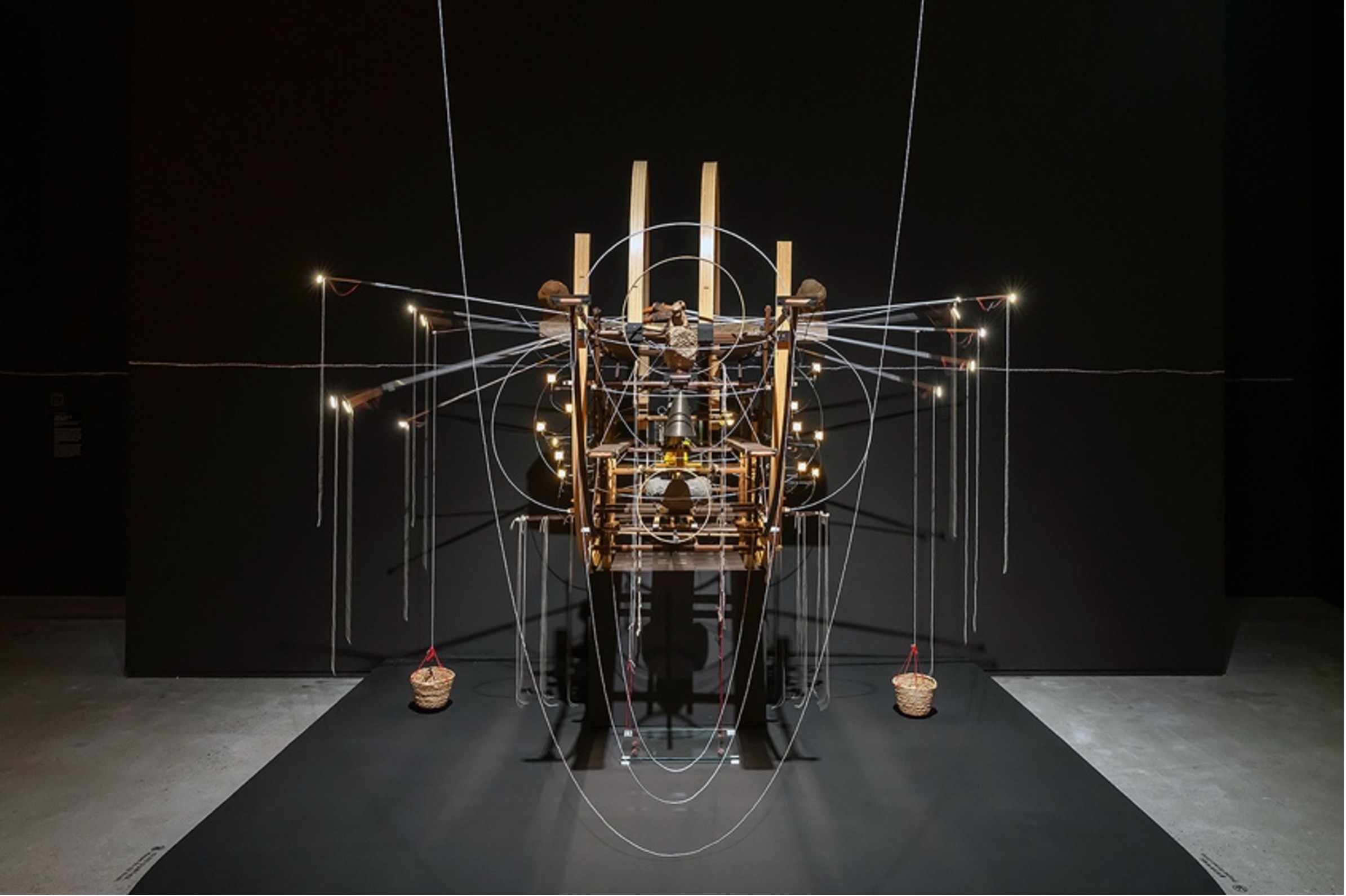
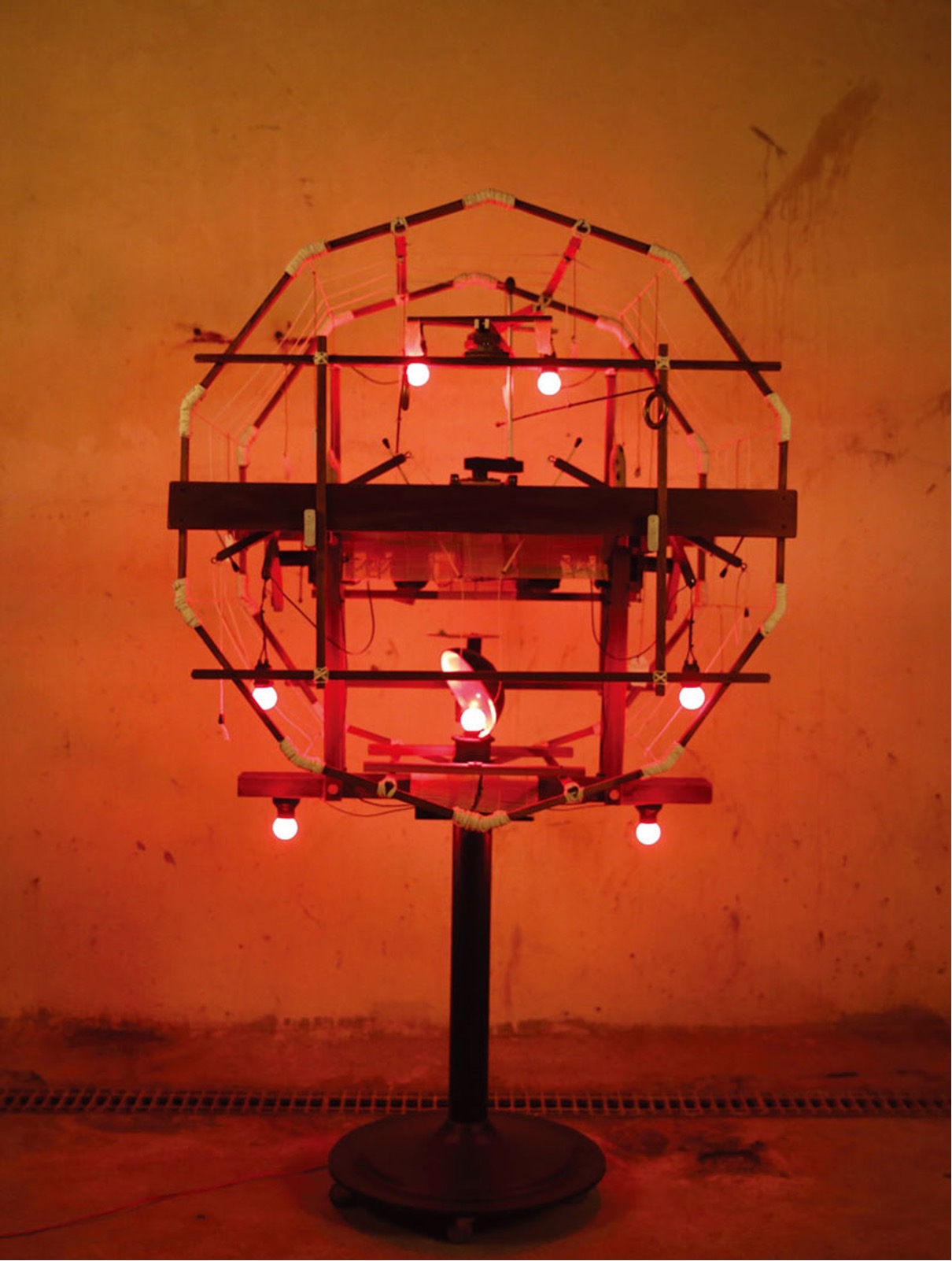
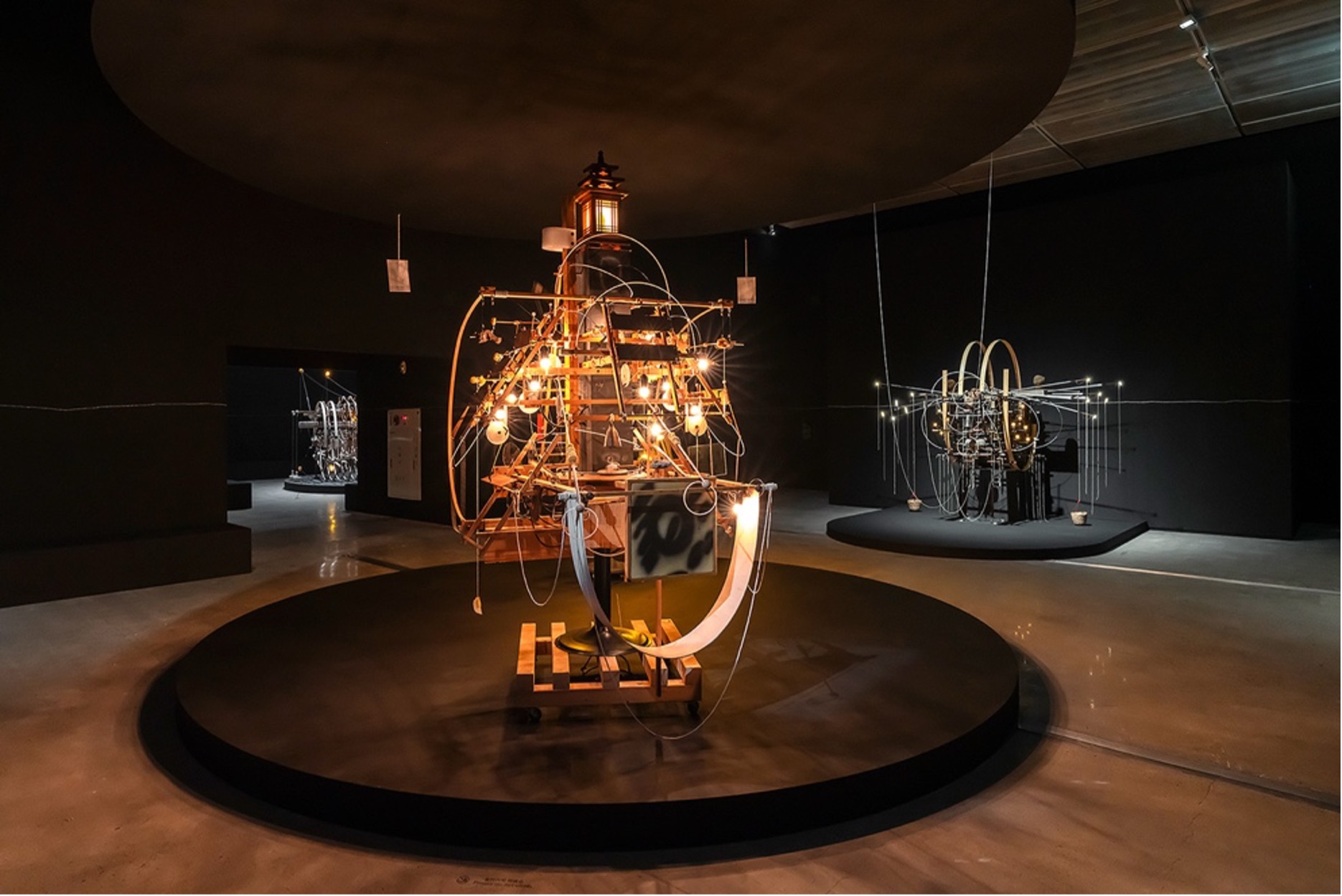
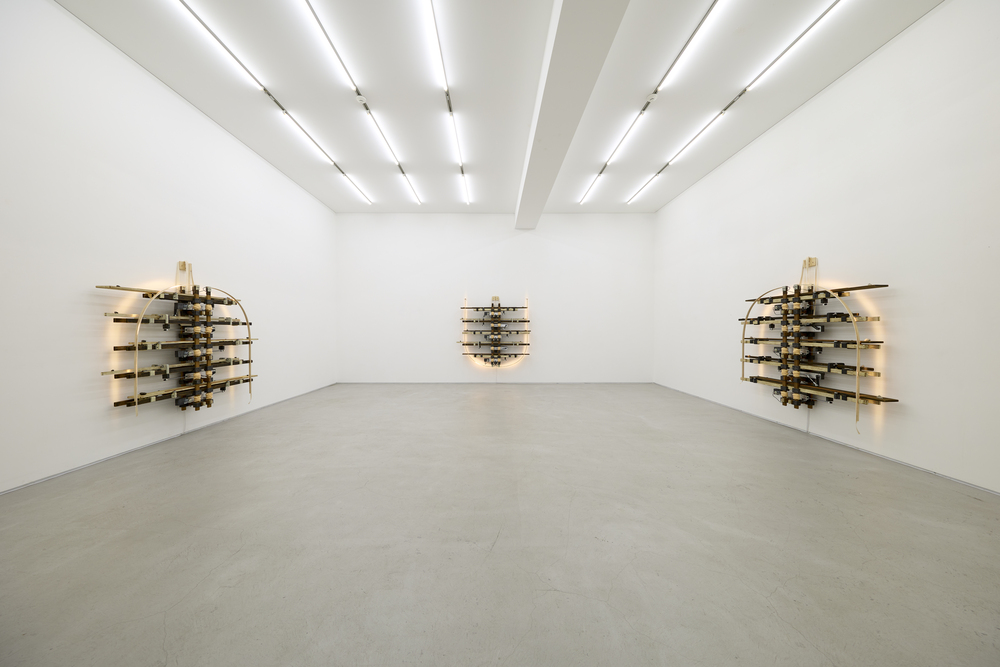
Yang Jung Uk (b.1982) was born in Seoul and graduated from the Department of Sculpture at Kyungwon University (2011). He has presented his works through exhibitions in Tokyo, Seoul, LA, and Beijing. He currently resides and works in Siheung, Gyeonggi Province.
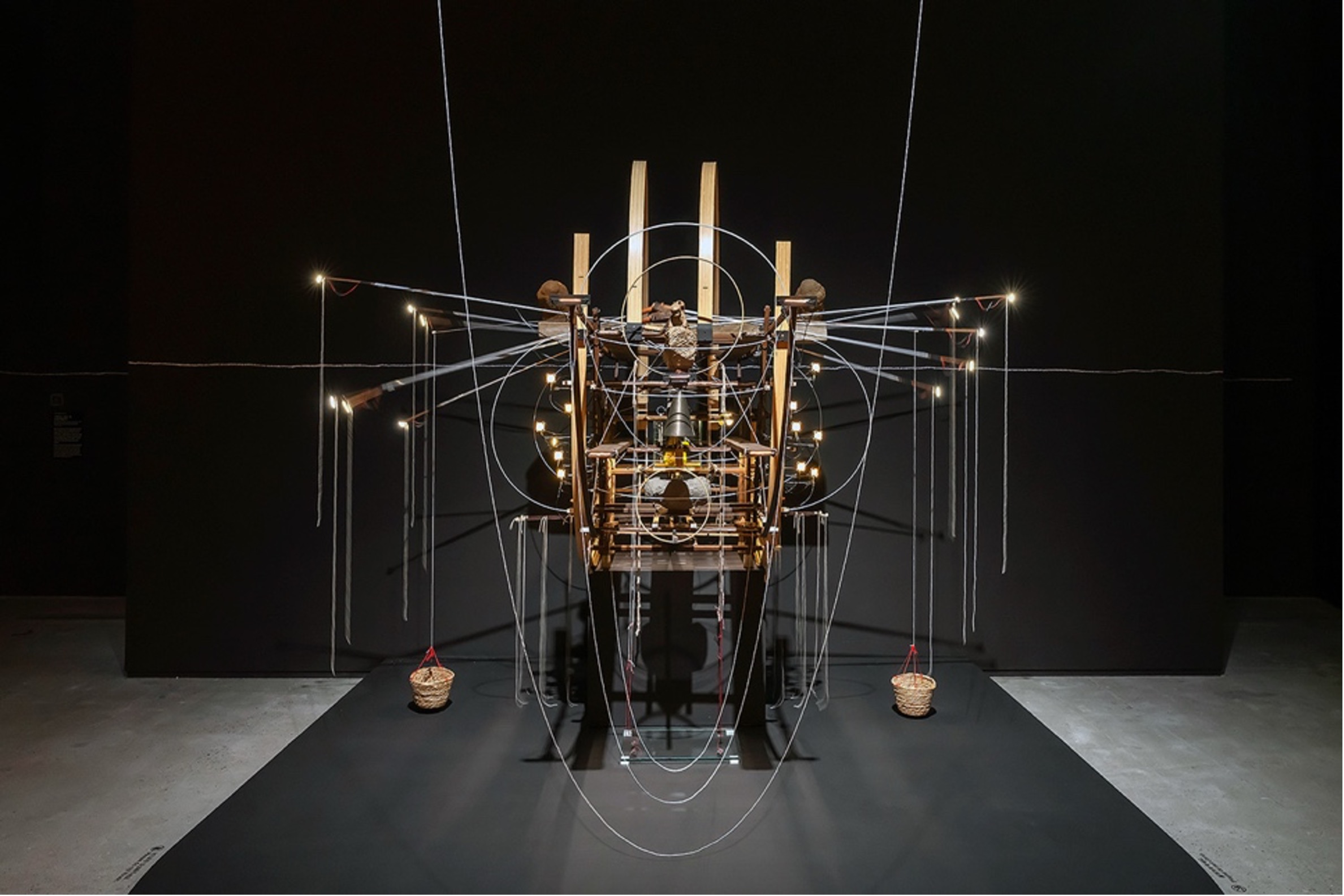
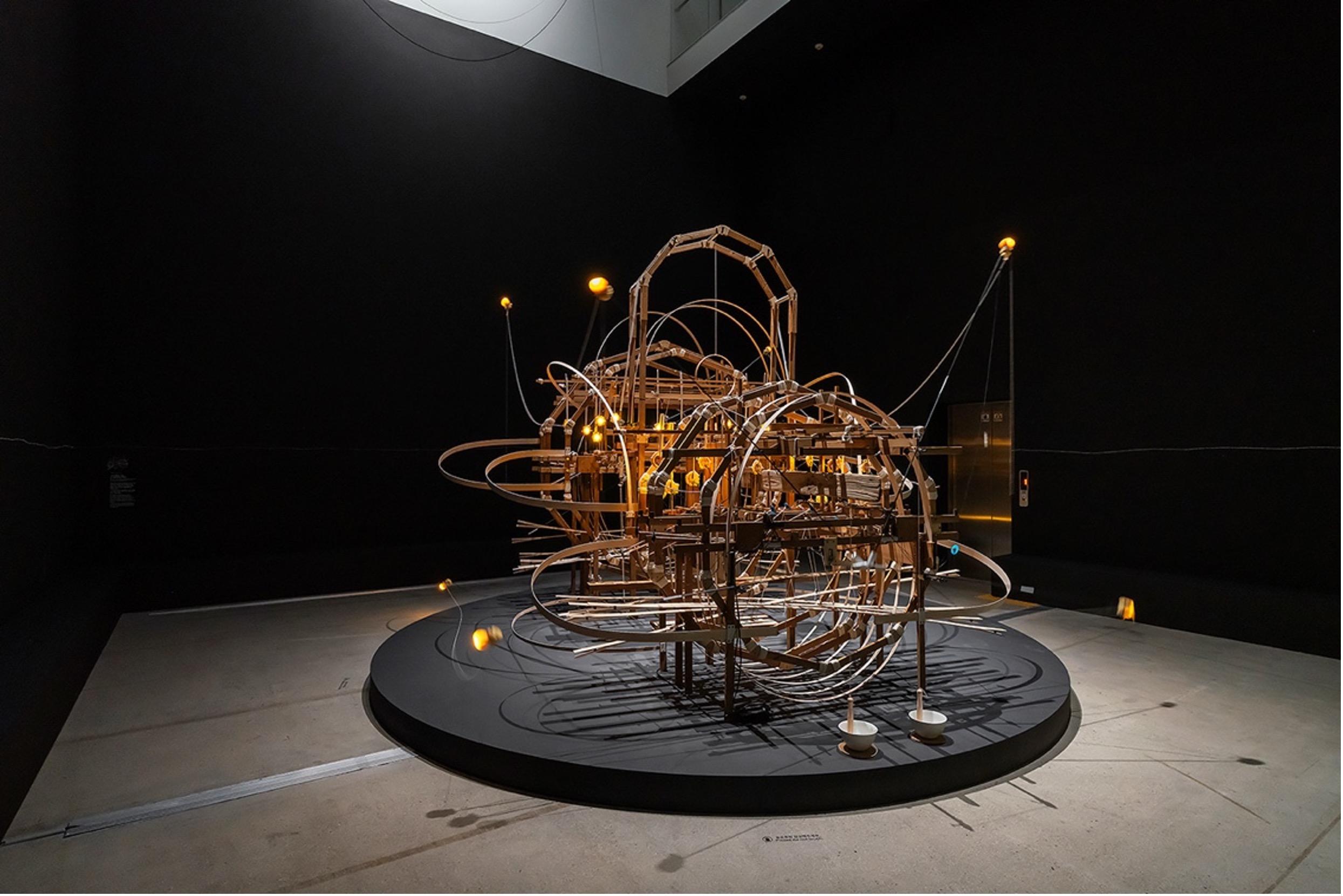
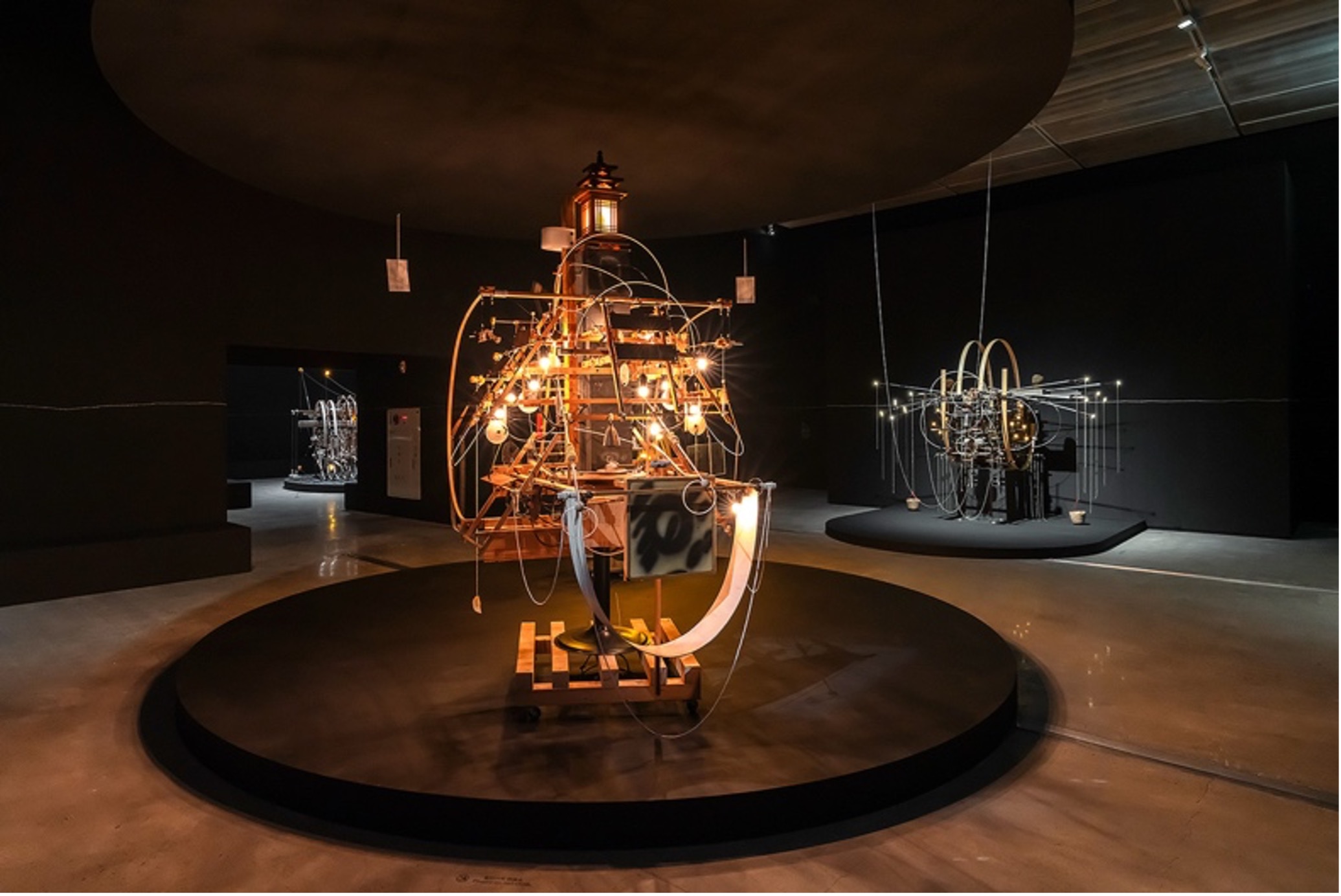
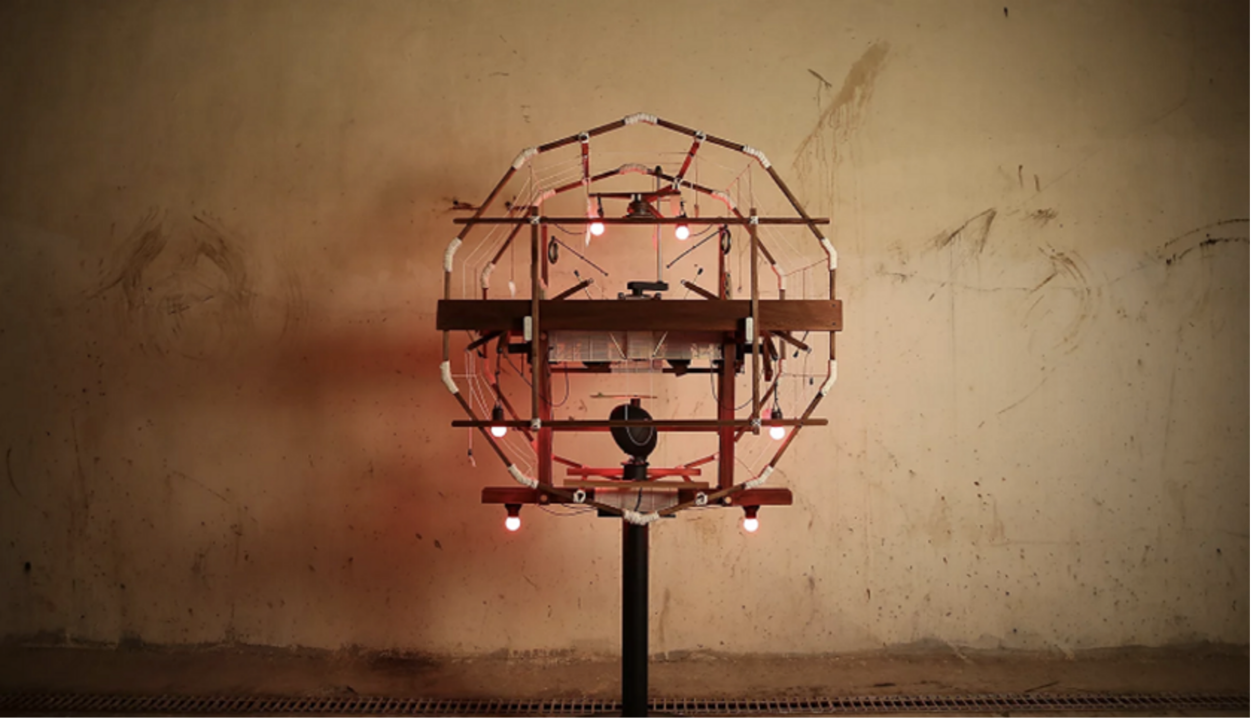
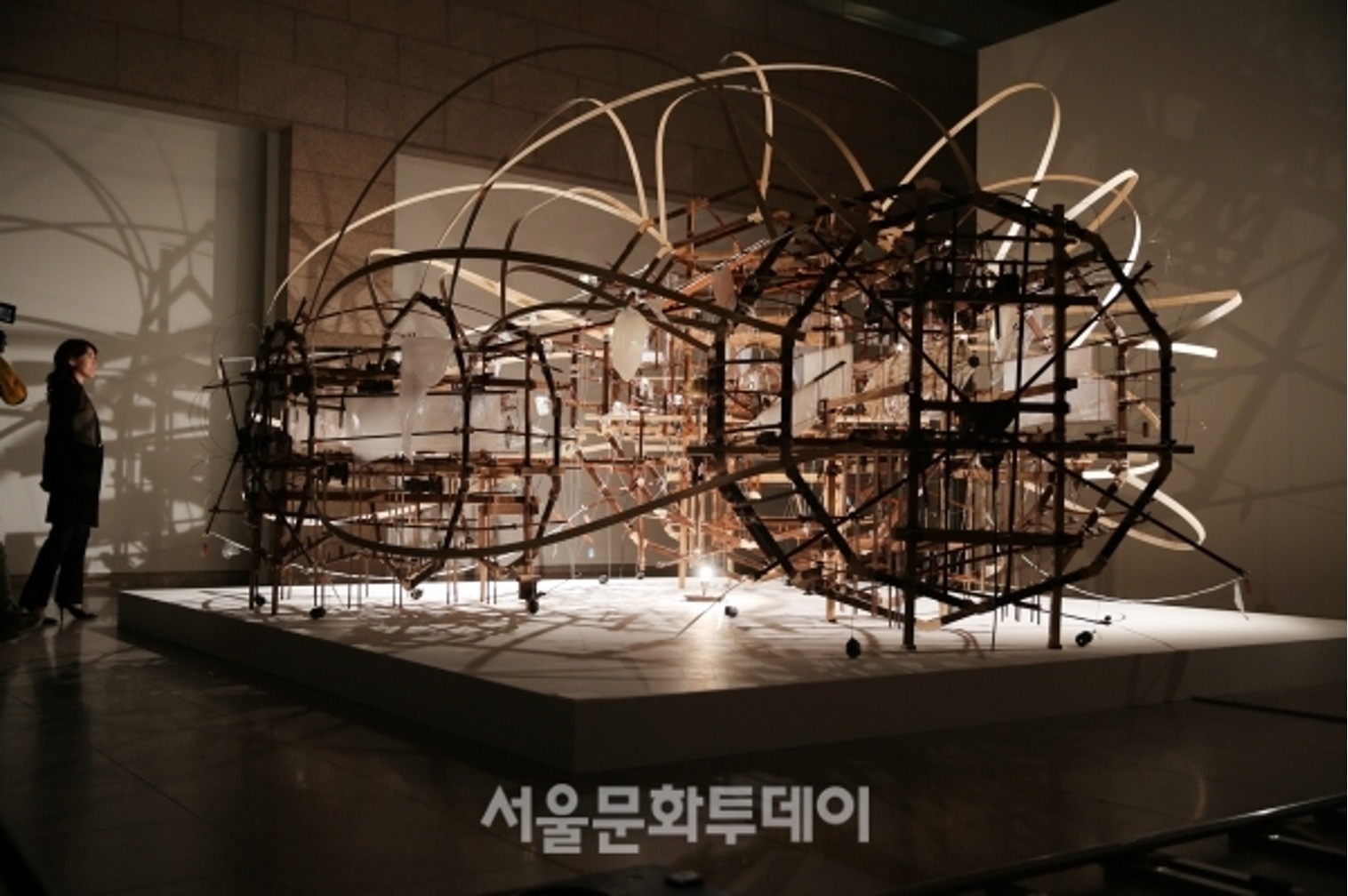
Yang Jung-uk, Once Saw a
Man Who Stood Still, 2024, Wood, motor, lamp, thread, 220×300×250 cm ⓒ Yang
Jung-uk
Yang Jung-uk’s work is about storytelling that starts with people. His devices,
made of wood and motors, convey stories through the space they occupy, their
movements, and the sounds they make. Yang’s work
represents a body, and the body that occupies an exhibition space speaks
through its movements. Thus, his artworks can be called “storytelling machines.” Yang’s storytelling machines, while occupying spaces, imply our body and
awaken an awareness of its presence. The stories conveyed through their balanced
structures and repetitive movements are less grand epics and more like small
talk from everyday life, a warm gesture of comfort, or a heartfelt message that
needs to be conveyed. The reason Yang chose moving machines as a medium for
storytelling, as opposed to speaking or writing, is probably for the purpose of
more directly communicating people’s emotions and their
sense of life. Ultimately, Yang’s work does not merely
show an interest in experiments dealing with mechanical aesthetics,
technological media functions, or the existence of technological objects.
Rather, he displays an interest in a broad intersubjectivity that encompasses
not only the human subject but also the others and the environment surrounding
them.
1. Storytelling Machines from
Life
While considering the machinic
dimension of subjectivation, the noted French psychoanalyst and philosopher
Felix Guattari pointed out that in today’s world, where digital technology has become commonplace,
techno-logical machines of information and communication operate at the heart
of human subjectivity. These machines function not only within their memory and
intelligence but also within their sensibility, affects and unconscious
fantasms. Attempts to redefine subjectivity may begin by emphasizing the
heterogeneity of the components leading to the production of subjectivity.1 Yang’s storytelling machines emerge as an example of aesthetic machines
to replace capital, information machines, and communication machines.
Specifically, they create moments of rupture and changes by assigning
heterogeneous layers to the various elements that produce subjectivity. Through
the mobilization of all rhetoric, Yang’s storytelling
machines tell stories about people in specific situations.
The purpose of storytelling in
artworks is profoundly classical. Throughout the long history of art, many
paintings and sculptures considered great have conveyed stories about
remarkable figures, historical events, and the nature created by God—and are ultimately meant to be remembered and reflected upon for
eternity. To achieve this, artists have invested in relentless training and
extensive resources to embody beautiful and idealized bodies. Yang Jung-uk is
no different in this regard. He also dedicates meticulous effort and time to
his storytelling. However, the stories produced and conveyed by his works are
drawn from observations and imaginations about the everyday people he
encounters and the subtle experiences of his surroundings. Consequently, his works
are a form of storytelling that begin with people and can be considered as a
kind of portrait-making.
Yang’s storytelling begins with observations about others and reflections
on daily life, including his own actions and words. He describes what drives
and guides this process as a “soft heart” toward his subjects. His works portray subjects such
as random people he meets from specific professions, family
members with whom he shares intimate relationships, and the true selves of all
these people, which he then uncovers when looking back on them,
along with parts of his resonating heart from those moments. Not only does Yang
exhibit a tender care toward these subjects, but he also employs his vivid
imagination to craft stories about them. Indeed, his works produce stories by
adhering to the conventions of formative symbols instead of following the
structure of linguistic symbols.
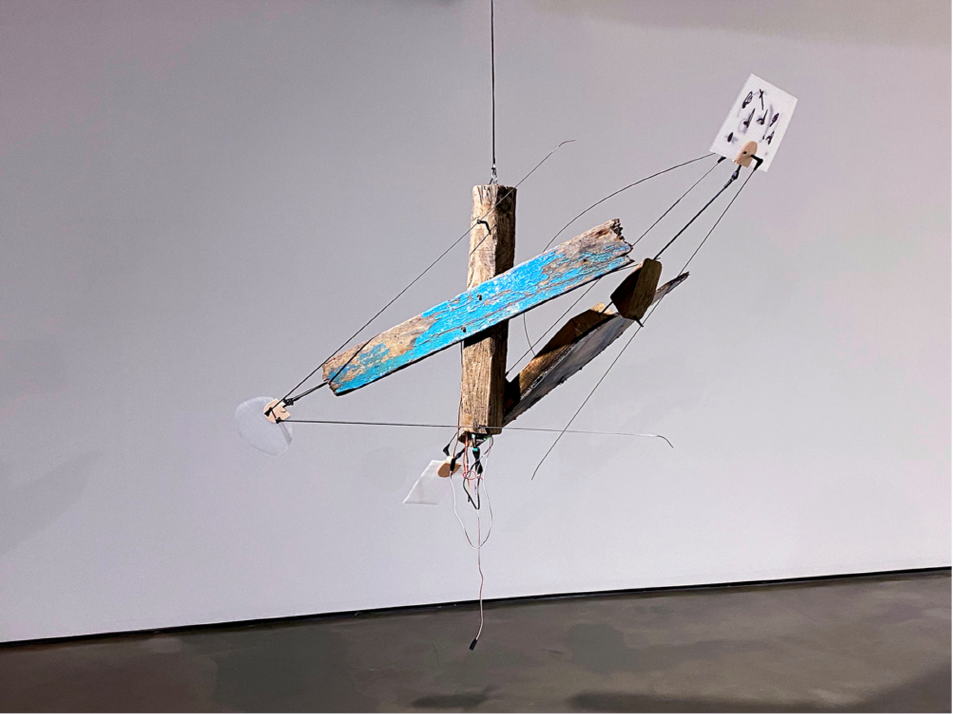
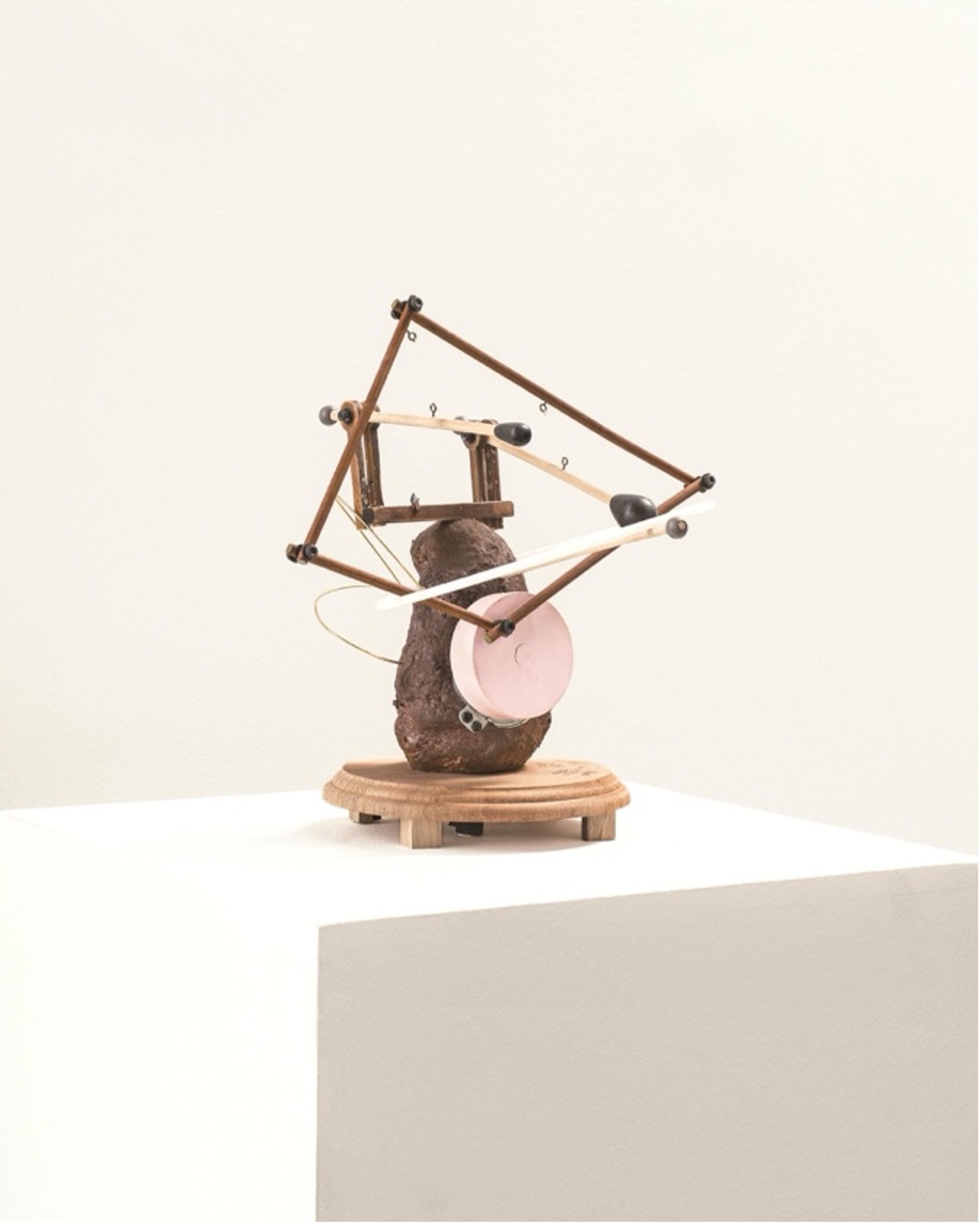
For his art, he employs moving
devices using wood and motors. Years ago, the genesis of such works was an
automaton created as a small gift that evoked emotion. Later, he created a
mechanical device through careful observation of the movement of bodies—human or nonhuman—with the aim of capturing
even the movement of the mind that arose from it. The following artworks were
titled in a way that allowed the viewer to infer both a character and the
situation they were in: Adversity Whispers That There Is Hope (2011), Three
Workmen I Came to Know Only in the Evening (2013), the ‘Standing
Workers’ series (2015, 2022), Massage Machines Don’t Know What Your Loved One’s Shoulders Are
Like (2015), and He Explained for a Long Time Over
a Corded Telephone with a Long Cord (2016). Furthermore, the
themes of his works gradually expanded from the observer’s position to the positions and exchanges within interactive
relationships, as seen in the ‘Scenery of Dialogue’ series (2018–2019), You Said to the Side, and I Said to the Left (2021),
and We Hugged Yesterday Tightly, Sat Cramped Up, and Looked in a
Familiar Direction (2022). A more recent work, Someone
I Know, in His Garden I’ve Never Seen (2024),
conveys a story about a person through the landscape he created.
The technology used in Yang’s works is minimal—just enough to realize
his ideas—yet still manages to preserve “humane time” and allow the energy of love to
gather. He describes the technology he uses as the bare minimum, essentially a
tool acquired through lived experience, and the machines moved by this
technology are what he calls “machines of sincerity.” Rather than creating automated machines that no longer require any
human touch, he creates machines that need human care and retain a sense of
warmth.
Yang’s storytelling machines disappear after being installed once. If a
piece does not find a place to be housed or a collector after its initial
installation, it is disassembled, so it continues to exist only in the artist’s mind. The physical structure of the work is not stored or
preserved to be exhibited again in the same form. Instead, Yang relies on his
memory to recreate it. Since there is no detailed, standardized blueprint that
someone else could use to replicate his work, only the artist himself can
recreate it. This situation is akin to a storyteller narrating a story and then
repeating it in a different version. The landscapes of the arduous lives of
myriad professionals in industrial society, as well as the scenes of deeply
personal experiences, are captured through momentary intuition and unfold as
stories that transform into encounters between bodies in continuous time
through the movement of spatial devices.
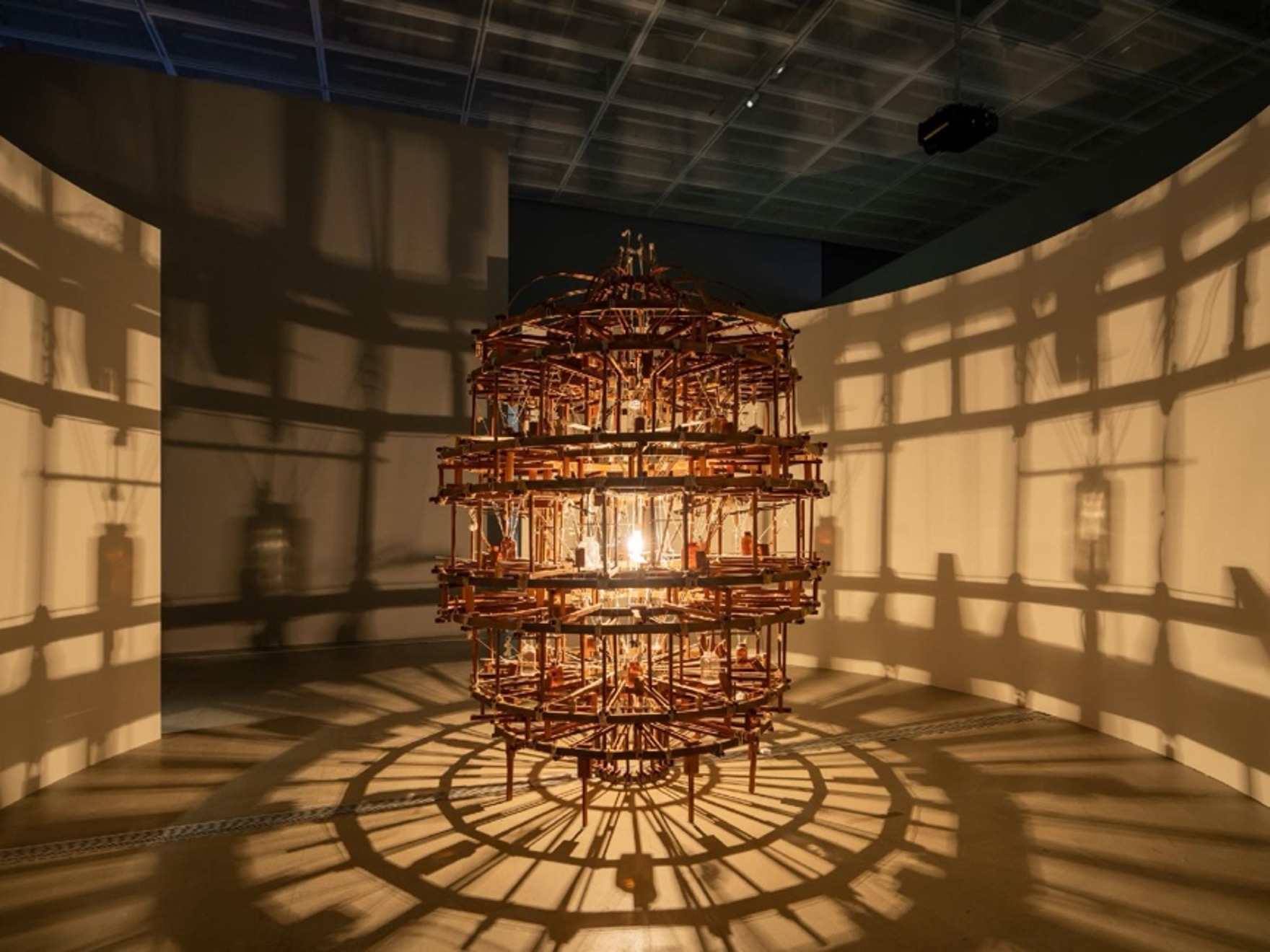
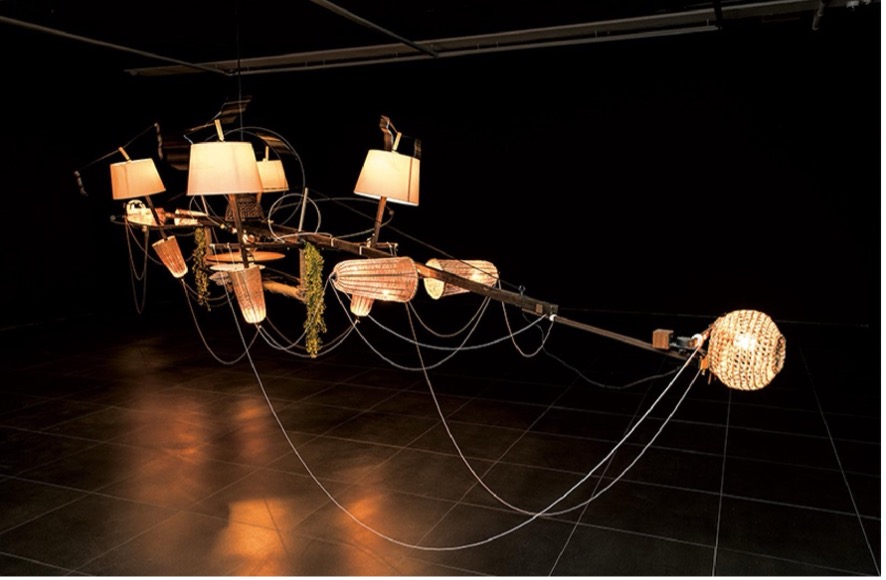
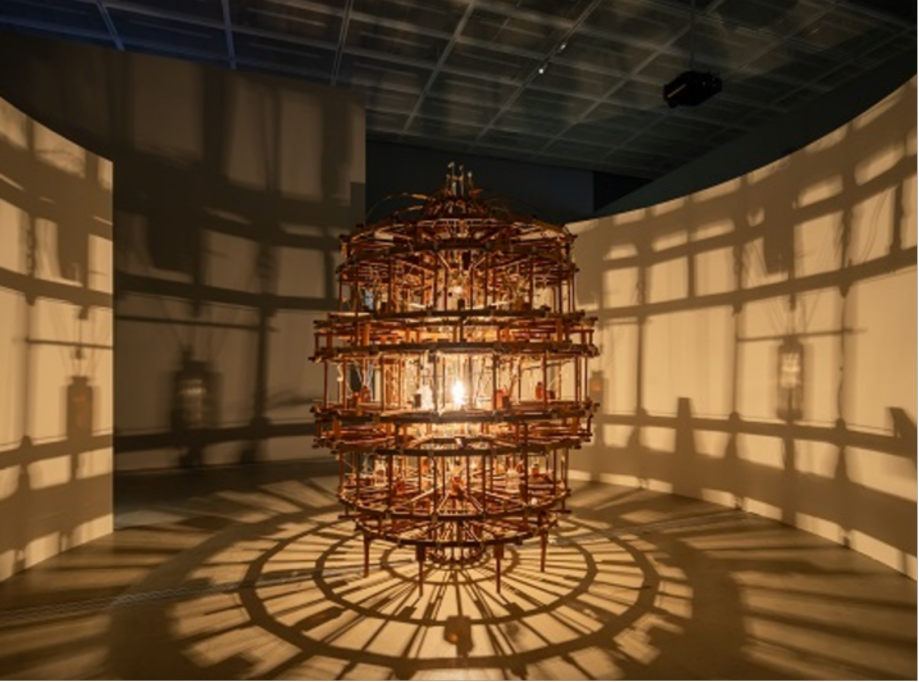
Yang Jung-uk, A
Cherishing Heart, 2024, Wood, motor, lamp, thread, 400×450×450 cm ⓒ Yang
Jung-uk.
2. Moving Machines, Speaking
Bodies
Yang Jung-uk’s works begin with movement recalled from memories of observation.
By materializing the image of a character into a moving device, the artwork
transforms into a body that moves and speaks to the viewer. The corporeality of
this device exists as a distinct physical presence in the exhibition space,
connecting with a situation that is perceived simultaneously through sight and
touch. The world we habitually perceive through our bodies forms our
phenomenological presence. At this moment, the physical space, the concrete
objects within it, and the subject experiencing those objects become crucial
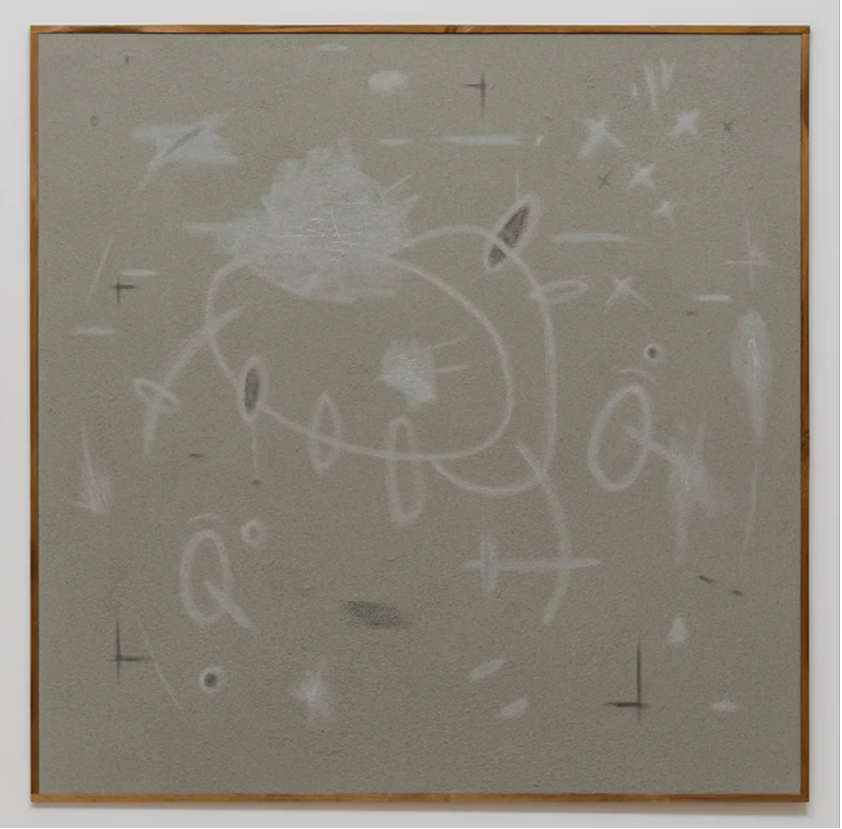
elements of the work. This explains why Yang, who began his artistic journey
through painting, has moved beyond the flat surface to create three-dimensional
works. From a single observation, he imagines the image of an object and brings
it into reality through movement.
While many of the machines we
encounter today function as mysterious black boxes, with their inner workings
hidden, the machines Yang creates openly reveal their dynamic structures,
showcasing the mechanism that drive them. The process through which Yang’s storytelling machines are organized is closely related to their
materiality. In other words, the materiality of the machines is directly
connected to the production of stories. What connects the materiality of the
machines and the stories is the flow of sensation and affects. Each one of his
machines is placed as a solid object in a real space. Its parts are connected
through physical exchanges of forces, while the mutual conversions between
rotary and linear motions express particular bodily movement. Horizontal,
vertical, and circular substructures with motors are connected to a whole
wooden frame by wooden joints, bearings, and strings, all of them moving in
repetitive cycles of relaxation and tension. Lamps and other materials attached
in various spots mediate the flow of movement and respond to the intensity of
energy.
As such, Yang’s machines convey stories through visual, tactile, and auditory
elements. The artist profoundly contemplates a single object of observation,
but in the actual artwork, he incorporates non-conceptual elements. The forms
and structures, immediately grasped through vision, allow viewers to perceive
how the work operates, and the perceived movement engages not only the eyes but
also the entire body of the viewer, making the experience more tactile than
purely visual. Yang Jung-uk’s machines mimic bones,
ligaments, muscles, and a number of sensory organs, stimulating a range of
senses simultaneously through the movement of motors, sounds, and vibrations.
The reason Yang originally chose wood as his primary material is that it is a
material that invites the act of touching. He creates his own imaginative world
and objects by engaging with the state of things as sensed by the hand, the
space around us as perceived through the body, and the information received
through hearing. A person and the environment in which the person stands are
transformed into a mechanical structure, and in this process, the two
distinguished elements become interdependent due to the dimension of alterity
that Guattari describes as inherent in the operation of machines.2
The reason why Yang’s machines, despite occupying physical spaces and possessing a
strong concreteness, retreat into an imaginary dimension lies in the fact that
these machines are storytelling machines. They are not only mechanical devices
but also abstract machines with discursive capabilities. Yang’s machines speak to us from between real and imagined spaces. In
contrast to the digital devices we use daily to speak to someone, and which
rely on virtual space as well as the arrangement of fragmented signals, Yang’s storytelling machines are firmly placed in actual spaces, guiding
viewers into a realm of imagination. From the memory of a moment when the
artist encountered another person, an icon or image emerges, which is then
transformed into nuances of form and color imbued with emotion and feeling, and
ultimately expressed through the structure and movement of a machine.
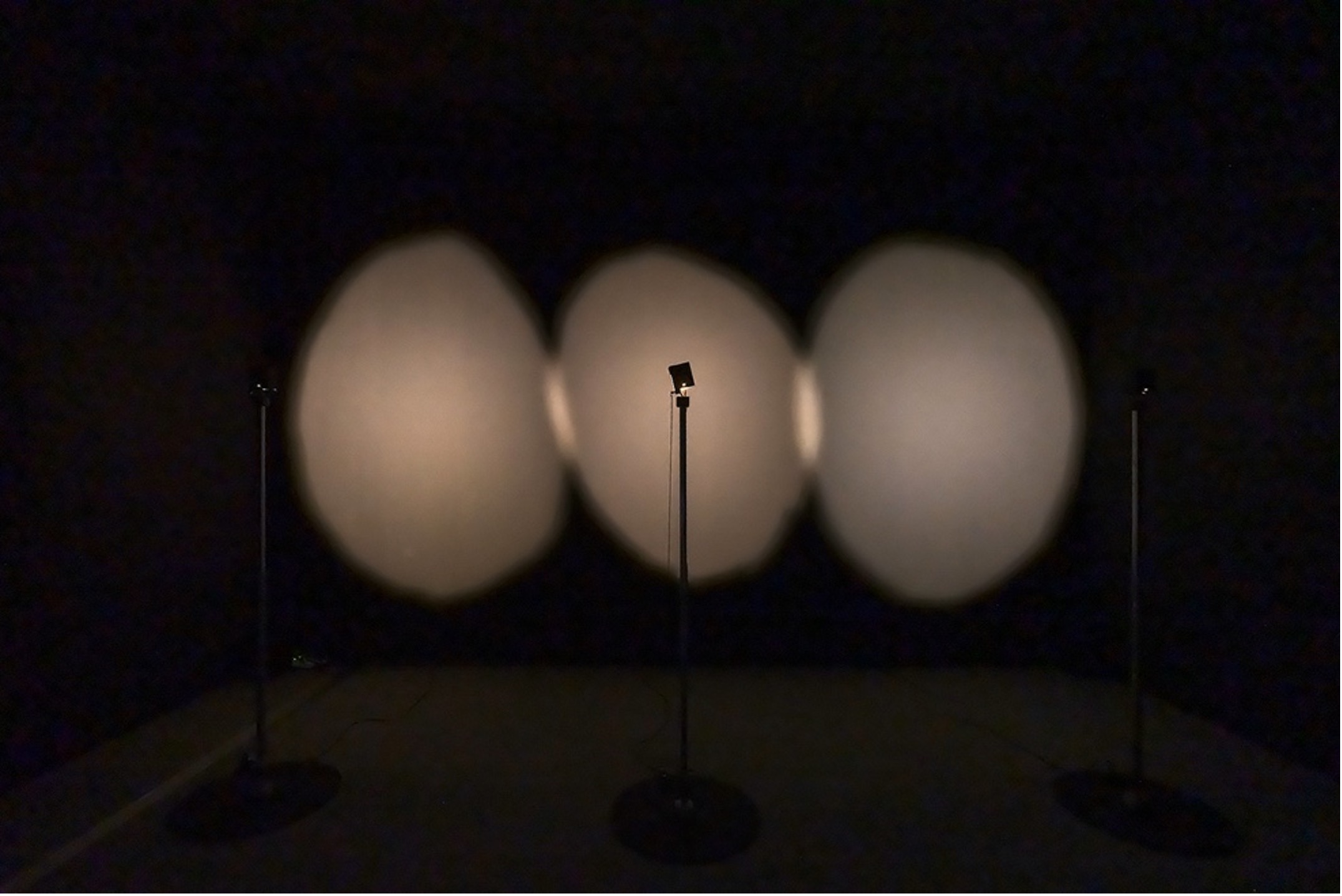
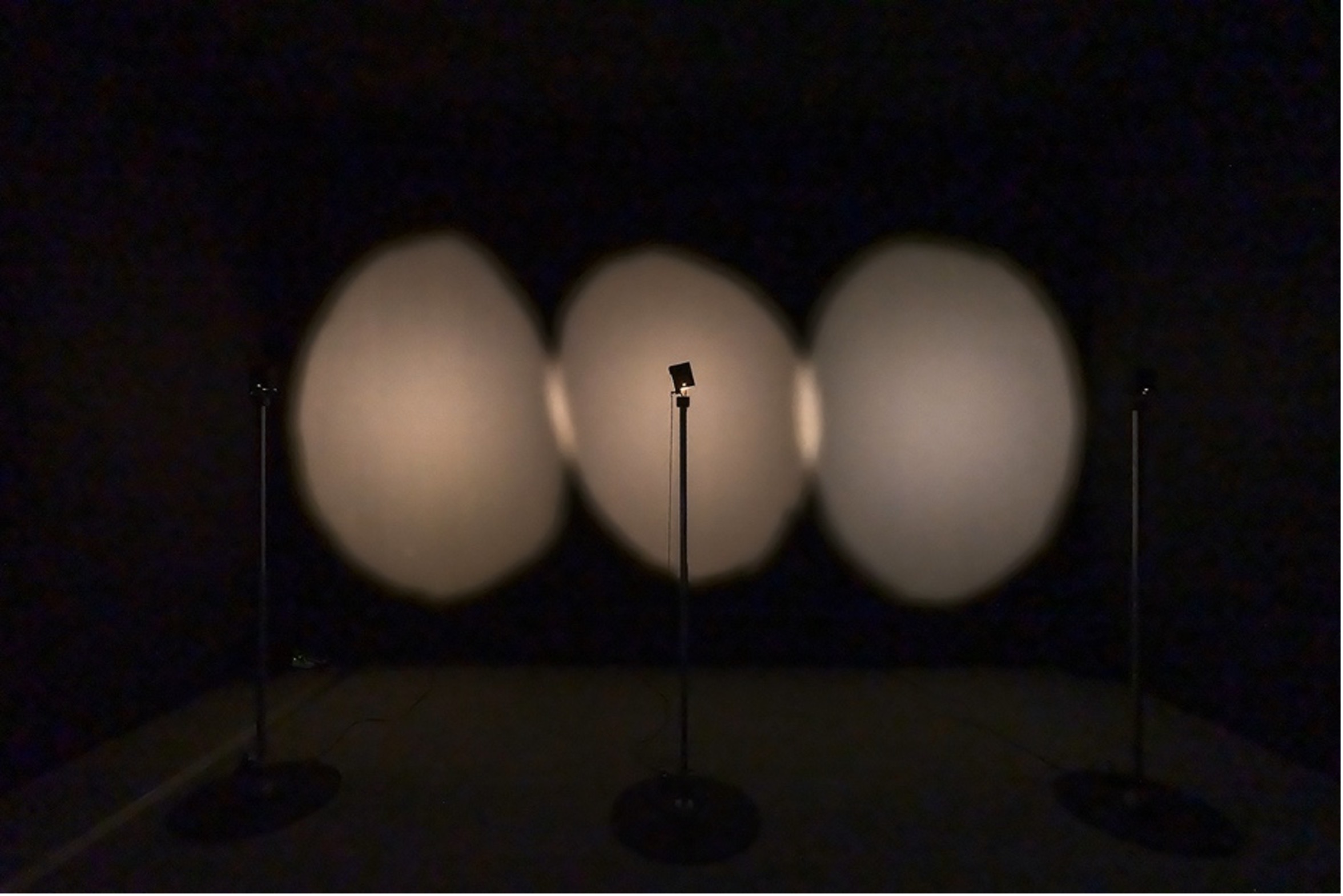
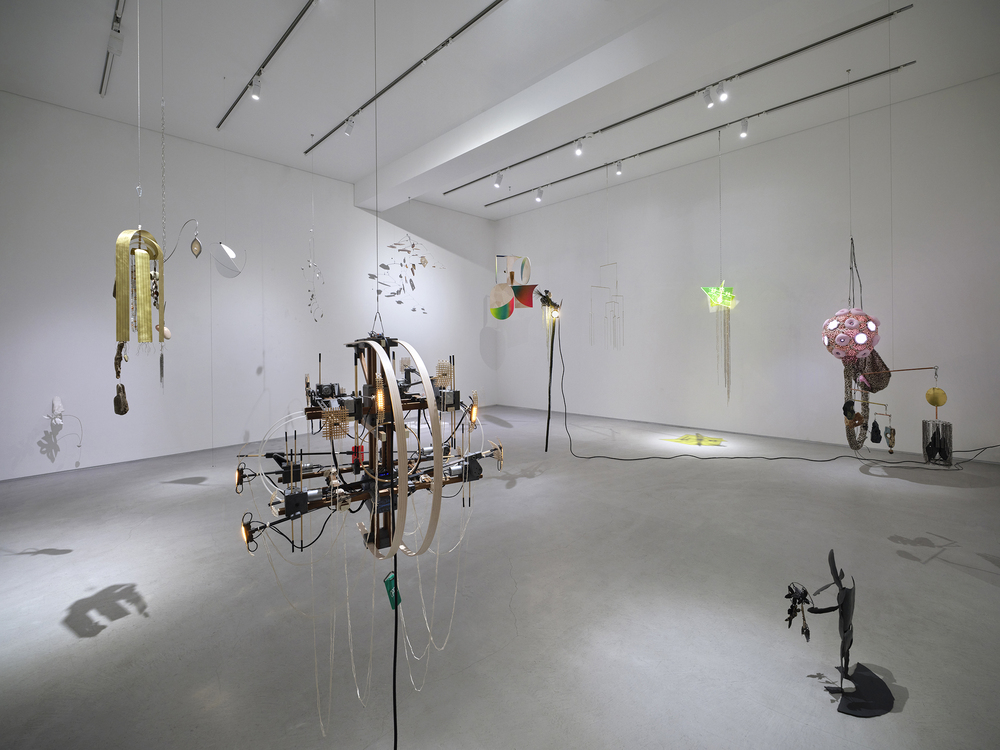
The light that illuminates an
artwork placed on the floor, and the shadows it casts, serve as indicators of
the surrounding physical space while simultaneously transforming the work into
an imaginative performer. The light and shadows create a stage that facilitates
the encounter between the viewer and the piece. This stage then allows the
exhibited work to oscillate between two dimensions: one is the solid body of
its physical presence, the other is the narrative unfolded by its “script.” In this way, the light and shadows
of the real space construct an imaginary space, and the movement within the
actual space slides into the realm of imagination because, in the end, the
artist’s goal is to tell a story.
Yang’s storytelling machine does not present a contemplative,
representational image to the viewer. Rather, it confronts the viewer with a
subject that takes on the structure of a moving machine. By placing viewers in
front of the vector of subjectification, it enables them to be reborn as a new
subject—not through linguistic cognition but through
emotional perception—within a relationship connected to
others and within the presence of the world. This process aligns with what
Guattari called “pathic subjectivation,”3 or the foundation of all modes
of subjectivation. Thus, Yang’s machine functions not
only as a physical arrangement of elements but also as an abstract machine that
generates meaning through the interplay and movement of its numerous
components. Furthermore, it appears as the alterity of viewers, enabling
self-production through intersubjectivity.4
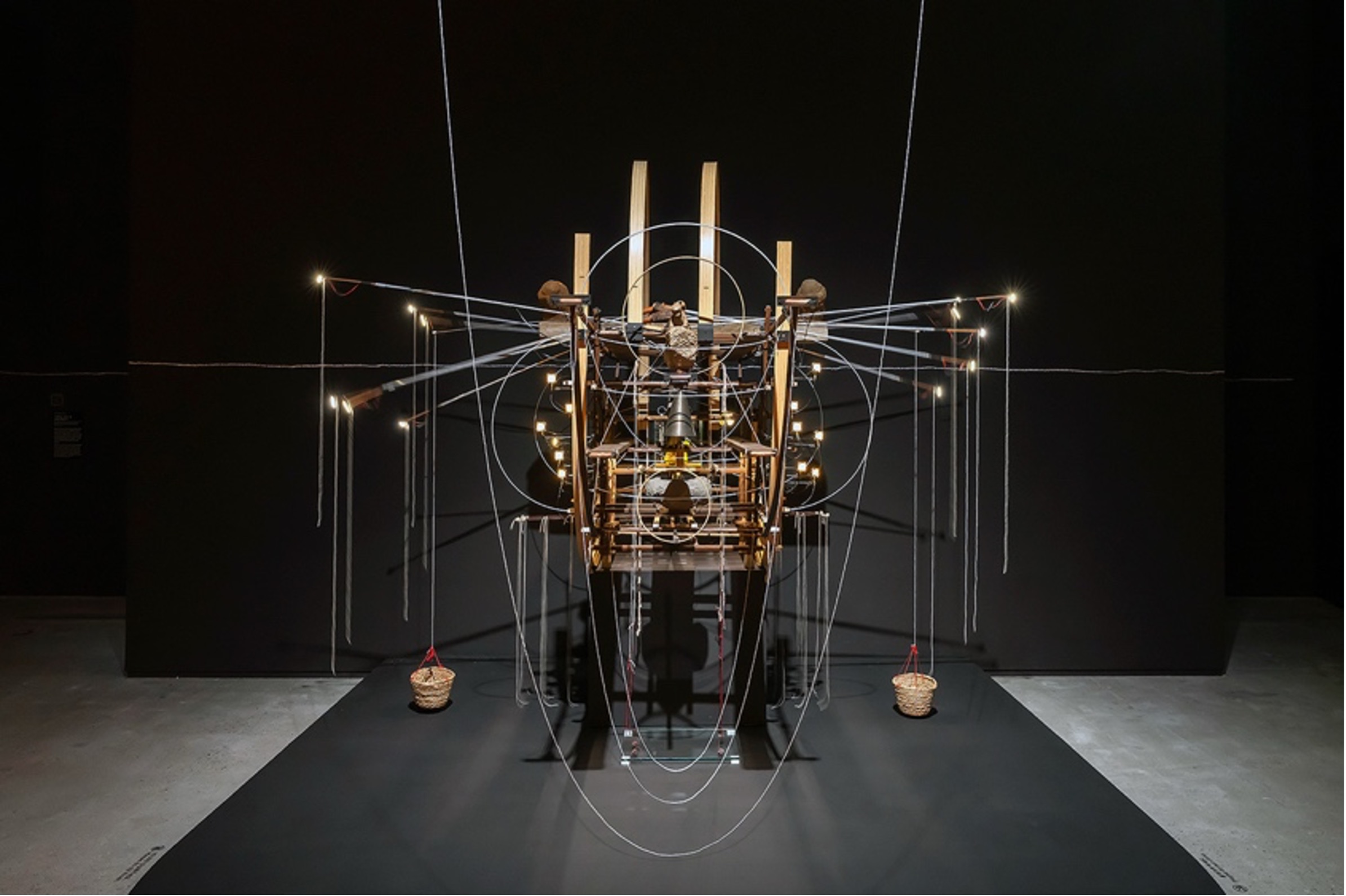
Yang Jung-uk, Three
Workmen I Came to Know Only in the Evening, 2024, Steel, motor, LED,
PLA, wire, Dimensions variable. ⓒ Yang Jung-uk
3. The Faceless Portraits Drawn
by Storytelling Machines
The stories conveyed by Yang
Jung-uk’s machines are about the reality of a subject.
Earlier, we noted that Yang’s works are a form of
storytelling that begin with people, rendering them a kind of portrait-making.
The artist imagines the material structure and movement of his works based on
his observations of the people he encounters in everyday life and the emotions
they evoke. Put another way, this portrait-making does not start from the face
but rather from the body—its posture, movement,
tension, and relaxation. Yang’s storytelling machines
convey their stories not through symbols in language or images but through a
pre-signifying regime of signs, such as gestures, rhythms, noises, and light.
As a result, the story transmitted by these machines are something to be experienced.
And because the stories of the observed figures, the presence of the moving
body, and the dimensions of imaginative expression are intertwined, Yang’s machines become something strange—neither
fantastical bodies of illusion nor rational mechanical devices.
Yang’s machines form signifiance and the strata of subjectification,
which Gilles Deleuze, another French philosopher, and Guattari emphasize as two
distinct axes in the regime of signs. For the signifiers inscribed to construct
a story, as well as for the subjectification derived from the consciousness and
affects formed by the arrangement and movement of the machine’s pre-signifying elements, the artwork needs a “white wall” for inscribing signifiers and a “black hole” of subjectification for
positioning consciousness, affects, and excesses. Deleuze and Guattari both
mention a face that these two layers of signifiance and subjectification
produce, and this is born from an abstract machine that they call the “faciality.” This abstract machine of
faciality operates according to the needs of economics, collectives, and power,
producing an unindividualized face. In fact, this machine creates a system of a
black hole and a white wall, thereby enabling the social production of faces.
However, a machine that escapes from this social production of faces produces a
deterritorialized face. The deterritorialized face includes not only the eyes,
nose, and mouth but also the face-like chest, hands, entire body, and even the
tools themselves. By distancing itself from the signifiers that engage with the
facialized body, the body can be decoded.5 With respect to Yang
Jung-uk’s machines, they go beyond the
deterritorialized face that Deleuze and Guattari discuss, performing a type of
portrait-making through the decoding of a faceless body. Instead of creating a
face by imprinting two eyes or erecting a white wall to imprint the eyes on,
Yang assembles workable limbs.
The strange portraits drawn by
these machines are constructed along two axes: one is the axis of signifiance
through storytelling, while the other is the axis of subjectification through
mechanical movement. The story transmitted by such a machine begins with a
sentence presented in the title of the artwork. Each title encapsulates a scene
or a moment of intuition, with the story starting in the title, such as Where
Do People Go after Lunch? (2012), The Three
Siblings Are on Their Way Home, But It Feels Like They Are Going to the
Store (2013), Only the Turtle Does Not Know Our
Weekends (2014), or Did Your Father Sleep Well All
Week? (2016). From these storytelling machines, a balance is
struck between reality and imagination, and from this balance emerges pathos.
Yet this intensity does not stem from facial expressions but actually from the
complex ritornello created by the fragmented body. Guattari’s ritornello is a repetitive continuum that crystallizes existential
affects, encompassing dimensions of sound, emotion, and the face that
continuously permeate one another.6 Essentially, the movement
created by Yang Jung-uk’s machines is this very
ritornello.
Yang Jung-uk seeks to find the
tension and balance between intuition, stories, and effects as he constructs
his machines from fragments of divided bodies. These machines are devices of
deterritorialized faciality on a deeply personal level. They are not only
arrangements of physical elements but also aesthetic machines that carry out a
literary mission while offering sensory experiences at the same time. Through
these machines, the artist envisions the expansion of tense relationships,
along with the diversification of senses and meaning. The portrait drawn by a
storytelling machine is depicted through a ritornello of decoded bodies within
a single story. As such, the story, which resides in the realm of language, is
brought into reality through movement within physical space. Unlike fleeting
stories generated by digital devices and networks, the storytelling machine
employs a story that repeats endlessly. At its core, it tells a story that
begins with a single observation in motion—through an embodied repetitive structure, just like the stories that
have been repeatedly told since the earliest times when human experience and
memory were transmitted in words.
In this sense, Yang Jung-uk’s works can be described as faceless portraits drawn by storytelling
machines. These portraits, experienced alongside the viewer, offer insights
into life and humanity through intersubjectivity. They resemble the strange
tremor and shock one feels when gazing at their own face in the mirror, when
interacting with family members, when encountering others throughout life, or
when casually reflecting on the surrounding landscape. However, instead of a
chilling black hole and a white wall, Yang’s machines
reveal gestures and sounds that are released upon their deconstruction. What,
then, does this repetition ultimately reveal? Could it be a portrait of the
human being observed through the black hole’s gaze—a glimpse of life’s truth?

1. Felix Guattari,
Chaosmosis: An Ethico-Aesthetic Paradigm, trans. Paul Bains and Julian Pefanis
(Bloomington: Indiana University Press, 1995), 4.
2. Guattari, 41–42.
3. Guattari, 26.
4. See Guattari, 34–42.
5. See Gilles Deleuze and Félix
Guattari, A Thousand Plateaus: Capitalism and Schizophrenia, trans. Brian
Massumi (Minneapolis: University of Minnesota Press, 2005), 167–191.
6. Guattari, Chaosmosis, 15.
Ritornello refers to a repeated section in symphonies and choral works, but it
is not a simple repetition. Rather, it is a repetition accompanied by
variations. Guattari calls the repetitive continuum that crystallizes existential
affects “ritornello,” or “existential refrains.” For more detailed
discussion of “ritornello (refrains),” see Deleuze and Guattari, A Thousand Plateaus, 310-350.