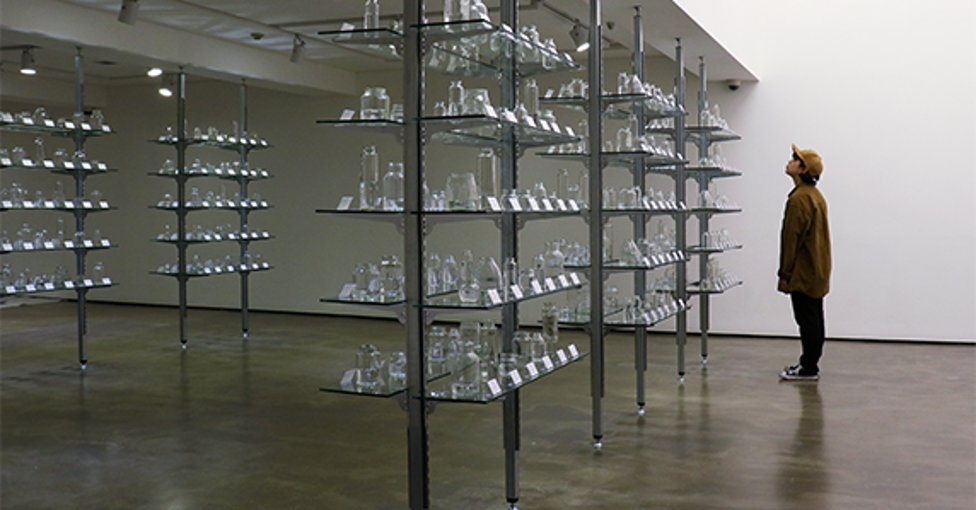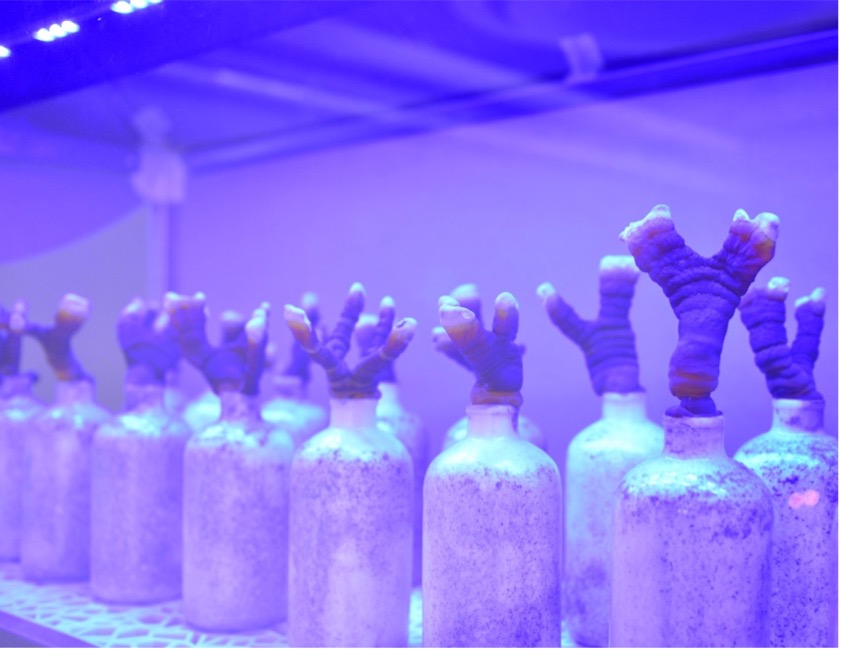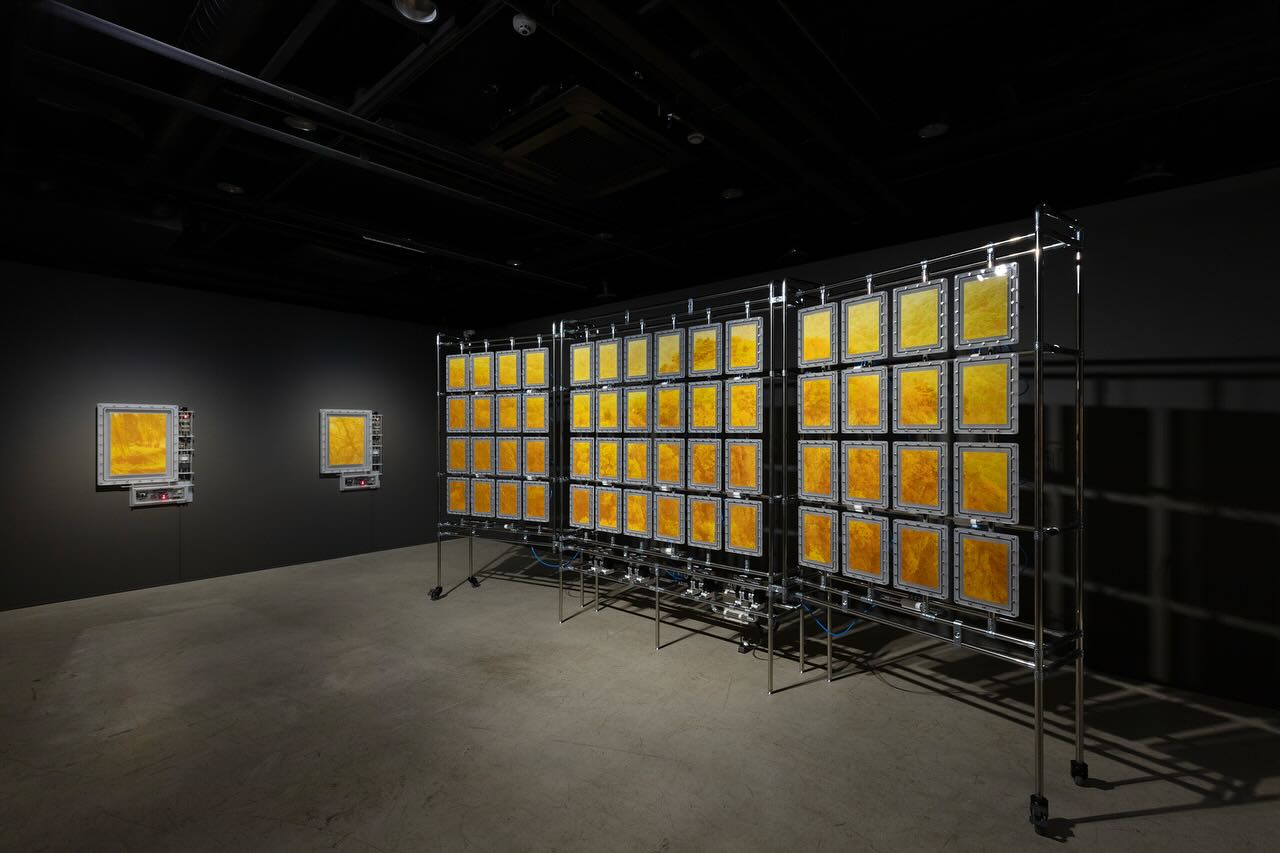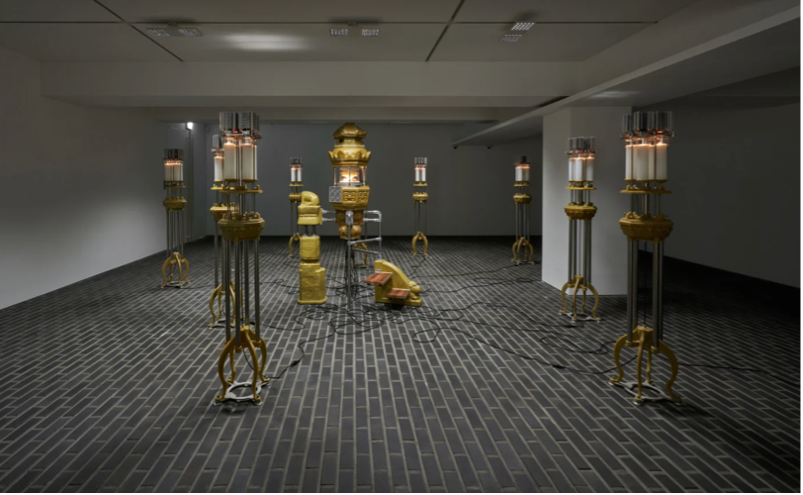


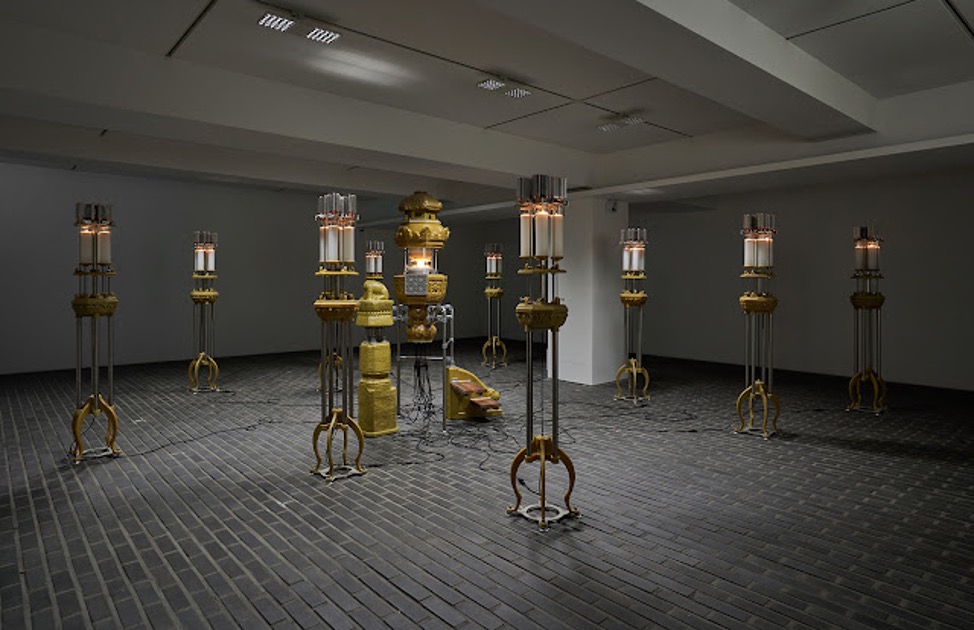
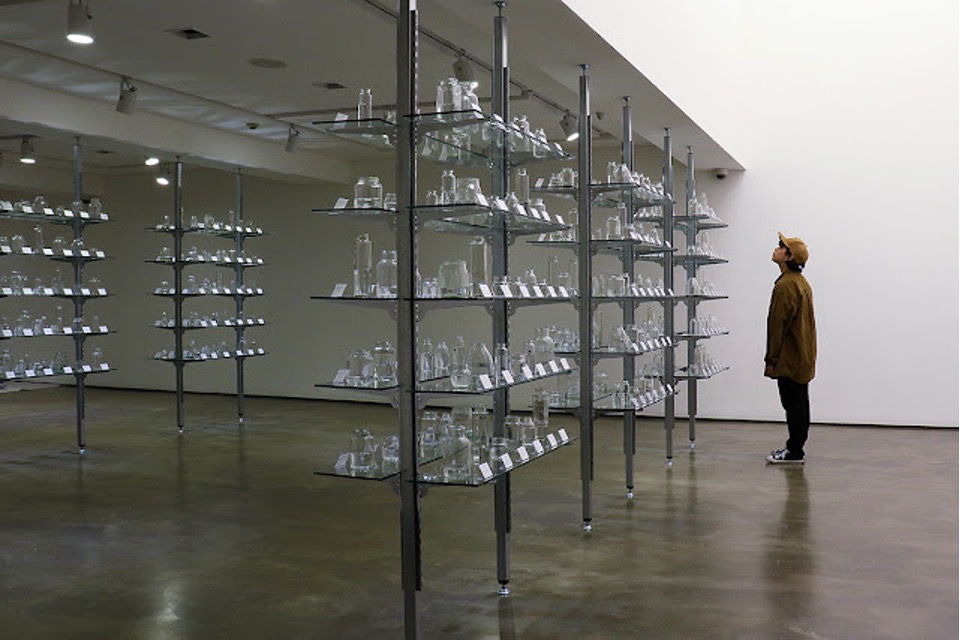
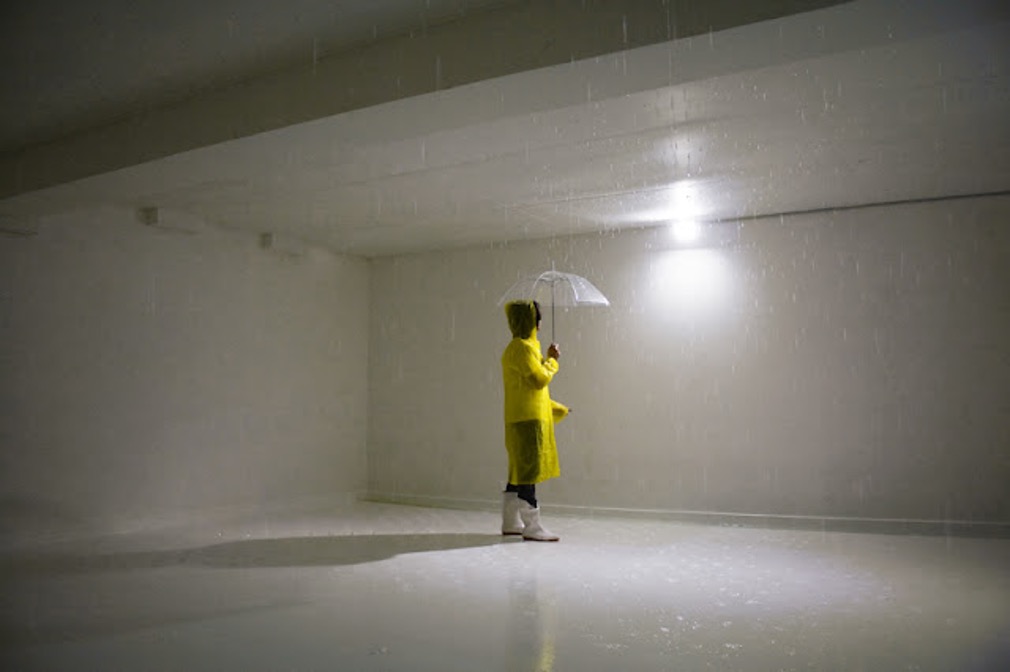
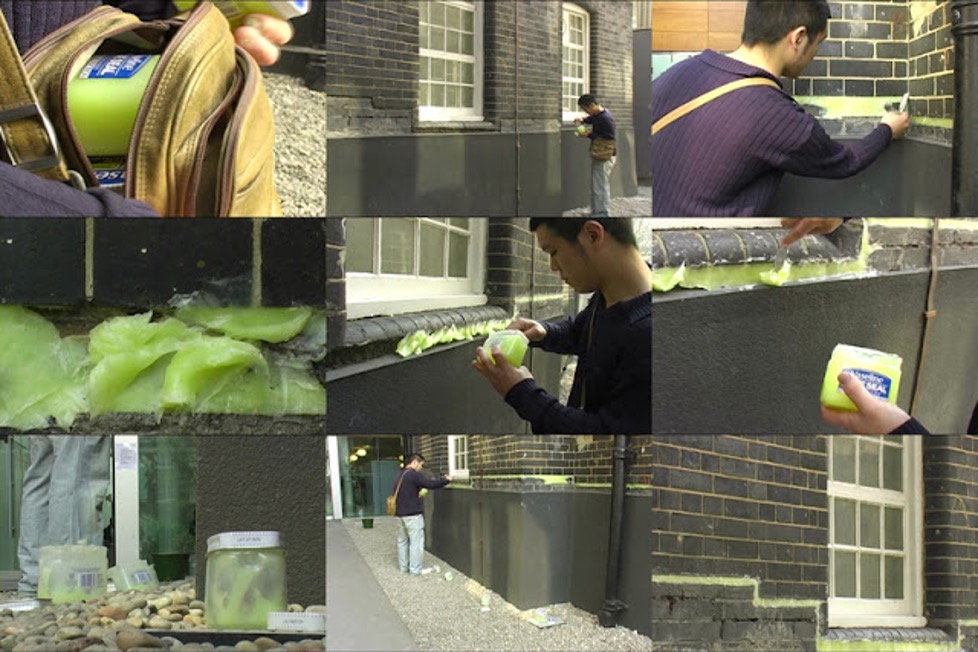
Beak Jungki, Beo-sut Gi-woo , 2020, Mushrooms, Plastic(3D Printed), Air circulation system, Growing lamp, Humidifier, Glass, Mixed media, Dimensions variable ©Galerie ERD

In 2017, renowned mycologist Nicholas Money, author of Mushrooms: A Natural and Cultural History, presented an intriguing study on fungi. Conventionally, we believe that a humid environment with frequent rainfall increases the growth rate and population of mushrooms. However, Money argues that mushrooms actually induce rainfall, thereby transforming the environment to better suit their needs. In other words, regions with a higher density of mushrooms tend to experience increased precipitation.

To understand this mechanism, it is necessary to examine the reproductive process of mushrooms. Mushrooms form mycelium colonies and propagate by dispersing spores into the air. These spores are incredibly small, nearly invisible to the naked eye, and can travel up to 2,000 km on wind currents. Additionally, they possess hydrophilic properties, meaning they attract and accumulate moisture from the atmosphere. Due to these physical and chemical characteristics, spores act as condensation nuclei, facilitating the formation of raindrops by drawing scattered moisture together into a single droplet when they interact with water vapor in the air.

The process of airborne spores traveling long distances before reaching the sky and transforming vapor into raindrops carries a profoundly spiritual connotation. The notion of something invisible and intangible reaching the heavens and producing a tangible outcome evokes the algorithm of ‘prayer and response.’ Our wishes and prayers, much like fungal spores, exist as intangible entities, yet their potential impact cannot be dismissed simply because they are unseen or unfelt. Could it be that these ephemeral elements—like atoms, the fundamental units of matter, or fungal spores—exist beyond our sensory perception because they are simply too small and light? In 《South Altar》, I aim to dissolve the rigid boundaries between science and religion, between material and immaterial realms, by invoking the ritualistic form of rain invocation ceremonies.

Beak Jungki, Beo-sut Gi-woo (part), 2020, Mushrooms, Plastic(3D Printed), Air circulation system, Growing lamp, Humidifier, Glass, Mixed media, Dimensions variable ©Galerie ERD

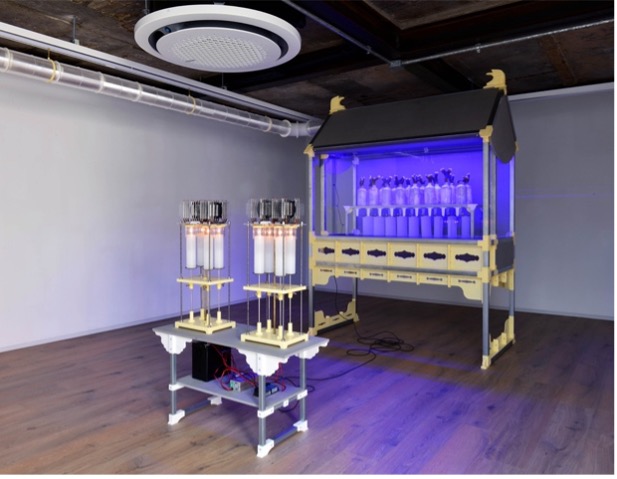
At the center of the exhibition stands Mushroom Invocation (2020), a work inspired by the form of a kamshil (a small shrine used to house ancestral or divine spirits). Traditionally placed in shrines, these structures—resembling small roofed houses—served as focal points for rituals celebrating agricultural prosperity or warding off misfortune. While this work adopts the physical form of a kamshil, it functions as a greenhouse that supplies the humidity and light necessary for mushroom growth, while also allowing spores to disperse through an integrated ventilation system. By juxtaposing the religious algorithm of ‘prayer and response’ with the scientific process of spore dispersal leading to raindrop formation, I attempt to provide a material interpretation of immaterial phenomena. Furthermore, referencing Nicholas Money’s research, which suggests that mushrooms actively create the humid environments necessary for their own survival, this work reflects upon the interdependent relationship between nature and humanity, as well as between humans and the divine.

In addition to Money’s fungal research, a 2019 study by Dr. Lilach Hadany at Tel Aviv University presented an equally fascinating discovery regarding bees and flowers. Her research found that when bees approach flowers, the sugar concentration in nectar can increase by up to 30% in an instant. Without any alternative means of reproduction, these plants remain in a perpetual state of waiting, anticipating the arrival of bees. Lacking auditory organs, they sense the wing vibrations of nearby bees and, upon detecting their presence, rapidly increase nectar sugar concentration to attract them. A bee’s wings beat at approximately 230 times per second, producing a vibration equivalent to a frequency of 230 Hz—a pitch that falls between A (220 Hz) and A# (233.08 Hz) on a piano. In my artistic practice, this phenomenon serves as an analogy for ‘waiting’—a state that is both profoundly quiet and dynamically charged.

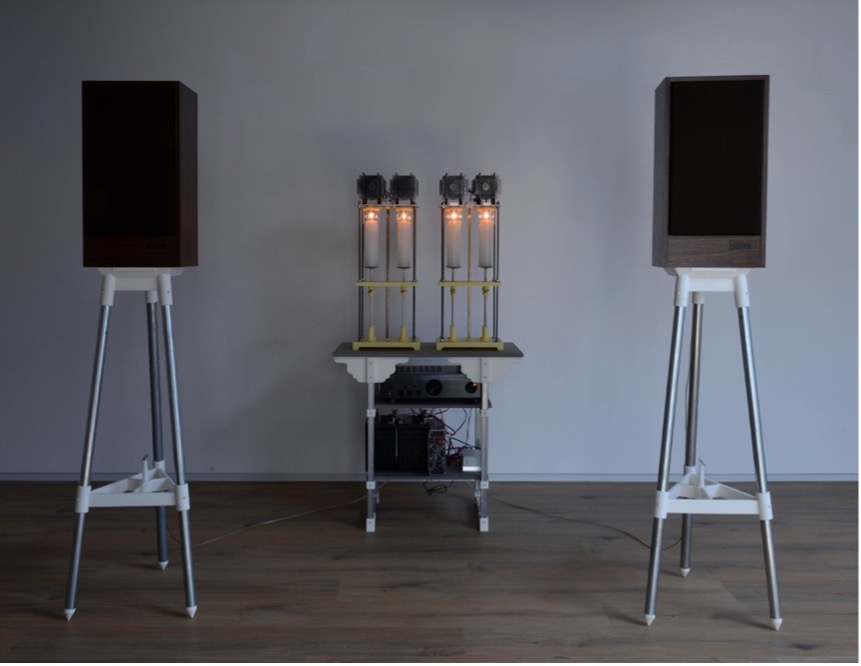
For this exhibition, I collaborated with sound artist Yoon Jae-min to explore the layered emotional dimensions of waiting through the sound installation 230 (2020). The nature of waiting can range from joyful anticipation to the anguish of uncertainty, but our focus lies in waiting as a form of prayer. In this state, means and ends are intertwined rather than distinctly separated—akin to the act of persistent prayer, despite an absence of response. Here, waiting itself becomes the purpose.


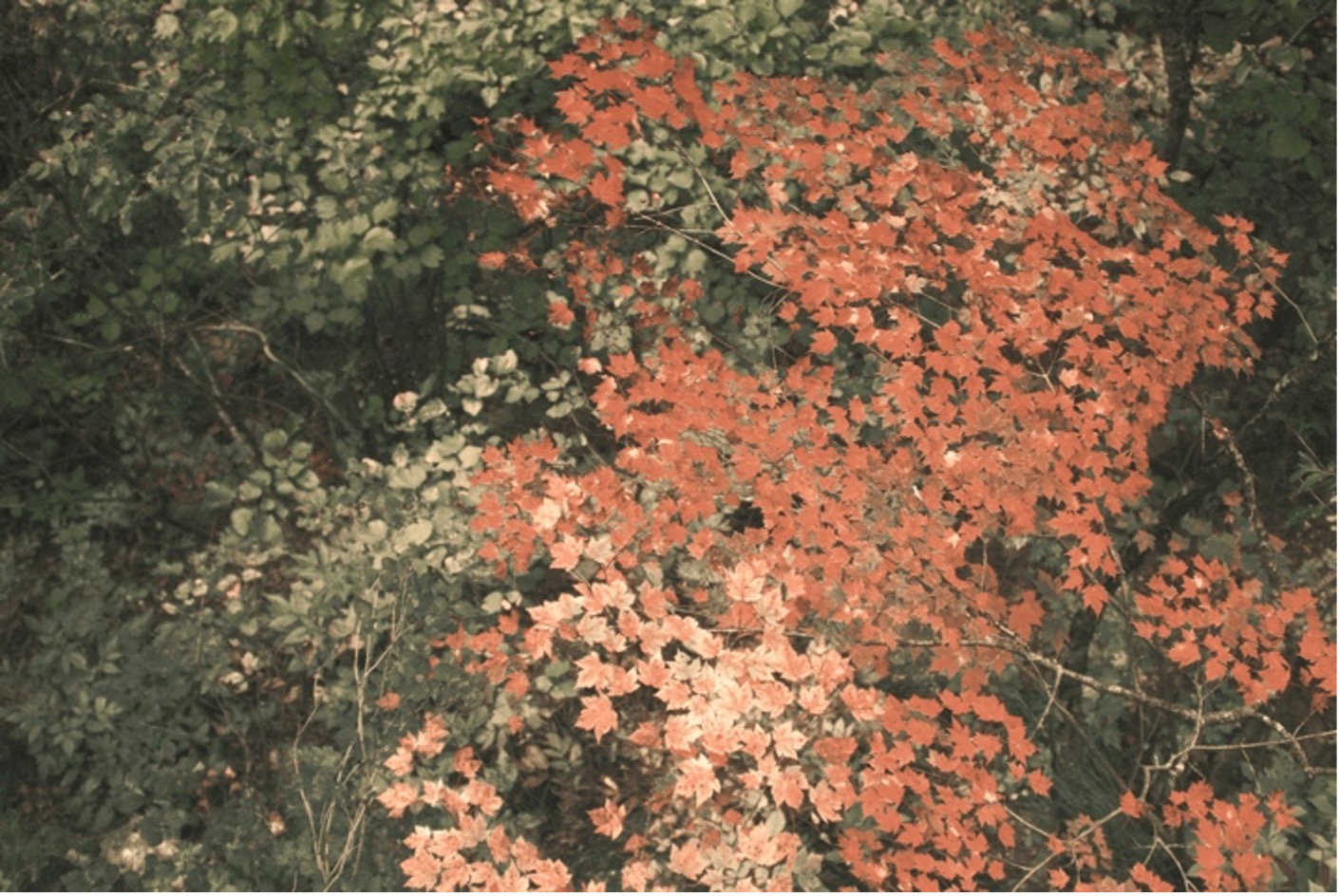
Beak Jungki, Centipede Orchid, 2020 ©Galerie ERD

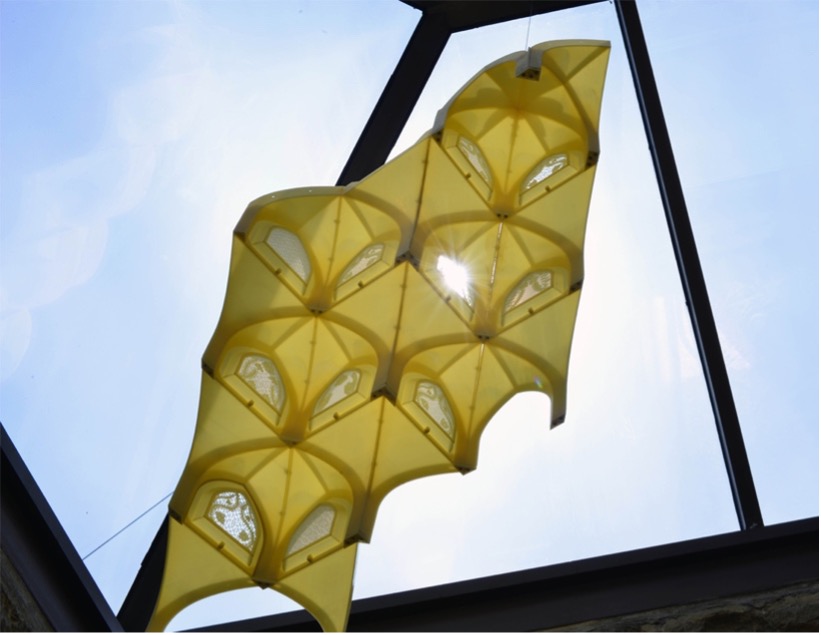
Another work, Centipede Orchid (2020), builds upon my previous work Dragon’s Lair (2019), which explored the ritual designation of space. In Korean folklore, yongso (dragon’s lairs) are sacred bodies of water inhabited by dragons, often sites of rain-invocation rituals. For these spaces to fulfill their function, they must be pristine and accommodating to dragons—featuring clean water and often waterfalls, ideal for a dragon’s ascent. However, historical records of Joseon-era rain-invocation rituals reveal that rather than entreating the dragon with reverence, people often sought to provoke or distress it into summoning rain. One such ritual, Chimhodu (沈虎頭), involved contaminating sacred dragon lairs with the blood of a tiger, an adversary of the dragon, in order to create a chaotic confrontation that would compel the dragon to ascend and trigger rainfall. Here, the tiger was not a sacrificial offering but an antagonistic force meant to incite the dragon.

Dragons were also believed to fear iron, sandalwood, centipedes, and five-colored threads. In Centipede Orchid, I incorporate these elements to provoke the dragon and invoke rain. The centipede orchid, a plant resembling a centipede, is stylized into an arabesque-like pattern and used to construct a dome-like glass ceiling structure within the exhibition space. By embedding a sacred space with elements that the dragon is thought to avoid, this work challenges conventional ritual practices, transforming rain invocation from a mere ceremonial act into an architectural intervention.

Beak Jungki, Candle Generator, 2014– ©Galerie ERD

Additionally, Candle Generator (2014–) is installed in conjunction with Mushroom Invocation and 230. This work emerged from my contemplation of how the symbolic energy of prayer—embodied in candlelight—could be converted into actual physical energy. In practice, Candle Generator functions as a power source, transforming the small heat energy of a candle flame into electricity, which is then used to sustain the installations Mushroom Invocation and 230 throughout the exhibition. Typically, media-based works rely on conventional electrical sources, but here, I deliberately equate electrical energy with spiritual energy, maximizing the conceptual resonance of the exhibition.

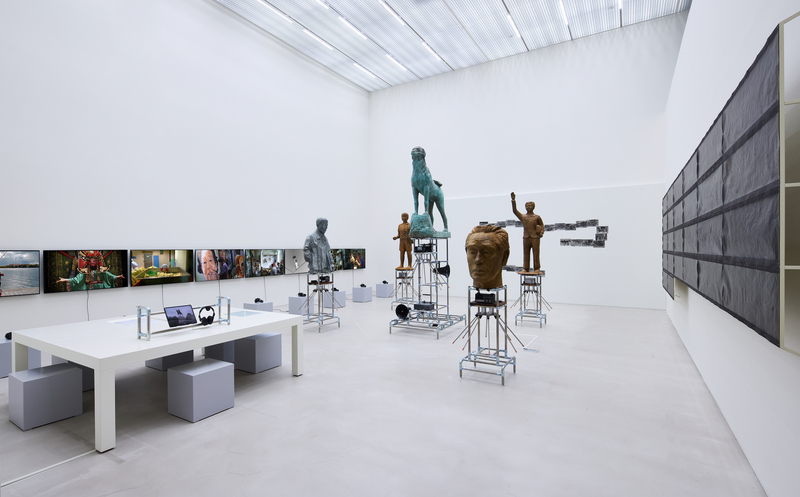
The title 《South Altar》 is derived from Namdan, the South Earth Dragon Altar (Nambang Toryongdan), one of the five altars (Obang Toryongdan) used for state rain-invocation ceremonies during the Joseon Dynasty. Now lost to history, its location is recorded only in early Joseon-era texts, indicating that it once stood at the southern base of Namsan, near the northern bank of the Han River. The realization that this exhibition space is not far from this historical site fuels my artistic desire to reinterpret coincidence as inevitability, reclaiming the altar’s presence through this exhibition.
 

- Beak Jungki

References