The
author concludes that the experience of seeing—now a part of everyday life in
major cities—is not merely the consumption of representational products but
something formed through moments and events. From the perspective of
alienation, consumers are no better off than producers. The taxidermy specimens
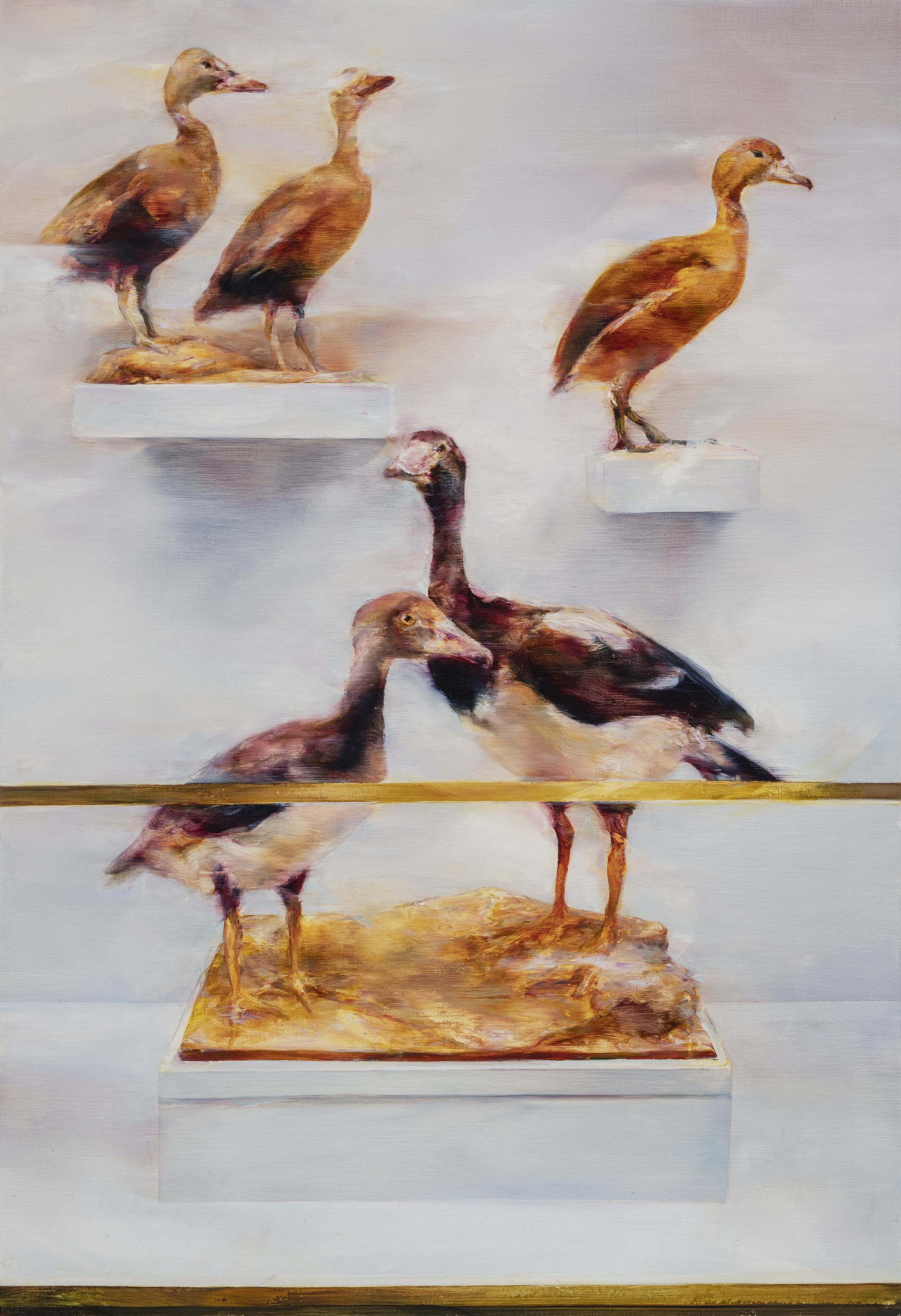
that Heejae Lim has chosen from natural history museums are intriguing because
they touch upon visual conventions that apply broadly to nature, collecting,
artworks, and commodities. What underlies all of them is ultimately human
desire.
To possess or enjoy something virtually, there is no real need to
immobilize the object. In other words, one does not need to kill the real. Art,
in its own way, is an apostle of peace. The painterly touch in Lim’s works makes
it possible for infinite variations to emerge from a single subject. Although
the artist has visited countless natural history museums at home and abroad and
has her own list of specimens, these simply serve as cues for painting. The
taxidermy subjects in the works relate both to the initial starting point and
the final outcome of the painting.
The
faint but persistent presence of the referent is connected to the field guides
and natural specimens that gave the artist aesthetic experiences before she
became a painter. Since childhood, Lim loved animal encyclopedias. The vivid
images within them appeared as archetypes of life. Following them, young Lim
sometimes collected insects or plants, yet she preferred the images to the
real. Images, unlike reality, cannot be grasped. Nature, as an untouchable
subject, relates to earlier works in which she painted natural objects from
advertisements.
The child who wanted to hold a virtual image grew up to become
a painter, only to realize that painting itself is an endless process. The
subjects in this exhibition are “things alive within illusion” yet “situationally
dead.” Focusing on images rather than nature itself, the artist becomes
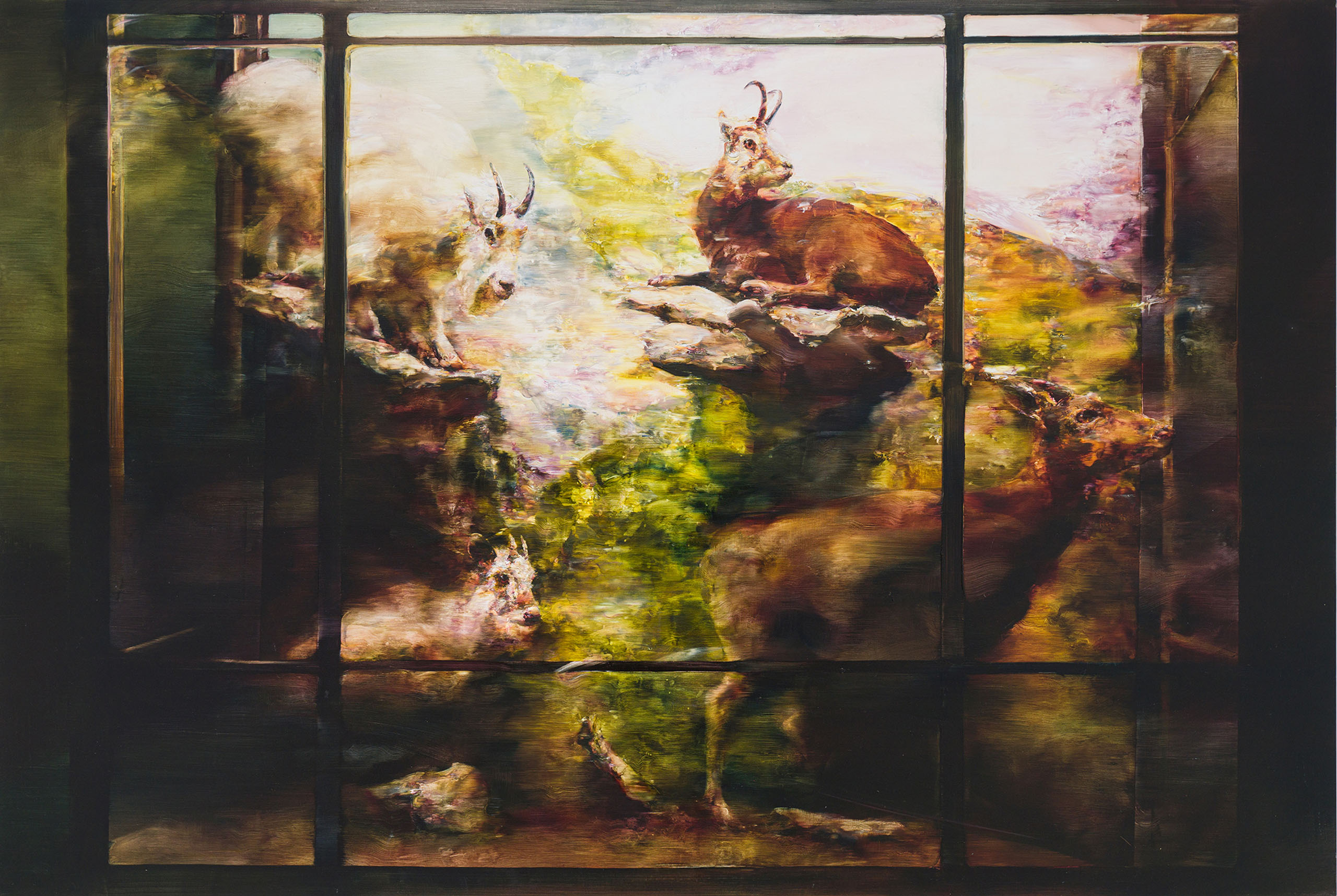
increasingly aware of the display glass that separates observer from object.
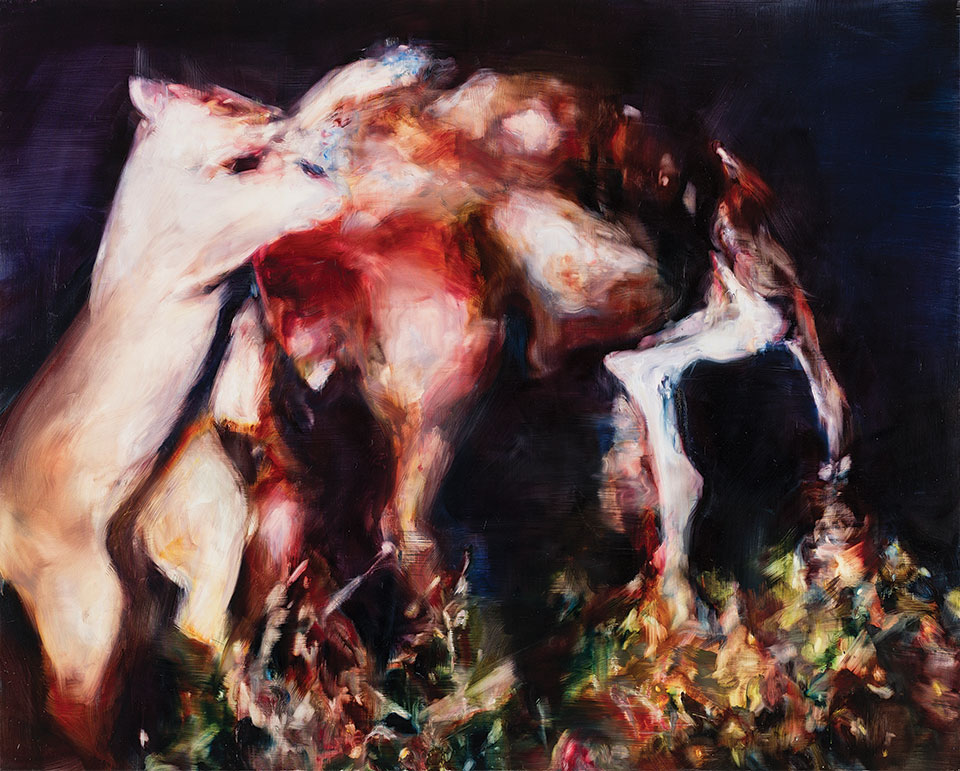
Lim’s works pay attention not to the taxidermy specimens themselves but to the
reflections of them on the display glass.
Taxidermy
carries object-like properties distinct from complete images, making the
painterly game far more complex. The fact that Lim was captivated by images in
field guides—rather than the real—forms an important context for understanding
her work. Yet the source of fascination that engrosses the observer remains
ambiguous. Ambiguity may suggest fiction, trickery, or falsehood, but because
it invites multiple modes of appearance, it is inherently playful. Nietzsche’s
claim that illusion is preferable to truth reflects his artistic temperament.
While taxidermy specimens were once weighty objects, they are rendered as light
as smoke in Lim’s paintings.
Works in which the referent exists but is
indistinctly presented invite questions about the relationship between truth
and illusion. When the impossible and unnecessary project of perfectly
reproducing the original is abandoned, illusion—that is, the play of
simulacra—can begin. In The Logic of Sense, Gilles
Deleuze challenges Plato’s representational philosophy, which privileged ideal
originals, and argues that simulacra are not degraded copies. They conceal a
positive potential that rejects the dichotomy of original and copy, model and
reproduction.
Deleuze
identifies the effects of simulacra as phantasme—hallucination. He quotes
Odoard’s analysis: “Simulacra are constructions that include the observer’s
point of view; thus hallucination arises precisely at the point where the
observer stands… The emphasis is not on the status of non-being but on this
slight interval, this subtle distortion of the real shadow.” Through such
hallucinations, “that which was concealed in the deepest recesses rises to the
brightest place, and the old paradoxes of becoming take shape anew in youthful
form.”
In contrast to representationalism, simulacra emphasize surface over
depth, variation over origin, and becoming over representation. In the
“representation” entry of the Dictionary of Contemporary Literary
and Cultural Theory (edited by Joseph Childers), David Summers,
following Deleuze, stresses the phantasia-like nature of simulacra. According
to Summers, simulacra are “something beyond the capacity to form
opinions—namely, the ability to illuminate, with the light of the soul, things
absent or impossible, allowing us to present them to ourselves, remember,
imagine, and dream.”
Taxidermy,
as a subject, is tied to questions of perceiving nature for collectors,
biologists, painters, and viewers alike. Lim unfolds this through the methods
of painting. Until now, she has focused on the ‘Cabinet’ series, which explores
the encounter between painting spaces; the ‘Faces’ series, which deals with the
encounter between faces and gazes; and the ‘Stuffed’ series, which examines the
meeting of exhibition space and painting space. The paintings in ‘Stuffed,’ the
main body of this exhibition, subtly blend focal points from all three series.
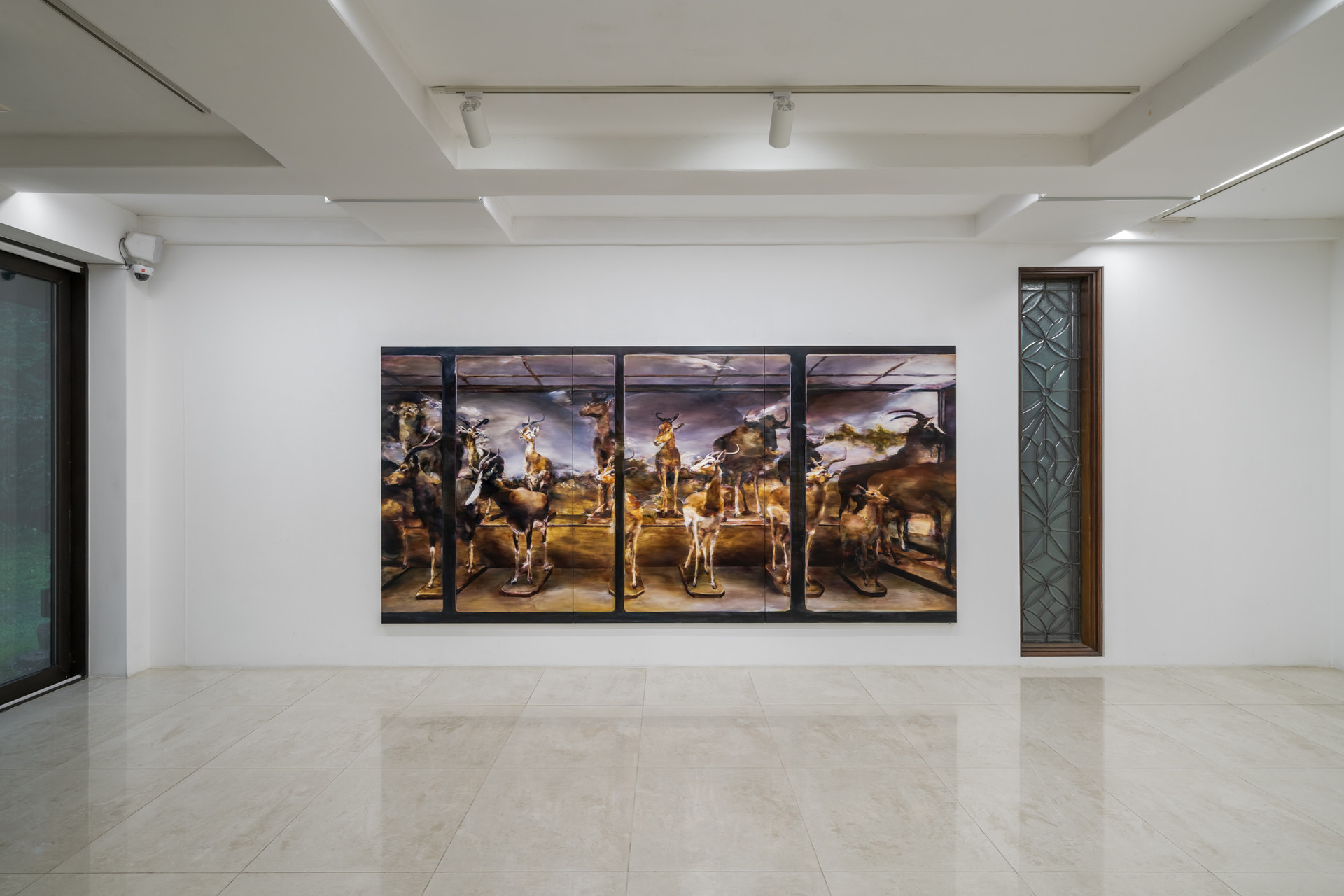
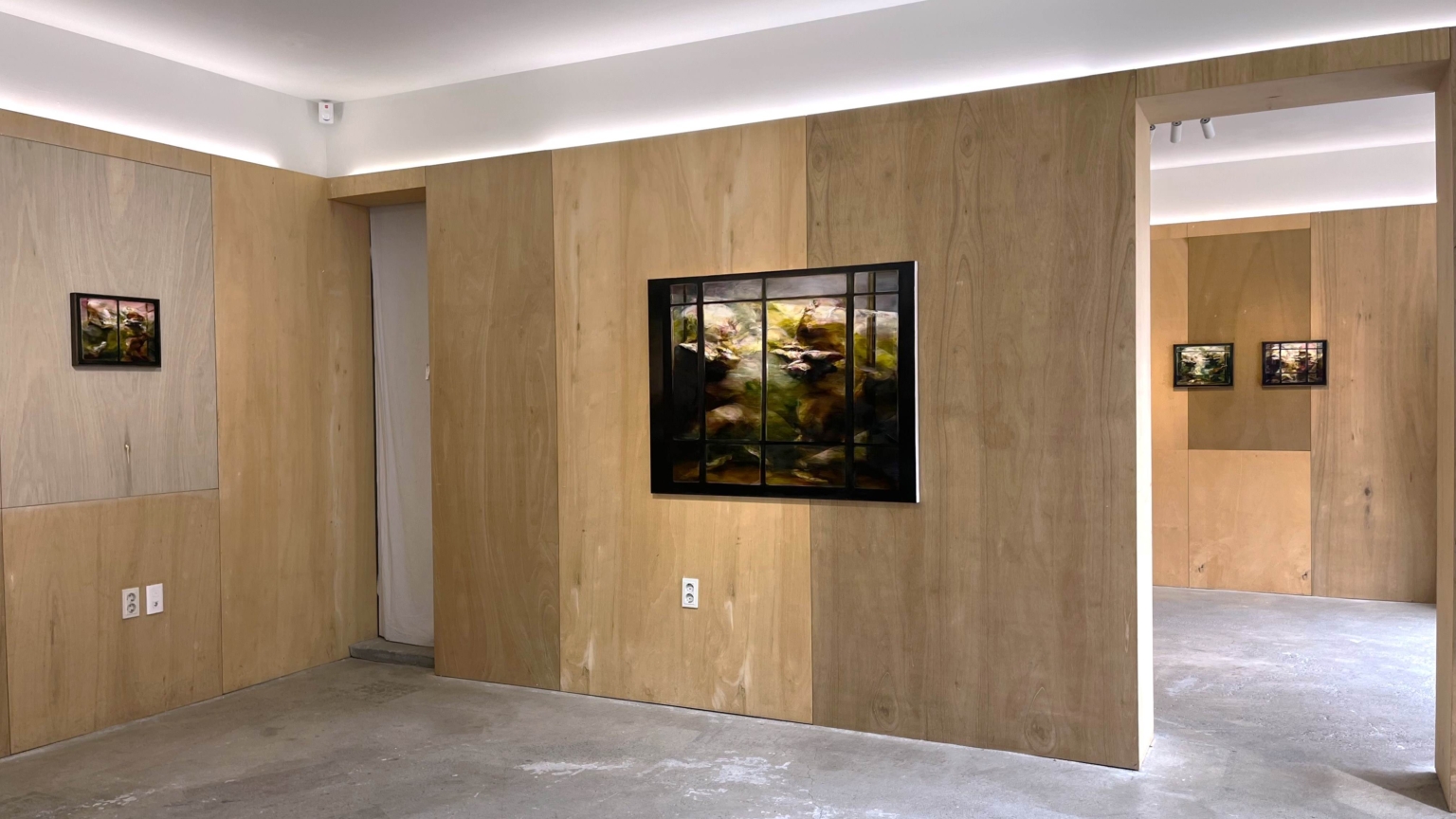
The work Four Antelopes in the Cabinet depicts
antelopes housed inside a cabinet.
The storage unit is composed of several
shelves—some showing only legs, others only torsos, while the middle shelf
shows a full body. Their similar sizes and forms make them seem as though they
are moving within the cabinet. This is how painting, a fundamentally still
medium, expresses movement or sympathetic response. The artist paints animals,
but because the original models are taxidermy specimens, they can never truly
be full of life. And yet, because they bear traces of life, they are distinct
from inert objects.
Although
the labels bearing scientific names are not clearly readable, these beings
occupy a place somewhere within a system constructed by humans. Even if
legible, the scientific names—likely written in old and unfamiliar
languages—would remain foreign, yet they belong to human taxonomy. In To
Have and to Hold: An Intimate History of Collectors and Collecting,
Philipp Blom expands the mechanism of collecting from the private to the
public, highlighting systems that apply equally to natural history museums and
art museums.
He states that “from the moment we first step into a museum, we
learn a system, a lesson, a taxonomy.” According to this system, arrangement
itself becomes a kind of doctrine. But nature, in truth, knows neither
categorization nor language, nor does it possess intention or purpose. Although
nameplates appear before the animals in the works—indicating their position
within a system—the artist nearly erases them. Existence and name remain
estranged from each other. Despite humanity’s desire to systematize nature,
nature cannot be fully contained within such structures.
The
slight deviations in Lim’s painterly approach from the representational
strategies of natural history museums make the subjects appear as though they
possess a logic of their own. Because taxidermy aims to replicate the original
organism as closely as possible, a viewer might say, “That is an antelope,” or
“That is an antelope’s taxidermy,” if Lim had painted them with strict realist
technique.
Modernity sought to overcome the erasure of the gap between word and
thing—precisely the issue raised by Magritte and Foucault. In modern language,
words do not serve as transparent windows to objects; they assert their own
presence. Lim’s layered, translucent brushwork—suggesting forms and colors
rather than delineating them—stands in stark contrast to the representational
mode of biological field guides she studied as a child. Rather than elaborately
depicting a chosen subject, the artist opts for blurring. This approach rejects
the static impression of taxidermy and, paradoxically, imparts a subtle sense
of liveliness.
At
times, the antelopes seem to move as they merge with the partially greenish
background. Yet this is merely a secondary effect of Lim’s unique painterly
treatment. The frame of the antique wooden cabinet serves as a reminder that
the subjects are indeed taxidermy specimens. In an era when everything is
exposed by codes and systems, the old-fashioned cabinet resembles an unknown
realm from which anything might emerge.
However, it is opened through the
painter’s gaze, and viewers interact with what is shown through the logic of
the painting. Because transparent language is not used, the subject does not
fully present itself to the viewer. The antelope in the lowest shelf does not
appear as it would have at birth (or Creation, for those who are religious), perhaps
because of the context of taxidermy. Taxidermists exert great effort in
reproducing the eyes to convey a sense of life. Apart from the black pupils
that seem alive, the boundaries between the subject and background are blurred.