After long preparation, the
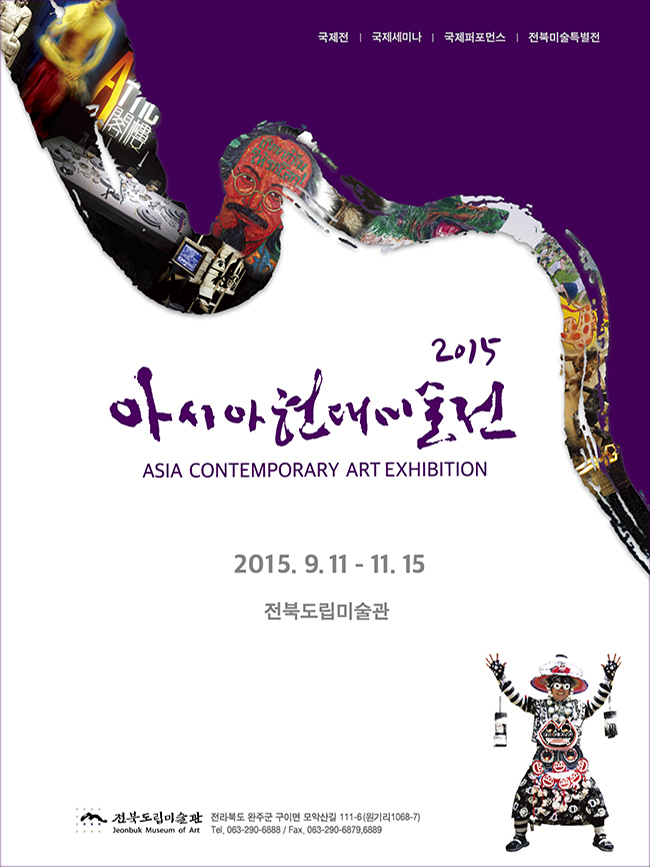
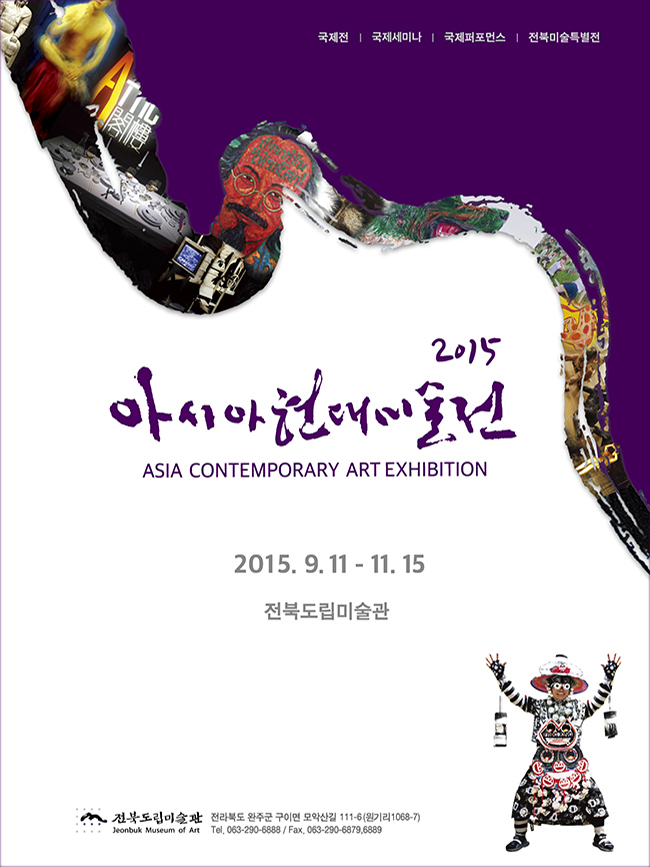
Jeonbuk Museum of Art (Director: Jang Seok-won) announces the list of
participating artists for 《Asia
Contemporary Art Exhibition 2015》. A total of 35
artists from 14 countries are included. In addition, the museum also announces
the participants for the International Performance Festival (8 artists), the
International Seminar (9 participants), and the Jeonbuk Special Art Exhibition
(17 artists).
The Asia Contemporary Art
Exhibition is the first exhibition of its kind organized by the Jeonbuk Museum
of Art and is planned as an annual event. The project aims to concentrate Asian
contemporary art in Jeonbuk while facilitating the advancement of Jeonbuk-based
artists into the Asian art scene. Given the absence of a regularly held
pan-Asian international exhibition in both Korea and the broader Asian region,
the exhibition is expected to gain rapid prominence.
Through extensive
international networking and on-site research across Asia, the museum has
constructed this exhibition with the participation of artists from 14
countries—Korea, China, Japan, Taiwan, Thailand, India, Bangladesh, Nepal,
Australia, the Philippines, Hong Kong, Malaysia, Indonesia, and
Mongolia—comprising 22 international artists and 13 Korean artists (4 from
Jeonbuk and 9 from other regions).
From China, works include Zhou
Chunya’s Doberman and T63 from his Violence series
and his peach blossom landscape series Happiness No.1,
Chang Xin’s stainless-steel sculpture Reproductive Tree,
which depicts trees rooted in the human body, and Wu Gaizhong’s large-scale
canvas Picture Frame, covered with animal fur. Japanese
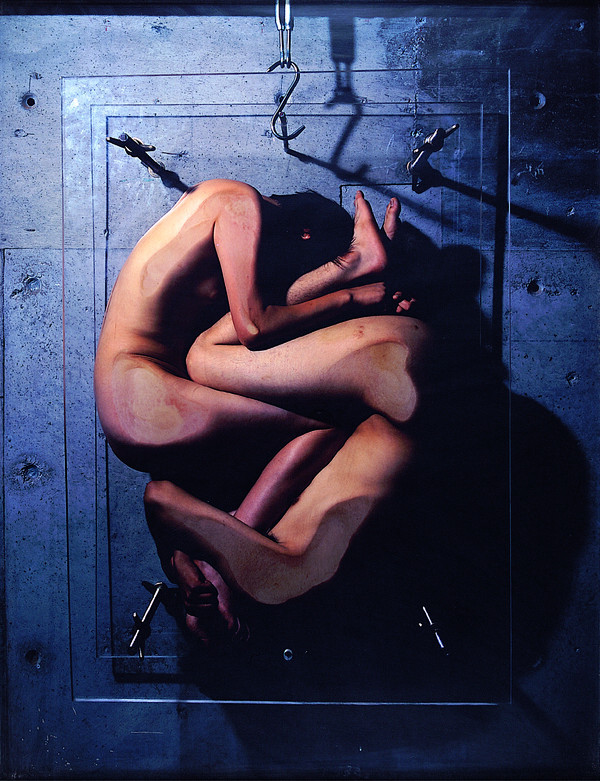
artist Ishida Tetsuya’s painting Reason (Weaning),
portraying a man confined within a narrow, awkward structure, resonates with
his introspective reflections on alienation and causality; although deceased,
Ishida continues to gain international recognition.
From Taiwan, Chen Ching-Yao’s
painting AK47 Girls’ Dawn Attack presents a new
generational resistance to totalitarianism through images of Japanese
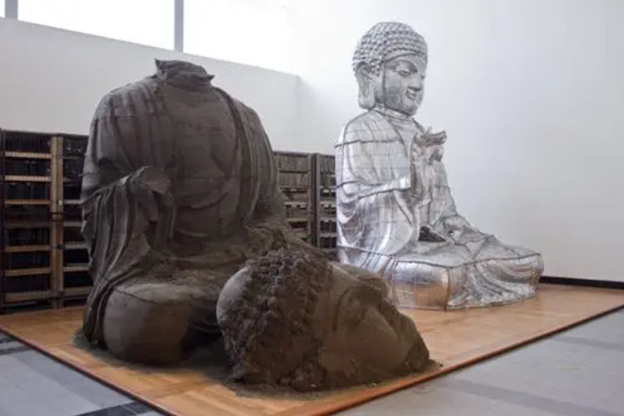
girl-group figures armed with AK rifles, while Yao Rui-Chung’s photographs
depict discarded Buddha heads, parked cars, and laughing Taoist statues in
ruin-like spaces, revealing fragments of contemporary Asian culture.
Installation artist Yuan Guang-Ming places white porcelain vessels and candles
on a white table, accompanied by sudden loud noises and clattering sounds,
creating a tension between calm and unease.
Indian artist Subodh Gupta’s
installation Boat (Untitled) features a small boat
laden with televisions, kettles, pots, and other discarded objects tied
together, while another Indian artist, Radhish T, presents paintings that are
luminous, mysterious, mythic, meditative, and even demonic in quality.
From Nepal, Sajana Joshi presents
sculptures of children wrapped in multicolored goat skins, symbolizing Nepal’s
nomadic culture.
Thai artist Vasan Sitthiket critiques political power in Thai
Elite Accusation, depicting the current Prime Minister Prayut—who
came to power through a coup—wearing a military uniform on top and exposed
below, with sycophants licking him. Bangladeshi artist Nazlee Laila Mansur
depicts scenes such as deer attacking tigers and bulls confronting crocodiles,
protesting systems in which the powerful oppress the weak.
Indonesian artist Ferial Afiff
casts her own body in chocolate, allowing viewers to consume it, and stages
performance scenes in butcher shops where bodies are treated like meat.
Mongolian artist Enkhbat Lkhagvadorj paints scenes of livestock dying in severe
cold while drunken shepherds stand guard.
Jeonbuk-based installation artist
Park Kyung-sik uses branches collected from hills in Buan to depict people,
trees, and houses. The lightly perched forms of traditional Korean houses
resting on twisted branches evoke both tradition and resilience. Lee Sang-jo
photographs everyday life, nature, and society, moving constantly between
meaning and meaninglessness. Emerging Jeonbuk artist Lee Juri participates with
the ambitious 9-meter-long work To Live, evoking
precarious relationships between despair and hope, communication and
alienation.