"Utimately
everything disappears" is a statement which captures Kim Atta's previous
works. They have developed dialecally through preservation, dissolution,
presercation, and, ultimately, dissolution. Recently, he went a step further.
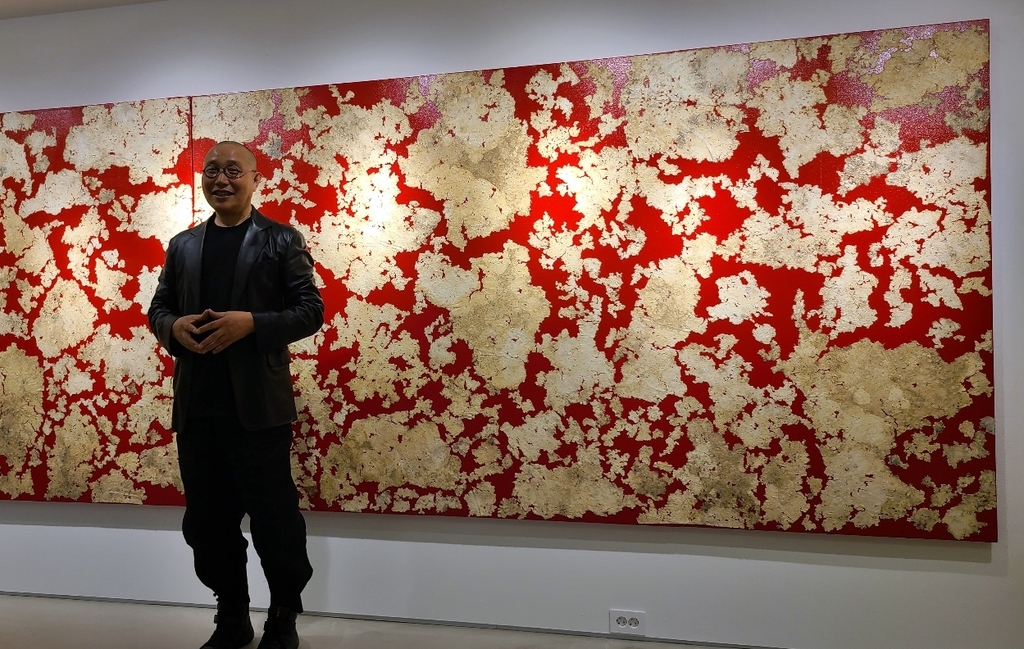
In his ‘Project Drawing of Nature’ series, traces on the canvas show things
both visible, and how they influence each other. As he says, "Anything
thart exists relates." Even in the moment everything disappeare, existence
takes its first breath again, creathing a new cycle of life. This id part of
"the world's reasons" he wanted to reveal through this project.
Dictating The World's Reasons
It
was early November 2011, and a drizzling rain was hastening the arrival of
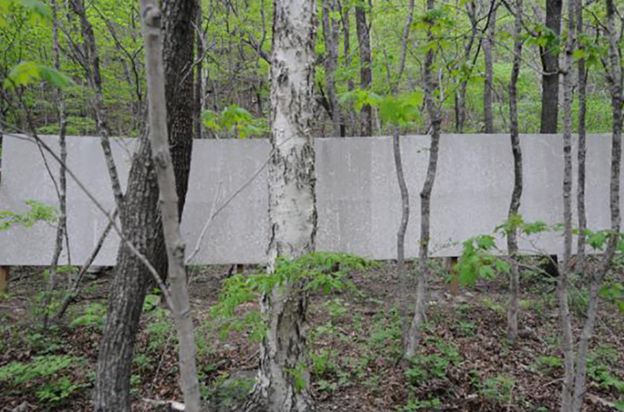
winter. I was on Gombae-ryeong, a ridge of Gangwon's Jeombong Mountain, when I
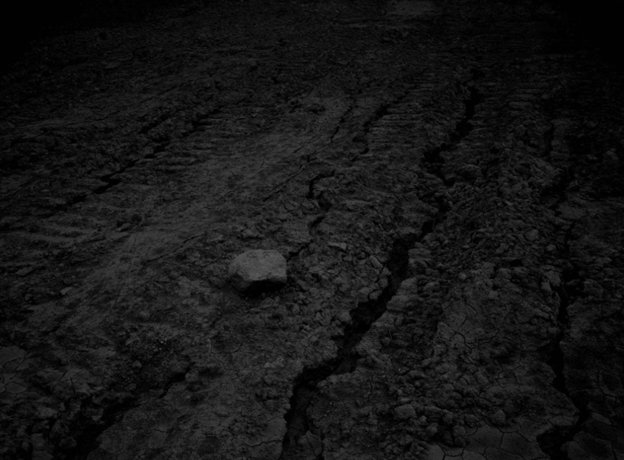
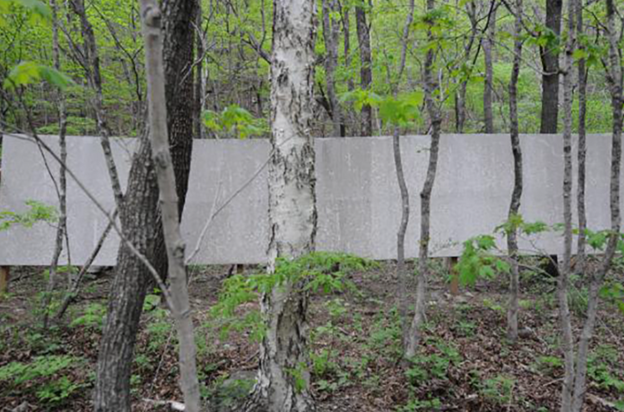
had a singular experience. I saw a painting that nature itself had been
painting since June 2010. More than a year and a half of time was inscribed in
all the different traces left on the canvas. And with each one of these spots
-- neither their form nor their origin could be explained -- something was
taking shape there, something along the lines of an abstract painting. Blossoms
of mildew, tracks of raindrops, the path of a bug, all now traces on the
canvas. Marks from an unseen wind and the sunlight peeking through the clouds
again and again; remnants of some mysterious workings beyond our ken. The work
in question was part of ‘The Project Drawing of Nature’ series, launched in
2009 by Atta Kim.
For
this project, the artist positioned canvases in around thirty historically
significant locations around the world to collect traces of nature:
Gombae-ryeong and Hyangno Peak, Bodh Gaya and the banks of the Ganges in India,
the island of Pharos (the matrix from which Greek philosophy emerged), the
banks of the Yellow River in China's Henan Province (the birthplace of Eastern
thought), Manhattan, a Native America reservation and Santa Fe in New Mexico,
Hiroshima and Tokyo in Japan, Beijing, Venice, Switzerland, Siberia, Chile,
France, Tibet, and more besides.
It is a project that is still going on today.
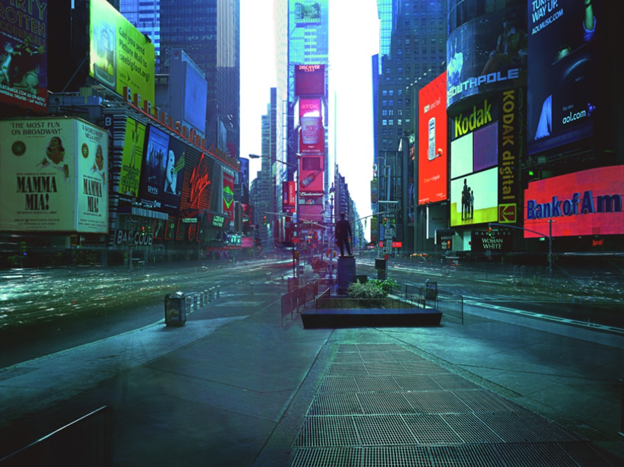
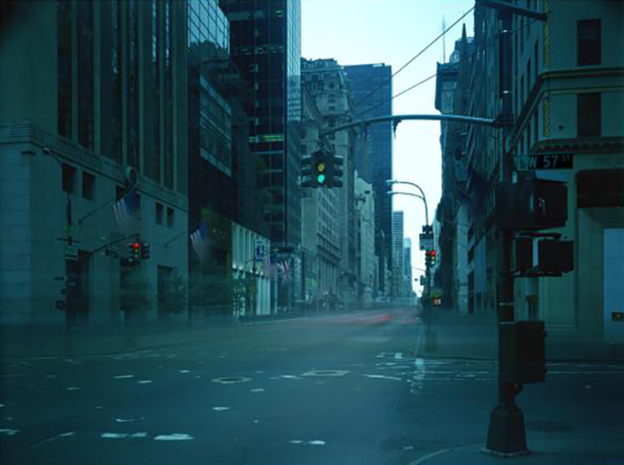
Kim's previous work, the Indala series, began with a focus on the cities of the
world. The urban areas in question seemed to have been sucked into a world of
intangible grayness, but their nuances were all subtly different. So it was
with the works drawn by nature. The same period of physical time -- two or
three years -- passed by all over the world.
But the differing specificity of
the spaces in which that time was embodied resulted in different traces on the
canvas. Kim's work involves making the invisible visible: the flow of time, the
subtle waves of nature. As he began ‘The Project Drawing of Nature’, Kim said
it would "net the thought and principles of the world that we do not
see with the eyes, take dictation from the principles of the world with the
nature of Eastern thought, which is referred to [in the West] as the 'drifting
cloud.'"The underlying philosophy is what is crucial here.
In
a treatise titled The Era of Video Culture and Integrative
Imagination, the philosopher Lee Ki-sang praised Kim as someone who "has
gone beyond photographic technique, beyond the science of photography, to bring
his work into the realm of photographic philosophy." Quoting Vilem Flusser,
Lee predicted the arrival of age when people would "attempt philosophy
with form rather than with text." In this new age of video culture, he
said, the photograph may become an optimized means of philosophical conceptualization
and contemplation. Already, Kim was at work expressing the profundity of the
world of Eastern thought through the technologically advanced Western medium of
the camera.
To him, the photograph was the "most powerful weapon for
revealing the world I had interpreted." And, should the need arise, he is
prepared to put his camera down at any moment. This, finally, is what he did
with ‘The Project Drawing of Nature’. With his special exhibition for the 2009
Venice Biennale, he was establishing a stable place for himself as a
world-renowned photographer, so his choice was baffling to many. But it was a
logical development on his part. Kim describesThe Project Drawing of Nature as
"both a deconstruction and a revival" of his previous work, ‘ON-AIR
Project’.
See and Touch The Spirit
A
key strand of thought running through Kim's previous work was the idea that
"all things eventually disappear." His pieces had followed a
dialectical structure of preservation, disintegration, preservation, final
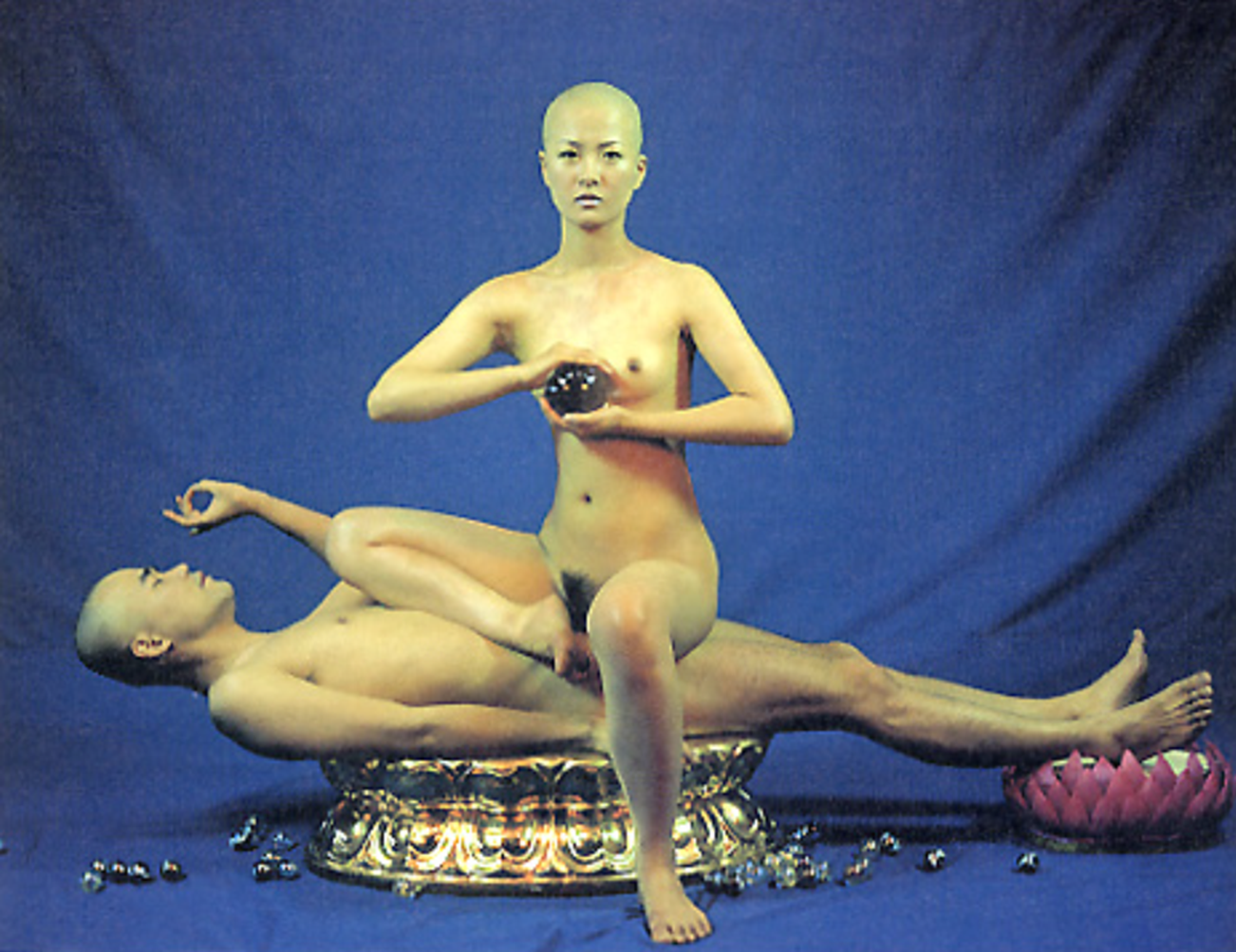
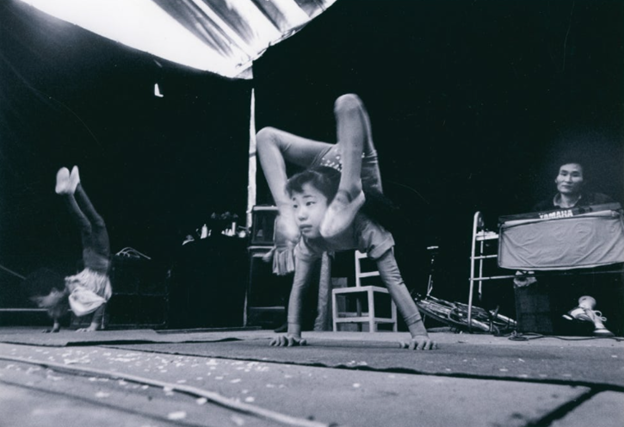
disintegration. In the 1980s, his series The Portrait constituted an act
of preserving the spirit through photographing Korea's intangible cultural
heritage.
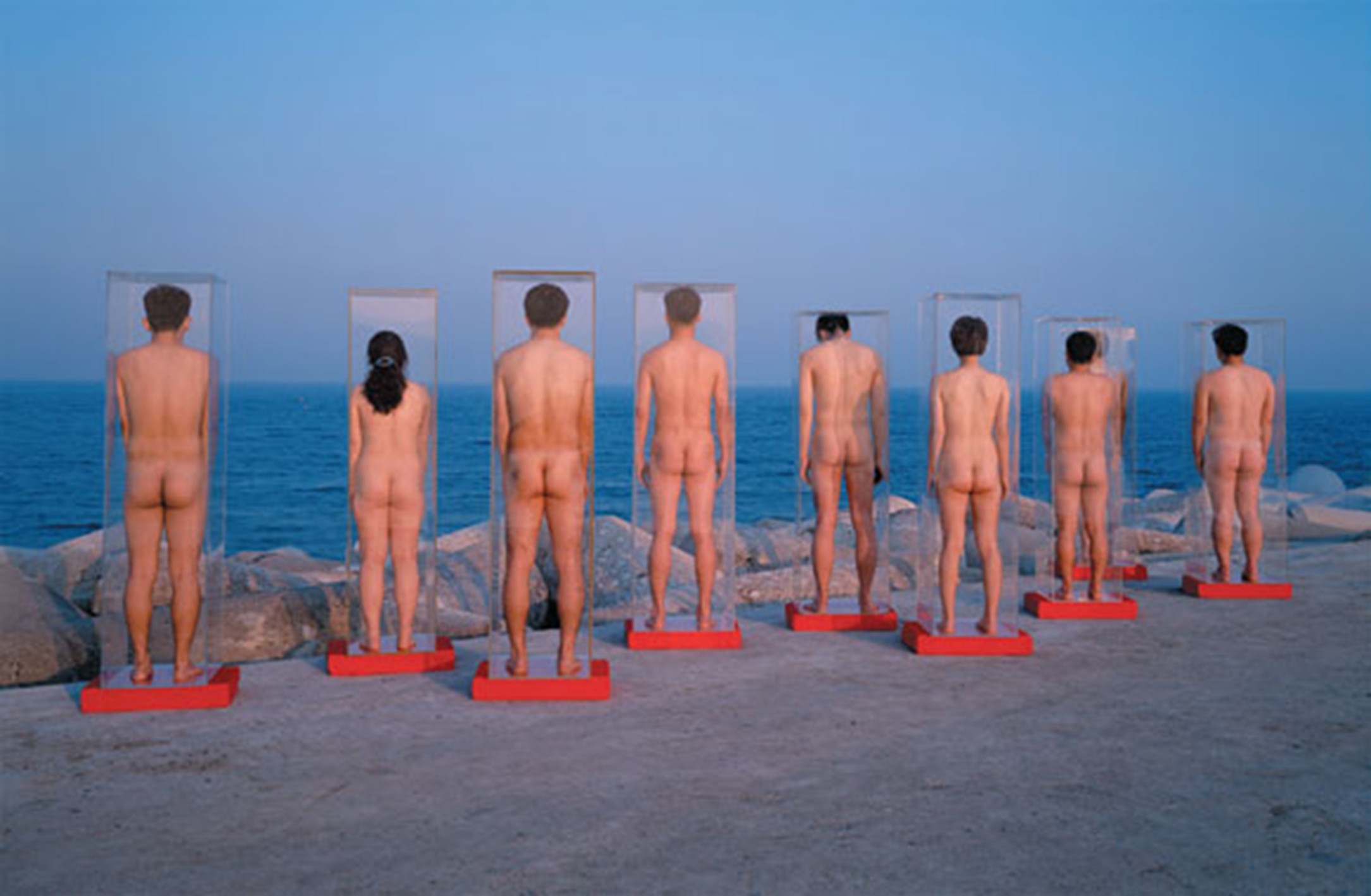
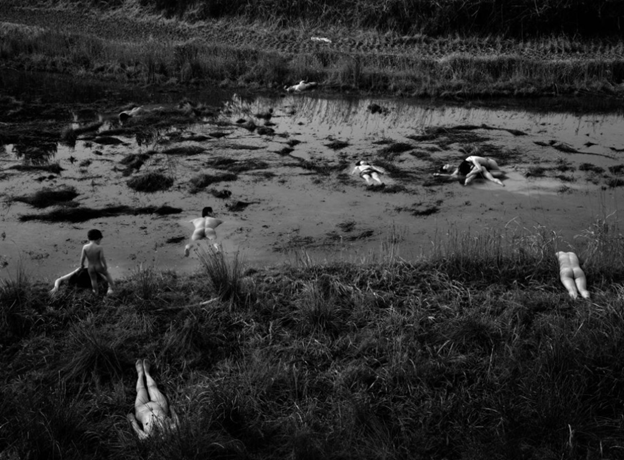
After that, his ‘Deconstruction’ series consisted of shocking scenes
showing nude people in rice paddies and on highway roadsides posed "as though
sowing rice." The figures were cast into nature without any social
indicators, and ultimately became nothing, like rocks in a field. All
descriptions of the self that existed before that point are negated. The
dismantling of established conceptions marks the beginning of full-bodied
challenge of the modern thought and practices of Western society, with its
origins in the proposition that "I think, therefore I am."
First
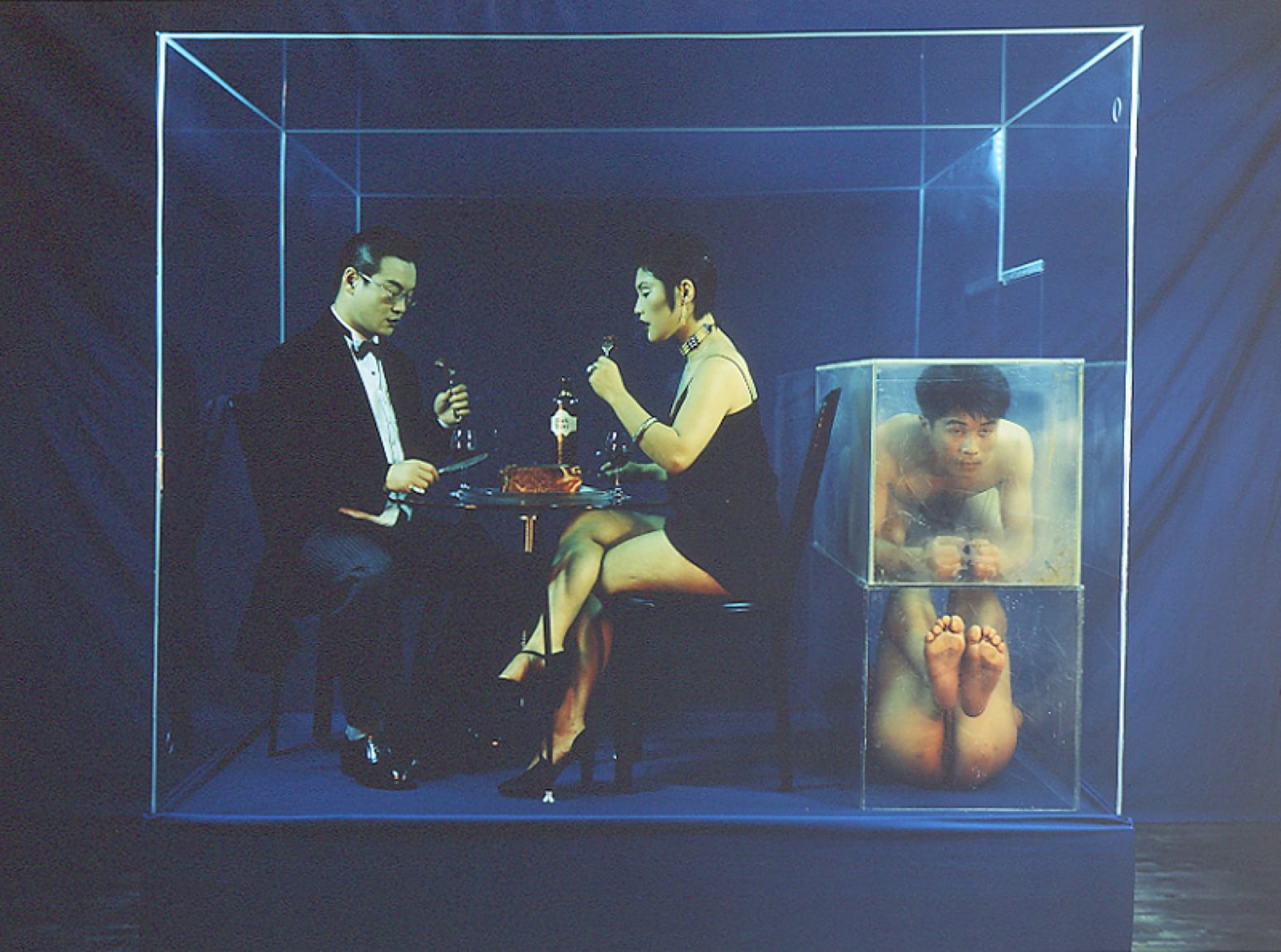
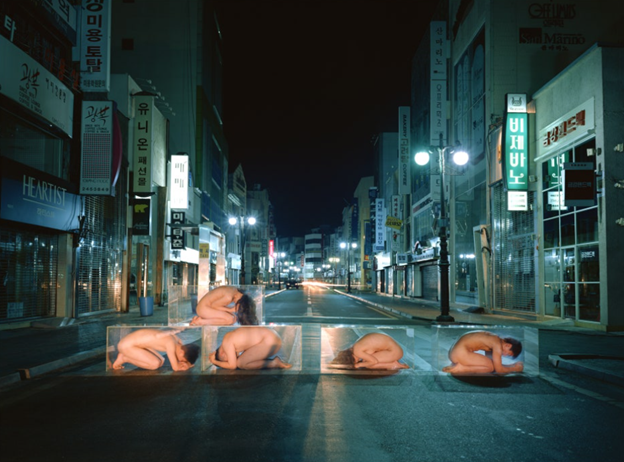
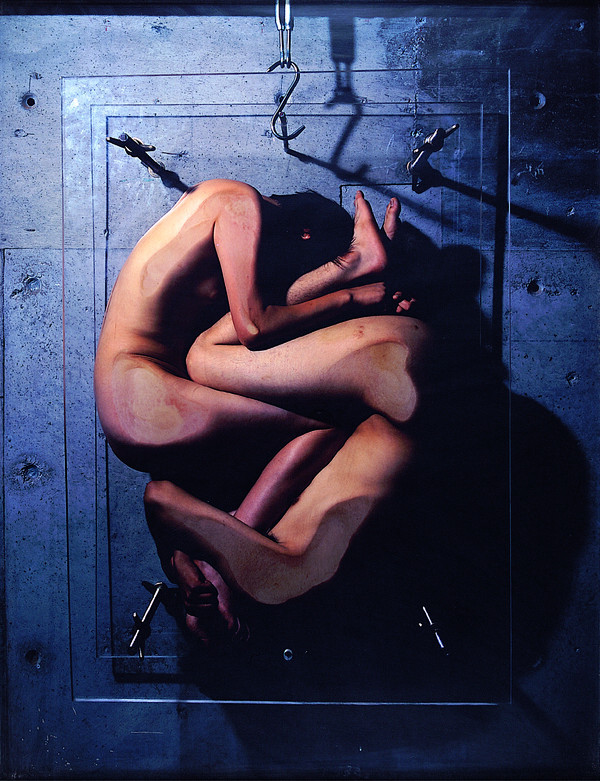
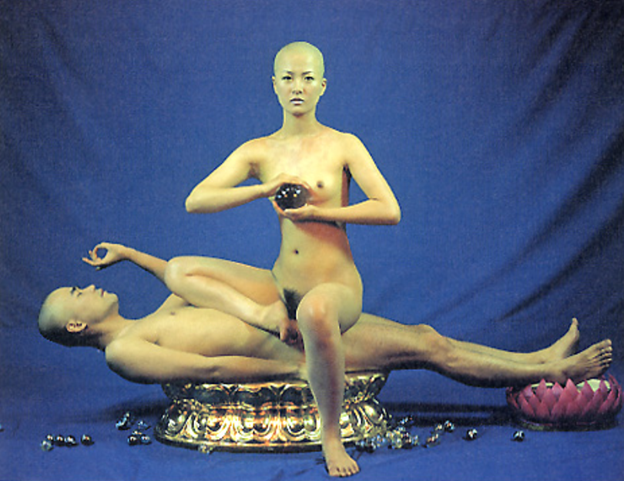
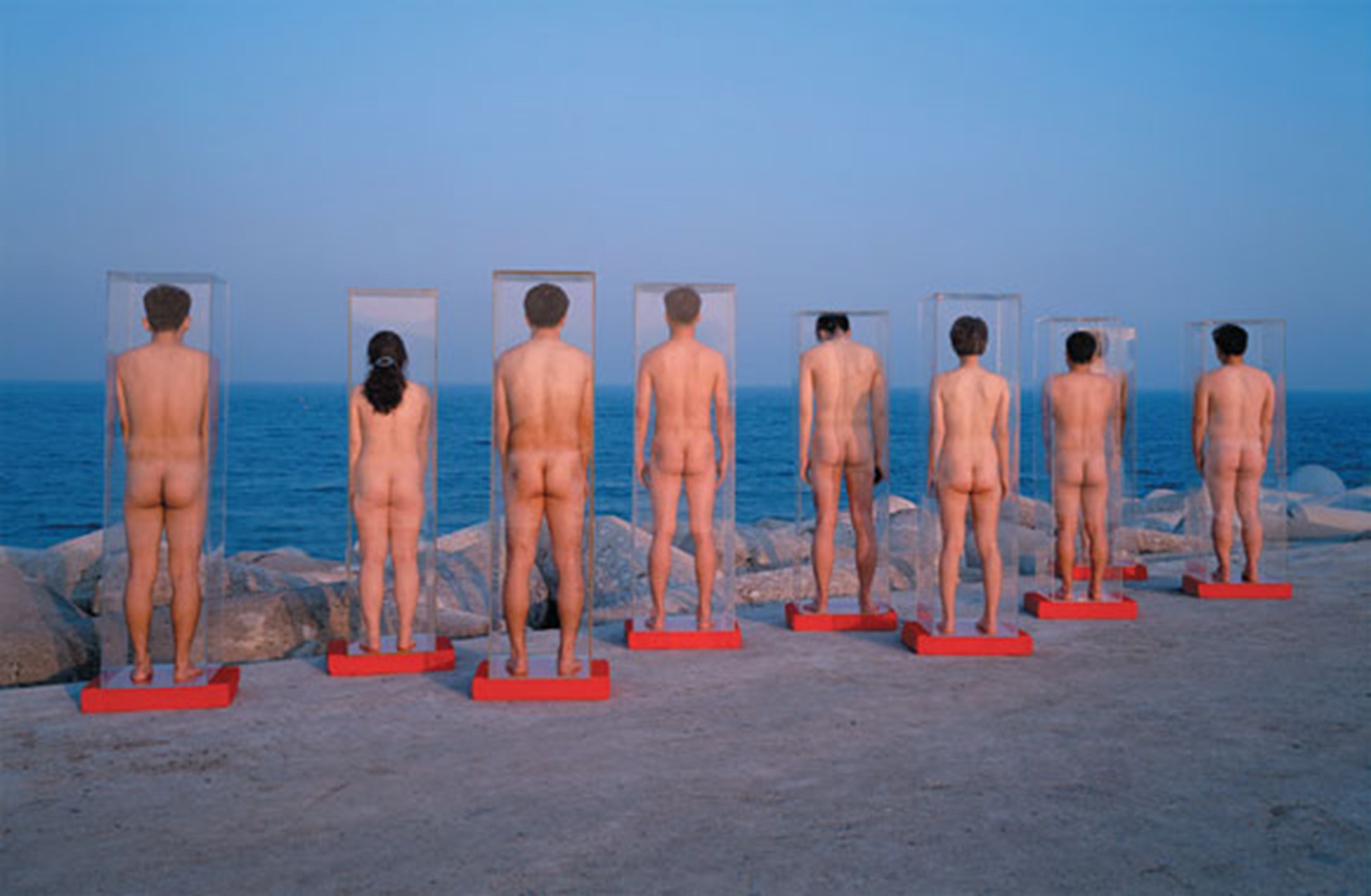
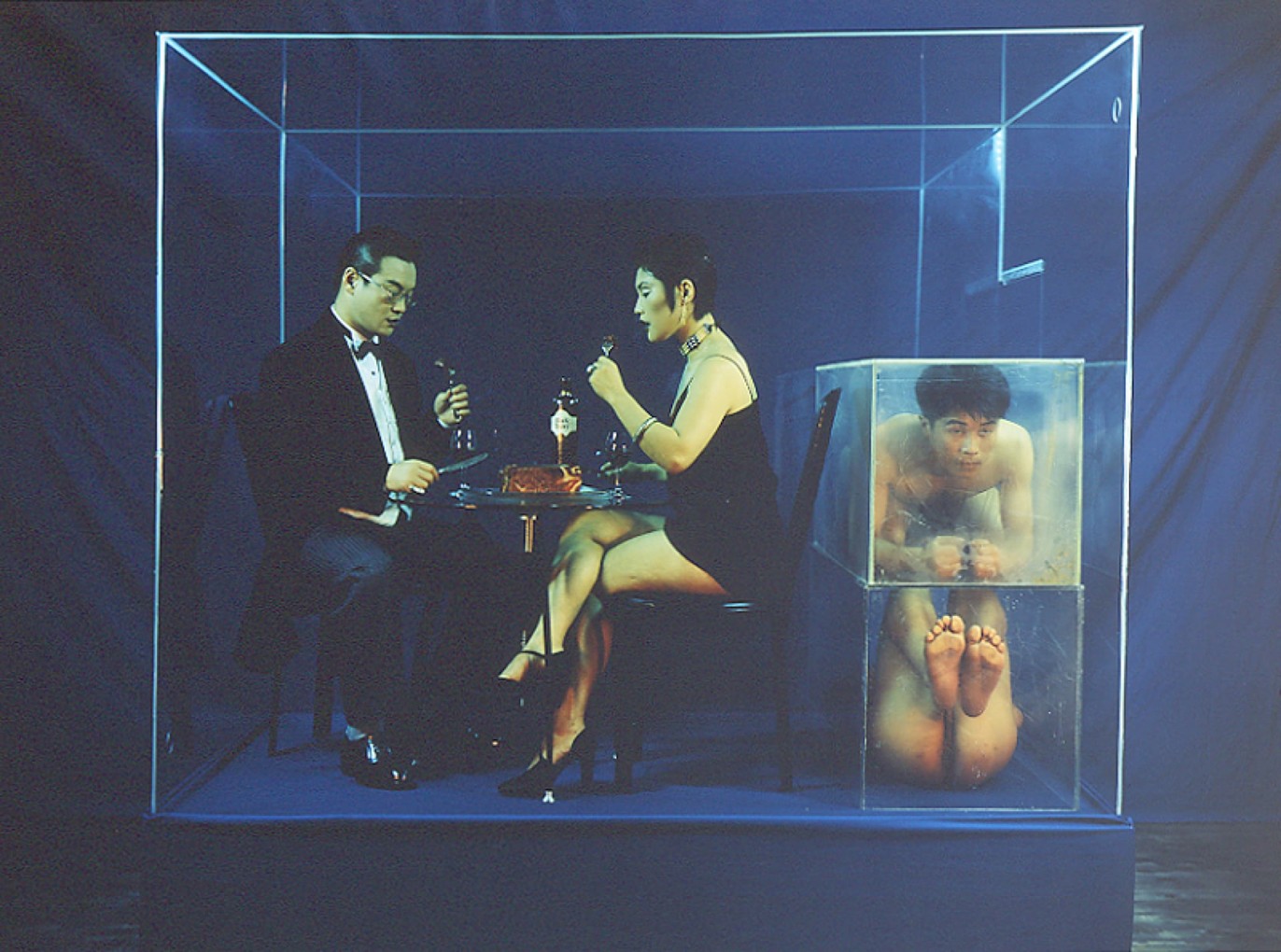
unveiled in 1995, the photographs in the ‘Museum Project’ series show people
surrounded by acryclic boxes, like properties in a museum: prostitutes,
disabled veterans, couples making love, ordinary family members. These pictures
deconstruct the concept of the museum as a place that preserves only important
things; they turn it around to stress that no matter how trivial something may
appear, it is still worthy of preservation in a museum.
Overlapping with the
Buddhist idea of the buddha nature existing in all things, the images are
indicative of the place that Kim occupies in Korean cultural history. Until the
early 1990s, religious themes had a very important meaning in Korean spiritual
culture. Leading literary figures like Kim Seong-dong, Yi Mun-yol, Lee
Chung-joon, Ko Un, and Park Sang-ryuk wrote works that dealt with such weighty
themes as religion and death. And under the political repressions of the 1970s
and 1980s, religious themes constituted an important part of Korean cultural
history, expressing the spiritual struggle to surmount a vulgar reality.
Written
in the early 1990s, Ko's novel The Flower Ornament Sutra put
a period on this long march. With the thesis that "all things change, and
the only truth is change" in the world, the very subject in this framework
ultimately disappears from the world of the sutra. One sentence in particular
-- "All things eventually, however, disappear" -- assumes absolute
importance. It may be the use of the word "however" that captures the
most attention in this sentence. It implies the importance of all individuals
prior to their disappearance.
The Museum Project was a process of acknowledging
and preserving the individual incarnations attained just before this final
disintegration. Even as Korean literature after Ko Un cast aside grandness of
narrative and focused on the private world of trivial everyday experience, Atta
Kim has continued following his own path. Through the extensiveness and
universality of visual art, he has achieved a transcendence of locality and
temporality of thought. His thought, indeed, had expanded beyond the cultural
context of Korea and toward the international.
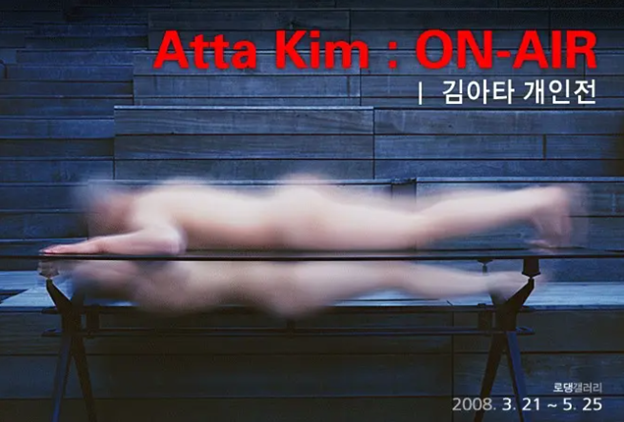
‘ON-AIR’
first made a splash at a 2006 exhibition of the International Center of
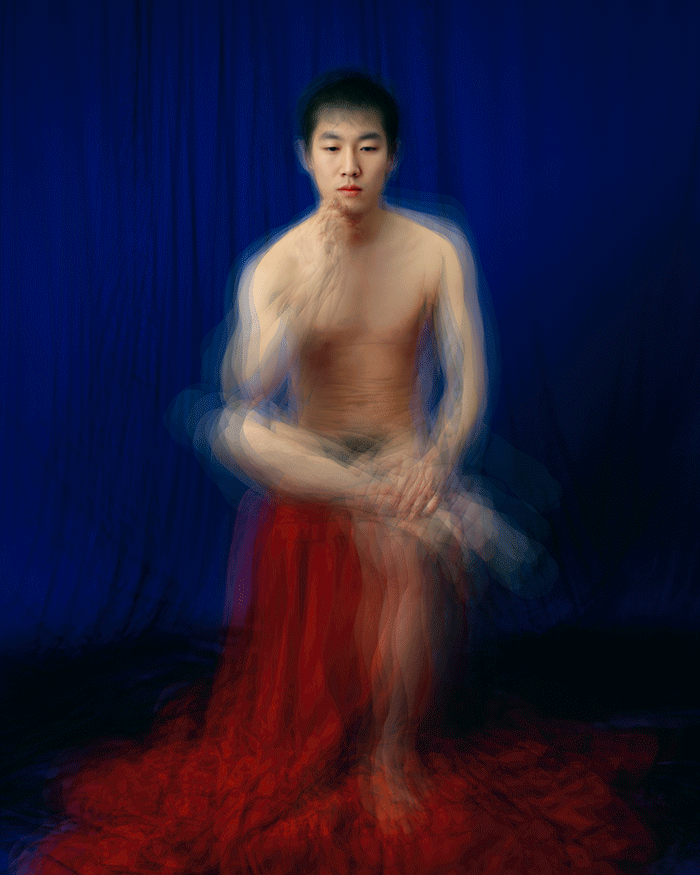
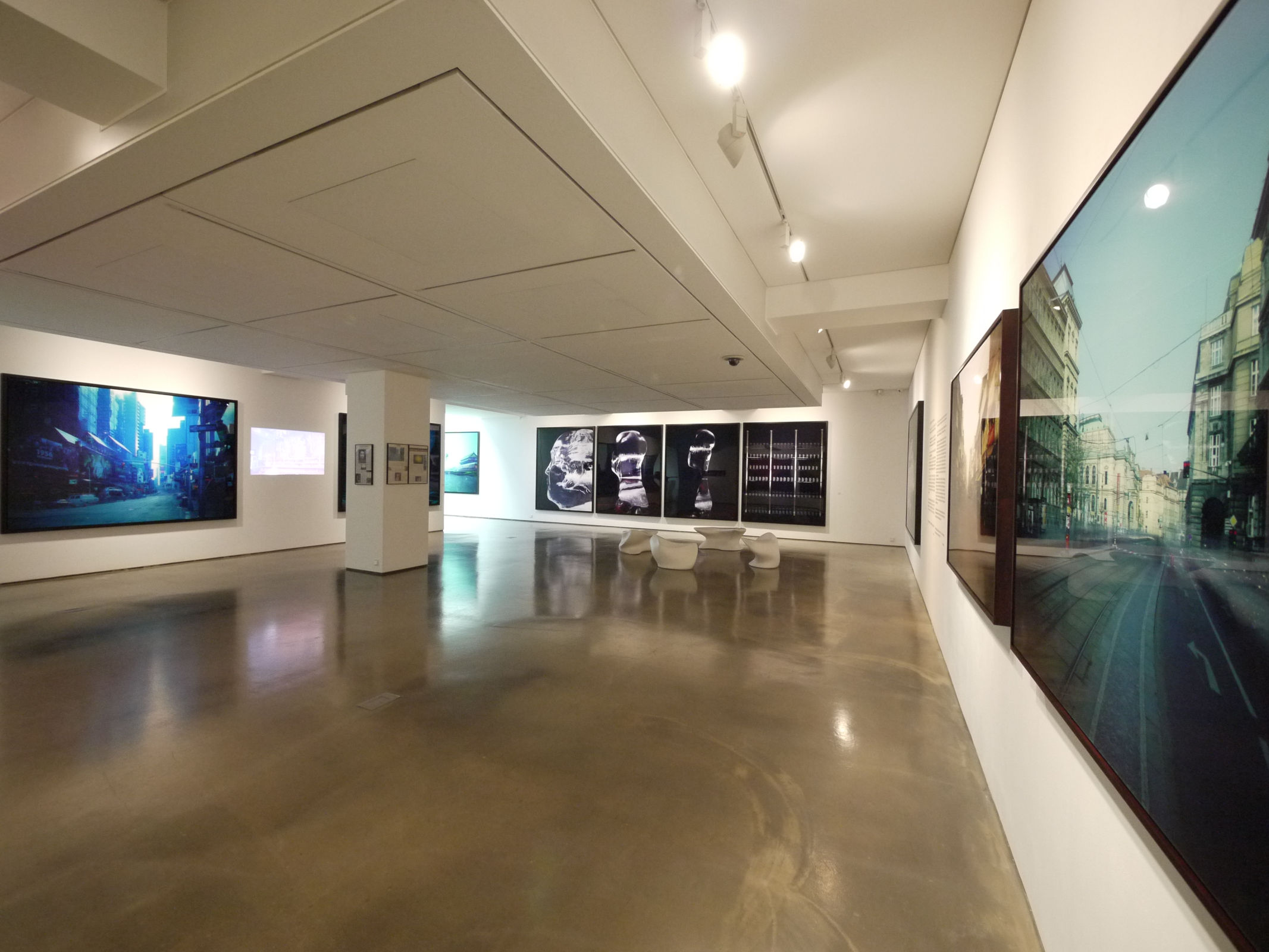
Photography (ICP). Consisting of four sections (‘Superimposition’, ‘Monolog of
Ice’, ‘Long Exposure’, and ‘Indala’), the series gave diverse visual form to
the proposition that "all things eventually, however, disappear."
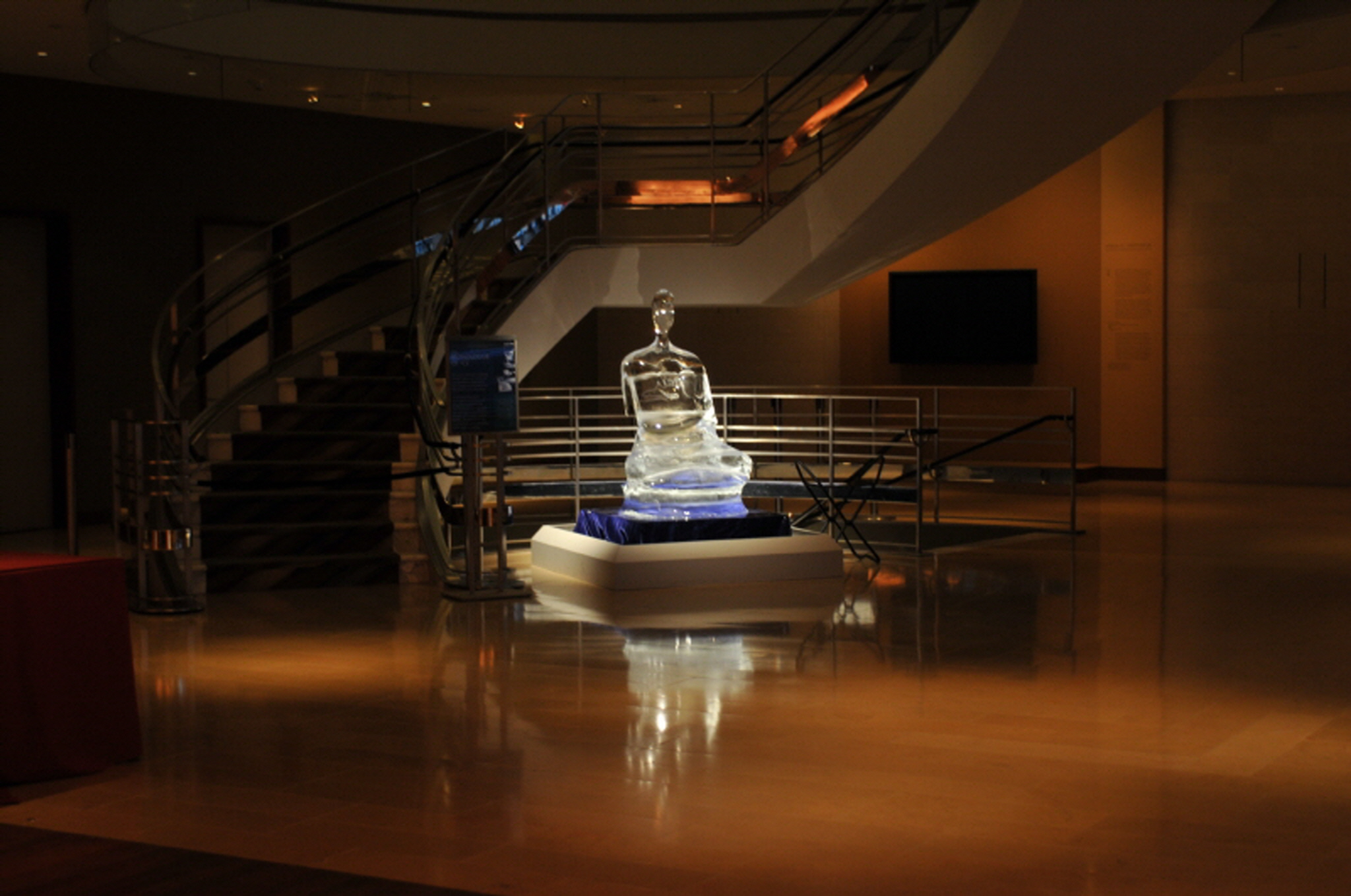
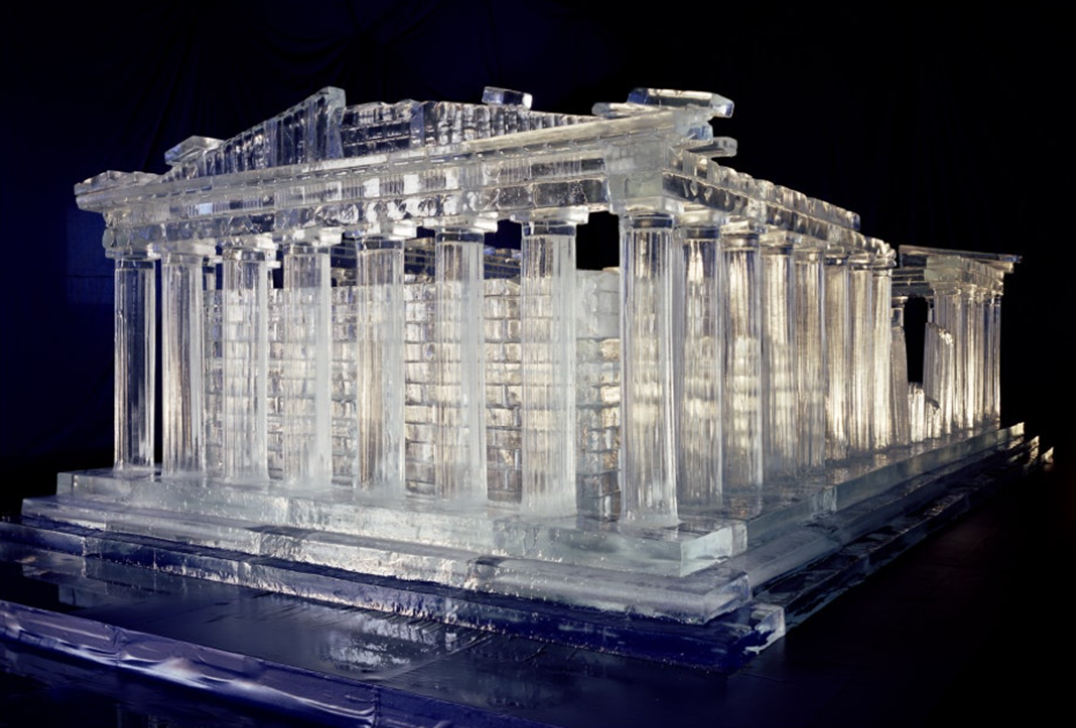
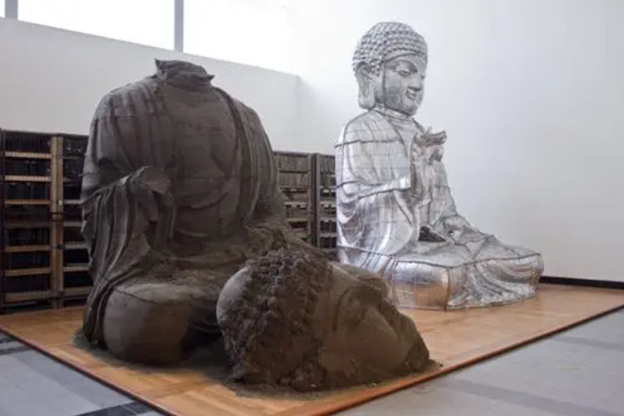
"Monologue of Ice" was, in fact, part of the museum deconstruction
project. For this, the artist carved ice sculptures of some of the most
venerated things in the world, objects revered for their eternal value, and
made an artwork out of the process of them slowly melting away.
Even today, Kim
continues to astonish by showing the disappearance of socialist icon Mao
Zedong, capitalist art symbol Marilyn Monroe, and himself. In socialist and
capitalist societies alike, all that is solid becomes subject to
deconstruction. The more vociferously something argues for its preservation
value, the more determined Atta Kim is to take it apart.