I.
“There
can be no freedom without madness to sever the rope.”
No aphorism better represents the artistic world of Atta Kim than this line
from Nikos Kazantzakis’s novel Zorba the Greek. The
essence of Atta Kim’s practice—seeking to dismantle religious taboos, social
conventions, the limits of the body, and the boundary between the sacred and
the profane—ultimately converges on the question of how human beings can
acquire freedom.
He
pays close attention to how humans, originally born free, undergo processes of
socialization as they live their lives, and how they gradually adapt to society
through collective living. What is paradoxical, however, is the manner in which
he expresses this concern. In conclusion, his work focuses on the force of
resistance positioned at the antipode of conformity. He appears to possess a
deep awareness that the freedom humans are compelled to relinquish as they
assimilate into society, and the social oppression and control that intensify
in proportion to that relinquishment, together constitute the very shackles
that bind human beings.
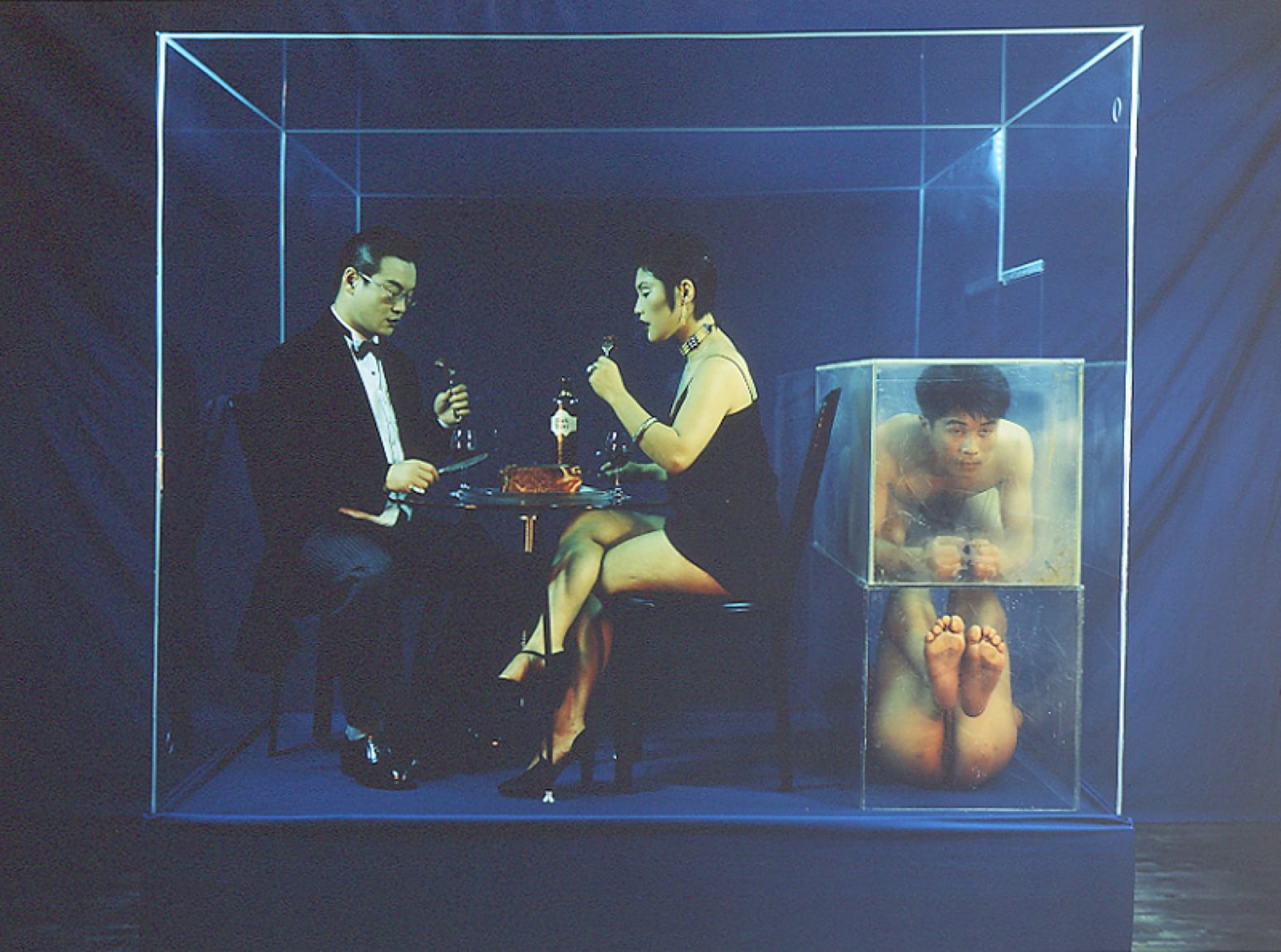
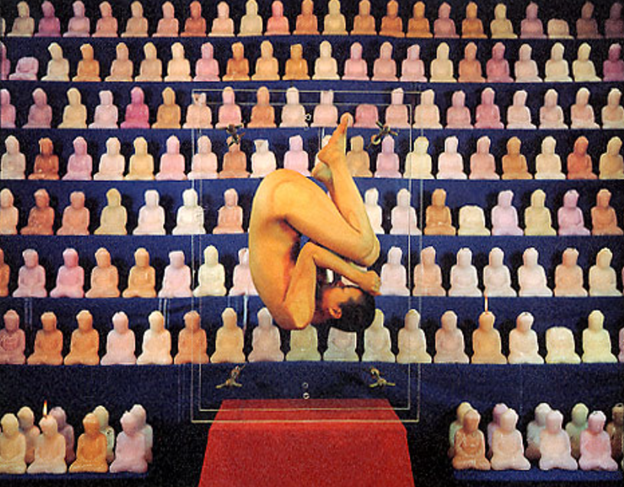
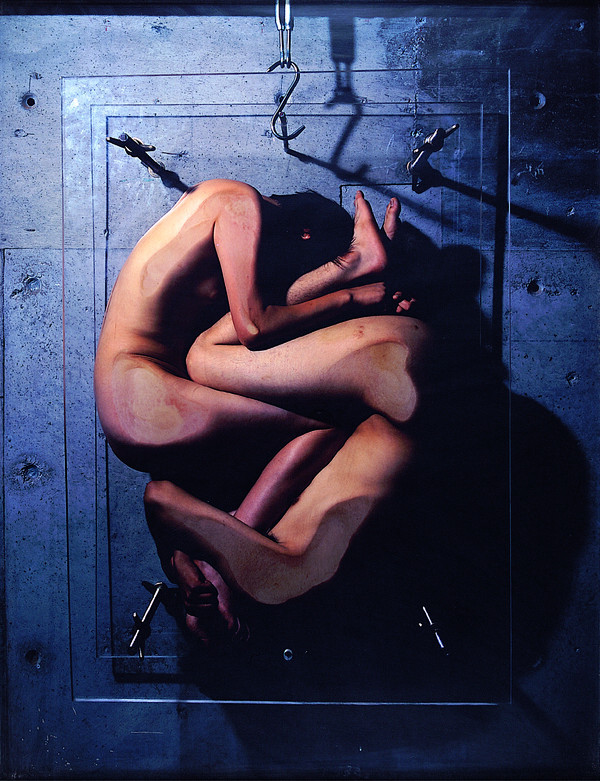
Might
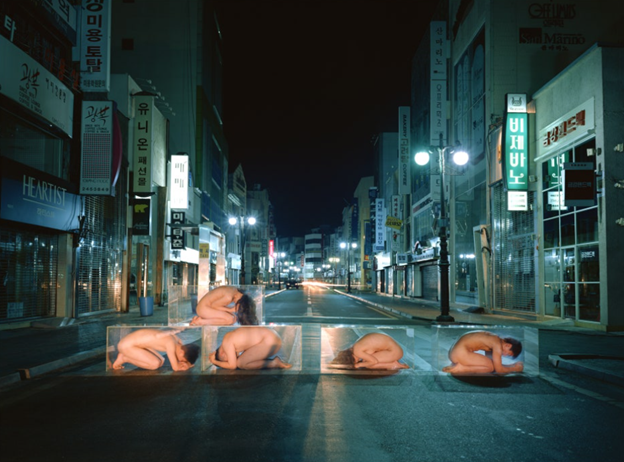
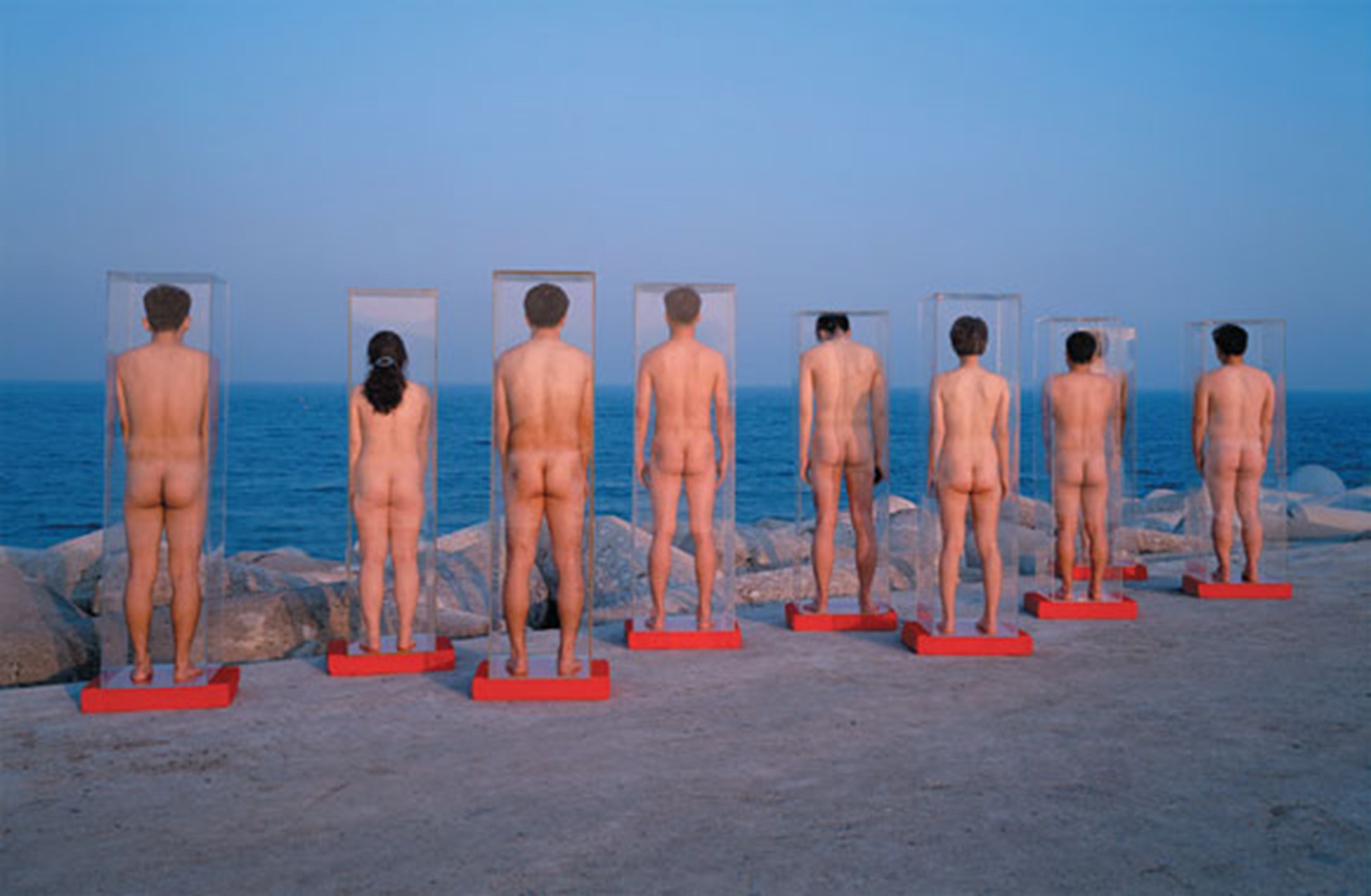
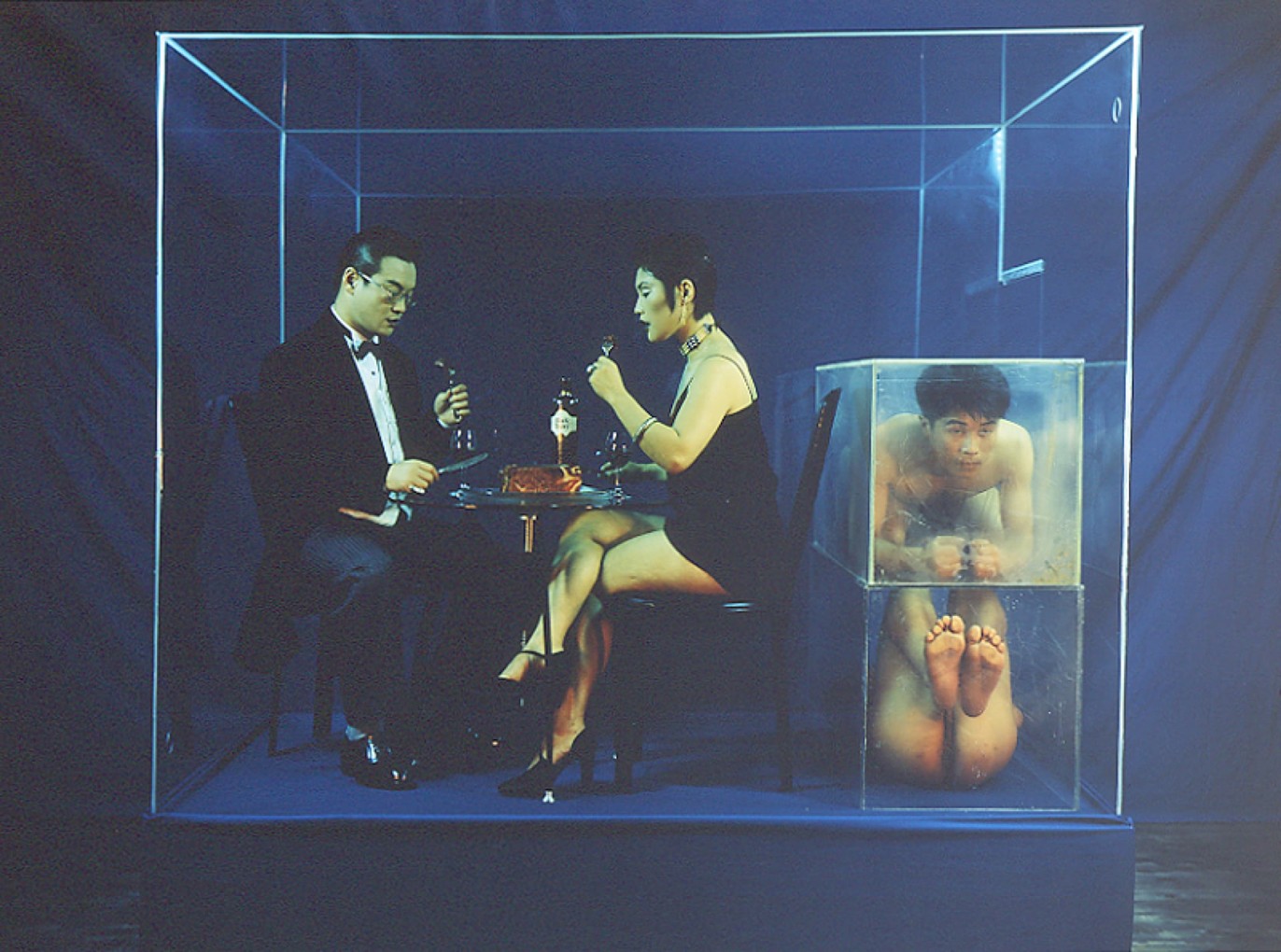
not the acrylic box that he frequently employs be the symbol of such
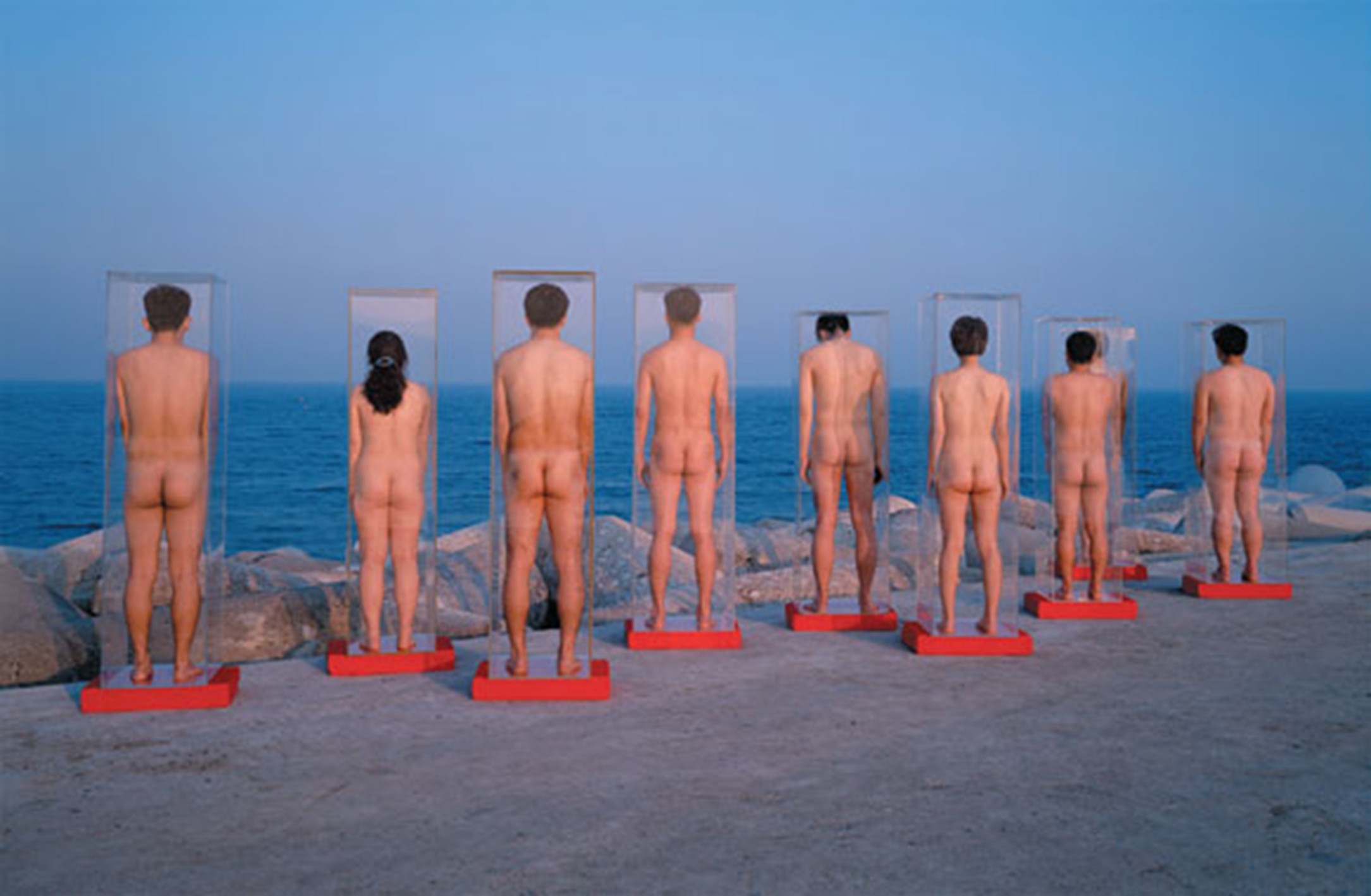
oppression? This interpretation becomes self-evident when one notes that
'Museum Project'(1995–present), represented by acrylic boxes, appears after
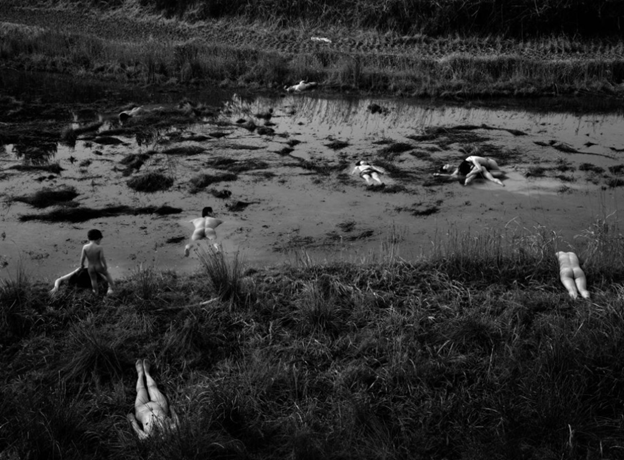
'Deconstruction'(1992–1995), in which nude human bodies were laid out in
nature. If 'Deconstruction' can be understood as an attempt to return humans to
the bosom of nature, then 'Museum Project' is a kind of reversible landscape
that reduces human beings to a symbolic system of oppression.
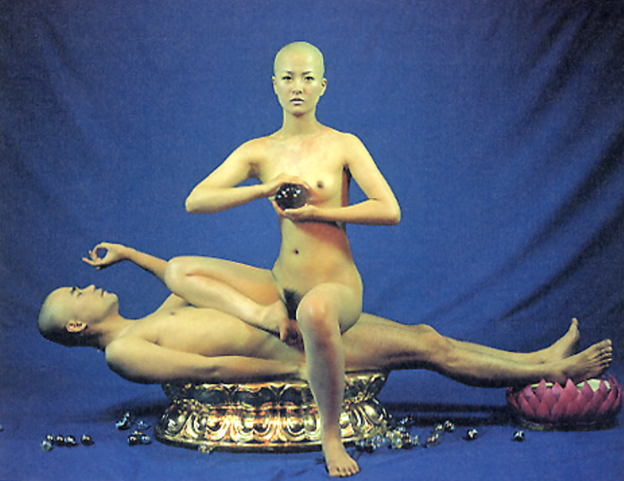
This
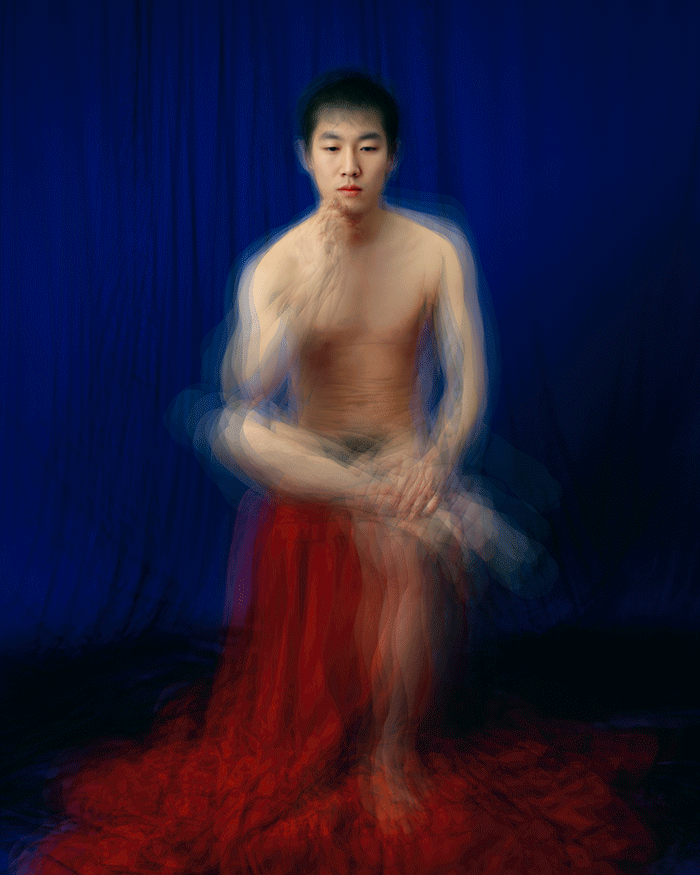
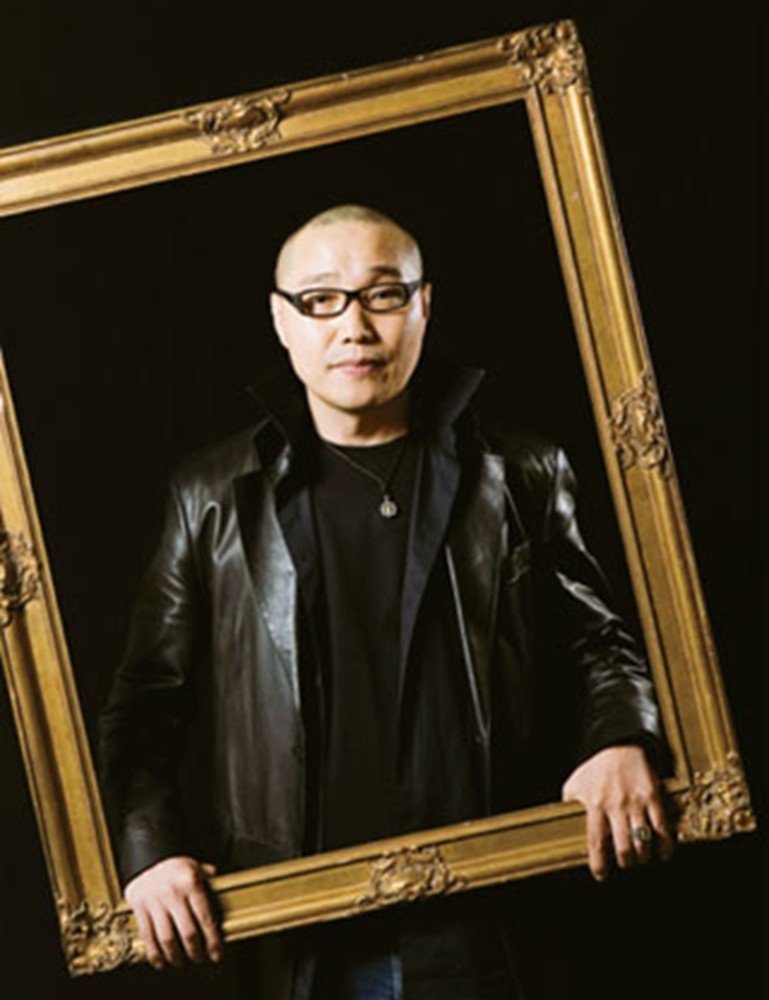
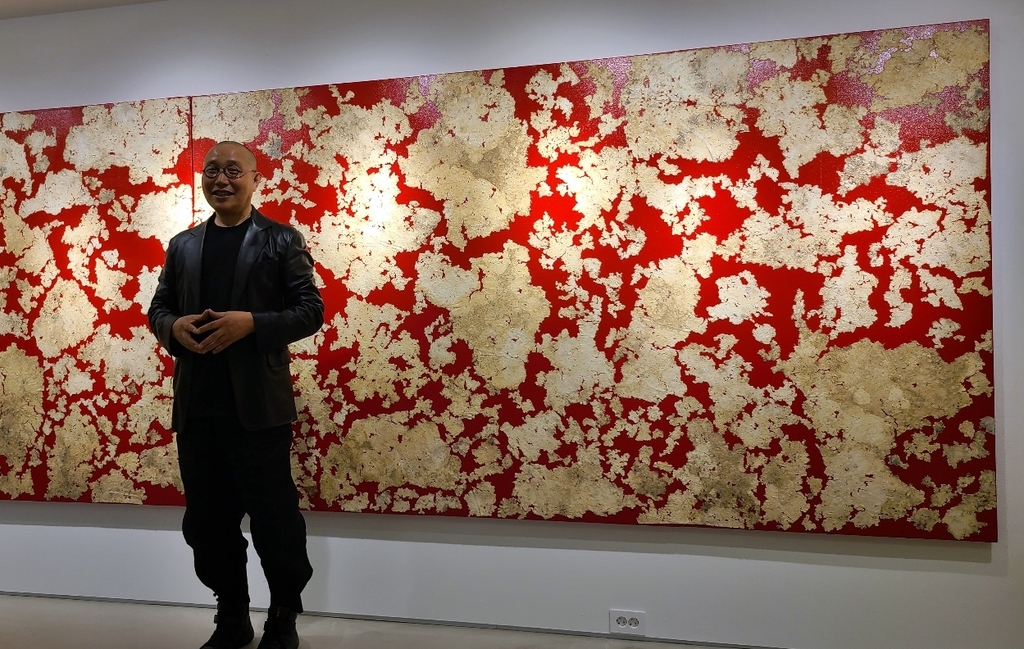
essay was written to illuminate the artistic world of Atta Kim, who has
consistently pursued work centered on humanity and nature since the mid-1980s.
When looking back over his life, what stands out most clearly is his personal
history. In particular, how someone who majored in mechanical engineering
during his university years came to enter the art world, and how he became
captivated by photography, remains one of my central interests. Many of my
questions were resolved through a long-standing acquaintance with him, and
ultimately became the motivation for writing this text. In addition, his
extraordinary life trajectory, his passion for art, and the distinctive
charisma evident throughout his working process all attest to the innate
artistic endowment found in an artist of considerable magnitude.
II.
As
is often the case with artists of exceptional talent, Atta Kim, too, has lived
a life entangled with spiritual wandering and exile. These factors form a
substratum within his work. His recollections—such as being more absorbed in
photography than in his major of mechanical engineering during his university
years, or frequently lingering around philosophy lecture halls—suggest that
even at that time, the seed of an artistic passion had already begun to sprout
within him.
During
his university years, while living a life detached from his major, Atta Kim
developed a deep interest in literature, philosophy, psychology, art,
photography, and travel, thereby cultivating a broad foundation in the
humanities. Having entered university slightly later than his peers, he also
had the opportunity, during the period from the late 1970s to the early 1980s,
to travel extensively throughout Korea and encounter a wide variety of people
and objects. The experiences of spiritual wandering and physical travel during
this period—centered on photography and poetry—became the single most
significant factor in maturing his artistic world.
Atta
Kim’s relentless interest in human beings and his artistic efforts to grasp the
essence of humanity are embedded throughout works that take humans as their
subject. For him, humanity is an inexhaustible source of inspiration and a
central theme. What is a human being? What is the true nature of a being that
possesses the Janus-faced dualities of good and evil, darkness and light,
strength and weakness, nobility and baseness, truth and falsehood? What is the
true countenance of a being who, endowed with seven instincts—joy, anger,
sorrow, pleasure, love, hatred, and desire—repeatedly walks a perilous
tightrope between reason and emotion? Atta Kim sought to pose this difficult
question through his photographic practice.
The
series 'Mental Patients'(1985–1986) is the outcome of an intensive inquiry into
human essence. Over approximately one year, at a psychiatric hospital located
in Gyeongsangnam-do, he observed and photographed more than 350 psychiatric
patients in a documentary manner. These photographs possess value not only as
art photography but also as a form of sociological or even clinical material.
Through close interaction with the patients, Atta Kim began to question the
criteria used to divide normality and abnormality. His interest in human
behavior—where reason and madness coexist, and where everyday life borders on
deviation—was realized through observation of psychiatric patients.
The
scenes of the psychiatric ward seen through the camera’s viewfinder are nothing
other than institutional products created by rational subjects who take
pleasure in endlessly fragmenting and demarcating the world. To borrow Michel
Foucault’s words, is not the prison (the psychiatric hospital) precisely the
product of the symbiotic relationship between knowledge and power that unfolds
around madness and confinement?
Atta Kim encountered countless individuals
labeled as mad within the psychiatric hospital. His close observation of
normality and abnormality, and of the everyday and the deviant, later led to
attempts in his work to dismantle the boundary between self and other. More
recently, by renaming himself Atta (我他), he further solidified his intention to dismantle fixed human
preconceptions regarding objects and phenomena by collapsing the opposition
between self and other.
III.
The
existential awareness that the other exists because I exist runs through all of
Atta Kim’s work as its fundamental spirit. The seemingly self-evident
truth—that the existence of the other is meaningful because I exist here and
now (hic et nunc)—appears as an unshakable principle. Frequently declaring, “I
am an existentialist,” he understands the here and now as a measure of
world-perception composed of warp and weft, constantly moving through time and
space.
To
borrow the words of Karl Jaspers, he is someone who opens his heart to others
encountered along the path of life. He does not acknowledge dogmatic truths and
is always ready to learn with an open mind. His spiritual wandering is marked
by a confirmation of the absence of ultimate truth. Again citing Jaspers, “The
world is a paradox, and human cognition is a collection of fragments.”
Atta
Kim’s work is structured through dialectical tension achieved by negation. The
negation of the existence of things, and the negation of the presence of states
of affairs, form the foundation of his practice. He photographs humans yet
negates humanity, and through this negation moves on to other things. Yet those
things are negated again, and that negation advances toward a third other. It
is akin to slicing an onion again and again: the onion before one’s eyes
disappears, yet the concept of the onion remains.
In
this sense, the fact that he employs photography—a medium commonly known as the
most accurate means of representing objects—is itself a paradox. However, he
does not believe that “photography speaks the truth or faithfully represents
truth” (Atta Kim, work notes). Rather, he believes that photography “can be
more honest about what is opposite to truth disguised as truth.” He
photographed psychiatric patients over a long period. Was that truth? Or was it
the photographing of a preconceived notion? Was it not merely what Roland
Barthes calls studium?
This
methodological skepticism leads him back to his father, from his father to
holders of intangible cultural heritage, and from them to grass, trees, stones,
and other elements on the ground.
His
passion for purity often entails infinite endurance. The interest in the other
that developed as an extension of his spiritual wandering during his university
years bore fruit in the series 'Mental Patients'(1985–1986) and
'Father'(1986–1990), followed by the series 'Human Cultural Assets'(1989–1990).
Over the course of approximately two years, he photographed more than 150
individuals designated as holders of Important Intangible Cultural Properties,
including Ha Bo-gyeong, the bearer of the Miryang Baekjung Nori; Lee Dong-an,
master of mask dance; Monk Manbong, a dancheong artisan; Kim Dae-rye,
practitioner of the Jindo Ssikkim-gut; Kim Geum-hwa, master shaman of the West
Coast Baeyeonsingut; and Kim Seok-chul, bearer of the East Coast Byeolsingut for
abundant fishing.
Atta
Kim recalls that the period during which he met these human cultural assets was
“a time of intense learning.” Seen across his entire body of work, the 'Human
Cultural Assets' series marks the conclusion of his conceptually driven phase.
Moving beyond the cultural taste evident in 'Mental Patients' (in the sense of
Barthes’s studium), the concerns with ethnic identity glimpsed in 'Father' are
more densely assimilated in 'Human Cultural Assets'.
Although
these works, which present frontal portraits of their subjects, appear too
ordinary to claim novelty in terms of photographic aesthetics, they
nevertheless occupy a significant place in his oeuvre. This is because the
diverse experiments that unfold in earnest after 'Deconstruction'(1992–1995)
are grounded in the understanding of the world and humanity that he acquired
during this period.
In fact, the five to six years spanning from 'Mental
Patients' to 'Human Cultural Assets' were a pure period of open-hearted
practice, extending from his earlier apprenticeship. During this time, with the
open sensibility characteristic of a spiritual wanderer, he was able to receive
things without prejudice and broaden his vision through the negation of
ultimate truth.
IV.
Between
'Human Cultural Assets' and 'Deconstruction' lies the series
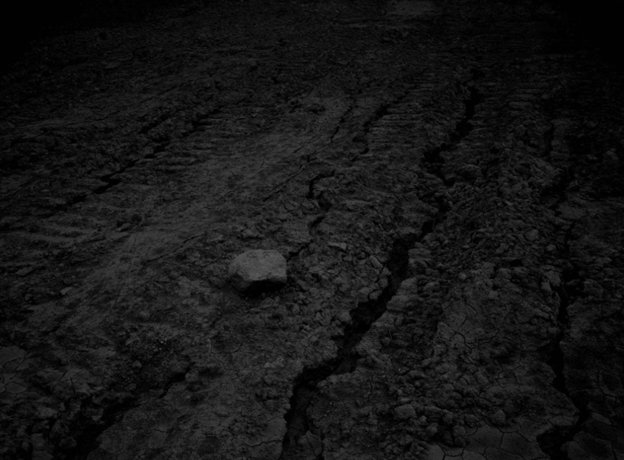
'Being-in-the-World'(1990–1992). This marks a period in which his focus shifts
from humans to things. Following a severe spiritual ordeal around the time of
'Father', he turned his gaze from humanity to nature, attempting communion with
it. He carried out this work during the hours of 3 to 5 a.m., the so-called
Tiger Hour (寅時). This time is known as
the hour when the Buddha attained enlightenment, and is considered the clearest
and most pristine moment of the day, when a new day is born.
Relying
solely on faint starlight and moonlight, he maintained exposure times of one to
two hours. Through this process, he gained profound experiences of time and
space: that time and space are composed of countless fragments of the here and
now; that objects constantly don new appearances in between; that through this,
objects approach us with renewed sensations; and that the world cannot be
manipulated but remains open toward the future.
The
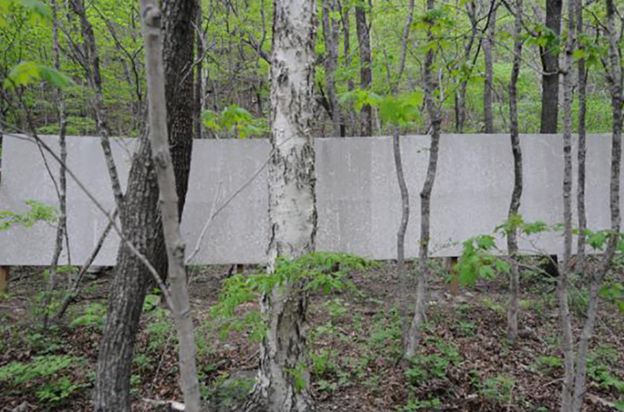
black-and-white photographs comprising 'Being-in-the-World' depict pebbles,
tree roots, and grass faintly revealing themselves in the dim light of dawn. In
Heidegger’s fundamental ontology— from which the title 'Being-in-the-World' is
drawn—Dasein is not an isolated being but one that interacts with other beings
in the world, existing as a possibility endowed with intentionality.
Atta
Kim’s transition from understanding humans to understanding things, and from
there toward the integration of humanity and nature, is, as previously
mentioned, a confirmation of dialectical negation. In other words,
understanding the world inevitably prepared the passage toward
'Deconstruction'—that is, toward an open horizon of the future.
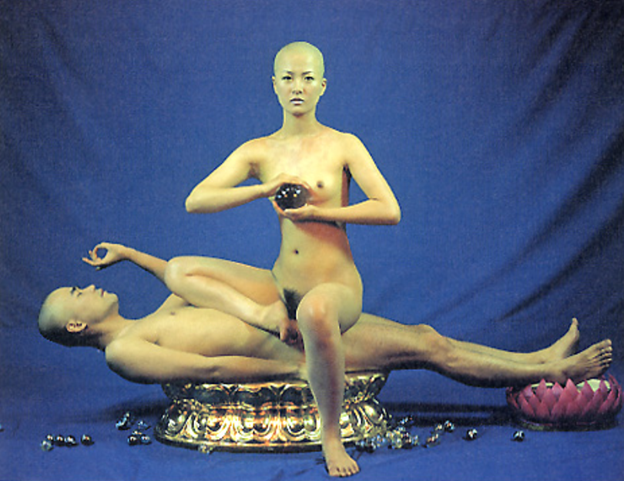
'Deconstruction'(1992–1995)
presents a horizon in which nature and humanity are integrated. In his words,
“Deconstruction is the act of sowing humans—beings composed of conceptual
sediment—into the fields of nature.” Within his entire body of work, the significance
of 'Deconstruction' lies in the fact that this is where the technique of
defamiliarization first appears. The shock of this series stems above all from
the nude bodies strewn across nature.
Naked
men and women lying along winding asphalt roads descending slopes confront
viewers with a jarring image due to its sheer unreality. These scenes, staged
with roads blocked at both ends, constitute performances. In fields, barren
mountains, wetlands, abandoned docks littered with disused ships—each setting
hosts a different staging of 'Deconstruction', and behind these photographic
records lie countless anecdotes.
At
this point, Atta Kim reveals his artistic capacity as a group leader. He
transforms into a director who commands staff and male and female participants
involved in the shoots.
“Deconstruction
is true freedom,” he says. He also asserts that “progress is destroyed by
progress.” In saying this, he appears to have modern technological civilization
in mind. “Progress without reflection will ultimately be destroyed by progress
itself, and my work begins from reflection that restrains the centrifugal force
of such progress,” he adds. Thus, he views human liberation from
technology-centered progress as originating in the moment when true freedom is
attained.
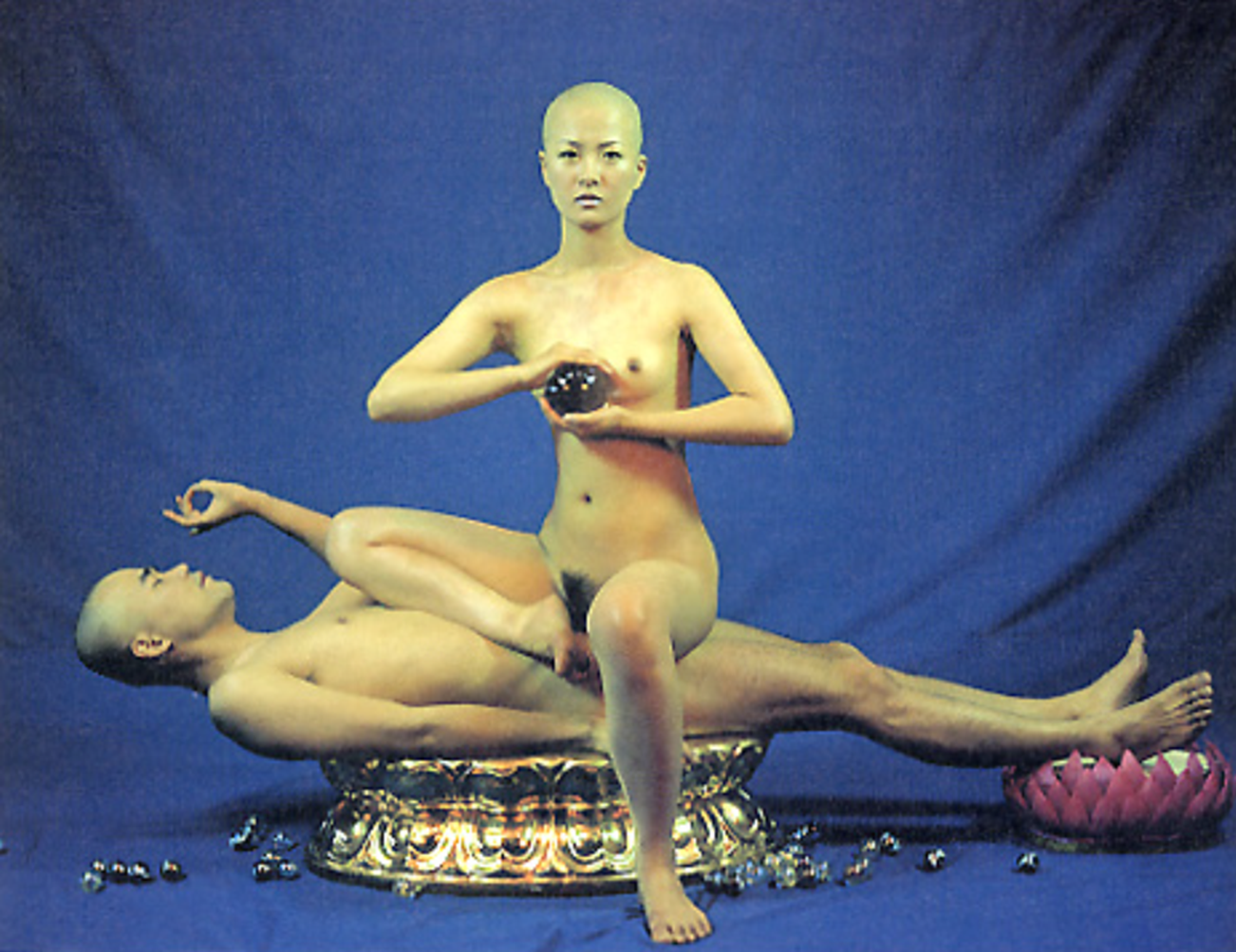
While
this perspective may appear somewhat naïve, the bold strategy of juxtaposing
naked human groups against nature becomes the foundation for 'Museum Project'
and 'Nirvana Series'.