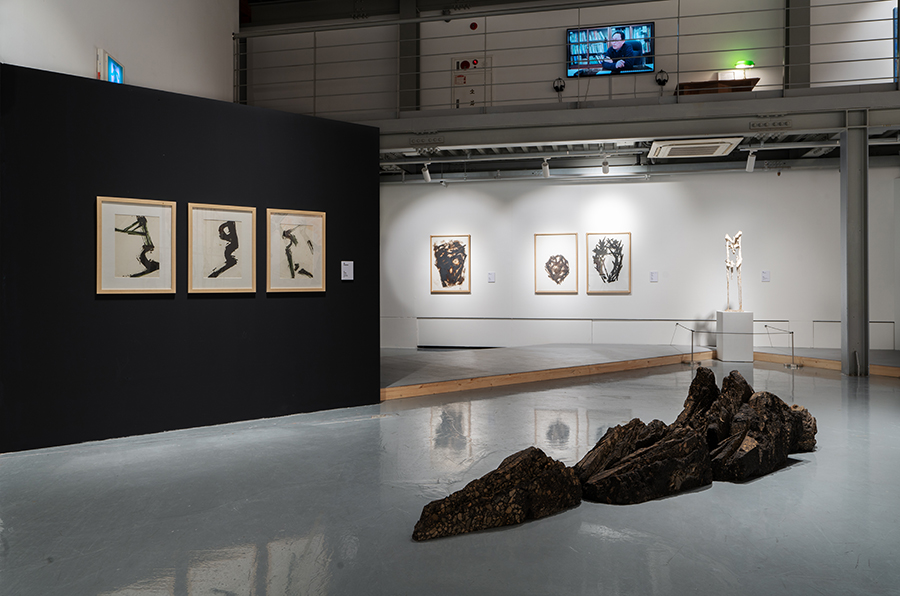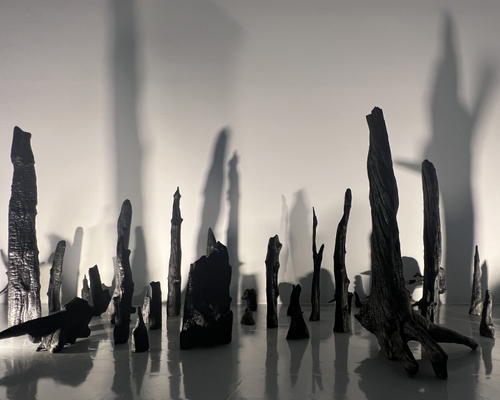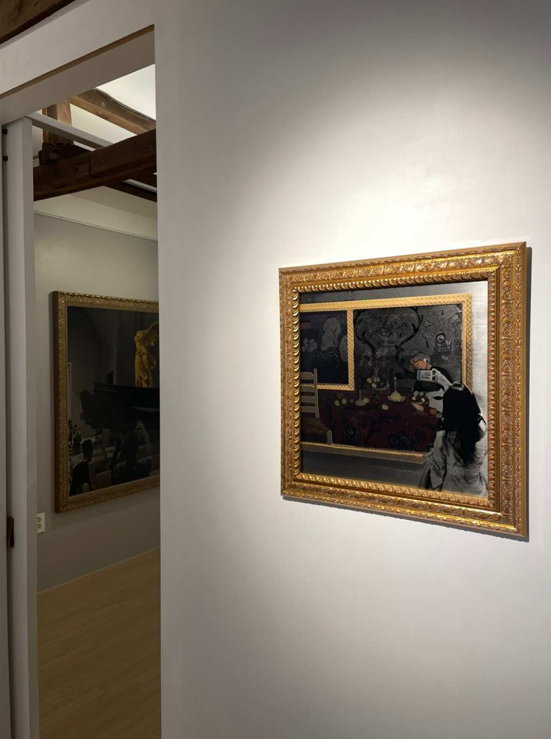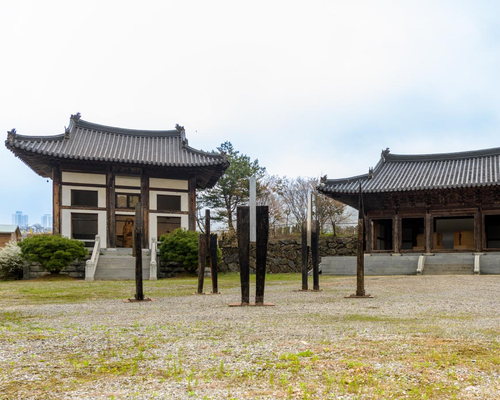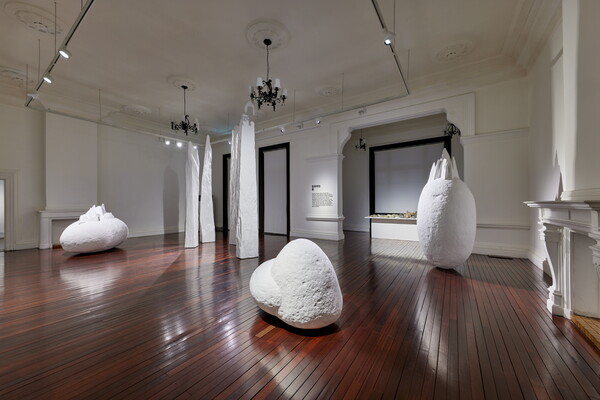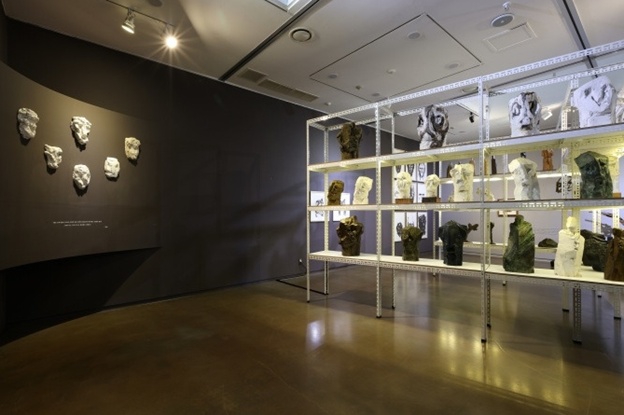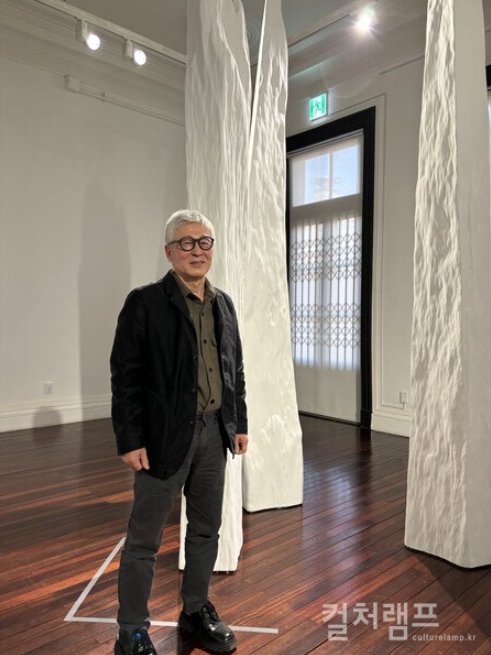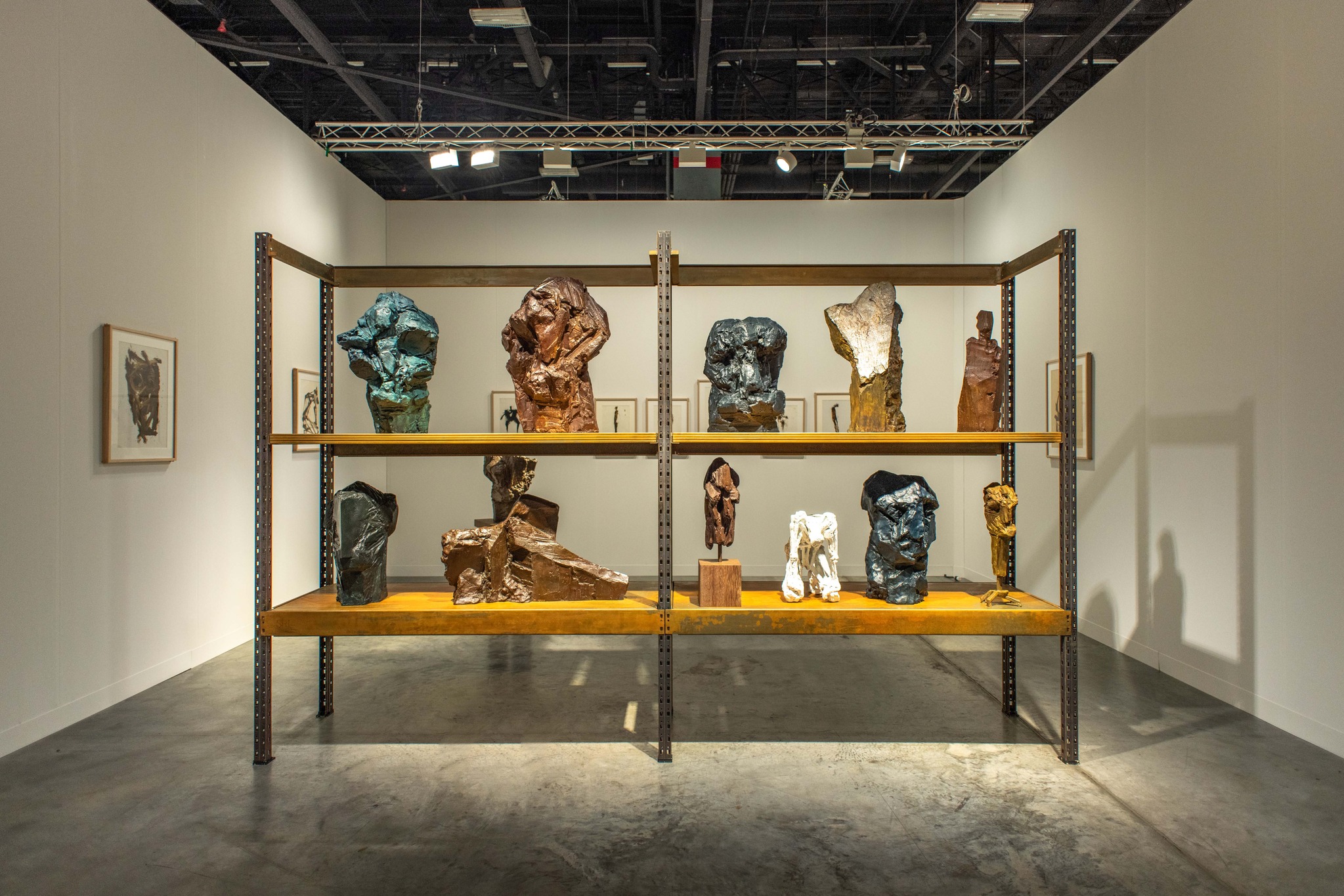


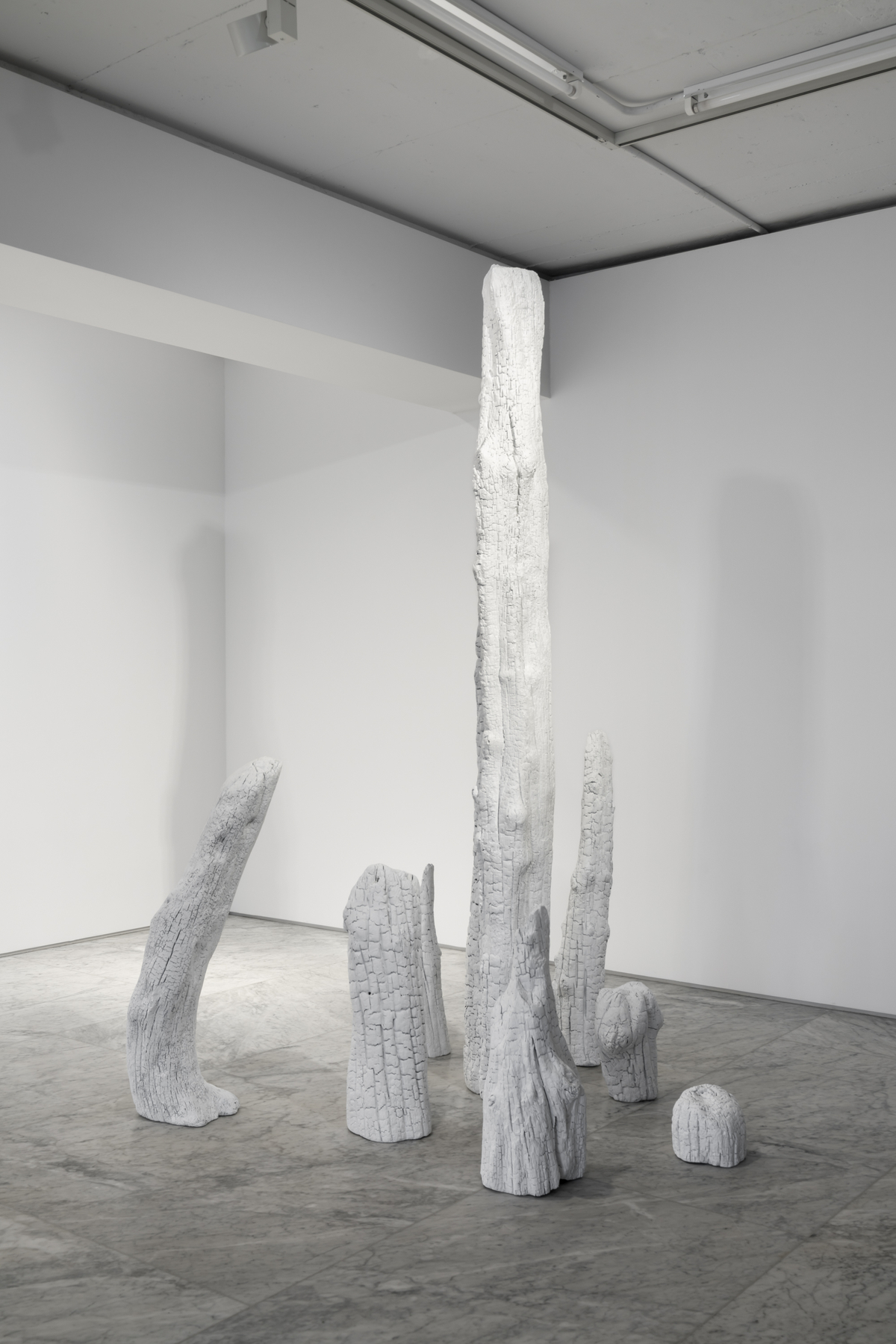
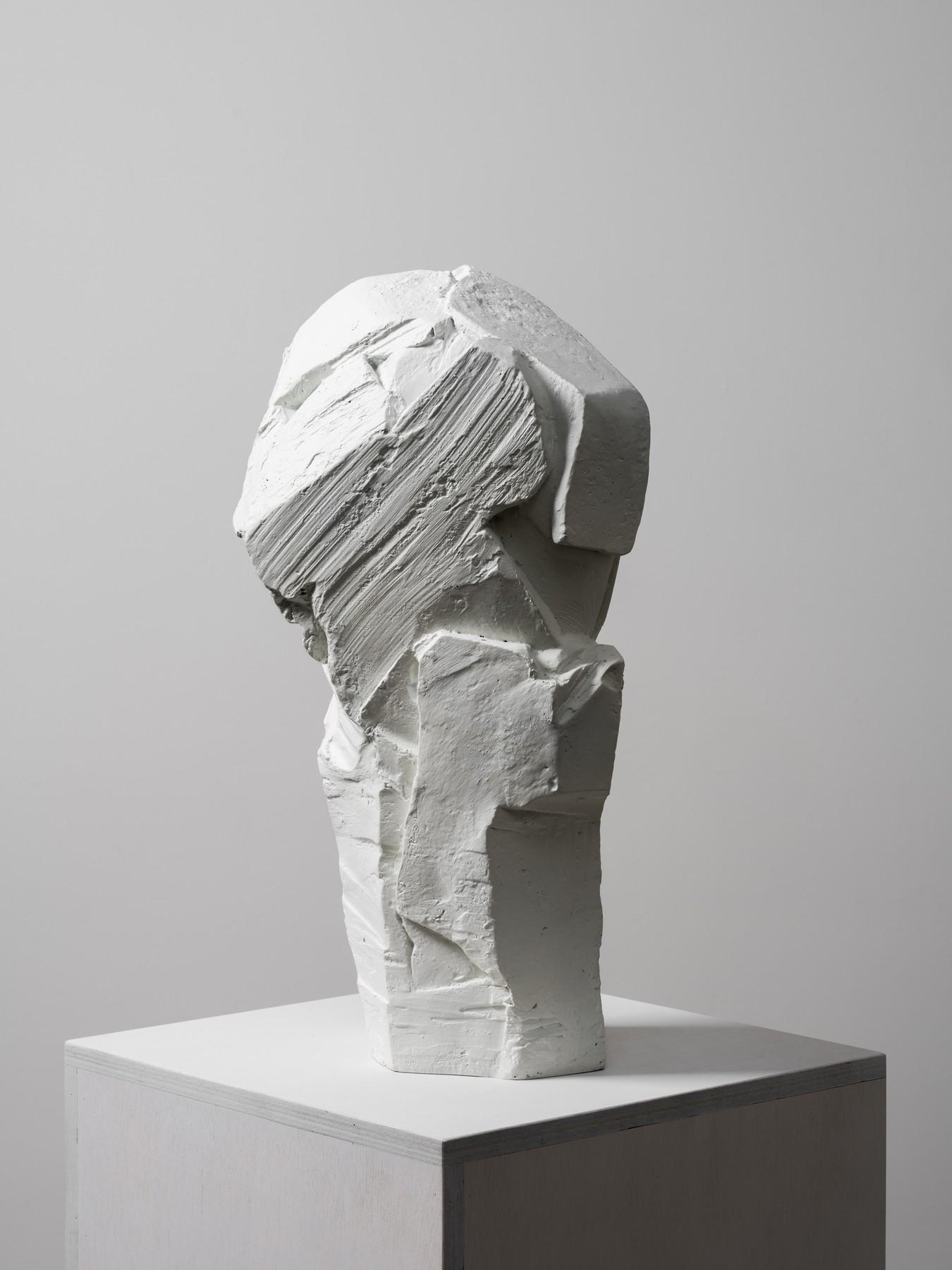
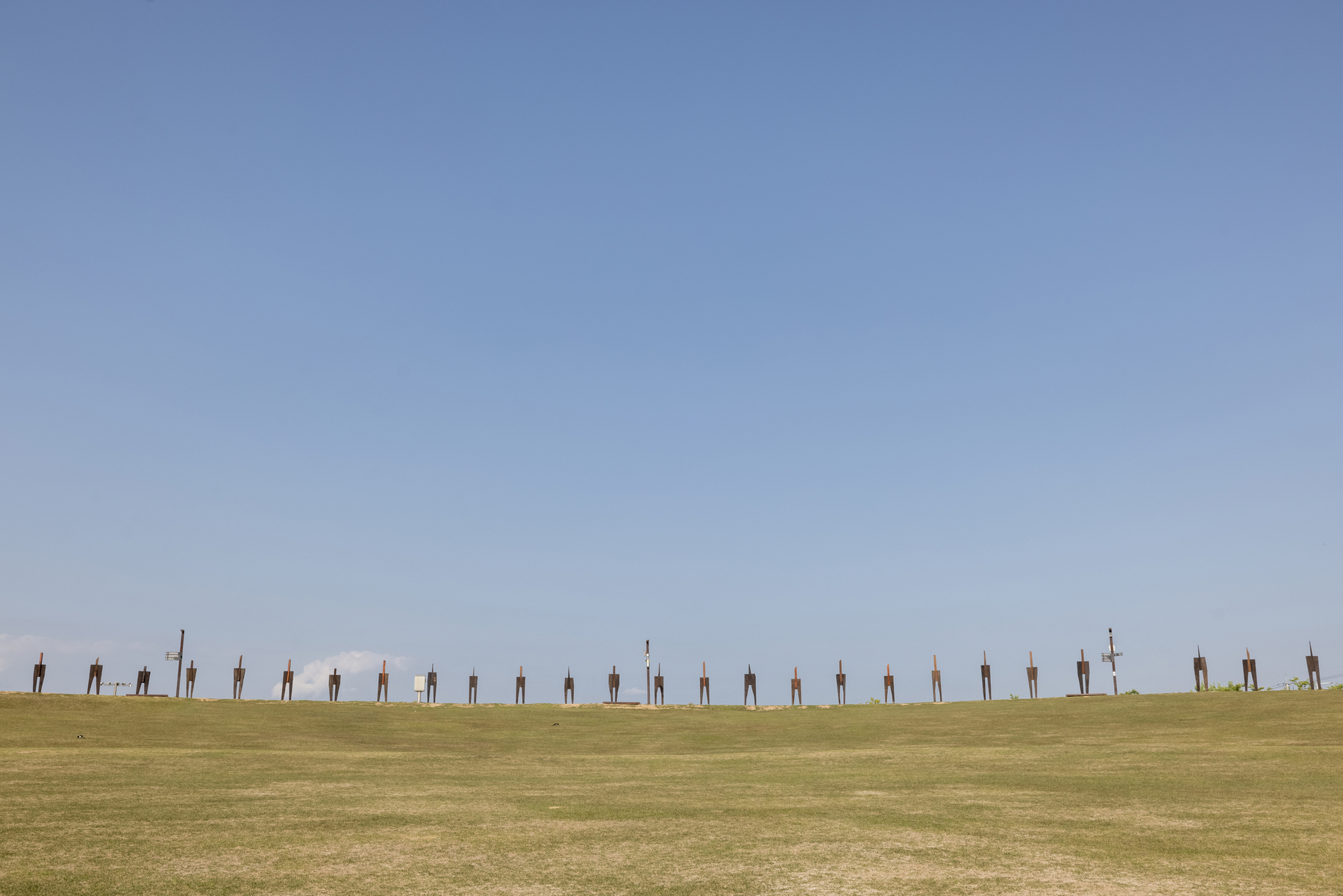
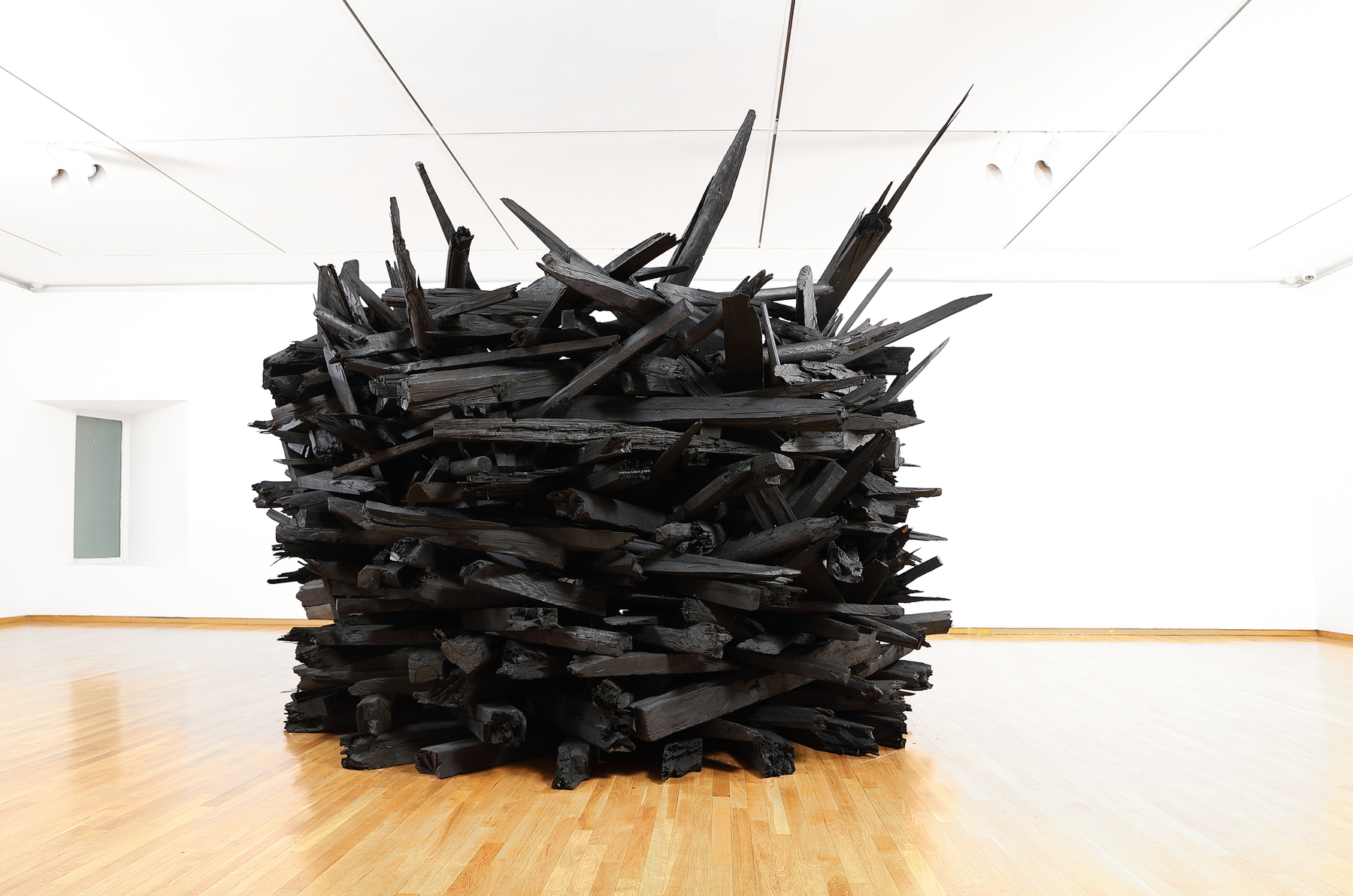
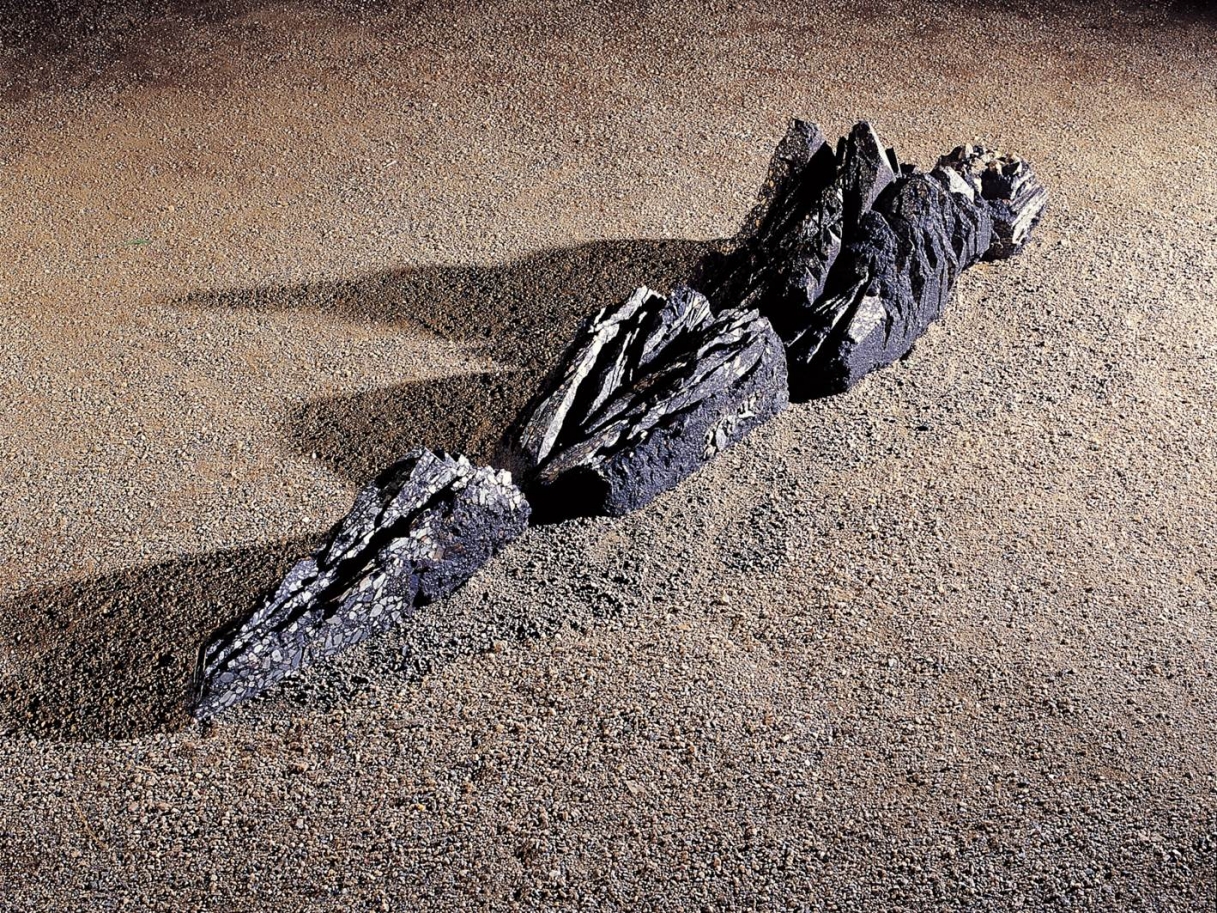
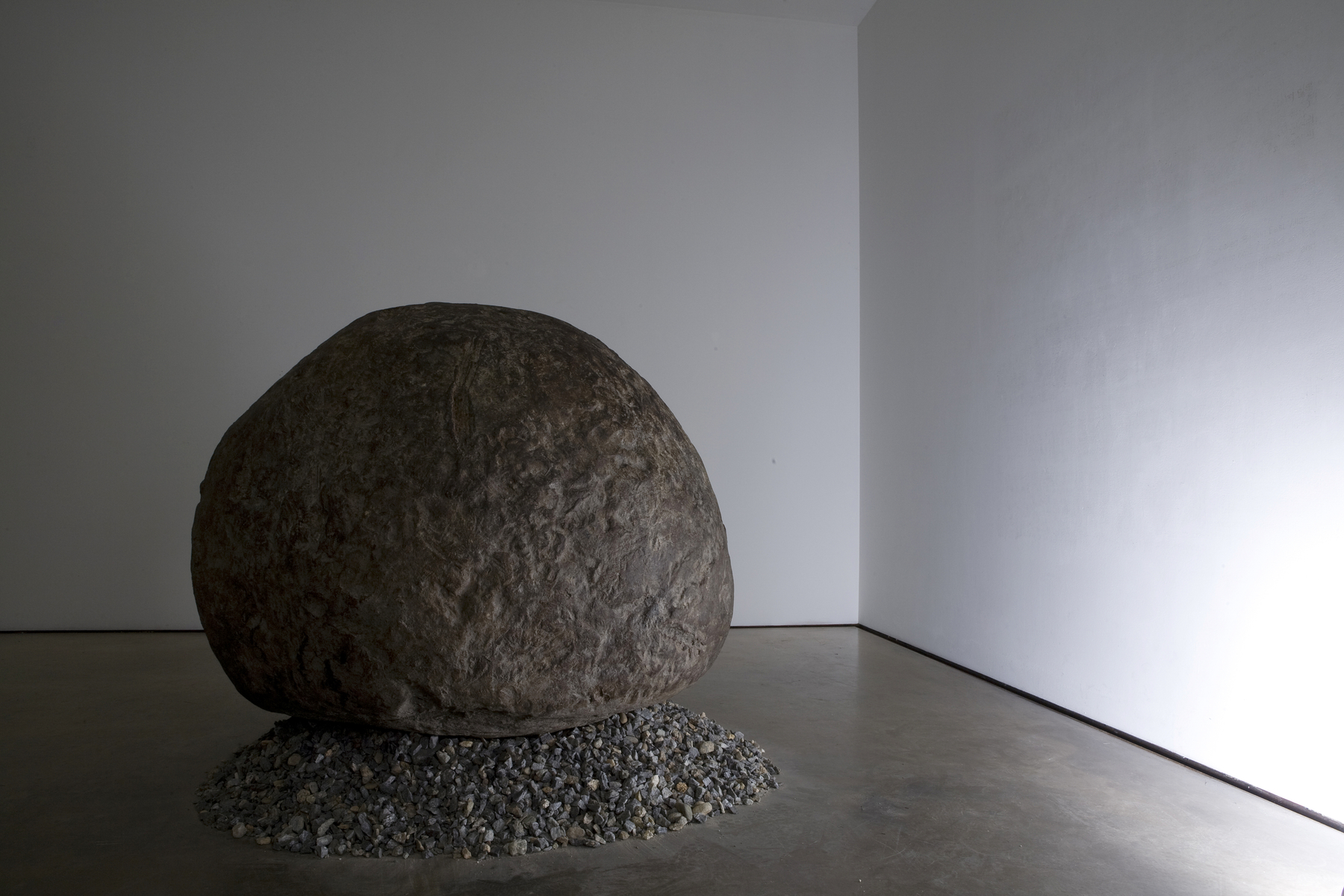
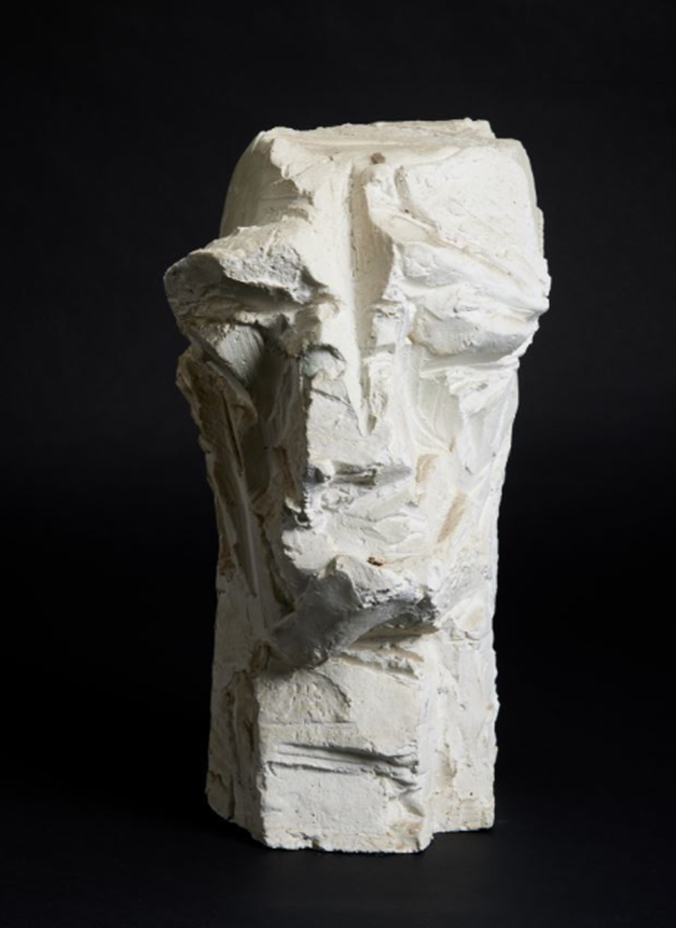
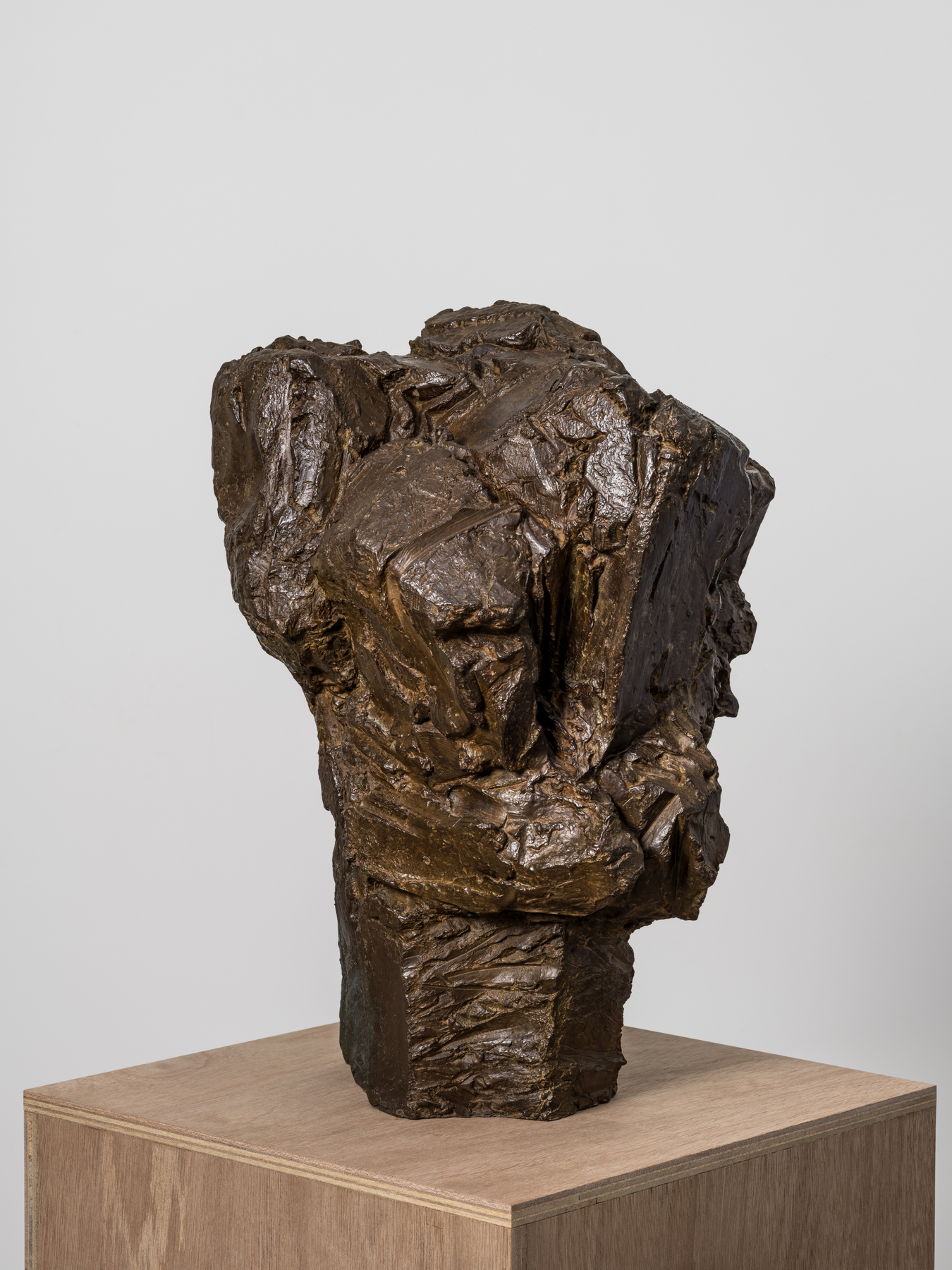
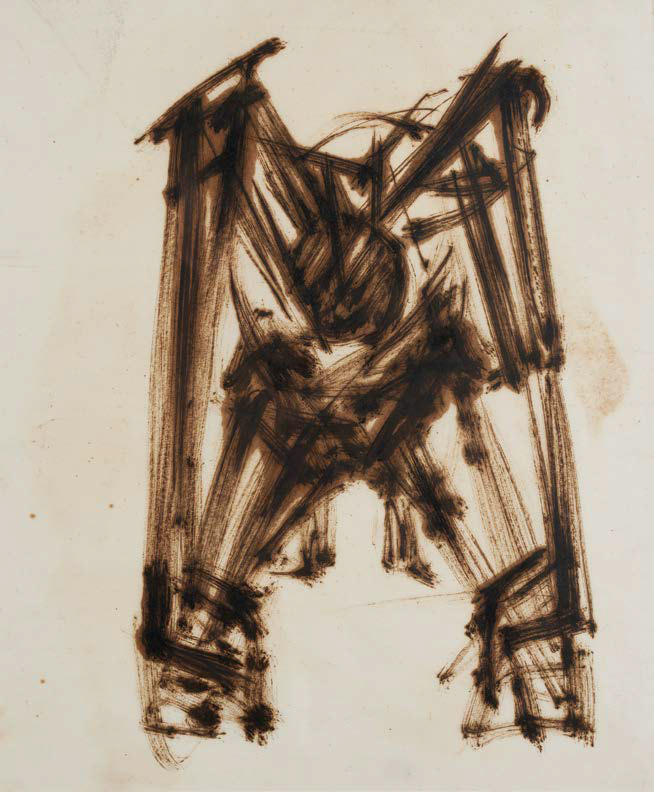
Installation view of 《Wood, Metal, Earth: Three Materials, Three Languages》 © Choijungah Gallery

《Wood, Metal, Earth: Three Materials, Three Languages》 is an exhibition of dialogue that brings together three artists—Chung Hyun, Kim Hongsik, and Seo Hyekyung—who have created works using the natural materials of wood, metal, and earth, alongside three art theorists—Cho Eunjeong, Choi Yeol, and Kim Ina—who have engaged deeply with these practices through critical writing.

Since the Paleolithic era, the earliest form of art—cave paintings—began with everyday and natural materials found in the surrounding environment. This exhibition originated from a conversation asking: What would it be like to hold an exhibition in which artists who work with the most immediate and natural materials around us—wood, metal, and earth—exhibit together with art theorists who write about those materials and practices? Rather than stopping at the installation of artworks alone, the exhibition presents the theorists’ texts—records of thought and reflection—alongside the works themselves, proposing an exhibition format in which artwork and writing, material and language intersect to generate new sensibilities.

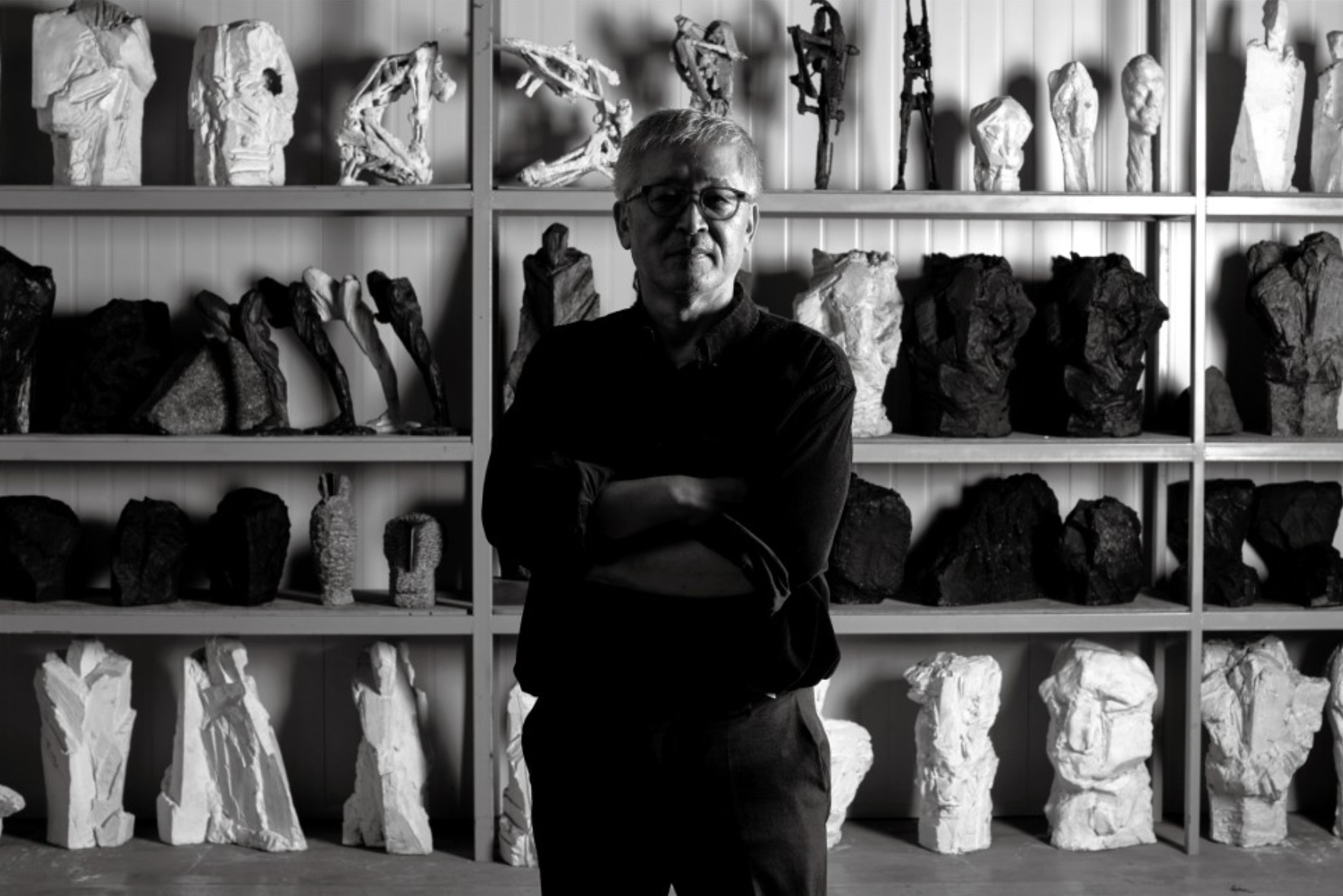
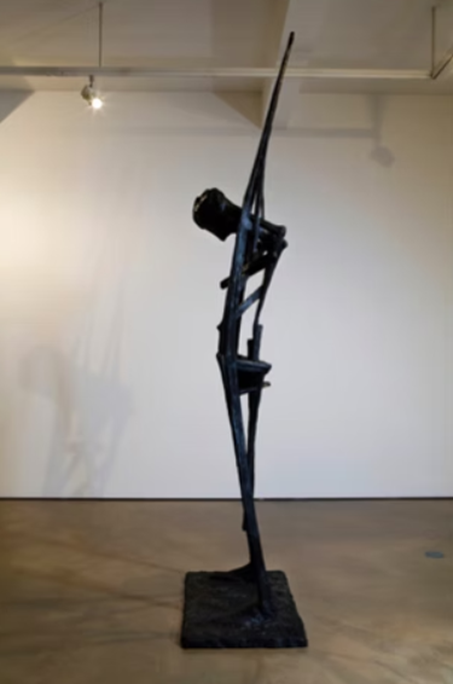
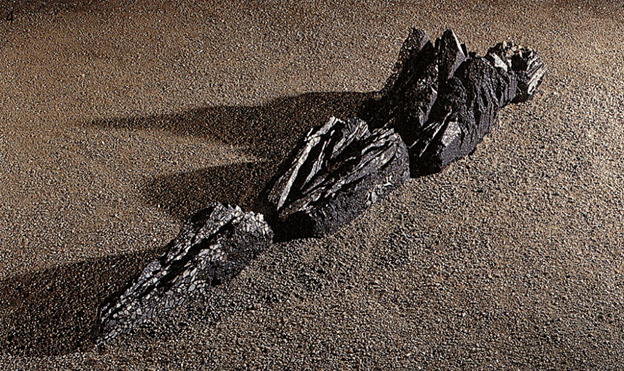
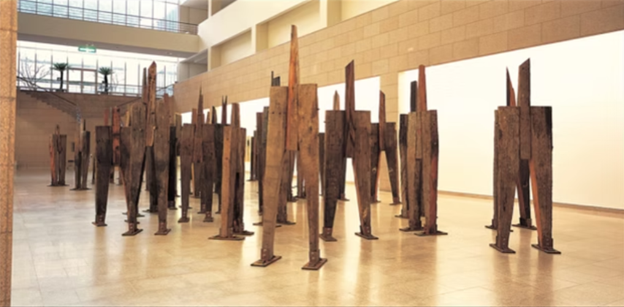
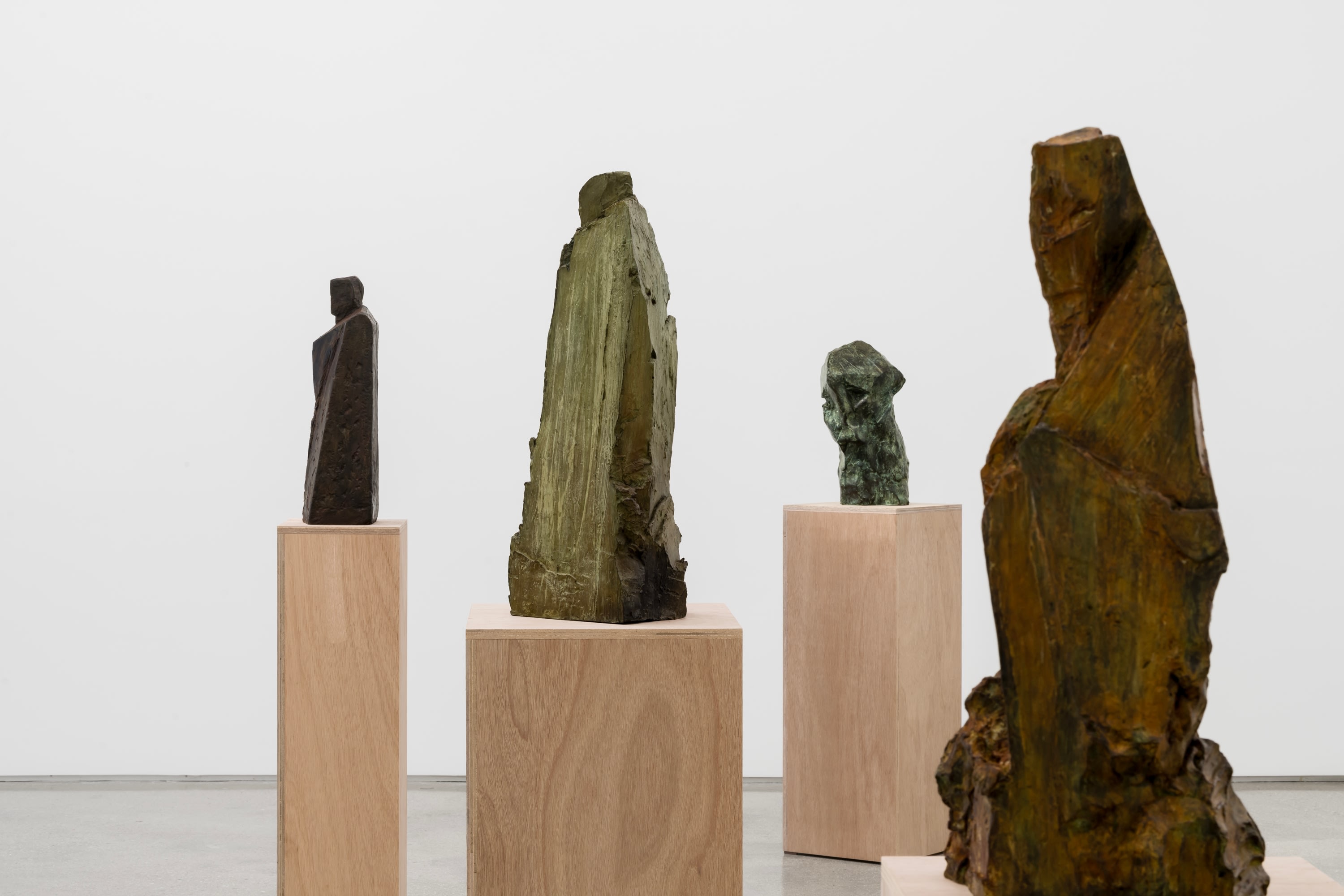
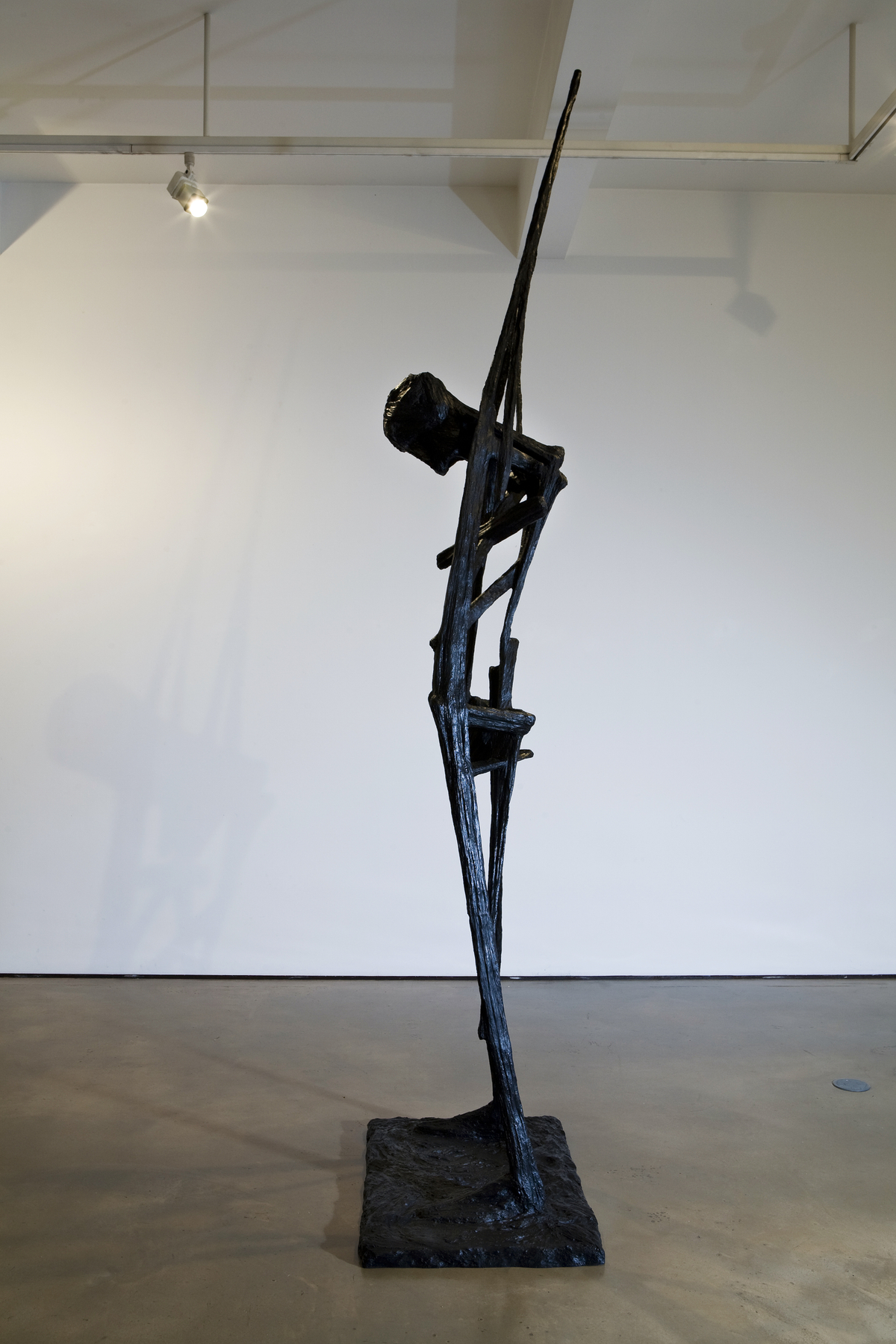
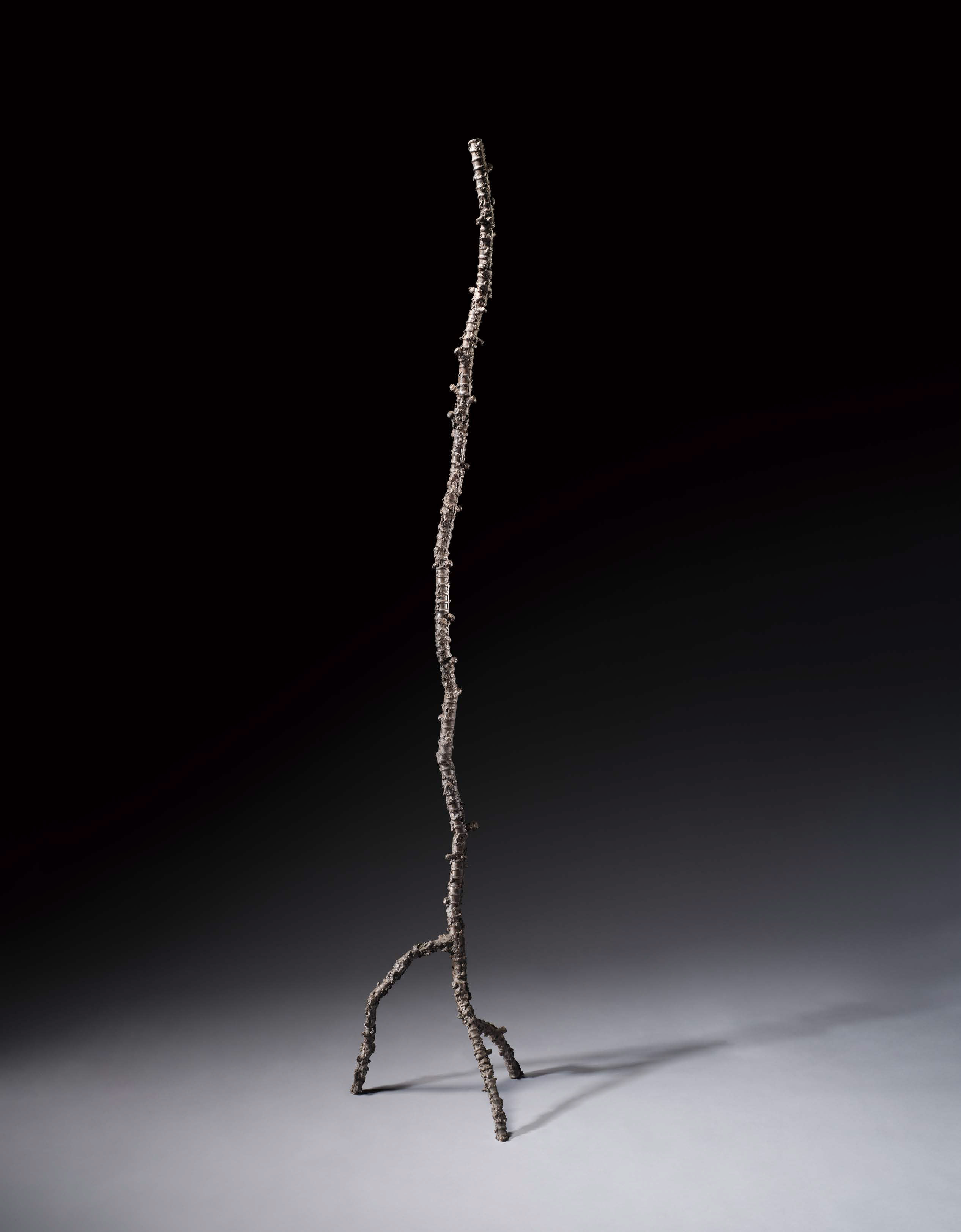
Artist Chung Hyun and art theorist Cho Eunjeong structure their presentation around the theme of “wood.” Chung Hyun is an artist who has long shaped traces of life into sculpture by using discarded wood and metal found in urban environments, such as railroad sleepers, utility poles, and steel rebar. In this exhibition in particular, he works with charred trees collected from wildfire-affected areas, addressing the presence of trees whose lives have come to an end and unfolding a profound meditation on nature and humanity, life and death, through sculptural language.

Trees burned and reduced to charcoal glisten blackly, approaching the viewer with a materiality akin to that of metal. The artist refers to this process as “cremation (火葬),” sublimating it into an act of giving a final preparation to trees that have completed their lives. Chung Hyun’s works function as objects that compress the cycle of birth, aging, illness, and death, confronting viewers with life and death and the circulation of existence.

At the moment when a once-living tree transforms into oxidized black charcoal and reveals its luster, we are inevitably humbled before nature. In this way, Chung Hyun’s practice stands as an act of reverence toward all living beings, and as the result of a sculptural reflection that asks fundamental questions about the essence of life itself.


Installation view of 《Wood, Metal, Earth: Three Materials, Three Languages》 © Choijungah Gallery

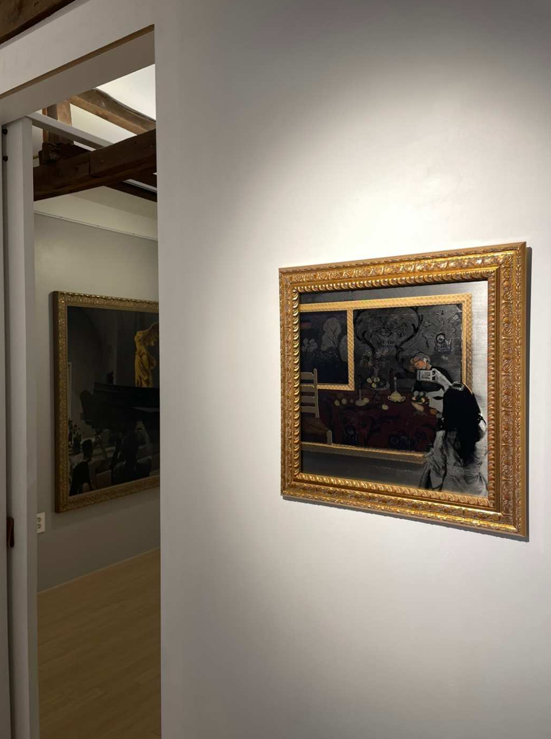
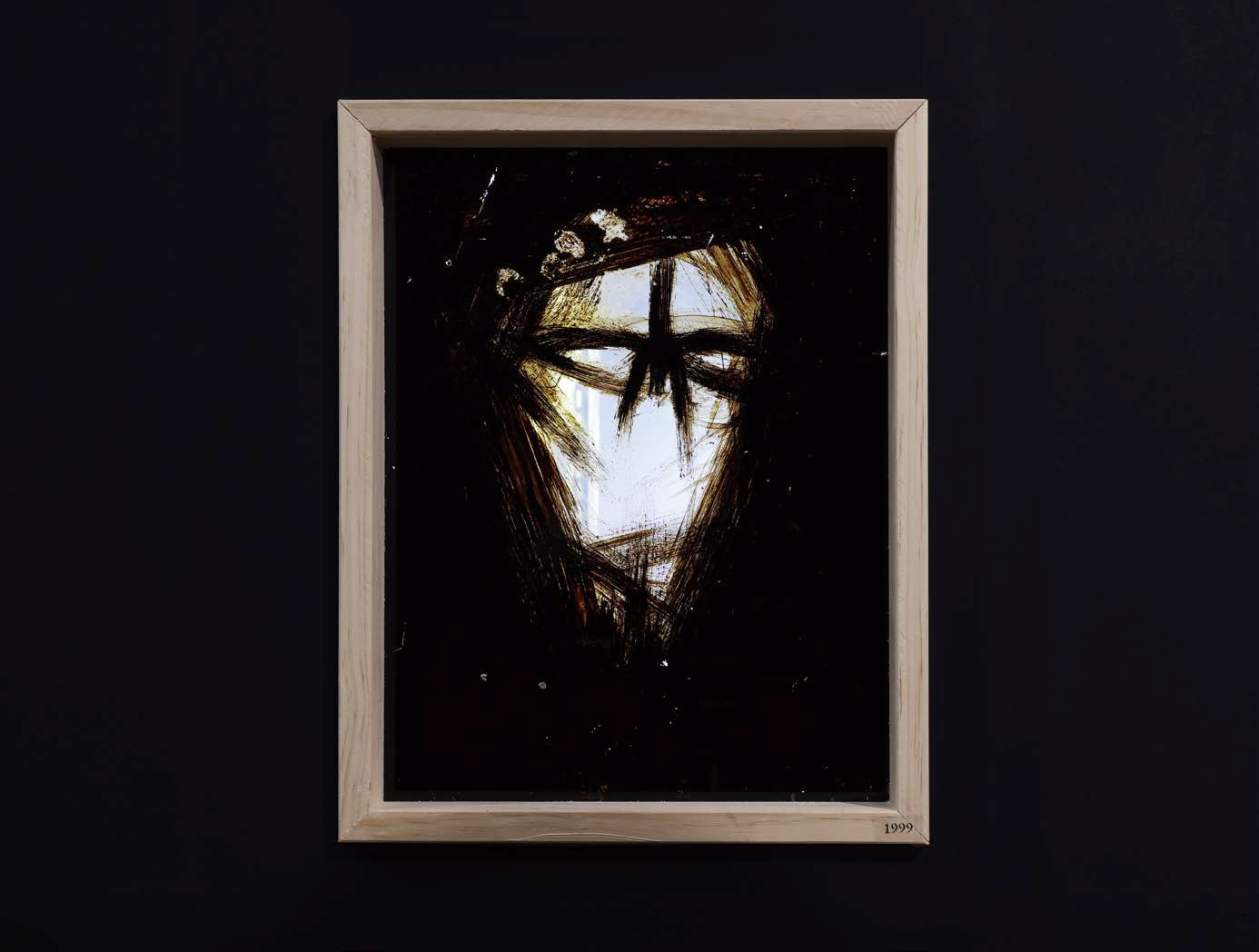
Through the material of metal, particularly stainless steel, artist Kim HongShik and art theorist Choi Yeol investigate the interplay between urban life, humanity and art. Kim employs techniques such as photo-silkscreen, etching, and color application on metal plates to create uniquely textured images. Her works reflect the material reality of modern civilization and evoke blurred, dreamlike impressions – reminiscent of old photographs – that capture the emotional landscapes of contemporary urban dwellers.

Often documenting museum scenes, Kim simultaneously frames the artworks and their viewers, subtly critiquing the sociocultural context surrounding art. The dual focus reexamines the behavior and attitudes of audiences within cultural spaces, establishing Kim as an “alchemist of steel” who transforms the urban sensibility and physicality of metal into poetic expression.

With earth(clay) as chosen medium, artist Seo HaeGyoung and art theorist Kim Ina explore the connection between natural material and sculptural language. ISeo’s work, clay functions as both a sensory language and a conduit for communication between beings. She perceives the drying, cracking, and regenerative properties of clay as embodying the materiality of time, treating clay not as an object to be shaped but as a collaborative, responsive counterpart.

Her terracotta pieces, composed in pixel-like units, balance the micro and macro, functioning as a language of empathy. Her approach – repairing cracks, supplementing broken parts – is both an artistic technique and an ethical gesture, pointing toward a restorative relationship with nature. Through the process, Seo raises questions about time, memory, and connection, offering a contemporary reflection on how we may reconnect with the natural world.

The exhibition, Choi Jung Ah Gallery offers a platform for reconsidering the meaning and value of materials in artistic creation, as well as the profound relationships suggested between nature and humanity.

《Wood, Metal, Earth: Three Materials, Three Languages》 proposes a multilayered dialogue between artist and theorist, fostering a deepened interpretation of art and contributing to an evolving discourse of contemporary Korean art.

References