*
Encounter with several scenes or things abandoned
In
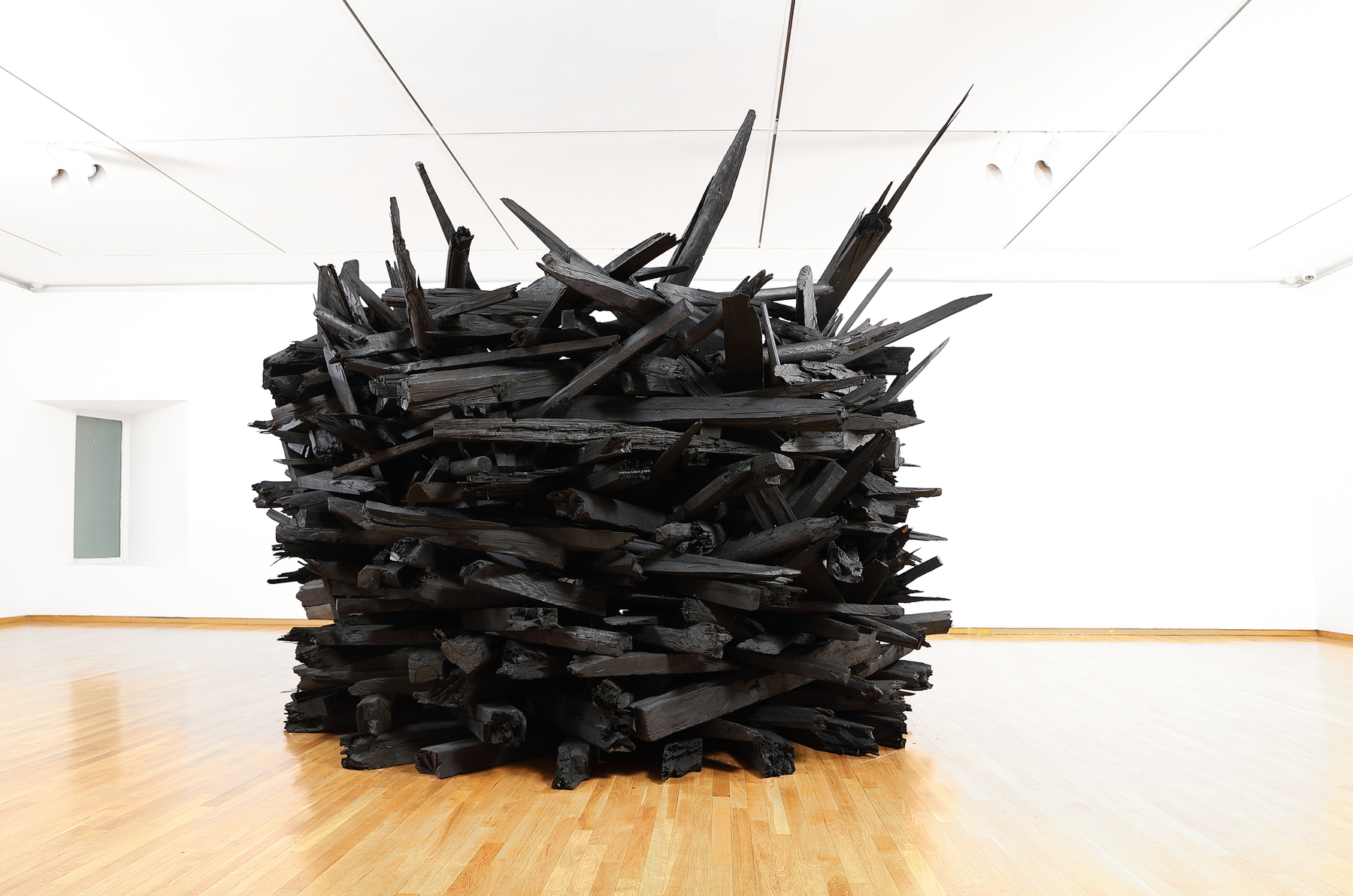
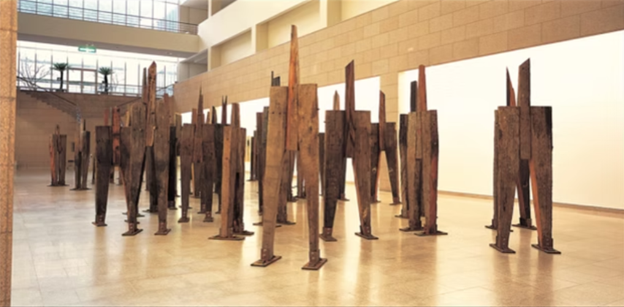
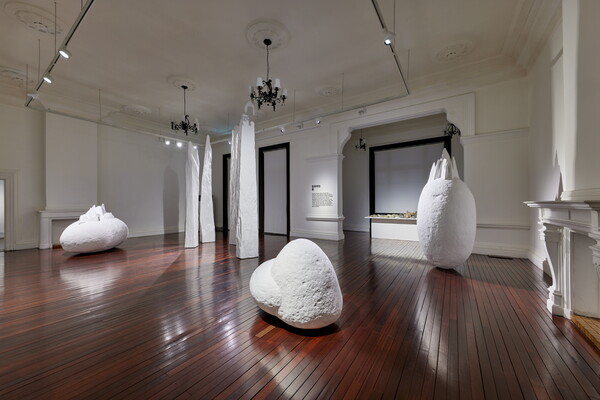
October 2006, Venue the planning room in the National Modern Art Museum. There
stood wooden tiles that had endured a number of trains for a long time. Those
had been lying in the wide empty plane and ran suddenly to stand in this place
as if they had received some sort of oracle. Their outcry filled in the bay of
Gwacheon Mountain. To the wooden tiles that had finished their assigned task
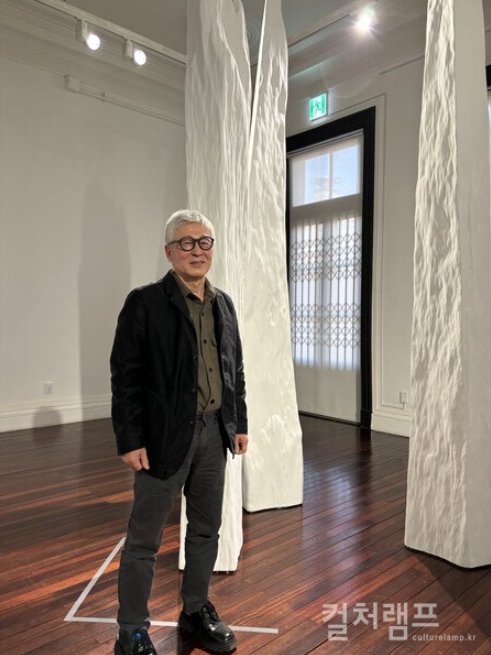
and finished its life, Chung Hyun, 'the artist of the year' selected by the
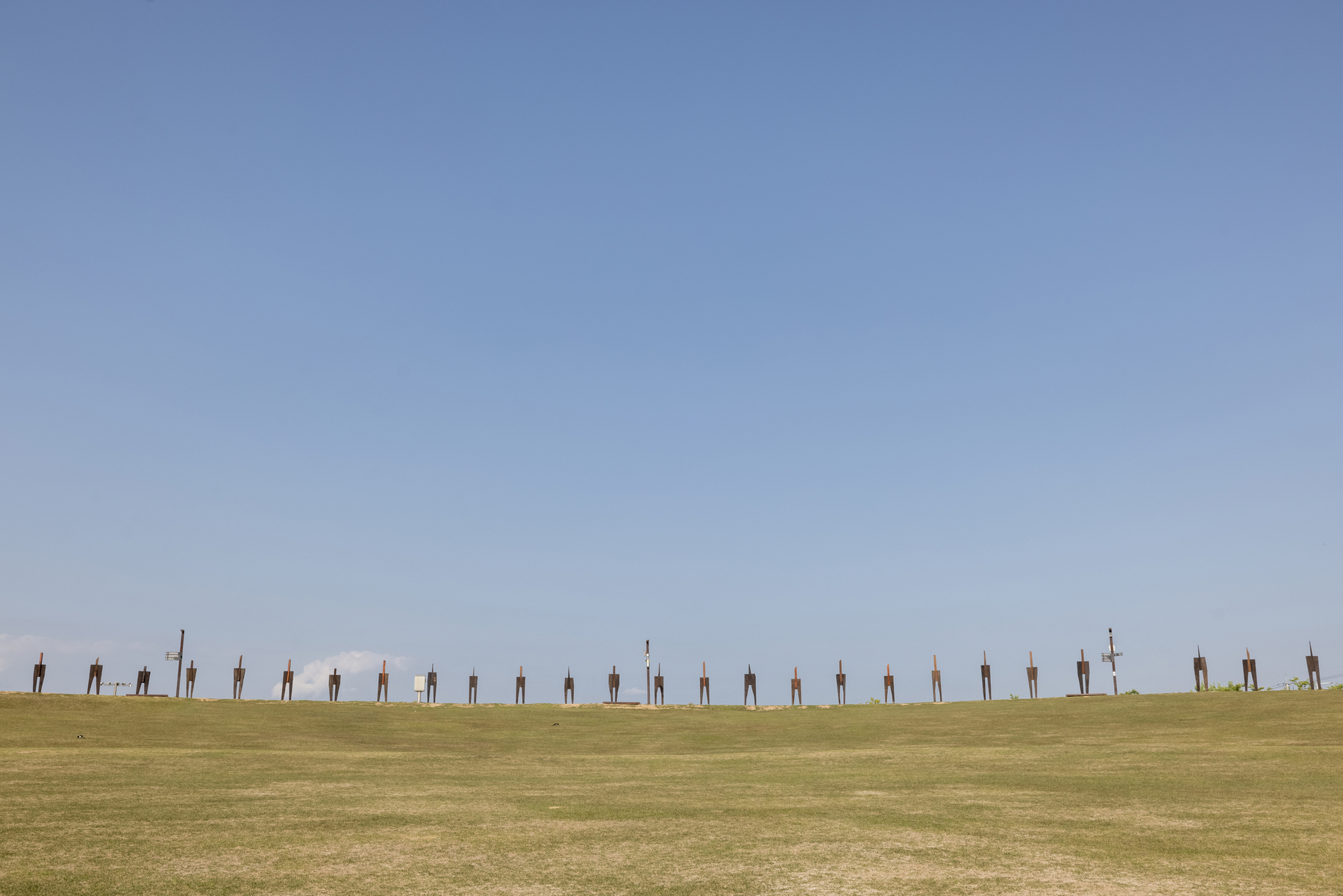
National Modern Art Museum, gave another life. The hero trimmed the tiles in
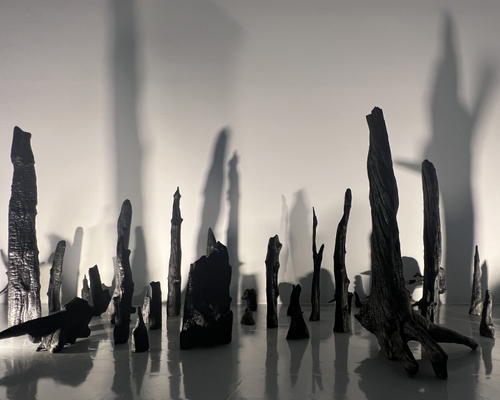
the length of 3 meters and arranged them in a row. Those 40 structures were
overwhelming the wide space in the way it made a breakaway with the commonsense
of the art philosophy.
It is because he made an epochmaking move in the art
circle which member normally thinks of formative art as made of noble materials
like granite and bronze. Wooden tiles were in short some sort of foundation
thing that dedicated itself under the racing trains, the things that showed the
true meaning of sacrifice to the benefit of the others, and the things that
would be trashed after serving its purpose with such an indifference by the
human society in the same way that it had always been even during their
service. Now that the era has changed the wooden tiles have even degenerated
into some sort of wastes. One person cast a warming gaze upon those wastes, and
that was Chung Hyun who was selected as the artist of the year. This fact was
further confirmed by the reminiscent exhibition held in the Art Museum.
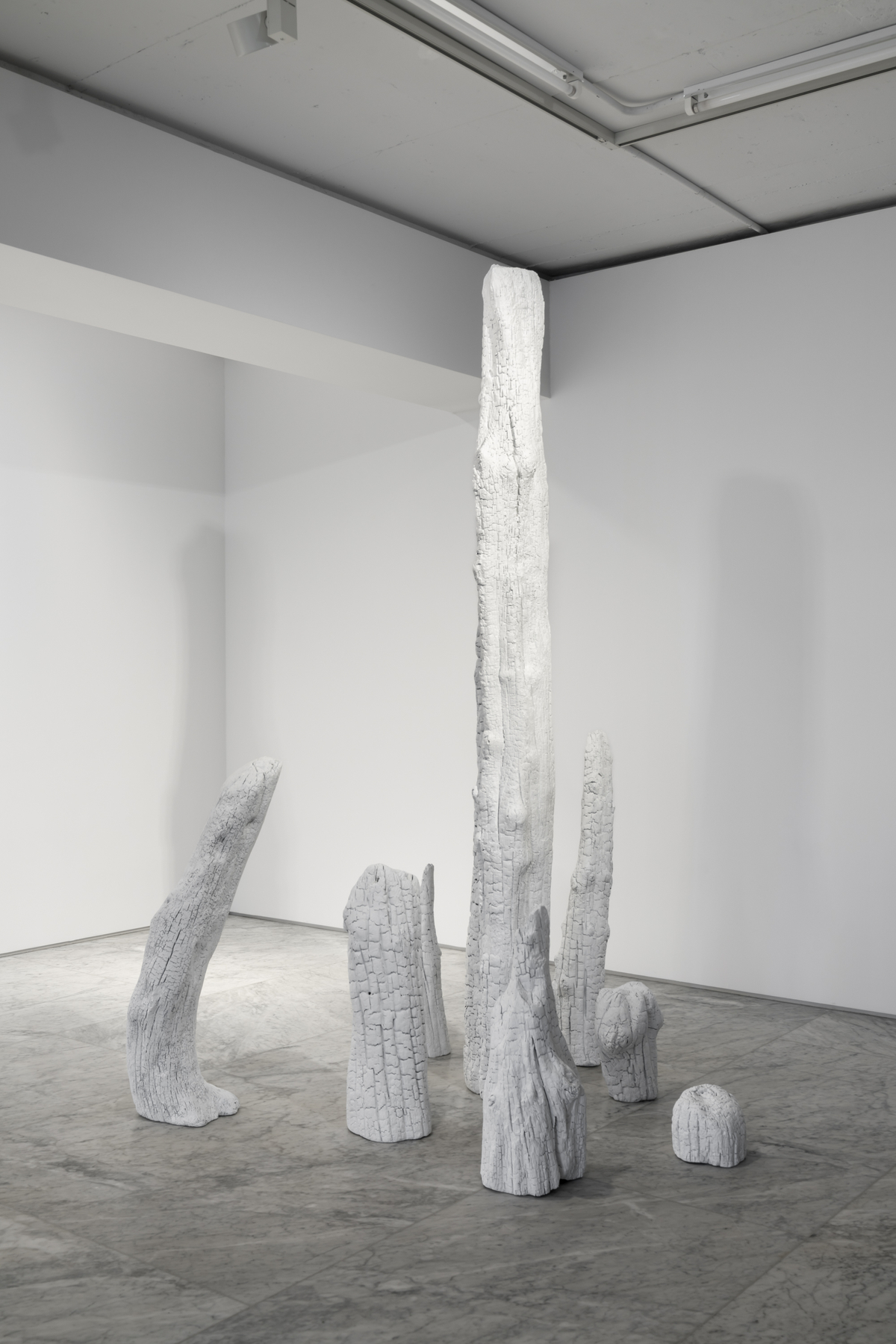
The
title of the wooden tiles were Untitled but it surely
reminded of the lower body part of human. Being inserted with some sort of
interposition, the two pillars were nothing short of the human lower limbs.
These lower limbs were omitted with the trunk of the body which was important,
especially abandoning the head part. The long painful lifetime and the scars
embraced by the material made the tree nothing better than the forsaken that is
far from elegance. The rough and shabby piece of wood evinced the long and
painful life with the dark skin and scars engraved upon it.
Such wooden tiles,
which had been lying on the field for its entire life, were now forming a herd
to be arrayed in the same direction. Without the upper body, or rather having
abandoned it, they were producing some sort of symbolization. These
construction was reflecting the human society that is ever increasingly int the
process of being materialized. It reminded of the spiritual world which had
been long expelled, and the remaining physical world that is overwriting the
reality. Furthermore it was so majestic to the extent that it exerted
high-handedness to those before it. What does the array of the bulky lower body
mean without its lower part?
In
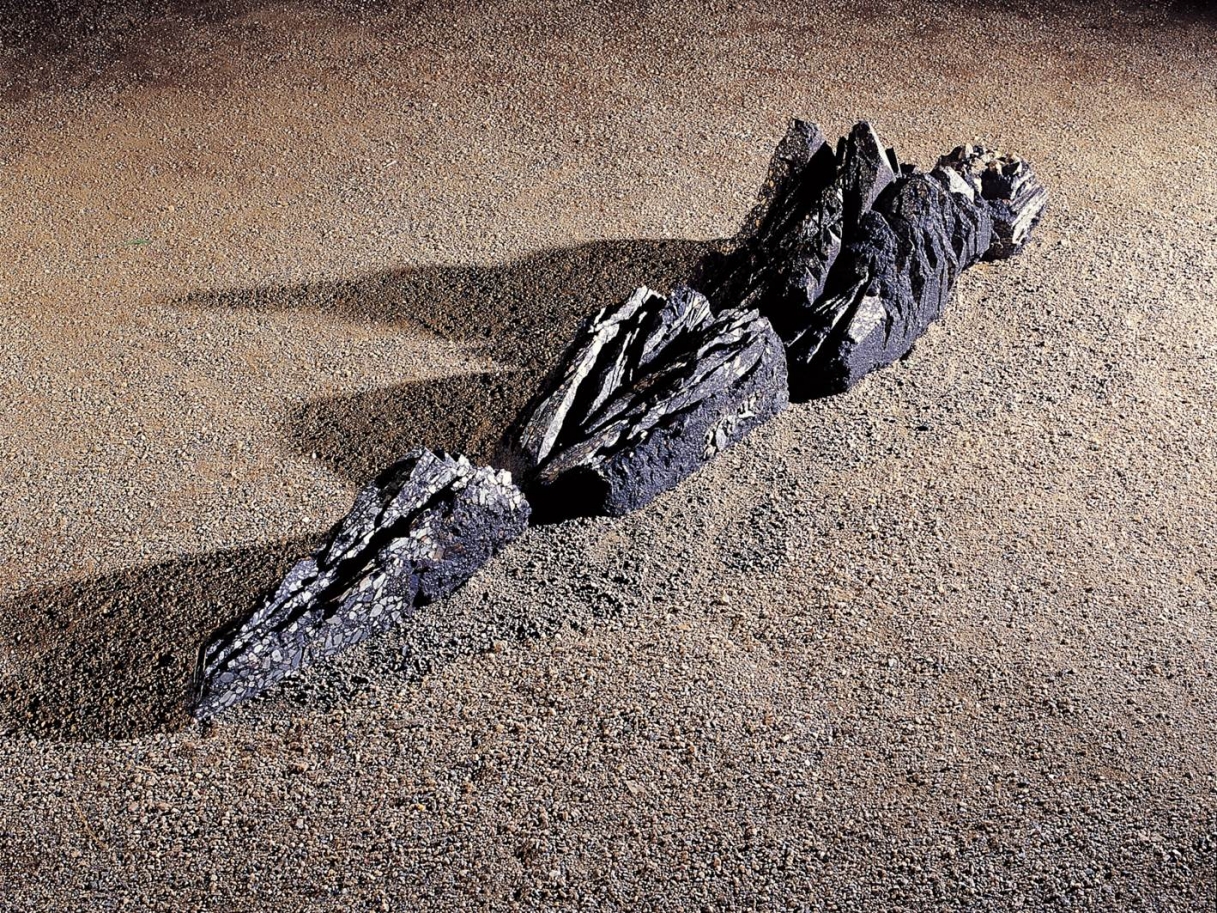
June 2004, Venue Kim Chong-yung Art Museum. The concrete asphalt(ascon) that
had once paved the road was occupying the display floor of the museum
after being abandoned. Jung was the person who dragged the discarded pavement
materials all the way to the Art Museum. He held the private exhibition to
celebrate him being selected as the 'face of the artist' by Kim Jong Young Art
Museum. In this exhibition, he also turned back on those elegant materials in
favor of the wastes. Ascon refers to the dark wastes left over after refining
the crude oil. This is usually the favorite material for making roads, so it
had some part in blackening a number of cities so far. But when the roads are
dug up again for revampment or reconstruction, they are mostly ill-treated as
some sort of trouble to dispose.
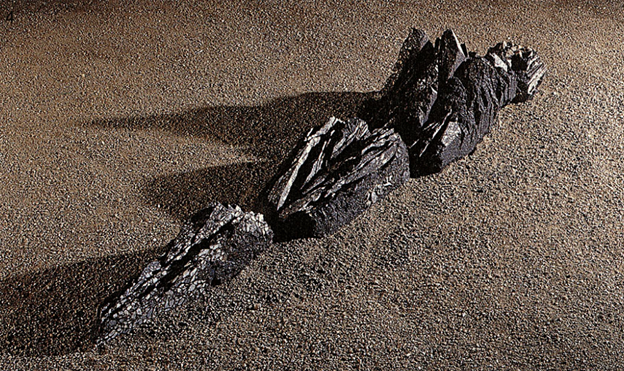
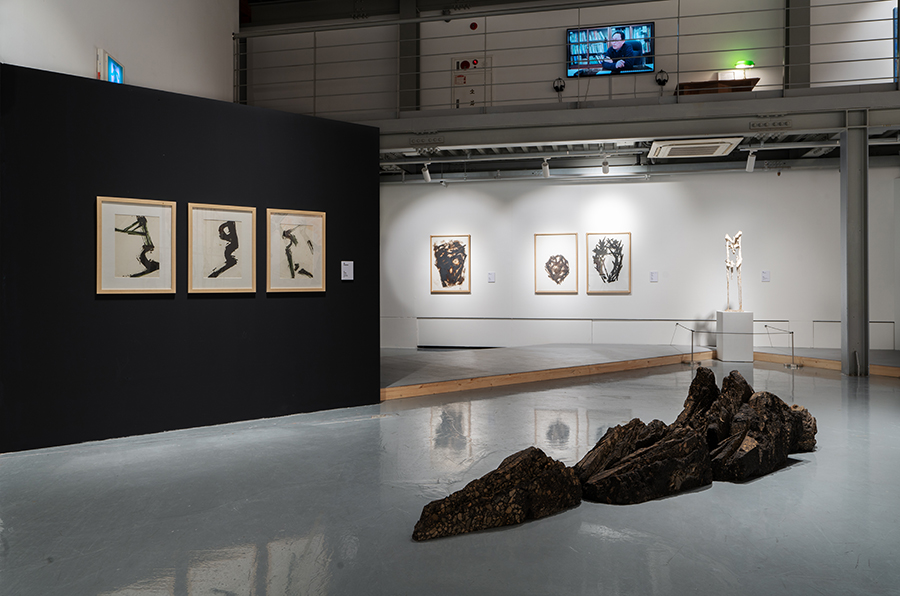
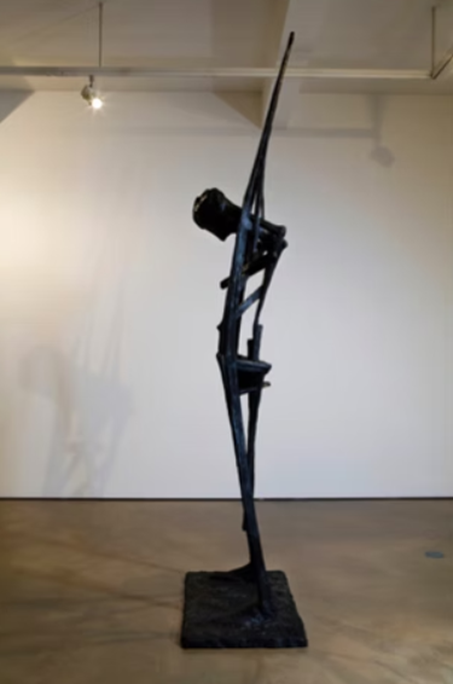
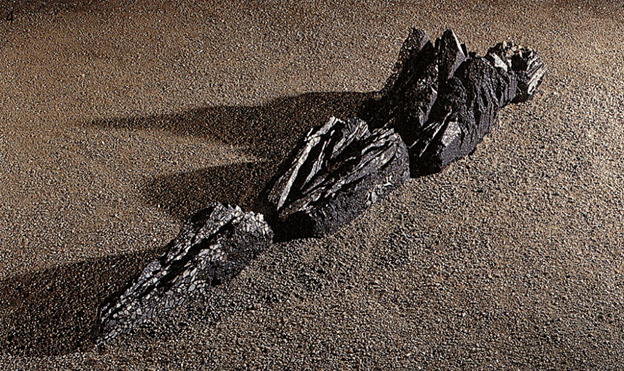
The artist collected the trashed wastes and
breathe in new lives to them. He trimmed and cut the black lump to the
reasonable degree and dispersed them here and there on the floor. These looked
like a group of islands in the Dado Sea but of course in the posture of a human
body lying down. It was the resurrection of the wastes settling in the sandy
field. Not only that, it also refreshed some strong liveliness there. The stone
yard of Yongan temple in Kyoto which is best renowned for its artificial beauty
is an artificial garden in which small and big 15 stones are arranged
appropriately on the line made by racking up the sandy field.
Some praise it
highly as the formative revelation of the calm and focused mind which is the
famous symbol of Japan. Other say their arrangement is in the shape of the
Chinese character heart. And one study saw its arrangement as representing the
Cassiopeia constellation, for which it even tried to elevate it to the status
of the universe garden. People of the next generation were trying to attach
excessive meaning to the arrangement of the stones and stands. How could one
encapsulate the beauty of Japan in such a compact expression! Should I like
that sort of beauty or not, I did not know the answer.
The
stones gathered on the sands. One was pretending so noble that it tried to give
up on the smell of human sweats with such a constant pedantic approach. The
human figure which was made of discarded ascon on the sand made one ruminate
over the existence of human or the true nature of objects. The virtue innately
contained in that very essence was the smell of humans. Among those, how could
he give back lives to those abandoned after losing their uses, those disfigured
and forsaken, and the ugly ones of no use! Chung Hyun's artwork was directly
connected to the return of a human form, that is, the return of a living thing.
* Giving Life to the trivial.
At
college, Chung Hyun was baptized with the modernism detached from the reality.
His scepticism during the school life led him to the wondering. But that
doesn't mean he was directly led to the student rightist movement. He rather
chose to go to France, which was reputed as the mecca of 'elegant art', in
order to construct the art world of his own there. But the exhibition to
celebrate his return to the home country caused a wide curiosity by filling
itself with the artworks that were not expected by many people. Though decided
on humans as the exhibition title, there was no beauty of human body
displayed in the place.
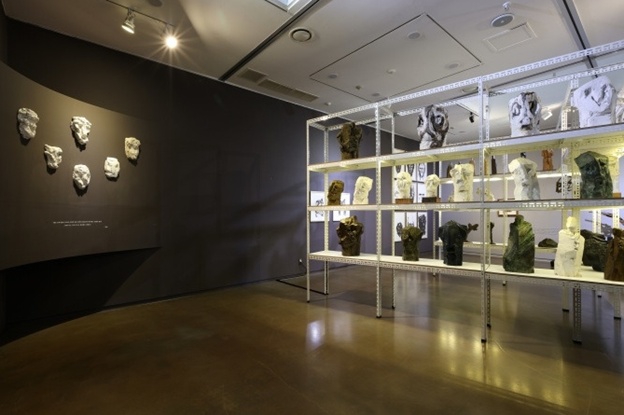
There was no sculpture of well-proportioned lady with a
beautiful face, nor any elegant body shapes that made use of qualitative stones
like done by many Italia background artists. Apart from simply disregarding the
forms, the materials that he chose were 'market-valueless' humans that were
made of Manila flax plant and plasters. Such start made one anticipate that his
artistic activities would be a breakthrough with the previous artists of the
French background. The title was human, which is all-time no. 1 subject of
investigation for the old and the young all alike. Along with it, other
materials that were chosen were not expensive luxurious materials, but
old-fashioned wastes. That is why most of the materials composing his artworks
were trivial stuffs like wooden tiles, ascon, plaster and others.
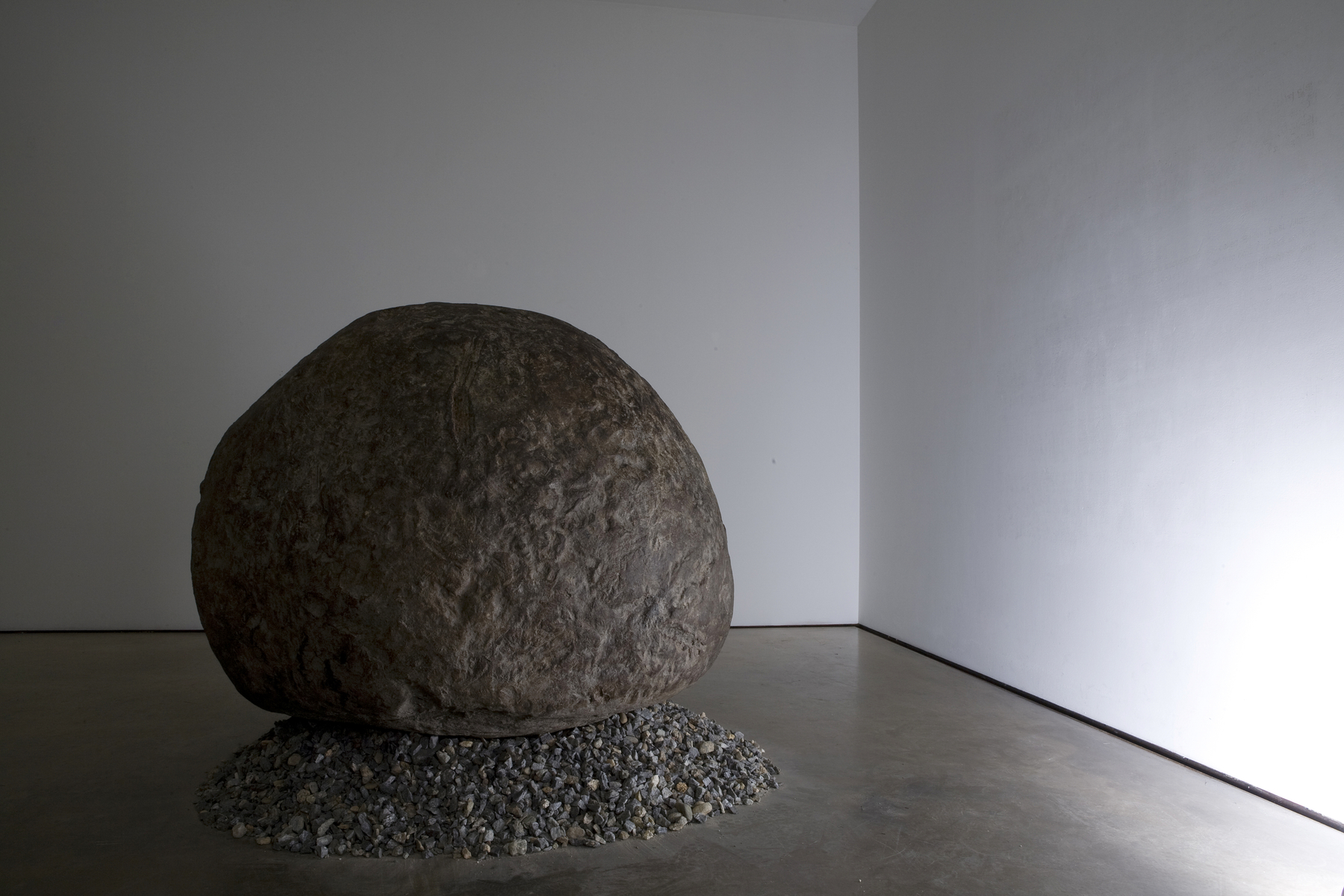
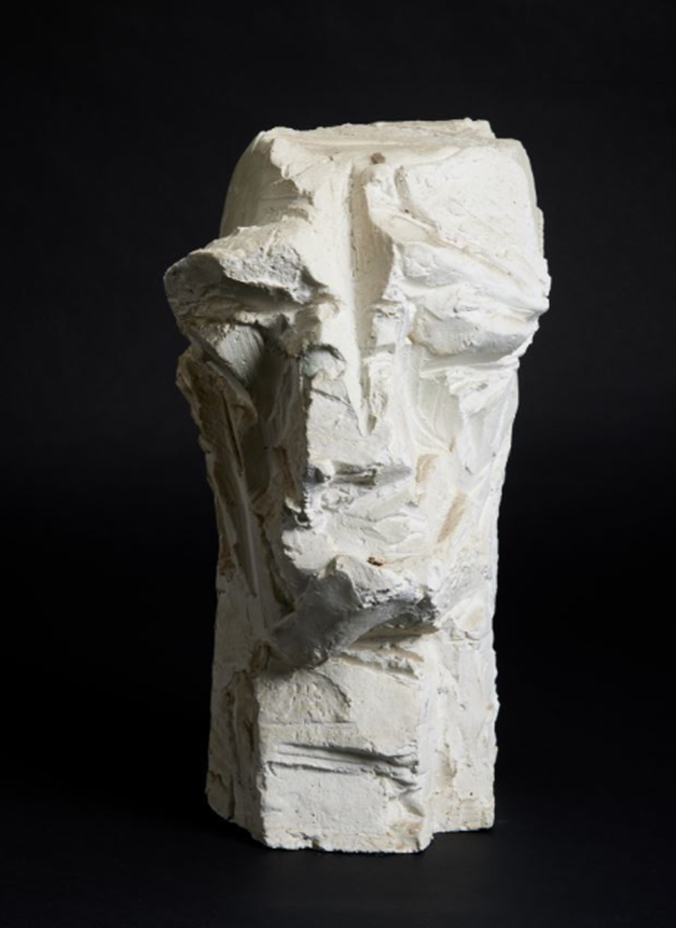
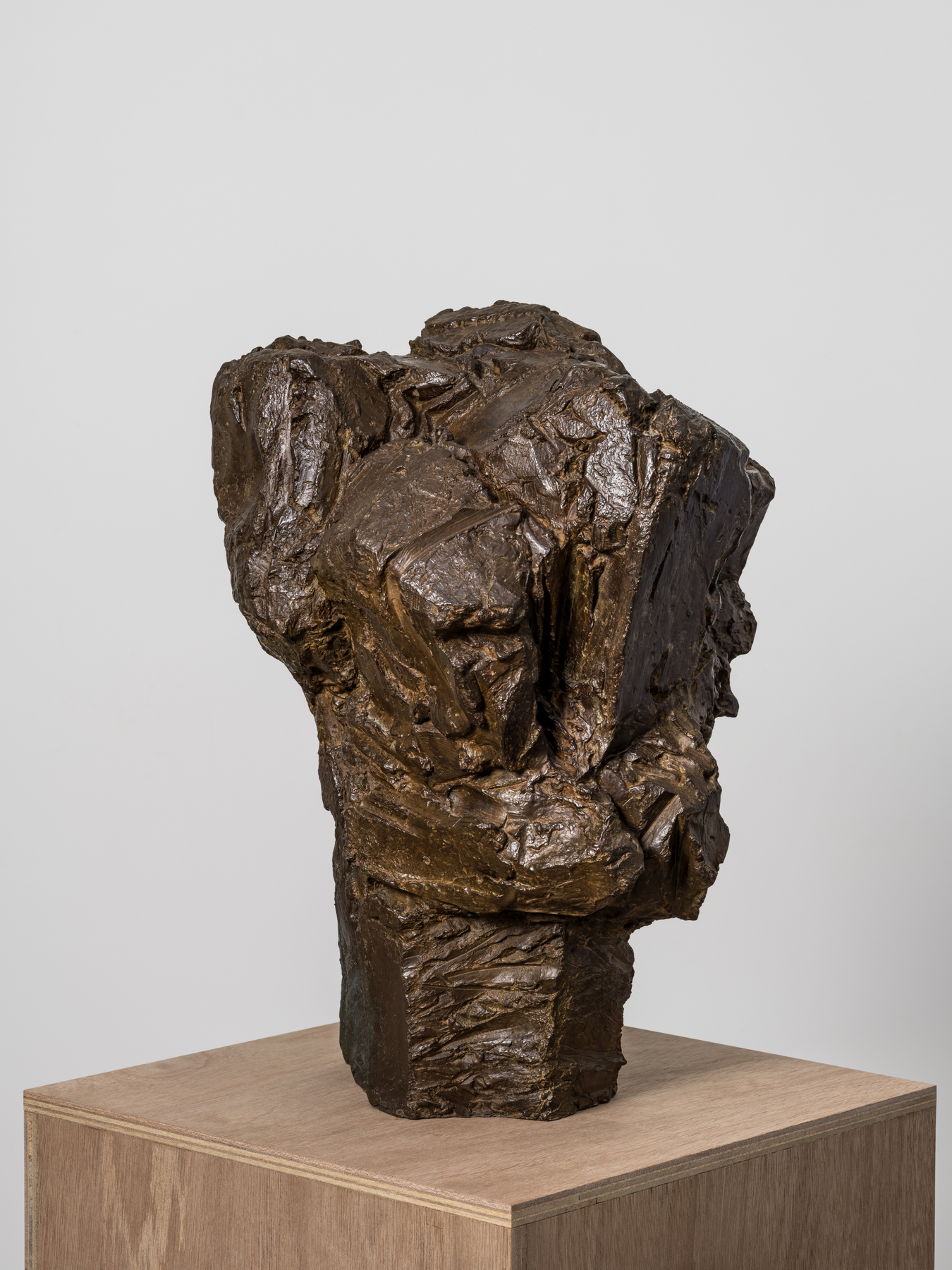
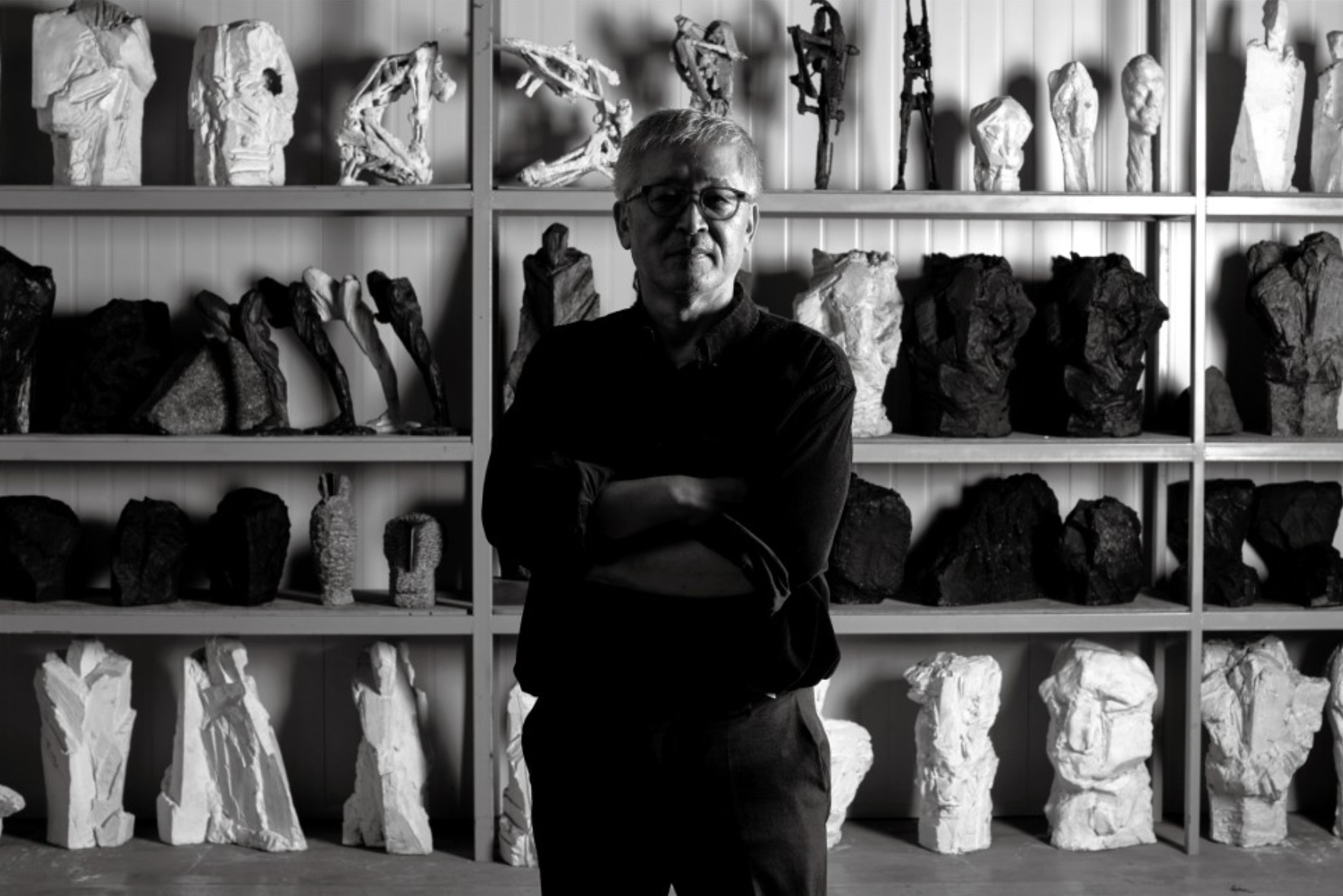
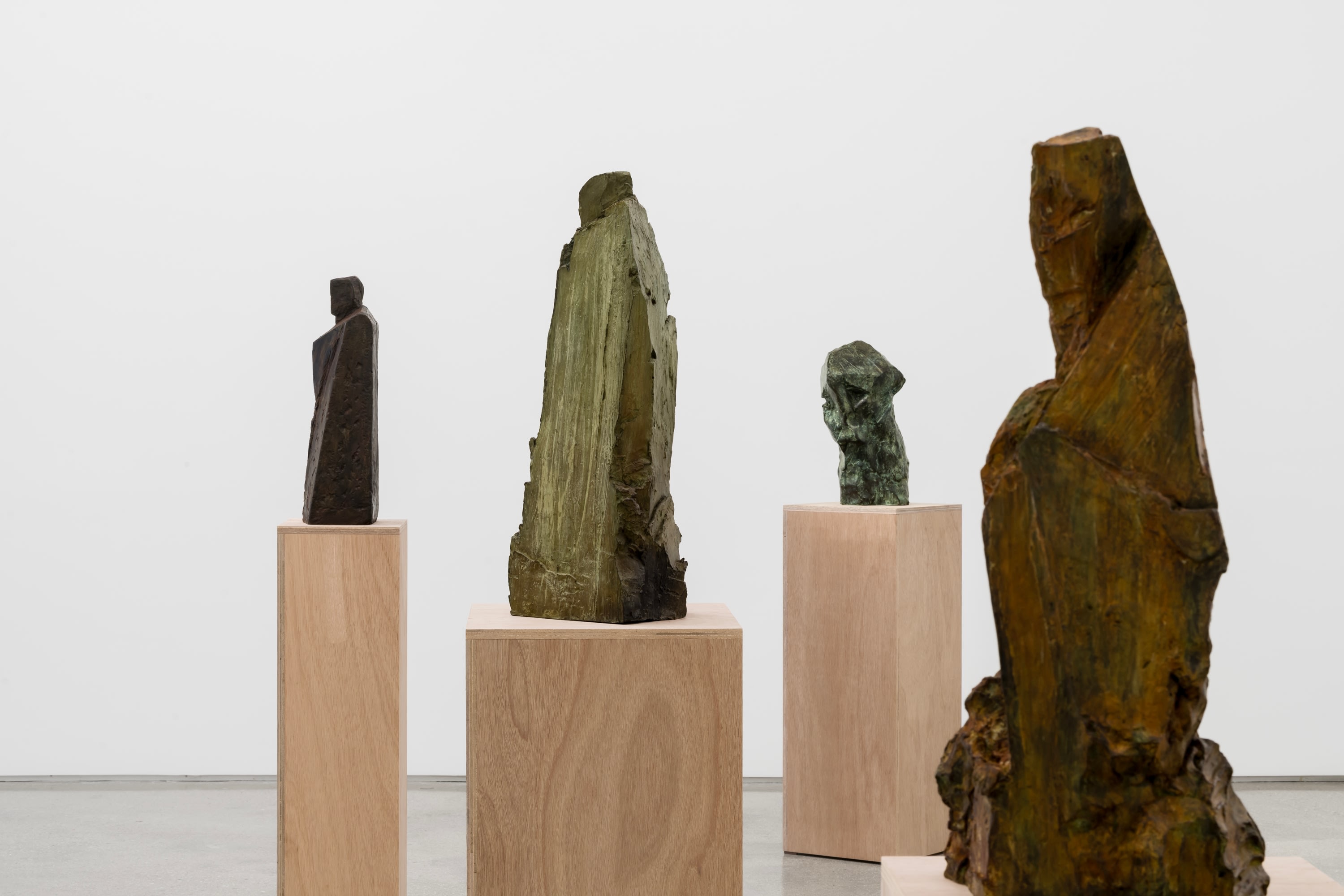
Chung
Hyun would rather choose the rough stones that can be found everywhere rather
than granites and marble stones which are classy and elegant. Those rough
stones could even be used for the real construction works. They are not only
shapeless but also have no consistent texture, which means it would be hard to
handle them for a creative work. But the artist gradually discovers a
contingency through the irregular nature of the stones and starts to understand
the formativeness during the working process. Rather than insisting on his own
willness from the outset of the work, he would find a tangent point in which a
mutual agreement would be reached.
It is the same for the lump of coals that he
purchased himself from the mine. Spending time with the stones that look
willy-nilly let the artist arrive at some sort of conclusion with the forms to
give. The artist exchanges emotions with the useless materials that attract no
other artist, and searches for the road to the creation of a new life being.
The artist says,
“There
were times at which I thought lime stones or bronze were the only materials to
make a perfect sculpture. Many artists use plaster but they tend to think of it
only for the experimental studies. I also liked the freshness of plaster like
that of green grass. Another important reason was that I didn't have much
money. Tiles, ascon, rough stone, they were all useless and trivial, but easy
to get. They all have the painful story of its own, and nothing more than
wastes. I liked its fresh properties as if it were raw and unprocessed.”(From
the art brochure of the National Modern Art Museum)
Chung
Hyun had affections for the things which were raw and had painful
stories. Pain and rawness, these are important concepts. So to speak,
"when I saw the trashed tiles, I could imagine the storms and rains that
it would have long endured under countless trains throughout its lifetime. It
was as if the tiles came to me in the form of a human. Though they were not
noticed by anyone, it seemed to have a huge energy melted in it"
confessed
him. Once trashed, the tiles now were sublimed to the level of one human being,
or even to that of one history. It is like being resuscitated as the source of
energy.
That doesn't show that the work with the wooden ties sailed smoothly
from the beginning. He spoke again "since 98, I got down on the real work
but the more I proceeded, the less I left their real properties and the more I
was emphasizing on my own personality. It was like I confronted with the
materials to conquer it. I thought something was not right. It is because my
desire got the best of me. To make the tiles and I coexist with each other, I
had to have a good understanding of the good properties of the tiles and rather
play with them. Between the formativeness and materialness, the body and the
mind, it is neither of the extreme reduction, but I would rather like it to be
seen as the harmony.” Chung Hyun surely realized what he had to do. He was
oriented towards the friendly attitudes with the materials, and the world of
symbolization which would naturally attain itself rather than the artificially
created meanings.
“Those
we discover from the trivialities, what they are before being expressed in
words, the living itself, the rawness, the unpredictable image, suddenness, the
emancipation from the sorrow, and the long lingering depth of wanders…………. and
I would like to stress power is what we gain as a matter of course through the
working. Chasing after the power itself would be nothing more than a formal
beauty.”
Being
interested in triviality, this is the true starting point for art. Restoring
useless materials, this is the final destination for Chung Hyun. Writing a
story about the useless and trivial stuffs is the substance of his works.
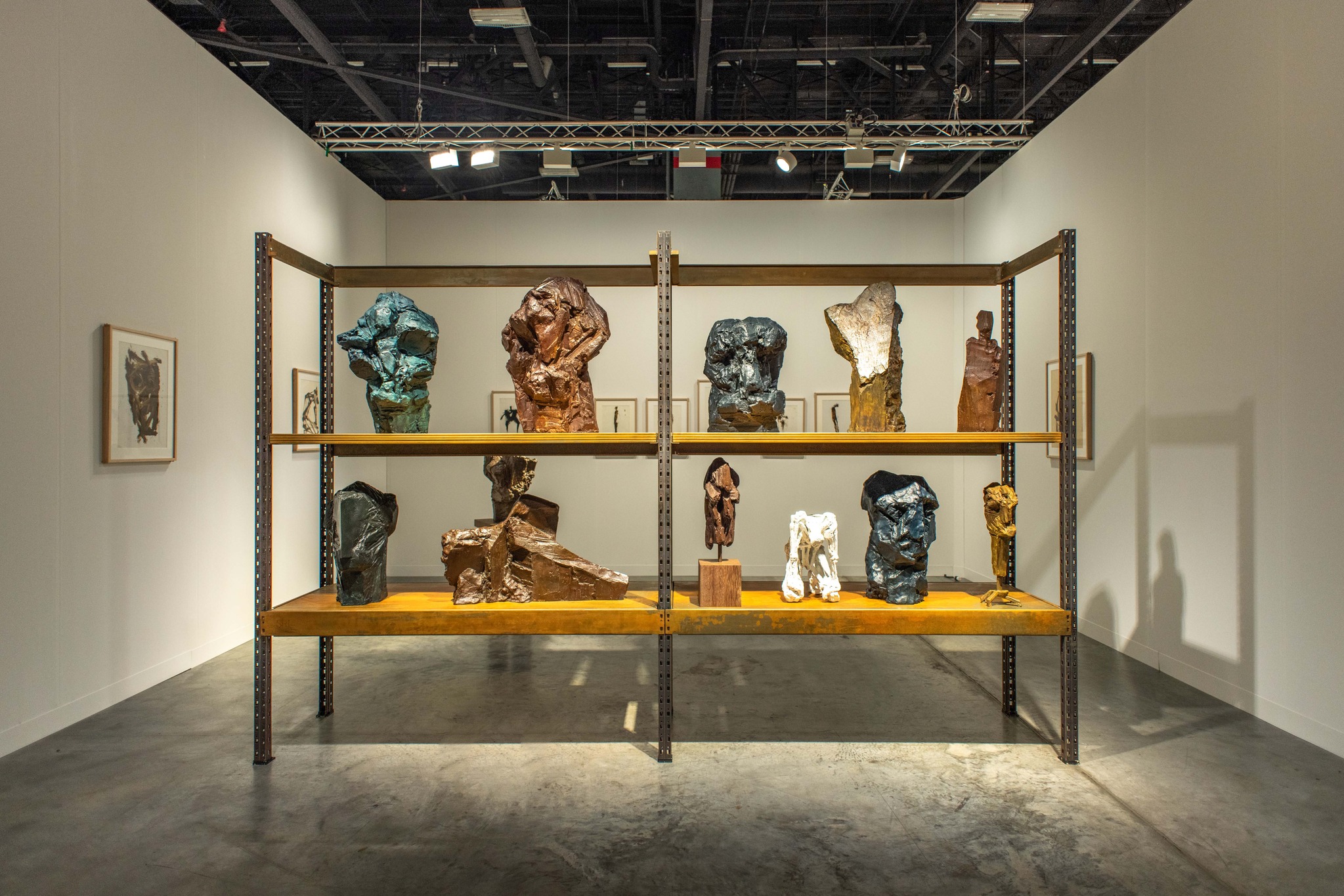
The scarred body or human's true nature.
The
working process in which one should meddle with cheap materials can neither be
elegant. Rough materials often require an excessive labor and brave approach.
Be it from the perspective of aestheticism or realism, working with the human
body has always respected the forms in one way or the other. Outdated academic
atmosphere sometimes give the feebleness regardless of the essential quality.
It is because the inner properties are hard to met. Therefore that sort of
anguish should firstly start from the abolishing of the form. Though it was not
upholding the doctrine of abstract art, the breaking and erasing of the forms
were the results of an attempt to deliver a new message.
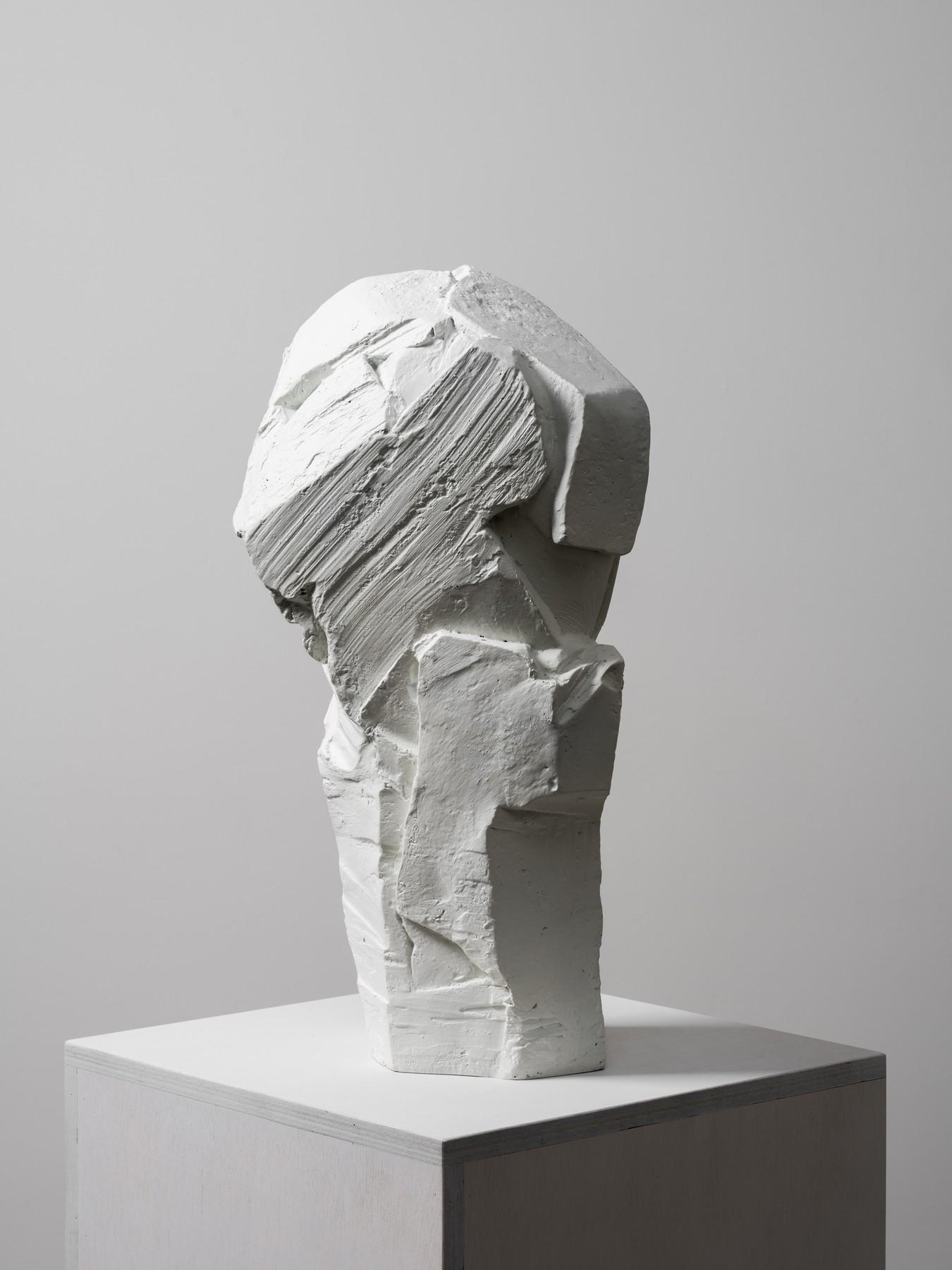
The artist handled the
materials roughly and violently to make a shape meaningful in itself. The
artworks looked prima facie the raw and unprocessed ores. The did not abuse the
special traces of being processed like a stone or a coal. I was only remaining
the minimal process with the due respect for the properties of the materials. Thus,
the artist was admiring at the rawness like the body voice and longing for the
new energy. The freshness in raw things, it is the just starting point for
everything that has an infinite potential. There acquired a new fresh message
of wild character. It was a distinctive point from the normal sculptures which
only tried to look pretty in a decorative manner.
In fact, human
bodies has been treated as gone out of window in the art society. This is
grounded on the problem of expression and different perspectives. Human as the
subject cannot but be the everlasting theme as long as the last person remained
on earth. What would be more valuable art subject that human is. The question
lies in the artful reponses and the methods of interpretation. Chung Hyun
ceaselessly used human body as the source of his art world to inquire into the
essential problem of humans. Diverged from the fuddy-duddy way of viewing the
human body at the level of reproduction, he tries to speak of the spiritual
world via the human body. In turn the formativeness is weakened and the
substance left like a chunk of the essential quality. It is in this
context that one may fail to have the impression of human body from his body
works.
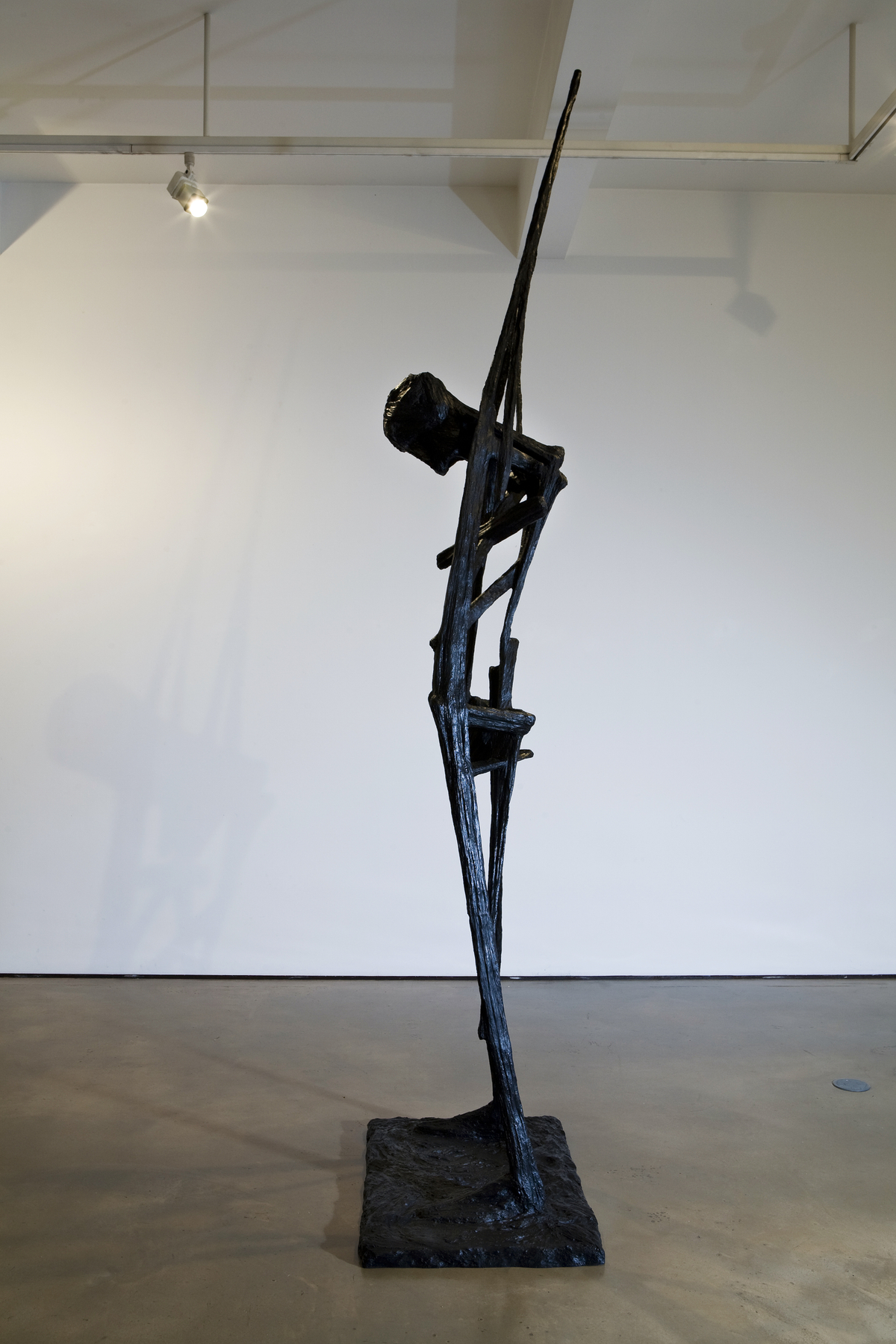
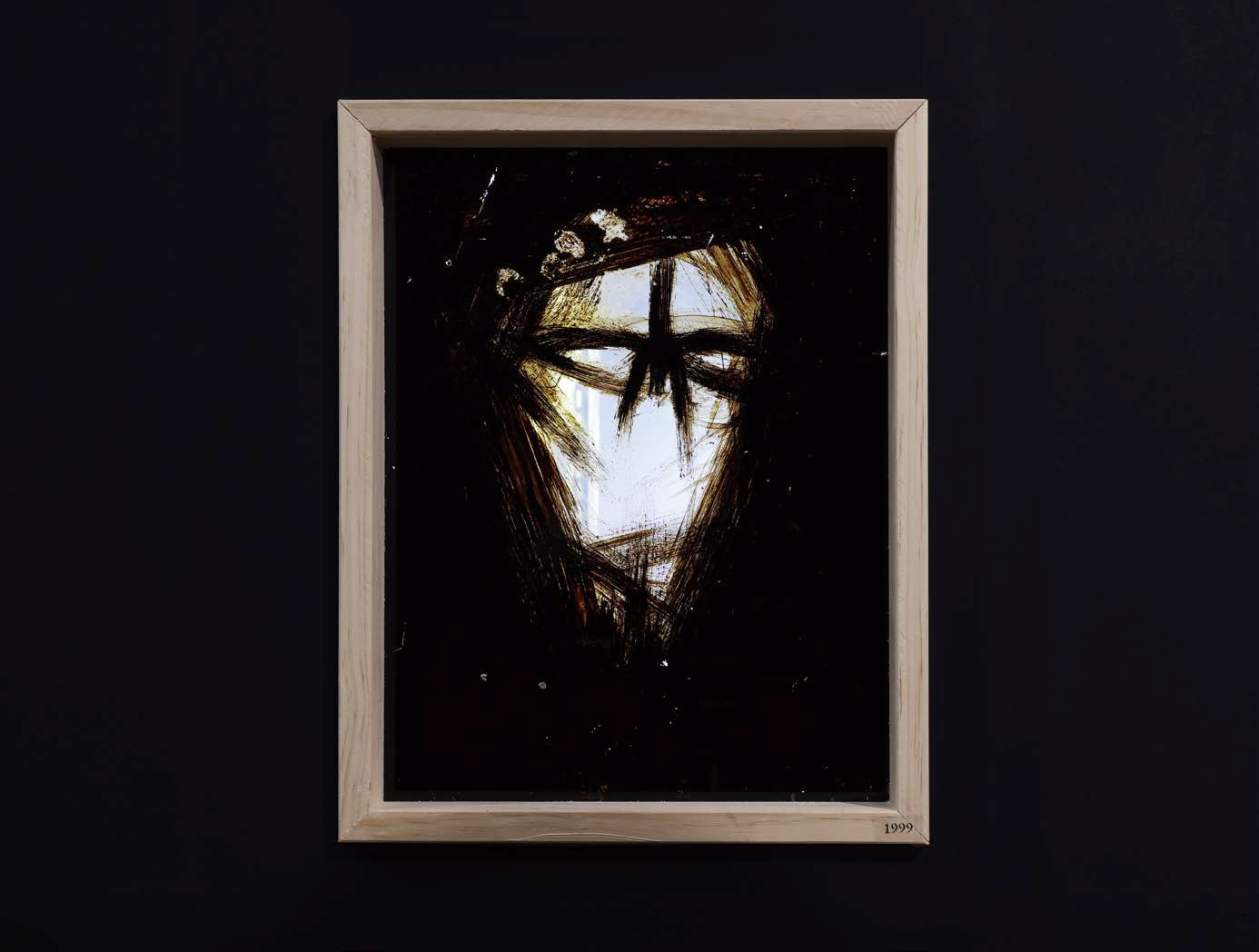
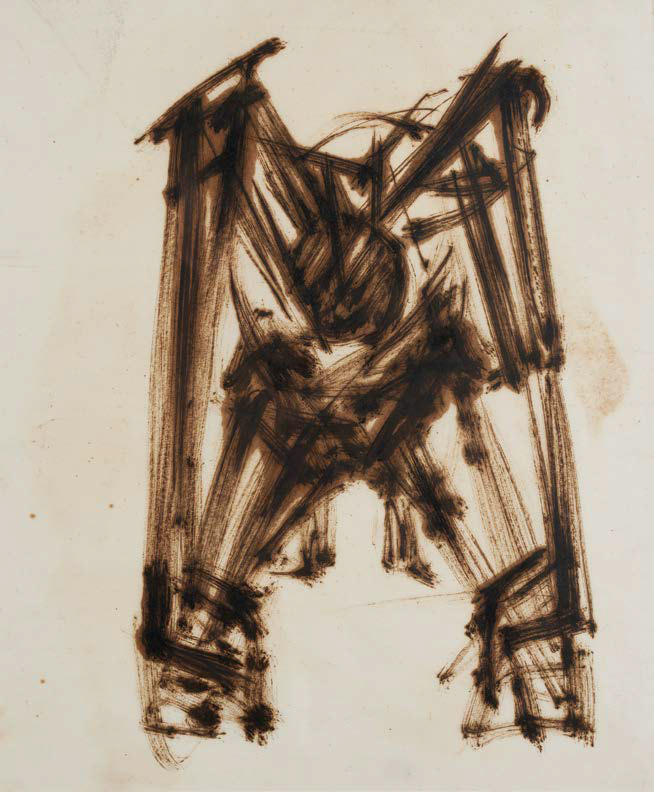
Chung
Hyun used coal tar in many drawings. He also employed recycling papers like
newspapers or cardboards to embody the human body. Coal tar reinforces the
drawing effects by varying its concentration according to the diluents. The
human body in the drawing has the lively and strong moves. It excellently
harmonizes the materials and the themes that it intends to express. The drawing
of the hemispheres is sprouting a bud over the head. It is a kind of spirits.
Some have the green grasses color. It symbolizes life.
Rough but subtle works.
Chung
has the double characters as roughness and subtlety. Dealing with the rough
materials like tiles, ascon, plaster and stones does not make him any rougher.
He is rather unbelievably sophisticated and kind. One of his characteristics is
that he is expert at cooking fishes. The delicateness of fish dishes requires
one to have a highly developed sensation of taste like the one needed to taste
the flavor of French wine. But the master of fish cuisine does not only enjoy
the fishes of high quality. He rather prefers to eat various fishes.
As the
morning fish market of Noryangjin is his main footpath for a walk, Chung Hyun
trained and practised the sense of taste for the sense of beauty. As he likes
the sliced fishes of various kinds, he attaches meanings to the trivial things
on the lowest bottom. He would prefer 'tsukidashi', the fishes of various
kinds, that can never be served as the main dish in the Japanese restaurant.
Jung's art is connected to the 'tsukidashi aestheticism' that is served as the
leftover rather than a splendid and classy dish. Therefore, he is giving a form
to the grand theme of humans with the wastes like tiles and ascon. He is
achieving it in the way that while confronting with the true nature and
deleting the form, the new life is being brought into. A creation of new life
must be in need of an artful touch.
In
November 2007, Venue Gyeonggido Art Museum in Ansan. Recently, a new building
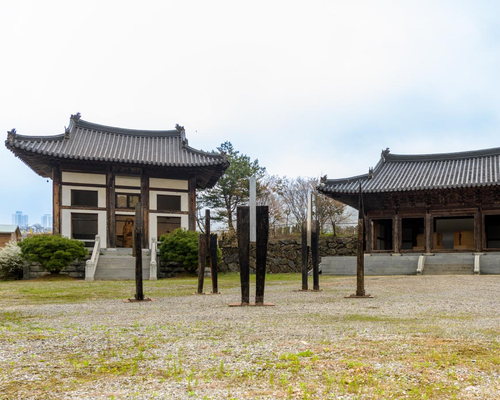
was built to open Gyeonggido Art Museum, which purchased the majestic artwork Wooden
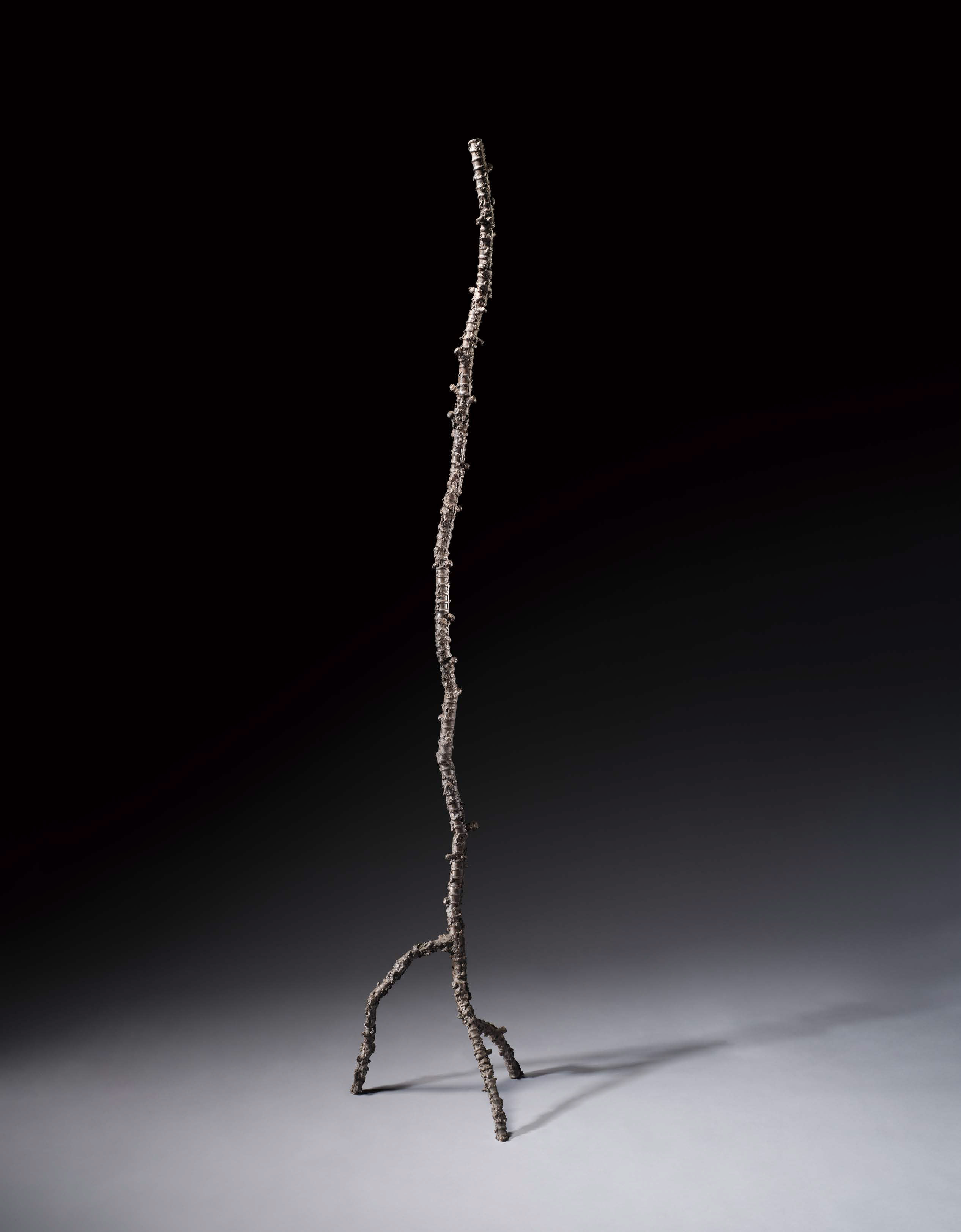
Electric Pole. In the length of 17 meters and 6 poles, they are
stunning masterpieces. Chung Hyun is the artist. The artwork had once guarded
the front gate of the National Modern Art Museum while it was being displayed
there. After then, it was invited to one planning exhibition of Gyeonggido Art
Museum, then recently purchased for good as it was considered as harmonizing
with the empty environments after the long display.
This electric pole
stretching high up to the sky is in one respect like the pillar of a temple,
and in another like the totem pole guiding the sacred place. What is clear is
that it established it self as the landmark of the Art Museum by making a
strong impression on the attendants. This electric pole had once served its
purpose in one era, but thrown away after finishing its role. But such a
gigantic wooden pole in a gathering seems to produce another symbolization.
This is also somewhat different from Richard Serra's gigantic iron board
building installed in the gate of the Modern Art Museum in Dallas.
The iron
board is like the intended praise of industrial society. But for the
everlasting time, the electric pole had persevered strongly like the nation
people of this land. The electric pole is not bending its knees like how
our people had been in the past. The trees look beautiful when they are
standing upright. The wooden tiles that had been lying for a long time also
look more beautiful when they stand up. They all refresh another side of humans
and serve as a yardstick to examine the human nature. Reinterpreting human body
and giving new lives by using the wastes and worthless stuffs, Chung Hyun's
work in this sense attracts people's attention. (*)