Articles
[Critique] Lee Yoon Hee’s Unusual Artists’ Studios: Kim Eull Goes to His Studio as If Risking His Life
2024
Lee Yoon Hee | Art critic, Curator
The artist Kim Eull’s name in Chinese characters is 金乙, using the character eul (乙), meaning ‘sprout’ or ‘shoot.’ His father—who studied
in Tokyo during the Japanese colonial period but returned to his hometown to
live as a Confucian scholar—gave this name to his eleventh and youngest child.
“Live freely, like a bird in flight,” was his intention, a phrase that seems to
have remained a lifelong koan for the artist.
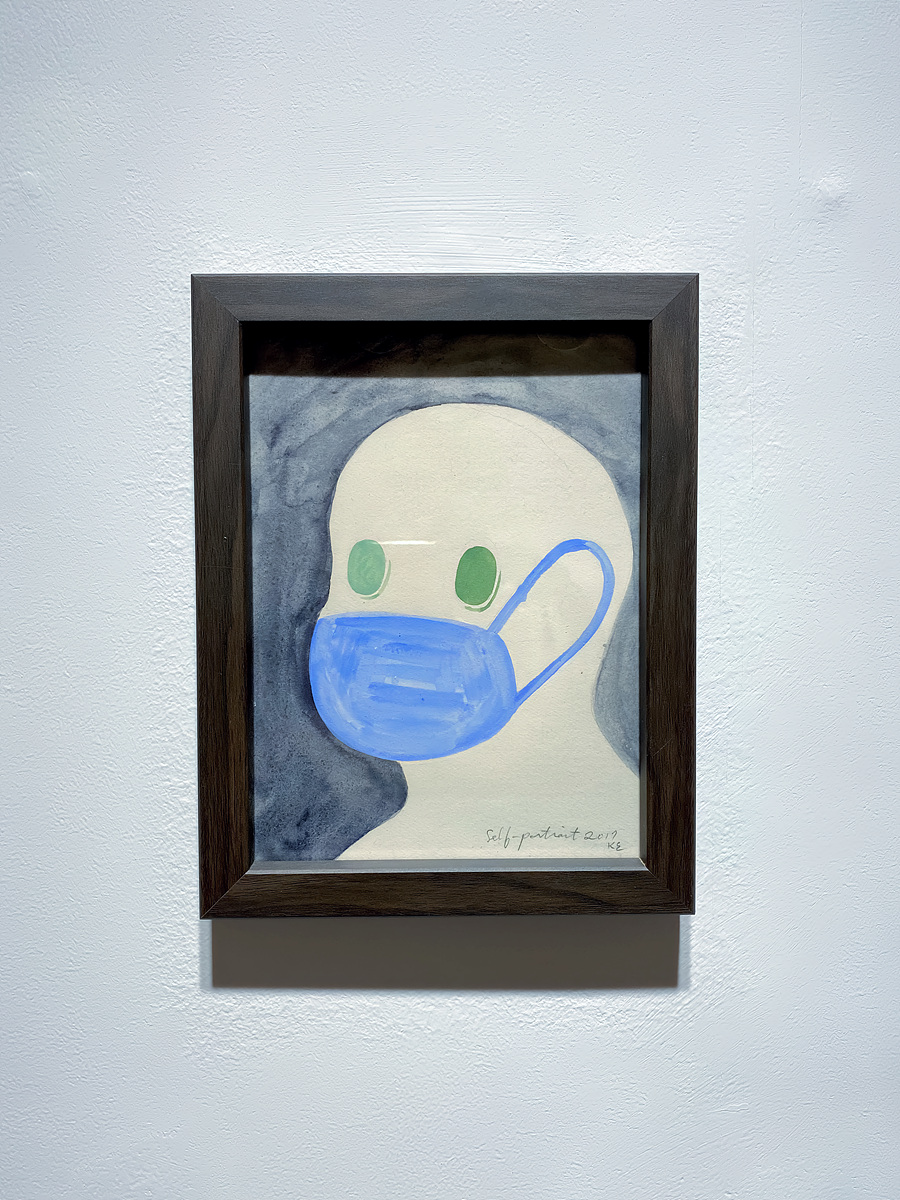
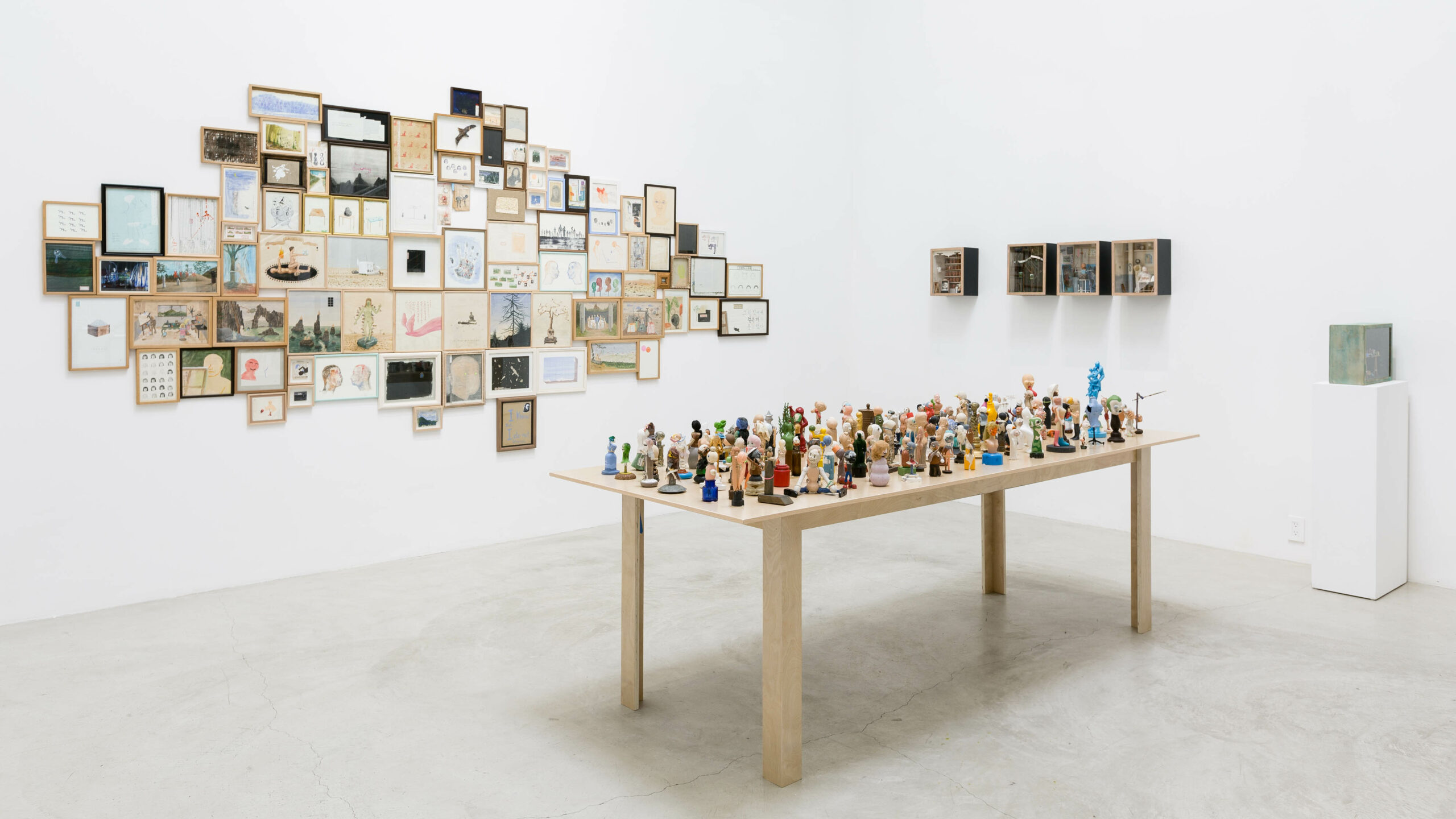
Kim Eull depicts himself through painting, drawing, and objects, and at
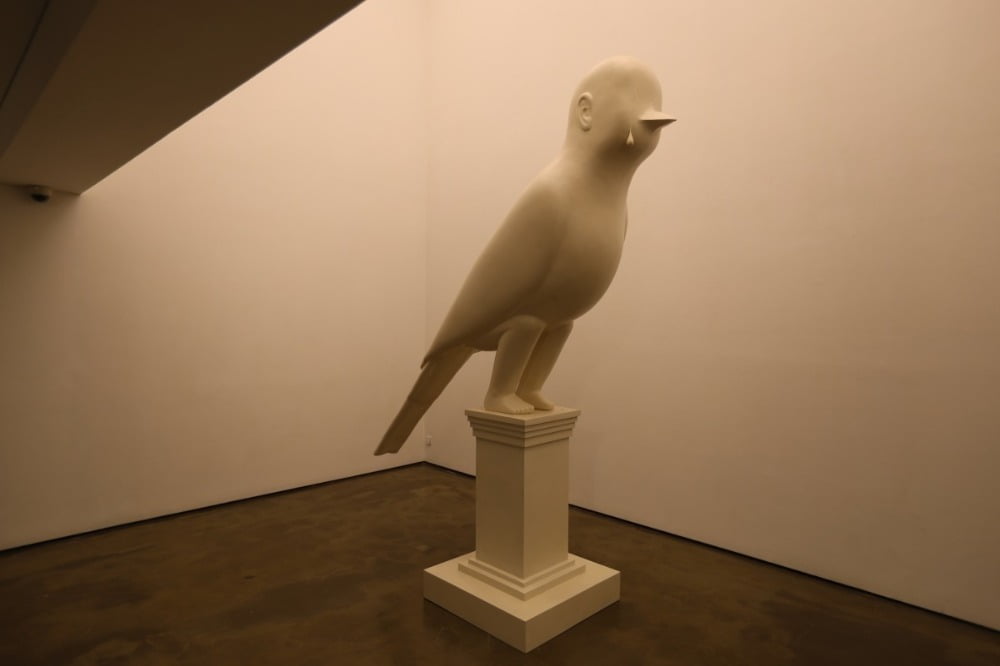
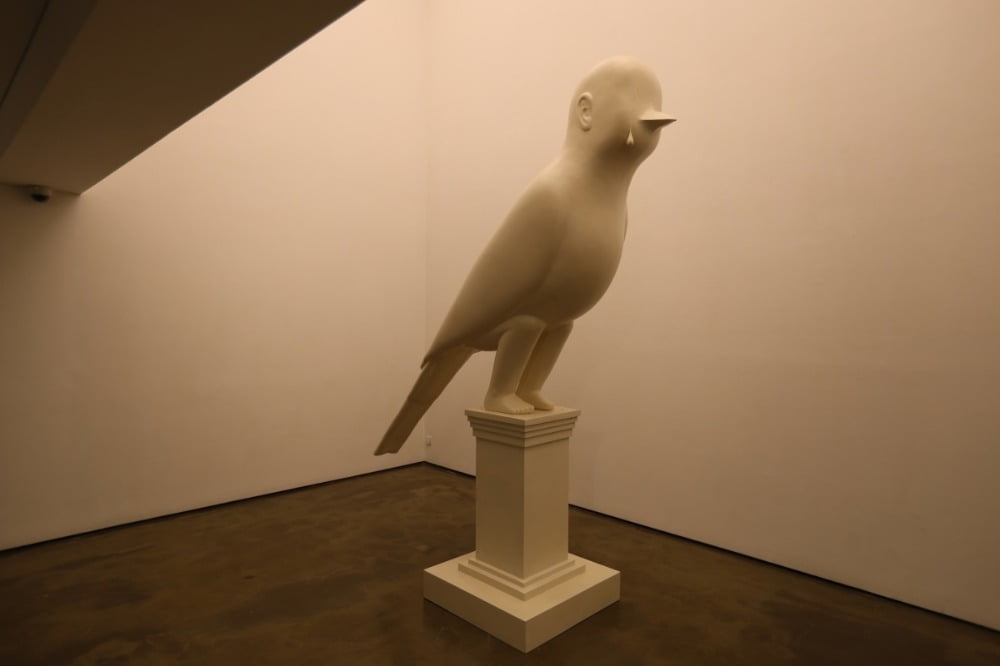
times transforms himself into the figure of a bird. One such bird—its head
modeled after the artist himself and its body shaped like a bird—sheds a single
tear. Suspended just before it falls, this tear has become one of the artist’s
most significant motifs.
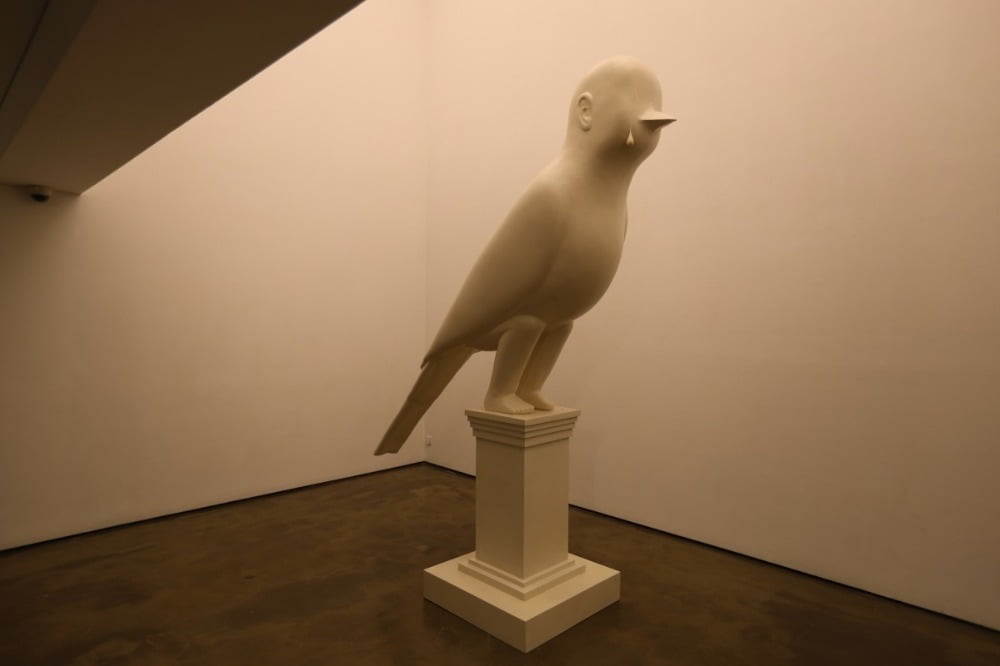
Kim Eull, A weeping bird, 2022, FRP, urethane paint,
77 × 298 × 245 cm © Kim Eull
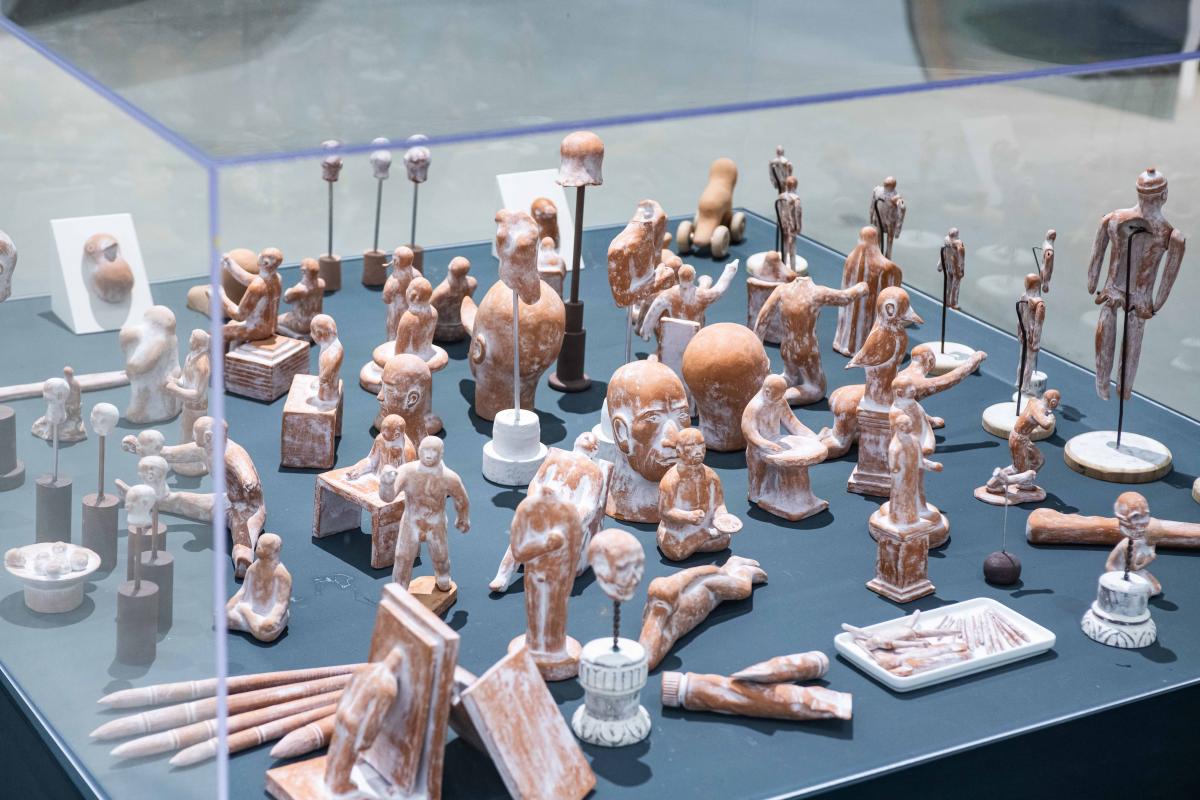
Located in Yongin, Gyeonggi Province, Kim Eull’s studio is densely
filled with completed works as well as objects that are yet to become works, so
much so that even a full day would not suffice to take everything in. While
some of his works reach architectural scale, it would not be an exaggeration to
say that the core of his practice lies in small drawings. Although drawings are
often considered preparatory sketches, Kim Eull’s drawings appear as autonomous
works in their own right.
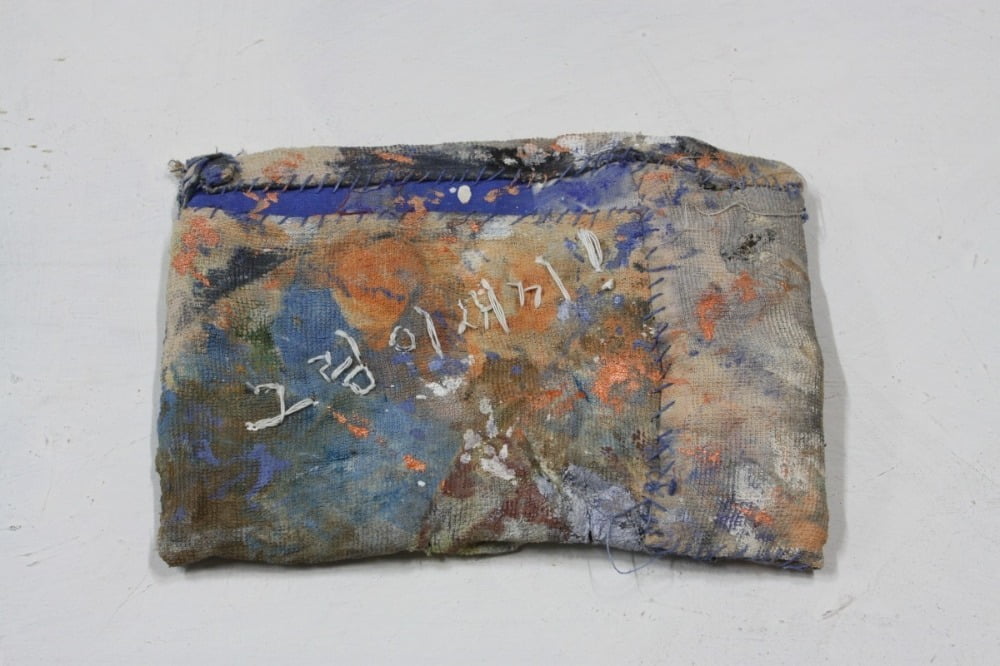
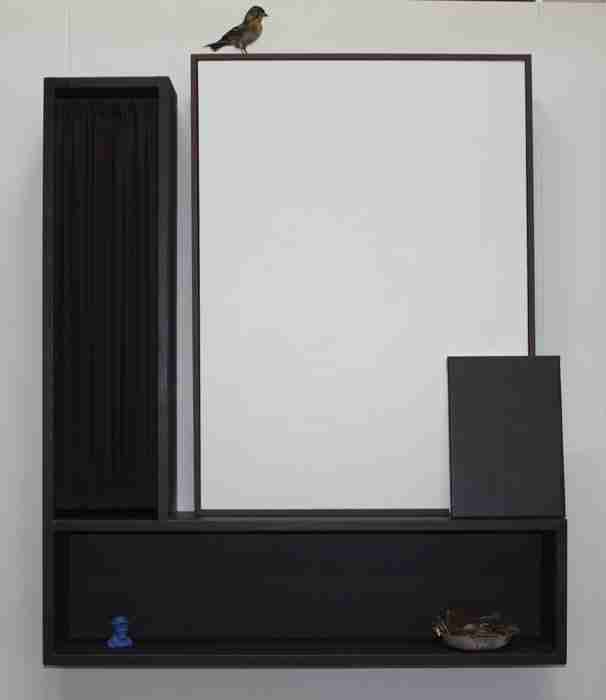
Kim Eull, You Damn
Painting, 2011, Stitched rag, 25 × 15 × 4 cm © Kim Eull
Often accompanied by Korean, English, or classical Chinese text,
sometimes marked by a single brushstroke, incorporating nearby objects, or
bearing Post-it notes and labels (which themselves become part of the work),
his drawings are the products of sustained reflection on the nature of art—and
of the pain of repeated failure. At times, he confesses the urge to strike his
work, exclaiming “You damn painting!” and dreams aloud of “a joyful world that
doesn’t need painting.”
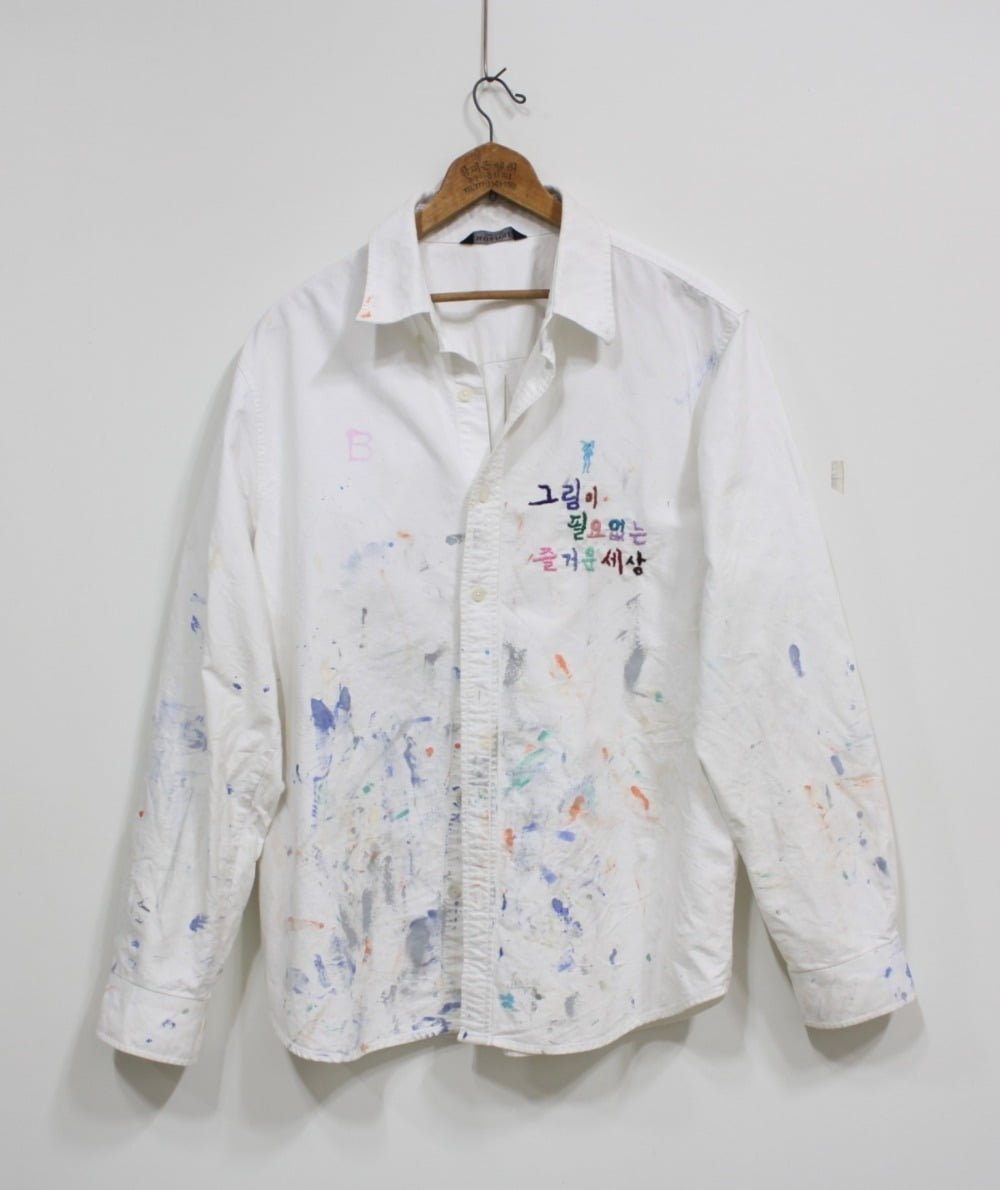
Kim Eull, A Joyful World That Doesn’t Need Painting,
2011, Stitched workwear, 60 × 85 × 10 cm © Kim Eull
Kim Eull has said that he goes to his studio “as if risking his life.”
Having chosen the path of the artist, he excluded from his life many of the
elements enjoyed by ordinary people, living solely through his work. During
periods of extreme financial difficulty, he worked as a day laborer at
construction sites. Possessing both physical strength and manual skill, he
quickly rose from general ‘laborer’ to ‘foreman’, and eventually to ‘oyaji’,
overseeing entire building projects. While working, he resolved that he was not
simply doing temporary labor, but truly engaging in manual work, while aspiring
to become an artist in the time that remained.
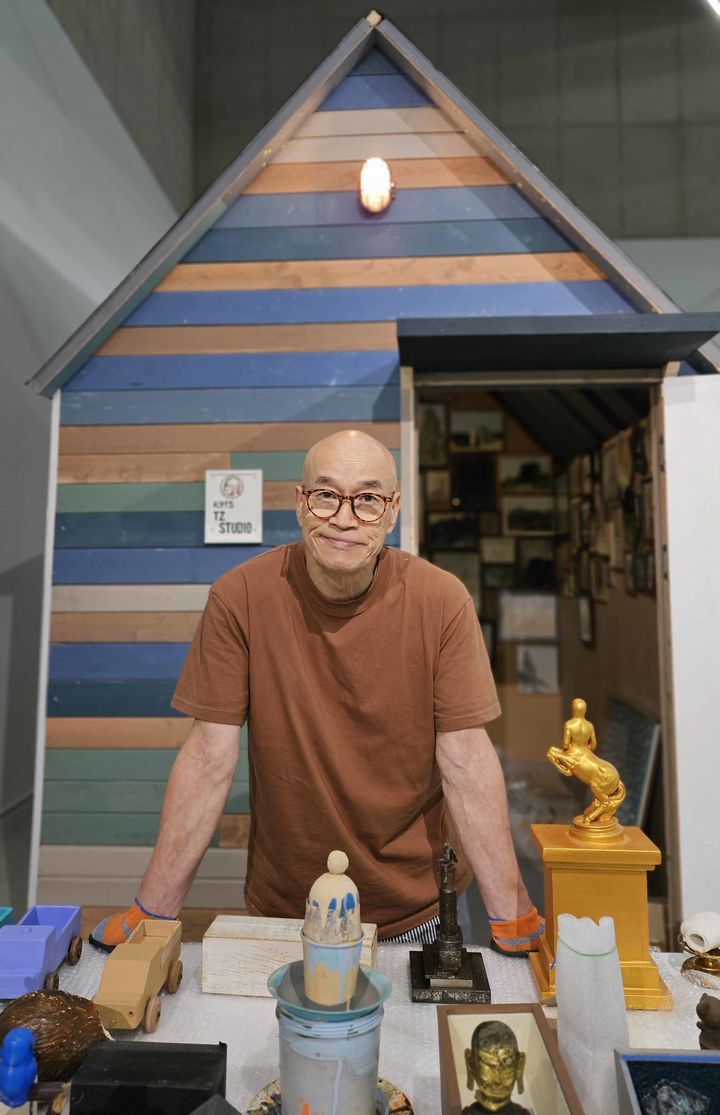
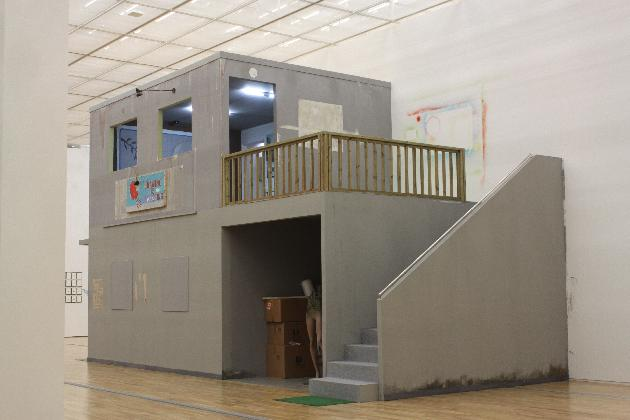
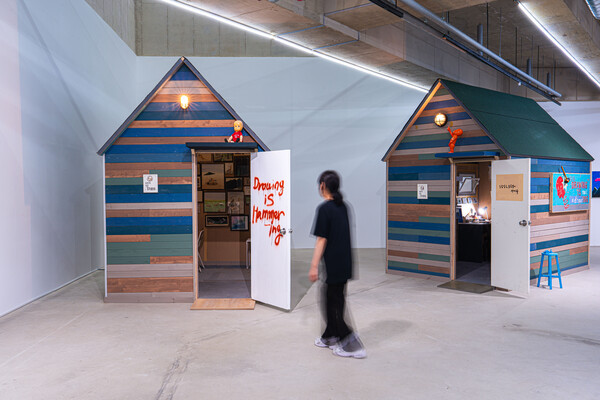
After building roughly seventeen houses, he finally gained the means to
construct—by his own hands—a studio in Yongin where he could devote himself
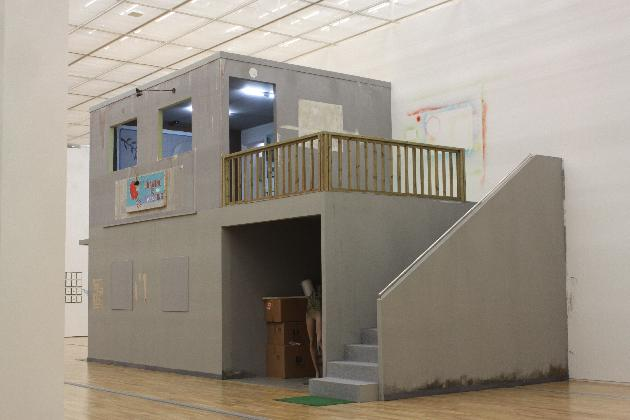
fully to art. One of his works recreates his studio itself as an installation
that viewers can enter, a moment in which his construction skills are directly
translated into his artistic practice.
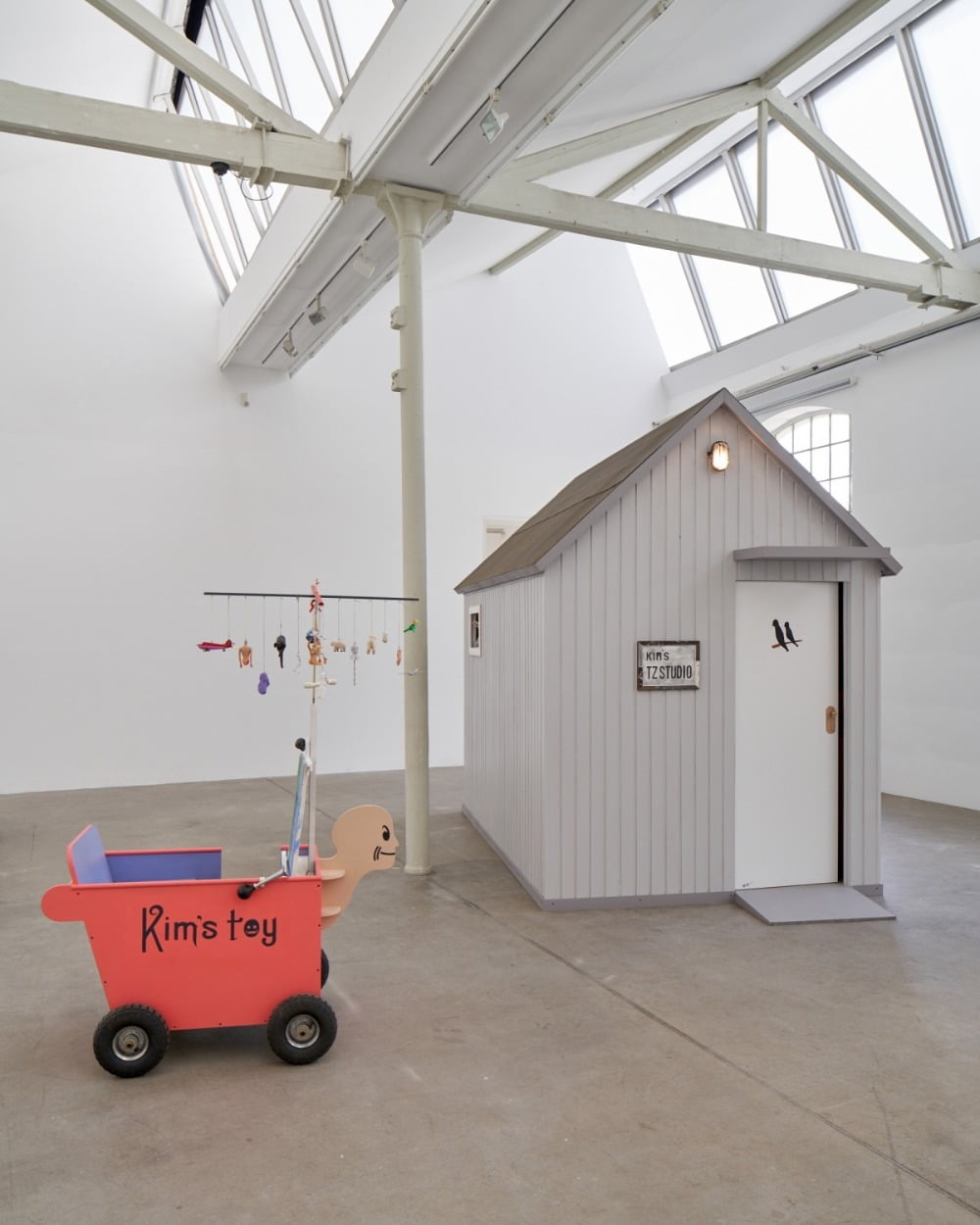
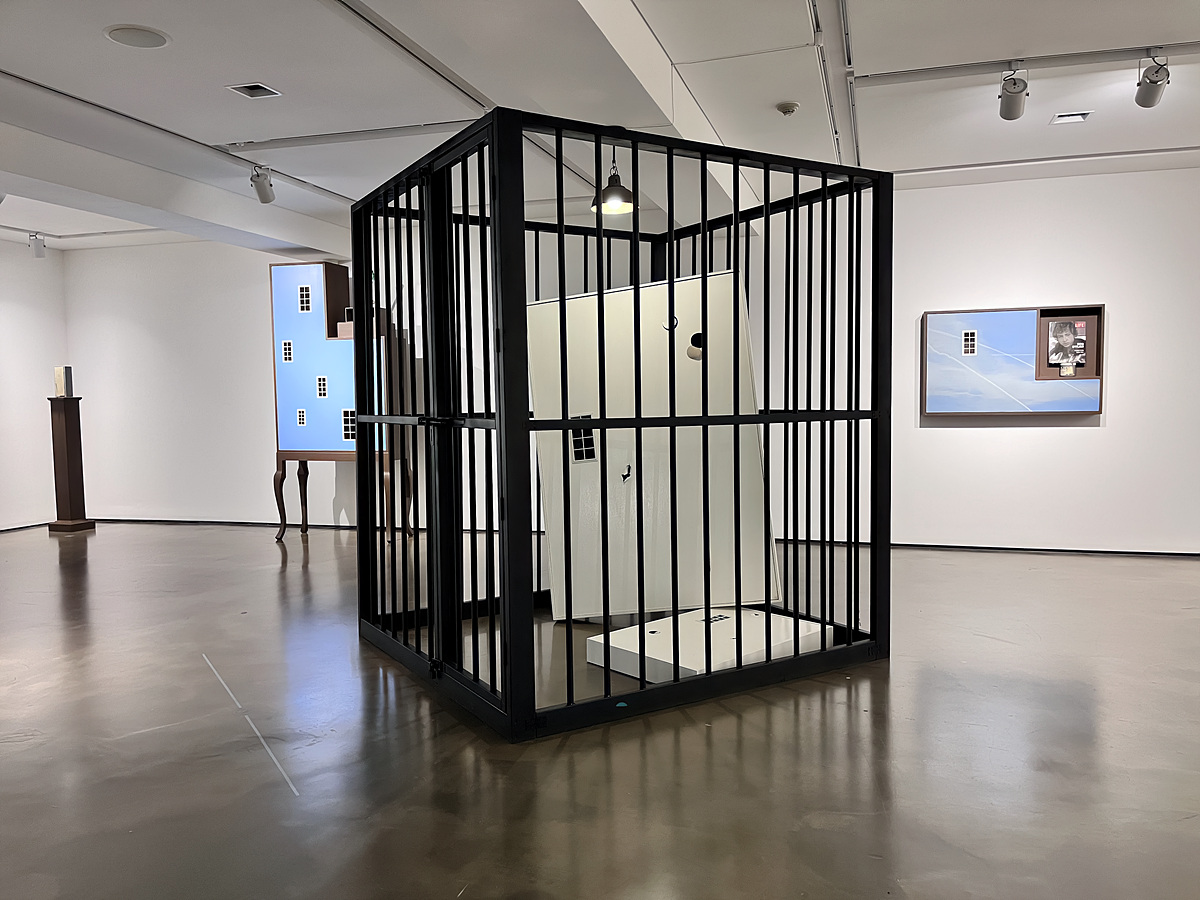
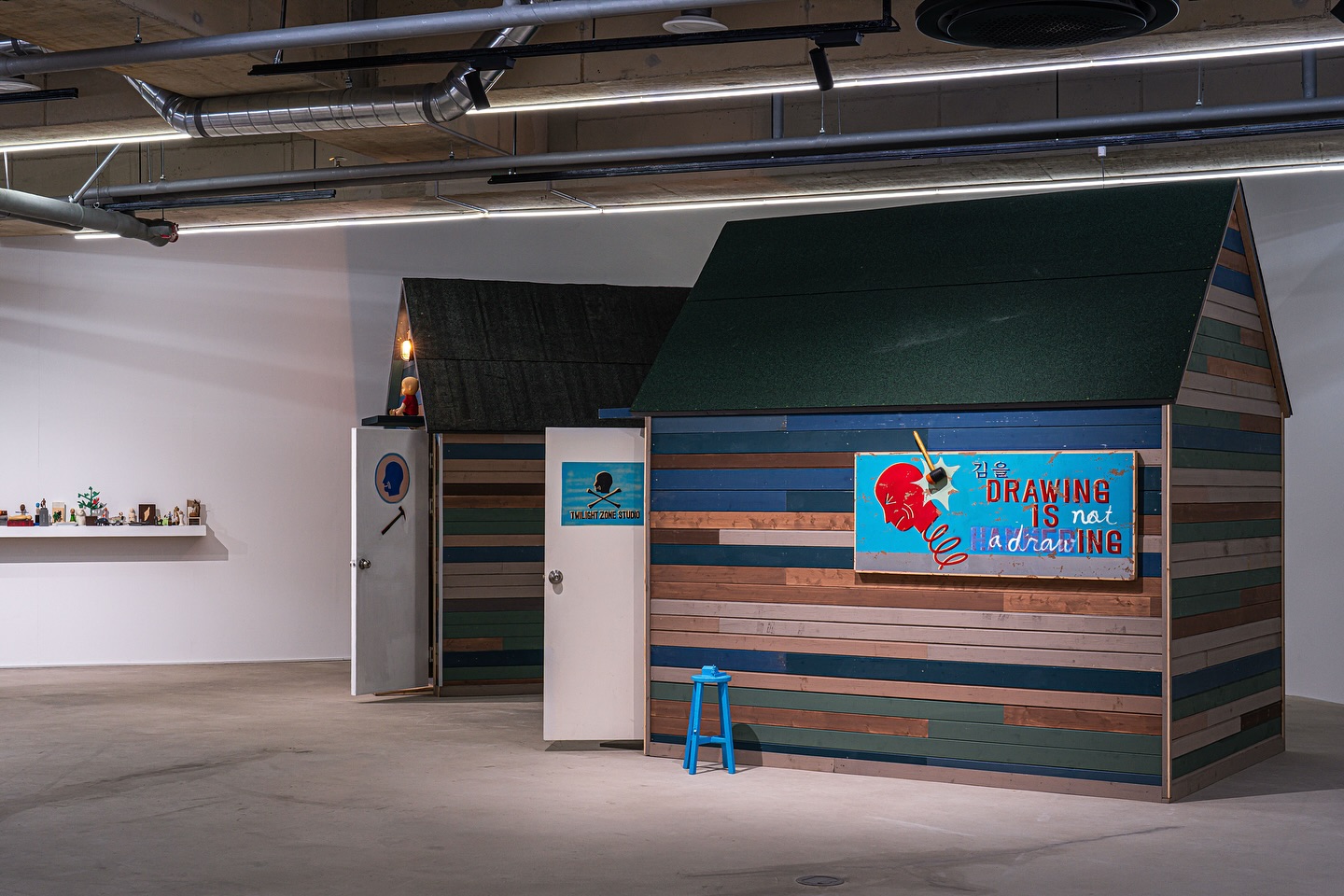
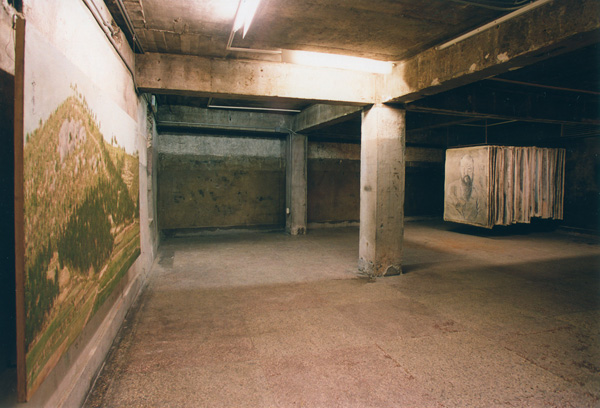
Installation view of
TZ studio © Choi & Lager Galerie
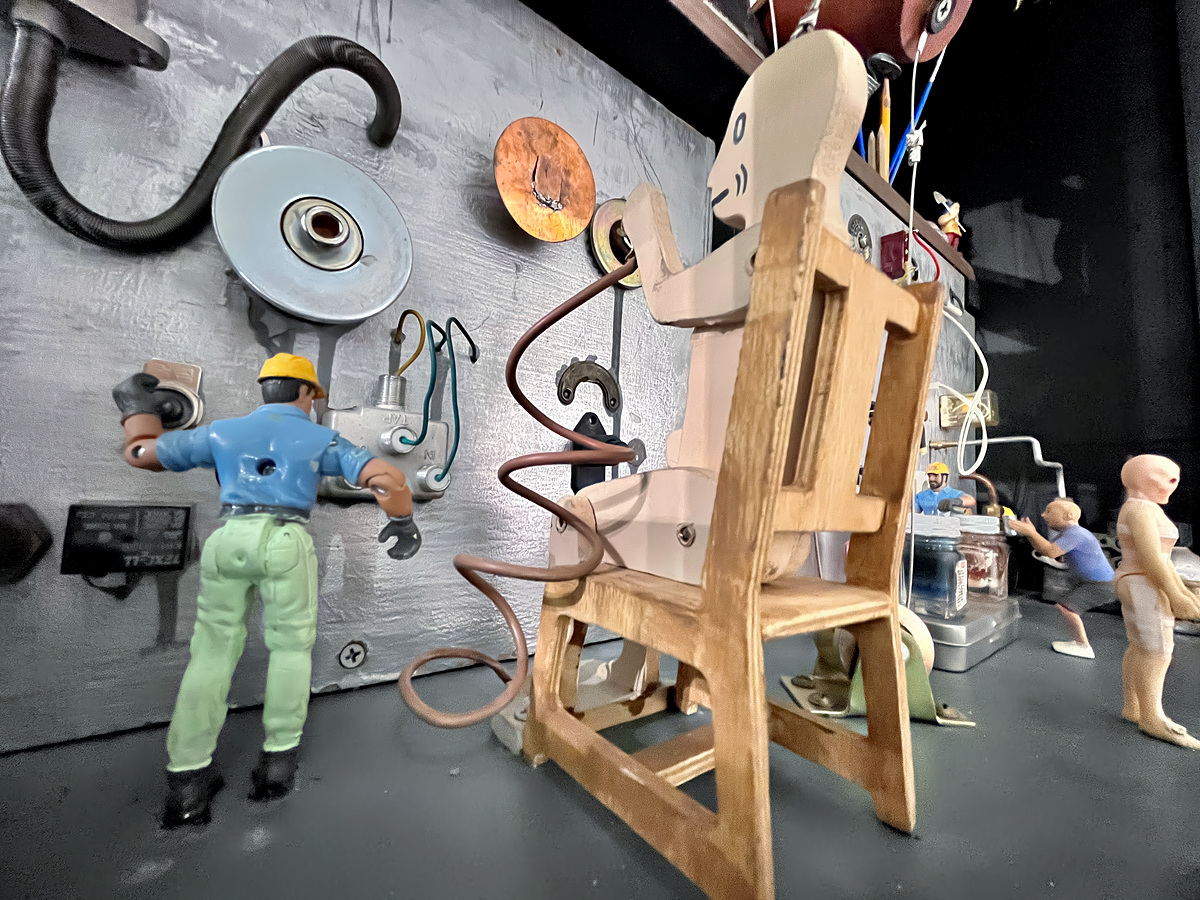
Kim Eull calls his studio the ‘Twilight Zone.’ Accordingly, the work
bears the abbreviated title TZ Studio. What does it mean for
a studio to exist in the boundary between day and night—the time when dogs and
wolves are indistinguishable, when the sunset brings both unease and a sense
that the day is slipping away? Was the artist seeking to capture this dusk-like
atmosphere within his workspace, or is it a metaphor for the remaining time in
his life? This ambiguity is deliberately left unexplored.
He goes—“risking his life”—to the “Twilight Zone Studio”, where he
spends the majority of his time. Though the phrase may sound exaggerated, it
rings true. Construction work has completion dates; office jobs have paydays,
beginnings and endings marked by ceremonies.
The artist’s time flows differently. A work that seemed complete one day
may be rejected the next. Even unfinished works must eventually face the bright
lights of the exhibition space and the unpredictable judgments of viewers. To
enter the studio while fully aware of this fate is a psychologically arduous
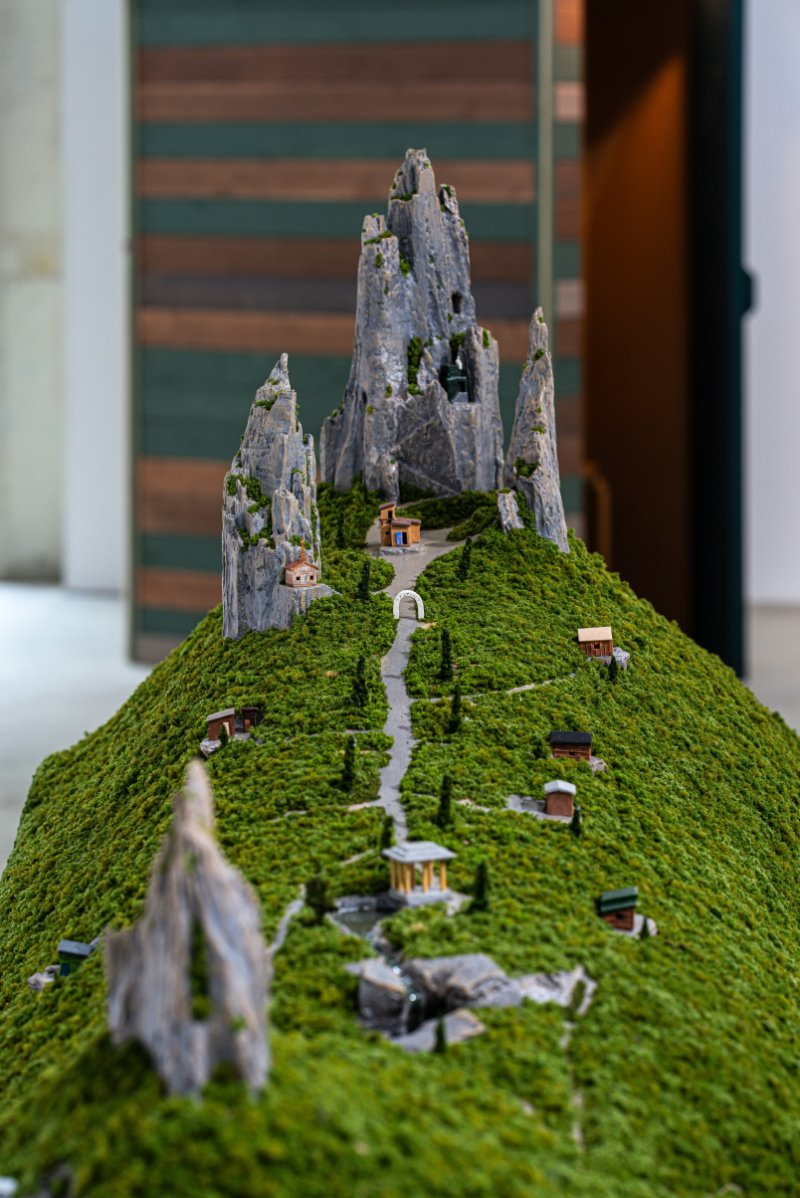
journey, which Kim Eull likens to climbing a mountain.
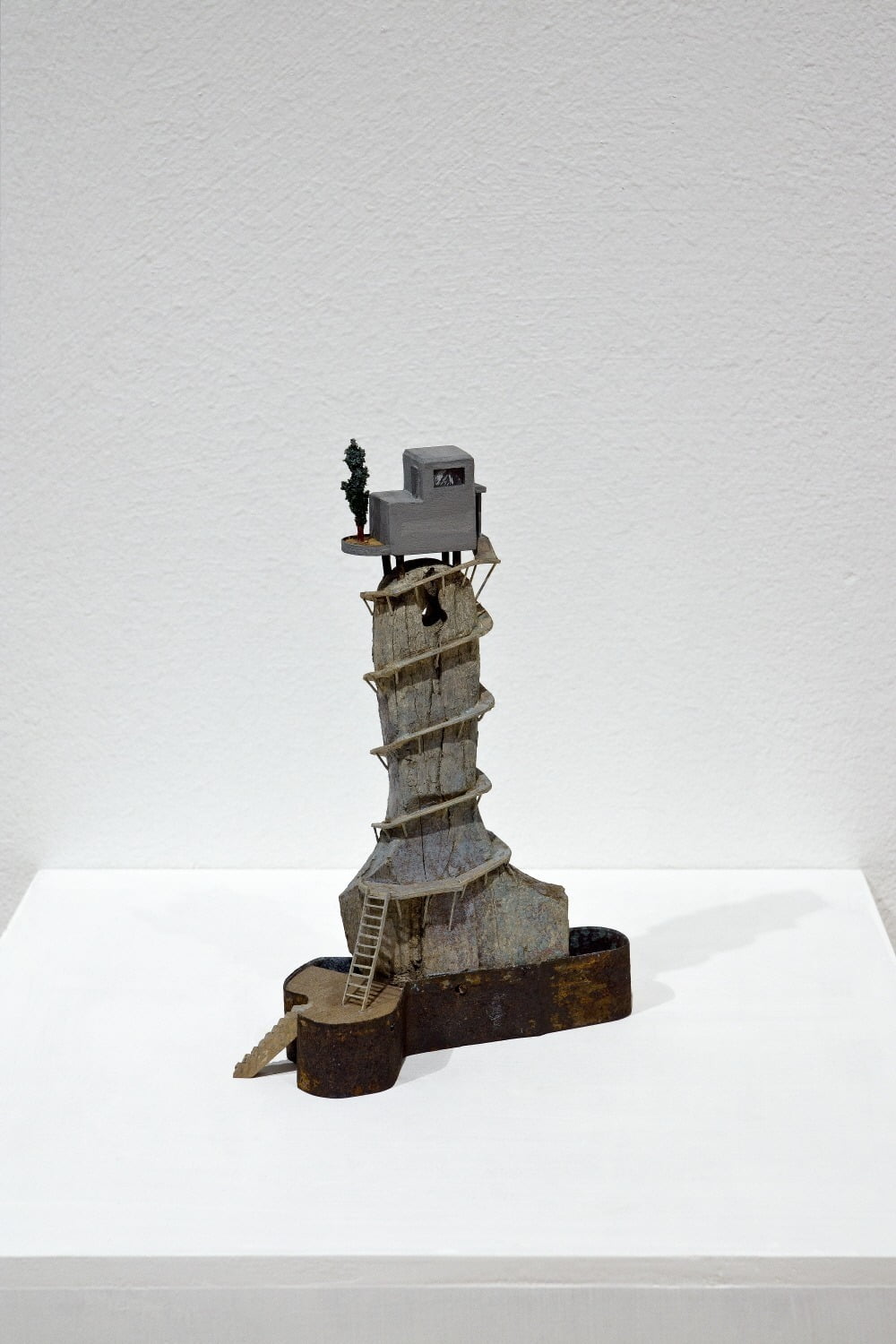
Kim Eull, Untitled, 2011, Mixed media, 15 × 21 × 7 cm
© Kim Eull
In Untitled, the studio precariously perches atop a
jutting rock, accessible only by a long, winding ascent.
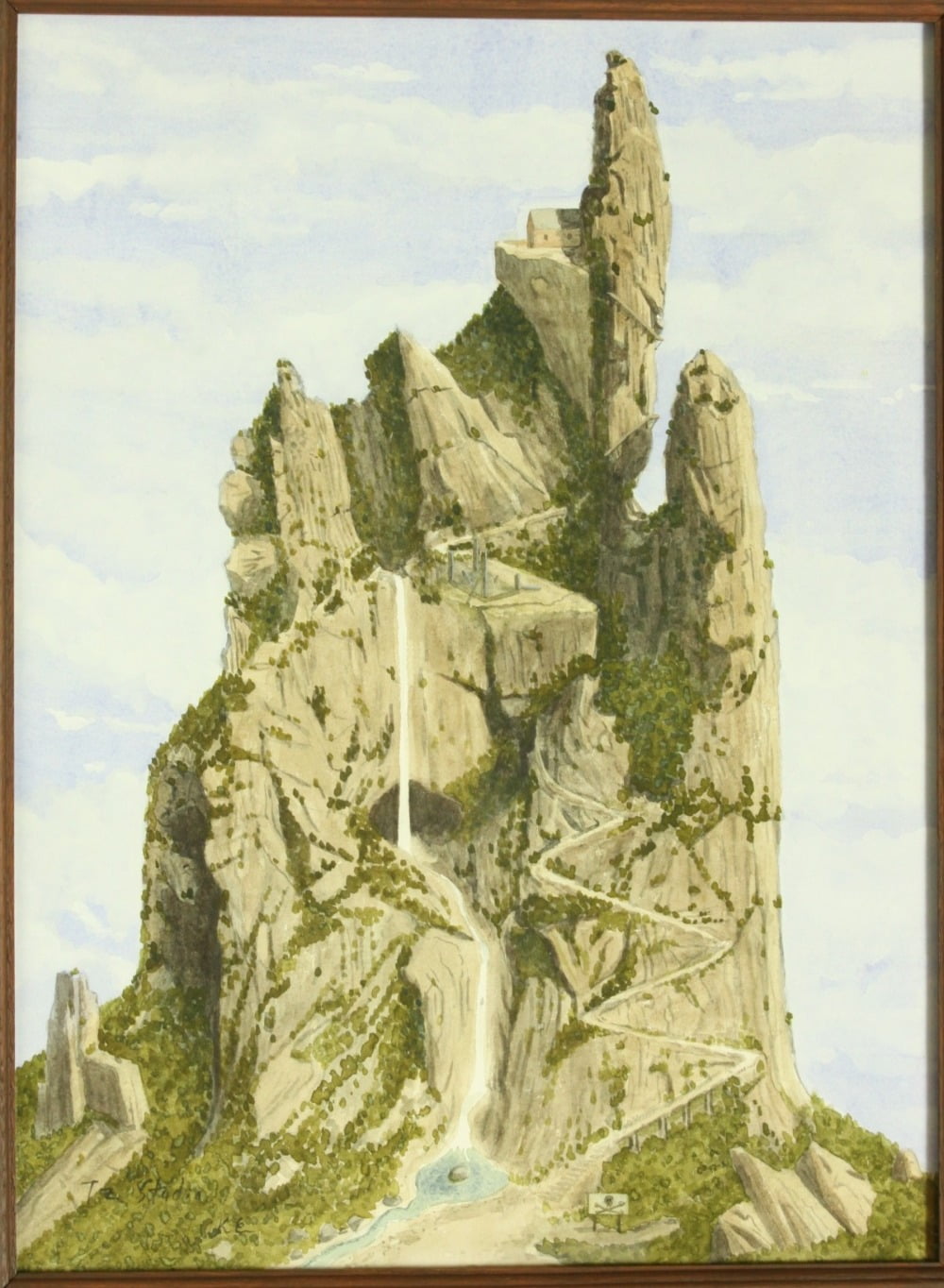
Kim Eull, TZ Studio, 2019, Watercolor on paper, 23 ×
35 cm © Kim Eull
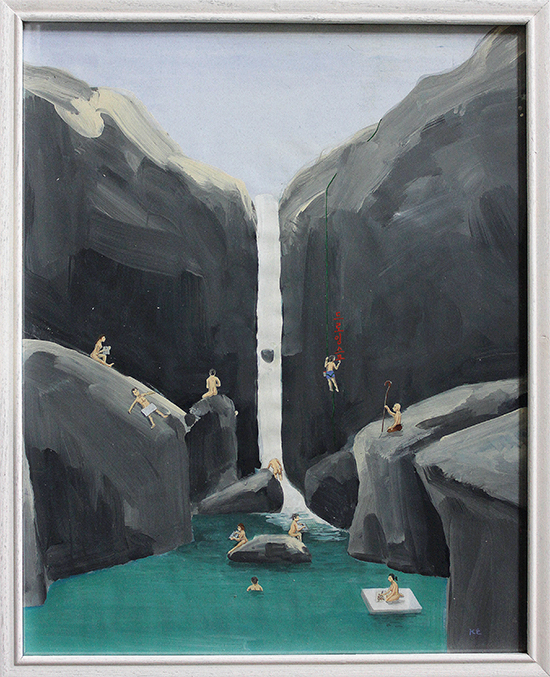
In the 2019 watercolor TZ Studio, the journey begins
at a skull-shaped warning sign, winds past waterfalls and half-built
structures, and culminates in a sheer rock face. From this peak—resembling an
outstretched finger—the artist works before descending once again. One is
compelled to ask: what is art, that it demands such effort?
Tears permeate Kim Eull’s work. Whether born of joy or sorrow, tears are
the outward manifestation of human emotion. He collects them in abundance:
tears flow down walls, fall from skies, and are carefully stored in drawers.
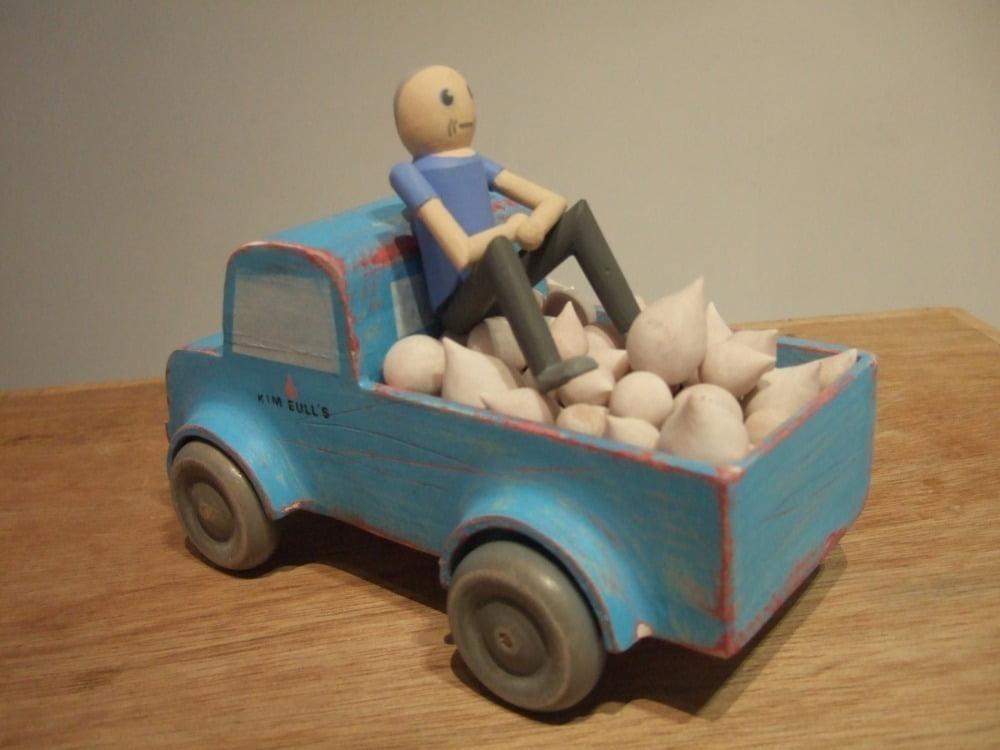 Kim Eull, Tear, 2010, Mixed media, 17 × 9 cm © Kim
Eull
Kim Eull, Tear, 2010, Mixed media, 17 × 9 cm © Kim
Eull
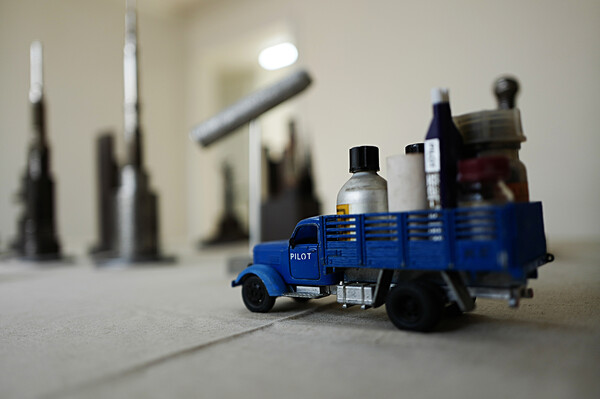
A figure seated atop a truck laden with tears is none other than Kim
Eull himself. His face—simple, spherical, marked by paired smile lines—is
instantly recognizable. The image resonates universally: who among us does not
carry a truckload of tears?
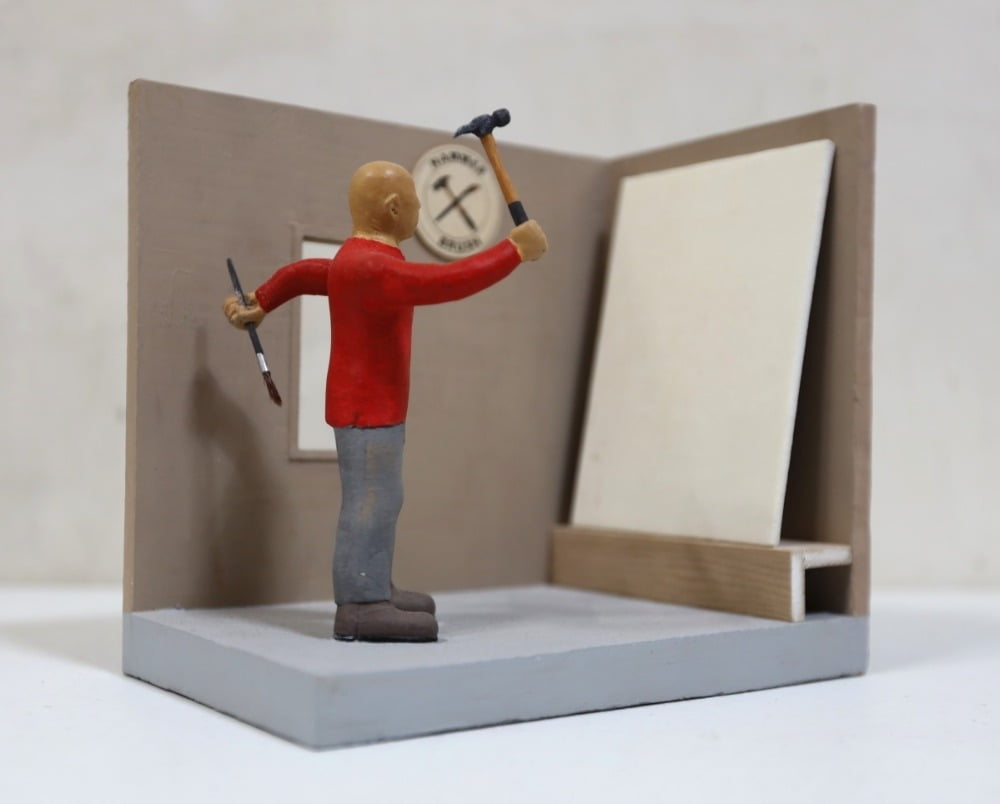
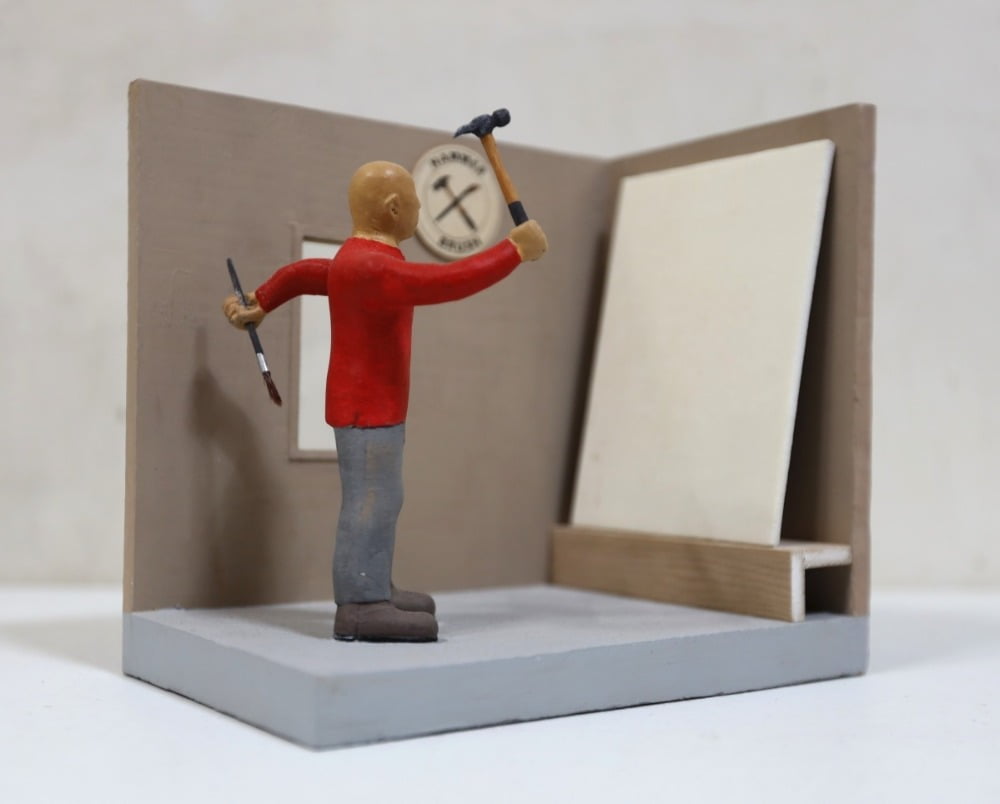 Kim Eull,
Studio, 2024, Mixed media, 18 × 17 × 12 cm © Kim Eull
Kim Eull,
Studio, 2024, Mixed media, 18 × 17 × 12 cm © Kim Eull
Works concerning the studio continue throughout his practice. The artist
appears before a blank canvas, performing gestures that alternate between
exercise and destruction, holding a brush in one hand and a hammer in the
other. Though the brush and hammer may seem worlds apart—like aristocrat and
servant—for Kim Eull they are one and the same. In their balance, the work
comes into being.
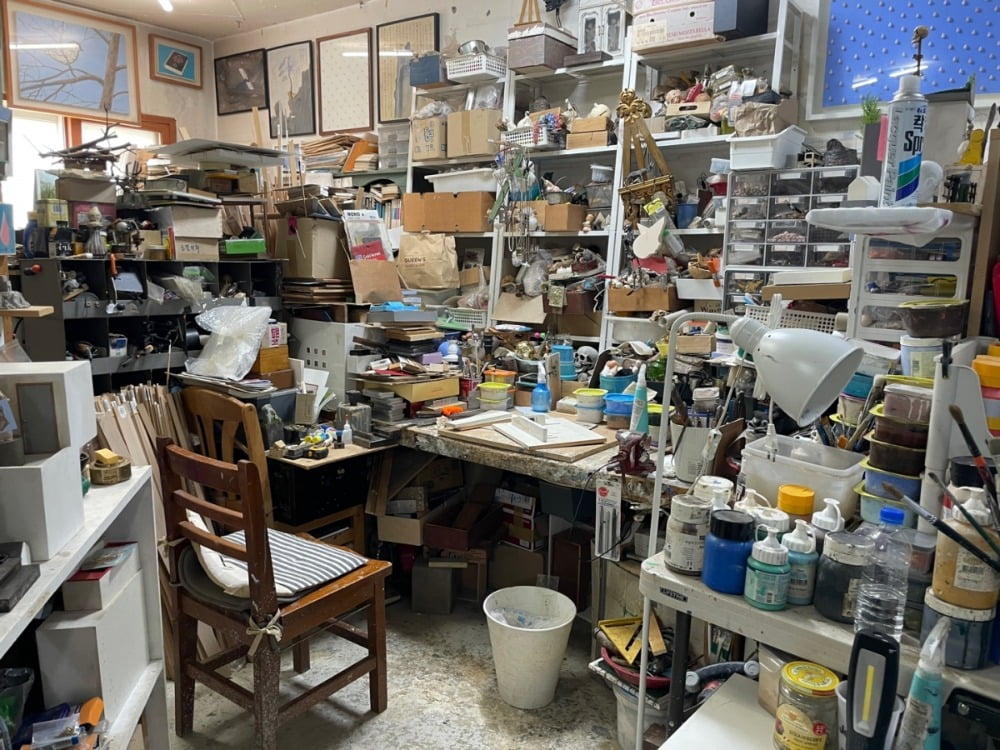
View of Kim Eull’s studio
interior © arte
Though his works depict the studio as a distant, arduous destination, it
may be revealed—almost as a secret—that his actual studio occupies the first
floor of his home in Yongin, with the second floor serving as living quarters.
Of course, this house, too, was built by Kim Eull himself, hammer in hand.