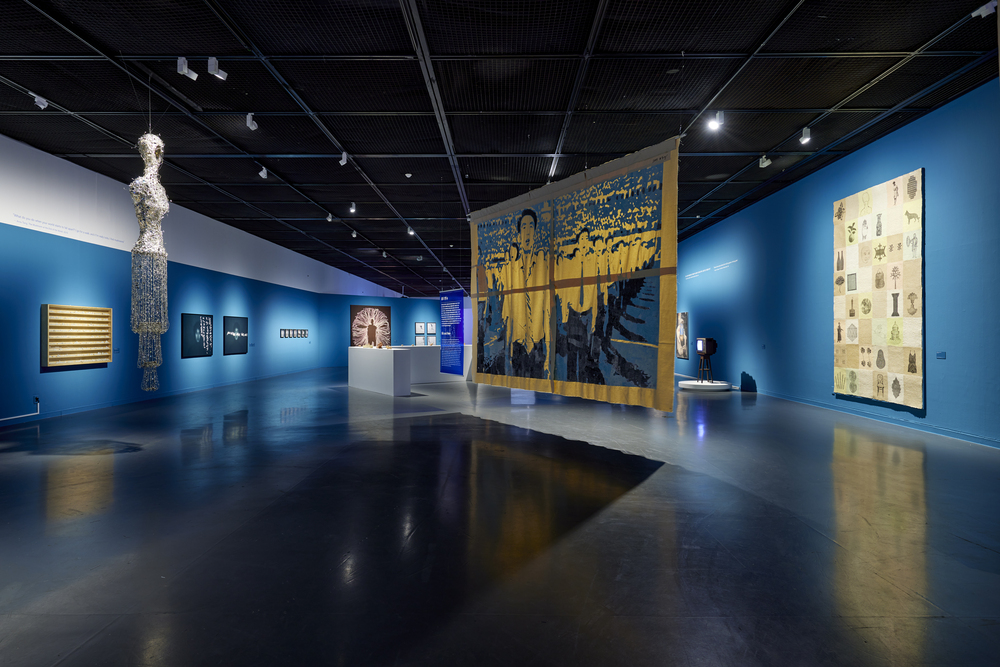
On one side of a space filled with works and objects hangs a work
uniform embroidered by the artist with the phrase ‘a joyful world that doesn’t
need paintings.’ This statement, light in tone yet substantial in weight,
embodies a pointed paradox. If humanity were to progress into an ideal society
in which freedom and equality no longer contradict each other, art might become
unnecessary: art is often regarded as the pinnacle of individual freedom, and
arguably the last of the privileges to be equally enjoyed. Yet reality
demonstrates how the freedom of a few can harm the freedom of many—most starkly
in the opposing freedoms of capital and labor. What governs the present is a
false freedom that ignores others’ unfreedom, and a false equality leveled
downward. Solutions differ by worldview. From a leftist perspective, art is
often seen as something to be overcome, with the claim that until a truly ideal
society arrives, art should serve as an instrument of political movement.
In this context, the avant-garde’s assertion of the ‘death of art’—and
likewise the ‘death of painting’—has repeatedly surfaced. For the left, art is
not the final goal but a transitional means within the broader path of human
emancipation. By contrast, right-leaning positions have tended to fetishize art
as a possession of the few, akin to sacred private property. Concepts sharing a
family resemblance—autonomy of art, art for art’s sake, pure art,
formalism—position art against society and attempt to exclude the social from
the artistic. This is an easy solution that resolves (or leaves unattended)
contradiction by removing one side altogether, often rendering art hypocritical
or impaired. Yet leftist solutions, too, have been shown to remain bound to classical
prescriptions—an idealized unity of truth, goodness, and beauty—rather than
genuine ‘realism.’ Kim Eull’s phrase ‘a joyful world that doesn’t need
paintings’ may touch the horizon of a leftist ideal, but it would be difficult
to imagine him endorsing a tendency to instrumentalize art as a political tool.
For now, the artist appears to hold a compromise—an ‘equilibrium between
the living ground of reality and one’s ideals.’ What Kim Eull calls ‘bad’ in
this exhibition remains intentionally ambiguous: the term could point to the
rigid paintings he critiques in the world at large, or to his own works—works
that some might question, asking, “Is this painting?” In any case, within 《Bad Drawing》 he makes
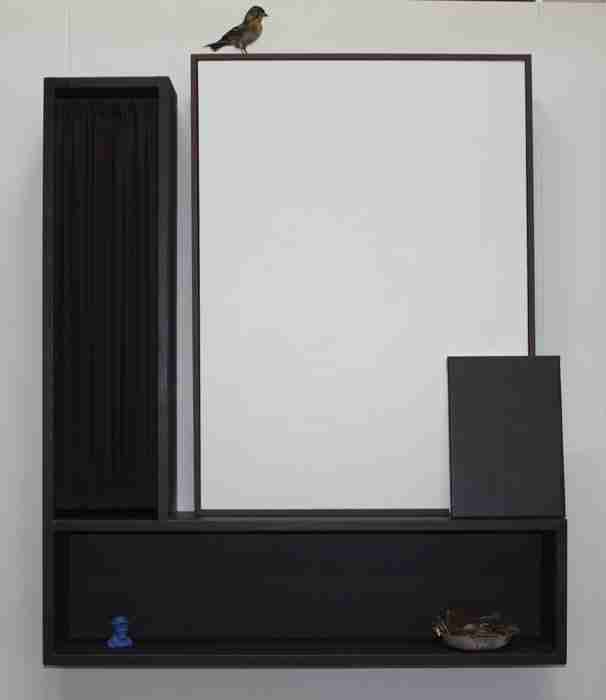
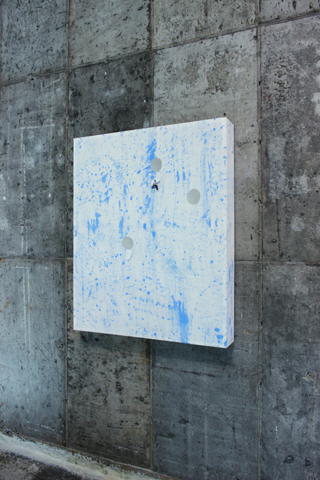
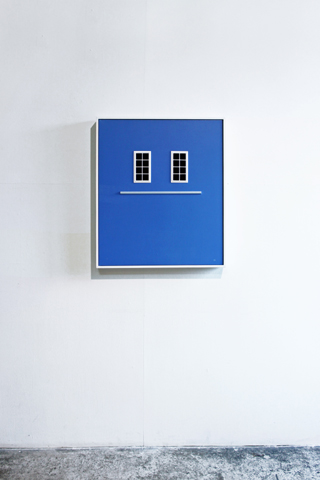
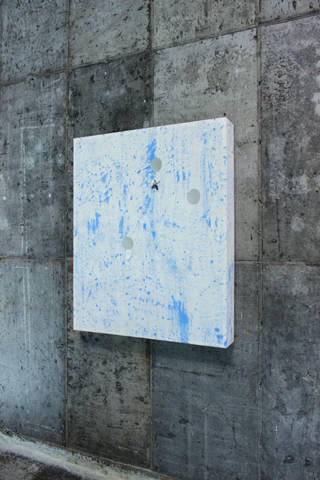
paintings about painting. Occupying Gallery 2, the ‘Beyond the Painting’ series
aims toward ‘meta-painting’: a critical painting of painting itself. Here, the
artist regards the surface of painting as ‘a field of lies and pretense,
adornment and distortion,’ and turns his attention to what lies behind it.
According to him, the mindset that elevates painting through subject matter or
form tends to produce rigid works rather than works that feel natural. The
posture of ‘Do you even understand painting?’ aligns with a romanticized image
of the artist that inflates the subject, and the artist’s self-consciousness
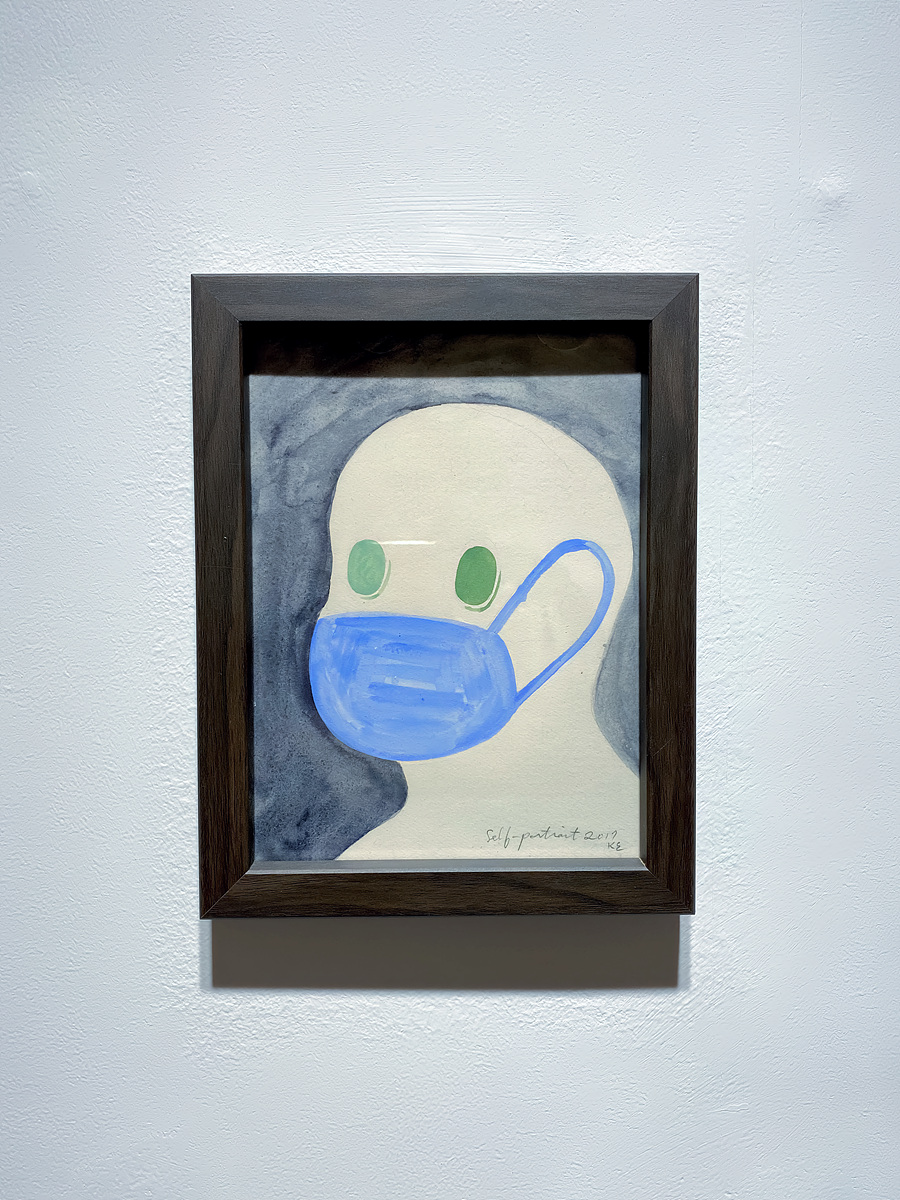
can be equally constricting. In this exhibition, a face—its features
erased—stands upside down on the floor, revealing the impulse to erase even the
most minimal trace of self-importance.
Erasure may enable writing. In Gödel, Escher, Bach,
Douglas Hofstadter observes that Zen practitioners seek to understand
themselves more deeply by breaking rules and conventions and freeing themselves
from what once held them. The other becomes an index of the same, because the
same is composed of the other. It is certain that erasure must precede
novelty—yet the previous is never completely erased; it leaves traces behind.
Kim Eull remarks, ‘Painting is short, and life is short.’ For an artist who sees
‘life itself as meaningless,’ art becomes “to regard the meaningless as
meaningless, as it is”—to see ‘nothing’ as it is. His works, searching for
meaning in meaninglessness, hover on the boundary between art and non-art. For
him, drawing is a flexible field that can move beyond formative frameworks,
including painting. It is precious precisely because it retains an initial
freshness, and because it contains fragments that arise from life.
Drawing accompanies writing, and text and image operate in a
complementary relationship. The questions of art and life are profound—debated
endlessly, yet never fully answerable—yet Kim Eull approaches them through a
style that may appear loose or even clumsy, while remaining incisive.
Exhibition-making is another matter: it requires selecting and organizing works
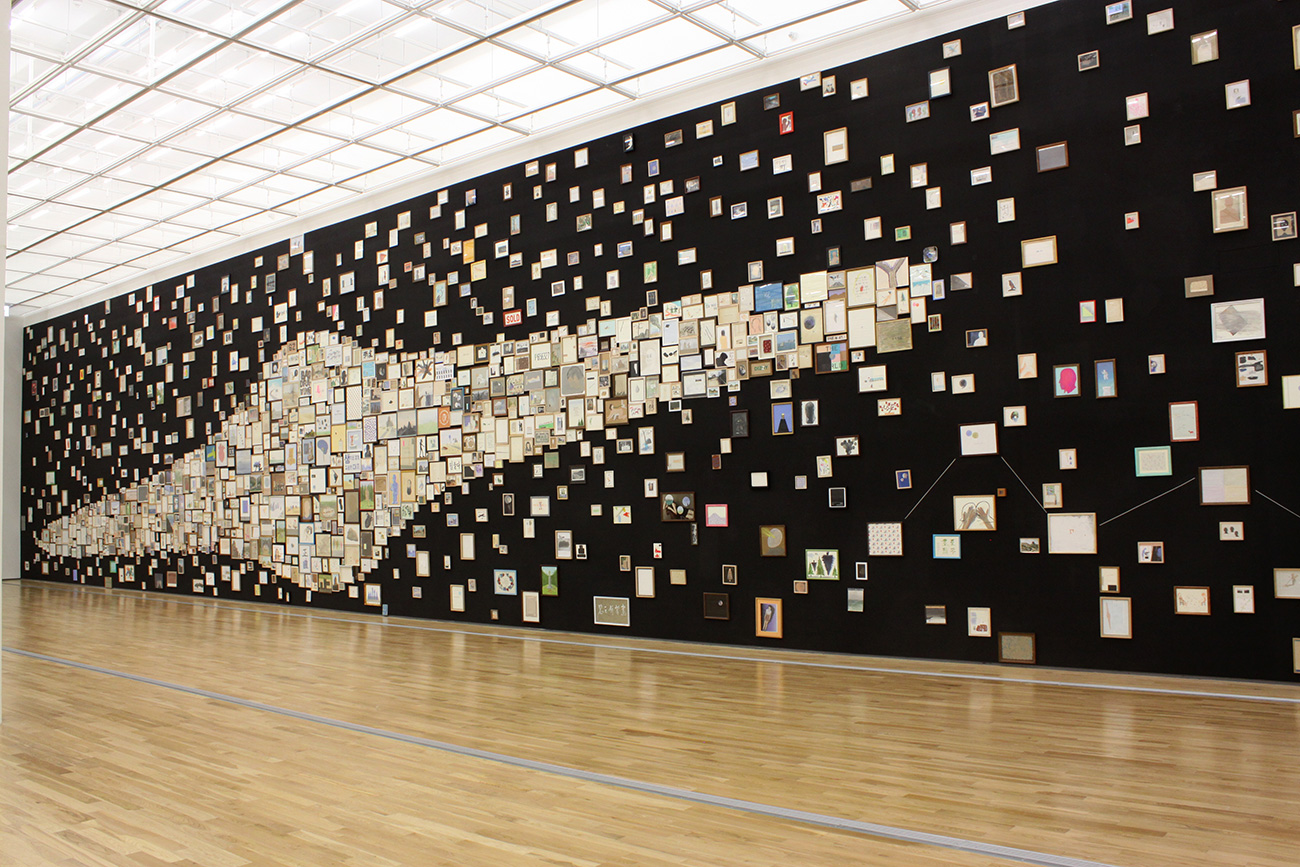
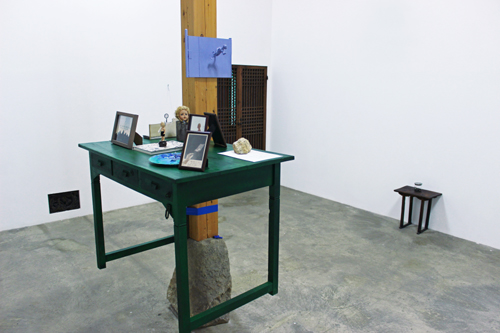
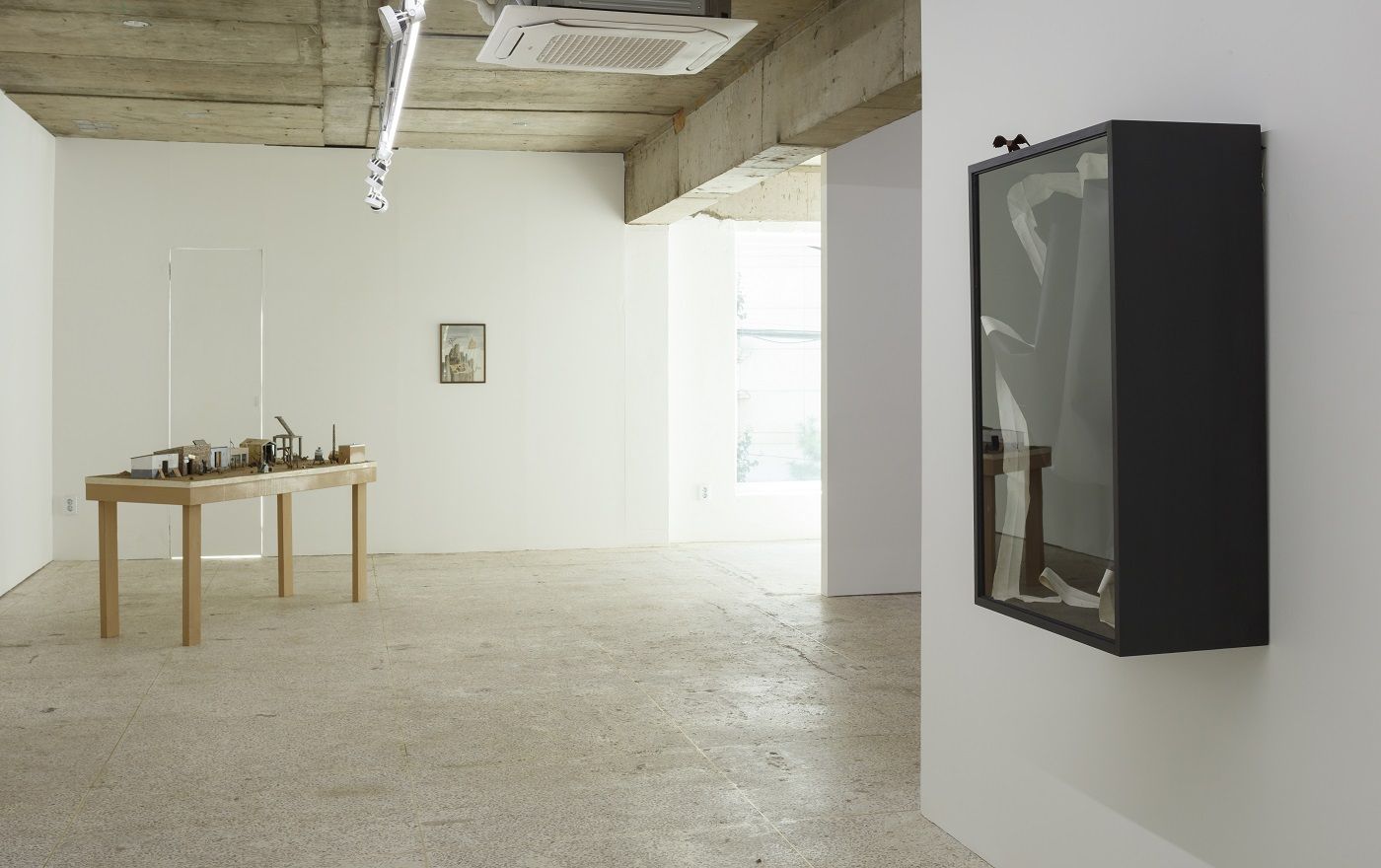
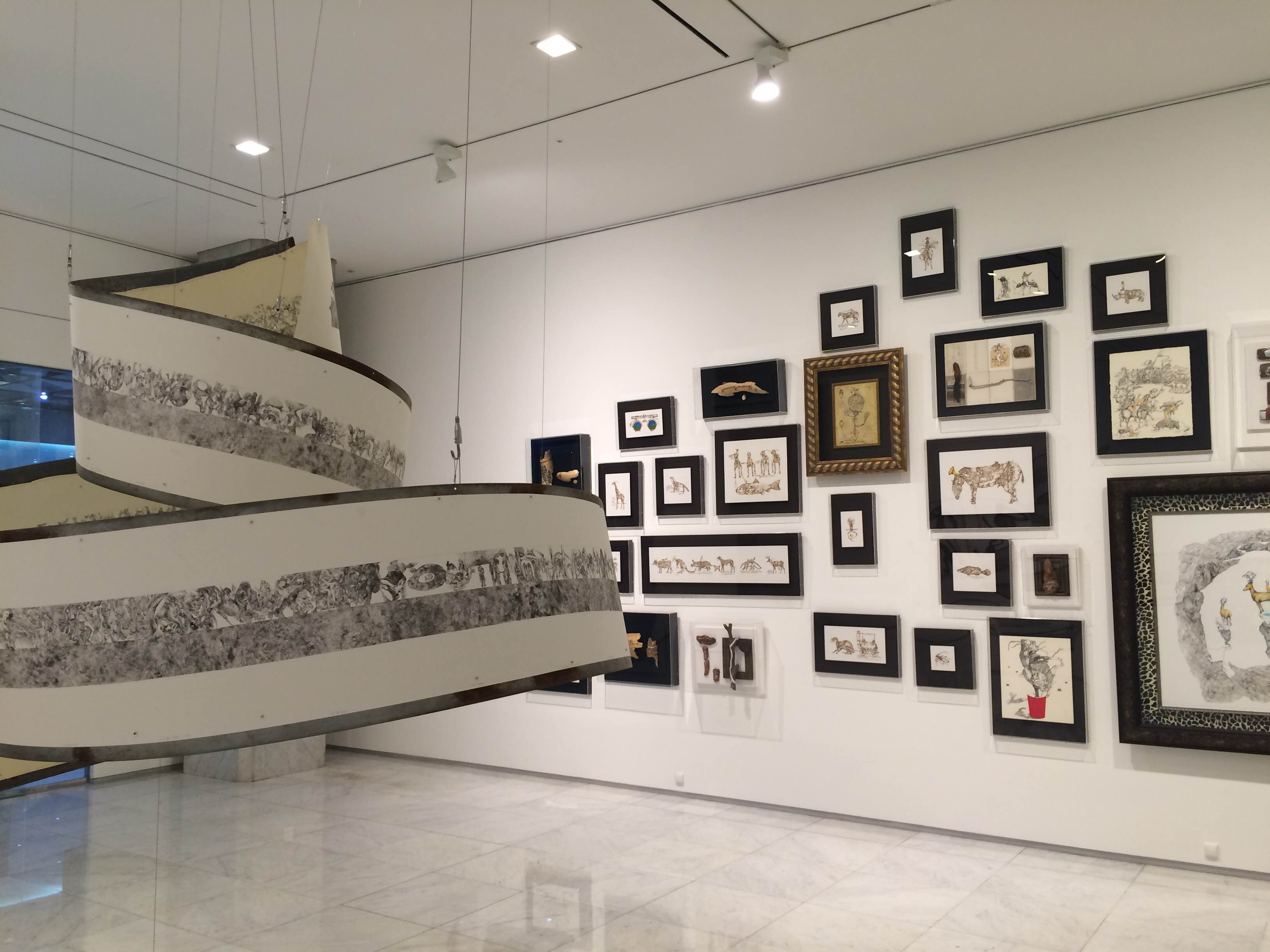
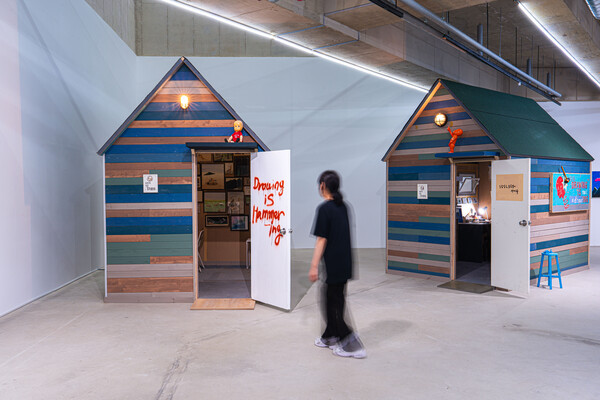
executed over a long span within a specific time and space. Gallery 3 presents
a drawing installation that weaves drawings together with objects inside and
outside the exhibition. Rather than the oppressive gravity of “important work,”
Kim Eull’s key vocabulary advances with a lighter step: drawings and objects.
Historically, the value of drawing and objects rose to prominence through Dada
and Surrealism, which sought to awaken the latent or repressed unconscious. His
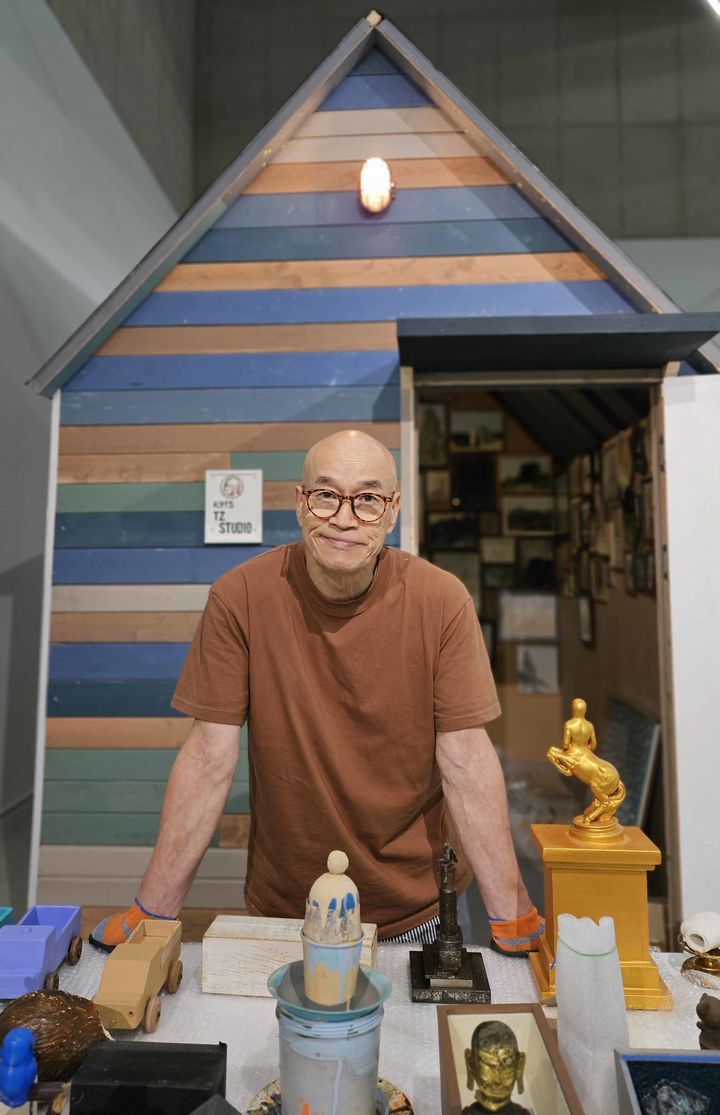
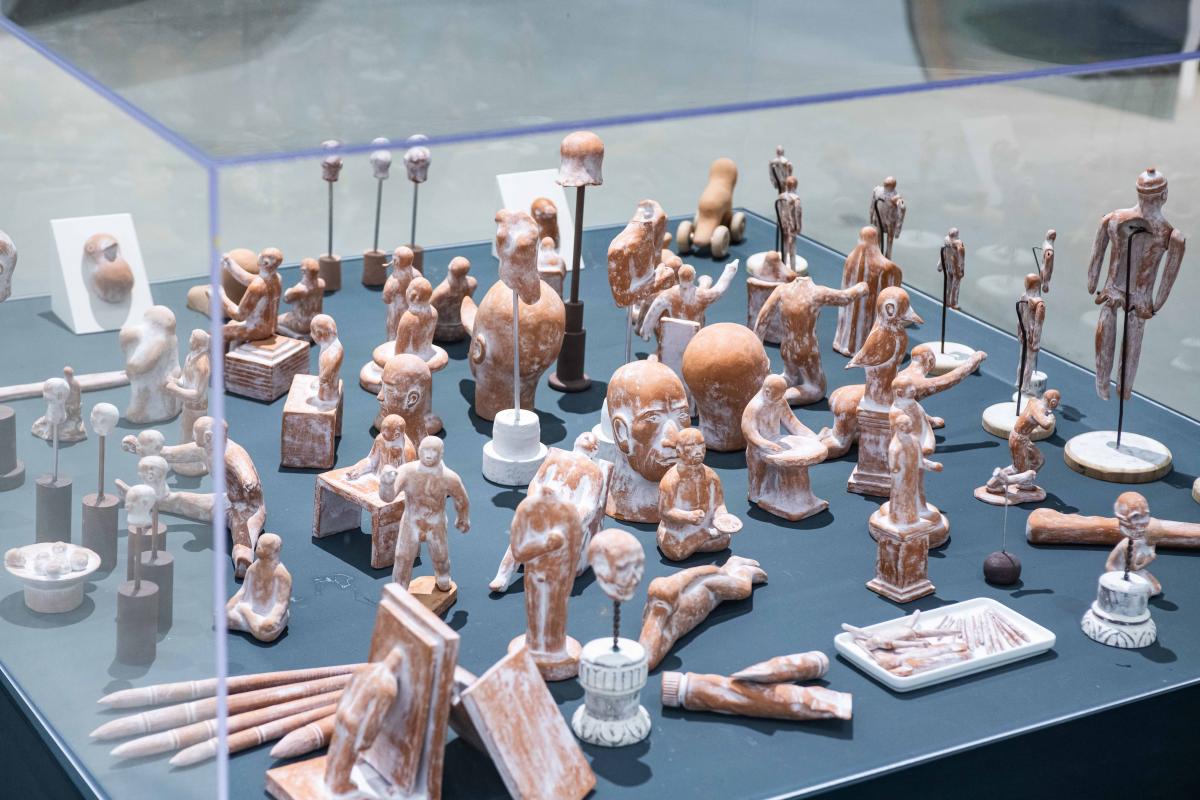
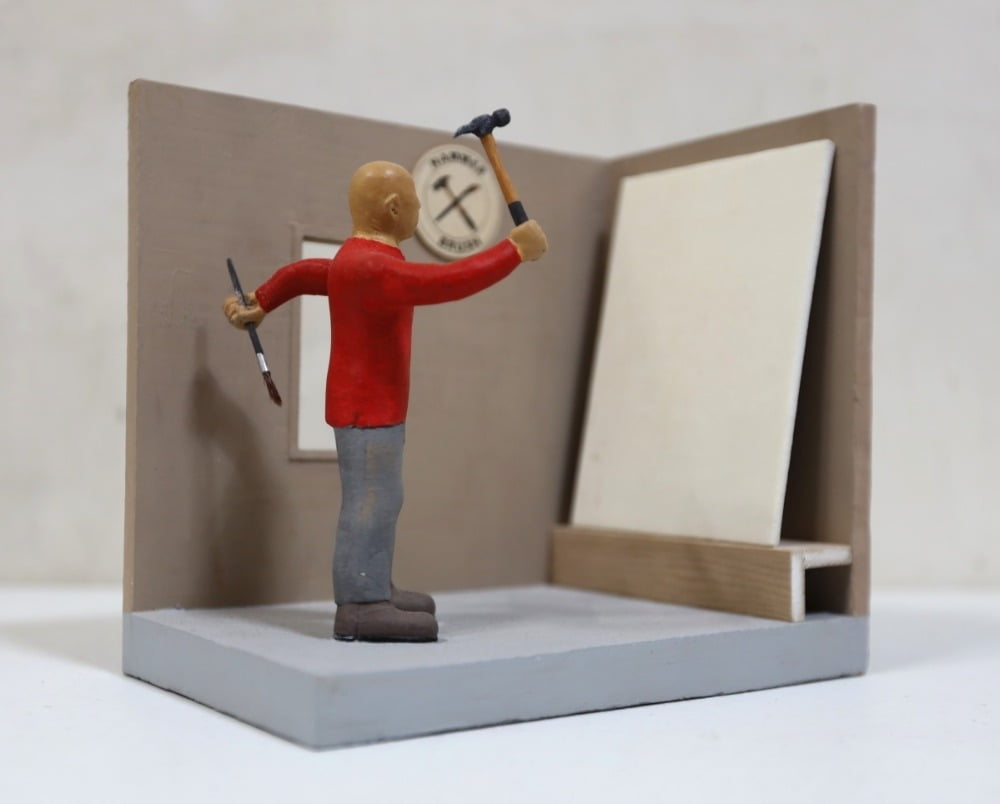
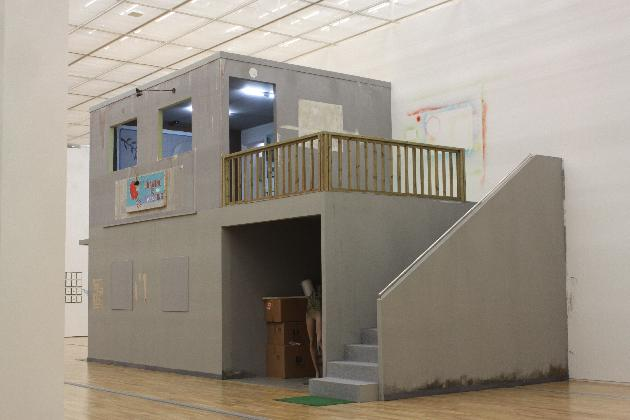
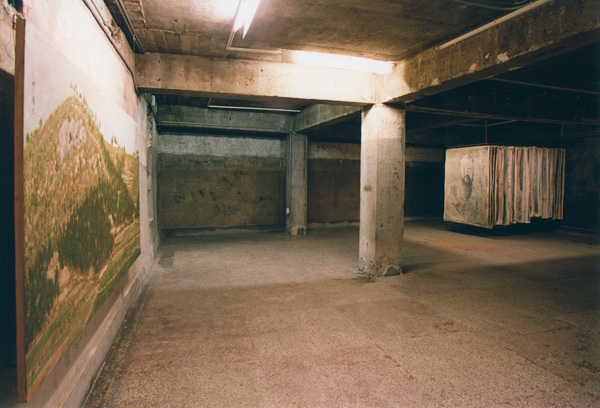
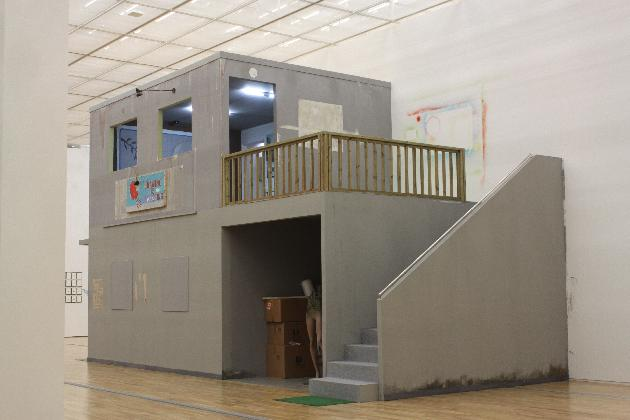
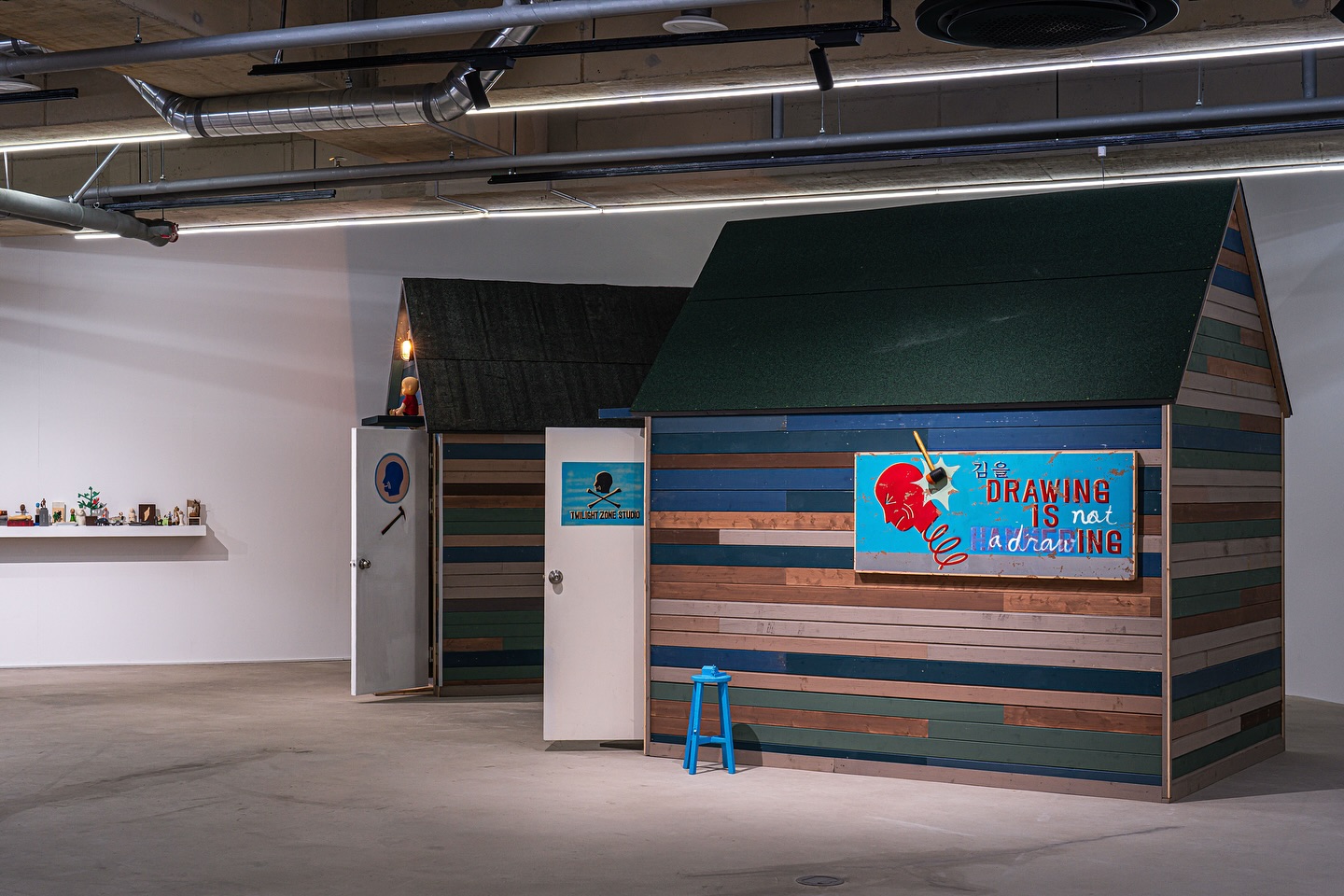
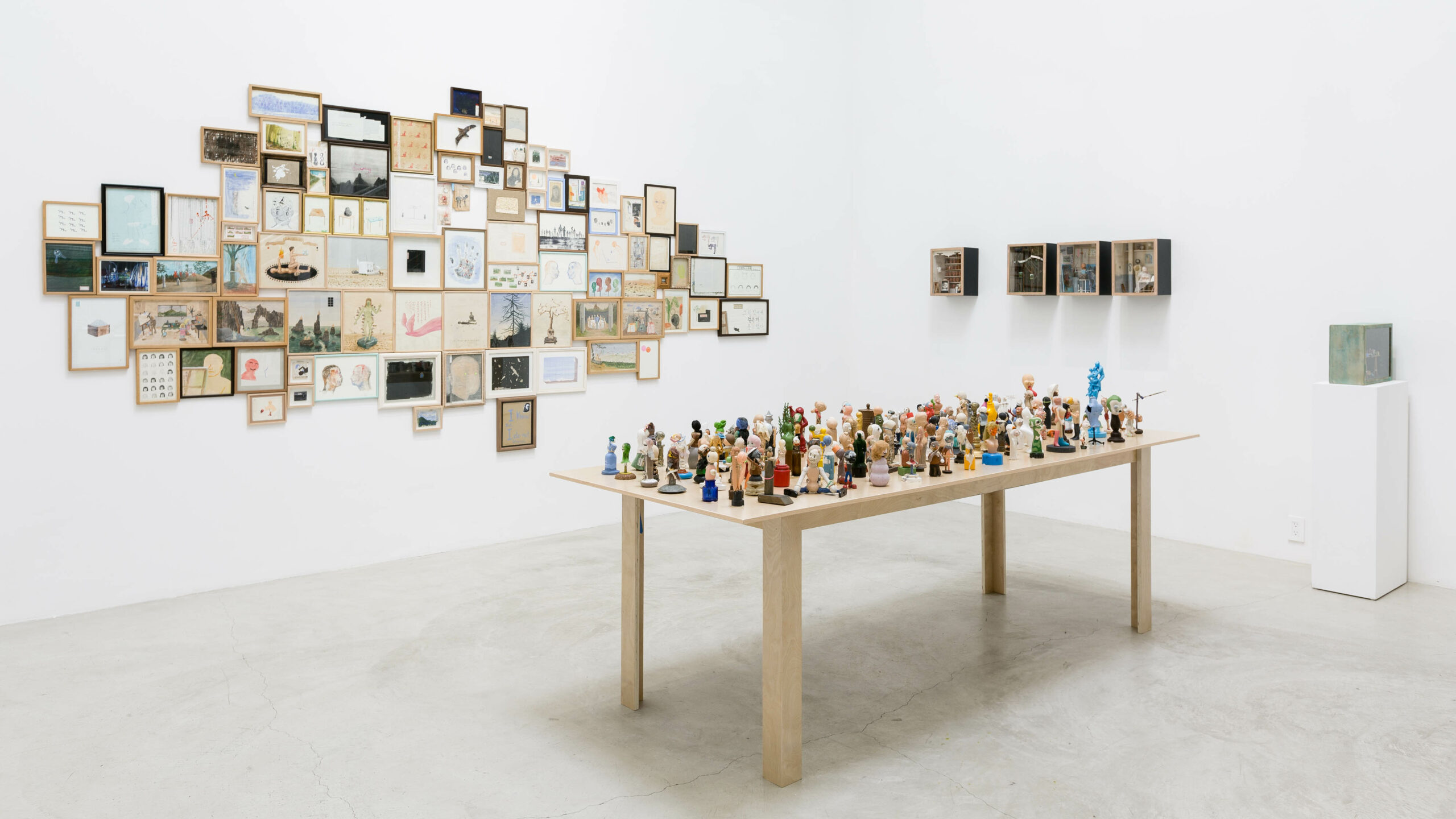
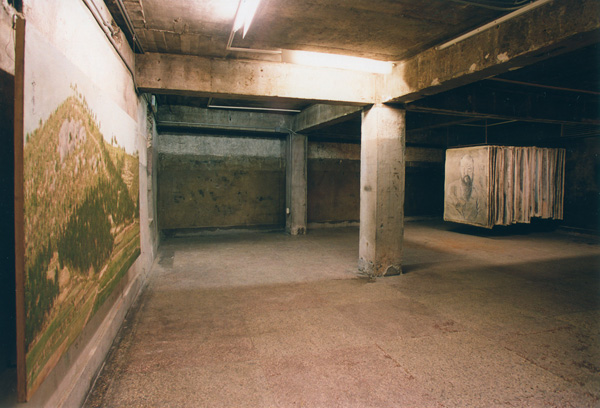
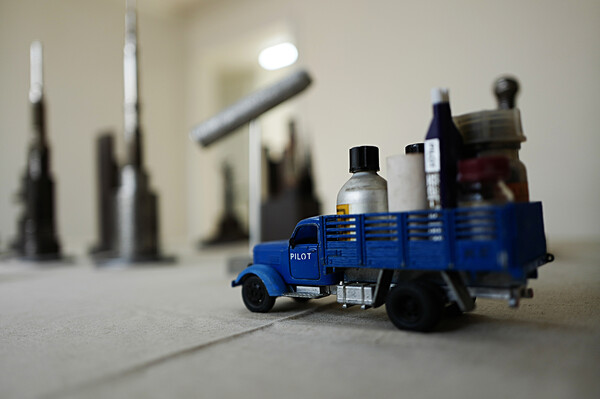
studio is filled with objects gathered over time. In the 2016 MMCA exhibition
for the 《Korea Artist
Prize》 program, he
reconstructed a corner of that studio, and in his 2010 exhibition at Space
Gongmyeong he released roughly 450 objects into the space.
His works on paper are not so different. ‘I don’t buy paper separately…
I always pick it up,’ he says. By erasing or adding to something already found,
unintended results can emerge—exemplified by the ‘Reviving Dead Paintings’
series (2004). Going further, objects are sometimes attached to these ‘impure’
planes, shifting attention away from ‘art’ and toward things. In The
Space of Literature, Maurice Blanchot—citing Rilke—recalls that ‘the
point of departure of art is in things,’ describing them as ‘humble, silent,
and serious beings.’ Unlike commodities, goods, or even artworks, things are
free (or indeterminate) from utility, function, and fixed meaning. Kim Eull’s
exhibition lifts the heaviness embedded in the very words ‘art’ and ‘work.’
Instead, he works without ceasing—during studio hours, in the hour or two
before sleep, and even in dreams. Even when consciousness is occupied
elsewhere, the unconscious fire directed toward work remains lit.
Art may be difficult to sustain as a profession, but a life wholly
devoted to art is possible. While everyday life often becomes consumed by labor
and consumption, the artist continues to think and enact art without pause.
Depending on one’s political and aesthetic orientation, such enactments might
be called experiments or practices. The artist is one who seeks to share the
results of such enactments with others. The drawing installations in Gallery 3
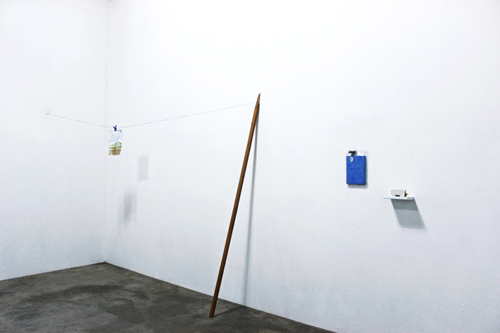
seem to pursue lightness to the point of escaping gravity itself. Drawings made
on paper without supports hang from strings with clips, or rest on floating
desks. Leaning on thread or branches, they flutter and spin. Because they are
not firmly fixed, stones are placed on them so they will not fly away; steel
balls or weights are sometimes attached. A worn desk is tied to a pillar and
suspended in the air, while a self-portrait lies upside down on the floor as if
discarded. None of the installed drawings offers a stable view; even those
placed on a desk demand physical effort—stepping up—to see them closely.
These precarious, barely attached presences suggest the fragility of
art’s place in life. Yet the works do not simply ‘float’: what anchors each
drawing’s center of gravity is text alongside the image—namely, the artist’s
thought. Because many are made on small pieces of paper, words often claim
their position even more decisively than images. Brief statements—only one or
two lines—can appear like Zen koans, or recall the East Asian tradition of
poetry, calligraphy, and painting. In one work, a stone is placed on white
paper with the text: ‘A stone on white paper… creation has begun again and the
world is starting to shake.’ Though small, the result is monumental. The stone
on the plane reads like a massive boulder or mountain—or perhaps a metaphor for
the magical moment when a drawn image becomes a physical entity.
A painting does not merely reflect the world; it is another world
existing in parallel. The existence of such worlds may console free spirits who
are easily alienated in reality. In fact, dominant systems invest enormous
capital and technology to seize this last domain that remains with the human
body. Spectacles produced by the ‘dream factory’ increasingly replace art. Yet
Kim Eull remains endlessly skeptical of the artist and the work. The
upside-down self-portrait with omitted features carries the suspicion that the
self may be false. A work clipped like laundry bears the phrase ‘a scene of
someone burning something in a field,’ raising doubt: could it be the artist’s
own work that is being burned? He has burned drawings into ash, or molded the
ash into rice-cake-like forms and stacked them. These ash-transformed drawings
reveal a skepticism that asks what use art could possibly have.