Poets always carry a notebook with them. Even today, when most people
have switched to smartphones, poets still prefer to carry a notebook. Maybe
this is because they have grown accustomed to the physical sensation of jotting
down each word with a ballpoint pen. Whether it be a smartphone or notebook,
poets carry something in order to capture the never-ending swarm of flashing
thoughts, floating words, and flowing impressions of the world. Being captured
unwittingly, these ideas and phrases usually do not follow any logical
probability or causality. They are mostly recorded in some temporary form, to
perhaps be summoned later and rearranged into an actual poem. Occasionally,
however, the original notes become an independent poem themselves, maintaining
their random, indiscriminate, and fragmentary form.
Poems and novels are very different. In novels, narration is very significant,
along with the four main elements of plot: introduction, development, turn, and
conclusion. Although these four elements can be rearranged or distorted, they
are almost never dissolved or disintegrated. Poetry, however, has wider spaces
between the lines, words, and sentences. Indeed, with poetry, the meaning often
comes from the intervening spaces, rather than from the words or sentences
themselves. If the spaces are too narrow, the meaning becomes cliché and
conventional, but if the spaces are too wide, the meaning becomes obscure or
disjointed. The plain meaning is replaced and saved by the strange, unfamiliar,
and chaotic meaning. Indeed, the entire existence of poetry is predicated upon
this process of replacing and saving.
In visual art, drawings are the equivalent of poetry: flashing thoughts,
floating words, and flowing impressions. Unwittingly captured, accidental and
indiscriminate things without any logical probability or causality. Fragments
containing the self-sufficient whole. Things that are strange, unfamiliar, and
chaotic. They are usually recorded as a temporary form, representing the
potential or possibility of a painting. They are often meant to be summoned and
rearranged to make a finished painting, but in some cases, they become
paintings, in and of themselves.
The relationship between poems and novels is directly reflected in the
relationship between drawings and paintings. At the superficial level, drawings
are made as potentiality, while paintings exist as actuality or realization. As
such, drawings might be seen as the periphery or surplus of paintings. They can
also be a condition or dimension in the formation of independent paintings.
Another perspective is to see paintings and drawings as institutionalized and
not-yet-institutionalized works, or as realized and not-yet-realized paintings.
In this way, drawings contain a radicalism, as self-awareness of the exterior
territory, as well as a political aspect as a practice that contravenes logic
and institution. But overall, drawings represent an individual and an
independent style. There is no predetermined form or style to follow, no rules
or premises. On the contrary, each drawing is its own form and style. Indeed,
the radical and political features of drawings derive from this individual form
and independent style.
Before Drawings
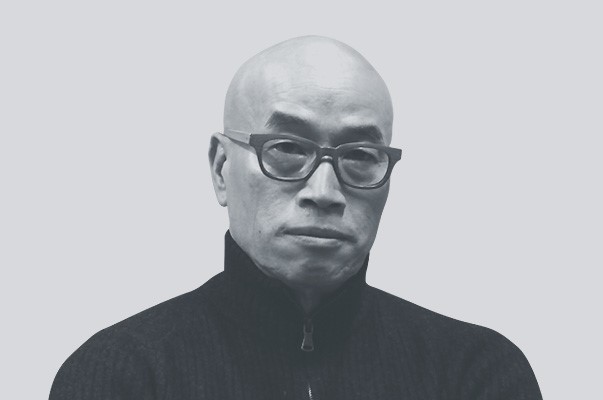
Kim Eull has fully dedicated himself to the craft of drawing since the
time before his first exhibition, which was aptly entitled Drawings (2003,
Gallery Doll and Gallery Fish). He switched his attention from paintings to
drawings as a way to abolish his doubts about legitimacy in paintings, while
also seeking to achieve a contemporary sensibility.
Kim’s doubts were particularly aimed at the deterministic idea that the quality
of paintings comes from their relation to some prescribed form and definition,
with a legitimacy that is ultimately granted by the art system. For him, the
quality of a painting is not fixed, and each painting can be its own form and
definition. This attitude emphasizes the act or process itself. Notably, around
1998, the majority of Kim’s works were destroyed in a fire at his studio. His
subsequent focus on drawings was likely closely related to his realizations
about the quality of a painting, or the “existence mode of art.” In the end,
Kim came to see the fire as something of a godsend, freeing him from his
previous conceptions and giving him the chance to be reborn as an artist.
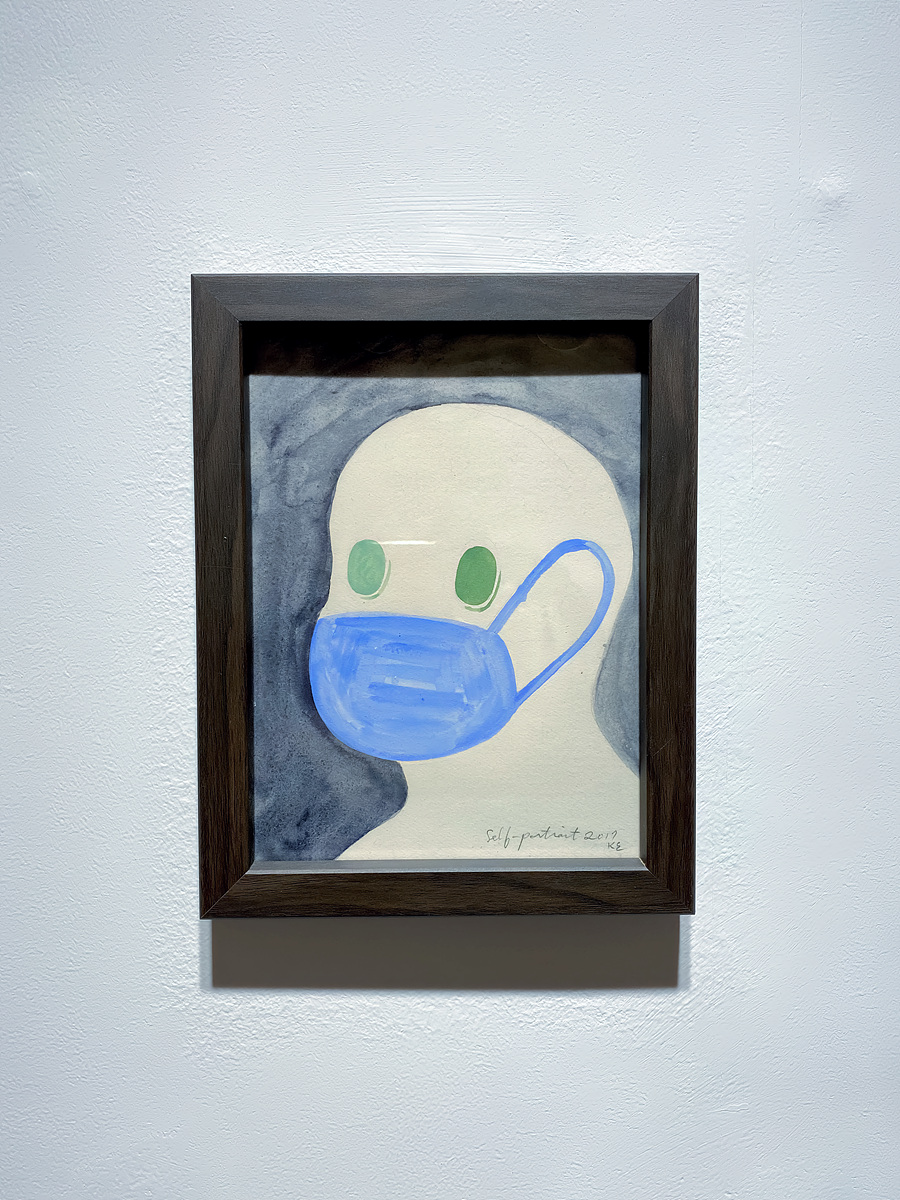
Before switching to drawings, Kim was primarily a painter, and most of his
works were from his two major series, ‘Self Portrait’ (1994-1997) and ‘Blood
Map’ (1997-2002). Although these two series have some distinct qualities, they
can also be connected as one, in that the self-portraits gradually expanded to
involve Kim’s study of his own genealogy, or “blood map.” The self portrait
extends into a blood map, which then serves as the premise for drawings that
reflect a fragmented or multiplied subjectivity. In these two series,
especially Blood Map, we can see the difficult yet sometimes jovial process of
groping in the dark for the signifier of subjectivity.
Earth is known as the origin of life, because every living thing comes from and
returns to the earth. New life forms are created every instant, and they rely
on the earth for survival. As such, the earth provides countless connections
for all of these beings, and those connections become dust, dirt, rocks, trees,
rivers, and mountains. The blood of every being flows inside the earth, and the
history of the earth is nothing but that of blood.
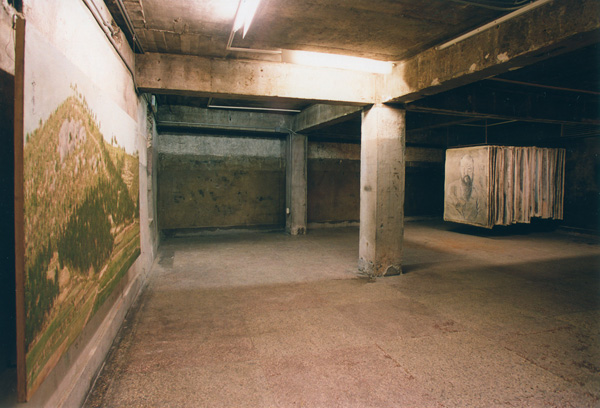
Kim Eull was born and raised at Oka-ri 265, Goheung-eup, Goheung-gun, South
Jeolla Province. He made a series of paintings that deal with his family
history, which he calls Blood Map, as well as Oka-ri 265. These paintings show
scenes of family and nature, moving freely in and out without any boundaries.
For example, people surge from the ground against a backdrop of wide mountains,
where the family graves are located.
In addition, on an old persimmon tree that
has long protected the family house, each branch bears a person’s face, rather
than a persimmon. The people seem to come directly from the mountains or the
persimmon tree, implying that a family is nothing but earth, and that the
history of the family (genealogy) is nothing but the history of the earth (the
mountains), and simultaneously the history of blood (blood map). As such, the
portraits of six generations, from ancestors to present-day offspring, are
summoned into the present. These works convey some of the peculiar sensation
that Kim once experienced, when he felt that a pine tree near the road into the
mountains was like a gateway connecting past and present.
Kim’s paintings also incorporate maps into the background as part of the
landscape. In particular, a woodland map and a cadastral map (showing property
lines) appear, representing the attempted privatization of nature and the
social act of establishing boundaries. These maps introduce the possibility of
a social and economic reading of the landscape, a completely different way of
seeing the world. Artist Kang Hongkoo has called Kim’s works “true-view landscape
paintings,” recalling the genre famously created by the Joseon master Jeong
Seon (1676-1759). This term reflects the belief that the natural landscape
should be redefined in light of the new reality, wherein the right of ownership
is routinely applied to nature.
Development Drawings: Ordinary Paintings and Miscellaneous
Paintings
Switching to drawings, Kim Eull embarked on a series of formal
experimentations that have continued to this day. At this point, it seems
likely that he will continue to focus on drawings moving forward, or at least,
that his scope of expressions will be diversified through drawings, and that
these diversified forms (whatever they may be called) will help to expand
drawings and redefine paintings. Kim initially decided to devote himself to
drawings for about three years, but soon he was having so much fun with the
drawings that he revised his plan. Perhaps his recent experience with drawings
has changed his natural inclination and attitude towards paintings.
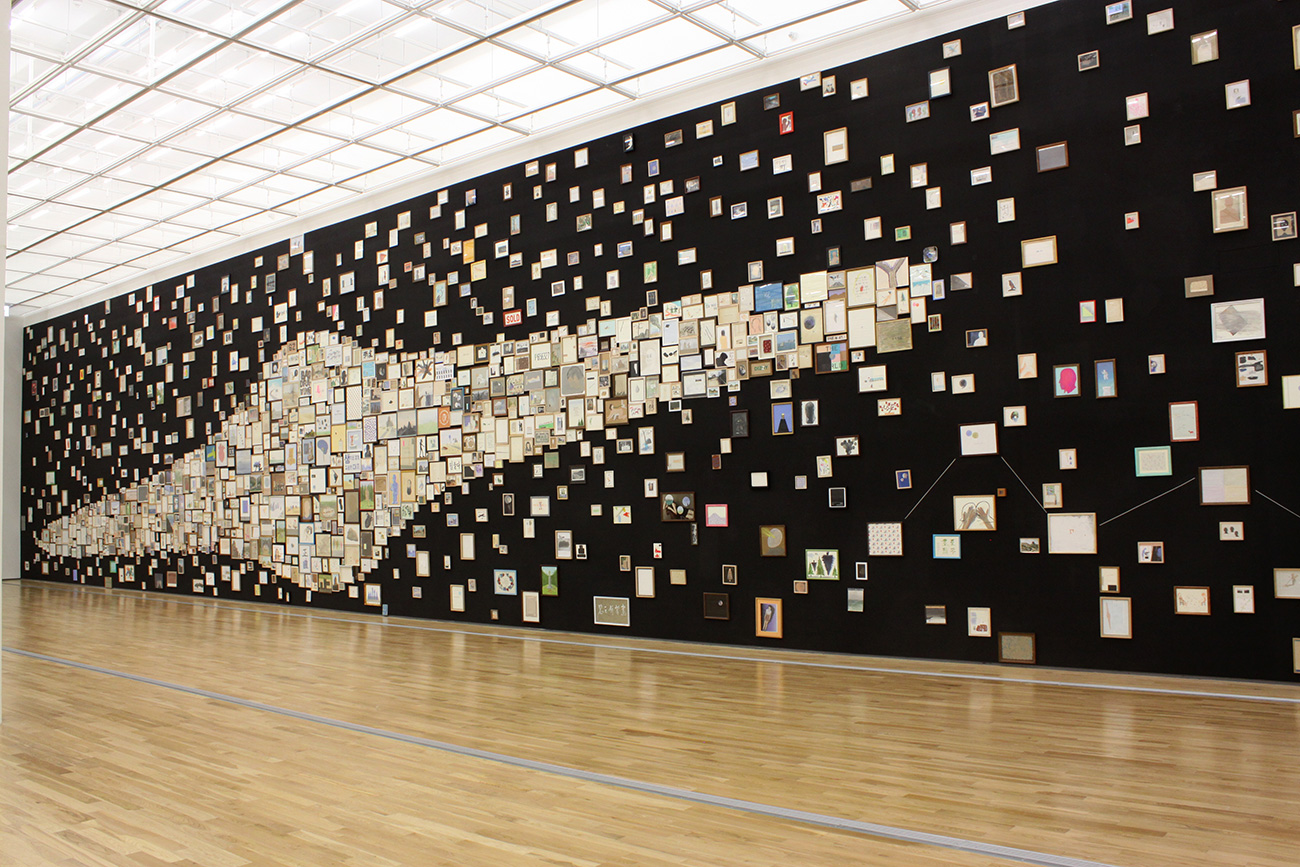
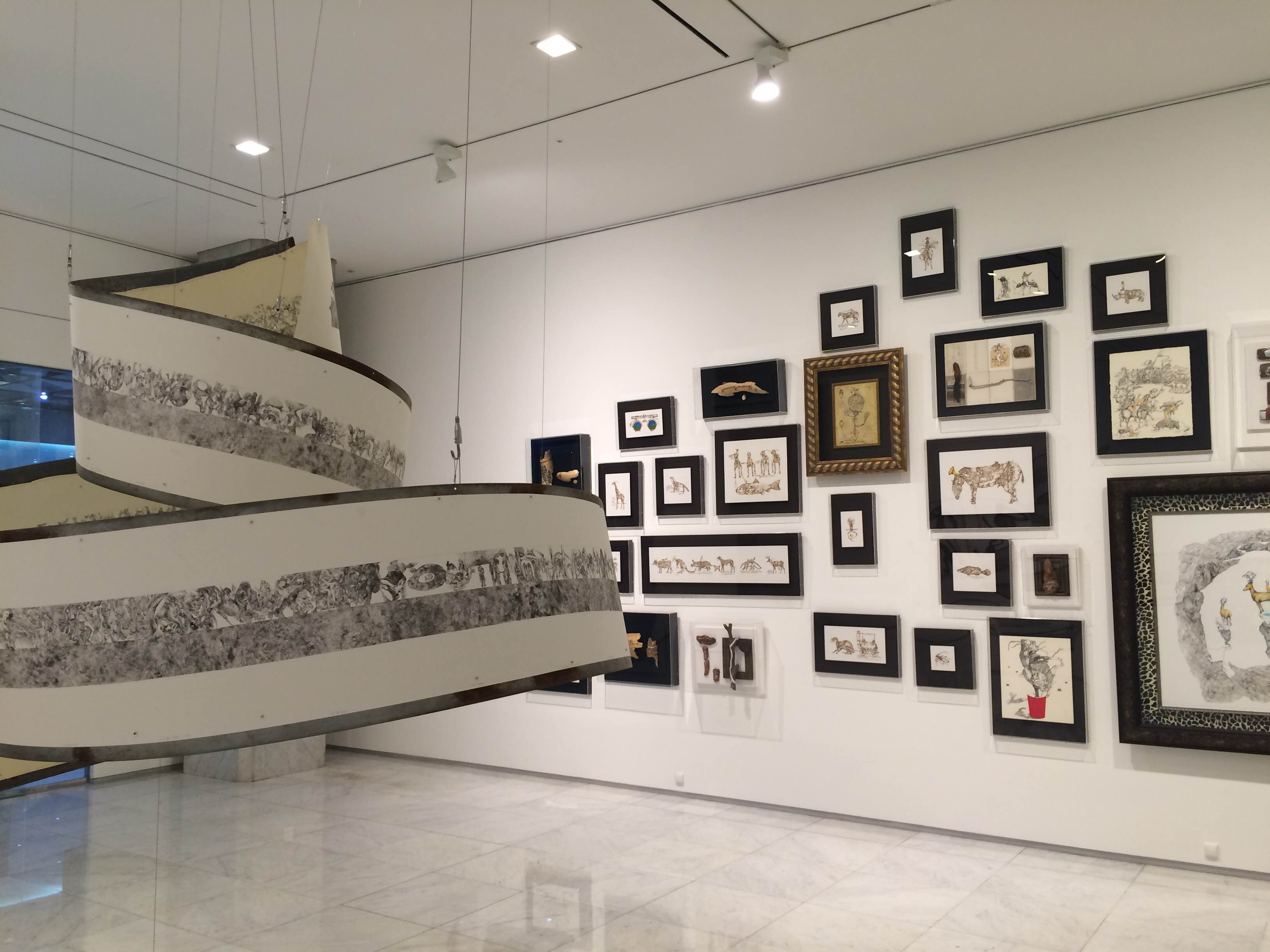
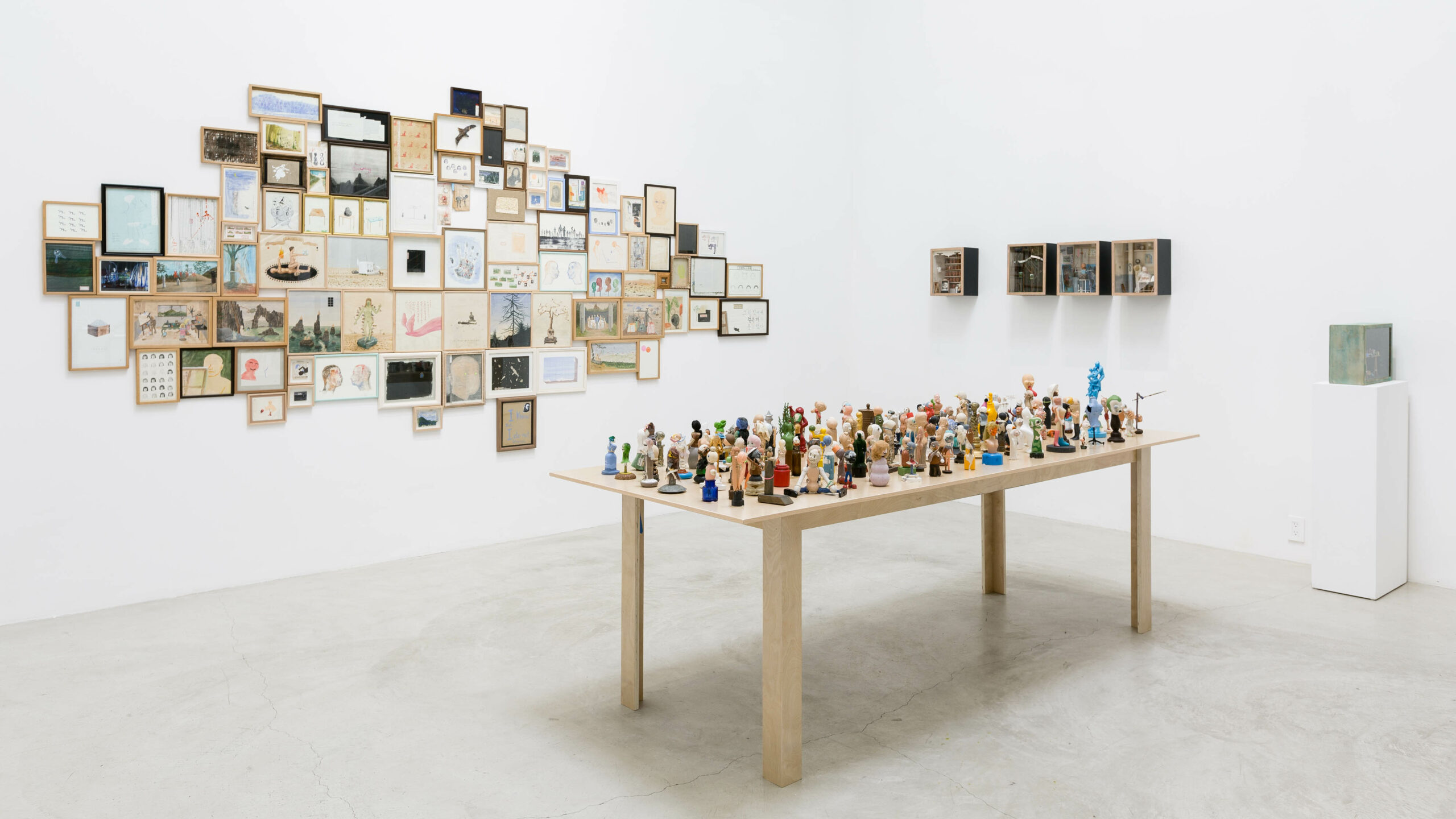
He has created an immense number of drawings, which can be generally
classified into eight different series: ‘Circle’ series (2004), ‘CCTV’ series
(2004), ‘Miscellaneous Words of the Gapsin Year’ series (2004), ‘Assemblage
Box’ series (2005-2015), ‘Tears’ series (2006-2010), ‘Studio’ series
(2009-2013), ‘Twilight Zone Studio’ series (2011-2013), and ‘Twilight Zone
Drawings’ series (2011-2015).
For the ‘Circle’ series, he first used a paper cup to trace circles on a piece
of paper; then, inside the circles, he drew various images, wrote words, or
pasted photographs, receipts, or other documents. As such, he found new ways to
use geometry, as represented by the circles. To take it a step further, he
liberated the whole existence of geometry from its framed form, thus
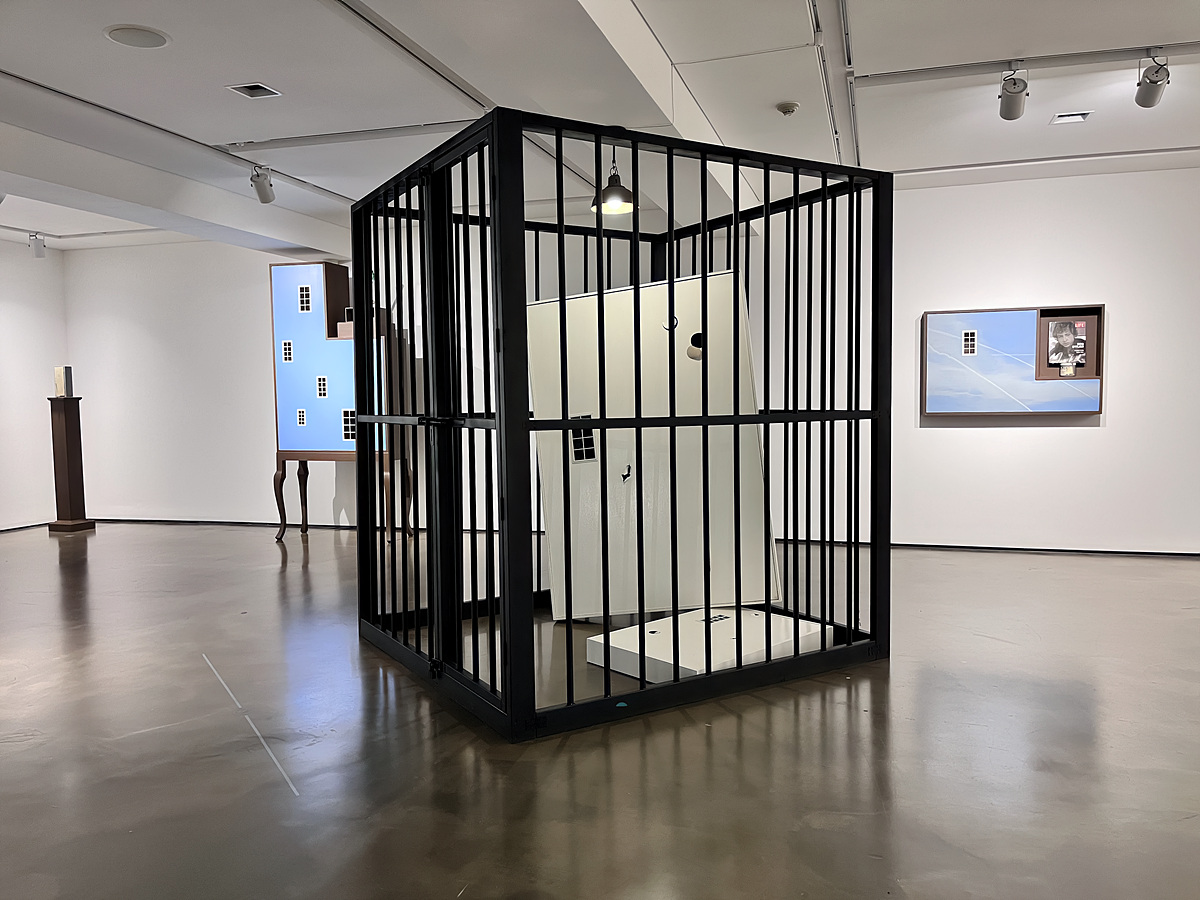
problematizing every archetype. The CCTV series is based on the theme of a
digital Panopticon, used as a surveillance device by the police-state. This
series has clear sociological implications, as the possibility of latent
(not-yet-committed) crimes is used to criminalize innocent and anonymous
subjects. Exploring the exposure of naked, vulnerable life to sovereign power,
these works recall Giorgio Agamben’s conception of the “homo sacer.”
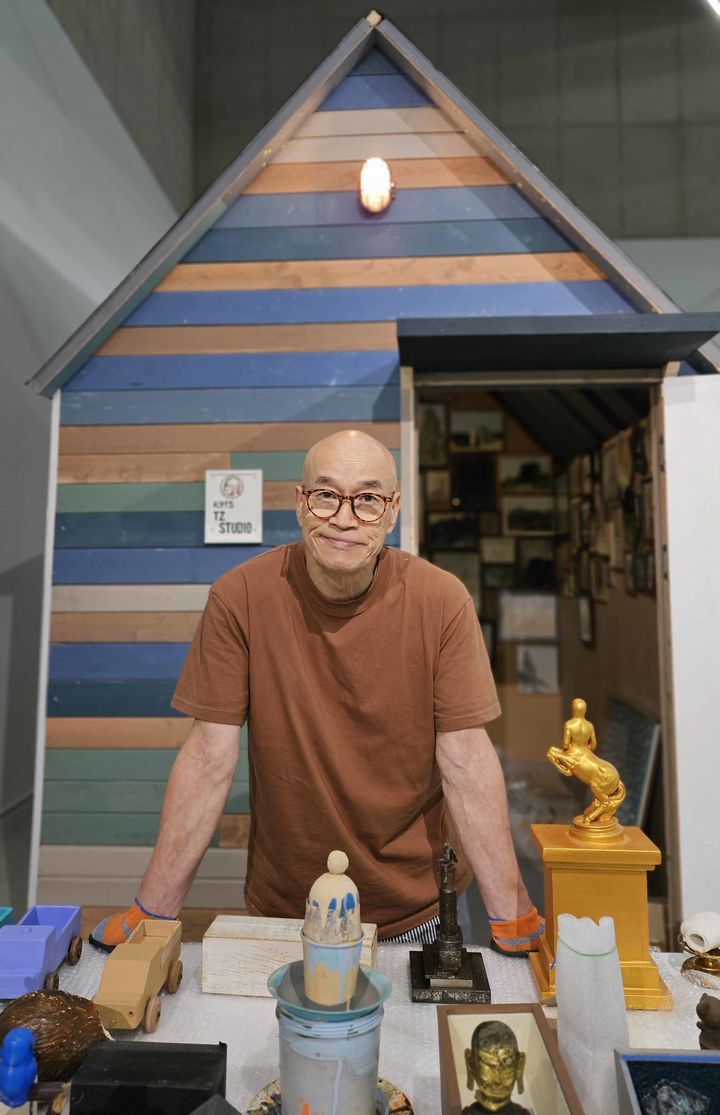
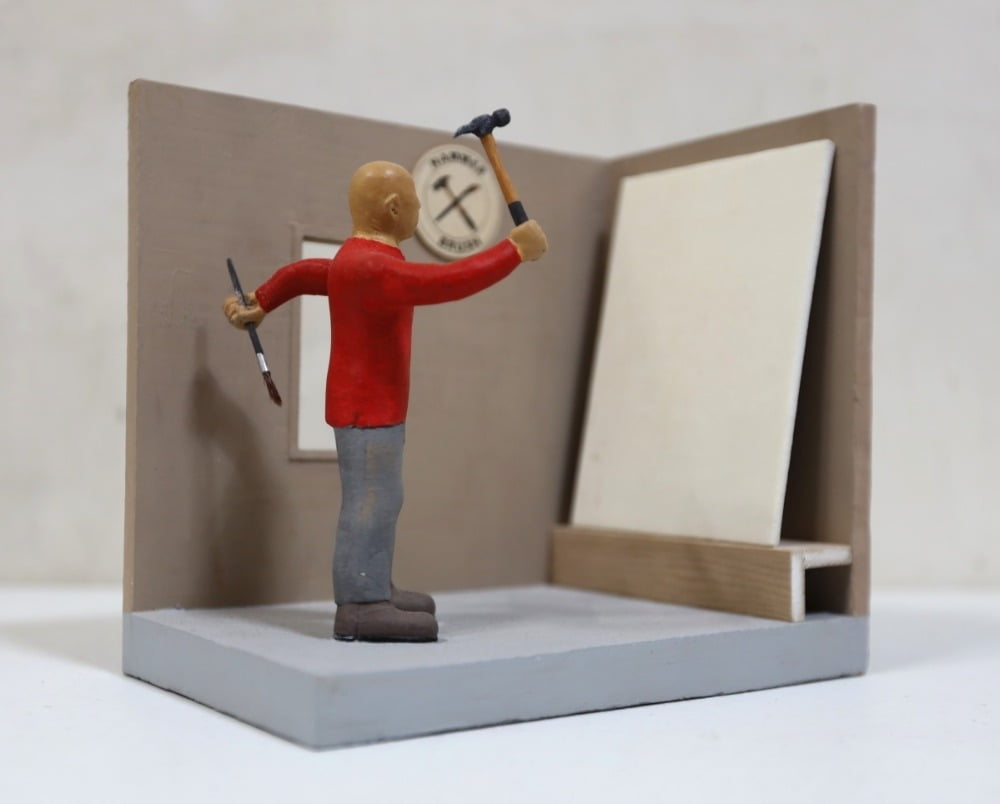
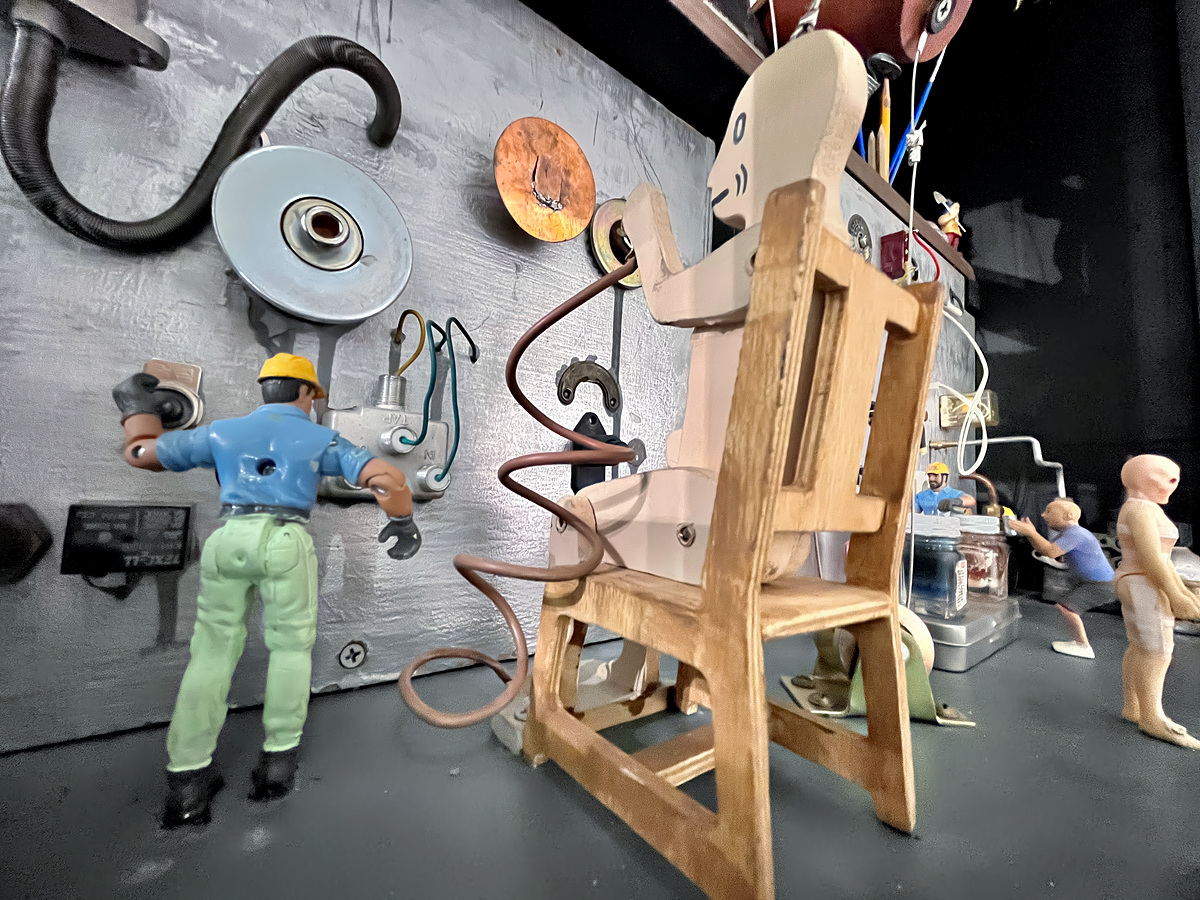
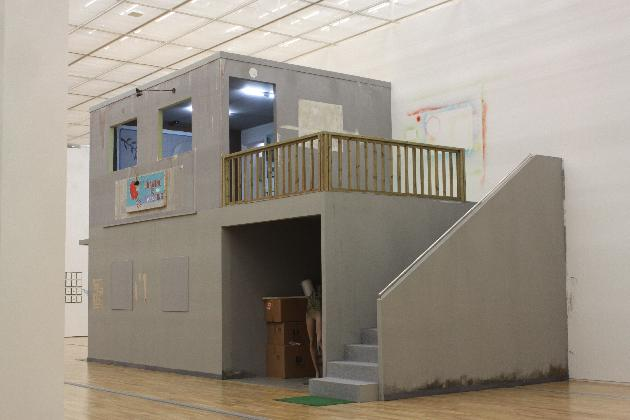
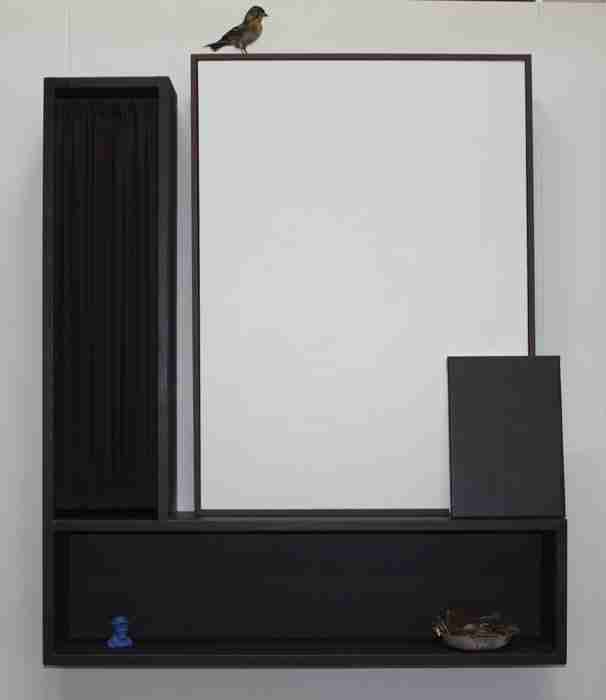
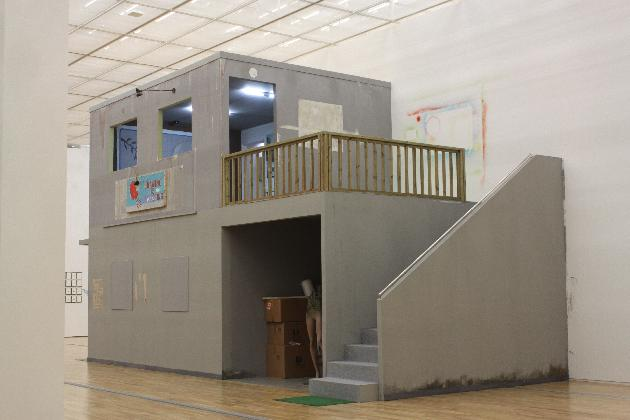
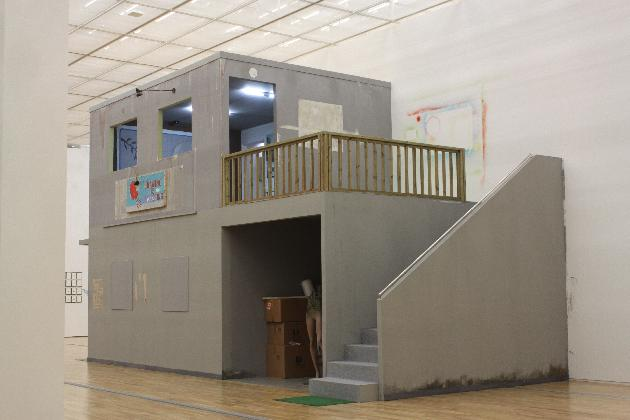
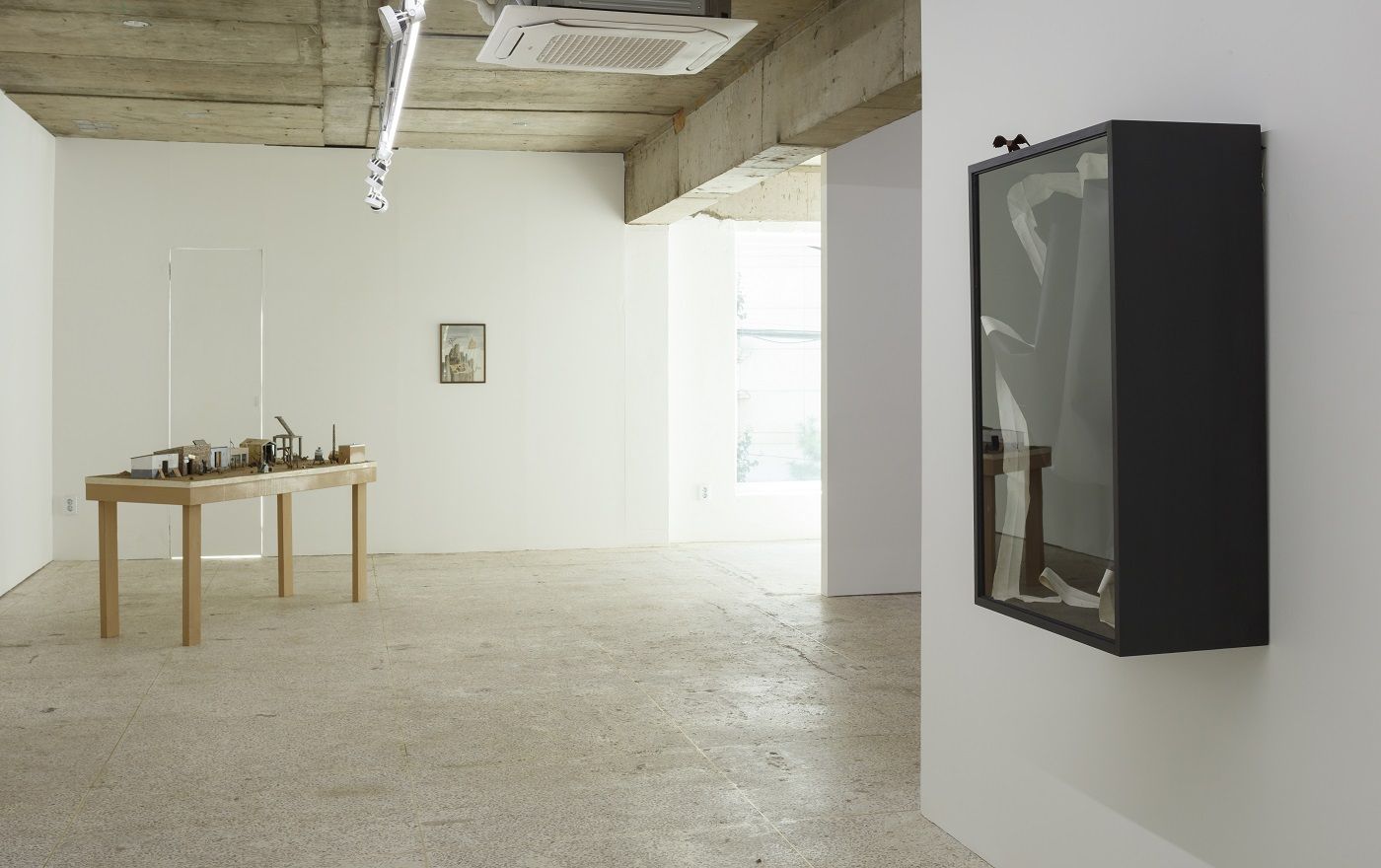
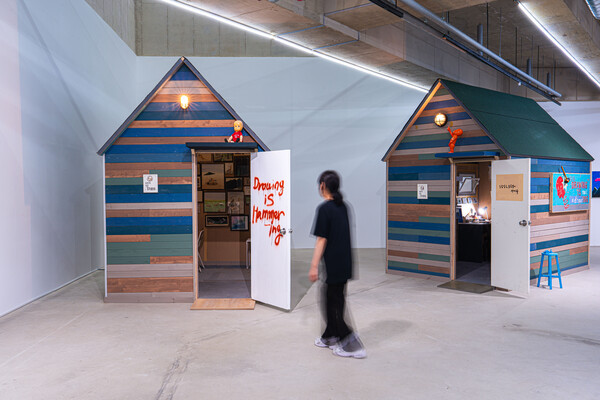
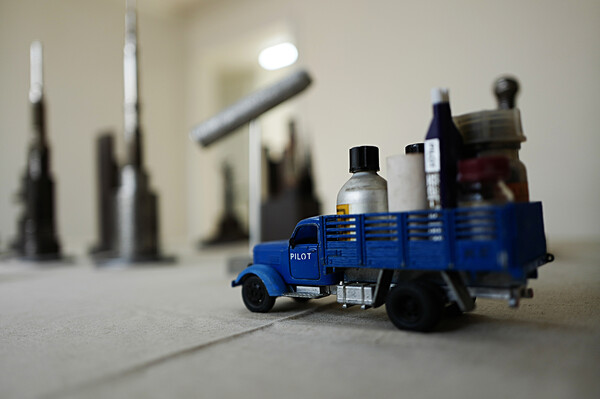
Both the ‘Assemblage Box’ and ‘Studio’ series demonstrate Kim’s tendency to
assign special meaning to the construction of houses. For him, building a house
is not a simple act of construction, but rather the materialization of a
two-dimensional drawing into a three-dimensional reality. Thus, the models of
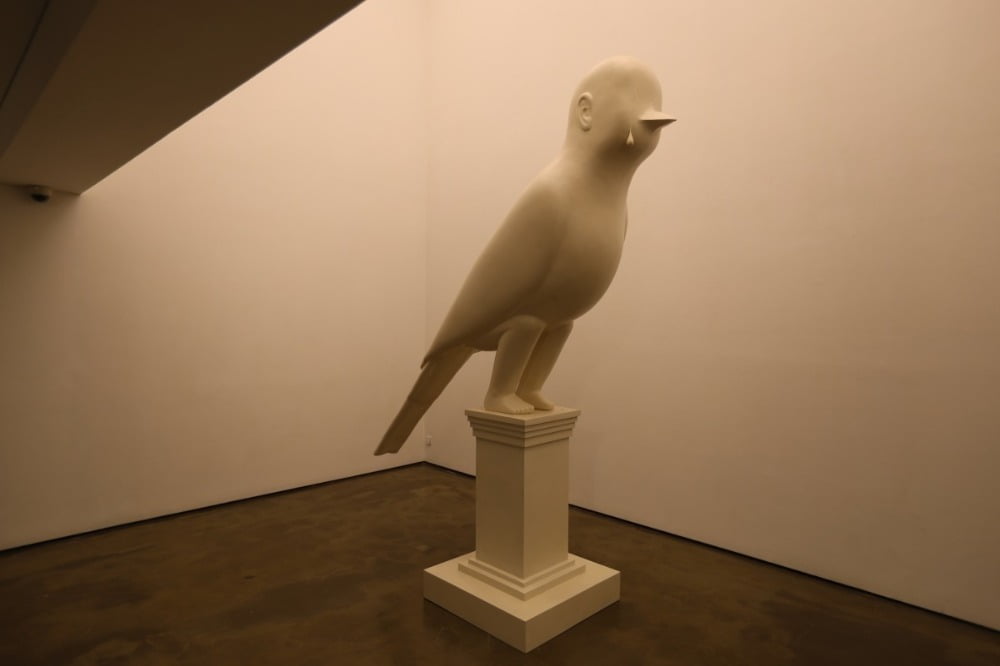
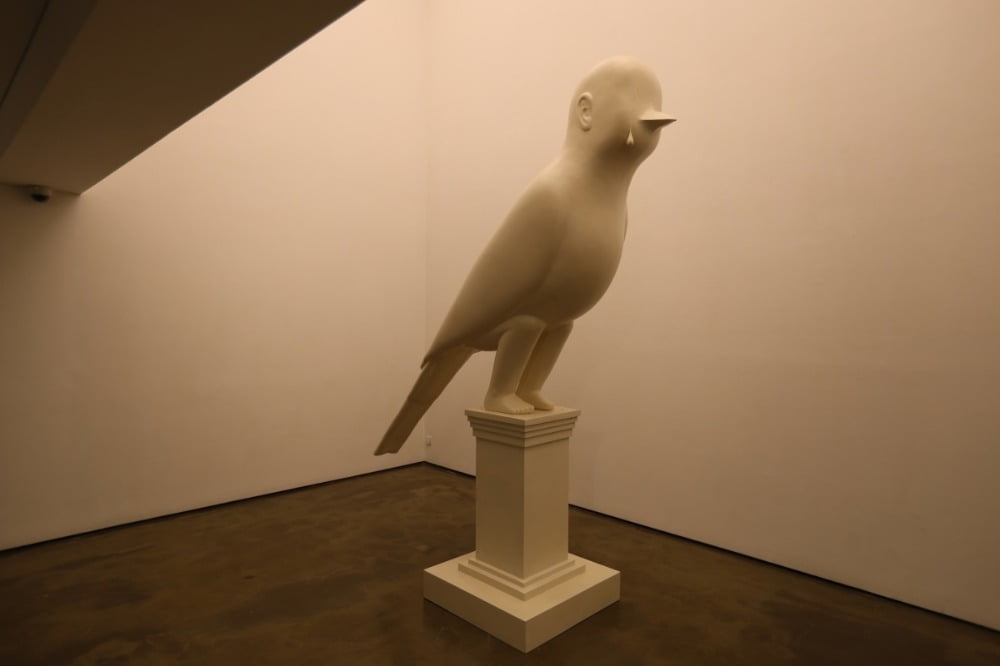
houses in these two series are microcosms of life. Likewise, the Tears series
is more than just an exploration of emotions; it derives from, and thus
invokes, life in its entirety. For Kim, drawing itself is an embodiment of
life, simultaneously a crystallization and condensation of life. In this
series, he takes the unique view of symbolizing life through tears, which may
be interpreted as sympathy. There are countless theories about the reasons for
creating art, but in the end, it can be boiled down to sympathy for other
beings.
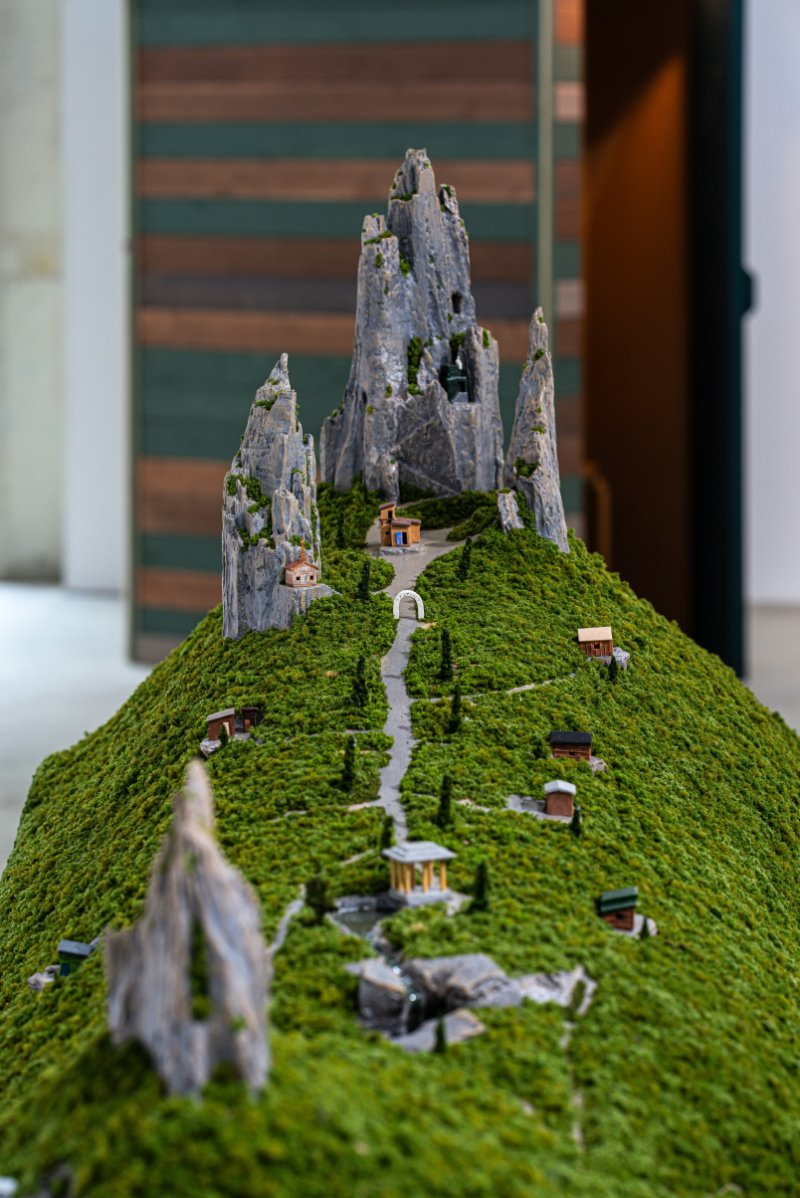
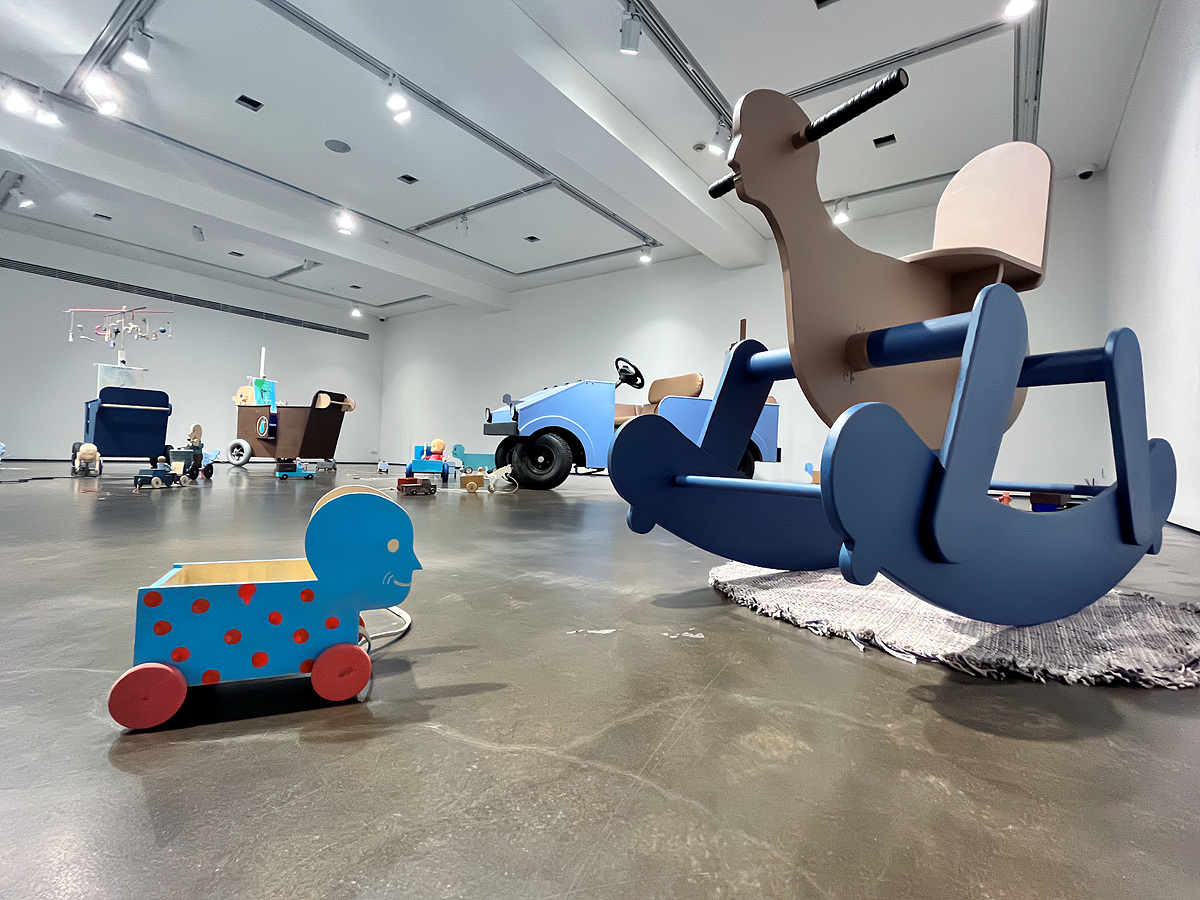
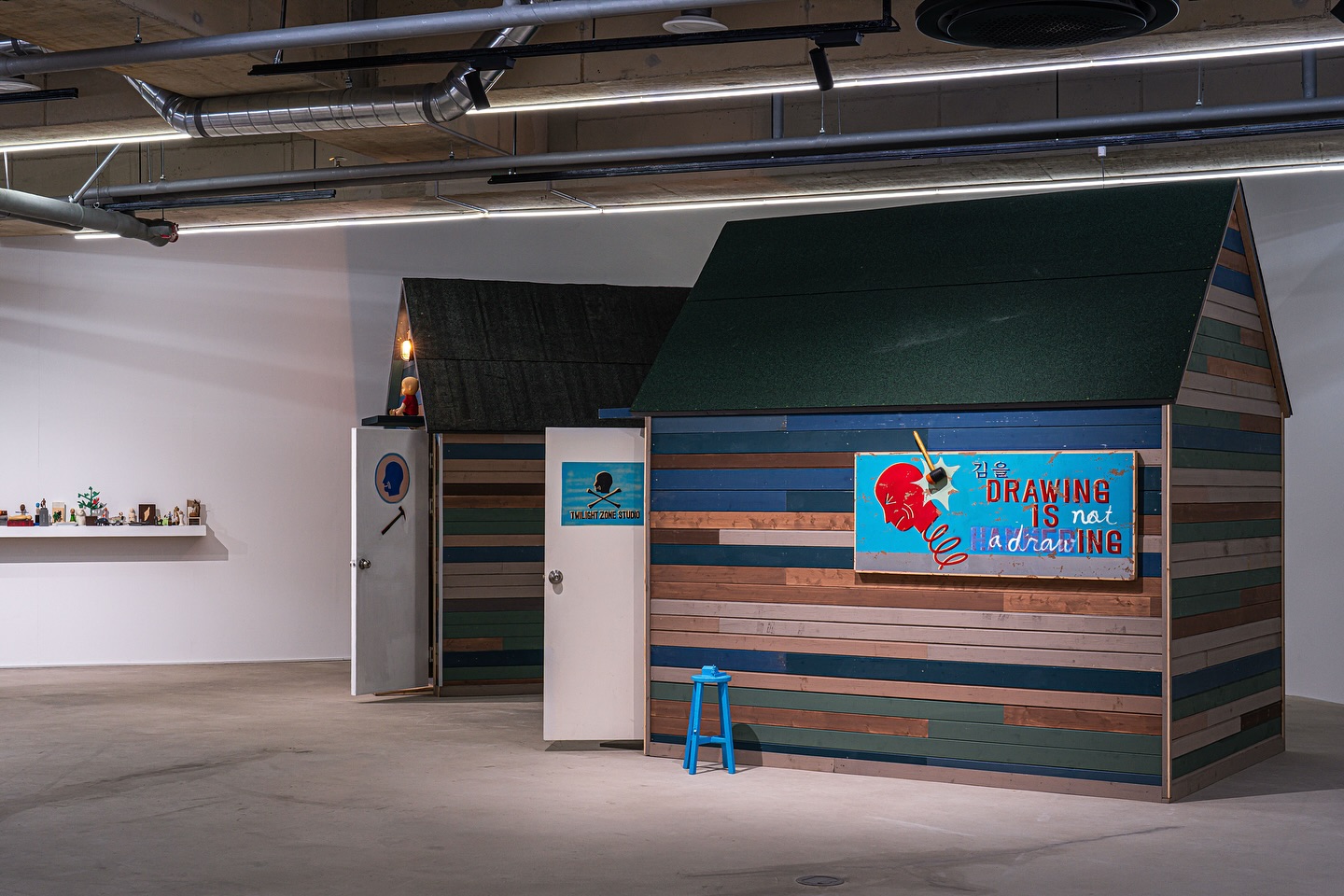
Of all of these series, ‘Twilight Zone’ is of particular interest. The word
“twilight” conjures up images of half-light, dusk, and gloom. The term
“twilight zone” usually refers to a vague, intermediate, or conceptual area,
and it is also the name of the lowest level of the ocean to which light can
penetrate. All of these meanings offer valuable clues about Kim’s artistic
intentions and aspirations, as well as his ultimate destination. The twilight
zone of the ocean is an abyss, permeated by silence and death. It calls to mind
a basic and primordial state, preexisting names or language: the
non-deterministic condition, the reversible and changeable condition, the
unheard-of condition, the befogged condition, the disturbed condition within the
silence of pre-meaning and not-yet-acquired signification, the condition with
erased boundaries, the gaps, the corners, the frontier, and the surplus. By
allowing himself and his works to settle in this uncertain condition, the
artist seeks to re-establish his own existence. Discussing this orientation,
Kim said:
Through drawings, I created my own world with new coordinates. I made a
more elaborate map in which me, the world, and drawing are entangled with one
another. With all these coordinates being constantly mixed, everything
inhabiting my world was meaningful. That meant that there was no meaning or
themes that could be captured from a special perspective. I think it’s much
more fun and meaningful to see the whole and pay attention to their
relationship. ….Isn’t it more natural for things to be mixed up, rather than
rigidly organized? Although a fixed system can be truth, I think mixture is a
more fundamental truth. Don’t life and nature exist in a mixed state without
parameters?
Hence, the twilight zone is both the foundation and the ultimate
destination for Kim’s drawings, his other works, and his entire existence.
Although this point can be represented on an elaborate map, it is actually a
map of the artist’s own perception and creation, drawn in an independent style.
In order to explore a map of such perception, we must penetrate into his
independent style, where there is no subject matter and minimal meaning. After
all, what is a subject matter? It is an attempt to collect, categorize, and
type something that is inherently chaotic, fragmentary, indiscriminate, and
self-sufficient.
In this process, the essence of the matter is obliterated. It
is the act of limiting, distorting, and subjugating what is self-sufficient
outside the subject to the subject. Here, the plan to formulate a subject
corresponds to a project of conceptualization, but there is an unbridgeable gap
between the concept and the actual object. But in establishing a subject (or in
planning to establish a subject), we should not seek to limit the object, but
rather to bring the subject and object together in order to observe the results
of their encounter. This process immediately evinces the helpless mixture of
beings that is life, and it is this very mixture that inspired Kim to define
his drawings as “miscellaneous paintings.”
My drawings are miscellaneous paintings. Although they sometimes yield
unintended special subjects, they are basically a random mix of trivial things.
My mind, life, world, and the whole universe are miscellaneous mixtures, which
is why my drawings look so natural. Although their contents and forms are all
mixed, some of the there must be things worth looking at, if you are careful
about being cross-eyed.
Usually, being “miscellaneous” means having nothing special to present,
or being very ordinary. Another term for such a state is “motley.” Kim believes
that his mind, life, world, and universe are inherently miscellaneous and
motley, which means that they are common and plain. As such, is there anything
that can truly be called abnormal or unusual? If his drawings are miscellaneous
paintings, then they are ordinary paintings, capturing the banalities of daily
life and existence.
In Korea, a general store that sells a miscellany of items is called a “store
of 10,000 things.” Here, “10,000 things” is a rhetorical expression, standing
for all the goods in the world. These types of stores, which are the prototype
of contemporary department stores, have their own structure and system for
categorizing items. But perhaps the epitome of a unique form of structure and
categorization can be found in old bookstores. In such stores, all the books of
the world are stacked and piled seemingly at random. Every customer is sure to
feel completely lost, but the owner of the store can quickly and easily find
whatever the customer needs.
If knowledge is the foundation of power, as Michel
Foucault famously asserted, then categorization and structure are the
foundation of knowledge. Conventional, common-sense types of categorization and
structure are not examples of abiogenesis (i.e., the development of living
organisms from non-living matter). To quote Pierre Bourdieu, they are the
result of recognition struggles. Although categorization may serve as a system
and structure for an institutional device, independent agents are also capable
of applying their own categorization and structure to various aspects of their
lives, demonstrating their innovation in the process. Rather than a mere
passive reception or inheritance, this may be seen as an active practice of
appropriating categorization and structure as parts of the system, and
re-distributing or replacing them in line with their own independent style.
This is nothing other than art. In a more grandiose way, they have been
unwittingly serving for the reorganizing and restructuring of the world.
Kim Eull’s art and drawings are a fine example of this phenomenon. What
initially looks random and incoherent actually has its own unusual order and
structure. He employs his own grammar of categorization and structure,
arrangement and configuration, and relation and relatum. Although his grammar
might initially seem somewhat distressing, at least he is engaged with finding
his own grammar.
Kim’s search for his own grammar may be related to the
creative concept of the “Rhizome,” espoused by Deleuze, wherein one searches
and creates through perpetual erasure, thereby conflating establishment and
de-establishment. Like this, Kim pokes around in a store of “10,000 things,” or
wanders through an old bookstore or flea market. These activities may be seen
as an act of voyeurism, peeking into the lives of others. They are also related
to so-called “found objects,” where one finds a former possession among a pile
of dead, unfamiliar objects. It is also similar to the act of communicating
with ghosts and using unusual objects to encounter the essence of a being.
Perhaps, the living things of the world are arranged like a store of “10,000
things,” an old bookstore, or a flea market. Just as today’s goods are slowly
but continually becoming antiques, every living thing inherently contains its
own death. Unfortunately, while many goods can actually gain value by becoming
antiques, the same is not true of people. Perhaps this is why so many people
seek to project themselves into commercial products. This is also why the most
popular antiques usually look odd, unfamiliar, and grotesque. They are a
fetish. Without this fetish, capitalism could not re-commercialize antiques
(i.e., summon ghosts). This phenomenon has long fascinated some of the world’s
great minds, including Georg Simmel, Charles Baudelaire, and Walter Benjamin.
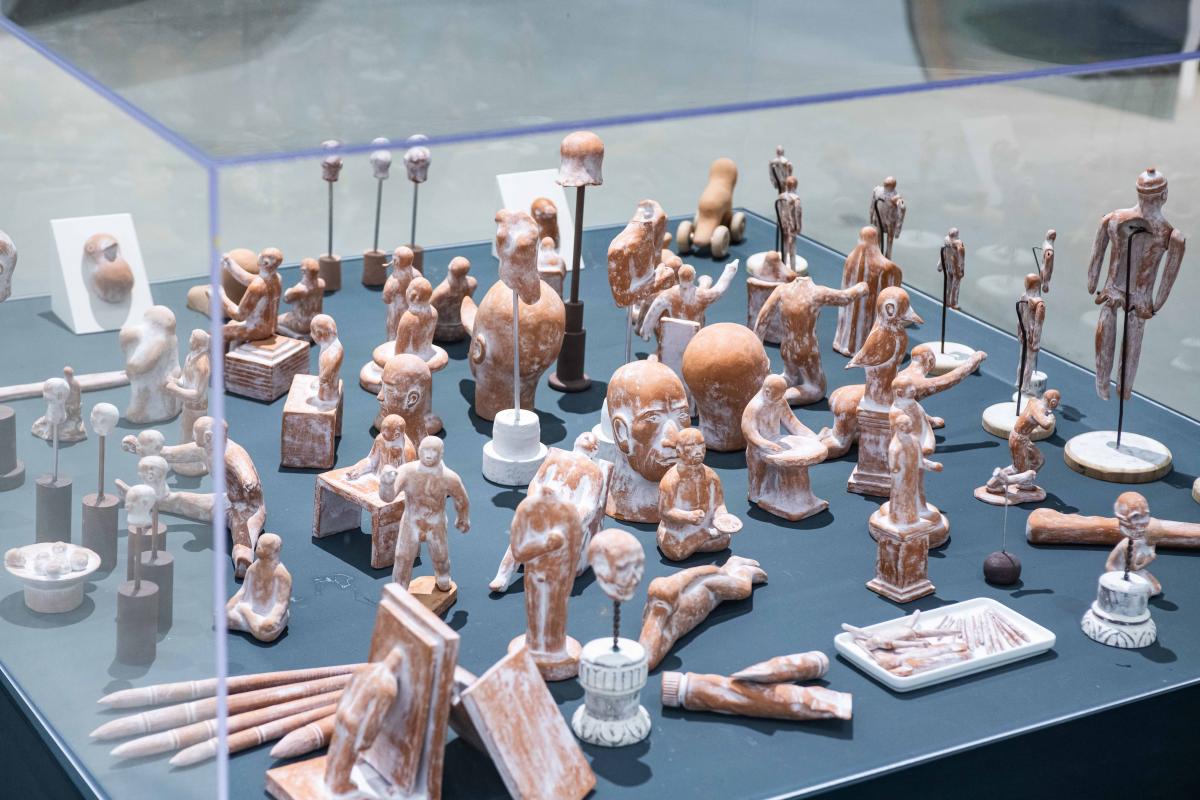
In his own grammar, the artist collects, categorizes, reorganizes,
deconstructs, reassembles, copies, and adds to the world. The objects summoned
to inhabit that world convey a definite aura of the strange and grotesque, of
the fetish. They also look like bricolage, which comes from the French
“bricoler,” which means to make do with whatever is at hand, or to assemble
random and unsightly detritus into something that works, or at least looks
decent. Kim’s drawings arouse many of these same sensations: they look decent
on the surface; raise some doubts at first glance; combine truth and fabrication;
merge the everyday and the extraordinary. Through such drawings, he conjures
and inhabits a twilight zone with obscure boundaries.