Articles
[Column] Painter·Sculptor Suh Yongsun Examining the Fundamental Spirit of Human Resistance
2020
Shim Jeong-taek | Art Columnist
For Suh Yongsun, language—recorded
text—which serves as the essential mechanism through which we learn and
understand history as a means of interpreting reality, has its limits. In his
view, history begins the moment it departs from reality.
For more than thirty years, Suh has delved
into the 500-year history of the Joseon dynasty. He has long harbored doubts
about the fact that not a single image of King Danjong—the most tragic monarch
of that era—remains.
Unlike historians who must rely solely on
written records, Suh, as a painter, could not fully trust them.
His distinctive understanding of
‘history’—which he believes begins the moment it breaks away from reality—also
shapes the way he expressed the 2014 Sewol ferry tragedy.
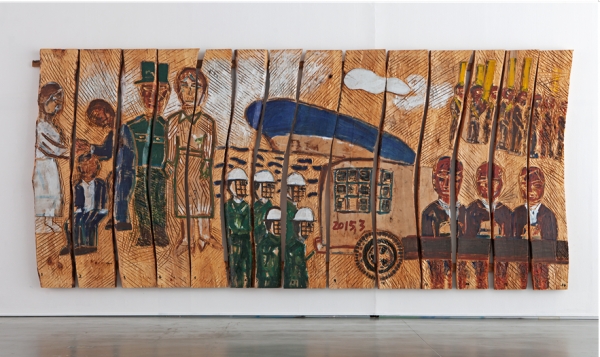
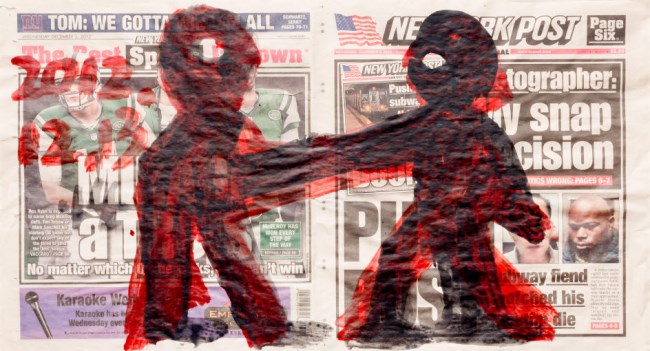
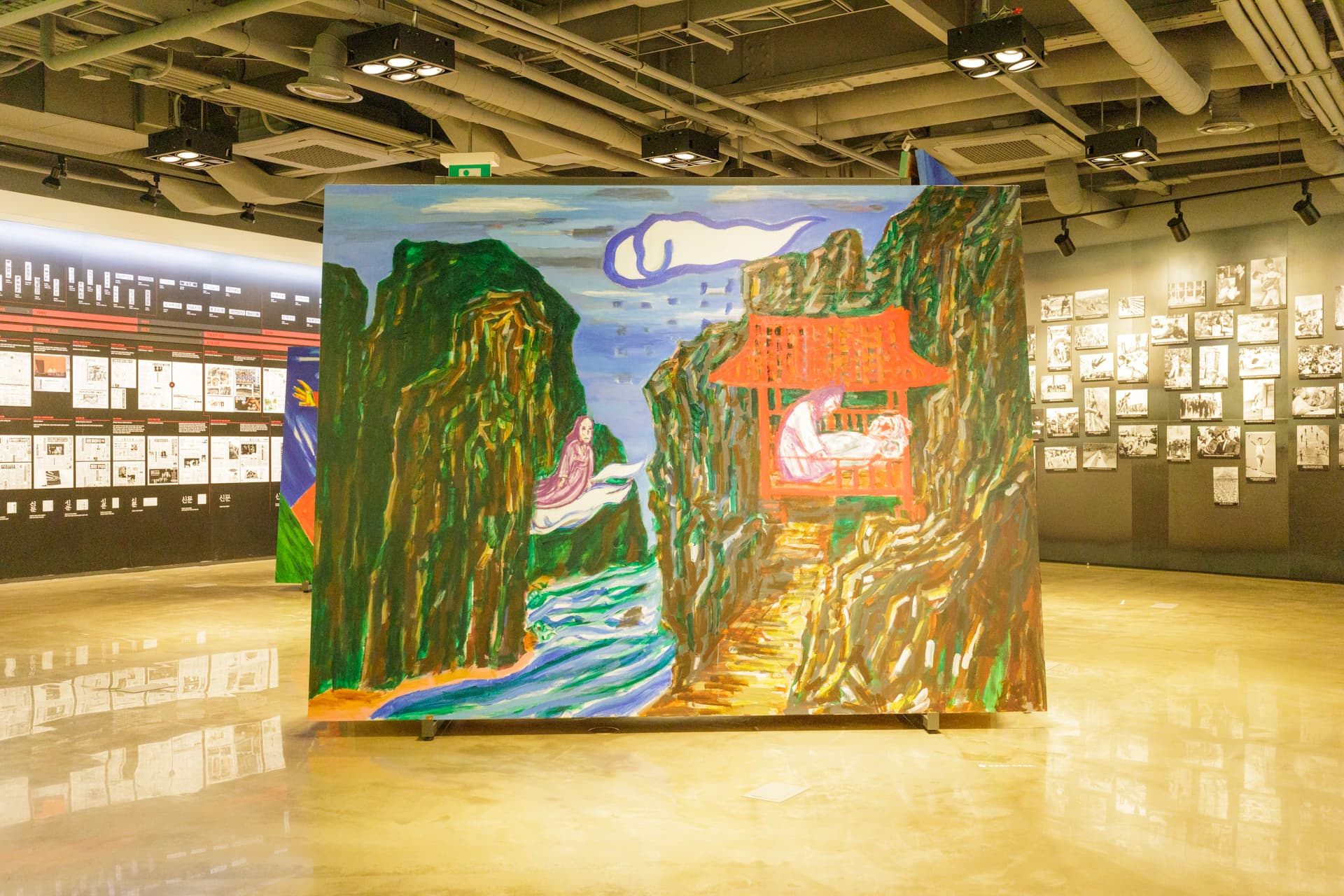
In News and Event 2014
(2015), painted across fourteen curved red pine panels joined together as a
canvas, the carved wooden surface—scored with comb-like knife marks—bears
images of the blue hull of the ship, bereaved families marching with yellow
memorial banners, riot police blocking their way, faces of Constitutional Court
justices, and a president standing alongside Park Chung-hee in military uniform
as an official receives an appointment letter. He chose red pine as his canvas
because the contemporary event was too shocking to be expressed through
conventional materials.
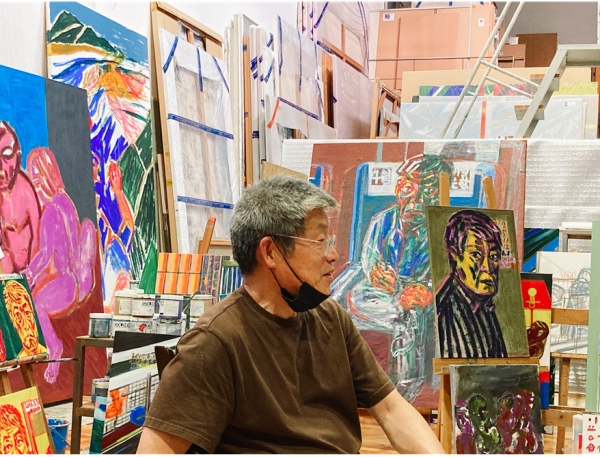
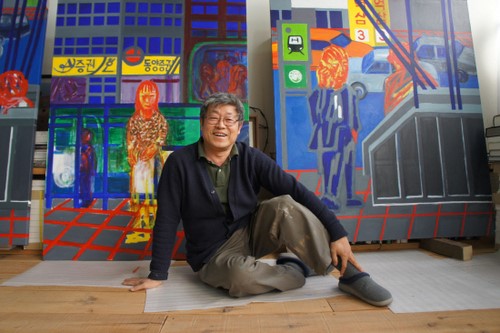
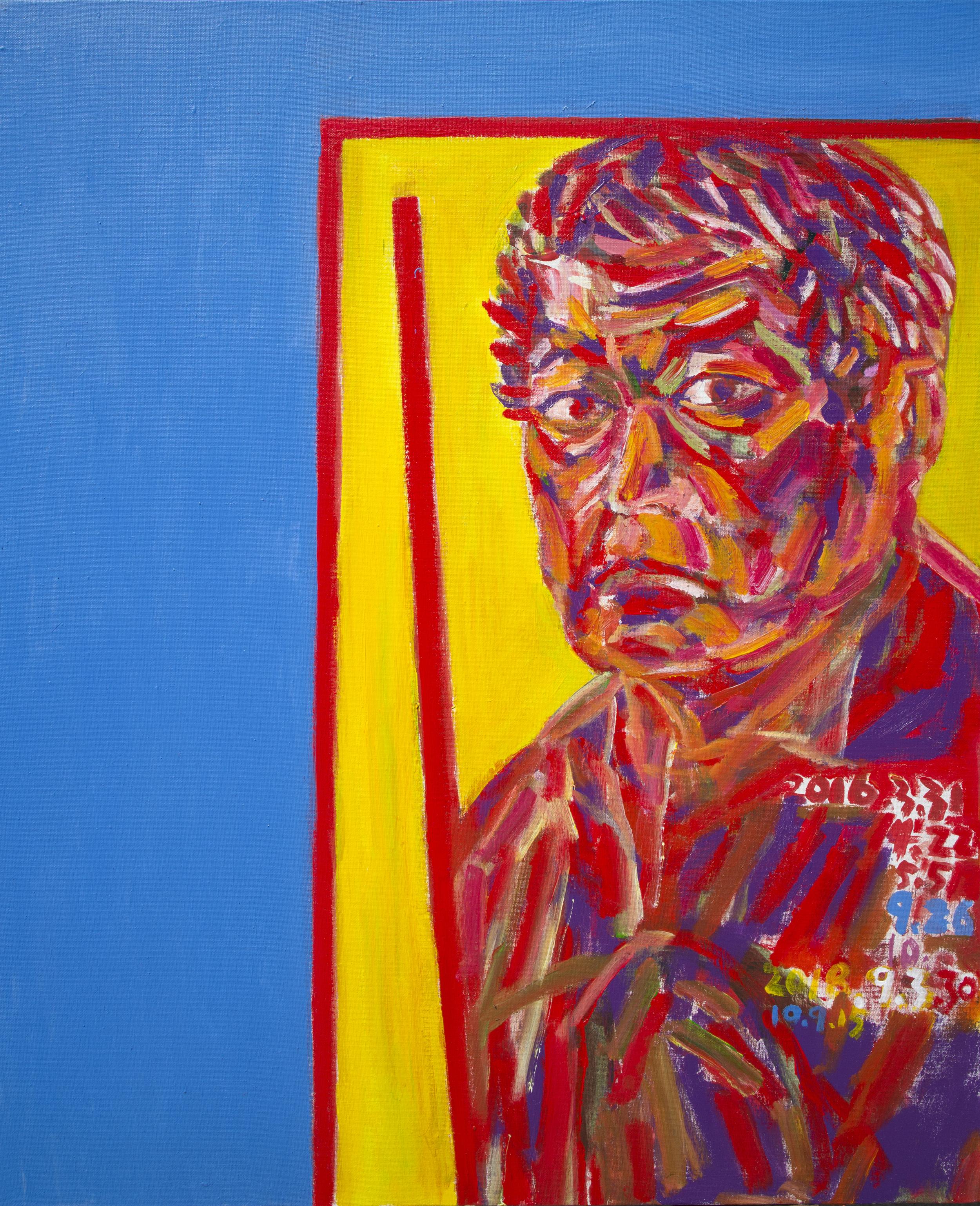
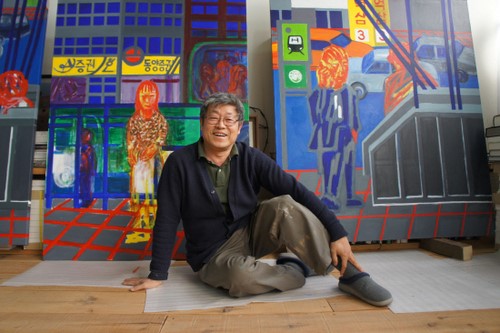
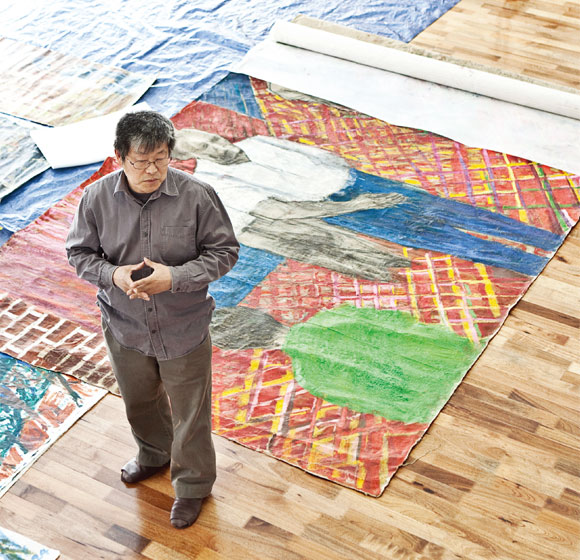
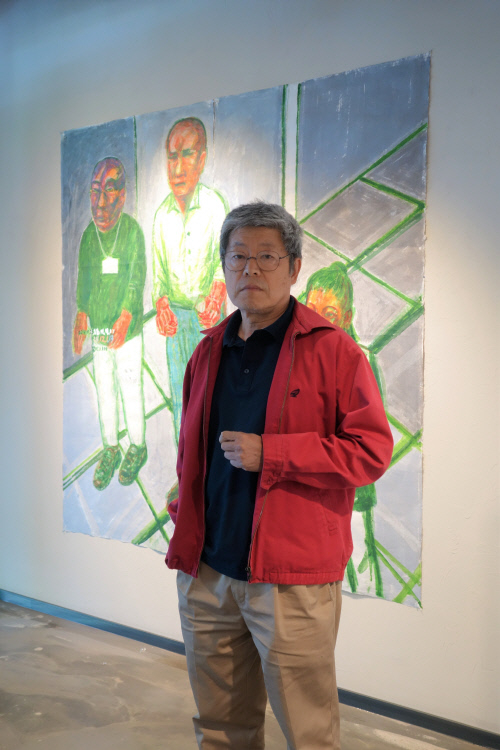
The Artist © Suh Yongsun
His engagement with reality differs from
the “Minjung Art” movement that briefly flourished in the 1970s and 1980s.
While writers depicted resistance against power, Suh examines the fundamental
human instinct for resistance itself. As a painter who confronts images, he
takes as his subject a “reality” that has just begun and can never truly be
grasped.
Artists who have worked alongside him
since his youth describe Suh as someone who “draws exceptionally well and
possesses outstanding representational skill.” Yet at some point he began
striving to depict only the “skeleton.”
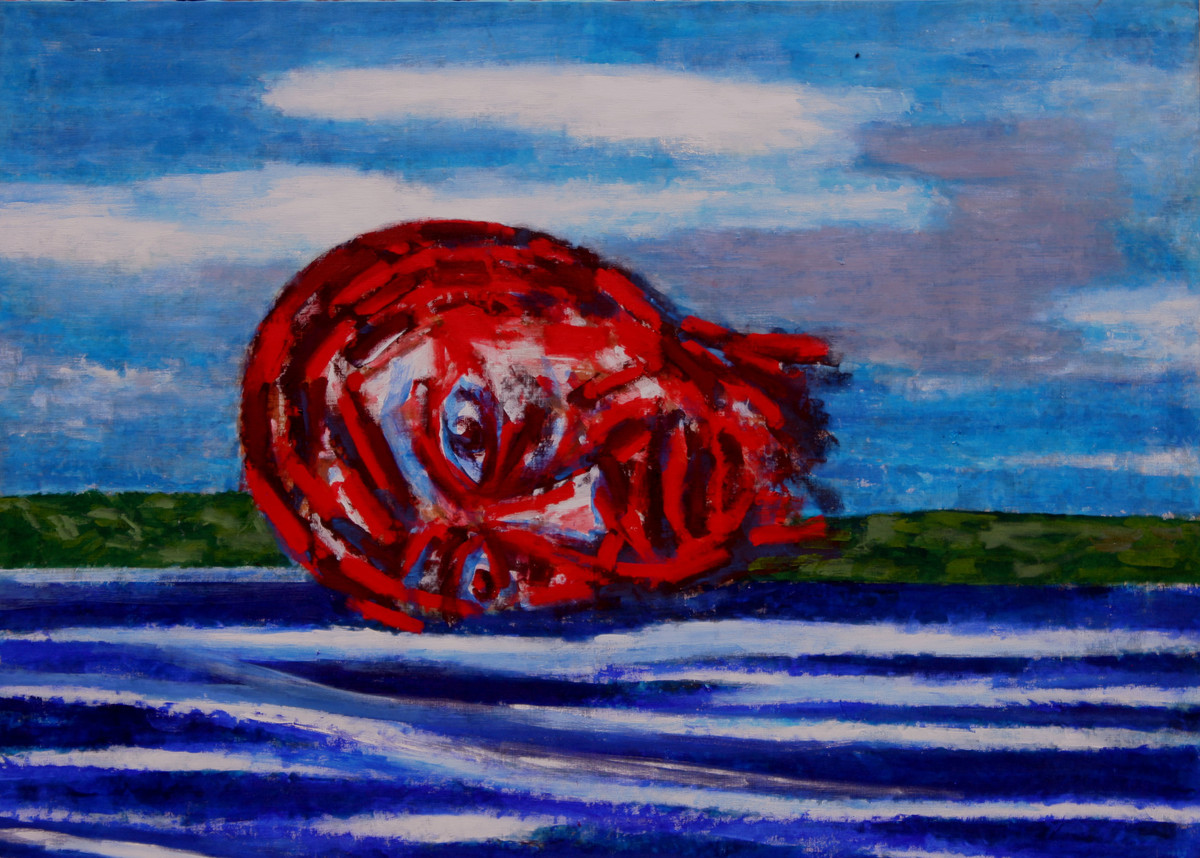
Although still flat, the blood-like red
that clings to the surface feels almost sculptural, while his simplified,
linear expressions—imbued with symbolic landscapes and sites—generate their own
narratives. This expressionistic tendency reduces the risk of arriving at
limited images or conclusions that can result from overly precise and literal
depiction.
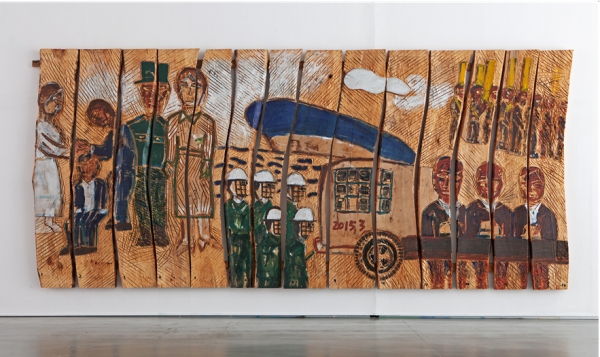
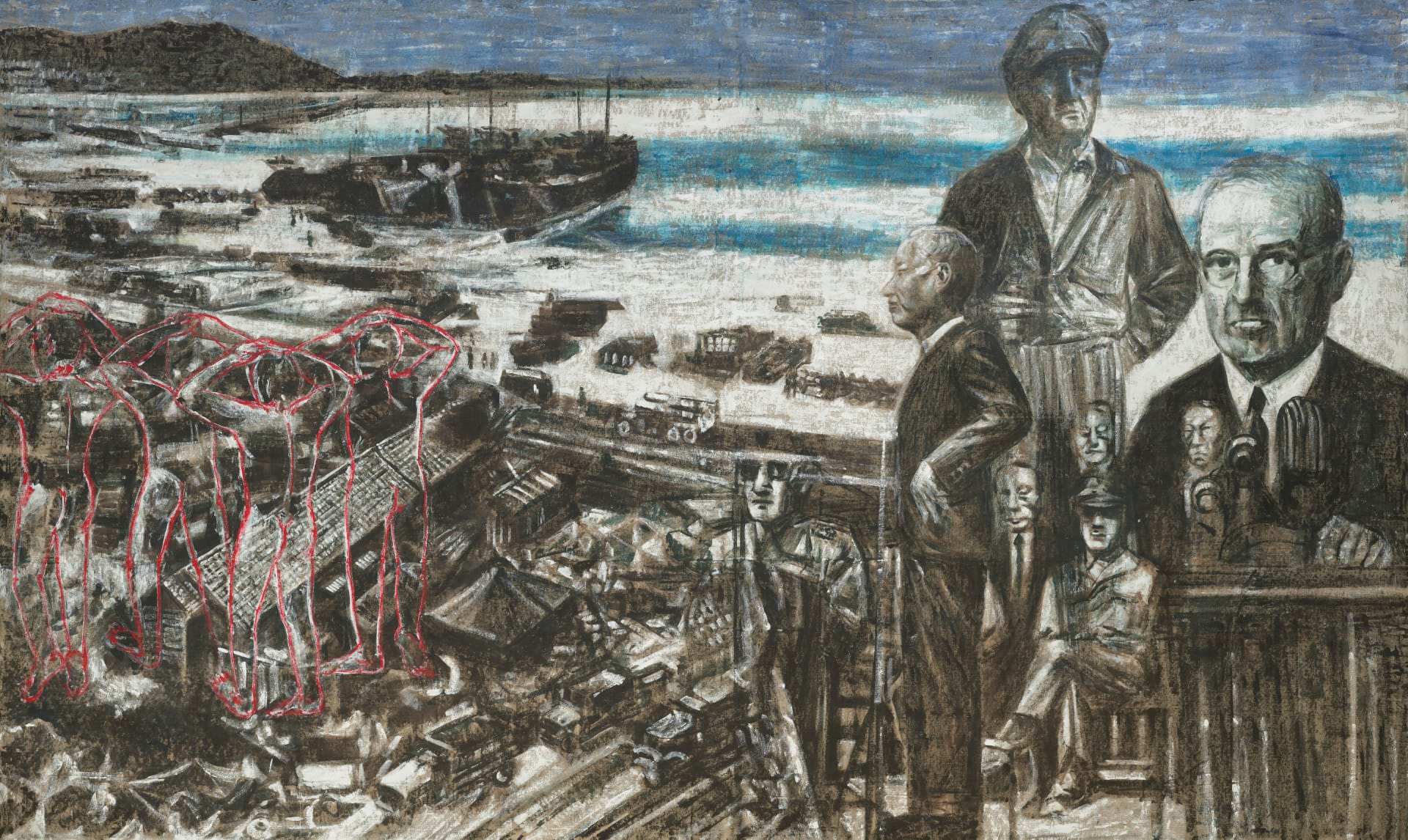
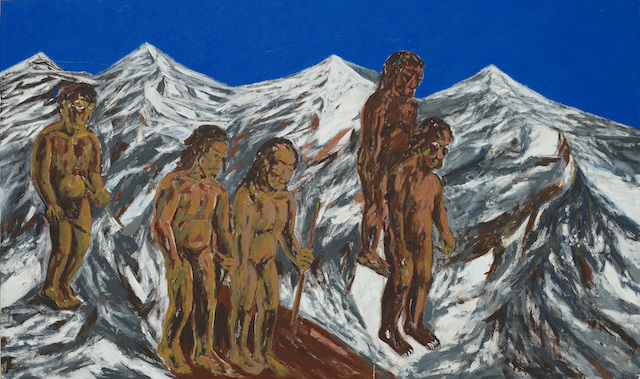
Suh Yongsun, News and
Event, 2015, Acrylic on wood, 272 x 585 cm © Suh Yongsun
The flat surface is an inescapable
condition of painting; the landscape and figures of reality must be brought
onto the canvas as flat images. For a painter, flatness is destiny—an
unavoidable condition. By intensifying flatness itself, he sought to escape
from the canvas.
This led him to depict only the ‘skeleton’
of reality.
Abstract painter Wassily Kandinsky used
titles such as ‘Impression’, ‘Improvisation’, and ‘Composition’, musical
concepts that also represent three stages toward abstraction. ‘Impression’
relates directly to the external world and retains traces of representation.
‘Improvisation’ expresses the external
world filtered through inner experience. ‘Composition’ represents the pinnacle
of abstract painting, articulated through inner reason.
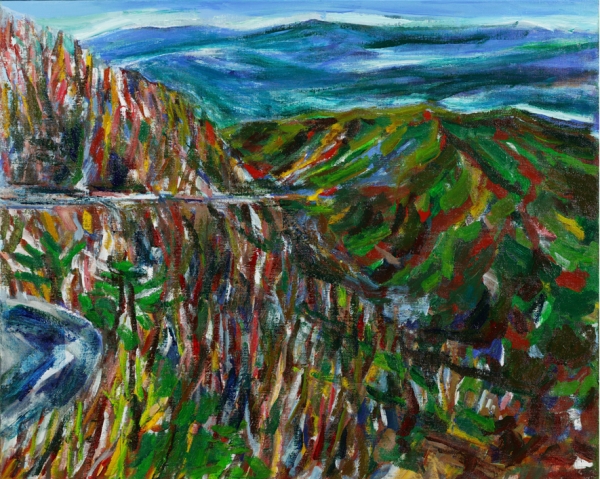
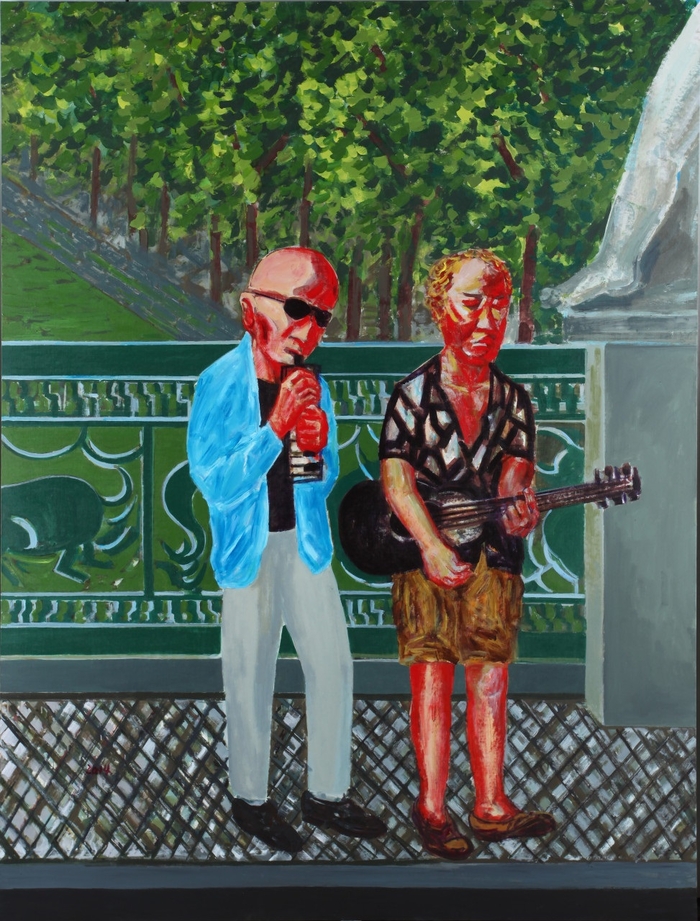
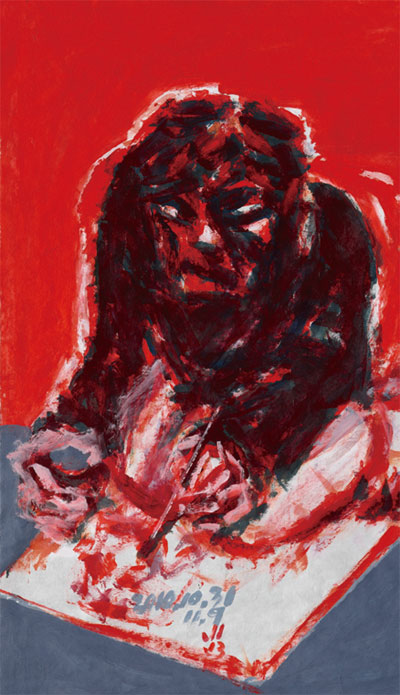
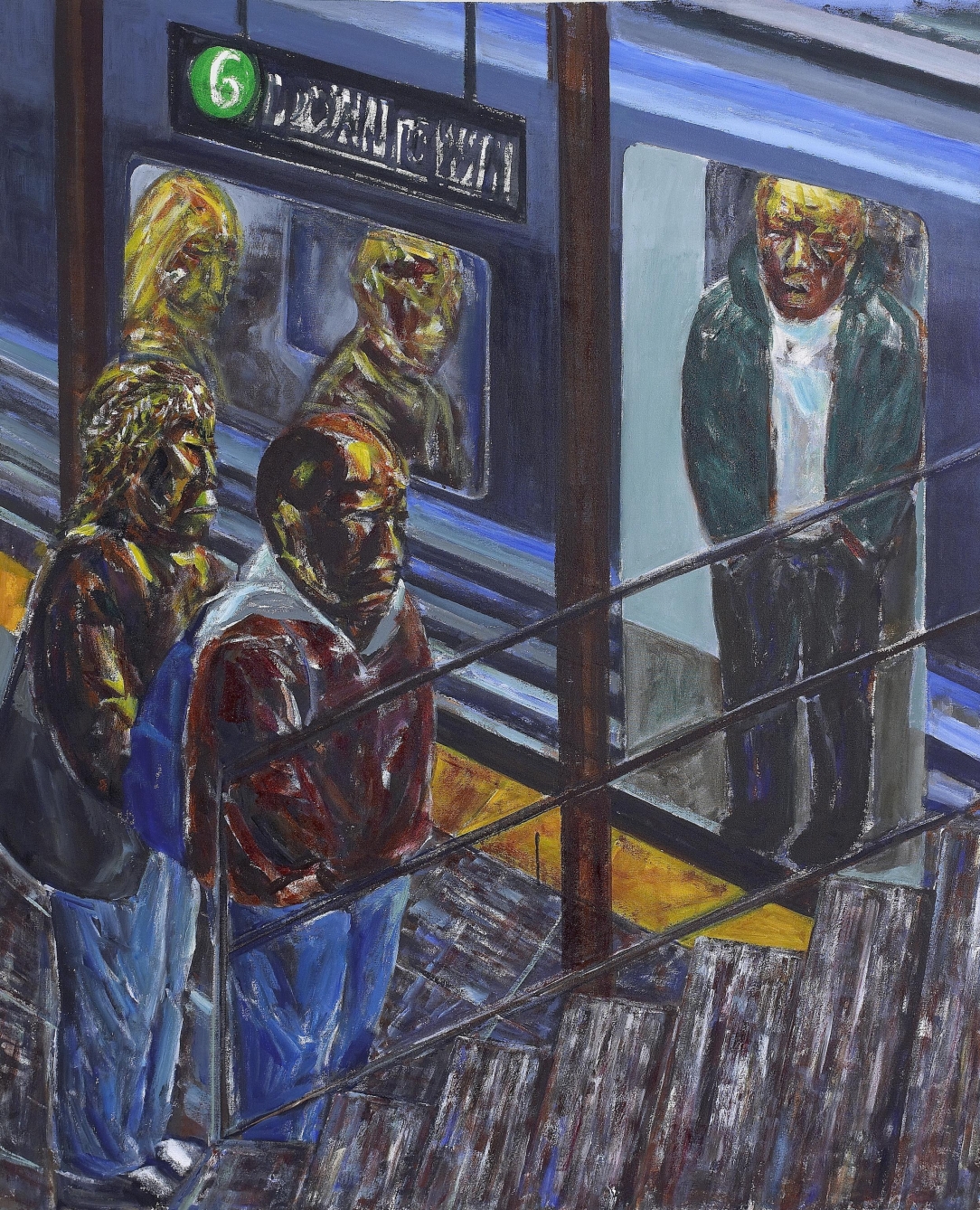
Suh Yongsun, Seongsamjae
1, 2011, Acrylic on canvas, 100 x 80 cm © Suh Yongsun
Painting is divided into figurative and
non-figurative. Abstract painting can be derived from both. The “skeleton” in
Suh’s painting is a form of abstraction grounded in figuration—painting with
clear consciousness, intention, and purpose.
His escape from the flat surface led him
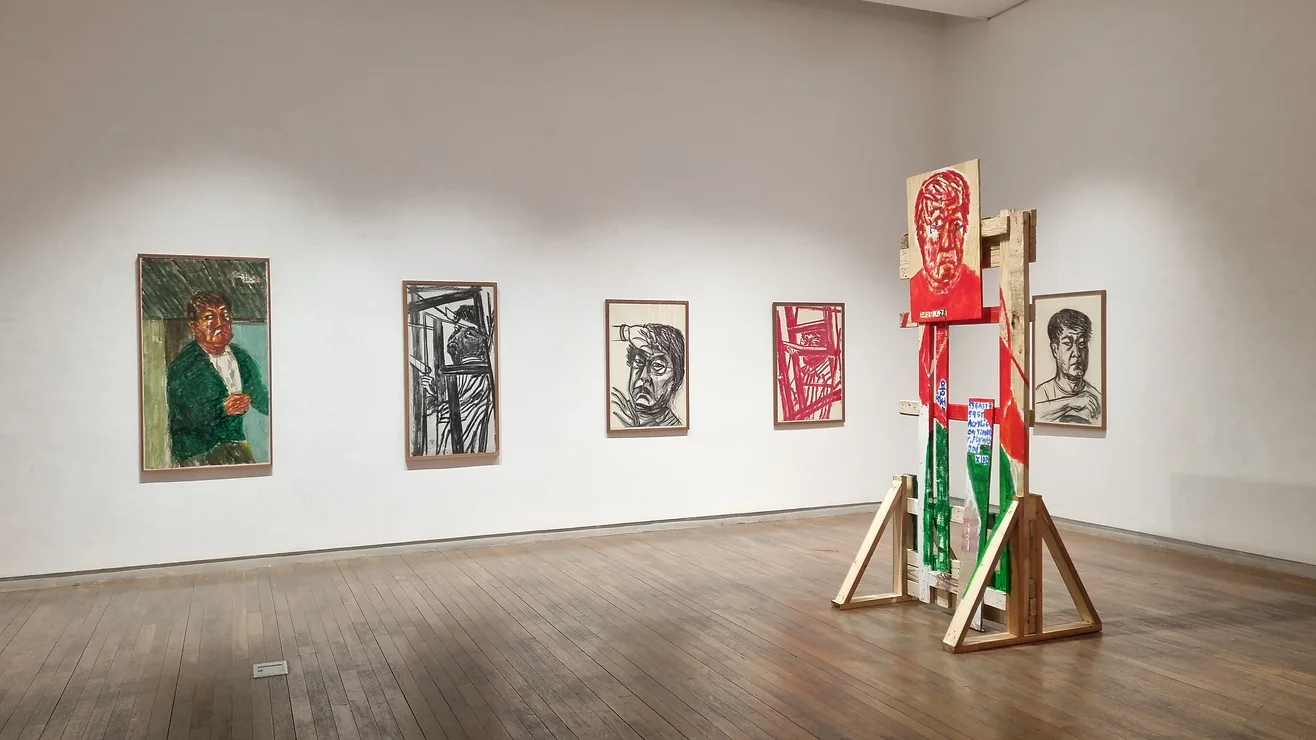
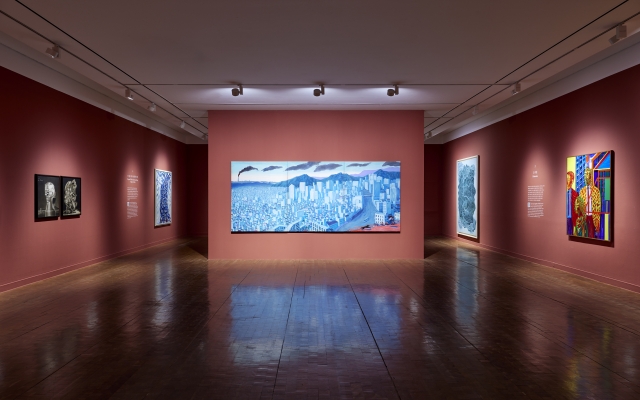
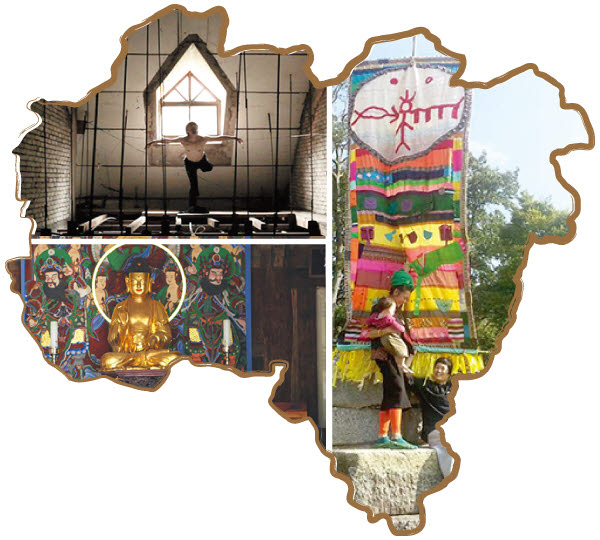
to sculpture. In the 2016 exhibition 《Color and Emptiness, Suh
Yongsun》 at the Kim Chong Yung Museum in Pyeongchang-dong,
Seoul, he presented sculptures and installations inspired by Buddhist imagery
and Hangul calligraphy. Rather than calling it an ‘expansion of genre for a
painter,’ he sees it as a search for the essence of art. He emphasizes that
before modern times, painters also assumed the roles of sculptors and artisans.
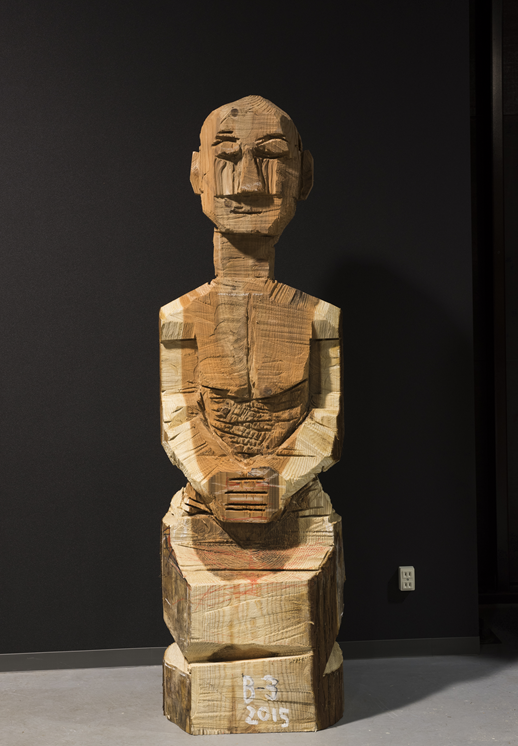
Buddhist sculpture is traditionally an art of archetype and style. Holding
hammer, chisel, and plane, he revealed Buddha figures shaped only in outline,
as if splitting firewood—forms of deliberate non-action.
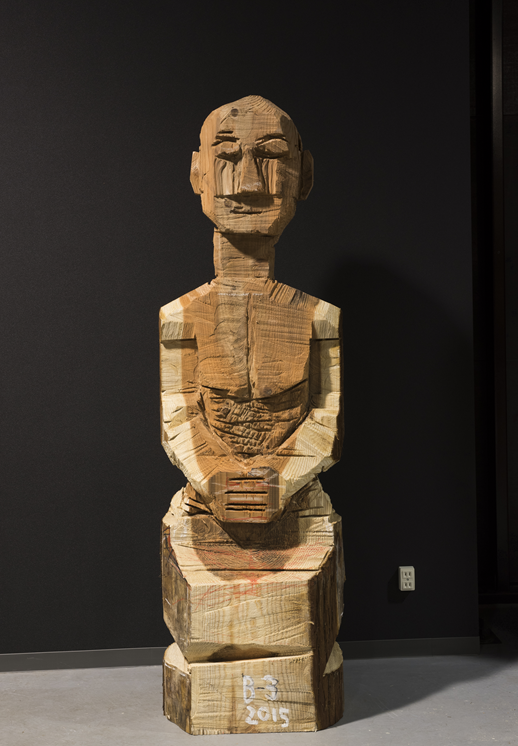
Suh Yongsun, Buddha 1,
2015, Japanese cedar, 170 x 49 x 41 cm © Suh Yongsun
‘Individual Suh Yongsun’ may be unable to
bear the depth and density of the vast world, but ‘Artist Suh Yongsun’ draws
everything into his home ground—the world of ‘skeletal art.’
“Suh Yongsun’s painting remains faithful
to the essential function of painting—to render the invisible world through the
visible—while attempting neither to exaggerate nor to neglect what has been
experienced consciously. It is both the result of that effort and the process
itself.” (Kim Hyung-nam, Co-director of Yeoju Museum of Art)