Articles
[Essay] [Artists of Our Time Met by Lee Jin-sook] Painter Suh Yongsun
2011
Lee Jin-sook | Art critic
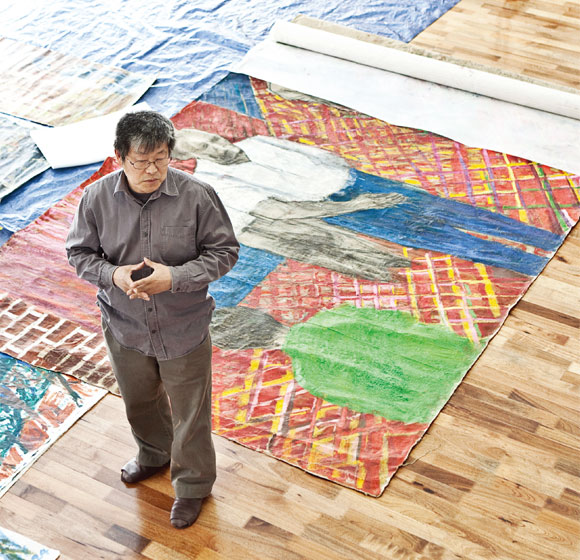
The
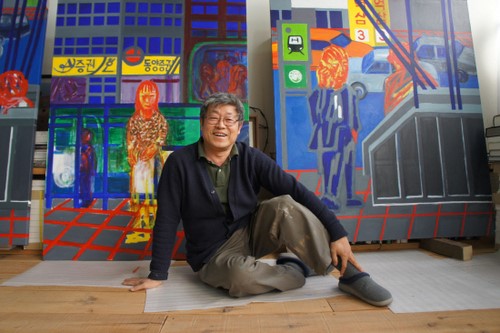
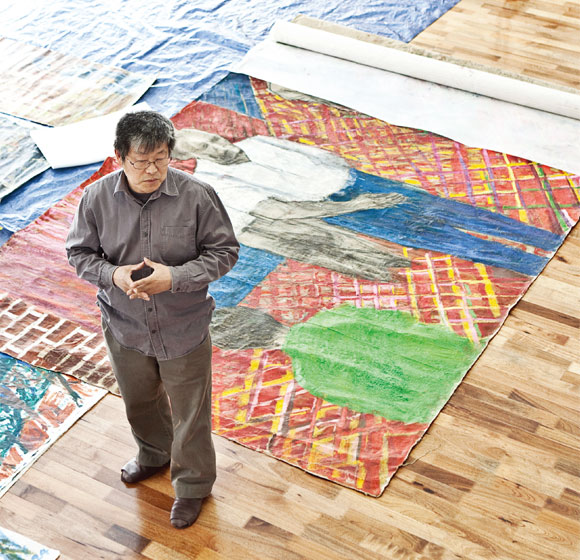
Artist © Suh Yongsun
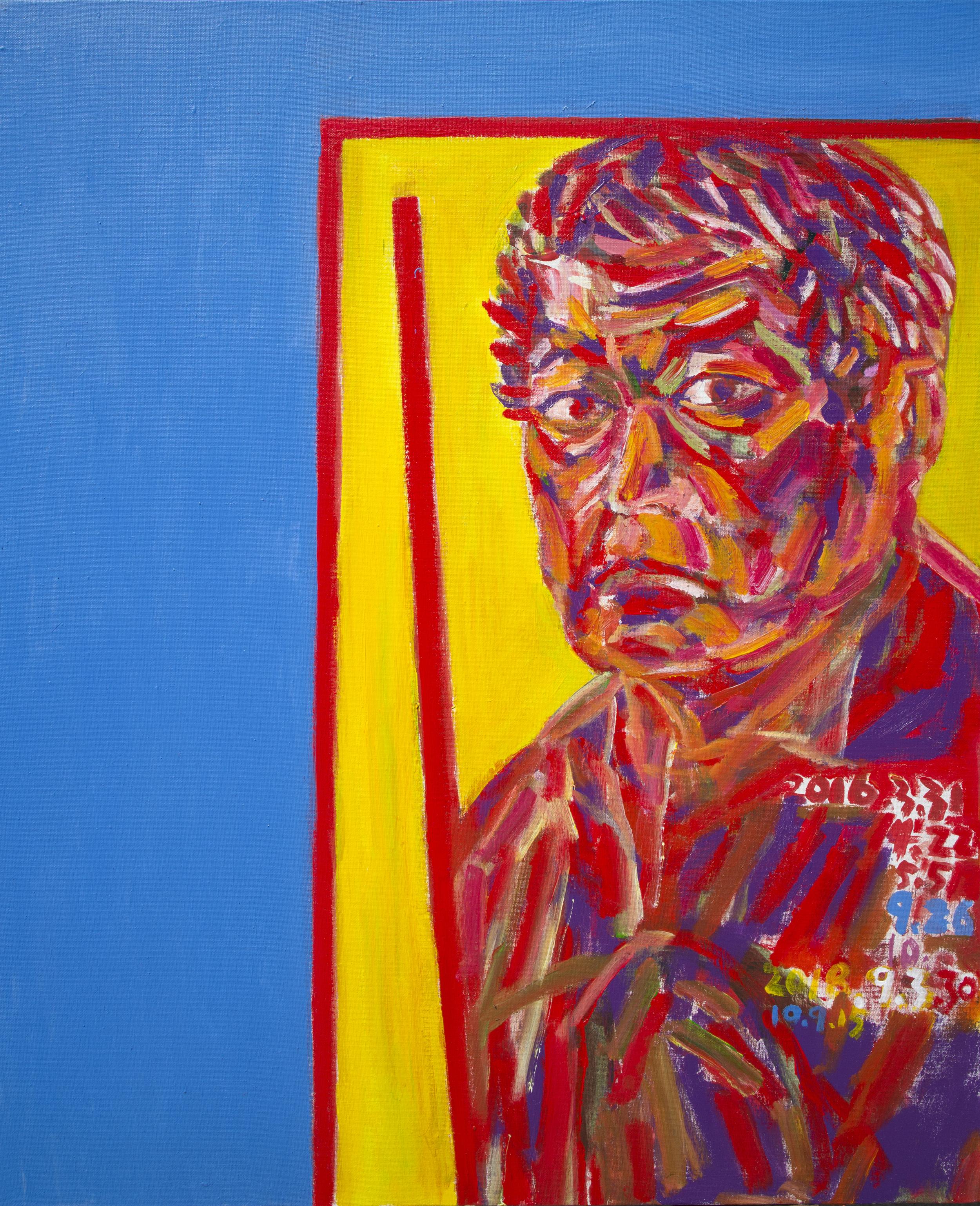
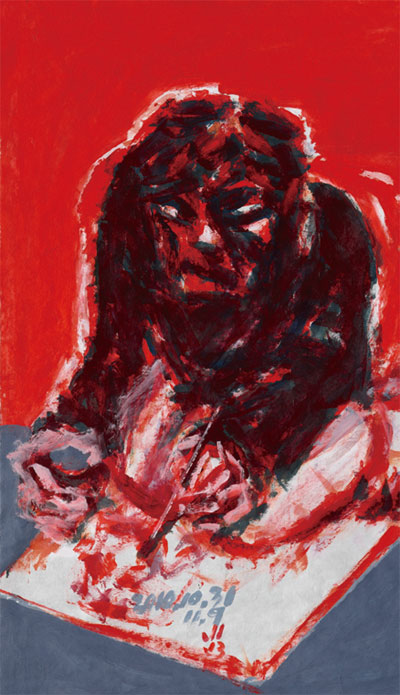
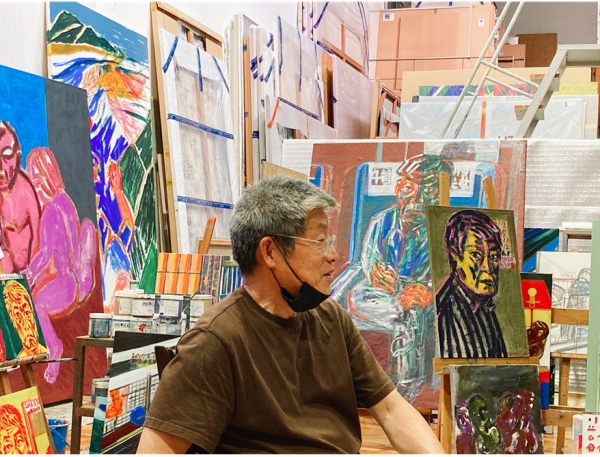
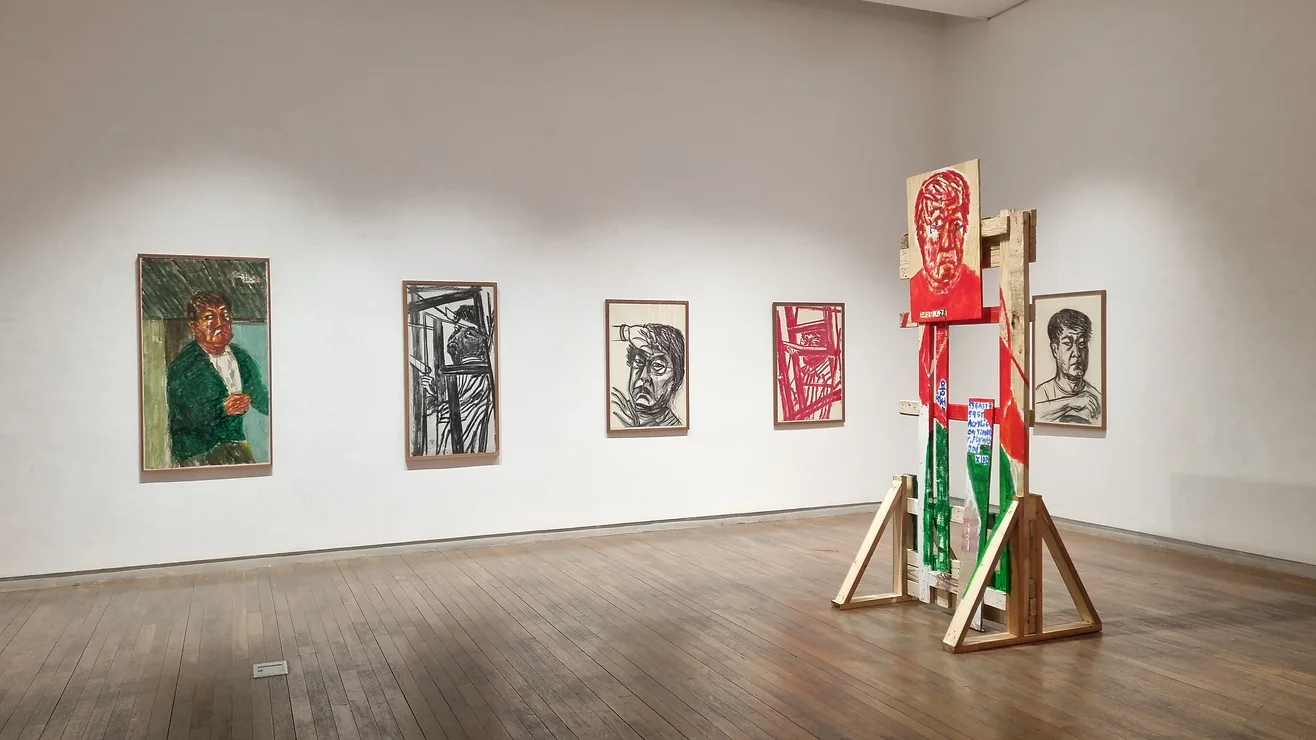
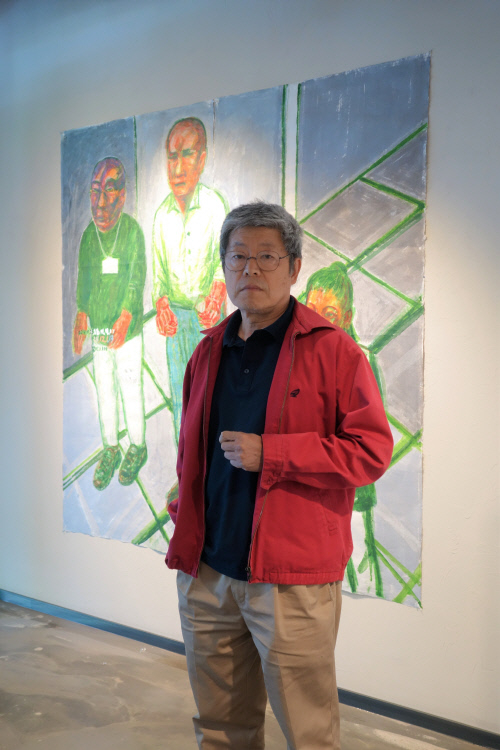
Painter Suh Yongsun begins each day by
painting a self-portrait in the morning. He prepares his paints at night and
paints the portrait as if writing a diary. In the self-portrait, the artist is
kneeling, painting as though in disciplined practice. The posture is almost
combative, conveying serious reflection and persistence.
“To me, people are truly fascinating
beings. The stories within them are inexhaustible.”
For Suh Yongsun, not only himself—his
daily subject of observation—but also people in the streets and people in
history all become important subjects of painting. His historical paintings and
depictions of contemporary life, rendered with heavy brushstrokes and intense
color, have made him a singular presence in the Korean art world. In
recognition of this achievement, he was selected in 2009 as the National Museum
of Modern and Contemporary Art’s ‘Artist of the Year’, one of the most
prestigious honors in the Korean art scene.
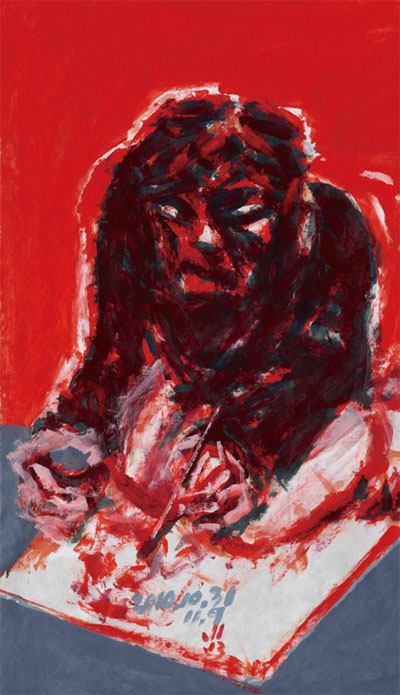
Suh Yongsun, The Drawing
Man, 2010, Acrylic on Korean paper, 96 x 62.5 cm © Suh Yongsun
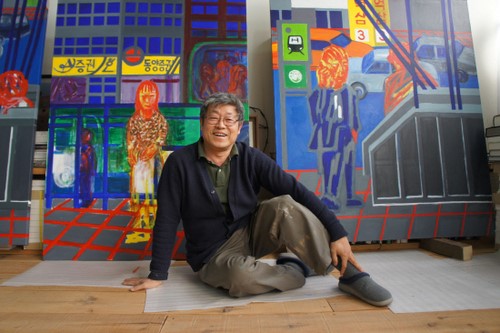
Last March, around the time of his large
solo exhibition at Hakgojae Gallery, I visited Suh’s studio located in a quiet
village in Yangpyeong. Spring was gradually arriving in the spacious studio
filled with the clear air of nature. The studio was packed with works that
could not be fully shown in the exhibition as well as works still in progress.
In 2008 he gave up, without hesitation, his professorship at Seoul National
University—despite more than ten years remaining until retirement—out of a
single-minded dedication to his work. He still believes it was the right
decision.
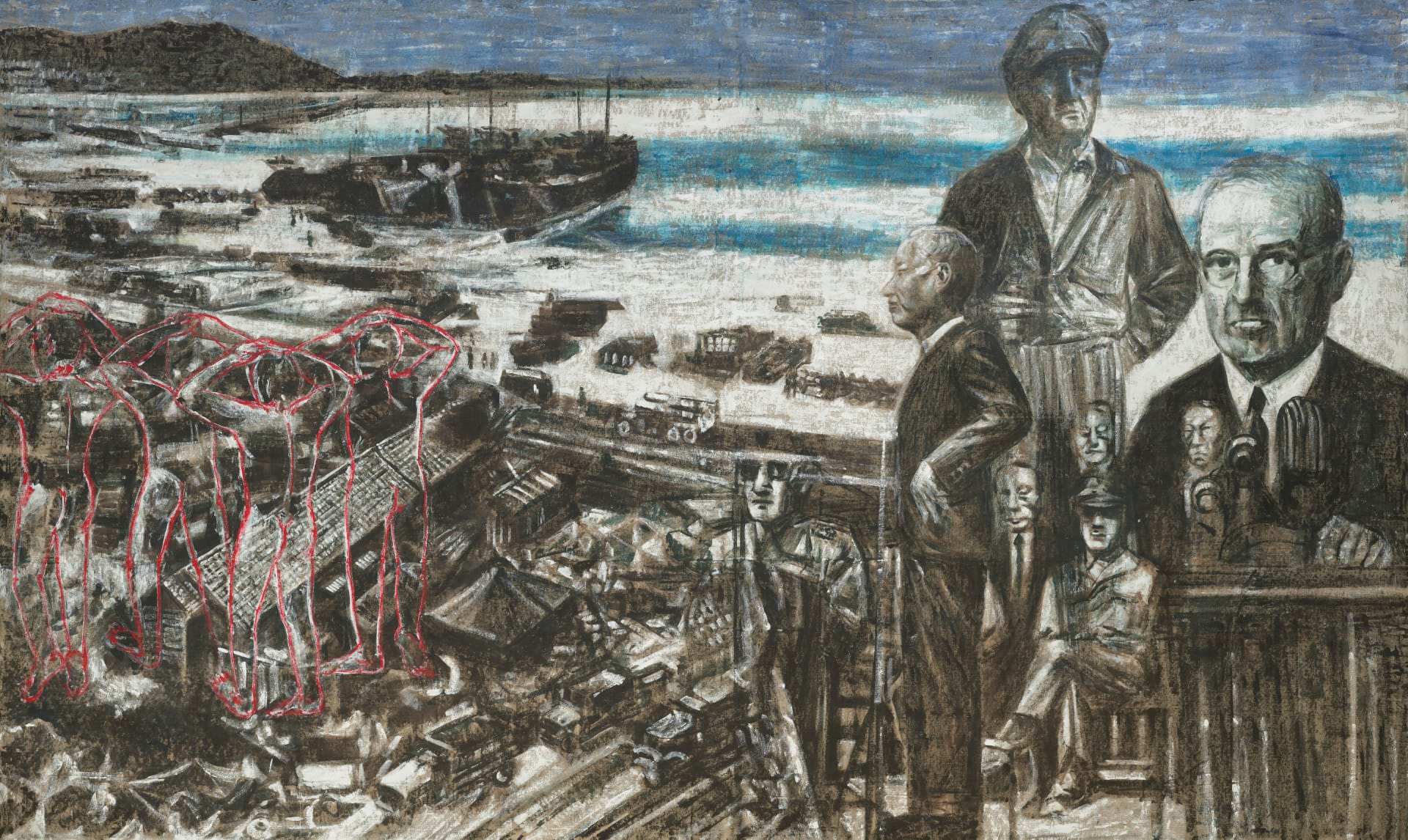
In the studio was a painting in progress
depicting the two principal figures of the 1905 Taft–Katsura Agreement. During
a trip to the United States the previous year, he visited the home of President
Roosevelt, where the so-called Taft–Katsura Agreement—providing a pretext for
Japan’s intrusion into Korea—was made. It was a site where our history was
manipulated by foreign powers. He believes parts of that historical situation
have yet to be sufficiently clarified.
“Furthermore, I have continuous doubts
about history. History is more than what is recorded in writing. I acknowledge
the legitimacy of official history, but since history is made by people,
subjective elements and unresolved problems inevitably exist. Dynastic history
and the history of power are not everything. My concern is how to embrace the
history of ordinary people living everyday lives.” This concern marks the
starting point of Suh Yongsun’s painting.
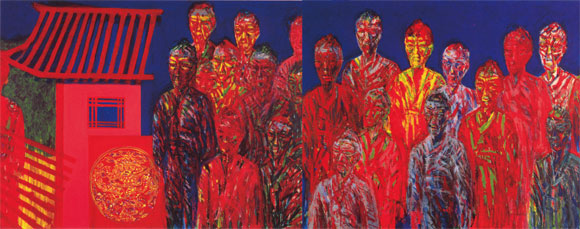
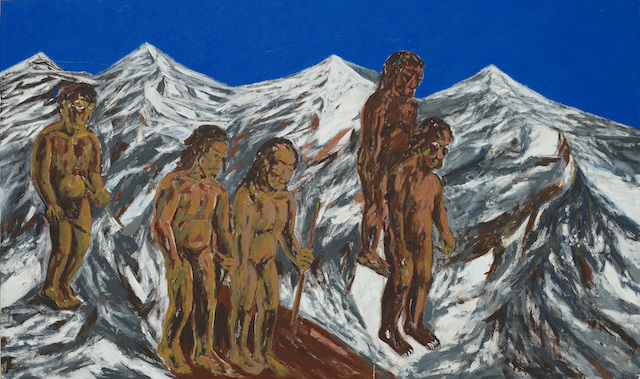
Suh Yongsun, People’s
Thought, 1991, Acrylic on canvas, 194 x 517 cm © Suh Yongsun
The first subject he immersed himself in
was historical painting about King Danjong. In 1986, during a personally
difficult period, he happened to visit Cheongnyeongpo, the place of Danjong’s
exile, while traveling to calm his mind. The peaceful landscape contained the
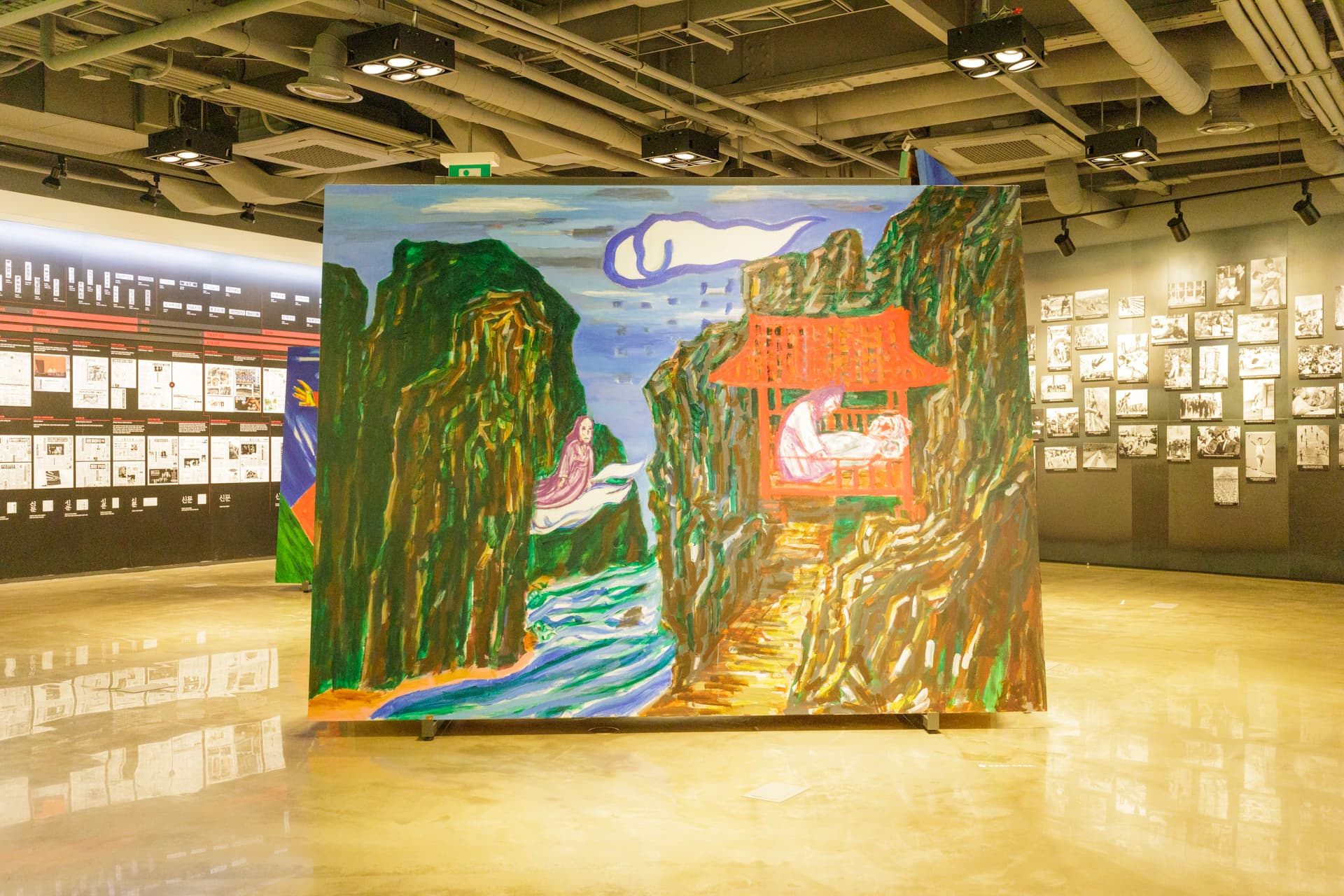
tragic story of Danjong, who was dethroned by his uncle King Sejo and died
unjustly in exile. ‘The Diary of Prince Nosan’ series began there. Rather than
merely depicting narratives based on official history, he overlays
psychological conflict among historical figures surrounding the deposition with
the observer’s own tension through various methods.
One work from the series,
People’s Thought, stands out for its subjective
interpretation absent from official records. The moral judgment of the people
toward the usurper and their silent resentment are expressed in powerful
colors—chilling for Sejo and for all usurpers of power. By psychologically
actualizing history in the present, Suh’s historical painting gains significance
in a Korean art tradition that otherwise lacks a strong lineage of historical
painting beyond state-sponsored works.
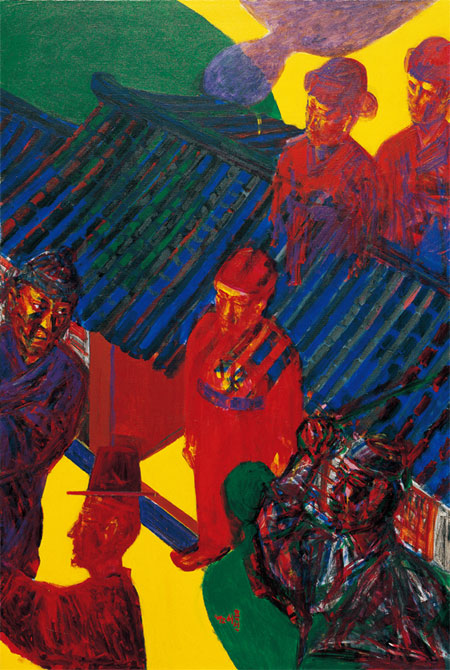
Suh Yongsun,
Gyeyunyeon01, 1992, Acrylic on canvas, 193.5 x 130 cm © Suh
Yongsun
Suh says that in the early stages of his
career he was more influenced by literature than by visual art.
“Isn’t literature ultimately all about
people? At first I tried abstract minimal work, but I could not abandon the
importance of relationships and stories.”
‘Relationships between people’ and ‘the
importance of narrative’ are key concepts in understanding his work. Even his
interest in history ultimately points toward humanity. “It feels as if
relationships between people are everything. The positions, attitudes, speech
habits, and expressions of people around me are fascinating. Sometimes when I
take a taxi, I feel like recording all the life stories drivers tell.” The
people he speaks of are us—living here and now.
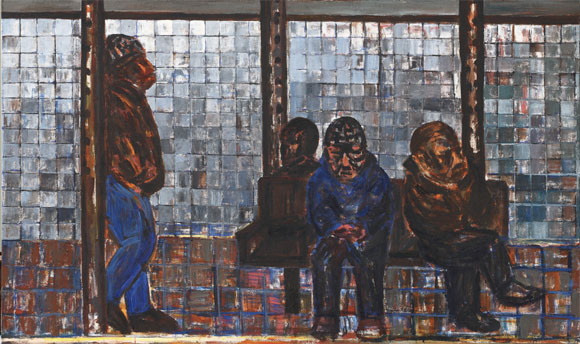
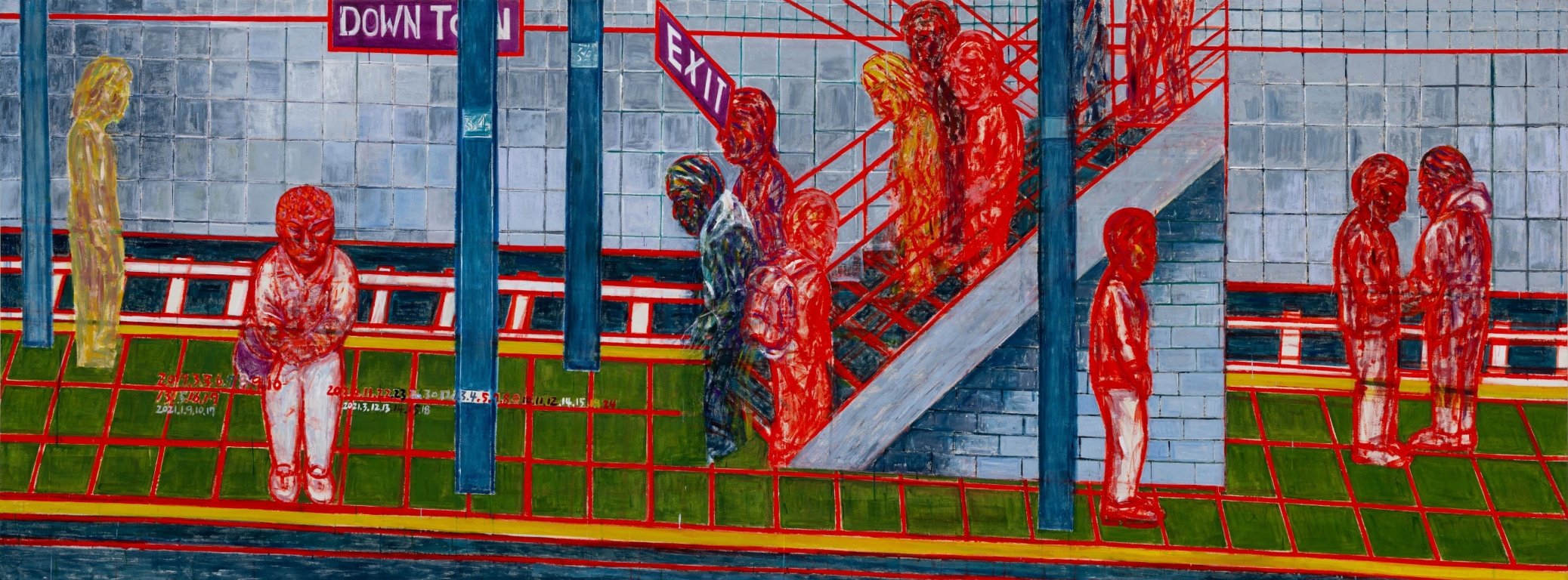
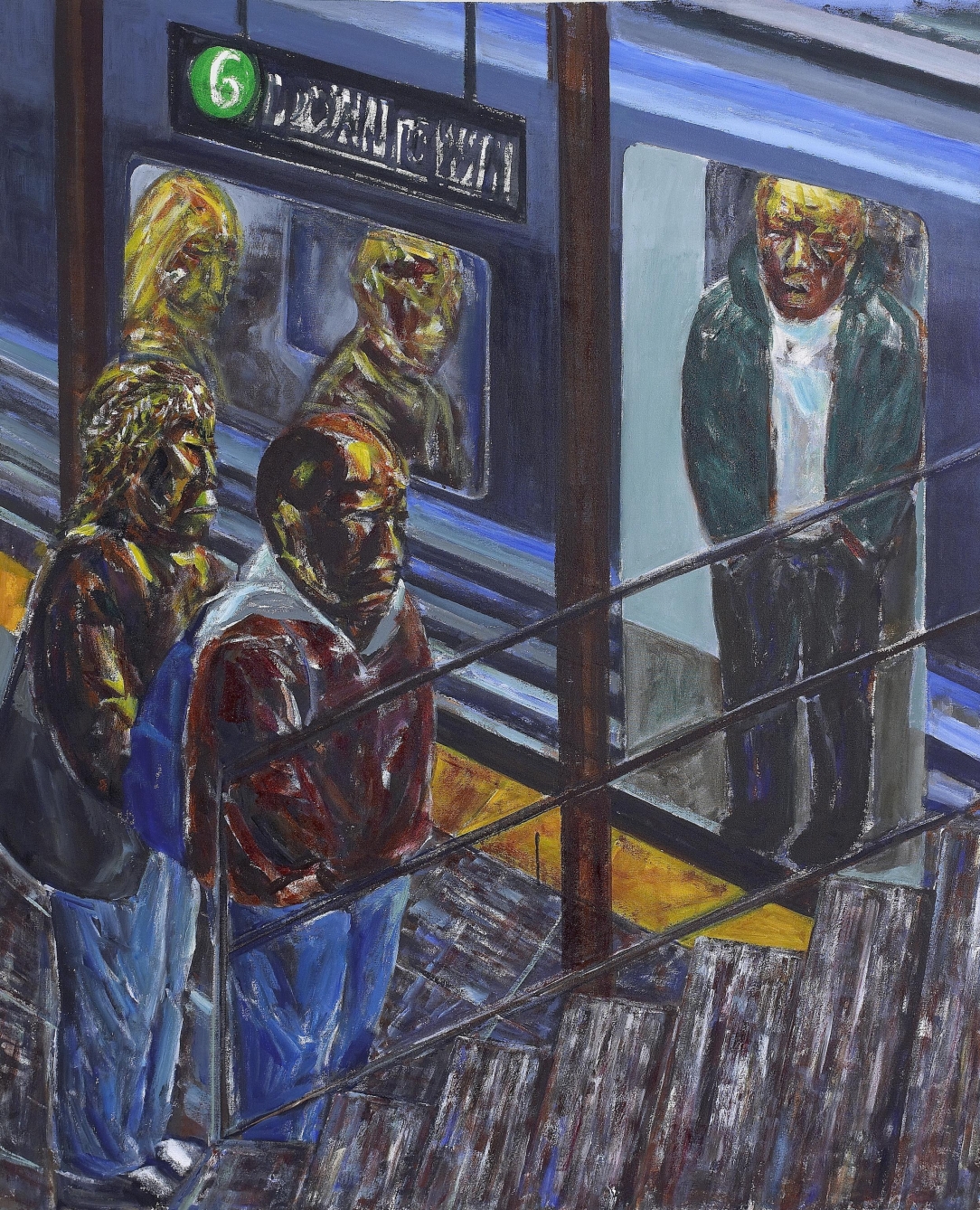
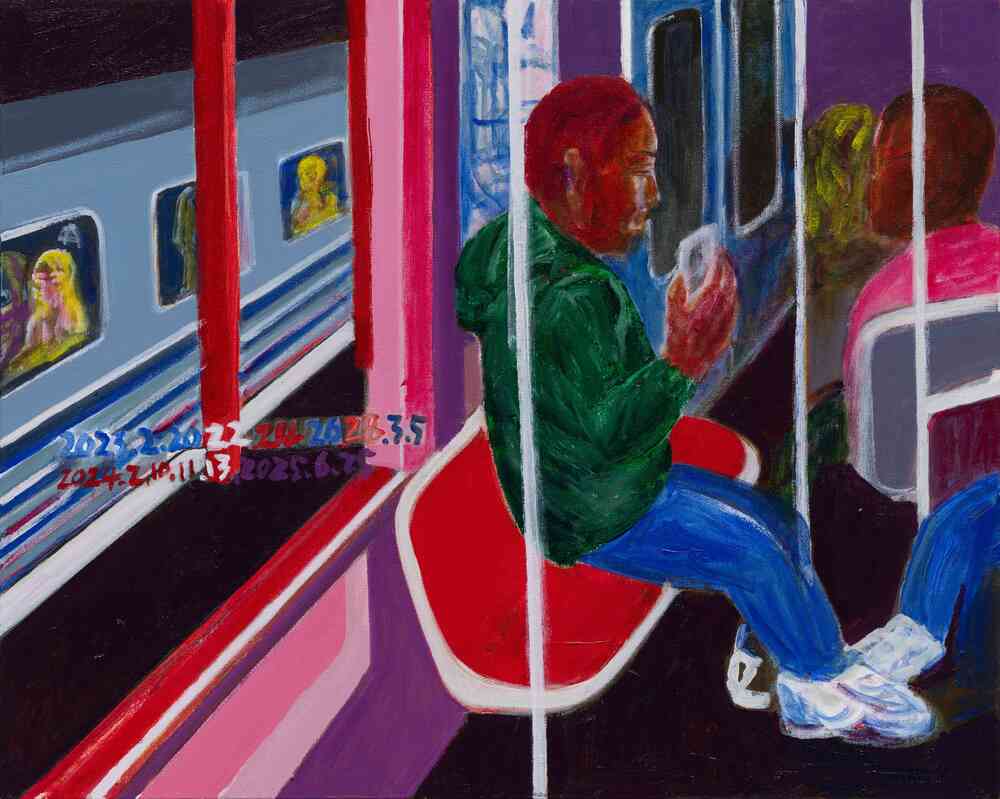
Suh Yongsun, People Waiting
Subway at 14th Street Station, 2010, Acrylic on canvas, 143.5 x 230.5
cm © Suh Yongsun
This interest in humanity originates in
his unusual adolescence. Despite later becoming a Seoul National University
professor, his youth was far from predictable. At the end of his second year of
middle school his family went bankrupt, and seven family members moved into a
single room in Jeongneung. Survival in the hillside neighborhood was not easy.
Poverty drove children into the streets and toward delinquency. The years he
spent with such friends were intense and painful. Study came second, and despite
his mother’s expectations he repeatedly failed university entrance exams. After
completing military service, he began art late and was eventually admitted to
Seoul National University. Among model students raised in sheltered
environments, he struggled to adapt—but through hardship he came to understand
people more deeply.
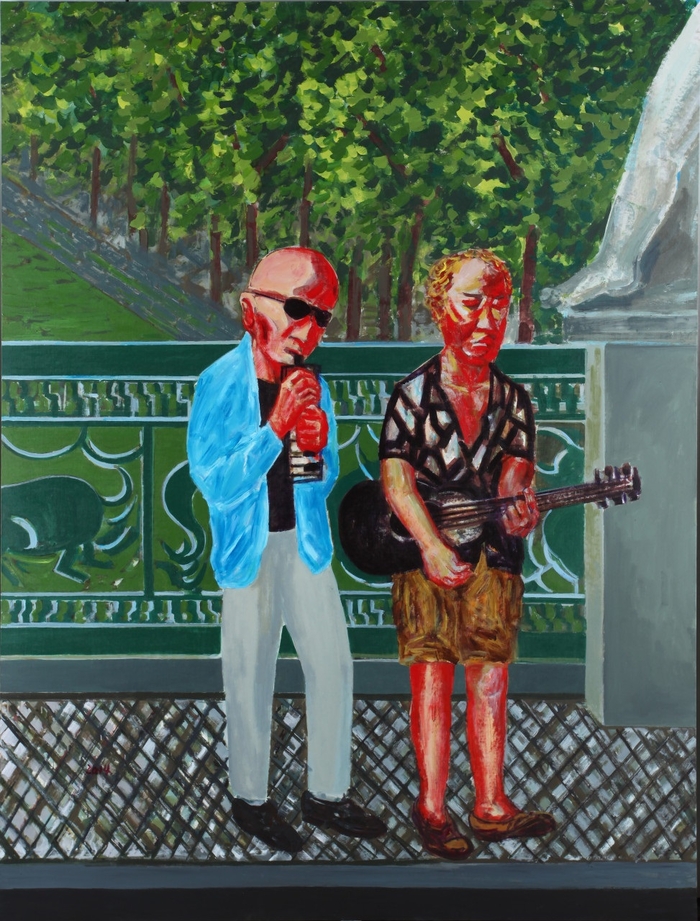
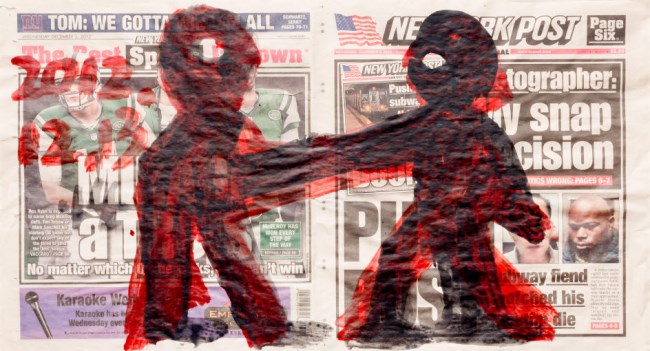
His paintings of people waiting for buses,
passengers in the subway, and street scenes observed from buses capture the
expressions of our time as he has witnessed them.
“I paint, but I like this vivid process of
thinking about people.”
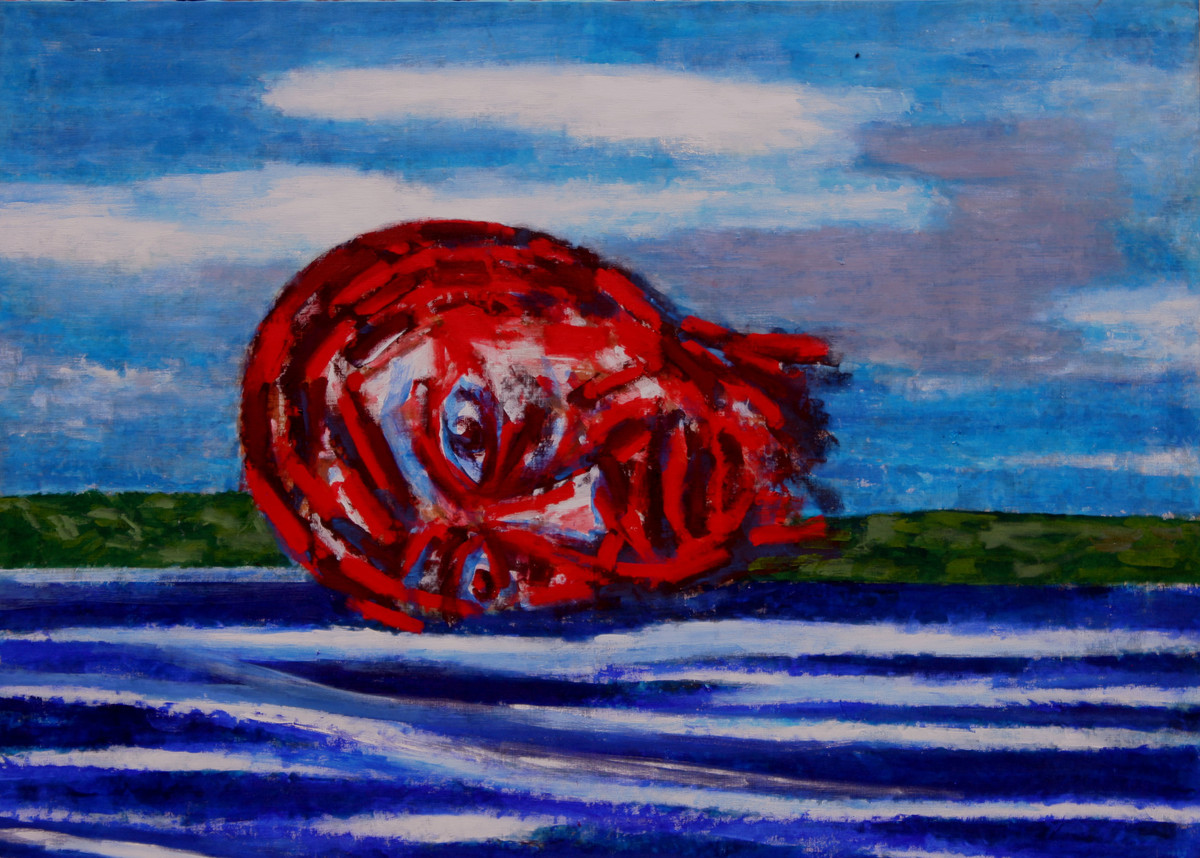
At the Hakgojae Gallery exhibition he
presented works painted during recent travels to New York and Berlin. Even
there, his interest remained the diverse crowds encountered in subway stations
and streets.
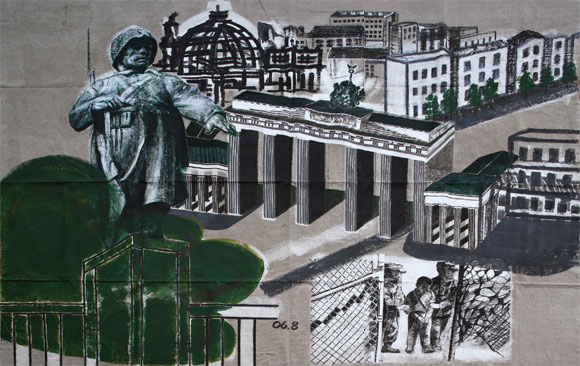
Suh Yongsun, Brandenburger
Gate, 2006, Acrylic on linen, 400 x 500 cm © Suh Yongsun
His sincere affection for people also
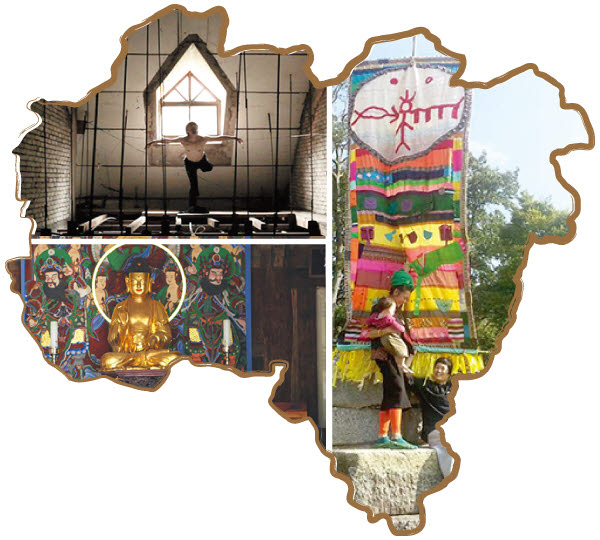
appears in another project, Drawing Cheoram. Begun in 2000
and continuing for over a decade, the project aims to preserve the former
coal-mining town of Cheoram in Taebaek and transform it into an art district,
modeled after Germany’s Ruhr coalfields turned cultural zone. For this, Suh and
fellow painters still travel to Taebaek about every two months and organize
exhibitions once or twice a year.
Asked whether the project has approached its
dream, he replied: “We’ve done many activities, but the results appear
indirectly. It’s a slow process in which a small number of people begin to
understand the region’s uniqueness and awaken to culture.” Progress has been
slow but real; parts of the abandoned mining town’s distinctive landscape have
been preserved. With voluntary participation from residents, a new event is
being planned this autumn. The unfamiliar artists who once came and went are
now gradually understood by the local community.
During the interview, canvases for new
works kept arriving at the studio. Asked what he wishes to pursue next, he said
he wants to address historical issues such as division and the Korean War more
deeply. This year he has solo exhibitions scheduled in Berlin and Osaka, and in
Korea he is preparing an exhibition on Jirisan. While the mountain’s beautiful
landscape will be the main theme, he also hopes to capture the stories
contained in Jirisan, which both connects and divides the Yeongnam and Honam
regions. It will be interesting to see how Jirisan—the nature that has shaped
history—will appear on his canvas. He said: “There is still much to do. Too
much to paint. Only time is lacking.”