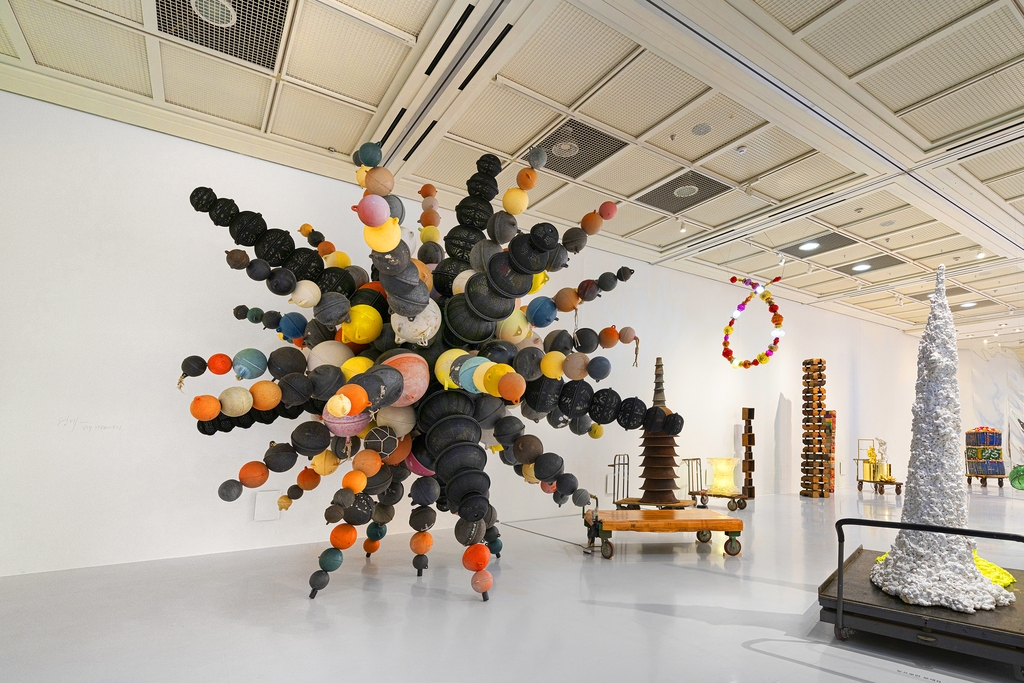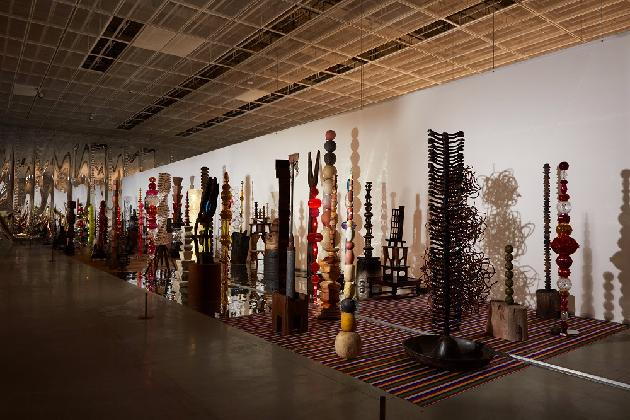


Perhaps — though I cannot know for certain — when the decision was made to hold his solo exhibition across the entirety of the former Seoul Station, that is, Culture Station Seoul 284, the artist must have smiled with deep satisfaction. This is not to underestimate the activities of an artist who emerged in the 1990s as one of the terrible children and for whom the prefix ‘new generation’ still does not feel awkward. Rather, the site was truly more suitable than any museum at home or abroad for an exhibition by Choi Jeonghwa.

The old Seoul Station is a place where incongruous styles originating from various eras and locations are mixed together, yet it is firmly rooted as a powerful reality in itself, sharing a kindred resemblance with his works. Inside and outside the ornately decorated marble building, there is no sense of disjunction with works composed primarily of plastic.

It is not easy for a single artist to fully occupy not only an entire monumental building but also the plaza in front of it — the site is vast, historic, and constantly traversed by an unspecified mass public. This may relate to the fact that his works, based on collecting, can expand indefinitely, and also to his unique sensibility of shedding the obsession with pure art and seamlessly cooking together diverse fields.


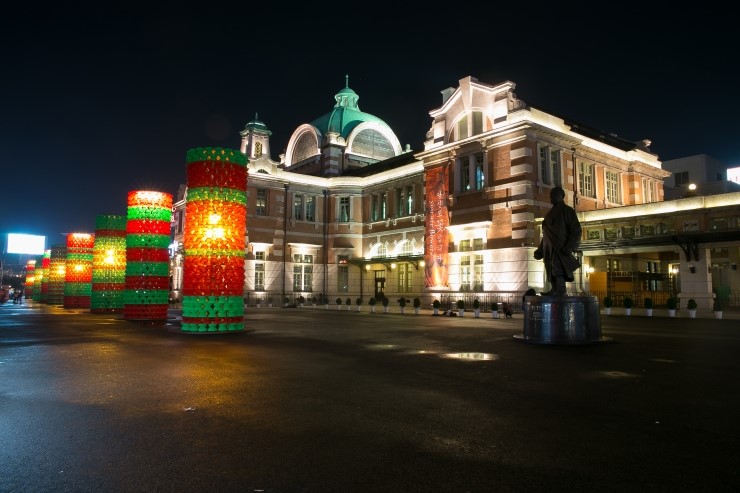
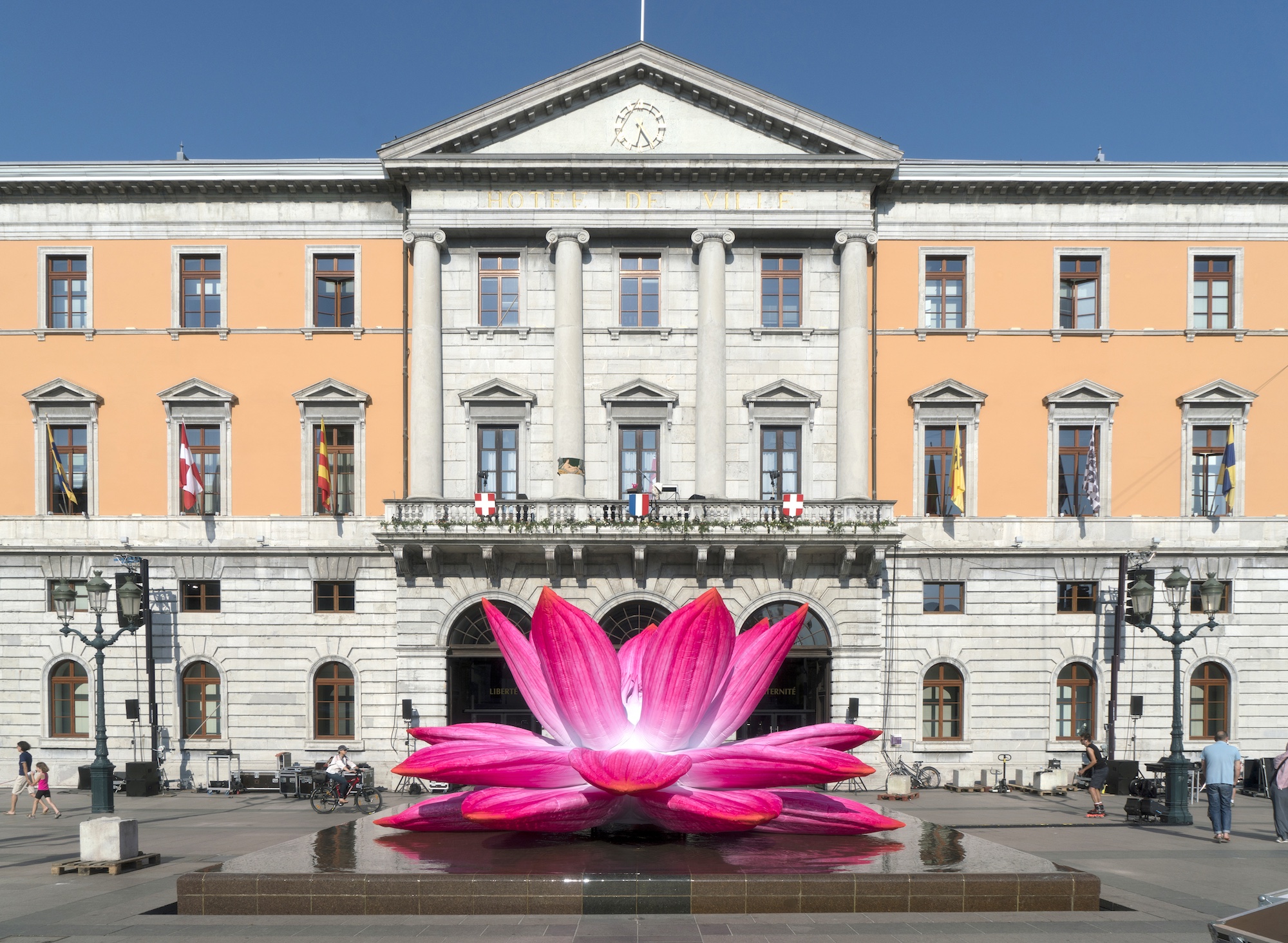
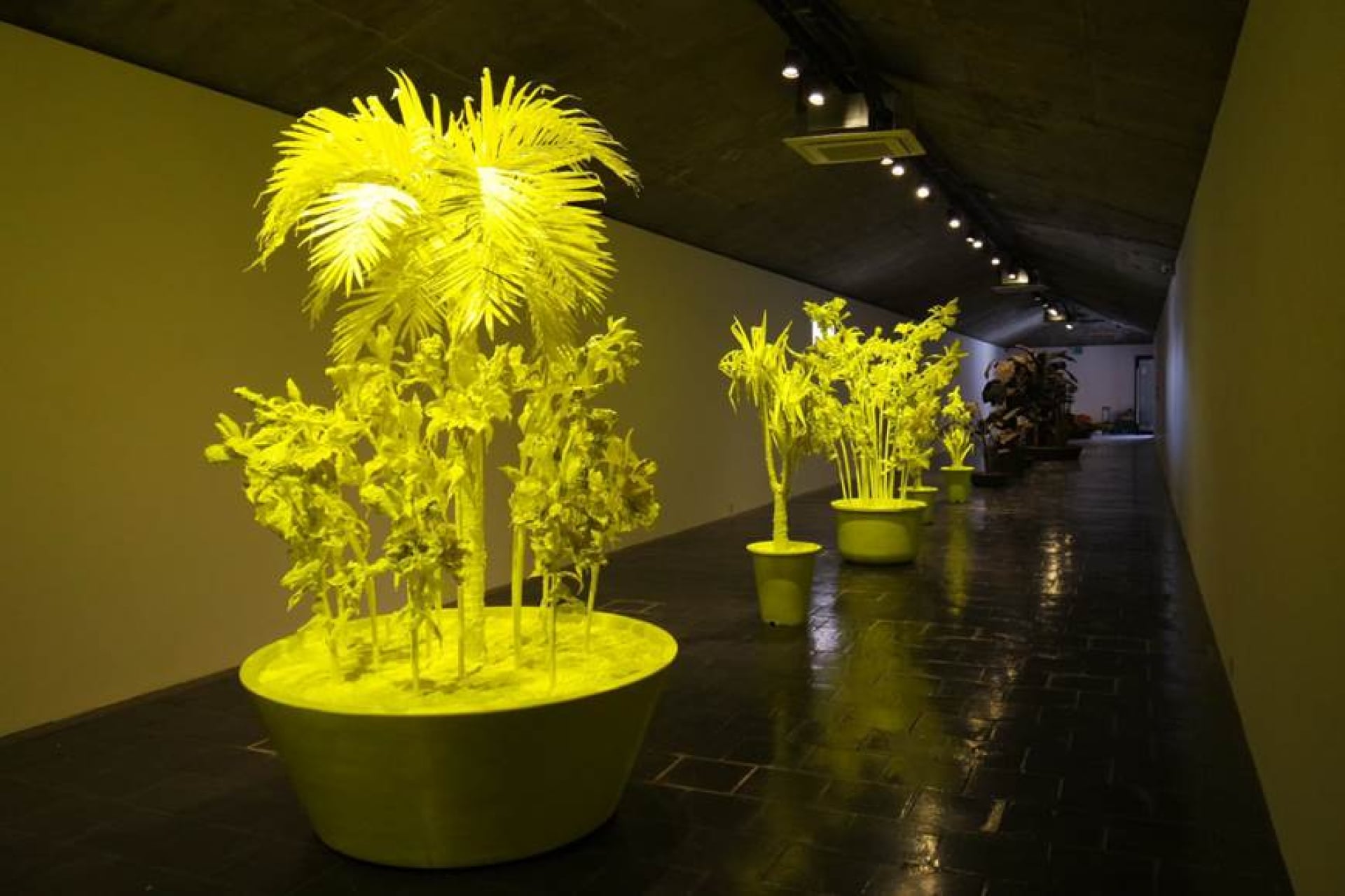
Choi Jeonghwa, Everyday of Flowers, 2014 © Choi Jeonghwa

Not long ago, an exhibition related to collecting was also held at that venue, but it involved many collectors and artists rather than a single individual. Likewise, the exhibition 《Spring Art Competition》 organized by Choi Jeonghwa at Space C a few years ago included a considerable number of works by other artists. In contrast, the works and objects filling this exhibition may be described as a private treasury condensed from the artist’s own taste and sensibility.

The peculiar experience of this exhibition lies in the massive revelation of the private sphere within a public domain. The main components of the work consist of an enormous quantity of collected items — seemingly transported by several large trucks — whose former storage location and eventual destination after the exhibition are difficult to imagine.

These diverse objects were not gathered within a year or two according to a predetermined exhibition concept, and thus cannot be described merely as quantity-driven accumulation. Some even remain unopened, yet the objects appear to have aged together with the artist.
 
There are indeed many objects, but most are curious items that were once extremely common and have now become rare. The objects coiled throughout the space and their variations are interesting in themselves, yet they also function as small mirrors or windows. They point to themselves while simultaneously pointing to reality.

His work is also a cross-section of Korea’s compressed modernization. The exhibition is striking in that it prompts us to look back on our own reality. In a country where collective enthusiasm and collective forgetting occur more intensely than anywhere else, things that were quickly piled up and discarded have all acquired the dimension of relics.

Many exist only because we once failed to throw them away. Choi Jeonghwa has selected, with an artist’s keen eye, things we once desired and then lost interest in, orchestrating them into powerful scenes by blending that entire reality together. His work does not remain at the level of simple satire or eccentric taste.
 
The materials themselves are interesting, but precisely for that reason they must be organized into meaningful form. Something beyond the materials — a plus alpha — is required. This explains why, even when kitsch-style artworks proliferated after the 1990s ‘age of culture’ that Choi Jeonghwa helped open, he retained distinction as the ‘originator’.

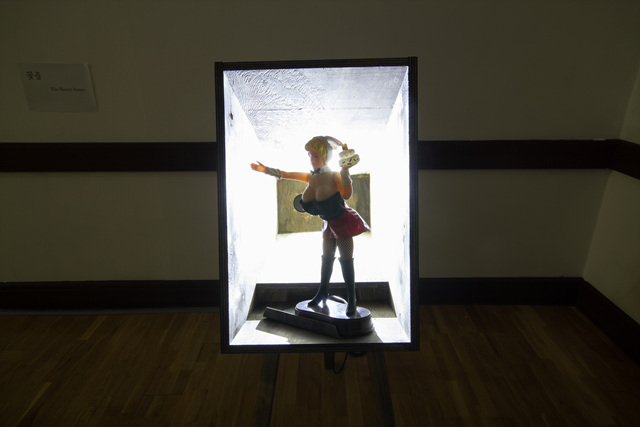
This exhibition removes the detached contemplative beauty traditionally associated with ‘pure art’. In his work, sweet and sticky material, bodily, and psychological interests appear vividly. For example, the work Flower Dance, in which the suggestive dance of a doll holding a birthday cake appears as a shadow through layers of reflection, or the clumsy toy projecting an image of a boy and girl kissing in a similar style, contain a simple fantasy of the most earthly happiness — happiness felt upon the skin.

The attraction he himself felt toward objects becomes contagious to others. He invites us to taste what he has tasted. The exhibition subtitle ‘Natural color, multiple flower show’ can be read as a will to appeal to the full spectrum of human senses, beyond the aesthetic ideology of pure art that appeals to abstraction, transcendence, and asceticism.


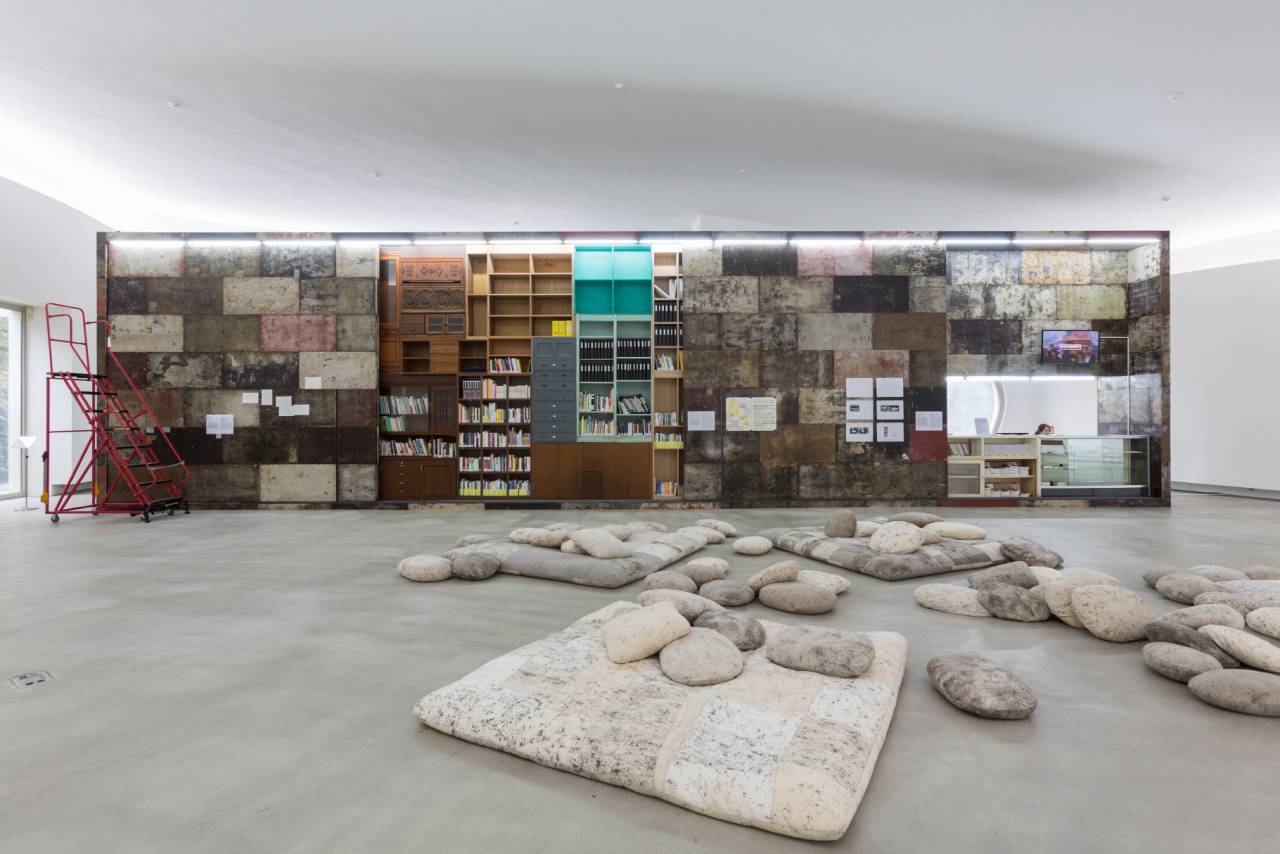
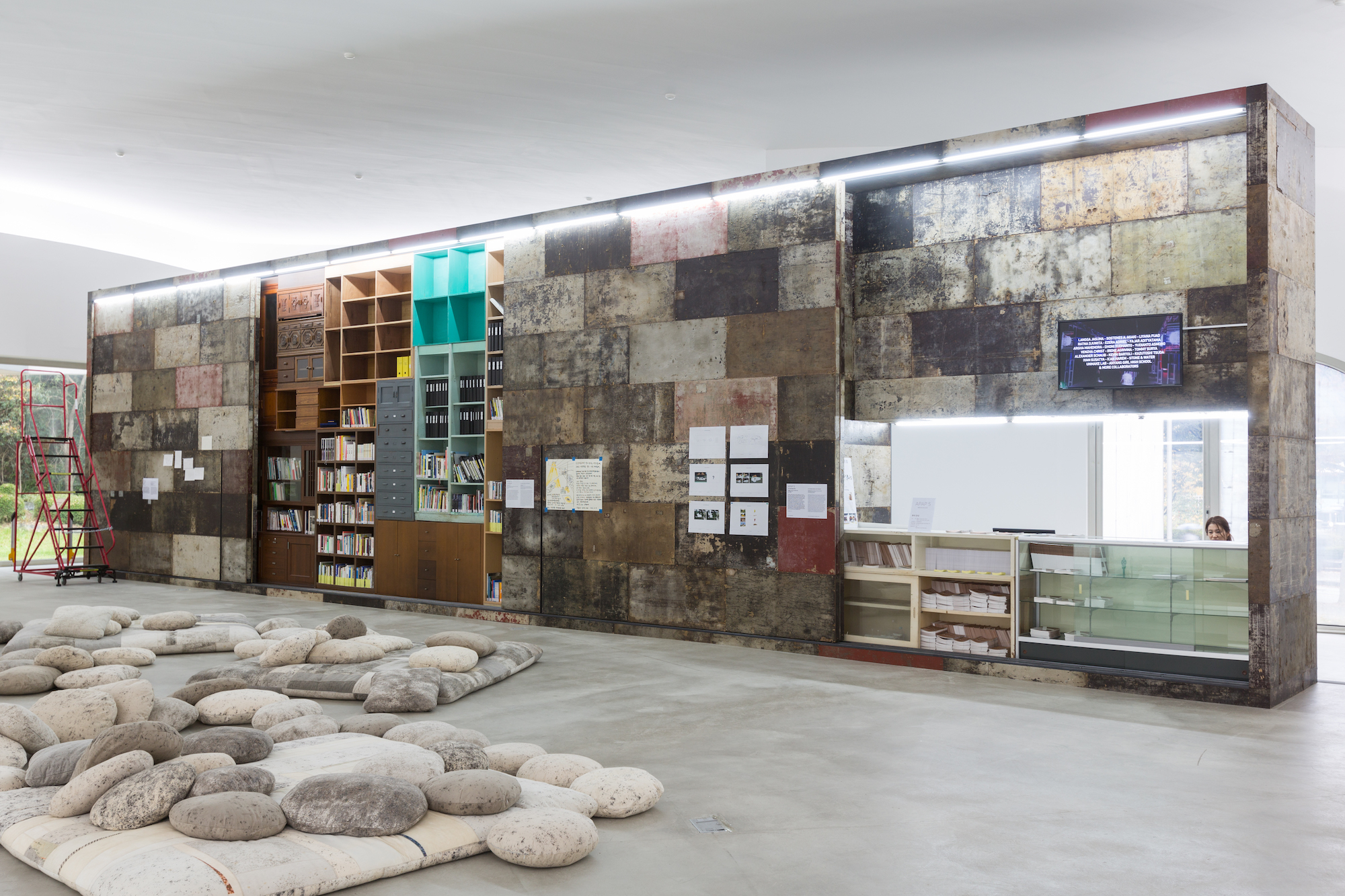
Installation view of 《Natural color, multiple flower show》 © Choi Jeonghwa

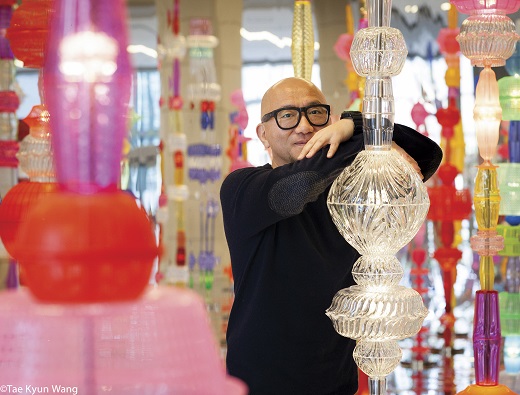
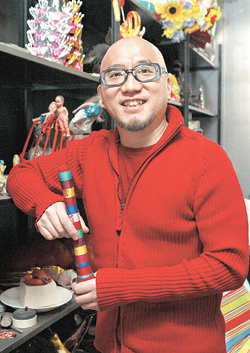
The artist introduction section also lists him as ‘artist, curator, art director, producer, graphic designer, hobby artist, interior designer, craftsperson, public artist, installation artist, collector’. Within this all-directional career lies almost everything except the currently dominant tendency of circling endlessly around the university system in step with the conceptualization and institutionalization of contemporary art.

Rather than remaining around schools, he opened a blue ocean within reality itself. He did not search for the sunny side — he turned wherever he stood into the sunny side. Instead of greenhouse plants or bean-sprout trays, he chose the life of wildflowers and weeds, evolving into mutations demanded by each immediate reality — a creature suited to the proliferating condition of objects spreading in all directions beyond boundaries.

Meanwhile, the method of arranging works or objects is somewhat neutral and enumerative. In some sections objects surge forward in tangled formations like a procession. According to the viewer’s path they are stacked in rows, hung indiscriminately, or carefully placed inside museum-like cases.
 
The content is kitsch and the form is minimalism. After all, how could that many work-objects possibly be classified? Among the 124 categories that seem to indicate both artwork titles and spatial groupings, it is difficult to establish any orderly taxonomy. From the classification system loosely grouped as ‘history of flowers’, a few amusing examples can be noted: Old Flower, Incident of Flower, Thingamajig of Flower, Teeth of Flower, Nonexistent Flower, Relax of Flower, Flesh of Flower, Ailing Flower, Speed of Flower, Bone of Flower… names of objects blooming in profusion.

The opening party was titled ‘flash flash’, the academic colloquium ‘buzzing bubbling’, and the closing party ‘bloom and fall bloom’. These adjectives also apply to his works. One might call it life-embedded art. It differs from the attitude that pretends loftiness while seeking reconciliation across the gap between life and art. His works are not reconciliation or compromise with everyday reality, but rather its reverse side. If the front is splendid, the reverse is dull; if the front is dull, the reverse is splendid.
 
In any case they remain heterogeneous — something that comes from reality yet is not reality. Though alien to reality, they do not posit a separate ideal or concept apart from it. In that sense Choi Jeonghwa’s work is wild. The almost unnecessary titles merely suggest a faint direction of meaning. Things once mass-produced from a single mold become rare or even unique one day, and the aura lost in The Work of Art in the Age of Mechanical Reproduction (Benjamin) returns.

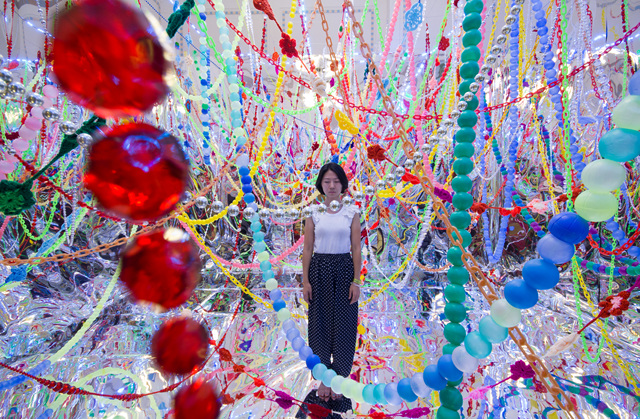
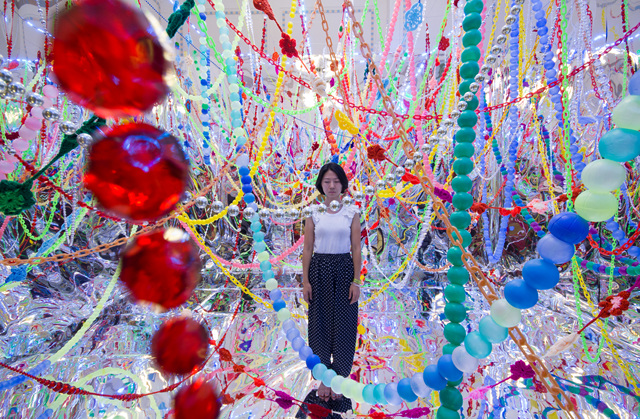
His method of capturing and amplifying the distinctive atmosphere embedded in objects differs from the currently fashionable style of object-filled archives. The technique of amplification is achieved not only through quantitative mobilization but also through mirrored spaces such as the work The Cosmos of Flowers, where all sides reflect one another. Instead of a core or essence, the surface expands to the maximum.

His work follows a post-minimalist tendency in contemporary art, where meaning is traced on the surface rather than in depth. The mirrored room testifies not only to brilliance and amplification but also to the collector’s solitary narcissism, in which each element reflects the others within a closed totality.


Choi Jeonghwa, 〈The Cosmos of Flowers〉, 2014 © Choi Jeonghwa

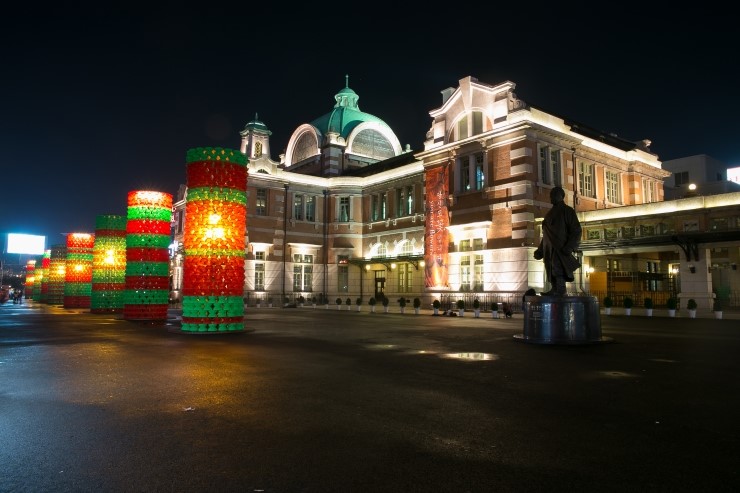
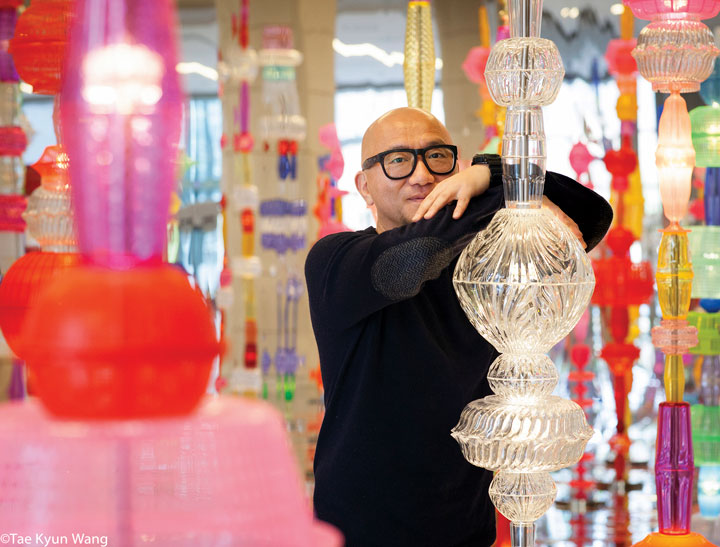
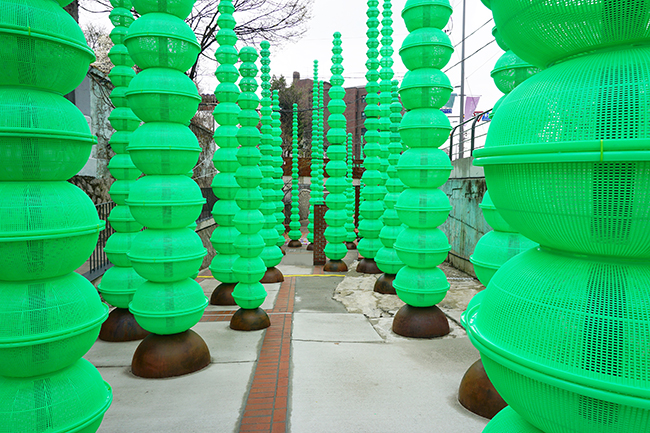
Although motifs and tools resembling shamanistic folk beliefs frequently appear in his work, he also weaves together commonplace plastic containers such as colorful baskets to create monuments imbued with an aura of spiritual potency. He constructs monuments out of materials and subjects that would never normally qualify as monumental.

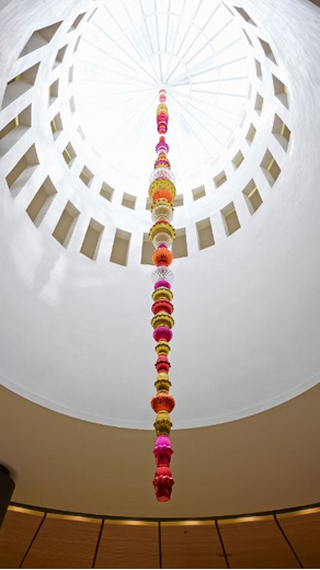
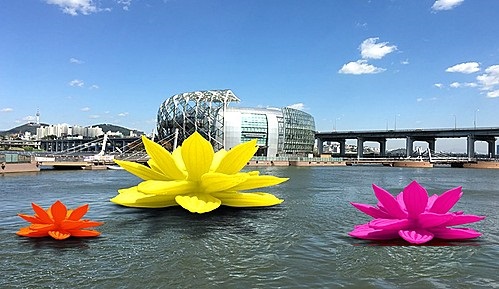
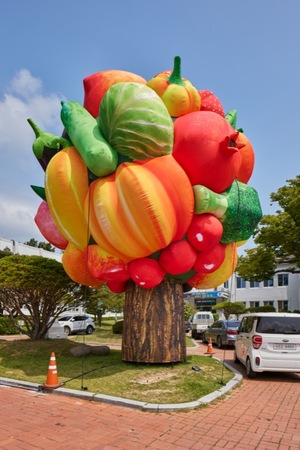
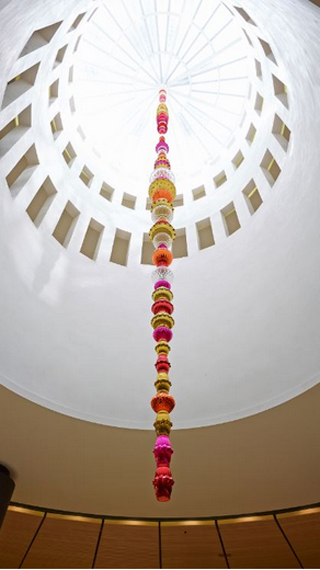
The Seoul Station plaza project Everyday of Flowers is a work in which light green and red baskets are stacked like ritual offerings, forming eight illuminated structures at night. Red and blue fruits drawn from a plastic ecosystem rise upward toward a certain wish. That wish is never transcendental. Created with the participation of homeless people living around Seoul Station, it hopes for small earthly happiness and aspiration.

It is a hope that the distant bright glow in a cold and hungry street might somehow fulfill. Like the shining lights of street stalls before the unhoused, can art also contain such urgent concerns? Even if art seems to provide a plausible alibi, art without necessity ultimately declines.
 
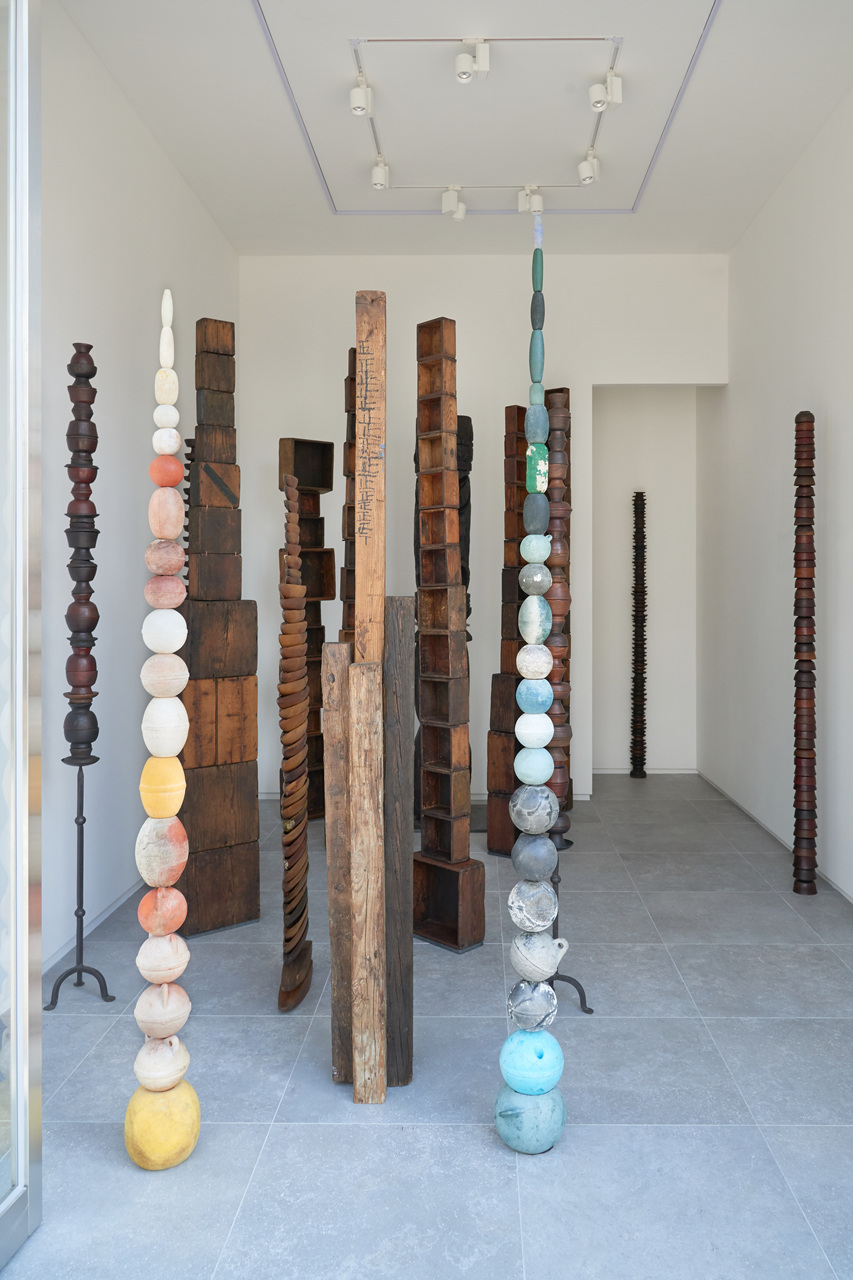
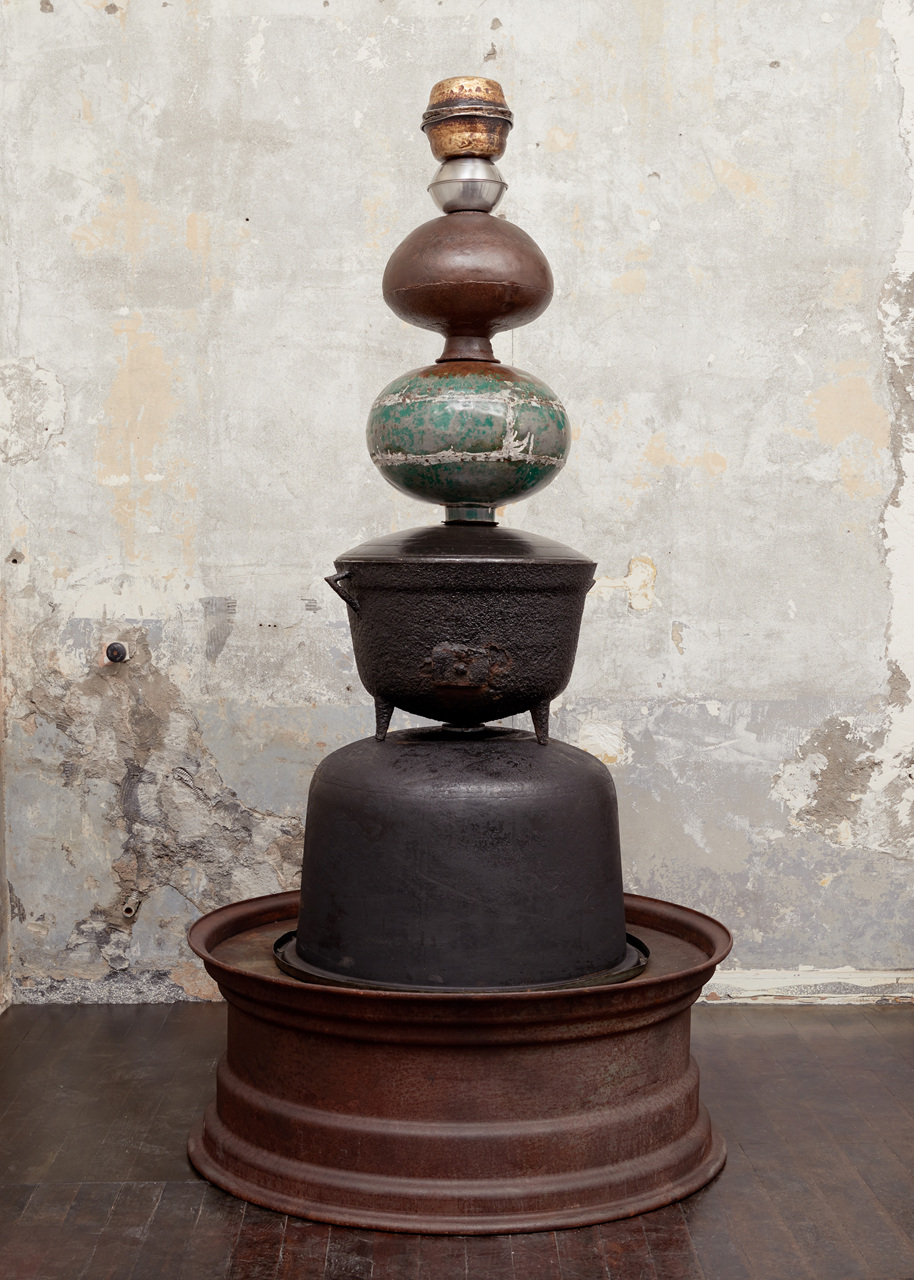
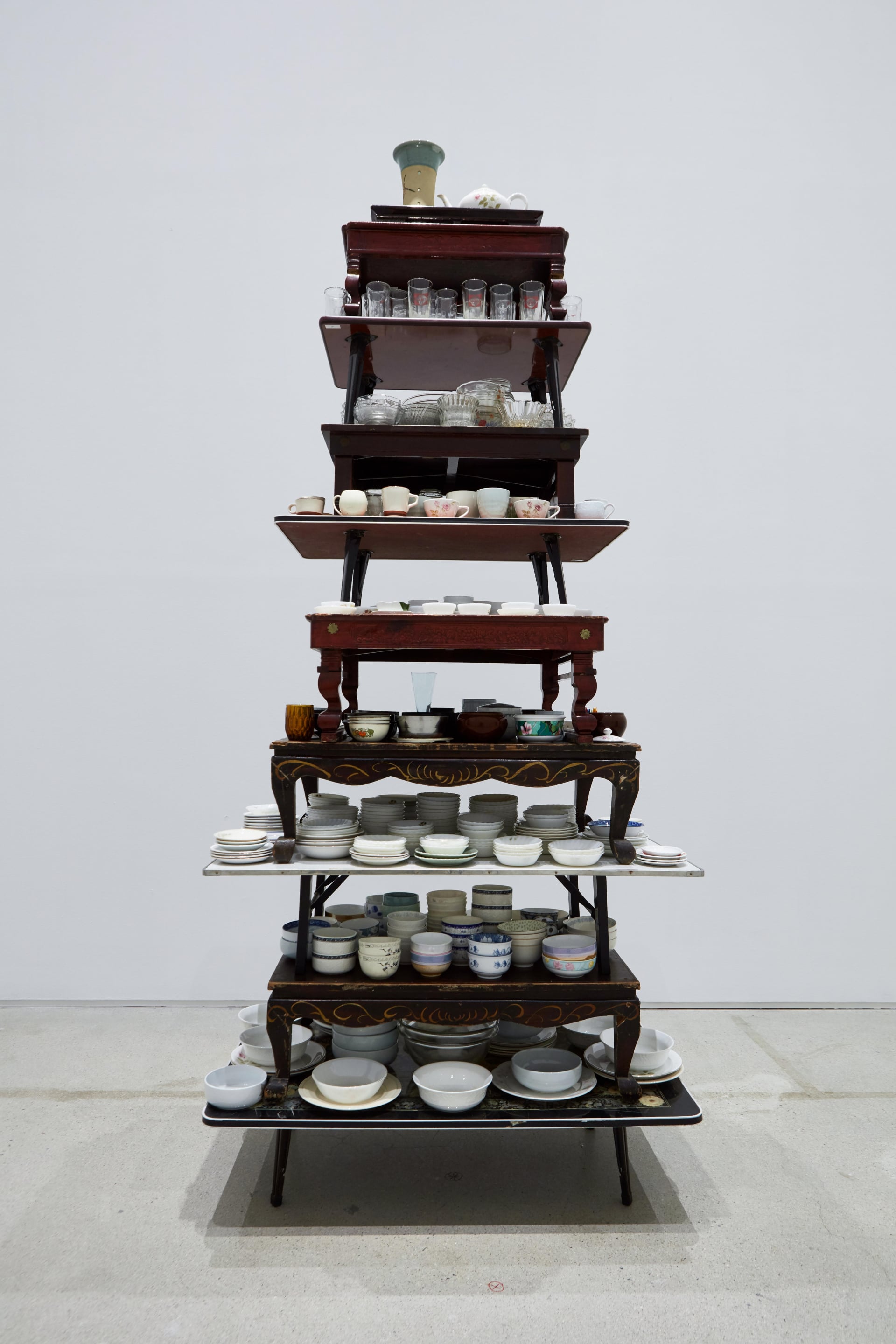
The objects Choi Jeonghwa selects are those rescued from the harsh test of time. Not only Everyday of Flowers, but many of his works feature totem-like stacked structures; this verticality represents the fetishistic aspect inherent in collecting while simultaneously functioning as resistance to time. Yet that resistance too is temporary.

Though they imitate the appearance of solid monuments, most will eventually disperse back into their original materials. And yet, when the time comes, the flower stalk can rise again. Flowers endure because they bloom and fall — the same holds true even when they possess plastic, fabric, or metallic surfaces.

As seen in Feast of Flowers, where cleaning tools are arranged like flower arrangements, nature and the artificial stand on equal footing in his work. The work Floral Palace, filled with neatly rounded flowers and fruits, conveys abundance. Within it resides humanity’s most universal wish throughout history — prosperity and fertility.


Choi Jeonghwa, 〈Flower Dance〉 © Choi Jeonghwa

The same context applies to gigantic flowers that bloom and wither as air is released and refilled, and to obscene flowers whose stamens protrude forcefully like sexual organs. A flower is nothing other than a symptom of fruit. The fruit is not art. The flower anticipates the fruit, completes its role, and disappears — much like the relationship between art and reality.

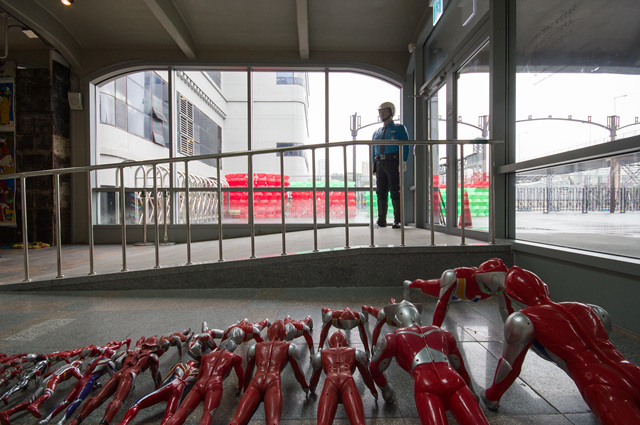
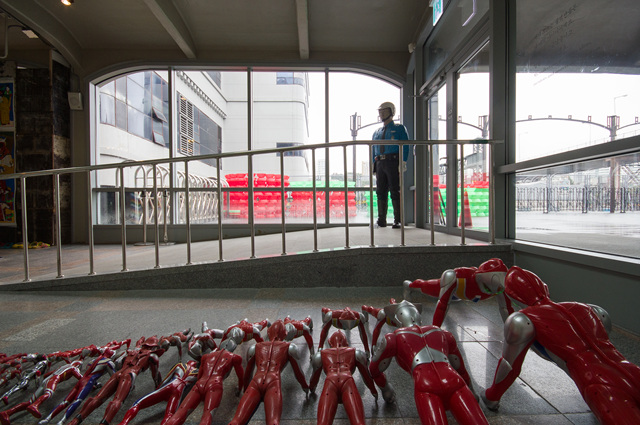
The work Thingamajig of Flower – Golden Flower presents golden blossoms reminiscent of a utopia of abundance. Some might depict eternity through abstraction, but he presents it through glittering golden flowers. Authority and hierarchy governing reality vanish. In the work Blooming Matrix, the image of a police officer forcing aliens into a prone position is comic.

The collected series, arranged in order of size, deflates the gravity of punishment. Are they punished not because they committed something wrong, but simply because they look the way they do? Here appears a contrast between the massive guardian of order and heterogeneous others under supervision.
 
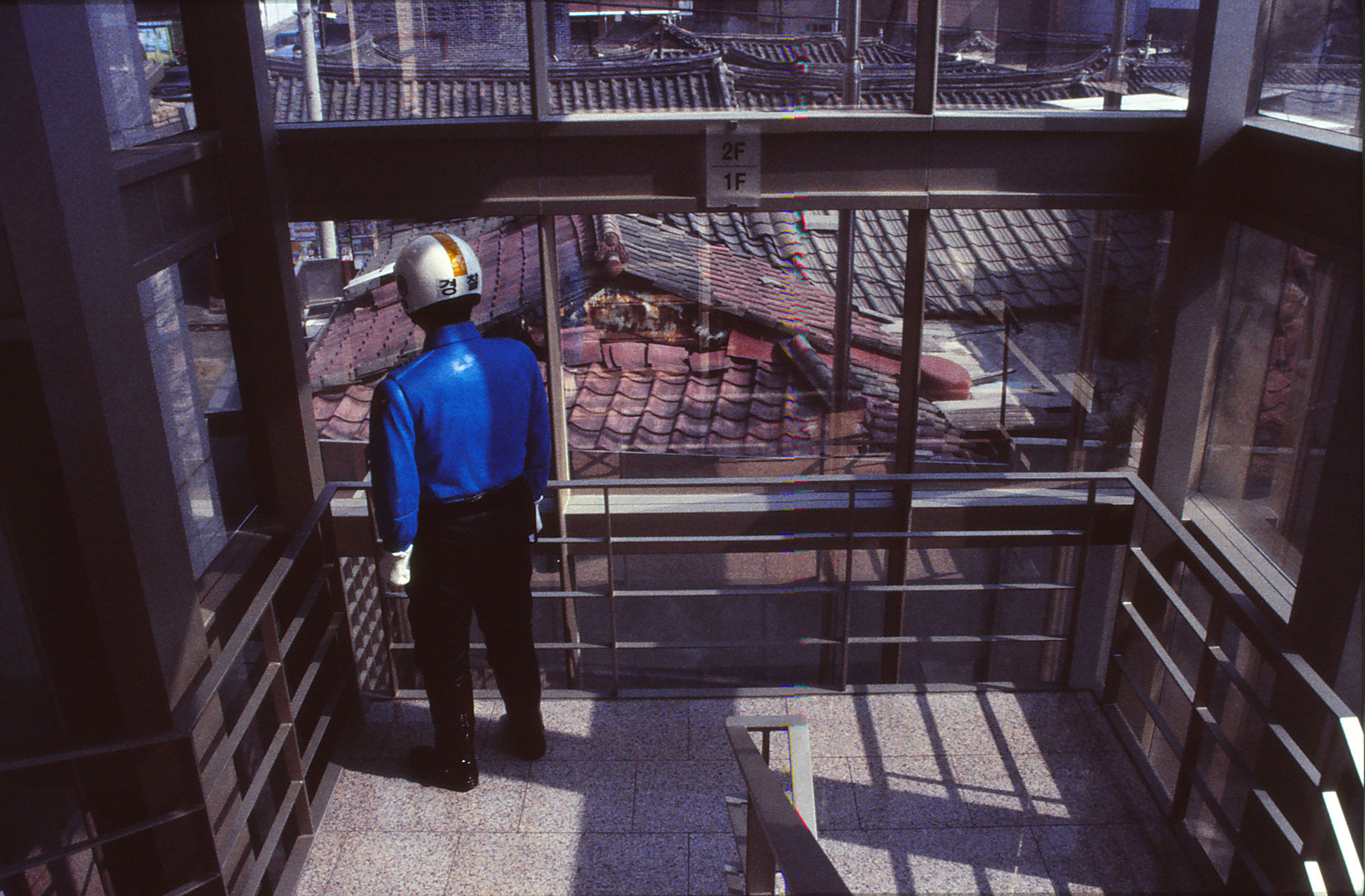
By placing police mannequins throughout the exhibition, the viewer is also positioned as a resisting, punished, and surveilled other. They function as elaborate scarecrows internalized and inscribed within dispersed subjects, facilitating the automatic execution of law. In the work Meaning (Law) of Flower, the artist presents a gigantic golden crown-shaped balloon.

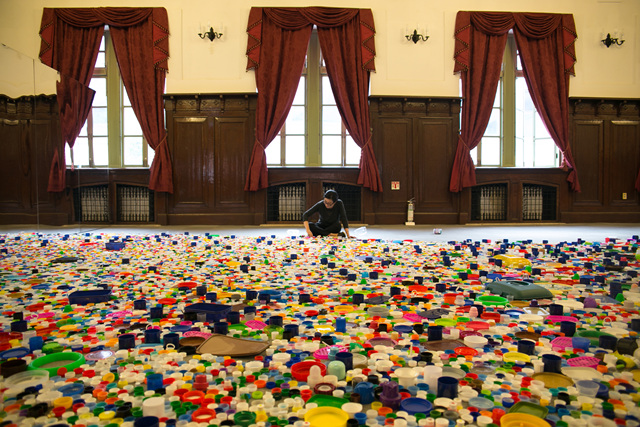
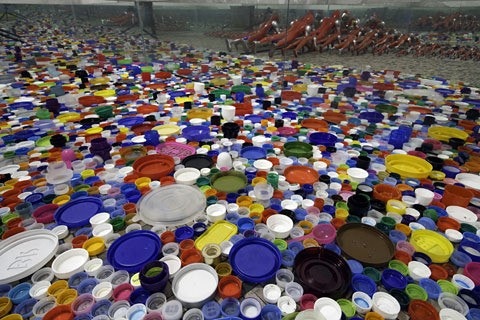
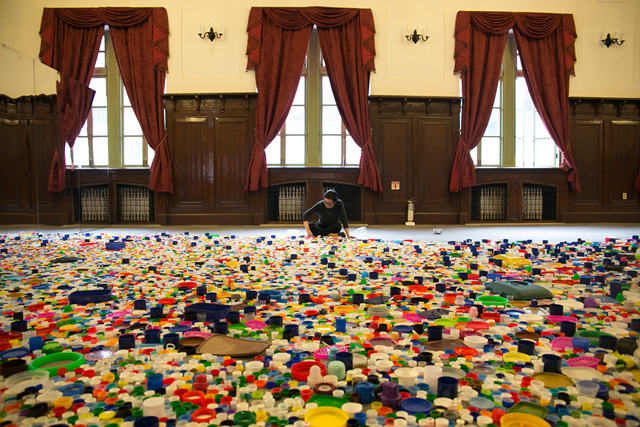
Has the fundamental nature of law — that power is law and law is power — truly changed since the age of kings? The artist’s choice to grant even trivial things a chance resulted in a work made from numerous plastic lids brought by viewers. Installed on the second-floor grill, Mandala of Flower continues the collection of plastic lids until the final day of the exhibition.

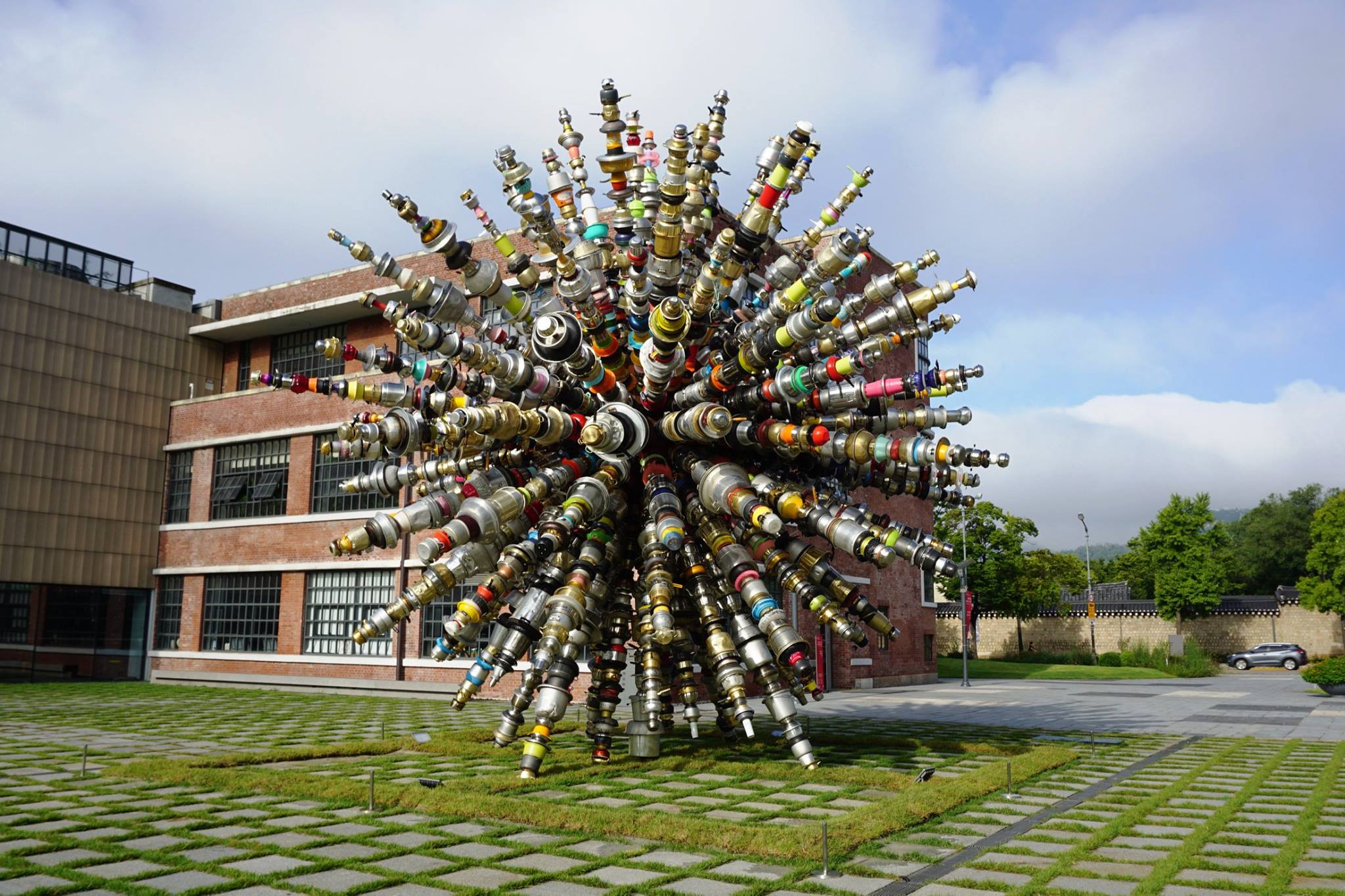
It is a structure that proliferates gradually with only minimal direction predetermined. The religious form of the mandala evokes a totality connecting disparate elements. Like the work installed in the plaza, it takes on the character of a public art project that produces a temporary community.


Choi Jeonghwa, 〈Mandala of Flower〉. 2014 © Choi Jeonghwa

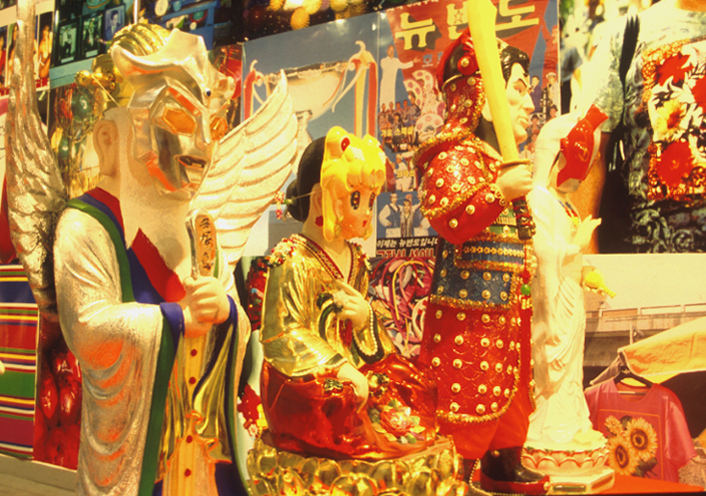
From the most private to the most public, he does not appeal to abstract conceptuality. Choi Jeonghwa’s work shows that art can perform what religion once did. The religiosity permeating his work is far removed from religion that exists within strict doctrine and institution. The closest religious form found there would be wish-fulfillment belief. As typically seen in the works Ladies and Gentleman and Flexible Flower, they take on the aspect of a pantheon in which gods from all times and places are hybridized and combined.

When seeking human happiness and well-being, what use is the type of god? Such coexistence of hybridity approaches us not as disorder but as a message of peace in today’s harsh age of fundamentalism. The work Blooming Matrix, in which toy guns painted in glittering colors confront each other, and Bone of Flower, where those guns are arranged like round blossoms, speak of peace (平花) possible when the value of every existence is acknowledged like flowers scattered across a field.
 
War, above all, originates from the will to firmly establish the boundary of the subject. To make oneself certain means making the other uncertain — the problem of a zero-sum game. Even in modern society, clear hierarchical order appears as a collective defensive instinct. With the eye of an archaeologist, the artist finds ruins even in recently passed reality: in Grand Flower_Free Time of Flowers, placed at the entrance of Seoul Station, broken bottles embedded in cement blocks show such boundaries.

The fence ornament that until recently substituted for electronic surveillance devices appears crude yet aggressive. The spectacle of signs that do not conceal but rather amplify their falseness indicts the “real” that leads to seriousness and war. Even miscellaneous icons retain a spiritual aura when once placed within religious contexts. The simulacra he mobilizes most directly reveal the most worldly desire — transcendence within the present world.
 
His works, new yet already bearing visible traces of time, speak about humanity’s history of attempting transcendence. The way elements of different origins mix continues in spatial staging. In Blooming Matrix, beneath a dazzling chandelier, a stone altar, glittering golden medals, and calligraphy coexist within one space. Only after time passes do their differences become clear. Choi Jeonghwa’s works embed devices of spatial compression and temporal acceleration throughout.

This may be a characteristic of our city and of our mental structure as well. The absurdity or looseness produced by these spatiotemporal dislocations humorously defamiliarizes the increasingly systematized order of reality. Objects each take their own place and receive illumination. Perhaps for that reason chairs and lighting fixtures appear frequently in his work. It suggests that art must gather people together. The combination of lighting, chairs, and tables also contributes to creating a convincing atmosphere.


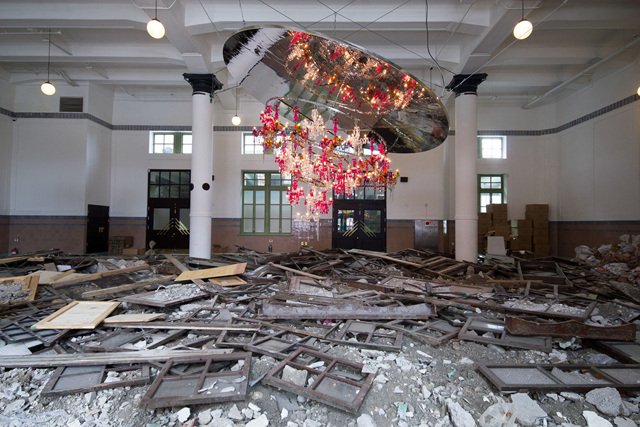
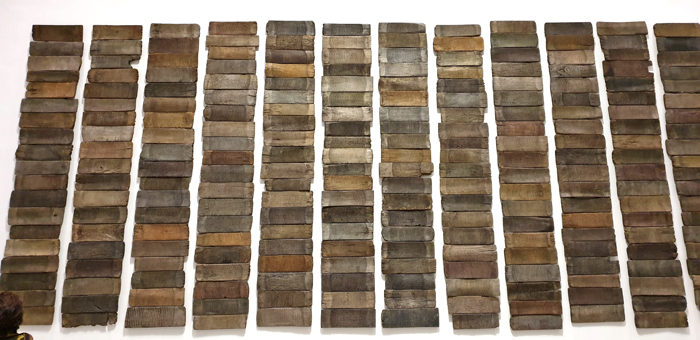
Choi Jeonghwa, 〈Ruins – Speed of Flower〉, 2014 © Choi Jeonghwa

The work Floral Palace is a chandelier woven from red hoses, giving the impression of blood-colored intestines floating like clouds. The most earthly thing appears in grotesque form within its opposite realm. In the work Free Time of Flowers, chairs made from diverse materials ranging from wood to plastic are collected; if a chair evokes an often-absent human presence, they become metaphors for diverse modes of being.

The chairs scattered throughout the exhibition range from glittering red vinyl sofas to improvised everyday inventions — plastic chairs padded with styrofoam cushions. A worn chair repeatedly repaired quietly slips into the real space of the old Seoul Station, testifying to its processes of renovation.

The rag-picker-like collector wandering the city with the eye of a historian — or rather a genealogist — shows interest not only in gaudy plastic objects but also in items made of wood or ceramic: old washboards, mother-of-pearl cabinets, mortars, fermentation jars. These items in the collection appear somewhat heterogeneous within works remembered for colorful plastics and balloons.
 
One senses here the collector’s obsession with completing a set. Collecting has been a universal custom throughout human history, yet the idea of the complete set became definite only after the age of mass production. The collector’s attempt at completeness will remain an unfinished project. The charm and the limit of collecting lie in the fact that its categories can never end.

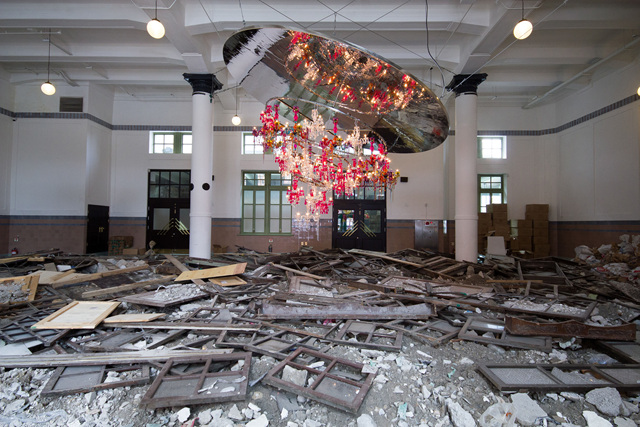
Whether assuming natural forms, borrowed from cultural styles, or utterly unfamiliar without any veil, the objects in his work ultimately function like lamps that make ruin-like reality bearable. In the installation Speed of Flower – Ruins, the artist installed a slowly rotating flower chandelier on the ceiling of a space filled with construction debris, placing a flamboyant chair in front to serve as a photo zone. The work fills the entire space with an apocalyptic atmosphere.

The chatter of objects heard from other exhibition spaces falls silent here. As if the show will go on even if the world ends tomorrow, the brilliant wreath operates indifferently. As long as humans pursue modest happiness, kitsch objects and art will endure — universal in the world like flowers that bloom and fall. His works may be seen as a unique case in which the laws of nature and the rules of humanity are brought into proximity.

References