Kobena Mercer, author of Pop Art
and Vernacular Culture (2007), coined the concept of “vernacular” to
describe cultural products under the influence of Western popular culture and
Pop Art in non-Western societies. Originally, “vernacular” refers to the
culture of indigenous slaves, opposite to refined foreign language of
aristocrats, for example, Latin in Europe or Sanskrit in India.
However, as
Mercer notes, “vernacular” in the post-colonial period indicates a culture that
occupies a somewhat vague area—between “mass consumer culture” after
industrialization and westernization and traditional culture or crafts. For
instance, imitations of folk cultural products for tourists can be said to be
occupying this intermediary area between these two poles, being neither mass
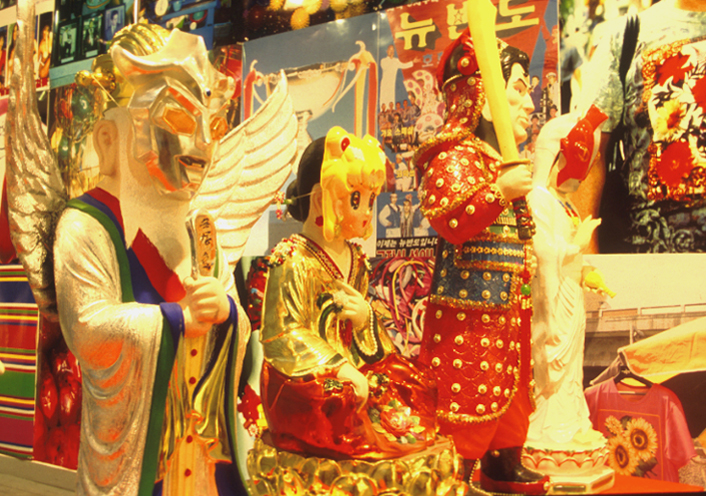
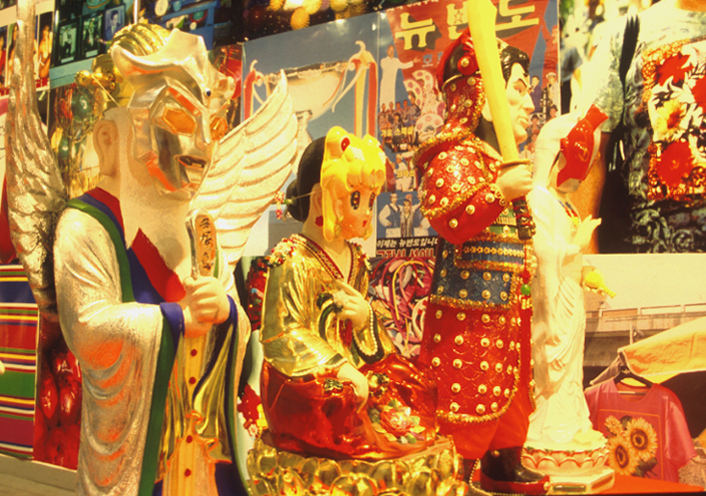
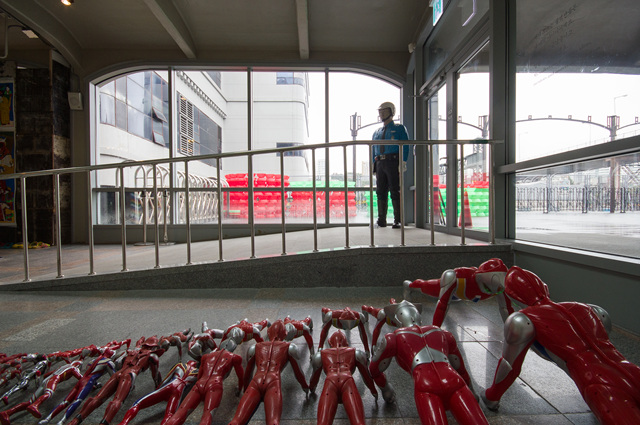
consumer culture nor traditional culture. Choi’s Ladies &
Gentleman (2000), indeed, combines elements of shamanistic religion,
Western popular culture, consumerism and traditional crafts altogether.
Considering the hybrid nature of Choi’s
work, there might be controversy as to whether his art can be considered
Korean-style Pop Art or not; insofar as the artist has integrated fragments of
ordinary life into the realm of fine art, one can argue that his artworks are a
type of Pop Art; yet, the culture of “Sijangtong,” literally meaning the old
marketplace, upon which Choi primarily drew his artistic inspirations, clearly
differs from mass and popular culture for Pop Artists in Western Europe and the
United States. What Choi has been lauded as the beauty of the old marketplace
culture is, in fact, the opposite of the media or “supermarket” culture that
Andy Warhol appropriated for his artworks during the 1960s. The culture of
“Sijangtong”—unlike mass consumer culture of affluent postwar Western
society—has an aspect of lower culture, the result of creating cheap and
sometimes fake consumer products from non-Western, developing countries.
Moreover, Choi’s interior decoration of
the “Ssamzie” Sport Building in 1998, in Seoul, for which he borrowed many
design elements and details from the tent of “Pojangmacha,” snack stalls on the
streets, and “Chirashi,” a Japanese expression of scatterings or leaflets of
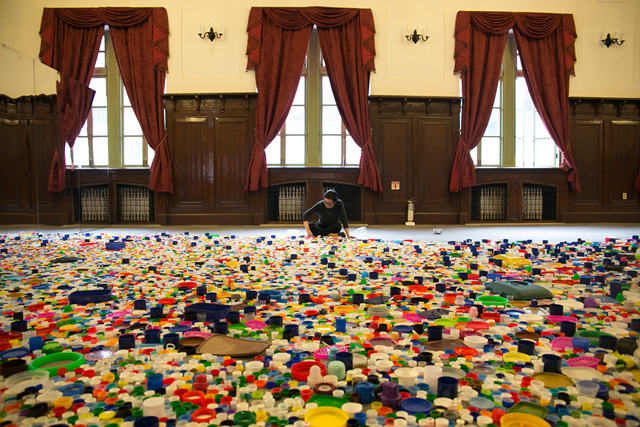
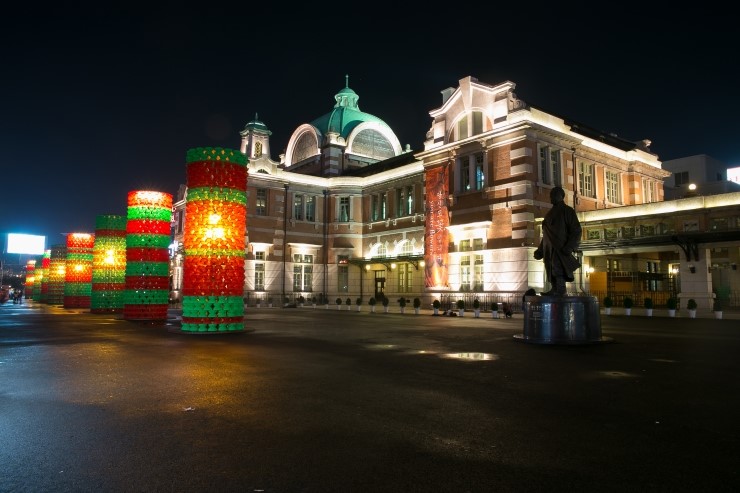
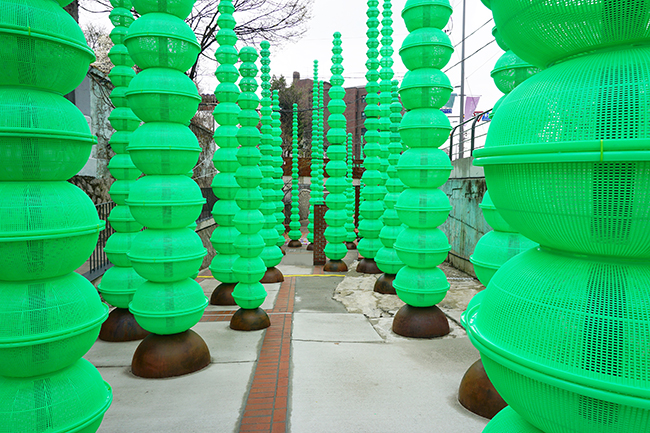
advertisement flyers, and Plastic Paradise (1997), made of
piling up plastic baskets, are mere passé—in the artist’s description, “the
culture that we should miss if it disappears,” and “unsophisticated, yet
familiar vintage culture.”
If the image of Elvis Presley in Warhol’s
silk-screen in 1962 were an icon of mass culture in the late 1950s, the plastic
baskets in Choi’s Plastic Paradise similarly represent the
obsolete type of consumer culture that belong to previous generations in Korea.
Choi seized upon his exhibition in Bangkok as an opportunity and ordered
plastic baskets from Thailand, where sophisticated mass consumer culture is not
yet fully developed, especially compared to mass and consumer culture in South
Korea. For plastic, which symbolized “Shingara,” a new trend of consumer
products in Korea during the 1970s, have become considered “vintage” that has
no longer occupied the main stage of Korean consumer culture since the 1990s.
Jeonghwa Choi and
Nostalgia
Why, then, has Choi begun finding
inspiration for his artwork in outdated, vintage culture during the late 1990s?
His works emerged, for the most part, within the historic context when younger
generations of Korean artists appropriated ready-made objects coupled with the
advent of post-modernist discussion in the Korean art world. At the same time,
the 1990s saw Korean mass consumer culture begin to rapidly diverge, as best
exemplified in the film Chilsu and Mansu (1989). Choi began
working as an art director, overarching the total visual representation of
particular brands and projects throughout the 1990s, and successfully launching
his initial minimalist design concept for fashion boutiques (Yun-Su Park’s “All
Style” and “Botticelli”).
Stylistically speaking, these interior shops were
complete breaks from his object-based artworks with the Museum Group; it was,
however, due to Choi’s ability to utilize many artistic and cultural styles and
types that had recently become available to his disposal, with the increasing
diversification and polarization of consumer preferences in Korea during the
1990s. After a series of legal restrictions regarding international Korean
travelers and foreign exchange system were lifted in Korea after the 1988
Olympics, more international consumer products and popular culture became
readily available in Korea during this time.
Choi’s vintage culture, thus, represents
his nostalgia for unsophisticated and “vernacular” consumer culture of 1970s
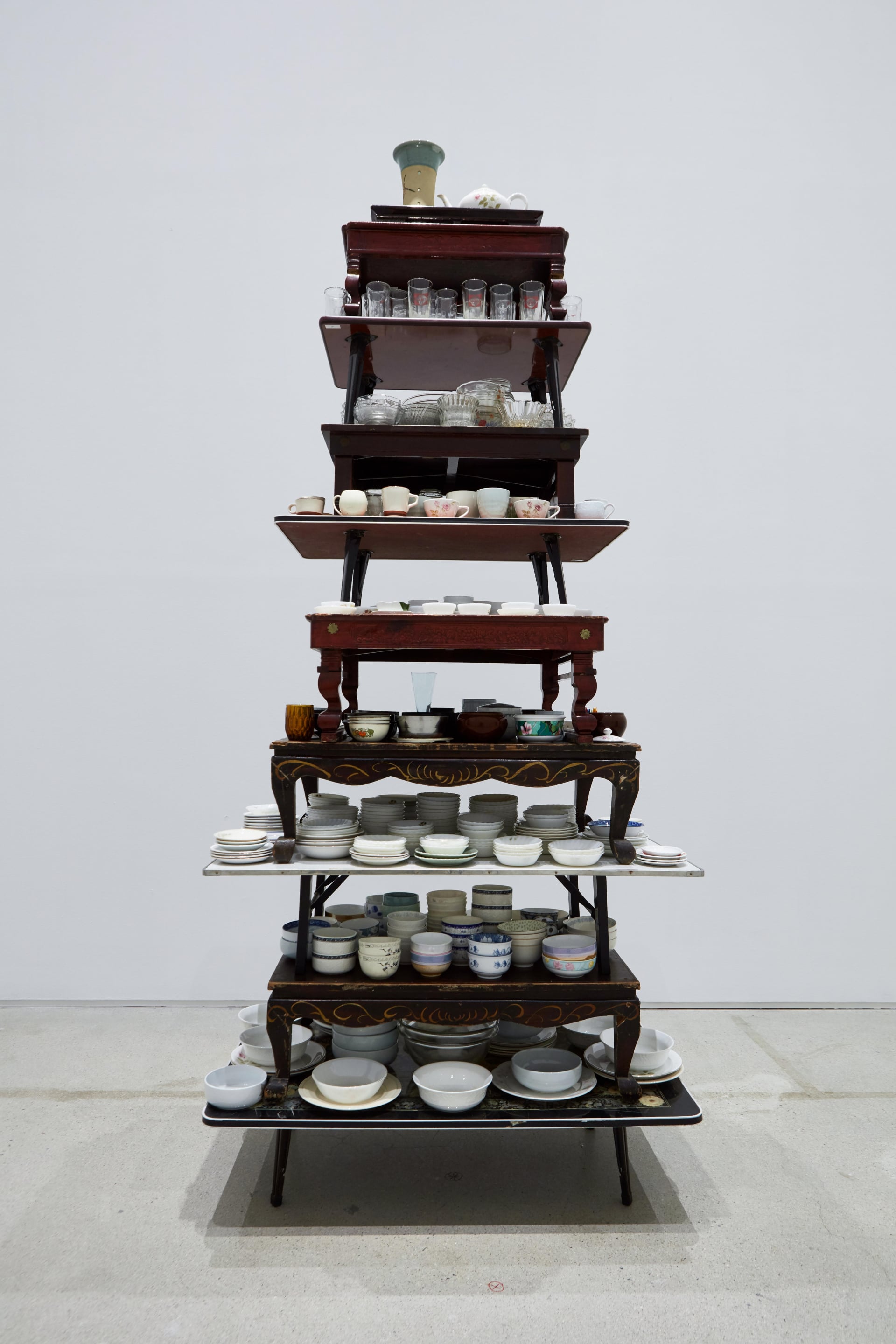
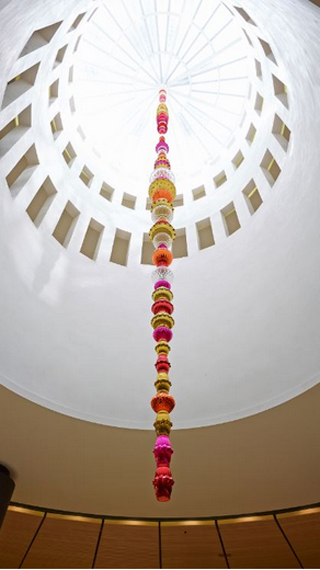
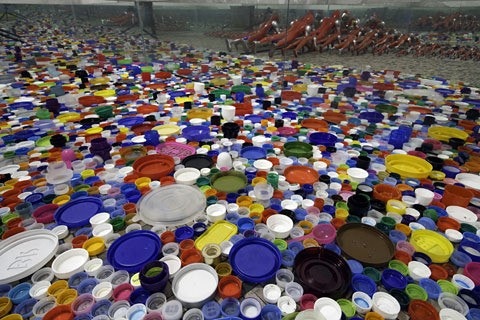
and 1980s; Plastic Paradise is a tower built of simple
plastic baskets, a common type of inexpensive household goods that were
produced mainly for low-income families during the 1970s. With it, he also
expressed his own concepts of time and history. But for Choi, the vintage
materials become significant less for understanding the artist’s desire to
preserve and recycle past cultures alone. In classical cultural theory, to
associate plastic with the concept of paradise remains paradoxical.
According to Mythologies (1957), a seminal account of
popular culture by Roland Barthes, a French literary theorist and philosopher,
plastic, in his dystopic vision, is regarded as a symbolic material that
clearly evinces cultural characteristics of postwar consumer society lacking
its stable identity. Plastic can be made into any kinds of object just by
imitating appearances, be it either natural or unnatural. In this context, the
original materials that were once essential to particular objects become
undermined. In addition, plastic is generally classified as the most
environmentally hazardous material.
However, Choi interprets plastic
differently. Looking at plastic baskets, he imagines a paradise. The artist, of
course, does not think that plastic baskets at the old Sijangtong can manifest
affluence. He rather seems to enjoy building installations composed of cheap
household items because such work reflects the nature and habits of the people
in old marketplaces: “They stack everything because they are too poor to throw
anything away.” Here the material called “plastic,” which renders everything
made from it cheap, is meant to create an illusion of affluence. In this
regard, Choi’s work of plastic baskets embodies the hard life of the old
Sijangtong people, not only for its lack of refined visual effects, but also
for its symbolic meaning associated with its basic material and method of
installation.
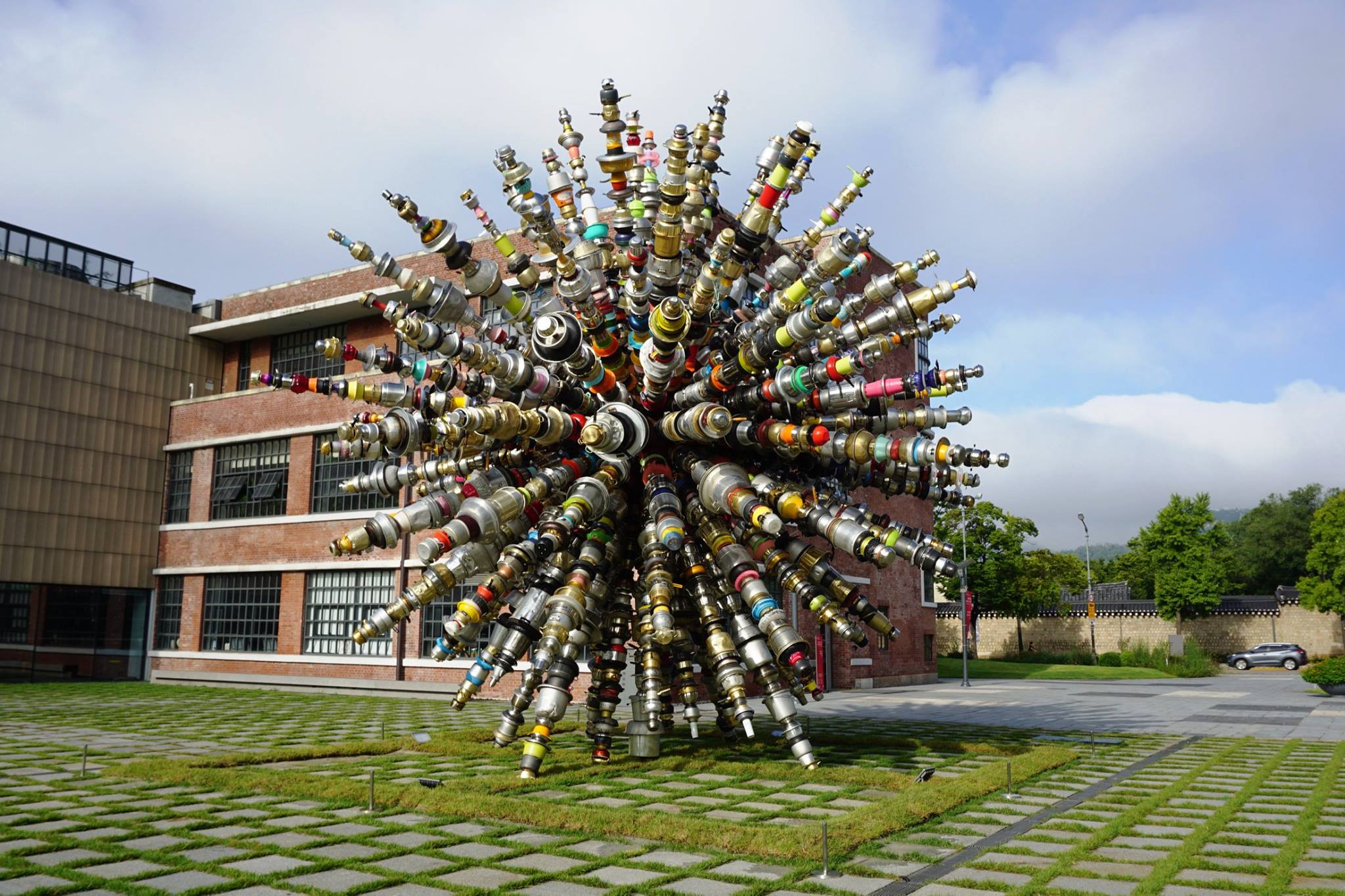
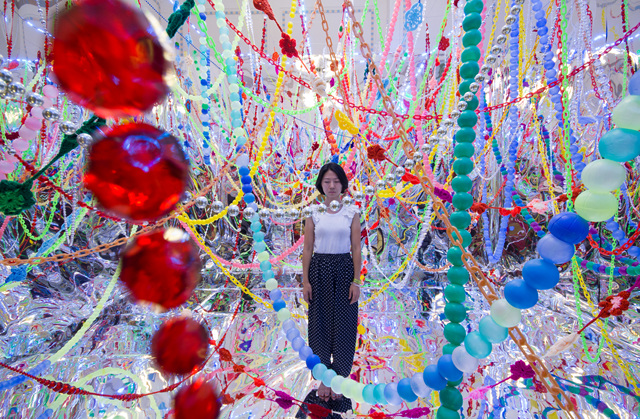
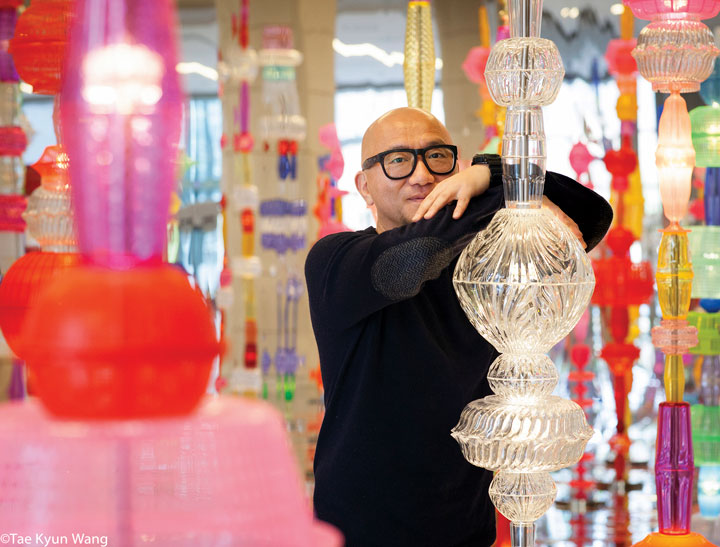
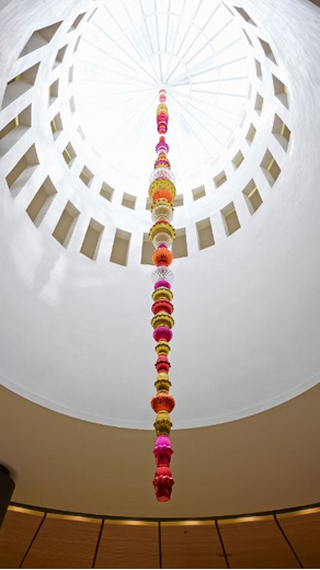
What is more, Choi transforms plastic into
an environmentally friendly substance. From Whoever, Whatever, In
Whichever Ways (1994–2004), a collaborative project that Choi
developed along with director Jae-Yeong Lee and photographer Hyeong-Geun Oh, he
evolved ‘Happy Happy or Happy Together’ projects. These projects invited
viewers to bring plastic waste to an art museum or a specific place, as
designated by the artist, and were on view in different parts of the world
(Kagoshima, Shanghai, Belgium, and the United Kingdom) for almost a decade.
Audiences brought waste household items they had not used for years at home and
hung on metal structures provided by “Gasum Visual Development Laboratory,” a
design firm run by Choi. The Happy Together project was finally introduced to
Korea during the Seoul Design Olympiad in 2008.
In the ‘Happy Happy’ series, plastic was
accorded a new, positive meaning; it was no longer a symbol of an obsolete
consumer culture. It was used to deliver even a message about environmental
issue. Thus, plastic as a symbol of consumerism of the bygone era was reborn as
a material ushering in a utopian future; plastic was well adapted to Choi’s
core concept of art—its open and viewer-participatory nature. For nostalgia, as
Andreas Huyssen notes, brings in a specific utopia in a past, expressing its
serious longing for the bygone era; simultaneously, it involves a longing for a
future that has yet to be realized
Paradise! Paradise!
Choi’s work can be looked upon as both
easy and difficult; this is not just because his artistic resources such as
fake flowers, robots, and baskets are too banal and sometimes unpredictably
vulgar. Instead, the idealistic messages imbedded in his artwork are allegedly
too simple and straightforward for the audience to accept at face value.
Particularly, the too-good-to-be-true message behind the cynical appearance of
his artworks discourages his audiences from perceiving exactly what Choi’s work
aspires to communicate.
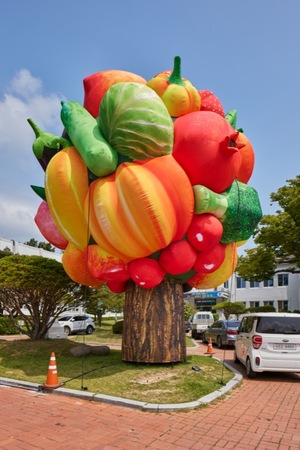
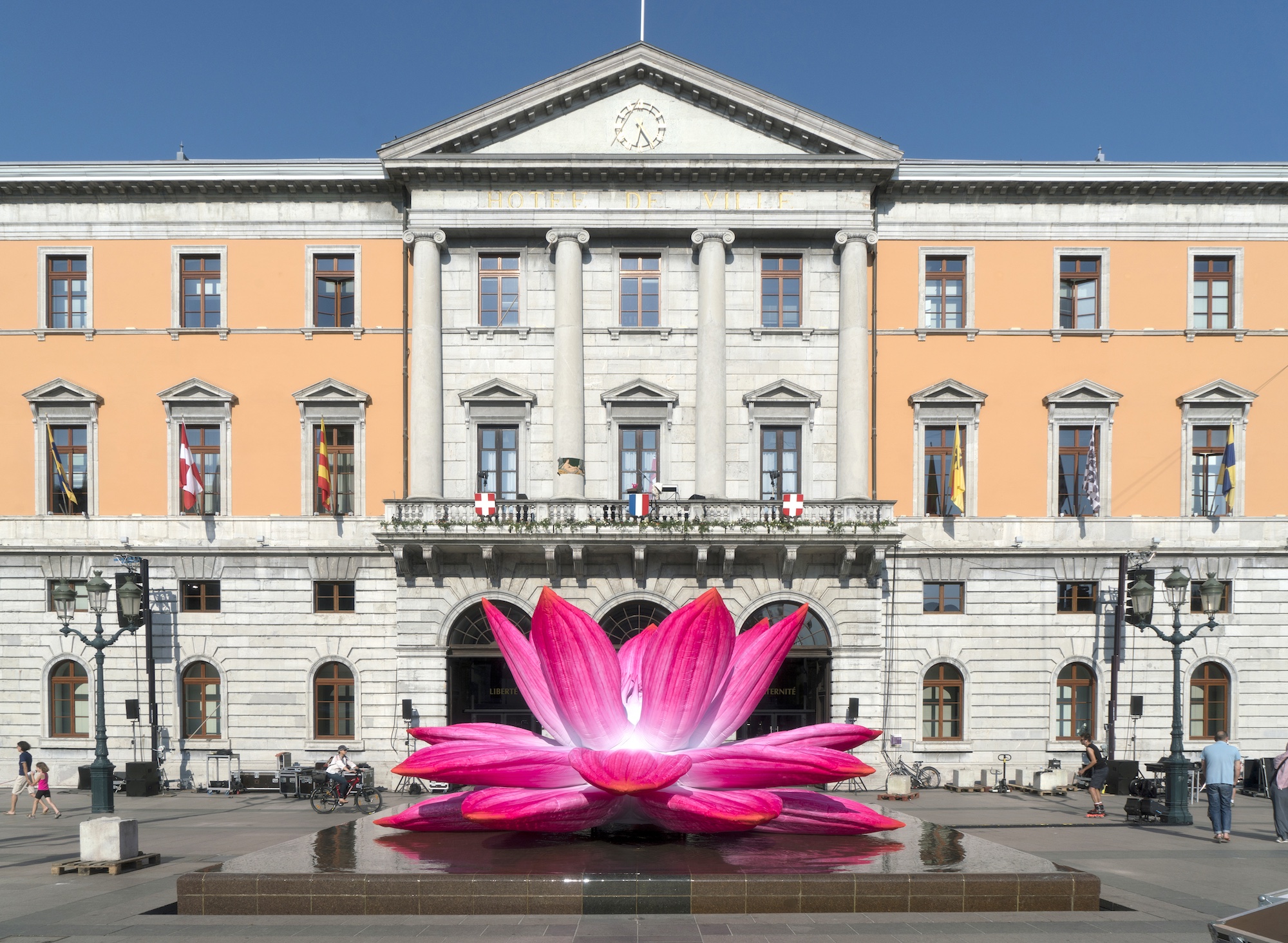
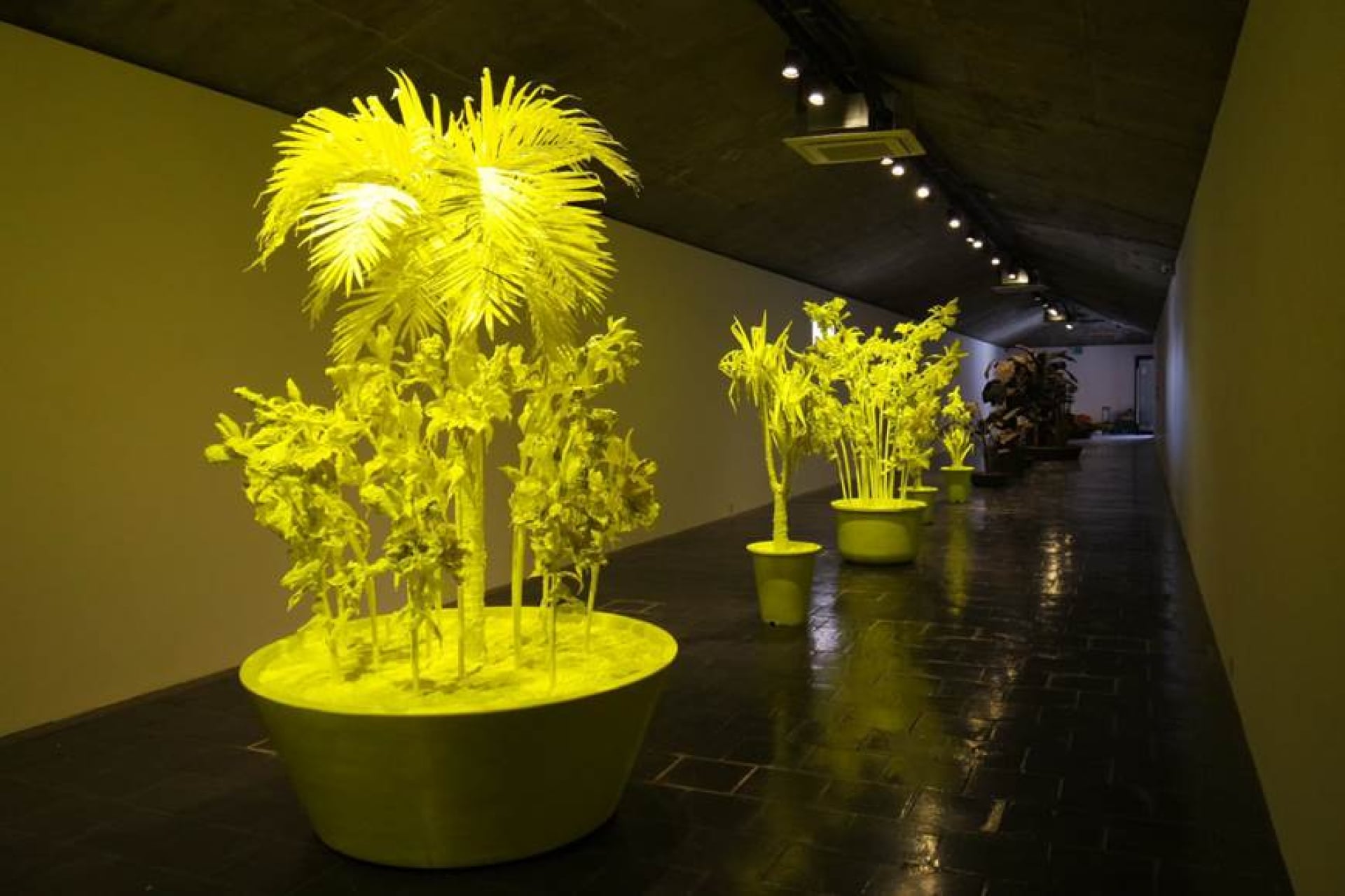
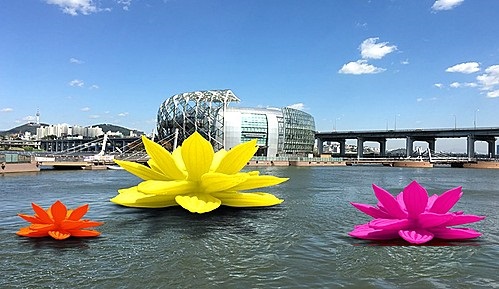
Encountering Plastic Paradise and
Super Flower (2000) in exhibitions, the viewer may wonder
and ask a question: what actual relationship do old marketplace people and Choi
have if cheap tourist goods and plastic baskets are adopted to symbolize an
outdated, vernacular consumer culture? In an interview with EBS (Education
Broadcasting System, Seoul) TV aired in 2004, Choi appeared to be a man with a
sense of mission to uncover the hidden aesthetic values of second-hand items in
run-down antique shops in Jongno or an old low-income apartment complex in
Dongdaemun built in the late 1960s.
However, I am doubtful about how closely
Choi’s real life experience can have some real connections with the lives of
those junk shop owners or residents of shabby apartments. To put it bluntly,
these junk shop owners and apartment residents are merely those that have been
left behind, those who have not received the benefits of mass consumer culture
in Korea with rapid development over the last two decades. Choi’s artworks
comprised of plastic might appear to be no more than an arty event that
regularly occurs inside art museums or design fairs. (Of course, he can promote
the impact of public relation on environment issues through these events.)
After all, Choi’s will most likely become the target of criticism: Choi
idealized mixed vintage cultures while disregarding the economic situation of
those people whose consumer culture and living condition as outdated as ever.
Nevertheless, I remain ambivalent about the future of Choi’s ongoing projects
as I cannot entirely give up either my expectation or doubts about the artist’s
idealism even now.